Luke 2: 1-14: “Di Gud Nyuuz bout Jiizas”: El nacimiento de Jesús en la prosa poética de La Biblia / Jesus’ birth in the poetic prose of Renaissance Spanish and English Bibles + Wycliffe(1395), Haitian Creole and Jamaican Patois
Posted: December 25, 2012 Filed under: Creole / Kréyòl, English, English: Jamaican Patois, English: Middle English, Spanish Comments Off on Luke 2: 1-14: “Di Gud Nyuuz bout Jiizas”: El nacimiento de Jesús en la prosa poética de La Biblia / Jesus’ birth in the poetic prose of Renaissance Spanish and English Bibles + Wycliffe(1395), Haitian Creole and Jamaican Patois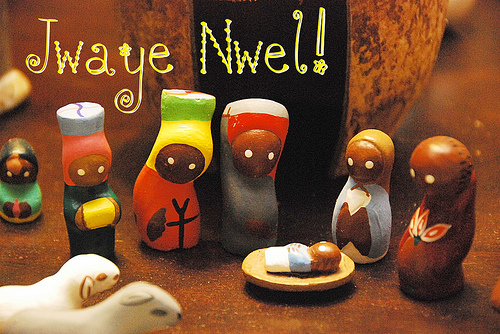
ZP_A toy Nativity scene with a coconut shell as the stable, from Haiti. Jwaye Noel means Merry Christmas in Haitian Creole._Jwaye Nwel dice Feliz Navidad en el idioma criollo haitiano.
Un fino ejemplo de la prosa poética de La Biblia en su Antigua Versión de Casidoro de Reina (1569) con revisiones por Cipriano de Valera (1602):
Luca 2: 1-14:
“ Aconteció en aquellos días que salió un edicto de parte de César Augusto, para levantar un censo de todo el mundo habitado. Este primer censo se realizó mientras Cirenio era gobernador de Siria. Todos iban para inscribirse en el censo, cada uno a su ciudad. Entonces José también subió desde Galilea, de la ciudad de Nazaret, a Judea, a la ciudad de David que se llama Belén, porque él era de la casa y de la familia de David, para inscribirse con María, su esposa, quien estaba encinta. Aconteció que, mientras ellos estaban allí, se cumplieron los días de su alumbramiento, y dio a luz a su hijo primogénito. Le envolvió en pañales, y le acostó en un pesebre, porque no había lugar para ellos en el mesón. Había pastores en aquella región, que velaban y guardaban las vigilias de la noche sobre su rebaño. Y un ángel del Señor se presentó ante ellos, y la gloria del Señor los rodeó de resplandor; y temieron con gran temor. Pero el ángel les dijo: No temáis, porque he aquí os doy buenas nuevas de gran gozo, que será para todo el pueblo: que hoy, en la ciudad de David, os ha nacido un Salvador, que es Cristo el Señor. Y esto os servirá de señal: Hallaréis al niño envuelto en pañales y acostado en un pesebre.
De repente apareció con el ángel una multitud de las huestes celestiales, que alababan a Dios y decían: ¡Gloria a Dios en las alturas, y en la tierra paz entre los hombres de buena voluntad! ”
. . .
Y en el inglés del tiempo de Shakespeare, de la versión del rey Jacobo (1611):
A fine example of the poetic prose of The King James Version (1611) of The Bible:
Luke 2: 1-14:
“And it came to pass in those days, that there went out a decree from Caesar Augustus, that all the world should be taxed. And this taxing was first made when Cyrenius was governor of Syria. And all went to be taxed, every one into his own city. And Joseph also went up from Galilee, out of the city of Nazareth, into Judaea, unto the city of David, which is called Bethlehem; because he was of the house and lineage of David: to be taxed with Mary his espoused wife, being great with child. And so it was, that, while they were there, the days were accomplished that she should be delivered. And she brought forth her firstborn son, and wrapped him in swaddling clothes, and laid him in a manger; because there was no room for them in the inn. And there were in the same country shepherds abiding in the field, keeping watch over their flock by night. And lo, the angel of the Lord came upon them, and the glory of the Lord shone round about them: and they were sore afraid. And the angel said unto them: Fear not, for behold, I bring you good tidings of great joy, which shall be to all people. For unto you is born this day in the city of David a Saviour, which is Christ the Lord. And this shall be a sign unto you; Ye shall find the babe wrapped in swaddling clothes, lying in a manger.
And suddenly there was with the angel a multitude of the heavenly host praising God, and saying: Glory to God in the highest, and on earth peace and good will toward men.”
. . .
Y en el ‘inglés medio’de dos siglos antes de la versión del rey Jacobo, de la Biblia de John Wycliffe (1395):
And, from The Wycliffe Bible, two centuries earlier (1395) – in ‘Middle English’:
Luke 2: 1-14:
“ And it was don in tho daies, a maundement wente out fro the emperour August, that al the world schulde be discryued. This firste discryuyng was maad of Cyryn, iustice of Sirie. And alle men wenten to make professioun, ech in to his owne citee. And Joseph wente vp fro Galilee, fro the citee Nazareth, in to Judee, in to a citee of Dauid, that is clepid Bethleem, for that he was of the hous and of the meyne of Dauid, that he schulde knouleche with Marie, his wijf, that was weddid to hym, and was greet with child. And it was don, while thei weren there, the daies weren fulfillid, that sche schulde bere child. And sche bare hir first borun sone, and wlappide hym in clothis, and leide hym in a cratche, for ther was no place to hym in no chaumbir. And scheepherdis weren in the same cuntre, wakynge and kepynge the watchis of the nyyt on her flok. And lo! the aungel of the Lord stood bisidis hem, and the cleernesse of God schinede aboute hem; and thei dredden with greet drede. And the aungel seide to hem, Nyle ye drede; for lo! Y preche to you a greet ioye, that schal be to al puple. For a sauyoure is borun to dai to you, that is Crist the Lord, in the citee of Dauid. And this is a tokene to you; ye schulen fynde a yong child wlappid in clothis, and leid in a cratche.
And sudenli ther was maad with the aungel a multitude of heuenli knyythod, heriynge God, and seiynge, Glorie be in the hiyeste thingis to God, and in erthe pees be to men of good wille. “
. . .
En Kréyòl ayisyen / In Haitian Creole / en el idioma de criollo haitiano:
Lik 2: 1-14:
Lè sa a, Seza Ogis te bay lòd pou yo te konte dènye moun ki nan peyi l’ap gouvènen yo.
Premye travay sa a te fèt nan tan Kireniyis t’ap kòmande nan peyi yo rele Siri a.
Tout moun te al fè pran non yo nan lavil kote fanmi yo te soti.
Jozèf te rete nan peyi Galile, nan yon bouk yo rele Nazarèt. Men, paske li te moun nan fanmi ak ras David, li moute, li ale nan Jide, nan lavil David yo rele Betleyèm lan.
Jozèf tapral fè yo pran non l’ ansanm ak non Mari, fiyanse li, ki te ansent.
Antan yo te la, jou pou Mari te akouche a rive.
Li fè premye pitit li a, yon ti gason. Mari vlope pitit la nan kouchèt, li mete l’ kouche nan yon kay kote yo bay bèt manje, paske pa t’ gen plas pou yo nan lotèl la.
Nan menm zòn sa a, te gen gadò mouton ki t’ap pase nwit la deyò ap veye mouton yo.
Lè sa a, yon zanj Bondye parèt devan yo, bèl limyè Bondye a klere tout kote yo te ye a. Yo te pè anpil.
Men zanj lan di yo konsa: Pa pè. N’ap anonse nou yon bon nouvèl ki pral fè tout pèp la kontan anpil.
Jòdi a, nan lavil David la, nou gen yon Sovè ki fenk fèt: se Kris la, Seyè a.
Men remak ki va fè nou rekonèt li: n’a jwenn yon tibebe vlope nan kouchèt, kouche nan yon kay kote yo bay bèt manje.
Menm lè a, yon foul lòt zanj nan syèl la vin jwenn zanj lan; yo t’ap fè lwanj Bondye, yo t’ap di konsa:
Lwanj pou Bondye anwo nan syèl la, kè poze sou latè pou tout moun li renmen.
. . .
And…in Jamaican Patois:
Luuk 2: 1-14:
1 Iina dem die de, di Ruoman ruula, Siiza Agostos, gi aada fi rait dong di niem a evribadi iina im kindom. 2 (Dis a di fos taim niem a rait dong sins di taim wen Kiriniyos did a ruul uova Siriya.) 3 Aal im piipl dem did afi go a di toun we dem baan fi get dem niem rait dong, so di govament kyan taks dem.
4 So kaaz Juozif did kom fram Dievid fambili an Dievid did baan iina Judiya, im did afi lef fram Nazaret iina Gyalalii an go a Betliyem iina Judiya. 5 Juozif go de wid Mieri fi get dem niem rait dong. Di tuu a dem did ingiej fi marid dem wan aneda an shi did av biebi iina beli. 6 Wen dem de de, Mieri tek iin fi av biebi, 7 an shi av ar fos pikni, wan bwai. Shi rap im op iina biebi blangkit an put im iina di baks we di animal dem nyam outa, kaaz no spies neva iina di ges ous fi dem.
8 Da nait de, som shepad did a luk aafa dem shiip iina wan fiil, nier we Mieri dem did de. 9 Wan a di Laad ienjel dem kom tu di shepad dem. Wan brait brait lait fram Gad kova dem an it mek dem fraitn so til. 10 So di ienjel tel dem se, “No fried! Mi av gud nyuuz fi unu. Nyuuz we ago mek evribadi api. 11 Di wan we ago siev unu baan tide iina di toun we Dievid kom fram. Im a Krais, di Laad. 12 Mi ago tel unu wa unu ago si, so wen unu si dat unu ago nuo se a im. Unu ago si wan biebi rap op iina wan biebi blangkit an a lidong iina di baks we di animal dem nyam outa.”
13 Aal av a sodn uol iip a ienjel fram evn, jain im. Dem did a priez di Laad an se, 14 “Priez Gad we de a evn, an piis fi evribadi we Gad api wid.”
. . . . .
Un breve poema – “antes del Fin” / A brief poem – “before The End”
Posted: December 20, 2012 Filed under: English, Langston Hughes, Spanish Comments Off on Un breve poema – “antes del Fin” / A brief poem – “before The End”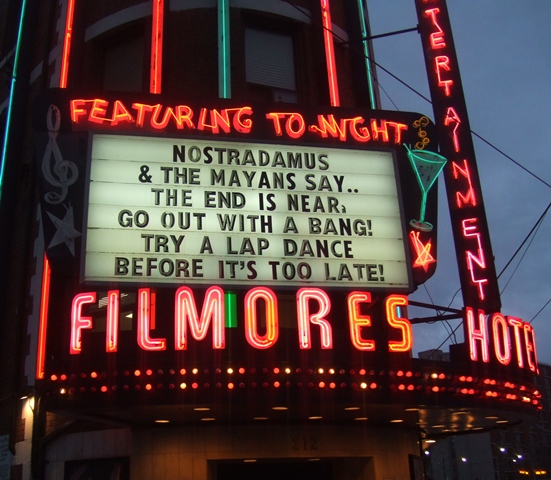
ZP_Dicen Nostradamus y los Mayas que Nos Acerca El Fin. Sal con un gran pum. Disfrútate con un baile erótico del regazo, antes de que esté demasiado tarde…Sunset, December 20th 2012_Marquee of a Striptease Tavern in Toronto, Canada_A light touch concerning the gravitas of 21.12.2012 !
A veces es el trabajo del Poeta impartirnos una lección para la Vida. Y quizás no nos queden bastante Tiempo hoy día para comprender esa lección – si tengan razón los comentarios recientes de unos intérpretes históricos- histéricos sobre la “profecía” maya – que es, en realidad, unas inscripciones en piedra –“ la cuenta larga”– que se tratan del fin de una época en el sistema-calendario de los mayas – y no del fin del mundo. Pero…SI mañana, el 21 de diciembre, aun sea El Fin – o si sea el primer día de un nuevo ciclo – todavía es agradable cuando nos aconseja El Poeta…Presentamos un breve poema por Langston Hughes…
.
“Consejo”
.
Mi gente, les digo a ustedes:
Son hechos puros y duros
el nacimiento y la muerte –
Pues, tomen el Amor
¡y tómenlo fuerte!
. . .
We present our readers with One Brief Poem – in case tomorrow is The End-Time and not just the start of the next epoch inscribed in the magnificent old Mayan stone calendar that has been much in the news of late…
.
Langston Hughes (1902-1967)
“Advice”
.
Folks, I’m telling you,
Birthing is hard
And dying is mean –
So get yourself
A little loving
In between.
. . . . .
Oración a La Virgen de Guadalupe: un redescubrimiento en 2012
Posted: December 12, 2012 Filed under: Spanish | Tags: Oración a La Virgen de Guadalupe Comments Off on Oración a La Virgen de Guadalupe: un redescubrimiento en 2012
ZP_Pintura de Nuestra Señora de Guadalupe por Pristine Cartera Turkus
“Oración a La Virgen de Guadalupe”
(Aquí te mostramos una oración a La Guadalupana, escrita en el idioma quechua por un devoto anónimo durante la novena de agosto-septiembre 1984 en el Catedral de Sucre, Bolivia)
. . .
Acordémonos ahora que somos mortales,
Por eso honremos la gloria celestial.
.
Todos los buenos irán al cielo,
Todos los malos irán al infierno.
.
Mil veces te saludamos, aunque seamos malvados,
En cualquier loma o cerro de ti nos acordamos.
.
¿Ya no más, señora, nos escuchas ahora?
De tanto llanto nuestro, ¿no te estás compadeciendo?
.
Enojándote con pecado en esta vida te hemos perdido,
Enojándote a ti, madre, tan mal hemos vivido.
.
Si nosotros ya no nos acordamos de ti,
Cayando en tanta culpa a ti, madre, te olvidamos.
.
¿Para qué, señora, vamos a vivir?
Con tantas culpas, ¿qué más podemos esperar?
.
Antes, de mi vida despójame, si así voy a tener que vivir,
Todos mis pensamientos, madre, contigo sólo estarán.
.
Nuestra maldad, que ahora se acabe,
Todo lo que amamos, en este mundo se quedará.
.
Llorando sin consuelo, todos te pedimos perdón,
Ahora de rodillas acerquémonos a nuestra madre.
.
Bendición, señora, bendición, María,
No nos desampares, madre protectora.
.
¿Siendo mi madre no quieres oírme
A tu hija huérfana para protegerme?
.
A ti noche y día, virgen singular,
Eternamente imploramos llenos de pesar.
.
A esos tus ojos volvemos, señora,
Compadeciéndote como protectora.
.
Noche y día madre cual pobre cautivo
En medio de nuestro sufrimiento para mi destino.
.
Nuestros sufrimientos recibid, señora,
Llorando te lo pedimos de vos madre mía.
.
Como eres mi madre vengo arrepentido,
Apiádate, madre, como protectora.
.
Muy atribulados, esclavo leal,
Huérfanos, nos humillamos a vuestra piedad.
.
En medio del sufrimiento, en gozo y pena,
Tú eres su consuelo, paloma de cielo.
.
A tus pies todos ya postrados,
Tu bendición todos esperamos.
.
Te venimos a saludar, eternal y soberana María,
Para encontrar tu luz, señora.
.
Todos sus hijos a nuestra madre ahora,
De rodillas acerquémonos a ella.
.
De nuestros pecados a pedir absolución,
Todos llorando pidámosle a ella.
.
Y ahora pues ya, señora María,
Tus piecesitos te hemos besado.
.
Amargamente llorando venimos
A pedirte perdón de nuestras culpas.
.
Tal vez hubieran tropezado
Los pecadores, María,
Buscándote a ti venimos, señora madre.
.
Viéndote a ti que tristes te miramos
Con nuestros cansados ojos
Te miramos y nos alegramos.
.
Pero ahora, señora, compadécete
Y nuestras culpas mueran para siempre.
.
De rodillas acerquémonos a ella
A pedir la gracia iremos a nuestra madre.
.
De esta forma, madre, apiadándote ahora
La bendición dános a todos.
. . . . .
Poemas y Oración para el Día de Acción de Gracias
Posted: November 22, 2012 Filed under: Alexander Best, English, Spanish | Tags: Poemas para el Día de Acción de Gracias Comments Off on Poemas y Oración para el Día de Acción de Gracias
.
Dos poemas por Alexander Best
.
“Thanksgiving ‘Getaway’ March”
.
Rrrrum pa pum pa pum-key – that turkey’s on the run.
Rrrrum pa pum pa pum-key – he got away too late.
Dinner’s almost rrread-y – an hour and it’s done.
Our house smells good for comp’ny – a drrrumstick on your plate!
. . .
“Poema pavo”
.
Señor Ave distinguido,
¿Porqué eriza las plumas?
Totole, totole, manojo de nervios,
¿Te marchas a las lomas?
Macho gordo – está listo
– no buscamos bronca.
Da tu vida por plato de mole,
¡Hoy día – la gran tertulia!
Guajolote, guajolote,
Pajarote indio.
Comida antigua americana
– y ésta tarde, ¡p’ra todo!

. . .
“Oración dulce, sincera – y juguetona”
.
Padre nuestro, Madre nuestra –
que estén en el cielo,
Santificado sean sus nombres,
Venga el reino de ustedes,
Háganse la voluntad en la tierra como en el cielo,
Dennos hoy nuestro pan de cada día,
(– y hoy día guajolote al horno con chilmole y flan de calabaza también, por favor –)
Perdonen nuestras ofensas,
como también nosotros perdonamos a los que nos ofenden,
No nos dejen caer en tentación y líbrennos del mal.
Amén.
. . . . .
Poems about Elections / Los poetas hablan de Elecciones: 6 nov. 2012
Posted: November 6, 2012 Filed under: Alexander Best, English, Spanish Comments Off on Poems about Elections / Los poetas hablan de Elecciones: 6 nov. 2012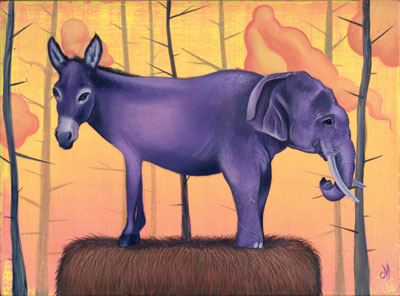
Poems about Elections / Los poetas hablan de Elecciones: 6 nov. 2012
.
By now many citizens of the USA – and countless people worldwide – are good and tired of news coverage – hasn’t media been droning on for twelve months? – of the Democratic (Obama) and Republican (Romney) campaigns leading up to the USA’s presidential election. And today – Tuesday, November 6th – is when voters cast their ballots – in hope, in anger, out of a mechanical sense of duty – or even for their very first time…
And so we present a selection of poems – some of them satirical – about election politics.
. . .
They’re predicting this one’ll be a nailbiter and a humdinger,
like Kennedy’s election over Nixon back in 1960
– just too close to call.
.
Alexander Best
“Swing-State Boogie”
.
“It’s no exaggeration to say
That the undecideds could
Go either way.”<*>
And gosh, who knew? that
How it goes
Depends on news from
O – HI – O ?
<*>Quotation from George Bush Sr., whose mastery of the backwards witty and bafflingly mundane in political comment was surpassed only by his son, George Bush Jr.
. . .
The following poem, “The Poor Voter on Election Day”, was written at a time when Democracy meant only white men voted – and no women. (And people doubtless did vote with their left hands too, though Whittier seemed to think all power lay in the right…)
But Whittier’s idealistic political sentiment is as American in 2012 – even with contemporary cynicism factored in – as it was in 1852.
.
John Greenleaf Whittier (1807-1892)
“The Poor Voter on Election Day” (1852)
.
The proudest now is but my peer,
The highest not more high;
Today, of all the weary year,
A king of men am I.
Today alike are great and small,
The nameless and the known
My palace is the people’s hall,
The ballot-box my throne!
.
Who serves today upon the list
Beside the served shall stand;
Alike the brown and wrinkled fist,
The gloved and dainty hand!
The rich is level with the poor,
The weak is strong today;
And sleekest broadcloth counts no more
Than homespun frock of gray.
.
Today let pomp and vain pretence
My stubborn right abide;
I set a plain man’s common sense
Against the pedant’s pride.
Today shall simple manhood try
The strength of gold and land
The wide world has not wealth to buy
The power in my right hand!
.
While there’s a grief to seek redress,
Or balance to adjust,
Where weighs our living manhood less
Than Mammon’s vilest dust —
While there’s a right to need my vote
A wrong to sweep away,
Up! clouted knee and raggéd coat!
A man’s a man to-day!
. . .
Hoy, en la ocasión de la Elección en los EE.UU., le presentamos poemas de dos poetas que hablaron de la política con pasión y con escepticismo:
.
Guillermo Aguirre y Fierro*
(1887-1949, San Luis Potosí, México)
“La Elección”
*Poema anónimo publicado en el periódico “El Cronista del Valle” (Brownsville, Texas, mayo de 1926). Historiador Antonio Saborit ha dicho que –seguramente – el poema fue escrito por Guillermo Aguirre y Fierro.
.
El león falleció ¡triste desgracia!
Y van, con la más pura democracia,
a nombrar nuevo rey los animales.
Las propagandas hubo electorales,
prometieron la mar los oradores,
y aquí tenéis algunos electores:
aunque parézcales a ustedes bobo
las ovejas votaron por el lobo;
como son unos buenos corazones
por el gato votaron los ratones;
a pesar de su fama de ladinas
por la zorra votaron las gallinas;
la paloma inocente,
inocente votó por la serpiente;
las moscas, nada hurañas,
querían que reinaran las arañas;
el sapo ansía, y la rana sueña
con el feliz reinar de la cigüeña;
con un gusano topo
que a votar se encamina por el topo;
el topo no se queja,
más da su voto por la comadreja;
los peces, que sucumben por su boca,
eligieron gustosos a la foca;
el caballo y el perro, no os asombre,
votaron por el hombre,
y con dolor profundo
por no poder encaminarse al trote,
arrastrábase un asno moribundo
a dar su voto por el zopilote.
Caro lector que inconsecuencias notas,
dime: ¿no haces lo mismo cuándo votas?
. . .
Jorge Valenzuela (Chile)
“Poema sobre las Elecciones”
.
A prepararse señores
se vienen las municipales
se renovarán los alcaldes
y también los concejales.
Volverán las calles sucias
las paredes muy pintadas
afiches en las casas
y las voces destempladas.
Las campañas en terreno
las visitas puerta a puerta
para cuadrar como sea
las ficticias encuestas.
Los diarios-la televisión
y las radios saturadas
destacando al candidato
ofreciendo todo y nada.
Los operativos sociales
los alimentos en cajas
materiales de todo tipo
para reparar bien las casas.
Al final de la contienda
vencedores y vencidos
si te he visto no me acuerdo
y el voto se ha perdido.
. . .
At the age of 27 NDP candidate Ruth Ellen Brosseau won the Québec seat of Berthier-Maskinongé in the May 2011 Canadian federal election. A French-speaking riding of which she had little knowledge – she has since been on a big learning curve with the French language – and she lived in Kingston at the time, not Trois-Rivières – Brosseau campaigned only barely because she was on vacation in Las Vegas in the days leading up to the vote. Yet she won – and by a healthy margin. What’s her secret ?!? Because Barack Obama and Mitt Romney – who spent over a billion dollars each on their campaigns – would dearly love to know!
.
Adrian deKuyper
“When the Bell Tolls” (A Limerick)
.
With hard work and much dedication
Our MPs do their best for our nation
So we salute Ms. Brosseau
Who it seems did not know
That when the bell tolls – don’t take a vacation.
. . .
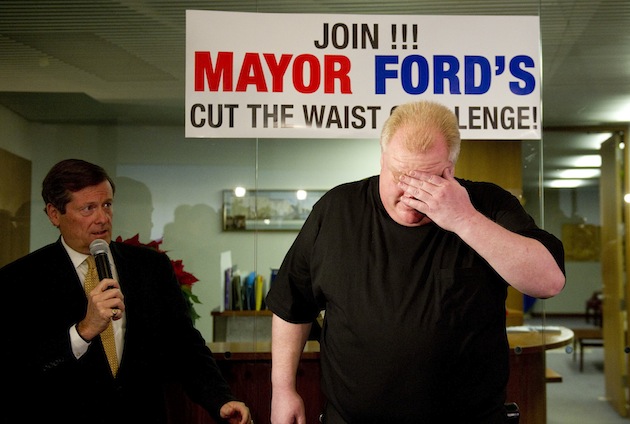
And a poetical angle on local (Toronto) politics in-the-moment…
.
Alexander Best
“Pass the gravy boat!”
or
“Stop the almost-a-train-wreck!”
(A poem for Rob Ford)
.
He barked: I’ll stop the gravy train!
Toronto folks, they listened.
But pugfaced Rob, our city’s mayor,
Keeps changing his positions.
.
He drives himself to City Hall
And, ‘texting’, gives ‘the finger’.
When brought to task, shrugs: Lighten up, o-kay!?
Bad feelings linger.
.
Please hire a driver, Mr. Ford,
And concentrate on business:
The mayoralty and civic tasks – the voters’ god-damn business.
.
Don’t commandeer a rush-hour bus
For your high-school football team
– shenanigans like that just make the People – goofball! – steam.
.
Our previous mayor froze out the Right
– that’s why there’s hothead You.
But calling Leftys pinko-fascists’s
Not the thing to do.
.
People joke about your weight,
Yeah, you’re an easy target.
But being mayor’s a hefty job
So please, won’t you get on it?!
.
You are a big man, 300 pounds plus,
With energy to burn.
So show big spirit for Trawno – Team Us –
And focus, listen, learn!
. . . . .
El Tzompantli…y una Danza de las Calaveras / Tzompantli…and The Skeleton Dance
Posted: November 2, 2012 Filed under: English, Spanish | Tags: Poemas para El Día de Los Muertos Comments Off on El Tzompantli…y una Danza de las Calaveras / Tzompantli…and The Skeleton Dance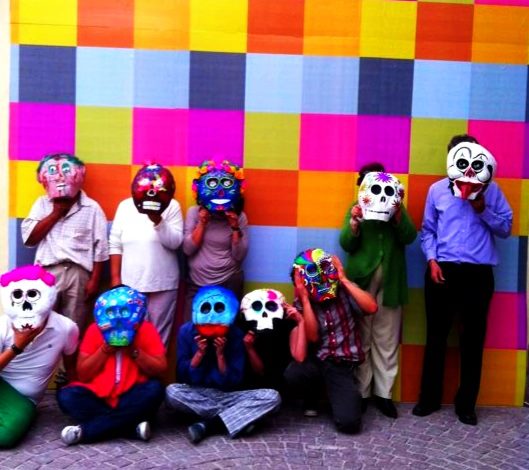
Danza de las Calaveras / Dance of the Skeletons
.
Cuando el reloj marca la una, las calaveras salen de su tumba, tumba que tumba, tumba, tumba, tumba.
When the clock strikes one the skeletons leave their tombs for fun – crying “timber!” and they tumble and they fall down clunk.
Cuando el reloj marca las dos, las calaveras tienen mucha tos, tumba que tumba, tumba, tumba, tumba.
When the clock strikes two those skeletons cough, oh yes they do – they cry “timber!” and they tumble and they fall down clunk.
Cuando el reloj marca las tres, las calaveras van a ver a Andrés, tumba que tumba, tumba, tumba, tumba.
When the clock strikes three they’re on their way to see Bea and Lee – the skeletons tumble, cry “timber!”, they fall down clunk.
Cuando el reloj marca las cuatro, las calaveras miran su retrato, tumba que tumba, tumba, tumba, tumba.
When the clock strikes four, they glance at the mirrored door – they see their spitting image – the latest in their lineage – they’ll cry “timber!” and they’ll tumble and they’ll fall down clunk.
Cuando el reloj marca las cinco, las calaveras siempre dan un brinco, tumba que tumba, tumba, tumba, tumba.
When the clock strikes five, we’ll be glad we’re still alive, those skeletons always jump up and down – yeah, they really go to town – and then they cry “timber!” while they tumble and they fall down clunk.
Cuando el reloj marca las seis, las calaveras miran al revés, tumba que tumba, tumba, tumba, tumba.
When the clock strikes six, for eyes they’ll have an X, those skeletons see inside out, they’re weird without a doubt – and they cry “timber!” as they tumble, falling down clunk clunk.
Cuando el reloj marca las siete, las calaveras se sacan un diente, tumba que tumba, tumba, tumba, tumba.
When the clock strikes seven, how far is it to heaven? yet they’ll pull out their one good tooth and that’ll do us for the Truth – our skeletons “timber!” and tumble and fall down clunk.
Cuando el reloj marca las ocho, las calaveras miran a Pinocho, tumba que tumba, tumba, tumba, tumba.
When the clock strikes eight the skeletons make a date with Kate – and Nate – and how they tumble! crying “timber!” falling down clunk clunk.
Cuando el reloj marca las nueve, a las calaveras todo se les mueve, tumba que tumba, tumba, tumba, tumba.
When the clock strikes nine, will you still be friend of mine? those skeletons get a move on, no longer are they Love’s pawn – still, they tumble, crying “timber!” and they fall down clunk.
Cuando el reloj marca las diez, las calaveras andan sobre un pie, tumba que tumba, tumba, tumba, tumba.
When the clock strikes ten if you kind-a got the yen then we’ll hop along on one foot – that’s just how the skeletons do’ it – and then we’ll cry “timber!”, and we’ll tumble down and clink-clank-clunk.
Cuando el reloj marca las once, las calaveras ya no se conocen, tumba que tumba, tumba, tumba, tumba.
When that clock strikes eleven will we settle like the raven? and the skeletons lose their minds and we try to turn back Time – but no, it’s “timber!” – and tumble – and fall down clunk.
Cuando el reloj marca las doce, las calaveras vuelven a su pose, tumba que tumba, tumba, tumba, tumba.
When the clock strikes twelve, into the past we’ll delve, the skeletons return to their poses ‘neath slabs of stone with roses – we’ll cry “timber!” and we’ll tumble and we’ll all fall down.
. . .
Dance of the Skeletons es un poema escrito en inglés por Alexander Best y inspirado por Danza de las Calaveras – un poema anónimo para niños (de Argentina).
Dance of the Skeletons is inspired by, and loosely based upon, Danza de las Calaveras, a Spanish-language children’s poem for which we thank Grupo Fray Luis Beltran in Argentina.
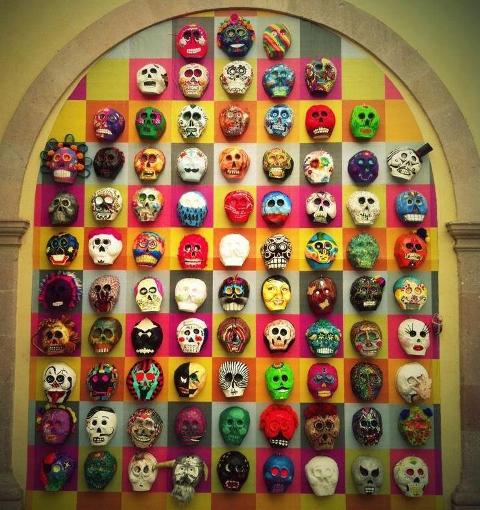
“¡Que viva la muerte misma, y mi Zacatecas querido!”: una muestra de calaveras literarias de 2012: Diana, Georgina, Esteban
Posted: November 2, 2012 Filed under: Spanish | Tags: Poemas para El Día de Los Muertos Comments Off on “¡Que viva la muerte misma, y mi Zacatecas querido!”: una muestra de calaveras literarias de 2012: Diana, Georgina, Esteban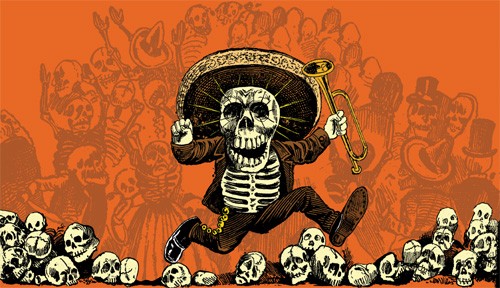
“¡Que viva la muerte misma, y mi Zacatecas querido!”:
una muestra de calaveras literarias de 2012
.
Diana de Jerez
“Calavera a Zacatecas”
.
Ha llegado la calaca
a nuestro estado bendito,
en busca de personajes
que cumplan los requisitos.
.
Afuera de catedral
mira pasar a la gente,
a ver cual se va a llevar
si a un santo o a un delincuente.
.
Ahora ha pensado en cargar
del diario ametralladora,
porque esta inseguridad
ni sus huesitos perdona.
.
En su morral carga tortas
en vez de cargar muertitos,
porque la crisis es dura,
no le alcanza pa’ taquitos.
.
Cuidado con la catrina
y me voy a despedir,
ahí les encargo un altar
por si me llevara a mí.
. . .
Georgina (de Ojocaliente)
.
Se acerca el 2 de Noviembre
y los muertos con muchas ganas
piden a gritos que llegue el día
y así sacar a pasear sus almas
.
Les pareció que Zacatecas
era la ciudad indicada
para mover todo su esqueleto
en sus típicas callejoneadas
.
Se reunieron las huesuditas
en la plaza bicentenario
todas querían encontrar pareja
de preferencia los funcionarios
.
Una calaca le dice a otra:
¿Y a ellos para que los queremos?
¡no seas tonta amiguita!
solo los estafaremos
.
Pobrecitos inocentes
no saben o que les espera
si no ayudan a toda su gente
debajo estarán de la tierra
.
Después de un rato de baile
a lo lejos se ve más gente
va llegando el Gobernador
con todo su gabinete
.
¡Miguelito, Miguelito!
le gritan sin presunción
ahora te haremos campaña
pero para llevarte al panteón
.
El Gobernador asustado
sale corriendo de la plaza
pero lo que no se imagina
es que lo buscaran en su casa
.
Las flacas muy preparadas
le piden cooperación
para seguir la pachanga
que termina en el panteón
.
Vámonos pues amiguitas
les dice Miguel Alonso
dejen en paz a los funcionarios
que ya borrachos están en el pozo
.
Yo les invito más tequila
y saben que mucho las quiero
pero déjenme en Zacatecas
porque de aquí sale buen dinero
.
Las calacas resignadas
aceptan su petición
pues se llevan buena tajada
cuando se hace la repartición
.
Así me gusta mis chulas
que jalen bien parejo
si me siguen ayudando
hasta de funcionarias las dejo…
. . .
Esteban (de Zacatecas)
.
Advierto zacatecanos,
la muerte salió del panteón,
como buenos mexicanos,
¡Hay que darle chicharrón!
.
Yo rápido les platico,
que me espera un buen camote,
pero bien que les platico,
que de loco me dan mote.
.
En Zacatecas anda la calaca,
aunque Nahle no lo acepte,
y aunque la catrina no peca,
de una vez que se lo inyecte.
.
Pero mejor les cuento,
de un noble escritor,
don Ramón con monumento,
pues lo merece nuestro embajador.
.
Oriundo de nuestra tierra,
del merito Jerez,
pueblo que por donde quiera,
te maravilla lo que ves.
.
El ilustre López Velarde,
a la muerte acompañó,
cansado de tanto alarde,
su Suave Patria nos heredó.
.
Orgullosos es que estamos,
de nuestro estado de cantera,
plata lo que habitamos,
y el paraíso de cualquiera.
.
Les digo que ando a prisa,
ya me voy, ya me despido.
¡Que viva la muerte misma,
y mi Zacatecas querido!
. . . . .
Reconocimiento: nuestros agradecimientos al sitio de web Zacateks
Robert Gurney: “Santiago de Chuco”… y César Vallejo
Posted: November 1, 2012 Filed under: César Vallejo, English, Robert Gurney, Spanish Comments Off on Robert Gurney: “Santiago de Chuco”… y César Vallejo
Robert Gurney
“Santiago de Chuco”
(to César Vallejo)
.
El reloj
con la cara azul
.
la Virgen negra
en la parroquia oscura
.
la foto de Vallejo
en la fachada del Cabildo
.
las placas de latón
que necesitaban limpiarse
.
las nubes tan bajas
como las de Inglaterra
.
el paraguas negro
que tal vez llevara en París,
colgado de un clavo,
que se encontraba abierto
.
la escultura del poeta
sentado
.
los baúles
donde quizás guardara una vez
el Orbe de Juan Larrea
.
esa momia extraña
agachada
en una vitrina de cristal
.
el pequeño horno,
extrañamente erótico,
cavado en el muro
.
el poema a la madre
.
la foto de la cara
de su madre
.
el altar familiar
.
vi estas cosas
en Santiago de Chuco.
.
Pero el objeto que me llamó
realmente la atención
fue ese gramófono RCA,
His Master’s Voice,
La Voz del Amo,
con la misma imagen del perro blanco
y la trompeta enorme
que yo escuché una vez,
la cabeza sostenida en las manos ahuecadas,
tendido en la alfombra,
bajo la aspidistra de mi abuela
en Dunstable.
. . .
Robert Gurney
“Santiago de Chuco”
(to César Vallejo)
.
The clock
with the blue face
.
the black Madonna
in the Parish Church
.
the photo of Vallejo
on the wall
of the Town Hall
.
the brass plaques
in need of polishing
.
the grey clouds
as low as those of England
.
the black umbrella
he may have used in Paris
hanging from a nail
open on a wall
.
the sculpture of the poet
sitting down
.
the trunks
where once
he may have kept
his copy of Juan Larrea’s Orbe
.
that strange mummy
sitting in a glass case
.
the little oven,
strangely erotic,
sunk in the white wall
.
the poem to the mother
.
the photograph of
his mother’s face
.
the altar
in the family house
.
these things caught my eye
in Santiago de Chuco
but none of them more
than that RCA gramophone,
His Master’s Voice,
with the same picture of the white dog
and the enormous horn,
as on the one that I once listened to,
my head cupped in my hands,
lying on the floor
beneath my grandmother’s aspidistra
in Dunstable.
. . . . .
César Vallejo
(born in Santiago de Chuco, Perú, 1892,
died in Paris, France, 1938)
“Black Stone on Top of a White Stone”
.
I shall die in Paris, in a downpour,
on a day I already remember.
Shall die in Paris – this doesn’t throw me off –
maybe on a Thursday, like today, in autumn.
.
Thursday it shall be, because today, Thursday,
as I set down these lines, I have ‘put my shoulder
to the grindstone’ – for evil. Never before have I turned,
as today, to seeing my total way to aloneness.
.
César Vallejo is dead. They all struck him,
though he did nothing to them; let him have it
hard with a stick, the lash of a rope as well.
The witnesses are:
Thursdays, shoulder bones, loneliness, rain, the roads…
. . .
César Vallejo (1892-1938)
“Piedra Negra Sobre Piedra Blanca”
.
Me moriré en París con aguacero,
un día del cual tengo ya el recuerdo.
Me moriré en París – y no me corro –
tal vez un jueves, como es hoy, de otoño.
.
Jueves será, porque hoy, jueves, que proso
estos versos, los húmeros me he puesto
a la mala y, jamás como hoy, me he vuelto,
con todo mi camino, a verme solo.
.
César Vallejo ha muerto, le pegaban
todos sin que él les haga nada;
le daban duro con un palo y duro
también con una soga; son testigos
los días jueves y los huesos húmeros,
la soledad, la lluvia, los caminos…
.
Vallejo translation into English: Alexander Best
. . . . .
Robert Gurney nació en Luton, Inglaterra, en 1939. Es un profesor de poesía francesa moderna, y de literatura española y latinomericana. Ha publicado diversos libros incluyendo tres poemarios: Luton Poems (2005), El cuarto oscuro (2008), y Poemas a la Patagonia (2004 y 2009). Él, su esposa Paddy, sus hijos y nietos viven en St Albans, Inglaterra. ‘Santiago de Chuco’ se toma de su próximo libro La libélula y otros poemas/The Dragonfly and Other Poems (edición bilingüe, Lord Byron Ediciones, Madrid, 2012). En prensa: La casa de empeño/The Pawn Shop (bilingüe, 2013).
.
Robert Gurney was born in Luton, England, in 1939. He is a Lecturer in modern French poetry, Spanish and Latin- American Literature. He writes in both Spanish and English and his poetry collections include: Luton Poems (2005), El cuarto oscuro (2008), and Poemas a la Patagonia (2004 and 2009). He, his wife Paddy, sons and grandsons live in St Albans, England. ‘Santiago de Chuco’ is taken from his forthcoming book La Libélula y otros poemas/The Dragonfly and Other Poems (bilingual edition, Lord Byron Ediciones, Madrid, 2012). Upcoming: La casa de empeño/The Pawn Shop (bilingual, 2013).
Frida + Diego: poems, pictures / pinturas, poemas
Posted: October 20, 2012 Filed under: Eduardo Urueta, English, Frida + Diego: poems + pictures / pinturas + poemas, Hellen Chinchilla, José Pablo Sibaja Campos, Spanish, ZP Translator: Alexander Best Comments Off on Frida + Diego: poems, pictures / pinturas, poemas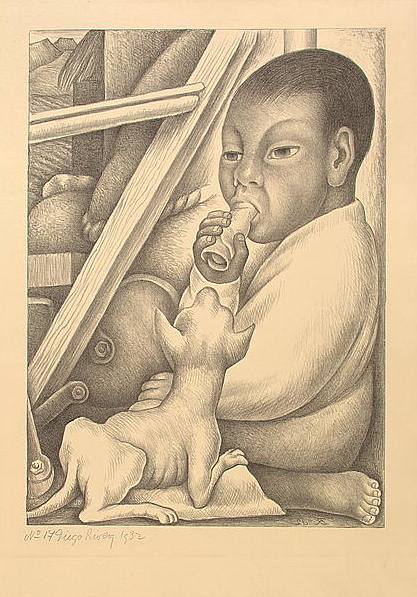
Today in Toronto, at the Art Gallery of Ontario, a first-time-ever exhibition in Canada opens: “Frida and Diego: Passion, Politics and Painting”. Combining the divergent artworks of México’s famous bohemian ‘power couple” of the twentieth century, Frida Kahlo and Diego Rivera – an odd yet charismatic pair of artists/soul-mates.
.
Diego Rivera (1886-1957) put México on the map internationally for his enormous public murals depicting Mexican history with a distinct Marxist perspective – and by placing Indigenous people front-and-centre in his work. Arguably, fellow muralists José Orozco and David Siqueiros were superior artists but Rivera’s vast energy and robust national/historical vision place him at the forefront. Though in his smaller painted canvases (some of which may be seen at the A.G.O. show) Rivera is wildly uneven as to technique and intellectual perspective – he can be cloying and mediocre – still, he is an exceptional figure for his vitality alone.
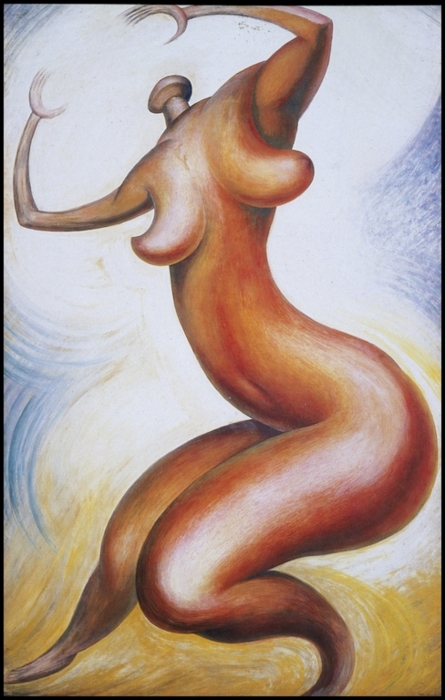
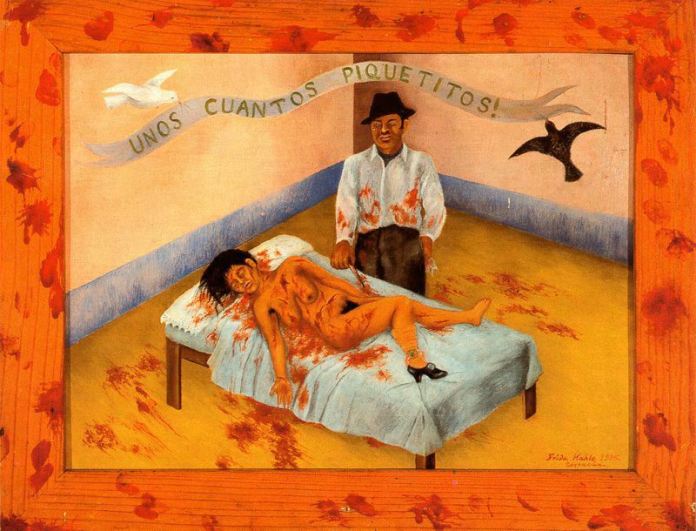
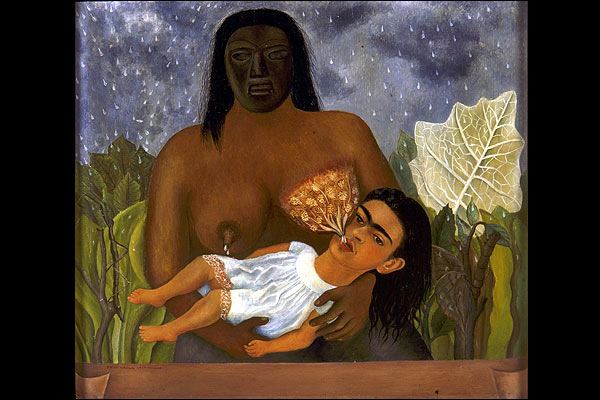
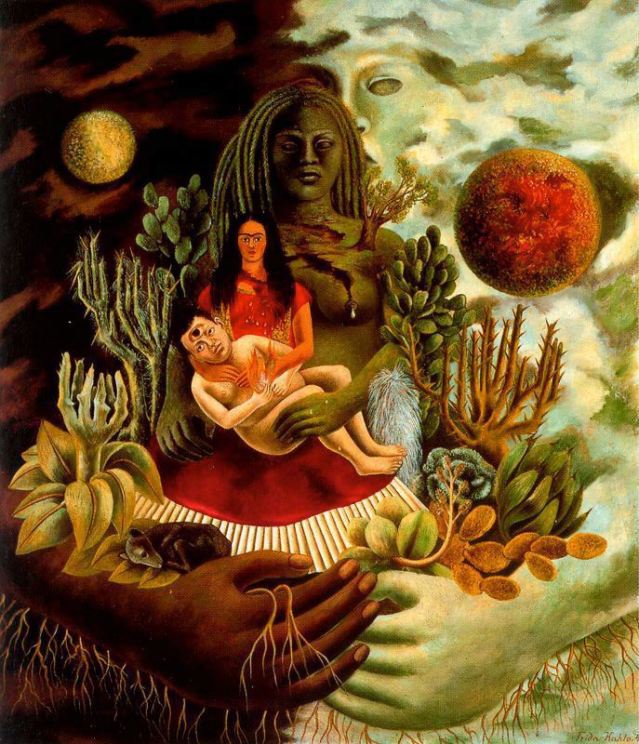
A maverick originality defines Frida Kahlo (1907-1954). In her short gutsy life she altered people’s perception of what it meant to be a woman painter. Though her small-size – and they are almost always small – canvases lack painterly finesse , nonetheless they are deeply affecting for their self-absorbed even disturbingly raw subject matter/point of view. Here was something new in a female painter – and Kahlo has been embraced by Surrealists, Feminists, champions of “Mestizaje”, Disabled and Chronic-Pain Activists, Body Self-Modifiers, and dedicated Non-Conformists. All have found what they needed in the work and life of this complex artist and woman – one who continues to fascinate a new generation now discovering her.
.
We present three poems in translation from Spanish by young poets who have meditated upon the “meaning of” Diego and of Frida…
. . .
Hoy en Toronto, el 20 de octubre, se inaugurará en La Galería de Arte de Ontario una exposición centrada en obras de los artistas Frida Kahlo y Diego Rivera – y titulada: Frida y Diego: Pasión, Política y Pintura. Es la primera vez que están en Canadá las pinturas de estos “compañeros” lo más famosos del arte mexicano del siglo XX.
Y para celebrar este hecho – las reflexiones de tres poetas…
. . .
Eduardo Urueta (pseudonym)
“Poem for Diego Rivera” (December 2011)
.
México:
The wet-nurse that breastfed you,
Who gave you your icy tone in love,
And who drew you, with his plump hands, as
Black women, soldiers on fire, Communists, kids;
México misses you –
this place is a fountain of the dismal…
.
So pronounced is your brow – like your temper.
So easygoing – so bearable – these mummy-like buildings.
The México of your tree-of-awareness is – like you – dead.
They’ve got skeletons – ‘at par’ now.
We are grey dust – smog – save for
Guanajuato which keeps on with its brightly-coloured houses in the hills and its
Streets smelling of oil paints – almost kissing us.
.
The buckets which by you got filled in two days
And by the third became big round chests or trunks-ful,
Were:
1. a nude portrait of (audacious poetess) Guadalupe Amor
2. a transvestite you never wanted and who ‘rouged’ you with his bearded cheeks,
And
3. your dead son by your first wife, Angelina Beloff.
.
So much matrimony to satisfy your hefty body,
So much travel to make ‘bug out’ those toad-eyes of yours,
So many kilometres of walls
To fill this country UP with History.
.
You are in debt.
You await – you hope for – a novice urbanization.
You have to hope – always – that the
Wall of memory (painted by you)
Bears the weight of – can hold up – the sky for you.
People will continue to love
The “Bellas Artes” fresco,
and that staircase mural decorated by your hands
– until the thing collapses and falls down…
. . .
Eduardo Urueta (Seudónimo)
“Poema para Diego Rivera” (diciembre 2011)
.
México:
la nodriza que te amamantó,
quien te dio tu gélido acento de amor,
y quien te dibujó, en las manos llenas,
mujeres morenas, soldados en combustión, comunistas, niños;
te extraña
– es una fuente sombría.
.
Tan pronunciada tu frente, como tu genio
Tan llevadera la momia de los edificios.
El México de tu árbol-conciencia,
como tú, está muerto.
Se hicieron a la par esqueletos.
Somos polvo gris,
excepto Guanajuato que sigue con casas de color en sus cerros
y sus calles huelen a aceite de pintura, a besos.
.
Los cubos que en ti cupieron dos días
y al tercero se volvieron un baúl redondo,
fueron
Un retrato desnudo de Guadalupe Amor,
Un hombre travesti que nunca quisiste y que ruborizaste de rosa
sus mejillas de hombre barbón,
y tu hijo muerto de Angelina Beloff.
.
Tanto matrimonio para llenar tu cuerpo gordo
tanto viaje
para llenar tus ojos de sapo
tanto kilómetro de muros
para llenar de historia al país
.
En deuda estás.
Te espera el blanco de la novicia urbanización
Te ha de esperar, siempre
el muro de la memoria
te ha de sufrir el cielo
por sujetarte el peso.
Te seguirá amando Bellas Artes
su escalera adornada de tus manos
hasta que se derrumbe…
José Pablo Sibaja Campos
“To Frida”
.
Today, when inexorable Time has shown us
How many calendars have gone up in smoke;
Now that the leaves have begun to fall from the trees;
Only just today when the sky seems to be transforming itself into a violent sea;
I – pausing before your face and its glance – have got to say:
Frida Camarada Kahlo,
That which you painted at one time or another as if wanting to speak to me;
The same fixed glance with which you have turned yourself into a nereid, a sea-nymph,
from that murky sea many people wanted to conquer but which few have achieved.
.
To be sure, Frida, there are those who look for you under the shade of some Rivera painting;
Others, naïve ones, find you within the shuttered corridors of a dream
– Poor them! – sad…blind.
They don’t notice that you live in your paintings, your paintings live in you.
Come, Frida, rise up and walk, as if you were the biblical Lazarus.
Show yourself again and let us once more call you:
Woman, Artist, Revolutionary.
. . .
José Pablo Sibaja Campos
“A Frida”
.
Hoy que el inexorable tiempo nos ha enseñado
Cuantos calendarios ha quemado ya.
Ahora que las hojas han empezado a caer de los árboles,
Justo hoy que el cielo parece convertirse en un mar violento,
Tengo que decirlo, me detuve ante tu mirada
Frida Camarada Kahlo
Esa que pintaste una y otra vez como queriendo hablarme,
La misma mirada con la que te has convertido en la nereida
Del turbio mar que muchos quisieron conquistar
Pero que pocos han logrado.
.
Es cierto Frida algunos te buscan balo la sombra de un tal Rivera,
Otros ingenuos,
Te hallan en los postigos pasillos del sueño
Pobre de ellos, tristes…ciegos.
No se dan cuenta que vives en tu obra y tu obra en ti.
Ven Frida levántate y anda, cual si fueras el Lázaro bíblico
Muéstrate de nuevo y déjanos llamarte una vez más;
Mujer, Artista, Revolucionaria.
. . .
Hellen Chinchilla
“Between transgression and normalcy”
.
Why?
Why do you have to be along that line where there are no lines – no horizons?
Why are you not the same as all the others?
Why must you be seen as transgressive and not as normal?
Where is that fine line that keeps you apart?
Apart to be what you must be!
Forced by life, by decision, and by pain to be in that line off to one side,
where the others, even though they wanted not to be there,
are leaving behind the boundaries of the hetero…
Oh, you knew how to love…
You – different Woman,
Woman-transgressor,
Normal Woman – and then some.
Woman.
Hellen Chinchilla
“Entre la transgresión y la normalidad”
.
¿Por qué?
¿Por qué debes estar en la línea dónde no hay líneas?
¿Por qué no eres de las mismas?
¿Por qué tienes que ser vista como transgresora y no como normal?
¿Dónde está esa delgada línea que te mantiene al margen,
Al margen de ser lo que debes ser?
Obligada por vida, decisión y dolor a estar en la línea de al lado
En donde las otras, aunque quieran no pueden estar
Dejando atrás la frontera de lo hetero…
– Supiste amar…
Mujer diferente,
Mujer transgresora,
Mujer normal – o una más…
Mujer.
. . . . .
Traducciones del español al inglés / Translations from Spanish into English: Alexander Best
“A Frida” y “Entre la transgresión y la normalidad” y “Poema para Diego Rivera”
© José Pablo Sibaja Campos, Hellen Chinchilla, Eduardo Urueta
. . . . .
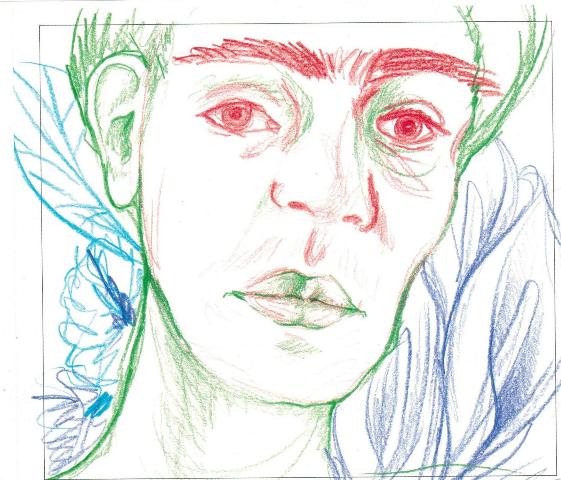
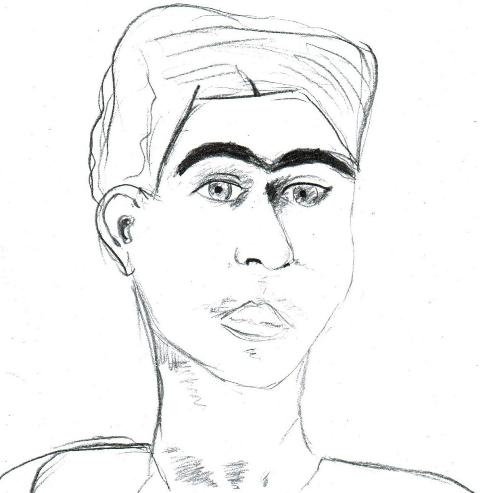
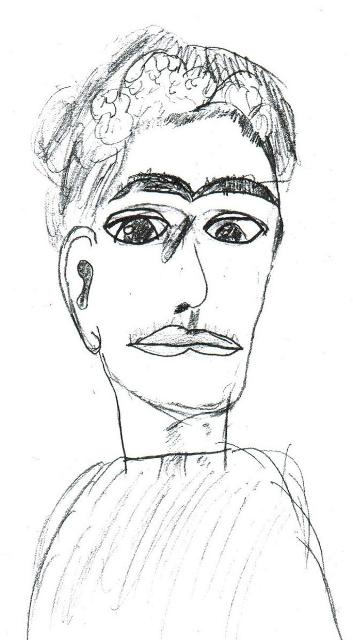
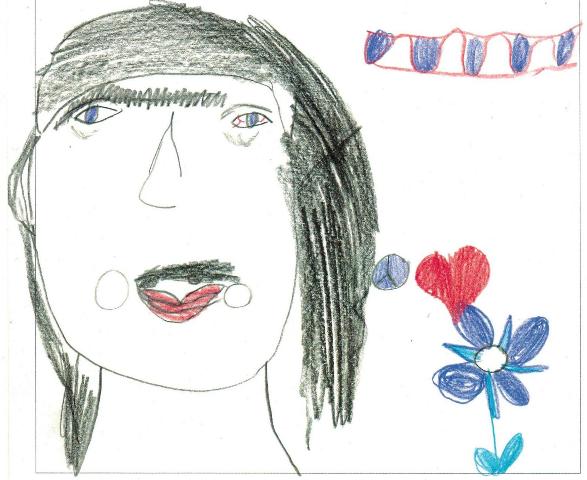
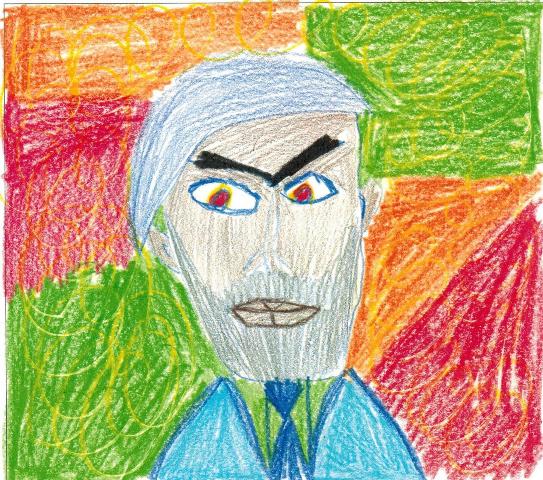
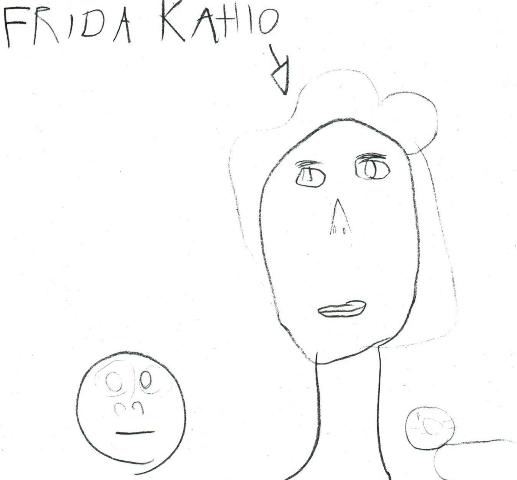
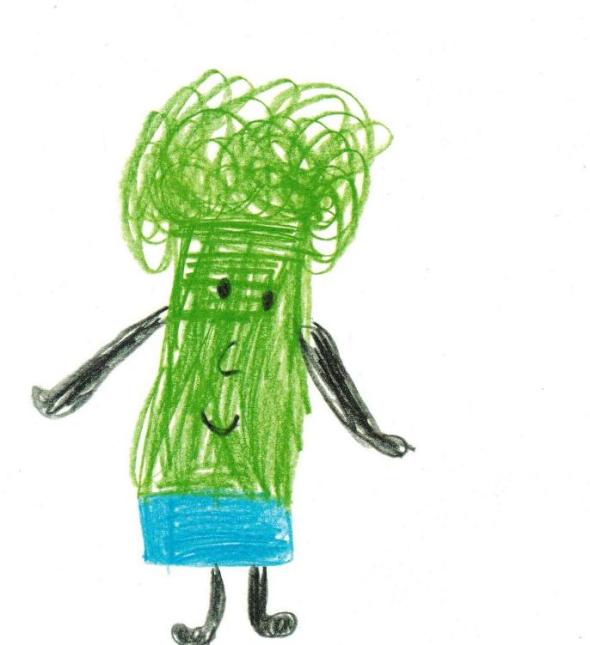
Retratos de Frida Kahlo: dibujos hechos por unos adolescentes y niños en Toronto, Canadá, otoño de 2012:
Dos poemas para Yom Kipur / Two poems for Yom Kippur: Jane Kenyon, Mary Oliver + תשובה
Posted: September 25, 2012 Filed under: English, Jane Kenyon, Mary Oliver, Spanish Comments Off on Dos poemas para Yom Kipur / Two poems for Yom Kippur: Jane Kenyon, Mary Oliver + תשובהEste año, Yom Kipur – la conmemoración del Día de la Expiación y del Perdón – cae en el 25 y 26 de septiembre. Estos dos poemas, eligidos por la Rabina Rachel Barenblat, se tratan – elipticamente, oblicuamente – del sujeto de Teshuvá. Teshuvá (en hebreo תשובה) es la práctica de volver a las raíces de la fe. Incluye el esfuerzo del individuo hacia un sentido de arrepentirse de los pecados propios de una forma significativa y sincera…
*
This year Yom Kippur – the Day of Atonement and Forgiveness – begins at sunset on September 25th and continues through the 26th. The two poems featured here – chosen by Rabbi Rachel Barenblat – are about Teshuvah, although indirectly, elliptically so. Teshuvah involves a “return” to the roots of the faith, and includes each individual’s effort to feel repentant, genuinely sorry for, the wrongs he or she has done to another. When there is deep, meaningful sincerity to this spiritual process it is often reciprocated through forgiveness by the one who was wronged…
.
Jane Kenyon (1947-1995)
“Sola por una semana”
.
Hice una lavada de ropa
y la colgué para secar.
Subí al pueblo después fui al centro
y me entretuve todo el día.
La manga de tu camisa más fina
ascendió solemnemente
cuando llegaba en el carro
nuestras ropas de dormir
se enlazaron y desenlazaron
en una pequeña ráfaga de viento.
Para mí se estuvo haciendo tarde; estaba
para ti, donde estabas – no.
La luna de otoño estaba llena
pero las nubes escasas hacían su luz
no exactamente fidedigna.
La cama en tu lado parecía
ancha y llana como Kansas;
tu almohada estaba rellena, fresca, alegórica…
*
Jane Kenyon (1947-1995)
“Alone for a week”
.
I washed a load of clothes
and hung them out to dry.
Then I went up to town
and busied myself all day.
The sleeve of your best shirt
rose ceremonious
when I drove in; our night-
clothes twined and untwined in
a little gust of wind.
For me it was getting late;
for you, where you were, not.
The harvest moon was full
but sparse clouds made its light
not quite reliable.
The bed on your side seemed
as wide and flat as Kansas;
your pillow plump, cool,
and allegorical…
_____
Mary Oliver (nace 1935)
“El Viaje”
.
Por fin un día supiste
lo que tenías que hacer, y empezaste,
aunque las voces alrededor de ti
siguieron gritando
su mal consejo – aunque toda la casa
comenzó a temblar
y sentiste el jalón familiar
a tus tobillos.
“¡Arregla mi vida!”
gritó cada voz.
Pero no te detuvistes.
Supiste lo que tenías que hacer
aunque los dedos rígidos del viento
curiosearon aún en los fundamentos
aunque era terrible su melancolía.
Ya estaba bastante tarde
y una noche furiosa,
y el camino lleno de ramas y piedras caídas.
Pero, poco a poco,
como dejaste atrás sus voces,
las estrellas comenzaron a quemar
por las capas de nubes,
y había una fresca voz
que reconociste lentamente,
que te acompañaba
mientras que cruzaste a grandes zancadas
más y más en lo más hondo del mundo,
estando decidido a
hacer la sola cosa que podías hacer –
estando empeñado a salvar
la única vida que podías salvar.
*
Mary Oliver (born 1935)
“The Journey”
.
One day you finally knew
what you had to do, and began
though the voices around you
kept shouting
their bad advice—
though the whole house
began to tremble
and you felt the old tug
at your ankles.
“Mend my life!”
each voice cried.
But you didn’t stop.
You knew what you had to do,
though the wind pried
with its stiff fingers
at the very foundations,
though their melancholy
was terrible.
It was already late
enough, and a wild night,
and the road full of fallen
branches and stones.
But little by little,
as you left their voices behind,
the stars began to burn
through the sheets of clouds,
and there was a new voice
which you slowly
recognized as your own,
that kept you company
as you strode deeper and deeper
into the world,
determined to do
the only thing you could do—
determined to save
the only life you could save…
. . . . .
Traducción del inglés al español / Translation from English into Spanish:
Alexander Best, Lidia García Garay
 Zócalo Poets