Hector Poullet: “Mi yo doubout an péyi-la…” / “Standing tall in our country…”
Posted: February 29, 2012 Filed under: Creole / Kréyòl, English, French, Hector Poullet | Tags: Black poets Comments Off on Hector Poullet: “Mi yo doubout an péyi-la…” / “Standing tall in our country…”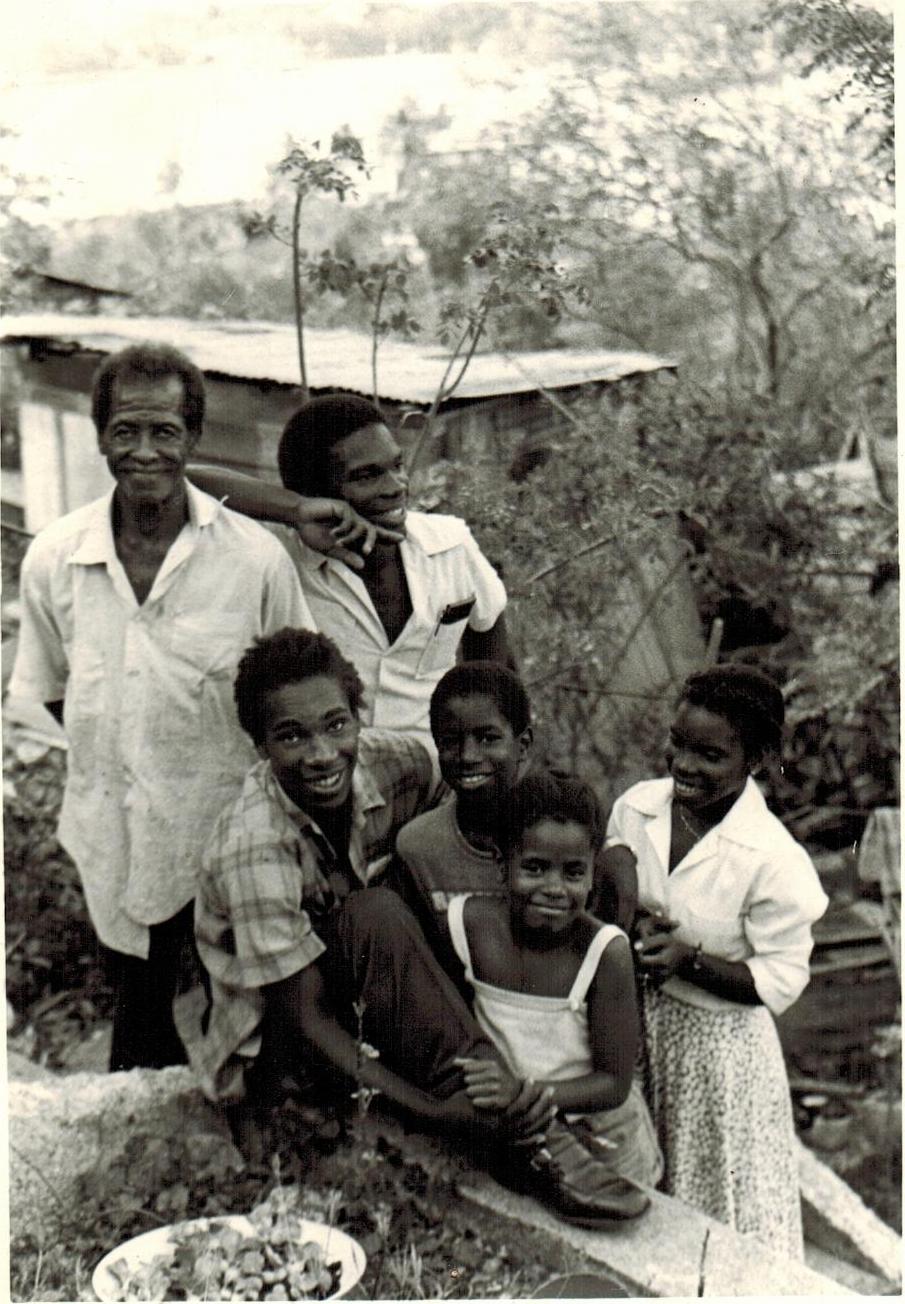
Hector Poullet (né/born 1938)
(Écrivain noir, créoliste, de La Guadeloupe
/ Black Creole-language writer, Guadeloupe)
E mi sé ti moun péyi-la
Mi yo
Mi yo doubout an péyi-la
An mitan lanmé
An mitan soley
Yo la
Po nwè
Po jonn
Po rouj
Po shapé
Po blan
Nou byen fouté pa mal !
Nou sa sé zenfan péyi-la
Sé swé a yo ki ka rozé péyi-la
_____
Voici les enfants du pays, Here are the children of the country,
Les voici, Here they are,
Les voici érigés au pays, Standing tall in our country,
Au coeur même de la mer, With hearts as much of the sea as sun.
Au coeur même du soleil.
Ils sont là There they are: the
Peaux noires Black skins, yellows,
Peaux jaunes Red skins and shedded skins,
Peaux rouges White skins, too.
Peaux échappées et
Peaux blanches
Quelle importance ! And it’s so important –
Ce sont, nous le savons, That they are – and we know it –
Les fils de ce pays; The children of this country;
Leur sueur nourrit la terre de ce pays! Their sweat nourishes this earth!
_____
Juliane Okot Bitek: “Dans Sept Jours” et “À Langston Hughes”
Posted: February 1, 2012 Filed under: English, French, Juliane Okot Bitek, ZP Translator: Lan Truong, ZP Translator: Lidia García Garay | Tags: Black poets Comments Off on Juliane Okot Bitek: “Dans Sept Jours” et “À Langston Hughes”_____
“Dans Sept Jours”
Une main delicate
tient un eventail
Evoque des souvenirs de la performance d’un amoureux
*
Dis-moi
Dis-moi car je ne m’imagine pas
La chaleur qui se lève dans l’arrière de ma gorge
S’étendre dans ma poitrine
Tombe
Et se dépose
*
Je ne reviendrai pas vers toi
*
Une fleur se ferme
Se dessèche à cause de la froide étreinte
D’un vent sec et amer
*
Tout sera fini
Dans sept jours.
_____
“À Langston Hughes”
Si tu ne restes pas
Pour lire mon coeur,
Cela ne me dérange pas
*
J’ai déchiré ton livre de poésie
*
Tu as menti:
Comme je prenais le train à Harlem
Tu as déraillé.
_____
Le poète Juliane Okot Bitek est née à Kenya en 1966.
Elle a passé son enfance en Ouganda.
Et maintenant elle habite à Vancouver, Canada.
*
Traductions de l’anglais au français:
Lidia Garcia Garay, Lan Truong
_____
“Seven Days”
A delicate hand
Holds a fan
Evokes memories of a lover’s performance
Tell me
Tell me that I do not imagine
The heat that rises at the back of my throat
Spreads through my chest
Falls
And settles
I am not returning to you
A flower folds up
Shrivels from the cold embrace
Of a dry and bitter wind
In seven days
It will be over.
_____
“To Langston Hughes”
That you will not stay
To read my heart
Doesn’t matter to me
I tore your book of poetry
You lied:
While I took the Harlem train uptown
You strayed.
_____
Poet Juliane Okot Bitek was born in Kenya in 1966
and spent her childhood in Uganda.
She now lives in Vancouver, Canada.
_____
Langston Hughes: “La Señora y su Señora” / “Madame et sa Madame” / “Madam and her Madam”
Posted: February 1, 2012 Filed under: English: Black Canadian / American, French, Langston Hughes, Spanish, ZP Translator: Lan Truong, ZP Translator: Lidia García Garay | Tags: Black poets Comments Off on Langston Hughes: “La Señora y su Señora” / “Madame et sa Madame” / “Madam and her Madam”_____
Langston Hughes (February 1st, 1902 – 1967)
“Madam and Her Madam”
I worked for a woman,
She wasn’t mean–
But she had a twelve-room
House to clean.
*
Had to get breakfast,
Dinner, and supper, too–
Then take care of her children
When I got through.
*
Wash, iron, and scrub,
Walk the dog around–
It was too much,
Nearly broke me down.
*
I said, Madam,
Can it be
You trying to make a
Pack-horse out of me?
*
She opened her mouth.
She cried, Oh, no!
You know, Alberta,
I love you so!
*
I said, Madam,
That may be true–
But I’ll be dogged
If I love you!
_____
“La Señora y su Señora”
por Langston Hughes
Trabajé para una mujer
No era muy malvada—
Ella tenía una casa de doce cuartos
que yo tenía que limpiar.
*
Tenía que hacer desayuno,
Almuerzo y cena también—
Después atender a los niños,
Al terminar.
*
Lavar, planchar, y limpiar
Llevar a caminar al perro…
Era demasiado,
Casi me destroza.
*
Yo le dije, Señora,
¿Es posible que usted
Está tratando de convertirme
En un caballo de carga?
*
Ella habrió su boca
Y exclamó:
¡Oh, no!
Sabes Alberta,
¡Yo a tí te quiero mucho!
*
Yo le dije: Señora,
Puede que eso sea verdad—
¡Pero que desgracia la mía
Si yo la quiero a usted!
*
Traducción del inglés al español: Lidia García Garay
_____
“Madame et sa Madame”
par Langston Hughes
J’ai travaillé pour une femme,
Elle n’était pas méchante—
Elle avait une maison avec
douze chambres
Que je devais nettoyer.
Préparer le petit déjeuner,
Le déjeuner et le dîner aussi—
Je devais garder ses enfants
Après tout ca.
Faire la lessive et la repasser,
et nettoyer le plancher,
Promener son chien—
C’était trop!,
Le travail m’a fait presque craquer.
*
Je lui ai dit: Madame,
Est-ce qu’il est possible
Que vous essayiez
De me transformer en cheval de trait?
*
Elle a ouvert sa bouche.
Et elle a dit: Pas du tout!
Tu sais Alberta,
Je t’aime beaucoup!
*
Je lui ai dit: Madame,
Cela peut être la vérité
Mais je serais foutue
si je vous aime!
*
Traduction de l’anglais au français:
Lidia García Garay, Lan Truong
_____
Langston Hughes: “La Vida es buena” / “La Vie est bien” / “Life is Fine”
Posted: February 1, 2012 Filed under: English: Black Canadian / American, French, Spanish, ZP Translator: Lan Truong, ZP Translator: Lidia García Garay | Tags: Black poets Comments Off on Langston Hughes: “La Vida es buena” / “La Vie est bien” / “Life is Fine”_____
Langston Hughes (February 1st, 1902 – 1967)
“Life is Fine”
I went down to the river,
I set down on the bank.
I tried to think but couldn’t,
So I jumped in and sank.
I came up once and hollered!
I came up twice and cried!
If that water hadn’t a-been so cold
I might’ve sunk and died.
But it was Cold in that water! It was cold!
*
I took the elevator
Sixteen floors above the ground.
I thought about my baby
And thought I would jump down.
I stood there and I hollered!
I stood there and I cried!
If it hadn’t a-been so high
I might’ve jumped and died.
But it was high up there! It was high!
*
So since I’m still here livin’,
I guess I will live on.
I could’ve died for love–
But for livin’ I was born
Though you may hear me holler,
And you may see me cry–
I’ll be dogged, sweet baby,
If you gonna see me die.
Life is fine! Fine as wine! Life is fine!
_____
“La Vida es Buena”
por Langston Hughes
Fuí al río
Me senté a la orilla
Traté de pensar sin éxito alguno,
Entonces me lancé al agua y me hundí
¡Salí una vez y grité!
¡Sali una segunda vez y lloré!
Si el agua no hubiera estado tan fría
Me habría hundido y habría muerto
¡Pero estaba
Frío en el agua!
¡Hacía frío!
*
Tomé el ascensor
Quince pisos arriba
Pensé en mi amor
Y pensé que me tiraría
¡Estube un rato y grité!
¡Estube un rato y lloré!
Si no hubiera estado tan alto
Habría saltado y muerto.
¡Pero estaba muy alto allá arriba!
*
Entonces ya que estoy aquí vivo,
Supongo que seguiré viviendo.
Yo podría haber muerto por amor,
Pero para vivir nací
Aunque me oigan gritar—
Y me oigan llorar
Que desgracia la mía, dulce amor,
Si tu me vas a ver morir.
¡La Vida es Buena! ¡Buena como el vino! ¡La Vida es Buena!
*
Traducción del inglés al español: Lidia García Garay
_____
“La Vie est Bien”
par Langston Hughes
(1er février, 1902 – 1967)
Je suis allé à la rivière,
me suis assis sur le bord,
J’ai essayé de penser mais je n’en ai pas pu,
alors je me suis jeté dans l’eau et j’ai coulé,
Je suis sorti de là et j’ai beuglé!
Une deuxième fois et j’ai pleuré.
Si l’eau n’avait pas été si froide
j’aurais coulé et été mort.
Mais il faisait froid dans l’eau!
*
J’ai pris l’ascenseur,
suis monté dans le seizième étage,
J’ai pensé a mon amour
Et j’ai pensé à me jeter du haut de l’édifice.
Je suis resté un moment et j’ai beuglé!
Je suis resté là et j’ai pleuré!
Si où j’était n’était si haut
j’aurais eu me jeter et mourir.
Mais il était très haut là bas!
*
Alors, comme je suis encore ici et vivant,
Ça veut dire que je vais continuer à vivre.
Je serais mort à cause de l’amour
Mais je suis né pour vivre.
Vous pouvez m’entendre hurler
Et vous pouvez me voir pleurer –
Je serais foutu, mon amour,
Si tu me vois mourir.
La vie est bonne! Comme le vin est bon! La vie est bien!
*
Traduction de l’anglais au français:
Lidia García Garay, Lan Truong
_____
Louis Riel et Marilyn Dumont: poèmes à Sir John A. Macdonald
Posted: January 11, 2012 Filed under: English, French, Louis Riel, Marilyn Dumont Comments Off on Louis Riel et Marilyn Dumont: poèmes à Sir John A. Macdonald
Louis Riel
“Sir John A. Macdonald gouverne avec l’orgueil”
.
Sir John A. Macdonald gouverne avec l’orgueil
Les provinces de la Puissance
Et sa mauvaise foi vent prolonger mon deuil
Afin que son pays l’applaudisse et l’encense.
.
Au lieu de la paix qu’il me doit
Au lieu de respecter d’une manière exacte
Notre Pacte
Et mon droit,
Depuis bientôt dix ans, Sir John me fait la guerre.
Un homme sans parole est un homme vulgaire.
Fort et faible d’esprit, moi je le montre au doigt…
Je ne souhaite pas, Sir John, que votre mort
Soit pleine de tourments. Mais ce que je désire
C’est que vous connaissiez et souffriez le remord :
Parce que vous m’avez mangé, comme un vampire.
.
L’horizon, tout le ciel m’apparaissait vermeil.
Vous avez accablé de soucis mon jeune âge.
Et vous êtes sur moi comme un épais nuage
Qui dérobe à mes yeux la clarté du soleil.
.
J’espère voir la fin de vos pensées altières.
Vous avez fait le mal : et c’est ce qui détruit.
Vous tomberez peut-être avec le même bruit
Qu’on entend l’Ottawa bondir dans les Chaudières.
.
Vos moyens d’action, John, ne sont pas les miens.
Mes amis ont souffert de ma grande folie.
Ils s’en consoleront : car elle fut jolie.
Vous n’effacerez pas mon passé, car j’ y tiens.
.
Vous, vous serez connu pour le hardi mensonge.
C’est à vous que j’en veux pour ma proscription.
Je fais mon temps d’exil : et je mange mon ronge.
Et je suis, malgré vous, chef de ma nation.
.
Je n’abandonne pas mon plan : je l’étudie.
Et je l’ai travaillé d’une façon hardie.
J’ai trouvé ce qu je voulais.
Je vous connais à fond maintenant, peuple anglais.
. . .
An English translation by Paul Savoie:
“Sir John A. Macdonald governs with “pride””
.
Sir John A., shackled by pride’s endless chain,
Governs the Dominion’s vast domain,
And through perfidy prolongs my agony
To gain his kind’s approval, vain glory.
.
Disrespecting his commitments,
He does not heed the terms, fair and precise,
Of our Agreement
And my stated rights.
Nearly ten years I have endured torment.
A man who reneges on his word is base.
Let my accusing finger state my case…
.
Sir John, I do not wish upon you death
Riddled with pain and horror but instead
Days of dull remorse and daily regret
You, foul vampire, who have left me for dead.
The sky above once appeared ruby red
As did the horizon. Your actions soured
My youth and hid the sun. The day’s colours
From my famished eyes are cruelly bled.
To your own arrogance you must demur
Lest your actions wreak greater destruction.
Or, as in the Chaudieres rapids clamour,
Prepare your fall in swift swirling motion.
.
Your methods, John, are not the same as mine.
My friends have paid a price for my excess
Which, as a comfort, they may find sublime.
I will not let you rob me of my past.
You will be the seen prevaricator
And on you history will lay the blame.
I pine away in exile but remain
In spite of you my nation’s true leader.
I ponder now. I don’t relinquish
My plan. I fine-tune it and turn it plain.
My efforts have not been in vain
For I have seen the hearts of the English.
_____
Sir John A. Macdonald became, in 1867, the first prime minister
of a newly united “Canada” – which had been up till that time
a loose arrangement of British and French colonies.
He was born on January 11th, 1815, in Scotland, and
came to Canada as a boy, settling with his family in
Kingston, Ontario, where, after becoming a lawyer,
he then entered into politics.
The big achievements of his political career were
the uniting of the vast and distant colonies into
one new nation – plus the completion in 1885 of a
transcontinental railroad – the Canadian Pacific
Railroad – from the East all the way to the Pacific Ocean.
*
Louis Riel (1844-1885) was born in the Red River Colony,
(later Manitoba) and was the charismatic leader of what
was an unrecognized new nation of mixed-race people,
The Métis (French and Native).
After an unsuccessful attempt to assert his leadership
versus Ottawa in “Manitoba” – the Red River Rebellion of 1870 –
Riel went into exile in Montana, south of the border.
It was there that he wrote his intense poem in French:
“Sir John A. Macdonald gouverne avec l’orgueil”.
*
Riel returned to Canada, and in The NorthWest Rebellion
of 1885 he galvanized The Métis to assert land rights in
what would become the province of Saskatchewan.
Macdonald hanged Riel for high treason after the
Rebellion was driven down by government troops.
The legacy of this event is complex –
Riel was deemed mad by the mainly Protestant
English and an Ottawa that saw in his charisma
a passionate, dangerous rival. In Québec Riel
has been viewed as a visionary francophone folk hero.
Increasingly, in our time, he is regarded
as a thwarter of simplistic ideologies of race and
culture. Louis Riel is, in his unique way, a great Canadian
– though he goes unrecognized as such.
_____
Marilyn Dumont, born in 1955, is a Canadian poet
of Cree/Métis descent. The poem below,
“Letter to Sir John A. Macdonald”, was written in 1993.
Astutely, she points out how the completion of
the Canadian Pacific Railroad permitted the rapid
movement of new white settlers out West to
the very land Riel claimed for his people.
1885 was a crucial year, when both the
NorthWest Rebellion and The Last Spike
were “driven down”…
*
Marilyn Dumont
Letter to Sir John A. Macdonald
.
Dear John:
I’m still here and halfbreed,
after all these years.
You’re dead, funny thing,
that railway you wanted so badly,
there was talk a year ago
of shutting it down
and part of it was shut down,
the “dayliner”, at least,
‘ from sea to shining sea ‘,
and you know, John,
after all that shuffling us around to suit the settlers,
we’re still here and Métis .
We’re still here
after Meech Lake and
one no-good-for-nothing-Indian
holdin’ up the train,
stalling the ” Cabin syllables / Nouns of settlement
/ …steel syntax [and] / The long sentence of its exploitation ”
and John, that goddamned railroad never made this a great nation,
’cause the railway shut down
and this country is still quarreling over unity,
and Riel is dead
but he just keeps coming back
in all the Bill Wilsons yet to speak out of turn or favour
because you know as well as I
that we were railroaded
by some steel tracks that didn’t last
and some settlers who wouldn’t settle
and it’s funny – we’re still here and callin’ ourselves halfbreed.
. . . . .
Photograph: Louis Riel and his Council, 1870
Mon Pays – c’est l’Hiver ! “Québécitude” in song
Posted: December 22, 2011 Filed under: English, French, Gilles Vigneault, Translator's Whimsy: Song Lyrics / Extravagancia del traductor: Letras de canciones traducidas por Alexander Best, ZP Translator: Alexander Best Comments Off on Mon Pays – c’est l’Hiver ! “Québécitude” in song
MY COUNTRY
My country’s not a country, it’s winter,
my garden’s not a garden, it’s a vast plain,
my road is no road – it’s the snow !
My country’s not a country – it’s winter !
A ceremony all in white
where snow marries wind,
in this blizzard-land
my father built a house
and I’m going to honour
his ways, his example…
My guest room will be where
you return, season by season
and you’ll build too – right beside it.
My country’s not a country, it’s winter,
My refrain’s no refrain, it’s a gust of wind,
My house isn’t mine – it’s the winter-chill’s !
My country’s not a country – it’s winter !
All around my solitary land
I cry out before the silence,
to everyone on earth:
My house is yours, too.
Inside four walls of ice
with time and space
I make the fire, and a place
for People of the Horizon
– and these people are of my people.
My country’s not a country, it’s winter,
my garden’s not a garden, it’s the vast plain,
my road is no road – it’s the snow !
My country’s not a country – it’s winter !
My country’s no country but the contrary
of country – neither land nor nation,
my song’s not a song – it’s my life !
And for you I wish to master these winters !
_____
MON PAYS
Mon pays ce n’est pas un pays, c’est l’hiver
Mon jardin ce n’est pas un jardin, c’est la plaine
Mon chemin ce n’est pas un chemin, c’est la neige
Mon pays ce n’est pas un pays, c’est l’hiver.
Dans la blanche cérémonie où la neige au vent se marie
Dans ce pays de poudrerie mon père a fait bâtir maison
Et je m’en vais être fidèle à sa manière à son modèle
La chambre d’amis sera telle qu’on viendra des autres saisons
pour se bâtir à côté d’elle.
Mon pays ce n’est pas un pays, c’est l’hiver
Mon refrain ce n’est pas un refrain, c’est rafale
Ma maison ce n’est pas ma maison, c’est froidure
Mon pays ce n’est pas un pays, c’est l’hiver.
De ce grand pays solitaire je crie avant que de me taire
A tous les hommes de la terre ma maison c’est votre maison
Entre mes quatre murs de glace je mets mon temps et mon espace
À préparer le feu, la place pour les humains de l’horizon
Et les humains sont de ma race.
Mon pays ce n’est pas un pays, c’est l’hiver
Mon jardin ce n’est pas un jardin, c’est la plaine
Mon chemin ce n’est pas un chemin, c’est la neige
Mon pays ce n’est pas un pays, c’est l’hiver.
Mon pays ce n’est pas un pays, c’est l’envers
D’un pays qui n’était ni pays ni patrie
Ma chanson ce n’est pas une chanson, c’est ma vie
C’est pour toi que je veux posséder mes hivers.
_____
Gilles Vigneault (born 1928) wrote “Mon Pays” for a 1965 NFB film,
La neige a fondu sur la Manicouagan. This new folk song became an
instant classic – emblematic for Québec’s growing nationalist movement.
Editor’s note:
Almost two generations later the song does show its age, for the Canadian
essential-ideal of The Great White North – intrinsic to Canadians outside of
Québec as well – holds less sway in our collective identity. Too, “Mon Pays”
is dated in that it captures the spirit of an isolated – if friendly – culture:
not the rumbling, restless Québec of the 1960s. Rather the lyrics might well
describe a People more remote in time – the Far-North Inuit of the 19th-century.
Still, if there has been a place in Canada where winter is embraced and
not merely borne, it is Québec, where coureurs de bois and habitants
were the first of Canada’s White arrivals to adapt the Naskapi/Montagnais
Native People’s’ inventions – toboggans and snowshoes – to daily use both
practical and recreational.
And Québec leads the nation for Winter fun – not drear – with many jovial
outdoor festivals and an entrenched culture of open-air ice-skating parties !
_____
Translation from French into English: Alexander Best
À propos du Génocide Rwandais de 1994: Matthieu Gosztola
Posted: November 11, 2011 Filed under: English, French, Matthieu Gosztola, ZP Translator: Alexander Best | Tags: Remembrance Day poems, War poems Comments Off on À propos du Génocide Rwandais de 1994: Matthieu Gosztola
À propos du Génocide Rwandais de 1994:
Poème par Matthieu Gosztola
.
Pourquoi une nouvelle journée
renoncer à s’élancer
les disparus
en parler à voix basse
jusqu’à ce que le sommet
nous rattrape
le « n ous » qu’une personne
a sorti de sa volonté
s’expose à la machette
on a diminué de solitude
on apprend à mesurer notre cri
on fait nos peurs moins sillonnantes
dans tous les sens
devant la mort et ses tracas
au premier jour
on n’avait pas les mêmes lois
on a appris à rebrousser chemin dans nos murmures
et à se contenter sans murmurer de ce qui
ne propose plus de cachette
pardon ………… espérer.
_____
À propos the Rwanda Genocide of 1994:
Poem
by Matthieu Gosztola
.
Why a new day
gives up throbbing
the dead
speak of it in hushed tones
until the ‘crown’ of our head
catches us
the “We” that nobody
‘exited’ of his own will
is right under the ‘machete’
Diminished is one’s solitude
we learn to measure our cries
making our fears less furrowed,
less cross-hatched – in every sense
before death and its troubles
on that first day
we hadn’t the same laws
we taught ourselves to retrace our steps in mutterings,
to be satisfied without complaint over
no more offers of any hiding place
Forgiveness … … … ( is ) … … … to hope.
_____
Matthieu Gosztola (né en France, 1981) est un écrivain et poète.
Ce poème vient de son recueil de 2010, Débris de tuer (Rwanda, 1994).
Rwanda, un pays de l’Afrique de l’Est, est entrée dans une guerre civile
en 1990 et puis, plus de 800,000 Rwandais ont trouvée la mort durant
simplement cent jours entre avril et juillet, 1994.
*
Matthieu Gosztola is a French writer and poet, born in 1981.
This poem is from his 2010 collection, Debris of killing (Rwanda, 1994).
A small country in East Africa with a history of ethnic strife between
Hutus and Tutsis – greatly exacerbated under German then Belgian colonial
rule – tensions built until the stupefying hundred-day massacre of 1994
in which 800,000 people died. Rwanda’s Genocide was the final “slaughter”
in the most violent century known to humankind – the 20th century.
_____
Translation/interpretation from French into English: Alexander Best
Traduction/interprétation en anglais: Alexander Best
_____
Macumba Words: Aimé Césaire
Posted: October 26, 2011 Filed under: Aimé Césaire, English, French, ZP Translator: Alexander Best | Tags: Black poets Comments Off on Macumba Words: Aimé Césaire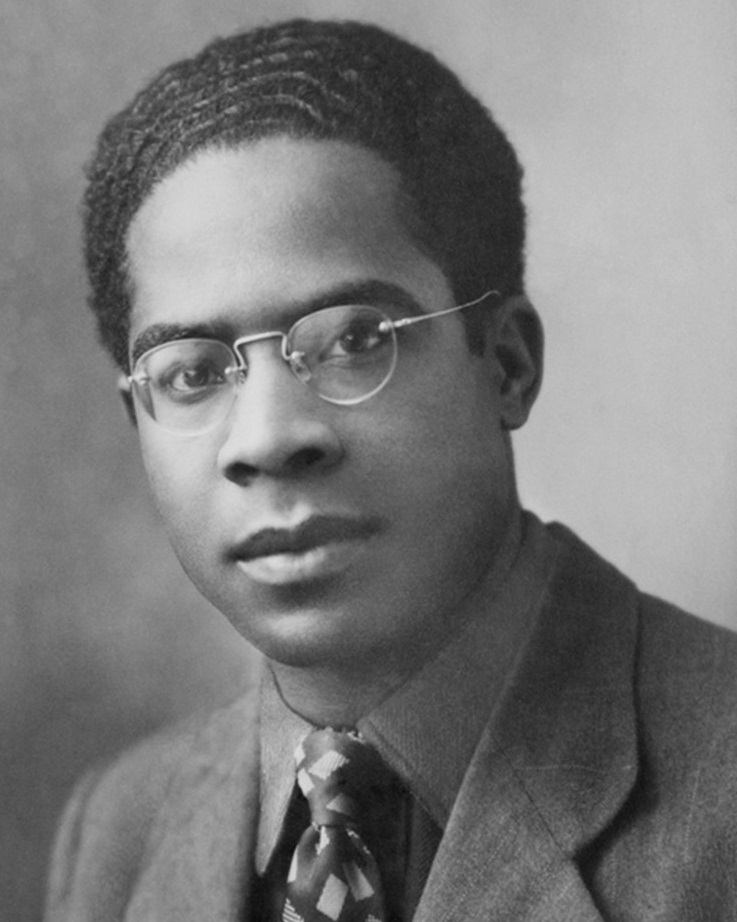 ZP_Aimé Césaire dans les années 1930
Macumba-Word
.
A word can be father to a saint,
words are the mothers of saints,
with a word that both chases and caresses one can
cross a river peopled by caïmans.
Sometimes I sketch a word on the sun,
with a cool, fresh word one spans a desert
in a day.
There are life-buoy words that ward off squalls,
there are iguana-words,
there are delicate words – phantom stick-insect words.
And those shadow-words
when one awakes in a rage of flying sparks.
There are Shango words.
And sometimes I swim slyly – playfully –
upon the back of a dolphin-word.
. . .
Glossary:
Macumba – an African (Bantu) word generally meaning “magic”
caïmans – a species of crocodile found in the Caribbean, Central and
South America; hunts along riverbanks
Shango – god of fire, thunder and lightning, from West-African religion
– mainly Yoruba; survived “The Middle Passage”, and is venerated in
Haitian vodou (voodoo) and Brazilian candomblé.
dolphin – perhaps a reference to two ‘dolphins’:
‘dauphin’ as in ‘Dauphin’, the old heir-apparent to France’s throne +
the notion of “correct” French;
also the Boto (Amazon River dolphin) of Afro-Brazilian religion
. . . . .
Mot-Macumba
.
Le mot est père des saints
le mot est mère des saints
avec le mot couresse on peut traverser un fleuve
peuplé de caïmans
Il m’arrive de dessiner un mot sur le sol
avec un mot frais on peut traverser le désert
d’une journée
Il y a des mots bâton-de-nage pour écarter les squales
il y a des mots iguanes
il y a des mots subtils ce sont des mots phasmes
il y a des mots d’ombre avec des réveils en colère
d’étincelles
Il y a des mots Shango
Il m’arrive de nager de ruse sur le dos d’un mot dauphin.
. . .
Aimé Césaire (1913-2008) was born and died in Martinique,
yet he was a man of the world. In his poetry and plays, both
full of hope and strength, he promoted decolonization
throughout the island-countries of the Caribbean. From
the geography and customs of those same islands he
drew much of his imagery – as in the poem featured above.
English translation: Alexander Best.
*
Aimé Césaire (1913-2008) était un Martiniquais, aussi
un homme du monde. Dans sa poésie et son théâtre, et avec
de l’espérance et puissance, il a promis la décolonisation des
pays caraïbes. Ses paroles sont fondées sur la géographie et
les coutumes de ces mêmes îles. Par exemple: le poème ici…
Traduction en anglais: Alexander Best
Kettly Mars: Defiance of Oblivion
Posted: October 26, 2011 Filed under: English, French, Kettly Mars, ZP Translator: Alexander Best | Tags: Black poets Comments Off on Kettly Mars: Defiance of Oblivion ZP_Kettly Mars_2011
Behind the door
.
Sweet sentinel, you keep watch
over the shadows of my room.
This evening my dreams depart
for the north. Toward the sea.
Gentle candle, gentle
flame, under your tears of light
wood, stone, copper and glass
cloaked in golden silence
bathed in the same mystery.
. . .
Derrière la porte
.
Douce sentinelle, tu veilles
sur les ombres de la chambre.
Ce soir mes rêves partent
vers le nord. Vers la mer.
Douce bougie, douce
flamme, sous tes larmes de lumière
bois, pierre, cuivre et verre
enveloppés d’or silencieux
baignent dans le même mystère.
. . .
My hand and the stone
.
My hand and the stone,
sage rebellion of noble particles
gripped in my palm.
I’ve made my own her reality:
grey, heavy, oval.
Millenial stone
whose cry
lays claim to nothing other than a
defiance of oblivion.
. . .
Ma main et la pierre
.
Ma main et la pierre,
sage rébellion de particules
tenant dans ma paume.
J’ai fait mienne sa réalité
grise, lourde et ovale.
Pierre millénaire
jusqu’en son cri
elle ne se prétend autre chose
qu’un défi à l’oubli.
. . . . .
Kettly Mars est née en 1958.
Un romancier à le proue de la littérature haïtienne,
elle est aussi un poète. Les poèmes ici viennent de
son recueil de 2011, Feulements et sanglots.
Traductions: Alexander Best
*
Kettly Mars, born in 1958, is a novelist
at the forefront of Haitian literature.
She is a poet as well, and these poems
are from her 2011 collection, Growls and Sobs.
Translations into English: Alexander Best
James Noël: Four poems from “Kana Sutra”
Posted: October 20, 2011 Filed under: English, French, James Noël, ZP Translator: Alexander Best | Tags: Black poets Comments Off on James Noël: Four poems from “Kana Sutra” ZP_James Noël in 2011_photographed by Henry Roy
Inside my Cage
.
In me the words
released like parrots
blue-black-red-and-green
hurled like stones
at the sleeper’s roof
inside my private cage
all the illegal words
all the SDF * words
all the words without i.d. or release papers
in me all the words at the margin
which dream of a line
of a better horizon
in me love’s words
words which kiss between two fingers
– the middle and the baby one
words which die wordlessly
lacking hands to touch
or lips to kiss with
in me a word
in me the kamikaze-word of mad love
trapped in a speeding car
heading toward a public climax
.
* Self Defense Force
_____
Cage intérieure
.
En moi le mots
lâchés comme des perroquets
bleus-noirs-rouges-et-verts
lancés comme des pierres
sur le toit du dormeur
dans ma cage intérieure
tous les mots sans-papiers
tous les mots SDF
tous les mots sans-papiers ni cahier
de décharge
en moi tous les mots en marge
qui rêvent d’une ligne
d’un horizon meilleur
en moi les mots’ d’amour
les mots qui baisent entre deux doigts
le majeur el l’auriculaire
et qui crèvent sans mot dire
fate de mains pour toucher
ni de lèvres pour le baiser
en moi un mot
anmwe le mot kamikaze de l”amour fou
allant voiture piégée
vers son orgasme public.
_____
Waltz of the Valises
.
My suitcase pops open in public
i endorse this without saying anything
i’ve packed Death
inside
cash paid in full
childhoods
childhoods
see my waltzing valise
few people in this world
are as open as my valise
in public my suitcase on display
down to the merest details
my made-in-China suitcase
nylon and polyester
my suitcase with its exhibitionist’s soul
down to the least titbits
few people in this world
are as exposed as my valise
now
all my guts are out
all my dirt in disorder
my vices
my nuts and bolts
all my lives
are known
my whole history
within – without
and my poem
inside – outside
known at last
and acknowledged
for the grand importance of
its public uselessness.
_____
Valse des valises
.
Ma valise s’ouvre en public
et j’avalise sans rien dire
j’encaisse la mort
à l’intérieur
rubis sur ongle
enfances
enfances
voyez la valse de ma valise
ma valise est ouverte
peu de gens danse le monde
sont aussi ouverts que ma valise
en public ma valise étalée
dans les moindres détails
ma valise made in China
nylon et polyester
ma valise à l’âme
exhibitionniste
dans les moindres détails
peu de gens dans le monde
sont aussi ouverts que ma valise
maintenant
tous mes boyaux sont dehors
toutes mes ordures en désordre
mes vices
mes écrous
toutes mes vies
sont connues
toute mon histoire
dedans – dehors
et mon poème
dedans – dehors
enfin connu
et reconnu
pour sa grande importance
d’inutilité publique.
_____
Of love and other generalities: an excerpt
.
Certain love poems are to be read at night so that
their effect might be fully felt within the body –
like Japanese green tea, a concoction of datura, or
even a mild drug, a sweet drug that produces the
impression of the city’s dust under a rain.
The best poems often come after a break-up.
That most awful thing about a split is the feeling of
being ditched in the middle of the ocean,
with few choices for somebody who doesn’t know
how to swim.
Only one option has existed up till now: to sink.
_____
De l’amour et autres généralités: un extrait
.
Certains poèmes d’amour sont à lire la nuit
pour que leurs effets soient pleinement ressentis
dans le corps comme un thé vert japonais,
une concoction de datura, ou bien encore une
drogue douce, l’effet d’une drogue douce que
procure la poussière d’une ville sous la pluie.
Les meilleurs poèmes viennent souvent après
une rupture amoureuse. Ce qu’il y a de plus
terrible dans les ruptures, c’est le sentiment
d’être lâché en haute mer, au mauvais moment
par l’autre. Être lâché en haute mer donne peu
d’options à quelqu’un qui ne sait pas nager.
Une seule option demeure jusqu’ à ce jour:
le naufrage.
_____
Two burning candles
.
The day will come, says a man to his belovéd,
when God will intervene with a knife
to slice this onion
which costs our eyes so many tears
and sucks up so much wax
from two burning candles
on their way to dying in the rain
God will come one day
to slice this onion
under our eyes
_____
Deux bougies allumées
.
Un jour viendra , dit l’homme à sa bien-aimée,
un jour viendra
où Dieu fera une intervention au couteau
pour trancher cet oignon
qui coûte tant de larmes à nos pupilles
et pompe tant de cire
à nos deux bougies allumées
en passe de mourir sous la pluie
Dieu viendra un jour
trancher cet oignon sous nos yeux.
_____
Poet and writer James Noël was born in
Haiti in 1978. These poems are from his
2011 collection, Kana Sutra.
Translation from the original French:
Alexander Best
*
Né en Haïti en 1978, James Noël est
un poète et écrivain. Les poèmes ici
viennent de son recueil 2011, Kana Sutra.
Traduction en anglais: Alexander Best
 Zócalo Poets