Lucille Clifton: “La muerte de Caballo Loco”
Posted: April 19, 2016 Filed under: English, Lucille Clifton, Spanish, ZP Translator: Alexander Best | Tags: Poemas para El Día Americano del Indio (19 de abril) Comments Off on Lucille Clifton: “La muerte de Caballo Loco” “Strange Man of the Lakota” (Crazy Horse around 1876): giclée print on watercolour paper © Kenneth Ferguson
.
Un poema para El Día Americano del Indio / El Día del Indio Americano (19 de abril):
.
Lucille Clifton (1936-2010)
la muerte de Caballo Loco * (5 de septiembre de 1877, a la edad de 35)
.
en los cerros donde el aro
del mundo
se inclina a las cuatro direcciones
ha mostrado a mí el WakanTanka*
el camino que caminan los hombres es una sombra.
Yo era un niño cuando llegué a comprender ese hecho:
que los cabellos largos y las barbas grises, y yo,
tendríamos que entrar al sueño para ser real.
.
por lo tanto soñé y soñé
y sobreviví.
.
soy el último jefe de guerra,
nunca derrotado en batalla*.
Lakotah*, acuérdense mi nombre.
.
ahora durante esta vuelta
mis huesos y mi corazón
están calentitos en las manos de mi padre.
WakanTanka me ha enseñado que
las sombras van a quebrarse
cerca del arroyo llamado Rodilla Herida*
.
acuérdense mi nombre, Lakotah.
soy el último jefe de guerra.
padre, el corazón,
nunca vencido en batalla,
padre, los huesos,
nunca dominado por batalla,
déjenlos al sitio de Rodilla Herida
.
y acuérdense nuestro nombre: Lakota.
estoy soltado de la sombra.
Mi caballo sueña / baila debajo de mí
mientras entro en el mundo real.
. . .
*Caballo Loco = “Crazy Horse” en inglés y Tȟašúŋke Witkó en la lengua Sioux. aprox.1840 – 1877. Era un líder de guerra de los indios Lakotah (una rama de la nación indígena Sioux de las Grandes Llanuras de los EE.UU.)
*WakanTanka = el “gran espíritu” o el “gran misterio”: el término para lo sagrado o lo divino en la cosmovisión de la gente Sioux.
*nunca derrotado en batalla = La Batalla de Little Big Horn (junio de 1876)
*Lakotah = la gente Sioux en los estados de Dakota del Norte y Dakota del Sur.
*Rodilla Herida = “Wounded Knee” en inglés. Lugar en Dakota del Sur. Sitio de una matanza de los indios Sioux por los soldados del gobierno estadounidense. Considerada como “el episodio final” en la conquista de la gente indígena norteamericana.
. . .
Lucille Clifton (1936-2010)
the death of crazy horse (sept.5th, 1877, age 35)
.
in the hills where the hoop
of the world
bends to the four directions
WakanTanka has shown me
the path men walk is shadow.
i was a boy when i saw it,
that long hairs and grey beards
and myself
must enter the dream to be real.
.
so i dreamed and i dreamed
and i endured.
.
i am the final war chief.
never defeated in battle.
Lakotah, remember my name.
.
now on this walk my bones
and my heart
are warm in the hands of my father.
WakanTanka has shown me the shadows
will break
near the creek called Wounded Knee.
.
remember my name, Lakotah.
i am the final war chief.
father, my heart,
never defeated in battle,
father, my bones,
never defeated in battle,
leave them at Wounded Knee
.
and remember our name. Lakotah.
i am released from shadow.
my horse dreams and dances under me
as i enter the actual world.
. . . . .
Otras reflexiones para El Día del Aborigen Americano…
.
.
https://zocalopoets.com/category/juan-felipe-herrera/
. . . . .
Poemas para El Domingo de Pascua / Poems for Easter Sunday
Posted: March 27, 2016 Filed under: E.E. Cummings, English, Friedrich von Schiller, Michael Chitwood, Nikki Giovanni, Spanish, Steve Turner, ZP Translator: Alexander Best | Tags: Poemas para El Domingo de Pascua, Poems for Easter Sunday Comments Off on Poemas para El Domingo de Pascua / Poems for Easter Sunday
Nicki Giovanni (nac. 1943, EE.UU.)
Poema del Invierno
.
Una vez se cayó sobre mi ceño un copo de nieve
y yo lo amaba tanto y lo besó y él estaba feliz
pues llamó a sus hermanos y sus primos
y una telaraña de nieve me envolvió
entonces estiré el brazo para amar a todos ellos
y los estrujé y se volvieron
una lluvia de primavera y yo me paraba
perfectamente quieta y yo era una flor.
. . .
Michael Chitwood (nac. 1958, Virginia, EE.UU.)
Aquí estoy, Señor
.
El negro acanalado del paraguas
es un argumento por la existencia de Dios,
.
ese pequeño albergue
que llevamos con nosotros
.
y dejemos a un lado, junto a una silla
.
en una reunión de la comisión
que no queríamos asistir.
.
Qué bella palabra, “umbrella” [sombrilla].
Una sombra que podemos abrir.
.
Como el ala del murciélago,
con bordes de una vieira,
tirita.
.
Un parche
golpeado por los palos plateados
.
de lluvia.
Y no tengo el mío
.
entonces la lluvia me moja.
. . .
Steve Turner (nac. 1949, Reino Unido)
Para Lianne, a la edad de Uno
.
Tanto como sea posible,
sigue como eres:
con el ojo claro y abierto
y lavado limpio del miedo;
con la piel tersa,
sin arrugas del funcionamiento triste del corazón,
y los labios sin la habilidad de rencor.
Tanto como sea posible,
sigue como eres:
la primera luz de la mañana un motivo suficiente para el júbilo,
y cada cara transitaria juzgado solo del color de su sonrisa.
Tanto como sea posible,
sigue como eres.
Mira el mundo
con su misterio y ruido
pero rehusa todas ofertas de unirte al grupo.
Que seas retrasada en el mal
y avanzada en el amor.
Tanto como sea posible,
sigue como eres:
con el rostro hacia arriba
y la palma abierta,
con el tropezón de Certeza
y el grito de Esperanza ––
porque en ésto es el Reino.
. . .
Friedrich Von Schiller (1759-1805, Alemania)
Tres palabras de fortaleza
.
Hay tres lecciones que yo escribiría,
tres palabras con una pluma ardiente
y en calcos de luz eterna,
sobre el corazón de la humanidad.
.
Tengan Esperanza.
Aunque las nubes te rodean,
y la alegría esconde en desdén su cara,
lanza la sombra de tu ceño:
cada noche su mañana tendrá.
.
Tengan Fe.
Donde sea tu barco
– impulsado por el deporte de la calma o la risa de la borrasca –
comprende ésto:
Dios gobierna sobre la multitud del Cielo y los habitantes de la Tierra.
.
Tengan Amor.
No el amor solamente del uno
sino de la humanidad – llama al hombre “mi hermano”;
y esparce, como un sol rodeando,
tus bondades sobre Todos.
.
Por eso, graba estas lecciones sobre tu alma:
Esperanza,
Fe,
Amor.
Pues te descubrirás
La Fortaleza cuando los oleajes de esta Vida retondan tan rudamente,
La Luz cuando hayas sido ciego.
. . .
e.e. cummings (1894-1962, EE.UU.)
oh dulce espontánea
.
oh dulce espontánea
Tierra tan frecuentemente
.
te han pellizcado / hincado
los dedos mimandos
de Filósofos lujuriosos;
.
ha pinchado tu belleza
el pulgar malcriado
de Ciencia.
.
tan frecuentemente
te han doblado
sobre sus rodillas ásperas,
apretando / presionándote
las Religiones
.
para que
concibas a unos dioses – pero
.
fiel al diván inigualable
de la Muerte (tu amante rítmica)
.
los contestas
únicamente con
Primavera.
. . .
Nikki Giovanni
Winter Poem
.
once a snowflake fell
on my brow and I loved
it so much and I kissed
it and it was happy and called its cousins
and brothers and a web
of snow engulfed me then
I reached to love them all
and I squeezed them and they became
a spring rain and I stood perfectly
still and was a flower
. . .
Michael Chitwood
Here I am, Lord
.
The ribbed black of the umbrella
is an argument for the existence of God,
.
that little shelter
we carry with us
.
and may forget
beside a chair
.
in a committee meeting
we did not especially want to attend.
.
What a beautiful word, umbrella.
A shade to be opened.
.
Like a bat’s wing, scalloped.
It shivers.
.
A drum head
beaten by the silver sticks
.
of rain
and I do not have mine
.
and so the rain showers me.
. . .
Steve Turner
For Lianne, Aged One
.
As far as possible, stay as you are,
with the eye clear and open
and washed clean of fear;
with the skin untracked
by the sad workings of the heart,
lips unskilled in spite.
As far as possible, stay as you are,
the morning’s first light
cause enough for joy,
each passing face
judged only by the colour of its smile.
As far as possible, stay as you are.
Gaze out at the world
with its mystery and noise,
but refuse all offers to join.
Be backwards in evil,
advanced in love.
As far as possible, stay as you are,
with the upturned face
and the open palm,
with the stumble of faith
and the shout of hope.
For such is the Kingdom.
. . .
Friedrich Von Schiller
Three Words of Strength
.
There are three lessons I would write,
Three words, as with a burning pen,
In tracings of eternal light,
Upon the hearts of men.
.
Have Hope. Though clouds environ round,
And gladness hides her face in scorn,
Put thou the shadow from thy brow:
No night but hath its morn.
.
Have Faith. Where’er thy bark is driven –
The calm’s disport, the tempest’s mirth –
Know this: God rules the host of heaven,
The inhabitants of earth.
.
Have Love, not love alone for one,
But man, as man thy brother call;
And scatter, like a circling sun,
Thy charities on all.
.
Thus grave these lessons on thy soul,
Hope, Faith, and Love; and thou shalt find
Strength when life’s surges rudest roll,
Light when thou else wert blind.
. . .
e.e. cummings
o sweet spontaneous
.
O sweet spontaneous
earth how often have
the
doting
fingers of
prurient philosophers pinched
and
poked
thee
, has the naughty thumb
of science prodded
thy
beauty how
often have religions taken
thee upon their scraggy knees
squeezing and
buffeting thee that thou mightest conceive
gods
(but
true
to the incomparable
couch of death thy
rhythmic
lover
thou answerest
them only with
Spring)
. . . . .
Alexander Best: “Los Hechos” y “El Buen Libro”
Posted: March 25, 2016 Filed under: Alexander Best, English, Spanish | Tags: Good Friday poems, Poemas para El Viernes Santo Comments Off on Alexander Best: “Los Hechos” y “El Buen Libro”
Alexander Best
The Facts
.
My body’s made of clay – of iron, wool and gold – and
Mainly of clay.
The body falls apart; is brave; builds itself again – while I
Sleep; while I – crippled – walk.
A body’s made to love, though not to worship. For the
Soul must never be held. Still – I’ll
Take care of my mudcaked ” house “, at least for
This little while.
When your body’s well, I love it; when your body’s sick, too. Because it’s
There I find Us – for a time.
Oh, of all the wishes I might wish, I’d wish for — —
But the facts are enough.
Forever, You and I are
Pure as soil, delicate as dust, magical as ash.
Our body – weary, strong body –
Our body’s made of clay.
.
(2000)
. . .
Los Hechos
.
Mi cuerpo está hecho de arcilla – y de hierro, lana y oro –
Y más que todo de arcilla.
El cuerpo se desintegra; es valiente, se reconstruye por sí mismo
– mientras duermo; cuando – lisiado – camino.
Un cuerpo está hecho para ser amado, sin embargo no lo idolatres.
Porque el alma no debe ser retenida.
Aun así yo cuido a mi ‘casa’ cubierta de barro endurecido, por lo menos
por un rato.
Cuando tu cuerpo está bien, lo amo, cuando está enfermo también.
Porque es allí donde encontramos a nosotros – por un rato.
Oh, de todos los deseos que yo pudiera desear —
Pero los hechos son suficientes.
Para siempre Tú y Yo somos
Puros como tierra, delicados como polvo, mágicos como la ceniza.
Nuestro cuerpo – cansado, fuerte –
Nuestro cuerpo está hecho de arcilla.
.
(2000)
. . .
Alexander Best
The Good Book
.
I open the book, rather, The Good Book.
Is The Answer within these thousand-odd onion-skin pages?
No.
But it’s an amazing life-span’s read, just the same;
About folks – dead, all of ’em – who were
Rough, sweet, ignorant.
Naaah, Hollywood / Science
Can’t crack this nut – and I’m
Glad in that.
.
My
Favourite exasperating character is
Jesus:
Son of man, born of woman, had – (they say) – that
Divine spark, the same one burns in the billions of us.
He was a flesh-and-blood human being,
Like you and me
– but he was more than that. A
Deep and subtle thinker; simple, oblique and rich in his
Word; a vagrant who was a holy man
(such as the Hindus have). And once he
Got known – ( those Wonders with the loaves and fish; the
Leper and Lazarus; not to mention
the guy walked on water ) –
He was given no peace,
Not even on Sundays.
.
The Multitude trailed him…And here and there he sought an
Evening’s quiet in high-up mountain hollows where he
Lay with his head on a stone pillow, and
Still his restless spirit wouldn’t quit. Well…
Jesus came to a bad end, which was typical back then for
Anyone stubborn and puzzling who appeared to
Spring from nowhere.
.
People picture Jesus as a Hippy or Rastafarian, only
Jesus was more intelligent, sexy and strange than any
Social type that grew out of the twentieth century.
.
A poem is irritating if it goes on for long…but
not The Good Book. And
Jesus’ biography is merely a few chapters in it.
Oh, there’s
Plenty to read, for three-score-years-and-ten
( or however many grains of sand remain in your hourglass. )
.
I open my heart as wide as I’m able.
I close The Good Book.
This is enough for one day.
.
(2001)
. . .
El Buen Libro
.
Abro el libro, mejor dicho, El Buen Libro.
¿Está La Respuesta en este libro de miles de páginas singulares de papel cebolla?
No.
Pero igualmente es una lectura de toda una vida
Acerca de gentes – todos muertos ya – que fueron
Toscos, dulces, ignorantes.
No, no, Hollywood / la Ciencia
No pueden abrirse paso a comprenderlo
Y me alegro de ello.
.
Mi personaje favorito, exasperante, es:
Jesús:
El hijo del Hombre, nacido de Mujer
Tuvo – dicen – esa chispa divina,
La misma que quema en miles de millones
De nosotros.
Él fue un hombre de carne y hueso,
Como tú y yo
– pero él fue más que eso:
Un pensador profundo, perspicaz, simple,
Indirecto y rico en Su Palabra; un vagabundo que era
Un hombre santo (como los hindús lo han sido).
Y una vez llegó a ser reconocido
– (esos milagros con el pan y el pescado; el leproso y Lázaro;
Sin mencionar que el hombre caminó sobre agua) –
No tuvo paz – aún en los domingos.
.
La multitud le seguía
Y buscó aquí y allá el silencio de una tarde donde descansar
Su cabeza, en los huecos
En la cima de la montaña,
Sobre una almohada de piedra,
Y todavía su espíritu agitado no descansaba…
.
Bueno,
Jesús terminó mal, que era típico entonces para una persona
Testaruda y misteriosa que se aparecía de la nada.
La gente se hace una idea de Jesús como un rastafari o un hippy pero
Solamente que Él era más inteligente, atractivo y misterioso
Que cualquier sujeto que germinó del siglo veinte.
.
Un poema fastidia si se alarga…pero no El Buen Libro.
Y la biografía de Jesús está en unos cuantos capítulos solamente.
Oh, hay mucho que leer, por setenta años,
o cuantos granos nos queden en nuestro reloj de arena.
.
Abro mi corazón tanto como puedo.
Cierro El Buen Libro.
Ésto es suficiente por un día.
.
(2001)
. . .
Traducciones al español por Lidia García Garay (2011)
. . . . .
Poems about Death: Whitman, Wilcox, Millay
Posted: March 25, 2016 Filed under: Edna St.Vincent Millay, Ella Wheeler Wilcox, Walt Whitman | Tags: Poems about Death Comments Off on Poems about Death: Whitman, Wilcox, Millay
Walt Whitman (1819-1892)
To One Shortly to Die
.
From all the rest I single out you, having a message for you,
You are to die –– let others tell you what they please, I cannot prevaricate,
I am exact and merciless, but I love you –– there is no escape for you.
.
Softly I lay my right hand upon you, you must feel it,
I do not argue, I bend my head close and half envelop it,
I sit quietly by, I remain faithful,
I am more than nurse, more than parent or neighbour,
I absolve you from all except yourself spiritual bodily, that is
eternal, you yourself will surely escape,
The corpse you will leave will be but excrementitious.
.
The sun bursts through in unlooked-for directions,
Strong thoughts fill you and confidence, you smile,
You forget you are sick, as I forget you are sick,
You do not see the medicines, you do not mind the weeping friends,
I am with you,
I exclude others from you, there is nothing to be commiserated,
I do not commiserate, I congratulate you.
. . .
Ella Wheeler Wilcox (1850-1919)
My Grave
.
If, when I die, I must be buried, let
No cemetery engulf me – no lone grot,
Where the great palpitating world comes not,
Save when, with heart bowed down and eyelids wet,
It pays its last sad melancholy debt
To some outjourneying pilgrim. May my lot
Be rather to lie in some much-used spot,
Where human life, with all its noise and fret,
Throbs about me. Let the roll of wheels,
With all earth’s sounds of pleasure, commerce, love,
And rush of hurrying feet surge o’er my head.
Even in my grave I shall be one who feels
Close kinship with the pulsing world above;
And too deep silence would distress me, dead.
. . .
Edna St.Vincent Millay (1892-1950)
The Shroud
.
Death, I say, my heart is bowed
Unto thine – O mother!
This red gown will make a shroud
Good as any other!
.
(I, that would not wait to wear
My own bridal things,
In a dress dark as my hair
Made my answerings.
.
I, tonight, that till he came
Could not, could not wait,
In a gown as bright as flame
Held for them the gate.)
.
Death, I say, my heart is bowed
Unto thine – O mother!
This red gown will make a shroud
Good as any other!
. . .
Edna St.Vincent Millay
Lament
.
Listen, children:
Your father is dead.
From his old coats
I’ll make you little jackets;
I’ll make you little trousers
From his old pants.
There’ll be in his pockets
Things he used to put there,
Keys and pennies
Covered with tobacco;
Dan shall have the pennies
To save in his bank;
Anne shall have the keys
To make a pretty noise with.
Life must go on,
And the dead be forgotten;
Life must go on,
Though good men die;
Anne, eat your breakfast;
Dan, take your medicine;
Life must go on;
I forget just why.
. . . . .
Maxwell Bodenheim: poemas: “Para mi enemigo”, “Para un hombre”, “Para alguien muerto”
Posted: March 25, 2016 Filed under: English, Maxwell Bodenheim, Spanish, ZP Translator: Alexander Best | Tags: Poemas para El Viernes Santo, Poems for Good Friday Comments Off on Maxwell Bodenheim: poemas: “Para mi enemigo”, “Para un hombre”, “Para alguien muerto”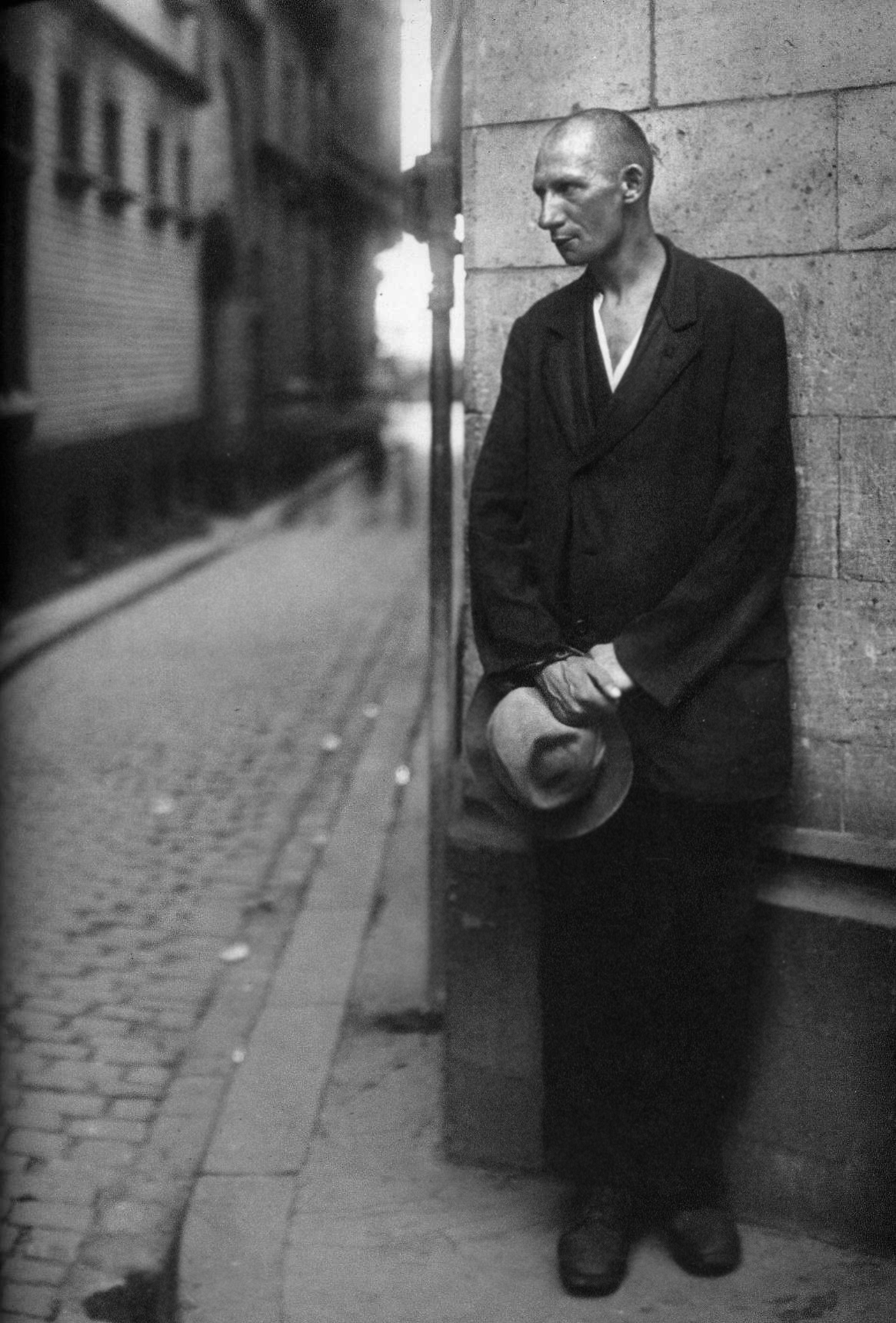
Arbeitslos_Unemployed Man_El Parado_fotografía de 1928 por August Sander
Maxwell Bodenheim
(1892-1954, EE. UU., poeta y escritor de literatura barata, bohemio, teporocho, mendigo, víctima de homicidio)
Para mi enemigo
.
Desprecio mis amigos más que te desprecio.
Yo mismo, lo entendiera pero ellos se pararon ante los espejos
y los pintaron con imágenes de las virtudes que ansié.
Llegaste con un cincel lo más afilado, rascando la pintura falsa.
Pues me conocí y me detesté – pero no te detesté –
porque los vistazos de ti en las gafas que descubriste
me enseñaron las virtudes cuyas imágenes destruiste.
. . .
Para un hombre
.
Maestro de equilibrio serio,
eres un Cristo hecho delicado
por muchos siglos de meditación perpleja.
Curvas un viejo mito hacia una espada pacífica,
como un sonámbulo desafiando
un sueño que le dio forma a él.
Con una insistencia suave y anticuada
colocas la mano de tu criatura en el universo
y delineas una sonrisa de amor dentro de sus profundidades.
Pero los hombres-espantapájaros girandos que están
hechos de algo que elude su vista
tengan la sencillez sorprendente de tu sonrisa.
.
Una vez por mil años
la quietud se materializa en una forma que
podemos crucificar.
. . .
Para alguien muerto
.
Yo caminaba por la colina
y el viento, solemnemente ebrio a causa de tu presencia,
se tambaleó contra mí.
Me encorvé para interrogar a una flor,
y flotaste entre mis dedos y los pétalos,
amarrándolos juntos.
Corté una hoja de su árbol
y una gota de agua en esa jarra verde
ahuecaba una pizca cazada de tu sonrisa.
Todas las cosas de mis alrededores se remojaron de tu recuerdo
y tiritaban mientras intentaron decírmelo.
. . .
Maxwell Bodenheim
(1892-1954, American poet, pulp-fiction author, bohemian, drunk, beggar, homicide victim)
To an enemy
.
I despise my friends more than you.
I would have known myself but they stood before the mirrors
And painted on them images of the virtues I craved.
You came with sharpest chisel, scraping away the false paint.
Then I knew and detested myself, but not you,
For glimpses of you in the glasses you uncovered
Showed me the virtues whose images you destroyed.
. . .
To a man
.
Master of earnest equilibrium,
You are a Christ made delicate
By centuries of baffled meditation.
You curve an old myth to a peaceful sword,
Like some sleep-walker challenging
The dream that gave him shape.
With gentle, antique insistence
You place your child’s hand on the universe
And trace a smile of love within its depths.
And yet, the whirling scarecrow men made
Of something that eludes their sight,
May have the startling simplicity of your smile.
.
Once every thousand years
Stillness fades into a shape
That men may crucify.
. . .
To one dead
.
I walked upon a hill
And the wind, made solemnly drunk with your presence,
Reeled against me.
I stooped to question a flower,
And you floated between my fingers and the petals,
Tying them together.
I severed a leaf from its tree
And a water-drop in the green flagon
Cupped a hunted bit of your smile.
All things about me were steeped in your remembrance
And shivering as they tried to tell me of it.
. . . . .
Edwin Morgan: “Good Friday” and “In the Snack-bar”
Posted: March 25, 2016 Filed under: Edwin Morgan, English Comments Off on Edwin Morgan: “Good Friday” and “In the Snack-bar”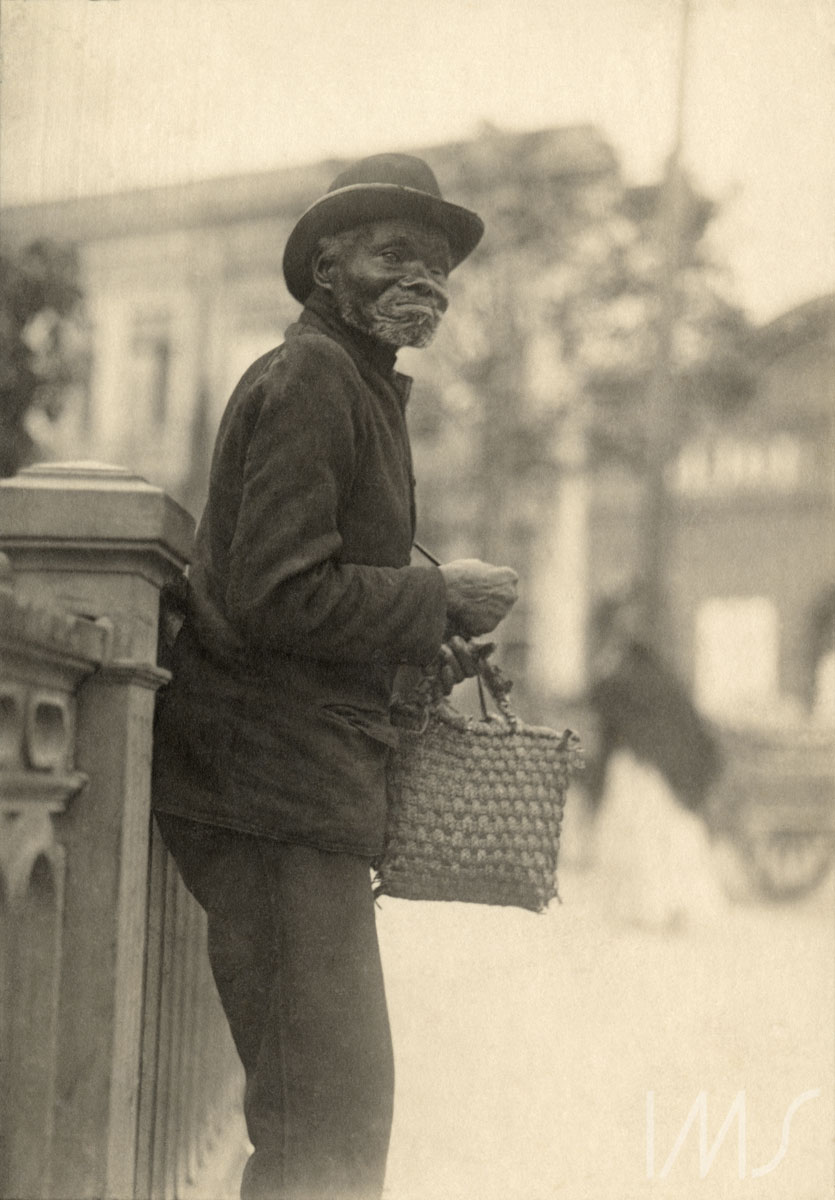
Vincenzo Pastore, photogapher_Agéd man on Rua São João in São Paulo_circa 1910
Edwin Morgan (Glasgow, Scotland, 1920-2010)
Good Friday
.
Three o’clock. The bus lurches
round into the sun. “D’s this go – ”
he flops beside me – “right along Bath Street?
– Oh tha’s, tha’s all right, see I’ve
got to get some Easter eggs for the kiddies.
I’ve had a wee drink, ye understand –
ye’ll maybe think it’s a – funny day
to be celebrating – well, no, but ye see
I wasny working, and I like to celebrate
when I’m no working – I don’t say it’s right
I’m no saying it’s right, ye understand – ye understand?
But anyway tha’s the way I look at it –
I’m no boring you, eh? – ye see today,
take today, I don’t know what today’s in aid of,
whether Christ was – crucified or was he –
rose fae the dead like, see what I mean?
You’re an educatit man, you can tell me –
– Aye, well. There ye are. It’s been seen
time and again, the working man
has nae education, he jist canny – jist
hasny got it, know what I mean,
he’s jist bliddy ignorant – Christ aye,
bliddy ignorant. Well –” The bus brakes violently,
he lunges for the stair, swings down – off,
into the sun for his Easter eggs,
on very
nearly
steady
legs.
. . .
From: The Second Life (Edinburgh University Press, 1968)
. . .
In the Snack-bar
.
A cup capsizes along the formica,
slithering with a dull clatter.
A few heads turn in the crowded evening snack-bar.
An old man is trying to get to his feet
from the low round stool fixed to the floor.
Slowly he levers himself up, his hands have no power.
He is up as far as he can get. The dismal hump
looming over him forces his head down.
He stands in his stained beltless gabardine
like a monstrous animal caught in a tent
in some story. He sways slightly,
the face not seen, bent down
in shadow under his cap.
Even on his feet he is staring at the floor
or would be, if he could see.
I notice now his stick, once painted white
but scuffed and muddy, hanging from his right arm.
Long blind, hunchback born, half paralysed
he stands
fumbling with the stick
and speaks:
‘I want – to go to the – toilet.’
.
It is down two flights of stairs, but we go.
I take his arm. ‘Give me – your arm – it’s better,’ he says.
Inch by inch we drift towards the stairs.
A few yards of floor are like a landscape
to be negotiated, in the slow setting out
time has almost stopped. I concentrate
my life to his: crunch of spilt sugar,
slidy puddle from the night’s umbrellas,
table edges, people’s feet,
hiss of the coffee-machine, voices and laughter,
smell of a cigar, hamburgers, wet coats steaming,
and the slow dangerous inches to the stairs.
I put his right hand on the rail
and take his stick. He clings to me. The stick
is in his left hand, probing the treads.
I guide his arm and tell him the steps.
And slowly we go down. And slowly we go down.
White tiles and mirrors at last. He shambles
uncouth into the clinical gleam.
I set him in position, stand behind him
and wait with his stick.
His brooding reflection darkens the mirror
but the trickle of his water is thin and slow,
an old man’s apology for living.
Painful ages to close his trousers and coat –
I do up the last buttons for him.
He asks doubtfully, ‘Can I – wash my hands?’
I fill the basin, clasp his soft fingers round the soap.
He washes, feebly, patiently. There is no towel.
I press the pedal of the drier, draw his hands
gently into the roar of the hot air.
But he cannot rub them together,
drags out a handkerchief to finish.
He is glad to leave the contraption, and face the stairs.
He climbs, and steadily enough.
He climbs, we climb. He climbs
with many pauses but with that one
persisting patience of the undefeated
which is the nature of man when all is said.
And slowly we go up. And slowly we go up.
The faltering, unfaltering steps
take him at last to the door
across that endless, yet not endless waste of floor.
I watch him helped on a bus. It shudders off in the rain.
The conductor bends to hear where he wants to go.
.
Wherever he could go it would be dark
and yet he must trust men.
Without embarrassment or shame
he must announce his most pitiful needs
in a public place. No one sees his face.
Does he know how frightening he is in his strangeness
under his mountainous coat, his hands like wet leaves
stuck to the half-white stick?
His life depends on many who would evade him.
But he cannot reckon up the chances,
having one thing to do,
to haul his blind hump through these rains of August.
Dear Christ, to be born for this!
. . .
Another thoughtful poem for Eastertime…
https://zocalopoets.com/category/poets-poetas/alice-walker/
. . . . .
Jorge Valdés Díaz-Vélez: “February Song” and “Living Nature”
Posted: March 23, 2016 Filed under: English, Jorge Valdés Díaz-Vélez, Spanish Comments Off on Jorge Valdés Díaz-Vélez: “February Song” and “Living Nature”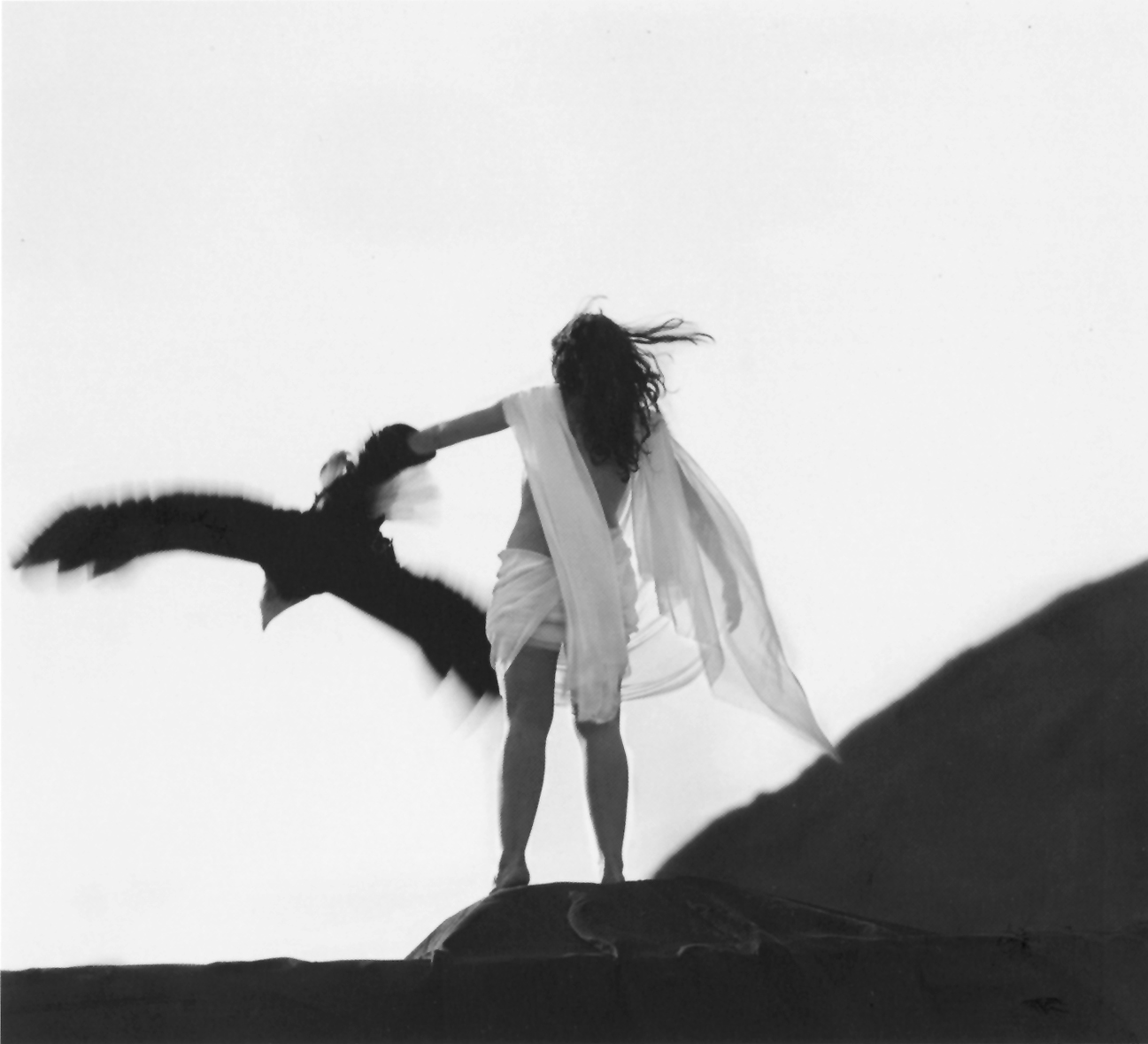
Fotografía © Flor Garduño_Photograph © Flor Garduño
Jorge Valdés Díaz-Vélez
Canción de febrero
.
sobre el pecho del cielo, palpitando
Jaime Gil de Biedma
.
Leve y triste la tarde se retira
contigo hacia el crepúsculo y las horas
empiezan a doler en los distantes
repliegues de la sábana. De pronto
la noche ha regresado y es difícil
no pensar en tu boca momentánea
o en las altas comarcas de tu cuerpo
en lienzos de algodón por alabanza.
Ahora que no estás, vuelvo a mirar
el rayo que dividen tus pestañas
y el estremecimiento de tu espalda
moldeándome los brazos, la sonrisa
de tu sexo en los vértigos del labio,
el instante fluvial de tu alegría.
A lo lejos respira el mar, asciende
la blanda superficie a su clausura
bajo un raso de líquidos vitrales.
La noche sin tu piel crece más honda
por las calles donde asperjas la lluvia.
En silencio te diluyes, muchacha,
con las últimas brasas que se apagan
contra el pecho del cielo, palpitando.
. . .
February Song
.
on the breast of the sky, beating
Jaime Gil de Biedma
.
Slow and sad the afternoon retires
with you toward twilight, and the hours
begin to languish in the distant
folds of the sheets. Soon night has returned
and I can hardly avoid thinking
about your fleeting mouth
or the high regions of your body
aggrandized on cotton canvases.
You are not here now; I see again
the beam that your eyelashes divide
and the shiver up and down your back
reshaping my arms for me, the smile
of your sex in vertigos of lips,
and the flowing moment of your joy.
Far away the sea breathes deep, climbing
the soft surface towards its closure
beneath a clear sky of liquid glass.
The night without your skin grows deeper
in the streets where you spatter the rain.
In silence you dissolve, my beloved,
with the last embers that extinguish
against the breast of the sky, beating.
. . .
Naturalezas vivas
.
Duermes. La noche está contigo,
la noche hermosa igual a un cuerpo
abierto a su felicidad.
Tu calidez entre las sábanas
es una flor difusa. Fluyes
hacia un jardín desconocido.
Y, por un instante, pareces
luchar contra el ángel del sueño.
Te nombro en el abrazo y vuelves
la espalda. Tu cabello ignora
que la caricia del relámpago
muda su ondulación. Escucha,
está lloviendo en la tristeza
del mundo y sobre la amargura
del ruiseñor. No abras los ojos.
Hemos tocado el fin del día.
. . .
Living Nature
.
Sleeping, night is with you,
night as beautiful as a body
open to happiness.
Your warmth under the sheets
is but a hazy bloom. You flow
toward a secret garden.
For an instant,
you seem to fight away
the angel of the dream.
I call you in the embrace and you turn back.
Your hair is unaware of
lightning that shifts its waves with a caress.
Listen,
it’s raining in the sadness of the world,
and in the grief of nightingales.
Do not open your eyes.
Thus ends the day.
. . .
Versiones al inglés de Christian Law y Sue Burke
. . .
Jorge Valdés Díaz-Vélez was born in Torreón, México, in 1955. He is considered to be a foremost poet in Ibero-American contemporary literature. He has written more than 15 books of poetry published in México, Italy and Spain, and has been included in several anthologies from Europe, North Africa and Latin America. Winner of México’s National Poetry Award Aguascalientes, Díaz-Vélez has also won the Latin- American Award Plural, and Spain‘s International Poetry Prize Miguel Hernandez-Comunidad Valenciana and the Ibero-American Poetry Prize Hermanos Machado.
. . . . .
Mary Oliver: Momentos (“Moments”)
Posted: March 22, 2016 Filed under: English, Mary Oliver, Spanish | Tags: Poemas para el Cambio de Estaciones, Poems for the change of seasons Comments Off on Mary Oliver: Momentos (“Moments”)
Mary Oliver (American poet, Pulitzer Prize winner, born 1935)
Moments
.
There are moments that cry out to be fulfilled.
Like, telling someone you love them.
Or giving your money away, all of it.
.
Your heart is beating, isn’t it?
You’re not in chains, are you?
.
There is nothing more pathetic than caution
when headlong might save a life
even, possibly, your own.
. . .
Mary Oliver (Ohio, EE.UU., nac. 1935)
Momentos
.
Hay momentos que piden a gritos cumplirse.
Como, decirle a alguien que lo amas.
O dejar tu dinero, todo.
.
Tu corazón late, ¿verdad?
Estás desencadenado, ¿no es cierto?
.
No hay nada más patético que la cautela
cuando ir de cabeza puede salvar una vida
incluso, posiblemente, la tuya.
. . .
Traducción del inglés: Christopher Cummins (Irlanda, 2016)
. . . . .
“Facendo rotta verso casa”: Oche selvatiche di Mary Oliver / “Wild Geese”
Posted: March 22, 2016 Filed under: English, Italian, Mary Oliver | Tags: Poems for the change of seasons Comments Off on “Facendo rotta verso casa”: Oche selvatiche di Mary Oliver / “Wild Geese”
 Zócalo Poets