Pat Lowther: “Escríbeme, cariño, del otro mundo. Y envíame aceitunas.”
Posted: November 24, 2011 Filed under: English, Pat Lowther, Spanish, ZP Translator: Alexander Best Comments Off on Pat Lowther: “Escríbeme, cariño, del otro mundo. Y envíame aceitunas.”
Oscura
Te digo: cae la oscuridad
como flechas y hambre
Ato en nudos mi cabello
para recordar otros imperios
Cae a través de mi cabeza el mundo
sin óbice – como la lluvia
Tengo que decirte: no puedo
mover siempre con el decoro
Como meteores cae la oscuridad
pétalos de negro caliente
Me escapo, quemando, solamente porque
Yo soy la oscuridad.
*
Identificación
Quiero decir:
dime
quien eres,
y me das
una respuesta clara,
quien eres
pues, pienso en
la pregunta inversa
como un cuchillo
con hoja hacia mí
dime
quien eres
: soy una metedura
una boca, llorando
una figura corriendo
con las manos al ángulo derecho
de los brazos
Y pienso, después
de todo, que
no te preguntaré
quien eres.
_____
Dark
I tell you the darkness comes down
like arrows and hunger
I tie knots in my hair
to remember other empires
The world falls through my forehead
resistlessly as rain
I must tell you I can not
always move with decorum
The darkness comes down like meteors
petals of hot black
I escape burning only because
I am the darkness.
*
I.D.
i want to say
tell me
who you are,
and you give me
a clear answer,
who you are
then i think of
the question reversed
like a knife
bladed toward me
tell me
who you are
: i’m a blunder
a mouth, crying,
a figure running
with hands upright
at right angles
to the arms
and i think after all
i won’t
ask you
who you are.
_____
Carta a Pablo número 3
Honrando a los muertos
con grasa de carne
con pan bien crujiente
con miel y ajo,
Anciano lamendo el aceite
de tus pulgares – y eructando,
eres más lustroso que
las flores.
Claveles, amapolas,
caen su especia y su bravura
en un polvo de pétalos agitados;
pasas por la imagen
para honrar la barriga,
las manos las fauces y los dientes,
el incienso de la comida
el sacramento del pan.
*
Letter to Pablo 3
Honouring your dead
with fat of meat
with well-crusted bread
with honey and garlic,
Old man licking the oil
off your thumbs – and belching,
you are more lustrous than
flowers.
Carnations, poppies,
their spice and bravura
fall in a dusting of
petals shaken;
you move past the image
to honour the belly,
the hands — the jaws and teeth,
the incense of cooking
the sacrament of bread.
_____
” Escríbeme, cariño,
del otro mundo.
Y envíame aceitunas. ”
*
” Write to me, darling,
from the other world.
And send me olives. ”
_____
Pat Lowther (1935-1975) nació en Vancouver, British Columbia, Canadá.
Su inspiración – con el poema y con la política – era el maestro-poeta chileno,
Pablo Neruda.
Estes poemas vienen de la colleción póstumo, Diario de Piedra (1977).
Traducción al español: Alexander Best
*
Pat Lowther (1935-1975) was born in Vancouver, British Columbia.
She was inspired poetically / politically by Chilean master-poet
Pablo Neruda.
These poems appeared in A Stone Diary,
published posthumously in 1977.
Translation into Spanish: Alexander Best
À propos du Génocide Rwandais de 1994: Matthieu Gosztola
Posted: November 11, 2011 Filed under: English, French, Matthieu Gosztola, ZP Translator: Alexander Best | Tags: Remembrance Day poems, War poems Comments Off on À propos du Génocide Rwandais de 1994: Matthieu Gosztola
À propos du Génocide Rwandais de 1994:
Poème par Matthieu Gosztola
.
Pourquoi une nouvelle journée
renoncer à s’élancer
les disparus
en parler à voix basse
jusqu’à ce que le sommet
nous rattrape
le « n ous » qu’une personne
a sorti de sa volonté
s’expose à la machette
on a diminué de solitude
on apprend à mesurer notre cri
on fait nos peurs moins sillonnantes
dans tous les sens
devant la mort et ses tracas
au premier jour
on n’avait pas les mêmes lois
on a appris à rebrousser chemin dans nos murmures
et à se contenter sans murmurer de ce qui
ne propose plus de cachette
pardon ………… espérer.
_____
À propos the Rwanda Genocide of 1994:
Poem
by Matthieu Gosztola
.
Why a new day
gives up throbbing
the dead
speak of it in hushed tones
until the ‘crown’ of our head
catches us
the “We” that nobody
‘exited’ of his own will
is right under the ‘machete’
Diminished is one’s solitude
we learn to measure our cries
making our fears less furrowed,
less cross-hatched – in every sense
before death and its troubles
on that first day
we hadn’t the same laws
we taught ourselves to retrace our steps in mutterings,
to be satisfied without complaint over
no more offers of any hiding place
Forgiveness … … … ( is ) … … … to hope.
_____
Matthieu Gosztola (né en France, 1981) est un écrivain et poète.
Ce poème vient de son recueil de 2010, Débris de tuer (Rwanda, 1994).
Rwanda, un pays de l’Afrique de l’Est, est entrée dans une guerre civile
en 1990 et puis, plus de 800,000 Rwandais ont trouvée la mort durant
simplement cent jours entre avril et juillet, 1994.
*
Matthieu Gosztola is a French writer and poet, born in 1981.
This poem is from his 2010 collection, Debris of killing (Rwanda, 1994).
A small country in East Africa with a history of ethnic strife between
Hutus and Tutsis – greatly exacerbated under German then Belgian colonial
rule – tensions built until the stupefying hundred-day massacre of 1994
in which 800,000 people died. Rwanda’s Genocide was the final “slaughter”
in the most violent century known to humankind – the 20th century.
_____
Translation/interpretation from French into English: Alexander Best
Traduction/interprétation en anglais: Alexander Best
_____
Mendez y Kintana: una voz contra la Guerra, una voz por el Armonía
Posted: November 11, 2011 Filed under: English, Spanish, ZP Translator: Alexander Best | Tags: Remembrance Day poems, War poems Comments Off on Mendez y Kintana: una voz contra la Guerra, una voz por el Armonía__________
Contra la Guerra:
Carlos Mendez (Venezuela)
Odio la guerra casi tanto,
como odio los zapatos escolares de mi niñez.
Odio la pluma que firma decretos de muerte
casi tanto,
como odio a quienes pretenden apagar mis sueños
obligándome a dejar de ser niño.
Odio la paz,
por estar tan ausente.
*
Against War:
I hate War so much,
like I hate those stiff school-shoes of my childhood.
I hate the pen that signs death certificates
– so much,
Like I hate anyone who tries to shut down my dreams,
forcing me to abandon being a kid still.
And I hate Peace,
for being so absent.
_____
Por el Armonía:
Jenaro Mejía Kintana (Colombia)
En el principio también nació los Andes
Paso a paso, día a día;
Se sumaron los meses a los pies cansados.
Fueron los años y el camino
Así las centurias se sucedieron caminando
Y en los siglos nacieron las pisadas.
Perseguidos, perseguidores;
Sol, viento, lluvia, tierra,
tierra nuestra y de nadie.
Naciste y nacimos para todos
De la misma arcilla bajo el mismo sol
Todos somos nosotros.
*
For Harmony:
In the beginning were born The Andes mountains,
Step by step, day by day;
adding up to months measured in weary feet.
Years went by – and the path,
In this way the eras – walking along – followed one another,
And over the centuries footprints came to be.
Pursuer, pursued – persecutor, the persecuted;
Sun, wind, rain, earth,
The Earth – ours and nobody’s.
You were born, we were born, all of us
Of the same clay from below + the same sun.
Everyone is Us.
_____
Traducción al inglés: Alexander Best
Translation from Spanish to English: Alexander Best
Macumba Words: Aimé Césaire
Posted: October 26, 2011 Filed under: Aimé Césaire, English, French, ZP Translator: Alexander Best | Tags: Black poets Comments Off on Macumba Words: Aimé Césaire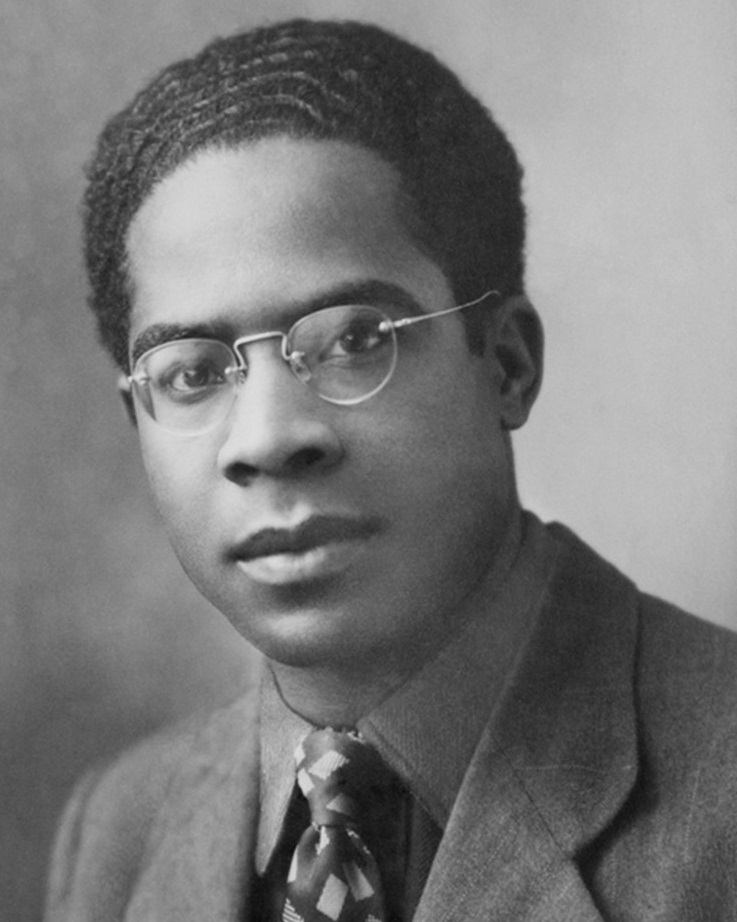 ZP_Aimé Césaire dans les années 1930
Macumba-Word
.
A word can be father to a saint,
words are the mothers of saints,
with a word that both chases and caresses one can
cross a river peopled by caïmans.
Sometimes I sketch a word on the sun,
with a cool, fresh word one spans a desert
in a day.
There are life-buoy words that ward off squalls,
there are iguana-words,
there are delicate words – phantom stick-insect words.
And those shadow-words
when one awakes in a rage of flying sparks.
There are Shango words.
And sometimes I swim slyly – playfully –
upon the back of a dolphin-word.
. . .
Glossary:
Macumba – an African (Bantu) word generally meaning “magic”
caïmans – a species of crocodile found in the Caribbean, Central and
South America; hunts along riverbanks
Shango – god of fire, thunder and lightning, from West-African religion
– mainly Yoruba; survived “The Middle Passage”, and is venerated in
Haitian vodou (voodoo) and Brazilian candomblé.
dolphin – perhaps a reference to two ‘dolphins’:
‘dauphin’ as in ‘Dauphin’, the old heir-apparent to France’s throne +
the notion of “correct” French;
also the Boto (Amazon River dolphin) of Afro-Brazilian religion
. . . . .
Mot-Macumba
.
Le mot est père des saints
le mot est mère des saints
avec le mot couresse on peut traverser un fleuve
peuplé de caïmans
Il m’arrive de dessiner un mot sur le sol
avec un mot frais on peut traverser le désert
d’une journée
Il y a des mots bâton-de-nage pour écarter les squales
il y a des mots iguanes
il y a des mots subtils ce sont des mots phasmes
il y a des mots d’ombre avec des réveils en colère
d’étincelles
Il y a des mots Shango
Il m’arrive de nager de ruse sur le dos d’un mot dauphin.
. . .
Aimé Césaire (1913-2008) was born and died in Martinique,
yet he was a man of the world. In his poetry and plays, both
full of hope and strength, he promoted decolonization
throughout the island-countries of the Caribbean. From
the geography and customs of those same islands he
drew much of his imagery – as in the poem featured above.
English translation: Alexander Best.
*
Aimé Césaire (1913-2008) était un Martiniquais, aussi
un homme du monde. Dans sa poésie et son théâtre, et avec
de l’espérance et puissance, il a promis la décolonisation des
pays caraïbes. Ses paroles sont fondées sur la géographie et
les coutumes de ces mêmes îles. Par exemple: le poème ici…
Traduction en anglais: Alexander Best
Kettly Mars: Defiance of Oblivion
Posted: October 26, 2011 Filed under: English, French, Kettly Mars, ZP Translator: Alexander Best | Tags: Black poets Comments Off on Kettly Mars: Defiance of Oblivion ZP_Kettly Mars_2011
Behind the door
.
Sweet sentinel, you keep watch
over the shadows of my room.
This evening my dreams depart
for the north. Toward the sea.
Gentle candle, gentle
flame, under your tears of light
wood, stone, copper and glass
cloaked in golden silence
bathed in the same mystery.
. . .
Derrière la porte
.
Douce sentinelle, tu veilles
sur les ombres de la chambre.
Ce soir mes rêves partent
vers le nord. Vers la mer.
Douce bougie, douce
flamme, sous tes larmes de lumière
bois, pierre, cuivre et verre
enveloppés d’or silencieux
baignent dans le même mystère.
. . .
My hand and the stone
.
My hand and the stone,
sage rebellion of noble particles
gripped in my palm.
I’ve made my own her reality:
grey, heavy, oval.
Millenial stone
whose cry
lays claim to nothing other than a
defiance of oblivion.
. . .
Ma main et la pierre
.
Ma main et la pierre,
sage rébellion de particules
tenant dans ma paume.
J’ai fait mienne sa réalité
grise, lourde et ovale.
Pierre millénaire
jusqu’en son cri
elle ne se prétend autre chose
qu’un défi à l’oubli.
. . . . .
Kettly Mars est née en 1958.
Un romancier à le proue de la littérature haïtienne,
elle est aussi un poète. Les poèmes ici viennent de
son recueil de 2011, Feulements et sanglots.
Traductions: Alexander Best
*
Kettly Mars, born in 1958, is a novelist
at the forefront of Haitian literature.
She is a poet as well, and these poems
are from her 2011 collection, Growls and Sobs.
Translations into English: Alexander Best
James Noël: Four poems from “Kana Sutra”
Posted: October 20, 2011 Filed under: English, French, James Noël, ZP Translator: Alexander Best | Tags: Black poets Comments Off on James Noël: Four poems from “Kana Sutra”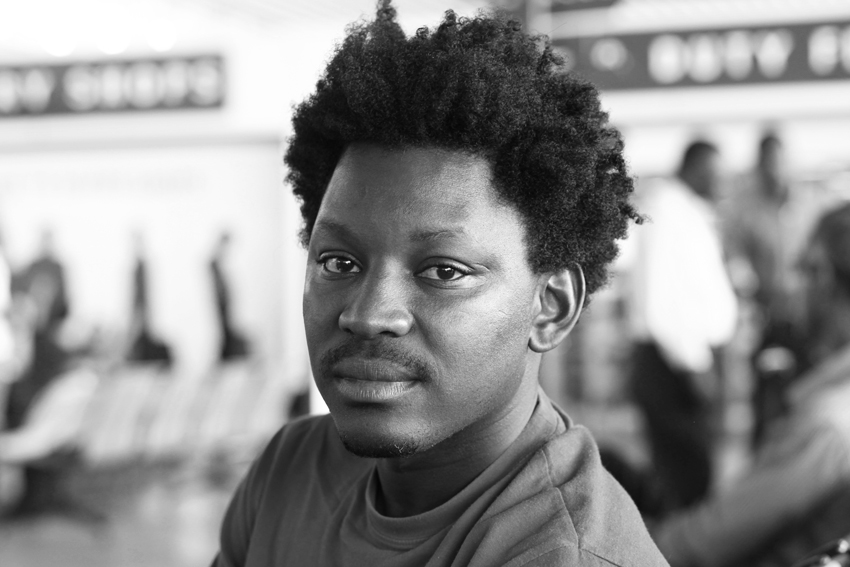 ZP_James Noël in 2011_photographed by Henry Roy
Inside my Cage
.
In me the words
released like parrots
blue-black-red-and-green
hurled like stones
at the sleeper’s roof
inside my private cage
all the illegal words
all the SDF * words
all the words without i.d. or release papers
in me all the words at the margin
which dream of a line
of a better horizon
in me love’s words
words which kiss between two fingers
– the middle and the baby one
words which die wordlessly
lacking hands to touch
or lips to kiss with
in me a word
in me the kamikaze-word of mad love
trapped in a speeding car
heading toward a public climax
.
* Self Defense Force
_____
Cage intérieure
.
En moi le mots
lâchés comme des perroquets
bleus-noirs-rouges-et-verts
lancés comme des pierres
sur le toit du dormeur
dans ma cage intérieure
tous les mots sans-papiers
tous les mots SDF
tous les mots sans-papiers ni cahier
de décharge
en moi tous les mots en marge
qui rêvent d’une ligne
d’un horizon meilleur
en moi les mots’ d’amour
les mots qui baisent entre deux doigts
le majeur el l’auriculaire
et qui crèvent sans mot dire
fate de mains pour toucher
ni de lèvres pour le baiser
en moi un mot
anmwe le mot kamikaze de l”amour fou
allant voiture piégée
vers son orgasme public.
_____
Waltz of the Valises
.
My suitcase pops open in public
i endorse this without saying anything
i’ve packed Death
inside
cash paid in full
childhoods
childhoods
see my waltzing valise
few people in this world
are as open as my valise
in public my suitcase on display
down to the merest details
my made-in-China suitcase
nylon and polyester
my suitcase with its exhibitionist’s soul
down to the least titbits
few people in this world
are as exposed as my valise
now
all my guts are out
all my dirt in disorder
my vices
my nuts and bolts
all my lives
are known
my whole history
within – without
and my poem
inside – outside
known at last
and acknowledged
for the grand importance of
its public uselessness.
_____
Valse des valises
.
Ma valise s’ouvre en public
et j’avalise sans rien dire
j’encaisse la mort
à l’intérieur
rubis sur ongle
enfances
enfances
voyez la valse de ma valise
ma valise est ouverte
peu de gens danse le monde
sont aussi ouverts que ma valise
en public ma valise étalée
dans les moindres détails
ma valise made in China
nylon et polyester
ma valise à l’âme
exhibitionniste
dans les moindres détails
peu de gens dans le monde
sont aussi ouverts que ma valise
maintenant
tous mes boyaux sont dehors
toutes mes ordures en désordre
mes vices
mes écrous
toutes mes vies
sont connues
toute mon histoire
dedans – dehors
et mon poème
dedans – dehors
enfin connu
et reconnu
pour sa grande importance
d’inutilité publique.
_____
Of love and other generalities: an excerpt
.
Certain love poems are to be read at night so that
their effect might be fully felt within the body –
like Japanese green tea, a concoction of datura, or
even a mild drug, a sweet drug that produces the
impression of the city’s dust under a rain.
The best poems often come after a break-up.
That most awful thing about a split is the feeling of
being ditched in the middle of the ocean,
with few choices for somebody who doesn’t know
how to swim.
Only one option has existed up till now: to sink.
_____
De l’amour et autres généralités: un extrait
.
Certains poèmes d’amour sont à lire la nuit
pour que leurs effets soient pleinement ressentis
dans le corps comme un thé vert japonais,
une concoction de datura, ou bien encore une
drogue douce, l’effet d’une drogue douce que
procure la poussière d’une ville sous la pluie.
Les meilleurs poèmes viennent souvent après
une rupture amoureuse. Ce qu’il y a de plus
terrible dans les ruptures, c’est le sentiment
d’être lâché en haute mer, au mauvais moment
par l’autre. Être lâché en haute mer donne peu
d’options à quelqu’un qui ne sait pas nager.
Une seule option demeure jusqu’ à ce jour:
le naufrage.
_____
Two burning candles
.
The day will come, says a man to his belovéd,
when God will intervene with a knife
to slice this onion
which costs our eyes so many tears
and sucks up so much wax
from two burning candles
on their way to dying in the rain
God will come one day
to slice this onion
under our eyes
_____
Deux bougies allumées
.
Un jour viendra , dit l’homme à sa bien-aimée,
un jour viendra
où Dieu fera une intervention au couteau
pour trancher cet oignon
qui coûte tant de larmes à nos pupilles
et pompe tant de cire
à nos deux bougies allumées
en passe de mourir sous la pluie
Dieu viendra un jour
trancher cet oignon sous nos yeux.
_____
Poet and writer James Noël was born in
Haiti in 1978. These poems are from his
2011 collection, Kana Sutra.
Translation from the original French:
Alexander Best
*
Né en Haïti en 1978, James Noël est
un poète et écrivain. Les poèmes ici
viennent de son recueil 2011, Kana Sutra.
Traduction en anglais: Alexander Best
Michèle Voltaire Marcelin: “Quicksand words”
Posted: October 15, 2011 Filed under: English, French, Michèle Voltaire Marcelin, ZP Translator: Alexander Best | Tags: Black poets Comments Off on Michèle Voltaire Marcelin: “Quicksand words” ZP_painting by Michèle Voltaire Marcelin
Michèle Voltaire Marcelin:
And there comes
the time of the Poem
.
The afternoon blazes through the window
at siesta hour
It is forbidden to speak to the poet
do not disturb
because
I’m making love to words
here behind the door
in my bed
One must not disturb the poet
there’s no response from the number you just dialed
momentarily I’ve removed myself from this world
put misery off to one side
it’s the time to say to myself
kick the door shut and
take your pleasure
Talking to the poet’s not allowed
until the month of August
because je suis in bed
with words
feetless, headless words
words that dog-howl at the moon
quivering-iguana words dazzled by roses
bad-luck words like roof tiles that bonk me on the head
because I don’t know how to put on an act
quicksand words
words like crucifixion nails
and an Easter brought back to life
words of flagellation upon naked thighs
promised-land words
Place de l’Opéra words
or of Place Saint-Pierre
or words of whichever Place you’d like
between Brooklyn and Africa
It’s forbidden to disturb the poet
I’m not there for anyone
when words are running ’round in my head
and walking through my blood
just three little turns more and then they’ll take off
– wait till the end of summer and
it’s just the time, the weather’s right,
to place a poem, to set a poem off, in the street.
. . .
Il fait un temps de poème
.
L’après-midi flambe à travers la fenêtre
à l’heure de la sieste
il est interdit de parler au poète
do not disturb
because
je fais l’amour avec des mots
derrière la porte
et dans mon lit
il ne faut pas déranger le poète
il n’y a pas de réponse au numéro que vous avez composé
je m’absente du monde momentanément
je laisse la misère de côté
le temps de me dire
pousse la porte du pied
prends ton pied
il est interdit de parler au poète
jusqu’ au mois d’août
because je suis in the bed
avec des mots
des mots sans pieds ni tête
des mots aboiements de lune aux chiens
des mots frissons d’iguanes éblouis par des roses
des mots tuiles qui me tombent sur la tête
car je na sais pas jouer la comédie
des mots sables mouvants
des mots clous de crucifixion
et de Pâques ressuscitées
des mots flagellations sur des cuisses dénudées
des mots promissions
des mots Place de l’Opéra
ou Place Saint-Pierre
ou Place où tu voudras
between Brooklyn and Africa
il est interdit de disturb le poète
je n’y suis pour personne
quand les mots courent dans ma tête
et marchent dans mon sang
trois petits tours et puis s’en vont
attendez la fin de l’été
il fait un temps à mettre un poème à la rue.
. . .
My heart
.
My heart’s “in use” so much and so often, that
rust never settles there.
Each time the lock’s got to be changed, because
it’s always my previous lover who keeps the key.
. . .
Mon coeur
.
Mon coeur sert tant et si souvent
que la rouille ne s’y installe pas
Il faut à chaque fois y changer la serrure
Le dernier amant garde toujours la clef.
. . . . .
Michèle Voltaire Marcelin is from Port-au-Prince,
Haiti. She was born in 1955.
She is both poet and painter and has been called
a “disenchanted enchantress” (editor Bruno Doucey).
Poem translations into English: Alexander Best
French originals: Éditions Bruno Doucey
*
Michèle Voltaire Marcelin, née à Port-au-Prince, Haiti,
en 1955, est une poétesse et peintre, aussi une
“désenchantée enchanteresse” (éditeur Bruno Doucey).
Traductions: Alexander Best
Poema para El Día de Acción de Gracias
Posted: October 9, 2011 Filed under: English, Olga García Echeverría, Spanish, ZP Translator: Alexander Best | Tags: Poemas para el Día de Acción de Gracias, Thanksgiving poems Comments Off on Poema para El Día de Acción de Gracias
Olga García Echeverría:
“Quemando Tortillas”
Corazón, no esperes tortillas
recién hechas a mano, redondas
y perfectas como la cara de la luna
las mías, si algún día llego a hacerlas
saldrán cuadradas como hojas de papel
dices tú que en otros tiempos
las mujeres enamoraban con el sudor
el calor y la energía de sus manos
tantas gotas de deseo
envueltas en masa de maíz
de niña me gustaba hacer tortillas
de tierra, me gustaba lo húmedo del olor
y lo negro que se me metía bajo las uñas
mi cocina ideal era un mundo sin paredes
un lugar entre plantas y hierbas, bajo un cielo
que parecía espejo del mar
ahora de mujer
quiero darte mi esencia de comer
que me sientas viva en tu boca
pero la idea de hacer tortillas a mano
¡me choca! aburrida quemaría
una tras otra
una tras otra
lo que quiero es entregarme entera
caminar descalza
bailar bajo un cielo
chorreado de estrellas
en vez de tortillas
haré poema tras poema
recién hechos a mano de mujer
calientitos y blanditos
color chichiltic
sabor a mango
tamaño a luna entera
redondos y perfectos
como la espiral
de tu ombligo
la palabra, como el maíz, mi amor
también es indígena
_____
Olga García Echeverría es una escritora, también una maestra.
Vive en Los Angeles, California.
Olga nos muestra que ¡La Poesía es Comida del Alma!
_____
“Burning Tortillas”
Darling, don’t expect
fresh, hand-made tortillas,
perfect circles like the face of the moon
Mine, if one day I
get around to making them, will come out
square,
like sheets of paper
You tell me that in olden times
women used to fall in love with the
sweat – heat – the energy of their own hands
so many drops of desire
enveloped in that cornflour
As a little girl I loved making “mudpies” out of
earth, loved the damp smell
and the black that got under my fingernails
my ideal kitchen was a world without walls
among plants and herbs, a sky above me
that seemed like a mirror of the sea
Now as a grown woman
I want to give you my essence – to eat – so that you’ll
feel me – alive – in your mouth
But the very idea of making tortillas – and by hand –
well, it annoys me ! Bored, I’d burn the lot,
one after another
after another
What I really want is to
give myself over entirely to
walking barefoot
dancing under a sky
gushing with stars
Instead of tortillas you’ll get
poem after poem – hot off the press – made of
A Woman who’s a little sizzler and kind-a tender,
chichiltic-coloured, mango-flavoured
Poems full-moon-sized, round and perfect like the
spiral of your navel
Because words, like corn, my love,
are also Native in us…
_____
Olga García Echeverría is a writer and teacher, in Los Angeles, California.
She demonstrates that: Poetry is Food for the Soul !
Translation/interpretation from Spanish into English by Alexander Best
Armand Garnet Ruffo: “En el Lago de Titicaca”
Posted: September 9, 2011 Filed under: Armand Garnet Ruffo, English, Spanish, ZP Translator: Alexander Best Comments Off on Armand Garnet Ruffo: “En el Lago de Titicaca”
Armand Garnet Ruffo
“On Lake Titicaca”
.
Between Bolivia and Peru I forget who I am
and the guides continue to keep course. Here
the waves against the boat and the old man
braced against the tiller are important.
I turn and look directly
at him. Not a word parts his lips
and I think of the depth of the lake
the elixir of rhythm tradition.
We are out past the reed islands
past the fishermen
the birds
out among one another inside
a path deep and blue as a prayer.
The old man’s companion decked out in bright wool
cap and sweater fiddles with an old oily motor
he somehow keeps going. Like the old man
his Indian life is carved into his face
and defines his presence and like the old man he knows
he is taking me somewhere I have never been
past everything except ourselves
on this water under this sky.
. . .
Armand Garnet Ruffo
“En el Lago de Titicaca”
.
Entre Bolivia y el Perú olvido quien soy
y siguen manteniendo el rumbo los guías. Aquí
son importantes las ondas contra el barco y
el viejo hombre apoyado en la caña del timón.
Me vuelvo y miro directamente
a él. Ninguna palabra separa sus labios
y pienso en la profundidad del lago,
el elixir de la tradición del ritmo.
Estamos afuera y más allá de las islas de junco,
más allá de los pescadores,
los pájaros,
afuera entre uno y otro dentro de
una senda profunda y azúl como una oración.
El compañero del viejo hombre,
que está adornado con cachucha y chompa de lana de colores muy vivos,
juguetea con un motor antiguo y oleaginoso
y de algún modo continua en marcha. Como el viejo hombre,
su vida india está tallada en su cara
y define su presencia y como el viejo hombre él sabe también que
me está llevando adonde nunca he ido
más allá de todo salvo de nosotros mismos
sobre esta agua bajo de este cielo.
.
Traducción al español por Alexander Best
. . .
Armand Garnet Ruffo (born 1955) is Ojibwe, from Chapleau, Ontario.
A professor at Carleton University, he teaches creative writing and Native literature.
He has just completed a biography of Norval Morrisseau – “Man Changing into Thunderbird”.
The poem above is from his first collection, Opening In The Sky (Theytus Books, 1994).
. . . . .
The Old Empire’s Language, 2: Jun Tiburcio
Posted: August 20, 2011 Filed under: English, French, Jun Tiburcio, Spanish, Tutunakú, ZP Translator: Alexander Best, ZP Translator: Lidia García Garay Comments Off on The Old Empire’s Language, 2: Jun Tiburcio
“Taskulanatlon”
.
Kakuwinin katlawalh chichini xatutunaku,
kaj matsiswanimakgólh tama luwanan.
Kakisikulanatlawa xa tutunaku kintlatikan,
tama luwanan ka ki lakgapalamakgólh.
Kakimakgalhtokge xa tutunaku,
tama tatsokgni xa luwan ka akgsaninan.
Kakintlini xa tutunaku,
akan tliy luwan ka lixkan kiwaniy.
Kakixakgatli xa tutunaku,
ntama xtachuwinkan luwanan kimatasiy.
_____
“Bendiciones”
.
Bendíceme en totonaco, Dios mío,
porque en español me maldicen.
Illumíname con el sol totonaco,
porque me opacan en español.
Dame sabiduría totonaca, Dios mío,
porque en español me llaman tonto.
Dame letras en totonaco,
porque las letras españoles mienten.
Cántame en totonaco,
porque en español me ofenden.
Háblame en totonaco,
porque en español me gritan.
_____
“Blessings”
.
Bless me in Tutunaku, my God,
because in Spanish they say bad things about me.
Illuminate me with the Tutunaku sun,
because the Spanish sun makes me dull and hazy.
Give me Tutunaku wisdom, my God,
because in Spanish they call me stupid.
Give me the Tutunaku alphabet,
because Spanish letters lie.
Sing to me in Tutunaku,
because the sound of Spanish offends me.
Speak to me in Tutunaku,
because in Spanish they always shout at me.
_____
“Bénédictions”
.
Bénis-moi, mon Dieu,
parce qu’ils me maudissent en espagnol.
Illumine-moi avec le soleil totonaque
parce qu’ils m’assombrent en espagnol.
Donne-moi la sagesse totonaque, mon Dieu,
parce qu’en espagnol ils m’appellent bête.
Donne-moi des lettres en totonaque,
parce que les lettres en espagnol mentent.
Chante-moi en totonaque,
parce qu’ils m’offensent en espagnol.
Parle-moi en totonaque,
parce qu’ils me hurlent en espagnol.
__________
Jun Tiburcio (nació en 1960) es un poeta del lenguaje totonaco (tutunaku), y
su pueblo de familia es Chumatlán, Estado de Veracruz, México.
“Bendiciones” contiene el poder del enojo en forma de palabras de un ritual religioso.
*
Jun Tiburcio (born 1960) is an indigenous poet from the town of Chumatlán, in the
State of Veracruz, México. He writes in his native language of Tutunaku.
“Blessings” contains all of anger’s power using the word-forms of religious ritual.
*
Traducción al español por el poeta
Spanish translation by the poet himself
*
Translation from Spanish into French by Lidia García Garay
Translation from Spanish into English by Alexander Best
 Zócalo Poets