Bob Marley: ¡Despierten y Vivan! / Wake Up and Live!
Posted: February 6, 2012 Filed under: Bob Marley, English, Spanish, Translator's Whimsy: Song Lyrics / Extravagancia del traductor: Letras de canciones traducidas por Alexander Best, ZP Translator: Alexander Best | Tags: Black poets Comments Off on Bob Marley: ¡Despierten y Vivan! / Wake Up and Live!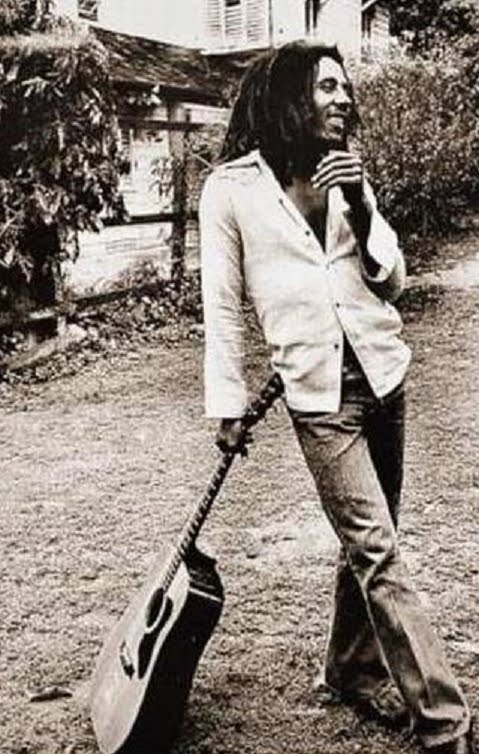
“Wake up and Live!”
Wake up and live, y’all,
Wake up and live,
Wake up and live now,
Wake up and live!
*
Me say: Life is one big road with lots of signs,
So when you riding through the ruts,
Don’t you complicate your mind.
Flee from hate, mischief and jealousy,
Don’t bury your thoughts
– put your vision to reality, yeah!
*
All together now:
Wake up and live, y’all,
Wake up and live,
Wake up and live now,
Wake up and live!
*
Rise, ye mighty people,
There’s work to be done.
So let’s do it, a little by little.
Rise from your sleepless slumber, yeah!
We’re more than sand on the seashore,
We’re more than numbers.
*
All together now:
Wake up and live, y’all,
Wake up and live,
Wake up and live now,
Wake up and live!
*
Woah, one-one cocoa full a basket,
When you use to live big today –
tomorrow you buried in a casket.
One-one cocoa full a basket, yeah,
When you use to live big today –
Tomorrow: buried in a casket!
*
All together now:
Wake up and live, y’all,
Wake up and live,
Wake up and live now,
Wake up and live!
_____
¡Despierten y Vivan!
Despierten y vivan, todos ustedes,
Despierta y vive,
Despierta y vive ahora,
Despierta y vive!
*
Digo: La vida es un camino grande con un montón de signos,
Así que cuando montas a caballo a través de los surcos,
no te complicas la mente.
Huid de odio, maldad y los celos –
No entierres los pensamientos,
ponga su visión en realidad, ¡sí!
*
Despierten y vivan, todos ustedes,
Despierta y vive,
Despierta y vive ahora,
Despierta y vive!
*
Aumenten, ustedes-los-poderosos,
Hay trabajo por hacer,
Así que vamos a hacerlo, poco a poco.
Aumente del sueño sin dormir, sí, sí,
Somos mucho más que arena en la orilla del mar,
Somos mucho más que unos números.
*
Todos juntos ahora:
Despierten y vivan, todos ustedes,
Despierta y vive,
Despierta y vive ahora,
¡Despierta y vive!
*
¿No lo ves? Una pila de cacao en una canasta,
Cuando estás viviendo “a lo grande” hoy día –
Mañana, ¡serás enterrado en un ataúd!
¿No lo ves? Una pila de cacao en una canasta,
Cuando estás viviendo “a lo grande” hoy día –
Mañana, ¡serás enterrado en un ataúd!
*
Todos juntos ahora:
Despierten y vivan, todos ustedes,
Despierta y vive,
Despierta y vive ahora,
¡Despierta y vive!
_____
Letras de una canción de 1979 – del poeta-músico
jamaicano Robert Nesta Marley a.k.a. Bob Marley
(6 febrero, 1945 – mayo 1981)
Traducción del inglés al español: Alexander Best
*
Song lyrics from 1979 by Jamaican poet and musician
Robert Nesta Marley a.k.a. Bob Marley
(February 6th, 1945 – May 1981)
Translation into Spanish: Alexander Best
_____
Juliane Okot Bitek: “Dans Sept Jours” et “À Langston Hughes”
Posted: February 1, 2012 Filed under: English, French, Juliane Okot Bitek, ZP Translator: Lan Truong, ZP Translator: Lidia García Garay | Tags: Black poets Comments Off on Juliane Okot Bitek: “Dans Sept Jours” et “À Langston Hughes”_____
“Dans Sept Jours”
Une main delicate
tient un eventail
Evoque des souvenirs de la performance d’un amoureux
*
Dis-moi
Dis-moi car je ne m’imagine pas
La chaleur qui se lève dans l’arrière de ma gorge
S’étendre dans ma poitrine
Tombe
Et se dépose
*
Je ne reviendrai pas vers toi
*
Une fleur se ferme
Se dessèche à cause de la froide étreinte
D’un vent sec et amer
*
Tout sera fini
Dans sept jours.
_____
“À Langston Hughes”
Si tu ne restes pas
Pour lire mon coeur,
Cela ne me dérange pas
*
J’ai déchiré ton livre de poésie
*
Tu as menti:
Comme je prenais le train à Harlem
Tu as déraillé.
_____
Le poète Juliane Okot Bitek est née à Kenya en 1966.
Elle a passé son enfance en Ouganda.
Et maintenant elle habite à Vancouver, Canada.
*
Traductions de l’anglais au français:
Lidia Garcia Garay, Lan Truong
_____
“Seven Days”
A delicate hand
Holds a fan
Evokes memories of a lover’s performance
Tell me
Tell me that I do not imagine
The heat that rises at the back of my throat
Spreads through my chest
Falls
And settles
I am not returning to you
A flower folds up
Shrivels from the cold embrace
Of a dry and bitter wind
In seven days
It will be over.
_____
“To Langston Hughes”
That you will not stay
To read my heart
Doesn’t matter to me
I tore your book of poetry
You lied:
While I took the Harlem train uptown
You strayed.
_____
Poet Juliane Okot Bitek was born in Kenya in 1966
and spent her childhood in Uganda.
She now lives in Vancouver, Canada.
_____
Langston Hughes: “La Señora y su Señora” / “Madame et sa Madame” / “Madam and her Madam”
Posted: February 1, 2012 Filed under: English: Black Canadian / American, French, Langston Hughes, Spanish, ZP Translator: Lan Truong, ZP Translator: Lidia García Garay | Tags: Black poets Comments Off on Langston Hughes: “La Señora y su Señora” / “Madame et sa Madame” / “Madam and her Madam”_____
Langston Hughes (February 1st, 1902 – 1967)
“Madam and Her Madam”
I worked for a woman,
She wasn’t mean–
But she had a twelve-room
House to clean.
*
Had to get breakfast,
Dinner, and supper, too–
Then take care of her children
When I got through.
*
Wash, iron, and scrub,
Walk the dog around–
It was too much,
Nearly broke me down.
*
I said, Madam,
Can it be
You trying to make a
Pack-horse out of me?
*
She opened her mouth.
She cried, Oh, no!
You know, Alberta,
I love you so!
*
I said, Madam,
That may be true–
But I’ll be dogged
If I love you!
_____
“La Señora y su Señora”
por Langston Hughes
Trabajé para una mujer
No era muy malvada—
Ella tenía una casa de doce cuartos
que yo tenía que limpiar.
*
Tenía que hacer desayuno,
Almuerzo y cena también—
Después atender a los niños,
Al terminar.
*
Lavar, planchar, y limpiar
Llevar a caminar al perro…
Era demasiado,
Casi me destroza.
*
Yo le dije, Señora,
¿Es posible que usted
Está tratando de convertirme
En un caballo de carga?
*
Ella habrió su boca
Y exclamó:
¡Oh, no!
Sabes Alberta,
¡Yo a tí te quiero mucho!
*
Yo le dije: Señora,
Puede que eso sea verdad—
¡Pero que desgracia la mía
Si yo la quiero a usted!
*
Traducción del inglés al español: Lidia García Garay
_____
“Madame et sa Madame”
par Langston Hughes
J’ai travaillé pour une femme,
Elle n’était pas méchante—
Elle avait une maison avec
douze chambres
Que je devais nettoyer.
Préparer le petit déjeuner,
Le déjeuner et le dîner aussi—
Je devais garder ses enfants
Après tout ca.
Faire la lessive et la repasser,
et nettoyer le plancher,
Promener son chien—
C’était trop!,
Le travail m’a fait presque craquer.
*
Je lui ai dit: Madame,
Est-ce qu’il est possible
Que vous essayiez
De me transformer en cheval de trait?
*
Elle a ouvert sa bouche.
Et elle a dit: Pas du tout!
Tu sais Alberta,
Je t’aime beaucoup!
*
Je lui ai dit: Madame,
Cela peut être la vérité
Mais je serais foutue
si je vous aime!
*
Traduction de l’anglais au français:
Lidia García Garay, Lan Truong
_____
Langston Hughes: “La Vida es buena” / “La Vie est bien” / “Life is Fine”
Posted: February 1, 2012 Filed under: English: Black Canadian / American, French, Spanish, ZP Translator: Lan Truong, ZP Translator: Lidia García Garay | Tags: Black poets Comments Off on Langston Hughes: “La Vida es buena” / “La Vie est bien” / “Life is Fine”_____
Langston Hughes (February 1st, 1902 – 1967)
“Life is Fine”
I went down to the river,
I set down on the bank.
I tried to think but couldn’t,
So I jumped in and sank.
I came up once and hollered!
I came up twice and cried!
If that water hadn’t a-been so cold
I might’ve sunk and died.
But it was Cold in that water! It was cold!
*
I took the elevator
Sixteen floors above the ground.
I thought about my baby
And thought I would jump down.
I stood there and I hollered!
I stood there and I cried!
If it hadn’t a-been so high
I might’ve jumped and died.
But it was high up there! It was high!
*
So since I’m still here livin’,
I guess I will live on.
I could’ve died for love–
But for livin’ I was born
Though you may hear me holler,
And you may see me cry–
I’ll be dogged, sweet baby,
If you gonna see me die.
Life is fine! Fine as wine! Life is fine!
_____
“La Vida es Buena”
por Langston Hughes
Fuí al río
Me senté a la orilla
Traté de pensar sin éxito alguno,
Entonces me lancé al agua y me hundí
¡Salí una vez y grité!
¡Sali una segunda vez y lloré!
Si el agua no hubiera estado tan fría
Me habría hundido y habría muerto
¡Pero estaba
Frío en el agua!
¡Hacía frío!
*
Tomé el ascensor
Quince pisos arriba
Pensé en mi amor
Y pensé que me tiraría
¡Estube un rato y grité!
¡Estube un rato y lloré!
Si no hubiera estado tan alto
Habría saltado y muerto.
¡Pero estaba muy alto allá arriba!
*
Entonces ya que estoy aquí vivo,
Supongo que seguiré viviendo.
Yo podría haber muerto por amor,
Pero para vivir nací
Aunque me oigan gritar—
Y me oigan llorar
Que desgracia la mía, dulce amor,
Si tu me vas a ver morir.
¡La Vida es Buena! ¡Buena como el vino! ¡La Vida es Buena!
*
Traducción del inglés al español: Lidia García Garay
_____
“La Vie est Bien”
par Langston Hughes
(1er février, 1902 – 1967)
Je suis allé à la rivière,
me suis assis sur le bord,
J’ai essayé de penser mais je n’en ai pas pu,
alors je me suis jeté dans l’eau et j’ai coulé,
Je suis sorti de là et j’ai beuglé!
Une deuxième fois et j’ai pleuré.
Si l’eau n’avait pas été si froide
j’aurais coulé et été mort.
Mais il faisait froid dans l’eau!
*
J’ai pris l’ascenseur,
suis monté dans le seizième étage,
J’ai pensé a mon amour
Et j’ai pensé à me jeter du haut de l’édifice.
Je suis resté un moment et j’ai beuglé!
Je suis resté là et j’ai pleuré!
Si où j’était n’était si haut
j’aurais eu me jeter et mourir.
Mais il était très haut là bas!
*
Alors, comme je suis encore ici et vivant,
Ça veut dire que je vais continuer à vivre.
Je serais mort à cause de l’amour
Mais je suis né pour vivre.
Vous pouvez m’entendre hurler
Et vous pouvez me voir pleurer –
Je serais foutu, mon amour,
Si tu me vois mourir.
La vie est bonne! Comme le vin est bon! La vie est bien!
*
Traduction de l’anglais au français:
Lidia García Garay, Lan Truong
_____
Día De Los Reyes: canta Mercedes Sosa…de Melchor, Gaspar y Baltasar
Posted: January 6, 2012 Filed under: English, Spanish, ZP Translator: Alexander Best | Tags: Christmas carols and songs, Mercedes Sosa Comments Off on Día De Los Reyes: canta Mercedes Sosa…de Melchor, Gaspar y Baltasar
Canción por
Mercedes Sosa:
Los Reyes Magos
Llegaron ya, los reyes y eran tres
Melchor, Gaspar y el negro Baltasar.
Arrope y miel
Le llevaron
Y un poncho blanco de alpaca real.
Changos y chinitas duérmanse
Que ya Melchor, Gaspar y Baltasar
Todos los regalos dejaron
Para jugar mañana al despertar.
El Niño Dios muy bien lo agradeció
Comió la miel y el poncho le abrigó.
Y fue después
Que sonrió,
Y a medianoche el sol relumbró.
_____
A Song by
Mercedes Sosa:
The Three Wise Men (Adoration of the Magi)
They arrived already, those Kings, and three there were:
Melchior, Caspar, and black Balthazar.
Grape syrup and honey they took to Him
And a poncho of royal alpaca wool.
Monkeys, ladybugs – go to sleep !
All the gifts and toys are already there,
from Melchior, Caspar and Balthazar,
for Him in the morning – when he lets out a “peep”.
The Child God was truly grateful for
the poncho that wrapped him up warmly
– oh, and the honey He ate !
And it was after that
He smiled.
And at midnight the
Sun shone bright !
_____
Translation / interpretation from Spanish into English: Alexander Best
Su Nombre es Jesús y Soy Su Niña / His Name is Jesus and I’m His Child : Zella Jackson Price
Posted: December 24, 2011 Filed under: English, Spanish, ZP Translator: Lidia García Garay | Tags: Christmas carols and songs Comments Off on Su Nombre es Jesús y Soy Su Niña / His Name is Jesus and I’m His Child : Zella Jackson Price_____
Soy Su Niña
(canción evangélica de Zella Jackson Price, 1982)
Es posible que no sea lo mejor de todo
o tenga lo mejor de algo,
algunas veces me siento que soy
lo menos de todo.
Pero conozco a alguien que tiene todo
Y Él es mi Todo,
Y yo estoy feliz de
tan sólo saber que:
Soy Su Niña.
Su nombre es Jesús,
El Hijo Recto de Diós,
El Lirio del Valle y
La Estrella más Brillante de la Mañana.
Su nombre es Jesús,
y Él es mi Todo
– Ohhh sí –
y estoy feliz de
tan sólo saberlo:
¡ Soy Su Niña !
*
Traducción del inglés al español: Lidia García Garay
Translation from English into Spanish: Lidia García Garay
*
I’m His Child
(as sung by Zella Jackson Price, 1982)
I may not be the best of anything
Or have the best of anything,
Sometimes I feel like I’m the least of all.
But I know someone who has everything
And He is my Everything,
And I happy just to know that
I’m His Child !
His name is Jesus,
the Righteous Son of God, the
Lily of the Valley and the
Brightest Morning Star.
His name is Jesus, and
He’s my Everything
– Ohhh yes he is –
And I am happy just to know that
I’m His Child !
_____
Mon Pays – c’est l’Hiver ! “Québécitude” in song
Posted: December 22, 2011 Filed under: English, French, Gilles Vigneault, Translator's Whimsy: Song Lyrics / Extravagancia del traductor: Letras de canciones traducidas por Alexander Best, ZP Translator: Alexander Best Comments Off on Mon Pays – c’est l’Hiver ! “Québécitude” in song
MY COUNTRY
My country’s not a country, it’s winter,
my garden’s not a garden, it’s a vast plain,
my road is no road – it’s the snow !
My country’s not a country – it’s winter !
A ceremony all in white
where snow marries wind,
in this blizzard-land
my father built a house
and I’m going to honour
his ways, his example…
My guest room will be where
you return, season by season
and you’ll build too – right beside it.
My country’s not a country, it’s winter,
My refrain’s no refrain, it’s a gust of wind,
My house isn’t mine – it’s the winter-chill’s !
My country’s not a country – it’s winter !
All around my solitary land
I cry out before the silence,
to everyone on earth:
My house is yours, too.
Inside four walls of ice
with time and space
I make the fire, and a place
for People of the Horizon
– and these people are of my people.
My country’s not a country, it’s winter,
my garden’s not a garden, it’s the vast plain,
my road is no road – it’s the snow !
My country’s not a country – it’s winter !
My country’s no country but the contrary
of country – neither land nor nation,
my song’s not a song – it’s my life !
And for you I wish to master these winters !
_____
MON PAYS
Mon pays ce n’est pas un pays, c’est l’hiver
Mon jardin ce n’est pas un jardin, c’est la plaine
Mon chemin ce n’est pas un chemin, c’est la neige
Mon pays ce n’est pas un pays, c’est l’hiver.
Dans la blanche cérémonie où la neige au vent se marie
Dans ce pays de poudrerie mon père a fait bâtir maison
Et je m’en vais être fidèle à sa manière à son modèle
La chambre d’amis sera telle qu’on viendra des autres saisons
pour se bâtir à côté d’elle.
Mon pays ce n’est pas un pays, c’est l’hiver
Mon refrain ce n’est pas un refrain, c’est rafale
Ma maison ce n’est pas ma maison, c’est froidure
Mon pays ce n’est pas un pays, c’est l’hiver.
De ce grand pays solitaire je crie avant que de me taire
A tous les hommes de la terre ma maison c’est votre maison
Entre mes quatre murs de glace je mets mon temps et mon espace
À préparer le feu, la place pour les humains de l’horizon
Et les humains sont de ma race.
Mon pays ce n’est pas un pays, c’est l’hiver
Mon jardin ce n’est pas un jardin, c’est la plaine
Mon chemin ce n’est pas un chemin, c’est la neige
Mon pays ce n’est pas un pays, c’est l’hiver.
Mon pays ce n’est pas un pays, c’est l’envers
D’un pays qui n’était ni pays ni patrie
Ma chanson ce n’est pas une chanson, c’est ma vie
C’est pour toi que je veux posséder mes hivers.
_____
Gilles Vigneault (born 1928) wrote “Mon Pays” for a 1965 NFB film,
La neige a fondu sur la Manicouagan. This new folk song became an
instant classic – emblematic for Québec’s growing nationalist movement.
Editor’s note:
Almost two generations later the song does show its age, for the Canadian
essential-ideal of The Great White North – intrinsic to Canadians outside of
Québec as well – holds less sway in our collective identity. Too, “Mon Pays”
is dated in that it captures the spirit of an isolated – if friendly – culture:
not the rumbling, restless Québec of the 1960s. Rather the lyrics might well
describe a People more remote in time – the Far-North Inuit of the 19th-century.
Still, if there has been a place in Canada where winter is embraced and
not merely borne, it is Québec, where coureurs de bois and habitants
were the first of Canada’s White arrivals to adapt the Naskapi/Montagnais
Native People’s’ inventions – toboggans and snowshoes – to daily use both
practical and recreational.
And Québec leads the nation for Winter fun – not drear – with many jovial
outdoor festivals and an entrenched culture of open-air ice-skating parties !
_____
Translation from French into English: Alexander Best
Oración a La Virgen de Guadalupe: José Valdez
Posted: December 12, 2011 Filed under: English, José Valdez, Spanish, ZP Translator: Alexander Best | Tags: Oración a La Virgen de Guadalupe, Prayer to Our Lady of Guadalupe Comments Off on Oración a La Virgen de Guadalupe: José Valdez
Oración a La Virgen de Guadalupe
por José Valdez (México)
“A mi Virgen de Guadalupe”
.
Necesito tu ayuda
me siento perdido
mis ojos se nublan
no encuentro el camino
tú que eres buena
y muy milagrosa
te pido, morena,
muchísimas cosas
pido por la gente
que quiero yo tanto
que siempre se encuentren
bajo de tu manto
pido me des fuerzas
que encuentre el camino
y que me protejas
con tu manto fino
eres muy hermosa
linda virgencita
pareces una rosa
que nunca se marchita
con solo mirarte
me llenas de paz
con solo tocarte
la vida me das
me inspiras confianza
y mucha ternura
me das esperanzas
y también dulzura
esa verde manta
que cubre tu cabeza
te hace ver más santa
y llena de pureza
ese resplandor
que a ti te rodea
es un bello sol
que nunca te quema
esos lindos ojos
parecen dos diamantes
y tu vestido rojo
te hace ver radiante
sé que tú me quieres
yo siempre lo supe
por eso, para mí, eres
Mi Virgen de Guadalupe.
*
“To my Virgin of Guadalupe”
.
I need your help
I am lost
my eyes cloud over
I cannot find the path,
you who are good
so very miraculous
I ask of you, morena,
very very many things
I ask for those people that I love so,
that always they may find themselves
blanketed within your cloak,
I ask that you may give me strength
that I might find the way
and that you may protect me
within your fine cloak,
you are most beautiful
lovely dear Virgin
you seem like a rose
that never wilts
I merely gaze upon you
and you fill me with peace
I touch you, merely,
and you give me life,
you inspire trust in me
and much tender feeling,
hope you give me,
gentleness too,
that green scarf
that covers your head
makes you look most saintly
and full of purity,
that dazzling gleam
surrounding you
is a beautiful sun
that never burns,
those lovely eyes
are as two diamonds,
and your red robe
makes you radiant,
I know that you love me,
always I knew it,
and, for that reason, for me, you are
My Virgin of Guadalupe.
*
We thank Mr. Valdez for his
poem from the heart honouring
Our Lady of Guadalupe on this
her feast day, December 12th.
Translation from Spanish into English:
Alexander Best
*
¡Tlazocamati, Tonantzin! / Thank You, Sacred Mother!
Posted: December 12, 2011 Filed under: English, Náhuatl, Spanish, ZP Translator: Alexander Best Comments Off on ¡Tlazocamati, Tonantzin! / Thank You, Sacred Mother!
Poema de Nezahualcóyotl
(1402-1472, Rey nahua/mexica de Texcoco)
“Tonantzin”
Tonantzin;
icuac nehuatl nimiquiz
xinechtoca notlecuilco
ihuan quemman ticchihuaz
motlaxcal xinechchoquili.
Ihuan tla aca mitztlatlaniz
Tonantzin. Tleica tichoca?
Xicnanquili; in cuahuitl xoxochuic
ihuan in poctli nechchoctia.
*
“Madrecita”
Madrecita;
cuando yo muera
entiérrame junto a tu hoguera
y cuando hagas tortillas
llora por mí
y si alguien te pregunta
Madrecita ¿Por qué lloras?
Responde; Es que la leña que está verde
y es el humo que me hace llorar.
*
“Sacred Mother”
Little Mother,
when I die
bury me next to your cooking fire
and when you make tortillas
cry for me
and if anyone asks you:
Sacred Mother, why do you cry?
Tell them: It’s only that the fire-wood’s green
and the smoke hurts my eyes…
*
Reesom Haile: the Lively Voice of Eritrea / la Voz Vivaz de Eritrea
Posted: December 1, 2011 Filed under: English, Reesom Haile: La voz vivaz de Eritrea / the lively voice of Eritrea, Spanish, Tigrinya, ZP Translator: Alexander Best | Tags: African poetry - Eritrea, Black poets Comments Off on Reesom Haile: the Lively Voice of Eritrea / la Voz Vivaz de Eritrea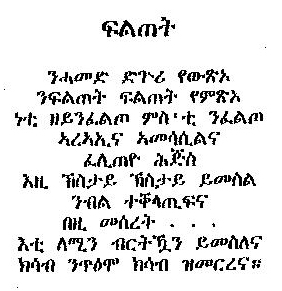


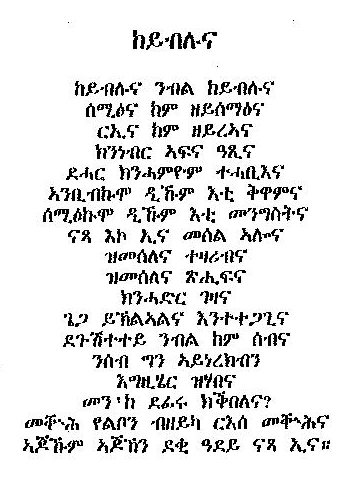
_____ * _____ * _____
KNOWLEDGE
First the earth, then the plow:
So knowledge comes out of knowledge.
We know, we don’t know.
We don’t know we know.
We know we don’t know.
We think
This looks like that –
This lemon, that orange –
Until we taste the bitter.
_____
DEVELOPMENT
Change.
Like a child, an infant.
“Let’s go ! Let’s go !”
And our household grows.
“Let’s run.”
We can slow
And sit and stretch
In the sun
Till it sets, but tomorrow
Dawned yesterday.
_____
UNDER CONSIDERATION
Consider this.
Consider that.
Excellent.
Write it
And propose it
For consideration.
Also consider
The official response,
“It’s under consideration.”
Who is considering whom?
When? Where?
How? Why?
Give up? Consider this.
_____
LEARNING FROM HISTORY
We learned from Marx and Lenin:
To be equal trim your feet
For one-size-fits-all shoes.
We made their mistakes, too.
Equally, we all make mistakes.
The evil is in not being corrected.
Aren’t we known
By what we do, undo and do again?
_____
YOUR HEAD
From birth you need
A door in your head to live.
Mother, father, teacher, preacher,
Sister, brother, relations, friends
Or others of your kind
May have the key
Or it may be lost.
But they still have other ways
To open the lock.
Rancid butter rubbed on your skull
May let the sunshine in.
The phrase, “What are you,
Stupid? Dumb?” might throw the bolt.
A flywhisk works on the less fragile.
A wooden spoon, a ruler or a good stick
Does the trick on harder nuts and…
Voilà! An open mind!
_____
SPEAK OUT
To speak out and to be spoken about,
Or to see no evil, hear no evil,
Shut up, keep it to yourself
And only complain in private?
That is not the question.
Read the constitution
Of our democratic state.
Exercise your rights
To tell it like it is,
Write as you see fit
And get a good night’s sleep.
You also have the right to take
Back what you say by mistake.
The freedom to express
Cannot be given up.
It comes from God.
Be free and brave.
Only one prison remains:
Our minds.
_____ * _____ * _____
El Saber
Al primero la tierra, pues el arado:
Tan que el saber viene del saber.
Sabemos, no sabemos.
No sabemos que sabemos.
Sabemos que no sabemos.
Pensamos que
Ésto parace como éso
– este limon, esa naranja –
hasta que degustemos el amargor.
_____
El Desarrollo
Cambio.
Como niño, como bebé.
¡Vamos! ¡Vamos!
Y crecen nuestro hogar.
¡Corramos!
Podemos aflojar el paso
Y sentarnos, estirando,
Bajo del sol,
Hasta el anochecer, pero
Ayer amaneció la mañana.
_____
Sobre la Consideración
Considera ésto.
Considera éso.
Escríbelo
Y proponlo
Por la consideración.
Considera también
La respuesta oficial:
“Éso es algo que estamos considerando.”
¿Quién está considerando a quién?
¿Cuándo? ¿Dónde?
¿Cómo – y Porqué?
¿Estás perplejo?
Considera ésto.
_____
Aprendiendo de la Historia
Aprendimos de Marx y Lenin:
A ser igual, recorta tus pies
por zapatos de unitalla.
(Cometimos sus errores también.)
Por otro lado, cometemos los errores
Todos nosotros.
Lo mal es no estar corregido.
¿ Nos conoce la gente
De lo que hacemos, deshacemos y hacemos de nuevo – no?
_____
Tu Cabeza
Del nacer te necesita
Una puerta en la cabeza para vivir.
Madre, padre, maestro, pastor.
Hermana, hermano, la familia y los amigos,
O unos otros de tu tipo
Tengan la llave
O la llave esté perdido.
Pero quedan otras maneras
Para abrir la cerradura.
La mantequilla rancia, frotada sobre el cráneo,
pueda dejar entrar la luz del sol.
La frase, “¿Eres cuál – Tonto? o Bobo?
Quizás levantará el pestillo.
Sirve bien un matamoscas sobre la gente menos delicada.
Una cuchara/regla de madera,
O un palo bueno,
Con las “cáscaras de nuez” mas duras
Logran el truco…
¡Y ya está! ¡La mente abierta!
_____
Habla – Di lo que piensas
¿Decir lo que se piensa y ser alguien discutido?
O: ¿A ver nada de mal, a oír nada de mal,
Cállate, guárdalo a tu mismo
Y quejarte en privado?
Éso no es la pregunta.
Leye la constitución
De nuestro estado democrático.
Ejerce tus derechos
A decir lo que es tu verdad,
Escribe por tu manera
Y duerme bien.
Tienes también el derecho de
Retirar lo que dijiste en error.
La libertad de expresar
no debe estar cedido.
Es algo de Dios.
Sé libre y valiente.
Solamente queda una cárcel:
Nuestra mente.
_____ * _____ * _____
Reesom Haile, who died in 2003, was a much-loved Eritrean
poet and public personality.
After working as a radio and television journalist in Ethiopia, he
studied in the USA where he completed a doctorate at New York
University. A consultant to the U.N., government and NGOs for
twenty years, he returned in 1994 to Eritrea whose thirty-year
independence struggle with Ethiopia had just drawn to a close.
(After five years of relatively peaceful relations the two
countries engaged in a border war (1998-2000)
– over Red Sea access – that claimed 100,000 lives.) The reality of
war has formed the backdrop to, and sometimes the impetus for,
Haile’s verse.
His language, Tigrinya, is spoken by half (about 3,000,000 people)
the countryfolk in a nation which includes 9 languages and a variety
of ethnic groups. Tigrinya derives from ancient Ge’ez, as do Tigre
and Amharic. And Ge’ez is related – like Arabic and Hebrew –
to Aramaic, said to be the language spoken by Jesus.
This is poetry that embraces the Eritrean people, turns an eye
both wry and loving on their history and politics, and also issues
a sincere challenge to “get cracking” !
It is verse of vitality and wit, and is rendered beautifully
into English by Professor Charles Cantalupo of Pennsylvania State
University – a poet himself and a translator who balances gravity of
theme with a lightness of touch, thereby giving us something
of the essential character of Reesom Haile.
*
The poems featured here are from Reesom Haile’s collection:
We Have Our Voice (Lawrenceville and Asmara: The Red Sea Press,
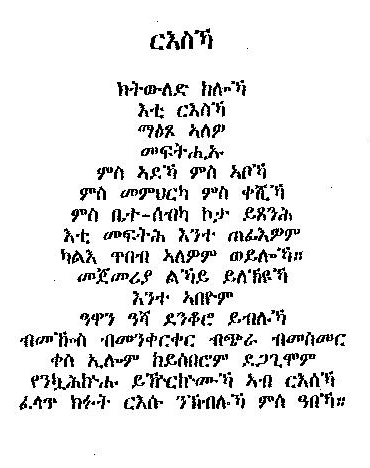
2000) – the first-ever bilingual edition (Tigrinya + English)
of Tigrinya poems. Zócalo Poets is grateful to Professor Cantalupo for
assistance in posting the Tigrinya originals.
Translations from the English into Spanish: Alexander Best
_____
Mucho amado por sus compatriotas, Reesom Haile fue un poeta y
erudito. Su país, Eritrea, está situado al noreste de África, con una
costa al borde del Mar Rojo.
Durante su vida – se murió en 2003 – escribió dos mil poemas en el
lenguaje Tigriña, un idioma antiguo de la familia lingüística semítica
(como árabe, hebreo, y arameo – “la lengua de Jesús de Nazaret”.)
Lleno de inteligencia, vitalidad y ingenio, sus poemas han estado
traducido por el profesor universitario Charles Cantalupo
(de Penn State) con tanta franqueza, con tanto encanto.
Traducción del inglés al español: Alexander Best
 Zócalo Poets