Rubén Darío: Song of Autumn in Spring / Canción de Otoño en Primavera
Posted: September 23, 2014 Filed under: English, Rubén Darío, Spanish, ZP Translator: Alexander Best | Tags: Poemas de Otoño Comments Off on Rubén Darío: Song of Autumn in Spring / Canción de Otoño en Primavera
Rubén Darío (Nicaragua, 1867-1916)
Canción de Otoño en Primavera
.
Juventud, divino tesoro,
ya te vas para no volver.
Cuando quiero llorar, no lloro,
y a veces lloro sin querer.
Plural ha sido la celeste
historia di mi corazón.
Era una dulce niña, en este
mundo de duelo y aflicción.
Miraba como el alba pura;
sonreía como una flor.
Era su cabellera obscura
hecha de noche y de dolor.
Yo era tímido como un niño.
Ella, naturalmente, fue
para mi amor hecho de armiño,
Herodías y Salomé.
Juventud, divino tesoro,
ya te vas para no volver.
Cuando quiero llorar, no lloro,
y a veces lloro sin querer.
Y más consoladora y más
halagadora y expresiva
la otra fue más sensitiva,
cual no pensé encontrar jamás.
Pues a su continua ternura
una pasión violenta unía.
En un peplo de gasa pura
una bacante se envolvía.
En brasos tomó mi ensueño
y lo arrulló como un bebé
y le mató, triste y pequeño,
falto de luz, falta de fe.
Juventud, divino tesoro,
ya te vas para no volver.
Cuando quiero llorar, no lloro,
y a veces lloro sin querer.
Otra juzgó que era mi boca
El estuche de su pasión;
y que me roería, loca,
con sus dientes el corazón,
poniendo en un amor de exceso
la mira de su voluntad,
mientras eran abrazo y beso
síntesis de la eternidad;
y de nuestra carne ligera
imaginó siempre un Edén,
sin pensar que la Primavera
y la carne acaban también.
Juventud, divino tesoro,
ya te vas para no volver.
Cuando quiero llorar, no lloro,
y a veces lloro sin querer.
Y las demás! En tantos climas,
en tantas tierras siempre son,
si no pretextos di mis rimas,
fantasmas de mi corazón.
En vano busqué a la princesa
que estaban triste de esperar.
La vida es dura. Amarga y pesa.
Ya no hay princesa que cantar.
Mas a pesar del tiemp terco,
Mi sed de amor no tiene fin;
con el cabello gris, me acerco
a los rosales del jardín.
Juventud, divino tesoro,
ya te vas para no volver.
Cuando quiero llorar, no lloro,
y a veces lloro sin querer.
¡Mas es mía el alba de oro!

Rubén Darío (Nicaragua, 1867-1916)
Song of Autumn in Springtime
.
Youth’s a treasure that only the gods may keep,
and how it flees from me, forever – now.
I can’t seem to cry, when I need to,
and sometimes tears come when I don’t want them to.
.
The stories of this heart are countless,
can never be told – and
she was a darling child,
in this world of pain and woe.
.
Like daybreak, pure delight she was;
her smile – like flowers after rain.
Her hair was as the night,
fashioned of darkness and unhappiness.
.
Like a kid I was, awkward and shy,
couldn’t ever have been any other way.
And she was as Herodias or Salomé,
my love ermine-draped.
.
Youth’s a treasure only the gods may keep,
and how it flees from me, forever – now.
I can’t seem to cry, when I need to,
and sometimes tears come when I don’t want them to.
.
And there was another one…
More sensitive, quiet, loving, kind;
her will to live, to love, was greater
than I’d hoped to find.
.
Yet there went with her tender grace
a kind of violence of love;
in a peplos of loveliness
was hidden a passion – raving like a Maenad.
.
Youth’s a treasure only the gods may keep,
and how it flees from me, forever – now.
I can’t seem to cry, when I need to,
and sometimes tears come when I don’t want them to.
.
Still another imagined my lips
to be a casket made to bury our love.
She gnawed at the very heart of me,
that’s what she strove to do.
Excess of passion, that was her will;
love’s flame for me she was,
and she could make each embrace, each kiss,
Eternity in synthesis.
.
She pronounced our flesh could never die,
that Desire might restore Eden;
but she forgot one thing:
that the flowers of Spring, and this flesh,
an End must bring.
.
Youth’s a treasure only the gods may keep,
and how it flees from me, forever – now.
I can’t seem to cry, when I need to,
and sometimes tears come when I don’t want them to.
.
And all the others!
Different climates, many lands,
they were just a pretext for my rhymes,
phantoms of my heart.
.
I sought for a princess in vain,
one who had waited, a-sorrowing.
This life is hard, and bitter with pain.
And there’s no princess exists now to sing.
.
Yet despite th’autumnal season’s meanings,
My thirst for love knows no end;
Gray-haired I am, yet still
you’ll find me circling the late-bloom rose.
.
Youth’s a treasure only the gods may keep,
and how it flees from me, forever – now.
I can’t seem to cry, when I need to,
and sometimes tears come when I don’t want them to.
Ah, but the Dawn belongs to me!
. . . . .
Translator’s note:
I have been faithful to the title of the original, calling my English-language version Song of Autumn in Springtime. Yet something doesn’t feel right; Song of Springtime in Autumn would fit Darío’s content better. True, he writes as if an old man reminisces – there is great nostalgia – about past Romance, yet he also tells us that he will still seek out the blooming rose in the garden of Life, and that Dawn belongs to him. And isn’t the dawn that fresh beginning to each day – its Springtime?
A.B.
Poemas para el último día del Verano
Posted: September 22, 2014 Filed under: English, Henri Cole, Pedro Serrano, Spanish, ZP Translator: Alexander Best | Tags: Poemas para el Cambio de Estaciones Comments Off on Poemas para el último día del Verano
Pedro Serrano (Canada/México, nacido en 1947)
El último día del verano
.
El último día del verano
me ha traído la sospecha de que toda vida
es una ficción:
sigo queriendo amar a la mujer que amo,
las temperaturas son extremadamente altas,
aquí, en el comedor,
mi ciudad está sufriendo la metamorfosis inversa
de mariposa a gusano,
la banda de Liverpool actúa en el parque municipal
con acento che y con poco público,
el equipo local no gana los partidos, los empata,
las plantas se secan misteriosamente
y el silencio es el himno que espera al otoño.
El último día del verano
es un baile de grillos, y un consumo
de luna. Ficción.
. . .
Pedro Serrano (Canada/Mexico, born 1947)
The last day of summer
.
The last day of summer
I had been under the suspicion that all of Life was mere
invention, pretence, hogwash:
I keep on wanting to love the woman I love;
temperatures remain exceedingly high
here in the diningroom;
my city suffers from a kind of inverse metamorphosis
– butterfly to worm;
that band from Liverpool performs in the civic park
– with an Argentine accent and next to no audience;
our local team doesn’t win any games – they all end in ties;
plants dry up mysteriously
and Silence is a hymn that awaits the autumn.
This last day of summer
is the crickets’ dance;
this last day, consumed by the moon.
Pure fiction.

Henri Cole (Japón/EE.UU., nacido en 1956)
Brasas
.
Pobre Verano, no comprende el hecho de su muerte; le quedan pocos días.
Pero aun está conmigo el lago con sus pinceladas de índigo
y el sol encendido recolocando la soledad.
Me siento como criatura que ha descubierto un hogar;
eso es mi madriguera / nido / intento para decir:
Yo existo.
.
La rosa no puede pararse y ser de nuevo un capullo.
Es una dolencia, quererlo.
A lo largo de la orilla, la luna esparce su luz sobre todo, como una fogata;
y dentro de la noche verde-negro, los pinos altos ofrecen, estiran, sus brazos
– como Dios
que ofreció, estiró, sus brazos para decir que
Él era aislado y que
Él hacía para Su Mismo
un hombre.


Henri Cole (Japan/USA, born 1956)
Embers
.
Poor Summer, it doesn’t know it’s dying.
A few days are all it has. Still, the lake
is with me, its strokes of blue-violet
and the fiery sun replacing loneliness.
I feel like an animal that has found a place.
This is my burrow, my nest, my attempt
to say, I exist. A rose can’t shut itself
and be a bud again. It’s a malady,
wanting it. On the shore, the moon sprinkles
light over everything, like a campfire,
and in the green-black night, the tall pines
hold their arms out as God held His arms
out to say that He was lonely and that
He was making Himself a man.

. . . . .
Tres Odas al Ajo
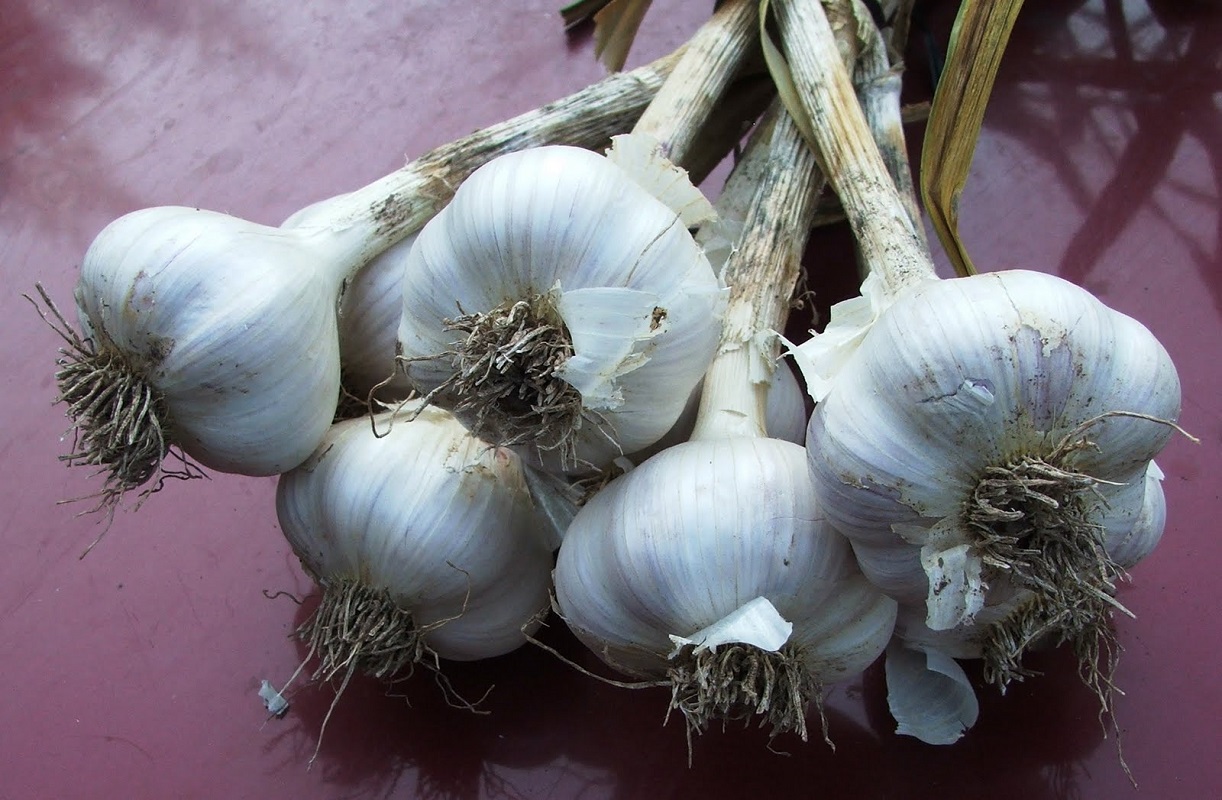
Posted: September 21, 2014 Filed under: English, Spanish, ZP Translator: Alexander Best | Tags: Festival del Ajo de Toronto Comments Off on Tres Odas al AjoCombate el mal aliento de café – ¡Devora más AJO!
Fight coffee breath – Eat GARLIC!
Mario Andrés Díaz Molina (Linares, Chile)
Oda al Ajo
.
Bailarina de trenzas brillantinas,
eterna resonancia del baile de los dientes.
Sabor telúrico de una sopa deseada.
Alegría humilde de una mesa pobre.
Invitado de honor en un banquete de alcurnia.
Esperanza que se come en ayunas.
Desfile de damas blancas
pasando por una eterna retina.
Delantales desprendidos de la desnudez de la tierra.
Astros flotando en el océano de la olla.
Besos que niegan su esencia
ante los labios vecinos.
Bocas volcánicas
que eructan el olor incorrupto de los campos.
Pesadilla de las niñas enamoradas
después de la cena.
Pasión tardía, oculta en el sabor
que desciende de las alturas del corazón
a los brazos del bienamado.
Sonriendo con el aroma de miel
que perfuma a primavera
el paso solemne del rey de la cocina.
. . .
Adrienne
Oda al Ajo
.
Estás allá, en banquetes los más elegantes;
Das vida a cada plato y
Haces bailar el gusto.
Ajo, eres el héroe aun de la literatura
– ¡puedes dominar a Drácula!
Eres nuestro placer culposo;
Dicen todo el mundo que te detestan, pero
Queremos tu aceite esencial.
De veras, Ajo: ¡eres el Rey de la Cocina!
. . .
Adrienne
Ode to Garlic
.
You are there at the finest banquets,
You liven up every dish
and make my palate dance.
Garlic, you’re the hero even of literature
– able to conquer Dracula!
You’re our guilty pleasure;
everyone says how they detest you
yet we all love your essential oil.
For truly, Garlic:
You are King of the Kitchen!
. . .
Mong-Lan (Vietnam/EE.UU., nacido en 1970)
Poema de Amor – para el Ajo
.
rosa maloliente
el olor embriagante
agrio picante
el más subestimado
orbe perenne
raíz bulboso
luna incandescente
.
invocado como deidad por los egipcios
ajo
cada día contigo es otro día triplicado
.
desvestido de tu cubierta delicada
tu crudeza fresca – escupiendo fuego
te adoro, integro,
un temblor cuando te muerdo
.
eres un milagro medicinal,
luchando contra resfriados,
disolvente de sangre,
antibiótico extraordinario
.
el modo de comerte crudo – y amarlo:
pela la cubierta de placenta ,
corta en juliana para salsa de pescado con ají e limon
.
tu palidez audaz descubierto,
te imagino en cada momento de cada día
. . .
Mong-Lan (Vietnam/USA, born 1970)
Love Poem to Garlic
.
stinking rose
the heady scent of you
tangy spicy
most under-rated
year-round orb
bulbous root, incandescent moon
invoked as a deity by the Egyptians
garlic
each day with you is another day tripled
stripped of your delicate cover
your fire-spitting fresh rawness
i love you unadulterated
a shiver once i bite you
medicinally you are a miracle
fighting colds
blood thinner
anti-bacterial extraordinaire
how to eat you raw & love it:
peel the placenta-like cover
julienne into fish sauce with red chili peppers & lemon
your bold paleness exposed
i imagine you
at every moment of every day
. . . . .
El Festival del Ajo de Toronto:
http://www.torontogarlicfestival.ca/
. . . . .
“Es algo tan muy nuevo”: versiones de poemas por e.e.cummings – con gouaches de William Gilpin-Beck / “It is so quite new a thing”: poems of e.e.cummings in Spanish translations – with gouaches by William Gilpin-Beck
Posted: July 31, 2014 Filed under: E.E. Cummings, English, Spanish, ZP Translator: Alexander Best Comments Off on “Es algo tan muy nuevo”: versiones de poemas por e.e.cummings – con gouaches de William Gilpin-Beck / “It is so quite new a thing”: poems of e.e.cummings in Spanish translations – with gouaches by William Gilpin-Beck
. . .
e.e.cummings (1894-1962, Cambridge, Massachusetts, USA)
i like my body when it is with your
.
i like my body when it is with your
body. it is so quite new a thing.
Muscles better and nerves more.
i like your body. i like what it does,
i like its hows. i like to feel the spine
of your body and its bones,and the trembling-
firm-smooth ness and which i will
again and again and again
kiss, i like kissing this and that of you,
i like,slowly stroking the,shocking fuzz
of your electric fur,and what-is-it comes
over parting flesh….And eyes big love-crumbs,
and possibly i like the thrill
of under me you so quite new
.
(from cummings’ 1925 collection, &[AND])
. . .
e.e.cummings
(1894-1962, poeta estadounidense innovador, nacido en Cambridge, Massachusetts)
me gusta mi cuerpo cuando al tuyo (1925)
.
me gusta mi cuerpo cuando al tuyo está junto.
es algo tan muy nuevo.
Músculos mejores y nervios más.
me gusta tu cuerpo. me gusta lo que hace,
y su cómo. me gusta tocar el espinazo
de tu cuerpo y sus huesos,y el temblor
-resuelto-lisura,que,
una y otra vez,
besaré, me gusta besar tu esto y tu eso,
me gusta, lentamente acariciar, el vello estremecedor
de tu pelaje eléctrico, y lo-que-es viene
sobre la raya abierta de tu carne viva. . . . Y ojos grandes-sobras de amor,
y me gusta, posiblemente, la incitación de
bajo el mí la tú tan muy nueva
. . .
since feeling is first
.
since feeling is first
who pays any attention
to the syntax of things
will never wholly kiss you;
wholly to be a fool
while Spring is in the world
my blood approves,
and kisses are a better fate
than wisdom
lady i swear by all flowers. Don’t cry
– the best gesture of my brain is less than
your eyelids’ flutter which says
we are for each other: then
laugh, leaning back in my arms
for life’s not a paragraph
And death i think is no parenthesis
.
(from cummings’ 1926 collection, is 5)
. . .
porque está primero el sentimiento (1926)
.
porque está primero el sentimiento
quien ponga atención
a la sintaxis de las cosas
nunca te besará, plenamente;
plenamente ser un bobo
mientras la Primavera está en el mundo
mi sangre aprueba,
y son un mejor destino, los besos,
que la razón
señora tengo plena confianza en todas las flores. No llores
– el mejor gesto del seso es menos que
el revuelo de tus párpados que dice que
somos el uno para el otro; pues
ríe, reclínate en mis brazos
porque no es un párrafo la vida
Y yo creo que la muerte no es ningún paréntesis
. . .
may i feel said she
.
may i feel said he
(i’ll squeal said she
just once said he)
it’s fun said she
(may i touch said he
how much said she
a lot said he)
why not said she
(let’s go said he
not too far said she
what’s too far said he
where you are said she)
may i stay said he
(which way said she
like this said he
if you kiss said she
may i move said he
is it love said she)
if you’re willing said he
(but you’re killing said she
but it’s life said he
but your wife said she
now said he)
ow said she
tiptop said he
don’t stop said she
oh no said he)
go slow said she
(cccome?said he
ummm said she)
you’re divine!said he
(you are Mine said she)
.
(from cummings’ 1935 collection, No Thanks)
. . .
puedo tocarte dijo él (1935)
.
dijo él: puedo tocarte
(dijo ella: chillaré
dijo él: sólo una vez)
dijo ella: es redivertido
(puedo palparte
cuánto
mucho)
por qué no
(vámonos dijo él
no demasiado dijo ella
qué es demasiado lejos
donde tu estás)
(puedo quedarme dijo él
cómo dijo ella
así dijo él
si me das un beso dijo ella
puedo moverme
es el amor)
si lo estás deseando
(pero me estás matando
él dijo: pero la vida es así
ella dijo: pero y tu mujer
él dijo: ahora)
ella dijo: ayy
súper dijo él
no te detengas dijo ella
ay no dijo él)
más despacio dijo ella
(¿te corres?
mmm)
¡eres divina!
(eres Mío…)


love is more thicker than forget
.
love is more thicker than forget
more thinner than recall
more seldom than a wave is wet
more frequent than to fail
it is most mad and moonly
and less it shall unbe
than all the sea which only
is deeper than the sea
love is less always than to win
less never than alive
less bigger than the least begin
less littler than forgive
it is most sane and sunly
and more it cannot die
than all the sky which only
is higher than the sky
.
(from cummings’ 1940 collection, 50 Poems)
. . .
amar es más denso que olvidar (1940)
.
amar es más denso que olvidar
más fino que recordar
más raramente que una ola mojada
más frecuente que fracasar
es más loco y lunarmente
y menos no será
que todo el mar que sólo
es más hondo que la marejada
el amor es menos siempre que ganar
menos nunca que viviente
menos grande que un comienzo que es lo mínimo
menos pequeño que perdón
es el más sensato y del sol (sol a mente)
y encima no puede morir
que todo el azul que sólo
es más alto que el cielo
. . .
i carry your heart with me
.
i carry your heart with me(i carry it in
my heart)i am never without it(anywhere
i go you go,my dear,and whatever is done
by only me is your doing,my darling)
i fear
no fate(for you are my fate,my sweet)i want
no world(for beautiful you are my world,my true)
and it’s you are whatever a moon has always meant
and whatever a sun will always sing is you
here is the deepest secret nobody knows
(here is the root of the root and the bud of the bud
and the sky of the sky of a tree called life;which grows
higher than soul can hope or mind can hide)
and this is the wonder that’s keeping the stars apart
i carry your heart(i carry it in my heart)
.
(from cummings’ 1958 collection, 95 Poems)
. . .
llevo tu corazón conmigo (1958)
.
llevo tu corazón conmigo, (lo llevo en mi corazón), sin él nunca estoy
(a donde quiera que voy vas tú mi amor;
y donde aquello que hago yo sola
es gracias a tí, mi cielo.)
no tengo miedo
del destino
(porque eres mi destino, cariño).no quiero ningún mundo porque hermosa
eres, mi mundo, mi verdad) y tú eres lo que es el siempre-significado de una luna y lo que cantará siempre el sol eres tú
este es el secreto más profundo y desconocido
(Acá está la raíz de la raíz
y el brote del brote
y el cielo del cielo de un árbol llamado vida;
que crece más alto de lo que el alma pueda esperar o la mente ocultar)
y esto es la maravilla que mantiene las estrellas separadas
llevo tu corazón, (lo llevo en mi corazón)

Edward Estlin Cummings (1894-1962) was an American poet and painter who grew up with the core values of New England Transcendentalism. Known for his broken syntax and a deliberate and playful mis-use of parentheses, commas, periods and lower-case letters, he was one of the modernizers of poetic language – wrenching it away from 19th century verse conventions. His 1917 poem Buffalo Bill’s defunct (based on a newspaper headline) signaled that clean break with the past. In 2014, more than a half century after his death, Cummings’ lustre has faded; his once-astonishing word games now seem less exciting when text messages and ‘tweets’ bring us fractured language daily. Joyce Kilmer’s sentimental Trees (1914) and Langston Hughes’ subtle and provocative A Dream Deferred (1951) are today far more often memorized and quoted than any verses by e.e.cummings. Yet at the time of his death, Cummings – along with Robert Frost – was the most widely read of American contemporary poets.
All of the above poems are here featured in their original lay-outs, and are taken from the 1994 centennial edition of E.E. Cummings: Complete Poems 1904-1962, edited by George J. Firmage, published by Liveright, New York City.
. . .
Edward Estlin Cummings (1894-1962) fue un poeta, pintor, ensayista y dramaturgo. Aunque él no aprobaba la práctica, sus editores frecuentemente escribían su nombre con minúsculas para representar su sintaxis extraordinaria. Cummings es conocido por sus poemas que rompen con toda estructura – incluyendo usos poco ortodoxos de las mayúsculas y la puntuación, en la que los puntos y comas podían incluso llegar a interrumpir oraciones y hasta palabras. Sus poemas también están escritos sin respeto a los renglones y los párrafos y algunos no parecen tener pies ni cabeza hasta que no son leídos en voz alta. A pesar del hecho que utilizó los estilos vanguardistas y la tipografía inusual, la buena parte de su obra es tradicional; su poesía frecuentemente trata el tema del Amor.
. . . . .
Dylan Thomas: Poema del Ocaso del Día por El Reverendo Eli Jenkins / The Sunset Poem of The Reverend Eli Jenkins
Posted: July 15, 2014 Filed under: Dylan Thomas, English, Spanish, ZP Translator: Alexander Best Comments Off on Dylan Thomas: Poema del Ocaso del Día por El Reverendo Eli Jenkins / The Sunset Poem of The Reverend Eli Jenkins
At the end of the day…Al ocaso del día…
Bajo el bosque de leche es una pieza de radioteatro del escritor galés, Dylan Thomas, posteriormente adaptada para su representación en el teatro. También existe una adaptación cinematográfica de 1972, con Richard Burton y Elizabeth Taylor.
En Bajo el bosque de leche, un narrador omnisciente invita a los oyentes a escuchar los sueños y pensamientos íntimos de los habitantes de una imaginaria localidad galesa, “Llareggub” (inversión de bugger all, traducible aproximadamente como “iros todos al carajo”). Entre los personajes principales, cuyos nombres son casi siempre simbólicos, se encuentran el Capitán Cat, que revive su época de marino; las dos señoras Dai Breads; Organ Morgan, obsesionado con su música; y Polly Garter, que suspira por su amante muerto. Tras este inicio onírico, el pueblo despierta y cada personaje se sumerge en sus quehaceres cotidianos. (Wikipedia)
. . .
Dylan Thomas first wrote Under Milk Wood as a radio drama in 1954. It was later adapted as a stage play. In the story a narrator invites the listener to hear about the dreams and hidden thoughts of the inhabitants of a Welsh fishing village called Llareggub (“bugger all” spelt backwards). The characters include: Mrs. Ogmore-Pritchard, who nags her two deceased husbands; Captain Cat, who relives his seafaring years; the Mrs. Dai Breads; “Organ Morgan”, obsessed by music; and Polly Garter, who pines for her dead lover. Toward the end, the town “awakens”, and is aware now just how their feelings affect all that they do. And so, they go about their daily business…
The following poem by Thomas is taken from the radio play:
The Sunset Poem of The Reverend Eli Jenkins
.
Every morning when I wake,
Dear Lord, a little prayer I make;
O please to keep Thy loving eye
On all poor creatures born to die.
And every evening at sun-down
I ask a blessing on the town;
For whether we last the night or no
I’m sure is always touch-and-go.
We are not wholly bad or good
Who live our lives Under Milk Wood;
And Thou, I know, wilt be the first
To see our best side – not our worst.
O let us see another day…
Bless us all this night, I pray;
And to the sun we all will bow,
And say good-bye – but just for now.
. . .
Dylan Thomas
Poema del Ocaso del Día (por El Reverendo Eli Jenkins)
.
Cada alba cuando me levanto,
Querido Dios, una pequeña oración hago.
Por favor, que apuntes el ojo de tierno cuidado
Sobre todos nosotros – las pobres criaturas destinado a morir.
.
Y en la tarde, a la puesta del sol,
Te pido una bendición por el bien del pueblo,
Porque – en esta noche – y si duramos o no –
Yo sé que la Vida siempre es precario.
.
Buenos, malos – no somos ni el uno ni el otro
(nosotros viviendo en en el pueblo de Bajo-Leche-Madera);
Y – lo sé – que Tú serás el primero que ve en nosotros lo mejor – no lo peor.
.
¡Ah, miremos un otro día!
Bendícenos en esta noche – rezamos;
Y haremos una reverencia al sol,
Y digamos Adiós – a menos por ahora…
. . .
The Sunset Poem was also set to the music of A. H. D. Troyte (Troyte’s Chant No. 1), in four-part harmony for two tenors and two bass singers.
. . . . .
Alicia Claudia González Maveroff: Time / Tiempo
Posted: July 7, 2014 Filed under: Alicia Claudia González Maveroff, English, Spanish, ZP Translator: Alexander Best Comments Off on Alicia Claudia González Maveroff: Time / Tiempo
Alicia Claudia González Maveroff
Time
.
And Time passes by,
and that which one didn’t make happen
or say in the moment
can no longer be expressed,
for already its time has come and gone – and is lost.
.
And so, in this way you come to understand
that it’s not enough to just let Time slip by:
to lose opportunities;
to live without saying what it is one feels,
to live without allowing oneself happiness in its time.
.
You take the chance then to speak so as to
not lose any more Time.
And you know what? It’s not difficult to do this
– looking yourself in the eyes –
because it isn’t human frailty to describe your feelings.
.
There will be many more times when one says nothing,
as if it – what one longed to say – were not certain…
And Life passes by,
the same as I told you
Time passes by.
.
And one day, without your realizing it,
you will come and you won’t find me,
and that which you
couldn’t find the words for / didn’t know how to say,
well – you’ll’ve run out of Time…
Buenos Aires, 22/06/14
. . .
Alicia Claudia González Maveroff
Tiempo
.
Y el tiempo pasa
y lo que no se hizo
o dijo en su momento,
no puede ya expresarse,
pues ya perdió
su tiempo.
Y así comprendes
que no es adecuado
dejar pasar
el tiempo,
perder las oportunidades,
vivir sin permitirse decir
lo que se siente y ser feliz
a tiempo.
Y te arriesgas entonces
a hablar, a no perder
más tiempo.
Sabes, no es difícil hacerlo,
mirándose a los ojos.
Que no es fragilidad
describir sentimientos.
Más muchas veces,
no se dice nada, como si esto
no fuera cierto…
Y entonces la vida pasa,
como te cuento pasa
el tiempo.
Y un día sin saberlo,
vienes y no me encuentras,
y aquello que no se pudo
o no se supo decir,
ya no tiene
más tiempo…
Buenos Aires, 22/06/14
. . .
English interpretation from the original Spanish: Alexander Best
. . . . .
Augusto dos Anjos: “Intimate Verses” and “Immortal Lust” / translation by Daniel Vianna
Posted: June 20, 2014 Filed under: Augusto dos Anjos, English, Portuguese, ZP Translator: Daniel Vianna Comments Off on Augusto dos Anjos: “Intimate Verses” and “Immortal Lust” / translation by Daniel Vianna

Egon Schiele_O Abraço_The Embrace_1915
Augusto dos Anjos (Brazilian pre-Modernist poet, 1884-1914)
Versos Íntimos
.
Vês! Ninguém assistiu ao formidável
Enterro de tua última quimera.
Somente a Ingratidão – esta pantera –
Foi tua companheira inseparável!
Acostuma-te à lama que te espera!
O Homem, que, nesta terra miserável,
Mora, entre feras, sente inevitável
Necessidade de também ser fera.
Toma um fósforo. Acende teu cigarro!
O beijo, amigo, é a véspera do escarro,
A mão que afaga é a mesma que apedreja.
Se a alguém causa inda pena a tua chaga,
Apedreja essa mão vil que te afaga,
Escarra nessa boca que te beija!
. . .
Intimate verses
.
Look! No one saw the amazing
Burial of your one final dream.
Only the ungrateful and mean
Gave you a shoulder for weeping!
Get used to the cesspit that awaits!
Man, in this miserable land,
Surrounded by wild beasts, can only stand
By dishing out even stronger bites.
Take a match – light your cigarette!
The kiss, the friend, precedes the spit,
The hand caresses – before the stick.
If someone saves you from hell,
Stone the hand that treats you well,
Spit on those who try to kiss you!
. . .
Volúpia Imortal
.
Cuidas que o genesíaco prazer,
Fome do átomo e eurítmico transporte
De todas as moléculas, aborte
Na hora em que a nossa carne apodrecer?!
Não! Essa luz radial, em que arde o Ser,
Para a perpetuação da Espécie forte,
Tragicamente, ainda depois da morte,
Dentro dos ossos, continua a arder!
Surdos destarte a apóstrofes e brados,
Os nossos esqueletos descarnados,
Em convulsivas contorções sensuais,
Haurindo o gás sulfídrico das covas,
Com essa volúpia das ossadas novas
Hão de ainda se apertar cada vez mais!
. . .
Immortal Lust
.
Do you really think that life-giving bliss,
The driving hunger of eurythmic atoms,
Will abort the molecules in motion
At the time when our flesh becomes putrid?!
No! This radial light that burns Being,
To perpetuate a victorious Species,
Tragically, even after we decease,
Inside the bones – goes on – keeps on – burning!
Deaf from abuses and offenses,
Our fleshless carcasses,
Convulsing and contorting the core,
Exhaling sulfuric gases from the tomb,
With the fresh lust of new bones,
Will yet press together more!
.
Portuguese to English translation: Daniel Vianna
. . .
Gregório de Matos as Hell’s Mouth poet (A Boca do Inferno): a 17th-century poetical critique of the colonial city of Salvador da Bahia / translation by Daniel Vianna
Posted: June 10, 2014 Filed under: English, Gregório de Matos, Portuguese, ZP Translator: Daniel Vianna Comments Off on Gregório de Matos as Hell’s Mouth poet (A Boca do Inferno): a 17th-century poetical critique of the colonial city of Salvador da Bahia / translation by Daniel Vianna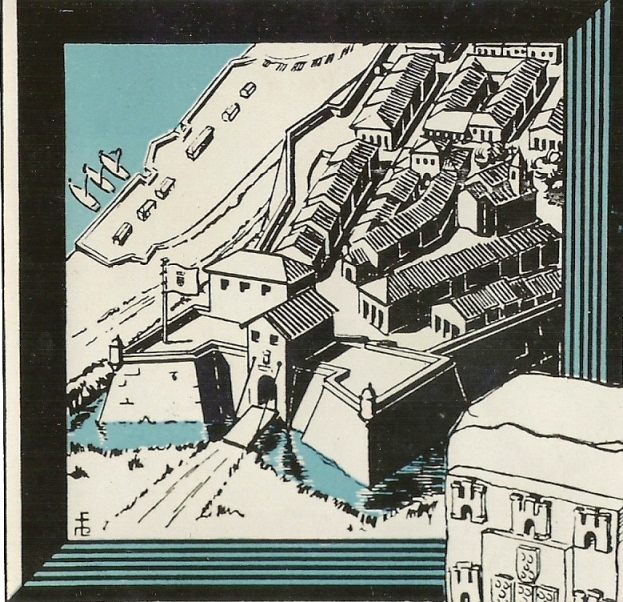
Salvador da Bahia_a print of the city as it might have looked during the 17th century_by Paulo Lachenmeyer
Gregório de Matos
Diagnosis of the ailments that left the Body of the Republic – and all its limbs – ill; and a complete definition of what at all times is Bahia
.
What’s missing in this city?…The Truth.
What more is there gives it dishonour?… Honour.
Is there anything left to blame? – Shame.
.
Regardless of its great fame,
The devil is now living
In this city that is missing
Truth, honour, shame.
What brought it so much pain?… Bargaining.
What caused such perdition?… Ambition.
And amidst this insanity?… Usury.
.
Amazing misadventure
Of an ignorant, sad people,
Who know very little but:
Bargaining, ambition, usury.
.
Which markets do they follow?… The Black Slave.
Which “goods”, not so hollow?… Mulattoes.
And they prefer which people?… Mestizos.
.
To the devil the ignoble,
To the devil all these asses,
Who prefer among all races:
The Negro, Mulatto, Mestizo.
.
Who makes the fines so stiff?… Bailiffs.
Who makes the food come later?… Jailers.
Who takes all for their families?…Deputies.
.
It’s we are taxed to eternity,
And the land is left there – starving,
When we hear them come a-knocking:
Bailiffs, jailers, deputies.
.
And what justice is left?… It’s a wreck.
Is it freely dispensed?… It’s for sale!
Why are people so scared?…’cause it’s fake.
.
Help me God, so I can take
what the King gives us for free;
our Justice is known to be
A wreck – and for sale – and fake.
.
What’s going on with the clergy?… Simony.
And the members of the Church?… Lust.
Is there anything left to see?… Yes – Envy.
.
The same old story
Still drives the Holy See:
What brings them to their knees is:
Simony, lust and envy.
.
Is their anything monks won’t shun?… It’s Nuns.
What occupies their evenings?… Bickering.
Entangled they get in disputes?… With Prostitutes!
.
I would rather be mute
Than to utter hard truths:
The profession of monks is:
Nuns, bickering – and prostitutes.
.
Has the sugar run out?… It’s down.
Have we got better luck?… Now it’s up.
Has the treasury been fed?… They’re dead.
.
Cidade-Bahia has known
What happens to the sickest:
They fall ill, they get fever;
They’re down, and it’s up – now they’re dead.
.
Parliament don’t help?… It can’t.
It don’t have the power?… It won’t.
And if government tries?… It dies.
.
Who would think that such lies
noble parliament drives,
in predicament finds, and still:
it can’t, it won’t – and it dies.
.
Portuguese to English translation: Daniel Vianna
. . .
Gregório de Matos
Juízo anatômico dos achaques que padecia o corpo da República em todos os membros, e inteira definição do que em todos os tempos é a Bahia
.
Que falta nesta cidade?… Verdade.
Que mais por sua desonra?… Honra.
Falta mais que se lhe ponha?… Vergonha.
.
O demo a viver se exponha,
Por mais que a fama a exalta,
Numa cidade onde falta
Verdade, honra, vergonha.
.
Quem a pôs neste rocrócio?… Negócio.
Quem causa tal perdição?… Ambição.
E no meio desta loucura?… Usura.
.
Notável desaventura
De um povo néscio e sandeu,
Que não sabe que perdeu
Negócio, ambição, usura.
.
Quais são seus doces objetos?… Pretos.
Tem outros bens mais maciços?… Mestiços.
Quais destes lhe são mais gratos?… Mulatos.
.
Dou ao Demo os insensatos,
Dou ao Demo o povo asnal,
Que estima por cabedal,
Pretos, mestiços, mulatos.
.
Quem faz os círios mesquinhos?… Meirinhos.
Quem faz as farinhas tardas?… Guardas.
Quem as tem nos aposentos?… Sargentos.
.
Os círios lá vem aos centos,
E a terra fica esfaimando,
Porque os vão atravessando
Meirinhos, guardas, sargentos.
.
E que justiça a resguarda?… Bastarda.
É grátis distribuída?… Vendida.
Que tem, que a todos assusta?… Injusta.
.
Valha-nos Deus, o que custa
O que El-Rei nos dá de graça.
Que anda a Justiça na praça
Bastarda, vendida, injusta.
Que vai pela clerezia?… Simonia.
E pelos membros da Igreja?… Inveja.
Cuidei que mais se lhe punha?… Unha
.
Sazonada caramunha,
Enfim, que na Santa Sé
O que mais se pratica é
Simonia, inveja e unha.
.
E nos frades há manqueiras?… Freiras.
Em que ocupam os serões?… Sermões.
Não se ocupam em disputas?… Putas.
.
Com palavras dissolutas
Me concluo na verdade,
Que as lidas todas de um frade
São freiras, sermões e putas.
.
O açúcar já acabou?… Baixou.
E o dinheiro se extinguiu?… Subiu.
Logo já convalesceu?… Morreu.
.
À Bahia aconteceu
O que a um doente acontece:
Cai na cama, e o mal cresce,
Baixou, subiu, morreu.
.
A Câmara não acode?… Não pode.
Pois não tem todo o poder?… Não quer.
É que o Governo a convence?… Não vence.
.
Quem haverá que tal pense,
Que uma câmara tão nobre,
Por ver-se mísera e pobre,
Não pode, não quer, não vence.
. . . . .
Gregório de Matos: Seeking Christ (Buscando a Cristo) / translation by Daniel Vianna
Posted: June 10, 2014 Filed under: English, Gregório de Matos, Portuguese, ZP Translator: Daniel Vianna Comments Off on Gregório de Matos: Seeking Christ (Buscando a Cristo) / translation by Daniel Vianna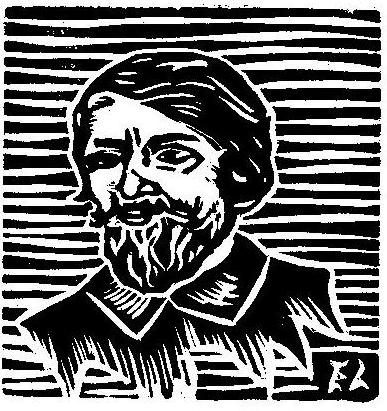
Gregório de Matos_xilogravura por Érick Lima
Gregório de Matos (1636-1696, Brazilian Baroque poet)
Seeking Christ
.
I run to your arms so sacred,
so bare on this holy cross;
Nailed open, there they greet me
– no, they do not chastise.
To your divine eyes, darkened,
that sweat, that blood, have opened;
To forgive me, have awoken,
and, closed, do not condemn.
.
To your nailed feet that don’t leave me,
To your blood, spilled, that cleanses me,
To your bowed head now calling me.
To your bared side I shall bind me,
I’ll fasten myself to those precious nails;
to be bound most firmly, and steady,
enduring as one – without fail.
.
Portuguese to English translation: Daniel Vianna
. . .
Gregório de Matos
Buscando a Cristo
.
A vós correndo vou, braços sagrados,
Nessa cruz sacrossanta descobertos
Que, para receber-me, estais abertos,
E, por não castigar-me, estais cravados.
.
A vós, divinos olhos, eclipsados
De tanto sangue e lágrimas abertos,
Pois, para perdoar-me, estais despertos,
E, por não condenar-me, estais fechados.
.
A vós, pregados pés, por não deixar-me,
A vós, sangue vertido, para ungir-me,
A vós, cabeça baixa, p’ra chamar-me
.
A vós, lado patente, quero unir-me,
A vós, cravos preciosos, quero atar-me,
Para ficar unido, atado e firme.
. . . . .
Lewis Carroll: A Song of Love / Canción de Amor
Posted: April 20, 2014 Filed under: A FEW FAVOURITES / UNA MUESTRA DE FAVORITOS, English, Lewis Carroll, Lewis Carroll: Canción de Amor / A Song of Love, Spanish, ZP Translator: Alexander Best | Tags: Easter Sunday poems, Poemas para Domingo de Pascua Comments Off on Lewis Carroll: A Song of Love / Canción de Amor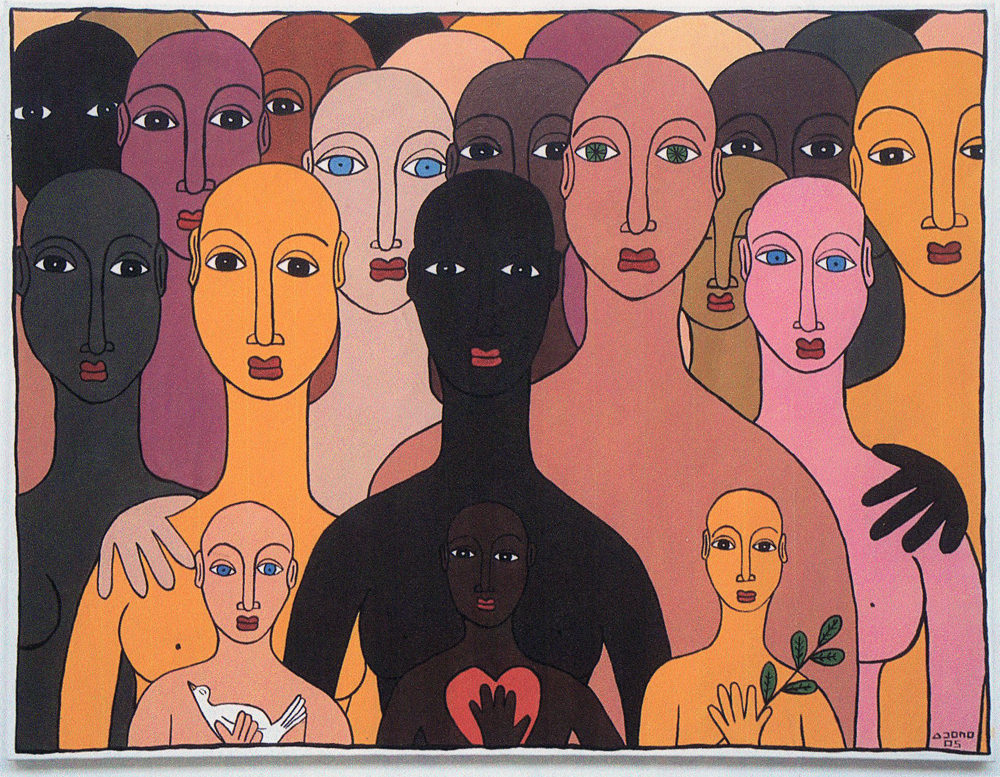
Un Mundo Mejor_derechos de autor Marie Sabal- Lecco, artista de Camerún_Un Monde Meilleur_droit dauteur Marie Sabal- Lecco, artiste camerounais_A Better World_ copyright Cameroonian artist Marie Sabal-Lecco
John 13: 34
A new commandment I give unto you: That ye love one another. As I have loved you, so ye also are to love one another.
Lewis Carroll (1832-1898)
A Song of Love
.
Say, what is the spell, when her fledglings are cheeping,
That lures the bird home to her nest?
Or wakes the tired mother, whose infant is weeping,
To cuddle and croon it to rest?
What the magic that charms the glad babe in her arms,
Till it coos with the voice of a dove?
‘Tis a secret, and so let us whisper it low
– And the name of the secret is Love.
For I think it is Love,
For I feel it is Love,
For I’m sure it is nothing but Love.
.
Say, whence is the voice that when anger is burning,
Bids the whirl of the tempest to cease?
That stirs the vexed soul with an aching – a yearning
For the brotherly hand-grip of peace?
Whence the music that fills all our being – that thrills
Around us, beneath, and above?
‘Tis a secret: none knows how it comes, or it goes
– But the name of the secret is Love.
For I think it is Love,
For I feel it is Love,
For I’m sure it is nothing but Love.
.
Say, whose is the skill that paints valley and hill,
Like a picture so fair to the sight?
That flecks the green meadow with sunshine and shadow,
Till the little lambs leap with delight?
‘Tis a secret untold to hearts cruel and cold,
Though ’tis sung by the angels above,
In notes that ring clear for the ears that can hear
– And the name of the secret is Love.
For I think it is Love,
For I feel it is Love,
For I’m sure it is nothing but Love.
. . .
Juan 13: 34
Un mandamiento nuevo os doy: Que os améis unos a otros; como yo os he amado, que también os améis unos a otros.
Canción de Amor
.
Dîgame, ¿qué es la magia que atrae a su nido
el pájaro cuando están piando sus polluelos?
¿O lo que puede despertar a la madre soñolienta
para canturrear y acurrucarse a su bebé que llora?
¿Cuál es el encanto que fascina el niño contento en sus brazos
hasta que arrulla con la voz de una paloma?
Es un secreto, pues cuchicheémoslo en voz baja
– Y el nombre del secreto es Amor.
Porque pienso es Amor,
Me siento que es el Amor,
si, ‘stoy seguro que ES el Amor.
.
Dígame, ¿de dónde llega esa voz cuando quema el enojo,
ella que ordena cesar el tumulto del torbellino?
¿O qué conmueve el alma exaltada con un anhelo
por la mano fraternal de la Paz?
¿De dónde llega la música que llena todo nuestro ser –
que nos anima, alrededor, abajo y arriba?
Es un secreto, y nadie no entiende como llega o va
– Pero su nombre-secreto: Amor.
Porque pienso es Amor,
Me siento que es el Amor,
si, ‘stoy seguro que ES el Amor.
.
Dígame, ¿de quién viene esa habilidad que pinta valle y colina,
como un dibujo tan hermoso mirar?
¿Qué motea el campo con sol y con sombra,
hasta que los corderos saltan con deleite?
Es un secreto no dicho a los corazones fríos,
aunque está cantado por los angeles arriba,
con notas cristalinos para los oídos que pueden oírlas
– Y el nombre del secreto es Amor.
Porque pienso es Amor,
Me siento que es el Amor,
si, ‘stoy seguro que ES el Amor.
. . .
Marie Sabal-Lecco, the Paris-based Cameroonian artist whose work is featured above, tells us: “Je représente sur mes toiles un éternel message de paix, de tolérance, du vivre ensemble, du respect de l’autre, de l’amour. Bonnes fêtes de Pâques!” (I represent in my canvasses an eternal message of peace, tolerance, of living together, of respect for one another, of love. A Happy Easter to you!)
Marie Sabal-Lecco, un artista de Camerún que vive en París – (su pintura está arriba) – nos dice: “Quiero mostrar en mis lienzos el mensaje eternal de la Paz, de la tolerancia, de vivir juntos, del respeto del uno al otro, y del Amor. ¡Feliz Pascua!”
. . . . .
 Zócalo Poets