Seamus Heaney: ”El Subterráneo”: versión de Óscar Paúl Castro
Posted: March 17, 2014 Filed under: English, Seamus Heaney, Spanish Comments Off on Seamus Heaney: ”El Subterráneo”: versión de Óscar Paúl Castro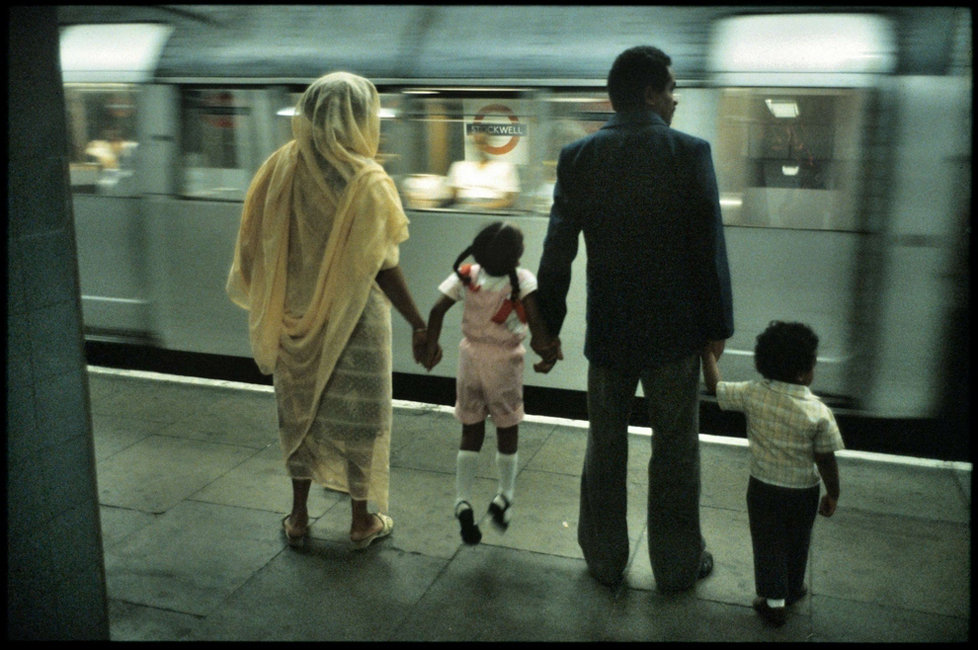
1980s photograph from Bob Mazzer’s decades-long “camera journal” about London’s subway system a.k.a. The Underground_Bob Mazzer, fotógrafo_foto del Metro o Subterráneo de Londres, años 1980
Seamus Heaney (Poeta irlandés, 1939-2013)
”El Subterráneo” (versión de Óscar Paúl Castro)
.
Corríamos envueltos por la bóveda del túnel,
Tú ibas adelante, llevabas puesto tu abrigo bueno,
Y yo, como un ágil dios, ya casi lograba darte alcance
Cuando repentinamente viraste al advertir una brizna de hierba
.
O alguna una blanca flor reciénnacida, jaspeada de rojo,
Tu abrigo se plegó con violencia y uno tras otro
Se desprendieron los botones, marcando el camino
Que va del Subterráneo al Albert Hall.
.
Era nuestra luna de miel, pasamos el día vagando y se nos hizo
Tarde para el concierto de los Proms, el eco de nuestros pasos aún
Muere en ese corredor; por eso ahora vuelvo, como Hansel bajo la luz
De la luna desandando el camino de piedras, recogiendo botón tras botón
.
Hasta llegar a esta fría estación iluminada con luz artificial
De la que ya han partido todos los trenes, las desnudas vías ―como mi ser―
Están tensas y empapadas, toda mi atención concentrada en el eco
De tus pasos tras de mí, la maldición caerá sobre nosotros si miro atrás.
. . .
Óscar Paúl Castro, traductor (Culiacán, México,1979): Sr. Castro ha publicado traducciones en las revistas TextoS, Punto de Partida, Periódico de Poesía de la UNAM, en Refundación, Espiral y Timonel.
.
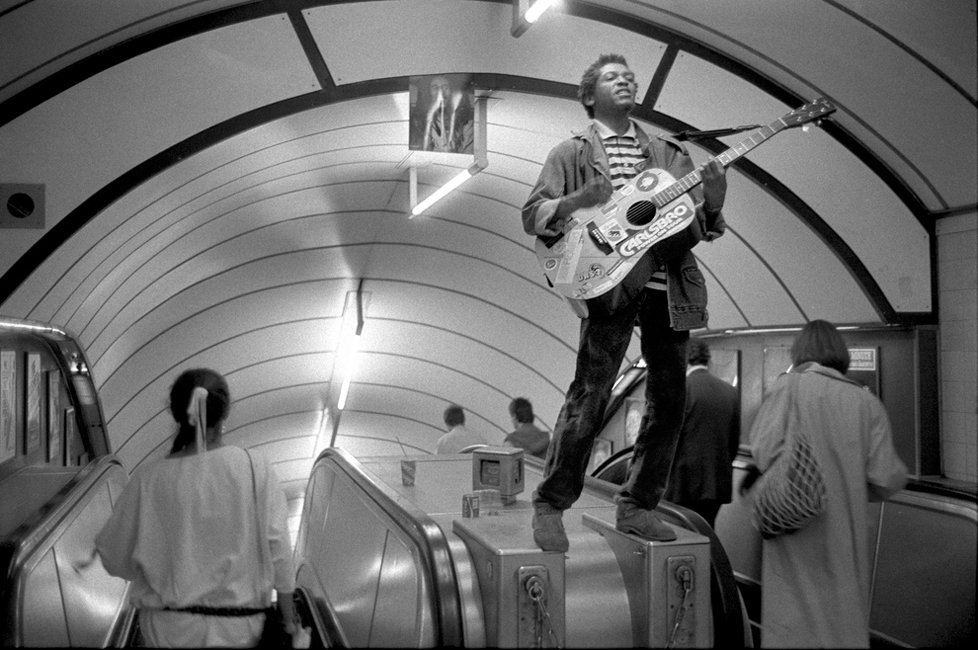
Bob Mazzer, photographer_from his London subway series, 1980s_Bob Mazzer, fotógrafo_foto del Metro o Subterráneo de Londres, años 1980
”The Underground” (1984)
.
There we were in the vaulted tunnel running,
You in your going-away coat speeding ahead
And me, me then like a fleet god gaining
Upon you before you turned to a reed
.
Or some new white flower japped with crimson
As the coat flapped wild and button after button
Sprang off and fell in a trail
Between the Underground and the Albert Hall.
.
Honeymooning, moonlighting, late for the Proms,
Our echoes die in that corridor and now
I come as Hansel came on the moonlit stones
Retracing the path back, lifting the buttons
.
To end up in a draughty lamplit station
After the trains have gone, the wet track
Bared and tensed as I am, all attention
For your step following and damned if I look back.
. . . . .
Seamus Heaney: “Ruedas dentro de ruedas”: versión de Miguel A. Montezanti
Posted: March 17, 2014 Filed under: English, Seamus Heaney, Spanish Comments Off on Seamus Heaney: “Ruedas dentro de ruedas”: versión de Miguel A. Montezanti
Un extracto del comentario por el traductor Miguel A. Montezanti:
”La traducción debería presentarse por sí sola, criatura libre…Pero diré que Seamus Heaney es un poeta difícil de traducir: apenas puede aspirarse a reproducir lo que dice, lo cual en poesía, como se sabe, puede no ser lo más importante. [Importan mucho] su autorreferencialidad lingüística, asentada sobre la dialéctica sutil entre el gaélico y el inglés, su riqueza sonora, y su rescate de formas sucintas pero complejas…”
.
Seamus Heaney
(nacido en “Mossbawn”, Castledawson, Condado de Londonderry, Irlanda del Norte, 1939-2013)
Ruedas dentro de ruedas
I.
La primera captación en serio que tuve de las cosas.
fue cuando aprendí el arte de pedalear
(con la mano) una bici, colocada al revés
e impulsé la rueda trasera preternaturalmente ligero.
Yo amaba la desaparición de los rayos
el modo como el hueco entre el eje y la llanta
susurraba transparente. Si le arrojabas
una papa, el aire enmarcado en el aro
revolvía papilla y te la salpicaba en la cara;
si lo tocabas con una paja, la pajita chasqueaba.
Algo acerca del modo de esos impulsos pedaleros
funcionaba al principio muy palpablemente en tu contra
y luego comenzaba a impeler tu mano hacia delante
hacia un envión nuevo…; todo eso entraba en mí
como un acceso de poder libre, como si la fe
capturara y revolviera los objetos de la fe
en una órbita lindera con la añoranza.
II
Pero lo bastante no era bastante. ¿Quién ha visto
alguna vez el límite de lo otorgado?
En unos campos más allá de casa había un pozo
(lo llamábamos “El pozo”. Era más que un agujero
con agua, con espinos pequeños
de un lado, y del otro, un fango cenagoso
todo pisoteado por ganado).
También amaba eso. Amaba el olor turbio,
la vida sumidera del lugar como aceite viejo de cadena.
Allí, acto seguido, llevé la bicicleta.
coloqué el asiento y el manubrio
en el fondo suave, hice que las cubiertas
tocaran la superficie del agua y luego di vuelta los pedales
hasta que, como una rueda de molino arrojando con el pedaleo,
(pero aquí a la inversa y azotando una cola de caballo)
la rueda trasera sumergida, refrescando el mundo
revolvía un rociado y espuma de suciedad ante mis ojos
y me bañaba con mis propios barros regenerados.
Durante semanas hice un nimbo de viejo destello.
Luego el eje se engranó, las llantas se oxidaron, la cadena se cortó.
III
Nada igualó esa ocasión después de aquello
hasta que en el circo, entre tambores y spots,
chicas vaqueras giraron, cada una inmaculada
en el centro inmóvil de un lazo.
Perpetuum mobile. Pura pirueta
Acróbatas, funambuleros. Volteretas. Stet!
. . .
Wheels within wheels
I / The first real grip I ever got on things / Was when I learned the art of pedalling / (By hand) a bike turned upside down, and drove / Its back wheel preternaturally fast. / I loved the disappearance of the spokes, / The way the space between the hub and rim / Hummed with transparency. If you threw / A potato into it, the hooped air / Spun mush and drizzle back into your face; / If you touched it with a straw, the straw frittered. / Something about the way those pedal treads / Worked very palpably ay first against you / And then began to sweep your hand ahead / Into a new momentum – that all entered me / Like an access of free power, as if relief / Caught up and spun the objects of belief / In an orbit coterminous with longing.
II / But enough was not enough. Who ever saw / The limit in the given anyhow? / In fields beyond our house there was a well / (‘The well’ we called it. It was more a hole / With water in it, with small hawthorn trees / On one side, a muddy, dungy ooze / On the other, all tramped through by cattle). / I loved that too. I loved the turbid smell, / The sump-life of the place like old chain oil. / And there, next thing, I brought my bicycle. / I stood its saddle and its handlebars / Into the soft bottom, I touched the tyres / To the water’s surface, then turned the pedals / Until like a mill-wheel pouring at the treadles / (But here reversed and lashing a mare’s tail) / The world-refreshing and immersed back wheel / Spun lace and dirt-suds there before my eyes / And showered me in my own regenerate clays. / For weeks I made a nimbus of old glit. / Then the hub jammed, rims rusted, the chain snapped.
III / Nothing rose to the occasion after that / Until, in a circus ring, drumrolled and spotlit, / Cowgirls wheeled in, each one immaculate / At the still centre of a lariat. / Perpetuum mobile. Sheer pirouette. / Tumblers, jongleurs. Ring-a-rosies. Stet !
. . . . .
Robert Leighton & Henry Van Dyke: “Late Spring” / John Clare: “The Winter’s Spring”
Posted: March 16, 2014 Filed under: English, John Clare, Robert Leighton Comments Off on Robert Leighton & Henry Van Dyke: “Late Spring” / John Clare: “The Winter’s Spring”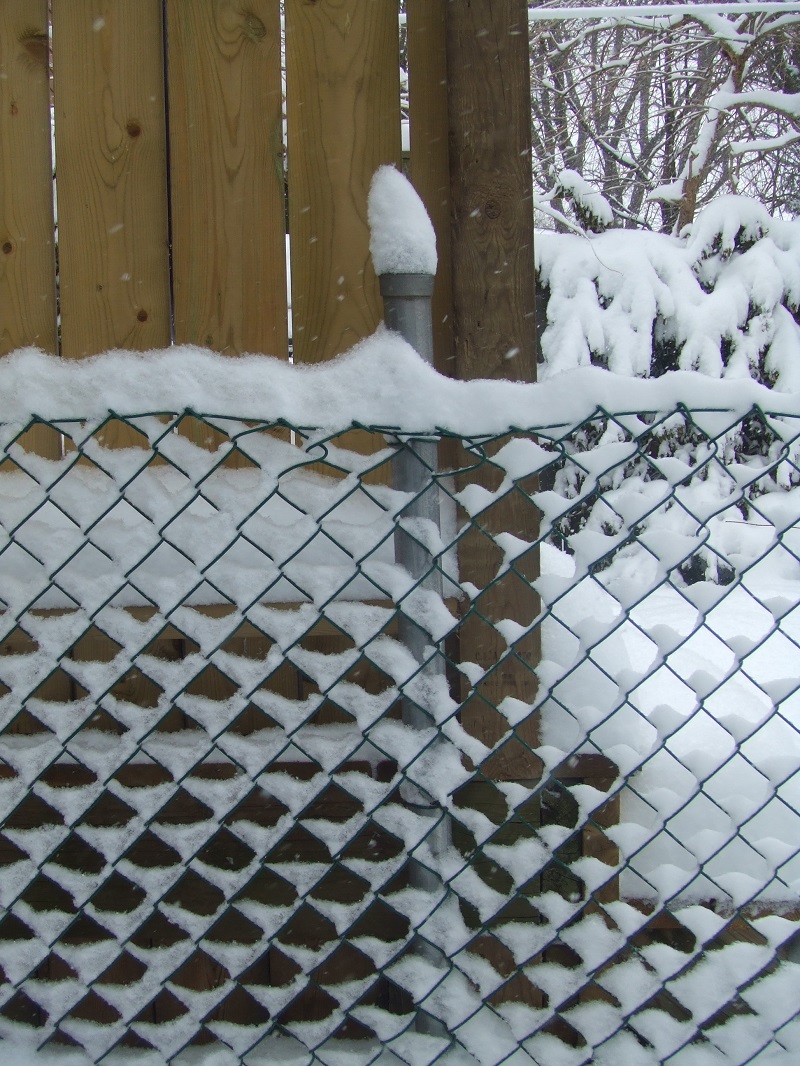
Robert Leighton (born Dundee, Scotland, 1822-1869)
Late Spring
.
Spring is with us by the sun,
Yet it has not given us one
Little snow-drop to remind us
That the flowery days are near:
For the winds are blowing chilly,
And the firstling of the year
Slumbers with the sleeping lily,
‘Neath their coverlet, the sere
And sodden mortcloth that old Autumn
Lay with on her bier.
.
Spring is with us by the date,
And Winter cancell’d: yet we wait
Balmly fingers to unbind us,
Roots and budlets to unfold.
But the herald larks are roaming
Up the heights of blue and gold:
They can see the Spring a-coming
While we shiver in the cold.
Hark! they sing to Him who taught them
Notes so sweet and bold.

Henry Van Dyke (born Germantown, Pennsylvania, USA, 1852-1933)
Late Spring (excerpt)
Come, put your hand in mine,
True love, long sought and found at last,
And lead me deep into the Spring divine
That makes amends for all the wintry past.
For all the flowers and songs I feared to miss
Arrive with you;
And in the lingering pressure of your kiss
My dreams come true;
And in the promise of your generous eyes
I read the mystic sign
Of joy more perfect made
Because so long delayed,
And bliss enhanced by rapture of surprise.
Ah, think not early love alone is strong;
He loveth best whose heart has learned to wait:
Dear messenger of Spring that tarried long,
You’re doubly dear because you come so late.
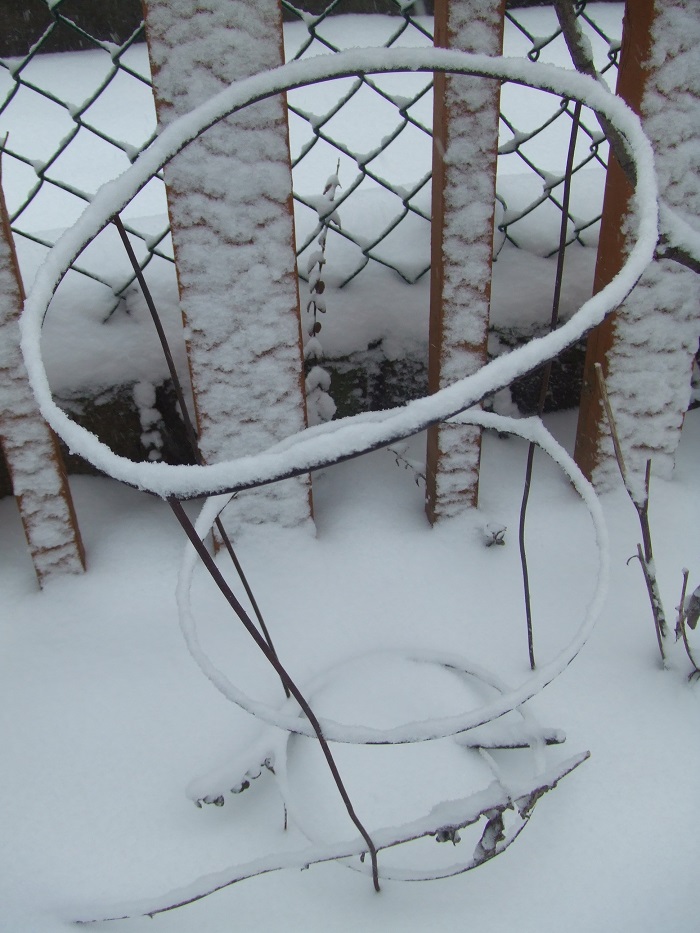
John Clare (born Helpston, Northamptonshire, England, 1793-1864)
The Winter’s Spring
.
The winter comes; I walk alone,
I want no bird to sing;
To those who keep their hearts their own
The winter is the spring.
No flowers to please–no bees to hum–
The coming spring’s already come.
.
I never want the Christmas rose
To come before its time;
The seasons, each as God bestows,
Are simple and sublime.
I love to see the snowstorm hing;
‘Tis but the winter garb of spring.
.
I never want the grass to bloom:
The snowstorm’s best in white.
I love to see the tempest come
And love its piercing light.
The dazzled eyes that love to cling
O’er snow-white meadows see the spring.
.
I love the snow, the crumpling snow
That hangs on everything,
It covers everything below
Like white dove’s brooding wing,
A landscape to the aching sight,
A vast expanse of dazzling light.
.
It is the foliage of the woods
That winters bring–the dress,
White Easter of the year in bud,
That makes the winter Spring.
The frost and snow his posies bring,
Nature’s white spurts of the spring.
Las Desaparecidas canadienses: El Día Internacional de la Mujer 2014 / International Women’s Day 2014
Posted: March 8, 2014 Filed under: Anna Marie Sewell, English, Spanish, ZP Translator: Alexander Best Comments Off on Las Desaparecidas canadienses: El Día Internacional de la Mujer 2014 / International Women’s Day 2014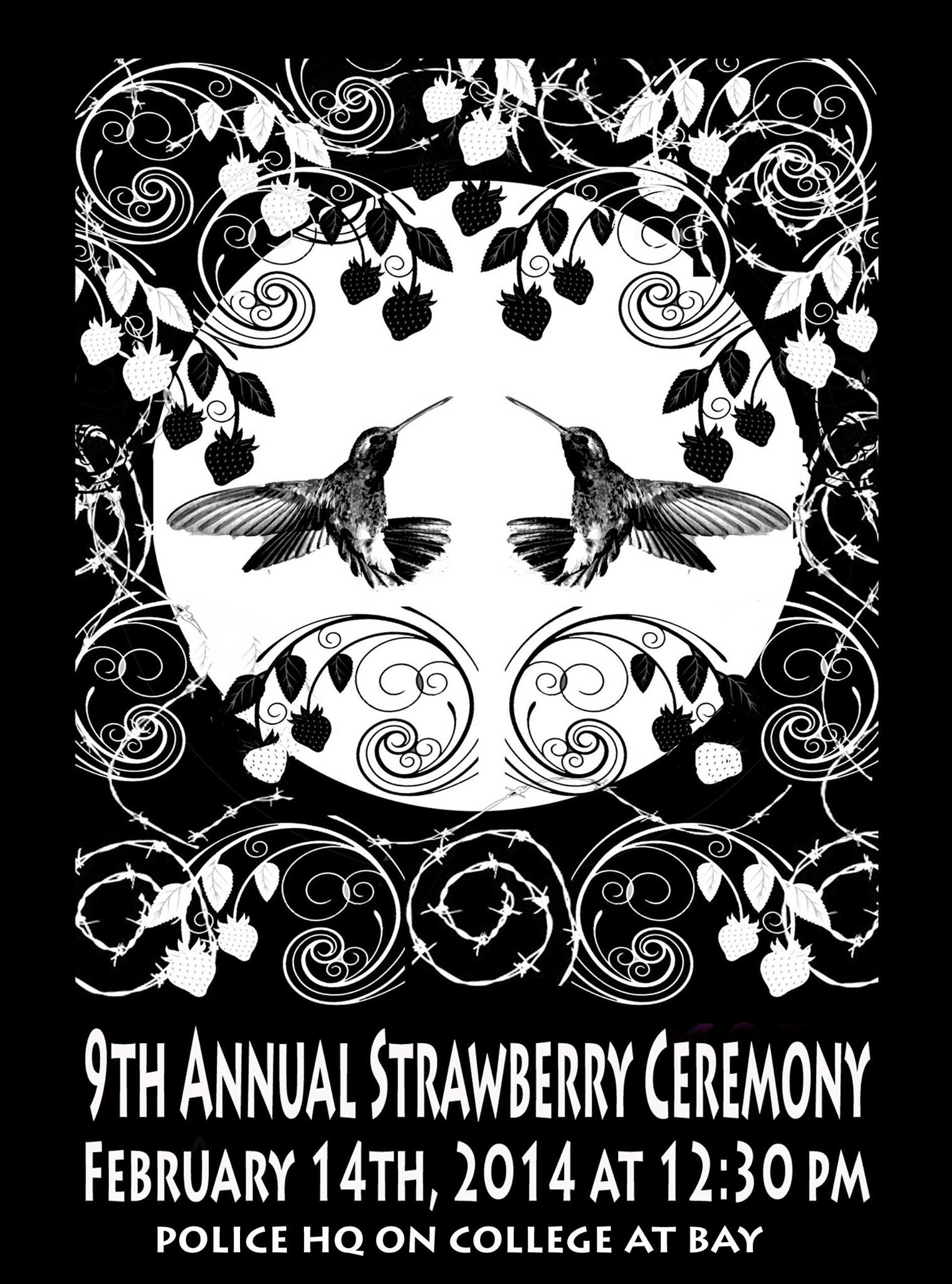
Ceremonia de Fresa (“Baya de Corazón”) por Las Mujeres Indígenas – Desaparecidas o Matadas – en Canadá_Lugar: en frente de la sede central de policía en Toronto_14 de febrero, 2014_Strawberry Ceremony 2014_For Missing or Murdered Aboriginal Women in Canada_Toronto, Canada
.
Anna Marie Sewell
“Lavando el Mundo”
.
En la oscuridad al fin de este año,
hay tanto amontanado contra la luz entre nosotros,
contra las “apuestas”,
a pesar de las lágrimas, en el viento amargo de esta estación;
Escucha el sueño en que las abuelas se mantienen
– hombro con hombro –
al borde de una colina,
inclinándose al unísono, agarrando una cosa – juntas.
Pregúntales, en su mundo de sueños: ¿Porqué lloran ustedes?
Y te mostraron sus chales en muchos colores, extenderán sus alas,
te barrerán dentro de ellas para enseñarte como
– una vez, cada año –
cuando hace el tiempo más oscuro,
lavamos el mundo entero durante solamente un día.
Un día para llorar.
.
De un alba al próximo:
recordando a los caídos,
lamentando a los destrozados,
gimiendo por nuestros arrepentimientos.
El amor perdido, las palabras injustas y acciones malas;
momentos desequilibrados…
y todas las rajaduras entre corazón y corazón,
entre padre y criatura,
entre el amante y su querida amiga,
entre nación y nación,
animal – y animal del otro tipo.
.
Por lo que escogemos y lo que descuidamos,
por lo que deseamos que habíamos sabido,
por cada mano soltado / cada lengua desenfrenada,
un susurro quedándose corto y inaúdito;
el pan lejos del hambre;
la disculpa;
el desconcierto;
el camino fracturado.
.
Estas cosas que recogemos en esta cobija
– pardo, carmelito, canela –
Lavamos el Mundo, y entre nosotros
agarramos la cobija, llenándola con lágrimas.
Y cuando hemos llorado
– de un alba al próximo –
pues subiremos y bailaremos,
acunando un océano de tinieblas amargas que nos cura.
.
Déjales poner tus manos sobre la verdad de una belleza perdida
– intensa pero blanda como musgo –
y esta cobija lleno de las lágrimas del polvo y de los moribundos
se vuelve
– al momento que llega la luz del amanecer –
la promesa lavada y limpia por nuestra pena.
No es – tanto – la redención
sino la lógica de las estaciones que
clama por la justicia, para recuperar el ritmo.
Algun día, los legisladores tendrán que salir de sus salones de ecos, y
juntarse con la danza de la abuela,
para llevarla y llorarla – limpiada – hasta que
la luz pasa a través de sus cuerpos y
traduce a un arco de iris a lo largo de la tierra.
Ella me dice éso – y sus ojos están rojos.
Y encoge los hombros.
Y camina arduamente por el manto profundo de nieve
que cubre este resto de un otro año
esperando.
.
Versión de Alexander Best
. . .
Anna Marie Sewell
“Washing the World”
.
In the dark at this end of the year,
so much stacked up against the light
between us, against the odds,
despite the tears, in this season’s bitter wind,
listen to a dream
in which grandmothers stand
shoulder to shoulder, on the rim of a hill,
they bend as one, and grasp one thing together.
Ask them, in the dream world, why
do they cry?
And they will show you in reply:
their shawls of many colours, spread these wings,
sweep you in and teach you how
once a year, in the dark of the year,
we wash the whole world in a day.
For one day, we cry.
.
From one dawn to the next:
remembering the fallen
mourning for the broken
wailing for regrets.
Love lost, wrong words, wrong actions,
unbalanced moments and all the cracks
between heart and heart, parent and child,
lover and beloved friend, nation and nation,
creature, and creature of another kind.
.
For what we choose and what we neglect to choose,
for what we wish we’d known,
for each hand unclasped,
the tongue unbridled,
one whisper falling short of heard,
the bread far from the hunger,
the apology,
the confusion,
the broken road.
.
These things we gather in this blanket,
brown and sand and beige,
we wash the world, between us
we hold this blanket, fill it with our tears,
and when we have cried
from one dawn to the next,
then we will rise, and we dance
cradling this ocean, bitter, healing, dark.
Let them lay your hands upon the truth of beauty lost,
heavy, soft as moss,
this blanket full of tears and dust and dying
becomes, as the light is returning,
the promise,
washed clean
by our sorrow.
Not so much redemption
as the logic of seasons
calls for justice, to restore the rhythm
one day, the lawmakers must exit
their echoing halls, fall in
with the grandmother’s
dancing,
carrying it,
cry it clean,
until light through their bodies
translates to rainbows strung over the land.
She tells me that – her eyes all red.
And shrugs.
And trudges off through the deep
snow blanket that covers
this end of another year
waiting.
. . .
Anna Marie Sewell is Ojibway, and Mi’kmaw from Listuguj Mi’kmaw First Nation in Québec – Polish, too! She is the author of Fifth World Drum (Frontenac House, 2009) and was Edmonton’s 4th Poet Laureate (2011-2013). She has other work as well – as part of The Learning Centre Literacy Association at http://prairiepomes.com/tag/anna-marie-sewell/.
Sewell will be opening for Joy Harjo at the Edmonton Poetry Festival – April 20th, 2014.
.
As with Las Mujeres de Juarez in México, so too in Canada, Native Women who are poor and therefore invisible become “Las Desaparecidas canadienses” (The Vanished Canadian Women). They are our oh-so-progressive country’s Open-Secret Shame. Women from small towns and Reserves, faceless in big Canadian cities; the roll call of missing or dead along British Columbia’s “Highway of Tears”…There are eight hundred Native and Inuk women who have gone missing – or have been found murdered – often without resolution of the crime – in the last two decades in Canada. This has occurred in a nation with statistically low murder rates nationally. The pattern is a systemic one; the disappearance of these women and girls is not important enough in Canadian society for a concerted effort at crime-solving; their lives are expendable because they are not “mainstream”. With all due respect to her untimely end, they are no Jane Creba.
Jorge Antonio Vallejos, a.k.a. Black Coffee Poet, has been concerned with just such human-rights issues for several years now. For a committed perspective about this national tragedy – violence against women – visit Vallejos’ site: http://blackcoffeepoet.com/.
. . . . .
Alain Mabanckou: “Letter to the Sun” / “Lettre au Soleil”
Posted: February 24, 2014 Filed under: Alain Mabanckou, English, French, ZP Translator: Alexander Best Comments Off on Alain Mabanckou: “Letter to the Sun” / “Lettre au Soleil”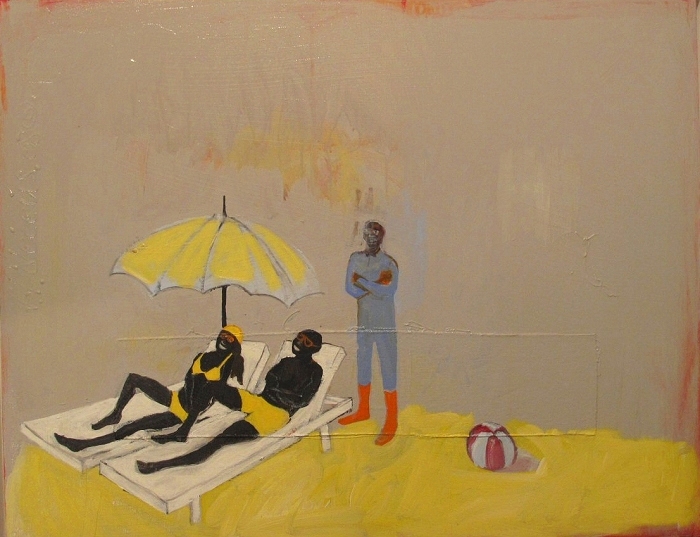
Francks François Décéus_On the beach_Sur la plage_2009
.
Alain Mabanckou
(born February 24th, 1966, Pointe-Noire, Republic of The Congo / lives in Paris and Los Angeles)
“Letter to the Sun”
.
Sun:
Here’s my registered letter,
with an accusation of deception.
I summon you – right here, right now –
to honour a tribute to Light,
something you owe this clump of Earth
capering around you.
.
Your revolutionary “revolving”,
the spheroid halo of your loophole-kisses,
these don’t impress me.
I’ll await you at the bend
between Dawn’s shyness
and Azure Sky’s confusion.
My rage will be at “high noon”,
tatooed by a fadeless rancour.
I’ll go – if need be – to “unearth” you in the dust of stars
and the vagabounding immensity of the Galaxy.
Then I will bear a grievance alongside the Eclipse
in order to mock you at your zenith
before a Humanity oh so reverential of your virtues…
. . .
Alain Mabanckou (né le 24 février, 1966, Pointe-Noire, République du Congo)
“Lettre au Soleil”
.
Soleil
Voici ma lettre recommandée
avec accusé de déception
.
Je te somme ici et maintenant
d’honorer le tribut de lumière
que tu dois à la motte de Terre
qui cabriole autour de toi
.
Ta course révolutionnaire
et le halo sphéroîdal de tes embrasures
ne m’impressionnent plus
Je t’attendrai au tournant
entre la timidité de l’Aurore
et la confusion de l’Azur
Ma rage sera à son midi,
tatouée d’une rancoeur immarcescible
J’irai s’il le faut
te dénicher dans la poussière stellaire
et l’immensité vagabonde de la Galaxie
Je porterai alors plainte auprès de l’Eclipse
pour te ridiculiser en plein zénith
devant l’humanité qui révère tes vertus…
.
.
© Alain Mabanckou, 1995
. . .
“To: Another Understanding or Guiding Light”
.
In the shade of your sleep
rest the vestiges of illusions.
It seems that beyond the hilltops
indicates another point of view / horizon.
.
I beg of the Sun not a single ray;
for I carry within me
the light of your awakening,
the marvel of your gaze
fixed upon Eternity.
. . .
“À l’autre lumière”
.
À l’ombre de ton sommeil
reposent les vestiges des songes
il paraît qu’au-delà des collines
pointe l’autre horizon.
.
je n’implore du soleil
aucun rai
je porte en moi
la lumière de ton éveil
l’éblouissement de ton regard
rivé vers l’éternité.
.
.
.
Translations from French into English: Alexander Best
. . . . .
Léopold Sédar Senghor: “À New York”: un poème typique du courant de la Négritude / “To New York”: a classic poem of the Négritude movement
Posted: February 20, 2014 Filed under: English, French, Léopold Sédar Senghor | Tags: Black History Month, Mois de l'Histoire des Noirs Comments Off on Léopold Sédar Senghor: “À New York”: un poème typique du courant de la Négritude / “To New York”: a classic poem of the Négritude movement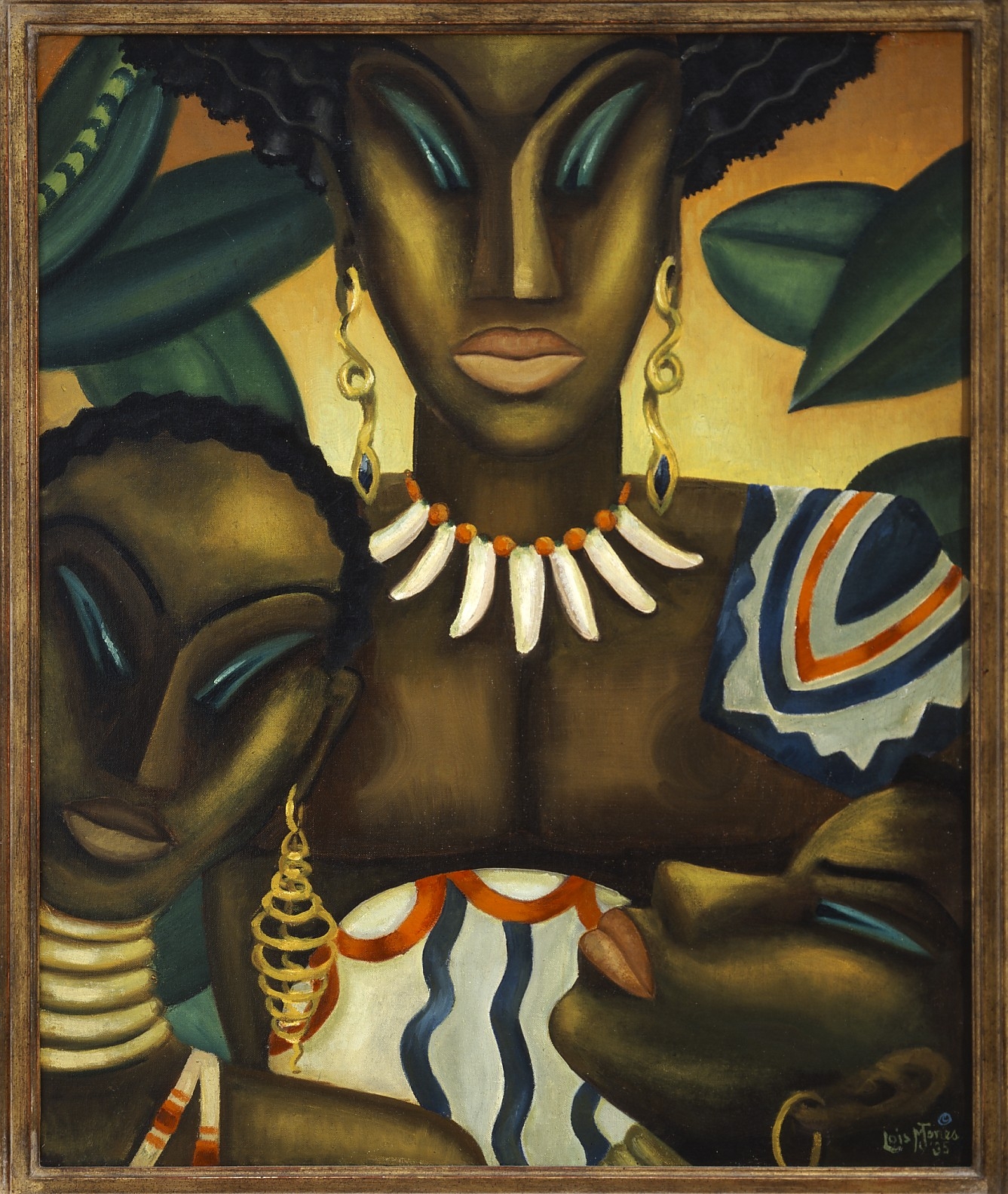
Lois Mailou Jones_Africa_Oil on canvas_1935
Léopold Sédar Senghor (1906-2001, Sénégal / France)
Recueil : Éthiopiques (1956)
“À New York” (pour un orchestre de jazz : solo de trompette)
.
– I –
New York ! D’abord j’ai été confondu par ta beauté, ces grandes filles d’or aux jambes longues.
Si timide d’abord devant tes yeux de métal bleu, ton sourire de givre
Si timide. Et l’angoisse au fond des rues à gratte-ciel
Levant des yeux de chouette parmi l’éclipse du soleil.
Sulfureuse ta lumière et les fûts livides, dont les têtes foudroient le ciel
Les gratte-ciel qui défient les cyclones sur leurs muscles d’acier et leur peau patinée de pierres.
Mais quinze jours sur les trottoirs chauves de Manhattan
– C’est au bout de la troisième semaine que vous saisit la fièvre en un bond de jaguar
Quinze jours sans un puits ni pâturage, tous les oiseaux de l’air
Tombant soudain et morts sous les hautes cendres des terrasses.
Pas un rire d’enfant en fleur, sa main dans ma main fraîche
Pas un sein maternel, des jambes de nylon. Des jambes et des seins sans sueur ni odeur.
Pas un mot tendre en l’absence de lèvres, rien que des cœurs artificiels payés en monnaie forte
Et pas un livre où lire la sagesse. La palette du peintre fleurit des cristaux de corail.
Nuits d’insomnie ô nuits de Manhattan ! si agitées de feux follets, tandis que les klaxons hurlent des heures vides
Et que les eaux obscures charrient des amours hygiéniques, tels des fleuves en crue des cadavres d’enfants.
.
– II –
Voici le temps des signes et des comptes
New York ! or voici le temps de la manne et de l’hysope.
Il n’est que d’écouter les trombones de Dieu, ton cœur battre au rythme du sang ton sang.
J’ai vu dans Harlem bourdonnant de bruits de couleurs solennelles et d’odeurs flamboyantes
– C’est l’heure du thé chez le livreur-en-produits-pharmaceutiques
J’ai vu se préparer la fête de la Nuit à la fuite du jour.
C’est l’heure pure où dans les rues, Dieu fait germer la vie d’avant mémoire
Tous les éléments amphibies rayonnants comme des soleils.
Harlem Harlem ! voici ce que j’ai vu Harlem Harlem !
Une brise verte de blés sourdre des pavés labourés par les
pieds nus de danseurs Dans
Croupes de soie et seins de fers de lance, ballets de nénuphars et de masques fabuleux
Aux pieds des chevaux de police, les mangues de l’amour rouler des maisons basses.
Et j’ai vu le long des trottoirs, des ruisseaux de rhum blanc des ruisseaux de lait noir dans le brouillard bleu des cigares.
J’ai vu le ciel neiger au soir des fleurs de coton et des ailes de séraphins et des panaches de sorciers.
Écoute New York ! ô écoute ta voix mâle de cuivre ta voix vibrante de hautbois, l’angoisse bouchée de tes larmes tomber en gros caillots de sang
Écoute au loin battre ton cœur nocturne, rythme et sang du tam-tam, tam-tam sang et tam-tam.
.
– III –
New York! je dis New York, laisse affluer le sang noir dans ton sang
Qu’il dérouille tes articulations d’acier, comme une huile de vie
Qu’il donne à tes ponts la courbe des croupes et la souplesse des lianes.
Voici revenir les temps très anciens, l’unité retrouvée la réconciliation du Lion du Taureau et de l’Arbre
L’idée liée à l’acte l’oreille au cœur le signe au sens.
Voilà tes fleuves bruissants de caïmans musqués et de lamantins aux yeux de mirages. Et nul besoin d’inventer les Sirènes.
Mais il suffit d’ouvrir les yeux à l’arc-en-ciel d’Avril
Et les oreilles, surtout les oreilles à Dieu qui d’un rire de saxophone créa le ciel et la terre en six jours.
Et le septième jour, il dormit du grand sommeil nègre.
. . .
Léopold Sédar Senghor (1906-2001, Senegal / France)
From: Éthiopiques (1956)
“To New York” (for jazz orchestra – with solo trumpet)
.
– I –
.
New York! At first I was bewildered by your beauty,
Those huge, long-legged, golden girls.
So shy, at first, before your blue metallic eyes and icy smile,
So shy. And full of despair at the end of skyscraper streets
Raising my owl eyes at the eclipse of the sun.
Your light is sulphurous against the pale towers
Whose heads strike lightning into the sky,
Skyscrapers defying storms with their steel shoulders
And weathered skin of stone.
But two weeks on the naked sidewalks of Manhattan—
At the end of the third week the fever
Overtakes you with a jaguar’s leap
Two weeks without well water or pasture all birds of the air
Fall suddenly dead under the high, sooty terraces.
No laugh from a growing child, his hand in my cool hand.
No mother’s breast, but nylon legs. Legs and breasts
Without smell or sweat. No tender word, and no lips,
Only artificial hearts paid for in cold cash
And not one book offering wisdom.
The painter’s palette yields only coral crystals.
Sleepless nights, O nights of Manhattan!
Stirring with delusions while car horns blare the empty hours
And murky streams carry away hygienic loving
Like rivers overflowing with the corpses of babies.
.
– II –
Now is the time of signs and reckoning, New York!
Now is the time of manna and hyssop.
You have only to listen to God’s trombones, to your heart
Beating to the rhythm of blood, your blood.
I saw Harlem teeming with sounds and ritual colours
And outrageous smells—
At teatime in the home of the drugstore-deliveryman
I saw the festival of Night begin at the retreat of day.
And I proclaim Night more truthful than the day.
It is the pure hour when God brings forth
Life immemorial in the streets,
All the amphibious elements shining like suns.
Harlem, Harlem! Now I’ve seen Harlem, Harlem!
A green breeze of corn rising from the pavements
Plowed by the Dan dancers’ bare feet,
Hips rippling like silk and spearhead breasts,
Ballets of water lilies and fabulous masks
And mangoes of love rolling from the low houses
To the feet of police horses.
And along sidewalks I saw streams of white rum
And streams of black milk in the blue haze of cigars.
And at night I saw cotton flowers snow down
From the sky and the angels’ wings and sorcerers’ plumes.
Listen, New York! O listen to your bass male voice,
Your vibrant oboe voice, the muted anguish of your tears
Falling in great clots of blood,
Listen to the distant beating of your nocturnal heart,
The tom-tom’s rhythm and blood, tom-tom blood and tom-tom.
.
– III –
New York! I say New York, let black blood flow into your blood.
Let it wash the rust from your steel joints, like an oil of life
Let it give your bridges the curve of hips and supple vines.
Now the ancient age returns, unity is restored,
The reconciliation of the Lion and Bull and Tree
Idea links to action, the ear to the heart, sign to meaning.
See your rivers stirring with musk alligators
And sea cows with mirage eyes. No need to invent the Sirens.
Just open your eyes to the April rainbow
And your eyes, especially your ears, to God
Who in one burst of saxophone laughter
Created heaven and earth in six days,
And on the seventh slept a deep Negro sleep.
.
.
.
Translation of “To New York” from the original French into English: Melvin Dixon
For more translations by Dixon click the link:
. . . . .
June Jordan: “Poema sobre Intelecto para mis Hermanos y Hermanas” / “A Poem about Intelligence for my Brothers and Sisters”
Posted: February 19, 2014 Filed under: English, June Jordan, June Jordan: Poema sobre Intelecto para mis Hermanos y Hermanas, Spanish, ZP Translator: Alexander Best | Tags: Black History Month, El Mes de la Historia Afroamericana Comments Off on June Jordan: “Poema sobre Intelecto para mis Hermanos y Hermanas” / “A Poem about Intelligence for my Brothers and Sisters”
.
June Jordan (1936-2002)
“Poema sobre Intelecto para mis Hermanos y Hermanas”
.
Hace unos años me dicieron que Negro es un seso hueco y otra gente
tienen cerebros / casi como las células dentro las cabezas de niños negros
estaban fuera tomando una siesta a la hora en punto – cada hora.
.
El Científico llamé este fenómeno El Lapsus Arthur Jensen (de mala fama) – ¿no recuerdas?
Bien, estoy pensando en idear una prueba para los eruditos – los sabios, ¿sabes? – algo como una Prueba Cociente Intelectual Stanford-Binet por la CIA – ¿comprendes?
Por ejemplo…El señor doctor Einstein, incuestionablemente el “cerebro” más espectacular del siglo – ¿no?
.
Y estoy luchando contra estas sobras-Lapsus de mi niñez negra, y me pregunto por que alguien deciría: E = MC Squared – la equivalencia entre la masa y la energía.
Intento discutir sobre ésto con la vieja mujer que vive en mi cuadra…
Está escobando la escalera de entrada en una noche de sábado, enojado porque un “burro” dejó un colchón de cama king-size – manchas y demás – en frente de su casa, y no quiere saber nada de éso en primer lugar.
.
Inclinándome en la verja, digo: “Señora Johnson, ¿qué piensas en alguien que se inventa E = MC Squared?”
“¿Cómo te va?” me responde de su lado, como no quiere permitirme saber que tengo pelo no peinado (esta mañana de domingo) y que tengo el atrevimiento de molestarle durante una tarea seria con mis preguntas locas…
“¿E igual a que, cariño?”
Pues le digo: “Este tipo que dijo éso, ¡creo que fue El Padre No Refutado de La Bomba Atómica!”
“Sí, eso es,” murmura, no tan amablemente.
“¡Y siempre olvidó ponerse calcetines con sus zapatos!”– agrego (un poco deseperada).
En este momento Señora Johnson se aleja de mí, con su escoba, y da un gran paso atrás en la escalera.
“Y nunca no hizo nada para nadie sino en una comisión…Y decía “¿Qué hora es?” y alguien decía “Son las seis.” Y él decía “– ¿de la mañana o de la tarde?”…¡Y nunca no hirvió agua para una taza de té para nadie durante su entera vida brillante!…¡Y [ mi voz se eleva un poco ] nunca no bugui bugui ni nunca tampoco, no!”
“¿Y bien?” dice ella. “Supongo, sí – cielo – que eso es lo que llaman el Genio, ¿no?”
.
.
Versión de Alexander Best
.
.
.
June Jordan (1936-2002)
“A Poem about Intelligence for my Brothers and Sisters”
.
A few years back and they told me Black
means a hole where other folks
got brain / it was like the cells in the heads
of Black children was out to every hour on the hour naps.
Scientists called the phenomenon the
Notorious Jensen Lapse, remember?
Anyway I was thinking
about how to devise
a test for the wise
like a Stanford-Binet
for the C.I.A.
you know?
Take Einstein
being the most the unquestionable the outstanding
the maximal mind of the century
right?
And I’m struggling against this lapse leftover
from my Black childhood to fathom why
anybody should say so:
E=MC squared?
.
I try that on this old lady live on my block:
She sweeping away Saturday night from the stoop
and mad as can be because some absolute
jackass have left a kingsize mattress where
she have to sweep around it stains and all she
don’t want to know nothing about in the first place.
“Mrs. Johnson!” I say, leaning on the gate
between us: “What you think about somebody come up
with an E equals M C 2?”
“How you doin,” she answer me, sideways, like she don’t
want to let on she know I ain’
combed my hair yet and here it is
Sunday morning but still I have the nerve
to be bothering serious work with these crazy
questions about
“E equals what you say again, dear?”
Then I tell her, “Well
also this same guy? I think
he was undisputed Father of the Atom Bomb!”
“That right.” She mumbles or grumbles, not too politely
“And dint remember to wear socks when he put on
his shoes!” I add on (getting desperate).
At which point Mrs. Johnson take herself and her broom
a very big step down the stoop away from me.
“And never did nothing for nobody in particular
lessen it was a committee
and
used to say, ‘What time is it?’
and
you’d say, ‘Six o’clock.’
and
he’d say, ‘Day or night?’
and –
and he never made nobody a cup a tea
in his whole brilliant life!
and
[my voice rises slightly]
and
he dint never boogie neither: never!”
.
“Well,” say Mrs. Johnson, “Well, honey,
I do guess
that’s Genius for you.”
. . . . .
Audre Lorde: “Afuera” / “Outside”
Posted: February 18, 2014 Filed under: Audre Lorde, English, Spanish | Tags: Black History Month, Black lesbian poets, El Mes de la Historia Afroamericana Comments Off on Audre Lorde: “Afuera” / “Outside”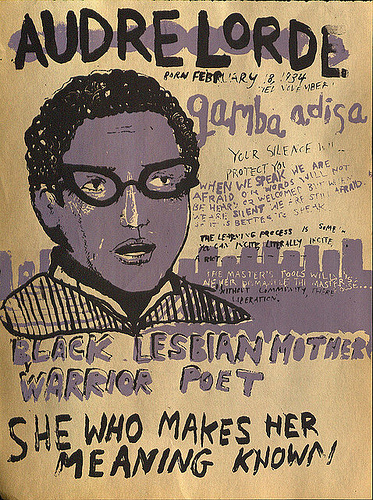
Audre Lorde (18 de febrero, 1934 – 1992)
“Afuera” (1977)
.
1.
En el centro de una ciudad cruel y fantasmal
todas las cosas naturales son extrañas.
Crecí en una confusión genuina
entre césped y maleza y flores
y lo que significaba “de color”
excepto la ropa que no se podía blanquear
y nadie me llamó negra de mierda
hasta que tuve trece.
Nadie linchó a mi mamá
pero lo que nunca había sido
había blanqueado su cara de todo
excepto de furias muy privadas
e hizo que los otros chicos
me llamaran agrandada en la escuela.
Y cuántas veces he vuelto a llamarme
a través de mis huesos confusión
negra
como médula queriendo decir carne
y cuántas veces me cortaste
e hiciste correr en las calles
mi propia sangre
quién creés que soy
que estás aterrorizado de transformarte
o qué ves en mi cara
que no hayas descartado ya
en tu propio espejo
qué cara ves en mis ojos
que algún día
vas a
reconocer como la tuya
A quién maldeciré por haber crecido
creyendo en la cara de mi madre
o por haber vivido temiendo la oscuridad potente
usando la forma de mi padre
ambos me marcaron
con su amor ciego y terrible
y ahora estoy lasciva por mi propio nombre.
.
2.
Entre los cañones de sus terribles silencios
Madre brillante y padre marrón
busco ahora mis propias formas
porque nunca hablaron de mí
excepto como suya
y los pedazos con que tropiezo y me caigo
aún registro como prueba
de que soy hermosa
dos veces
bendecida con las imágenes
de quienes fueron
y quienes pensé alguna vez que eran
de lo que traslado
hacia y a través
y lo que necesito
dejar detrás de mí
más que nada
estoy bendecida en los seres que soy
que han venido a hacer de nuestras caras rotas un todo.
. . .
Audre Lorde (born February 18th, 1934, died 1992)
“Outside”
(first published in The American Poetry Review, Vol.6, #1, Jan.-Feb. 1977)
.
1.
In the centre of a harsh and spectrumed city
all things natural are strange.
I grew up in a genuine confusion
between grass and weeds and flowers
and what “colored” meant
except for clothes you couldn’t bleach
and nobody called me nigger
until I was thirteen.
Nobody lynched my momma
but what she’d never been
had bleached her face of everything
but very private furies
and made the other children
call me yellow snot at school.
.
And how many times have I called myself back
through my bones confusion
black
like marrow meaning meat
for my soul’s hunger
and how many times have you cut me
and run in the streets
my own blood
who do you think me to be
that you are terrified of becoming
or what do you see in my face
you have not already discarded
in your own mirror
what face do you see in my eyes
that you will someday
come to
acknowledge your own.
.
Who shall I curse that I grew up
believing in my mother’s face
or that I lived in fear of the potent darkness
that wore my father’s shape
they have both marked me
with their blind and terrible love
and I am lustful now for my own name.
.
2.
Between the canyons of my parents’ silences
mother bright and father brown
I seek my own shapes now
for they never spoke of me
except as theirs
and the pieces that I stumble and fall over
I still record as proof
that I am beautiful
twice
blessed with the images
of who they were
and who I thought them to be
of what I move toward
and through
and what I need
to leave behind me
for most of all I am
blessed within my selves
who are come
to make our shattered faces whole.
. . .
Otros poemas de Audre Lorde: https://zocalopoets.com/2012/07/01/mujer-y-de-la-casa-de-iemanja-por-audre-lorde-woman-and-from-the-house-of-yemanja-by-audre-lorde/
. . . . .
Gwendolyn Brooks: “Estar enamorado” / “To be in love”
Posted: February 14, 2014 Filed under: English, Gwendolyn Brooks, Spanish, ZP Translator: Alexander Best Comments Off on Gwendolyn Brooks: “Estar enamorado” / “To be in love”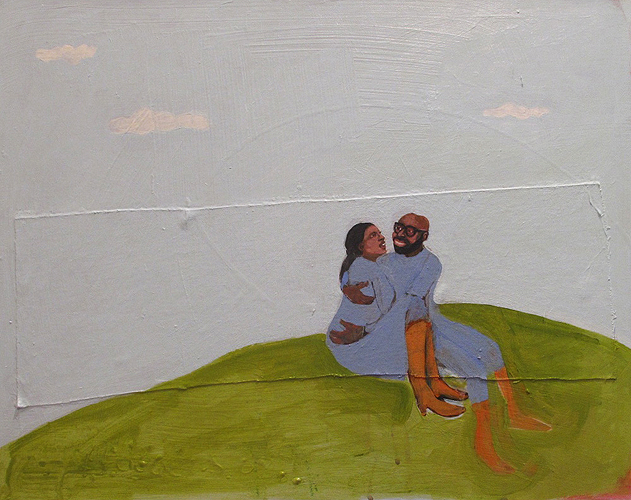
Francks François Décéus _Cloud 9_2012
Gwendolyn Brooks (1917-2000)
“Estar enamorado”
.
Estar enamorado
es tocar con mano más suave.
En tú mismo te estiras – y estás bien.
Miras las cosas con los ojos de él.
Es rojo el cardenal, es azul el cielo;
y de repente sabes que él lo sabe también.
Él no está allí pero
sabes que ustedes los dos están probando juntos
el invierno o el tiempo primaveral.
Cuando toma tu mano
es demasiado soportar.
No puedes encontrar sus ojos
porque tu pulso no debe decir
lo que no debe ser dicho.
Cuando cierra la puerta,
o cuando él no está,
tus brazos se convierten en agua.
Y eres libre con una libertad horrible.
Eres la bella mitad de un daño de oro.
Recuerdas…pues codicias su boca
– tocarla, y susurrar sobre esos labios.
Ay, cuando declarar el Amor – ¡es una Muerte, por seguro!
Oh, cuando notificar es cautivar…
Y ver rendirse la Columna de Oro
en ceniza ordinaria.
.
Traducción del inglés: Alexander Best
. . .
Gwendolyn Brooks (1917-2000)
“To be in love”
.
To be in love
Is to touch with a lighter hand.
In yourself you stretch, you are well.
You look at things
Through his eyes.
A cardinal is red.
A sky is blue.
Suddenly you know he knows too.
He is not there but
You know you are tasting together
The winter, or a light spring weather.
His hand to take your hand is overmuch.
Too much to bear.
You cannot look in his eyes
Because your pulse must not say
What must not be said.
When he
Shuts a door,
Is not there,
Your arms are water.
And you are free
With a ghastly freedom.
You are the beautiful half
Of a golden hurt.
You remember and covet his mouth
To touch, to whisper on.
Oh, when to declare
Is certain Death!
Oh, when to apprize
Is to mesmerize,
To see fall down, the Column of Gold,
Into the commonest ash.
. . .
Otros poemas de Gwendolyn Brooks:
Gwendolyn Brooks: “Mis sueños, mis trabajos, tendrán que esperar hasta mi vuelta del infierno”
. . . . .
Frank Marshall Davis: “Cuatro Ojeadas de Noche” y “Auto-Retrato” / “Four Glimpses of Night” and “Self-Portrait”
Posted: February 12, 2014 Filed under: English, Frank Marshall Davis, Spanish, ZP Translator: Alexander Best | Tags: Black History Month, El Mes de la Historia Afroamericana Comments Off on Frank Marshall Davis: “Cuatro Ojeadas de Noche” y “Auto-Retrato” / “Four Glimpses of Night” and “Self-Portrait”
Frank Marshall Davis (1905-1987)
“Cuatro Ojeadas de Noche”
.
I
.
Ansiosamente
como una mujer que se apura por su amante
La Noche llega en el cuarto del mundo
y se extiende, tierna y satisfecha
contra el rostro fresco y redondo
de la luna.
.
II
.
La Noche es un niño curioso,
vagabundeando entre tierra y cielo,
entrando a hurtadillas por las ventanas y puertas,
pintarrajeando morado
el barrio entero.
El Día es
una madre humilde y modesta
siguiendo con una toallita en la mano.
.
III
.
Yendo puerta a puerta
La Noche vende
bolsas negras de estrellas de menta,
un montón de cucuruchos de luna-vainilla
hasta que
sus bienes están acabados,
pues arrastra los pies de camino a casa,
tintineando las monedas grises del alba.
.
IV
.
El canto quebradizo de la Noche,
hecho de plata, aflautado,
destroza en mil millones de fragmentos de
sombras silenciosas
con el estrépito del jazz
de un sol madrugador.
. . .
Frank Marshall Davis (1905-1987)
“Four Glimpses of Night”
.
I
.
Eagerly
Like a woman hurrying to her lover
Night comes to the room of the world
And lies, yielding and content
Against the cool round face
Of the moon.
.
II
.
Night is a curious child, wandering
Between earth and sky, creeping
In windows and doors, daubing
The entire neighbourhood
With purple paint.
Day
Is an apologetic mother
Cloth in hand
Following after.
.
III
.
Peddling
From door to door
Night sells
Black bags of peppermint stars
Heaping cones of vanilla moon
Until
His wares are gone
Then shuffles homeward
Jingling the grey coins
Of daybreak.
.
IV
.
Night’s brittle song, sliver-thin,
Shatters into a billion fragments
Of quiet shadows
At the blaring jazz
Of a morning sun.
. . .
 . . .
. . .
“Auto-Retrato” (del poemario Humores negros, 1948)
.
Yo sería
un pintor con palabras,
creando retratos ingeniosos
sobre el lienzo amplio de tu mente,
imágenes de esas cosas
moldeados por mis ojos
– algo que me interesa;
pero, porque soy un Décimo Americano
en esta democracia,
bosquejo una miniatura
aunque contraté por un mural.
.
Claro,
Entiendes esta democracia;
Un hombre es bastante bueno como el otro
– de una cabaña de troncos hasta La Casa Blanca –
– de chico pobre hasta presidente de una empresa –
Hoover y Browder, cada uno con un voto;
en un país libre;
con completa igualdad;
Ah SÍ…
– Y los ricos reciben devoluciones de la renta y
los pobres obtienen cheques de asistencia.
.
¿Y YO?
Pago cinco centavos por un sumario de los sucesos del momento;
veinticinco centavos por lo último sobre Hollywood;
tuerzo el dial por “Stardust” o Shostakovich;
y con mi talón de gradería guardo el derecho a gritar: “¡Mata’l cabrón!” al árbitro.
Pues, ¿por qué soy diferente a los nueve otros Americanos?
.
Pero escúchame, tú:
No te preocupes por mí
– porque tengo rango.
Soy el converso número 4711 de la Iglesia Bautista Beulah;
Soy Seguridad Social número 337-16-3458 en Washington;
¡Gracias, Señor Dios y Señor Roosevelt!
Y hay algo más que te quiero decir:
No importa lo que pasa…
¡Yo también puedo hacer señas a un policía!
. . .
“Self-Portrait” (from Black Moods, published 1948)
.
I would be
A painter with words
Creating sharp portraits
On the wide canvas of your mind
Images of those things
Shaped through my eyes
That interest me;
But being a Tenth American
In this democracy
I sometimes sketch a miniature
Though I contract for a mural.
.
Of course
You understand this democracy;
One man as good as another,
From log cabin to White House,
Poor boy to corporation president,
Hoover and Browder with one vote each,
A free country,
Complete equality—
Yeah—
And the rich get tax refunds,
The poor get relief cheques.
.
As for myself
I pay five cents for a daily synopsis of current history,
Two bits and the late low-down on Hollywood,
Twist a dial for “Stardust” or Shostakovich,
And with each bleacher stub I reserve the right to shout “Kill the bum!” at the umpire—
Wherefore am I different
From nine other Americans?
.
But listen, you:
Don’t worry about me
– I rate!
I’m Convert 4711 at Beulah Baptist Church,
I’m Social Security No. 337-16-3458 in Washington,
Thank you Mister God and Mister Roosevelt!
And another thing:—
No matter what happens
I too can always call in a policeman!
.
.
.
Traducción del inglés / Translation into Spanish: Alexander Best
. . . . .
 Zócalo Poets