Kyoto Protocol: 2 poems by Alexander Best
Posted: June 1, 2011 Filed under: Alexander Best, English, Spanish, ZP Translator: Lidia García Garay Comments Off on Kyoto Protocol: 2 poems by Alexander BestHANDMADE POEM
_
One way
Right way
Lost and pounding
_
Treasure
Shovel
Message
Bottle
_
Plastic
Bagful
Urgent
Bubble
_
Soilmouth
Steepdrink
Skypit
Hovel
_
Un-way
Our way
Human foundling
_
Mousepad
Chisel
Boulder
Nipple
_
Clayclod
Seedhusk
Grounded
People
_
Yucca
Maize and
Grains
Astounding
_
Cellphone
Oatmeal
Idealogjam
_
Slowburn
Brainsmoke
Concrete
Feed me
_
Juice of
Grasses
Miles of
Malls and
_
Micro
Chip off
Old block
Heed me.
. . .
WATER SONNET
_
My love and I go down to the well
With buckets at our waists,
and dip the vessels in, refresh ourselves,
Then give we chase…
_
The sparkling drench is ours,
Extravagance of simple choice.
We swallow all, we surge and runneth o’er
By such device.
_
And liquid Time a-rushing flows
And tolls the bell for me,
And you – where did our children go?
Could we abandoned be?
_
My love and I went down to the well
And turned our buckets over;
And sat upon them;
Sighed and waited – waited, sighed –
Forever.
(September 2010)
. . . . .
POEMA AL AGUA
_
Mi amada y yo vamos al pozo
Con cántaros a la cintura,
Los metemos al agua, nos refrescamos y
luego correteamos…
_
El líquido brillante que nos empapa es nuestro,
una extravagancia fácil de escoger
nos la tomamos, resurgimos y
nos dejamos atropellar por tal método.
_
Y el Tiempo líquido corre y nos toca la campana
¿Y vosotros— adónde fueron vuestros hijos?
¿Hemos sido abandonados tal vez?
_
Mi amada y yo fuimos al pozo,
Pusimos nuestros cántaros boca abajo
y nos sentamos en ellos;
Suspiramos y esperamos – esperamos, suspiramos
Para siempre.
__________
Traducción al español por Lidia García Garay
‘El Buen Libro’ / ‘The Good Book’
Posted: June 1, 2011 Filed under: Alexander Best, English, Spanish, ZP Translator: Lidia García Garay Comments Off on ‘El Buen Libro’ / ‘The Good Book’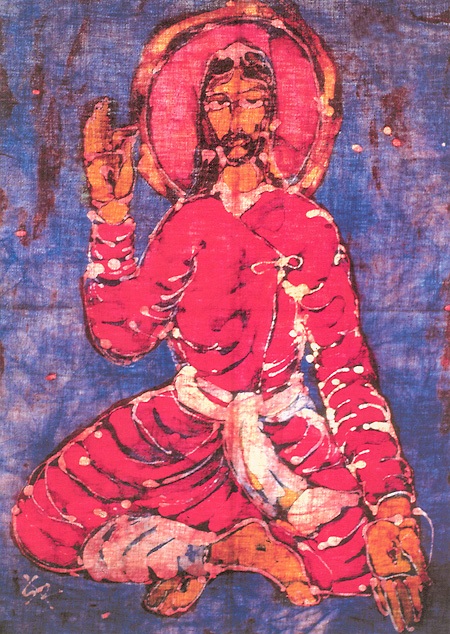
‘The Good Book’
by Alexander Best
.
I open the book, rather, The Good Book.
Is The Answer within these thousand-odd onion-skin pages?
No.
But it’s an amazing life-span’s read, just the same;
About folks – dead, all of ’em – who were
Rough, sweet, ignorant.
Naaah, Hollywood / Science
Can’t crack this nut – and I’m
Glad in that.
_
My
Favourite exasperating character is
Jesus:
Son of man, born of woman, had – (they say) – that
Divine spark, the same one burns in the billions of us.
He was a flesh-and-blood human being,
Like you and me
– but he was more than that. A
Deep and subtle thinker; simple, oblique and rich in his
Word; a vagrant who was a holy man
(such as the Hindus have). And once he
Got known – ( those Wonders with the loaves and fish; the
Leper and Lazarus; not to mention
the guy walked on water ) –
He was given no peace,
Not even on Sundays.
_
The Multitude trailed him…And here and there he sought an
Evening’s quiet in high-up mountain hollows where he
Lay with his head on a stone pillow, and
Still his restless spirit wouldn’t quit. Well…
Jesus came to a bad end, which was typical back then for
Anyone stubborn and puzzling who appeared to
Spring from nowhere.
_
People picture Jesus as a Hippy or Rastafarian, only
Jesus was more intelligent, sexy and strange than any
Social type that grew out of the twentieth century.
_
A poem is irritating if it goes on for long…but
not The Good Book. And
Jesus’ biography is merely a few chapters in it.
Oh, there’s
Plenty to read, for three-score-years-and-ten
( or however many grains of sand remain in your hourglass. )
_
I open my heart as wide as I’m able.
I close The Good Book.
This is enough for one day.
.
(2001)
. . . . .
‘El Buen Libro’
por Alexander Best
.
Abro el libro, mejor dicho, El Buen Libro.
¿Está La Respuesta en este libro de miles de páginas singulares de papel cebolla?
No.
Pero igualmente es una lectura de toda una vida
Acerca de gentes – todos muertos ya – que fueron
Toscos, dulces, ignorantes.
No, no, Hollywood / la Ciencia
No pueden abrirse paso a comprenderlo
Y me alegro de ello.
_
Mi personaje favorito, exasperante, es:
Jesús:
El hijo del Hombre, nacido de Mujer
Tuvo – dicen – esa chispa divina,
La misma que quema en miles de millones
De nosotros.
Él fue un hombre de carne y hueso,
Como tú y yo
– pero él fue más que eso:
Un pensador profundo, perspicaz, simple,
Indirecto y rico en Su Palabra; un vagabundo que era
Un hombre santo (como los hindús lo han sido).
Y una vez llegó a ser reconocido
– (esos milagros con el pan y el pescado; el leproso y Lázaro;
Sin mencionar que el hombre caminó sobre agua) –
No tuvo paz – aún en los domingos.
_
La multitud le seguía
Y buscó aquí y allá el silencio de una tarde donde descansar
Su cabeza, en los huecos
En la cima de la montaña,
Sobre una almohada de piedra,
Y todavía su espíritu agitado no descansaba…
_
Bueno,
Jesús terminó mal, que era típico entonces para una persona
Testaruda y misteriosa que se aparecía de la nada.
La gente se hace una idea de Jesús como un rastafari o un hippy pero
Solamente que Él era más inteligente, atractivo y misterioso
Que cualquier sujeto que germinó del siglo veinte.
_
Un poema fastidia si se alarga…pero no El Buen Libro.
Y la biografía de Jesús está en unos cuantos capítulos solamente.
Oh, hay mucho que leer, por setenta años,
o cuantos granos nos queden en nuestro reloj de arena.
_
Abro mi corazón tanto como puedo.
Cierro El Buen Libro.
Ésto es suficiente por un día.
.
(2001)
_____
Traducción al español por Lidia García Garay
Image: a batik textile of Jesus as guru, Jesus as bodhisattva, but showing stigmata upon both his hands
“This poem’s about…” by Alexander Best
Posted: May 26, 2011 Filed under: Alexander Best, English Comments Off on “This poem’s about…” by Alexander Best“This poem’s about”
.
This poem’s about what’s inbetween, this part’s
the piece got left out.
Crawled up to the roof where calmness is. A
guy’s up there, kind and cool, big and
warm and vague — didn’t beat me.
In my room: dumptrucks heave along, dragging
dreams through potholes. Oil-burning “steam shovels”
unearth me at devilish dawn, pound the 8 X 12-foot ground,
pluck me from the floorboards, with crooked steel teeth
— and fling.
This dream lives life in secret;
rectangled in a cupboard; a thing pretzel-bawdy,
its mouth at its crotch and a scald-pipe
collars the throat.
This poem’s about what’s inbetween, the
bit unmentioned, put neat-to-the-side.
On the table: an eavestrough-vase holds sculpture of
tough-skin-slicing weeds — rumex crispus L. — grew in a
dry oasis ‘neath the expressway. These weeds
proclaim the Dot. And a bricked-in, coal-chunk’d,
wall-eyed cot railroads fright from me, in a
room’s as trusted, big-busted, nut-clamped and
breakneck’d as within’s the rattled world without.
This poem can’t take the hint. Ignored, dropped,
still it’s self-propelled on a head of fumes.
At last, this poem describes the face in shadow,
turned toward an ancient painted place,
filthy t-shirt stretched ‘cross
cave-bound eyes like tissue of silk.
This poem’s what’s behind the shrapnel mask,
it records the dear loss of the fake.
This poem, it gladly ends.
(2004)
_____
“Ser un Hombre” por Alexander Best
Posted: May 25, 2011 Filed under: Alexander Best, Spanish Comments Off on “Ser un Hombre” por Alexander Best
“Ser un Hombre”
.
¿Qué significa ser un hombre?
¿Y quién soy yo para decidirlo? ¿Y quién eres tú?
¿En qué consiste ser un hombre?
¿En la forma como él piensa…mira…llora?
(Tengo miedo, soy un muchacho. Desnudo, descubierto.
Un hombracho soy, llevando detrás de mi oreja el clavel del coraje…)
*
¿Qué dijó el filósofo?
La memoria – el recuerdo – es lo que está grabado en alguien,
lo que está quemado dentro del ser.
¡Es verdad!
¡Ah, es bullshit!
*
¿Qué es este tropiezo en mi camino?
Y al preciso momento en que deseo ser un trotamundos-de-Amor.
Pero no hay nada en mi piel escrito-en-piedra
– ¡Demos a la experiencia
un salto mortal!
(Intrépido soy, no, temeroso.
Soy temeroso, no,
valiente.)
No ando detrás de las mujeres sino
me sigue una diosa, y lanza en frente de mí
su sombra dorada. En la mano derecha (de esa mujer divina) hay
una mazorca de maíz. En la izquierda, un metlapil.
Vamos hacia el metate y el molcajete, y estamos
hambrientos, los dos.
Cae una llovizna, hay un sol de
color indescriptible.
¿Amanecer, atardecer? No sabemos la hora.
*
(Soy audaz – de vez en cuando.
Tímido – lo sé.)
¿Deberíamos seguir cabalgando esta aventura rara de ser un hombre?
Sí,sí, te digo. ¡Mil veces, sí!
.
(2010)
_____
El arco amplio / The sweeping arc
Posted: May 20, 2011 Filed under: Alexander Best, Spanish Comments Off on El arco amplio / The sweeping arc
El arco amplio
por Alexander Best
.
¡Zorro, te veo!
Qué raro, aquí en la Ciudad.
Porque nuestra Vida es para ti una zona prohibida.
.
Bueno. Sobreviviste el invierno.
Pero tu pelaje, mi cabroncito charcón,
parece una cubierta sarnosa – ¿has pasado un calvario?
Dos segundos, haces una pausa y estoy mirando en tus ojos
– ojos de gato – también de perro.
Eres un híbrido astuto. Entonces tú también perteneces al
arco amplio del mundo,
este mundo con su armonía bronca y
tal porvenir tosco pero eficaz.
Y te digo, de lo más hondo de mi corazón: ¡Buena suerte!
.
(Mayo de 2011)
_____
The sweeping arc
by Alexander Best
.
Fox, I see you!
How rare, here in the City.
Because our Life is your no-go zone.
.
Well. You survived the winter.
But your coat, you skinny little bugger,
it’s like a mangy blanket – have you been to Hell and back?
Two seconds, you pause and I’m looking into your eyes
– eyes of a cat – and a dog.
A cunning hybrid you are. And you too belong to the
sweeping arc of the world,
this world with its gruff harmony and such rough-and-ready prospects.
And I tell you, from the bottom of my heart: Good luck!
*
Traducción del español al inglés: el poeta
Translation from Spanish into English: the poet
Lección número 11
Posted: May 18, 2011 Filed under: Alexander Best, Spanish Comments Off on Lección número 11
Lección número 11
por Alexander Best
.
< El profesor afloja su corbata. >
Reconocemos que el Amor es un sueño, un desafío, una aventura…
Un sueño a veces una pesadilla, y al momento de despertarnos, nos consolamos el uno al otro – juntos.
Un desafío más abierto que nuestras ideas listas.
Una aventura que nos mete en un lío espinoso, que ampolla los pies.
Y que vale la pena – porque exige el coraje para amar.
< Pausa el profesor. >
< Habla el estudiante más brillante de la clase. >
El Amor es El Orgullo: ciego y maquinal.
<Excéntrico.>
Es la tolerancia o aceptación de tantos comportamientos de un hombre, como si fueras un mártir falso (ahora sufrir en silencio – más tarde crecer un resentimiento.)
<Original pero binario.>
<Continua el muchacho…>
El Amor es un cuartucho escuchimizado con una cama gigantesca cobijada de terciopelo, salpicada de esmeraldas del color xempasuchil.
<Ay, un tipo delicado!>
O es una mansión de salas espaciosas con techos altos, ventanas anchas, el aire fresco – pero toda está vacía, sin pertenencias que tocan a la intimidad de un hombre, salvo una banda de cabello (de su chongo) estando tumbado en los azulejos del suelo de mármol.
<Pones a prueba mi paciencia.>
El profesor:
El Amor no es un experimento académico o literario.
Existe por el Hecho de sentirse vivo – es su
lógica, motivo, razón.
El estudiante:
Pero…aceptemos que algunas decisiones nuestras, algunos acontecimientos, algunas noches –
son fracasos completos.
<De súbito, la voz de un estudiante normalmente mudo y sordo.>
Nadie puede dominar el Amor – ¡nunca ! Pero es posible matarlo.
<Una declaración mordaz…>
El profesor:
<Hay una pausa.>
Y alcanzemos a la comprensión que – al final –
no hay palabras.
<Un suspiro deja escapar de si.>
Aun fracasa el poema sincero a describir el Amor.
Pues…sigamos adelante.
¡¡ Class dismissed !!
.
(Julio de 2010)
_____
El Camino Abierto / The Open Road
Posted: May 14, 2011 Filed under: Alexander Best, Spanish Comments Off on El Camino Abierto / The Open Road
El Camino Abierto
por Alexander Best
.
Ya terminé.
El enojo, el orgullo.
Esos aullidos de las entrañas
(¡ ay, qué aflicción aterradora !)
Mata toda la memoria, el dolor
– salvo esa de la ternura.
Y valoro haberte conocido
– a ti que tuviste miedo del Amor,
aúnque lo necesitaste.
Soy tuyo
– pero se pone completo nuestro cuento.
Y, finalmente, recuerdo que
debo pertenecer a mí mismo.
Espacio vacío,
lleno de posibilidad
– ¿ hoy día, soy yo ?
Empiezo.
(Octubre de 2010)
______
The Open Road
by Alexander Best
.
I am done.
The anger, pride.
Those howls from the gut
(oh, terrifying grief !)
Pain kills all memory,
save that of tenderness.
And I cherish my knowledge of
You who feared – and needed – Love.
I am yours – yet our story is complete.
And I am remembering, finally, that I must
belong to Myself.
Empty space,
full of possibility
– today is this me ?
I begin.
.
Translation from Spanish into English: the poet

La Cigarra y el Murciélago
Posted: May 10, 2011 Filed under: Alexander Best, Spanish Comments Off on La Cigarra y el Murciélago
La Cigarra y el Murciélago
por Alexander Best
.
Soy una cigarra.
El tópico del poeta, el cliché del Verano descuidado.
Zumbando como un zoquete, zumbando como un genio inventivo
(casi siempre sin ser visto.)
Desconocido pero
anhelado por la criatura humana
escuchándome en el acaloramiento de la tarde.
*
Soy un murciélago.
Equívoco, imprevisible.
Un híbrido malentendido, un sobreviviente antiguo.
Zigzagueando en mi imponente danza originaria.
Desconocido pero
anhelado por la criatura humana
mirándome en el crepúsculo.
.
(Julio de 2010)
_____
The Cicada and The Bat
by Alexander Best
.
Cicada am I.
The commonplace of poets, the stereotype of careless Summer.
Buzzing like a numbskull, buzzing like an inventive genius
(almost always never seen).
Unknown yet
longed for by the human creature
listening to me in the hot flush of afternoon.
*
Bat am I.
Ambiguous, unpredictable.
Misunderstood hybrid, ancient survivor.
Zigzagging in my awesome, original dance.
Unknown yet
longed for by the human creature
watching me in the twilight.
.
Translation from Spanish into English: the poet
Las patas escrupulosas / Fastidious paws
Posted: May 7, 2011 Filed under: Alexander Best, Spanish Comments Off on Las patas escrupulosas / Fastidious paws
Las patas escrupulosas
por Alexander Best
.
Estos mapaches de Toronto…
Que me dan golpecitos sobre el hombro
cuando estoy soñando, atardecer o amanecer,
en varios lugares afuera.
Con su cautela, su curiosidad – su curiosidad y cautela.
Con su firmeza y esas patas escrupulosas – escudriñando.
Su tarea – de buscar pedazos de sobras de La Vida.
¡ Como humanizan La Ciudad !
.
(Mayo de 2011)
_____
Fastidious paws
by Alexander Best
.
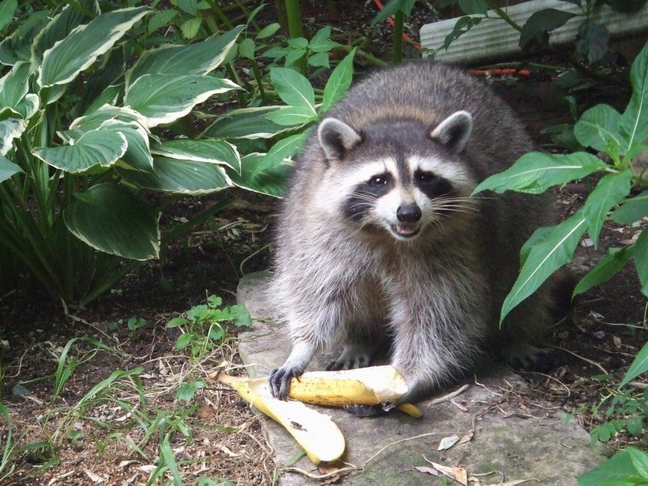
These Toronto raccoons…
Who tap me on the shoulder
whenever I am dreaming, dusk or dawn,
in various places outside.
With their caution, their curiosity – their curiosity & caution.
With their single-mindedness & those fastidious paws – scrutinizing.
Their task – to find chunks of Life’s leftovers.
How they humanize The City !
.
Translation from Spanish into English: the poet
 Zócalo Poets