Ciencia y Fe: dos poemas por Alicia Claudia González Maveroff
Posted: December 19, 2013 Filed under: Alicia Claudia González Maveroff, Spanish Comments Off on Ciencia y Fe: dos poemas por Alicia Claudia González Maveroff
La Cruz del Sur
Alicia Claudia González Maveroff
“Científico”
.
Ayer, aquí en Santiago, en otro barrio
allá por Los Trapenses,
conocí un señor, que juega con estrellas,
no las busca como yo con poesía,
las busca con su ciencia.
.
Para poder buscar a recorrido,
muchísimos kilómetros andando
ha marchado por el mundo con sus sueños
porque yo sé que aquel que piensa, sueña.
.
Ha llegado hasta el sur, al sur del mundo,
hasta el Polo Sur él ha llegado
a un lugar especial, donde se reúnen algunos,
a conciliar y a hacer crecer la ciencia.
.
Allí contó que en el frío y el silencio,
con noches largas que duraron meses,
ha pasado sus días trabajando y agrego yo,
también sonando.
.
Su sencillez y cálidas maneras
me acariciaron en el alma,
me hicieron disfrutar su compañía
ver que quien sabe, tiene
mas humildad, cuanto mas ha aprendido,
y entonces a veces, puede descubrir otras estrellas
– esas las que tenemos en el alma…
.
19 de diciembre, 2011
. . .
“Feliz Navidad a Todos”
.
Yo recuerdo de niña que rezaba
este pequeño verso todas las noches,
entonces contentayo me dormía:
“Niñito Jesús, ven a mi cama,
dame un besito – y hasta mañana.”
Hoy, cerca de Navidad, te pido, Niño,
que nadie se pierda de tu cariño,
Que todos tengan pan y algún amigo.
Que tu amor llegue pronto a todas las gentes
y que nadie con otro sea indiferente.
Que no sea en vano tu nacimiento,
que la Virgen nos de su amor de madre
y nos proteja.
Que este mundo extraño y tan perturbado,
se tranquilice hoy estando a tu lado.
Por eso yo te pido con alegría
que tu Paz llegue a todos en este día,
y que entre los hombres brille tu estrella.
.
“Paz a todos en todo el mundo”.
. . . . .
Primera nieve de la estación: Matsuo Bashō
Posted: December 11, 2013 Filed under: Bashō, Spanish | Tags: Haiku Comments Off on Primera nieve de la estación: Matsuo Bashō .
.
Matsuo Bashō / 松尾芭蕉 (1644-1694, poeta del haiku del período Edo de Japón)
. . .
Después de los crisantemos, / a excepción del largo nabo, / no hay nada.
.
A la intemperie / se va infiltrando el viento / hasta mi alma.
.
Sólo en invierno / un color tiene el mundo / y un son el viento.
.
Ahora, salimos / para disfrutar de la nieve … hasta que / resbalón y caída.
.
Hasta un caballo / Mis ojos se detienen en ello / Nieve por la mañana.
.
Sol invernal. / Montada en el caballo / mi sombra, helada.
.
El cuervo horrible / ¡qué hermoso esta mañana / sobre la nieve!
.
Hielo nocturno / me despierto / mi cántaro estalla.
.
La nieve que cae… / ¿es del otro / o de este año?
.
“A un amigo que entró en su choza luego de una nevada”:
¿Prendes el fuego? / Te mostraré una gran / bola de nieve.
. . .
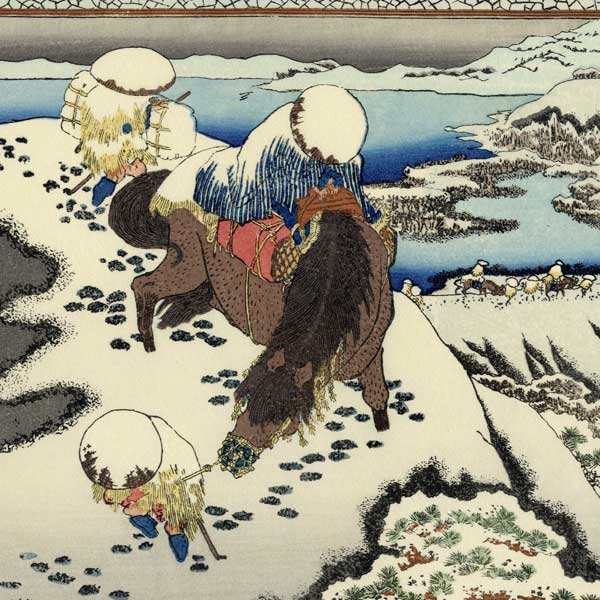
Viajeros en La Nieve por Hokusai, pintor y grabador japonés_1760-1849
Oración a La Virgen de Guadalupe: Siempre seré tuya – Amén.
Posted: December 11, 2013 Filed under: Spanish | Tags: Juan Diego Cuauhtlatoatzin, Oración a La Virgen de Guadalupe Comments Off on Oración a La Virgen de Guadalupe: Siempre seré tuya – Amén.
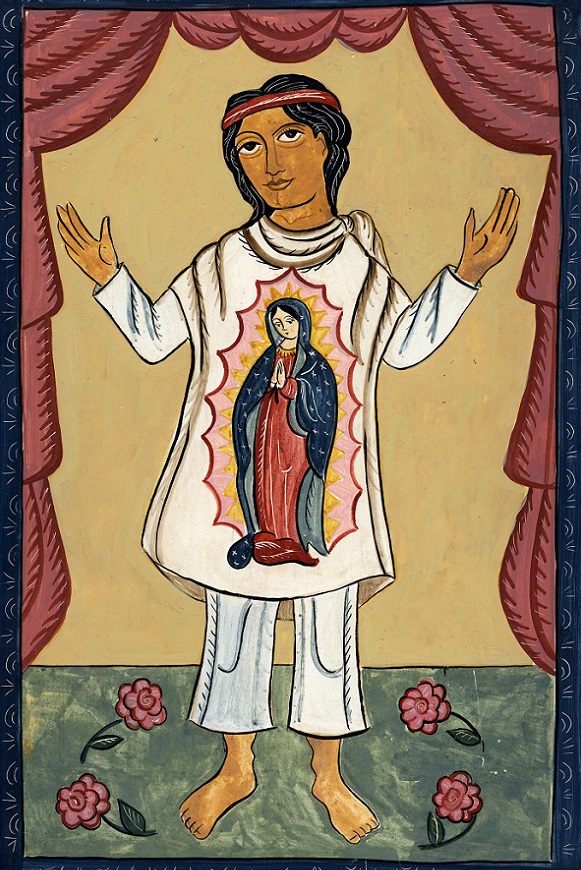 ZP_El chichimeca San Juan Diego se llamó en la lengua indígena de nahuatl Cuauhtlatoa o Cuauhtlatotzin que quiere decir: él que habla como águila_San Juan Diego con la tilma_Mary Jo Martin_1998 . . . Una nueva oración dedicada a La Guadalupana se estrenó en el 12 de diciembre, 2011, cuando Benedicto XVI presidió la Misa en la Basílica de San Pedro, Roma – por la independencia de los pueblos de América Latina. La oración nace para hermanar, identificar y unir a los latinoamericanos bajo la devoción de la Virgen de Guadalupe… “Oración a Nuestra Señora de Guadalupe” . . . Oración anónima a La Guadalupana . Mi Madre de Guadalupe, Señora de Tepeyac – misteriosa, dulce y firme – infinitas gracias te doy por quedarte conmigo – y entre mi familia, vecinos, compañeros, aun en la vida de un desconocido. Quedas aquí en el mundo difícil – aquí entre nosotros – para bendecirnos y acompañarnos en el camino pedregoso de hoy día hasta la avenida del futuro …Enséñanos a encaminarnos siempre a tu hijo Jesús y llévanos bajo tu manto a cuantos te llamamos y necesitamos…También cuando yo estoy solitario, quizás sin amigo…Es cuando te llamo y te necesito más…Y me ayudas en mi noche confundida, en mi alba a veces sombría…¡No quiero cumplir mi “tres por veintena, y diez” como un hombre de alma dura! Me conoces – me entiendes – en mi corazón. Cariñosa y tan sabia eres, Madre morenita mía. Y siempre seré tuya – Amén. . . . 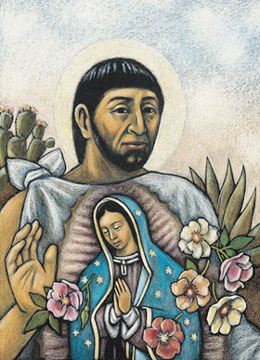 9 – 12 de diciembre, 1531_Juan Diego en Tepeyac con la tilma de maravillas . “Mi Lupita” (versión de la cantante mexicana, Lucero) .
|
||
Poemas de Amor y Deseo: Alfredo, Jorge, Javier, Odette, Minerva y Kenny
Posted: December 9, 2013 Filed under: Spanish | Tags: Poemas de Amor y Deseo Comments Off on Poemas de Amor y Deseo: Alfredo, Jorge, Javier, Odette, Minerva y Kenny
Uno de los hombres que me amaron…
Alfredo Fressia (nacido en 1948, Montevideo, Uruguay / São Paolo, Brasil)
“Bésame Mucho”
.
Así: él, que tanto me había amado,
se casó con ella
pero me dejó por otro.
.
¿Qué te hice después
que no me olvido?
.
“Bello Amor”
.
Bello amor, bellos amantes,
porque el amor no pasa
de un memorial de hombres que me amaron,
el sexo idéntico, idéntico
el ancestro conjugado,
bello y estéril, bello
porque estéril, porque destinado
al memorial de hombres que me amaron
de antes, sin después, al otro
lado de sus vidas, sin otro
rostro que el insomne
habitante del deseo, se consume
de belleza antes, siempre antes de los hombres,
el memorial de hombres que me amaron.
.
“Eterna”
.
Qué fiesta el gesto de tu cuerpo, muchacho,
trampolín para fuera de los huesos,
salta tu gozo, suelto
me asalta, te rapta por ancestros
implacables de piel y sudor y esta cerveza
de los gestos, este salto a venideros del deseo.
Qué fiesta del arco y de los cuerpos,
muchacho, qué marea de música y de celo
de vuelta repitiéndonos a tiempo
de estertores, a eternos en el cuerpo
místico del gozo, salados hijos
de los hijos de tu gesto.
.
“Memoria”
.
¿No me desarmo yo de la condena, no abandono
la trama de los huesos,
no se me erizan esponjas en el dorso,
muchacho, curva aguda del mundo
y el deseo, subiéndola incansable
por tus muslos, la muerte provisoria
que no acaba?
.
“Travestí”
.
Ángel barroco, siempre
el muchacho agrietado detrás de las violetas
estira la punta del deseo
hasta tus dedos. Aquí una calavera
estalla en tu sudor,
una mano judía te tuerce del destino,
se durrumba, grita un agorero
tu horóscopo de miedo
y se destruye. Orfebre de la nada:
un sudor nuevo, casi nada
en tus dedos.
.
“Él se muere”
.
Adiós. El
se muere y ya no soplo, no
tengo costillas, muere
de verano gigante,
de perla salvaje que se muere,
de rosa barroca que estalla como un templo
y yo no puedo
reclamar los secretos que incendié,
las torres que alcé para su pétalo,
este perfume a incienso
de rosa de
nada.
Adiós. El
se muere. Se desvanece abolida
su larga dinastía. Ah, se muere
la gloria, la serpiente sabia y medieval del mundo
muere, depone su imperio cada miembro.
Derrumbado castillo, cuerpo
ardido y amado. Adiós.
Dura ley de un verano. El
se muere.
.

…y ÉL – también –…

…desapareció de mi vida.
“Santo Domingo Mulato”
.
La Iglesia y la Cárcel Real bajo la luna,
souvenirs de la Conquista, espectros íntimos
del siglo XVI en la Hispaniola.
El me esperó tras el Alcázar de Colón
con el viejo walkman al oído
y una flor de caoba para la suerte.
Apresé su carne
y su alma
en mi boca,
mi hostia
sucia y sagrada.
Después me fui por la calle del Conde,
limpias las comisuras de los labios.
Un tambor escapaba del centro de la isla.
. . . . .
Jorge H. Farfán
“Anoche”
.
Anoche dormía,
soñaba que tu eras mi cielo,
plagado de estrellas y cometas,
plagado de mil luces que formaban
un millar de reflejos en tu ojos.
soñaba que tu eras eterna, te soñaba
suave, libre, ardiente.
Anoche dormía y con ello soñaba,
Anoche dormía y sentía en mi pecho
tu cara, tus pechos y tus manos,
tu cuerpo, tus sentimientos,
tu ser, lleno de exquisitos misterios.
Anoche brinqué al sentir tu roce en mi piel,
anoche eras una luz que iluminaba mi silencio.
Eras tu, era yo, éramos los dos, éramos nosotros,
tu y yo, uno sólo, por un momento infinito,
fui tuyo, fuiste mía, fuimos uno sólo.
Tu piel era mi piel, tu sudor confundido con el mío,
tu pelo enredado en mis manos, nuestros cuerpos
enredados en una sola y silenciosa forma, bella,
llena de matices, plagada de mil luces y colores.
Anoche, creí dormir, profundamente dormido,
creí que sólo eras una fantasía, creí morir.
Anoche, tu mi cielo, llenaste de alegría mi vida,
eras tu, éramos nosotros, éramos un cielo
una vez más y para siempre,
plagado de estrellas y cometas.
dedicado a ti que llenas mi vida de alegría.
. . . . .
Javier Mora (nacido en 1983, Bayamo, Cuba)
“Nuestro Encuentro”
.
El día que te bese en nuestro encuentro
subraya en rojo un blanco calendario
no será un beso solo imaginario
sino de un terremoto el epicentro.
.
Seré saeta y tú serás el centro
será tu cuerpo dulce itinerario
será tu amor vital y solidario
veraz así lo sueño yo por dentro.
.
Ese día que pueda yo tenerte
solo aspiro a mi amor poder yo darte
besándote poder entretenerte
con abrazos poder yo consolarte
adivinando cuanto quiero verte
seré refugio y tú mi baluarte.
. . . . .
Odette Alonso (Cuba, 1964)
“Moriremos de Amor”
.
Todos los vientos llegan como una manotada
y yo cubro tu cuerpo lo incorporo
quiero aliviarme en ti.
Hace un segundo la luna era distinta
y no había ese susto en tu mirada.
Algo nos viene encima
ese sordo rumor es un presagio.
Cierra los ojos pronto amiga mía.
Es el amor que llega.
. . . . .
Minerva Salado (La Habana, Cuba)
“La Trama”
.
Amo el amor que viertes sobre mí
con su carga de sal y de mareas
amo la dulce huella de tu boca
encima de mis manos
nueces de ti recibo
toco tus pies desnudos en el prado
y en silencio los amo
en tus hombros cruzados por el viento
pongo gotas de lluvia cual zumo de limón.
Pienso en el tiempo que estaremos juntas
y creo mientras pienso en que la eternidad
nos acompaña.
Mi cuerpo teje surcos para tí.
Amo la lágrima que surge de tu sueño
y la llamo simiente
líquido integrador del infinito.
. . . . .
Kenny Rodríguez (Quezaltepeque, El Salvador)
.
Este deseo diario
de rascar tu espalda
tibia y sudorosa,
de brillar en tus ojos
quietos y profundos,
de amarte salvajemente
hasta deshilachar
las soledades,
de ruborizarme
con plena conciencia
cuando encuentro
mi desnudo
entre tus labios,
será mi compromiso
único y vital.
.
“Quiero” (a FVCH)
.
Navegar sobre tu espalda
dulce y tibia
guardar cada lunar entre mis dedos;
saborear la sonrisa de tus ojos
que hipnotizan a su encuentro,
quiero recorrer tu cuerpo,
descubriendo todos sus rincones
tus relieves, tus planicies, tus cuevas…
conociendo tus olores, sabores, sonidos, detalles…
ganándome el derecho de vivir allí
explayada en todo su ancho,
plena…
Vivirlo a tu cuerpo
que me asombra, que me gusta
como tu rostro sonriente.
. . . . .
Poemas para o Dia Mundial de Combate à AIDS / Poemas para el Día Mundial de la Lucha contra el SIDA / Poems for World AIDS Day / Poèmes pour la Journée mondiale de lutte contre le SIDA
Posted: December 1, 2013 Filed under: English, French, Portuguese, Spanish, World AIDS Day: 25th Anniversary Poems in 4 Languages | Tags: World AIDS Day: 25th Anniversary: Poems Comments Off on Poemas para o Dia Mundial de Combate à AIDS / Poemas para el Día Mundial de la Lucha contra el SIDA / Poems for World AIDS Day / Poèmes pour la Journée mondiale de lutte contre le SIDA . . .
. . .
“Não ser amado é uma simples desventura; a verdadeira desgraça é não saber amar.” (Albert Camus)
.
“No ser amado es una simple desventura;
la verdadera desgracia es no saber amar.” (Albert Camus)
.
“To be unloved is merely misfortune; the true tragedy is in not loving.” (Albert Camus)
.
“Il y a seulement de la malchance à n’être pas aimé; il y a du malheur à ne point aimer.” (Albert Camus)
. . .
Liduina Felipe M. Fernandes (Mossoró, Brasil)
“Dia de Celebrar a Vida todos os dias”
.
1º de dezembro – dia de comemorar
O Dia Mundial de Combate à AIDS
Para que todos possam espalhar
Que a melhor solução
É sempre a informação
Educação e prevenção.
Dia de celebrar a vida.
Dia de socializar conhecimentos,
Respeitar, e não discriminar
Pois a vida pede dignidade,
Solidariedade e qualidade
E não apenas quantidade.
Dia de compreender que não basta falar
É preciso garantir condições para que a vida
Se possa resgatar e preservar.
Dia de gritar que direitos sociais legais
Carecem de aplicação no dia-a-dia,
Pois se forem “leis de papel”
Onde estará a garantia
De que tudo que foi escrito
É sinônimo real de cidadania?
1º de dezembro – dia de refletir
Que todo dia é dia de viver e de lutar
Pelo direito à vida,
Pelo respeito à saúde,
Pela consciência individual e coletiva
Para que todos, sem discriminação,
Respeitando as diferenças, possam desfrutar
De melhores dias sem AIDS.
E todas as armas violentas biológicas e “fabricadas”
Que nada mais fazem do que vidas, desrespeitar e ceifar.
1º de dezembro – dia de lembrar
De que todos os dias devemos, a vida, celebrar!
. . .
Maria do Rosário Lino (Brasil)
“Saudação à Vida” (2000)
.
Era um médico
e peregrinava
pelos templos
do mundo
onde a natureza
humana
lhe pedia ajuda.
.
Percorrendo aldeias
miseráveis
transportava
sua profissão
como um sacerdócio
onde o ócio
não havia.
.
Perplexo,
combatia
a mortandade social
que estagnava
as possibilidades
de nascedouros.
.
Paz e saúde
a toda a gente
era sua passagem
pelas cidadelas
e sua mensagem
era a superação
das mazelas
como produto
de uma fé
que se prova,
bebendo em pé,
no copo
da força de vontade.
Saciedade, nunca!
.
É preciso
epidemizar
o bem estar
de todos,
do café da manhã
ao jantar,
do deitar-se
ao levantar,
quando então
se pronunciará
a morte da decadência
ao bem da ciência
e um dia,
com a sapiência
e muita sorte,
a decadência
da morte.
. . .
Rui de Noronha (Maputo, Moçambique, 1909 – 1943)
“Mulher”
.
Chamam-te linda, chamam-te formosa,
Chamam-te bela, chamam-te gentil…
A rosa é linda, é bela, é graciosa,
Porém a tua graça é mais subtil.
.
A onda que na praia, sinuosa,
A areia enfeita com encantos mil,
Não tem a graça, a curva luminosa
Das linhas do teu corpo, amor e ardil.
.
Chamam-te linda, encantadora ou bela;
Da tua graça é pálida aguarela
Todo o nome que o mundo à graça der.
.
Pergunto a Deus o nome que hei-de dar-te,
E Deus responde em mim, por toda parte:
Não chames bela – Chama-lhe Mulher!
. . .
Rui de Noronha
“Amar”
.
Amar é um prazer, se nós amamos
Alguém que pode amar-nos e nos ama.
Amar é um prazer, se por nós chama
Continuamente alguém que nós chamamos.
.
Então a vida inteira a rir levamos,
O mesmo fogo ardente nos inflama,
E os ideais da vida, o bem, a fama,
Mãos dadas pelo mundo procuramos.
.
No encapelado mar desta existência,
O amor é compassiva indulgência
A culpa original dos nosso pais.
.
Que resta ao homem, suprimido o amor?
Buscar a morte p’ra fugir a dor,
Tristeza, indiferença – e nada mais.

New York Times, July 3rd,1981: First newspaper publication of an indirect reference to what would later come to be known as Acquired Immune Deficiency Syndrome or AIDS_Medical correspondent Lawrence K. Altman’s article about Kaposi’s Sarcoma – which can be a cancer of opportunity for someone with a severely weakened immune system – was buried on p.20. GRID (Gay-related immunodeficiency disease) – as the unknown disease was called in the first year – was emerging in the USA between 1981-1982, and was largely associated with white, gay men in San Francisco and New York…

…Meanwhile, in two African nations, another part of the same medical story was developing… Slim Disease – so called because people’s bodies just wasted away – appeared in 1982 in Tanzania and in the Rakai District of Uganda bordering Lake Victoria, and was debilitating mostly heterosexual men and women. By October 1985, in an issue of the British peer-reviewed medical journal, The Lancet,
Dr. David Serwadda of the Makerere Medical School in Kampala would publish with his team an article entitled: “Slim Disease: a new disease in Uganda and its association with HTLV-III infection”. Soon after, researchers on opposite continents understood that those different early names – whether GRID or SLIM – were, in fact, describing one disease: AIDS. Image shown here: a Ministry of Health public poster, Zimbabwe,1989

“Fight AIDS! We need healthcare and research, not bigotry!.” A 1985 demonstration in front of New York City Hall as a City Council committee considered legislation to bar pupils and teachers with the AIDS virus from public schools_photograph by Rick Maiman_By the end of 1981, 159 cases of the mysterious new disease had been reported in the USA. By 1985, 15,527 cases of AIDS had been reported, with 12,529 deaths. Ten years later, in 1995, it was 513,486 cases and 319,849 deaths, making AIDS the leading cause of death for Americans ages 25 to 44.
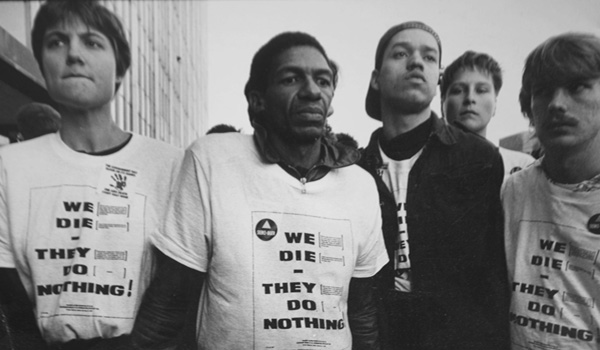
ACT UP_AIDS Coalition to Unleash Power_was founded in 1987 by a group of gay men. Seen here, a demonstration at the Food and Drug Administration in Washington, D.C._1988_photograph © Donna Binder

Poster aimed at helping people get past their fear of knowledge about HIV_USA, around 1990

Tanzanian safe sex poster drawn by Father Bernard Joinet_The Fleet of Hope in the Flood of AIDS_A rubber lifeboat is the metaphor for condoms_1994

Members of ACT UP protest during a session of the National Conference on Women and HIV being held in Pasadena, California_1997_Associated Press photo
. . .
Jaime Gil de Biedma (1929-1990, Barcelona, España – fallecido por el SIDA)
“Mañana de ayer, de hoy”
.
Es la lluvia sobre el mar.
En la abierta ventana,
contemplándola, descansas
la sien en el cristal.
.
Imagen de unos segundos,
quieto en el contraluz
tu cuerpo distinto, aún
de la noche desnudo.
.
Y te vuelves hacia mí,
sonriéndome. Yo pienso
en cómo ha pasado el tiempo,
y te recuerdo así.
. . .
S. Luz Teresa nació en San Jerónimo, Guerrero, México. En 1986 necesitó una cirugía, en la cual requirió de transfusiones –siendo alguna de éstas las que le causó su infección por VIH. Falleció en 1996.
S. Luz Teresa
“¡Auxilio!”
.
¡Auxilio! Se me está acabando el oxígeno, tengo SIDA,
soy un enfermo de SIDA
quiero gritarlo
para poder vivir en paz
y saber con quién cuento
y quién me rechazará.
¡Silencio! ¡Cállate!
Habla más bajo que te pueden oír
y me callo y me resigno
no por mí, por mi familia
porque la gente insensata
que, lamentablemente,
es mucha todavía,
por el simple hecho de saber
que conviven con una persona
como yo, los señalaría
¡me ahoga esta miseria!
¿Por qué a ellos que son
los únicos prudentes?
¡Maldición!
¿Cuándo aprenderán a distinguir
qué es lo que vale de la vida?
¿Cuándo aprenderán
a respetar el silencio?
¿Cuándo dejarán de cuestionarse
si estás o no infectado?
¿Cuándo cambiarán el morbo
por comprensión o cariño?
¿Cuándo?
¿Cuándo sabrán ser amigos?
Espero que no sea dentro de
mucho tiempo.
Porque si esto sucediera,
nadie más tendría que mentir
y ocultar su mal,
nos haría ciudadanos de nuevo,
nos cuidaríamos mutuamente,
porque como nosotros estamos
mucho más conscientes
de cuan dura
es nuestra enfermedad
quisiéramos que nadie
más sufriera
esta larga agonía,
igual que nuestras familias
y nuestros doctores,
aquellos que sabiendo la verdad
nos tocan, nos cuidan
y nos quieren
y no se infectan
y hacen que nos sintamos bien
y nos alientan a que,
por encima de nuestros problemas,
tracemos nuevas metas,
que en ocasiones
estemos contentos,
que no nos impacientemos
y que no olvidemos del todo
nuestra capacidad de amar.
No, no les estoy pidiendo amor,
seria una propuesta absurda,
sólo les pido comprensión
y eso es mucho más sencillo
soy un enfermo de SIDA
que simplemente,
quiere vivir en paz.
. . .
Jordi Demarto (España)
“No te duermas” (2005)
.
Cuando mi cuerpo invadiste
No fui capaz de evitar,
Sentirme sucio, muy triste
Hasta me hiciste llorar.
.
¿Qué será ahora de mi vida,
Mis proyectos de futuro?
Ahora tenía el SIDA.
Fue un golpe tan fuerte y duro.
.
Más tarde ya comprendí
“Gracias a la información”
Que mi vida no acababa
– No moriría mañana,
deshuesado y sin razón.
.
Sentí la fuerza de un oso,
Y hasta ganas de volar,
cada año un lazo rojo
nos ayuda a no olvidar.
.
Que la guerra sigue en pie,
Que esta guerra ha de acabar,
En todos los continentes
“y sin África olvidar”.
.
Que la vida no se acaba,
Que no hay que dejarse vencer
Por un virus despiadado
Que hoy no podemos vencer.
.
Sigamos luchando en la vida
Sin confiar en la suerte.
¡No te quedes ahí sentado!
¡No des tu tiempo a la muerte!
. . .
Arjona Delia (Argentina)
“Lucha contra el SIDA” (2011)
.
El cuerpo se daña en agonía,
pierden la esperanza y valentía,
lágrimas, sollozos y lamentos,
acerca la muerte día a día.
.
Cuida tu vida y la de los demás,
del virus letal, cruel enfermedad,
que te lo trasmiten al amar,
cuando no te saben cuidar.
.
Lucha, no te des por vencido,
si la herida te hace sangrar
yo te ofrezco mi mano para andar,
en mi corazón tendrás lugar.
.
No temas, aprende sobre el sida,
la ignorancia es la que contamina,
la mejor defensa es la prevención,
y contar con buena información.
.
http://www.arjonadelia.blogspot.com
. . .
Craig G. Harris (Black gay poet, U.S.A., died in 1991 of complications from AIDS)
“Alive after his passion” (for Elias)
.
green mangos
with salt and
vinegar,
hearts of palm
and holy ghosts
make me
speak in
tongues
with garlic breath,
dance to unheard
beats,
fall beneath your
holy temple,
inhaling grey
incense dust,
writhing in
shed snake skins,
purified in the
flame,
wrapped
in unspeakable
joy.
.
(1987)
.
Phillis Levin (New York City)
“What the Intern Saw” (1988)
.
I
He saw a face swollen beyond ugliness
Of one who just a year ago
Was Adonis
Practicing routines of rapture.
.
A boy who could appear
To dodge the touch of time,
Immortal or immune –
A patient in a gown,
Almost gone.
II
In the beautiful school of medicine
He read about human suffering,
A long horrible drama
Until the screen of anaesthesia
And penicillin’s manna.
.
But now, in myriad sheets
Of storefront glass refracting evening’s
Razor blue, in a land of the freely
Estranged from the dead, he meets
That face – and fear seizes his body.
III
His feet have carried him to bed.
He thinks he must be getting old
To so revise
His nature and his plan.
.
He shuts his eyes
And in his sleep he sees a gleaming bar,
The shore of pain.
It isn’t far.
People live there.
. . .
Adam Johnson (Gay U.K. poet, 1965-1993, died of complications from AIDS)
“December 1989”
.
The nascent winter turns
Each root into a nail,
And in the West there burns
A sun morbid and pale.
.
Now, from the city bars
We drift, into a cool
Gymnasium of stars –
The drunkard and the fool:
.
Into the night we go,
Finding our separate ways –
The darkness fraught with snow,
The leaves falling like days.
. . .
Clovis S. Palmer (Jamaica/Australia)
“Guilt”
.
Whoi! Mother, father, mi baby – gone
Whoi! Sister, brother, mi uncle – gone
Whoi! Daughter, mi son, mi family – gone
Whoi! What stain have I bestowed?
.
She held her son, the flesh melted from his bones,
Tears streamed down her cheeks, like raindrops down the window screen.
Unexplainable, undeniable, but beneath the ground he must go
– Singing, mourning, cries of pain –
Who next will suffer this dreadful stain?
.
The sunset kisses the Blue Mountain range,
Darkness covers the Kingston plains.
Tomorrow we shall start again –
Who next will suffer this dreadful stain?
.
The sun seeps over the Caribbean Sea,
Today my brother I shall not see.
Like the petals from roses – gone too soon –
Red ribbons I left on his tomb.
. . .
“HIV/AIDS is defined by people: their complex lives, their bravery, their fear, their sadness, their need, their laughter, their inconsistencies – basically, their rich humanity. These people taught me how to write about hope, and the beauty in the ordinariness of all of our lives.” (Kwame Dawes)
.
Kwame Dawes (born 1962, Ghana – raised in Jamaica)
“Coffee Break”
[This 2008 poem was inspired by caregiver John Marzouca of Jamaica]
.
It was Christmastime,
the balloons needed blowing,
and so in the evening
we sat together to blow
balloons and tell jokes,
and the cool air off the hills
made me think of coffee,
so I said, “Coffee would be nice,”
and he said, “Yes, coffee
would be nice,” and smiled
as his thin fingers pulled
the balloons from the plastic bags;
so I went for coffee,
and it takes a few minutes
to make the coffee
and I did not know
if he wanted cow’s milk
or condensed milk,
and when I came out
to ask him, he was gone,
just like that, in the time
it took me to think,
cow’s milk or condensed;
the balloons sat lightly
on his still lap.
.
“Coffee Break” © Kwame Dawes
.
. . .
Kwame Dawes
“Cleaning”
[This 2008 poem was inspired by Dr. Peter Figueroa of Jamaica]
.
After a while, you don’t bother
with the brief and the pajamas;
you leave him on the sheet,
make him shit himself, then
shift over to the other side
until I can come, lift up
the body, wipe his bottom
with a soft cotton cloth, bundle
up the sheet with two more
in the corner, straighten
out the plastic over the mattress—
sometimes you have to wipe
it, too, then put a towel
under him until the other
sheet dry, and all the time,
you don’t say a word,
you don’t ask for nothing.
You let your hand brush
against your father’s back
and pray his dignity will last
another day. This is how
a man must care for his father;
quiet, casual, and steady.
.
“Cleaning” © Kwame Dawes
.

Kenya_poster encouraging Safe Sex_1990s

Poster from Morocco promoting safe sex_The Arabic reads: Tradition does not rhyme with Prevention.

Safe sex poster from Cuba_The Spanish reads: Enjoy Life, Avoid AIDS._How do I show that I love you? (With a flower AND a condom.)
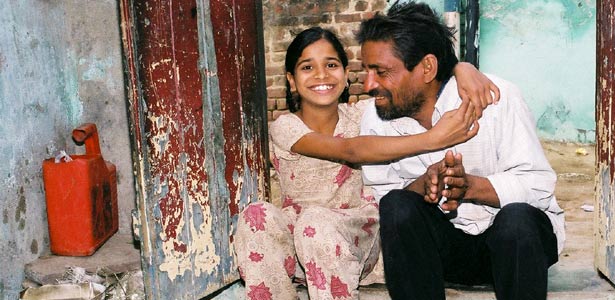
A schoolteacher fired after testing HIV-positive is embraced by his daughter_India_2004_photograph by W. Phillips

A Haitian woman takes the opportunity to be tested for HIV_Haiti_2007_photograph © Thony Belizaire

South African women reminding passing motorists that condom use drastically reduces the spread of HIV_2009
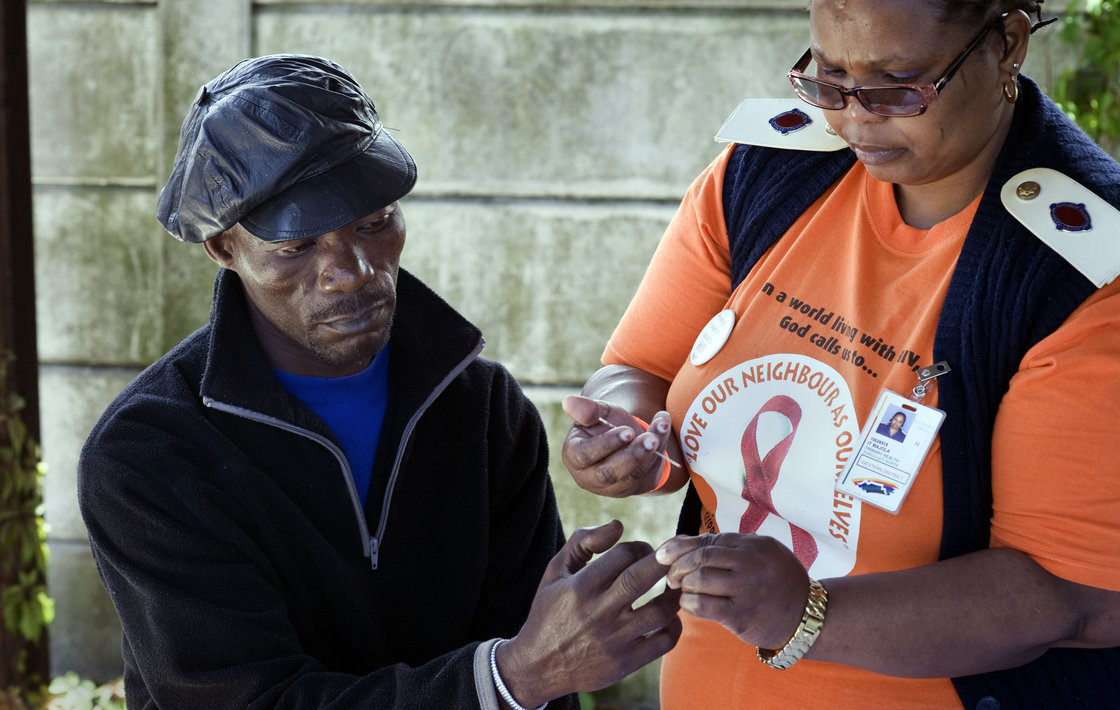
At a roadside HIV-testing table near Cape Town, South Africa, a nurse tests a man’s blood_2012_photograph by Rodger Bosch_While South Africa has the highest percentage worldwide of people living with HIV – about 6 million in a nation of 53 million – it also has the world’s largest treatment programme using Anti-Retroviral drugs distributed from several thousand health clinics.

South African Archbishop Emeritus Desmond Tutu has been a vigorous campaigner for access to treatment for TB, HIV and AIDS; he has also publicly promoted condom use for disease prevention, a most forward-looking approach for a Man of the Church.

HIV-positive activists at a rally in India

The International Medical Corps organized an advice and training programme for women at Mera Kachori Afghan Refugee Camp in Pakistan_December 2012

Fight HIV not People with HIV! Activist with banner outside the Russian Embassy in New York City_2013

In Guandong, China, some bold HIV-related policy decisions will come into play. In the wake of concerted advocacy efforts the ban on HIV-positive teachers in the classroom will be lifted_June 2013
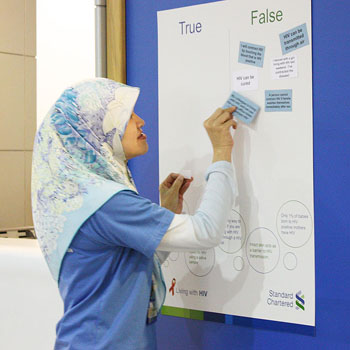
Standard Chartered Bank in Brunei Darussalam on the island of Borneo conducted a Living With HIV morning huddle with its staff. True or False statement cards were used to test staff’s knowledge of HIV facts_October 2013

Melbourne, Australia, November 30th 2013_World AIDS Day event
. . .
“This is my dedication and tribute to my patients who live with HIV. I will never be the same because of the way you have touched me, seeing how you continue to move forward every day in this society – with its preconceptions and misbeliefs.” [Paula V. Reid, April 2013]
.
Paula V. Reid (Nurse, North Carolina, U.S.A.)
“The Unique Woman”
.
Hello, I am special just like you.
Why should anyone feel differently?
Is it because I may be
a drug abuser,
a prostitute,
a homeless person,
or do you believe I’m a nobody?
Have you ever thought I could be
your mother,
your sister,
your friend?
Would that make a difference?
But in the whole scheme of things, does it really matter?
Because the most important issue is
I am a woman that needs your help.
Are you in a position to give me that help?
I need to be loved.
I need to be cherished.
I need to be cared for.
I face extraordinary challenges every day
and many times face them alone.
Some women have children,
spouses and loved ones to care for.
Where do I get the strength
and energy to keep going?
Don’t I need compassion?
That is why I am the unique woman.
I hear you talk about me in the hallway and stairwells.
“I have to see that HIV lady down the hall.”
“Oh boy, I am the next one up for an HIV case.”
Treat me the way you would want to be treated.
That is what I ask of you.
Don’t ask me: “How did you get it?”
unless it is relevant to my care for that day.
When I cry, cry with me.
When I laugh, laugh with me.
Then, when I am alone it won’t be so bad.
My walk is hard and the road is tough,
but with your help it could be gentler.
I am reaching out to you.
. . .
Rory Kilalea / ‘Murungu’ (Zimbabwe)
“Prayer”
.
I do not know how to pray.
I only know how to talk
at you, God.
As a stillness supreme
evading my eyes,
avoiding my ears.
Yet I know You are there.
It is only the reflection I miss.
. . .
Senator Ihenyen (Nigeria)
“Is It Because…”
…you did not kiss my hand
like you used to
when with so much love in my eyes
I held it up to your lips
beaming with the crystals in my heart –
Is it because I now have HIV?
When you poured the red wine into the glasses
you did not hold yours to my waiting lips
like you used to
so that – as transparent as the two glasses –
we could see the colours in our hearts –
Is it because I now have HIV –
Or because you never really loved me?
.
(2013)
. . .
Senator Ihenyen (Nigeria)
“Stranger in the Mirror
of My Life”
.
Before me is a mirror
a mirror beside my bed
away from the sun
burning brightly outside the window-blinds
in my darksome room.
For a moment
before the mirror
I stand to see the face of the victim
whose result returned a death sentence
after a test,
and another test, and yet another,
but they kept coming back
one and the same
like the torrent of tears that keep returning to your eyes
when the heart remains wet with worries
Wavering worries of one’s life walking away from the door,
as the wall clock thcks unrestrained, untouched, unconcerned,
like the footsteps of the world moving on,
unaffected, unmoved, unstirred.
In the mirror
I found a face
a certain face too afraid to look at me.
The face of a stranger –
a strange face sketched in the shadows of my unlit room,
against the fiery fingers of the sun flicking the window-blinds on a fateful morning
to irradiate my day.
I know this face hiding in the mirror isn’t me –
It couldn’t be me!
I looked straight into her eyes,
and it was then she looked back at me –
petrified, she crept back into the closet of her life.
I walk slowly and gently towards her,
and the stranger suddenly steps closer and closer towards me.
And when my feet froze on the floor
Upon the freezing fear that gripped me,
the stranger in the mirror suddenly startles – faint-hearted, intimidated –
this stranger is not me,
No, not me!
She is just a shadow –
the shadow of someone too locked-up in her closet to open up to me.
She is a stranger too steeped in shame to stand up to herself
and say:
“I’m Hannah,
I’m HIV-positive –
but see how beautiful life could be
when I open the window-blinds in my heart
and let the rays of the sun
overshadow the stranger in the mirror of my life.”
.
(2013)
.
“Is It Because…” and “Stranger in the Mirror of My Life” © Senator Ihenyen
From his just-released 2013 e-book Stranger in the Mirror of My Life: Poems for Everyone Affected by HIV/AIDS
. . .
“[The poem below] came as result of belonging to what is sometimes called a “sero-discordant couple” – one partner HIV-negative, the other positive. It’s not a difference easy to negotiate, as perhaps the poem makes clear. Early on, my new lover offered me the choice to avoid commitment, citing his condition; but I chose instead to go forward with the relationship – a decision I don’t regret. I believe that medical research will find a fully satisfactory treatment for HIV and that this epidemic will come to an end. When that happens – what joy it will bring.” (Alfred Corn)
.
Alfred Corn (born 1943, Georgia, U.S.A.)
“To a Lover who is HIV-positive” (2002)
.
Grief; and a hope
that springs from your intention
to forward projects as assertive
or lasting as flesh ever upholds.
.
Love; and a fear
that the so far implacable
cunning of a virus will smuggle away
substantial warmth, the face, the response
telling us who we are and might be.
.
Guilt; and bewilderment
that, through no special virtue of mine
or fault of yours, a shadowed affliction
overlooked me and settled on you. As if
all, always, got what was theirs.
.
Anger; and knowledge
that our venture won’t be joined
in perfect safety. Still, it’s better odds
than the risk of not feeling much at all.
Until you see yourself well in them,
Love, keep looking in my eyes.
. . .
Mike Kwambo (Nairobi, Kenya)
“Positive”
.
Positive…
the status of my HIV.
Negative…
your attitude towards me.
Nonchalant…
is how I choose to be.
Pretenders…
you allegedly sympathize with me.
True colours…
you show them when I turn my back.
Pity…
I surely do not need it right now.
Life…
I am full of it and I am living>
Understanding…
I have a condition, like anyone else.
Positive…
the status of my attitude.
Determination…
is filled inside of me.
Oh yes…
I have the will to live.
I am positive…
in every aspect
of the word!
.
(2009)
. . .
Tikum Mbah Azonga (Le Cameroun)
“Venez vous voir (La séropositivité n`est pas la mort)”
.
Si vous êtes séropositif, mon ami,
Ne désesperez pas
Surtout pas!
Venez nous voir même en catinimi.
.
Nous sommes là pour vous tous
Les activités de conseil –
Pour les amis comme vous au conseil,
C`est notre affaire de toujours.
.
Venez nous voir en toute confidentialité –
Nos sessions de counseling se font en douceur.
Vous n`est pas seul car d`autres sont venus sans rancoeur
Et sont partis satisfaits et pleins de vitalité.
.
(2009)
. . .
Tikum Mbah Azonga (Le Cameroun)
“Les confidences d’une mère (La transmission mère-enfant)”
.
Je m`appelle Marthe.
Je suis mère de trois enfants
Dont le dernier a huit mois,
Les trois autres – que Dieu soit loué!
Ont trois, cinq et sept ans –
Je me suis fait dépister a chaque grossesse.
.
Dieu merci, tout a été négative,
Mais si j`avais été testé positive
J`aurais suivi les conseils du médicin,
J`aurais pris des médicaments
Pour ne pas contaminer mon bébé.
.
Avais-je peur du test? Jamais!
Car il y a le counseling.
Alors, si vous êtes enceinte
Comme moi, faîtes
–vous dépister protéger votre bébé.
.
(2009)
. . .
Alassane Ndiaye (Sénégal)
“Sous Le Soleil De L’Amour”
.
Notre premier baiser
A cette saveur lactée
Ce parfum de rose
Aux vapeurs poivrées
.
Et tes lévres douces
Et fermes comme la chaire
Fraiche d’une pomme
Croustillantes comme le pain nouveau
Embrassent ma bouche
Suscitant le désir coupable
.
Tu es une étoile qui chaque jour
Brille dans le ciel trouble de mon existence
Un soleil qui transperce le voile sombre de mon esprit
Une source où s’abreuvent les âmes en peine
– Je t’aime.
.
(2000)
.
. . .
Ibrahim Coulibaly (Côte d’Ivoire)
“Ton Sourire et Ta Voix”
.
Mon regard dans le vent
Je vois dans le ciel sourire ta beauté
Qui fait voyager mon esprit
Dans le train merveilleux de ton charme.
En moi luit la lumière du bonheur
Car ta voix d’or
Ta voix aux mille couleurs
Fait couler sur moi des mélodies de miel.
L’harmonie de ton corps est un tableau
Que jamais ne pourra effacer la force des mots.
Si j’étais une larme dans tes yeux
Jusque sur tes lèvres je coulerai
Si une larme dans mes yeux tu étais
Jamais je ne pleurerais
De peur de te perdre.
.
(2013)
. . . . .
“El amor después del amor”: Derek Walcott
Posted: November 28, 2013 Filed under: Derek Walcott, English, Spanish | Tags: Poemas de dar gracias / agradecimiento, Poems of thankfulness / appreciation Comments Off on “El amor después del amor”: Derek Walcott
Derek Walcott (Poeta caribeño, nacido en Santa Lucía, 1930)
“El amor después del amor” (Traducción: Alex Jadad)
.
Llegará el día
en que, exultante,
te vas a saludar a ti mismo al llegar
a tu propia puerta, en tu propio espejo,
y cada uno sonreirá a la bienvenida del otro,
y dirá: Siéntate aquí. Come.
Otra vez amarás al extraño que fuiste para ti.
Dale vino. Dale pan. Devuélvele el corazón
a tu corazón, a ese extraño que te ha amado
toda tu vida, a quien ignoraste
por otro, y que te conoce de memoria.
Baja las cartas de amor de los estantes,
las fotos, las notas desesperadas,
arranca tu propia imagen del espejo.
Siéntate. Haz con tu vida un festín.
. . .
Derek Walcott (Saint Lucia, born 1930)
“Love After Love”
.
The time will come
when, with elation,
you will greet yourself arriving
at your own door, in your own mirror
and each will smile at the other’s welcome,
.
and say: Sit here. Eat.
You will love again the stranger who was your self.
Give wine. Give bread. Give back your heart
to itself, to the stranger who has loved you
.
all your life, whom you ignored
for another, who knows you by heart.
Take down the love letters from the bookshelf,
.
the photographs, the desperate notes,
peel your own image from the mirror.
Sit. Feast on your life.
. . .
“En Los Bosques, Cielos Salvajes”: poema de Andre Bagoo – traducido por Luis Vasquez La Roche
Posted: November 27, 2013 Filed under: Andre Bagoo, Spanish Comments Off on “En Los Bosques, Cielos Salvajes”: poema de Andre Bagoo – traducido por Luis Vasquez La Roche
Andre Bagoo (poeta y periodista, Trinidad y Tobago)
“En Los Bosques, Cielos Salvajes”
.
Douen, mírame a la cara. Dentro de ti
Eres una cara. Tan silencioso. Caen sobre mi
La sombra de la tumba en los pliegues de la madera que se encrespa,
Una tumba con suave aroma, astillados por el sol.
Florecemos atonalmente: años después de conocernos
Atraídos aquí a la ternura del algodón.
El castillo de Moloch llena con nosotros.
Ahora, dedos no tratan de huir
Pero acaricia las vainas que contienen nuestras almas
Y crecen como las ramas sexuadas por el sol.
Que ya no se molestan en advertir al mundo
Que la hendidura de un corazón es tan grande como la de un árbol
Que el corazón de un corazón es tan grande como el tiempo.
Douen, una cara dentro de mi.
. . .
Traducción del inglés al español: Luis Vasquez La Roche
Nacido en Caracas, Venezuela, en 1983, ahora Sr. Vasquez La Roche – un artista multimedia – es trinitense, y vive en la ciudad de Couva, Trinidad y Tobago.
Aquí: un video del poema
. . . . .
Poems for Remembrance Day: El Salvador’s Civil War
Posted: November 11, 2013 Filed under: English, Spanish | Tags: Remembrance Day poems Comments Off on Poems for Remembrance Day: El Salvador’s Civil War Families looking for “Disappeared” relatives in The Book of the Missing at the Human Rights Commission Office in San Salvador_early 1980s_photograph © Eli Reed
.
Carolyn Forché (born 1950, Detroit, Michigan, U.S.A.)
“The Colonel”
.
What you have heard is true. I was in his house. His wife carried
a tray of coffee and sugar. His daughter filed her nails, his son went
out for the night. There were daily papers, pet dogs, a pistol on the
cushion beside him. The moon swung bare on its black cord over
the house. On the television was a cop show. It was in English.
Broken bottles were embedded in the walls around the house to
scoop the kneecaps from a man’s legs or cut his hands to lace. On
the windows there were gratings like those in liquor stores. We had
dinner, rack of lamb, good wine, a gold bell was on the table for
calling the maid. The maid brought green mangoes, salt, a type of
bread. I was asked how I enjoyed the country. There was a brief
commercial in Spanish. His wife took everything away. There was
some talk then of how difficult it had become to govern. The parrot
said hello on the terrace. The colonel told it to shut up, and pushed
himself from the table. My friend said to me with his eyes: say
nothing. The colonel returned with a sack used to bring groceries
home. He spilled many human ears on the table. They were like
dried peach halves. There is no other way to say this. He took one
of them in his hands, shook it in our faces, dropped it into a water
glass. It came alive there. I am tired of fooling around he said. As
for the rights of anyone, tell your people they can go fuck them-
selves. He swept the ears to the floor with his arm and held the last
of his wine in the air. Something for your poetry, no? he said. Some
of the ears on the floor caught this scrap of his voice. Some of the
ears on the floor were pressed to the ground.
May 1978
. . .
Carolyn Forché (nacida en 1950, Detroit, Michigan, EE.UU.)
“El Coronel”
.
Lo que has oído es verdad. Estuve en su casa. Su mujer llevaba
una bandeja con café y azúcar. Su hija se limaba las uñas, su
hijo salió esa noche. Había periódicos, perritos, una pistola
sobre el cojín a su lado. La luna se mecía desnuda con su
cuerda negra encima de la casa. En la televisión daban un
programa policíaco. Era en inglés. Había botellas rotas
empotradas en la cerca que rodeaba la casa para arrancar las
rodilleras de un hombre o cortar sus manos en pedazos. En
las ventanas, rejas como las de las tiendas de licores. Cenamos
cordero a la parrilla, un buen vino; una campanilla de oro estaba
sobre la mesa para llamar a la criada. Ella nos trajo mangos
verdes, sal, un pan especial. Me preguntaron si me gustaba el
país. Hubo un breve anuncio en español. Su mejor se lo llevó
todo. Luego se habló sobre lo difícil que ahora resultaba
gobernar. El loro dijo “hola” en la terraza. El coronel le dijo
que se callara, y se levantó pesadamente de la mesa. Mi amigo
me dijo con sus ojos: no digas nada. El coronel volvió con
una bolsa de las que se usan para traer comestibles a casa.
Esparció muchas orejas humanas sobre la mesa. Eran como
orejones dulces partidos en dos. No hay otra manera de decirlo.
Cogió una en sus manos, la sacudió en nuestra presencia, y la
dejó caer en un vaso de agua. Allí revivió. Estoy hasta las
narices de tonterías, dijo. En cuanto a los derechos humanos,
dile a tu gente que se joda. Con su brazo tiró todas las orejas
al suelo y levantó en el aire el resto de su vino. Algo para tu
poesía, ¿no?, me dijo. Algunas orejas del suelo recogieron este
retazo de su voz. Algunas orejas del suelo fueron aplastadas
contra la tierra.
Mayo de 1978
.
Traducción del inglés: Noël Valis
. . .
Jaime Suárez Quemain (Salvadorean poet and journalist, 1949-1980)
“A Collective Shot”
.
In my country, sir,
men carry a padlock
on their mouths,
only when alone do they meditate,
shout and protest
because fear, sir,
is the gag
and the subtle padlock you control.
In my country, sir,
(I say mine because I want it to be mine)
even on the fence posts
you can see the longing
…they divide it, they rent it, they mortgage it,
they torture it, they kill it, they imprison it,
the newspapers declare there is total freedom, but
it’s only in the saying, sir, you know what I mean.
And it’s my country,
with its streets, its shadows, its volcanos,
its high-rises – dens of thieves –
whose children succeeded in escaping Malthus,
it’s my country, with its poets, its dreams and its roses.
And my country, sir,
is nearly a cadaver, a solitary phantom of the night,
and it agonizes,
and you, sire,
so impassive.
.
Translation from Spanish: Wilfredo Castaño
.
 National Policemen using an ice-cream vendor as a shield during a skirmish with demonstrators_San Salvador_early 1980s_photograph © Etienne Montes
 Arrest of an autorepair mechanic for failure to carry an ID card_San Salvador_early 1980s_photograph copyright John Hoagland
.
Jaime Suárez Quemain (poeta y periodista salvadoreño, 1949-1980)
“Un Disparo Colectivo”
.
En mi país, señor,
los hombres llevan un candado
en la boca,
sólo a solas
meditan, vociferan y protestan,
porque el miedo, señor,
es la mordaza
y el candado sutil que usted maneja.
En mi país, señor,
– digo mío porque lo quiero mío –
hasta en los postes
se mira la nostalgia,
lo parcelan, lo alquilan, lo hipotecan,
lo torturan, lo matan, lo encarcelan;
la prensa dice
que hay libertad completa,
es un decir, señor, usted lo sabe.
Y es así mi país,
con sus calles, sus sombras, sus volcanes,
sus grandes edificios – albergues de tahures –
sus niños que lograron
escapársele a Malthus,
sus poetas, sus sueños y sus rosas.
Y mi país, señor,
casi cadáver,
solitario fantasma de la noche,
agoniza… y usted:
tan impasible.
. . .
Alfonso Quijada Urías (Salvadorean poet, born 1940)
“Chronicle”
.
The dead man’s mother is buying flowers,
the village is lovely, yellow flowers bloom on the hills;
the day seems happy, though it’s really very sad,
nothing moves without God’s will.
And the police are buying flowers, which they’ll send
to the dead man’s mother,
and a humble righteous man sends a note of condolence
for the death of the man they killed.
The sun keeps shining on the hills,
then a man playing the saddest music feels sorry to be there
among those men much deader than the dead man himself
who is swallowing with his open eyes the flowering hills,
the village and the walls, where once he wrote: long lib liberti.
.
(1983)
.
Translation from Spanish: Barbara Paschke
. . .
Alfonso Quijada Urías (poeta salvadoreño, nacido 1940)
“Crónica”
.
La madre del muerto compra flores,
el pueble es bello, en los cerros crecen las flores amarillas;
parece un día alegre aunque realmente es muy triste,
nada se mueve sin la voluntad de Dios.
También los policías compran flores que mandaran a
la madre del muerto,
también un hombre bajito de conciencia manda
una nota en la que se conduele
por la muerte del muerto que mataron.
El sol sigue brillando sobre los cerros.
Entonces un hombre que toca la música mas triste
se conduele de estar allí
entre esos hombres mucho más muertos que el mismo muerto
que va tragando con sus ojos abiertos los cerros florecidos,
el pueblo y sus paredes, donde escribió una tarde: biva la libertá.
.
(1983)
 A Salvadorean government soldier with his automatic rifle and a sleeping toddler, after an anti-guerrilla manoeuvre in Cabañas province, El Salvador_May 1984
.
El Salvador, at the advent of the 20th century, was governed by presidents drawn from its oligarchical families; these had a cozy yet volatile relationship with the nation’s military. In the last decades of the 19th century, mass production at fincas (plantations) of coffee beans for export as the main cash crop was already being emphasized through forced elimination of communal land ownings belonging to campesinos (peasant farmers). In fact, a rural police force was created in 1912 to keep displaced campesinos in line. Social activist Farabundo Martí (1893-1932), one of the founders of the Communist Party of Central America, spearheaded a peasant uprising in 1932 which resulted in 30,000 deaths by the military – La Matanza (“The Slaughter”), as it came to be known. Decades of repression followed, then a coup d’état in1979 plus the 1980 assassination of human-rights advocate, Salvadorean Archbishop Oscar Romero, triggered a brutal civil war that lasted more than a decade. In the U.S.A., the newly elected President, Ronald Reagan, was determined to limit what he perceived as Communist and/or Leftist influence in Central America following the popular insurrection that overthrew the Somoza dictatorship in neighbouring Nicaragua, so the U.S. administration supported the Salvadorean junta with military and economic aid throughout the 1980s. During this time, death squads associated with the military terrorized civilians, sometimes massacring hundreds of people at a time, as at El Mozote * in December of 1981. All told, the war cost the lives of 75,000 civilian noncombatants – this, in a country of a mere 5.5 million people (1992 estimate.).
In the U.S.A. the general population was divided about Washington’s deepening engagement in El Salvador. University student committees and humanitarian church groups coalesced around the issue. While there were major demonstrations in U.S. cities protesting its government’s policies in the tiny Central American country – 1981 saw rallies in several U.S.cities, and one that grouped in front of the Pentagon in May that year had 20,000 participants calling for Solidarity with the People of El Salvador – the continued violence against el pueblo salvadoreño and the U.S. foreign policies that enabled it – made the unfolding “story” of the Salvadorean civil war of the 1980s one of the central parables of the Cold War era. Then, unexpectedly, in 1989, it was a crime truly capturing international attention – the murder by Salvadorean government forces of six Jesuit priests, along with their housekeeper and her daughter – that began to set in motion the wheels of peace. A United Nations Truth Commission investigated and this gradually led to a UN-brokered peace agreement, signed at Chapultepec Castle in México City in 1992. Today, there are free elections in El Salvador, and both sides of the conflict have been integrated into the political process. Yet the economy remains unstable—about 20 percent-dependent upon remittances sent home by Salvadoreans working in the U.S.A. and other countries.
.
* El Mozote, a hamlet in the mountainous Morazán region of El Salvador, was the scene of an orgy of killing by the Salvadorean Army’s Atlacatl Battalion (trained by the U.S.military) which had arrived in the vicinity searching for guerrillas of the FMLM (Farabundo Martí National Liberation Front). Campesinos had gathered in El Mozote seeking a safe haven. The Atlacatl forced everyone into the village square, where they separated the men from the women. The men were interrogated, tortured, then executed. The women and girls were rapedthen machine-gunned down. Children had their throats slit then their bodies were hung from trees. Every building – and numerous piles of bodies – were set ablaze. The entire civilian population of El Mozote and its peripheral farms was eliminated. Author Mark Hertsgaard, in his book On Bended Knee – a study of the media and the Reagan administration – wrote of the significance of the first New York Times and Washington Post reports (January 1982) of the massacre: “What made the El Mozote/Morazán massacre stories so threatening was that they repudiated the fundamental moral claim that undergirded U.S. policy. They suggested that what the United States was supporting in Central America was not democracy but repression. They therefore threatened to shift the political debate from means to ends, from how best to combat the supposed Communist threat—send US troops or merely US aid?—to why the U.S.A. was backing state terrorism in the first place.”
. . . . .
Poems for Remembrance Day: Siegfried Sassoon / El soldado sincero – y amargo: la poesía de Siegfried Sassoon
Posted: November 11, 2013 Filed under: English, Siegfried Sassoon, Spanish | Tags: Remembrance Day poems Comments Off on Poems for Remembrance Day: Siegfried Sassoon / El soldado sincero – y amargo: la poesía de Siegfried Sassoon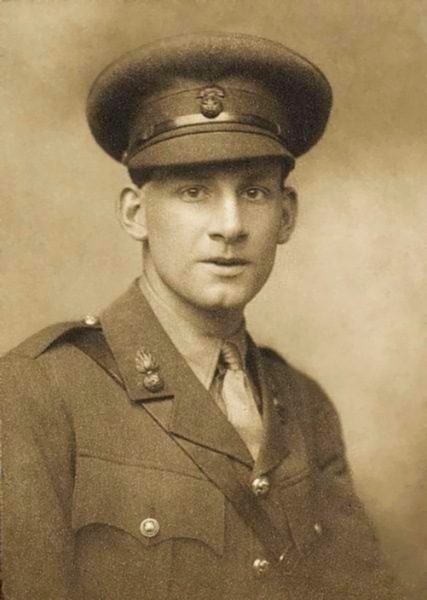 ZP_Siegfried Sassoon in 1915
.
Siegfried Sassoon (United Kingdom, 1886-1967) is best remembered for his angry and compassionate poems of the First World War (1914-1918). The sentimentality and jingoism of many War poets is entirely absent in Sassoon‘s poetic voice. His is a voice of intense feeling combined with cynicism. He wrote of the horror and brutality of trench warfare and contemptuously satirized generals, politicians, and churchmen for their incompetence and blind support of the War.
.
Siegfried Sassoon’s Declaration against The War (July 1917)
“I am making this statement as an act of wilful defiance of military authority, because I believe that the War is being deliberately prolonged by those who have the power to end it. I am a soldier, convinced that I am acting on behalf of soldiers. I believe that this War, on which I entered as a war of defence and liberation, has now become a war of aggression and conquest. I believe that the purpose for which I and my fellow soldiers entered upon this war should have been so clearly stated as to have made it impossible to change them, and that, had this been done, the objects which actuated us would now be attainable by negotiation. I have seen and endured the sufferings of the troops, and I can no longer be a party to prolong these sufferings for ends which I believe to be evil and unjust. I am not protesting against the conduct of the war, but against the political errors and insincerities for which the fighting men are being sacrificed. On behalf of those who are suffering now I make this protest against the deception which is being practised on them; also I believe that I may help to destroy the callous complacency with which the majority of those at home regard the contrivance of agonies which they do not, and which they have not, sufficient imagination to realize.”
. . .
Siegfried Sassoon (1886-1967)
“Suicide in the trenches”
.
I knew a simple soldier boy
Who grinned at life in empty joy,
Slept soundly through the lonesome dark,
And whistled early with the lark.
.
In winter trenches, cowed and glum,
With crumps and lice and lack of rum,
He put a bullet through his brain.
No one spoke of him again.
.
You smug-faced crowds with kindling eye
Who cheer when soldier lads march by,
Sneak home and pray you’ll never know
The hell where youth and laughter go.
. . .
“Suicidio en las trincheras”
.
Conocí a un soldado raso
que sonreía a la vida con alegría hueca,
dormía profundamente en la oscuridad solitaria
y silbaba temprano con la alondra.
En trincheras invernales, intimidado y triste,
con bombas y piojos y ron ausente,
se metió una bala en la sien.
Nadie volvió a hablar de él.
Vosotros, masas ceñudas de ojos incendiados
que vitoreáis cuando desfilan los soldados,
id a casa y rezad para no saber jamás
el infIerno al que la juventud y la risa van.
. . .
“Attack”
.
At dawn the ridge emerges massed and dun
In the wild purple of the glow’ring sun,
Smouldering through spouts of drifting smoke that shroud
The menacing scarred slope; and, one by one,
Tanks creep and topple forward to the wire.
The barrage roars and lifts. Then, clumsily bowed
With bombs and guns and shovels and battle-gear,
Men jostle and climb to, meet the bristling fire.
Lines of grey, muttering faces, masked with fear,
They leave their trenches, going over the top,
While time ticks blank and busy on their wrists,
And hope, with furtive eyes and grappling fists,
Flounders in mud. O Jesus, make it stop!
. . .
“Ataque”
.
Surge al alba enorme y parda la colina
en el salvaje sol púrpura de frente fruncida
ardiendo a través de columnas de humo a la deriva
envolviendo
la amenazadora pendiente arrasada; y, uno a uno,
los tanques se arrastran y vuelcan la alambrada.
La descarga ruge y se eleva. Después, torpemente agachados
con bombas y fusiles y palas y uniforme completo,
los hombres empujan y escalan para unirse al encrespado
fuego.
Filas de rostros grises, murmurantes, máscaras de miedo,
abandonan sus trincheras, pasando por la cima,
mientras el tiempo pasa en blanco apresurado en sus
muñecas
y aguardan, con ojos furtivos y puños cerrados,
luchando por flotar en el barro. ¡Oh Dios, haz que pare!
. . .
“The Investiture”
.
God with a Roll of Honour in His hand
Sits welcoming the heroes who have died,
While sorrowless angels ranked on either side
Stand easy in Elysium’s meadow-land.
Then you come shyly through the garden gate,
Wearing a blood-soaked bandage on your head;
And God says something kind because you’re dead,
And homesick, discontented with your fate.
.
If I were there we’d snowball Death with skulls;
Or ride away to hunt in Devil’s Wood
With ghosts of puppies that we walked of old.
But you’re alone; and solitude annuls
Our earthly jokes; and strangely wise and good
You roam forlorn along the streets of gold.
. . .
“La investidura”
.
Con una lista de caídos en Su mano, Dios
se sienta dando la bienvenida a los héroes que han muerto
mientras ángeles sin pena se alinean a cada lado
tranquilos en pie en los prados Elíseos.
Entonces, tú llegas tímido al jardín a través de las puertas
luciendo un vendaje empapado en sangre en la cabeza
y Dios dice algo amable porque estás muerto
y añoras tu casa, descontento con tu destino.
Si yo estuviera allí, lanzaríamos calaveras como bolas de
nieve a la muerte
o nos fugaríamos para cazar en el Bosque del Diablo
con fantasmas de cachorros que antaño paseamos.
Pero estás solo y la soledad anula
nuestras bromas terrenas; y extrañamente sabio y bueno
vagas desamparado por calles de oro.
. . .
From: Counter-Attack and Other Poems (1918)
Spanish translations © Eva Gallud Jurado (Salamanca, 2011)
De: Contraataque y otros poemas(1918)
Traducciones de Eva Gallud Jurado – derechos de autor (Salamanca, 2011)
. . . . .
Alicia Claudia González Maveroff: “Verdun”
Posted: October 21, 2013 Filed under: Alicia Claudia González Maveroff, English, Spanish, ZP Translator: Alexander Best Comments Off on Alicia Claudia González Maveroff: “Verdun”
Alicia Claudia González Maveroff
“Verdun”
.
And now that I’m going, now that I depart,
now that autumn will be my spring;
yes, now that I’m going, I know that for always
I will carry within me
this river, and this autumn red
in the pupil of my eye.
Well, now that I go, knowing that
tomorrow I journey through another river,
perhaps seeking that “bonanza” of calm
that rivers just don’t have because
they “walk fast – and keep moving…”;
in my soul the memory remains –
of the river, road, bridge;
those autumn colours – red, yellow –
painted among the trees.
I had already loved before, long before,
many landscapes, blue skies, other trees…
But – here today –
I loved this river, this bridge and this road;
these trees – red and yellow –
painted by autumn.
.
(Toronto, Canada, 21-10-2011)

. . .
“Verdun”
.
Y ahora que me voy, ahora que parto,
ahora que el otoño será mi primavera,
ahora que me voy, sé que por siempre,
seguro llevaré este río en mi memoria
y el rojo del otoño en mis pupilas.
Bien, ahora que me voy, sabiendo
que caminaré mañana en otro río,
tal vez lo haga buscando yo “la calma”
que el agua de los ríos no la tiene,
porque “caminan fuerte y siempre pasan”.
Más quedan en mi alma, los recuerdos,
el río, el camino, el puente
el rojo y amarillo del otoño,
pintado entre los árboles.
Yo ya había amado antes:
amé muchos paisajes, hace tiempo,
amé cielos celestes y otros árboles…
Pero hoy aquí, yo amé:
este rió, este puente, este camino
y estos árboles de rojo y amarillo
pintados en otoño…
.
(Toronto, Canadá, 21-10-2011)
. . .
Preguntamos al poeta: Que es el significado del título del poema?
Y ella nos dijo:
Te comento que el poema se llama “Verdun” por el barrio de Montréal, Québec. Allí viví cuando visité Canadá y me enamoré de este país. El poema lo escribí en Toronto, mientras paseaba, para dejárselo a la amiga que visité. Esta es la historia de porque el nombre. Caminábamos cerca del río San Lorenzo, en Verdun, mirando el río, pasábamos por un puente rojo y gris y los árboles otoñales estaban pintados de rojo y amarillo, como describo en el poema. En el final del mismo dice “…yo ya había amado antes: amé muchos paisajes hace tiempo, amé cielos celestes y otros árboles…”
Aquí hago referencia a otro sitio, en la otra punta del mapa; hablo de otro río – el “Bug” en Polonia, donde he estado muchas veces (es uno de “mis sitios en el mundo” – y tengo algunos otros en mi corazón.) Allí también caminaba junto al río, en la campiña polaca, cerca de hermosos bosques y con bellos cielos, casas campesinas con techos negros de paja (algo bellisímo), diferente para mí que vivo en Buenos Aires, en el “Fin del Mundo” (como dice el Papa Francisco.) Pero ya entonces mis amigos polacos me decían que yo venia “del fin del mundo”, aunque al estar allí en Polonia, yo en broma les decía que yo estaba visitando “el fin del mundo…” Te confieso que no he encontrado el fin del mundo, por más que recorro no logro hallarlo. Curiosamente, el nombre de este río polaco que llega desde Rusia a Polonia quiere decir Dios, tal vez sea Él quien me lleve por estos lugares…¿? Lo cierto es que son lugares que están en mí por lo que he podido experimentar…
. . .
We asked the poet to talk about the name of her poem – Verdun. Here’s what Alicia told us:
“Verdun is after the Montreal borough of the same name. I lived there when I visited Canada – and fell in love with the country. The poem itself I wrote in Toronto, while passing through, to leave for the friend I’d visited. … So, in Montreal (Verdun) we were walking alongside the St. Lawrence River and we passed by a red and grey bridge, and there were autumn trees with leaves all yellow and red. After seeing this there came into my mind these words: “I had already loved before, long before, many landscapes, blue skies, other trees…” I was thinking then of another place, another point, on the map, and another river – the River “Bug” in Poland. I’ve been there many times – it’s one of my special places in this world – and I have a few others, too, in my heart. So I was walking along the “Bug”, in the Polish countryside, close to lovely woods, and a pretty sky overhead, and the rural houses with their black straw roofs – something so beautiful – and quite different for someone like me who lives in Buenos Aires (at “the End of the Earth”, as Pope Francis says.) I confess that I’ve yet to encounter “the End of the Earth”; as much as I’ve traversed the globe I haven’t attained such a feat! Oddly, the name of that Polish river – “Bug” – that flows between Russia and Poland – is supposed to mean “God”…and maybe it’s He who carries me to all these various places…? One thing’s certain: these places are “within me”, too, and I’ve been able to experiment with them…”
. . .
Translations from Spanish into English: Alexander Best

 Zócalo Poets