Alicia Claudia González Maveroff: Time / Tiempo
Posted: July 7, 2014 Filed under: Alicia Claudia González Maveroff, English, Spanish, ZP Translator: Alexander Best Comments Off on Alicia Claudia González Maveroff: Time / Tiempo
Alicia Claudia González Maveroff
Time
.
And Time passes by,
and that which one didn’t make happen
or say in the moment
can no longer be expressed,
for already its time has come and gone – and is lost.
.
And so, in this way you come to understand
that it’s not enough to just let Time slip by:
to lose opportunities;
to live without saying what it is one feels,
to live without allowing oneself happiness in its time.
.
You take the chance then to speak so as to
not lose any more Time.
And you know what? It’s not difficult to do this
– looking yourself in the eyes –
because it isn’t human frailty to describe your feelings.
.
There will be many more times when one says nothing,
as if it – what one longed to say – were not certain…
And Life passes by,
the same as I told you
Time passes by.
.
And one day, without your realizing it,
you will come and you won’t find me,
and that which you
couldn’t find the words for / didn’t know how to say,
well – you’ll’ve run out of Time…
Buenos Aires, 22/06/14
. . .
Alicia Claudia González Maveroff
Tiempo
.
Y el tiempo pasa
y lo que no se hizo
o dijo en su momento,
no puede ya expresarse,
pues ya perdió
su tiempo.
Y así comprendes
que no es adecuado
dejar pasar
el tiempo,
perder las oportunidades,
vivir sin permitirse decir
lo que se siente y ser feliz
a tiempo.
Y te arriesgas entonces
a hablar, a no perder
más tiempo.
Sabes, no es difícil hacerlo,
mirándose a los ojos.
Que no es fragilidad
describir sentimientos.
Más muchas veces,
no se dice nada, como si esto
no fuera cierto…
Y entonces la vida pasa,
como te cuento pasa
el tiempo.
Y un día sin saberlo,
vienes y no me encuentras,
y aquello que no se pudo
o no se supo decir,
ya no tiene
más tiempo…
Buenos Aires, 22/06/14
. . .
English interpretation from the original Spanish: Alexander Best
. . . . .
La poesía bíblica: Mateo 11: 28-30 / The Good Book’s poetry: Matthew 11: 28-30
Posted: April 20, 2014 Filed under: English, Spanish | Tags: Easter poems, Poemas para Domingo de Pascua Comments Off on La poesía bíblica: Mateo 11: 28-30 / The Good Book’s poetry: Matthew 11: 28-30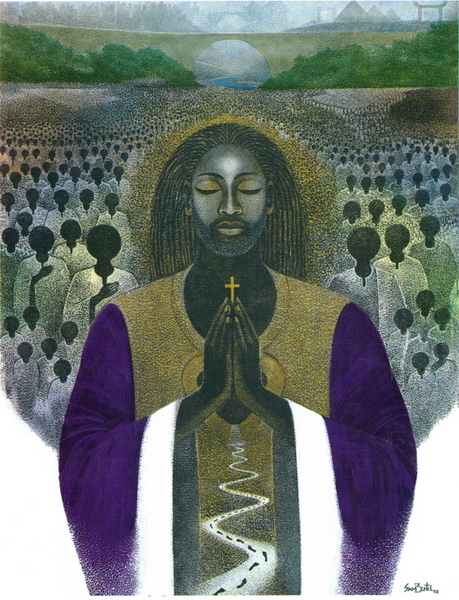
Footsteps to Jesus_Pisadas a Jesús
Matthew 11: 28–30 (King James Version)
Come unto me, all ye that labour and are heavy laden, and I will give you rest.
Take my yoke upon you, and learn of me; for I am meek and lowly in heart: and ye shall find rest unto your souls.
For my yoke is easy, and my burden is light.
. . .
Mateo 11: 28–30 (Reina-Valera)
Venid a mí, todos los que estáis trabajados y cargados, y yo os haré descansar.
Llevad mi yugo sobre vosotros y aprended de mí, que soy manso y humilde de corazón, y hallaréis descanso para vuestras almas.
Porque mi yugo es fácil, y ligera mi carga.
. . .

Reina-Valera_primera página de la Biblia del Oso_ traducción al castellano de Casiodoro de Reyna_Basilea_1569
. . .
. . . . .
Lewis Carroll: A Song of Love / Canción de Amor
Posted: April 20, 2014 Filed under: A FEW FAVOURITES / UNA MUESTRA DE FAVORITOS, English, Lewis Carroll, Lewis Carroll: Canción de Amor / A Song of Love, Spanish, ZP Translator: Alexander Best | Tags: Easter Sunday poems, Poemas para Domingo de Pascua Comments Off on Lewis Carroll: A Song of Love / Canción de Amor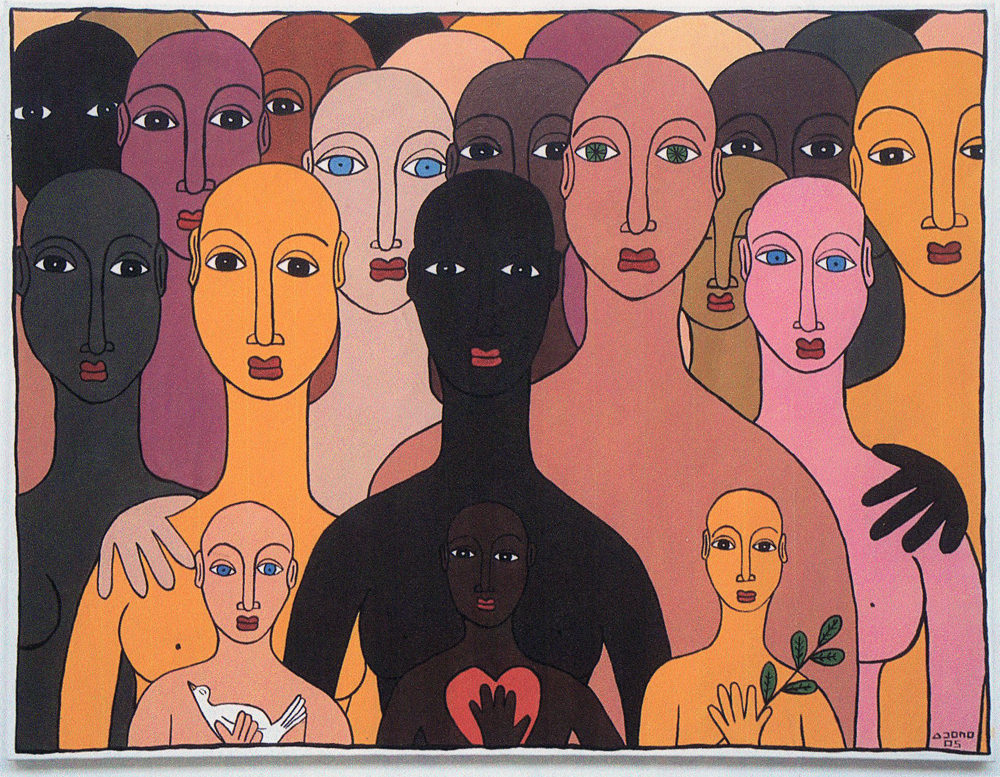
Un Mundo Mejor_derechos de autor Marie Sabal- Lecco, artista de Camerún_Un Monde Meilleur_droit dauteur Marie Sabal- Lecco, artiste camerounais_A Better World_ copyright Cameroonian artist Marie Sabal-Lecco
John 13: 34
A new commandment I give unto you: That ye love one another. As I have loved you, so ye also are to love one another.
Lewis Carroll (1832-1898)
A Song of Love
.
Say, what is the spell, when her fledglings are cheeping,
That lures the bird home to her nest?
Or wakes the tired mother, whose infant is weeping,
To cuddle and croon it to rest?
What the magic that charms the glad babe in her arms,
Till it coos with the voice of a dove?
‘Tis a secret, and so let us whisper it low
– And the name of the secret is Love.
For I think it is Love,
For I feel it is Love,
For I’m sure it is nothing but Love.
.
Say, whence is the voice that when anger is burning,
Bids the whirl of the tempest to cease?
That stirs the vexed soul with an aching – a yearning
For the brotherly hand-grip of peace?
Whence the music that fills all our being – that thrills
Around us, beneath, and above?
‘Tis a secret: none knows how it comes, or it goes
– But the name of the secret is Love.
For I think it is Love,
For I feel it is Love,
For I’m sure it is nothing but Love.
.
Say, whose is the skill that paints valley and hill,
Like a picture so fair to the sight?
That flecks the green meadow with sunshine and shadow,
Till the little lambs leap with delight?
‘Tis a secret untold to hearts cruel and cold,
Though ’tis sung by the angels above,
In notes that ring clear for the ears that can hear
– And the name of the secret is Love.
For I think it is Love,
For I feel it is Love,
For I’m sure it is nothing but Love.
. . .
Juan 13: 34
Un mandamiento nuevo os doy: Que os améis unos a otros; como yo os he amado, que también os améis unos a otros.
Canción de Amor
.
Dîgame, ¿qué es la magia que atrae a su nido
el pájaro cuando están piando sus polluelos?
¿O lo que puede despertar a la madre soñolienta
para canturrear y acurrucarse a su bebé que llora?
¿Cuál es el encanto que fascina el niño contento en sus brazos
hasta que arrulla con la voz de una paloma?
Es un secreto, pues cuchicheémoslo en voz baja
– Y el nombre del secreto es Amor.
Porque pienso es Amor,
Me siento que es el Amor,
si, ‘stoy seguro que ES el Amor.
.
Dígame, ¿de dónde llega esa voz cuando quema el enojo,
ella que ordena cesar el tumulto del torbellino?
¿O qué conmueve el alma exaltada con un anhelo
por la mano fraternal de la Paz?
¿De dónde llega la música que llena todo nuestro ser –
que nos anima, alrededor, abajo y arriba?
Es un secreto, y nadie no entiende como llega o va
– Pero su nombre-secreto: Amor.
Porque pienso es Amor,
Me siento que es el Amor,
si, ‘stoy seguro que ES el Amor.
.
Dígame, ¿de quién viene esa habilidad que pinta valle y colina,
como un dibujo tan hermoso mirar?
¿Qué motea el campo con sol y con sombra,
hasta que los corderos saltan con deleite?
Es un secreto no dicho a los corazones fríos,
aunque está cantado por los angeles arriba,
con notas cristalinos para los oídos que pueden oírlas
– Y el nombre del secreto es Amor.
Porque pienso es Amor,
Me siento que es el Amor,
si, ‘stoy seguro que ES el Amor.
. . .
Marie Sabal-Lecco, the Paris-based Cameroonian artist whose work is featured above, tells us: “Je représente sur mes toiles un éternel message de paix, de tolérance, du vivre ensemble, du respect de l’autre, de l’amour. Bonnes fêtes de Pâques!” (I represent in my canvasses an eternal message of peace, tolerance, of living together, of respect for one another, of love. A Happy Easter to you!)
Marie Sabal-Lecco, un artista de Camerún que vive en París – (su pintura está arriba) – nos dice: “Quiero mostrar en mis lienzos el mensaje eternal de la Paz, de la tolerancia, de vivir juntos, del respeto del uno al otro, y del Amor. ¡Feliz Pascua!”
. . . . .
Poemas para Domingo de Pascua: Emily Dickinson: No es La Conclusión este Mundo / This World is not Conclusion + Octavio Paz: Hermandad / Brotherhood
Posted: April 20, 2014 Filed under: Emily Dickinson, English, Octavio Paz, Spanish, ZP Translator: Alexander Best | Tags: Easter Sunday poems, Poemas para Domingo de Pascua Comments Off on Poemas para Domingo de Pascua: Emily Dickinson: No es La Conclusión este Mundo / This World is not Conclusion + Octavio Paz: Hermandad / Brotherhood
Emily Dickinson (1830-1886)
This World is not Conclusion
.
This World is not Conclusion.
A Species stands beyond—
Invisible, as Music—
But positive, as Sound—
It beckons, and it baffles—
Philosophy—don’t know—
And through a Riddle, at the last—
Sagacity, must go—
To guess it, puzzles scholars—
To gain it, Men have borne
Contempt of Generations
And Crucifixion, shown—
Faith slips—and laughs, and rallies—
Blushes, if any see—
Plucks at a twig of Evidence—
And asks a Vane, the way—
Much Gesture, from the Pulpit—
Strong Hallelujahs roll—
Narcotics cannot still the Tooth
That nibbles at the soul—
. . .
No es La Conclusión este Mundo (Traducción del inglés: Alexander Best)
.
No es La Conclusión este Mundo;
Un Especie se ubica más allá de aquí;
Como la Música, invisible,
Pero positivo como Sonido.
Atrae y confunde,
La Ética no lo entiende;
Y por Enigma, y al fin,
Debe cruzar la Sagacidad.
.
Advinarlo deja perplejo los sabios,
Ganarlo hay Hombres que han soportado
El Desprecio de Generaciones
– Y Crucifixión.
Fe resbala – y ríe y se reanima –
Y se sonroja (si alguien le mire);
Arranca una ramita de Inicio,
Y pregunta de una Veleta el camino.
Mucho Gesto del Púlpito,
Surgen Aleluyas fuertes;
Narcóticos no pueden calmar el Diente
Que mordisquea el Alma.

Octavio Paz (1914-1998)
Hermandad: Homenaje a Claudio Ptolomeo
.
Soy hombre: duro poco
y es enorme la noche.
Pero miro hacia arriba:
las estrellas escriben.
Sin entender comprendo:
también soy escritura
y en este mismo instante
alguien me deletrea.
. . .
Brotherhood: an homage to Claudius Ptolemy
(translated from Spanish by Eliot Weinberger)
.
I am a man: little do I last
and the night is enormous.
But I look up:
the stars write.
Unknowing I understand:
I too am written,
and at this very moment
someone spells me out.
. . . . .
Poemas para Domingo de Pascua: E.E. Cummings, Arthur Stringer / Poems for Easter Sunday
Posted: April 20, 2014 Filed under: Arthur Stringer, E.E. Cummings, English, Spanish, ZP Translator: Alexander Best | Tags: Easter Sunday poems, Poemas para Domingo de Pascua Comments Off on Poemas para Domingo de Pascua: E.E. Cummings, Arthur Stringer / Poems for Easter Sunday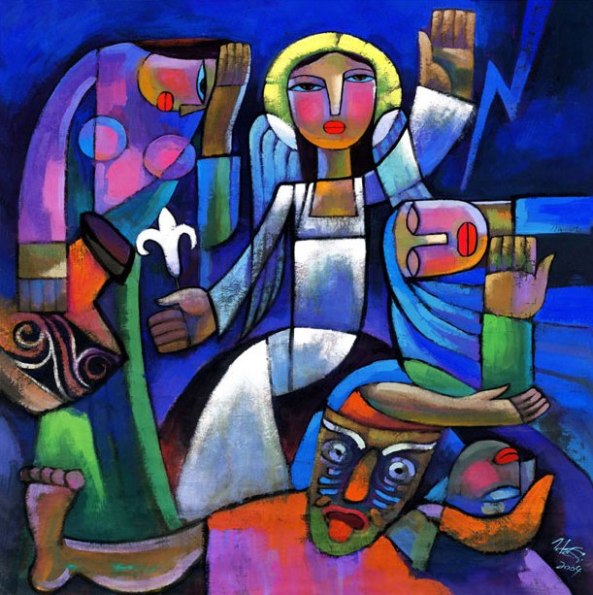
E.E. Cummings (1894-1962)
i thank you God for most this amazing
.
i thank you God for most this amazing
day: for the leaping greenly spirits of trees
and a blue true dream of sky; and for everything
which is natural which is infinite which is yes
.
(i who have died am alive again today,
and this is the sun’s birthday; this is the birth
day of life and of love and wings: and of the gay
great happening illimitably earth)
.
how should tasting touching hearing seeing
breathing any – lifted from the no
of all nothing – human merely being
doubt unimaginable You?
.
(now the ears of my ears awake and
now the eyes of my eyes are opened)
. . .
te agradezco Dios por el más esta asombrosa
.
te agradezco Dios por el más esta asombrosa
mañana: por los brincandos verde-deramente espíritus de árboles
y un azul auténtico sueño de cielo; y por todo
lo que es natural que es infinito que es sí
.
(yo que he muerto estoy viviendo de nuevo hoy,
y ésto es el aniversario del sol; ésto es el nacimiento
día de la vida y del amor y de alas: y de la tierra
alegre-grande-ocurriendo-sin límites)
.
¿cómo es posible que tocando-oyendo-viendo
respirando alguien – elevado del no
del todo-nada – simplemente ser humano
dude Tú el inimaginable?
.
(ahora los oídos de mis oídos se despiertan y
ahora los ojos de mis ojos están abiertos)
. . .
Arthur Stringer (1874-1950)
The Final Lesson
.
I have sought Beauty through the dust of strife,
I have sought Meaning for the ancient ache,
And Music in the grinding wheels of Life;
Long have I sought, and little found as yet
Beyond this truth: that Love alone can make
Earth beautiful, and Life without regret.
. . .
La lección final
.
He buscado la Belleza por el polvo de lucha,
He buscado Significado por el anhelo antiguo,
Y Música en las ruedas que giran de la Vida;
Largo tiempo he estado buscando – y poco he descubierto hasta ahora
Excepto esta verdad: que sólo el Amor puede hacer bella
La Tierra – y una Vida sin arrepentimiento.
.
Image: He Qi is a contemporary painter of religious themes. Here a triumphant angel announces that Our Redeemer Liveth. The women are not especially awake yet, and seem unaware of what has happened. They still mourn, but the angel tells them that the time of grief is over. Instead of a military-style banner often held by Christ in such triumphal depictions, He Qi has his angel bearing a luminous lily – symbol of purity and peace.
. . . . .
Gwendolyn Brooks: La Verdad / Truth
Posted: April 19, 2014 Filed under: English, Gwendolyn Brooks, Spanish, ZP Translator: Alexander Best | Tags: Poema para Sábado Santo Comments Off on Gwendolyn Brooks: La Verdad / Truth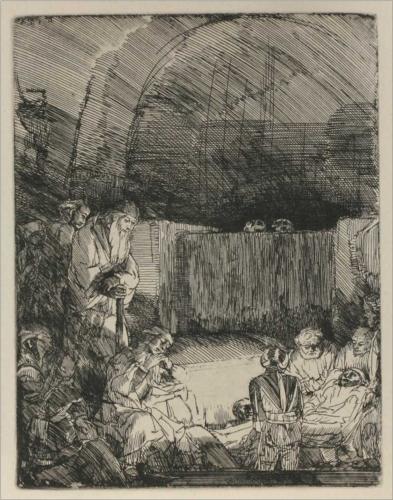
Rembrandt van Rijn_Jesús sepultado_Jesus Entombed_etching_1654
Gwendolyn Brooks (1917-2000)
Truth
.
And if sun comes
How shall we greet him?
Shall we not dread him,
Shall we not fear him
After so lengthy a
Session with shade?
Though we have wept for him,
Though we have prayed
All through the night-years—
What if we wake one shimmering morning to
Hear the fierce hammering
Of his firm knuckles
Hard on the door?
Shall we not shudder?—
Shall we not flee
Into the shelter, the dear thick shelter
Of the familiar
Propitious haze?
Sweet is it, sweet is it
To sleep in the coolness
Of snug unawareness.
The dark hangs heavily
Over the eyes.
. . .
La Verdad
.
Y si el sol viene,
¿cómo debemos saludarle?
Deberíamos temer a él,
Deberíamos amilanarse por él,
después de una sesión larga con la sombra?
.
Aunque hemos llorado por él,
Aunque hemos rezar
Durante los años de noche
– ¿Qué pasará si nos despertamos en una mañana reluciente para
Oír el martilleo feroz
De sus nudillos firmes,
Fuerte en la puerta?
.
¿Deberíamos temblar,
Deberíamos huir
Hacia el querido albergue grueso
Que es la niebla conocida y propicia?
.
Qué dulzura – cómo es dulce –
Dormir en el fresco
De un desconocimiento cómodo.
.
La oscuridad cuelga pesadamente
Sobre los ojos.
. . . . .
Poemas para Viernes Santo: Stevenson, Browning, Levertov / Poems for Good Friday
Posted: April 18, 2014 Filed under: Denise Levertov, English, Robert Browning, Robert Louis Stevenson, Spanish, ZP Translator: Alexander Best | Tags: Poemas para Viernes Santo, Poems for Good Friday Comments Off on Poemas para Viernes Santo: Stevenson, Browning, Levertov / Poems for Good Friday

Paul Gauguin_Christ on The Mount of Olives (Gethsamane)_oil on canvas, 1889
Robert Louis Stevenson (1850-1894)
Evensong
.
The embers of the day are red
Beyond the murky hill.
The kitchen smokes; the bed
In the darkling house is spread:
The great sky darkens overhead,
And the great woods are shrill.
.
So far I have been led,
Lord, by Thy will:
So far I have followed, Lord, and wondered still.
The breeze from the embalmed land
Blows sudden towards the shore,
And claps my cottage door.
I hear the signal, Lord – I understand.
The night at Thy command
Comes. I will eat and sleep and will not question more.
. . .
Vísperas
.
Las brasas del día son rojas,
Más allá de la colina turbia.
La cocina humea; el lecho de la casa oscura está hecho:
El cielo inmenso se oscurece por encima,
Y viene del gran bosque un chirrido chillón.
.
Hasta ahora, Señor, he sido guiado por Tu voluntad:
Tan larga la distancia, Señor, he seguido a Tí,
Y aún me pregunté.
La brisa del terreno embalsamado
Sopla hacia la orilla, de repente,
Y abofetea la puerta de mi casita.
Oigo la señal, Mi Señor – y la entiendo.
La Noche llega – de Tu dominio.
Comeré y dormiré y no preguntaré más.
. . .
Denise Levertov (1923-1997)
Suspended
.
I had grasped God’s garment in the void
but my hand slipped
on the rich silk of it.
The “everlasting arms” my sister loved to remember
must have upheld my leaden weight
from falling, even so;
for though I claw at empty air and feel
nothing – no embrace –
I have not plummeted.
. . .
Colgado
.
Yo había agarrado en el vacío el traje de Dios
pero mi mano resbaló en la seda exquisita.
“Los brazos eternos” que mi hermana amaba recordar
debieron haber soportado la carga pesada de mí
para que no me cayera;
porque aunque araño el aire vacío y me siento
nada – ningún abrazo –
no me he desplomado.
. . .
Robert Browning (1812-1889)
Faith
.
O never star
Was lost; here
We all aspire to heaven and there is heaven
Above us.
If I stoop
Into a dark tremendous sea of cloud,
It is but for a time; I press God’s lamp
Close to my breast; its splendour soon or late
Will pierce the gloom. I shall emerge some day.
. . .
Fe
.
Ah, nunca fue perdido una estrella; aquí
Aspiramos a llegar al Cielo y existe allá
Por encima de nosotros.
Si me encorvo en un mar de nubes,
Negro y tremendo,
Sólo es por un breve tiempo; estrecho la linterna de Dios
Contra mi pecho; y el esplendor de su luz
Perforará el tiempo plomizo – tarde o temprano.
Algún día me apareceré.
. . . . .
Seamus Heaney: ”El Subterráneo”: versión de Óscar Paúl Castro
Posted: March 17, 2014 Filed under: English, Seamus Heaney, Spanish Comments Off on Seamus Heaney: ”El Subterráneo”: versión de Óscar Paúl Castro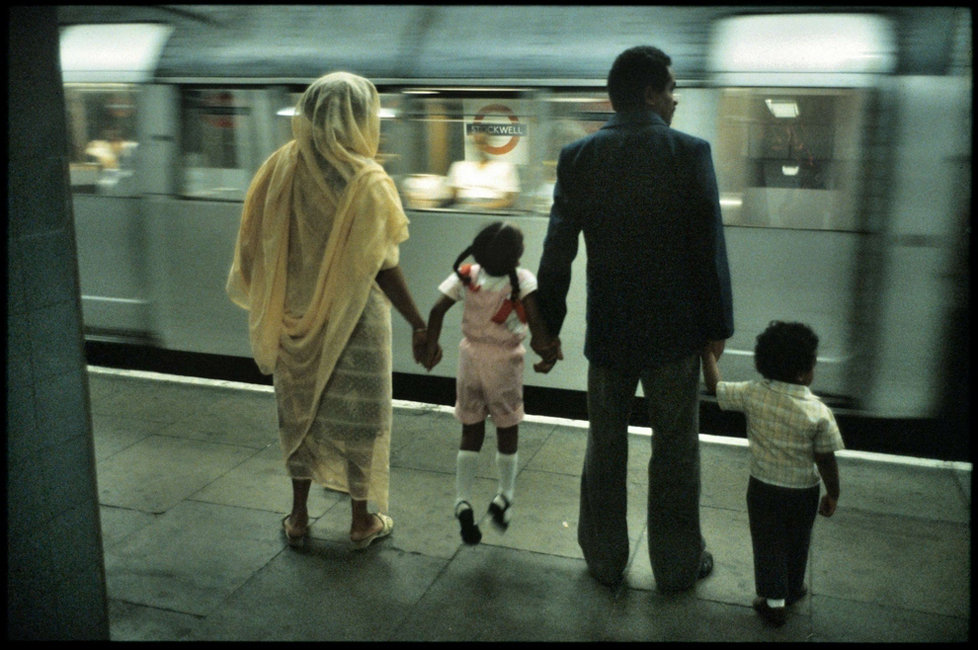
1980s photograph from Bob Mazzer’s decades-long “camera journal” about London’s subway system a.k.a. The Underground_Bob Mazzer, fotógrafo_foto del Metro o Subterráneo de Londres, años 1980
Seamus Heaney (Poeta irlandés, 1939-2013)
”El Subterráneo” (versión de Óscar Paúl Castro)
.
Corríamos envueltos por la bóveda del túnel,
Tú ibas adelante, llevabas puesto tu abrigo bueno,
Y yo, como un ágil dios, ya casi lograba darte alcance
Cuando repentinamente viraste al advertir una brizna de hierba
.
O alguna una blanca flor reciénnacida, jaspeada de rojo,
Tu abrigo se plegó con violencia y uno tras otro
Se desprendieron los botones, marcando el camino
Que va del Subterráneo al Albert Hall.
.
Era nuestra luna de miel, pasamos el día vagando y se nos hizo
Tarde para el concierto de los Proms, el eco de nuestros pasos aún
Muere en ese corredor; por eso ahora vuelvo, como Hansel bajo la luz
De la luna desandando el camino de piedras, recogiendo botón tras botón
.
Hasta llegar a esta fría estación iluminada con luz artificial
De la que ya han partido todos los trenes, las desnudas vías ―como mi ser―
Están tensas y empapadas, toda mi atención concentrada en el eco
De tus pasos tras de mí, la maldición caerá sobre nosotros si miro atrás.
. . .
Óscar Paúl Castro, traductor (Culiacán, México,1979): Sr. Castro ha publicado traducciones en las revistas TextoS, Punto de Partida, Periódico de Poesía de la UNAM, en Refundación, Espiral y Timonel.
.

Bob Mazzer, photographer_from his London subway series, 1980s_Bob Mazzer, fotógrafo_foto del Metro o Subterráneo de Londres, años 1980
”The Underground” (1984)
.
There we were in the vaulted tunnel running,
You in your going-away coat speeding ahead
And me, me then like a fleet god gaining
Upon you before you turned to a reed
.
Or some new white flower japped with crimson
As the coat flapped wild and button after button
Sprang off and fell in a trail
Between the Underground and the Albert Hall.
.
Honeymooning, moonlighting, late for the Proms,
Our echoes die in that corridor and now
I come as Hansel came on the moonlit stones
Retracing the path back, lifting the buttons
.
To end up in a draughty lamplit station
After the trains have gone, the wet track
Bared and tensed as I am, all attention
For your step following and damned if I look back.
. . . . .
Seamus Heaney: “Ruedas dentro de ruedas”: versión de Miguel A. Montezanti
Posted: March 17, 2014 Filed under: English, Seamus Heaney, Spanish Comments Off on Seamus Heaney: “Ruedas dentro de ruedas”: versión de Miguel A. Montezanti
Un extracto del comentario por el traductor Miguel A. Montezanti:
”La traducción debería presentarse por sí sola, criatura libre…Pero diré que Seamus Heaney es un poeta difícil de traducir: apenas puede aspirarse a reproducir lo que dice, lo cual en poesía, como se sabe, puede no ser lo más importante. [Importan mucho] su autorreferencialidad lingüística, asentada sobre la dialéctica sutil entre el gaélico y el inglés, su riqueza sonora, y su rescate de formas sucintas pero complejas…”
.
Seamus Heaney
(nacido en “Mossbawn”, Castledawson, Condado de Londonderry, Irlanda del Norte, 1939-2013)
Ruedas dentro de ruedas
I.
La primera captación en serio que tuve de las cosas.
fue cuando aprendí el arte de pedalear
(con la mano) una bici, colocada al revés
e impulsé la rueda trasera preternaturalmente ligero.
Yo amaba la desaparición de los rayos
el modo como el hueco entre el eje y la llanta
susurraba transparente. Si le arrojabas
una papa, el aire enmarcado en el aro
revolvía papilla y te la salpicaba en la cara;
si lo tocabas con una paja, la pajita chasqueaba.
Algo acerca del modo de esos impulsos pedaleros
funcionaba al principio muy palpablemente en tu contra
y luego comenzaba a impeler tu mano hacia delante
hacia un envión nuevo…; todo eso entraba en mí
como un acceso de poder libre, como si la fe
capturara y revolviera los objetos de la fe
en una órbita lindera con la añoranza.
II
Pero lo bastante no era bastante. ¿Quién ha visto
alguna vez el límite de lo otorgado?
En unos campos más allá de casa había un pozo
(lo llamábamos “El pozo”. Era más que un agujero
con agua, con espinos pequeños
de un lado, y del otro, un fango cenagoso
todo pisoteado por ganado).
También amaba eso. Amaba el olor turbio,
la vida sumidera del lugar como aceite viejo de cadena.
Allí, acto seguido, llevé la bicicleta.
coloqué el asiento y el manubrio
en el fondo suave, hice que las cubiertas
tocaran la superficie del agua y luego di vuelta los pedales
hasta que, como una rueda de molino arrojando con el pedaleo,
(pero aquí a la inversa y azotando una cola de caballo)
la rueda trasera sumergida, refrescando el mundo
revolvía un rociado y espuma de suciedad ante mis ojos
y me bañaba con mis propios barros regenerados.
Durante semanas hice un nimbo de viejo destello.
Luego el eje se engranó, las llantas se oxidaron, la cadena se cortó.
III
Nada igualó esa ocasión después de aquello
hasta que en el circo, entre tambores y spots,
chicas vaqueras giraron, cada una inmaculada
en el centro inmóvil de un lazo.
Perpetuum mobile. Pura pirueta
Acróbatas, funambuleros. Volteretas. Stet!
. . .
Wheels within wheels
I / The first real grip I ever got on things / Was when I learned the art of pedalling / (By hand) a bike turned upside down, and drove / Its back wheel preternaturally fast. / I loved the disappearance of the spokes, / The way the space between the hub and rim / Hummed with transparency. If you threw / A potato into it, the hooped air / Spun mush and drizzle back into your face; / If you touched it with a straw, the straw frittered. / Something about the way those pedal treads / Worked very palpably ay first against you / And then began to sweep your hand ahead / Into a new momentum – that all entered me / Like an access of free power, as if relief / Caught up and spun the objects of belief / In an orbit coterminous with longing.
II / But enough was not enough. Who ever saw / The limit in the given anyhow? / In fields beyond our house there was a well / (‘The well’ we called it. It was more a hole / With water in it, with small hawthorn trees / On one side, a muddy, dungy ooze / On the other, all tramped through by cattle). / I loved that too. I loved the turbid smell, / The sump-life of the place like old chain oil. / And there, next thing, I brought my bicycle. / I stood its saddle and its handlebars / Into the soft bottom, I touched the tyres / To the water’s surface, then turned the pedals / Until like a mill-wheel pouring at the treadles / (But here reversed and lashing a mare’s tail) / The world-refreshing and immersed back wheel / Spun lace and dirt-suds there before my eyes / And showered me in my own regenerate clays. / For weeks I made a nimbus of old glit. / Then the hub jammed, rims rusted, the chain snapped.
III / Nothing rose to the occasion after that / Until, in a circus ring, drumrolled and spotlit, / Cowgirls wheeled in, each one immaculate / At the still centre of a lariat. / Perpetuum mobile. Sheer pirouette. / Tumblers, jongleurs. Ring-a-rosies. Stet !
. . . . .
Las Desaparecidas canadienses: El Día Internacional de la Mujer 2014 / International Women’s Day 2014
Posted: March 8, 2014 Filed under: Anna Marie Sewell, English, Spanish, ZP Translator: Alexander Best Comments Off on Las Desaparecidas canadienses: El Día Internacional de la Mujer 2014 / International Women’s Day 2014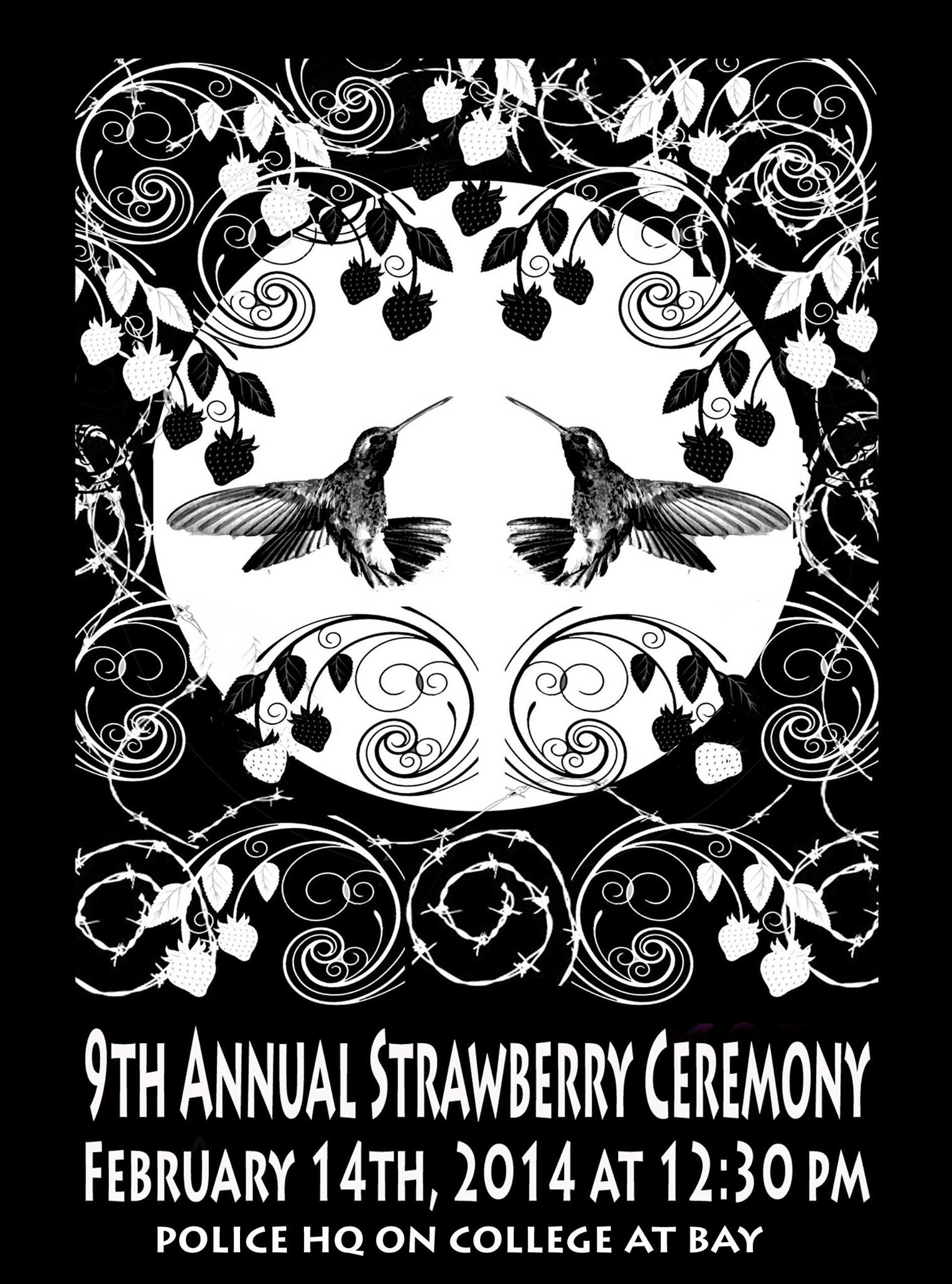
Ceremonia de Fresa (“Baya de Corazón”) por Las Mujeres Indígenas – Desaparecidas o Matadas – en Canadá_Lugar: en frente de la sede central de policía en Toronto_14 de febrero, 2014_Strawberry Ceremony 2014_For Missing or Murdered Aboriginal Women in Canada_Toronto, Canada
.
Anna Marie Sewell
“Lavando el Mundo”
.
En la oscuridad al fin de este año,
hay tanto amontanado contra la luz entre nosotros,
contra las “apuestas”,
a pesar de las lágrimas, en el viento amargo de esta estación;
Escucha el sueño en que las abuelas se mantienen
– hombro con hombro –
al borde de una colina,
inclinándose al unísono, agarrando una cosa – juntas.
Pregúntales, en su mundo de sueños: ¿Porqué lloran ustedes?
Y te mostraron sus chales en muchos colores, extenderán sus alas,
te barrerán dentro de ellas para enseñarte como
– una vez, cada año –
cuando hace el tiempo más oscuro,
lavamos el mundo entero durante solamente un día.
Un día para llorar.
.
De un alba al próximo:
recordando a los caídos,
lamentando a los destrozados,
gimiendo por nuestros arrepentimientos.
El amor perdido, las palabras injustas y acciones malas;
momentos desequilibrados…
y todas las rajaduras entre corazón y corazón,
entre padre y criatura,
entre el amante y su querida amiga,
entre nación y nación,
animal – y animal del otro tipo.
.
Por lo que escogemos y lo que descuidamos,
por lo que deseamos que habíamos sabido,
por cada mano soltado / cada lengua desenfrenada,
un susurro quedándose corto y inaúdito;
el pan lejos del hambre;
la disculpa;
el desconcierto;
el camino fracturado.
.
Estas cosas que recogemos en esta cobija
– pardo, carmelito, canela –
Lavamos el Mundo, y entre nosotros
agarramos la cobija, llenándola con lágrimas.
Y cuando hemos llorado
– de un alba al próximo –
pues subiremos y bailaremos,
acunando un océano de tinieblas amargas que nos cura.
.
Déjales poner tus manos sobre la verdad de una belleza perdida
– intensa pero blanda como musgo –
y esta cobija lleno de las lágrimas del polvo y de los moribundos
se vuelve
– al momento que llega la luz del amanecer –
la promesa lavada y limpia por nuestra pena.
No es – tanto – la redención
sino la lógica de las estaciones que
clama por la justicia, para recuperar el ritmo.
Algun día, los legisladores tendrán que salir de sus salones de ecos, y
juntarse con la danza de la abuela,
para llevarla y llorarla – limpiada – hasta que
la luz pasa a través de sus cuerpos y
traduce a un arco de iris a lo largo de la tierra.
Ella me dice éso – y sus ojos están rojos.
Y encoge los hombros.
Y camina arduamente por el manto profundo de nieve
que cubre este resto de un otro año
esperando.
.
Versión de Alexander Best
. . .
Anna Marie Sewell
“Washing the World”
.
In the dark at this end of the year,
so much stacked up against the light
between us, against the odds,
despite the tears, in this season’s bitter wind,
listen to a dream
in which grandmothers stand
shoulder to shoulder, on the rim of a hill,
they bend as one, and grasp one thing together.
Ask them, in the dream world, why
do they cry?
And they will show you in reply:
their shawls of many colours, spread these wings,
sweep you in and teach you how
once a year, in the dark of the year,
we wash the whole world in a day.
For one day, we cry.
.
From one dawn to the next:
remembering the fallen
mourning for the broken
wailing for regrets.
Love lost, wrong words, wrong actions,
unbalanced moments and all the cracks
between heart and heart, parent and child,
lover and beloved friend, nation and nation,
creature, and creature of another kind.
.
For what we choose and what we neglect to choose,
for what we wish we’d known,
for each hand unclasped,
the tongue unbridled,
one whisper falling short of heard,
the bread far from the hunger,
the apology,
the confusion,
the broken road.
.
These things we gather in this blanket,
brown and sand and beige,
we wash the world, between us
we hold this blanket, fill it with our tears,
and when we have cried
from one dawn to the next,
then we will rise, and we dance
cradling this ocean, bitter, healing, dark.
Let them lay your hands upon the truth of beauty lost,
heavy, soft as moss,
this blanket full of tears and dust and dying
becomes, as the light is returning,
the promise,
washed clean
by our sorrow.
Not so much redemption
as the logic of seasons
calls for justice, to restore the rhythm
one day, the lawmakers must exit
their echoing halls, fall in
with the grandmother’s
dancing,
carrying it,
cry it clean,
until light through their bodies
translates to rainbows strung over the land.
She tells me that – her eyes all red.
And shrugs.
And trudges off through the deep
snow blanket that covers
this end of another year
waiting.
. . .
Anna Marie Sewell is Ojibway, and Mi’kmaw from Listuguj Mi’kmaw First Nation in Québec – Polish, too! She is the author of Fifth World Drum (Frontenac House, 2009) and was Edmonton’s 4th Poet Laureate (2011-2013). She has other work as well – as part of The Learning Centre Literacy Association at http://prairiepomes.com/tag/anna-marie-sewell/.
Sewell will be opening for Joy Harjo at the Edmonton Poetry Festival – April 20th, 2014.
.
As with Las Mujeres de Juarez in México, so too in Canada, Native Women who are poor and therefore invisible become “Las Desaparecidas canadienses” (The Vanished Canadian Women). They are our oh-so-progressive country’s Open-Secret Shame. Women from small towns and Reserves, faceless in big Canadian cities; the roll call of missing or dead along British Columbia’s “Highway of Tears”…There are eight hundred Native and Inuk women who have gone missing – or have been found murdered – often without resolution of the crime – in the last two decades in Canada. This has occurred in a nation with statistically low murder rates nationally. The pattern is a systemic one; the disappearance of these women and girls is not important enough in Canadian society for a concerted effort at crime-solving; their lives are expendable because they are not “mainstream”. With all due respect to her untimely end, they are no Jane Creba.
Jorge Antonio Vallejos, a.k.a. Black Coffee Poet, has been concerned with just such human-rights issues for several years now. For a committed perspective about this national tragedy – violence against women – visit Vallejos’ site: http://blackcoffeepoet.com/.
. . . . .
 Zócalo Poets