Jamaica Omnibus Services: “The Rhymes of Jolly Joseph” / Las Rimas de José “El Jovial”
Posted: February 6, 2015 Filed under: English | Tags: Black History Month, El Mes de la Historia Afroamericana Comments Off on Jamaica Omnibus Services: “The Rhymes of Jolly Joseph” / Las Rimas de José “El Jovial”
A vintage Jamaica Omnibus ticket_dimensions 1.5 inches by 2.5 inches_au verso is printed Courtesy Makes Life Smooth. The fare price, printed in pounds sterling, denotes a 1960s ticket, before the switch to a Jamaican dollar currency.
Bruce Patrick Jones remembers the Jamaica Omnibus Services: “The Rhymes of Jolly Joseph”
. . .
I remember, I remember,
The house where I was born,
The little window where the sun
Came peeping in at morn…
.
So begins Thomas Hood’s poem of memories.
In the 1960s, poetry was an essential inclusion in Jamaican Secondary School education. Simple, rhyming poems have always been the most accessible and sweetest examples of what remains, for me, a mysterious and enigmatic art form. Couplets, with their natural sing-song sway, easily pull a reader into their world, guiding them to the more complex forms of poetic writing.
A bus ride on a recent visit home to Jamaica jolted back a memory from my early teen years. Back then, the Jamaica Omnibus Service (JOS) was essential to the transportation of the citizens of Kingston. Advertising promotion affectionately named the bus line “Jolly Joseph”, and each vehicle was operated by a driver, usually male, and a conductor or conductress, almost always female. As riders entered the bus by a rear side door and paid their fares, the conductor would issue the appropriate ticket for the requested journey. Tickets were rectangular, printed in black on light card of various colours. On one side was the fare price and on the other, rhyming couplets with a variety of messages to aid the rider. Of these, two came clearly back to mind:
.
To stop the bus hold out your hand,
The driver then will understand.
.
And, to address easy loading:
.
If at the stop you form a queue,
We’ll all get on, including you.
.
The latter was great on over-promise, as the exploding population of Kingston began to put a heavy burden on infrastructure in those days.
I’ve thought hard and long trying to remember the other rhymes, and dream that one day I might find an old JOS ticket doing duty as a bookmark or hidden away in a drawer, ready to help me make the leap to Keats and Wordsworth.
. . .
. . . . .
Bruce Patrick Jones: Recuerdos del Servicio de Autobuses Jamaicanos (JOS)
.
Las Rimas de José “El Jovial”
.
“Recuerdo, recuerdo, la casa donde yo nací,
y la pequeña ventana donde llega con su miradita el sol,
cada mañana…”
Y bien inicia Thomas Hood su poema de memorias…
.
Durante los años 1960, la poesía era una inclusión esencial por la educación secundaria jamaicana.
Simples coplas rimadas siempre han sidos los ejemplos más dulces – y alcanzables – de lo que queda, para mí, una forma de arte tan misteriosa y enigmática. Coplas, con su bamboleo y sonsonete natural, atraen en su mundo el lector, guiándole hacia la poesía más compleja.
.
Un aventón en autobus durante una visita reciente a mi país natal me impresionó un recuerdo de mi adolescencia. En esos años del décado 1960, El Servicio de Autobuses Jamaicanos (JOS) era un sistema esencial en la vida de los ciudadanos de Kingston (la capital).
Anuncios dieron al autobus el apodo José “El Jovial”, y cada vehículo tuvo un conductor manejando y una conductora – casi siempre una conductora – que expedía los billetes apropriados por el viaje pedido. Los billetes eran rectangulares, de tarjeta liviana de varios colores, imprimido con tinta. En un lado apareció el precio y en el otro: coplas rimadas. Puedo recordar dos ejemplos:
.
Para detener el bus – estira la mano,
El conductor – pues – va entenderlo.
.
Y una rima que trata sobre el tema del abordaje fácil:
.
Si en la parada hacemos la cola,
Vamos avanzar – todos – cada en fila.
.
La segunda fue pesado con una promesa casi imposible, a causa de la población explotando de Kingston durante esa era; la infraestructura de la ciudad se volvía muy cargada.
.
Yo he reflexionado mucho sobre estas “poemitas”, y es mi sueño que descubriré, algún día, un billete viejo de JOS que está sirviendo como marcalibros – o escondiendo en un cajón – ¡listo para ayudarme saltar al mundo de Keats y Wordsworth!

Bruce Patrick Jones_AutoRetrato en Silueta_Self Portrait in Silhouette
Bruce Patrick Jones es un artista gráfico, nacido en Jamaica en 1949. Ha vivido en Toronto, Canadá, desde 1971. / Bruce Patrick Jones is a Jamaican-born graphic artist who has lived in Toronto, Canada, since 1971.
. . . . .
Marcus Garvey: “Those Who Know”
Posted: February 6, 2015 Filed under: English, Marcus Garvey | Tags: Black History Month Comments Off on Marcus Garvey: “Those Who Know”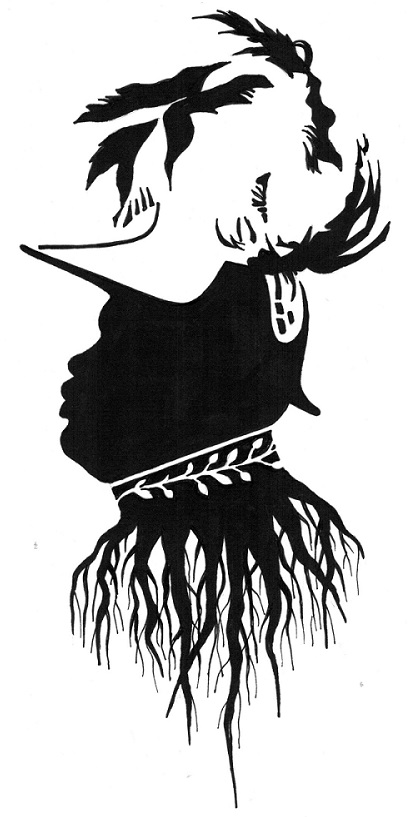 Marcus Mosiah Garvey (1887-1940, born Saint Ann’s, Jamaica) was a Black Renaissance Man: energetic, intense, full of creative ideas – and “all over the map”. A political leader, prosyletizer, journalist, publisher, and all-round entrepreneur, he was most especially a passionate, moralizing orator.
Dusé Mohamed Ali (1866-1945), the Egyptian-Sudanese founder of the African Times and Orient Review (in London in 1912) was one of Garvey’s mentors during the Jamaican’s time in England; Garvey’s pan-African and Black Nationalist thrust owed much to Ali’s example.
Though Garvey found himself on the wrong side of the NAACP’s W.E.B. DuBois (calling DuBois’ mulatto-ness “a monstrosity” ) and on the right side of Edward Young Clarke (Imperial Wizard of the KKK) – “repatriation” of “Africans” from the U.S.A. “back to” Liberia being the agreed goal – still, Garvey’s legacy has been much more solid than the sometimes madcap careenings of his tumultuous life.
However one perceives, weighs, accepts or judge’s this complex thinker’s worldview, Garvey nevertheless gives good advice to all of us in the following poem…
. . .
Marcus Mosiah Garvey (1887-1940)
“Those Who Know”
.
You may not know, and that is all
That causes you to fail in life;
All men should know, and thus not fall
The victims of the heartless strife.
Know what? Know what is right and wrong,
Know just the things that daily count,
That go to make all life a song,
And cause the wise to climb the mount.
.
To make man know, is task, indeed,
For some are prone to waste all time:
It’s only few who see the need
To probe and probe, then climb and climb.
The midnight light, the daily grind,
Are tasks that count for real success
In life of those not left behind,
Whom Nature chooses then to bless.
.
The failing men you meet each day,
Who curse their fate, and damn the rest,
Are just the sleeping ones who play
While others work to reach the best.
All life must be a useful plan,
That calls for daily, serious work –
The work that wrings the best from man –
The work that cowards often shirk.
.
All honour to the men who know,
By seeking after Nature’s truths.
In wisdom they shall ever grow,
While others hum the awful ‘blues’.
Go now and search for what there is –
The knowledge of the Universe.
Make it yours, as the other, his;
And be as good, but not the worse.
. . . . .
Image: Bruce Patrick Jones: Silhouette of Marcus Garvey
Maya Angelou: “La vida no me asusta…” / “Life doesn’t frighten me”
Posted: February 5, 2015 Filed under: English, Maya Angelou, Spanish, ZP Translator: Alexander Best | Tags: Black History Month, Jean-Michel Basquiat Comments Off on Maya Angelou: “La vida no me asusta…” / “Life doesn’t frighten me”
Maya Angelou (born Marguerite Annie Johnson, 1928-2014)
Life doesn’t frighten me (1993)
.
Shadows on the wall, noises down the hall,
Life doesn’t frighten me at all.
Bad dogs barking loud, big ghosts in a cloud,
That doesn’t frighten me at all.
.
Mean old Mother Goose, lions on the loose,
They don’t frighten me at all.
Dragons breathing flame on my counterpane,
That doesn’t frighten me at all.
.
– I go Boo, make them shoo,
I make fun, a-waaay they run!
I won’t cry, so they fly,
I just smile, and they go wild!
Life doesn’t frighten me at all.
.
Tough guys in a fight, all alone at night,
Life doesn’t frighten me at all.
Panthers in the park, strangers in the dark,
No, they don’t frighten me at all.
.
That new classroom where
Boys all pull my hair,
They don’t frighten me – at all.
Kissy little girls
With their hair in curls,
They don’t frighten me – at all.
.
Don’t show me frogs and snakes
And listen for my screams
– IF I’m afraid at all,
It’s ONLY in my dreams…
.
I have got a magic charm that I keep up my sleeve,
I can walk the ocean floor and never have to breath.
Life doesn’t frighten me – not at all – not at all,
Life doesn’t frighten me at all.
. . .
“Life doesn’t frighten me”, Maya Angelou’s children’s poem paired posthumously with paintings by Jean-Michel Basquiat, was published in 1993 by Stewart, Tabori & Chang press (editor Sara Jane Boyers).
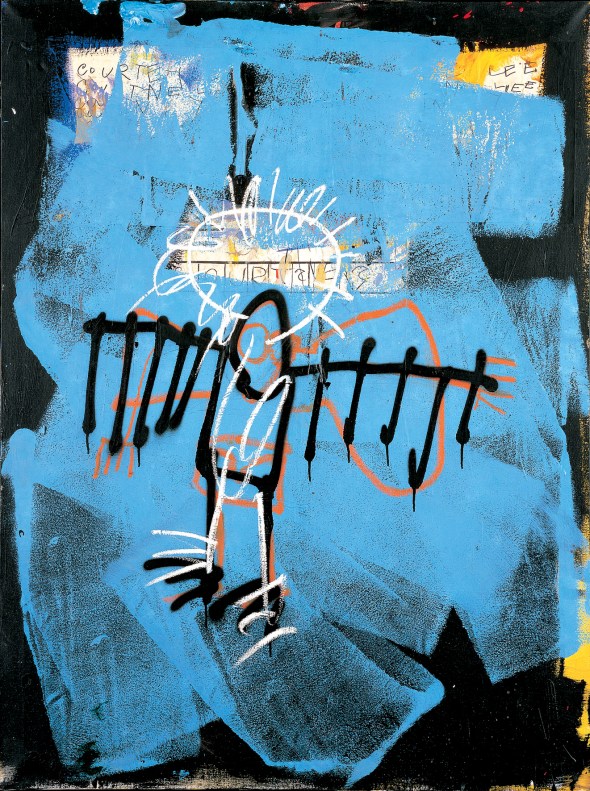
Maya Angelou (1928-2014)
“La vida no me asusta…”
.
Sombras en la pared, ruidos abajo el corredor,
no, esta vida no me da miedo – ni una pizca.
Perros malos que ladran tan altos, fantasmas en una nube
– no, esos no me asustan, para nada.
.
La infame Mamá Ganso, y leones cuando están sueltos,
no me dan miedo, sí – no me dan miedo.
Dragones que respiran la llama…sobre mi ventanilla,
no, esto no me asusta – ni una pizca.
Digo: ¡Bu! Y los ahuyento.
Los burlo de ellos ¡y huyen!
No voy a llorar, ¡pues se echan a volar!
Solo sonrío – ¡y se vuelven locos!
La vida no me da miedo, de veras.
.
Matones en una pelea, solitaria en la noche,
La vida no me asusta – ni una pizca.
Panteras en el parque, desconocidos en la oscuridad,
no, ellos no me dan miedo, ah no.
.
Esa nueva aula donde los chicos jalan mi cabello,
Ellos no me dan miedo – ni una pizca.
Chicas cursis con su pelo chino,
no, ellas no me asustan, para nada.
.
No me mostras ranas y culebras
– pues esperar mis gritos…
SI yo tenga miedo – quizás –
SOLO exista en mis sueños…
.
Poseo un amuleto mágico que guardo en la manga,
Puedo caminar por el suelo marino y nunca no tengo que respirar.
Esta vida no me da miedo – ni una pizca – para nada,
no, la vida no me asusta, ah no.
. . .
“La vida no me asusta” es un poema de Maya Angelou escrito para niños, y emparejado póstumamente con unas pinturas de Jean-Michel Basquiat (“la estrella fugaz” del mundo-arte en los años 80). Fue publicado en 1993 por Stewart, Tabori & Chang (editor: Sara Jane Boyers).
. . . . .
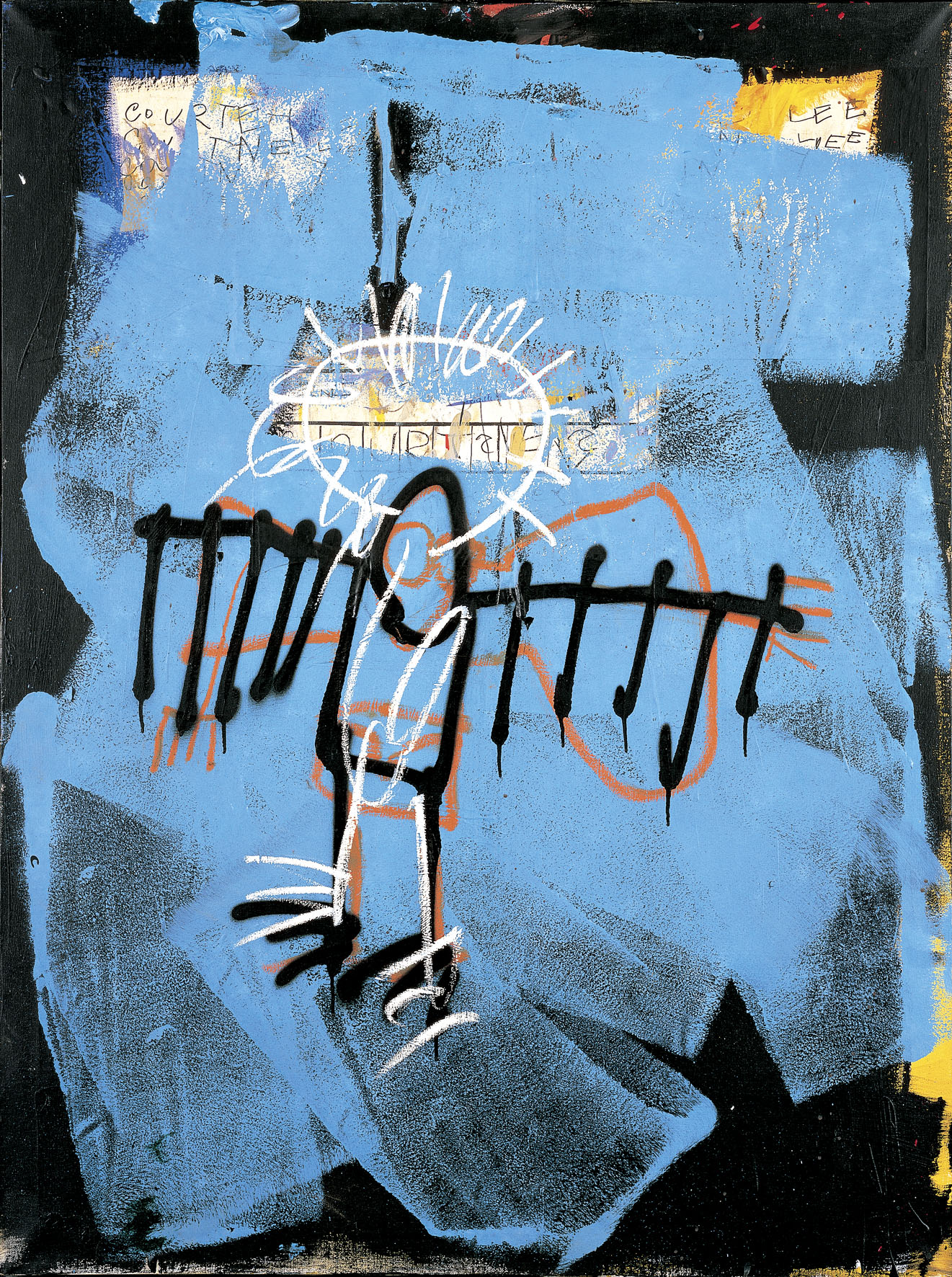
Jean-Michel Basquiat: Now’s The Time…
Posted: February 5, 2015 Filed under: English | Tags: Black History Month Comments Off on Jean-Michel Basquiat: Now’s The Time…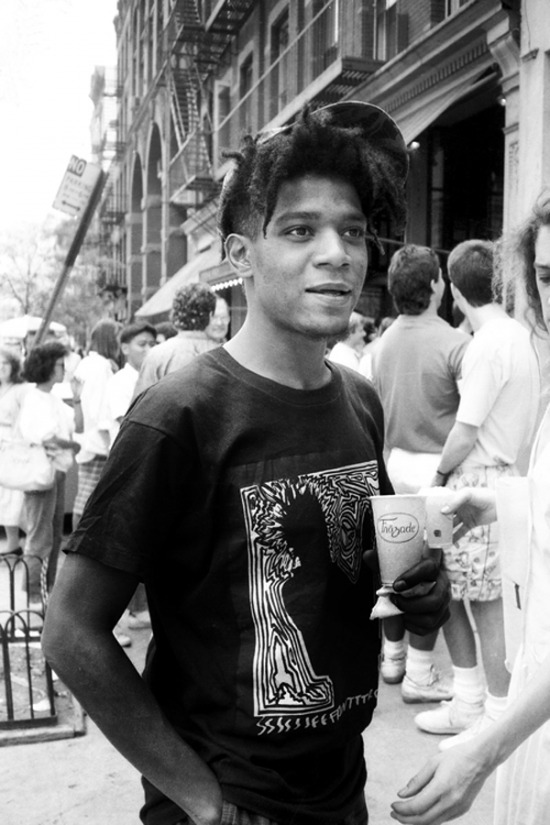
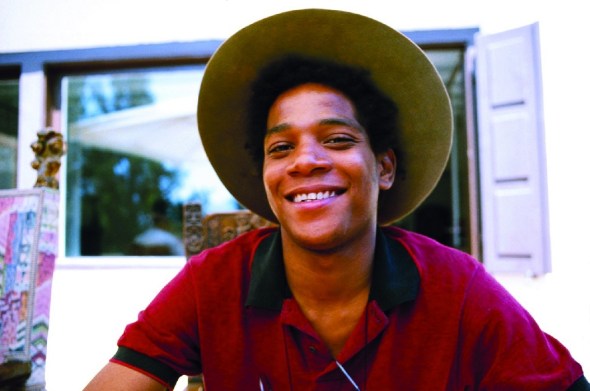
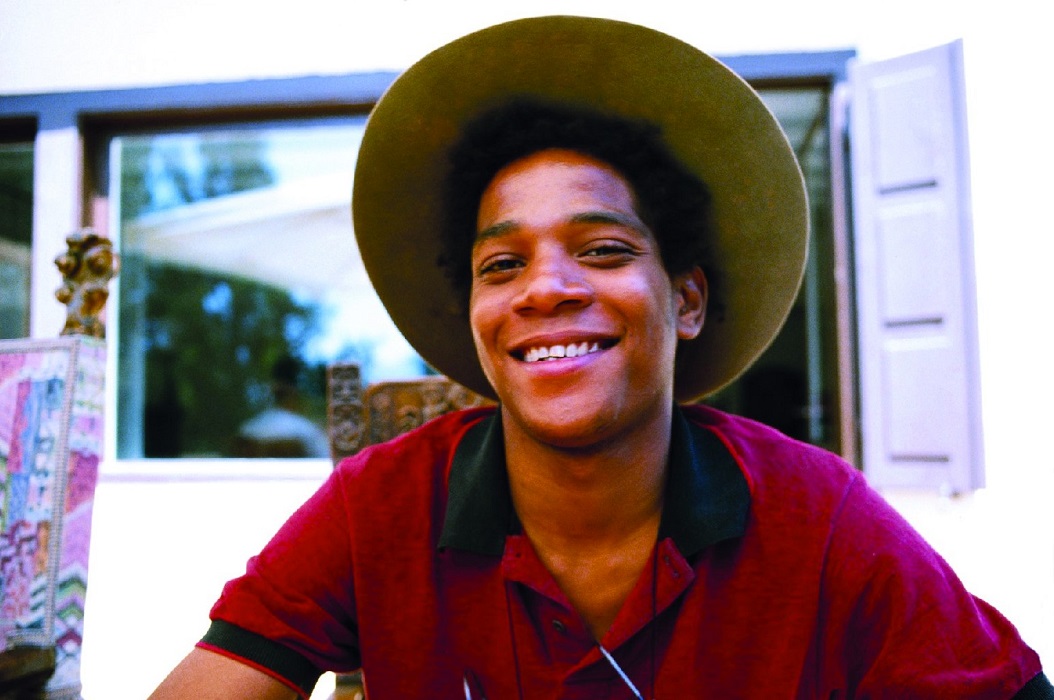
Jean-Michel Basquiat in 1986
In conjunction with a retrospective exhibition opening this week at the Art Gallery of Ontario in Toronto, Canada…
Jean-Michel Basquiat (1960-1988) was a “shooting-star” phenomenon of the New York City art scene during the 1980s. In less than a decade he zoomed from teenage magic-marker-on-walls graffiti punk – from 1977 to 1980 – under the name SAMO © (Same Old Shit Copyright) with fellow high-schoolers Al Diaz, Shannon Dawson, and Matt Kelly – to major Manhattan trendy. The enigmatic poetic thoughts and slogans of SAMO found their way onto Basquiat’s canvases, and his SAMO “tagging” years in SoHo and Lower Manhattan can be viewed as a kind of early advertisement for himself as an Artist.
.
One of three children born to Gérard Basquiat, from Haiti, and Matilde Andrades, Brooklyn-born but of Puerto-Rican descent, Jean-Michel’s home life was unstable, his mother being institutionalized from the time he was 11 years old, and his father banishing him from about the age of 15 after he dropped out of school following Grade 10. However, his mother’s gift to him of a copy of Gray’s Anatomy, the 1858 illustrated encylopaedia of the human body, before he was ten years old, planted in him the seed of ambition for future artistic expression.
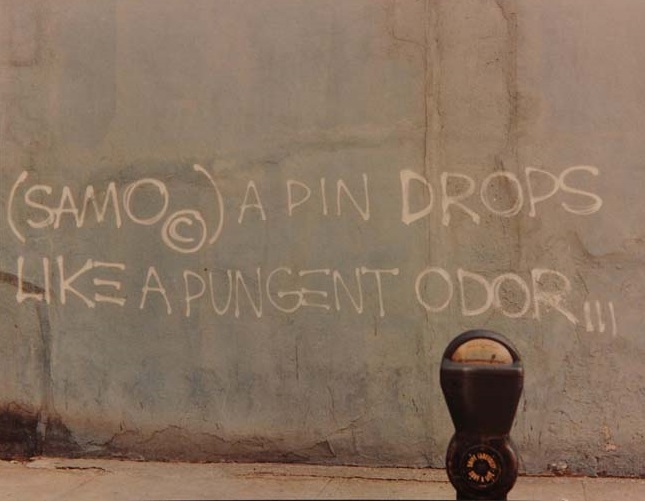
SAMO graffiti photographed by Henry Flynt in 1979
.
The late 1970s-early 1980s New York City confluence of street culture with art, via the emerging rap (later “hip-hop”) and graffiti scenes, plus his interest in a “serious” art career, helped to position Basquiat for stardom; he was, in fact, in the right place at the right time.
.
Keith Haring, two and a half years older, would take the NYC graffiti phenomenon in a whole other Street Meets the PopArt World direction during the 1980s, whereas Basquiat aimed for a more painterly self-expression, fashioning a synthesis of Primitivism and Neo-Expressionism on canvas initiated through his graffiti and “tagging” origins.
.
In February of 1985, Basquiat appeared on the cover of The New York Times Magazine in a feature titled “New Art, New Money: The Marketing of an American Artist”.
.
http://www.nytimes.com/books/98/08/09/specials/basquiat-mag.html
.
He was both successful and very “Now” by then, yet his growing appetite for heroin use was beginning to interfere with his friendships and professional obligations. Though he did attempt to kick his heroin habit, he ultimately died of an overdose in his Great Jones Street studio in August of 1988. He was 27 years old.
At the artist’s funeral, rap/hiphop pioneer Fab Five Freddy read the following poem:
“Genius Child” by Langston Hughes
.
This is a song for the genius child,
Sing it softly, for the song is wild.
Sing it softly as ever you can,
Lest the song get out of hand.
Nobody loves a genius child,
Can you love an eagle,
Tame or wild?
Can you love an eagle,
Wild or tame?
Can you love a monster
Of frightening name?
Nobody loves a genius child.
Kill him – and let his soul run wild.
.
.
Of Basquiat’s worldview, artist Lydia Lee has said:
“Like a DJ, he adeptly reworked the clichéd language of gesture, freedom, and angst in Neo-Expressionism, and redirected Pop Art’s strategy of appropriation, in order to produce a body of work that at times celebrated Black culture and history, yet also revealed its complexity and contradictions.”
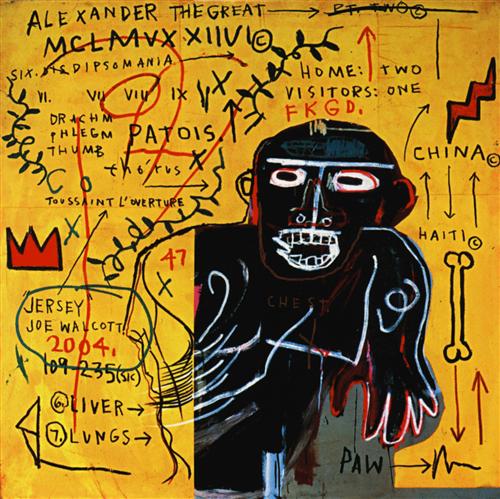
All Colored Cast Part 3 by Jean-Michel Basquiat_1982_acrylic paint and crayon on canvas
.
In 2005, Marc Mayer, a curator and art historian, wrote of Basquiat the artist:
“Basquiat speaks articulately while dodging the full impact of clarity like a matador. We can read his pictures without strenuous effort—the words, the images, the colours and the construction—but we cannot quite fathom the point they belabour. Keeping us in this state of half-knowing, of mystery-within-familiarity, had been the core technique of his brand of communication since his adolescent days as a graffiti poet with SAMO©. To enjoy them, we are not meant to analyze the pictures too carefully. Quantifying the encyclopedic breadth of his research certainly results in an interesting inventory, but the sum cannot adequately explain his pictures, which require an effort outside the purview of iconography… He painted a calculated incoherence, calibrating the mystery of what such apparently meaning-laden pictures might ultimately mean.”
. . .
ZP Editor’s Note:
Basquiat’s painting Defacement: The Death of Michael Stewart, references the 1983 beating-into-unconsciousness-then-cardiac-arrest-after-two-weeks-in-a-coma death of a 25-year-old Black graffiti artist (born in Brooklyn in 1958). Though Stewart had resisted arrest for illegal spray-painting, it was significant that he was unarmed, yet eleven White police officers had participated in his “take-down”. An all-White jury later acquitted them.
Recent “racial” happenings indicate – unfortunately – that Basquiat’s painting Defacement still resonates powerfully; occurrences in Ferguson, Ohio, and Staten Island, New York City, both in 2014, are prime examples.
Between 1970 and 2000, the racial demographics of Ferguson, Ohio, shifted dramatically: from 99 percent White to approximately 45 percent White; from 1 percent Black to approximately 52 percent Black. Yet the Ferguson Police Department’s force has remained overwhelmingly White.
In August of 2014, 18-year-old Michael Brown, who was Black, was fatally shot by a White Ferguson police officer, and the use of lethal force was roundly felt to be unwarranted. Looting and riots – yet also peaceful demonstrations – followed, but in November 2014 the police officer responsible was not indicted in the shooting death of the teen. Brown’s death, and the chain of events that followed, have brought to international attention the simmering resentments and inequalities that persist in some American towns and cities.
In July 2014, on Staten Island in New York City, Eric Garner, a Black man, had also died – as a result of a choke-hold around his neck – from a White police officer. Illegally selling cigarettes, yet Garner too was unarmed, and he did not resist arrest; in fact he raised his hands in the air to show that he carried no weapon. Still, he was tackled to the ground, face down, and choke-held. Garner, obese and asthmatic, died. This death was ruled a homicide – yet the impulse by a White police officer to use excessive force on a Black person remains a heated topic, and has sparked a range of national discussions in the U.S.A.
. . . . .
John Douglas Thompson as Joe Mott in Eugene O’Neill’s “The Iceman Cometh”
Posted: February 4, 2015 Filed under: English | Tags: Black History Month Comments Off on John Douglas Thompson as Joe Mott in Eugene O’Neill’s “The Iceman Cometh”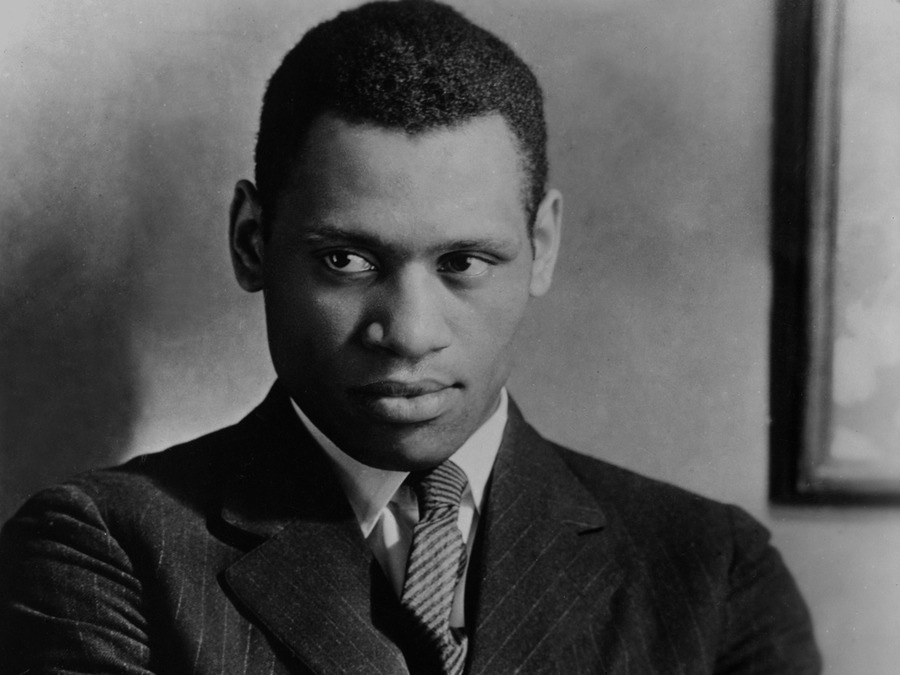
Paul Robeson (1898-1976), photographed about 1924, at the time he was starring in Eugene ONeill’s All God’s Chillun Got Wings
Q & A with John Douglas Thompson, who plays Joe Mott in Eugene O’Neill’s The Iceman Cometh…
An interview by J. Kelly Nestruck, in Toronto’s The Globe & Mail newspaper, February 3rd, 2015:
. . .
The Goodman Theatre’s 2012 production of The Iceman Cometh had one of the most exceptional ensembles in recent stage history. Stratford Festival regulars Brian Dennehy and Stephen Ouimette performed alongside Tony-winner Nathan Lane in director Robert Falls’ painterly production of Eugene O’Neill’s classic 1939 drama about alcoholics chasing pipe dreams in a New York saloon.
.
Less well known to Canadians is their co-star John Douglas Thompson – even though the 51-year-old stage actor grew up on this side of the border. Thompson was stunning as Joe Mott, a former gambling-house operator “whose gentle good humour masks a volcanic rage at a life warped by racism,” according to New York Times critic Charles Isherwood.
In advance of the Iceman remount at the prestigious Brooklyn Academy of Music this month, The Globe and Mail’s theatre critic spoke over the phone with Thompson – who, according to The New Yorker, is “regarded by some as the best classical actor in America.”
.
J. Kelly Nestruck:
I went to Chicago three years ago because I wanted to see Ouimette, Lane and Dennehy. I didn’t know you – and I just loved your Joe Mott. Then I looked you up on Wikipedia and it said you were “Canadian-American”.
.
John Douglas Thompson:
Well, I was born in Bath, England, to Jamaican parents, and we moved, when I was a little boy, to Canada. I lived in Montreal from the age of two to 12, then moved to the U.S. So a lot of people say I’m Canadian-American. I’m more Jamaican-American, though I’ve settled on African-American.
.
Did that time in Montreal have an impact on you at all?
.
I have a lot of fond memories of living in Montreal – and the Montreal Canadiens. I was a big, big hockey fan – and my brother and I played a lot of hockey. My mom would always take us to the Stanley Cup parades: Yvan Cournoyer, Ken Dryden.…
.
The Times’s Ben Brantley has called you “one of the most compelling classical stage actors of his generation” – and scholar James Shapiro called you “the best American actor in Shakespeare, hands down.” I was hoping you might say Canada played a role in that.
.
I’ve got to come up to Canada and do some Shakespeare… I’ve had some inquiries from the people at Stratford. The only complication has been my schedule. I hear such great things about that company from Brian Dennehy. And I was in a production of Julius Caesar with Colm Feore (and some guy named Denzel Washington!) on Broadway – and he spoke highly of it too.
.
I thought this Iceman ensemble was extraordinary; I was gripped for the full 4 1/2 hours. Are you glad to have a second chance to play this character in this company?
.
It’s great to get a second opportunity to explore these amazing characters – who all had some kind of relationship with O’Neill. I did a lot of research into Joe Mott – and the real guy was Joe Smith [O’Neill’s roommate and drinking buddy] … I’m always conscious when I’m working on Joe Mott to pay homage to Smith.
.
I read somewhere that O’Neill modeled both Brutus Jones in the 1920s’ The Emperor Jones and Joe Mott on Smith. You’ve played both roles now.
.
The Emperor Jones had the first African-American lead role on the American stage – and I’d venture to say perhaps on the world stage. O’Neill wrote this black character – the protagonist of a play – that was not going to be played by a white man in “blackface”. It was a huge statement. Many of the white actors of the Provincetown Players [MacDougal Street in NYC] wanted to do it because it’s such a great role. And O’Neill said no: It has to be a black actor.
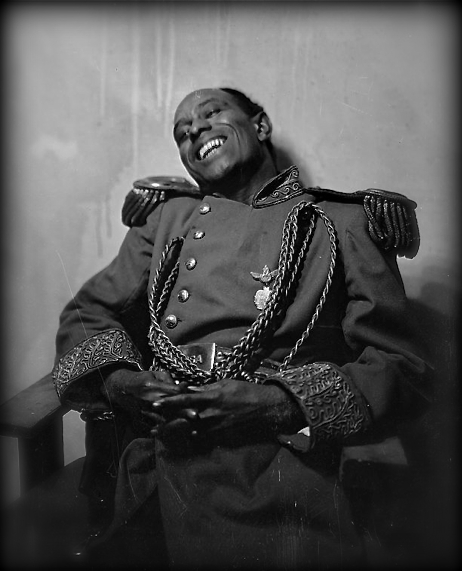
Charles Sidney Gilpin (1878 – 1930), seen in this photograph as Brutus Jones in the 1920 premiere of Eugene ONeill’s The Emperor Jones
.
O’Neill had black characters in his early one-act plays that were maybe one-dimensional or superficial or stereotypical. Then he wrote these major characters – Brutus Jones and Joe Mott. Do you see a progression?
.
Each of these characters from Brutus Jones to Jim Harris [in 1924’s All God’s Chillun Got Wings] to Joe Mott are all advancements on one another. I think someone from the outside looking in, without having done the research, might say these aren’t really strong black characters. If you look further, you find O’Neill had a great deal of respect for these characters that he wrote and was really looking to integrate American theatre. Nobody else was writing black characters at the time, certainly of the size and scope and complexity … Joe Mott to me is like an August Wilson character.
.
It’s still hard to find white playwrights today who will incorporate significant black characters – though now there’s that whole conversation about whether it’s their story to tell.
.
The time that O’Neill did it, it was such a bold move – now, you’re right, we have this argument: Who’s writing this character, who has the “agency” to write these characters? I know in New York, there’s a lot of new, younger black playwrights writing these characters and saying these characters are the terrain of black writers. But I think that any writer with sensitivity, empathy and understanding of humanity can write these characters, certainly as O’Neill has proved.

John Douglas Thompson
The Iceman Cometh is at BAM in Brooklyn, N.Y., from Feb. 5th to March 15th, 2015.
. . . . .
Kaiso – Calypso – Soca: Pepper It T&T-Style !
Posted: February 28, 2014 Filed under: English: Trinidadian, IMAGES | Tags: Black History Month Comments Off on Kaiso – Calypso – Soca: Pepper It T&T-Style !
McCartha Linda Sandy-Lewis, better known as Calypso Rose_The greatest of the female Calypsonians, and still going strong in her 70s…
.
Through great extemporaneous performers, singers, composers and arrangers, Calypso music has been evolving for more than a century. The Roaring Lion, Lord Invader, Lord Pretender, Lord Kitchener, Calypso Rose, Lord/Ras Shorty, David Rudder – the list could go on and on; so many have been innovators or have deepened the tradition. Political, social and sexual commentary, as well as a healthy joie-de-vivre for fête-ing, have all characterized Calypso. The music has branched out into Chutney Soca via Indian pioneers such as Drupatee Ramgoonai; has voyaged through temporary influences from Ragga and Dancehall; has even fallen prey to the ghastly Auto-Tune audio processor so rampant in popular music. Still, Calypso at its best – and it still can be at its best – can’t be beat. (Except maybe by Pan !)
.
Julian Whiterose’s “Iron Duke in the Land” – the first-ever Kaiso (Calypso) recording, from 1912:
.
Lord Executor’s “I don’t know how de young men livin’” (1937):
.
Lord Executor
“I don’t know how de young men livin’” (1937)
.
I don’t know how de young men livin’, dey never have a shillin’,
I don’t know how de young men livin’, dey never have a shillin’ –
Tommy, open de door, give me de bottle and lemme go,
Tommy, open de door, give me meh bottle and lemme go.
.
In de day he walk ’bout, only comin’ with his sweet mouth.
Calling for his minou, callin’ pound-plantain and callaloo – Ah,
Tommy, open de door, give me de bottle and lemme go,
Tommy, open de door, give me meh bottle and lemme go.
.
In de night he come an’ peep, only longing for a place to sleep,
And to cast his weary head as a lump of lead on de cosy bed – Ah,
Tommy, open de door, give me de bottle and lemme go,
Tommy, open de door, give me meh bottle and lemme go.
.
You can see dat villain next day, half crazy and toutoulbey.
His watchikong, goodness knows, and half of his feet expose – Ah,
Tommy, open de door, give me de bottle and lemme go,
Tommy, open de door, give me meh bottle and lemme go.
.
Who can measure de human mind when it is uncultured and unrefined?
An impulse of society – and not to be mentioned in history!
Tommy, open de door, give me de bottle and lemme go,
Tommy, open de door, give me meh bottle and lemme go!
.
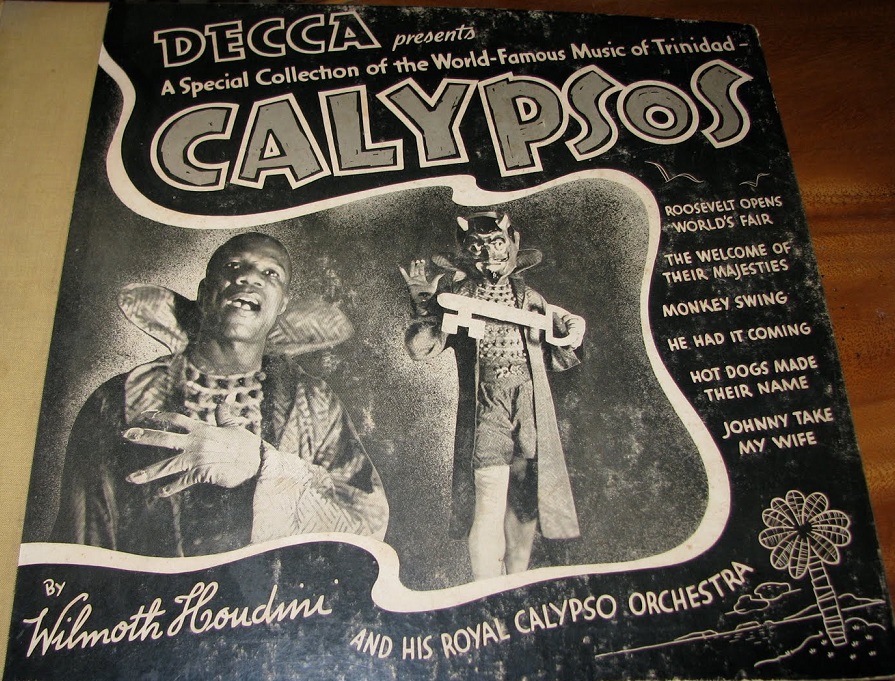
Frederick Wilmoth Hendricks a.k.a. Wilmoth Houdini (1895-1977)_1939 Calypsos recorded in NYC by the Trinidadian native
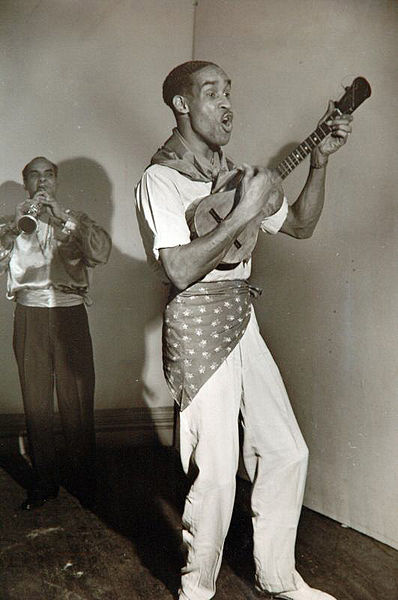
Duke of Iron_1940s
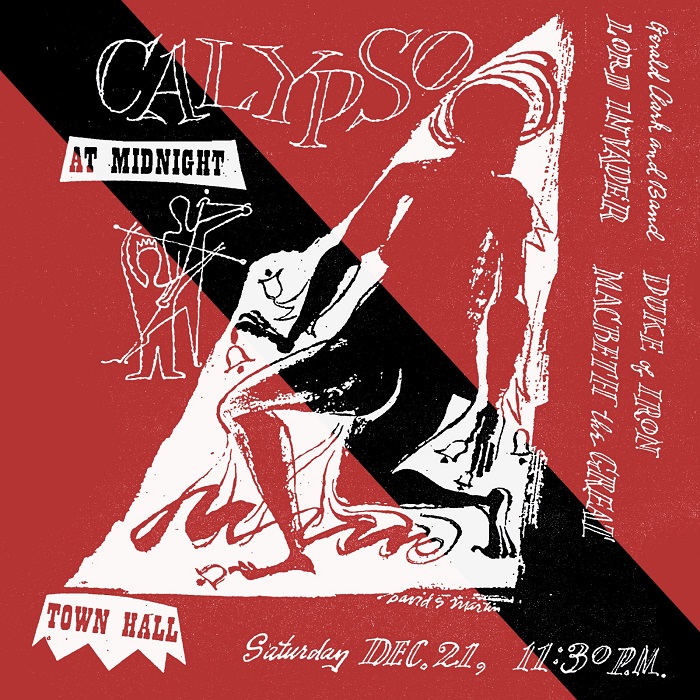
A recording of a 1946 Calypso concert in NYC featuring Lord Invader, Duke of Iron, and MacBeth the Great
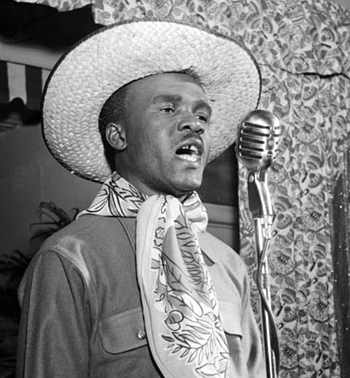
Lord Invader_1940s
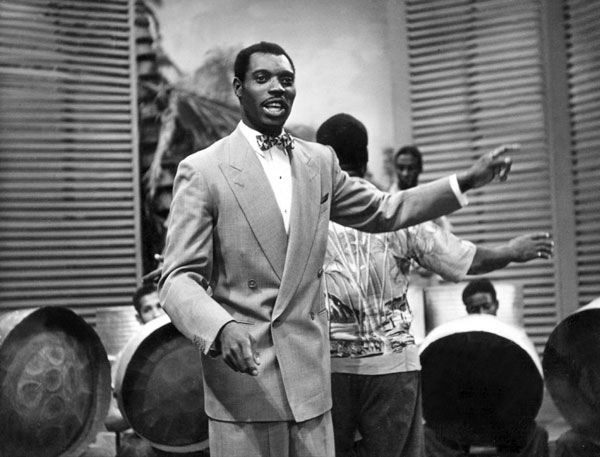
Lord Kitchener in 1951
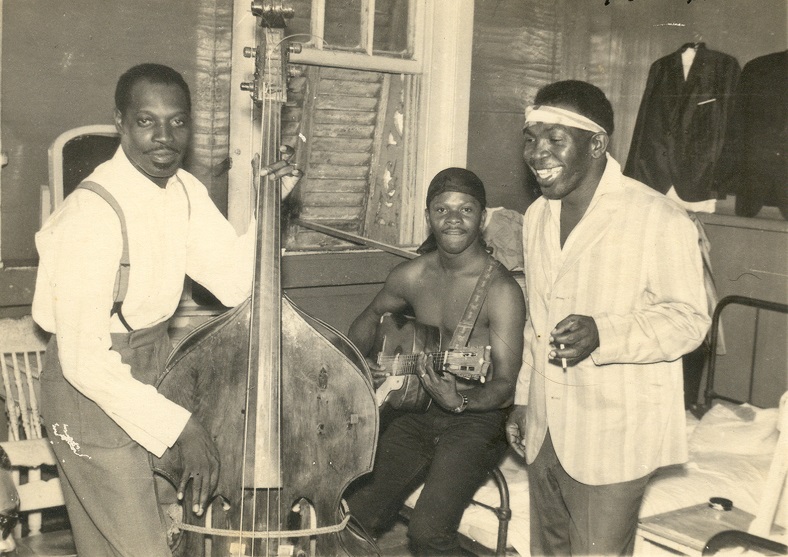
1962: Lord Kitchener, Lord Superior and Lord Melody_Kitch, Supie and Mel were in Georgetown, Guyana for a calypso show.
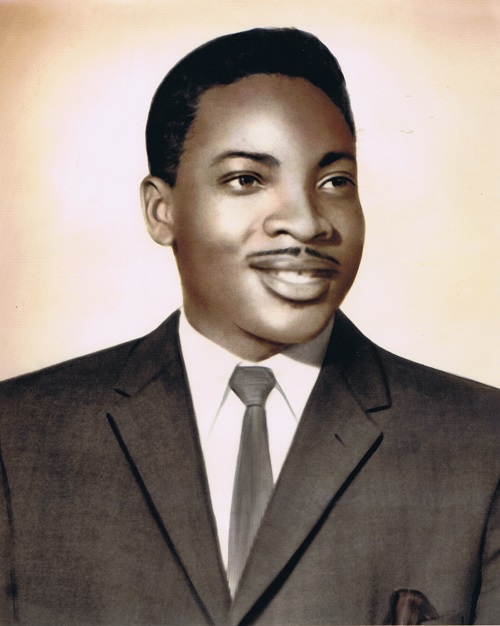
The Mighty Sparrow_early 1960s
“Your calypso name is given to you by your peers, based on your style. In the old days they tried to emulate British royalty. There was Lord Kitchener, Lord Nelson, Duke. When I started singing, the bands were still using acoustic instruments and the singers would stand flat footed, making a point or accusing someone in the crowd with the pointing of a finger, but mostly they stood motionless. When I sing, I get excited and move around, much like James Brown – and that was new to them. The older singers said “Why don’t you just sing instead of hopping around like a little Sparrow.” It was said as a joke, but the name stuck.” (The Mighty Sparrow, interviewed)
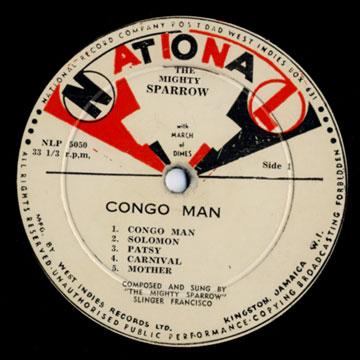
The Mighty Sparrow_Congo Man album from 1965_The calypso single Congo Man itself has been banned in the past for radio play but it demonstrates devilish wit and honesty along with the controversy. A song of its time, though politically incorrect in the 21st century !
The Mighty Sparrow’s “Jean and Dinah” (Yankees Gone) (1956):
.
Calypso Rose’s “Palet” (Popsicle) from the 1970s:
.
Lord Shorty’s “Endless Vibrations”(1974):
.
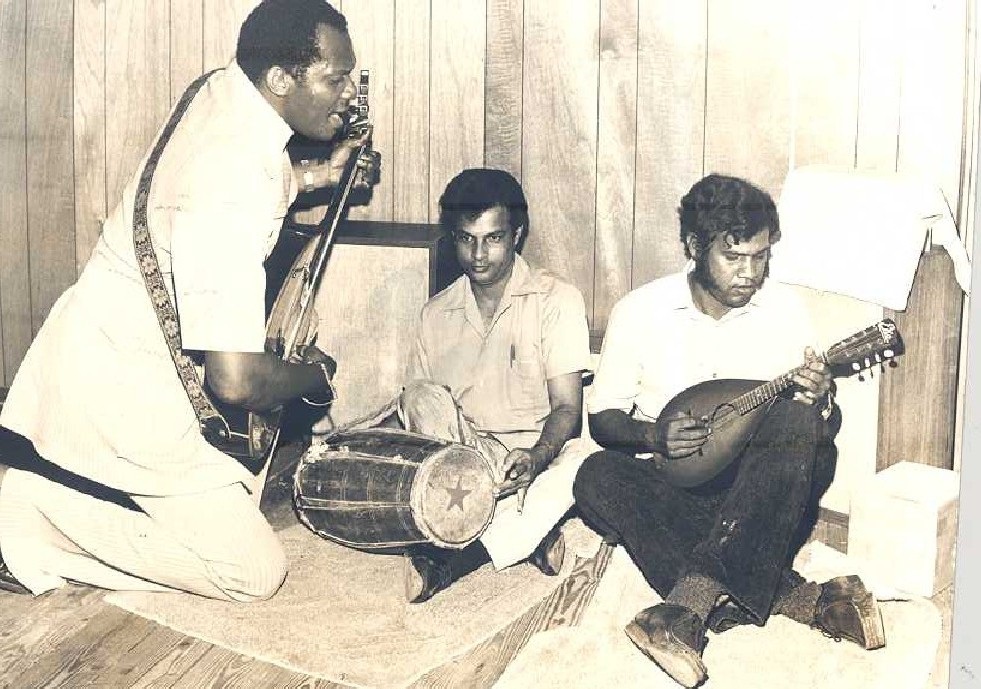
Lord Shorty (later Ras Shorty) with Robin Ramjitsingh and Bisram Moonilal_early 1970s
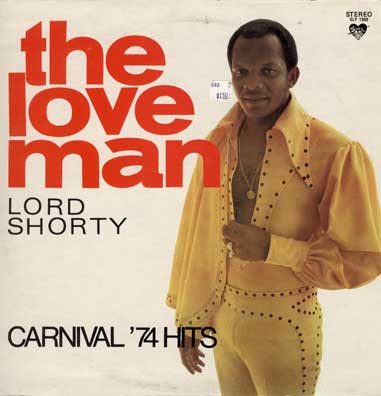
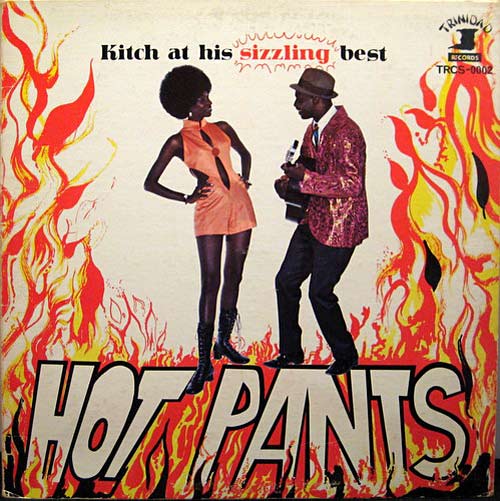
Lord Kitchener record album cover_Hot Pants, from 1972
Black Stalin (Leroy Calliste, born 1941, San Fernando, Trinidad)
“Caribbean Unity” (1979)
.
You try with a federation
De whole ting get in confusion
Caricom and then Carifta
But some how ah smellin disaster
Mister West Indian politician
I mean yuh went to big institution
And how come you cyah unite 7 million?
When ah West Indian unity I know is very easy
If you only rap to yuh people and tell dem like me – dem is:
.
One race (de Caribbean man)
From de same place (de Caribbean man)
Dat make de same trip (de Caribbean man)
On de same ship (de Caribbean man)
So we must push one common intention
Is for a better life in de region
For we woman, and we children
Dat must be de ambition of de Caribbean man
De Caribbean man, de Caribbean man…
.
You say dat de federation
Was imported quite from England
And you goin and form ah Carifta
With ah true West Indian flavour
But when Carifta started runnin
Morning, noon and night all ah hearin
Is just money-speech dem prime minister givin
Well I say no set ah money could form ah unity
First of all your people need their identity, like:
.
One race (de Caribbean man)
From de same place (de Caribbean man)
Dat make de same trip (de Caribbean man)
On de same ship (de Caribbean man)
So we must push one common intention
Is for a better life in de region
For we woman, and we children
Dat must be de ambition of de Caribbean man
De Caribbean man, de Caribbean man…
.
Caricom is wastin time
De whole Caribbean gone blind
If we doh know from where we comin
Then we cyah plan where we goin
Dats why some want to be communist
But then some want to be socialist
And one set ah religion to add to de foolishness!
Look, ah man who doh know his history
He have brought no unity
How could ah man who doh know his roots form his own ideology? – like:
.
One race (de Caribbean man)
From de same place (de Caribbean man)
Dat make de same trip (de Caribbean man)
On de same ship (de Caribbean man)
So we must push one common intention
Is for a better life in de region
For we woman, and we children.
Dat must be de ambition of de Caribbean man
De Caribbean man, de Caribbean man…
.
De Federation done dead and Carifta goin tuh bed
But de cult of de Rastafarian spreadin through de Caribbean
It have Rastas now in Grenada, it have Rastas now in St. Lucia,
But tuh run Carifta, yes you gettin pressure
If the Rastafari movement spreadin and Carifta dyin slow
Then there’s somethin that Rasta done that dem politician doh know – that we:
.
One race (de Caribbean man)
From de same place (de Caribbean man)
Dat make de same trip (de Caribbean man)
On de same ship (de Caribbean man)
So we must push one common intention
Is for a better life in de region
For we woman, and we children
Dat must be de ambition of de Caribbean man
De Caribbean man, de Caribbean man!
.
Caricom:
The Caribbean Community (CARICOM) is an organization of more than a dozen nations and dependencies, established during the 1970s. Its main purposes have been to promote economic integration and cooperation among its members, to ensure that the benefits of integration are equitably shared, and to coordinate foreign policy.
The Caribbean Free Trade Association was formed in the 1960s among English-speaking Caribbean nations to make economic links more streamlined. Diversifying and liberalizing trade plus ensuring fair competition have all been CARIFTA goals.
.
Black Stalin’s “Caribbean Unity” (1979):
.
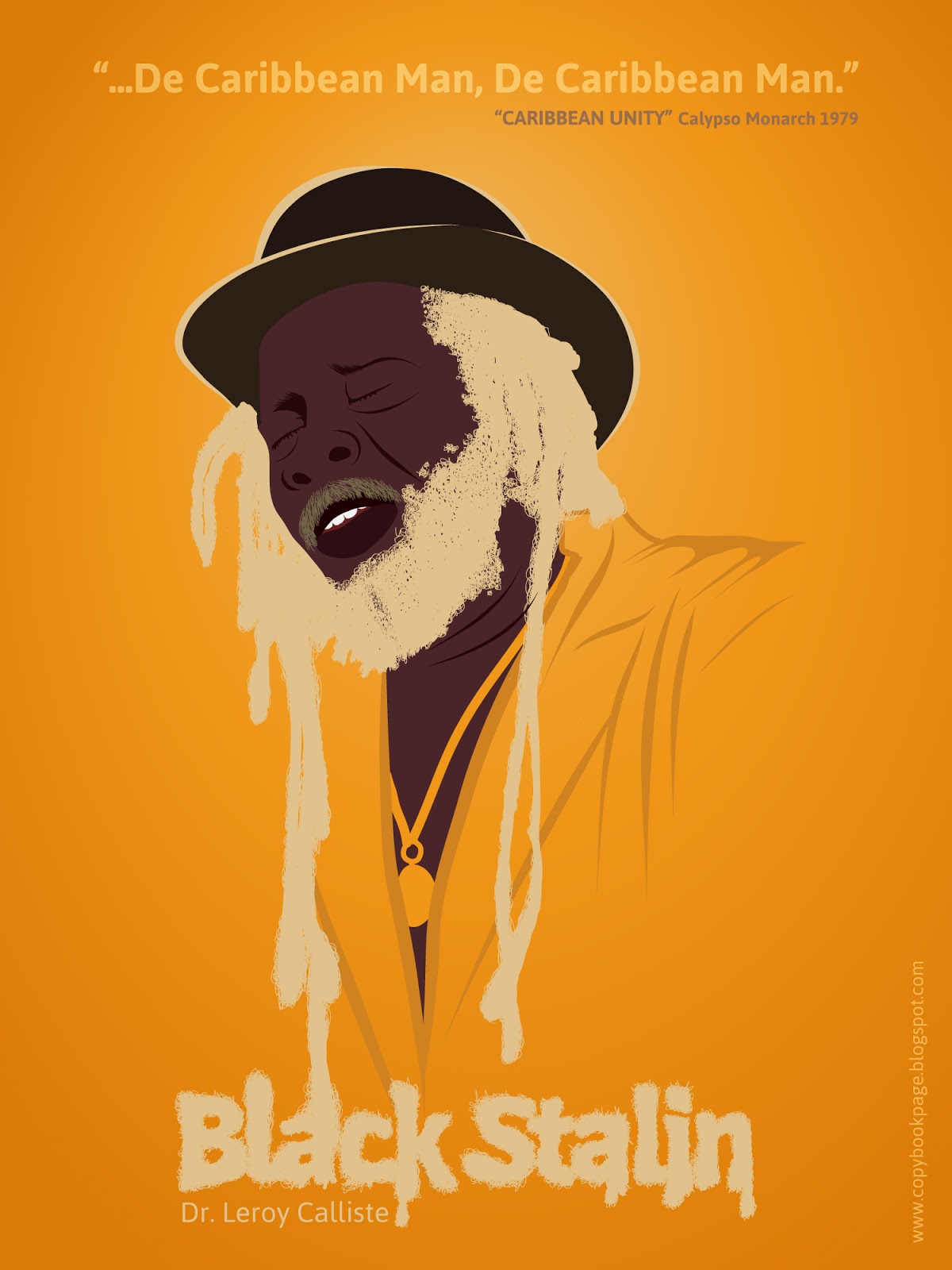
Artist Seon Thompson’s tribute poster to Black Stalin
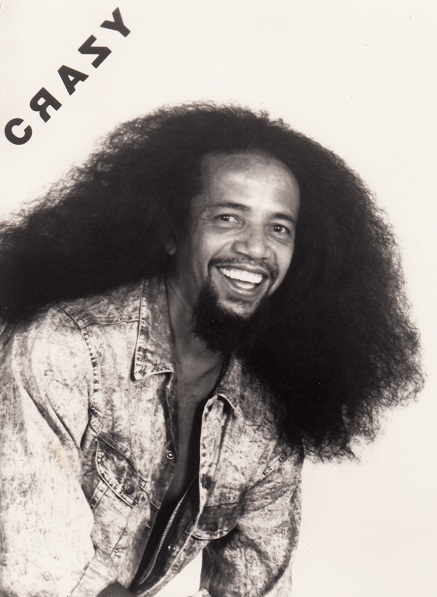
Edwin Ayoung, better known as Crazy_1980s
Crazy’s “Young Man”(1980):
.
Explainer’s “Lorraine”(1981):
.
The Mighty Gabby (an honorary Trini!): “Boots”(1983):
.
Lord Nelson’s “Meh Lover” (1983):
.
The Mighty Shadow’s “Jitters” (1985):
.
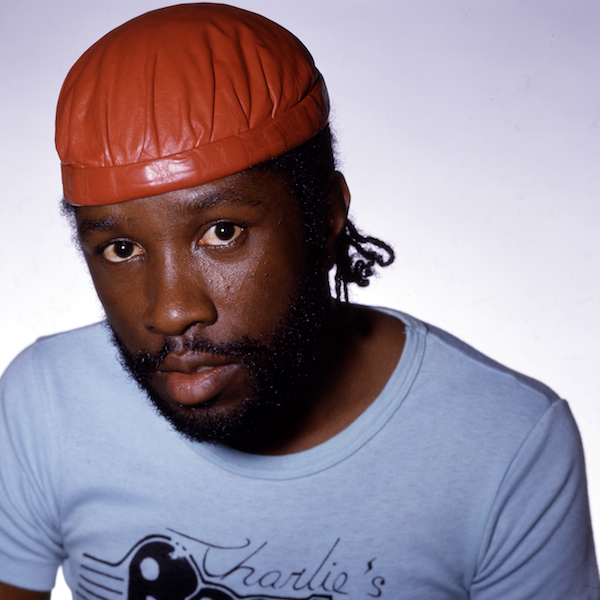
David Rudder
David Rudder and Charlie’s Roots: “The Hammer”(1986):
. . . . .
Léopold Sédar Senghor: “À New York”: un poème typique du courant de la Négritude / “To New York”: a classic poem of the Négritude movement
Posted: February 20, 2014 Filed under: English, French, Léopold Sédar Senghor | Tags: Black History Month, Mois de l'Histoire des Noirs Comments Off on Léopold Sédar Senghor: “À New York”: un poème typique du courant de la Négritude / “To New York”: a classic poem of the Négritude movement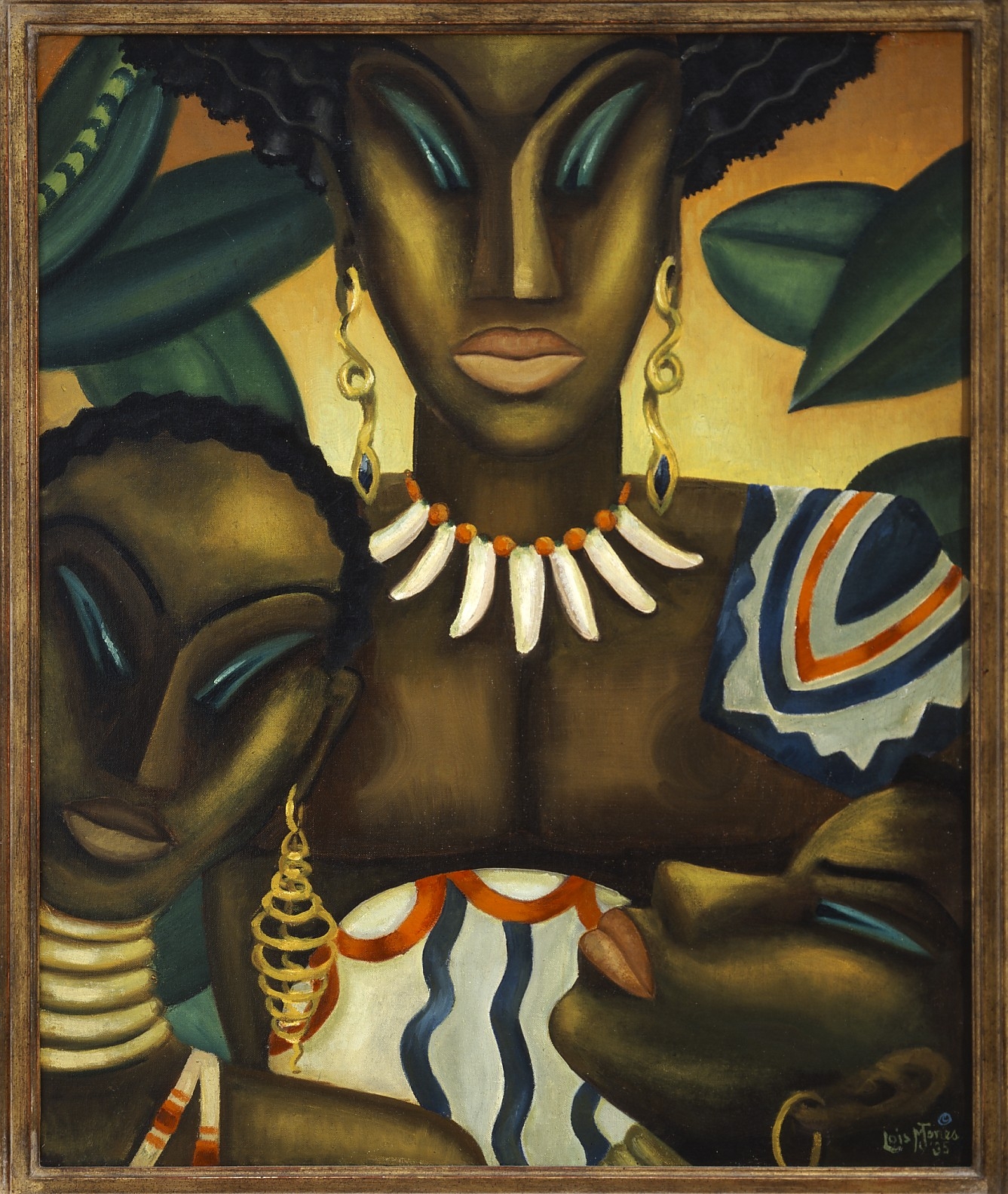
Lois Mailou Jones_Africa_Oil on canvas_1935
Léopold Sédar Senghor (1906-2001, Sénégal / France)
Recueil : Éthiopiques (1956)
“À New York” (pour un orchestre de jazz : solo de trompette)
.
– I –
New York ! D’abord j’ai été confondu par ta beauté, ces grandes filles d’or aux jambes longues.
Si timide d’abord devant tes yeux de métal bleu, ton sourire de givre
Si timide. Et l’angoisse au fond des rues à gratte-ciel
Levant des yeux de chouette parmi l’éclipse du soleil.
Sulfureuse ta lumière et les fûts livides, dont les têtes foudroient le ciel
Les gratte-ciel qui défient les cyclones sur leurs muscles d’acier et leur peau patinée de pierres.
Mais quinze jours sur les trottoirs chauves de Manhattan
– C’est au bout de la troisième semaine que vous saisit la fièvre en un bond de jaguar
Quinze jours sans un puits ni pâturage, tous les oiseaux de l’air
Tombant soudain et morts sous les hautes cendres des terrasses.
Pas un rire d’enfant en fleur, sa main dans ma main fraîche
Pas un sein maternel, des jambes de nylon. Des jambes et des seins sans sueur ni odeur.
Pas un mot tendre en l’absence de lèvres, rien que des cœurs artificiels payés en monnaie forte
Et pas un livre où lire la sagesse. La palette du peintre fleurit des cristaux de corail.
Nuits d’insomnie ô nuits de Manhattan ! si agitées de feux follets, tandis que les klaxons hurlent des heures vides
Et que les eaux obscures charrient des amours hygiéniques, tels des fleuves en crue des cadavres d’enfants.
.
– II –
Voici le temps des signes et des comptes
New York ! or voici le temps de la manne et de l’hysope.
Il n’est que d’écouter les trombones de Dieu, ton cœur battre au rythme du sang ton sang.
J’ai vu dans Harlem bourdonnant de bruits de couleurs solennelles et d’odeurs flamboyantes
– C’est l’heure du thé chez le livreur-en-produits-pharmaceutiques
J’ai vu se préparer la fête de la Nuit à la fuite du jour.
C’est l’heure pure où dans les rues, Dieu fait germer la vie d’avant mémoire
Tous les éléments amphibies rayonnants comme des soleils.
Harlem Harlem ! voici ce que j’ai vu Harlem Harlem !
Une brise verte de blés sourdre des pavés labourés par les
pieds nus de danseurs Dans
Croupes de soie et seins de fers de lance, ballets de nénuphars et de masques fabuleux
Aux pieds des chevaux de police, les mangues de l’amour rouler des maisons basses.
Et j’ai vu le long des trottoirs, des ruisseaux de rhum blanc des ruisseaux de lait noir dans le brouillard bleu des cigares.
J’ai vu le ciel neiger au soir des fleurs de coton et des ailes de séraphins et des panaches de sorciers.
Écoute New York ! ô écoute ta voix mâle de cuivre ta voix vibrante de hautbois, l’angoisse bouchée de tes larmes tomber en gros caillots de sang
Écoute au loin battre ton cœur nocturne, rythme et sang du tam-tam, tam-tam sang et tam-tam.
.
– III –
New York! je dis New York, laisse affluer le sang noir dans ton sang
Qu’il dérouille tes articulations d’acier, comme une huile de vie
Qu’il donne à tes ponts la courbe des croupes et la souplesse des lianes.
Voici revenir les temps très anciens, l’unité retrouvée la réconciliation du Lion du Taureau et de l’Arbre
L’idée liée à l’acte l’oreille au cœur le signe au sens.
Voilà tes fleuves bruissants de caïmans musqués et de lamantins aux yeux de mirages. Et nul besoin d’inventer les Sirènes.
Mais il suffit d’ouvrir les yeux à l’arc-en-ciel d’Avril
Et les oreilles, surtout les oreilles à Dieu qui d’un rire de saxophone créa le ciel et la terre en six jours.
Et le septième jour, il dormit du grand sommeil nègre.
. . .
Léopold Sédar Senghor (1906-2001, Senegal / France)
From: Éthiopiques (1956)
“To New York” (for jazz orchestra – with solo trumpet)
.
– I –
.
New York! At first I was bewildered by your beauty,
Those huge, long-legged, golden girls.
So shy, at first, before your blue metallic eyes and icy smile,
So shy. And full of despair at the end of skyscraper streets
Raising my owl eyes at the eclipse of the sun.
Your light is sulphurous against the pale towers
Whose heads strike lightning into the sky,
Skyscrapers defying storms with their steel shoulders
And weathered skin of stone.
But two weeks on the naked sidewalks of Manhattan—
At the end of the third week the fever
Overtakes you with a jaguar’s leap
Two weeks without well water or pasture all birds of the air
Fall suddenly dead under the high, sooty terraces.
No laugh from a growing child, his hand in my cool hand.
No mother’s breast, but nylon legs. Legs and breasts
Without smell or sweat. No tender word, and no lips,
Only artificial hearts paid for in cold cash
And not one book offering wisdom.
The painter’s palette yields only coral crystals.
Sleepless nights, O nights of Manhattan!
Stirring with delusions while car horns blare the empty hours
And murky streams carry away hygienic loving
Like rivers overflowing with the corpses of babies.
.
– II –
Now is the time of signs and reckoning, New York!
Now is the time of manna and hyssop.
You have only to listen to God’s trombones, to your heart
Beating to the rhythm of blood, your blood.
I saw Harlem teeming with sounds and ritual colours
And outrageous smells—
At teatime in the home of the drugstore-deliveryman
I saw the festival of Night begin at the retreat of day.
And I proclaim Night more truthful than the day.
It is the pure hour when God brings forth
Life immemorial in the streets,
All the amphibious elements shining like suns.
Harlem, Harlem! Now I’ve seen Harlem, Harlem!
A green breeze of corn rising from the pavements
Plowed by the Dan dancers’ bare feet,
Hips rippling like silk and spearhead breasts,
Ballets of water lilies and fabulous masks
And mangoes of love rolling from the low houses
To the feet of police horses.
And along sidewalks I saw streams of white rum
And streams of black milk in the blue haze of cigars.
And at night I saw cotton flowers snow down
From the sky and the angels’ wings and sorcerers’ plumes.
Listen, New York! O listen to your bass male voice,
Your vibrant oboe voice, the muted anguish of your tears
Falling in great clots of blood,
Listen to the distant beating of your nocturnal heart,
The tom-tom’s rhythm and blood, tom-tom blood and tom-tom.
.
– III –
New York! I say New York, let black blood flow into your blood.
Let it wash the rust from your steel joints, like an oil of life
Let it give your bridges the curve of hips and supple vines.
Now the ancient age returns, unity is restored,
The reconciliation of the Lion and Bull and Tree
Idea links to action, the ear to the heart, sign to meaning.
See your rivers stirring with musk alligators
And sea cows with mirage eyes. No need to invent the Sirens.
Just open your eyes to the April rainbow
And your eyes, especially your ears, to God
Who in one burst of saxophone laughter
Created heaven and earth in six days,
And on the seventh slept a deep Negro sleep.
.
.
.
Translation of “To New York” from the original French into English: Melvin Dixon
For more translations by Dixon click the link:
. . . . .
Lois Mailou Jones: Pioneer and Mentor
Posted: February 20, 2014 Filed under: IMAGES | Tags: Black History Month Comments Off on Lois Mailou Jones: Pioneer and Mentor
Lois Mailou Jones_Pattern_1982
.
Boston-born Lois Mailou Jones (1905-1998) was a painter, art teacher and mentor, who taught at Howard University in Washington, D.C., for almost half a century. Jones was of that generation of trail-blazers in Black-American art; and among Black women she was one of the first to establish an artistic reputation beyond the USA. Jim-Crow “policies” still being entrenched, her early entries into art exhibitions were sometimes rejected when organizers discovered that the paintings were by a Black person; Jones from time to time had Céline Marie Tabary – a Parisian fellow-artist who came to teach at Howard for a decade or so – deliver her paintings (especially after an award was taken away from her upon the “revelation” of her race.)
In 1934 Jones had attended a summer session at Columbia University, and began to study African masks and to incorporate depictions of them into her oil studies. “Les Fétiches” (1938), her painting of several African masks grouped together, Jones painted while visiting Paris where she also absorbed some of the “active” artistic philosophy of the French-Caribbean-African Négritude movement. (Léon Damas, Léopold Sédar Senghor, and Aimé Césaire spearheaded that mainly literary Black-Francophone movement.)
After a letter correspondence lasting many years, Jones and Haitian artist Louis Vergniaud Pierre-Noel married in 1953. They took trips to Haiti and also to African nations during the 1960s and 1970s. Haitian and pan-African themes became central to Jones’ work.
Lois Mailou Jones’ most important achievement may be that she was an exacting and supportive mentor to younger generations of Black artists, among them Martha Jackson-Jarvis and David C. Driskell.
.

Lois Mailou Jones_Painting (Untitled)_1976
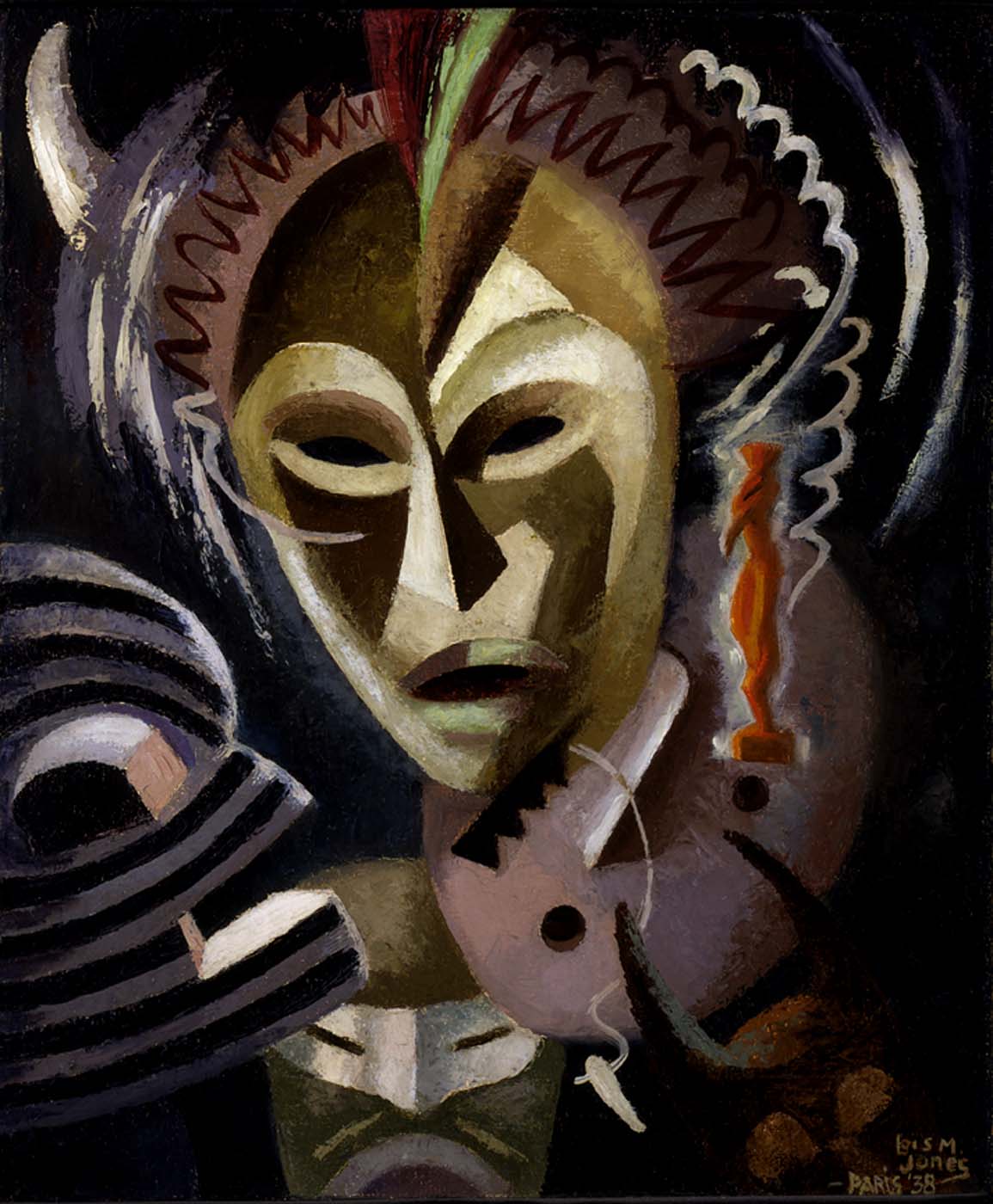
Lois Mailou Jones_Les Fétiches_oil on linen_1938

Lois Mailou Jones_The Ascent of Ethiopia_Oil on canvas_1932
. . . . .
June Jordan: “Poema sobre Intelecto para mis Hermanos y Hermanas” / “A Poem about Intelligence for my Brothers and Sisters”
Posted: February 19, 2014 Filed under: English, June Jordan, June Jordan: Poema sobre Intelecto para mis Hermanos y Hermanas, Spanish, ZP Translator: Alexander Best | Tags: Black History Month, El Mes de la Historia Afroamericana Comments Off on June Jordan: “Poema sobre Intelecto para mis Hermanos y Hermanas” / “A Poem about Intelligence for my Brothers and Sisters”
.
June Jordan (1936-2002)
“Poema sobre Intelecto para mis Hermanos y Hermanas”
.
Hace unos años me dicieron que Negro es un seso hueco y otra gente
tienen cerebros / casi como las células dentro las cabezas de niños negros
estaban fuera tomando una siesta a la hora en punto – cada hora.
.
El Científico llamé este fenómeno El Lapsus Arthur Jensen (de mala fama) – ¿no recuerdas?
Bien, estoy pensando en idear una prueba para los eruditos – los sabios, ¿sabes? – algo como una Prueba Cociente Intelectual Stanford-Binet por la CIA – ¿comprendes?
Por ejemplo…El señor doctor Einstein, incuestionablemente el “cerebro” más espectacular del siglo – ¿no?
.
Y estoy luchando contra estas sobras-Lapsus de mi niñez negra, y me pregunto por que alguien deciría: E = MC Squared – la equivalencia entre la masa y la energía.
Intento discutir sobre ésto con la vieja mujer que vive en mi cuadra…
Está escobando la escalera de entrada en una noche de sábado, enojado porque un “burro” dejó un colchón de cama king-size – manchas y demás – en frente de su casa, y no quiere saber nada de éso en primer lugar.
.
Inclinándome en la verja, digo: “Señora Johnson, ¿qué piensas en alguien que se inventa E = MC Squared?”
“¿Cómo te va?” me responde de su lado, como no quiere permitirme saber que tengo pelo no peinado (esta mañana de domingo) y que tengo el atrevimiento de molestarle durante una tarea seria con mis preguntas locas…
“¿E igual a que, cariño?”
Pues le digo: “Este tipo que dijo éso, ¡creo que fue El Padre No Refutado de La Bomba Atómica!”
“Sí, eso es,” murmura, no tan amablemente.
“¡Y siempre olvidó ponerse calcetines con sus zapatos!”– agrego (un poco deseperada).
En este momento Señora Johnson se aleja de mí, con su escoba, y da un gran paso atrás en la escalera.
“Y nunca no hizo nada para nadie sino en una comisión…Y decía “¿Qué hora es?” y alguien decía “Son las seis.” Y él decía “– ¿de la mañana o de la tarde?”…¡Y nunca no hirvió agua para una taza de té para nadie durante su entera vida brillante!…¡Y [ mi voz se eleva un poco ] nunca no bugui bugui ni nunca tampoco, no!”
“¿Y bien?” dice ella. “Supongo, sí – cielo – que eso es lo que llaman el Genio, ¿no?”
.
.
Versión de Alexander Best
.
.
.
June Jordan (1936-2002)
“A Poem about Intelligence for my Brothers and Sisters”
.
A few years back and they told me Black
means a hole where other folks
got brain / it was like the cells in the heads
of Black children was out to every hour on the hour naps.
Scientists called the phenomenon the
Notorious Jensen Lapse, remember?
Anyway I was thinking
about how to devise
a test for the wise
like a Stanford-Binet
for the C.I.A.
you know?
Take Einstein
being the most the unquestionable the outstanding
the maximal mind of the century
right?
And I’m struggling against this lapse leftover
from my Black childhood to fathom why
anybody should say so:
E=MC squared?
.
I try that on this old lady live on my block:
She sweeping away Saturday night from the stoop
and mad as can be because some absolute
jackass have left a kingsize mattress where
she have to sweep around it stains and all she
don’t want to know nothing about in the first place.
“Mrs. Johnson!” I say, leaning on the gate
between us: “What you think about somebody come up
with an E equals M C 2?”
“How you doin,” she answer me, sideways, like she don’t
want to let on she know I ain’
combed my hair yet and here it is
Sunday morning but still I have the nerve
to be bothering serious work with these crazy
questions about
“E equals what you say again, dear?”
Then I tell her, “Well
also this same guy? I think
he was undisputed Father of the Atom Bomb!”
“That right.” She mumbles or grumbles, not too politely
“And dint remember to wear socks when he put on
his shoes!” I add on (getting desperate).
At which point Mrs. Johnson take herself and her broom
a very big step down the stoop away from me.
“And never did nothing for nobody in particular
lessen it was a committee
and
used to say, ‘What time is it?’
and
you’d say, ‘Six o’clock.’
and
he’d say, ‘Day or night?’
and –
and he never made nobody a cup a tea
in his whole brilliant life!
and
[my voice rises slightly]
and
he dint never boogie neither: never!”
.
“Well,” say Mrs. Johnson, “Well, honey,
I do guess
that’s Genius for you.”
. . . . .
Audre Lorde: “Afuera” / “Outside”
Posted: February 18, 2014 Filed under: Audre Lorde, English, Spanish | Tags: Black History Month, Black lesbian poets, El Mes de la Historia Afroamericana Comments Off on Audre Lorde: “Afuera” / “Outside”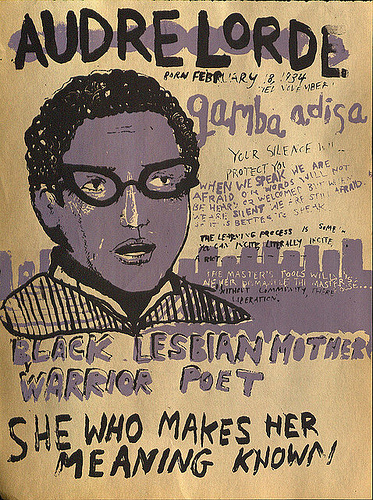
Audre Lorde (18 de febrero, 1934 – 1992)
“Afuera” (1977)
.
1.
En el centro de una ciudad cruel y fantasmal
todas las cosas naturales son extrañas.
Crecí en una confusión genuina
entre césped y maleza y flores
y lo que significaba “de color”
excepto la ropa que no se podía blanquear
y nadie me llamó negra de mierda
hasta que tuve trece.
Nadie linchó a mi mamá
pero lo que nunca había sido
había blanqueado su cara de todo
excepto de furias muy privadas
e hizo que los otros chicos
me llamaran agrandada en la escuela.
Y cuántas veces he vuelto a llamarme
a través de mis huesos confusión
negra
como médula queriendo decir carne
y cuántas veces me cortaste
e hiciste correr en las calles
mi propia sangre
quién creés que soy
que estás aterrorizado de transformarte
o qué ves en mi cara
que no hayas descartado ya
en tu propio espejo
qué cara ves en mis ojos
que algún día
vas a
reconocer como la tuya
A quién maldeciré por haber crecido
creyendo en la cara de mi madre
o por haber vivido temiendo la oscuridad potente
usando la forma de mi padre
ambos me marcaron
con su amor ciego y terrible
y ahora estoy lasciva por mi propio nombre.
.
2.
Entre los cañones de sus terribles silencios
Madre brillante y padre marrón
busco ahora mis propias formas
porque nunca hablaron de mí
excepto como suya
y los pedazos con que tropiezo y me caigo
aún registro como prueba
de que soy hermosa
dos veces
bendecida con las imágenes
de quienes fueron
y quienes pensé alguna vez que eran
de lo que traslado
hacia y a través
y lo que necesito
dejar detrás de mí
más que nada
estoy bendecida en los seres que soy
que han venido a hacer de nuestras caras rotas un todo.
. . .
Audre Lorde (born February 18th, 1934, died 1992)
“Outside”
(first published in The American Poetry Review, Vol.6, #1, Jan.-Feb. 1977)
.
1.
In the centre of a harsh and spectrumed city
all things natural are strange.
I grew up in a genuine confusion
between grass and weeds and flowers
and what “colored” meant
except for clothes you couldn’t bleach
and nobody called me nigger
until I was thirteen.
Nobody lynched my momma
but what she’d never been
had bleached her face of everything
but very private furies
and made the other children
call me yellow snot at school.
.
And how many times have I called myself back
through my bones confusion
black
like marrow meaning meat
for my soul’s hunger
and how many times have you cut me
and run in the streets
my own blood
who do you think me to be
that you are terrified of becoming
or what do you see in my face
you have not already discarded
in your own mirror
what face do you see in my eyes
that you will someday
come to
acknowledge your own.
.
Who shall I curse that I grew up
believing in my mother’s face
or that I lived in fear of the potent darkness
that wore my father’s shape
they have both marked me
with their blind and terrible love
and I am lustful now for my own name.
.
2.
Between the canyons of my parents’ silences
mother bright and father brown
I seek my own shapes now
for they never spoke of me
except as theirs
and the pieces that I stumble and fall over
I still record as proof
that I am beautiful
twice
blessed with the images
of who they were
and who I thought them to be
of what I move toward
and through
and what I need
to leave behind me
for most of all I am
blessed within my selves
who are come
to make our shattered faces whole.
. . .
Otros poemas de Audre Lorde: https://zocalopoets.com/2012/07/01/mujer-y-de-la-casa-de-iemanja-por-audre-lorde-woman-and-from-the-house-of-yemanja-by-audre-lorde/
. . . . .
 Zócalo Poets