Poema para Miércoles de Ceniza / Ash Wednesday Poem
Posted: February 22, 2012 Filed under: English, Spanish, ZP Translator: Alexander Best | Tags: Ash Wednesday poem, Poema para Miércoles de Ceniza Comments Off on Poema para Miércoles de Ceniza / Ash Wednesday Poem
Poema para Miércoles de Ceniza / Ash Wednesday Poem
Once, in winter, Una vez, durante el invierno,
I stood, Yo estaba de pie,
White flakes brushing my face. Copos blancos rozando la cara.
With white fingers, Con dedos pálidos,
I waited with the others. Esperé con los otros.
We shivered on the steps, Temblamos en los escalones,
Stuck out our tongues Sacamos la lengua
To catch snowflakes Para agarrar los copos de nieve
So cold they would burn. Tan frío que nos quemaban.
Soon the big doors opened Pronto abrieron las puertas grandes
On smoke and candles Al humo y a los cirios
And a cold thumb brushed Y un pulgar frío me rozó
My forehead with a cross of ashes. La frente con una cruz de cenizas.
“Dust to Dust” he muttered “El Polvo al Polvo,” masculló
While snowflakes Mientras los copos de nieve
Melted in my hair Se derritieron en mi cabello.
*
( Autor anónimo /Anonymous )
Traducción en español: Alexander Best
Ataulfo Alves: “In a masquerade of Joy I hid my Sadness…”
Posted: February 20, 2012 Filed under: Ataulfo Alves, English, Portuguese, Translator's Whimsy: Song Lyrics / Extravagancia del traductor: Letras de canciones traducidas por Alexander Best, ZP Translator: Alexander Best | Tags: Black poets, Poetas negros Comments Off on Ataulfo Alves: “In a masquerade of Joy I hid my Sadness…”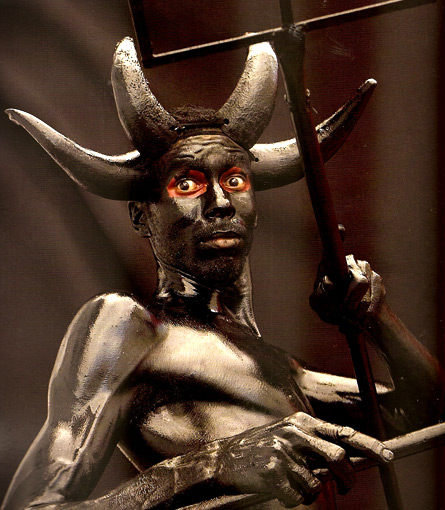
Ataulfo Alves (Sambista brasileiro, 1906-1969)
“Ilusão de carnaval”
.
Mascarado de alegria
Escondi minha tristeza
Terminada a folia
Sou mais triste com certeza
Ilusão de carnaval
Enganei somente a mim
Sem pensar que afinal
Carnaval também tem fim.
*
Ataulfo Alves
(Brazilian Samba composer, 1906-1969)
“Carnival Illusion”
.
In a masquerade of Joy
I hid my Sadness.
Revelry done,
More sad than ever
Am I…
.
You Illusion – oh Carnival !
I merely tricked myself
Without thinking that,
After all,
Carnival too comes to an end.
.
Translation from Portuguese:
Alexander Best

Djavan: “Face of the Indian” / “Cara de Índio”
Posted: February 19, 2012 Filed under: Djavan, English, Portuguese, Translator's Whimsy: Song Lyrics / Extravagancia del traductor: Letras de canciones traducidas por Alexander Best, ZP Translator: Alexander Best | Tags: Black poets Comments Off on Djavan: “Face of the Indian” / “Cara de Índio”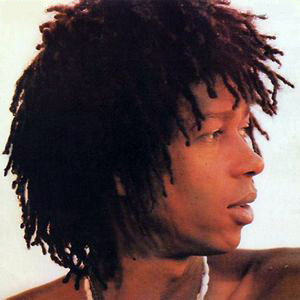
Letra da canção de
cantor e compositor afrobrasileiro
Djavan (nasce 1949)
“Cara de Índio”(1978)
Índio cara pálida,
cara de índio.
Índio cara pálida,
cara de índio.
Sua ação é válida, meu caro índio.
Sua ação é válida, válida ao índio.
Nessa terra tudo dá,
terra de índio.
Nessa terra tudo dá,
não para o índio.
Quando alguém puder plantar,
quem sabe índio.
Quando alguém puder plantar,
não é índio.
Índio quer se nomear,
nome de índio.
Índio quer se nomear,
duvido índio.
Isso pode demorar,
te cuida índio.
Isso pode demorar,
coisa de índio.
*
Índio sua pipoca,
tá pouca índio.
Índio quer pipoca,
te toca índio.
Se o índio se tocar,
touca de índio.
Se o índio toca,
não chove índio.
Se quer abrir a boca,
pra sorrir índio.
Se quer abrir a boca,
na toca índio.
*
A minha também tá pouca,
cota de índio.
Apesar da minha roupa,
também sou índio.
_____
Djavan
(Brazilian songwriter, born 1949)
“The Indian Face” (1978)
Indio pale-face
Indian face.
Pale-face Indio
Your action is just, my dear Indio.
Your action is valid, right for the Indian.
In that land everything grows
– the Indian’s land.
In that land everything grows
– but not for the Indian.
When someone can plant,
who knows? The Indio.
When someone inspires,
Isn’t it the Indio?
An Indian wants to call himself
an Indian name.
Indio wants to call himself himself
– I doubt it, Indio
– that might take time – take care,
That might take time,
The Indian thing.
*
Indio gets just
A little “popcorn”.
He wants “popcorn” too
– it’s your turn, Indio.
If the Indian touches his head
it doesn’t rain.
If he wants to open his mouth
– Smile, Indio.
If he wants to open his mouth,
Don’t touch him.
*
I also have little,
An Indian’s share.
Despite my clothes,
I’m an Indio, too.
_____
Jorge Ben Jor: “Em fevereiro tem carnaval…” / “In February there’s Carnaval…”
Posted: February 18, 2012 Filed under: English, Jorge Ben Jor, Portuguese, ZP Translator: Alexander Best Comments Off on Jorge Ben Jor: “Em fevereiro tem carnaval…” / “In February there’s Carnaval…”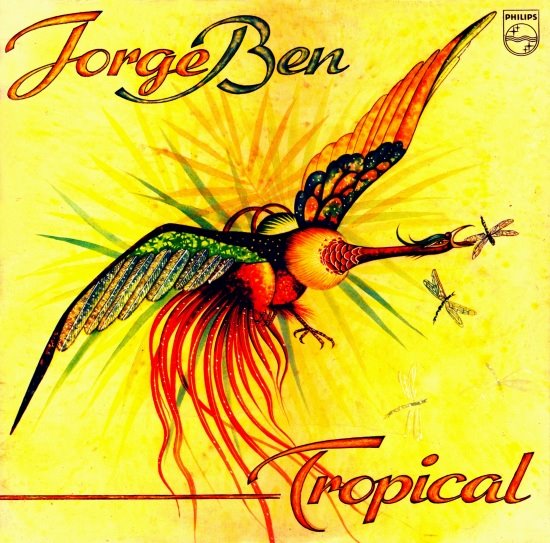
Jorge Ben Jor (born 1942)
“Tropical Country” (1969)
I live
In a tropical country
Blessed by God
And beautiful by nature
( and oh what beauty )
In February (February)
There’s Carnival (there’s Carnival)
I’ve got a VW “Bug” and a guitar
I’m from Flamengo*, and I’ve got a black girl
called Teresa!
( Samba, baby,
Samba, baby! )
*
I’m a young boy of average
intelligence (oh yeah)
But even so I’m happy
Because I don’t owe anything to anyone
(oh yeah)
Because I’m happy, yeah happy
with me!
*
I may not be a band-leader
(oh yeah)
But at home
all my friends
my buddies
respect me (oh yeah)
That’s what it means – being nice,
That’s the power of something extra
– and the joy-oy-oy-oy!
*
I live
In a tropical country
Blessed by God
And beautiful by nature
(and oh what beauty)
In February (in February)
There’s Carnival (There’s Carnival)
I’ve got a VW “Bug” and a guitar
I’m from Flamengo, and I’ve got a black girl
called Teresa!
( Samba, baby!
Samba, baby! )
*
Got a “Bug”,
a GUIT-ar,
Me, I’m Flamengan,
with a black gal called
Treeze… – from my Brazil!
* Flamengo – a neighbourhood in Rio de Janeiro, Brazil
_____
Jorge Ben Jor (nasce 1942)
“Pais Tropical” (1969)
Moro num país tropical,
abençoado por Deus
E bonito por natureza
(mas que beleza)
Em fevereiro (em fevereiro)
Tem carnaval (tem carnaval)
Tenho um fusca e um violão
Sou Flamengo
Tenho uma nêga
Chamada Tereza!
( “Sambaby!”
“Sambaby!” )
*
Sou um menino de mentalidade mediana
Pois é, mas assim mesmo sou feliz da vida
Pois eu não devo nada a ninguém
Pois é, pois eu sou feliz
Muito feliz comigo mesmo
*
Moro num país tropical,
abençoado por Deus
E bonito por natureza
(mas que beleza)
Em fevereiro (em fevereiro)
Tem carnaval (tem carnaval)
Tenho um fusca e um violão
Sou Flamengo
Tenho uma nêga
Chamada Tereza!
( “Sambaby!”
“Sambaby!” )
*
Eu posso não ser um “band-leader”
Pois é, mas assim mesmo lá em casa
Todos meus amigos,
meus camaradinhas me respeitam.
Pois é, essa é a razão da simpatia
Do poder, do algo mais e da alegria-a-a-a!
Tê um fu, um violão,
Sou Flamê
Tê uma nê
Chamá Terê… – do meu Brasil!
_____
Editor’s note:
Today is the opening day of Carnival 2012 in Rio de Janeiro,
and this song from the 1960s with its zest for life captures the
feeling of being young and alive, Brazilian and Black!
Nicomedes Santa Cruz: “Black Rhythms of Peru” / “Ritmos negros del Perú” – “Latin America” / “América Latina”
Posted: February 12, 2012 Filed under: English, Nicomedes Santa Cruz, Spanish, ZP Translator: Alexander Best, ZP Translator: Lidia García Garay | Tags: Black poets Comments Off on Nicomedes Santa Cruz: “Black Rhythms of Peru” / “Ritmos negros del Perú” – “Latin America” / “América Latina”
Nicomedes Santa Cruz
( Poeta y músico afro-peruano, 1925-1992)
“Ritmos negros del Perú” (1957)
Ritmos de la esclavitud
contra amarguras y penas.
Al compás de las cadenas
Ritmos negros del Perú.
*
De África llegó mi abuela
vestida con caracoles,
la trajeron lo´epañoles
en un barco carabela.
La marcaron con candela,
la carimba fue su cruz.
Y en América del Sur
al golpe de sus dolores
dieron los negros tambores
ritmos de la esclavitud
*
Por una moneda sola
la revendieron en Lima
y en la Hacienda “La Molina”
sirvió a la gente española.
Con otros negros de Angola
ganaron por sus faenas
zancudos para sus venas
para dormir duro suelo
y naíta´e consuelo
contra amarguras y penas…
*
En la plantación de caña
nació el triste socabón,
en el trapiche de ron
el negro cantó la zaña.
El machete y la guadaña
curtió sus manos morenas;
y los indios con sus quenas
y el negro con tamborete
cantaron su triste suerte
al compás de las cadenas.
*
Murieron los negros viejos
pero entre la caña seca
se escucha su zamacueca
y el panalivio muy lejos.
Y se escuchan los festejos
que cantó en su juventud.
De Cañete a Tombuctú,
de Chancay a Mozambique
llevan sus claros repiques
ritmos negros del Perú.
_____
Nicomedes Santa Cruz
(Black Peruvian poet and singer, 1925-1992)
Black Rhythms of Peru (1957)
Rhythms of slavery
Against bitterness and sorrows.
Keeping time to the beat of the chains
– Black rhythms of Peru.
*
From Africa arrived my grandmother
Adorned with conch-shells,
They brought her, those Spaniards,
In a three-masted ship.
Marked by wax and fire – the
“carimba” scar was the cross she bore.
And in South America
To each strike, in her suffering,
The Black drums gave
Rhythms to that slavery.
*
For one coin
They sold my grandmother again
In Lima
And at Hacienda La Molina
She served the Spanish people.
With other Blacks from Angola
She earned for her tasks
Mosquito bites on her veins
Sleeping upon hard ground,
And nuthin’ ain’t no consolation
Against bitterness and sorrows…
*
On the sugarcane plantation
Was born that sad “socabón” dance
In the rum-press at the mill,
The Black man sang of Zaña.
The “machete” and the scythe
Cut his dark hands;
And the Indians with their reed-flutes,
The Black man and his tambourine,
Sang of their sad luck
Keeping time to the beat of the chains.
*
They died, those old Black folks…
But within the dried fibres of the cut cane
One hears the Zamacueca dance
And the distant Panalivio.
One hears the festivities they
Sang of in their youth.
From Cañete to Timbuktu,
From Chancay to Mozambique
They carried the clear pitter-patter,
The tap-tap-tap of those
Black rhythms of Peru.
_____
Glossary:
Zaña: 16th-century Spanish-Colonial town in Peru – inhabited by
wealthy, pious Spanish families involved in sugar and cotton
plantations based upon African slavery and Native-Indian servitude.
Raided by English pirates in 1686 – many people were killed,
prosperous families abandoned the town, and slaves
became unexpectedly “free”… La Zaña is an Afro-Peruvian dance
originating in the town.
Zamacueca, Panalivio: Afro-Peruvian dances of the 18th
and 19th centuries – the Zamacueca was a courtship dance and
the Panalivio’s lyrics often told of the trials of slavery.
*
Cañete, Chancay: Peruvian Spanish-Colonial towns – prominent in
the 17th through the 19th centuries – surrounded by haciendas
and sugar/cotton plantations. Large African-born and native-
born Black slave populations.
* * *
Nicomedes Santa Cruz:
“América Latina”(1963) / “Latin America”(1963)
Mi cuate My pal
Mi socio My mate
Mi hermano My brother
Aparcero Sharecropper
Camarado Colleague
Compañero Comrade
Mi pata My buddy
M´hijito My boy
Paisano… Compatriot…
He aquí mis vecinos. Here I have my neighbours
He aquí mis hermanos. Here I have my brothers
*
Las mismas caras latinoamericanas The same Latin-American faces
de cualquier punto de América Latina: from every corner of Latin America:
Indoblanquinegros Indianwhiteblacks
Blanquinegrindios Whiteblackindians
y Negrindoblancos and Blackindianwhites
*
Rubias bembonas Blondes with thick lips
Indios barbudos Bearded Indians
y negros lacios and straight-haired Blacks
*
Todos se quejan: All of them complain
-¡Ah, si en mi país – Oh, if only in my country
no hubiese tanta política…! there wasn’t so much “politics”…!
-¡Ah, si en mi país – Oh, if only in my country
no hubiera gente paleolítica…! there weren’t such paleolithic people…!
-¡Ah, si en mi país – Oh, if only in my country
no hubiese militarismo, there was no militarism,
ni oligarquía or oligarchy
ni chauvinismo or chauvinism
ni burocracia or bureaucracy
ni hipocresía or hypocrisy
ni clerecía or clergy
ni antropofagia… or anthropophagy…
-¡Ah, si en mi país…! – Oh, if only – in my country…!
*
Alguien pregunta de dónde soy Someone asks where I’m from
(Yo no respondo lo siguiente): (I do not answer with the following):
Nací cerca de Cuzco I was born close to Cuzco
admiro a Puebla Puebla I admire
me inspira el ron de las Antillas I’m inspired by rum from The Antilles
canto con voz argentina I sing in an Argentinian voice
creo en Santa Rosa de Lima I believe in Saint Rose of Lima
y en los Orishas de Bahía. and in the Orishas of Bahia.
Yo no coloreé mi Continente I didn’t paint my Continent
ni pinté verde a Brasil the green of Brazil
amarillo Perú the yellow of Peru
roja Bolivia Bolivia’s red
*
Yo no tracé líneas territoriales I drew no border-lines
separando al hermano del hermano. separating brother from brother
*
Poso la frente sobre Río Grande I rest by the Rio Grande
me afirmo pétreo sobre el Cabo de Hornos I stand firm at Cape Horn
hundo mi brazo izquierdo en el Pacífico my left hand I dip down into the Pacific
y sumerjo mi diestra en el Atlántico. and into the Atlantic I submerge my right.
*
Por las costas de oriente y occidente By the coasts East and West
y doscientas millas entro and two-thousand miles inland
a cada Océano from each Ocean
sumerjo mano y mano I immerse both hands
y así me aferro a nuestro Continente and in this way I hold our Continent
en un abrazo Latinoamericano. in a Latin-American embrace.
*
Translation from the original Spanish into English:
“Black Rhythms of Peru”: Alexander Best
“Latin America”: Lidia García Garay
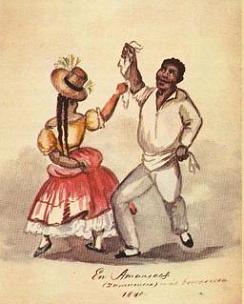
Nicolás Guillén: “The Bongo’s Song” / “La canción del bongó”
Posted: February 12, 2012 Filed under: English, Nicolás Guillén, Spanish, ZP Translator: Alexander Best | Tags: Black History Month poems Comments Off on Nicolás Guillén: “The Bongo’s Song” / “La canción del bongó”
ZP_The Rooster Dances to My Bongo Beat_El Gallo Baila Con Mi Bongo_painting by_pintura de_George Rodez
Nicolás Guillén
( Poeta afro-cubano, 1902-1989 )
“La canción del bongó” (1930)
.
Esta es la canción del bongó:
—Aquí el que más fino sea,
responde, si llamo yo.
Unos dicen: Ahora mismo,
otros dicen: Allá voy.
Pero mi repique bronco,
pero mi profunda voz,
convoca al negro y al blanco,
que bailan el mismo son,
cueripardos y almiprietos
más de sangre que de sol,
pues quien por fuera no es de noche,
por dentro ya oscureció.
Aquí el que más fino sea,
responde, si llamo yo.
En esta tierra, mulata
de africano y español
(Santa Bárbara de un lado,
del otro lado, Changó),
siempre falta algún abuelo,
cuando no sobra algún Don
y hay títulos de Castilla
con parientes en Bondó:
Vale más callarse, amigos,
y no menear la cuestión,
porque venimos de lejos,
y andamos de dos en dos.
Aquí el que más fino sea,
responde si llamo yo.
Habrá quién llegue a insultarme,
pero no de corazón;
habrá quién me escupa en público,
cuando a solas me besó…
A ése, le digo:
—Compadre,
ya me pedirás perdón,
ya comerás de mi ajiaco,
ya me darás la razón,
ya me golpearás el cuero,
ya bailarás a mi voz,
ya pasearemos del brazo,
ya estarás donde yo estoy:
ya vendrás de abajo arriba,
¡que aquí el más alto soy yo!
_____
Nicolás Guillén
(Cuban poet, 1902-1989)
“The Bongo’s Song” (1930)
(To Lino Dou)
.
This is the bongo’s song:
“Let the finest of you here
answer when I call you!
Some say: I’ll be right there,
others say: Just a minute.
But my harsh peal,
but my deep voice,
summons blacks and whites,
who dance to the same son,
men with brownish skins and blackish souls
caused more by blood than by the sun,
for who on the outside are not night,
have already darkened on the inside.
Let the finest of you here
answer when I call you.
.
“In this land made mulatto
by Africans and Spaniards
(Santa Bárbara on the one hand,
Changó on the other),
there is always a missing grandfather,
when there isn’t an excess of Dons.
Some have titles from Castile
and relatives in Bondó :
it is better to keep quiet, my friends,
and not stir up the matter
because we came from far away,
and we walk two by two.
Let the finest of you here
answer when I call you!
.
“There’ll be those who will insult me,
but not of their full accord;
there’ll be those who spit on me in public,
yet when we are alone they kiss me…
To them I say:
My friends,
you’ll soon be begging my pardon,
you’ll soon be eating my ajiaco,
you’ll soon be saying I’m right,
you’ll soon be beating my leather,
you’ll soon be dancing to my voice,
we’ll soon walk arm in arm,
you’ll soon be where I am:
you’ll soon be moving up,
for the highest here is me!”
.
Translation from Spanish into English
© 2003, KEITH ELLIS
* * *
Glossary:
Son – Quintessential original Cuban musical style, nascent in
the late 19th-century, flowered fully in the 20th; a hybrid of
Bantu-African percussion – bongos, maracas – with Spanish guitars
and melodies, combined with African “call-and-response”
song structure; the precursor of modern-day “Salsa” music
Mulatto – “mixed-race” i.e. African and European ancestry
Santa Bárbara – Roman-Catholic saint, syncretized into
Santería, a Caribbean religion combining West-African and
Christian beliefs; practised in Cuba.
Changó – Yoruba-African God of fire, thunder and lightning
Don – prefix of Spanish nobility
Bondó – a “typical” African town/province name, found in
Congo, Ivory Coast, Kenya, Mali, Uganda
Ajiaco – a hearty Cuban soup consisting of chicken, pork,
plaintains, sweet potatoes, taro, black pepper and lime juice
_____
Bob Marley: ¡Despierten y Vivan! / Wake Up and Live!
Posted: February 6, 2012 Filed under: Bob Marley, English, Spanish, Translator's Whimsy: Song Lyrics / Extravagancia del traductor: Letras de canciones traducidas por Alexander Best, ZP Translator: Alexander Best | Tags: Black poets Comments Off on Bob Marley: ¡Despierten y Vivan! / Wake Up and Live!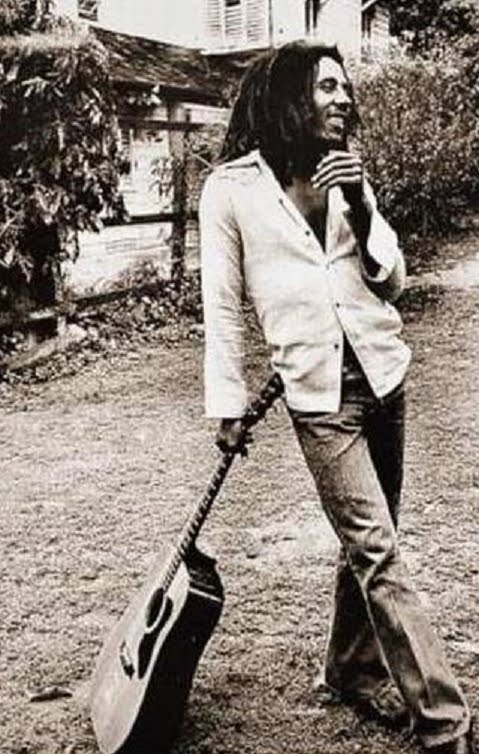
“Wake up and Live!”
Wake up and live, y’all,
Wake up and live,
Wake up and live now,
Wake up and live!
*
Me say: Life is one big road with lots of signs,
So when you riding through the ruts,
Don’t you complicate your mind.
Flee from hate, mischief and jealousy,
Don’t bury your thoughts
– put your vision to reality, yeah!
*
All together now:
Wake up and live, y’all,
Wake up and live,
Wake up and live now,
Wake up and live!
*
Rise, ye mighty people,
There’s work to be done.
So let’s do it, a little by little.
Rise from your sleepless slumber, yeah!
We’re more than sand on the seashore,
We’re more than numbers.
*
All together now:
Wake up and live, y’all,
Wake up and live,
Wake up and live now,
Wake up and live!
*
Woah, one-one cocoa full a basket,
When you use to live big today –
tomorrow you buried in a casket.
One-one cocoa full a basket, yeah,
When you use to live big today –
Tomorrow: buried in a casket!
*
All together now:
Wake up and live, y’all,
Wake up and live,
Wake up and live now,
Wake up and live!
_____
¡Despierten y Vivan!
Despierten y vivan, todos ustedes,
Despierta y vive,
Despierta y vive ahora,
Despierta y vive!
*
Digo: La vida es un camino grande con un montón de signos,
Así que cuando montas a caballo a través de los surcos,
no te complicas la mente.
Huid de odio, maldad y los celos –
No entierres los pensamientos,
ponga su visión en realidad, ¡sí!
*
Despierten y vivan, todos ustedes,
Despierta y vive,
Despierta y vive ahora,
Despierta y vive!
*
Aumenten, ustedes-los-poderosos,
Hay trabajo por hacer,
Así que vamos a hacerlo, poco a poco.
Aumente del sueño sin dormir, sí, sí,
Somos mucho más que arena en la orilla del mar,
Somos mucho más que unos números.
*
Todos juntos ahora:
Despierten y vivan, todos ustedes,
Despierta y vive,
Despierta y vive ahora,
¡Despierta y vive!
*
¿No lo ves? Una pila de cacao en una canasta,
Cuando estás viviendo “a lo grande” hoy día –
Mañana, ¡serás enterrado en un ataúd!
¿No lo ves? Una pila de cacao en una canasta,
Cuando estás viviendo “a lo grande” hoy día –
Mañana, ¡serás enterrado en un ataúd!
*
Todos juntos ahora:
Despierten y vivan, todos ustedes,
Despierta y vive,
Despierta y vive ahora,
¡Despierta y vive!
_____
Letras de una canción de 1979 – del poeta-músico
jamaicano Robert Nesta Marley a.k.a. Bob Marley
(6 febrero, 1945 – mayo 1981)
Traducción del inglés al español: Alexander Best
*
Song lyrics from 1979 by Jamaican poet and musician
Robert Nesta Marley a.k.a. Bob Marley
(February 6th, 1945 – May 1981)
Translation into Spanish: Alexander Best
_____
Día De Los Reyes: canta Mercedes Sosa…de Melchor, Gaspar y Baltasar
Posted: January 6, 2012 Filed under: English, Spanish, ZP Translator: Alexander Best | Tags: Christmas carols and songs, Mercedes Sosa Comments Off on Día De Los Reyes: canta Mercedes Sosa…de Melchor, Gaspar y Baltasar
Canción por
Mercedes Sosa:
Los Reyes Magos
Llegaron ya, los reyes y eran tres
Melchor, Gaspar y el negro Baltasar.
Arrope y miel
Le llevaron
Y un poncho blanco de alpaca real.
Changos y chinitas duérmanse
Que ya Melchor, Gaspar y Baltasar
Todos los regalos dejaron
Para jugar mañana al despertar.
El Niño Dios muy bien lo agradeció
Comió la miel y el poncho le abrigó.
Y fue después
Que sonrió,
Y a medianoche el sol relumbró.
_____
A Song by
Mercedes Sosa:
The Three Wise Men (Adoration of the Magi)
They arrived already, those Kings, and three there were:
Melchior, Caspar, and black Balthazar.
Grape syrup and honey they took to Him
And a poncho of royal alpaca wool.
Monkeys, ladybugs – go to sleep !
All the gifts and toys are already there,
from Melchior, Caspar and Balthazar,
for Him in the morning – when he lets out a “peep”.
The Child God was truly grateful for
the poncho that wrapped him up warmly
– oh, and the honey He ate !
And it was after that
He smiled.
And at midnight the
Sun shone bright !
_____
Translation / interpretation from Spanish into English: Alexander Best
Mon Pays – c’est l’Hiver ! “Québécitude” in song
Posted: December 22, 2011 Filed under: English, French, Gilles Vigneault, Translator's Whimsy: Song Lyrics / Extravagancia del traductor: Letras de canciones traducidas por Alexander Best, ZP Translator: Alexander Best Comments Off on Mon Pays – c’est l’Hiver ! “Québécitude” in song
MY COUNTRY
My country’s not a country, it’s winter,
my garden’s not a garden, it’s a vast plain,
my road is no road – it’s the snow !
My country’s not a country – it’s winter !
A ceremony all in white
where snow marries wind,
in this blizzard-land
my father built a house
and I’m going to honour
his ways, his example…
My guest room will be where
you return, season by season
and you’ll build too – right beside it.
My country’s not a country, it’s winter,
My refrain’s no refrain, it’s a gust of wind,
My house isn’t mine – it’s the winter-chill’s !
My country’s not a country – it’s winter !
All around my solitary land
I cry out before the silence,
to everyone on earth:
My house is yours, too.
Inside four walls of ice
with time and space
I make the fire, and a place
for People of the Horizon
– and these people are of my people.
My country’s not a country, it’s winter,
my garden’s not a garden, it’s the vast plain,
my road is no road – it’s the snow !
My country’s not a country – it’s winter !
My country’s no country but the contrary
of country – neither land nor nation,
my song’s not a song – it’s my life !
And for you I wish to master these winters !
_____
MON PAYS
Mon pays ce n’est pas un pays, c’est l’hiver
Mon jardin ce n’est pas un jardin, c’est la plaine
Mon chemin ce n’est pas un chemin, c’est la neige
Mon pays ce n’est pas un pays, c’est l’hiver.
Dans la blanche cérémonie où la neige au vent se marie
Dans ce pays de poudrerie mon père a fait bâtir maison
Et je m’en vais être fidèle à sa manière à son modèle
La chambre d’amis sera telle qu’on viendra des autres saisons
pour se bâtir à côté d’elle.
Mon pays ce n’est pas un pays, c’est l’hiver
Mon refrain ce n’est pas un refrain, c’est rafale
Ma maison ce n’est pas ma maison, c’est froidure
Mon pays ce n’est pas un pays, c’est l’hiver.
De ce grand pays solitaire je crie avant que de me taire
A tous les hommes de la terre ma maison c’est votre maison
Entre mes quatre murs de glace je mets mon temps et mon espace
À préparer le feu, la place pour les humains de l’horizon
Et les humains sont de ma race.
Mon pays ce n’est pas un pays, c’est l’hiver
Mon jardin ce n’est pas un jardin, c’est la plaine
Mon chemin ce n’est pas un chemin, c’est la neige
Mon pays ce n’est pas un pays, c’est l’hiver.
Mon pays ce n’est pas un pays, c’est l’envers
D’un pays qui n’était ni pays ni patrie
Ma chanson ce n’est pas une chanson, c’est ma vie
C’est pour toi que je veux posséder mes hivers.
_____
Gilles Vigneault (born 1928) wrote “Mon Pays” for a 1965 NFB film,
La neige a fondu sur la Manicouagan. This new folk song became an
instant classic – emblematic for Québec’s growing nationalist movement.
Editor’s note:
Almost two generations later the song does show its age, for the Canadian
essential-ideal of The Great White North – intrinsic to Canadians outside of
Québec as well – holds less sway in our collective identity. Too, “Mon Pays”
is dated in that it captures the spirit of an isolated – if friendly – culture:
not the rumbling, restless Québec of the 1960s. Rather the lyrics might well
describe a People more remote in time – the Far-North Inuit of the 19th-century.
Still, if there has been a place in Canada where winter is embraced and
not merely borne, it is Québec, where coureurs de bois and habitants
were the first of Canada’s White arrivals to adapt the Naskapi/Montagnais
Native People’s’ inventions – toboggans and snowshoes – to daily use both
practical and recreational.
And Québec leads the nation for Winter fun – not drear – with many jovial
outdoor festivals and an entrenched culture of open-air ice-skating parties !
_____
Translation from French into English: Alexander Best
Oración a La Virgen de Guadalupe: José Valdez
Posted: December 12, 2011 Filed under: English, José Valdez, Spanish, ZP Translator: Alexander Best | Tags: Oración a La Virgen de Guadalupe, Prayer to Our Lady of Guadalupe Comments Off on Oración a La Virgen de Guadalupe: José Valdez
Oración a La Virgen de Guadalupe
por José Valdez (México)
“A mi Virgen de Guadalupe”
.
Necesito tu ayuda
me siento perdido
mis ojos se nublan
no encuentro el camino
tú que eres buena
y muy milagrosa
te pido, morena,
muchísimas cosas
pido por la gente
que quiero yo tanto
que siempre se encuentren
bajo de tu manto
pido me des fuerzas
que encuentre el camino
y que me protejas
con tu manto fino
eres muy hermosa
linda virgencita
pareces una rosa
que nunca se marchita
con solo mirarte
me llenas de paz
con solo tocarte
la vida me das
me inspiras confianza
y mucha ternura
me das esperanzas
y también dulzura
esa verde manta
que cubre tu cabeza
te hace ver más santa
y llena de pureza
ese resplandor
que a ti te rodea
es un bello sol
que nunca te quema
esos lindos ojos
parecen dos diamantes
y tu vestido rojo
te hace ver radiante
sé que tú me quieres
yo siempre lo supe
por eso, para mí, eres
Mi Virgen de Guadalupe.
*
“To my Virgin of Guadalupe”
.
I need your help
I am lost
my eyes cloud over
I cannot find the path,
you who are good
so very miraculous
I ask of you, morena,
very very many things
I ask for those people that I love so,
that always they may find themselves
blanketed within your cloak,
I ask that you may give me strength
that I might find the way
and that you may protect me
within your fine cloak,
you are most beautiful
lovely dear Virgin
you seem like a rose
that never wilts
I merely gaze upon you
and you fill me with peace
I touch you, merely,
and you give me life,
you inspire trust in me
and much tender feeling,
hope you give me,
gentleness too,
that green scarf
that covers your head
makes you look most saintly
and full of purity,
that dazzling gleam
surrounding you
is a beautiful sun
that never burns,
those lovely eyes
are as two diamonds,
and your red robe
makes you radiant,
I know that you love me,
always I knew it,
and, for that reason, for me, you are
My Virgin of Guadalupe.
*
We thank Mr. Valdez for his
poem from the heart honouring
Our Lady of Guadalupe on this
her feast day, December 12th.
Translation from Spanish into English:
Alexander Best
*
 Zócalo Poets