Macumba Words: Aimé Césaire
Posted: October 26, 2011 Filed under: Aimé Césaire, English, French, ZP Translator: Alexander Best | Tags: Black poets Comments Off on Macumba Words: Aimé Césaire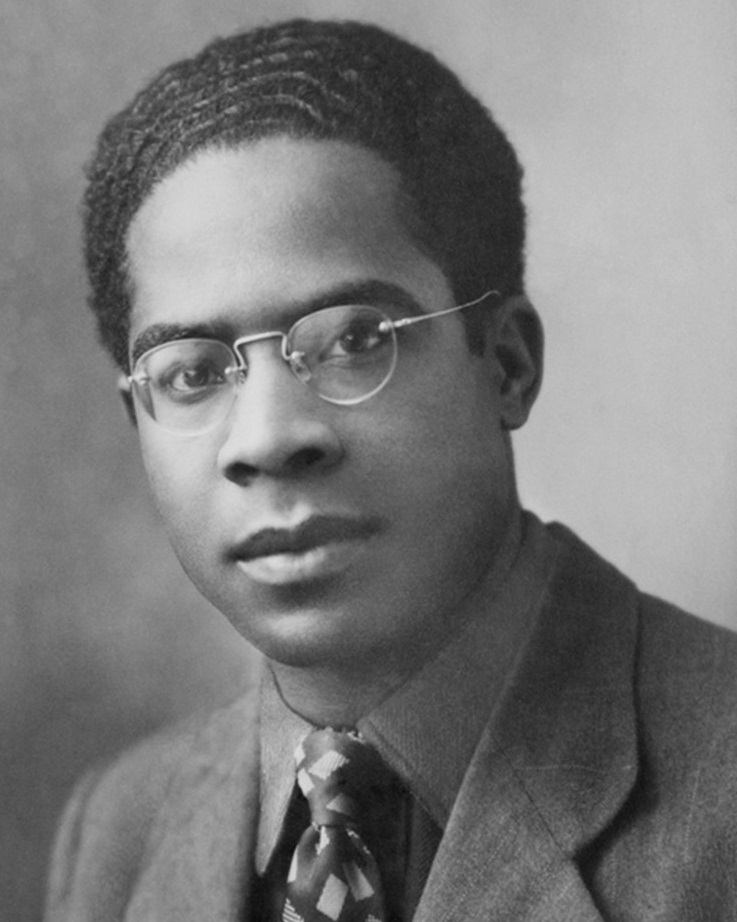 ZP_Aimé Césaire dans les années 1930
Macumba-Word
.
A word can be father to a saint,
words are the mothers of saints,
with a word that both chases and caresses one can
cross a river peopled by caïmans.
Sometimes I sketch a word on the sun,
with a cool, fresh word one spans a desert
in a day.
There are life-buoy words that ward off squalls,
there are iguana-words,
there are delicate words – phantom stick-insect words.
And those shadow-words
when one awakes in a rage of flying sparks.
There are Shango words.
And sometimes I swim slyly – playfully –
upon the back of a dolphin-word.
. . .
Glossary:
Macumba – an African (Bantu) word generally meaning “magic”
caïmans – a species of crocodile found in the Caribbean, Central and
South America; hunts along riverbanks
Shango – god of fire, thunder and lightning, from West-African religion
– mainly Yoruba; survived “The Middle Passage”, and is venerated in
Haitian vodou (voodoo) and Brazilian candomblé.
dolphin – perhaps a reference to two ‘dolphins’:
‘dauphin’ as in ‘Dauphin’, the old heir-apparent to France’s throne +
the notion of “correct” French;
also the Boto (Amazon River dolphin) of Afro-Brazilian religion
. . . . .
Mot-Macumba
.
Le mot est père des saints
le mot est mère des saints
avec le mot couresse on peut traverser un fleuve
peuplé de caïmans
Il m’arrive de dessiner un mot sur le sol
avec un mot frais on peut traverser le désert
d’une journée
Il y a des mots bâton-de-nage pour écarter les squales
il y a des mots iguanes
il y a des mots subtils ce sont des mots phasmes
il y a des mots d’ombre avec des réveils en colère
d’étincelles
Il y a des mots Shango
Il m’arrive de nager de ruse sur le dos d’un mot dauphin.
. . .
Aimé Césaire (1913-2008) was born and died in Martinique,
yet he was a man of the world. In his poetry and plays, both
full of hope and strength, he promoted decolonization
throughout the island-countries of the Caribbean. From
the geography and customs of those same islands he
drew much of his imagery – as in the poem featured above.
English translation: Alexander Best.
*
Aimé Césaire (1913-2008) était un Martiniquais, aussi
un homme du monde. Dans sa poésie et son théâtre, et avec
de l’espérance et puissance, il a promis la décolonisation des
pays caraïbes. Ses paroles sont fondées sur la géographie et
les coutumes de ces mêmes îles. Par exemple: le poème ici…
Traduction en anglais: Alexander Best
Kettly Mars: Defiance of Oblivion
Posted: October 26, 2011 Filed under: English, French, Kettly Mars, ZP Translator: Alexander Best | Tags: Black poets Comments Off on Kettly Mars: Defiance of Oblivion ZP_Kettly Mars_2011
Behind the door
.
Sweet sentinel, you keep watch
over the shadows of my room.
This evening my dreams depart
for the north. Toward the sea.
Gentle candle, gentle
flame, under your tears of light
wood, stone, copper and glass
cloaked in golden silence
bathed in the same mystery.
. . .
Derrière la porte
.
Douce sentinelle, tu veilles
sur les ombres de la chambre.
Ce soir mes rêves partent
vers le nord. Vers la mer.
Douce bougie, douce
flamme, sous tes larmes de lumière
bois, pierre, cuivre et verre
enveloppés d’or silencieux
baignent dans le même mystère.
. . .
My hand and the stone
.
My hand and the stone,
sage rebellion of noble particles
gripped in my palm.
I’ve made my own her reality:
grey, heavy, oval.
Millenial stone
whose cry
lays claim to nothing other than a
defiance of oblivion.
. . .
Ma main et la pierre
.
Ma main et la pierre,
sage rébellion de particules
tenant dans ma paume.
J’ai fait mienne sa réalité
grise, lourde et ovale.
Pierre millénaire
jusqu’en son cri
elle ne se prétend autre chose
qu’un défi à l’oubli.
. . . . .
Kettly Mars est née en 1958.
Un romancier à le proue de la littérature haïtienne,
elle est aussi un poète. Les poèmes ici viennent de
son recueil de 2011, Feulements et sanglots.
Traductions: Alexander Best
*
Kettly Mars, born in 1958, is a novelist
at the forefront of Haitian literature.
She is a poet as well, and these poems
are from her 2011 collection, Growls and Sobs.
Translations into English: Alexander Best
James Noël: Four poems from “Kana Sutra”
Posted: October 20, 2011 Filed under: English, French, James Noël, ZP Translator: Alexander Best | Tags: Black poets Comments Off on James Noël: Four poems from “Kana Sutra”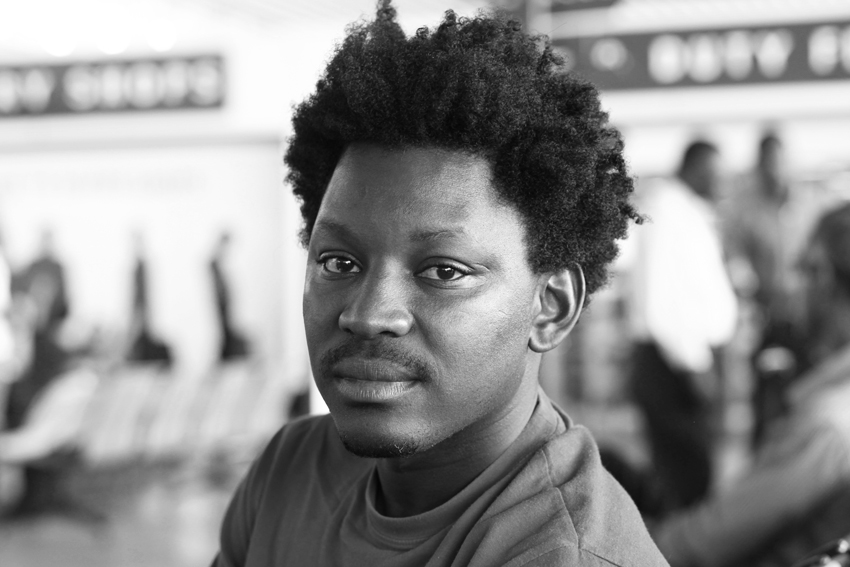 ZP_James Noël in 2011_photographed by Henry Roy
Inside my Cage
.
In me the words
released like parrots
blue-black-red-and-green
hurled like stones
at the sleeper’s roof
inside my private cage
all the illegal words
all the SDF * words
all the words without i.d. or release papers
in me all the words at the margin
which dream of a line
of a better horizon
in me love’s words
words which kiss between two fingers
– the middle and the baby one
words which die wordlessly
lacking hands to touch
or lips to kiss with
in me a word
in me the kamikaze-word of mad love
trapped in a speeding car
heading toward a public climax
.
* Self Defense Force
_____
Cage intérieure
.
En moi le mots
lâchés comme des perroquets
bleus-noirs-rouges-et-verts
lancés comme des pierres
sur le toit du dormeur
dans ma cage intérieure
tous les mots sans-papiers
tous les mots SDF
tous les mots sans-papiers ni cahier
de décharge
en moi tous les mots en marge
qui rêvent d’une ligne
d’un horizon meilleur
en moi les mots’ d’amour
les mots qui baisent entre deux doigts
le majeur el l’auriculaire
et qui crèvent sans mot dire
fate de mains pour toucher
ni de lèvres pour le baiser
en moi un mot
anmwe le mot kamikaze de l”amour fou
allant voiture piégée
vers son orgasme public.
_____
Waltz of the Valises
.
My suitcase pops open in public
i endorse this without saying anything
i’ve packed Death
inside
cash paid in full
childhoods
childhoods
see my waltzing valise
few people in this world
are as open as my valise
in public my suitcase on display
down to the merest details
my made-in-China suitcase
nylon and polyester
my suitcase with its exhibitionist’s soul
down to the least titbits
few people in this world
are as exposed as my valise
now
all my guts are out
all my dirt in disorder
my vices
my nuts and bolts
all my lives
are known
my whole history
within – without
and my poem
inside – outside
known at last
and acknowledged
for the grand importance of
its public uselessness.
_____
Valse des valises
.
Ma valise s’ouvre en public
et j’avalise sans rien dire
j’encaisse la mort
à l’intérieur
rubis sur ongle
enfances
enfances
voyez la valse de ma valise
ma valise est ouverte
peu de gens danse le monde
sont aussi ouverts que ma valise
en public ma valise étalée
dans les moindres détails
ma valise made in China
nylon et polyester
ma valise à l’âme
exhibitionniste
dans les moindres détails
peu de gens dans le monde
sont aussi ouverts que ma valise
maintenant
tous mes boyaux sont dehors
toutes mes ordures en désordre
mes vices
mes écrous
toutes mes vies
sont connues
toute mon histoire
dedans – dehors
et mon poème
dedans – dehors
enfin connu
et reconnu
pour sa grande importance
d’inutilité publique.
_____
Of love and other generalities: an excerpt
.
Certain love poems are to be read at night so that
their effect might be fully felt within the body –
like Japanese green tea, a concoction of datura, or
even a mild drug, a sweet drug that produces the
impression of the city’s dust under a rain.
The best poems often come after a break-up.
That most awful thing about a split is the feeling of
being ditched in the middle of the ocean,
with few choices for somebody who doesn’t know
how to swim.
Only one option has existed up till now: to sink.
_____
De l’amour et autres généralités: un extrait
.
Certains poèmes d’amour sont à lire la nuit
pour que leurs effets soient pleinement ressentis
dans le corps comme un thé vert japonais,
une concoction de datura, ou bien encore une
drogue douce, l’effet d’une drogue douce que
procure la poussière d’une ville sous la pluie.
Les meilleurs poèmes viennent souvent après
une rupture amoureuse. Ce qu’il y a de plus
terrible dans les ruptures, c’est le sentiment
d’être lâché en haute mer, au mauvais moment
par l’autre. Être lâché en haute mer donne peu
d’options à quelqu’un qui ne sait pas nager.
Une seule option demeure jusqu’ à ce jour:
le naufrage.
_____
Two burning candles
.
The day will come, says a man to his belovéd,
when God will intervene with a knife
to slice this onion
which costs our eyes so many tears
and sucks up so much wax
from two burning candles
on their way to dying in the rain
God will come one day
to slice this onion
under our eyes
_____
Deux bougies allumées
.
Un jour viendra , dit l’homme à sa bien-aimée,
un jour viendra
où Dieu fera une intervention au couteau
pour trancher cet oignon
qui coûte tant de larmes à nos pupilles
et pompe tant de cire
à nos deux bougies allumées
en passe de mourir sous la pluie
Dieu viendra un jour
trancher cet oignon sous nos yeux.
_____
Poet and writer James Noël was born in
Haiti in 1978. These poems are from his
2011 collection, Kana Sutra.
Translation from the original French:
Alexander Best
*
Né en Haïti en 1978, James Noël est
un poète et écrivain. Les poèmes ici
viennent de son recueil 2011, Kana Sutra.
Traduction en anglais: Alexander Best
Michèle Voltaire Marcelin: “Quicksand words”
Posted: October 15, 2011 Filed under: English, French, Michèle Voltaire Marcelin, ZP Translator: Alexander Best | Tags: Black poets Comments Off on Michèle Voltaire Marcelin: “Quicksand words” ZP_painting by Michèle Voltaire Marcelin
Michèle Voltaire Marcelin:
And there comes
the time of the Poem
.
The afternoon blazes through the window
at siesta hour
It is forbidden to speak to the poet
do not disturb
because
I’m making love to words
here behind the door
in my bed
One must not disturb the poet
there’s no response from the number you just dialed
momentarily I’ve removed myself from this world
put misery off to one side
it’s the time to say to myself
kick the door shut and
take your pleasure
Talking to the poet’s not allowed
until the month of August
because je suis in bed
with words
feetless, headless words
words that dog-howl at the moon
quivering-iguana words dazzled by roses
bad-luck words like roof tiles that bonk me on the head
because I don’t know how to put on an act
quicksand words
words like crucifixion nails
and an Easter brought back to life
words of flagellation upon naked thighs
promised-land words
Place de l’Opéra words
or of Place Saint-Pierre
or words of whichever Place you’d like
between Brooklyn and Africa
It’s forbidden to disturb the poet
I’m not there for anyone
when words are running ’round in my head
and walking through my blood
just three little turns more and then they’ll take off
– wait till the end of summer and
it’s just the time, the weather’s right,
to place a poem, to set a poem off, in the street.
. . .
Il fait un temps de poème
.
L’après-midi flambe à travers la fenêtre
à l’heure de la sieste
il est interdit de parler au poète
do not disturb
because
je fais l’amour avec des mots
derrière la porte
et dans mon lit
il ne faut pas déranger le poète
il n’y a pas de réponse au numéro que vous avez composé
je m’absente du monde momentanément
je laisse la misère de côté
le temps de me dire
pousse la porte du pied
prends ton pied
il est interdit de parler au poète
jusqu’ au mois d’août
because je suis in the bed
avec des mots
des mots sans pieds ni tête
des mots aboiements de lune aux chiens
des mots frissons d’iguanes éblouis par des roses
des mots tuiles qui me tombent sur la tête
car je na sais pas jouer la comédie
des mots sables mouvants
des mots clous de crucifixion
et de Pâques ressuscitées
des mots flagellations sur des cuisses dénudées
des mots promissions
des mots Place de l’Opéra
ou Place Saint-Pierre
ou Place où tu voudras
between Brooklyn and Africa
il est interdit de disturb le poète
je n’y suis pour personne
quand les mots courent dans ma tête
et marchent dans mon sang
trois petits tours et puis s’en vont
attendez la fin de l’été
il fait un temps à mettre un poème à la rue.
. . .
My heart
.
My heart’s “in use” so much and so often, that
rust never settles there.
Each time the lock’s got to be changed, because
it’s always my previous lover who keeps the key.
. . .
Mon coeur
.
Mon coeur sert tant et si souvent
que la rouille ne s’y installe pas
Il faut à chaque fois y changer la serrure
Le dernier amant garde toujours la clef.
. . . . .
Michèle Voltaire Marcelin is from Port-au-Prince,
Haiti. She was born in 1955.
She is both poet and painter and has been called
a “disenchanted enchantress” (editor Bruno Doucey).
Poem translations into English: Alexander Best
French originals: Éditions Bruno Doucey
*
Michèle Voltaire Marcelin, née à Port-au-Prince, Haiti,
en 1955, est une poétesse et peintre, aussi une
“désenchantée enchanteresse” (éditeur Bruno Doucey).
Traductions: Alexander Best
Thanksgiving Poems – 10 / 10 / 2011
Posted: October 10, 2011 Filed under: Alexander Best, English | Tags: Thanksgiving poems Comments Off on Thanksgiving Poems – 10 / 10 / 2011.
Alexander Best
GIVE THANKS
.
Green growth in a clay pot, citrus peel,
cat’s paw.
Rakes, staves, a busted clock.
Clackety spinning of rusty wheels.
Nuts and bolts in a bashed-up box,
kicked across the floor.
Hair-raising feelings. A bare ass to the world.
Clear. Early.
Cool air, and straight-back chair.
Cat’s ear. Basket, of rough weave, trumpet-shaped.
Heavy tasks. Leaves, a stump, some stuff.
Unknown Men and Women.
Hammered tray and coffee pot of
brass / wood, looks like a
sputnik with minaret.
Cat’s chin, offered upward.
A pyramid of lemons. A big-wide
cracked maple bowl
(flung as the lover fled, spent winter
face-down in puddle-deep yard).
Cat sleeping, after the hunt…
no longer hot and full of craft.
Cotton, wool, gravel,
soil of several consistencies.
Sandy-shale pumice for ‘seasonal’ foot.
Rain, sun and cloud,
of course. Remorse.
Being human.
All cats, contented and cross.
Agéd treetrunks whose bark suffers loss,
cement and copper, dross.
Stones in groups, free-thinking boulders,
grasses tufted tiny and tall.
Porridge-of-bricks.
And, put to no purpose:
wedges, clods, mud.
Fragrance, the Body.
Cats-as-judges. Purring-song.
Pig and cow, fowl,
Sardines grilled, and memory of
flash-fried scallops.
A meal set down before me.
Snoozes. Solitude.
Ripe hollering, and
Crude.
Kind people.
Passionate ones.
Sad or angry anybodies.
Cat’s nose.
INVISIBLE HOME
.
The cast-iron gate at the top of the fire escape swings open, swings shut. The skinny girl who lives across the way skips down the metal stairs in her hideous, clunking platform shoes.
The ugly, charming bulldog scampers around the flat tar-and-pebble roof; sniffs, snorts, and whines. Its master opens the door a sliver; inside’s a muddle lit by two computer screens. The dog walks itself in a cold dark built of specific small noises; scratches at the door then disappears.
The clunking girl returns; dances, graceless and free, up the fire escape; the gate talks on its hinges.
Voices banter, in burnt or polished tones. Footfalls approach, on ice, mud and trash;
boots crunch over starchy snow. Regular strangers, alley trudgers.
These…the night sounds through a gap in my window.
Is my face neutral – or grim ?
My face shows nothing, as I sink and rise into the hours of sleep.
Smiling, I am smiling; borne along these sounds of night,
glad to be here, exactly now.
_____
THE VIVID PICTURE
.
Curls of incense, gusts of cold air, meet in a little room.
Means the world to me, this space; and all objects in it
– broken, brassy – are beautiful.
Here, the eye everywhere falls on
Something that soothes the human animal.
And you, my darling, are come to me – at last –
And you came in your own way, taking me by surprise,
Like the tender return of the wanderer-cat; or the
Kind face of the January sun.
And a crow’s voice tells-it-like-it-is this visionary morning.
You’ve let me touch your body…and it’s a
Reaching-Home after long absence; a
Perfect walk in darkness, the jig of a blind man with his sugar cane.
You and I, we can still speak !
Your field-and-forest feet cover mine richly,
and the whole of us is a vigorous stalk.
You laid your head on my thigh,
Remembered my body’s health to me.
And like a great journey in progress,
Being is strong throughout my limbs.
Lying a-bed after pure-ancient Moment, our
Body arrives at the place of the Soul. And
It’s happened together.
Shall we rest ?
Upon a chunk of earth, Heart takes its ease.
Home is invisible, but
Today I caught a glimpse. And
I’m gonna ’scribe it
Before the vivid picture fades.
CAN’T PUT IT IN WORDS BUT I’LL TRY
.
Can’t put IT in words but I’ll try…
Didn’t mind being had, hung out to dry. There
Is food in mouldbread, good’s come of bad, I’ve no
Beefs / bitter gripes. And besides:
’T’were a suspect load I dragged.
We’re grown now…berry’s bit, dice sown, and how.
Are green and grey; in places, brown.
My chores ( + questionable deeds ) are done.
Was clever as a knife…carved a jigsaw life.
Spat nails in righteousness, squandered hate
(wrong, delicious) down to the
Last hot penny, glad it’s spent.
Cried a great cry, very late in the day,
And dipped a biscuit in water.
And something worthwhile, many-hued-and-fine,
Came clean via palm-packed cakes of
Sand, peppered-pinecones, ashes and fat.
Crush my spirit, there’s more of us yet, and
Whisk the thick-and-thin mix.
Will not keep telling lies. There’s a mouthful.
Crows: be commas, colons, punctual dots.
Underscore me, and lend me your sceptical weight.
Some plans won’t fly.
Dearly beloved / abandoned, we are
Scattered here today…
Can’t put IT in words but
I’ll try.
.
(2002-2003)
Poema para El Día de Acción de Gracias
Posted: October 9, 2011 Filed under: English, Olga García Echeverría, Spanish, ZP Translator: Alexander Best | Tags: Poemas para el Día de Acción de Gracias, Thanksgiving poems Comments Off on Poema para El Día de Acción de Gracias
Olga García Echeverría:
“Quemando Tortillas”
Corazón, no esperes tortillas
recién hechas a mano, redondas
y perfectas como la cara de la luna
las mías, si algún día llego a hacerlas
saldrán cuadradas como hojas de papel
dices tú que en otros tiempos
las mujeres enamoraban con el sudor
el calor y la energía de sus manos
tantas gotas de deseo
envueltas en masa de maíz
de niña me gustaba hacer tortillas
de tierra, me gustaba lo húmedo del olor
y lo negro que se me metía bajo las uñas
mi cocina ideal era un mundo sin paredes
un lugar entre plantas y hierbas, bajo un cielo
que parecía espejo del mar
ahora de mujer
quiero darte mi esencia de comer
que me sientas viva en tu boca
pero la idea de hacer tortillas a mano
¡me choca! aburrida quemaría
una tras otra
una tras otra
lo que quiero es entregarme entera
caminar descalza
bailar bajo un cielo
chorreado de estrellas
en vez de tortillas
haré poema tras poema
recién hechos a mano de mujer
calientitos y blanditos
color chichiltic
sabor a mango
tamaño a luna entera
redondos y perfectos
como la espiral
de tu ombligo
la palabra, como el maíz, mi amor
también es indígena
_____
Olga García Echeverría es una escritora, también una maestra.
Vive en Los Angeles, California.
Olga nos muestra que ¡La Poesía es Comida del Alma!
_____
“Burning Tortillas”
Darling, don’t expect
fresh, hand-made tortillas,
perfect circles like the face of the moon
Mine, if one day I
get around to making them, will come out
square,
like sheets of paper
You tell me that in olden times
women used to fall in love with the
sweat – heat – the energy of their own hands
so many drops of desire
enveloped in that cornflour
As a little girl I loved making “mudpies” out of
earth, loved the damp smell
and the black that got under my fingernails
my ideal kitchen was a world without walls
among plants and herbs, a sky above me
that seemed like a mirror of the sea
Now as a grown woman
I want to give you my essence – to eat – so that you’ll
feel me – alive – in your mouth
But the very idea of making tortillas – and by hand –
well, it annoys me ! Bored, I’d burn the lot,
one after another
after another
What I really want is to
give myself over entirely to
walking barefoot
dancing under a sky
gushing with stars
Instead of tortillas you’ll get
poem after poem – hot off the press – made of
A Woman who’s a little sizzler and kind-a tender,
chichiltic-coloured, mango-flavoured
Poems full-moon-sized, round and perfect like the
spiral of your navel
Because words, like corn, my love,
are also Native in us…
_____
Olga García Echeverría is a writer and teacher, in Los Angeles, California.
She demonstrates that: Poetry is Food for the Soul !
Translation/interpretation from Spanish into English by Alexander Best
“Sopa Azteca”– receta en forma de una décima
Posted: October 9, 2011 Filed under: Josefina Beverido de Risso, Spanish | Tags: Poemas para el Día de Acción de Gracias, Thanksgiving poems Comments Off on “Sopa Azteca”– receta en forma de una décima
Josefina Beverido de Risso
“Sopa Azteca”
I
Diez tortillas en tirita,
de preferencia atrasadas,
epazote, hojas moradas,
caldo, un litro necesita.
Crema espesa, una tacita,
ajo, aceite, Knorr y sal,
chipotle seco, tal cual,
tres cuartos de jitomate,
media cebolla, aguacate,
queso jarocho es usual.
II
Si quiere una sopa azteca
que sepa y se vea exquisita,
le daré unos tips ahorita
y no esté batida o seca.
Fría la tortilla en manteca
o en aceite del normal,
escurra junto al comal.
Mientras, en cazo muy hondo,
con algo de grasa al fondo,
cueza recaudo habitual.
III
Ponga jitomate, un ajo,
cebolla, todo molido,
a dejarlo convertido
en un puré de agasajo.
Cuélelo, tire el cascajo,
hierva bien a fuego lento,
y ya llegado el momento
el caldo de pollo añada,
la yerba muy bien lavada
y sazone al cien por ciento.
IV
Aparte para el final
la tortilla ya dorada
y, por cierto, desgrasada,
a que esté en su punto ideal.
Luego prepare el total
de ingredientes del listado,
coloque queso rallado,
chipotle seco, aguacate,
media crema desenlate,
en trastes por separado.
V
En sopero muy vistoso,
justo en el fondo, hasta abajo,
ponga de tortilla un fajo,
cubra con caldo sabroso.
Preséntelo apetitoso,
con adornos exprofeso:
bañe primero con queso,
agregue aguacate en raja,
encima un chipotle encaja,
crema da fin al proceso.
VI
Así, calientita, humeante,
perfectamente adornada,
será bastante adulada
por sencilla y elegante.
Hasta el mejor restaurante,
invita a la maravilla
que es la sopa de tortilla;
con ella entera, crujiente,
sin batir, tan sugerente,
que al mejor comensal pilla.
*
“Sopa Azteca” es un poema-receta por Josefina Beverido de Risso,
de su libro: “Recetario de cocina en décimas espinelas”
(Instituto Veracruzano de Cultura, 2007).
Josefina nos muestra que !La Comida es Amor!
_____
Nawal Naffaa: “Slip”
Posted: October 2, 2011 Filed under: Arabic, English, Nawal Naffaa Comments Off on Nawal Naffaa: “Slip”_____
“Slip”
I count up the corpses and aircraft
Falling in pieces from the news
I count the bullets that are exhumed,
The bullets that are buried
And the bullets preparing
To be shot loose.
I follow the ritual of food.
I finish my plate
By eating the plate
After a backbreaking day of the work I do.
When did I get this heartless?
Tomorrow, I’ll make room in a corner of your chest
Where I can cry
And I just might exhume the corpse out of my chest
And prepare a ritual
Of proper burial.
اعُدّ الجثث والطائرات
المتساقطة من نشرات الاخبار
اعد الرصاصات المنزوعة
الرصاصات المدفونة
والرصاصات الجاهزة
للاطلاق
واتابع طقوس الطَعام
آتي على الطبق
آكل الطبق
بعد يوم عمل شاق!
متى اصبحت قاسية هكذا؟
غداً أفسِحُ لي ركناً في صدركَ
كي ابكي هناك
فقد انزِع الجثث من صدري
وأُعِدّ طقوساً لائقةً لدفنها

_____
Palestinian poet Nawal Naffaa was born in 1970.
She writes in Arabic.
To create in two “languages” – painting and poetry – holds
great meaning for her and she often strives to merge the two
via “painting within writing – using metaphor in poetry”.
“Slip” captures – in strong, simple metaphors – the
“stunning” effectiveness, the “numbing” capability,
in acts of war.
*
For this translation from Arabic into English
we are grateful to A. Z. Foreman.
Visit his site: http://www.poemsintranslation.blogspot.com
“Supplica a mia Madre” – PierPaolo Pasolini
Posted: October 2, 2011 Filed under: English, Italian, PierPaolo Pasolini Comments Off on “Supplica a mia Madre” – PierPaolo Pasolini_____
“Supplica a mia Madre”
È difficile dire con parole di figlio
ciò a cui nel cuore ben poco assomiglio.
Tu sei la sola al mondo che sa, del mio cuore,
ciò che è stato sempre, prima d’ogni altro amore.
Per questo devo dirti ciò ch’è orrendo conoscere:
è dentro la tua grazia che nasce la mia angoscia.
Sei insostituibile. Per questo è dannata
alla solitudine la vita che mi hai data.
E non voglio esser solo. Ho un’infinita fame
d’amore, dell’amore di corpi senza anima.
Perché l’anima è in te, sei tu, ma tu
sei mia madre e il tuo amore è la mia schiavitù:
ho passato l’infanzia schiavo di questo senso
alto, irrimediabile, di un impegno immenso.
Era l’unico modo per sentire la vita,
l’unica tinta, l’unica forma: ora è finita.
Sopravviviamo: ed è la confusione
di un vita rinata fuori dalla ragione.
Ti supplico, ah, ti supplico: non voler morire.
Sono qui, solo, con te, in un futuro aprile…
(1962)
_____
“Prayer to my Mother”
It’s so hard to say in a son’s words
what I’m so little like in my heart.
Only you in all the world know what my
heart always held, before any other love.
So, I must tell you something terrible to know:
from within your kindness my anguish grew.
You’re irreplaceable. And because you are,
the life you gave me is condemned to loneliness.
And I don’t want to be alone. I have an infinite
hunger for love, love of bodies without souls.
For the soul is inside you, it is you, but
you’re my mother and your love’s my slavery:
My childhood I lived a slave to this lofty
incurable sense of an immense obligation.
It was the only way to feel life,
the unique form, sole colour; now, it’s over.
We survive, in the confusion
of a life reborn outside reason.
I pray you, oh, I pray: Don’t die.
I’m here, alone, with you, in a future April…
(1962)
_____
PierPaolo Pasolini (1922-1975)
was a controversial Italian film director,
newspaper columnist, novelist and poet.
He embraced Communism while at
the same time being a Celebrity. He
viewed the new (1970s) “consumer society”
of Italy and its main “tool” – Television –
as destroyers of Italian grass-roots culture
and regional dialects.
Internationally he is praised as an “auteur”
film director, beginning with 1961’s “Accattone”.
But it can be argued that Pasolini the poet was
the superior artist…
John Clare: The Gipsy Camp + The Braggart
Posted: September 30, 2011 Filed under: English, John Clare Comments Off on John Clare: The Gipsy Camp + The Braggart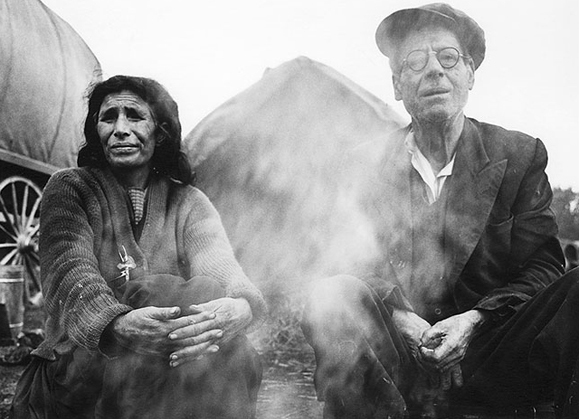 ZP_Julia and Bernie McDonagh_Irish Travellers_photographed by Alen MacWeeney in the 1960s
The Gipsy Camp
.
The snow falls deep; the Forest lies alone:
The boy goes hasty for his load of brakes,
Then thinks upon the fire and hurries back;
The Gipsy knocks his hands and tucks them up,
And seeks his squalid camp, half hid in snow,
Beneath the oak, which breaks away the wind,
And bushes close, with snow like hovel warm:
There stinking mutton roasts upon the coals,
And the half roasted dog squats close and rubs,
Then feels the heat too strong and goes aloof;
He watches well, but none a bit can spare,
And vainly waits the morsel thrown away:
‘Tis thus they live – a picture to the place;
A quiet, pilfering, unprotected race.
. . .
The Braggart
.
With careful step to keep his balance up
He reels on warily along the street,
Slabbering at mouth and with a staggering stoop
Mutters an angry look at all he meets.
Bumptious and vain and proud he shoulders up
And would be something if he knew but how;
To any man on earth he will not stoop
But cracks of work, of horses and of plough.
Proud of the foolish talk, the ale he quaffs,
He never heeds the insult loud that laughs:
With rosy maid he tries to joke and play,–
Who shrugs and nettles deep his pomp and pride.
And calls him ‘drunken beast’ and runs away–
King to himself and fool to all beside.
* * *
John Clare (1793-1864) was an English poet active mainly
in the 1830s and ’40s. Coming from a poor rural
family in Northamptonshire, he spent most of his life as
a field hand, hired labourer, and observant vagabond.
Except for one excursion to London, where briefly he
was flavour-of-the-season – “The Peasant Poet” –
(an inaccurate, sentimental moniker) – he stuck close
to his county, covering many miles on foot, even
wandering “back home” from Northborough Asylum
where he would spend the last twenty years of his life.
 Zócalo Poets