Etheridge Knight: 9 “Senryu”
Posted: January 28, 2014 Filed under: English, Etheridge Knight | Tags: Haiku written in English Comments Off on Etheridge Knight: 9 “Senryu”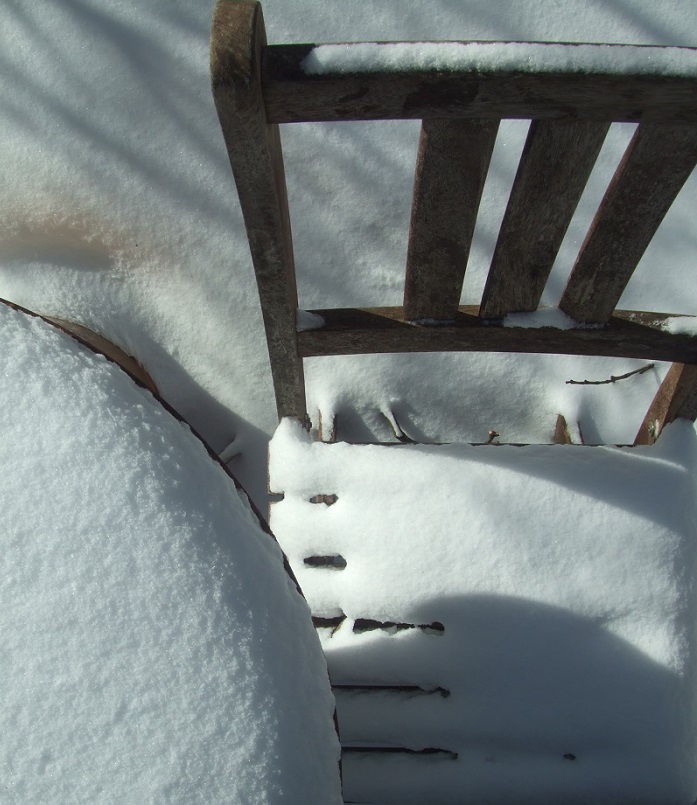
Etheridge Knight (Corinth, Mississippi, USA, 1931-1991)
.
1
Eastern guard tower
glints in sunset; convicts rest
like lizards on rocks.
.
2
The piano man
is stingy, at 3 a.m.
his songs drop like plum.
.
3
Morning sun slants cell.
Drunks stagger like cripple flies
On jailhouse floor.
.
4
To write a blues song
is to regiment riots
and pluck gems from graves.
.
5
A bare pecan tree
slips a pencil shadow down
a moonlit snow slope.
.
6
The falling snow flakes
Cannot blunt the hard aches nor
Match the steel stillness.
.
7
Under moon shadows
A tall boy flashes knife and
Slices star bright ice.
.
8
In the August grass
Struck by the last rays of sun
The cracked teacup screams.
.
9
Making jazz swing in
Seventeen syllables AIN’T
No square poet’s job.

These short poems, written by Etheridge Knight when he was in prison for robbery (1960-1968), are a kind of hybrid between haiku and senryu – senryu having the same structure as haiku but being concerned directly with human beings, whether the tone be serious, ironic or humorous. In poem #9 the word AIN’T is “boldfaced” on purpose – a reference to its importance in Black-American vernacular.
For more haiku composed in English click this link: https://zocalopoets.com/category/richard-wright/
. . . . .
Lucille Clifton: “Oh Dios bufonesco” y “El martes” / “Oh antic God” and “Tuesday”
Posted: January 23, 2014 Filed under: English, Lucille Clifton, Spanish, ZP Translator: Alexander Best Comments Off on Lucille Clifton: “Oh Dios bufonesco” y “El martes” / “Oh antic God” and “Tuesday”
ZP_Retrato de Lucille Clifton por Summer Pierre_Oh, reza que lo que queremos vale correr el riesgo…Reza que lo que estamos corriendo hacia…es lo que queremos.
Lucille Clifton (poeta/educadora estadounidense, 1936 – 2010)
“Oh Dios bufonesco”
.
Oh Dios bufonesco
regrésame
mi madre durante la treintena
inclinando atrás del porche del frente
el cojín enorme de su pecho
apoyando contra el pasamanos
llamándome a la cama.
.
Casi llego a la-edad-por-dos de esa mujer muerta.
.
Apenas puedo recordar su canción
el olor de sus manos
aunque su cabello indómito roza mis sueños, las noches.
Regrésame, oh Dios de entonces – Dios de ahora,
el canto de mi madre,
su joven voz que tararea mi nombre.
. . .
Lucille Clifton (poet/educator, U.S.A., 1936 – 2010)
“Oh antic God”
.
Oh antic God
return to me
my mother in her thirties
leaned across the front porch
the huge pillow of her breasts
pressing against the rail
summoning me in for bed.
.
I am almost the dead woman’s age times two.
.
I can barely recall her song
the scent of her hands
though her wild hair scratches my dreams
at night. Return to me, oh Lord of then
and now, my mother’s calling,
her young voice humming my name.
. . .
“El martes” (un poema sobre “9-11”)
.
Trueno, relámpago – y nuestro mundo es
otro lugar; no permanecerá ningún día;
no quedará insensible, ninguna sangre.
.
Conocen esta tormenta en otros lugares:
Israel, Irlanda, Palestina.
Pero Dios ha bendecido “America”
(es lo que cantamos…)
.
Y Dios ha bendecido “America” – sí –
a aprender que no hay nadie exento…
Es Uno el Mundo:
todo miedo – es uno
toda vida – es uno;
aún toda muerte.
Todo Uno.
. . .
“Tuesday” (a poem about “9-11”)
.
thunder and lightning and our world
is another place no day
will ever be the same no blood
untouched
.
they know this storm in otherwheres
israel ireland palestine
but God has blessed America
(we sing)
.
and God has blessed America
to learn that no one is exempt
the world is one all fear
is one all life all death
– all one.
. . .
Traducciones del inglés: Alexander Best
. . . . .
Claude McKay: “The Snow Fairy”
Posted: January 21, 2014 Filed under: Claude McKay, English Comments Off on Claude McKay: “The Snow Fairy”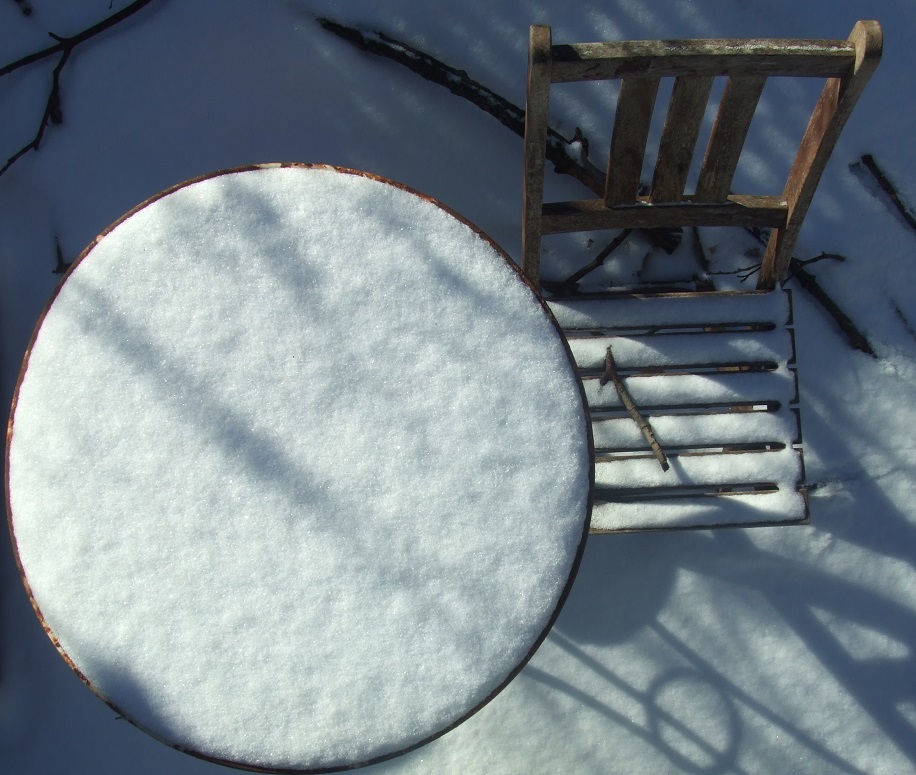
Claude McKay (1889-1948)
“The Snow Fairy”
.
I
Throughout the afternoon I watched them there,
Snow-fairies falling, falling from the sky,
Whirling fantastic in the misty air,
Contending fierce for space supremacy.
And they flew down a mightier force at night,
As though in heaven there was revolt and riot,
And they, frail things had taken panic flight
Down to the calm earth seeking peace and quiet.
I went to bed and rose at early dawn
To see them huddled together in a heap,
Each merged into the other upon the lawn,
Worn out by the sharp struggle, fast asleep.
The sun shone brightly on them half the day,
By night they stealthily had stol’n away.
.
II
And suddenly my thoughts then turned to you
Who came to me upon a winter’s night,
When snow-sprites round my attic window flew,
Your hair disheveled, eyes aglow with light.
My heart was like the weather when you came,
The wanton winds were blowing loud and long;
But you, with joy and passion all aflame,
You danced and sang a lilting summer song.
I made room for you in my little bed,
Took covers from the closet fresh and warm,
A downful pillow for your scented head,
And lay down with you resting in my arm.
You went with Dawn. You left me ere the day,
The lonely actor of a dreamy play.

Editor’s note:
“The Snow Fairy” is taken from Claude McKay’s poetry collection Harlem Shadows, published in 1922, and one of the first books of The Harlem Renaissance. Its form is the traditional English sonnet – each verse an iambic pentametre, and the end-word rhyme pattern being abab–cdcd–efef–gg in a 14-verse stanza. McKay wrote numerous nuanced and delicate poems but was also capable of using the sonnet form to convey an inspirational rallying cry, as in his sonnet “If We Must Die”, composed in 1919 during the “Red Summer” race riots in the USA.
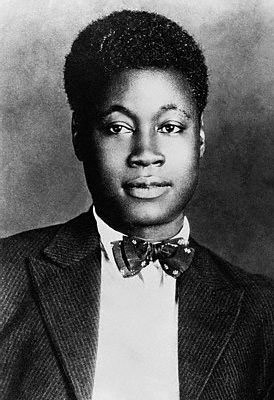
Claude McKay in his 20s
For more Winter poems by Claude McKay click here: https://zocalopoets.com/2012/02/08/claude-mckay-the-tropics-in-new-york/
. . . . .
Saeed Jones: Disposición de Sueño / Claro, lo veía venir – que yo estaba destinado a ser una gacela
Posted: January 21, 2014 Filed under: Saeed Jones, Saeed Jones: Disposición de Sueño y A Ser Una Gacela, Spanish, ZP Translator: Alexander Best Comments Off on Saeed Jones: Disposición de Sueño / Claro, lo veía venir – que yo estaba destinado a ser una gacela
Saeed Jones
Disposición de Sueño
.
I
He decidido permitirte quedar aquí – bajo nuestra cama, en el suelo,
no el espacio entre el colchón y el armazón metálico.
Por favor – saca tu mano debajo de mi almohada.
Y quita tus sábanas también.
Rózalas bajo la cama y haz fantasmas pretendidas.
No quiero que repiqueteas los resortes de cama,
pues – que te quedes, que te calles.
Confúndete por las sombras.
Aprende las nanas pelusones.
.
II
Haré lo correcto por ti:
migajas cepillados de las sábanas,
(son de pepitas chocolate-blanco – creo),
o las cráckeres de rincones.
Cuenta con una uva caída – ocasionalmente;
un hueso de durazno con pelusa fina, amarilla,
(donde fue mi lengua mojada – un sabor que recuerdes, quizás.)
Me dicen que hay hombres que pueden sobrevivir
comiendo ácaros del polvo – solamente, y para unas semanas.
Si hace falta, hay una lupa en la mesilla de noche.
. . .
Saeed Jones
Claro, lo veía venir – que yo estaba destinado a ser una gacela
.
Cuando gruñía a la mesa el abuelito,
yo quería saltar en un sprint.
Es lo que hacían los gacelas cuando estuvieron sobresaltados.
Saltaban en el aire como ratoneras salidas, pues no existieron
salvo que como desenfoques marrones de movimiento atajando por las planicies.
A veces, la gacela dentro de mí intentaba hacer un sprint a pesar de mí mismo,
pero mis huesos estevados y torpes me quedaron en un trote firme.
Horas y horas, yo corría a través del jardín trasero.
.
Vivíamos en Memphis… Hubieron leones detrás de cada roble y alambrado.
Un día, mientras yo correteaba el patio – solo, como siempre –
alguién disparó un arma en la distancia. El sonido hice ecos de la casa.
Me quedé muy quieto, en el centro del patio
– bastante inmóvil que me camuflé en el césped. (Fue un barrio muy duro.)
Todo el tiempo las armas parecieron estar disparando.
Cuando la abuela oyó el tiro, irrumpió en el jardín cercado y se paró en el porche.
Por un instante, me miró como si estuve tirado. Mi respuesta a su mirada fija:
salí corriendo.
.
Versiones en español: Alexander Best
. . .
Saeed Jones viene de Memphis, Tennessee, EE.UU., y ahora vive en la ciudad de Nueva York. Tiene un título en Maestría en Bellas Artes ortogado por la Universidad Rutgers en Newark, New Jersey. En 2011 fue nominado al Premio Pushcart. El poeta comenta:
Las preguntas – ¿Soy un poeta gay qué es también negro? o ¿Soy un poeta negro qué es gay también? – estoy bailando con estas preguntas, y molestan mi paz. La verdad es que el asunto de ser negro/gay ¿y importan esos nombres? sea un debate eterno que puede agotar la energía que me necesita para escribir poemas. Pero, además de todo éso, ¡quizás quiero cascar todas las etiquetas!
. . .
Para leer los poemas originales (en inglés) cliquea aquí: https://zocalopoets.com/category/saeed-jones/
. . . . .
Maya Angelou: “A pesar de todo – me levanto” / “Still I Rise”
Posted: January 15, 2014 Filed under: English, Maya Angelou, Spanish Comments Off on Maya Angelou: “A pesar de todo – me levanto” / “Still I Rise”
Maya Angelou (Marguerite Ann Johnson) (St. Louis, Missouri, 1928- )
“A pesar de todo – me levanto”
.
Podrás inscribirme en la historia
Con tus mentiras amargas y retorcidas,
Podrás arrastrarme en la basura misma
Y a pesar de todo, como el polvo, me levantaré.
.
¿Te desconcierta mi insolencia?
¿Por qué te acosa la melancolía?
Porque camino como si tuviese pozos de petróleo
Bombeando en mi sala de estar.
.
Igual que las lunas y los soles,
Con la certeza de las mareas,
Igual que las esperanzas que alto vuelan
A pesar de todo me levantaré.
.
¿Querías verme destruida?
¿Con la cabeza inclinada y los ojos cerrados?
Los hombros caídos como lágrimas.
Debilitada por mis gritos conmovedores.
.
¿Te ofende mi arrogancia?
No lo tomes tan a mal
Porque me río como si tuviera minas de oro
Cavándose en el patio de atrás.
.
Puedes dispararme las palabras,
Puedes cortarme con los ojos,
Puedes matarme con tu odio,
Y a pesar de todo, como el aire, me levantaré.
.
¿Te desconcierta mi sensualidad?
¿Te resulta una novedad
Que baile como si tuviera diamantes
En el medio de mis muslos?
.
Desde los cobertizos de una vergüenza histórica
Me levanto
De un pasado enraizado en el dolor
Me levanto
Soy un océano negro, impetuoso y extenso,
Fluyendo y embraveciendo soporto la marea.
Dejando atrás noches de espanto y miedo
Me levanto
En un nuevo día asombrosamente claro
Me levanto
Con los talentos que mis ancestros dieron,
Yo soy el sueño y la esperanza del esclavo.
Me levanto
Me levanto
Me levanto.



“Still I Rise”
.
You may write me down in history
With your bitter, twisted lies,
You may tread me in the very dirt
But still, like dust, I’ll rise.
.
Does my sassiness upset you?
Why are you beset with gloom?
‘Cause I walk like I’ve got oil wells
Pumping in my living room.
.
Just like moons and like suns,
With the certainty of tides,
Just like hopes springing high,
Still I’ll rise.
.
Did you want to see me broken?
Bowed head and lowered eyes?
Shoulders falling down like teardrops.
Weakened by my soulful cries.
.
Does my haughtiness offend you?
Don’t you take it awful hard
‘Cause I laugh like I’ve got gold mines
Diggin’ in my own back yard.
.
You may shoot me with your words,
You may cut me with your eyes,
You may kill me with your hatefulness,
But still, like air, I’ll rise.
.
Does my sexiness upset you?
Does it come as a surprise
That I dance like I’ve got diamonds
At the meeting of my thighs?
.
Out of the huts of history’s shame
I rise
Up from a past that’s rooted in pain
I rise
I’m a black ocean, leaping and wide,
Welling and swelling I bear in the tide.
Leaving behind nights of terror and fear
I rise
Into a daybreak that’s wondrously clear
I rise
Bringing the gifts that my ancestors gave,
I am the dream and the hope of the slave.
I rise
I rise
I rise.
. . .
Fotos / Photos:
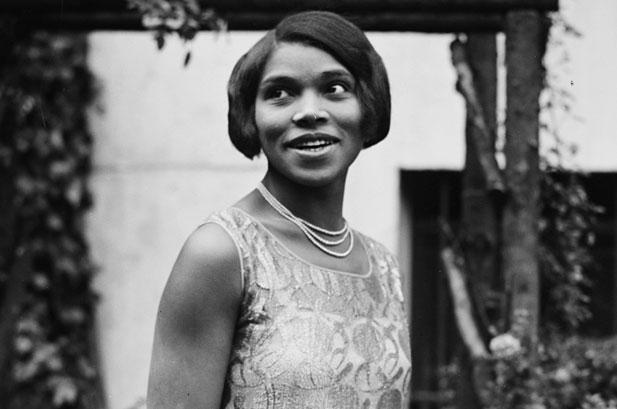
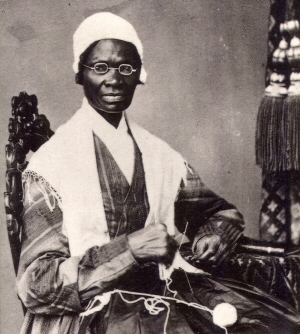
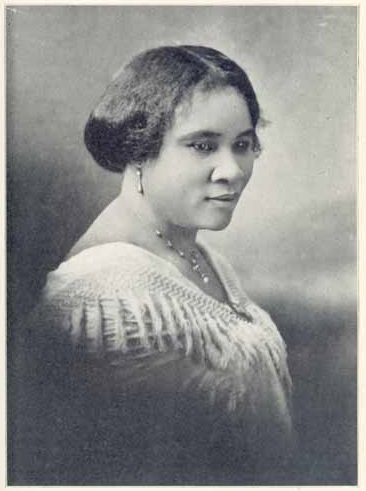
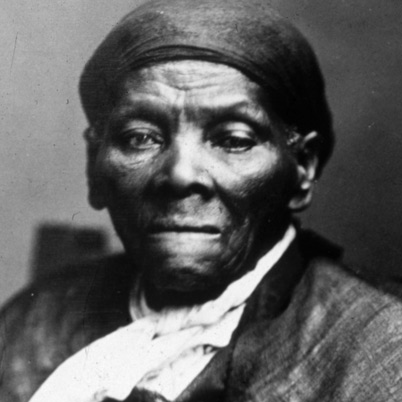
Bell Hooks, Rosemary Brown, Tina Turner, Marian Anderson, Zora Neale Hurston, Madam C. J. Walker, Dr. Susan S. McKinney Steward, Susan Paul Smith Vashon, Frances Ellen Watkins Harper, Harriet Tubman, Sojourner Truth
. . . . .
Alexander Best: Once Haikus: “Deshielo en Enero” / Eleven Haiku: “Mid-Winter Thaw”
Posted: January 15, 2014 Filed under: Alexander Best, English, Spanish | Tags: Haiku written in English, Haikus escritos en español Comments Off on Alexander Best: Once Haikus: “Deshielo en Enero” / Eleven Haiku: “Mid-Winter Thaw”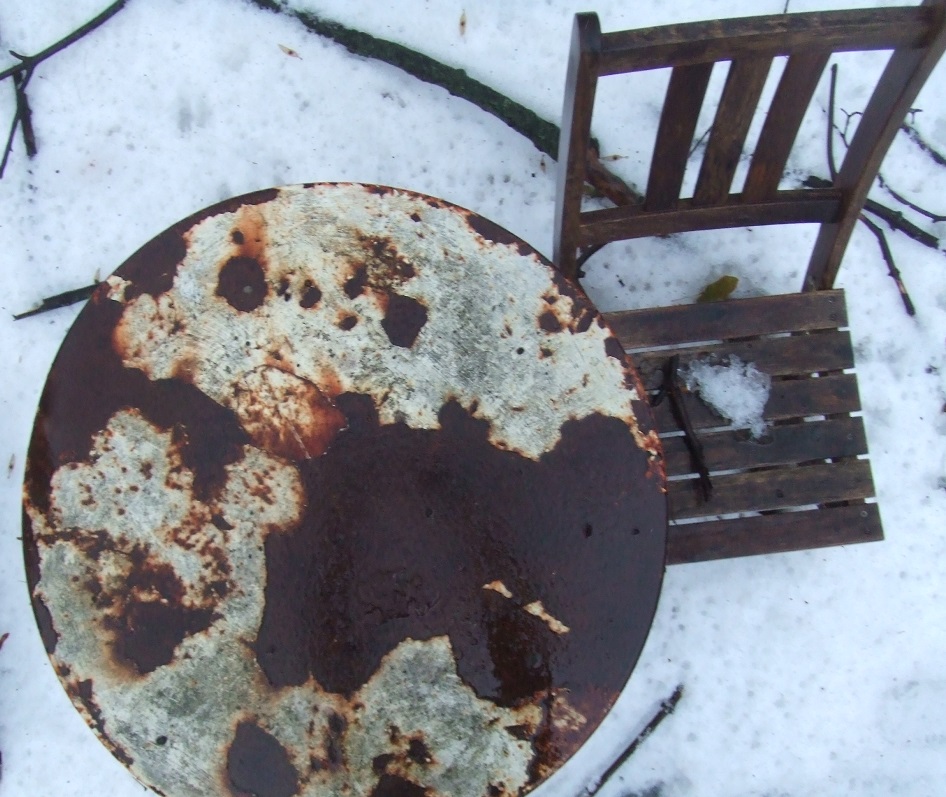
Alexander Best
Once Haikus: “Deshielo en Enero” / Eleven Haiku: “Mid-Winter Thaw”
.
– 22
Pues + 7 grados
Días bipolares
.
– 22
Then suddenly it’s + 7
Winter mood swing
.
¡Odio el enero cuándo me da un ambiente de abril!
.
7 degrees celsius?
Winter, don’t die.
Snow is my state of mind.
.
Diamantes de sal
Hielo – Lluvia
Banqueta Torontoniense
.
Rough-diamond rock-salt
Sheets of ice – with rivulets
Toronto sidewalk
.
Navidad
– ¡ido!
Mente d’enero
¿Me quiero a mí mismo?
.
Half way through Winter
Dead Christmas trees and dog poop
Spring stink in the air
.
Ay, Invierno se va
¿Dónde están mis tormentas de nieve?
.
January thaw
Winter beauty turns ugly
Snowstorms, where are you?
.
Luna – ¿Sonrisa,
Rodaja de sandía?
¡No llega Verano!
.
Moon – half frozen smile –
Or slice of watermelon?
Don’t want Summer now!
.
Nubes moviendos
Sol – un disco pálido
Días peores
.
Sun – a pale grey disc
Clouds beetle across the sky
These days are the worst
.
El Enojo camina
Soy de hielo
Calle ciega
.
January days
Rarely I answer my cell
Why am I angry?
.
Pájaro “Sitta”
Dándalo vuelta
Soy feliz de nuevo
.
Nasal-voiced “Nuthatch”
Comical upside-down bird
Briefly I’m happy
.
Fumo mi puro
Ojos de un mapache
Noche d’enero
.
Smoking my cigar
Raccoon eyes gazing at me
January night
.
Hielo + Calor
Sentimientos complejos
El Amor crece
.
Mid-Winter warm spell
Complexity of feelings
Love grows by degrees
.
 .
.
[ Dice el canadiense: “No comas la nieve amarilla.” :-<> ]
Nota del poeta/editor:
Escribí estos veintidós haikus en los dos idiomas “hombro a hombro” – cada par está emparentado pero no hay traducciones; hice once poemas originales en español y once poemas originales en inglés. Intenté seguir (casi) las normas rudimentarias del haiku japonés:
Diecisiete sílabas en tres líneas divididas en 5-7-5
Usar una palabra de estación o una referencia estacional
Siempre escribir en tiempo presente de “aquí” y “ahora”
Un elemento sorprendente en la tercera línea
. . .
Poet’s/editor’s note:
I wrote these twenty-two Haiku “side by side” in Spanish and in English. They are not translations from one another though each “pair” is closely related in theme. I have tried to follow (mostly) the basic rules from Japanese Haiku:
17 syllables in 3 lines, divided 5-7-5
Use a Season word or a seasonal reference
Always write in the present tense – the Here and Now
A surprise element in line 3
. . . . .
Elyas Mulu Kiros: “Bonito y Sabroso”, “Winter Blues” and “Genuine Street”
Posted: January 7, 2014 Filed under: Elyas Mulu Kiros, English Comments Off on Elyas Mulu Kiros: “Bonito y Sabroso”, “Winter Blues” and “Genuine Street”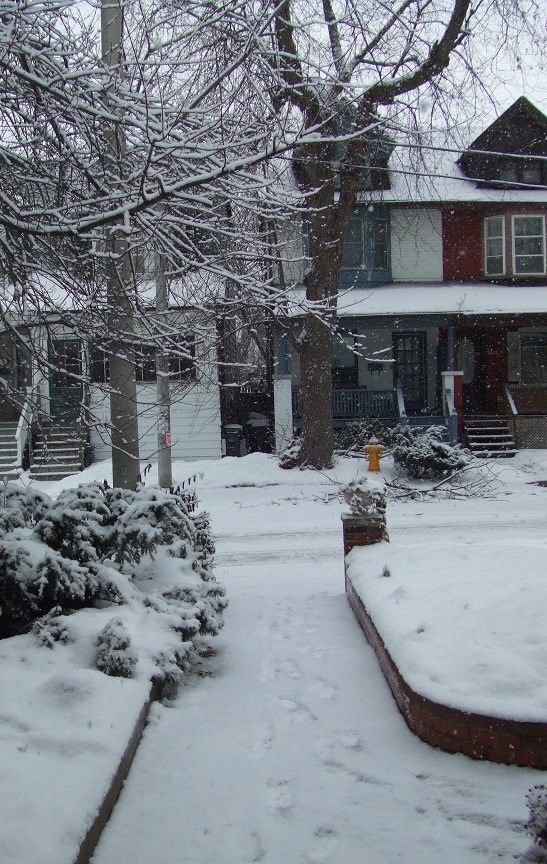
Elyas Mulu Kiros
“I just want to say…” (Winter Blues)
.
“I am by the window:
Observing rapid snowflakes falling,
On the concrete
Outside this cold apartment,
Without sticking.
.
I just want to say
That the view makes me think
Of the days and nights
We used to spend cuddling
To keep each other warm;
But that is now a memory
I keep, locked in a room,
Deep inside this melancholic heart.
.
Dear, I may have contributed more
to your unhappiness and less
to your joy, but I just want to say
You always have a special place
in my heart—
Whether you believe me or not.
I mean it.”
.
After writing that letter
On a mental paper,
He folded the paper
And then put it in a mental envelope—
Only to mail it to a mental fire
That burned it before
He picked a real pen and paper.
.
He then just played Winter Blues,
Waiting for inspiration.
. . .
“Bonito y Sabroso”
.
Sometimes life may be just so so
But it is also bonito and sabroso.
Look at it through young eyes.
Should you believe not this:
Sometimes life may be dull and tart
But it is also beautiful and sweet.
Feel it with a young state of mind.
Should it grow old, embittered?
Never stop learning – Continue balancing.
. . .
“Genuine Street”
.
Let you & I meet
half-way on Genuine Street.
Only then may we create a space
that may help us
reshape or challenge
our fixed or biased
self-other-awareness.
.
Otherwise, if we just wait
for the other to come meet us
in our comfort zone
and expect him or her to change,
then we must not be genuine
or serious.
. . .
All poems © 2013 Elyas Mulu Kiros
. . .
Elyas Mulu Kiros is an Ethiopian poet living in New York City. He writes in English and in Amharic. He keeps a WordPress site called Kweschn: Horn of Africa and Beyond. http://kweschn.wordpress.com/
. . . . .
Rubén Darío: Los Tres Reyes Magos / The Three Wise Kings
Posted: January 6, 2014 Filed under: English, Rubén Darío, Spanish | Tags: Rubén Darío Comments Off on Rubén Darío: Los Tres Reyes Magos / The Three Wise Kings
Rubén Darío (Nicaragua, 1867-1916)
Los Tres Reyes Magos
.
Yo soy Gaspar. Aquí traigo el incienso.
Vengo a decir: La vida es pura y bella.
Existe Dios. El amor es inmenso.
¡Todo lo sé por la divina Estrella!
.
Yo soy Melchor. La mirra aroma todo.
Existe Dios. Él es la luz del día.
La blanca flor tiene sus pies en lodo.
¡Y en el placer hay la melancolía!
.
Yo soy Baltasar. Traigo el oro. Aseguro
que existe Dios. Él es el grande y fuerte.
Todo lo sé por el lucero puro
que brilla en la diadema de la Muerte.
.
Gaspar, Melchor y Baltasar, callaos.
Triunfa el Amor, y a su fiesta os convida.
¡Cristo resurge, hace la luz del caos
y tiene la corona de la Vida!
. . .
Rubén Darío
(Nicaraguan poet and founder of the “Modernismo” literary movement, 1867-1916)
The Three Wise Kings
.
My name is Kaspar. I the incense bear.
The glimmer of the Star has made me wise.
I say that love is vaster than the skies.
God exists. And Life is pure and fair.
.
My name is Melchior. And my myrrh scents all.
There is a God. He is the light of the morn.
And the fairest blossoms from dust are born,
And joy is shadowed by a melancholic pall.
.
My name is Balthazar. I bring a wreath
Of Orient gold, my gift. I come to say
That God does exist. I know all this by the ray
Of starry light upon the crown of Death.
.
Balthazar, Melchior, Kaspar – be all ye still.
Love triumphs and has bid you to His feast.
Radiance fills the chaos void, and night has ceased:
Wearing Life’s crown, Christ comes to work His Will!
.
English translation by Nicaraguan poet Salomon de la Selva
Versión inglés por Salomon de la Selva (poeta nicaragüense)
. . . . .
Poema para Epifanía: “El Viaje de los Reyes Magos” / Poem for Epiphany: “The Journey of The Magi”: T.S. Eliot
Posted: January 6, 2014 Filed under: English, Spanish, T. S. Eliot Comments Off on Poema para Epifanía: “El Viaje de los Reyes Magos” / Poem for Epiphany: “The Journey of The Magi”: T.S. Eliot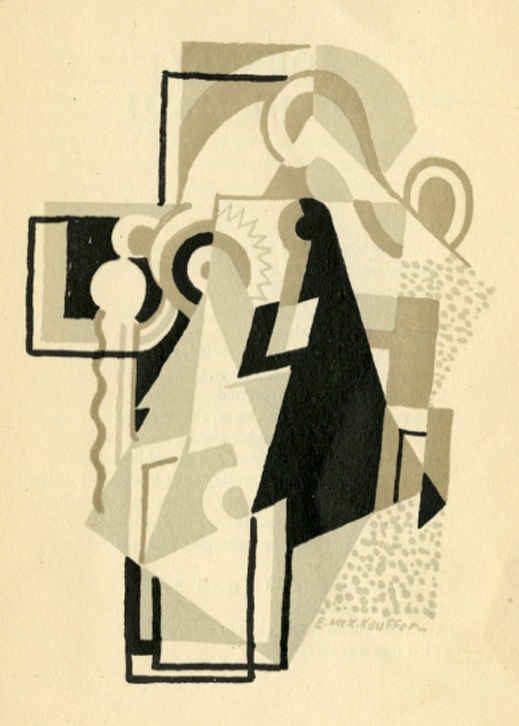
ZP_Ilustración por Edward McKnight Stauffer de la edición 1927 del poema_Edward McKnight Stauffer’s illustration for the original 1927 edition of Eliot’s poem
Thomas Stearns Eliot (T.S.Eliot) (1888-1965)
“El Viaje de los Reyes Magos” (1927)
.
“Fue una partida fría, justamente
La época peor del año para un viaje,
Y un largo viaje como el nuestro:
Los caminos ruinosos y los climas punzantes,
La verdadera muerte del invierno.”
Y los camellos se llagaban,
Las patas lastimadas, refractarios,
Se echaban en la nieve derretida.
Sentíamos a veces la añoranza
De los palacios en verano
Sobre suaves laderas, las terrazas,
Y las chicas sedosas trayendo los refrescos.
Luego, los camelleros con sus protestas y blasfemias,
Que huían, o pedían licores y mujeres,
Y en la noche los fuegos se apagaban,
Y no encontrábamos refugios, y eran
Hostiles las ciudades, desconfiados los pueblos
Y las aldeas sucias, todos recargando los precios:
Fueron días difíciles. Al fin,
Preferimos viajar toda la noche,
Durmiendo a ratos,
Con las voces cantando en nuestro oído,
Diciéndonos que todo, todo era una locura.
.
Luego, al alba, bajamos hasta un valle templado,
Húmedo, al pie de la línea de nieve, fragante de espesura,
Con un torrente y un molino de agua que batía la sombra con sus aspas,
Y tres árboles solos contra un cielo cercano.
Y un viejo caballo blanco huyó al galope sobre la pradera.
Después llegamos a una fonda que encima del dintel tenía hojas de parra,
Por una puerta abierta seis manos que jugaban a los dados por monedas de plata
Y unos pies que pateaban unos odres vacíos.
Pero no había información, y continuamos
Y así llegamos al anochecer, encontrando el lugar
En el momento justo… Fue (me podrían decir) satisfactorio.
.
Todo esto fue hace mucho, lo recuerdo,
Y lo haría de nuevo, pero aclarando antes,
Esto aclarando,
Esto: ¿fuimos guiados
Durante todo ese camino para
Un Nacimiento o una Muerte?
Hubo, por cierto, un Nacimiento,
No hay dudas, lo pudimos comprobar.
Yo había visto nacimientos y muertes,
Pero había pensado que eran algo distinto;
Este otro Nacimiento para nosotros fue
Una agonía ardua y amarga, como la Muerte, nuestra muerte.
Regresamos así a nuestros países, a nuestros Reinos,
Pero ya no hubo paz para nosotros,
Aquí en los viejos usos, con un pueblo
De extraños aferrados a sus dioses.
Yo querría morir con otra muerte.
.
© 1997 Versión de Pablo Anadón (poeta/traductor argentino)
. . .
Thomas Stearns Eliot (T.S.Eliot) (1888-1965)
“The Journey Of The Magi” (1927)
.
‘A cold coming we had of it,
Just the worst time of the year
For a journey, and such a long journey:
The ways deep and the weather sharp,
The very dead of winter.’
And the camels galled, sorefooted, refractory,
Lying down in the melting snow.
There were times we regretted
The summer palaces on slopes, the terraces,
And the silken girls bringing sherbet.
Then the camel men cursing and grumbling
and running away, and wanting their liquor and women,
And the night-fires going out, and the lack of shelters,
And the cities hostile and the towns unfriendly
And the villages dirty and charging high prices:
A hard time we had of it.
At the end we preferred to travel all night,
Sleeping in snatches,
With the voices singing in our ears, saying
That this was all folly.
.
Then at dawn we came down to a temperate valley,
Wet, below the snow line, smelling of vegetation;
With a running stream and a water-mill beating the darkness,
And three trees on the low sky,
And an old white horse galloped away in the meadow.
Then we came to a tavern with vine-leaves over the lintel,
Six hands at an open door dicing for pieces of silver,
And feet kicking the empty wine-skins.
But there was no information, and so we continued
And arriving at evening, not a moment too soon
Finding the place; it was (you might say) satisfactory.
.
All this was a long time ago, I remember,
And I would do it again, but set down
This, set down
This: Were we led all that way for
Birth or Death? There was a Birth, certainly
We had evidence and no doubt. I had seen birth and death,
But had thought they were different; this Birth was
Hard and bitter agony for us, like Death, our death.
We returned to our places, these Kingdoms,
But no longer at ease here, in the old dispensation,
With an alien people clutching their gods.
I should be glad of another death.
. . . . .
C Рождеством – C новым годом! Борис Пастернак стихи / Two poems for Russian Christmas and New Year: Boris Pasternak
Posted: January 6, 2014 Filed under: Boris Pasternak, English, Russian Comments Off on C Рождеством – C новым годом! Борис Пастернак стихи / Two poems for Russian Christmas and New Year: Boris Pasternak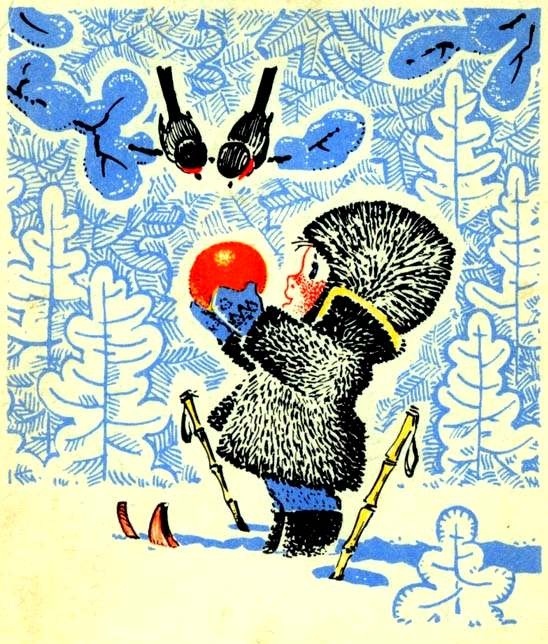
Soviet-era Christmas greeting card from 1960
Boris Pasternak (1890-1960)
“Snow is falling”
.
Snow is falling, snow is falling.
Geranium flowers reach
for the blizzard’s small white stars
past the window’s edge.
.
Snow is falling, all is lost,
the whole world’s streaming past:
the flight of steps on the back stairs,
the corner where roads cross.
.
Snow is falling: snow is falling,
not snowflakes stealing down,
Sky parachutes to earth instead,
in his worn dressing gown.
.
As if he’s playing hide-and-seek,
across the upper landings,
a mad thing, slowly sneaks,
Sky creeps down from the attic.
.
It’s all because life won’t wait,
before you know, it’s Christmas here.
And look, in a minute,
suddenly it’s New Year.
.
Snow is falling, deeper – deeper.
Maybe, with that same stride
in that same tempo,
with that same languor,
Time’s going by?
.
Year after year, perhaps,
passing, as snow’s falling,
like words in a poem?
Snow’s falling: snow’s falling.
Snow is falling, all is lost –
the whitened passers-by,
leaves’ startled showing,
the corners where roads cross.
. . .
Борис Пастернак (1890-1960)
Снег идет
.
Снег идет, снег идет.
К белым звездочкам в буране
Тянутся цветы герани
За оконный переплет.
Снег идет, и все в смятеньи,
Bсе пускается в полет,
Черной лестницы ступени,
Перекрестка поворот.
Снег идет, снег идет,
Словно падают не хлопья,
А в заплатанном салопе
Сходит наземь небосвод.
Словно с видом чудака,
С верхней лестничной площадки,
Крадучись, играя в прятки,
Сходит небо с чердака.
Потому что жизнь не ждет.
Не оглянешься и святки.
Только промежуток краткий,
Смотришь, там и новый год.
Снег идет, густой-густой.
В ногу с ним, стопами теми,
В том же темпе, с ленью той
Или с той же быстротой,
Может быть, проходит время?
Может быть, за годом год
Следуют, как снег идет,
Или как слова в поэме?
Снег идет, снег идет,
Снег идет, и все в смятеньи:
Убеленный пешеход,
Удивленные растенья,
Перекрестка поворот.

Soviet-era Happy New Year holiday card_The two “Poles” meet and greet.
“Winter Sky”
.
Ice-chips plucked whole from the smoke,
the past week’s stars all frozen in flight,
Head over heels the skater’s club goes,
clinking its rink with the peal of night.
.
Step slow, slower, slow-er, skater,
pride carving its trace as you race by.
each turn’s a constellation cut there,
scratched by a skate in Norway’s sky.
.
The air is fettered in frozen iron.
Oh, skaters! There – it’s all the same,
that, like snake’s eyes set in ivory,
night’s on earth, a domino game:
.
that moon, a numb hound’s tongue
is there, frozen tight: that mouths like
the forgers of coins – are stung,
filled with lava of breathtaking ice.
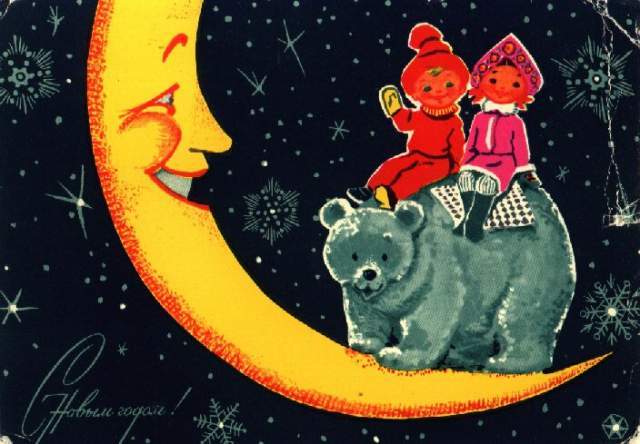
Vintage New Year’s greeting card_USSR_1950s
Зимнее небо
.
Цельною льдиной из дымности вынут
Ставший с неделю звездный поток.
Клуб конькобежцев вверху опрокинут:
Чокается со звонкою ночью каток.
.
Реже-реже-ре-же ступай, конькобежец,
В беге ссекая шаг свысока.
На повороте созвездьем врежется
В небо Норвегии скрежет конька.
.
Воздух окован мерзлым железом.
О конькобежцы! Там — все равно,
Что, как глаза со змеиным разрезом,
Ночь на земле, и как кость домино;
.
Что языком обомлевшей легавой
Месяц к скобе примерзает; что рты,
Как у фальшивомонетчиков, — лавой
Дух захватившего льда налиты.
. . . . .
 Zócalo Poets