Maria Bethânia canta letras de Carlos Bahr & Adriana Calcanhotto / Maria Bethânia sings lyrics by Carlos Bahr & Adriana Calcanhotto
Posted: August 13, 2013 Filed under: English, Portuguese, Spanish, Translator's Whimsy: Song Lyrics / Extravagancia del traductor: Letras de canciones traducidas por Alexander Best, ZP Translator: Alexander Best Comments Off on Maria Bethânia canta letras de Carlos Bahr & Adriana Calcanhotto / Maria Bethânia sings lyrics by Carlos Bahr & Adriana Calcanhotto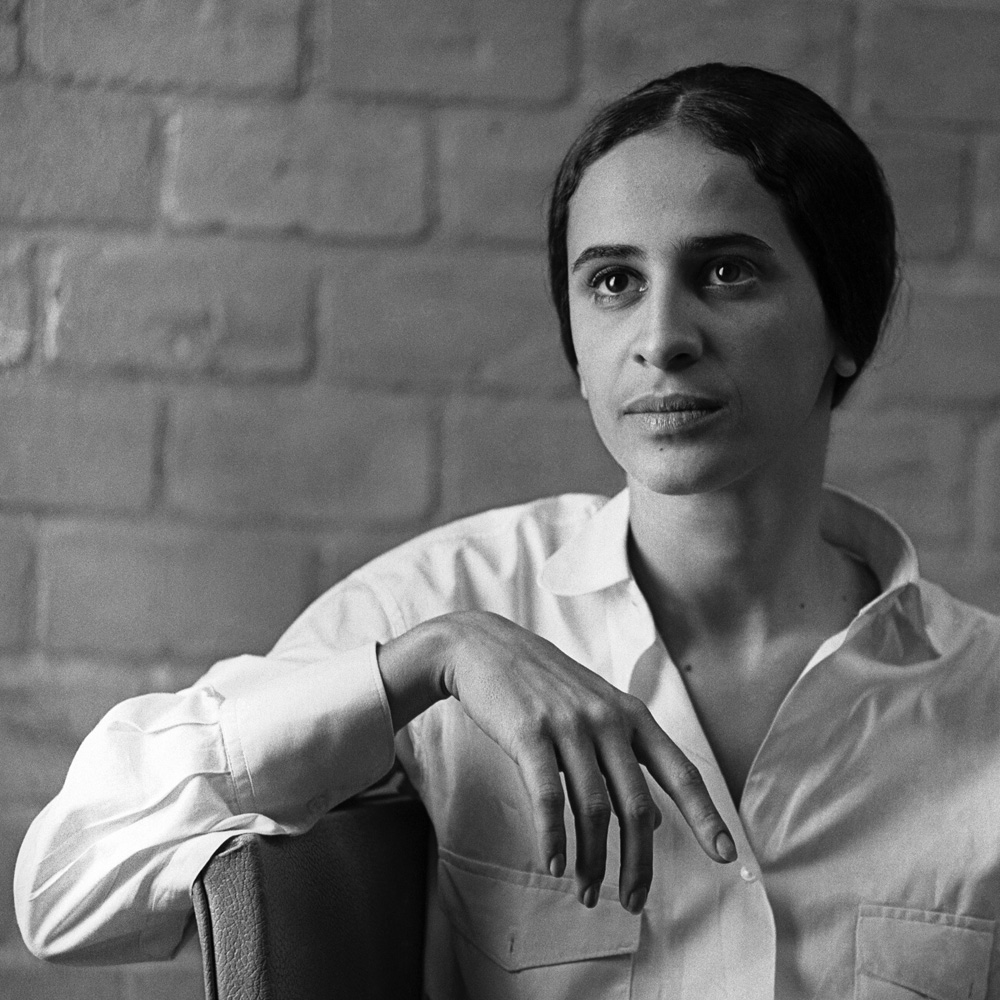 ZP_Maria Bethânia (born 1946), shown here at the age of 21, is a Brazilian singer and sister of Caetano Veloso
.
“Sin” / “Pecado”
Composer / Compositor: Carlos Bahr (Tango lyricist / Letrista de tango, 1902-1984, Buenos Aires, Argentina), with / con: Armando Pontier & Enrique Francini
As sung by / Cantada por: Maria Bethânia (from her album / de su álbum Pássaro Proibido, 1976)
.
I know not
whether this is forbidden;
if there’ll be forgiveness;
or if I’ll be carried to the brink of the abyss.
All that I know:
This is Love.
.
I know not
whether this Love is a sin;
if punishment awaits;
or if it disrespects all the decent laws
of humankind and of God.
.
All that I know: it’s a Love which stuns my Life
like a whirlwind; and
that I crawl, yes crawl, straight to your arms
in a blind passion.
.
And This is stronger than I am, than my Life,
my beliefs, my sense of duty.
It’s even stronger within me than
the fear of God.
.
Though it may be sin – how I want you,
yes, I want you all the same.
And even if everyone denies me that right,
I will seize hold of this Love.
. . .
Yo no sé
Si es prohibido
Si no tiene perdón
Si me lleva al abismo
Sólo se que es amor
.
Yo no sé
Si este amor es pecado
Si tiene castigo
Si es faltar a las leyes honradas
Del hombre y de Dios
.
Sólo sé que me aturde la vida
Como un torbellino
Que me arrastra y me arrastra a tus brazos
En ciega pasión
.
Es más fuerte que yo que mi vida
Mi credo y mi sino
Es más fuerte que todo el respeto
Y el temor a Dios
.
Aunque sea pecado te quiero
Te quiero lo mismo
Aunque todo me niegue el derecho
Me aferro a este amor.
. . .
“After having you” / “Depois de ter você ”
Composer / Composição: Adriana Calcanhotto (born in / nascida em 1965, Porto Alegre, Brasil)
As sung by / Cantada por: Maria Bethânia (from her album / em seu álbum Maricotinha, 2001)
.
After having you,
What reason is there to think of time,
how many hours have passed or remain?
If it’s night or if it’s warm out,
If we’re in summertime;
If the sun will show its face or not?
Or even what reason might a song like this serve?
After knowing you
– Poets? what’s the use of them?
Or of Gods – What purpose Doubts?
– Almond trees along the streets,
even the very streets themselves –
After having had You?
. . .
Depois de ter você,
Para que querer saber que horas são?
Se é noite ou faz calor,
Se estamos no verão,
Se o sol virá ou não,
Ou pra que é que serve uma canção como essa?
Depois de ter você, poetas para quê?
Os deuses, as dúvidas,
Para que amendoeiras pelas ruas?
Para que servem as ruas?
Depois de ter você.
. . .
Traducción/interpretación en inglés / Translation-interpretation from Spanish into English: Alexander Best
Tradução/interpretação em inglês / Translation-interpretation from Portuguese into English: Alexander Best
. . .
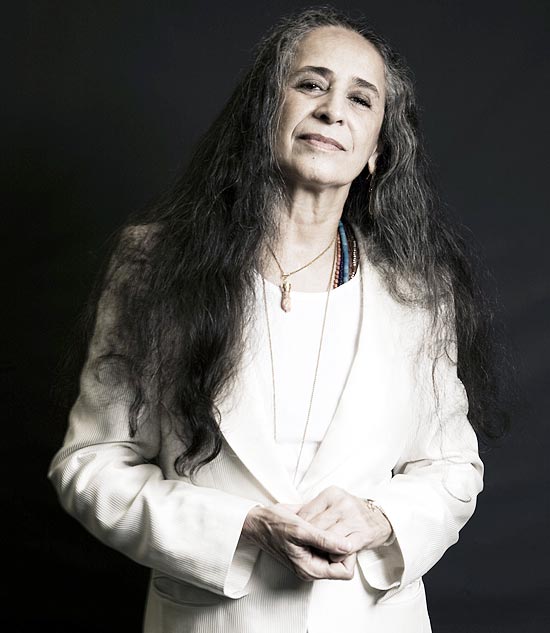 ZP_Maria Bethânia in 2010
. . . . .
Atwood, Kiguli, Carver: Mildred K. Barya compares three poems about photographs
Posted: August 10, 2013 Filed under: 7 GUEST EDITORS, English, Margaret Atwood, Mildred K. Barya, Raymond Carver, Susan Kiguli Comments Off on Atwood, Kiguli, Carver: Mildred K. Barya compares three poems about photographs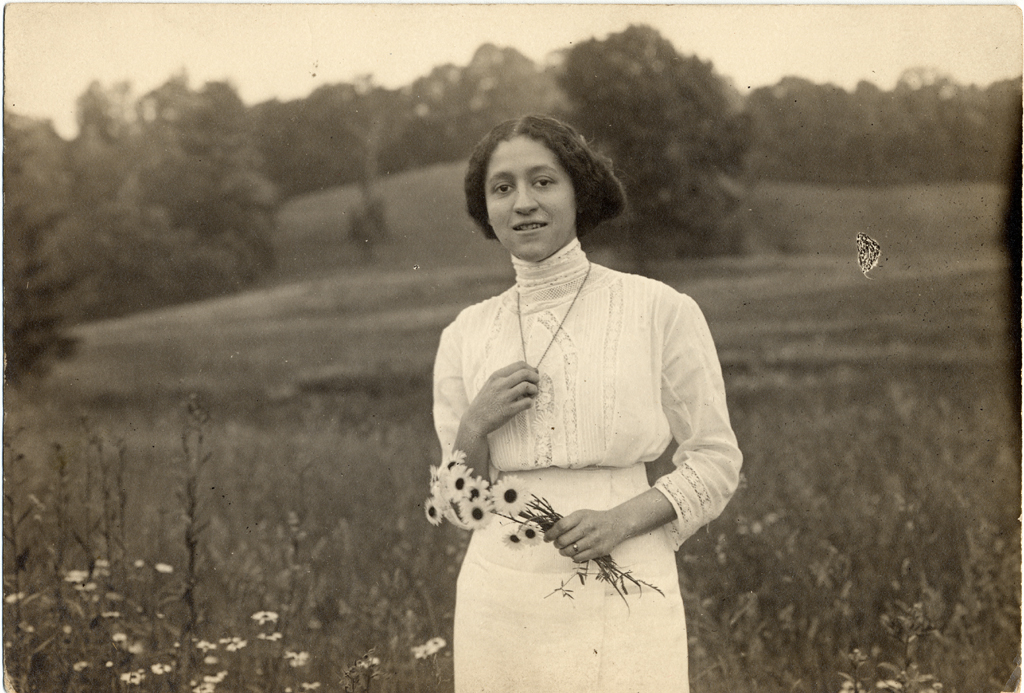 ZP_Mamie Estelle Fearing Scurlock with bouquet_1910_photographer Addison Scurlock
.
ZP Guest Editor Mildred K. Barya:
Three poets / Three photographs
.
In this piece I’m comparing and contrasting three poems by three poets that have a lot in common: “This is a Photograph of Me” by Margaret Atwood (Canada), “My Mother in Three Photographs” by Susan Kiguli (Uganda), and “Photograph of My Father in His Twenty-Second Year” by Raymond Carver (USA).
What I appreciate most is how these three poets/poems deal with perception, memory, reality and imagination against a backdrop of history, society, and culture. The passage of time and sense of place provide interesting points of view.
In Atwood’s poem, in the first stanza, we are not given the exact time the photograph was taken. We only know it’s in the past: It was taken some time ago. At a glance, the appearance is distorted, and seems to merge with the paper:
At first it seems to be
a smeared
print: blurred lines and grey flecks
blended with the paper;
Kiguli’s first stanza is a clear description of what the mother’s face in the photograph looks like, her poise, enigmatic aura, sexual energy and charm.
Her face looks out
flawless
her sexuality electric.
We are also told what she’s wearing, it’s the 1960s, and she’s full of dreams and longing of the individual and collective nation. An ethereal creature that’s here and beyond, not as “ghostly” as Atwood’s woman, but equally mystifying.
In a mini dress and sheer satin stockings
the girls of the 1960s
beautiful beyond belief.
She is looking through the camera
like her space is here and beyond
enchanting and enchanted
by the times when dreams of freedom were young
the fortunes of Uganda
hot and sizzling.
So here we have what we can see through our tactile and perceptible quality. There’s also something corporeal and ethereal at the same time. This is also true of Atwood’s message in her first stanza.
Carver’s first stanza provides clear setting and time. October. Here in this dank, unfamiliar kitchen. Right away we feel a strangeness—something chilly that comes with October and a dank, unfamiliar kitchen. In ideal or normal circumstances, one’s kitchen ought to be a cozy, familiar place, but not Carver’s kitchen. Then the father’s face is described, what is, and the appearance of what’s expected:
I study my father’s embarrassed young man’s face.
Sheepish grin, he holds in one hand a string
of spiny yellow perch, in the other
a bottle of Carlsbad Beer.
In short, the three poets in their first stanzas are portraying what is [appearance] along with specific expectations and representations. The first image is hazy, affected by the imbalance of light and dark so one can say it appears oppressed even. The second captures the Sixties imagination: freedom, excitement, revolution, dreams, women’s power and so on. The last, what it means to be a [macho] man: able to fish and drink beer.
Moving on to Atwood’s second stanza, other things appear in the picture upon close inspection. To the left is something like a branch of a tree, to the right, something like a house. What can we make of these symbols appearing when we are looking at a face, a woman?
then, as you scan
it, you can see something in the left-hand corner
a thing that is like a branch: part of a tree
(balsam or spruce) emerging
and, to the right, halfway up
what ought to be a gentle
slope, a small frame house.
I would say a tree is productive and branches on to produce other trees, being on the left side where rationalism dwells, brain-wise. What the mind says you are. To the right, realm of intuition and heart field, we have a house, a vessel, which can be the embodiment of this face. Therefore we can say it’s the face that’s both tree and house, what’s inside manifesting outside. One can go deeper into feminist and patriarchal interpretations while trying to figure out what these symbols might mean culturally, how they get to replace a person, or we can stay with the intellectual and spiritual interpretations that can be applied universally. Your mind will tell you you’re one thing, your heart, another. People too; history, society, governments, ideologies, and so on will try to define you. To find the true you, you have to view all the perspectives and hope that by going through the labels, definitions, and constructions tagged on you, you might disappear inside yourself and come up with the real you on the other side.
It’s the 1970s in Kiguli’s second stanza. The face or body that was electric is now somber. Times are harsh although gentle on this woman. Instead of the mini dress the body is covered all the way to the ankles, the confident look replaced by sorrow. We learn that she’s also widowed, not of natural causes but government action, and the dress is imposed on her by the government of Idi Amin, which forbade women from wearing mini skirts. In very few words, so much history is packed in this personal stanza.
My mother in the 1970s
More sombre but her skin
Still flawless
The abrasive years gentle on her youth.
Her body wrapped in a long nylon dress
stopping her ankles and
full sleeves touching her wrists
hooded sorrow in her posture
the flowing dress
is not because
she is a widow (which is by government action)
but it is a government decree.
Her magnificence and elegance
Seem to support the given name of the dress
Amin nvaako.
In Carver’s second stanza, we discover what the person would like to be [but isn’t], what he wanted to be all his life. We have 1934, time of the Great Depression, WWII close on its heels. Like Kiguli’s and Atwood’s second stanzas, something grave has happened, the brave individual is disappearing in the struggles of history, and dreams are being squashed by the nation. Melancholy has replaced radiance, a new identity has emerged.
In jeans and denim shirt, he leans
against the front fender of a 1934 Ford.
He would like to pose bluff and hearty for his posterity,
Wear his old hat cocked over his ear.
All his life my father wanted to be bold.
What would be Atwood’s last stanza before the parentheses reveals other things in the background, a lake and low hills.
In the background there is a lake,
and beyond that, some low hills.
Here we can assume the person is completely gone. Perhaps not to end on a sad note, Atwood introduces in parentheses a chunk letting us know where the person is, where the photograph was taken, and how we might find her if we look closely.
(The photograph was taken
the day after I drowned.
I am in the lake, in the centre
of the picture, just under the surface
Drowning is a key metaphor that can be used strategically so it’s neither good nor bad. More like dying in order to live. She’s submerged and in the centre [of all things?]
It is difficult to say where
precisely, or to say
how large or how small I am:
the effect of water
on light is a distortion.
but if you look long enough
eventually
you will see me.
In these last three lines, it seems after all that her disappearance is not an act of conformity but survival. It is necessary, and to know the difference is wisdom. Besides, isn’t it right to say that things of beauty and truth require one to dig deeper and longer in order to see the value or the self? We have something complex going on as the photograph obscures and reveals at the same time.
Kiguli’s last stanza is the 1990s. The mother wears a traditional dress, busuuti, which is also recognized as a formal, cultural and national dress. She has found peace, however uncertain, and is ready to pass on the future.
My mother in the 1990s
neat short hair
luring in its intricate curls.
She wears a busuuti
a sign of the times
a return home, a finding of
uncertain peace
a maturing of a woman and nation
an endorsement of a recognition of the troubles
she has weathered
a sitting down to count her losses and blessings
and a handover of the future.
In spite of the sadness, losses, changes, diffusion and pain, there’s no regret, tone-wise. What has happened has happened, what is, is, and what will be will be. This is the claim of reality, what endures. How the individual, cultural and national icon come together and are embodied in as simple a metaphor as a dress.
Like Atwood’s last stanza, the conformity is an act of survival. Beneath it all the person still lives. The personal is so blended with the public/national you cannot see one without the other, you cannot appreciate or celebrate one without the other getting in the way. Also, what starts as personal—Kiguli’s “mother” and Atwood’s “I”—takes on the representation of every woman of those times. Just like Carver’s “father” might symbolize every father then.
In Carver’s last stanza, we have what the father is in real life as opposed to the “bluff and hearty” appearance in the picture.
But the eyes give him away, and the hands
that limply offer the string of dead perch
and the bottle of beer. Father, I love you,
yet how can I say thank you, I who can’t hold my liquor either,
and don’t even know the places to fish?
There’s the importance placed by society on males who must teach their sons how to fish and also hold their liquor. What happens when they don’t conform? The contrast here is that unlike the women/mothers (in Atwood and Kiguli’s poems) who might be killed if they don’t conform, the males/fathers get away with it, and are still loved. This is where society’s double standards come in.
From the gender perspective, the saddest thing perhaps is that in the poems, the women were all those confident things that had to be submerged, while Carver’s “father” was never all those bold poses to begin with. In the end, the emotional punch line in all the poems is in the lack of fulfillment of dreams, no matter how false or genuine their premise.
All three poems recognize that a person is a product of both the individual’s and society’s failures, struggles and successes. In spite of disappointments and frustrations, love remains—for Carver—it is what conquers however dismal the person is. For Atwood, it is the discovery of the true self within the drowning, understanding why sometimes one has to appear as a smear on the surface, the real tiger or lion beneath. For Kiguli, it is the resilience and maturity that comes to surface, the hard times lived through, and how one may count both blessings and losses.
—Mildred K. Barya
. . .
Margaret Atwood (born 1939)
“This is a Photograph of Me”
.
It was taken some time ago
At first it seems to be
a smeared
print: blurred lines and grey flecks
blended with the paper;
.
then, as you scan
it, you can see something in the left-hand corner
a thing that is like a branch: part of a tree
(balsam or spruce) emerging
and, to the right, halfway up
what ought to be a gentle
slope, a small frame house.
.
In the background there is a lake,
and beyond that, some low hills.
.
(The photograph was taken
the day after I drowned.
.
I am in the lake, in the centre
of the picture, just under the surface.
.
It is difficult to say where
precisely, or to say
how large or how small I am:
the effect of water
on light is a distortion.
.
but if you look long enough
eventually
you will see me.)
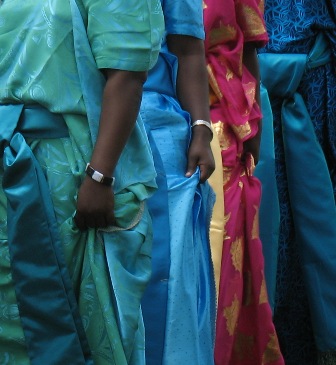 ZP_Ugandan women wearing busuutis
Susan Kiguli (born 1969)
“My Mother in Three Photographs”
.
Her face looks out
flawless
her sexuality electric
in a mini dress and sheer satin stockings
the girls of the 1960s
beautiful beyond belief.
She is looking through the camera
like her space is here and beyond
enchanting and enchanted
by the times when dreams of freedom were young
the fortunes of Uganda
hot and sizzling.
.
My mother in the 1970s
More sombre but her skin
Still flawless
The abrasive years gentle on her youth.
Her body wrapped in a long nylon dress
stopping her ankles and
full sleeves touching her wrists
hooded sorrow in her posture
the flowing dress
is not because
she is a widow (which is by government action)
but it is a government decree.
Her magnificence and elegance
Seem to support the given name of the dress
Amin nvaako *.
.
My mother in the 1990s
neat short hair
luring in its intricate curls.
She wears a busuuti
a sign of the times
a return home, a finding of
uncertain peace
a maturing of a woman and nation
an endorsement of a recognition of the troubles
she has weathered
a sitting down to count her losses and blessings
and a handover of the future.
.
* Amin Nvaako means Amin let me be or Amin leave me alone
.
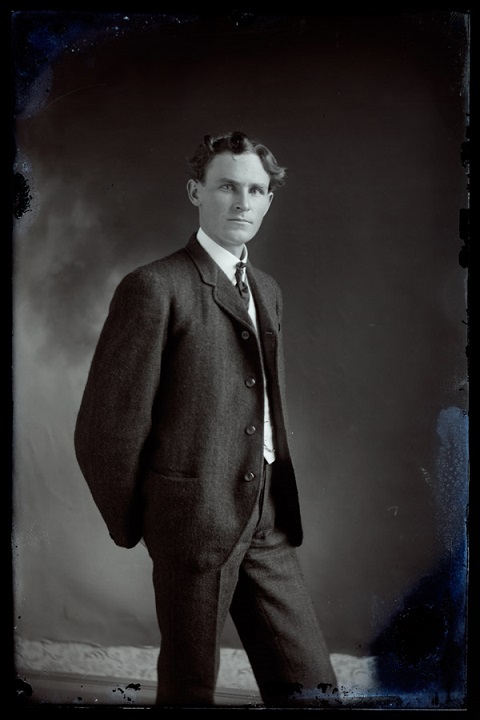 ZP_Portrait of a man in North Carolina_1910s_photographer Hugh Mangum
.
Raymond Carver (1938-1988)
“Photograph of My Father in His Twenty-Second Year”
.
October. Here in this dank, unfamiliar kitchen
I study my father’s embarrassed young man’s face.
Sheepish grin, he holds in one hand a string
of spiny yellow perch, in the other
a bottle of Carlsbad Beer.
.
In jeans and denim shirt, he leans
against the front fender of a 1934 Ford.
He would like to pose bluff and hearty for his posterity,
Wear his old hat cocked over his ear.
All his life my father wanted to be bold.
.
But the eyes give him away, and the hands
that limply offer the string of dead perch
and the bottle of beer. Father, I love you,
yet how can I say thank you, I who can’t hold my liquor either,
and don’t even know the places to fish?
. . . . .
Andre Bagoo beats Pan: Five Caribbean Poets inspired by T&T’s unique Drum
Posted: August 5, 2013 Filed under: 7 GUEST EDITORS, Andre Bagoo, David Blackman, Derek Walcott, English, English: Trinidadian, Kamau Brathwaite, Lelawattee Manoo-Rahming, Roger Robinson Comments Off on Andre Bagoo beats Pan: Five Caribbean Poets inspired by T&T’s unique Drum Afropan, Toronto’s longest-running steel orchestra, was founded in 1973. They have won the “Panorama”/Pan Alive competition more than two dozen times over the years. Currently under the leadership of Earl La Pierre, Jr., Afropan has mentored many young pannists and its player-membership includes a large number of female musicians.
.
Today – Simcoe Day Holiday Monday – is the “last lap lime” for Toronto Caribbean Carnival 2013 – more commonly known as Caribana – after two weeks of special events that included a Junior Carnival, King and Queen Competition, Calypso Monarch Finals, The Grand Parade or “Jump Up” – plus Pan Alive.
Pan Alive brings together, through the Ontario Steelpan Association, a dozen or more homegrown steel-pan orchestras from Toronto and elsewhere in Ontario. These perform original compositions or arrangements before pan aficionados and a table of judges. The 2013 winners were Pan Fantasy, under the leadership of Wendy Jones (with arranger Al “Allos” Foster), playing SuperBlue’s “Fantastic Friday”.
Other competing orchestras at Pan Alive 2013 were: Afropan, Pan Masters, Golden Harps, Panatics, Salah Steelpan Academy, Silhouettes, Hamilton Youth Steel Orchestra, New Dimension, Canadian Caribbean Association of Halton, St.Jamestown Youth Centre, JK Vibrations and Metrotones.
.
Our Guest Editor – Trinidadian poet, Andre Bagoo – here takes a look at poetry inspired by the steel-pan in the following selection he has put together for Zócalo Poets.
. . .
STEEL-PAN is everywhere in the Caribbean, so much so that some people cannot help but define us by it. We’ve produced Nobel laureates in the arts, economics and sciences; great athletes; contributed so much all over the planet – yet ask the average foreigner about the Caribbean and chances are the first thing they will talk about is steel-pan. But the region has a complex relationship with pan. For us, pan music is not just fun. It is a ritual: an invocation of the pulse of history within our veins; a defiant assertion of individuality against larger global forces; an example of how one man’s trash can become treasure – a sublime subversion of power, economics and art. Trinidad and Tobago, inventor of the pan, prides itself in being the race that created what is said to be the only acoustic instrument invented in the 20th century. Yet, Trinidadian poets, and Caribbean poets generally, have a sophisticated relationship with the instrument. Its hard, silver and lyrical contours are not mere tourist ornament, but loaded symbol. Often, as in my poem ‘Carnival’ (http://www.bostonreview.net/bagoo-carnival), instead of being a symbol of pleasure, the pan becomes a hollow, opposite thing – creating an irony because of our pleasurable expectations.
.
Roger Robinson’s ‘Texaco Oil Storage Tanks’ is ostensibly a poem about the materials used to make pans: oil barrels. But he finds the forces of history, power and economics inside them. While the oil storage tanks are large structures, the poem arguably evokes the images of smaller steel pans. Derek Walcott strikingly uses the image of the pan as a kind of psychogeographic tool in the opening of ‘Laventille’, whose first lines invite us to imagine that hill-top region as the arch of a pan. It’s also a device pregnant with meaning since Laventille is regarded as the birthplace of the instrument. In Kamau Brathwaithe’s great poem ‘Calypso’, pan makes an overt appearance but is, in fact, really all over the poem: its rhythm, its materials, its colour. I’ve included David Blackman’s poem ‘Bassman’ because of how far it veers from our romantic associations with that figure. And Lelawattee Manoo-Rahming’s ‘Steelpan in Miami’ is the final, fitting irony: pan exported, becoming a kind of prison of nostalgia, only made possible by migration away from the Caribbean basin.
– Andre Bagoo
. . .
Roger Robinson: “Texaco Oil Storage Tanks”
(Trinidad, Pointe-à-Pierre, 1978)
.
You silver gods, with viscous black innards,
skin of iron plates and bones of steel rivets,
.
your Cyclopean eye is a bright red star.
At each entrance stands an armed, khakied guard;
.
they check our passes, though we’ve known them for years,
for though we work here, we don’t belong.
.
A new shift begins, our brown workboots trudge
and the unemployed beg and plead out front
.
in full view, with burning sun on their shame,
but it’s not worse than their child’s hunger pains.
.
Our fingernails are full of tar and dust:
you came for the oil, and left with our blood.
. . .
Derek Walcott: From “Laventille”
[for V.S. Naipaul]
.
To find the Western Path
Through the Gates of Wrath
– Blake
.
It huddled there
steel tinkling its blue painted metal air,
tempered in violence, like Rio’s Favelas,
.
with snaking, perilous streets whose edges fell as
its Episcopal turkey-buzzards fall
from its miraculous hilltop
.
shrine,
down the impossible drop
to Belmont, Woodbrook, Maraval, St Clair
.
that shrine
like peddlers’ tin trinkets in the sun.
From a harsh
.
shower, its gutters growled and gargled wash
past the Youth Centre, past the water catchment,
a rigid children’s carousel of cement;
.
We climbed where lank electric
lines and tension cables linked its raw brick
hovels like a complex feud,
.
where the inheritors of the middle passage stewed,
five to a room, still camped below their hatch,
breeding like felonies,
.
whose lived revolve round prison, graveyard, church.
Below bent breadfruit trees
in the flat, coloured city, class
.
escalated into structures still,
merchant, middleman, magistrate, knight. To go downhill
from here was to ascend.
. . .
Kamau Brathwaite: “Calypso”
from The Arrivants
1
The stone had skidded arc’d and bloomed into islands:
Cuba and San Domingo
Jamaica and Puerto Rico
Grenada Guadeloupe Bonaire
.
curved stone hissed into reef
wave teeth fanged into clay
white splash flashed into spray
Bathsheba Montego Bay
.
bloom of the arcing summers…
2
The islands roared into green plantations
ruled by silver sugar cane
sweat and profit
cutlass profit
islands ruled by sugar cane
.
And of course it was a wonderful time
a profitable hospitable well-worth-you-time
when captains carried receipts for rices
letters spices wigs
opera glasses swaggering asses
debtors vices pigs
.
O it was a wonderful time
an elegant benevolent redolent time–
and young Mrs. P.’s quick irrelevant crine
at four o’clock in the morning…
3
But what of black Sam
with the big splayed toes
and the shoe black shiny skin?
.
He carries bucketfulls of water
’cause his Ma’s just had another daughter.
.
And what of John with the European name
who went to school and dreamt of fame
his boss one day called him a fool
and the boss hadn’t even been to school…
4
Steel drum steel drum
hit the hot calypso dancing
hot rum hot rum
who goin’ stop this bacchanalling?
.
For we glance the banjoy
dance the limbo
grow our crops by maljo
.
have loose morals
gather corals
father out neighbour’s quarrels
.
perhaps when they come
with their cameras and straw
hats: sacred pink tourists from the frozen Nawth
.
we should get down to those
white beaches
where if we don’t wear breeches
it becomes an island dance
Some people doin’ well
while others are catchin’ hell
.
o the boss gave our Johnny the sack
though we beg him please
please to take ‘im back
.
so now the boy nigratin’ overseas…
. . .
David Jackman: “Bassman”
.
Now yuh hearing a pain in yuh belly,
Who go provide now?
Who giving yuh room now?
After yuh throw way the costume and
Sleep in yuh vomit from pan fever
After yuh finish consume the liquor
Playing bass in mass
Playing ass in mass
.
You go shadow extravaganza
trying to stretch out the fever
making a las lap
.
trying to get back on the map.
.
But the year face yuh
all yuh have to go by
is Sparrow Miss Mary until
yuh hear
the bass man
in yuh head
Shadow bass man eh boss man nah.
Carnival sickness is the bossman.
Shadow eating good, Sparrow eating good,
CDC eating good.
But who go provide now
Who go provide for the bass pain
in the belly? Who man tell me who?
. . .
Lelawattee Manoo-Rahming: “Steelpan in Miami”
.
Last night I drove
over plain Miami
far in the Southwest
to Miami Pan Symphony
Panyard not under open skies
not bounded by mountain peaks
Cierro del Aripo and El Tucuche
but swallowed in the stomach
of a boxy warehouse
.
Steelpan music cornered
muffled by dense
con crete pre fab walls
not ringing out over
Queen’s Park Savannah
not jingling like running water
in East Dry River
.
Saw the girlchild beating
six bass pans
made one afternoon
not by Spree Simon the Hammer Man
but by Mike Kernahan
Trini in Miami
.
Listened to the boychild
strum the cello pan
heard the manchild
the womanchild
on the chrome tenor pans
carrying the calypso tune
.
Not to Maracas Bay
with coconut fronds
and six foot waves
but to Miami Beach
manmade fringed
with sea oats and coco plums
.
And when the music died
a farewell so warm like Miami heat
a Trini voice bidding
“Drive safe eh”
an incantation from the streets of
Port-of-Spain
a familiar song so strange
in this multilingual
Caribbean city in the frying pan
handle of North America.
. . . . .
Endnotes:
Roger Robinson’s ‘Texaco Oil Storage Tanks’ appears in his forthcoming collection, The Butterfly Hotel (Peepal Tree Press); the extract from Derek Walcott’s ‘Laventille’ is taken from his Collected Poems (Faber and Faber, 1986); Kamau Brathwaite’s ‘Calypso’ is a poem from his The Arrivants; David Jackman’s ‘Bassman’ is scooped out of 100 Poems from Trinidad and Tobago (Edited by Ian Dieffenthaller & Anson Gonzalez); and Lelawattee Manoo-Rahming’s ‘Steelpan in Miami’ appears in her collection Curry Flavour (Peepal Tree Press, 2000).
.
Andre Bagoo is a poet and journalist, born in 1983, whose first book of poems, Trick Vessels, was published by Shearsman Books (UK) in 2012. His poetry has appeared in or is forthcoming at: Almost Island; Boston Review; Cincinnati Review; Caribbean Review of Books; Caribbean Writer; Draconian Switch; Exit Strata PRINT! Vol. 2; Landscapes Journal, St Petersburg Review, Word Riot and elsewhere. An e-chapbook, From the Undiscovered Country, a collaboration with the artist Luis Vasquez La Roche, was published at The Drunken Boat in 2013.
. . . . .
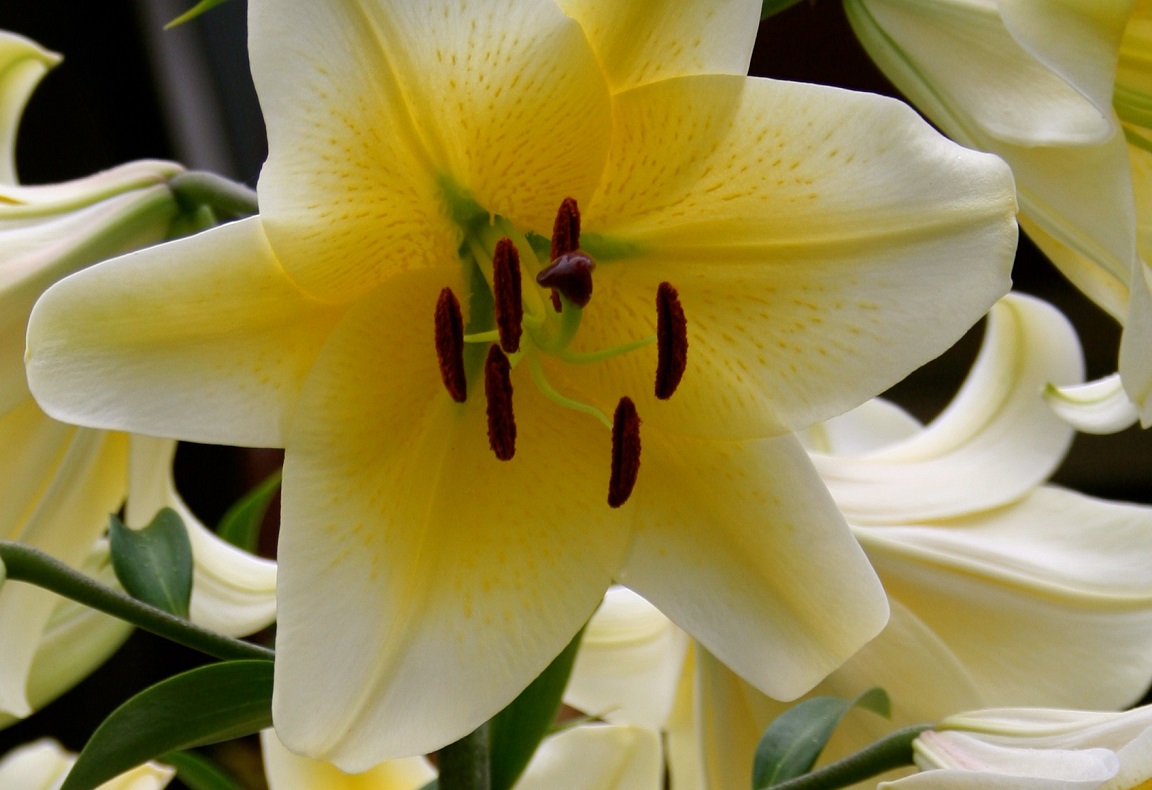
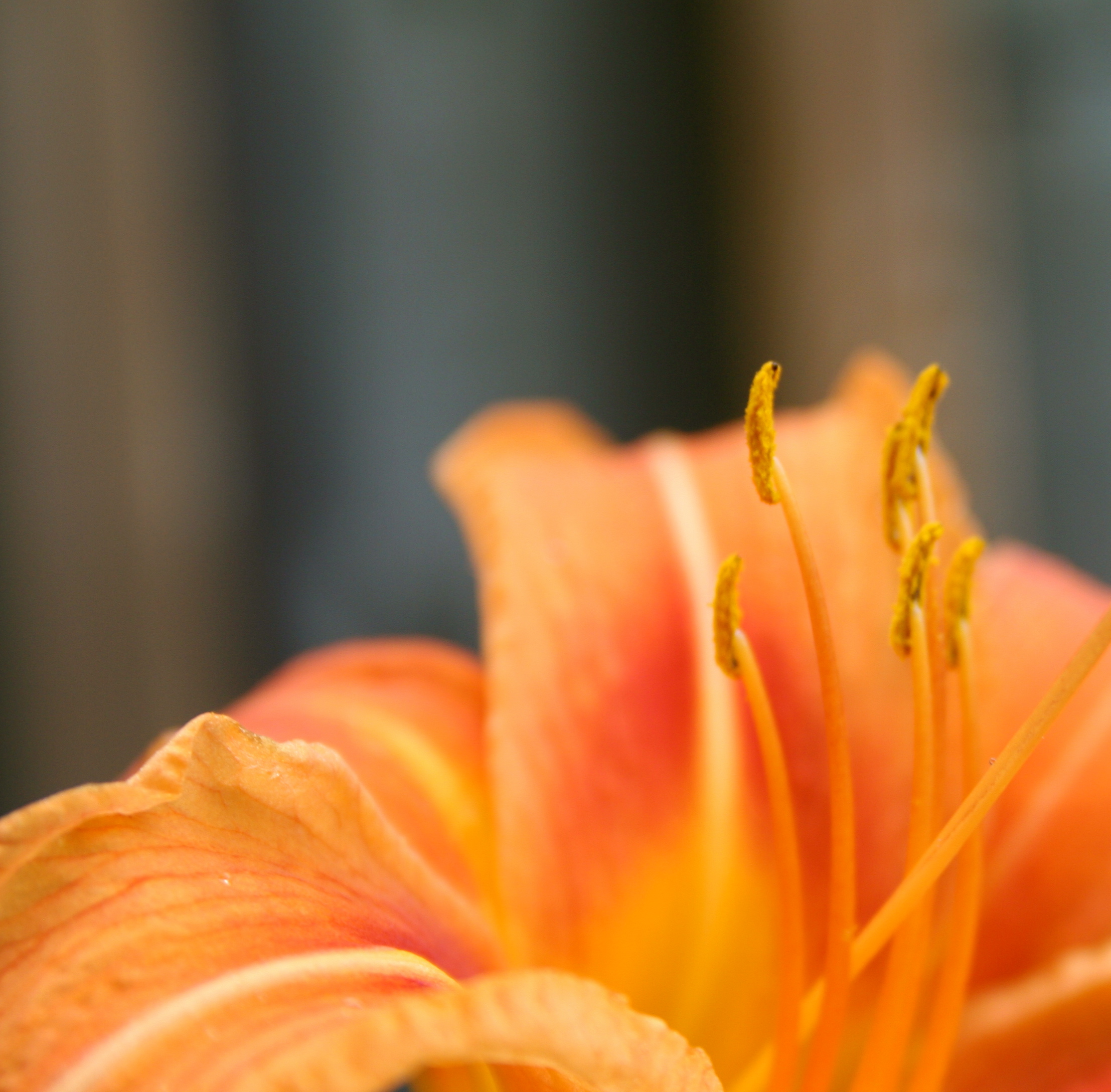
Toronto flora of “high summer”: The Lily
Posted: July 31, 2013 Filed under: Alexander Best, English, IMAGES Comments Off on Toronto flora of “high summer”: The Lily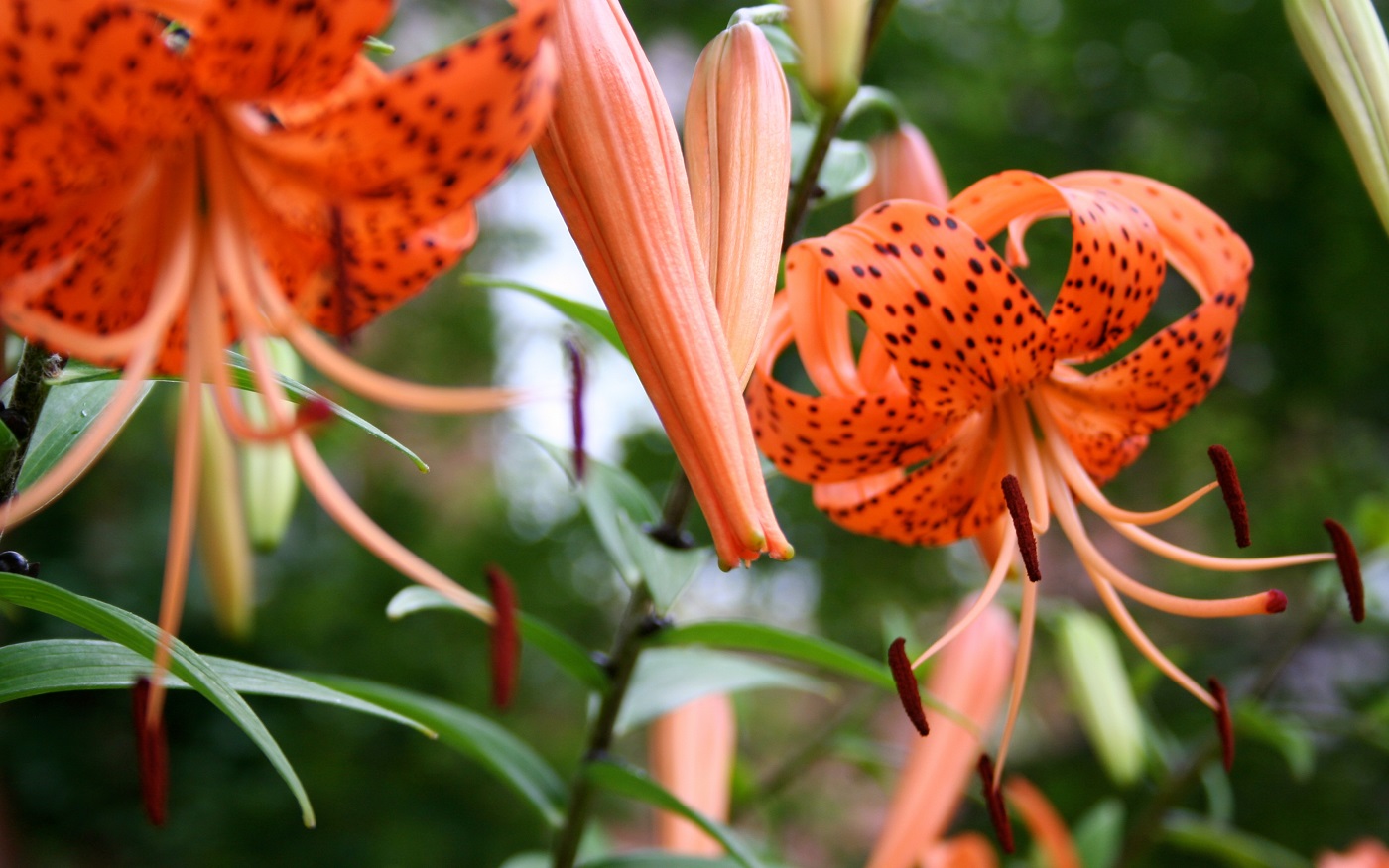
Lily – my childhood flower. I learned to walk
among your stalks. And your ancient sophistication
is part of me now; your beauty beholds me / I behold you,
and The World is good glimpsed from your point of view.
Of my sad boyhood face there remains a dream-trace,
and your fragrance and form taught me all I should know:
Stand tall and upfront and, well – put on a show.
Elegant, primitive, glowing style…
Lily, you sleep as a bulb under snow,
then you hold your head high in the summer awhile.
.
Alexander Best, July 31st, 2013

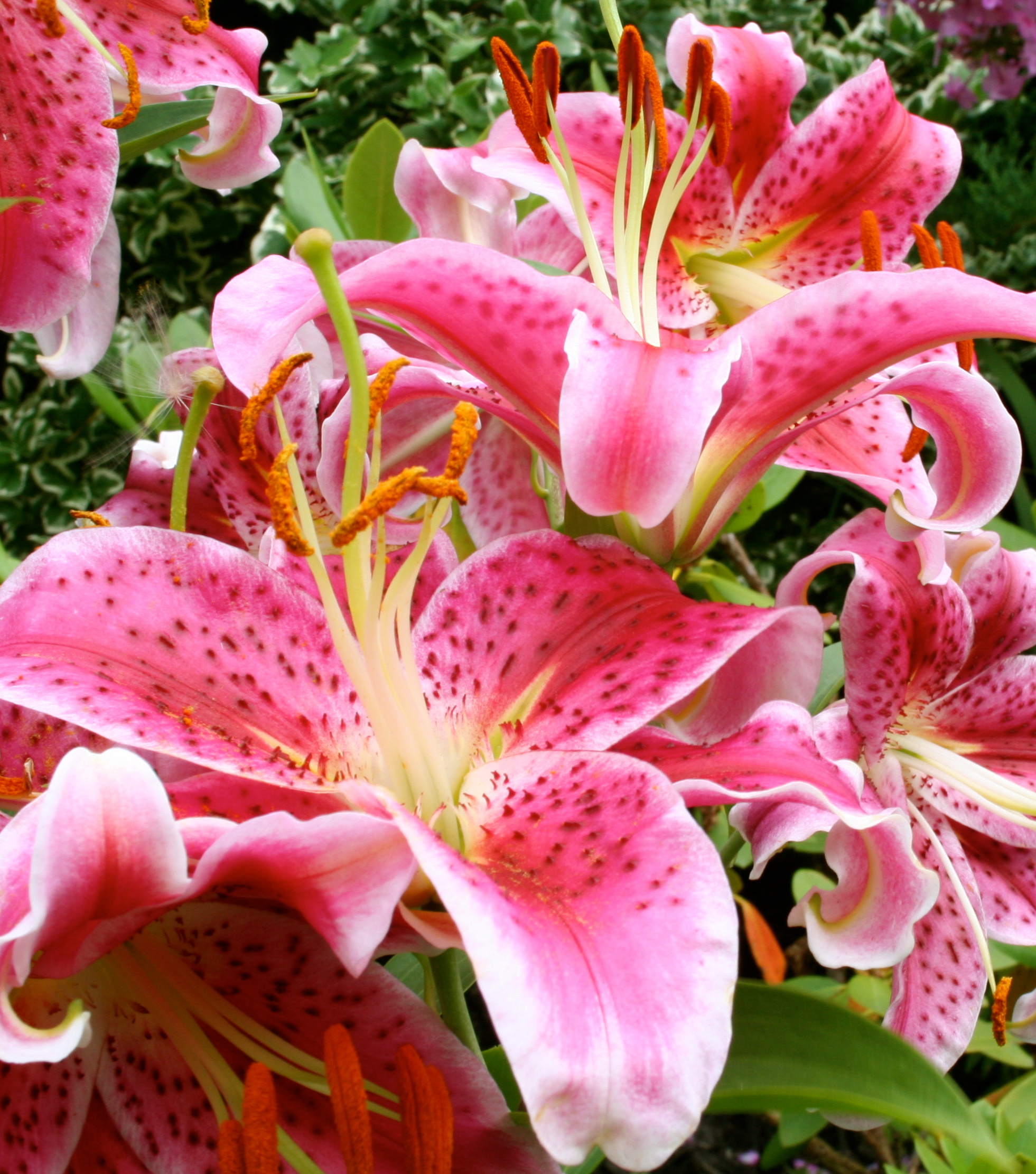
Photographs of Lilies in Toronto gardens by Elisabeth Springate (July 28th– 30th, 2013)
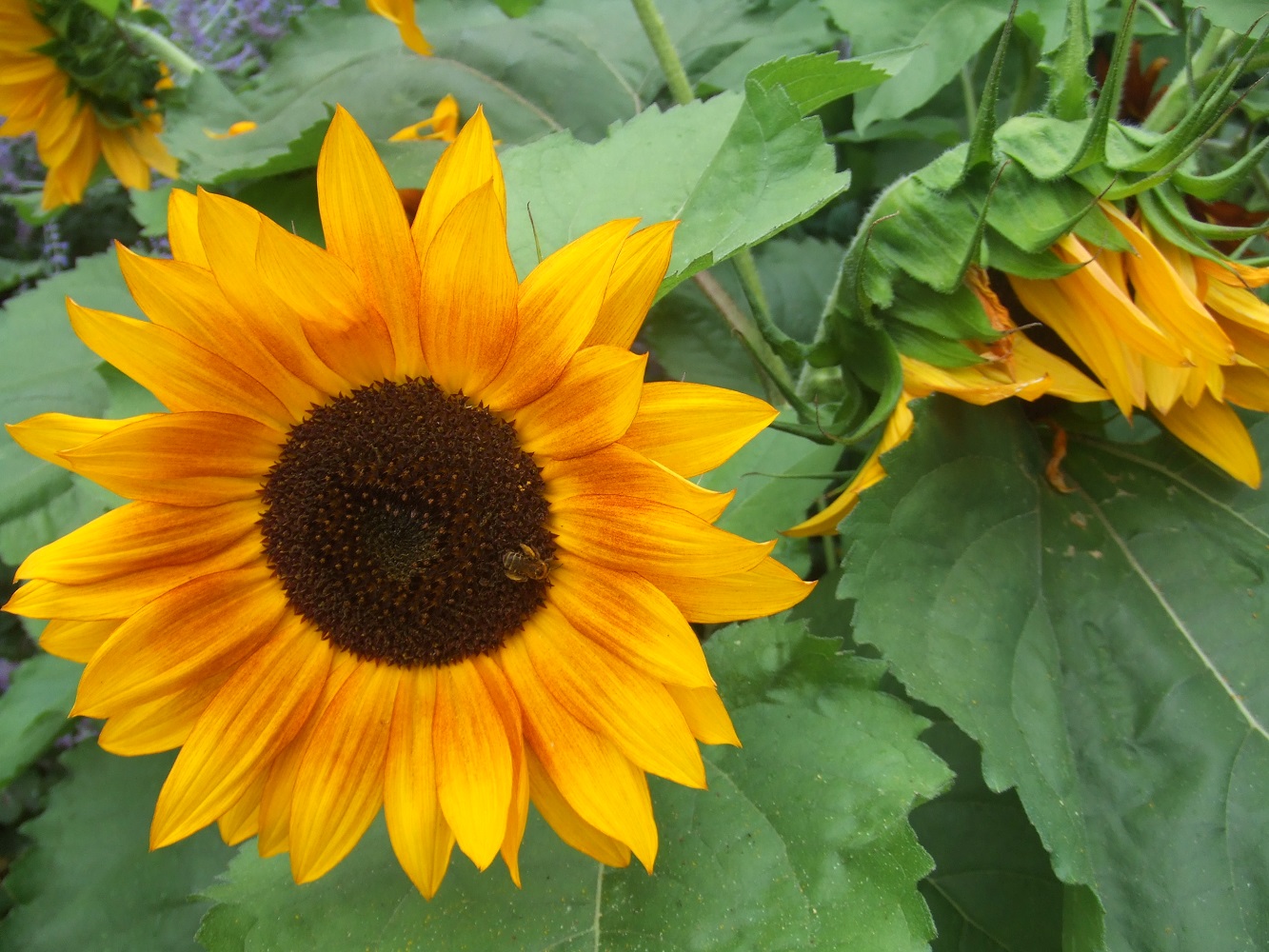
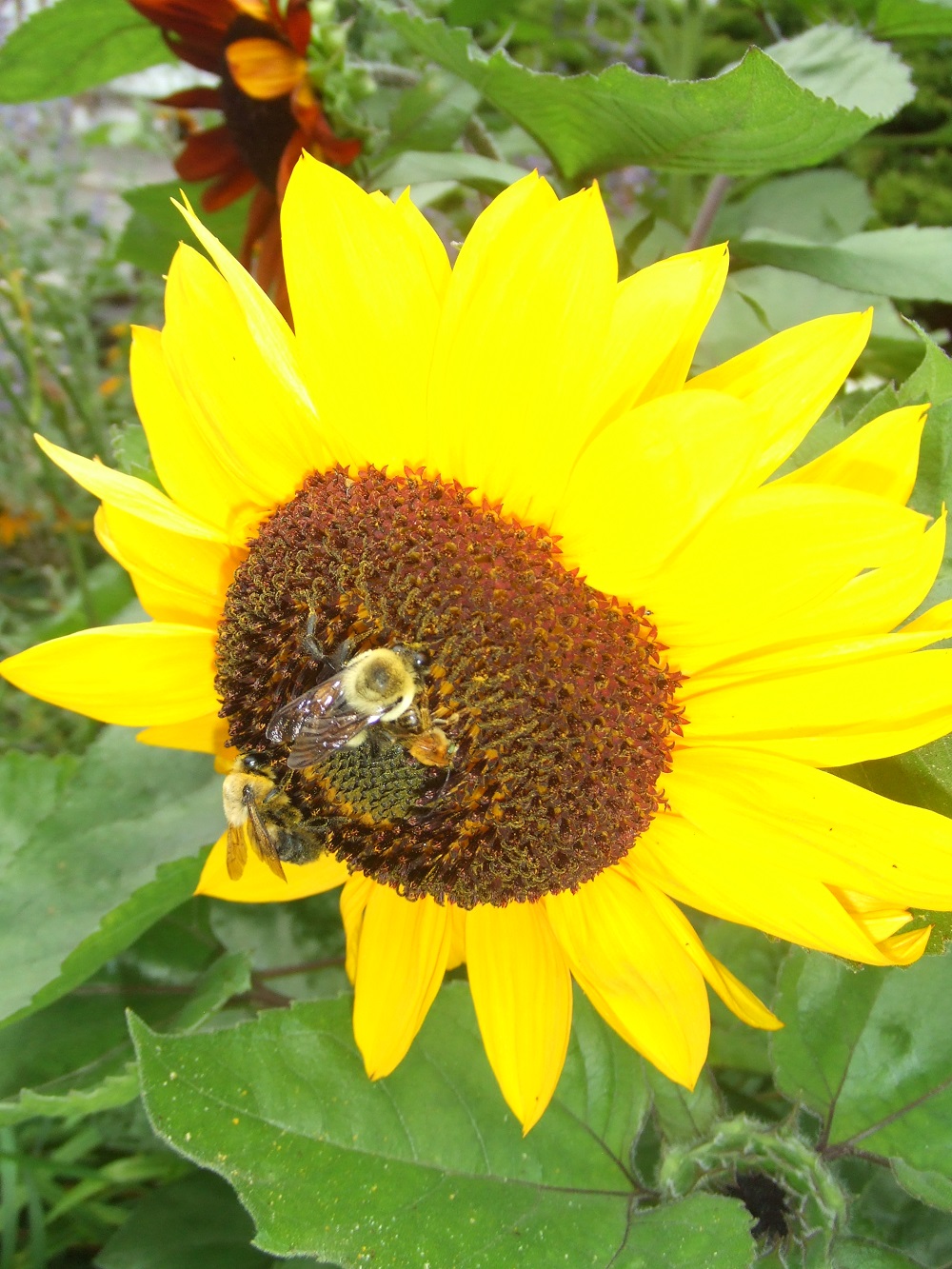
Toronto flora of “high summer”: The Sunflower
Posted: July 31, 2013 Filed under: Alexander Best, English, IMAGES Comments Off on Toronto flora of “high summer”: The Sunflower
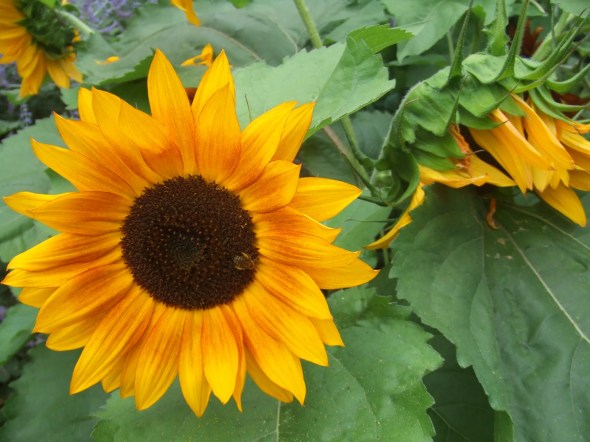 Sunflower – dawn, high noon or dusk hour –
Why, for me, do you have such power?
You: my glad face when I’m
open to joy, not anger’s toy; when I’m
frank with feeling, not secretly reeling.
Go ahead, you nod, do your best, you nod,
And the rest of your pals say: we knew that you could!
You are eager and honest and simple and true
– and guess why I love you so?
’cause my spirit grows
when we’re face to face
– and then I can re-join the human race.

.
Alexander Best, July 31st, 2013
Robert Gurney: “Horneritos” / “Ovenbirds”
Posted: July 31, 2013 Filed under: English, Robert Gurney, Spanish Comments Off on Robert Gurney: “Horneritos” / “Ovenbirds” ZP_Crested Hornero in Argentina_Furnarius cristatus en Argentina_foto por Nick Athanas
.
Robert Gurney
“Horneritos”
( a Ramón Minieri )
.
Recibí un mail desde la Patagonia
acerca de unos pájaros.
.
Tienen el plumaje de la cabeza
estilo punk.
.
Dicen que son oriundos
del Paraguay y del Chaco
pero que a veces vuelan
hasta la Pampa
y otras incluso
hasta la Patagonia.
.
El mail describe
cómo descienden a comer
en el patio de un amigo
que vive en Río Colorado.
.
Luego vuelven a un árbol
para posar ante la cámara.
.
Ni siquiera se molestan
en peinarse primero.
.
Otro amigo,
que vive en Londres,
me dice que se llaman
horneritos copetones
y que sus nidos se parecen
a los hornos de los panaderos.
.
Pero no es eso
lo que me llama la atención
sino la imagen
del horno de barro
en la pared
de la casa de Vallejo*
en Santiago de Chuco.
.
Hay pájaros
que van y vienen,
entrando y saliendo
de su boca.
.
* César Vallejo, poeta peruano, 1892 – 1938
. . .
Robert Gurney
“Ovenbirds”
( to Ramón Minieri )
.
I had an e-mail the other day
from Patagonia
about some birds
with punk-style head feathers.
.
It said they are native
to Paraguay
and The Chaco
but that they sometimes
fly south
to the Pampas
and, sometimes,
even, to Patagonia.
.
It describes how
they come down to feed
in a friend’s patio
in Río Colorado.
.
Then they fly back into a tree
to pose for the camera
without even bothering
to comb their hair first.
.
Another friend,
who lives in London,
tells me that they are called
“horneritos copetones”
(furnarius cristatus);
in English –
Crested Horneros
or Ovenbirds;
and that they nest
in shrubs in scrub.
.
It seems
that they are so named
because they make
globular mud nests
that resemble
bakers’ ovens.
.
It wasn’t so much this,
though,
that filled my mind
but an image
of an oven in a wall
inside Vallejo’s* house
in Santiago de Chuco
with birds flying
in and out of it.
.
(St. Albans, England, June 2013)
.
* César Vallejo, Peruvian poet, 1892 – 1938
. . .
Robert Gurney nació en Luton, Bedfordshire, Inglaterra. Divide su tiempo ahora entre St Albans, Hertfordshire, Inglaterra, y la aldea de Port Eynon en El País de Gales. Su esposa Paddy es galesa. Tienen dos hijos y dos nietos. Su primer profesor de Español en el liceo de Luton, el señor Enyr Jones, era argentino, precisamente patagónico galés, de Gaiman. Las clases eran una oasis de paz, amistad e inspiración: un grupo pequeño en la biblioteca, sentado en un círculo alrededor de una elegante mesa de madera, con los diccionarios a la mano. En la Universidad de St Andrew’s (Escocia) su profesor fue el Profesor L. J. (“Ferdy”) Woodward, quien daba maravillosas clases sobre la poesía española. Luego, en el ciclo de doctorado, en Birkbeck College, Universidad de Londres, tenía al profesor Ian Gibson como mentor inspiracional. Con la supervisión de Ian preparó su tesis doctoral sobre Juan Larrea (The Poetry of Juan Larrea, 1975), poeta al que entrevistó en francés en treinta y seis oportunidades (200 horas) en 1972, en Córdoba, Argentina. La Universidad del País Vasco publicó La poesía de Juan Larrea en 1985. Mantuvo una correspondencia intensa con el poeta (inédita). Entrevistó a Salvador Dalí, a Gerardo Diego, a Luis Vivanco (el traductor de Larrea), a José María de Cossío y a los amigos de Larrea en España y Argentina: Gregorio San Juan, Osvaldo Villar, Luis Waysmann y otros. Escribe poesía y cuentos. Ha escrito una novela ‘anglo-argentina’ (inédita). Su último poemario La libélula / The Dragonfly (edición bilingüe) salió este año en Madrid. Su próximo libro, también bilingüe, será La Casa de empeño / The Pawn Shop (Ediciones Lord Byron). Prepara un libro de cuentos breves sobre sus años en Buganda.
Para leer más poemas de Robert Gurney cliquea aquí: http://verpress.com/
.
Robert Gurney was born in Luton, Befordshire, England. He divides his time now between St Albans, Hertfordshire and the village of Port Eynon in Wales. His wife Paddy is Welsh. They have two sons and two grandsons. His first Spanish teacher at Luton Grammar School, Mr Enyr Jones, was Argentine, Patagonian Welsh, to be precise, from Gaiman. The classes were an oasis of peace, friendship and inspiration: a small group sitting in a circle around an elegant wooden table in the library, with dictionaries to hand. At the University of St Andrew’s in Scotland, his teacher was Professor L.J. (“Ferdy”) Woodward who gave marvelous lectures on Spanish poetry. Then, for his PhD at Birkbeck College, the University of London, he had Ian Gibson as his inspirational tutor. Under Ian’s supervision, he wrote his thesis on Juan Larrea (The Poetry of Juan Larrea, 1975), published by the University of the Basque Country as La poesía de Juan Larrea in 1985. He interviewed Larrea, in French, on 36 separate occasions in Córdoba, Argentina, in 1972, and conducted an intense correspondence with him. He interviewed Salvador Dalí, Gerardo Diego (in Spain and France), Luis Vivanco (Larrea’s translator), Jose María de Cossío and Larrea’s friends in Argentina: Ovaldo Villar, Luis Waysmann and others. He has written one “Anglo-Argentine” novel (unpublished). He writes poetry and short stories and is currently preparing a book of short stories on his years in Buganda.
. . . . .
Alan Clark: “La Lengua” y “Dentro de Ti”
Posted: July 31, 2013 Filed under: Alan Clark, English, Spanish, ZP Translator: Alexander Best Comments Off on Alan Clark: “La Lengua” y “Dentro de Ti”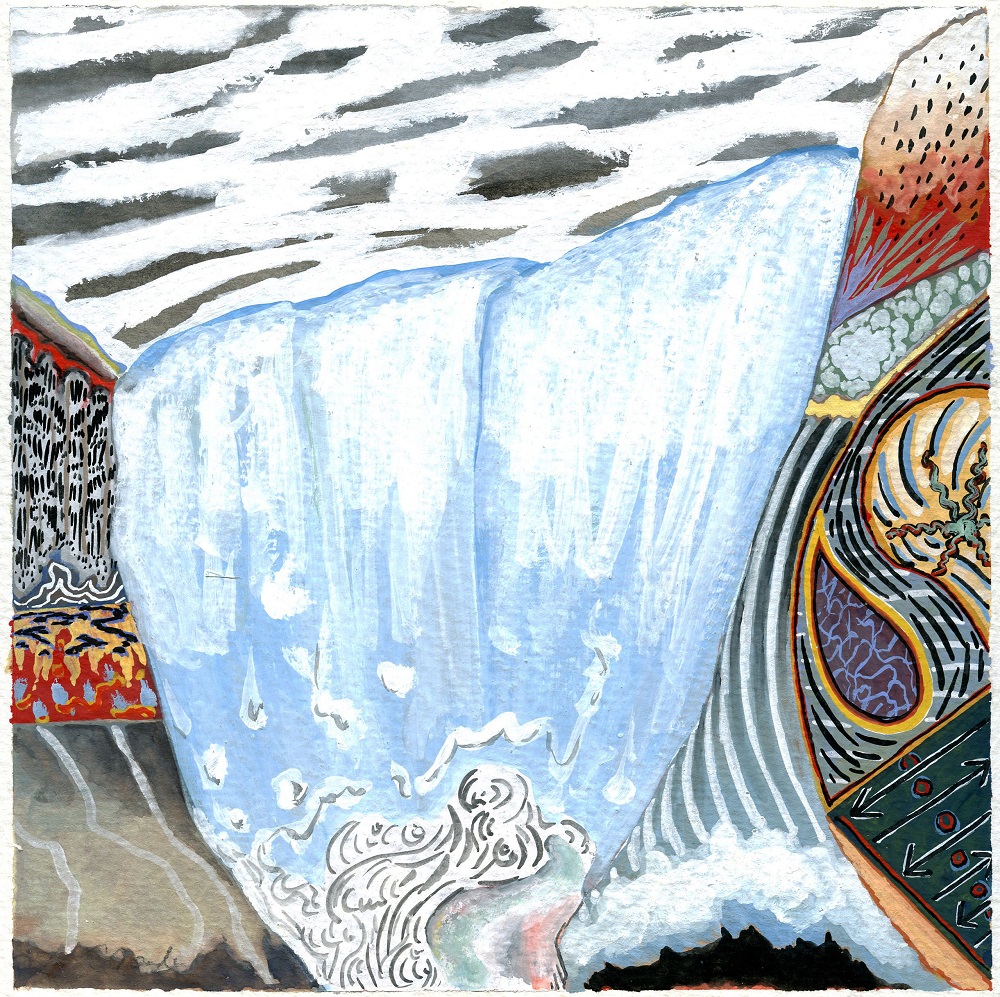 ZP_La Lengua_pintura de Alan Clark
.
La Lengua
.
Estoy “viviendo” tu leyenda sobre mi lengua
(es ésta la tierra santa en que vagaremos…)
Contigo…degustas como las palabras que me vienen,
esta lengua rastreando tus “dondes” más dulces,
y estas palabras hacen cosquillas en la garganta.
Pero está en tu piel que conozco lo que es
la adoración – la lengua, con franqueza, sobre
la piel de sal / sobre brazas de ti
(no bajo del agua sino en un nuevo aire de sal)
en que el universo – que es tú – ríe un “yo” para
bajarme más y más y inventir todas las palabras
que nunca te igualarán – la ola y “materia”
del cuento en el lenguaje de nuestro sueño
unido en nosotros…
Somos diosas y dioses del sudor,
del pecho, de las manos, y de los labios que
hablan solamente cuando no hay nada decir que:
Quede en en lugar oscuro donde están conocidos
tus muslos en lo de mi que está bastante liviano
para buscarte.
. . .
La Lengua
.
I’m living out your legend on my tongue
(this is the holy land we’re wandering in)
with you tasting like the words that come to me,
this tongue tracking down your softest “wheres”,
these words tickling my throat. But in your flesh
I know what worship is, tongue directly
to the salt skin and fathoms of yourself
(not under water, in a new salt air)
in which the universe of you is laughing me
to go down and down to make up all the words
that will never equal you, wave and matter
as the story in the language of our dream
together: goddesses and gods of sweat,
of breasts and hands and lips that only speak
when there’s nothing left to say but: Linger,
in the dark place where your thighs are met
by what of me is light enough to find you.
. . .
Dentro de Ti –
.
Puedo ver la materia prima de sombras
y como el barro se torne en una clase de luz;
que soy como un pez que debe nadar
dentro de un mundo donde se arremolinan la hierba del mar
mientras levantas las manos durante un día caluroso…
Me siento dentro de ti la verde pura de una planta que
se torna en el calor de un horno de sangre;
lo que está ni despierto ni durmiendo en
la concha de un otro día que promete
todo de sí mismo para expectativas no perladas…
El olor en tu animal, la flor de mi lengua de pavo real;
el diccionario de mis sentidos no deletreados como besos; y
siempre – siempre – la libertad del cielo
recogiendo las plumas de un pájaro – tú – que
se monta los alientos cuando miran tus ojos que
pueden asegurar – por la ley rarísima – algo que
nunca viere alguien:
las balanzas de los arcos de iris breves
y la creación del mundo.
. . .
In You –
.
I can see what stuff shadows are made of
and how clay can become a kind of light,
how I’m like a fish who can’t not swim
into a world where the seagrass is swirling
when you lift up your arms on a hot day…
feel in you the raw green of a plant
being turned into heat in an oven of blood,
what lies not awake, not asleep inside
the shell of another day promising
all of itself to no pearl expectations…
smell in your animal, the flower
of my peacock tongue, the dictionary
of my senses unspelled as kisses, and
always, always, the freedom of the sky
gathering the feathers of the bird you are,
who rides the winds when your eyes behold,
who can claim by the strangest of laws
what no-one else could ever see: the scales
of brief rainbows and the world’s creation.
. . .
Poeta y pintor, Señor Alan Clark divide su vida entre Maine en EE.UU. y el México. Guerrero y Sangre del Corazón fue publicado por Henning Bartsch (México, D.F.) Tiene también un poemario de 2010: Where They Know. Sus piezas del teatro incluyen: The End of It, The Couch – The Table – The Bed, and The Beast – y fueron montados en EE.UU. y México. En 2004 tuvo una exhibición de sus pinturas en Rockland, Maine en Farnsworth Art Museum – Sangre y Piedra.
.
Alan Clark is an artist and poet, dividing his life between Maine and Mexico. Guerrero and Heart’s Blood was published in Mexico City by Henning Bartsch. A book of poems, Where They Know, was published in 2010. Clark’s plays –including adaptations of Guerrero and Heart’s Blood – include: The End of It, The Couch – The Table – The Bed, and The Beast; these have been staged in the U.S.A. and in Mexico. Blood and Stone: Paintings by Alan Clark,was at the Farnsworth Art Museum, Rockland, Maine,in 2004.
Versiones en español / Spanish versions: Alexander Best
. . . . .
¿Eva, La Culpable? / Was IT All Eve’s Fault?
Posted: July 28, 2013 Filed under: English, Eva La Culpable...Was It All Eve's Fault?, Jee Leong Koh, Spanish, ZP Translator: Alexander Best Comments Off on ¿Eva, La Culpable? / Was IT All Eve’s Fault?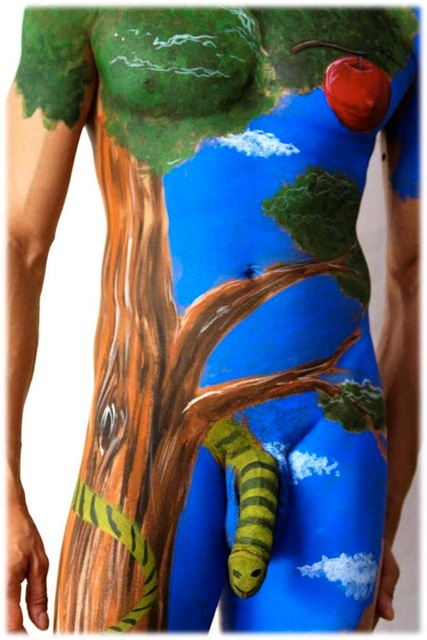 ZP_El Adán reconsiderado…¡Piense en él dos veces!_Adam reconsidered…Give him a second thought!
.
“No Eva…Solo era una cantidad excesiva del Amor, su Culpa.”
(Aemilia Lanyer, poetisa inglés, 1569 – 1645, en su obra Salve Deus Rex Judaeorum: La Apología de Eva por La Mujer, 1611)
.
Jee Leong Koh
“Eva, La Culpable”
.
Aunque se ha ido del jardín, no se para de amarles…
Dios le convenció cuando sacó rápidamente de su manga planetaría
un ramo de luz. Miraron pasar el desfile de animales.
Le contó el chiste sobre el Arqueópterix, y se dio cuenta de
las plumas y las garras brutales – un poema – el primero de su tipo.
En una playa, alzado del océano con un grito, él entró en ella;
y ella, en olas onduladas, notó que el amor une y separa.
.
El serpiente fue un tipo más callado. Llegaba durante el otoño al caer la tarde,
viniendo a través de la hierba alta, y apenas sus pasos dividió las briznas.
Cada vez él le mostró una vereda diferente. Mientras que vagaban,
hablaron de la belleza de la luz golpeando en el árbol abedul;
el comportamiento raro de las hormigas; la manera más justa de
partir en dos una manzana.
Cuando apareció Adán, el serpiente se rindió a la felicidad la mujer Eva.
.
…Porque ella era feliz cuando encontró a Adán bajo del árbol de la Vida
– y aún está feliz – y Adán permanece como Adán: inarticulado, hombre de mala ortografía;
su cuerpo estando centrado precariamente en sus pies; firme en su mente que
Eva es la mujer pristina y que él es el hombre original. Necesitó a ella
y por eso rasguñó en el suelo – y creyó en el cuento de la costilla.
Eva necesitó a la necesidad de Adán – algo tan diferente de Dios y el Serpiente,
Y después de éso ella se encontró a sí misma afuera del jardín.
. . .
“Not Eve, whose Fault was only too much Love.”
(Aemilia Lanyer, English poetess, 1569 – 1645, in Salve Deus Rex Judaeorum: Eve’s Apologie in Defence of Women, 1611)
.
Jee Leong Koh
“Eve’s Fault”
.
Though she has left the garden, she does not stop loving them.
God won her when he whipped out from his planetary sleeve
a bouquet of light. They watched the parade of animals pass.
He told her the joke about the Archaeopteryx, and she noted
the feathers and the killing claws, a poem, the first of its kind.
On a beach, raised from the ocean with a shout, he entered her
and she realized, in rolling waves, that love joins and separates.
.
The snake was a quieter fellow. He came in the fall evenings
through the long grass, his steps barely parting the blades.
Each time he showed her a different path. As they wandered,
they talked about the beauty of the light striking the birch,
the odd behavior of the ants, the fairest way to split an apple.
When Adam appeared, the serpent gave her up to happiness.
.
For happy she was when she met Adam under the tree of life,
still is, and Adam is still Adam, inarticulate, a terrible speller,
his body precariously balanced on his feet, his mind made up
that she is the first woman and he the first man. He needed
her and so scratched down and believed the story of the rib.
She needed Adam’s need, so different from God and the snake
– and that was when she discovered herself outside the garden.
. . . . .
Jee Leong Koh nació en Singapur y vive en Nueva York. Es profesor, también autor de cuatro poemarios.
Jee Leong Koh was born in Singapore and now lives in New York City where he is a teacher.
He is the author of four poetry collections: Payday Loans, Equal to the Earth, Seven Studies for a Self Portrait and The Pillow Book.
. . .
Traducción en español / Translation into Spanish: Alexander Best
. . . . .
Alicia Claudia González Maveroff: “The Storyteller in The Zócalo” / “El Fabulador del Zócalo”
Posted: July 25, 2013 Filed under: Alicia Claudia González Maveroff, English, Spanish, ZP Translator: Alexander Best Comments Off on Alicia Claudia González Maveroff: “The Storyteller in The Zócalo” / “El Fabulador del Zócalo”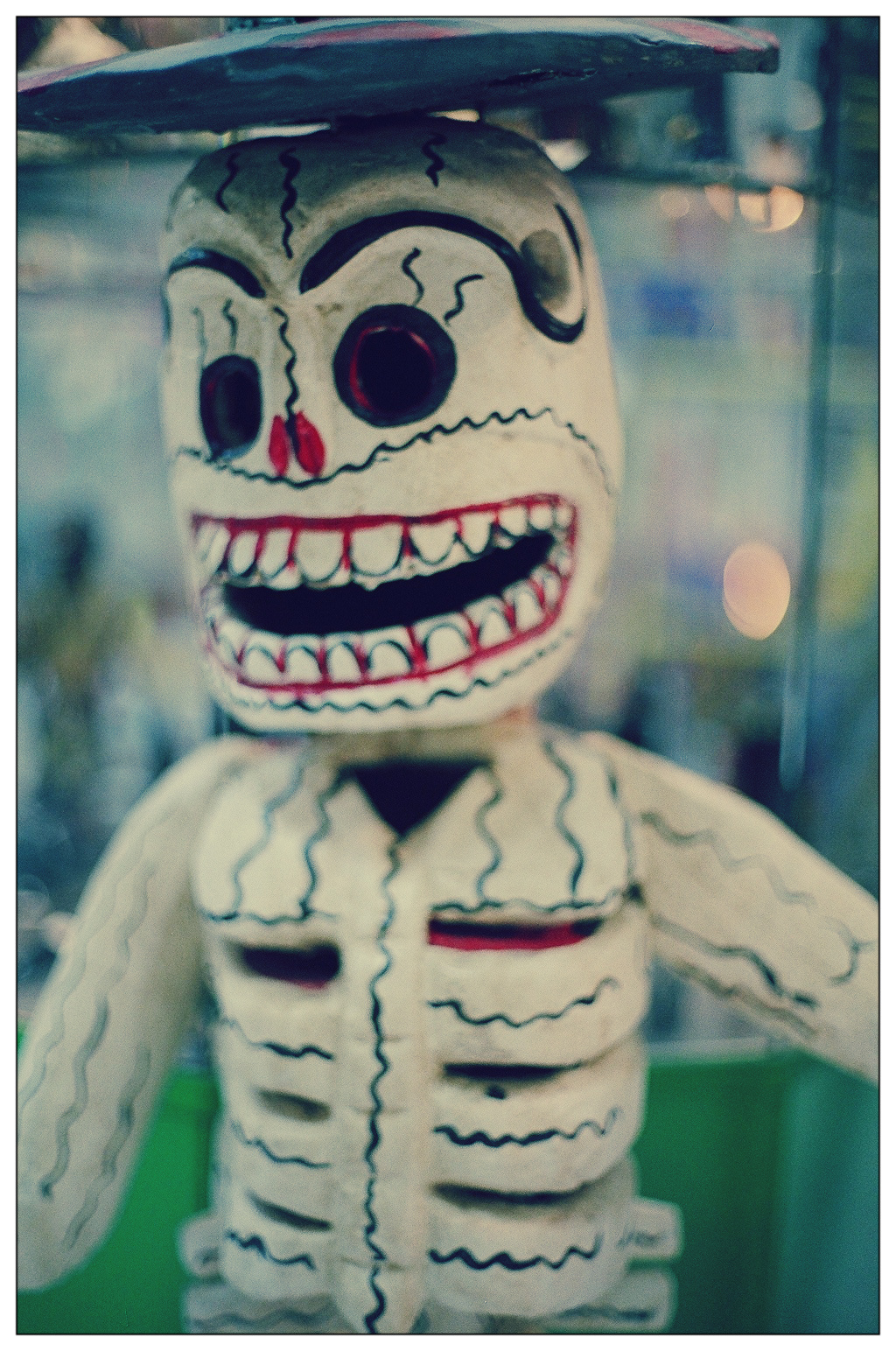
.
Alicia Claudia González Maveroff
“The Storyteller in The Zócalo”
.
Earlier today in the Square there was a storyteller
enchanting people with his words – everyone who
was in and around that patch of pavement where he stood.
Those who saw him there were all listening without
so much as uttering a sound.
In The Zócalo this man earns his livelihood, selling
pretty little dolls that wiggle and sway.
Even though you can’t see any strings pulled,
you don’t know how it’s done,
these little dolls –skeletons, rather –
dance, lie down, jump, kneel and walk,
while the vendor chatters like a “fairground charlatan”.
Incredible it was, the gift of the gab that fellow displayed.
He whiled away the time offering to passers-by
a cadaverous doll which seemed to be alive-and-kicking.
Children, mute, admired the dancing doll:
“Look how the dolly can dance!”
The adults present laughed to themselves, “Yeah, right,”
as if to say: “What a scam.”
Yet he captured every one of us, this guy with his confabulations,
presenting those dolls that never ceased to dance.
Who knows what the trick is? There’s no harm in it…
For that reason, in fact, one has to hand it to him this evening,
knowing that this is all a hoax yet rascal-ishly fascinating…
Me, he left me bamboozled, making me believe him,
so I’ve gone and bought one of those little dolls
– in order to be rewarded with a performance.
And I have left the Square happy, yes – knowing that he‘s a crook…
.
Mexico City, July 22nd, 2012
. . .
Alicia Claudia González Maveroff
“El Fabulador del Zócalo”
.
Estaba el fabulador en la plaza hoy temprano,
encantando con palabras,
a todos los que rodeaban el sector donde se hallaba.
Esos que allí se encontraban, lo escuchaban sin hablar.
En el Zócalo este hombre gana su vida, vendiendo
unos muñequitos lindos pequeños que se menean.
Aunque no se ven cordeles, ni sabemos como lo hace,
estos pequeños muñecos, a más decir esqueletos,
bailan, se barazan, se acuestan, saltan, se arrodillan y andan,
mientras el vendedor habla como “charlatan de feria”.
Es increible la labia que este señor nos demuestra.
Pasa su tiempo ofreciendo, a todos los transeuntes,
el muñeco cadaverico, que está vivito y coleando.
Mientras el muñeco baila, los niños, quietos, lo admiran.
¡Cómo baila el muñequito!
Los grandes, sonriendo “a penas”, como diciendo
“¡es un cuento!”
Pero a todos ha atrapado, este señor con su charla,
ofreciendo los muñecos que no paran de bailar.
¿Quién sabe como es el truco? No lo hacen nada mal…
Por eso, por la actuación, que ha brindado él esta tarde,
sabiendo que es un engaño, que es un vil fascinador…
Yo, me he dejado embaucar, haciendo que le creía,
le he comprado un muñequito, para premiar su actuación.
Y me he marchado contenta, sabiendo que es un ladrón…
.
México D.F., 22 – 07 – 2012
.
Alicia Claudia González Maveroff is a professor living in Buenos Aires, Argentina. Her credo, in a single precise sentence, is: I believe in Utopia – because Reality strikes me as impossible.
Alicia Claudia González Maveroff es una profesora que vive en Buenos Aires, Argentina. En una oración sucinta, su consejo es ésto: Creo en la utopía, porque la realidad me parece imposible.
.
Translation and interpretation from Spanish into English / Versión inglés: Alexander Best
. . . . .
Three Poets from Chad, DRCongo and Ivory Coast: “…so that the poem that has forever haunted my steps survives” / Trois poètes du Tchad, de la RDCongo et de la Côte d’Ivoire: “…pour la survie du poème qui hante mes pas depuis toujours”
Posted: July 25, 2013 Filed under: English, French Comments Off on Three Poets from Chad, DRCongo and Ivory Coast: “…so that the poem that has forever haunted my steps survives” / Trois poètes du Tchad, de la RDCongo et de la Côte d’Ivoire: “…pour la survie du poème qui hante mes pas depuis toujours” ZP_A Baobab tree in South Africa during the dry season when they shed their leaves. Traditionally, the ancient, ruggéd Baobab has served as an informal community meeting place where elders tell stories, the town crier announces startling news, and where conflicts may be resolved through public debate under the invisible eye of the ancestors_Un arbre Baobab Za pendant la saison sèche en Afrique du Sud
.
Three Poets from Chad, DRCongo and Ivory Coast:
“…so that the poem that has forever haunted my steps survives” /
Trois poètes du Tchad, de la RDCongo et de la Côte d’Ivoire:
“…pour la survie du poème qui hante mes pas depuis toujours”
. . .
Traductions en anglais / Translations from French into English – droit d’auteur / © Patrick Williamson
Tous les poèmes – droit de chaque auteur / © the respective poets
. . .
Nimrod Bena Djangrang (born 1959, Chad)
“The Cry of the Bird”
(for Daniel Bourdanné)
.
I wanted to be overcome with silence
I abandoned the woman I love
I closed myself to the bird of hope
That invited me to climb the branches
Of the tree, my double
I created havoc in the space of my garden
I opened up my lands
I found the air that circulates between the panes
Pleasant. I was happy
To be my life’s witch doctor
When the evening rolled out its ghosts
The bird in me awoke again
Its cry spread anguish
In the heart of my kingdom.
. . .
“Le Cri de l’Oiseau”
(à Daniel Bourdanné)
.
J’ai voulu m’enivrer de silence
J’ai délaissé la femme aimée
Je me suis fermé à l’oiseau de l’espoir
Qui m’invitait à gravir les branches
De l’arbre, mon double
J’ai saccagé l’espace de mon jardin
J’ai ouvert mes terroirs
J’ai trouvé agréable l’air qui circule
Entre les vitres. Je me suis rejoui
D’être le sorcier de ma vie
Alors que le soir déroulait ses spectres
L’oiseau en moi de nouveau s’est éveillé
Son cri diffusait l’angoisse
Au sein de mon royaume.
. . .
Kama Sywor Kamanda (born 1952, Democratic Republic of Congo)
“In the Silence of Hearts”
.
Now you are queen of my kingdom of dreams!
Woman, I am lost in your darkest night
Without a guiding star!
Carried away by your everchanging soul
As on an infinite sea,
I am drowning in the light of your desires:
Your love of its sensual pleasures transfigured me,
And I distanced my life from the shores of solitude.
It is softness in my heart
Nourished by the blood of lovers!
The fears on the flanks of wind are ripening,
I pray for heaven
To protect your life from all suffering,
And the force of love to safeguard your freedom
Wherever honour
Is a requirement of election.
I will cross gulfs of bitterness
To accede to the sun of your pleasure,
And I will attain the highest summits of your slopes
So that the river of all tenderness will flow down
Broadening as it courses its way.
. . .
“Dans le Silence des Coeurs”
.
Te voici reine de mon royaume des rêves!
Je me sens, ô femme, perdu en ta profonde nuit
En l’absence de l’étoile du voyageur!
Emporté dans les mouvances de ton âme
Comme dans une mer infinie,
Je me suis noyé dans la lumière de tes desirs:
Ton amour de ses voluptés, m’a transfiguré,
Et j’ai éloigné ma vie des rivages de la solitude.
C’est une douceur dans mon coeur
Nourri du sang des amants!
Les peurs mûrissantes sur les flancs du vent,
Je prie pour que le ciel
Préserve ta vie de toute souffrance,
Et que la force de l’amour sauvegarde ta liberté
Sur toutes les terres où l’honneur
Est une exigence d’election.
Je traverserai les gouffres de l’amertume
Pour accéder au soleil de ta jouissance,
Et j’atteindrai les plus hauts sommets de tes versants
En mesure que s’en ira en s’élargissant
Le fleuve de toutes les tendresses.
. . .
“Haunted Houses”
.
Now we have our doubts to cry over.
When identities and years
Become lost in the sands,
Our depressed towns
Smell of roses
Placed on tombstones.
Our houses, haunted
By long periods of solitude
Open up to waves of love,
As abundant as the sea of farewells.
Bitter offerings
People the spheres of our ambitions.
We seek our roots
Like others seek hidden truths.
. . .
“Maisons Hantées”
.
Maintenant, nous avons nos doutes pour pleurer.
Quand les identités et les années
Se perdent dans le sable,
Nos villes moroses
Se parfument de roses
Déposées sur les tombes.
Nos maisons hantées
Par de longues solitudes
S’ouvrent aux vagues de l’amour,
Aussi abondantes qu’une mer des adieux.
Les offrandes amères
Peuplent les sphères de nos ambitions.
Nous cherchons nos racines
Comme d’autres des vérités cachées.
. . .
Suzanne Tanella Boni (born 1954, Ivory Coast)
“Gorée Baobab Island” (four poems)
.
perhaps happiness is so far away
invisible among the tamarind leaves
when my hand brushes the fruit
to share them with spirits laughing at man’s
cruelty to man
.
perhaps the hope in my eyes drags
the future in clouds of dust where I seek
sparks and the dignity of condemned souls
.
when the horizon in the early hours
creates images and silhouettes between sun and sea
you are not here to see my eyes
where you have never seen the humour of the world
. . .
with the blessing of the island’s
invisible inhabitants I become alive again
.
as your look is not a poem
but the vast sea that pours infinite pages
at my feet
. . .
here too I drank at the source
words covered with mildew
like walls oozing all the sorrows
carved on the doors of time
.
I drank the life source
that gives us memory and the capped path
of days to come
I lost count of the mouthfuls of elixir I drank
so that the poem
that has forever haunted my steps survives
.
tomorrow I will return
to hear you talk to me
again of you and me
. . .
here too the sheets where history snoozed
are white and empty
.
the covers of time alone
are green like the last word in the world
when the wind howls
day and night at the gates of chaos
.
then I wrap myself in the words of your look faraway
beyond the sea that separates us infinitely.
 ZP_photographie par Finbarr O’Reilly, Reuters_L’île de Gorée est célèbre pour La Maison des Esclaves et La porte du Voyage sans Retour, d’où partaient pour l’ultime voyage les esclaves acheminés vers les plantations d’Amérique. Gorée Island, just off the coast from Dakar, Senegal, is famous for the 18th-century House of Slaves with its “portal of sorrow” or “door of no return” which faces the westward Atlantic Ocean where ships with their “human cargo” sailed for the slave-fueled coffee, cotton and sugar plantations of The Americas. It is this symbolic “door of no return” which Suzanne Tanella Boni calls the gates of chaos or la porte du chaos (in the French original of her poem).
.
“Gorée Île Baobab” (quatre poèmes)
.
peut-être le bonheur est-il si loin
invisible dans les feuilles de tamarinier
quand ma main effleure les fruits
à partager avec les génies riant des cruautés
faites à l’homme par l’homme
.
peut-être l’espérance dans mes yeux traîne-t-elle
l’avenir en nuages de poussières où je cherche
étincelles et dignité des âmes en sursis
.
quand l’horizon au petit matin
dessine images et silhouettes entre soleil et mer
tu n’es pas là pour voir mes yeux
où tu n’a jamais vu l’humeur du monde
. . .
avec la bénédiction des habitants
invisibles de l’île ici je revis
car ton regard n’est pas un poème
mais toute la mer qui coule à mes pieds
des pages infinies
. . .
ici aussi j’ai bu à la source
des mots couverts de moisissures
comme murs suintant de tous les malheurs
gravés aux portes du temps
.
j’ai bu la source vive
qui nous donne mémoire et chemin majuscule
des jours à venir
j’ai bu je ne sais combien de gorgées élixir
“…pour la survie du poème
qui hante mes pas depuis toujours”
.
demain je reviendrai
entendre ta voix qui me parle
encore de toi et de moi
. . .
ici aussi les draps où l’histoire fait la sieste
sont blancs et vides
.
seule la couverture du temps
est verte comme dernière parole du monde
quand le vent tourbillonne
nuit et jour à la porte du chaos
.
alors je m’enroule dans les mots de ton regard horizon
par-delà la mer nous séparant infiniment.
. . . . .
 Zócalo Poets