Denise Levertov: “Llevado en mente” / “In Mind”
Posted: July 25, 2016 Filed under: Denise Levertov, English, Spanish, ZP Translator: Alexander Best Comments Off on Denise Levertov: “Llevado en mente” / “In Mind”Denise Levertov (U.K./USA, 1923-1999)
In Mind (1964)
.
There’s in my mind a woman
of innocence, unadorned but
.
fair-featured, and smelling of
apples or grass. She wears
.
a utopian smock or shift, her hair
is light brown and smooth, and she
.
is kind and very clean without
ostentation ––
but she has
no imagination.
.
And there’s a
turbulent moon-ridden girl
.
or old woman, or both,
dressed in opals and rags, feathers
.
and torn taffeta,
who knows strange songs ––
but she is not kind.
. . .
Denise Levertov (Reina Unido / EE.UU., 1923-1999)
Llevado en mente (1964)
.
Hay en la mente una mujer…
alguien de ingenuidad, sin adornos,
de rasgos claros, y que huele de
manzana o hierba. Lleva
.
un atuendo o guardapolvo utópico;
su cabello es de castaño claro, y
es atenta – cálida – y sana,
sin ser chillona ––
.
pero no posee imaginación.
.
Pues hay una muchacha
– o una anciana – o las dos –
turbulenta, montada por la luna,
vestida de harapos, tafetán rasgado, plumas
– y ópalos –
alguien que conoce unas canciones raras ––
.
pero ella no es atenta – no es cálida.
. . . . .
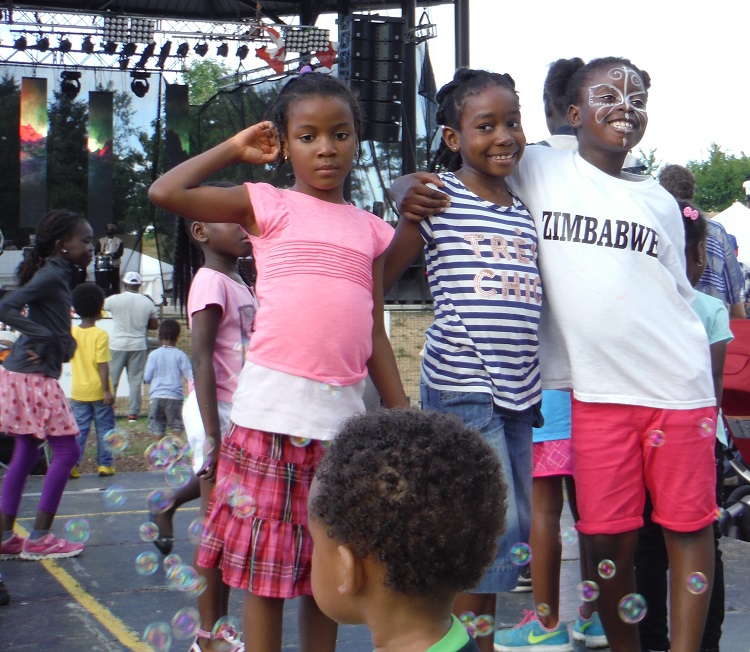
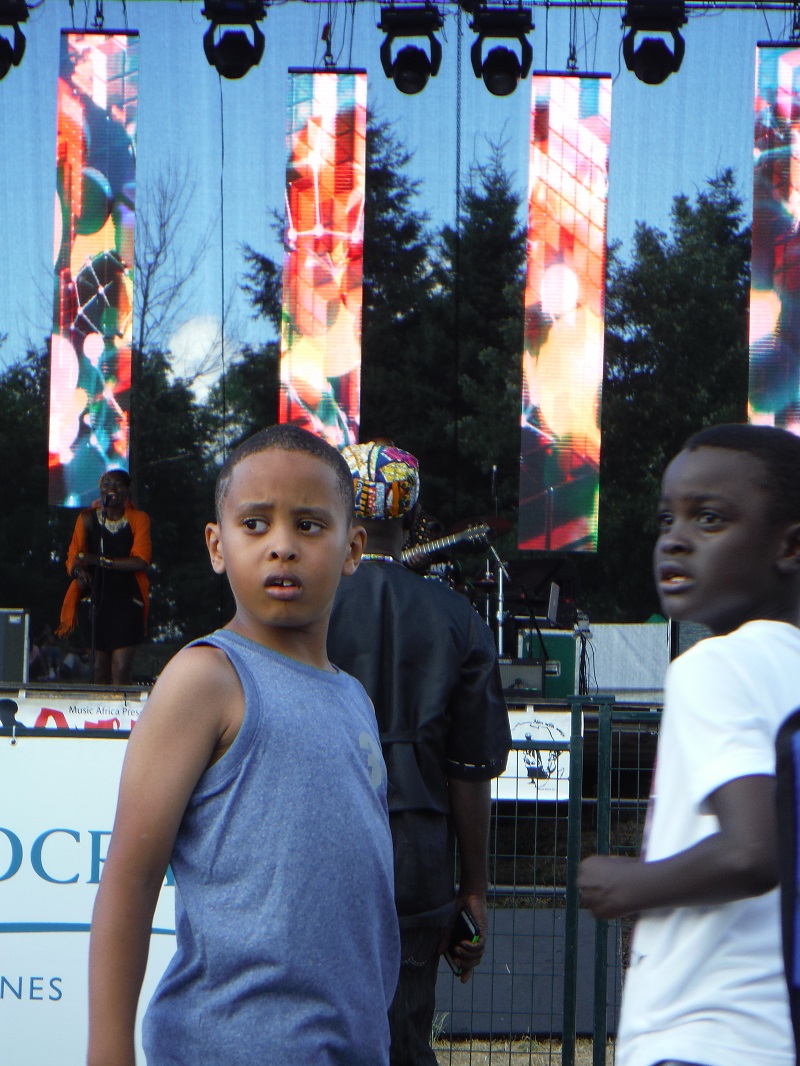
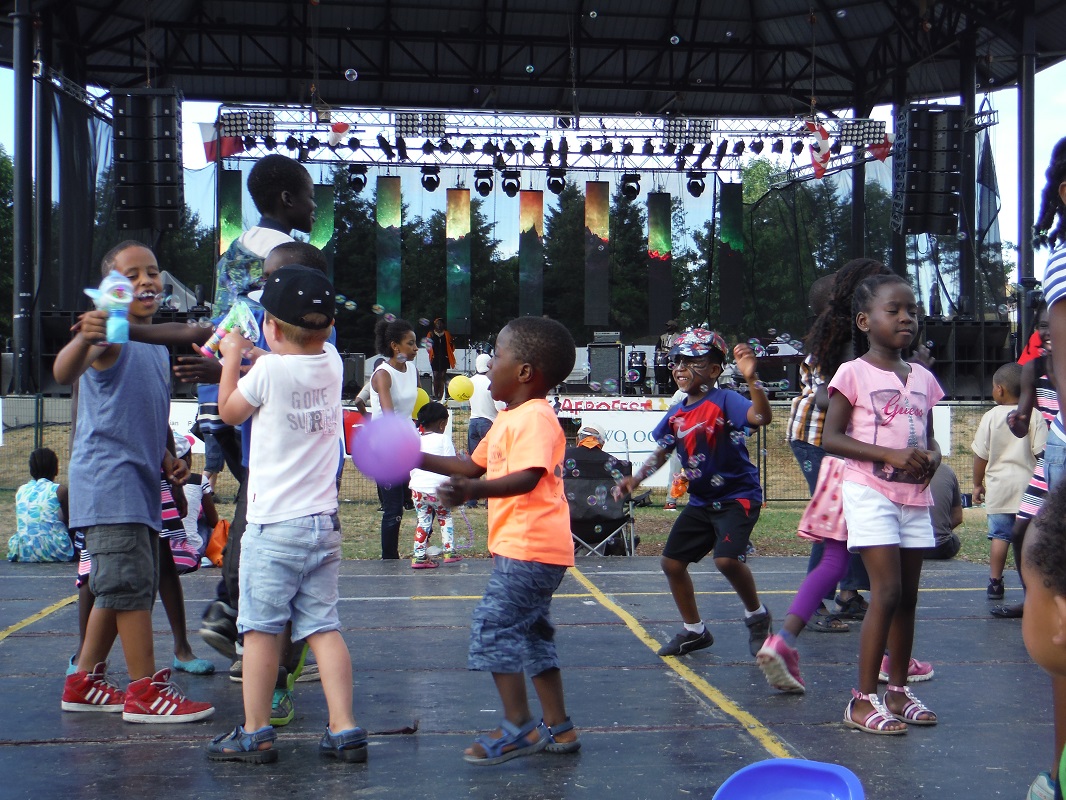
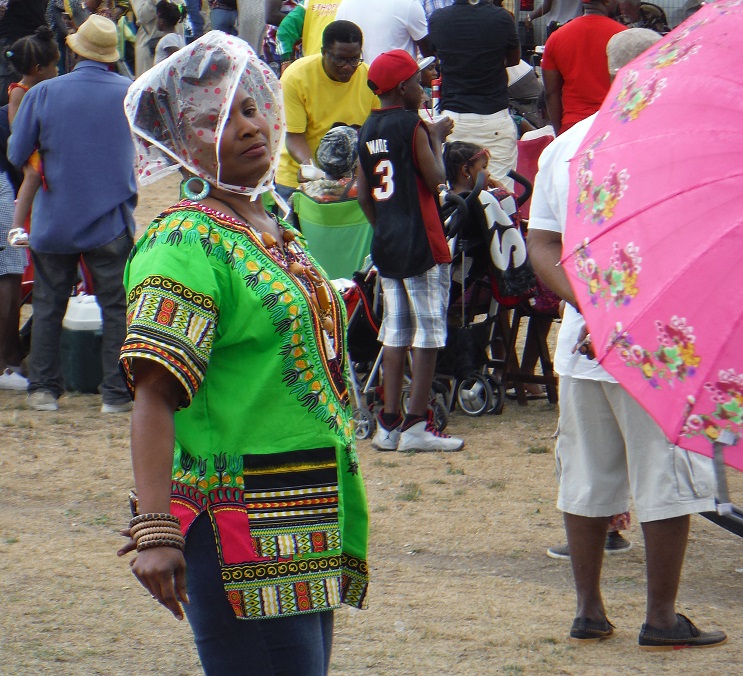
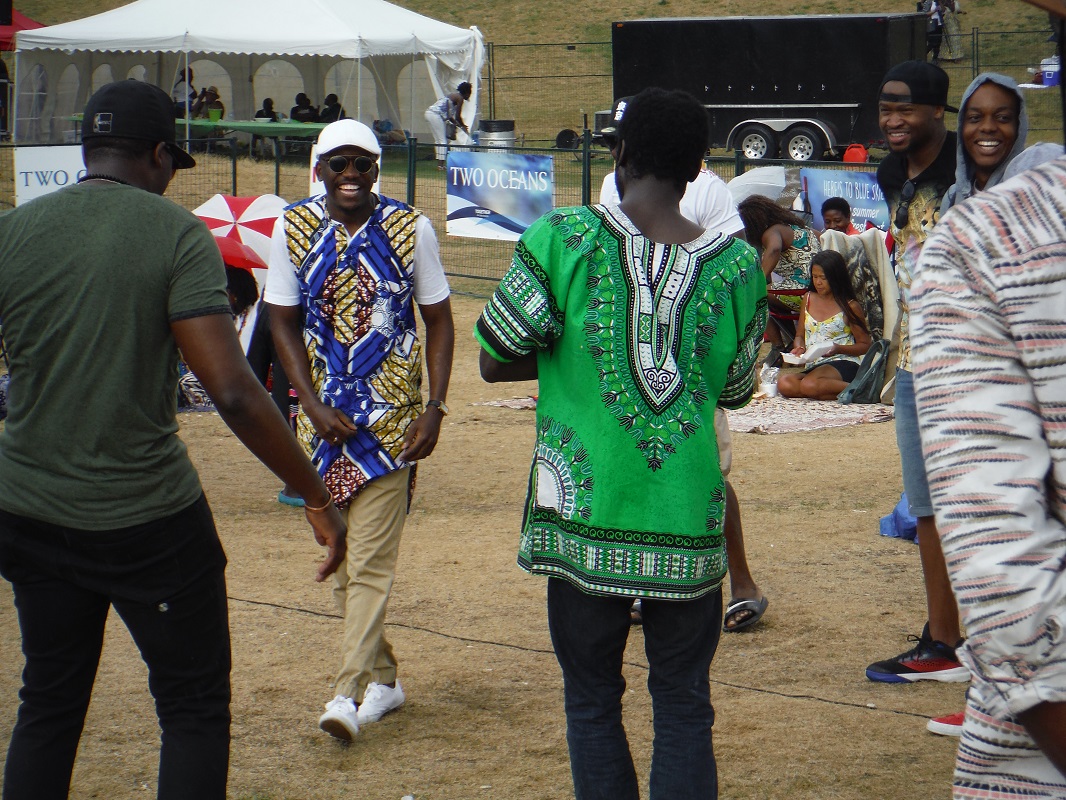
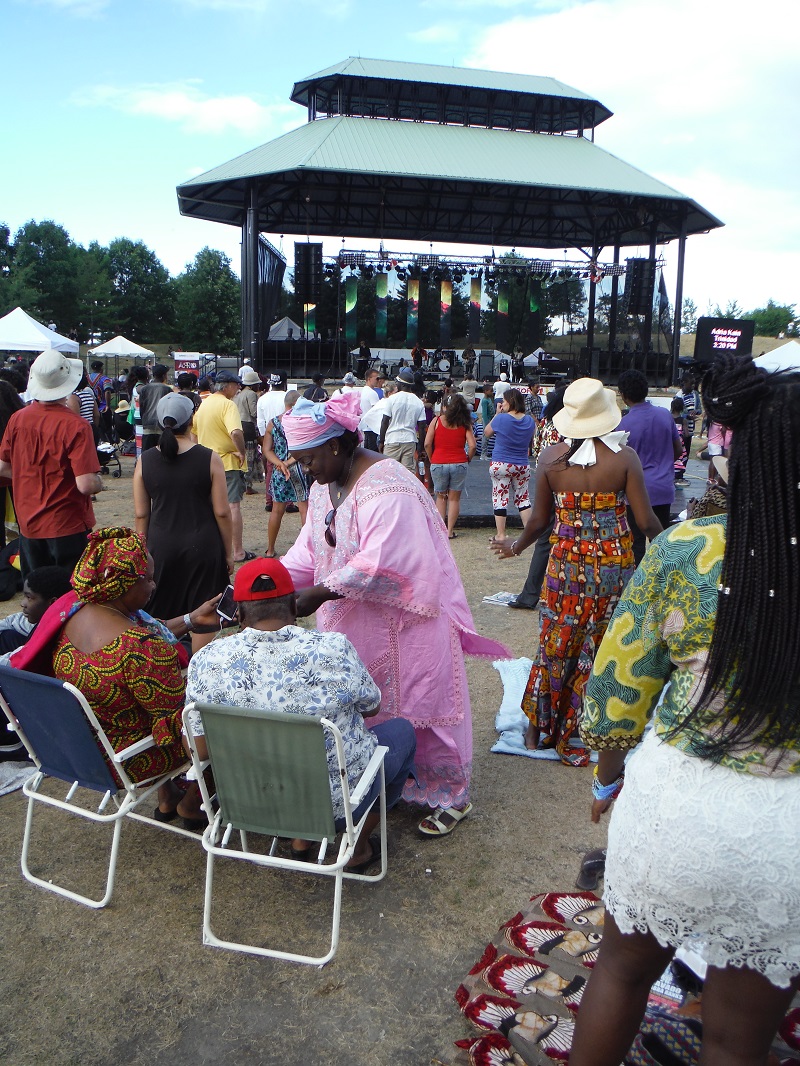
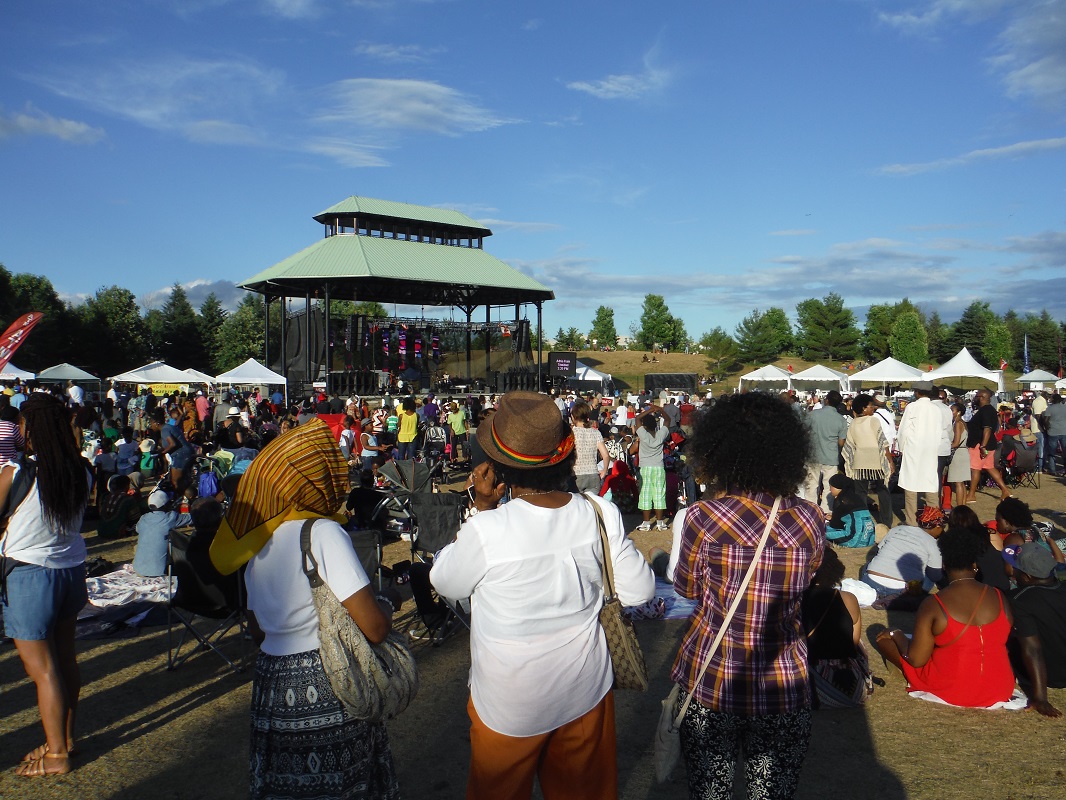
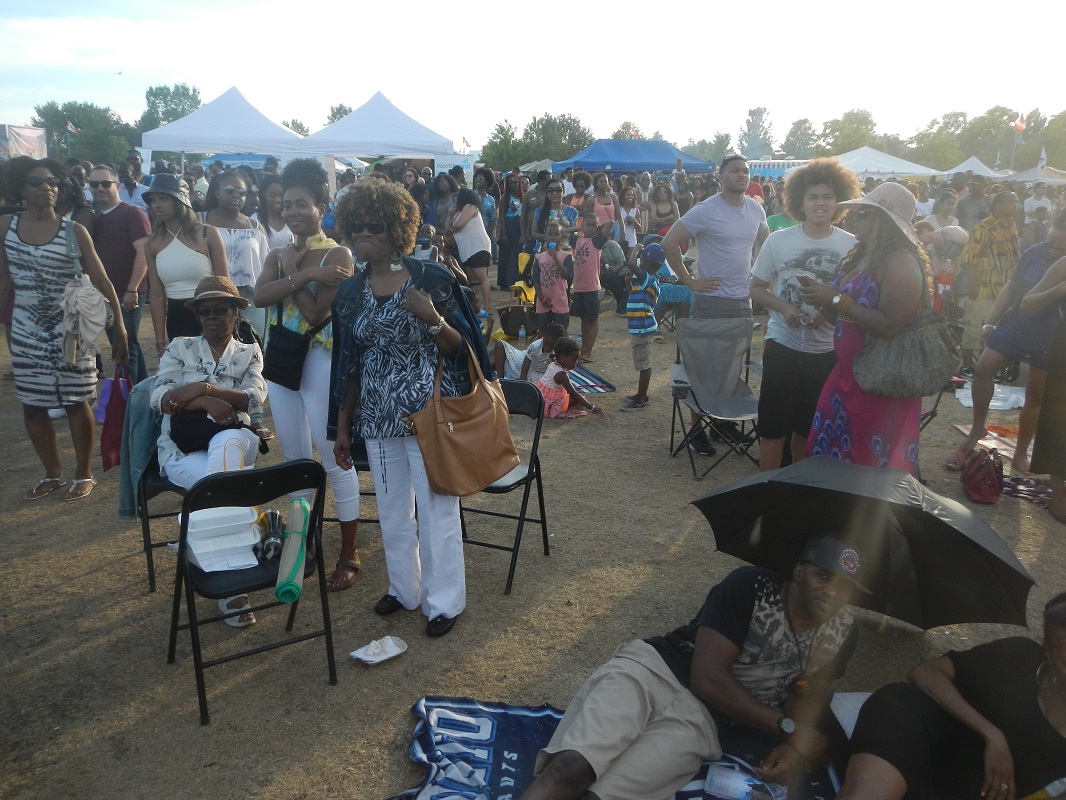
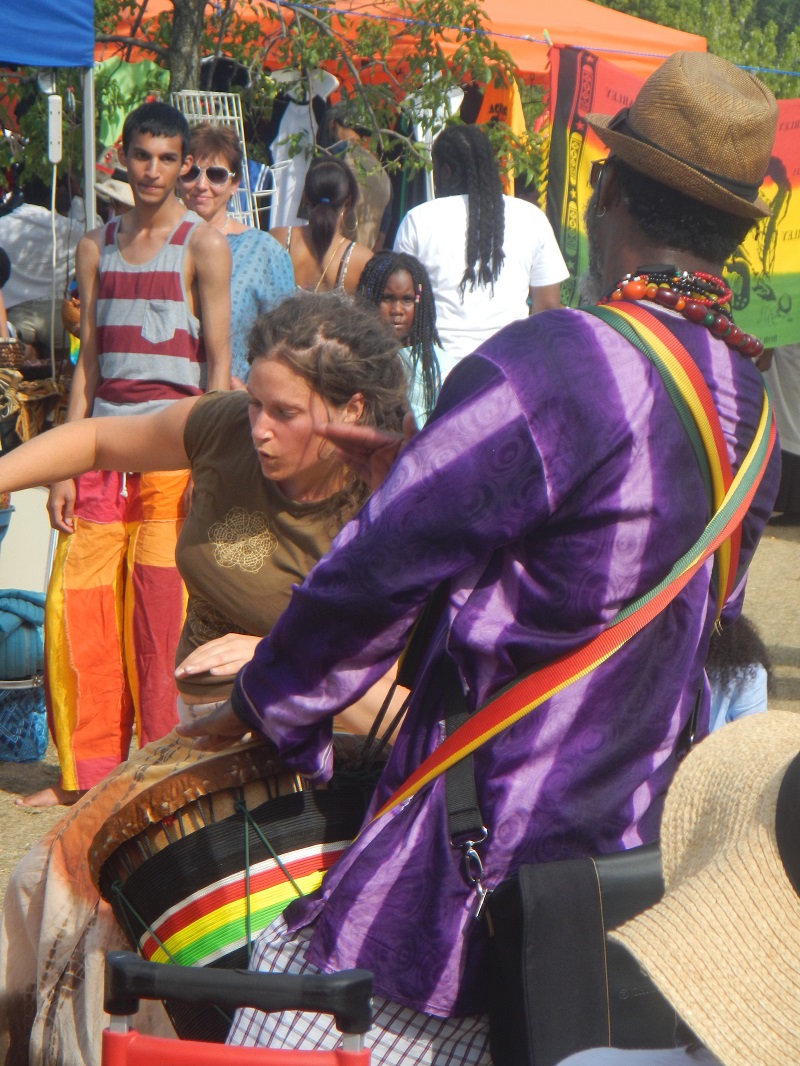
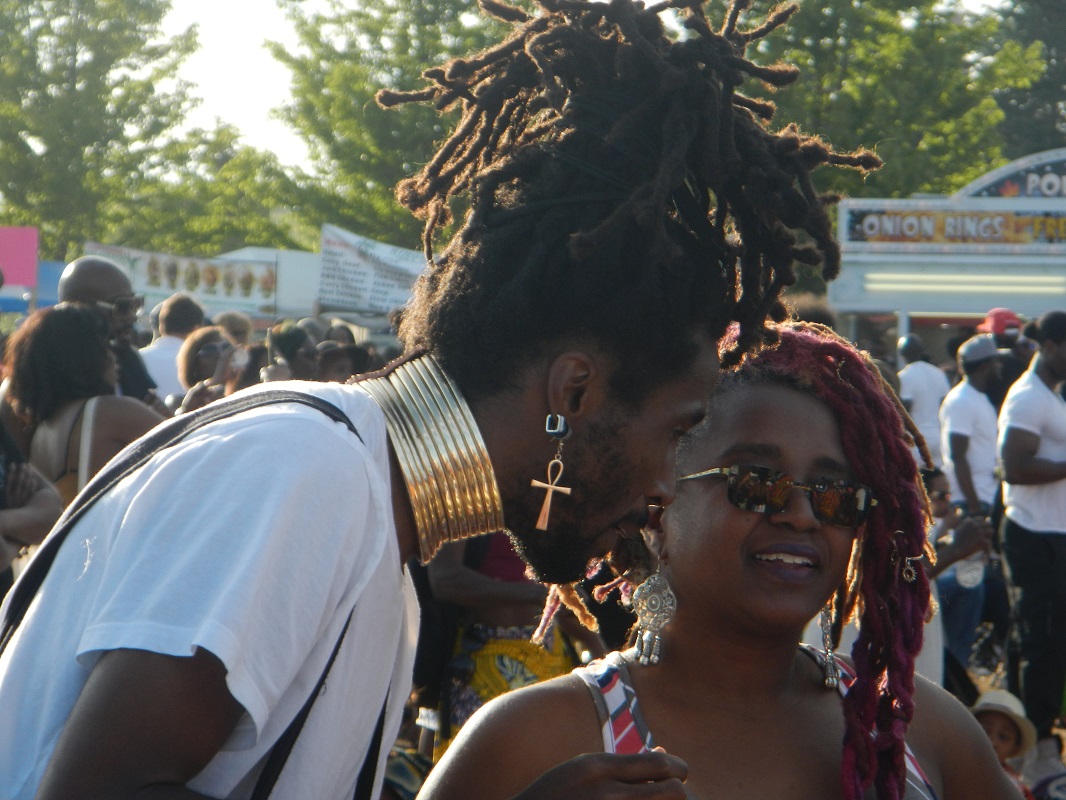
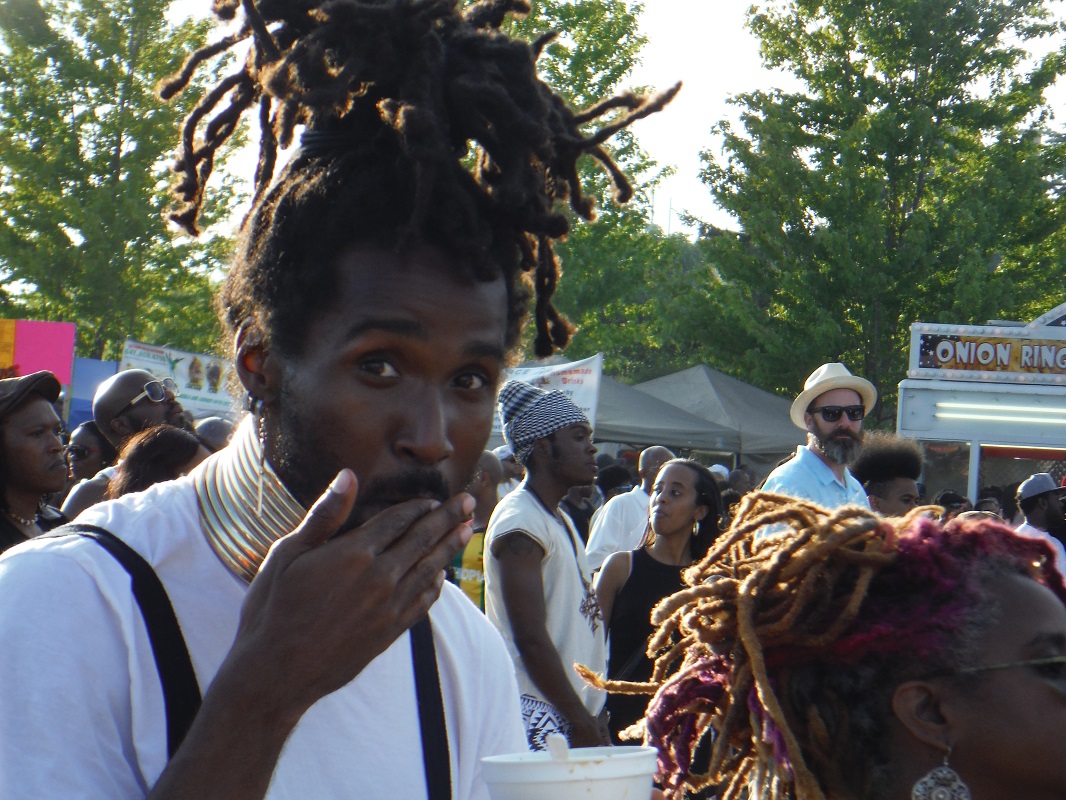
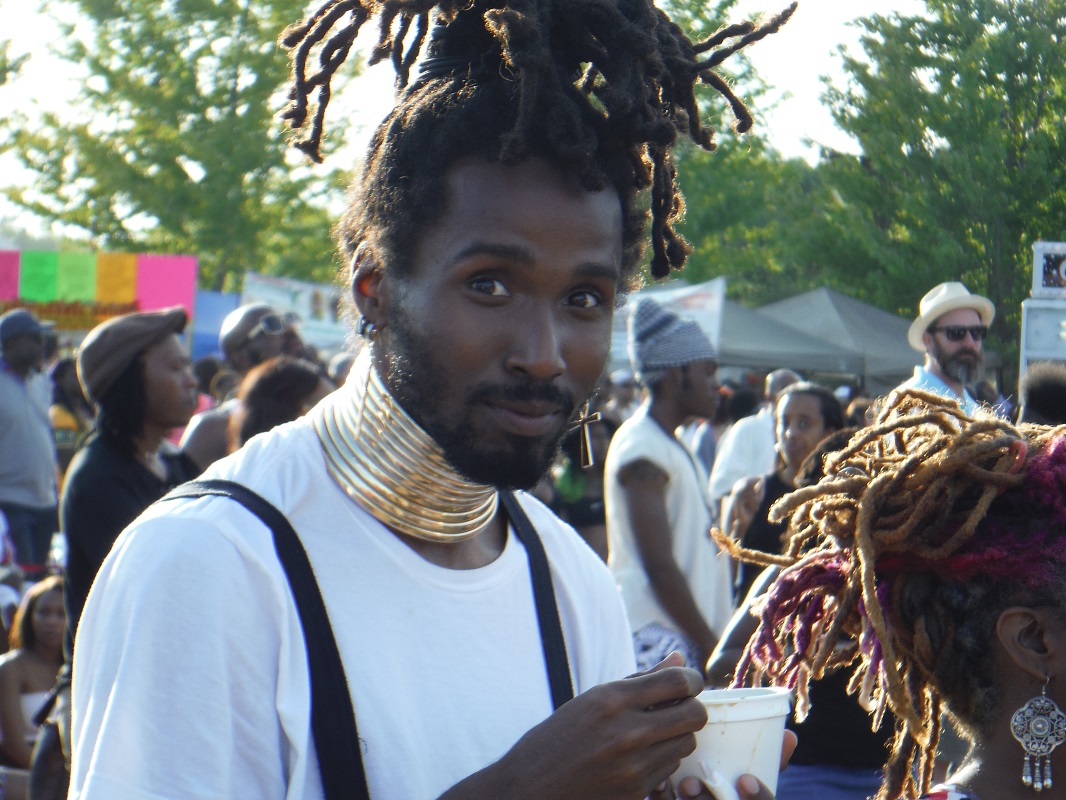
AfroFest 2016 à Toronto…
Posted: July 11, 2016 Filed under: French, IMAGES | Tags: Afrofest 2016 images Comments Off on AfroFest 2016 à Toronto… AfroFest 2016 à Toronto –– Tu t’es joint à nous? Parce que nous nous sommes bien amusés! Tout s’est déroulé au samedi et dimanche, le 9 et 10 de juillet – toute la journée au Parc Woodbine. La musique a inclus les voix et les groupes de Nati Haile, Toto Guillaume, Moto Tia, BKO Quintet, Lynda Thalie et Emmanuel Jal: les beaux sons africains de l’Éthiopie, du Cameroun, du Congo, de Mali, de l’Algérie et de Soudan – entre autres pays.

À propos…Que tu ne manques pas aussi le festival Habari Africa à Harbourfront, Toronto – au bord du Lac Ontario le 12,13,14 d’août!
Women poets of Cuba: a selection of poems translated by Margaret Randall
Posted: July 8, 2016 Filed under: A FEW FAVOURITES / UNA MUESTRA DE FAVORITOS, Cuban women poets, English, Georgina Herrera, Lourdes Casal, Rafaela Chacón Nardi, Soleída Ríos, Teresita Fernández, Yolanda Ulloa | Tags: Cuban poets, Cuban women poets of the 20th century Comments Off on Women poets of Cuba: a selection of poems translated by Margaret Randall.
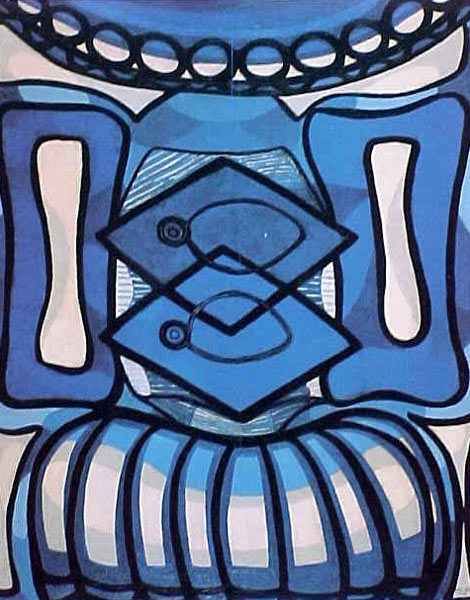
Amelia Peláez_Cuban painter (1896-1968)_Fishes (1958)
.
Here we feature a selection of poems from the volume
Breaking The Silences: an Anthology of 20th-century Poetry by Cuban Women.
[ The original edition contained biographical introductions and quotations from each poet, with editing by / translations from the Spanish by, Margaret Randall. It was published in 1982 by Pulp Press Book Publishers, Vancouver, B.C., Canada. ]
. . .
Dulce María Loynaz (born 1902)
The Traveller
.
I am like the traveller
who arrives at a port where no one waits for her:
I am the shy traveller who moves
among strange embraces and smiles
which are not for her…
Like the lonely traveller
who raises the collar of her coat
on the great cold wharf…
. . .
Premonition
.
Someone squeezed the juice
of a black fruit from my soul:
It left me bitter and somber
as mist and reeds.
No one touch my bread,
no one drink my water…
Everyone, leave me alone.
I sense something dark and wide
and desolate come over me
like night above the plains…
. . .
Mirta Aguirre (1912-1980)
All may come
.
All may come by the roads
we least suspect.
All may come from within, wordless,
or from without, burning
and breaking itself in us, unexpectedly,
or grow, as certain joys grow,
with no one listening.
And everything may open one day in our hands
with wistful surprise
or with bitter surprise, unarmed, undressed,
with the sadness of he who suddenly
comes face to face with a mirror and doesn’t see himself
and looks at his eyes and fingers
and uselessly searches for his laughter.
And that’s the way it is. All may come
in the most incredibly desired way,
so strangely far
and coming, not come
nor leave when left behind and lost.
And, for that encounter, one must gather poppies,
a sweet bit of skin, peaches or child,
clean for the greeting.
. . .
Certainty
.
I know, friend,
it is all within me as in
a sonorously mute coffer.
All sleeps within me,
tremulously quiet,
and in active rest,
in a brief palpitation of palpitating entrails,
in such sweet presence as to be barely presence at all…
I know, friend,
my friend, blinder than dead serpents,
my friend, softer than overripe fruit:
It is all within me.
.
It is all within me silent, subterranean, fused
in pale stratas of light and silence,
nourishing my life,
growing my life…
.
There are sorrows that wear red in the streets.
There is a pride that screams.
There are joys in colourful dress
and songs that rent the sun.
There are many things, my friend, many things
– my friend, softer than overripe fruit –
at the surface of its skin.
And in me all is
silent,
dimmed,
so silent I can even forget it,
as dimmed as a child dying.
All as in a mutely sonorous coffer
trembling in stillness…
. . .
Digdora Alonso (born 1921)
Two Poems for my Granddaughter
.
1
.
You’ll soon know your name is Vanessa
and then
that Vanessa is the name
of a brilliant butterfly.
Then you’ll learn other words
like
atomic bomb
napalm
apartheid
and we’ll have to tell you
what those words mean as well.
.
2
.
Vanessa asked me what a beggar is
and absentmindedly, thumbing the pages of a book,
I say:
“someone who asks for alms.”|
Then she asks again,
more insistently,
“what is asking for alms?”
.
I put down my book and look at her
I look at her long
I look at her through my tears
I kiss her and kiss her again
and she doesn’t understand why.
.
My granddaughter doesn’t know what a beggar is,
my granddaughter doesn’t understand asking for alms.
I want to run through the streets
congratulating everyone I see.
I want to go out into the streets
knocking at all the doors
and kissing everyone.
I want to go out into the streets.
. . .
Fina García Marruz (born 1923)
I too am now among the others
.
I too am now among the others
who looked at us, and with their air
of such infinite sadness, said “Go on, play”
so as to be alone. And in the lovely dusk
of those park benches, late afternoon,
what did they talk about, please tell,
and who were they?
Grownups, gods, we squirmed.
They seemed so alike, their slow
gaze, their far-off look, like a group
of trees holding an autumn day together.
.
I too am now among the others,
those we taunted from time to time
standing there like dumbells, so tired.
We, the little ones, we who had nothing
watched them unseeing, stunned
by the way they always agreed among themselves.
.
And now
that I have come slowly to their benches
forever one of them,
I too am now among the others,
the adults, the melancholy ones,
how strange, is it not?
. . .
This page too
.
The final wind will tear this page out too,
water will wet its letters til they become
impenetrable as stone, and lily-vane.
Their contours will fade like clouds
– those clouds that can no longer tell us why they move so sadly –
why they lost the key, confused the bond.
. . .
How rudely you speak to me
.
How rudely you speak to me!
Would that I understood
that lonely girl
struggling in a black sea
until exhausted she sinks,
would that I understood
the child devoured without pity
by the marine beast.
And even conciliate
his terrible cry and helplessness
with the untried flower,
in that passionless humility,
the radiance of an infinite blue sky.
. . .
You too
.
You said you were
Life,
not its master.
.
You too are alone.
. . .
Carilda Oliver Labra (born 1924)
Verses for Ana
.
I don’t have your way of staring in a mist
nor your hands like flowers on your lap;
all dead butterflies
and purple family sunsets give me pain…
.
But you, whose sadness is your crutch,
your blondness beneath the apple tree;
you know, nevertheless,
how to console the poor with the word saturday…
.
Where do you get that picture of sugar?
that warm arrangement of festive simplicity?
.
Ah, woman sustained by a musical colour,
how carefully they made your hands, half open…!
. . .
Rafaela Chacón Nardi (born 1926)
*Amelia’s Colour
.
Her delicate way
came from a blue planet
from indigo tinting
shadows or space… Dawn
open to crystal… Her own
way of taking
the first light’s secret
triumphed… And a thousand
formulas of moon and shadow,
of turquoise and of spring.
. . .
*Amelia Palaez, Cuban painter: 1896-1968
. . .
*Zoia
.
Immobile, transparent,
with neither blood nor pulsing vein
the grey gaze spent
Zoia is laid out
with the gentle gesture of a wounded dove.
.
Her tormented skull,
the pupil of her eye asleep in screams.
(When all this has passed
she will return to life
in fruits and grasses.)
.
Naked, immobile, dead,
budding light and shadows,
with her broad smile
surprising life
in triumph over root and hate and death.
.
Immobile, transparent,
with the gentle gesture of a wounded woman…
forever with us,
in you, Zoia, burning
on eternal snow:
Life salutes us!
. . .
*Zoia was a Soviet guerrillera, tortured and murdered by the Nazis. A Heroine of the Great People’s War.
. . .
Cleva Solís (born 1926)
The Road
.
You know the lark
will not abandon me
and so you judge my faith
safe in your lap.
.
I am at peace
because abandonment does not exist.
Only the road exists, only the road.
. . .
The Traveller
.
What do we know of the road
where a traveller
tries to avoid approaching the beggarwoman:
love’s perdition?
.
And so the violin suddenly
shakes off its indolence,
its useless ambiguity,
and takes leave in those
lilies, those roses,
veiled by the wind.
. . .
Teresita Fernández (born 1930)
A Fallen Needle
.
A fallen needle on the pavement,
a rose dried between the pages of a book,
a lofty selfishness…
Who am I? What is my name today?
Loneliness takes my only mirror.
Mole. Mortuary candle. Black snail.
Something like one hundred reduced to zero,
without shadow moving before
or a light within.
Dryness of an antique table.
Everything is too much in this desert.
I think of seeing you again.
Where did the perfume go?
Why does the bird come back
to peck at me?…
. . .
I escape
.
I escape from the anguish of beating
the unredeemed
and of ruminating infinite bitterness…
Agate, agate to my moan,
sphynx before my cry! Being so much
the same, I emerge
from a different pit.
. . .
Our Mother America
(To Cintio Vitier)
.
Grave mother of ours
rankled and sleeping.
Too simple,
my water’s game
cannot sustain your weight
nor comprehend the mystery
of your shore.
Now I think
of your love’s
possible eternity.
America Our Mother
I raise my open song
without the décima so ours
without the softly wailing flute
offering balm to your sorrow.
Newborn queen,
when do they leave you alone
on suicide waters
black with sin.
Upon your clean
mother indian breast,
original and eternal
as a shell,
a firefly,
the husk of an unnamed
brief and perfumed jungle,
place my poem.
. . .
Ugly things (a song)
.
In an old worn out basin
I planted violets for you
and down by the river
with an empty seashell
I found you a firefly.
In a broken bottle
I kept a seashell for you
and, coiled over that rusty fence,
the coral snake flowered
just for you.
Cockroach wing
carried to the ant hill:
that’s how I want them to take me
to the cemetery when I die.
Garbage dump, garbage dump
where nobody wants to look
but if the moon comes out
your tin cans will shine.
If you put a bit of love
into ugly things
you’ll see that sadness
will begin to change colour.
. . .
Georgina Herrera (born 1936)
Birth
.
And so the stork,
that long-leggéd bird of the grand venture,
as of today
stops working.
My reality has left her unemployed.
In the great room
so fabulously and artificially cold,
cornered by the greatest pain
and the greatest joy to come,
I work the miracle.
The Parisian
packs up her long and useless beak,
maternal bag,
her history and both her wings.
Ah, and her old invented journey.
I prefer birthing.
. . .
Reflections
.
Watching my enemy’s corpse passing before my door…
.
My enemy is at peace.
So much so,
that he can’t tell calamity from joy.
Meanwhile…what to do
in my narrow doorway,
back turned on tenderness, seeing
that he doesn’t even bother
to leave by his own account.
They take him.
At the end of this July, as laughter
fades from my mouth,
my enemy is fresh.
I ask:
to what avail
have I longed for this moment
if he can no longer rival me?
My enemy, sightless,
passing before my door, unknowing.
My enemy should be coming in soon
through a wide door,
he’d have the whole silence
of her who pleads a bit.
What a time of shame he’s had
from misunderstanding reduced to insult
to poor revenge consumed.
Better to have been
the two of us here, like this:
braided, the fingers of both hands,
the two of us alive,
working for the good,
loving.
. . .
Lourdes Casal (1936-1981)
Conversation at the Bridgeport train station with an old man who speaks Spanish
(for Salvador Ocasio)
.
Torn coat
dusty shoes
thin white hair
Strange gentleman’s stance
I think: This old man has a Unamuno head.
Trenches rather than furrows
line his olive face.
He speaks haltingly.
Moves his hands slowly.
Sixteen years, he says,
Bridgeport and sixteen years of his life.
Sixteen years without sun
for these colourless trousers
and this bitter weariness
that give his smile a steel hue.
. . .
Now I know
.
Now I know
that distance is three-dimensional.
It’s not true that the space between you and me
can be measured in metres and inches,
as if the streets might cross each other freely,
as if it were easy to hold out your hand.
.
This is a solid, robust distance,
and the absence is total,
complete;
in spite of the illusory possibility
of the telephone
it is thick, and long, and wide.
. . .
I live in Cuba
.
I live in Cuba.
I’ve always lived in Cuba.
Even when I thought I existed
far from the painful crocodile
I have always lived in Cuba.
Not on the easy island
of violent
blues
and superb palms
but on the other,
the one that raised its head
on Hatuey’s indomitable breath,
that grew
in passages and conspiracies;
that staggers and moves forward
in the building of socialism;
the Cuba whose heroic people lived through the sixties
and did not falter;
who has been
darkly, silently
making history
and remaking herself.
. . .
Magaly Sánchez (born 1940)
End of the First Act: Ovation for Théroigne de Mericourt*
.
The tricolour badge sings audacity on her hat,
pistol and knife at her waist,
her fingers threatening the enemy,
shouting, bread in her throat,
today as it rains water and
Revolution in Paris.
Théroigne de Mericourt
agitates the violent ladies of Liberty
(kitchen wenches, raging mamas,
a few of the concerned bourgeoisie),
and she captains the march of Justice
to the Royal Palace.
Théroigne de Mericourt advances,
the jubilant one, the actress,
Théroigne de Mericourt
in her best rôle of the season.
. . .
* Ana Josefa de Trevagne. An actress known for her talent and beauty. During the French Revolution she took part in the armed struggle, organizing a battalion of women.
. . .
Nancy Morejón (born 1944)
Woman in a Tobacco Factory
.
A woman in a tobacco factory wrote
a poem to death.
Between the smoke and the twisted leaves on the racks
she said she saw the world in Cuba.
It was 1999…
In her poem
she touched flowers
weaving a magic carpet
that flew over Revolution Square.
In her poem
this woman touched tomorrow’s days.
In her poem
there were no shadows but powerful lamps.
In her poem, friends,
Miami was not there nor split families,
neither was misery
nor ruin
nor violations of the labour law.
There was no interest in the stock exchange,
no usury.
In her poem there was a militant wisdom, languid intelligence.
Discipline and assemblies were there
in her poem,
blood boiling out of the past,
livers and hearts.
Her poem
was a treatise in people’s economy.
In it were all the desires and all the anxiety
of any revolutionary, her contemporaries.
A woman in a tobacco factory
wrote a poem
to the agony of capitalism.
Yes sir.
But neither her comrades nor her neighbours
guessed the essence of her life.
And they never knew about
the poem.
She had hidden it, surely and delicately,
along with some caña santa and cáñamo leaves
between the pages of a leather-bound volume of
José Martí.
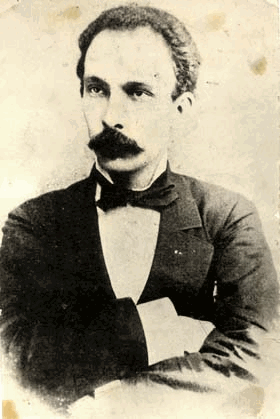
José Martí (1853-1895)_Poet, journalist, Revolutionary philosopher_A Cuban national hero
Minerva Salado (born 1944)
The News
.
All arguments break down before the news.
The church remains to offer an ave maría,
its brief tower searching the hollow space of loneliness,
who knows: perhaps a gothic paradise
hidden beneath the monks’ skirts.
It seems that deep among the minor bourgeoisie
there’s always some adverse sentiment;
Marx predicted escapism and flight,
but lovers don’t,
those still anxious and hopeful witnesses.
Now where we move at this implacable spot
a collection of intentions will flower,
another word in your vocabulary,
a song repeated by multiple jugglers,
a new place for a poem in peace
– innocence, the sinuous noun,
language’s useless home.
. . .
Special Report for International Women’s Day
.
A woman is on fire.
She’s twenty and her body goes up in flames.
Her belly pulsates
her white breasts embraced and upright
her hips dance
her thighs simmer.
Anh Dai’s body
is burning.
But it’s not love.
It’s napalm.
. . .
Excilia Saldaña (born 1946)
Autobiography II
.
If we have to begin I want to tell you everything;
it’s not worth keeping it secret anymore.
I was born one August 7th, in 1946,
a year and a day after Hiroshima
(remember? our neighbour’s great achievement).
I was born because all attempts at abortion failed.
And because I was stubborn, even in that
my father was a playboy
(that’s what they called them in those days,
when the son of the family was a no-good-bastard).
Well, it wasn’t his fault,
like it wasn’t his fault that he smoked marijuana,
gambled and screwed around.
Imagine the context:
my trembling mother,
the proverbial cavity.
The thing is – as I was saying –
my father was a bit of a playboy…
And I was born.
When they saw me everyone knew what I’d be:
my mother, a doctor;
my grandfather, a druggist (the family name);
my grandmother, a teacher.
The dog barked; maybe she wanted me to be a bitch…
I grew chubby and cross-eyed,
abominably silly,
samaritan by vocation,
sister of charity, guardian angel
to birds, cockroaches and beggars.
And one fine day, when my
“high-yalla” future was all but set,
The Revolution came to power
(yes, I know you know all about
Agrarian Reform and Socialism).
.
I’m not going to talk about that,
but about my small anonymous life
collecting bullets and buttons,
listening to the arguments of the adults.
I want you to know I didn’t understand a thing,
but Fidel’s hoarse voice sent shivers down my spine.
I want to tell you my father slapped my face
the day I shouted “Homeland or Death!”
(Can you understand what that means
when there’s never been an embrace?)
I want to tell you the blue birds are moulting,
there’s unjustified mourning this tedious dawn.
The gods are so angry,
and there’s so very much lost
– and so much
– and even more.
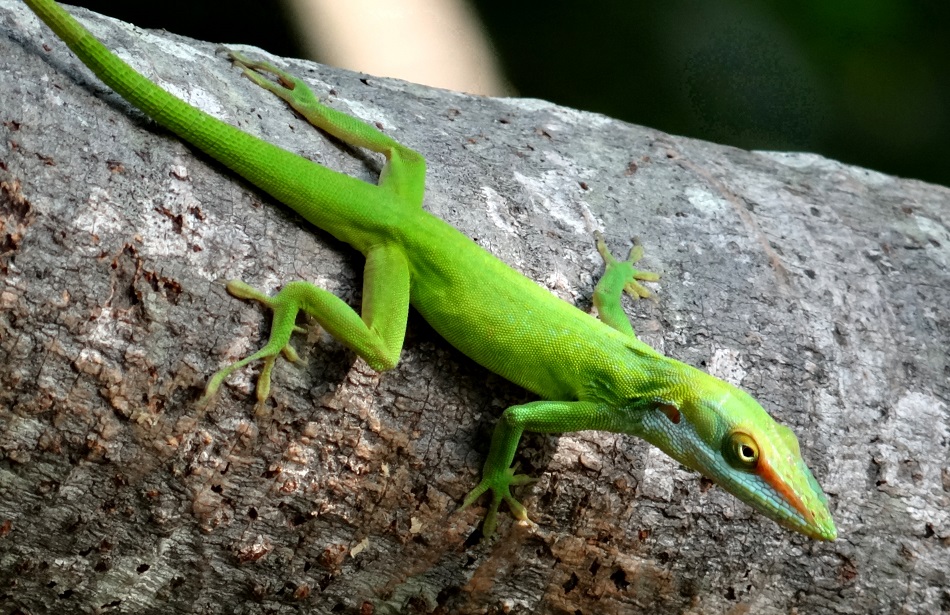
Photograph of a small Cuban lizard…a “caguayo” of the species “anole”
Albis Torres (born 1947)
Caguayo
.
The long wooden steps
are ripe with pine needles,
an occasional travelling spider,
and the blue-green of the caguayo lizard,
dreaming himself a sphinx among the boards.
.
Lord and master of the planks,
passageway and railings;
tenacious; holding his poor kingdom
against poles and stones.
.
No one knows how long he’s lived,
running on the railings,
and when death descends from all his years,
no one sweeps his rotting corpse away,
opening and drying on the wood.
.
Caguayo
prints his obstinate figure
in the memory of passageways.
. . .
Coffee Field Dorm
(To Amarilys Rodríguez)
.
Ancient legends
of the coffee fields
conspire against us.
Some lost mule’s bell
sounds in the night.
Who knows
where he balked,
tired and frightened,
before the mocking
rustle or hiss?
.
But our laughter is stronger
than all the legends.
It’s us, compañeras,
rousing day among the leaves
and coffee beans,
dripping the night’s last yawn.
.
The cold, the toil,
the coffee jug from mouth to mouth,
rebuilds us as a single body.
.
Coffee field dorm,
woman’s good arm
against all that silence kills.
. . .
Mirta Yañez (born 1947)
Reminder
.
Always
keep in mind
that posterity is for
future students
– frivolous and curious passersby –
to take advantage
of the living flesh
poor poets have left
in their letters,
in their miserable sheets,
their gaze hanging from a tree.
But keep in mind – as well –
that poets dream
with their posterity
for which they build cathedrals
and poems.
. . .
Springtime in Vietnam
.
Ho Chi Minh,
winter won’t come to your verandah anymore.
.
Small citizens,
pale army wounded and fighting
beside the fuse,
the green fields in flames;
they return from battle,
in peace they hold the tide,
the roads,
the birds,
the peasant air.
There
Ho Chi Minh waits for them,
astonished spring.
.
You’ve fanned the buds
with a single flash
of your legendary hand.
. . .
Yolanda Ulloa (born 1948)
She went, she said, losing herself
.
“If I write this poetry
it’s not just for my delight
but rather to give a fright
to that sinister treachery.”
Violeta Parra
.
For Violeta was the name
of a flower,
an Andean woman,
her guitar.
.
Violeta, the name of a bird
that sings in the country’s hills,
that sings in Chillán.
.
Bass guitar,
and song made of wine,
copihue buried
in so much solitude.
.
Violeta alone, fighting
tears, sweat, the laughter and shouts
in her search for bread,
for a way to say mountains,
to tell the Mapuche
beware of the beast.
.
Alone once more and always she moves off
with the mist
of the Bío-Bío in her hair,
tall, perennial, strong as the jungle of the Americas,
as its deep oils.
.
Children danced a cueca about her,
lending joy to her soul,
her captivity.
.
Cautín River, Lautaro, Villa Alegre,
her body wounded but free
as an uncaged bird on the plain,
or the wind’s breast
rent as it crosses the peaks.
.
Because she filled memory
with image, bloom and song,
its limits in absence.
.
She stayed, beneath her poncho,
free from all:
bandore and bass guitar against her death.
.
Violeta was also the name of a shiver
of trees that grow,
their birth and death
under the fire of the earthquake at Chillán.
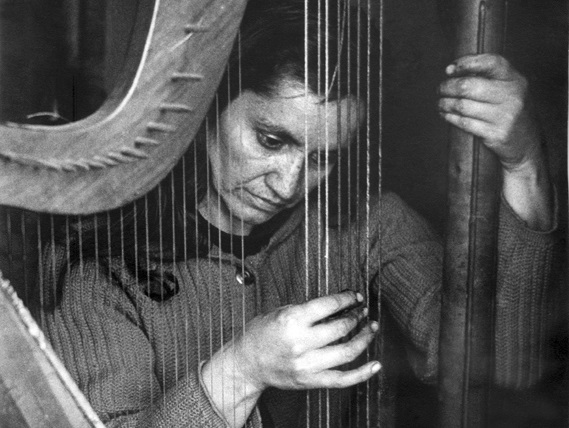
Violeta Parra (1917-1967)_Chilean composer, musician, singer and folklorist
Soleída Ríos (born 1950)
Difficult Hour
.
The smoke traces its figure over the papers.
The smoke dances magically
around exhaustion and coffee cups.
.
I’m about to write:
“Uvero, December 6th, 1971.
Raúl, I’m reminded of your name –
daybreak and I are with you…”
.
But I’m awake.
Time wants to win this set from me.
.
In War Scenes it says
that after the surprise at Alegría
we came down
by the dog’s tooth,
and that once in a while a plane
circled over the sea.
That the worst thing was the thirst…
.
If I can’t untangle the knot of days that followed,
up to high ground and all that happened then,
I won’t be able to talk to the children
about The Republic of Cuba,
the great human victory at Girón,
nor the relative peace with which right now
I close my eyes again for an instant,
and open them to go on…
watching the smoke dancing its magic figures on the papers,
on this table, in this hut, by the light of this candle.
. . .
I also sing of myself
.
“I celebrate myself, I sing.”
Walt Whitman
.
I sing of myself because by force of love
I stand,
squeezing this curve of time
between my hands.
.
The morning stretches out over silence,
and my steps call back the high sounds.
.
I sing of myself and beyond,
I sing of what I will become
when night is rent by sun
and another music fills my footprints as I go.
.
I sing of myself
for having come from the breath of a summer
among these palms that will watch over me.
I take my place among the living,
I make infinite my thirst,
striking myself,
I sing.
. . .
Other poets not included in our selection here, but who were also featured in the 1982 book, are:
Milagros González, Lina de Feria, Enid Vián, Reina María Rodríguez, Zaida del Río, Marilyn Bobes, and Chelly Lima.
. . .
From the 1982 book’s foreward:
Margaret Randall has been living and working in Cuba for more than a decade. Her other books include: Women Now; Part of the Solution; Doris Tijerino; Inside the Nicaraguan Revolution; and Carlota: Prose and Poems from Havana. Since early in 1981 she has been in Managua, Nicaragua, where she is now working with the Women’s Association.
. . .
Margaret Randall was born in 1936 in New York City, USA.
She is a writer, photographer, activist and academic.
When she was in her 30s and 40s she lived in México, Cuba, and Nicaragua. In a 1987 interview, upon her return to the States, she said of the years she spent in Cuba, that she was wanting “to understand what a socialist revolution could mean for women, what problems it might solve and which leave unsolved.”
. . . . .
Damaris Calderón: “Ésta será la única mentira…”
Posted: June 30, 2016 Filed under: Damaris Calderón, Spanish | Tags: Poetas cubanos Comments Off on Damaris Calderón: “Ésta será la única mentira…”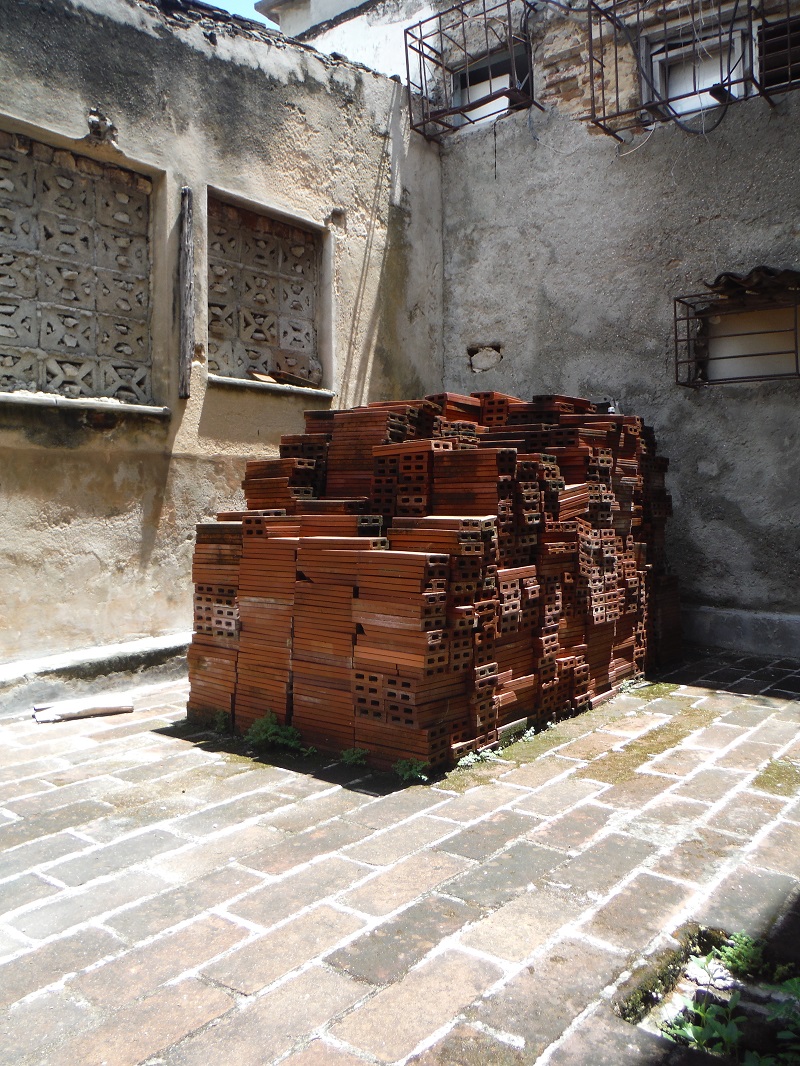
Damaris Calderón (nace 1967)
Con el terror del equilibrista
.
…las aguas del abismo donde me enamoraba de mí mismo (Quevado)
.
Sobre el espanto del pozo
siempre pensé tocar el agua.
Nunca lavar las manos,
no mancharlas.
Sólo el pozo y mi sed.
Nunca las viejas bocas
ni los baldes usados en balde.
No el agua que titila
su confortable techo
y toda la pasión de sus ahogados.
Nunca
el ojo contemplativo.
Todo esto lo digo
con el terror del equilibrista.
. . .
Ésta será la única mentira en la que siempre creeremos
.
a fuerza de admitirla tantas veces.
Hoy
alguien intentará leer el ojo de un vecino
con el fin de saber si la tristeza
(esa muchacha indócil que va escupiendo amor)
es una amiga sádica de siempre
o un pez muerto nadando en la garganta.
Sería difícil disfrazar la felicidad.
(A ella siempre le quedaría corrido el maquillaje.)
Pero de todos modos tendrás que perdonarme
que no te ladre amor junto al oído.
Podrían despertarse muchos muertos
que están bajo nosotros.
.
Es una historia triste
jugar a ser perfectos.
. . . . .
Odette Alonso: La ciudad dentro del poema
Posted: June 30, 2016 Filed under: Odette Alonso, Spanish | Tags: Poetas cubanos Comments Off on Odette Alonso: La ciudad dentro del poema
Odette Alonso (nace 1964)
Extraños en la ciudad
.
Ellos nos vieron con sus ojos de vidrio
algo nos delataba
nos declaraba inmunes
éramos dos extraños en la ciudad neutral
– y los sabían.
Qué podían hacer
las ciudades neutrales son un banco de arena indiferente,
una llanura virgen.
Nadie levanta su dedo ante el viajero
nadie acusa al que pasa sin dejar una huella.
Ellos nos vieron
así nos desnudamos en todas las paredes
nos sacamos el alma como una tela blanca
– y sonreímos.
Qué suerte los extraños en la ciudad neutral
Qué suerte el horizonte de breve promontorio.
Así debiera ser la libertad
un desandar las calles y luego el cuerpo amado
sin el ojo pendiente ni la señal de alarma.
La paciencia nos trajo
La paciencia que acaba al medio del domingo.
La paciencia son dos que esperan para amarse
otra ciudad neutral donde nadie los sepa
donde ningún vecino y ninguna ventana
donde todos nos miren con sus ojos de vidrio.
. . .
Llanto por la ciudad cuando me alejo
.
Qué sola te quedaste,
mi madre, con tus huesos (Eliseo Diego)
.
Qué culpa tiene madre
con tanto orgullo y tanto título en la frente
de que sus hijos huyan para hacerse crecer.
Qué culpa tiene la pobre de los muros
del que se eleva sobre su cadáver
y le vacía el alma.
Oh ciudad
cuánto amor se me cae
qué triste te me vuelves entre tanta montaña.
Qué sola estás.
A qué manos entregaste tu vejez
con qué artificios te cubren el semblante.
Cómo es posible ciudad
cómo es posible
este patriótico olvido en que te dejan.
. . . . .
Habaneras Ellas: poemas de Juana Rosa Pita, Minerva Salado, y Elena Tamargo
Posted: June 30, 2016 Filed under: Elena Tamargo, Juana Rosa Pita, Minerva Salado, Spanish | Tags: Poetas cubanos Comments Off on Habaneras Ellas: poemas de Juana Rosa Pita, Minerva Salado, y Elena Tamargo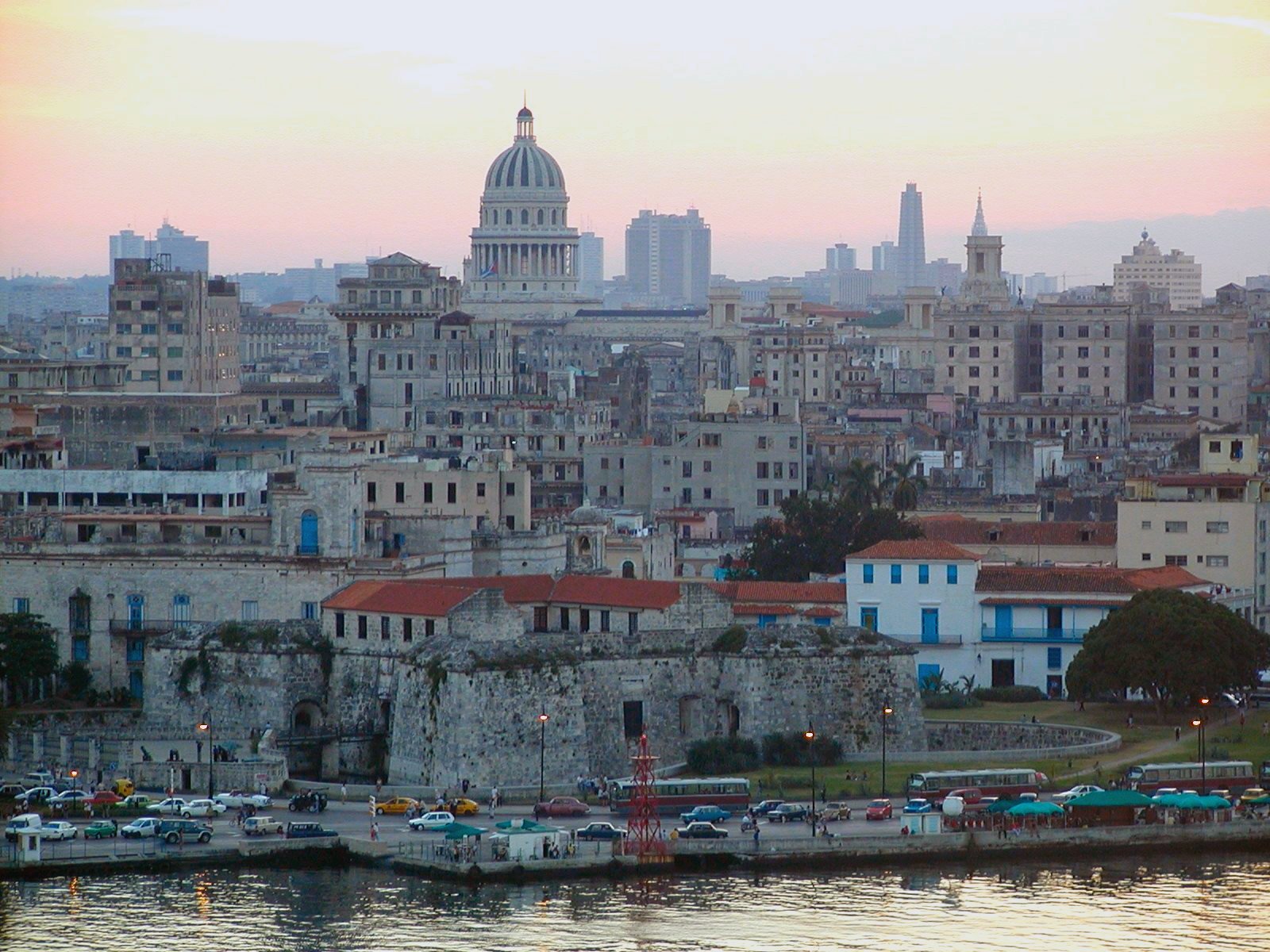
Juana Rosa Pita (nace 1939)
Ciudad de mis ojos
.
Las campanadas tienen duende
y las fuentes son nómadas.
Los árboles extienden su cultura
con la amistad del hombre
y se hacen confidentes, marineros.
.
Hablo de la ciudad muy bien mirada
por ti: inventada hasta el colmo.
.
Aquí se da cobijo a los que se aman
y se desacralizan los relojes.
No hay violencia ni incuria:
un caballo dará paso a un cangrejo
aunque no anide mar el horizonte.
.
Hablo de la ciudad con mirador
hacia todas las otras.
. . .
Perspectivas
.
No es ver la luz lo original:
el que la luz nos vea
resulta imprescindible para amarnos mejor.
La soledad es transitiva:
.
los cauces de la angustia
confluyen en la fuente donde
Dios bebe al anochecer de nuestras manos juntas.
No hay distancia:
.
si podemos hacer viajar a un árbol
¿por qué los pensamientos quedarían encallados,
remotos de su destino en otros pensamientos?
.
No es vivir lo esencial:
el dejarse vivir por lo que vibra
en nuestro breve tiempo
fortifica la plaza para siempre.
. . .
Pertenencia
.
Mi país es un árbol de lluvia,
isla de fuego en flor,
un pequeño Infinito,
cantor de arcanos y alegrías.
.
Mi país es tu abrazo, tu palabra,
tu fantasía, tu sueño, tu presencia;
señor de la tormenta,
mi país en ti despierto, duermo y vivo.
.
El puerto de mis manos y mis rosas,
mar abierto de todos mi deseos,
aire de mi silencio,
música callada de mi país,
hombre encino
el corazón meciéndose entre sol y luna,
mi país me espera…
. . .
Minerva Salado (nace 1944)
Poema a perpetuidad
.
La eternidad es este instante en que cubro tu mano con la mía.
La eternidad es una sábana extendida húmeda tras el amor
y aquel vocerío que nos ensordece
cual buitres sobrevolando una costa y la otra.
La eternidad es tan efímera como el cruce de una estrella desvelada
a través del espejo.
No tiene la infinita dimensión que le dimos
y es sólo un fugaz rayo en medio de las sombras,
una luz que aferramos por un tiempo
y se extinguió después entre los dedos.
La eternidad
no es más que un minuto, tal vez un breve instante,
la frase que pronunciamos sin aliento,
el destello de un beso,
ese espacio en que cabe la palabra siempre
y que me sientas tuya en el círculo concéntrico
que se nombra eternidad y que termina.
. . .
Oráculo
.
El amor es un templo al que hay que entrar
con miel de las abejas en tus manos
preparado para el acíbar de todos los días
y la música de la naturaleza estallando en las sienes.
El amor es un riesgo por correr
acecha en los buenos momentos
y en los peores
es una herida por rasgarse.
.
No hay eficiencia en el amor,
ni lluvia pertinaz,
ni buenas tardes cada día;
las matemáticas no existen
y esperan por él todas las viudas
las vírgenes del planeta.
.
El amor es una cuenta mal sumada
escapa como paloma
se pone el sol y en pleno eclipse
cae la oscuridad sobre el pasado.
El amor es toda inseguridad,
ninguna convicción,
jornadas que transcurren como años
a la espera del otro,
en la llamada de su propio
único corazón;
diferente,
intacto para ti,
tuyo en la lealtad,
en el susto por el tiempo que pasa.
.
Hay que empujar la puerta
sin mentiras,
sin miedos.
.
El amor es siempre un peligro.
El amor es un templo que hay que abrir.
. . .
Elena Tamargo (nace 1957)
Habana Tú
.
Y hoy está crecido el mar
no es que la marea suba por un hecho natural
es que llora Yemayá. (Juan Formell)
.
De niña, entre las grietas de la tierra
buscaba en ti mi aurora
a semejanza mía, a semejanza tuya
cuerpo oscuro y esbelto de mi sueño.
Puras ante la espera las imágenes
emisarias de la tarde que caía
pegada a su horizonte.
Tenías en secreto tu espigón de metales
inclinada en tu borde, busco el ancla perdida,
te busco en el regreso, estás llena de pájaros,
vuelve a secar tus manos y cuéntamelo todo.
Era esto el abandono y lo sabías.
Óyeme estos lamentos que me salen ardiendo,
yo sólo te deseo,
la sombra de aquel tiempo en ti misma entrevista
con inútil ternura –
y tú me dabas fuerza
rendida y dócil como el mar sabe serlo.
Aquel concilio que tantos han cantado
sin una urgencia propia como ésta de este instante.
Tampoco fue tu culpa si no les comprendiste la amargura
faltándoles la leche y el abrigo –
te lo dieron todo, vida que no pedías.
. . .
Habanera Yo
.
Soy otra vez muchacha en el invierno
y nadie me regala una gardenia.
Pero al regreso de mis lunas
ahíjo taciturna del fondo de la calle
casi feliz, aletargada
bajo esta piedra roja.
Retozo como un campo de caña florecido
es la herencia adecuada de una mujer despierta
un sueño desprendido del cuerpo que lo ha usado.
Los lirios de Rosita
mis únicos testigos
esperan la lechuza
en el silencio mío del oeste.
Vuelvo en la medianoche de este invierno
acércate a escuchar mi tambor y mi oboe
acércate con riesgo de hechizarme.
Ciudad, ciudad
no mates mi manía de ser bella
de pasearme desnuda y cepillarme el pelo.
Ciudad con pajaritos y cisternas
el probable lugar donde acabó una historia.
Ay, mi ciudad
mi pasto
mi sitio recurrente
a la hora en que duermen las palomas.
Ciudad que has bendecido mis vigilias
arrástrame hacia el mar
sin farolas ni víctimas
con algas en mi pelo
y en tu pelo sal.
. . .
Fragmentos de La Habana
.
Pensar, robar, gozar
todo un único espasmo.
Arpegia y pica, Lázaro.
Salta de los tejados cuando nadie te vea
y muestra el interior de la sonata.
Aquella criatura desenfrenó la nada.
Es la maldad tan natural lo que te bambolea.
Veo tu insomnio a su manera
veo el disco girar y a los hombres
veo charcos, tranvías,
veo enormes pedazos de La Habana.
A los negros los veo
resonando a sus pies el toque de los siglos.
Negros espirituales.
Blanco el mantel del primer desayuno
blanco mi abuelo
blancos en el exilio, desconcertados,
borrachos de blancura,
blancos los hospitales,
negro mi cuerpo en el primer amor.
Llegan las mariposas a confirmar que ardí
y me dejan besando su jadeo
la inútil ceremonia
junto al candil oscuro.
. . . . .
Luis Rogelio Nogueras: “Canta” y “Pérdida del poema de amor llamado Niebla” / “Sing!” and “The loss of a love poem entitled Mist”
Posted: June 29, 2016 Filed under: English, Luis Rogelio Nogueras, Spanish, ZP Translator: Alexander Best | Tags: Cuban poets, Poetas cubanos Comments Off on Luis Rogelio Nogueras: “Canta” y “Pérdida del poema de amor llamado Niebla” / “Sing!” and “The loss of a love poem entitled Mist”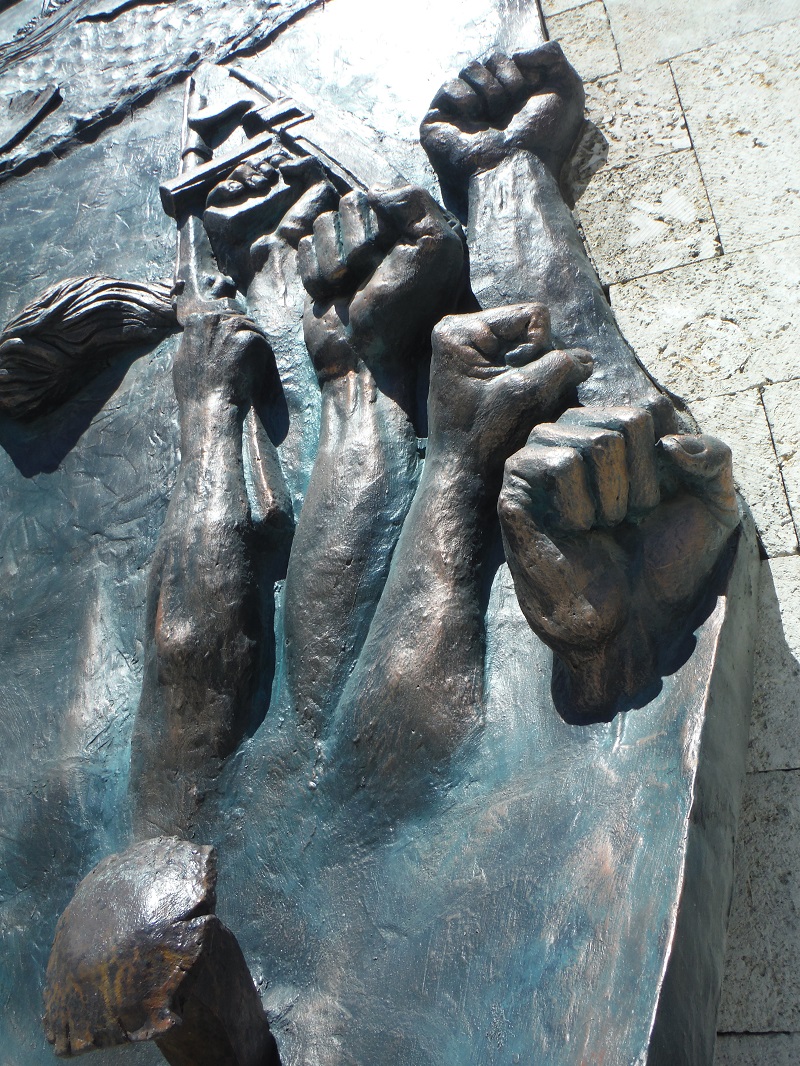
Luis Rogelio Nogueras (1944-1985)
Canta
.
Canta, amigo mío, la canción de mañana.
Mira el crepúsculo, escucha el viento
que barre la gran plaza asoleada donde
anoche nos reunimos para oír los más hermosos discursos.
Ven, canta una canción que se escuche en el confín del mundo;
una canción que sea al mismo tiempo
un canto de guerra y un canto de cuna,
un himno y un íntimo, delicado canto de amor.
Amigo mío, ven y canta el instante en que
la mañana más hermosa de la vida calienta las corazones;
canta al mar,
a la Revolución,
al rostro de esa muchacha que hunde los dedos en la tierra de tu alma
– y siembra una semilla.
Canta a la noche y canta a los martillos
que cuando amanece
comienzan a golpear el hierro al rojo vivo
para moldearlo a nuestra imagen y semejanza.
Canta al coraje,
al álgebra,
al amor,
al trabajo,
a la dialéctica.
Firma todas las libretas escolares
y endurece tus manos
hombro con hombro
con el fuego.
Escribe el verso de este tiempo, amigo mío,
para que seas un poco el humo que anuncia en lo distante
las grandes siderurgias,
los grandes complejos industriales,
los grandes incendios.
. . .
Luis Rogelio Nogueras (1944-1985)
Sing!
.
Sing, my friend, the song of tomorrow!
Look at the dawn, hear how the wind
sweeps across the grand sunny plaza where
last evening we gathered together to hear the most beautiful speeches.
Come and sing a song that may be heard to the outer limits of this earth;
a song that may be all at once
a song of war, a lullaby,
a hymn and an intimate, a delicate, love song!
My friend, come and sing this moment in which
life’s most beautiful tomorrow warms the heart;
sing to the sea,
and to The Revolution,
and to the face of that girl whose fingers delve into the earth of your soul,
there to plant a seed.
Sing to night, sing to the hammers
that start striking red-hot iron at dawn,
molding it to a resemblance of ourselves.
Sing to courage,
to algebra,
to love,
to work,
to dialectics: the battle of words!
Finish with / sign off from your scholastic notebooks
and, shoulder to shoulder / side by side,
harden your hands to the fire!
Write poetry about this time, my friend,
so that you might be but a curl of vapour announcing, far off,
the big iron foundries,
the great industrial complexes,
the grand conflagrations!
. . .
Pérdida del poema de amor llamado “Niebla”
(para Luis Marré)
.
Ayer he escrito un poema magnífico
lástima
lo he perdido no sé dónde
ahora no puedo recordarlo
pero era estupendo
decía más o menos
que estaba enamorado
claro lo decía de otra forma
ya les digo era excelente
pero ella amaba a otro
y entonces venía una parte
realmente bella donde hablaba de
los árboles el viento y luego
más adelante explicaba algo acerca de la muerte
naturalmente no decía muerte decía
oscura garra o algo así
y luego venían unos verso extraordinarios
y hacia el final
contaba cómo me había ido caminando
por una calle desierta
convencido de que la vida comienza de nuevo
en cualquier esquina
por supuesto no decía esa cursilería
era bueno el poema
lástima de pérdida
lástima de memoria.
. . .
The loss of a love poem entitled “Mist”
(for Luis Marré)
.
Yesterday I wrote a magnificent poem;
(pity, I’ve lost it – don’t know where.)
Now I can’t recall it;
but it was superb.
It was saying, more or less,
that I was in love;
it said it, of course, in another way;
I’m telling you now, it was excellent!
But she was in love with another man…
And then came the really beautiful part
all about the trees and the wind –
and further along it explained something about death
(it didn’t say death – naturally – it said the dark talon or something to that effect).
And later came some extraordinary verses,
and approaching the ending
it recounted how I’d walked along the empty street,
convinced that my life could begin anew – on whichever street corner.
It didn’t put it in such a cheesy, affected way (of course);
it was a good poem.
A pity, that loss.
Pitiful memory.
. . . . .
Nancy Morejón: Amor y la jaula feroz
Posted: June 29, 2016 Filed under: Nancy Morejón, Spanish | Tags: Poetas cubanos Comments Off on Nancy Morejón: Amor y la jaula feroz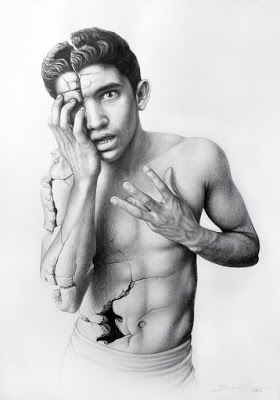
Denis Nuñez Rodríguez_nace 1967: Derrumbe parcial_Grafito sobre cartulina
Nancy Morejón (nace 1944)
A un muchacho
.
Entre la espuma y la marea
se levanta su espalda
cuando la tarde ya
iba cayendo sola.
.
Tuve sus ojos negros, como hierbas,
entre las conchas brunas del Pacífico.
.
Tuve sus labios finos
como una sal hervida en las arenas.
.
Tuve, en fin, su barbilla de incienso
bajo el sol.
.
Un muchacho del mundo sobre mí
y los cantares de la Biblia
modelaron sus piernas, sus tobillos
y las uvas del sexo
y los himnos pluviales que nacen de su boca
envolviéndonos sí como a dos nautas
enlazados al velamen incierto del amor.
.
Entre sus brazos, vivo.
Entre sus brazos duros quise morir
como un ave mojada.
. . .
ArdidA
.
Si vienes, iré cortando los caminos
que nos dejaron
la pesadumbre y la distancia.
Todos creerán que iré también
a colocarme en el rincón
de los sollozos y escribir un poema
a la esperanza del amor.
Nunca sabrán que eché a volar
hace ya tiempo
y que tú no me alcanzas.
. . .
Jaula feroz
.
Viniste.
Te empujaron las olas hacia mí.
Llegabas
como un pájaro amigo
recién salido de su jaula feroz.
La arena blanca es tuya
cuando deambulas
hacia el camino principal del amor.
. . . . .
Poetas cubanos [nacidos en Holguín] escriben del Amor
Posted: June 28, 2016 Filed under: Alberto Rocasolano, Albis Torres, Alejandro Fonseca, Delfín Prats, Lalita Curbelo Barberán, Magaly Sánchez, Mayda Pérez Gallego, Renael González, Spanish | Tags: Poetas cubanos Comments Off on Poetas cubanos [nacidos en Holguín] escriben del Amor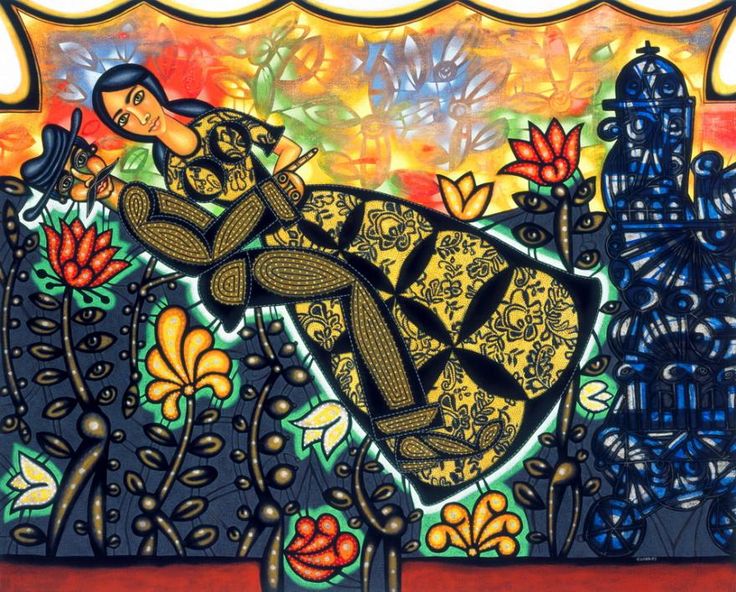
Carlos Luna: The Lovers_Los Amantes
.
Lalita Curbelo Barberán (nace 1930)
Del amor
.
Tanto se ha amado ya, y aún queda tanto
por amar
que puedo
largamente estirarme hasta el momento
de tus ojos perpetuamente abiertos.
Tanto se ha dado ya y aún queda tanto
por dar
en esta hora en que el amor es tu voz
o tus cabellos.
.
Por eso es que aprendemos los silencios
y las manos se encuentran.
Mañana quizás queden en la tierra
nuestros huesos deshechos
pero ahora se ama todavía
y la esperanza rompe toda niebla.
. . .
Ven, amor
.
Ven amor, acomete contra mi
cuerpo que te espera,
bésame dulce como si bebieras
todo el amor que te nombre
en todos los momentos.
Que cada día el amor sea más
generoso y hondo,
más arrojado y de relámpago
de fuego.
Ven amor, vamos a morir de la
agonía de amarnos.
Deshójame como tú quieras.
Ámame.
Que cada día continuemos
en este amarnos mucho
y que caiga mi amor
hasta tu vida.
Ven amor, transítame
y enférmame de ternura
y fuego.
. . .
Alberto Rocasolano (nace 1932)
Yo te conozco, amor
.
Si del amor se trata, no es suficiente un sol para hacer todo el recuerdo y sellar la promesa de otro inicio; un mismo sábado no basta para darle a los pájaros su nombre y suscitar el júbilo del aire, del frescor que bordea cada hoja, donde la luz revive y ramifica cada sonido muerto y húmedamente se atropellan las palabras: las elegidas para hablar en el crepúsculo cuando la tarde desperdicia el oro con que podríamos comprar la eternidad.
.
La vida exige y no perdona, suele aceptar a veces, permite que se posen nuestros ojos sobre su carne más variable, ávida de que se cumplan los deseos, que se desboquen los instintos, que extrañamente dependamos del envío de la luna cuando el caballo con su olfato despierta una leyenda y uno ventea los huesos de la sombra o desconfía de sí mismo, o quiere conocer y no pregunta y sorpresivamente mira con recelo a la inicial que fue situada en el final y siempre se hizo tarde su llegada.
.
Porque en amor no hay letras para el fin, sólo esa parte azul que puede más que la ceniza y que, aun trizada, alienta, permanece, entra en el lance doblemente largo de ser y desnacer, de dar la muerte para hacer la vida…¡Yo te conozco, amor, y tengo miedo!
. . .
Magaly Sánchez (nace 1940)
Mujer que espera en el parque
.
Él no vendrá.
La cita era a la hora del sol
y de los niños en el parque;
y ya la noche no deja ver
el rostro de la estatua.
.
Pero ella no parece esperar
sino que mira
el silencioso crecer de los rosales
sino que palpa
la soledumbre del lugar.
.
Tiene, eso sí,
un ligero temblor en las manos
(apenas perceptible)
y una atolondrada manera de fumar
que la denuncia.
. . .
Confusión
.
No fueron de los que más se amaron.
Se compadecieron simplemente uno de otro
porque sabían que la vida resplandecía a veces
pero también que daba duros golpes
hasta en las espaldas más inocentes.
Planearon el porvenir como un pacto,
un apasionante episodio
en el que si uno caía el otro le tendería las manos.
Eran cobardes, sí, pero bondadosos,
y creyeron firmamente que aquello era el amor.
. . .
Entre las horas
.
Ella está entre las horas frente al mar, y llueve.
Un hombre joven le hace señas para que comparta su mesa –
unas cervezas, una conversación a elegir.
Después, una aventura junto al puerto;
esto as así. Y ella ve grandes pájaros sobre el mar,
barcos neblinosos andando lento,
un nombre muy querido nevegando en las aguas…
hasta que alguien dice su nombre en voz alta
– y ya no sueña.
. . .
Se olvida de mí
.
Se olvida de mí;
le sabe mejor el aire lejos de mi sombra.
Le fatigan los sueños que me cargo:
el poco apego por mi nombre,
mi amor por lo otros,
mi seguridad (dice que incongruente) en el futuro.
Pide cartas de trinfo sobre la mesa,
que no pronuncie más palabras,
que amarren a la lucha y la fatiga,
y atraviese el tremendo mar de la Revolución
en barca de oro, y abanicándome:
Quiere que me muera y que me pierda.
. . .
Renael González (nace 1944)
Fotos, cartas, papeles
.
Aquí están, amor mío, como en mieles
que el tiempor sin piedad no ha corrompido,
tus palabras de luz y de sonido
dormidas en la piel de estos papeles.
.
Aunque ya no eres tú
– dejo que vueles hacia el país brumoso del olvido –
un viento sin edad vuelve a mi oído
con tu risa de alegres cascabeles.
.
Si un ermitaño del amor he sido
o en cada primavera he florecido
o es mi corona espinas o laureles,
.
yo no lo sé, mas, digo, convencido,
que hasta en la luz de un nuevo amor vestido,
por la sombra que dejas, aún me dueles.
. . .
Delfín Prats (nace 1945)
Pero en el viento su rumor llegaba
.
Ámala,
pero ámala como si todo hubiese concluido y pasado,
como si desde el futuro más remoto
recordaras el vino de tus mejores años:
el verano de mil novecientos ochenta
el catorce de abril
cuando fue tuya
en un hotel cercano del mar
cuyas ventanas no daban al mar
pero en el viento su rumor llegaba
y ella venía a ti como una ola
muriendo a las orillas de tu cuerpo.
. . .
Albis Torres (nace 1947)
Hay gentes tan desgraciadas…
.
Ella fue la mujer a quien quiso
y traerla a casa, la primera alegría de su vida.
Hacía gallinas de papel.
Las hacía como si nada
conversando, pensando.
Él miraba moverse aquellas manos tan queridas
y sacar de la nada alas, crestas
y una cola que hacía agitarse y crujir
al ave imaginaria.
.
Todo parecía tan simple.
.
Cuando ella se fue
trató muchas veces de repetir el milagro
dobló y desdobló papeles, tal vez pensando
que si daba sólo con una de aquellas pajaritas
regresaría atraída por el conjuro.
.
Parecía tan simple.
.
Su último intento fue a dar al cesto de la basura
reducido a una triste bolita de papel.
.
Fue entonces que entendió que su mujer
estaba hecha de muchos dobleces,
de un mecanismo mudo que la hacía aletear
sin una idea exacta de vuelo.
Intento mecánico de ganar altura
siempre que se le tirara con buen tino de la cola.
Y la olvidó para siempre.
. . .
Ciencia ficción
.
Y si llegara un hombre verde
y si llegara un hombre verde
y si llegara un hombre verde o azul
en una nave.
Y se llegara.
.
Qué diría de mí, tan despeinada
sin adornos ni gracia.
Qué diría de todos por mi culpa.
. . .
Mamá está en el balcón
.
Una vez estuve enamorada.
Era un muchacho dulce,
tenía las orejas pálidas y llenas
de unas pecas que me provocaban erizamientos.
Entonces también yo era adolescente.
.
De esto hace mucho tiempo.
Su rostro no aparece
en los rasgos de mis hijos.
Su foto no está en el álbum familiar
y nadie lo recuerda en la mesa.
No hay una sola taza
en la que haya puesto sus labios.
No obstante
cuando los míos se acomodan
frente al televisor
acude a la baranda
y sus manos
rozan con un poco de horror las mías
que ya no son hermosas.
. . .
Mayda Pérez Gallego (nace 1948)
Santiago
.
Recuerdo mis diecinueve de Santiago
y becas de peñas
café bien fuerte en la Isabelica,
pero también Santiago
el de los callejones húmedos y la poesía del mar.
A solas contigo, compañero,
en la barbacoa que a nuestro gusto arreglamos
llena de affiches, consignas,
fotos y escritos del Che
catre en el que apenas cabíamos, pero sobraba,
para que me leyeras a Otto René
Vallejo
Neruda
para que aprendiéramos a conocernos y
hacer el amor
sin reglas ni recetas
herirnos y llenar de lágrimas la almohada y luego
besos
firmar la paz o la tregua
y por fin
en el vientre
la patadita risueña del hijo.
. . .
Certidumbre
.
Lo sabía:
dos iniciales menos
y otro amor engavetado.
. . .
Ahora y hasta
.
Quiero que esté conmigo ahora que llueve.
Abrazarte hasta mañana, pasado, un ratico.
Abrazarte tan ola que te irrites
Tan sol que te ardas
Tan guerra que te rindas.
Quiero que estés conmigo ahora y no tan simple.
Hasta el cansancio agradecido y el cigarro
Hasta la cama revuelta y mi voz después en calma:
Hasta otra lluvia, amor.
. . .
Alejandro Fonseca (nace 1954)
Poema para María
.
Cuando más segura quien la tiene,
tiene humo, polvo, nada…(Lope de Vega)
.
Todo fue fácil al comienzo en aquella habitación;
éramos alegres animales que buscaban su fondo.
En medio del calor de los meses
perdimos el miedo de poseernos.
Había una piel para tocar mi cuerpo,
un sitio seguro donde discurrir los días
y yo conforme con tu aliento y tú con el mío,
olvidamos ciertas privaciones.
Pero al final de todo fue en vano;
el amor quedó suspenso como un punto de humo,
imposible de compartir.
. . .
Bajo un cielo tan amplio
.
Después de haber amado el paisaje claro de un cuerpo,
de abandonar el deseo en las extensiones largas de sus muslos,
después que ha partido hacia una dirección inexacta,
qué nos puede proporcionar la noche
y en el cuál de sus tantos espacios
encontraremos el ansia pasada,
si a esta hora sólo quedan los ruidos incoherentes de la ciudad
y el rumbo casi estricto de las calles
conduciéndonos a la casa;
a la casa siempre enclavada en un verano sigiloso
donde las plantas transpiran y su quietud asusta.
.
La oscuridad no contiene un pájaro dorado
ni un ademán azul y alegre creciendo ante nosotros.
Únicamente se reciben las mansas,
las difusas imágenes en los contornos,
en este inmenso vacío
en el que no habrá de nuevo el paisaje claro de un cuerpo
a pesar de estar, de habitar bajo un cielo tan amplio.
. . . . .
Poetry and The Revolution: Cuban poems from the 1960s
Posted: June 27, 2016 Filed under: A FEW FAVOURITES / UNA MUESTRA DE FAVORITOS, Cuban poetry and The Revolution, English | Tags: Cuban poetry from the 1960s, Cuban poets Comments Off on Poetry and The Revolution: Cuban poems from the 1960s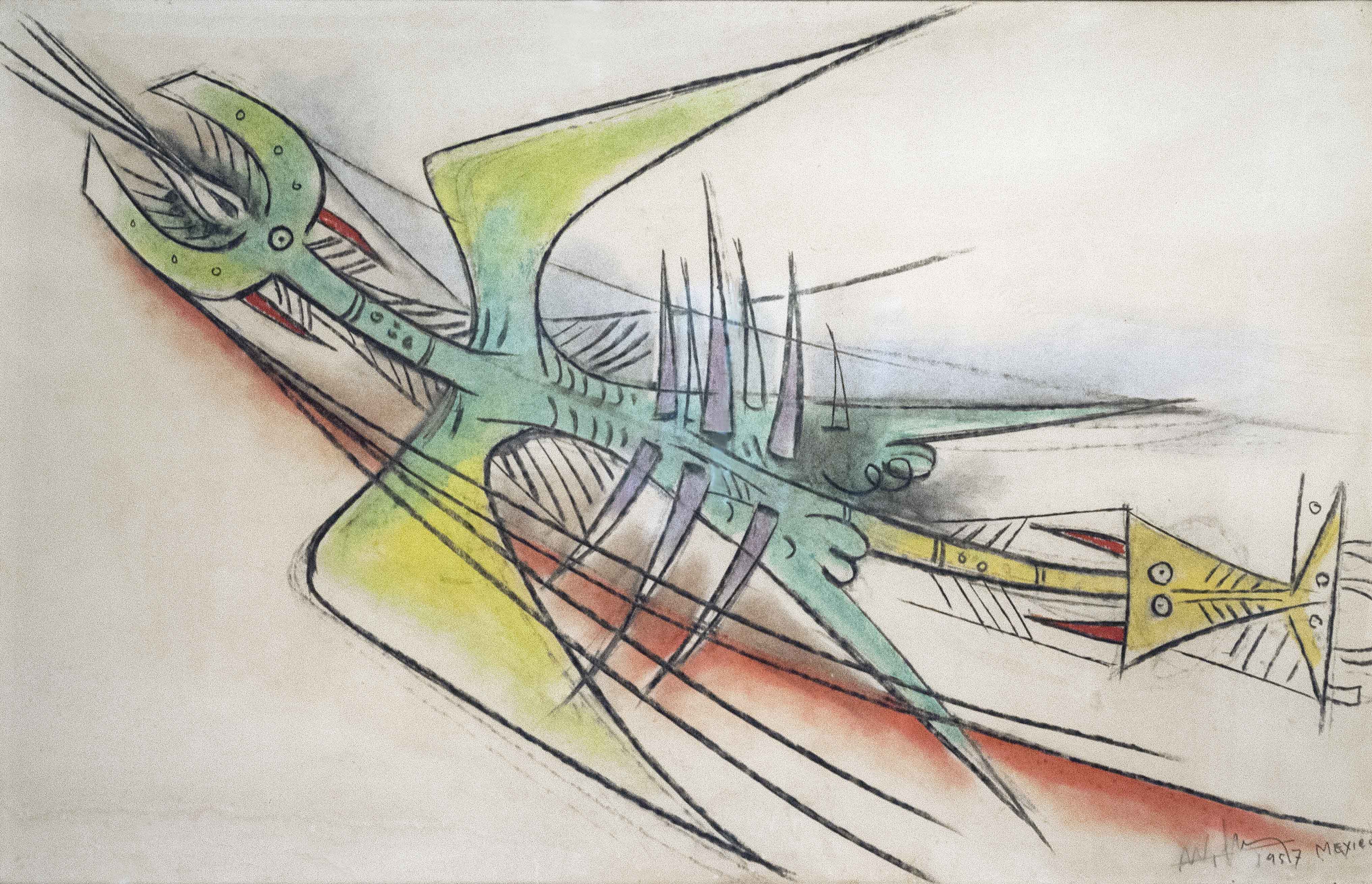
Wilfredo Lam (1902- 1982): Untitled (1957)_pastel on heavy paper and canvas
.
We have chosen the poems featured below from the anthology Cuban Poetry: 1959 to 1966.
The anthology was published by The Book Institute, Havana, in 1967.
The book’s prologue (Foreward) and biographical sketches were written by Heberto Padilla and Luis Suardíaz.
Editorial supervision for the book was through Claudia Beck and Sylvia Carranza.
. . .
Excerpt from the Foreward:
This is not an anthology of all contemporary Cuban poetry. It takes in only the period from 1959 to 1966; and only the poems of authors of several generations who have had at least one book published in those years.
We have selected the years beginning with the triumph of the Cuban Revolution, because during this period an extraordinary change has taken place in the life and work of our poets. It is easily discernible that the poetry written in these last seven years sharply breaks away from the poetics which to a large extent dominated our literature. A new universe of expression has dawned, a new truth, a new life.
We have been guided in our selection by the Revolution’s impact on our poets, and by the unique characteristics that make them outstanding in our language. It is an impact that delves into everyday reality, analyzing it and reflecting it in all its dimensions. Whenever possible, we have preferred a criterion of historic evaluation rather than an aesthetic one. Each poet is represented by those poems that we have considered to be more characteristic of his works, of his themes; but we have chosen with special care those that express the problems set forth by History. This does not mean that this selection of poetry is solely social or militant; reading it will prove just the opposite. It is simply the poetic testimonial of men of different ages and different literary backgrounds that carry out their work and are participants in one of the most intense and moving periods of our entire history.
. . .
Cuban Poetry: 1959 to 1966 focused on the verse of poets born between 1894 (Manuel Navarro Luna) and 1944 (Nancy Morejón – one of only two female poets – the other being Belkis Cuza Malé – included in the selection).
. . .
Translations from Spanish into English of the poems which follow were done in 1966 and 1967 by:
Claudia Beck, Rogelio Llopis, Sylvia Carranza, Stasia Stolkowska, and R. Frank Hardy.
. . .
Alcides Iznaga
(born 1914, Cienfuegos, Las Villas)
Presence
.
Time stands still in the school patio
amid fenced-in almond and cedar trees,
under a sky fraught with heavy rain,
between old and stately walls,
burning blindly,
non-committal and innocuous,
immutable, independent,
unattached to the trees,
to the fences and walls,
to the sky and the vertical air,
so free from corrosion
and so intense
that it fills to the brim the patio and the sky.
. . .
Sister
.
I remember you as the river we have lost and kept;
because we are impotent.
Now these birds are chirping.
Now the wind escapes.
Now the doves are flying
and I am sitting by the Hudson.
.
Some passers-by hurry along
and I ask myself whether their rush will get them anywhere.
I feel downcast,
and you have died so hastily and unexpectedly.
.
I see people dragging along the leash
lap dogs, mean looking and toy-like,
or listening to their toy-like, jabbering transistor radios,
completely unaware of Riverside’s charms at this time of day,
and I am touched by the way the wind seems to spur them on.
.
I cast a look on Time
and before losing what I lose
and giving what I give,
I know the reverse.
But we are impotent;
we are not the returning wind;
we are doves,
birds that chirp for a while
and are heard no more.
. . .
Loneliness
.
I see the afternoon take shape before me silently
but I have withdrawn to my airless room.
The afternoon has not diminished its brightness;
it brings out the green in the trees,
the marble-like whiteness in children’s cheeks,
the contrasting colours of nearby buildings;
but all this will last out an instant,
because the trees, the children and buildings
are one with the tremulous afternoon in my heart.
.
I pass my finger through its hair,
and touch a flower visibly withering
like the flower which yesterday bloomed everlastingly
and has now become minutes of ashes.
. . .
Within
.
Very few Sundays did we have for us,
very few nights, too.
Behind the table we would seek refuge in ourselves:
joking, roughhousing,
and the pointless strolls on the Prado.
Why did we then waste away
those times so beautiful and ours?
.
I was somewhat hesitant toward you,
timorous – as I’ve always been –
instead of letting you seduce me.
Now all of me is in you, within you
– attentive to your every throb, even the least perceptible;
to your eyes that always dream;
to your eyes somewhat sad;
to your eyes so deep.
. . .
Day’s Story (A Variation)
(for Isabel Castellanos)
.
The day throws off its shell,
it rises and starts on its way
distributing winds, surge of waves, tenderness;
distributing songs and tearing down bastions
belonging to the absurd stage of our history;
slowly, it has to make a stop;
it transpires and smiles
and begins shaking hands with its friends;
and all begins to change,
and the taxi’s fare rejects the back seat
and sits in front with the driver;
and they both talk amiably
as though they were old friends;
on all this the day looks on quite pleased.
.
Some basilisks,
some executioners,
some businessmen,
some generals
try to block the successful day,
but it just slips away from them
like water through disabled fingers;
and only when its mission is fulfilled
does it make its voluntary exit,
colouring our thoughts with its irrevocable accomplishments.
. . .
Eliseo Diego
(born 1920, Havana)
Only This
.
Poetry is nothing more
Than conversation in the shadows
Cast by an ancient stove
When all have gone,
And beyond the door
Murmur the impenetrable woods.
.
A poem is only a few words
One has loved,
And whose order time has changed,
So that now
Only a suggestion,
An inexpressible hope,
Remains.
.
Poetry is nothing more
Than happiness, a conversation
In the shadows
After everything else has gone
And there is only silence.
. . .
Jesús Orta Ruiz (Indio Naborí)
(born 1923, Guanabacoa)
Exposure and a Way
.
The new roof was not to have
Fifteen gutters deflecting rain.
The roof had to be only rain.
.
The moon did not appear;
Hidden were the stars.
.
But even so,
That night was a clear night.
.
We saw that men who differ
Go opposing ways,
And we struck out on ours.
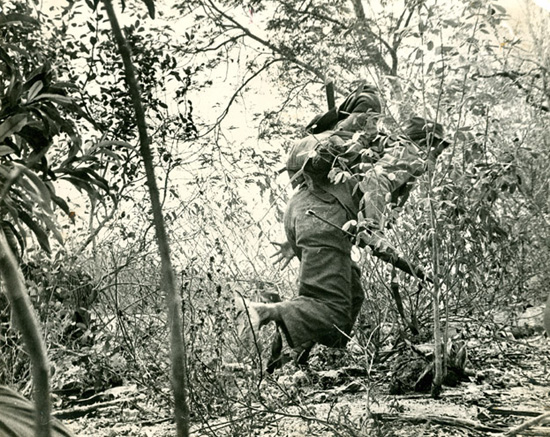
A revolutionary soldier caught on camera by chance as he was struck by the bullet that killed him_Tirso Martinez_Cuba, 1958
Roberto Branly
(born 1930, Havana)
Reminiscence: January ’61
.
The Year of Education has hardly begun
and already we are hustling off to the trenches.
.
It was like the strategy of golf;
the manoeuvre followed by the tin-horn heroes,
by Wall Street’s golf strategy.
.
Hardly had we time
to whiff at the gunpowder from our rifles
and already the salt spray from the sea
and the gusts of winds announcing rain
were upon us;
we were like sentinels, with our eyes glued to the night.
.
We rested our mouths on the butts of our rifles
and bit into them during our sleepless wait;
we had a drawn-out taste of military life,
under the light of the stars,
amid the dew-covered, knee-high grass.
. . .
Antón Arrufat
(born 1935, Santiago de Cuba)
Tempo I
.
I look at your face
Before our fingers begin the work of love.
Love is a futile crime,
Much like death herself,
Because we always die too late.
I must stagger under
The cruelty of that presence
And that punishment
Beneath the sun.
(Snow never comes to console us in the tropics.)
. . .
Domingo Alfonso
(born 1936, Jovellanos, Matanzas)
People like Me
.
People like me
daily walk the streets,
drink coffee, breathe,
admire the Sputniks.
.
People like me
with a nose, with eyes,
with marital troubles,
who take a bus,
and one fine day
sleep underground,
unnoticed by all.
. . .
Crossing the River
.
The oxen and the horses wade through the waters of the river.
A yellowish, foam-capped streak of water rhythmically laps the river banks.
The horsemen goad the herd, make nervous use of their spurs.
The sweaty beasts are water-drenched.
Blood begins to stain the water.
A little girl is heard crying.
We do not know why.
. . .
Señor Julio Osorio
.
Señor Julio Osorio remembers every day the good old times
when not a year passed without his travelling to New York.
Those were the times my father was out of work,
and my sister Rita was the victim of old Doctor Beato’s offspring,
while my mother sewed pants on a Singer
for private tailors with a meagre clientele.
.
Now I work, my sister is about to graduate from High School,
and little do we care whether Señor Osorio
makes his yearly trip to New York or not.
. . .
A Love-Affair at Forty
.
Carlos never had a wife.
Luisa never had a beau.
Carlos longed to marry.
So did Luisa.
Luisa was thirty-five,
Carlos almost fifty.
.
Carlos and Luisa were united in wedlock.
.
Luisa was not in love with Carlos;
but had no use for spinsterhood.
Carlos was not in love with Luisa;
but was in need of a wife.
. . .
Poems of the Ordinary Man
.
I am the ordinary man;
during certain hours, like millions,
I go up and down elevators,
then I have lunch like everyone,
talk with students
(I carry no cross on my shoulders);
day in and day out I meet up with many people,
people who are bored, people who sing;
next to them my insignificant figure passes;
the soldier suffers, the stenographer stoops.
I sing simply of the things felt by
the ordinary man.
. . .
As Hard as Myself
.
As hard as myself
is that small man,
my constant companion;
inflexible, strong;
he weighs, he analyzes;
he judges every single thing.
.
But now and again
he lets me down;
he cuts a flower.
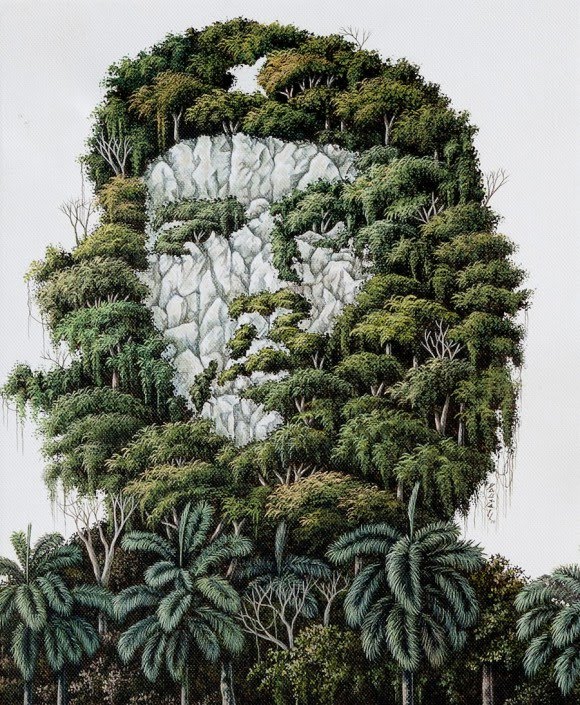
Dausell Valdés Piñeiro_born 1967_Cuban painter: “They are dreams still” (Son los sueños todavía)_acrylic on fabric
Luis Suardíaz
(born 1936, Camagüey)
When They Invented God
.
When they invented God,
Words hadn’t gotten very far;
The alphabet was still unborn.
This was at the beginning.
.
When they turned out the first books,
They stuffed them with metaphysics
(not even very well thought out)
And the bludgeon of the supernatural
.
It is a thankless task –
Launching forays against the outworn creeds
Of men long dead –
An ineffectual tactic.
Let’s put the angels in their place,
Consigning celestial vapours to oblivion,
And the fine biblical precepts
To the crucible of class struggle.
.
We materialists feel sorry for
That host of believers graduated from Oxford,
And stockbrokers who invent a hundred swindles
– and meanwhile go about their rituals,
Pressing their suit with heaven.
.
When they invented God,
Things were different.
Now we have to put our house in order.
In the beginning there was matter.
It was later on there came
All this mix-up about the heavens and the earth.
. . .
Song
.
How much love
In a cup of coffee shared.
.
In hands
Fused in a single melody.
.
In the dusk
Opening and closing before the eyes of lovers.
. . .
The Seed
.
They told us,
“This is beauty.”
So that we
Might not see her for ourselves
Or create her for ourselves.
.
So now it is hard to say,
“This is beauty.”
And we refrain,
Since we would make a fatal mistake.
. . .
Armando Alvarez Bravo
(born 1938, Havana)
Concerning a Snapshot
.
Quite so, it is myself among them
In the snapshot,
And then it comes back again:
A peculiar mania we have:
The zealous hoarding of Time’s faces.
.
Still, I do not remember
Exactly, I have forgotten
That day, the light
Of that morning,
What we were talking about,
Who we were,
The wherefore of that picture.
.
Time has passed – thousands of years.
Days linked to one another in a chain.
.
Past is the time of facile reference.
And I learn suddenly
How terrible, how simple, how beautiful and important
Were the words, the names,
I got from books, from movies,
from the letters of that friend,
Who,
Passing hungry days in an ancient European city,
Invited me
To share his pride of exile.
.
Thousands of years have passed.
I am no longer this double,
Looking out at me, so alive,
Frozen forever on a landscape
Where some, perhaps, move about
Through comfortable force of habit,
Unconscious of erosion’s transformations.
.
Something has happened between us,
Making us different, separating us.
Our times are incongruent.
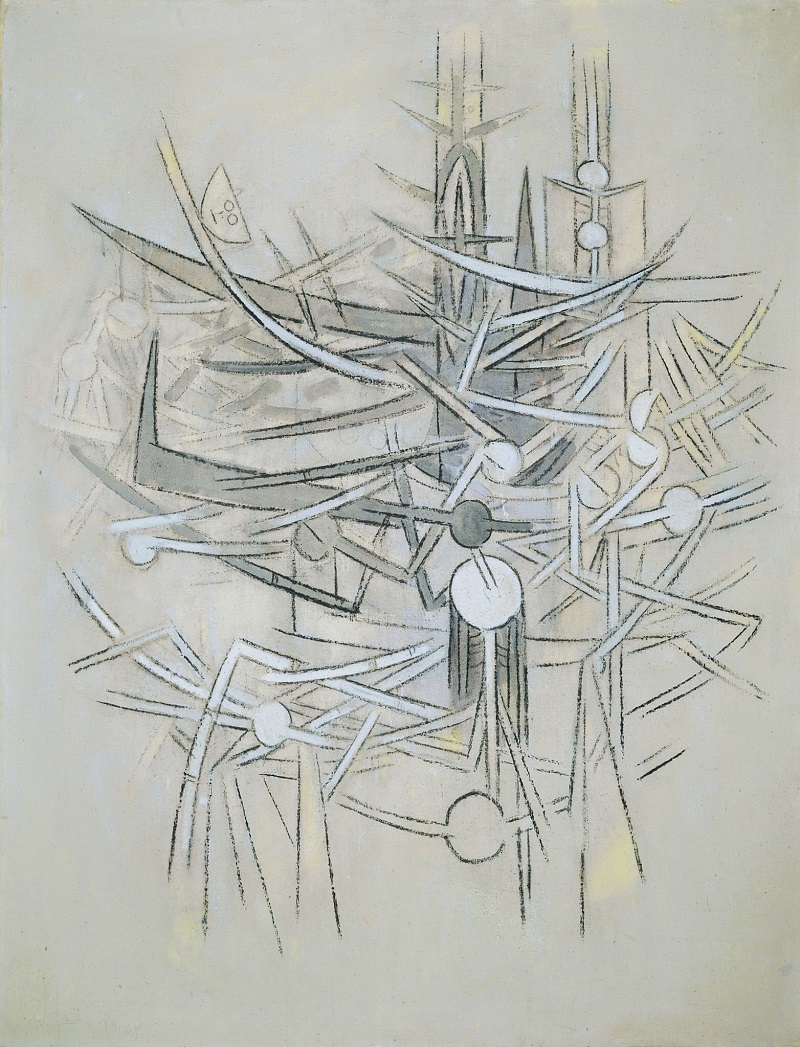
Wilfredo Lam (1902- 1982): La Barrière, or: The Barrier or The Obstacle or The Gate_oil on canvas_painted in 1964
A Bit of Metaphysics
.
There we find ourselves again,
At home, sitting in the livingroom,
As though none of it had ever happened.
Outside, the over-reaching trees
Dig themselves into the night.
The silence – almost perfect.
Suddenly the rain begins,
As when one of us told the first lie.
. . .
David Fernández
(born 1940, Havana)
A Song of Peace
.
[ Associated Press: Redwood City, California, November 17th:
Only four days after reading a letter from their son in which he told them that his luck was running out, Mr. and Mrs. Silvio Carnevale received a telegram telling them of his death in Vietnam.
“I feel sick; sickened by what I’ve done and by what has happened to my friends,” said the letter. “I feel as if I were a hundred years old…My luck is running out. Please do whatever you can for me…Dad, I don’t want to die. Please get me out of here.” ]
.
I
.
Perhaps some time or other,
under rosy California orange trees,
stolen by your grandfather from our grandfathers,
you dreamed you might become
President of your nation,
or, perhaps, only an honest citizen.
Possibly the simpler dream only
spurred on your great-grandfather,
and when he fled from distant Italy,
and here founded family, homestead and new hopes
in North America, the new and promised land.
.
II
.
(I am only imagining,
only leafing through your possible history,
making up a future
you will never have,
since the promised land
has appointed you a grave
far away, very far
from your orange groves.)
.
III
.
Also, perhaps,
you never even knew
about this corner of the world,
known as Vietnam
where daily you are dying,
daily you feel how lost
your interrupted childhood,
where you lose all sense of logic,
where you wield a rifle,
(I know why but you do not),
no longer now in play.
Here arraigned against you
are the shadows and the trees,
the wind, the roads, the stones,
the very smoke from your campfire,
and the silence of the mountains,
none of them yours – nor to be.
And the drinking water, heat and rain.
And, of course, the bullets ––
the things you took there turned against you.
.
IV
.
Perhaps you never thought
it could happen.
This is not a dream;
this is breaking something in you,
blotting out the orange groves
of your grandfather,
which are so far away.
Perhaps you would like to be there now,
sitting in the shade with your friends,
in the shelter of a song of peace,
because you are already fed up with the whole thing.
You never knew why
they cut off that song of peace in the middle.
Yet here you are, following after
others like yourself,
who came to destroy
the homes, the families, the budding hopes of this people
– this people named Vietnam.
You probably never heard of it
until that dark day when they sent you,
together with your buddies,
without a word to tell you why,
over to this land where now,
undone by the very arms you brought along,
you are dying, dying;
daily, hopelessly, endlessly dying.
. . .
Guillermo Rodríguez Rivera
(born 1943, Santiago de Cuba)
Working Hours
.
And now that things have settled anew
And can move toward their likely destiny
The grieving image will take another form.
.
That voice
Will not be heard again.
The presumably right way of doing things then
Will not be mentioned again.
.
One will pick himself up from that handful of dust,
From that terror of darkened stairways,
From the rains that made him shudder in the afternoon;
And will utter the word made flesh just now.
And will find that it suffices.
. . .
Discovery
.
You will use words from stories you have read,
You will talk of seafoam, roses,
All in vain.
For you will understand that
This story is different
And cannot be written that way.
. . .
Víctor Casaus (born 1944, Havana)
We Are
.
Unquestionably
We are.
.
We are
Above the yellow
Words of the cables
In this shining island
Which was built the day before yesterday.
.
We are,
Even with our eyes red from the dew,
With the fist and the shortcoming
And the mistake and the man who doesn’t know –
And the man who knows but has made a mistake.
.
We are underneath the weak
Smiles of the bland and defeated
Butterflies. We are forever in
This small zone we live in.
.
(To be,
simply to be,
is – in this place and in this latitude –
a by-no-means trifling victory.)
Cover of a “notebook” (cuaderno) of poems by Nancy Morejón_published in 1964
Nancy Morejón (born 1944, Havana)
A Disillusionment for Rubén Darío
.
“A white peacock passes by.” / “Un pavo real blanco pasa.” : R.D.
.
If a peacock should pass by me
I would imagine your watching over
its figure, its legs, its noisy tread,
its presumed oppressed walk,
its long neck.
.
But there is another peacock that doesn’t pass by now.
A very modern peacock that amazes
the straight-haired poet in his suit weatherbeaten by the saltspray of the ocean.
.
But there is yet another peacock
not yours,
which I destroy in the yard of my imaginary house,
whose neck I wring – almost with sorrow,
.
whom I believe to be as blue as the bluest heavens.
. . .
Miguel Barnet (born 1940, Havana)
Ché
.
Ché, you know everything,
Each nook and cranny of the Sierra,
Asthma over the cold grass,
The speaker’s rostrum,
Night tides,
And even how
Fruit grows, how oxen are yoked.
.
I would not give you
Pen in place of pistol,
But it is you who are the poet.
. . .
Revolution
.
You and I are separated by
A heap of contradictions
Which come together,
Galvanizing all my being.
Sweat starts from my brow,
Now I am building you.
. . .
Barnet’s poems in the original Spanish:
. . .
Che
.
Che, tú lo sabes todo,
los recovecos de la Sierra
el asma sobre la yerba fría
la tribuna
el oleaje en la noche
ya hasta de qué se hacen
los frutos y las yuntas.
.
No es que yo quiera darte
pluma por pistola
pero el poeta eres tú.
. . .
Revolución
.
Entre tú y yo
hay un montón de contradicciones
que se juntan
para hacer de mí el sobresaltado
que se humedece la frente
y te edifica.
. . . . .
 Zócalo Poets