Alain Mabanckou: “Letter to the Sun” / “Lettre au Soleil”
Posted: February 24, 2014 Filed under: Alain Mabanckou, English, French, ZP Translator: Alexander Best Comments Off on Alain Mabanckou: “Letter to the Sun” / “Lettre au Soleil”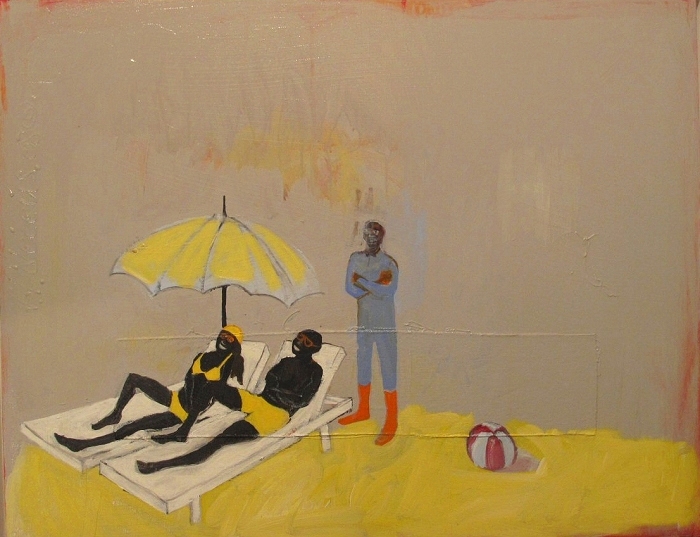
Francks François Décéus_On the beach_Sur la plage_2009
.
Alain Mabanckou
(born February 24th, 1966, Pointe-Noire, Republic of The Congo / lives in Paris and Los Angeles)
“Letter to the Sun”
.
Sun:
Here’s my registered letter,
with an accusation of deception.
I summon you – right here, right now –
to honour a tribute to Light,
something you owe this clump of Earth
capering around you.
.
Your revolutionary “revolving”,
the spheroid halo of your loophole-kisses,
these don’t impress me.
I’ll await you at the bend
between Dawn’s shyness
and Azure Sky’s confusion.
My rage will be at “high noon”,
tatooed by a fadeless rancour.
I’ll go – if need be – to “unearth” you in the dust of stars
and the vagabounding immensity of the Galaxy.
Then I will bear a grievance alongside the Eclipse
in order to mock you at your zenith
before a Humanity oh so reverential of your virtues…
. . .
Alain Mabanckou (né le 24 février, 1966, Pointe-Noire, République du Congo)
“Lettre au Soleil”
.
Soleil
Voici ma lettre recommandée
avec accusé de déception
.
Je te somme ici et maintenant
d’honorer le tribut de lumière
que tu dois à la motte de Terre
qui cabriole autour de toi
.
Ta course révolutionnaire
et le halo sphéroîdal de tes embrasures
ne m’impressionnent plus
Je t’attendrai au tournant
entre la timidité de l’Aurore
et la confusion de l’Azur
Ma rage sera à son midi,
tatouée d’une rancoeur immarcescible
J’irai s’il le faut
te dénicher dans la poussière stellaire
et l’immensité vagabonde de la Galaxie
Je porterai alors plainte auprès de l’Eclipse
pour te ridiculiser en plein zénith
devant l’humanité qui révère tes vertus…
.
.
© Alain Mabanckou, 1995
. . .
“To: Another Understanding or Guiding Light”
.
In the shade of your sleep
rest the vestiges of illusions.
It seems that beyond the hilltops
indicates another point of view / horizon.
.
I beg of the Sun not a single ray;
for I carry within me
the light of your awakening,
the marvel of your gaze
fixed upon Eternity.
. . .
“À l’autre lumière”
.
À l’ombre de ton sommeil
reposent les vestiges des songes
il paraît qu’au-delà des collines
pointe l’autre horizon.
.
je n’implore du soleil
aucun rai
je porte en moi
la lumière de ton éveil
l’éblouissement de ton regard
rivé vers l’éternité.
.
.
.
Translations from French into English: Alexander Best
. . . . .
Willie Cole: Neo-African sculpture with American plenty
Posted: February 23, 2014 Filed under: IMAGES Comments Off on Willie Cole: Neo-African sculpture with American plenty
Willie Cole_Wind mask_assemblage with hairdryers_1991
For the decade of the 1990s, Willie Cole (born 1955) was inspired principally by the archaic cast-iron steam iron. The Newark, New Jersey-born sculptor and conceptual artist created faux–anthropological research into The People of Iron a.k.a. The Cult of The Domestic. By the end of the decade he had chronicled their journey from slavery to freedom through sculpture, printmaking – and branding (with iron, that is). The elliptical association with the fact of American slavery cannot be missed by any viewer with historical intelligence. Cole’s shoe sculptures, and those with hair dryers, bicycle parts, kitchen chairs and so forth, are visually strong and metaphorically rich – and only an African-American sculptor could use materials in this way to create something fresh and “American” yet linked to the beauty of African “traditional” art.

Willie Cole_Zebra-town Mask_a sculpture in shoes

Willie Cole_Steam Iron series
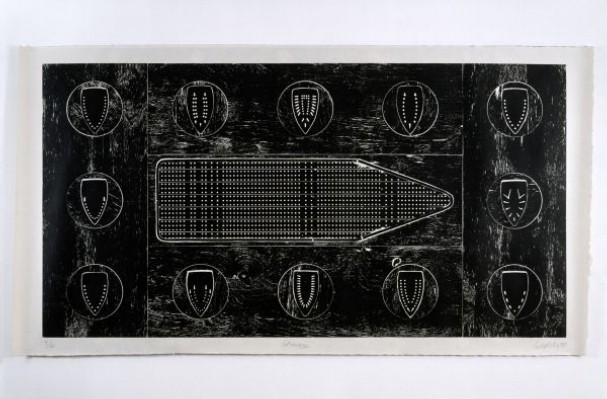
Willie Cole_Stowage_2007

Willie Cole_Pressed Iron Blossom number 3

Willie Cole_Kitchen tji wara_2004

Willie Cole_Kent tji wara_2007_sculpture made up of bicycle parts
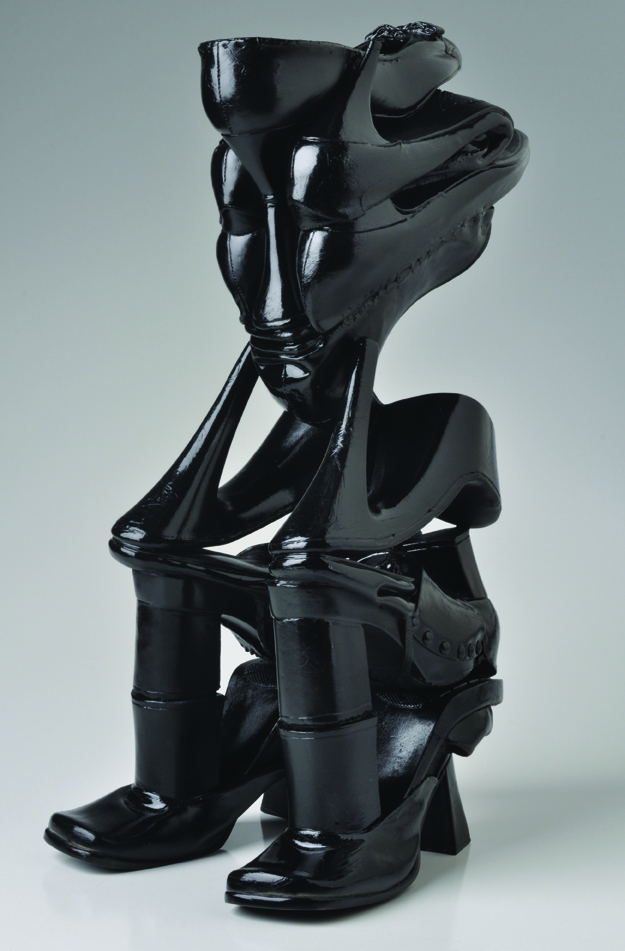
Willie Cole_Black Worrier_sculpture constructed of women’s shoes

Willie Cole_Downtown Goddess_a sculpture in women’s shoes
. . . . .
Danny Simmons: Abstract Expressionism via “Oil on Smartphone”
Posted: February 23, 2014 Filed under: IMAGES Comments Off on Danny Simmons: Abstract Expressionism via “Oil on Smartphone”
Danny Simmons_Dreaming Eloquently_Digital print_2013
.
Daniel “Danny” Simmons, Jr., is a painter from Queens, New York City. Self-taught, he used to watch his mother, an amateur painter, while she worked. In the early 1990s he began to concentrate seriously on painting, incorporating influences from Catalan painter Joan Miró, and developing a style he calls Neo-African Abstract Expressionism. His artwork is in the collections of the Brooklyn Museum, The Shomburg Center for Black Culture, and The Smithsonian. In 1995, with his brothers Joseph and Russell, he founded Rush Philanthropic Arts Foundation, out of which grew Rush Arts Gallery in Manhattan and Corridor Gallery in Brooklyn. Though he has long painted in oils, recently Simmons has started to make “Digital Prints” – Smartphone Art. Using a Samsung Galaxy Note II phone and the accompanying stylus he has learned a new way to draw and paint using the device’s embedded app. Rather than printing multiples of these phone-sketches or phone-paintings he prints just one – making it an original artwork with value beyond a print. Simmons uses a professional digital printing house whose staff vectorize the image files so that the resolution holds together and then they print the images on high-quality paper. Asked what he thinks about when he’s painting – and “painting”– Danny Simmons has said: “I’m really trying to get at how people are connected to each other and invoke the feeling that these paintings are taking you to a place where a lot of people can be transported to at the same time, and find a common ground there. Society is so polarizing – between rich and poor, races and religions – but one of the things that can bring people together is art.” (Quotation from WhiteHot magazine interview with Paul Laster, December 2013)
.
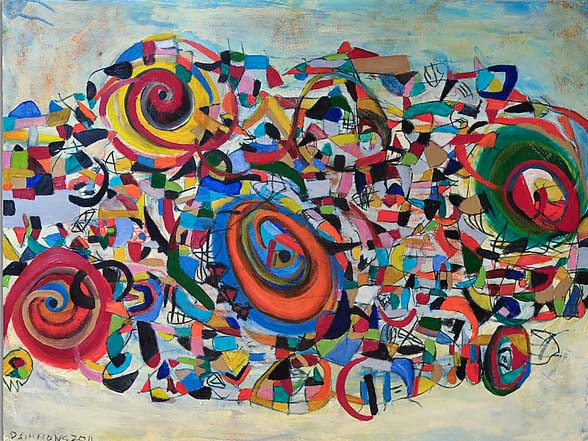
Danny Simmons_The Ju Ju Man’s One Man Band_Oil and charcoal on paper_2011

Danny Simmons_Loopy Loo_Oil on canvas_2013

Danny Simmons_Just a Memory_Digital print_2013

Danny Simmons_Over and Under_Digital print_2013
. . . . .
Léopold Sédar Senghor: “À New York”: un poème typique du courant de la Négritude / “To New York”: a classic poem of the Négritude movement
Posted: February 20, 2014 Filed under: English, French, Léopold Sédar Senghor | Tags: Black History Month, Mois de l'Histoire des Noirs Comments Off on Léopold Sédar Senghor: “À New York”: un poème typique du courant de la Négritude / “To New York”: a classic poem of the Négritude movement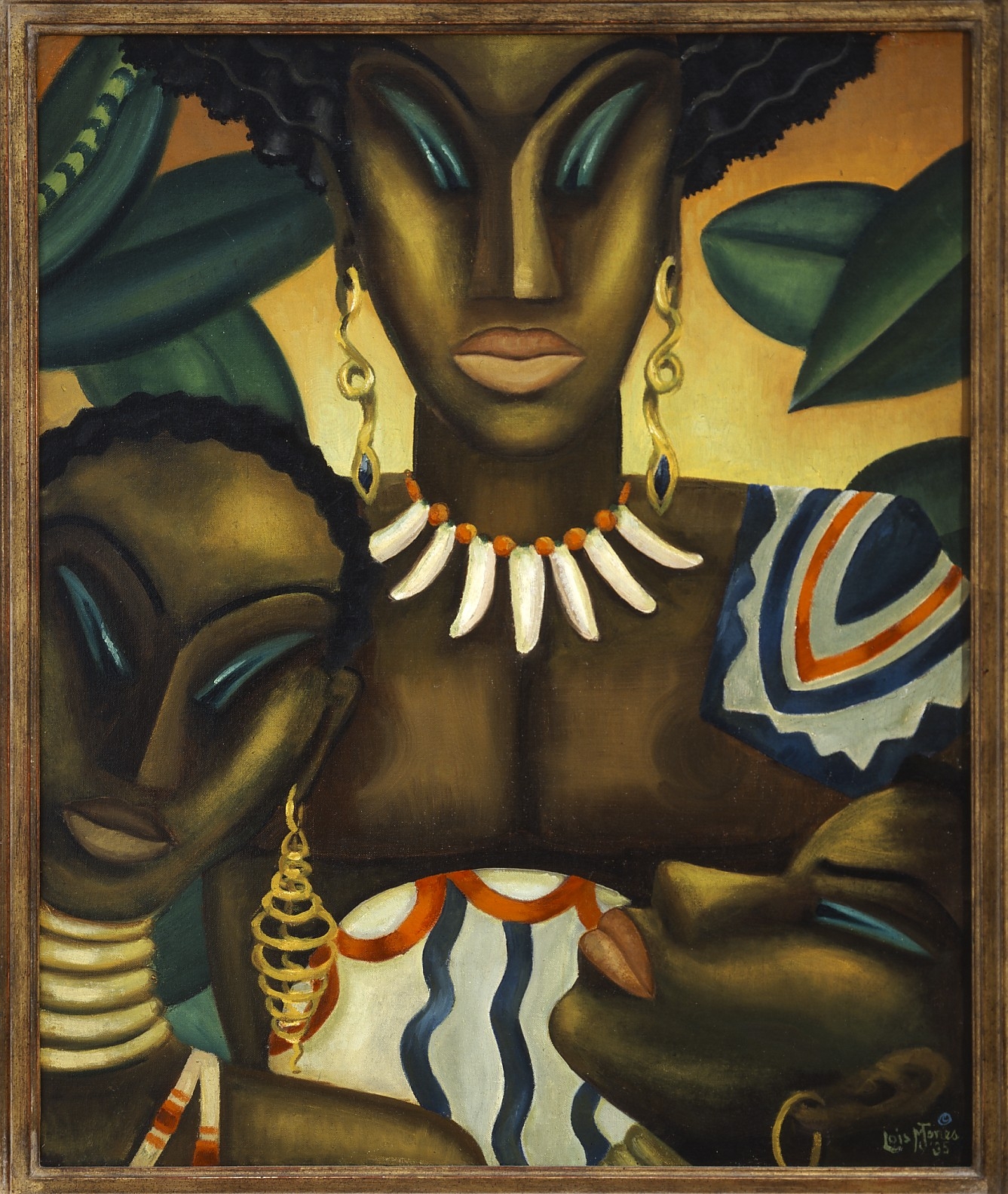
Lois Mailou Jones_Africa_Oil on canvas_1935
Léopold Sédar Senghor (1906-2001, Sénégal / France)
Recueil : Éthiopiques (1956)
“À New York” (pour un orchestre de jazz : solo de trompette)
.
– I –
New York ! D’abord j’ai été confondu par ta beauté, ces grandes filles d’or aux jambes longues.
Si timide d’abord devant tes yeux de métal bleu, ton sourire de givre
Si timide. Et l’angoisse au fond des rues à gratte-ciel
Levant des yeux de chouette parmi l’éclipse du soleil.
Sulfureuse ta lumière et les fûts livides, dont les têtes foudroient le ciel
Les gratte-ciel qui défient les cyclones sur leurs muscles d’acier et leur peau patinée de pierres.
Mais quinze jours sur les trottoirs chauves de Manhattan
– C’est au bout de la troisième semaine que vous saisit la fièvre en un bond de jaguar
Quinze jours sans un puits ni pâturage, tous les oiseaux de l’air
Tombant soudain et morts sous les hautes cendres des terrasses.
Pas un rire d’enfant en fleur, sa main dans ma main fraîche
Pas un sein maternel, des jambes de nylon. Des jambes et des seins sans sueur ni odeur.
Pas un mot tendre en l’absence de lèvres, rien que des cœurs artificiels payés en monnaie forte
Et pas un livre où lire la sagesse. La palette du peintre fleurit des cristaux de corail.
Nuits d’insomnie ô nuits de Manhattan ! si agitées de feux follets, tandis que les klaxons hurlent des heures vides
Et que les eaux obscures charrient des amours hygiéniques, tels des fleuves en crue des cadavres d’enfants.
.
– II –
Voici le temps des signes et des comptes
New York ! or voici le temps de la manne et de l’hysope.
Il n’est que d’écouter les trombones de Dieu, ton cœur battre au rythme du sang ton sang.
J’ai vu dans Harlem bourdonnant de bruits de couleurs solennelles et d’odeurs flamboyantes
– C’est l’heure du thé chez le livreur-en-produits-pharmaceutiques
J’ai vu se préparer la fête de la Nuit à la fuite du jour.
C’est l’heure pure où dans les rues, Dieu fait germer la vie d’avant mémoire
Tous les éléments amphibies rayonnants comme des soleils.
Harlem Harlem ! voici ce que j’ai vu Harlem Harlem !
Une brise verte de blés sourdre des pavés labourés par les
pieds nus de danseurs Dans
Croupes de soie et seins de fers de lance, ballets de nénuphars et de masques fabuleux
Aux pieds des chevaux de police, les mangues de l’amour rouler des maisons basses.
Et j’ai vu le long des trottoirs, des ruisseaux de rhum blanc des ruisseaux de lait noir dans le brouillard bleu des cigares.
J’ai vu le ciel neiger au soir des fleurs de coton et des ailes de séraphins et des panaches de sorciers.
Écoute New York ! ô écoute ta voix mâle de cuivre ta voix vibrante de hautbois, l’angoisse bouchée de tes larmes tomber en gros caillots de sang
Écoute au loin battre ton cœur nocturne, rythme et sang du tam-tam, tam-tam sang et tam-tam.
.
– III –
New York! je dis New York, laisse affluer le sang noir dans ton sang
Qu’il dérouille tes articulations d’acier, comme une huile de vie
Qu’il donne à tes ponts la courbe des croupes et la souplesse des lianes.
Voici revenir les temps très anciens, l’unité retrouvée la réconciliation du Lion du Taureau et de l’Arbre
L’idée liée à l’acte l’oreille au cœur le signe au sens.
Voilà tes fleuves bruissants de caïmans musqués et de lamantins aux yeux de mirages. Et nul besoin d’inventer les Sirènes.
Mais il suffit d’ouvrir les yeux à l’arc-en-ciel d’Avril
Et les oreilles, surtout les oreilles à Dieu qui d’un rire de saxophone créa le ciel et la terre en six jours.
Et le septième jour, il dormit du grand sommeil nègre.
. . .
Léopold Sédar Senghor (1906-2001, Senegal / France)
From: Éthiopiques (1956)
“To New York” (for jazz orchestra – with solo trumpet)
.
– I –
.
New York! At first I was bewildered by your beauty,
Those huge, long-legged, golden girls.
So shy, at first, before your blue metallic eyes and icy smile,
So shy. And full of despair at the end of skyscraper streets
Raising my owl eyes at the eclipse of the sun.
Your light is sulphurous against the pale towers
Whose heads strike lightning into the sky,
Skyscrapers defying storms with their steel shoulders
And weathered skin of stone.
But two weeks on the naked sidewalks of Manhattan—
At the end of the third week the fever
Overtakes you with a jaguar’s leap
Two weeks without well water or pasture all birds of the air
Fall suddenly dead under the high, sooty terraces.
No laugh from a growing child, his hand in my cool hand.
No mother’s breast, but nylon legs. Legs and breasts
Without smell or sweat. No tender word, and no lips,
Only artificial hearts paid for in cold cash
And not one book offering wisdom.
The painter’s palette yields only coral crystals.
Sleepless nights, O nights of Manhattan!
Stirring with delusions while car horns blare the empty hours
And murky streams carry away hygienic loving
Like rivers overflowing with the corpses of babies.
.
– II –
Now is the time of signs and reckoning, New York!
Now is the time of manna and hyssop.
You have only to listen to God’s trombones, to your heart
Beating to the rhythm of blood, your blood.
I saw Harlem teeming with sounds and ritual colours
And outrageous smells—
At teatime in the home of the drugstore-deliveryman
I saw the festival of Night begin at the retreat of day.
And I proclaim Night more truthful than the day.
It is the pure hour when God brings forth
Life immemorial in the streets,
All the amphibious elements shining like suns.
Harlem, Harlem! Now I’ve seen Harlem, Harlem!
A green breeze of corn rising from the pavements
Plowed by the Dan dancers’ bare feet,
Hips rippling like silk and spearhead breasts,
Ballets of water lilies and fabulous masks
And mangoes of love rolling from the low houses
To the feet of police horses.
And along sidewalks I saw streams of white rum
And streams of black milk in the blue haze of cigars.
And at night I saw cotton flowers snow down
From the sky and the angels’ wings and sorcerers’ plumes.
Listen, New York! O listen to your bass male voice,
Your vibrant oboe voice, the muted anguish of your tears
Falling in great clots of blood,
Listen to the distant beating of your nocturnal heart,
The tom-tom’s rhythm and blood, tom-tom blood and tom-tom.
.
– III –
New York! I say New York, let black blood flow into your blood.
Let it wash the rust from your steel joints, like an oil of life
Let it give your bridges the curve of hips and supple vines.
Now the ancient age returns, unity is restored,
The reconciliation of the Lion and Bull and Tree
Idea links to action, the ear to the heart, sign to meaning.
See your rivers stirring with musk alligators
And sea cows with mirage eyes. No need to invent the Sirens.
Just open your eyes to the April rainbow
And your eyes, especially your ears, to God
Who in one burst of saxophone laughter
Created heaven and earth in six days,
And on the seventh slept a deep Negro sleep.
.
.
.
Translation of “To New York” from the original French into English: Melvin Dixon
For more translations by Dixon click the link:
. . . . .
Lois Mailou Jones: Pioneer and Mentor
Posted: February 20, 2014 Filed under: IMAGES | Tags: Black History Month Comments Off on Lois Mailou Jones: Pioneer and Mentor
Lois Mailou Jones_Pattern_1982
.
Boston-born Lois Mailou Jones (1905-1998) was a painter, art teacher and mentor, who taught at Howard University in Washington, D.C., for almost half a century. Jones was of that generation of trail-blazers in Black-American art; and among Black women she was one of the first to establish an artistic reputation beyond the USA. Jim-Crow “policies” still being entrenched, her early entries into art exhibitions were sometimes rejected when organizers discovered that the paintings were by a Black person; Jones from time to time had Céline Marie Tabary – a Parisian fellow-artist who came to teach at Howard for a decade or so – deliver her paintings (especially after an award was taken away from her upon the “revelation” of her race.)
In 1934 Jones had attended a summer session at Columbia University, and began to study African masks and to incorporate depictions of them into her oil studies. “Les Fétiches” (1938), her painting of several African masks grouped together, Jones painted while visiting Paris where she also absorbed some of the “active” artistic philosophy of the French-Caribbean-African Négritude movement. (Léon Damas, Léopold Sédar Senghor, and Aimé Césaire spearheaded that mainly literary Black-Francophone movement.)
After a letter correspondence lasting many years, Jones and Haitian artist Louis Vergniaud Pierre-Noel married in 1953. They took trips to Haiti and also to African nations during the 1960s and 1970s. Haitian and pan-African themes became central to Jones’ work.
Lois Mailou Jones’ most important achievement may be that she was an exacting and supportive mentor to younger generations of Black artists, among them Martha Jackson-Jarvis and David C. Driskell.
.

Lois Mailou Jones_Painting (Untitled)_1976
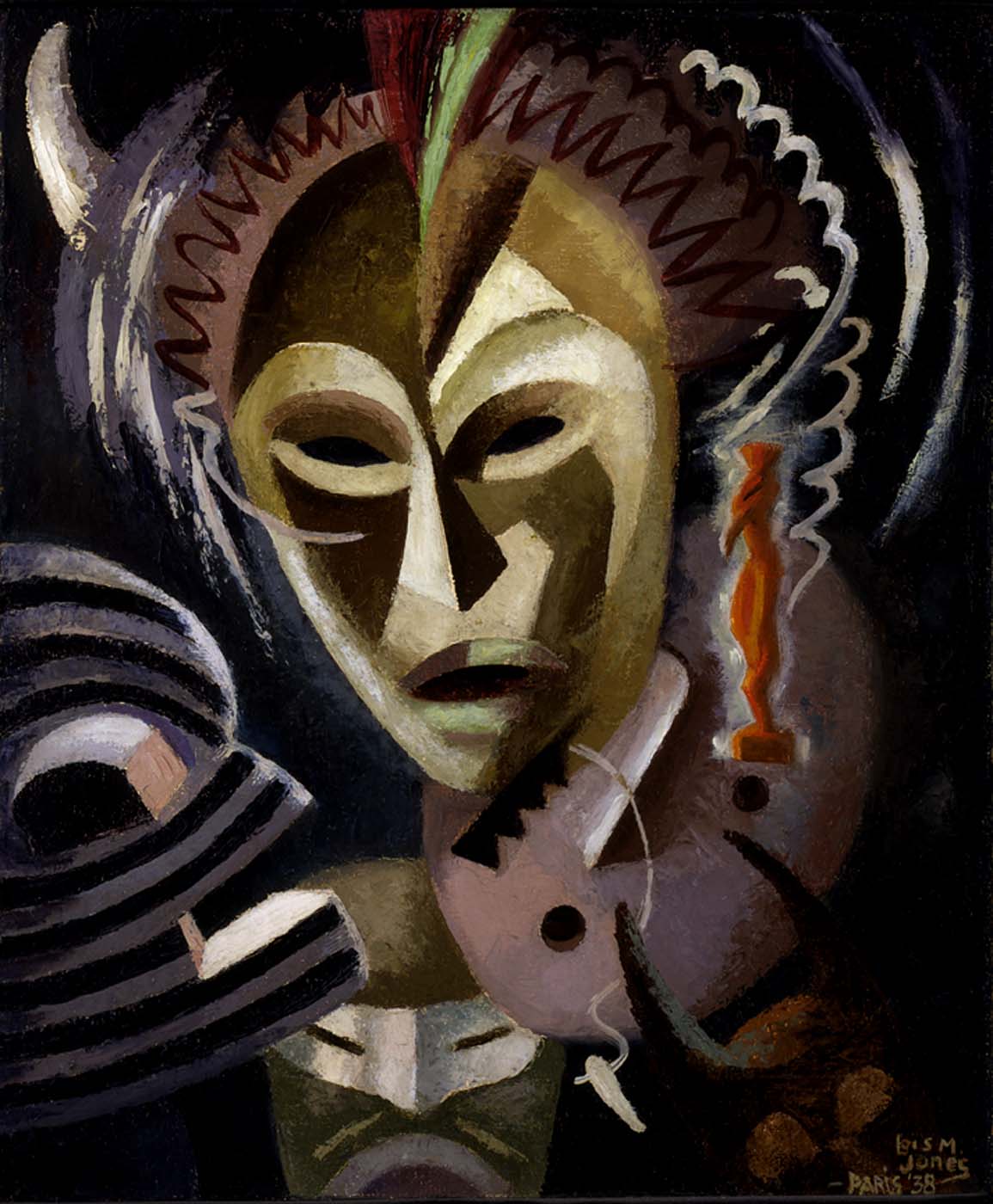
Lois Mailou Jones_Les Fétiches_oil on linen_1938

Lois Mailou Jones_The Ascent of Ethiopia_Oil on canvas_1932
. . . . .
June Jordan: “Poema sobre Intelecto para mis Hermanos y Hermanas” / “A Poem about Intelligence for my Brothers and Sisters”
Posted: February 19, 2014 Filed under: English, June Jordan, June Jordan: Poema sobre Intelecto para mis Hermanos y Hermanas, Spanish, ZP Translator: Alexander Best | Tags: Black History Month, El Mes de la Historia Afroamericana Comments Off on June Jordan: “Poema sobre Intelecto para mis Hermanos y Hermanas” / “A Poem about Intelligence for my Brothers and Sisters”
.
June Jordan (1936-2002)
“Poema sobre Intelecto para mis Hermanos y Hermanas”
.
Hace unos años me dicieron que Negro es un seso hueco y otra gente
tienen cerebros / casi como las células dentro las cabezas de niños negros
estaban fuera tomando una siesta a la hora en punto – cada hora.
.
El Científico llamé este fenómeno El Lapsus Arthur Jensen (de mala fama) – ¿no recuerdas?
Bien, estoy pensando en idear una prueba para los eruditos – los sabios, ¿sabes? – algo como una Prueba Cociente Intelectual Stanford-Binet por la CIA – ¿comprendes?
Por ejemplo…El señor doctor Einstein, incuestionablemente el “cerebro” más espectacular del siglo – ¿no?
.
Y estoy luchando contra estas sobras-Lapsus de mi niñez negra, y me pregunto por que alguien deciría: E = MC Squared – la equivalencia entre la masa y la energía.
Intento discutir sobre ésto con la vieja mujer que vive en mi cuadra…
Está escobando la escalera de entrada en una noche de sábado, enojado porque un “burro” dejó un colchón de cama king-size – manchas y demás – en frente de su casa, y no quiere saber nada de éso en primer lugar.
.
Inclinándome en la verja, digo: “Señora Johnson, ¿qué piensas en alguien que se inventa E = MC Squared?”
“¿Cómo te va?” me responde de su lado, como no quiere permitirme saber que tengo pelo no peinado (esta mañana de domingo) y que tengo el atrevimiento de molestarle durante una tarea seria con mis preguntas locas…
“¿E igual a que, cariño?”
Pues le digo: “Este tipo que dijo éso, ¡creo que fue El Padre No Refutado de La Bomba Atómica!”
“Sí, eso es,” murmura, no tan amablemente.
“¡Y siempre olvidó ponerse calcetines con sus zapatos!”– agrego (un poco deseperada).
En este momento Señora Johnson se aleja de mí, con su escoba, y da un gran paso atrás en la escalera.
“Y nunca no hizo nada para nadie sino en una comisión…Y decía “¿Qué hora es?” y alguien decía “Son las seis.” Y él decía “– ¿de la mañana o de la tarde?”…¡Y nunca no hirvió agua para una taza de té para nadie durante su entera vida brillante!…¡Y [ mi voz se eleva un poco ] nunca no bugui bugui ni nunca tampoco, no!”
“¿Y bien?” dice ella. “Supongo, sí – cielo – que eso es lo que llaman el Genio, ¿no?”
.
.
Versión de Alexander Best
.
.
.
June Jordan (1936-2002)
“A Poem about Intelligence for my Brothers and Sisters”
.
A few years back and they told me Black
means a hole where other folks
got brain / it was like the cells in the heads
of Black children was out to every hour on the hour naps.
Scientists called the phenomenon the
Notorious Jensen Lapse, remember?
Anyway I was thinking
about how to devise
a test for the wise
like a Stanford-Binet
for the C.I.A.
you know?
Take Einstein
being the most the unquestionable the outstanding
the maximal mind of the century
right?
And I’m struggling against this lapse leftover
from my Black childhood to fathom why
anybody should say so:
E=MC squared?
.
I try that on this old lady live on my block:
She sweeping away Saturday night from the stoop
and mad as can be because some absolute
jackass have left a kingsize mattress where
she have to sweep around it stains and all she
don’t want to know nothing about in the first place.
“Mrs. Johnson!” I say, leaning on the gate
between us: “What you think about somebody come up
with an E equals M C 2?”
“How you doin,” she answer me, sideways, like she don’t
want to let on she know I ain’
combed my hair yet and here it is
Sunday morning but still I have the nerve
to be bothering serious work with these crazy
questions about
“E equals what you say again, dear?”
Then I tell her, “Well
also this same guy? I think
he was undisputed Father of the Atom Bomb!”
“That right.” She mumbles or grumbles, not too politely
“And dint remember to wear socks when he put on
his shoes!” I add on (getting desperate).
At which point Mrs. Johnson take herself and her broom
a very big step down the stoop away from me.
“And never did nothing for nobody in particular
lessen it was a committee
and
used to say, ‘What time is it?’
and
you’d say, ‘Six o’clock.’
and
he’d say, ‘Day or night?’
and –
and he never made nobody a cup a tea
in his whole brilliant life!
and
[my voice rises slightly]
and
he dint never boogie neither: never!”
.
“Well,” say Mrs. Johnson, “Well, honey,
I do guess
that’s Genius for you.”
. . . . .
Audre Lorde: “Afuera” / “Outside”
Posted: February 18, 2014 Filed under: Audre Lorde, English, Spanish | Tags: Black History Month, Black lesbian poets, El Mes de la Historia Afroamericana Comments Off on Audre Lorde: “Afuera” / “Outside”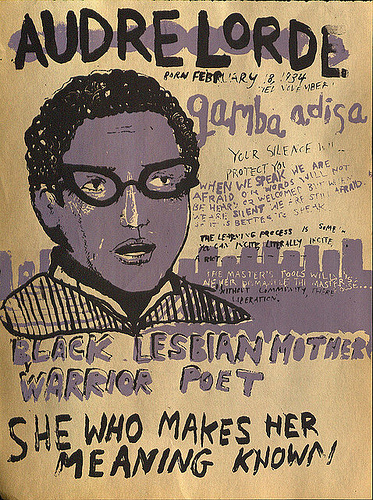
Audre Lorde (18 de febrero, 1934 – 1992)
“Afuera” (1977)
.
1.
En el centro de una ciudad cruel y fantasmal
todas las cosas naturales son extrañas.
Crecí en una confusión genuina
entre césped y maleza y flores
y lo que significaba “de color”
excepto la ropa que no se podía blanquear
y nadie me llamó negra de mierda
hasta que tuve trece.
Nadie linchó a mi mamá
pero lo que nunca había sido
había blanqueado su cara de todo
excepto de furias muy privadas
e hizo que los otros chicos
me llamaran agrandada en la escuela.
Y cuántas veces he vuelto a llamarme
a través de mis huesos confusión
negra
como médula queriendo decir carne
y cuántas veces me cortaste
e hiciste correr en las calles
mi propia sangre
quién creés que soy
que estás aterrorizado de transformarte
o qué ves en mi cara
que no hayas descartado ya
en tu propio espejo
qué cara ves en mis ojos
que algún día
vas a
reconocer como la tuya
A quién maldeciré por haber crecido
creyendo en la cara de mi madre
o por haber vivido temiendo la oscuridad potente
usando la forma de mi padre
ambos me marcaron
con su amor ciego y terrible
y ahora estoy lasciva por mi propio nombre.
.
2.
Entre los cañones de sus terribles silencios
Madre brillante y padre marrón
busco ahora mis propias formas
porque nunca hablaron de mí
excepto como suya
y los pedazos con que tropiezo y me caigo
aún registro como prueba
de que soy hermosa
dos veces
bendecida con las imágenes
de quienes fueron
y quienes pensé alguna vez que eran
de lo que traslado
hacia y a través
y lo que necesito
dejar detrás de mí
más que nada
estoy bendecida en los seres que soy
que han venido a hacer de nuestras caras rotas un todo.
. . .
Audre Lorde (born February 18th, 1934, died 1992)
“Outside”
(first published in The American Poetry Review, Vol.6, #1, Jan.-Feb. 1977)
.
1.
In the centre of a harsh and spectrumed city
all things natural are strange.
I grew up in a genuine confusion
between grass and weeds and flowers
and what “colored” meant
except for clothes you couldn’t bleach
and nobody called me nigger
until I was thirteen.
Nobody lynched my momma
but what she’d never been
had bleached her face of everything
but very private furies
and made the other children
call me yellow snot at school.
.
And how many times have I called myself back
through my bones confusion
black
like marrow meaning meat
for my soul’s hunger
and how many times have you cut me
and run in the streets
my own blood
who do you think me to be
that you are terrified of becoming
or what do you see in my face
you have not already discarded
in your own mirror
what face do you see in my eyes
that you will someday
come to
acknowledge your own.
.
Who shall I curse that I grew up
believing in my mother’s face
or that I lived in fear of the potent darkness
that wore my father’s shape
they have both marked me
with their blind and terrible love
and I am lustful now for my own name.
.
2.
Between the canyons of my parents’ silences
mother bright and father brown
I seek my own shapes now
for they never spoke of me
except as theirs
and the pieces that I stumble and fall over
I still record as proof
that I am beautiful
twice
blessed with the images
of who they were
and who I thought them to be
of what I move toward
and through
and what I need
to leave behind me
for most of all I am
blessed within my selves
who are come
to make our shattered faces whole.
. . .
Otros poemas de Audre Lorde: https://zocalopoets.com/2012/07/01/mujer-y-de-la-casa-de-iemanja-por-audre-lorde-woman-and-from-the-house-of-yemanja-by-audre-lorde/
. . . . .
Gwendolyn Brooks: “Estar enamorado” / “To be in love”
Posted: February 14, 2014 Filed under: English, Gwendolyn Brooks, Spanish, ZP Translator: Alexander Best Comments Off on Gwendolyn Brooks: “Estar enamorado” / “To be in love”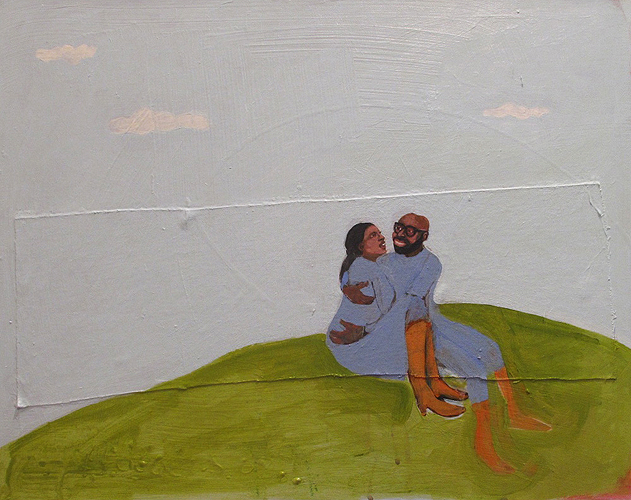
Francks François Décéus _Cloud 9_2012
Gwendolyn Brooks (1917-2000)
“Estar enamorado”
.
Estar enamorado
es tocar con mano más suave.
En tú mismo te estiras – y estás bien.
Miras las cosas con los ojos de él.
Es rojo el cardenal, es azul el cielo;
y de repente sabes que él lo sabe también.
Él no está allí pero
sabes que ustedes los dos están probando juntos
el invierno o el tiempo primaveral.
Cuando toma tu mano
es demasiado soportar.
No puedes encontrar sus ojos
porque tu pulso no debe decir
lo que no debe ser dicho.
Cuando cierra la puerta,
o cuando él no está,
tus brazos se convierten en agua.
Y eres libre con una libertad horrible.
Eres la bella mitad de un daño de oro.
Recuerdas…pues codicias su boca
– tocarla, y susurrar sobre esos labios.
Ay, cuando declarar el Amor – ¡es una Muerte, por seguro!
Oh, cuando notificar es cautivar…
Y ver rendirse la Columna de Oro
en ceniza ordinaria.
.
Traducción del inglés: Alexander Best
. . .
Gwendolyn Brooks (1917-2000)
“To be in love”
.
To be in love
Is to touch with a lighter hand.
In yourself you stretch, you are well.
You look at things
Through his eyes.
A cardinal is red.
A sky is blue.
Suddenly you know he knows too.
He is not there but
You know you are tasting together
The winter, or a light spring weather.
His hand to take your hand is overmuch.
Too much to bear.
You cannot look in his eyes
Because your pulse must not say
What must not be said.
When he
Shuts a door,
Is not there,
Your arms are water.
And you are free
With a ghastly freedom.
You are the beautiful half
Of a golden hurt.
You remember and covet his mouth
To touch, to whisper on.
Oh, when to declare
Is certain Death!
Oh, when to apprize
Is to mesmerize,
To see fall down, the Column of Gold,
Into the commonest ash.
. . .
Otros poemas de Gwendolyn Brooks:
Gwendolyn Brooks: “Mis sueños, mis trabajos, tendrán que esperar hasta mi vuelta del infierno”
. . . . .
Aida Overton Walker: Glamour on The Stage – a century ago
Posted: February 14, 2014 Filed under: English | Tags: Aida Overton Walker, Black History Month Comments Off on Aida Overton Walker: Glamour on The Stage – a century ago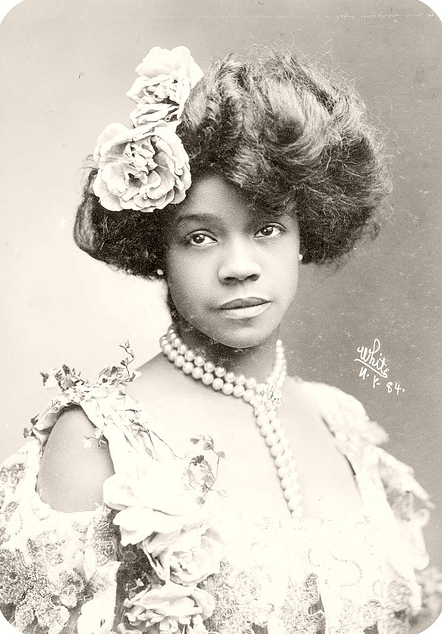
Aida Overton Walker (February 14th, 1880 – 1914) dazzled early 20th century American audiences with her original dance routines, an enchanting singing voice, and a penchant for elegant costumes. She was one of the premiere African-American women artists from the end of The Gilded Age, the Cake-Walk era, the dawn of Jazz’s birth. In addition to her alluring stage persona and acclaimed performances, she won the hearts of Black entertainers for numerous benefit performances near the end of her all-too-brief life. She was, in the words of the New York Age‘s Lester Walton, the exponent of “clean, refined artistic entertainment.”
.
Born in Richmond, Virginia, Aida Overton grew up in New York City, where she gained an education and considerable musical training. At the age of fifteen, she joined John Isham’s Octoroons, a Black touring group of the 1890s, and the following year she became a member of The Black Patti Troubadours. Although these shows consisted of dozens of performers, Overton emerged as one of the most promising “soubrettes” of her day. In 1898, she joined the company of the famous comedy team Bert Williams and George Walker, appearing in all of their extravaganzas—The Policy Players (1899), The Sons of Ham (1900), In Dahomey (1903), Abyssinia (1905), and Bandanna Land (1907). Within about a year of their meeting, George Walker and Overton had married and before long became the most admired of African-American couples on stage.
.
While George Walker supplied most of the ideas for the musical comedies and Bert Williams enjoyed fame as the “funniest man in America,” it was Aida who became the indispensable member of the Williams and Walker Company. In The Sons of Ham, for example, her rendition of Hannah from Savannah won praise for combining superb vocal control with acting skill that together presented a strong image of Black womanhood. Indeed, onstage Aida refused to comply with the “Plantation image” of Black women as plump Mammies, happy to serve; like her husband, she viewed the representation of refined African-American types on the stage as important political work. A talented dancer, Aida improvised original routines that her husband eagerly introduced in their shows; when In Dahomey played in England, Aida proved to be its strongest attraction. Society women invited her to their homes for private lessons in the exotic Cake Walk that the Walkers had included in the show. After two seasons in England, the company returned to the United States in 1904, and Aida was featured in a New York Herald interview about their tour. At times Walker asked his wife to interpret dances made famous by other performers—one example being the “Salome” dance that took Broadway by storm in the early 1900s.
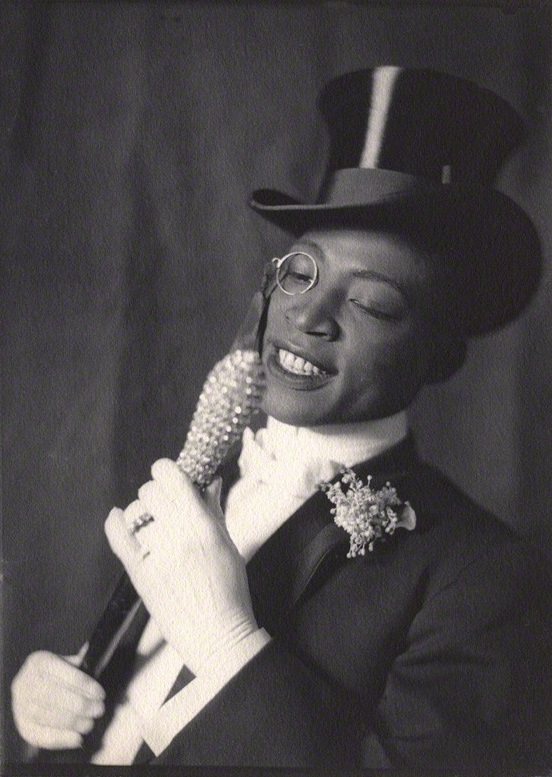
George Walker (1873-1911), attired for “In Dahomey” (1903)
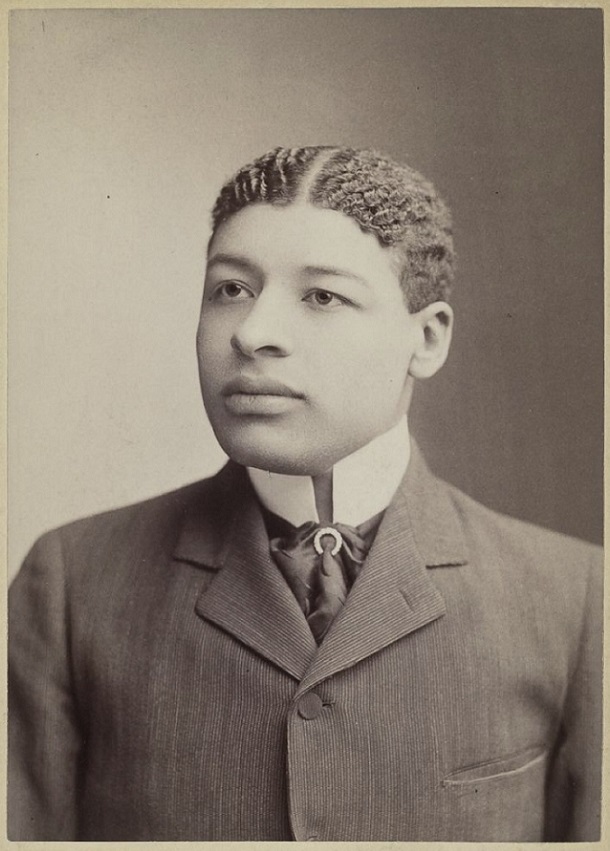
Bert Williams_1875-1922
After a decade of nearly continuous success with the Williams and Walker Company, Aida’s career took an unexpected turn when her husband collapsed on tour with Bandanna Land. Initially Walker returned to his boyhood home of Lawrence, Kansas, where his mother cared for him. In his absence, Aida took over many of his songs and dances to keep the company together. In early 1909, however, Bandanna Land was forced to close, and Aida temporarily retired from stage work to care for her husband, now seriously ill. No doubt recognizing that he would not recover and that she alone must support the family, she returned to the stage in Bob Cole and J. Rosamond Johnson’s Red Moon in the autumn of 1909, and she joined the Smart Set Company in 1910. Aida also began touring the Vaudeville circuit as a solo act. Less than two weeks after Walker’s death in January 1911, she signed a two-year contract to appear as a co-star with S. H. Dudley in another all-Black traveling show.
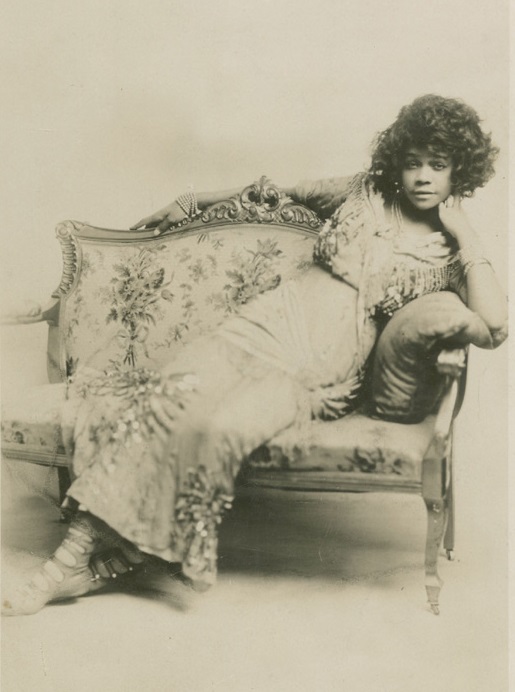
Although still a relatively young woman in the early 1910s, Aida began to develop medical problems that limited her capacity for constant touring and stage performance. As early as 1908, she had organized benefits to aid such institutions as the Industrial Home for Colored Working Girls, and after her contract with S. H. Dudley expired, she devoted more of her energy to such projects, which allowed her to remain in New York City. She also took an interest in developing the talents of younger women in the profession, hoping to pass along her vision of Black performance as refined and elegant. She produced shows for two such female groups in 1913 and 1914—the Porto Rico Girls and the Happy Girls. She encouraged them to “work up” original dance numbers and insisted that they don stylish costumes on stage.
.
When Aida Overton Walker died suddenly of kidney failure on October 11, 1914, the African–American entertainment community in New York went into deep mourning. The New York Age featured a lengthy obituary on its front page, and hundreds of people descended on her residence to confirm a story they hoped was untrue. Walker left behind a legacy of polished performances and model professionalism. Her demand for respect – and her generosity – made her a belovéd figure in African-American theater circles.

Aida Overton Walker in 1912
Reprinted from:
Jazz: Black Musical Theater in New York, 1890-1915. Washington, D.C., Smithsonian Institution Press, 1989, Thomas L Riis
. . . . .
Zócalo Poets: Poems of Love and Desire
Posted: February 14, 2014 Filed under: English | Tags: Valentine's Day Poems Comments Off on Zócalo Poets: Poems of Love and Desire
Love and Desire are Eternal, the very Essence of Poetry. Today is Valentine’s Day and Zócalo Poets has a variety of poems about Life’s inexhaustible themes. Some of them are short enough that you should be able to memorize them for that special someone – be you secret admirer or BFF!
. . .
Langston Hughes (1902-1967)
“Easy Boogie”
Down in the bass
That steady beat
Walking walking walking
Like marching feet.
Down in the bass
They easy roll,
Rolling like I like it
In my soul.
Riffs, smears, breaks.
Hey, Lawdy Mama!
Do you hear what I said?
Easy like I rock it
– In my bed!
. . .
Helene Johnson (1906-1995)
“Poem” [from the 1920s]
Little brown boy,
Slim, dark, big-eyed,
Crooning love songs to your banjo
Down at the Lafayerre–
Gee, boy, I love the way you hold your head,
High sort of and a bit to one side,
Like a prince, a jazz prince. And I love
Your eyes flashing, and your hands,
And your patent-leathered feet,
And your shoulders jerking the jig-wa.
And I love your teeth flashing,
And the way your hair shines in the spotlight
Like it was the real stuff.
Gee, brown boy, I loves you all over.
I’m glad I’m a jig. I’m glad I can
Understand your dancin’ and your
Singin’, and feel all the happiness
And joy and don’t care in you.
Gee, boy, when you sing, I can close my ears
And hear tom-toms just as plain.
Listen to me, will you, what do I know
About tom-toms? But I like the word, sort of,
Don’t you? It belongs to us.
Gee, boy, I love the way you hold your head,
And the way you sing, and dance,
And everything.
Say, I think you’re wonderful. You’re
Allright with me,
You are.
. . .
Audre Lorde (1934-1992)
“Woman”
I dream of a place between your breasts
to build my house like a haven
where I plant crops
in your body,
an endless harvest
where the commonest rock
is moonstone and ebony opal,
giving milk to all of my hungers,
and your night comes down upon me
like a nurturing rain.
. . .
And more Poems…..
.
Claude McKay’s The Snow Fairy:
.
Langston Hughes’ Love Poems and Blues Poems:
.
Pat Parker’s Love poems:
.
Contemporary Love poems:
“Bird-songs accompany our laughter”: poems of love and desire
. . .
 Zócalo Poets