Badr Shakir al-Sayyab: The Messiah after The Crucifixion
Posted: April 20, 2014 Filed under: Badr Shakir al-Sayyab, English | Tags: Easter poems Comments Off on Badr Shakir al-Sayyab: The Messiah after The Crucifixion
Badr Shakir al-Sayyab (Iraqi “modernist” poet, 1926-1964)
The Messiah after The Crucifixion
(translated from Arabic by B.M. Bennani)
.
After I was brought down, I heard the winds
Whip the palm trees with wild laments;
Footsteps receded into infinity. Wounds
And the cross I was nailed to all afternoon
Didn’t kill me. I listened. A cry of grief
Crossed the plain between me and the city
Like a hawser pulling a ship
Destined to sink. The cry
Was a thread of light between morning
And night in a sad winter sky.
Despite all this, the city fell asleep.
.
When the orange and mulberry trees bloom,
When my village Jaykour reaches the limits of fantasy,
When grass grows green and sings with fragrance
And the sun suckles it with brilliance,
When even darkness grows green,
Warmth touches my heart and my blood flows into earth.
My heart becomes sun, when sun throbs with light,
My heart becomes earth, throbbing with wheat, blossom
and sweet water.
My heart is water, an ear of corn,
Its death is resurrection. It lives in him who eats
The dough, round as a little breast, life’s breast.
I died by fire. When I burned, the darkness of my clay
disappeared. Only God remained.
I was the beginning, and in the beginning was poverty.
I died so bread would be eaten in my name
So I would be sown in season.
.
Many are the lives I’ll live. In every soil
I’ll become a future, a seed, a generation of men
A drop of blood, or more, in every man’s heart.
Then I returned. When Judas saw me he turned pale:
I was his secret!
He was a shadow of mine, grown dark,
The frozen image of an idea
From which life was plucked.
He feared I might reveal death in his eyes
(his eyes were a rock
behind which he hid his death).
He feared my warmth. It was a threat to him
so he betrayed it.
“Is this you? Or is it my shadow grown white,
emitting light?
Men die only once! That’s what our fathers said.
That’s what they taught us. Or was it a lie?!”
That’s what he said when he saw me. His whole face spoke.
I hear footsteps, approaching and falling.
The tomb rumbles with their fall
Have they come again? Who else could it be?
Their falling footsteps follow me.
They lay rocks on my chest.
Didn’t they crucify me yesterday? Yet here I am!
Who could know that I . . . ? Who?
And as for Judas and his friends, no one will believe them.
Their footsteps follow me and fall.
Here I am now, naked in my dank tomb
Yesterday I curled up like a thought, a bud,
Beneath my shroud of snow. My blood bloomed from moisture.
I was then a thin shadow between night and day.
When I burst my soul into treasures and peeled it like fruit.
When I turned my pockets into swaddling clothes
and my sleeves into a cover,
When I kept the bones of little children
warm within my flesh
And stripped my wounds to dress the wound of another,
The wall between me and God disappeared.
.
The soldiers surprised even my wounds and my heartbeats.
They surprised all that wasn’t dead,
even if it was a tomb.
They took me by surprise the way a flock of starving birds
pluck the fruit of a palm tree in a deserted village.
The rifles are pointed and have eyes
with which they devour my road.
Their fire dreams of my crucifixion.
Their eyes are made of fire and iron.
The eyes of my people are a light in the skies;
they shine with memory and love.
The rifles relieve me of my burden;
my cross grows moist.
How small such death is! My death. And yet how great!
.
After I was nailed to the cross, I cast my eyes
toward the city; I could hardly recognize the plain, the wall, the cemetery.
Something, as far as my eyes could see, sprung forth
Like a forest in bloom.
Everywhere there was a cross and a mourning mother.
Blessed be the Lord!
Such are the pains of a city in labour, about to give birth.
.
Image: a painting by Guity Novin: artist, poet and translator. Visit her site: artreact.blogspot
. . . . .
John Updike: Seven Stanzas at Easter
Posted: April 20, 2014 Filed under: English, John Updike | Tags: Easter poems Comments Off on John Updike: Seven Stanzas at Easter
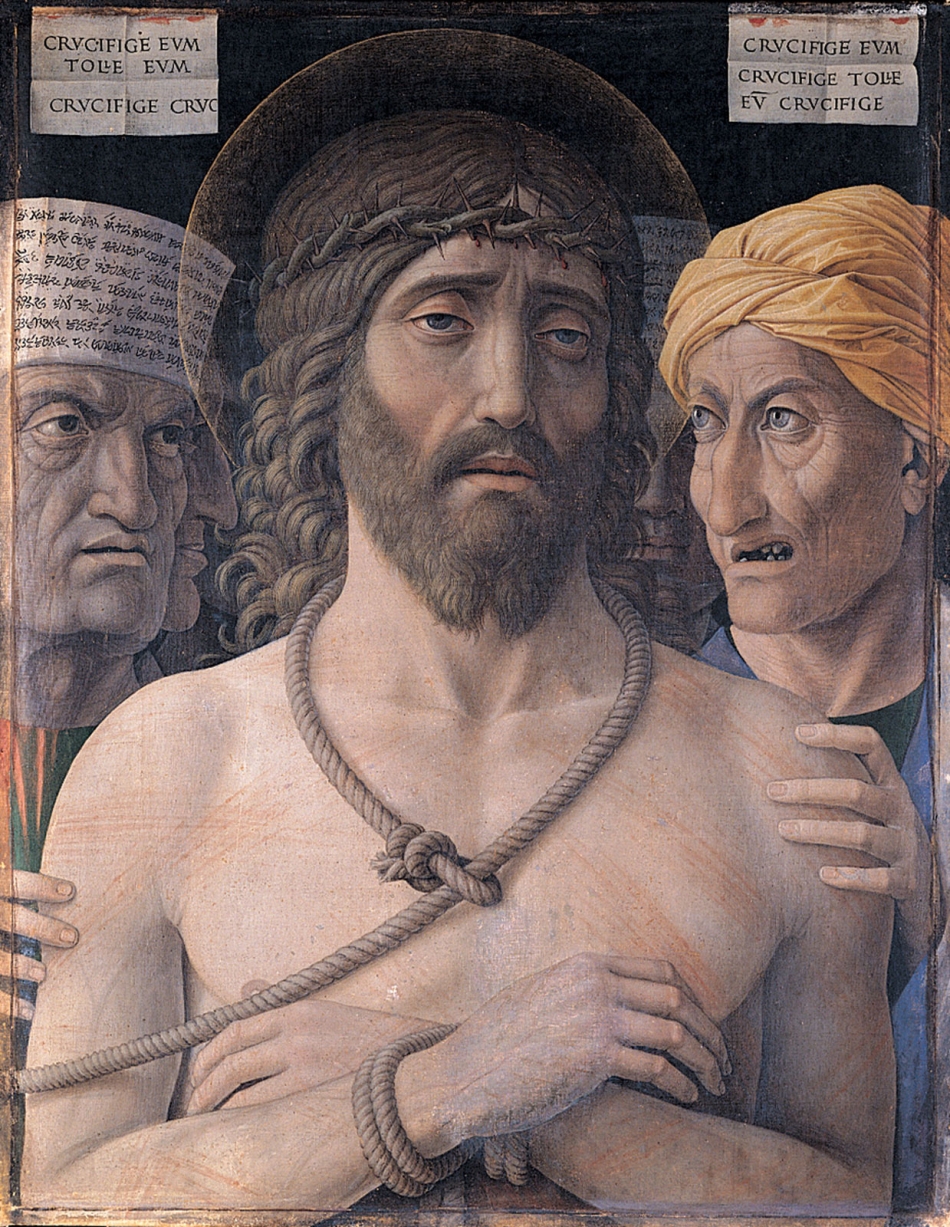
Andrea Mantegna_Ecce Homo, painted around 1500_Ecce Homo are the Latin words “Behold this man” spoken by Pontius Pilate in John chapter 19, verse 5, when he presents a scourged Jesus to the hostile crowd just before His Crucifixion.
John Updike (1926-2009)
Seven Stanzas at Easter (1960)
.
Make no mistake: if He rose at all
it was as His body;
if the cells’ dissolution did not reverse, the molecules
reknit, the amino acids rekindle,
the Church will fall.
.
It was not as the flowers,
each soft Spring recurrent;
it was not as His Spirit in the mouths and fuddled
eyes of the eleven apostles;
it was as His flesh: ours.
.
The same hinged thumbs and toes,
the same valved heart
that – pierced – died, withered, paused, and then
regathered out of enduring Might
new strength to enclose.
.
Let us not mock God with metaphor,
analogy, sidestepping, transcendence:
making of the event a parable, a sign painted in the
faded credulity of earlier ages:
let us walk through the door.
.
The stone is rolled back, not papier-mâché,
not a stone in a story,
but the vast rock of materiality that in the slow,
grinding of time will eclipse for each of us
the wide light of day.
.
And if we will have an angel at the tomb,
make it a real angel,
weighty with Max Planck’s quanta, vivid with hair,
opaque in the dawn light, robed in real linen
spun on a definite loom.
.
Let us not seek to make it less monstrous,
for our own convenience, our own sense of beauty,
lest, awakened in one unthinkable hour, we are
embarrassed by the miracle,
and crushed by remonstrance.
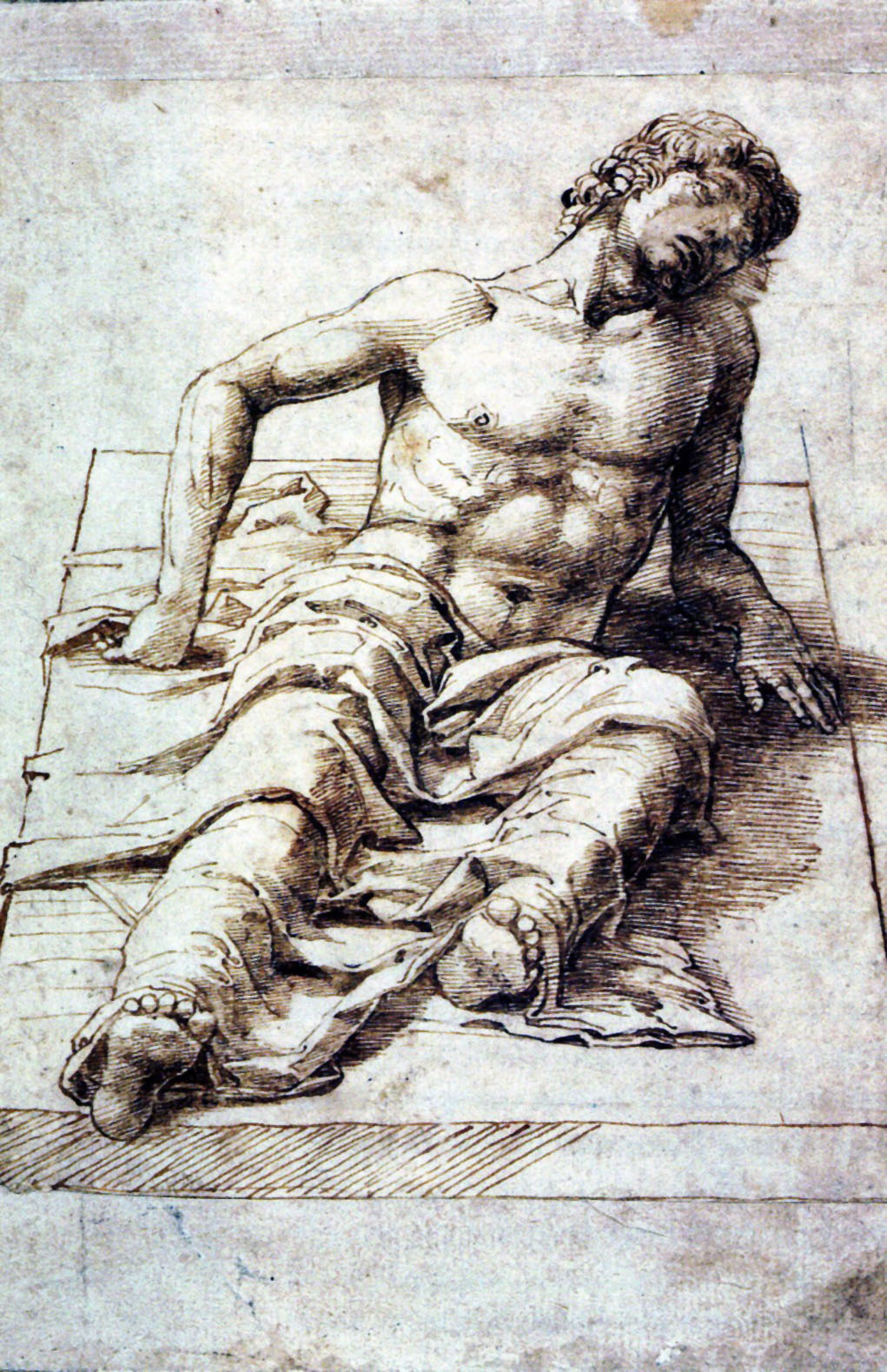
Andrea Mantegna_Study for a Christ_1480s_Tertia die resurrexit a mortuis, ascendit ad caelos, sedet ad dexteram Patris omnipotentis. Inde venturus est iudicare vivos et mortuos._On the third day He rose again from the dead, He ascended into heaven, and sitteth on the right hand of God the Father Almighty. From thence He shall come to judge the quick and the dead.
Gwendolyn Brooks: La Verdad / Truth
Posted: April 19, 2014 Filed under: English, Gwendolyn Brooks, Spanish, ZP Translator: Alexander Best | Tags: Poema para Sábado Santo Comments Off on Gwendolyn Brooks: La Verdad / Truth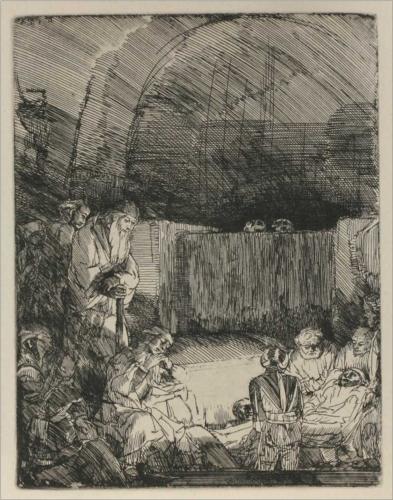
Rembrandt van Rijn_Jesús sepultado_Jesus Entombed_etching_1654
Gwendolyn Brooks (1917-2000)
Truth
.
And if sun comes
How shall we greet him?
Shall we not dread him,
Shall we not fear him
After so lengthy a
Session with shade?
Though we have wept for him,
Though we have prayed
All through the night-years—
What if we wake one shimmering morning to
Hear the fierce hammering
Of his firm knuckles
Hard on the door?
Shall we not shudder?—
Shall we not flee
Into the shelter, the dear thick shelter
Of the familiar
Propitious haze?
Sweet is it, sweet is it
To sleep in the coolness
Of snug unawareness.
The dark hangs heavily
Over the eyes.
. . .
La Verdad
.
Y si el sol viene,
¿cómo debemos saludarle?
Deberíamos temer a él,
Deberíamos amilanarse por él,
después de una sesión larga con la sombra?
.
Aunque hemos llorado por él,
Aunque hemos rezar
Durante los años de noche
– ¿Qué pasará si nos despertamos en una mañana reluciente para
Oír el martilleo feroz
De sus nudillos firmes,
Fuerte en la puerta?
.
¿Deberíamos temblar,
Deberíamos huir
Hacia el querido albergue grueso
Que es la niebla conocida y propicia?
.
Qué dulzura – cómo es dulce –
Dormir en el fresco
De un desconocimiento cómodo.
.
La oscuridad cuelga pesadamente
Sobre los ojos.
. . . . .
La Pasión de Jesús en imágenes / The Passion in pictures
Posted: April 18, 2014 Filed under: IMAGES Comments Off on La Pasión de Jesús en imágenes / The Passion in pictures
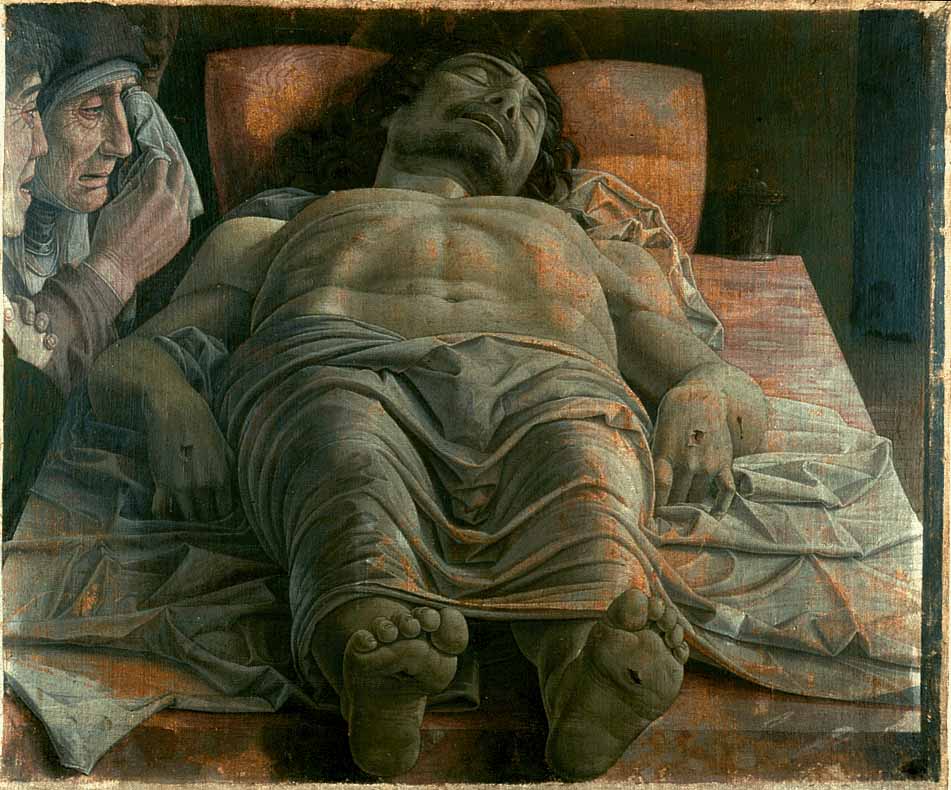
Andrea Mantegna_Lamentation over The Dead Christ_with Mother Mary and John_late 1470s
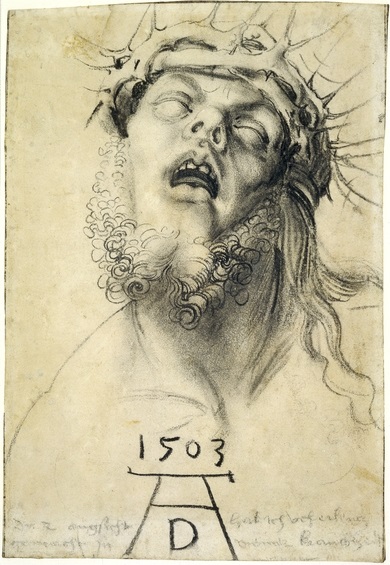
Albrecht Dürer_Head of The Dead Christ_a charcoal drawing dated 1503
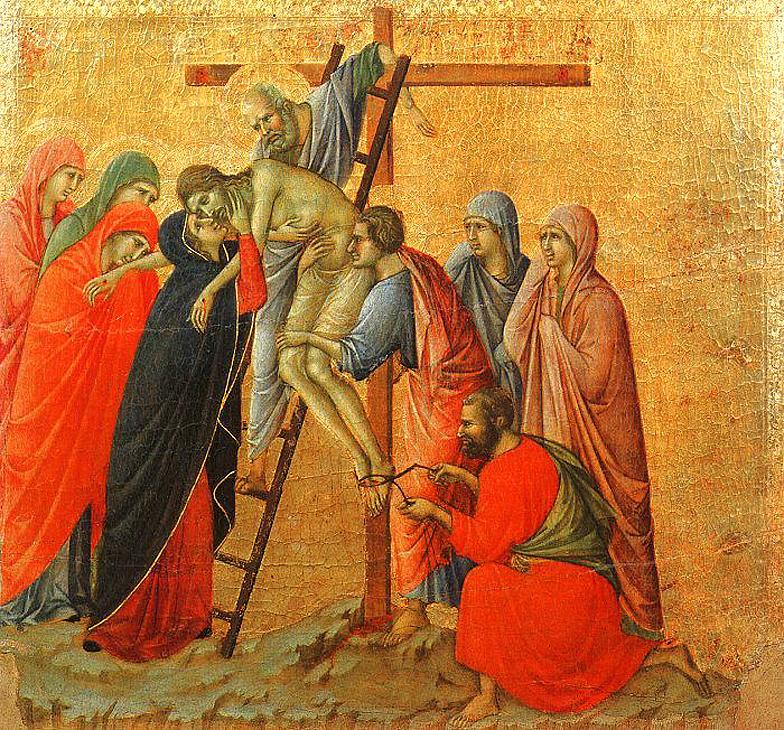
Duccio di Buoninsegna_Deposizione dalla Croce_Descent from The Cross, 1311
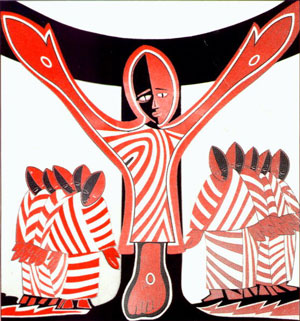
Jesus on The Cross_a painting from Cameroon
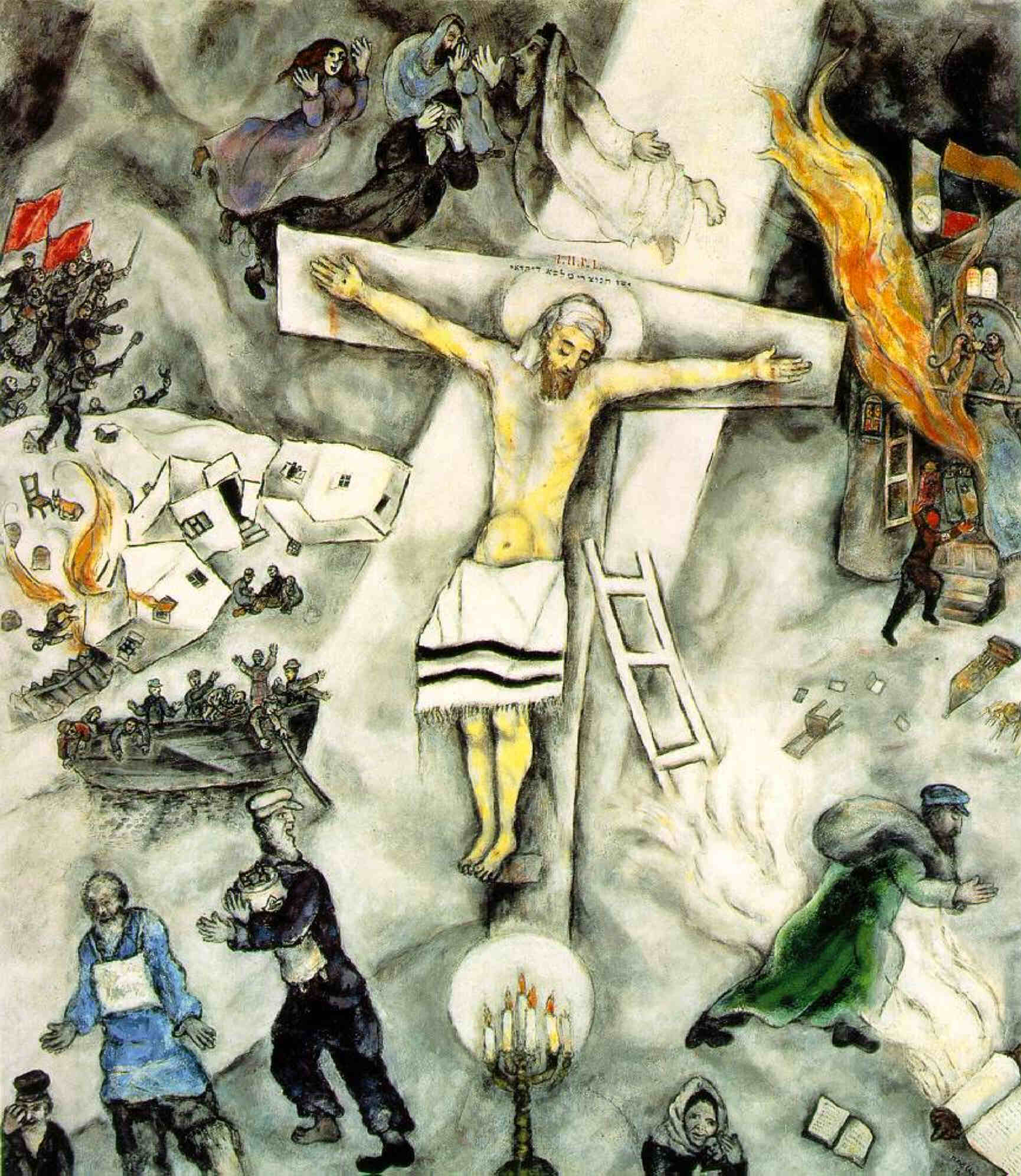
Marc Chagall_The White Crucifixion_1938
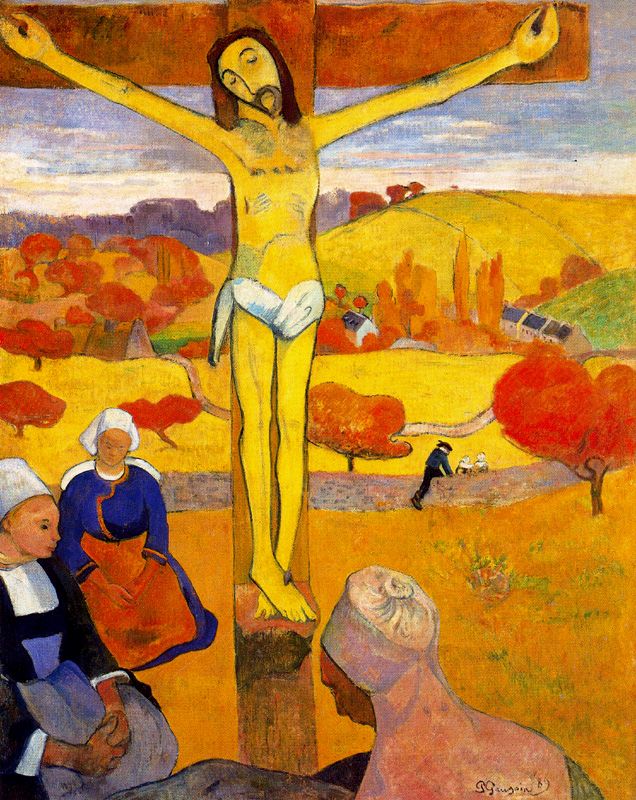
Paul Gauguin_Le Christ jaune_1889_oil on canvas
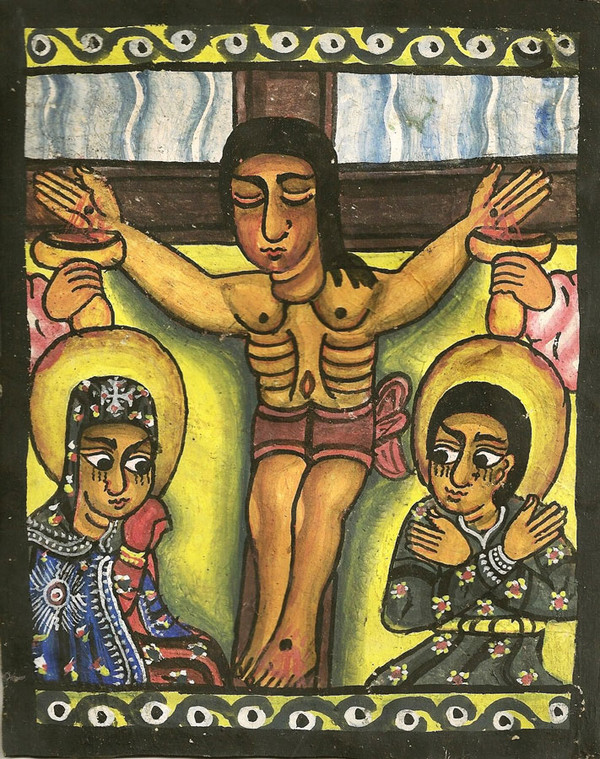
Ethiopian Crucifixion painting_Artist unknown
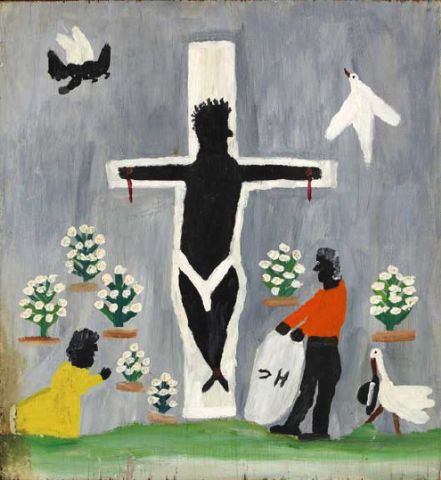
Clementine Hunter_1887 to 1988_Black Jesus
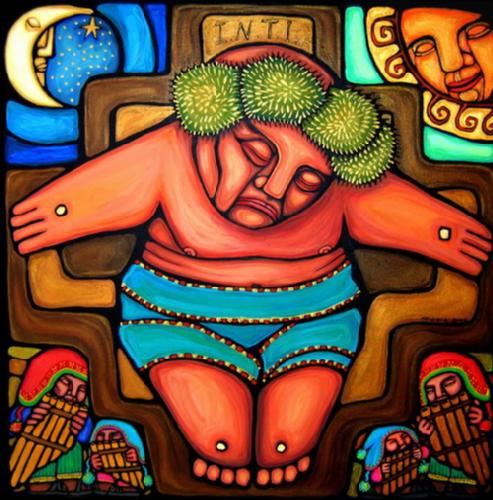
Cristo indígena_America del Sur
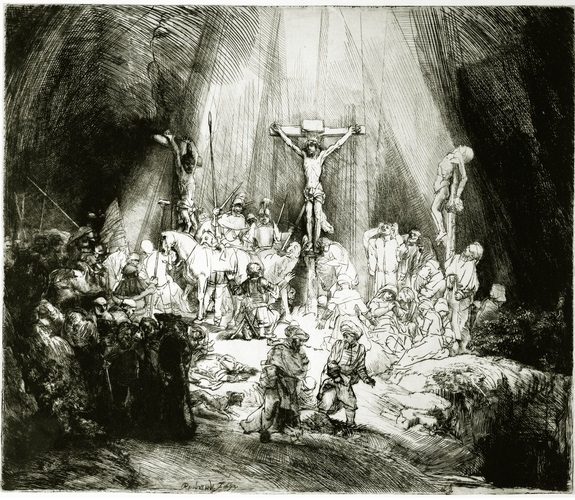
Rembrandt van Rijn_The Three Crosses_Christ between the two thieves_drypoint etching_1653
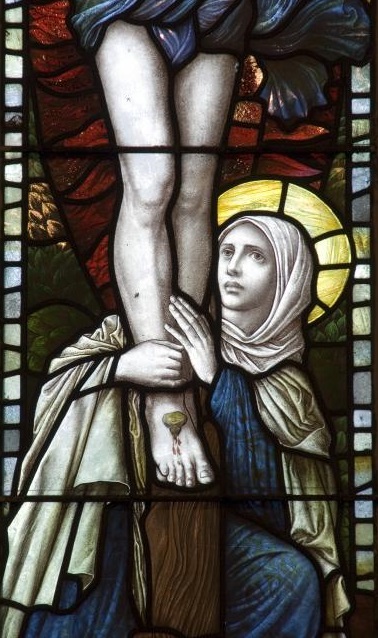
Mary Magdalen at the foot of The Cross as Jesus suffered_an 1886 stained glass window from Saint Bledrws Church in Wales

Dieric Bouts’ workshop_around 1480_Mater Dolorosa_The Sorrowing Mary, Mother of Jesus
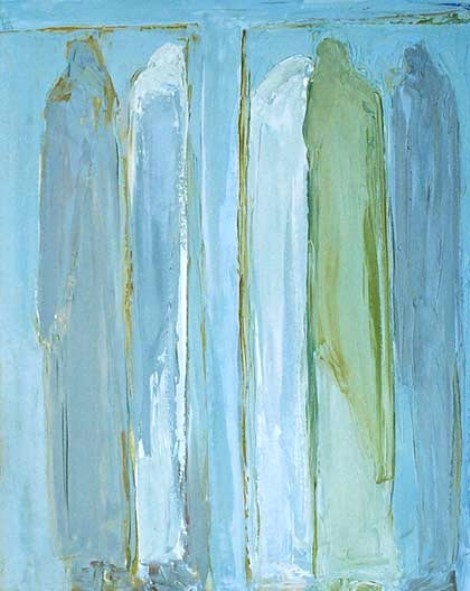
Macha Chmakoff_At the foot of The Cross_Abstract painting based on John 19: verses 25- 27_The women gathered at the cross included Mary, mother of Jesus and Mary Magdalene.
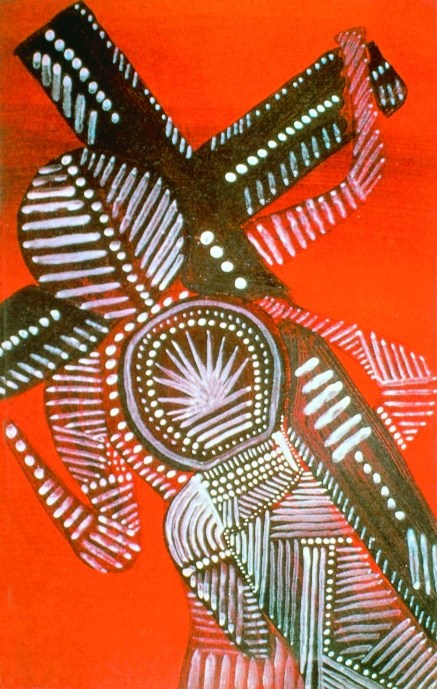
Miriam-Rose Ungunmerr_Simon of Cyrene helps Jesus to bear The Cross_Luke chapter 23, verse 26
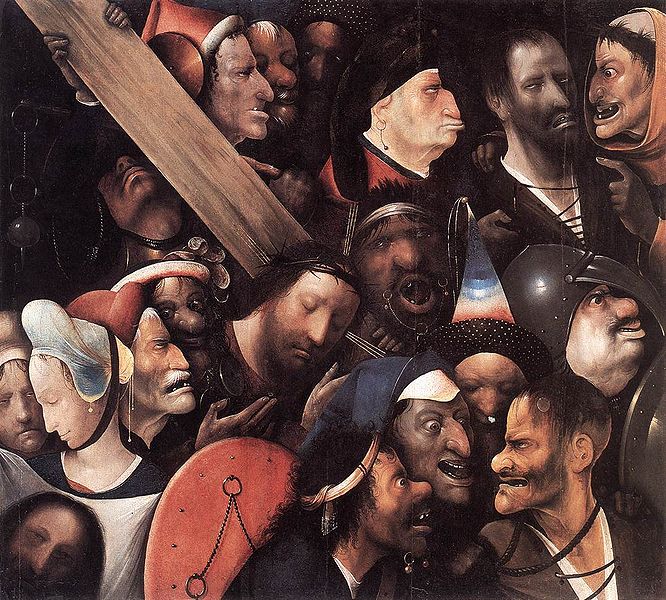
Hieronymus Bosch_Christ carrying The Cross_oil on panel_painted between 1510 and 1535
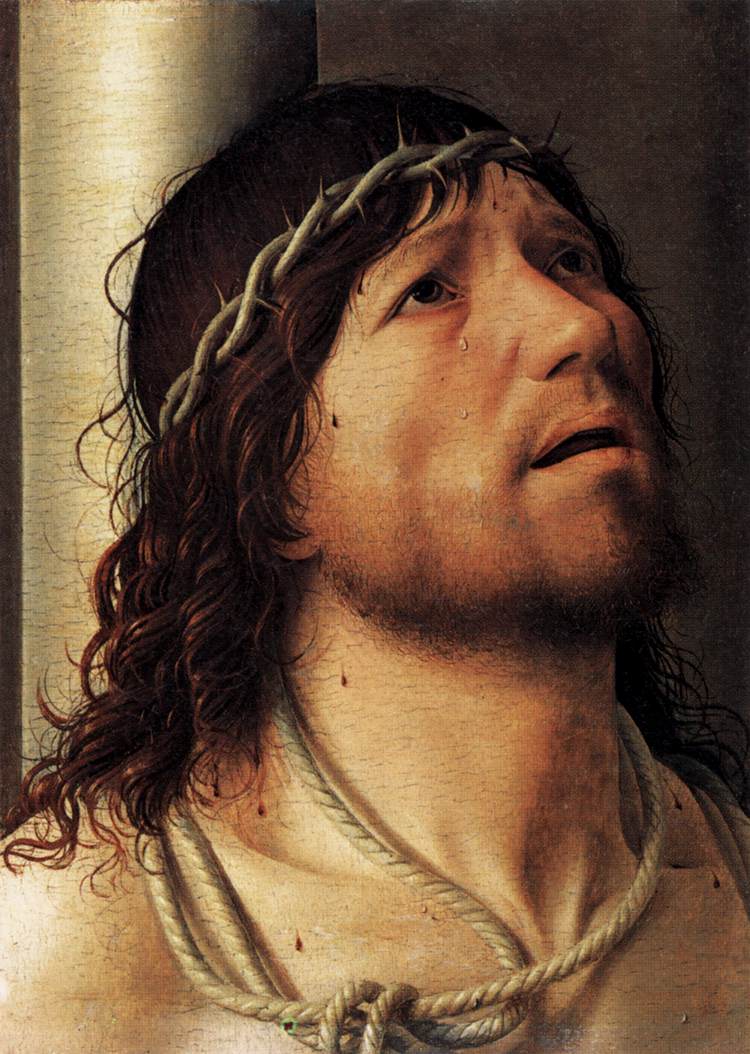
Antonello da Messina_Christ at the column_1476
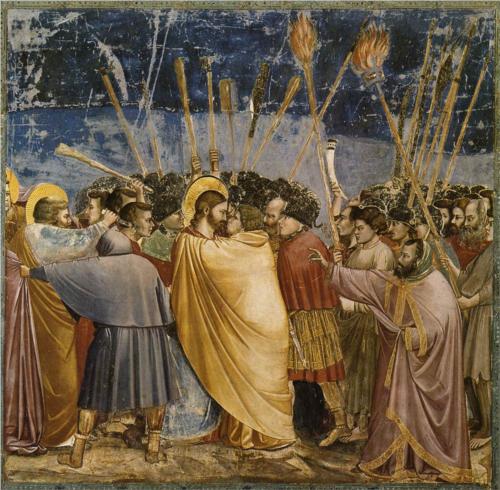
Giotto_La cattura di Cristo (Il bacio di Giuda)_The arrest of Christ (The kiss of Judas)_fresco in Padua, Italy_painted in 1306
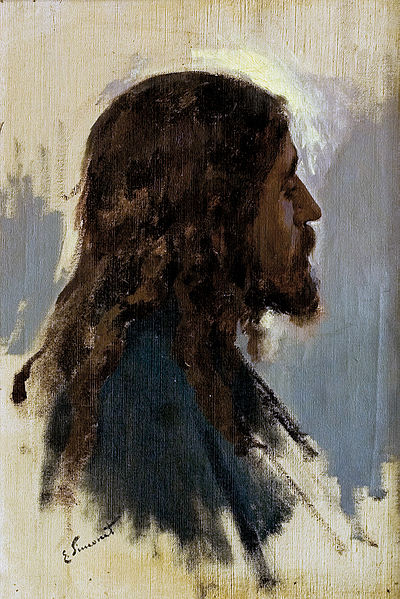
Enrique Simonet_Cabeza de Jesús_Head of Jesus_Deep in Contemplation_1891
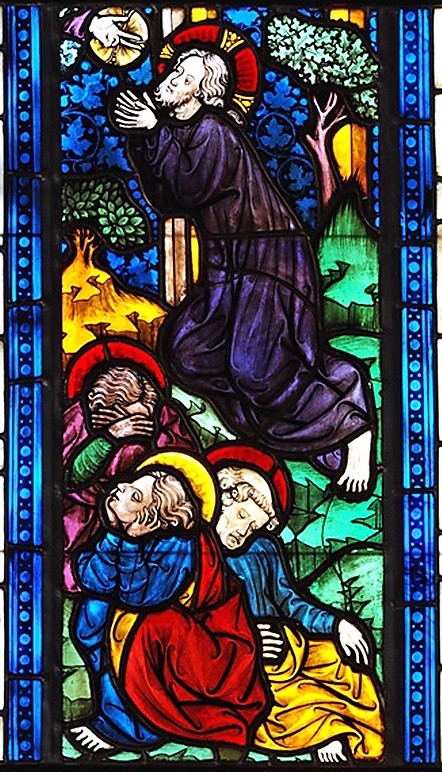
La Agonía en el huerto de Getsemaní_The Agony in the Garden_Jesus at Gethsamane praying while His disciples sleep_a stained glass window from Ebreichsdorf chapel in Austria_1390s
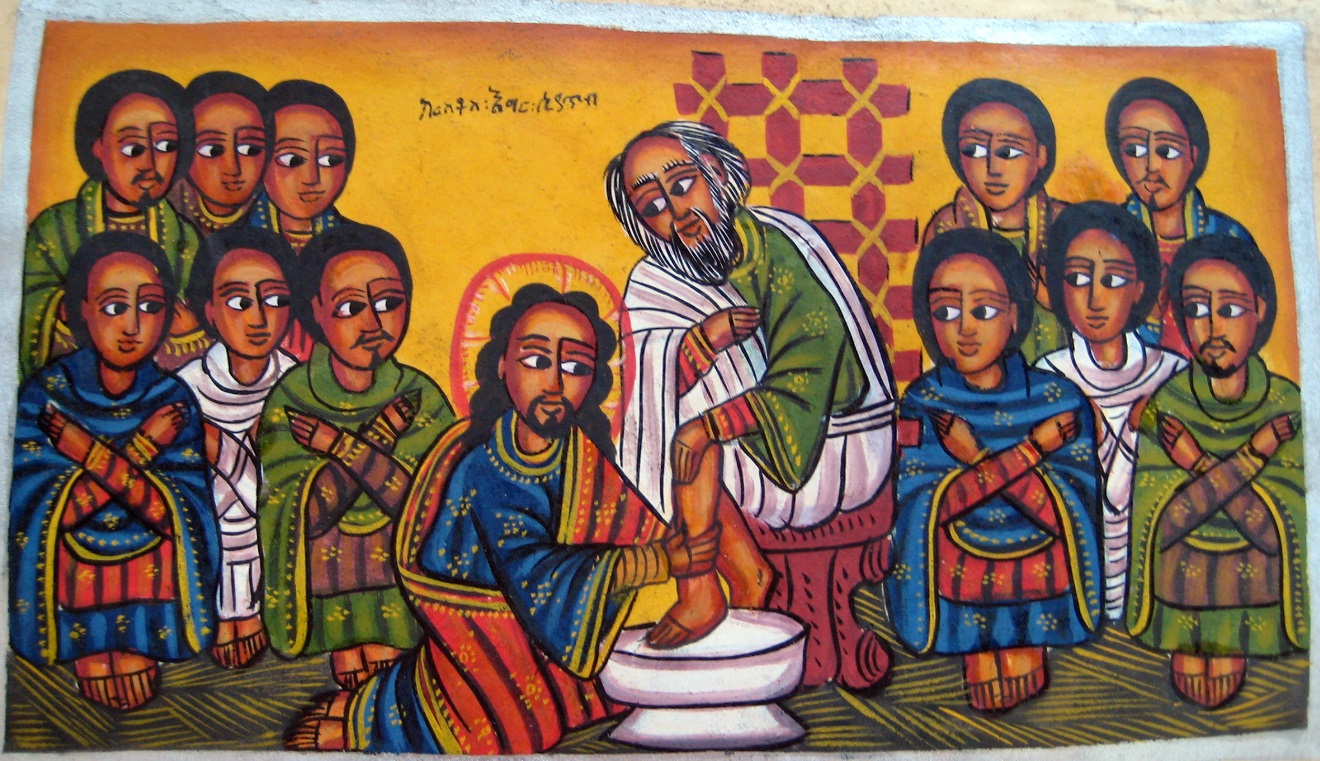
Jesus washes his disciples’ feet_Ethiopian painting
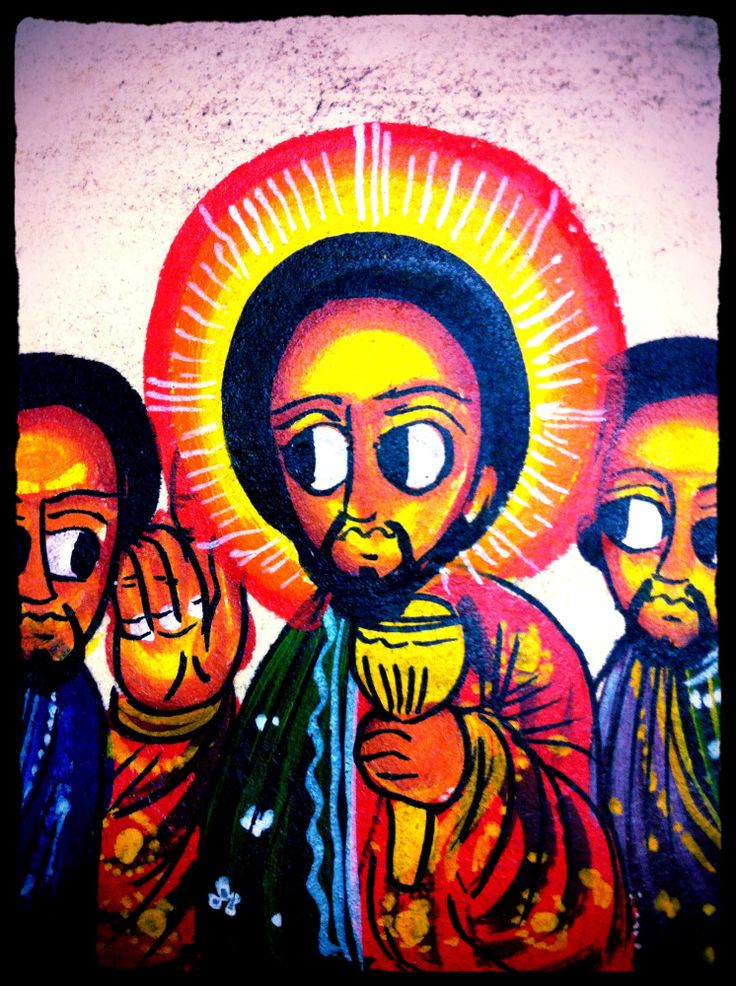
Luke 22: verses 19-20_This do in remembrance of me_Ethiopian painting
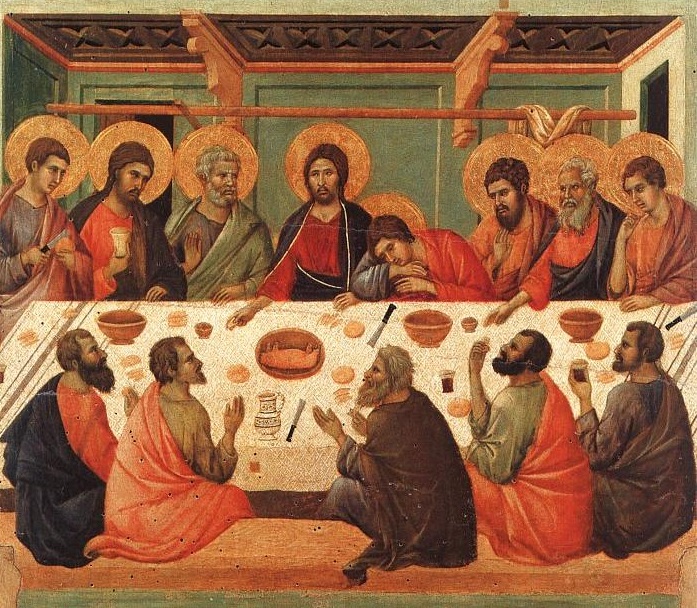
Duccio di Buoninsegna_The Last Supper, painted in 1311
Poemas para Viernes Santo: Stevenson, Browning, Levertov / Poems for Good Friday
Posted: April 18, 2014 Filed under: Denise Levertov, English, Robert Browning, Robert Louis Stevenson, Spanish, ZP Translator: Alexander Best | Tags: Poemas para Viernes Santo, Poems for Good Friday Comments Off on Poemas para Viernes Santo: Stevenson, Browning, Levertov / Poems for Good Friday

Paul Gauguin_Christ on The Mount of Olives (Gethsamane)_oil on canvas, 1889
Robert Louis Stevenson (1850-1894)
Evensong
.
The embers of the day are red
Beyond the murky hill.
The kitchen smokes; the bed
In the darkling house is spread:
The great sky darkens overhead,
And the great woods are shrill.
.
So far I have been led,
Lord, by Thy will:
So far I have followed, Lord, and wondered still.
The breeze from the embalmed land
Blows sudden towards the shore,
And claps my cottage door.
I hear the signal, Lord – I understand.
The night at Thy command
Comes. I will eat and sleep and will not question more.
. . .
Vísperas
.
Las brasas del día son rojas,
Más allá de la colina turbia.
La cocina humea; el lecho de la casa oscura está hecho:
El cielo inmenso se oscurece por encima,
Y viene del gran bosque un chirrido chillón.
.
Hasta ahora, Señor, he sido guiado por Tu voluntad:
Tan larga la distancia, Señor, he seguido a Tí,
Y aún me pregunté.
La brisa del terreno embalsamado
Sopla hacia la orilla, de repente,
Y abofetea la puerta de mi casita.
Oigo la señal, Mi Señor – y la entiendo.
La Noche llega – de Tu dominio.
Comeré y dormiré y no preguntaré más.
. . .
Denise Levertov (1923-1997)
Suspended
.
I had grasped God’s garment in the void
but my hand slipped
on the rich silk of it.
The “everlasting arms” my sister loved to remember
must have upheld my leaden weight
from falling, even so;
for though I claw at empty air and feel
nothing – no embrace –
I have not plummeted.
. . .
Colgado
.
Yo había agarrado en el vacío el traje de Dios
pero mi mano resbaló en la seda exquisita.
“Los brazos eternos” que mi hermana amaba recordar
debieron haber soportado la carga pesada de mí
para que no me cayera;
porque aunque araño el aire vacío y me siento
nada – ningún abrazo –
no me he desplomado.
. . .
Robert Browning (1812-1889)
Faith
.
O never star
Was lost; here
We all aspire to heaven and there is heaven
Above us.
If I stoop
Into a dark tremendous sea of cloud,
It is but for a time; I press God’s lamp
Close to my breast; its splendour soon or late
Will pierce the gloom. I shall emerge some day.
. . .
Fe
.
Ah, nunca fue perdido una estrella; aquí
Aspiramos a llegar al Cielo y existe allá
Por encima de nosotros.
Si me encorvo en un mar de nubes,
Negro y tremendo,
Sólo es por un breve tiempo; estrecho la linterna de Dios
Contra mi pecho; y el esplendor de su luz
Perforará el tiempo plomizo – tarde o temprano.
Algún día me apareceré.
. . . . .
Indigenous Modern: the art of Doug Cranmer (Kesu’) / Truths of The Kwakʼwala-Speaking Peoples
Posted: April 8, 2014 Filed under: English Comments Off on Indigenous Modern: the art of Doug Cranmer (Kesu’) / Truths of The Kwakʼwala-Speaking Peoples

ZP_Doug Cranmer_Ravens or Ravens in Nest_2005
Northwest-Coast Kwakwaka’wakw art is identifiable by its flamboyant and colourful carving and painting. Among the leading artists was Doug Cranmer (1927-2006), whose style was understated and elegant, and whose work found an international following from the 1960s onward. Kesu’ / Doug Cranmer was one of the very first Native artists in British Columbia to own his own gallery. A patient and dedicated teacher, he inspired a generation of younger Native artists in Alert Bay, B.C., and throughout the province.
. . .
Some Truths of The Kwakʼwala (Kwakiutl)-Speaking Peoples:
.
When the Transformer (Creator), Ḵaniḵiʼlakw, travelled around the world, he eventually returned to the place where Gwaʼnalalis lived. In an earlier encounter, the Transformer had beaten Gwaʼnalalis, who was ready for his return. Ḵaniḵiʼlakw asked, “Would you like to become a cedar tree?” Gwaʼnalalis replied, “No, cedar trees, when struck by lightning, split and fall. Then they rot away for as long as the days dawn in the world.” Ḵaniḵiʼlakw asked again, “Would you like to become a mountain?” “No,” Gwaʼnalalis answered, “For mountains have slides and crumble away for as long as the days dawn in the world.” The Transformer asked a third question: “Would you like to become a large boulder?” Again Gwaʼnalalis answered, “No. Do not let me become a boulder, for I may crack in half and crumble away as long as the days dawn in the world.”
Finally, Ḵaniḵiʼlakw asked, “Would you like to become a river?” “Yes, let me become a river, that I may flow for as long as the days shall dawn in the world,” Gwaʼnalalis replied. Putting his hand on Gwaʼnalalis’ forehead and pushing him down prone, Ḵaniḵiʼlakw said, “There, friend, you will be a river and many kinds of salmon will come to you to provide food for your decendants for as long as the days shall dawn in the world. And so the man Gwaʼnalalis became the river Gwaʼni.
.
As told by: Pa̱lʼnakwa̱laga̱lis Waʼkas (Dan Cranmer), 1930
. . .

ZP_Doug Cranmer_Canoe_1996_photo by Vickie Jensen
Before the time of the great flood, the Da̱ʼnaxdaʼx̱w of Dzawadi knew that it would happen and began to prepare for it. Some of the people tied four canoes together and put their provisions in these. Dzawadalalis built a home of small poles, which he covered with clay. The others laughed at him, but he knew that he and his four children would survive the flood. When the rains came, the others tied their canoes to an elderberry tree, while Dzawadalalis began moving his belongings into his clay-covered house. One of the men who had ridiculed him said, “Please let me come with you,” but Dzawadalalis refused, saying, “Go to the mountain, for that is what you said you would do. My children and I will be locked inside this house, for we are going underwater.” Shutting the door, he began to sing, “Take care of us. I am going where you told me to go.”
Those people who had made fun of him floated around in the flood, which had reached the tops of the highest mountains in Dzawadi. For some time, Dzawadalalis and his children lived in the underwater house. Then he sent a small bird out. It retured to their house with a small root in his mouth, and so Dzawadalalis knew that the waters were beginning to subside. He waited for some time, then sent another small bird out. Again, it returned with evidence that the waters were still going down. The third time he sent a bird out, it brought leaves back from a tree. Finally, the fourth small bird was sent out and it brought back blades of grass in its mouth. Dzawadalalis knew then that it was safe to leave his underwater house. He instructed his children to open the door and he thanked the Creator for saving them. They survived because they believed they would be saved.
.
As told by: Watlaxaʼas (Jack Peters), 1980
. . .
The G̱usgimukw first lived at a placed called Guseʼ. The Transformer, Hiłatusa̱la, visited there during his travels around the world. There were only two people in the village, an old woman and a child. When asked why they were alone, the old woman replied, “All of our people have been eaten up by a monster in the river. Whenever someone has gone to get water, the monster has eaten them.” Hiłatusa̱la then asked the child to get him some water, for he was thirsty. The child was afraid to go but Hiłatusa̱la told her she had nothing to fear. As he put his Sisiyutł belt around her, the child, still afraid, took a water bucket and began walking towards the river.
Buried in the sand was the huge tongue of the monster. Without knowing it, the child walked right onto the monster’s tongue and was swallowed. Hiłatusa̱la began to sing, which made the monster appear and vomit an immense pile of bones – as well as the child it had just swallowed. “Now we will get to work, so that your tribe will increase in size again,” Hiłatusa̱la said to the child. They began putting the bones together in the right way to form bodies. When they were finished, Hiłatusa̱la sprinkled his life-giving water on the assembled bones and the people whose bones had been lain upon the beach came to life and stood up. They said to each other, “I must have been sleeping a long time.” Hiłatusa̱la told them, “You weren’t sleeping! You were dead and I brought you back to life. Now I will rid the river of the monster.” He shouted at the monster to show himself again. It did so, and, taking hold of it, he flung it away, saying, “You will not come again; you will be gone!”
.
As told by: Chief ʼWalas (James Wallas), 1980
. . .

ZP_Doug Cranmer at work on a carving, 1961

Doug Cranmer_Mask_Chief of the Undersea Kingdom_1974_photo by Ken Mayer
The first man came down at T̕a̱ka, Topaz Harbour on the mainland. His name was Weḵa’yi. Lakata̱sa̱n is the name of the mountain there. After some time, a long time, the great flood was to come. So the people made cedar rope from the top of the mountain down to the salt water at the ocean. With this long rope they made an anchor and tied it to the mountain to secure their canoes during the flood. They fastened two canoes together and lots of people came. The flood lasted for a very long time, and it is said the tides were really strong and the weather was very bad. Because of the rough weather the canoes started to bang together and he feared the canoes would split and they would drown. Therefore Weḵa’yi cut off the people in the other canoe and they drifted away – and now they are the Kitimaat people. Then the great flood went down and he looked around and realized that he was in a different place. He had drifted up into Knight Inlet.
There was a woman named T̕łisda’ḵ and she had wings on her back. Weḵa’yi began to put stakes in the river to build a salmon trap and the woman asked him what he was doing. She told him that this was her river. Weḵa’yi argued and said it was his river and he had been there first. To test Weḵa’yi, the woman asked him, “If it is truly your river, then what type of fish return here?” Weḵa’yi replied and said, “Sockeye salmon, Coho salmon, Pink salmon, Spring salmon, Chum salmon and Steelhead salmon”. The woman told Weḵa’yi that if he really owned the river, then he would have known about the valuable eulachon that comes to this river. The woman and Weḵa’yi continued to argue over the ownership of the river and only in this version does Weḵa’yi win against her. She called them dzaxwa̱n or “candle fish”. She eventually allowed him to build a house there and make t̕łi’na or “eulachon grease” every spring.
After a while, people began to increase in numbers everywhere. Weḵa’yi called the people from all over. He put the grease into kelp bottles. He sold grease for slaves and became a great Chief. He also lived at Xwa̱lkw at Gwa’ni or Nimpkish River where there are logs piled up for the foundation of dwellings there. Weḵa’yi’s wife was a woman from Gilford Island named K̕ix̱waḵ̕a̱’nakw. He married her and got a copper named T̕łaḵwola.
There are many tribes and clans amongst the Ligwiłda’x̱w. But there are mainly two tribes today sharing common ancestry, beginning with Weḵa’yi and his family and their survival of the great Flood.
.
From the Ligwiłda’x̱w, as told by: Chief Billy Assu
. . .
Kwakwaka’wakw Truths: from U’mista Cultural Society, Alert Bay, British Columbia, Canada
. . . . .
Jacob Nibenegenesabe: “Shaking the Pumpkin”: Narrative Poems from the Swampy Cree ᓀᐦᐃᓇᐍᐏᐣ
Posted: April 1, 2014 Filed under: English, Jacob Nibenegenesabe Comments Off on Jacob Nibenegenesabe: “Shaking the Pumpkin”: Narrative Poems from the Swampy Cree ᓀᐦᐃᓇᐍᐏᐣ

Jackson Beardy, Oji-Cree painter (1944 -1984): “Bird Calls”, 1977

Jacob Nibenegenesabe_a poem from The Wishing Bone Cycle: Narrative Poems from the Swampy Cree Indians_Translated by Howard A. Norman, 1976
.
Swampy Cree /ᓀᐦᐃᓇᐍᐏᐣ (which has sometimes been known as Maskekon, Omaškêkowak, or anglicized as Omushkego) is a variety of the more widespread Algonquian language – Cree. Swampy Cree has been spoken in Northern Manitoba, central to northeast Saskatchewan, and along the coast of Hudson Bay and James Bay in Northern Ontario. Approximately thirty years ago Swampy Cree had about 4500 native speakers; that number may be as low as 100 today (2014).
.
Jacob Nibenegenesabe
“Shaking the Pumpkin”
Translation from Swampy Cree: Howard Norman
.
One time I wanted two moons
in the sky.
But I needed someone to look up and see
those two moons
because I wanted to hear him
try and convince the others in the village
of what he saw.
I knew it would be funny.
So, I did it.
I wished another moon up!
There it was, across the sky from the old moon.
Along came a man.
Of course I wished him down that open path.
He looked up in the sky.
He had to see that other moon!
One moon for each of his eyes!
He stood looking
up in the sky
a long time.
Then he suspected me, I think.
He looked into the trees
where he thought I might be.
But he could not see me
since I was disguised as the whole night itself!
Sometimes
I wished myself into looking like the whole day,
but this time
I was dressed like the whole night.
Then he said,
“There is something strange
in the sky tonight.”
He said it out loud.
I heard it clearly.
Then he hurried home
and I followed him.
He told the others, “You will not believe this,
but there are ONLY two moons
in the sky tonight.”
He had a funny look on his face.
Then all the others began looking into the woods.
Looking for me, no doubt!
“Only two moons, ha! Who will believe you?
We won’t fall for that!” they all said to him.
They were trying to send the trick back at me!
That was clear to me!
So, I quickly wished a third moon up there
in the sky.
They looked up and saw three moons.
They had to see them!
Then one man
said out loud, “Ah, there, look up!
up there!
There is only one moon!
Well, let’s go sleep on this
and in the morning
we will try and figure it out.”
They all agreed, and went in their houses
to sleep.
I was left standing there
with three moons shining on me.
There were three . . . I was sure of it.
.
One time
all the noises met.
All the noises in the world
met in one place
and I was there
because they met in my house.
My wife said, “Who sent them?”
I said, “Fox or Rabbit,
yes one of those two.
They’re both out for tricking me back today.
Both of them
are mad at me.
Rabbit is mad because I pulled
his brother’s ear
and held him up that way.
Then I ate him.
And Fox is mad because he wanted
to do those things first.”
“Yes, it had to be one of them,”
my wife said.
So, all the noises
were there.
These things happen.
Falling-tree noise was there.
Falling-rock noise was there.
Otter-mud-sliding noise was there.
All those noises, and more,
in my house.
“How long do you expect to stay?”
my wife asked them. “We need some sleep!”
They all answered at once!
That’s how my wife and I
sometimes can’t hear well!
I should have wished them all away
first thing.
. . .
Commentary:
Trickster stories go far back in Cree culture (as elsewhere), but the figure here has been specifically invented by storyteller Jacob Nibenegenesabe, “who lived for some ninety-four years northeast of Lake Winnipeg, Canada.” Nibenegenesabe was also a teller (achimoo) of older trickster narratives, the continuity between old & new never being in question. But the move in the Wishing Bone series is toward a rapidity of plot development & changes, plus a switch into first-person narration as a form of enactment. In the frame for these stories, the trickster figure “has found a wishbone of a snow goose who has wandered into the Swampy Cree region and been killed by a lynx. This person now has a wand of metamorphosis allowing him to wish anything into existence, himself into any situation.” Howard Norman’s method of translation, in turn, involves “first listening to the narratives over & over in the source language, then re-creating them in the same context, story, etc., if notable, ultimately to get a translation word for word.”
[Originally printed in Shaking the Pumpkin: Traditional Poetry of the Indian North Americas. The book, first published by Doubleday in 1972 & later by University of New Mexico Press in 1986 & 1992, has now been out of print for several years. The full gathering of Howard Norman’s Swampy Cree translations, The Wishing Bone Cycle: Narrative Poems from the Swampy Cree Indians, was published by Ross-Erikson Publishing, Santa Barbara, & went out of print with the demise of that press.]
. . .
Three 21st-century Swampy Cree artists:

Phyllis Sinclair, folksinger

Kevin Lee Burton, filmmaker

David Alexander Robertson, author of the graphic novel series Tales from Big Spirit
Itee Pootoogook (1951-2014): A Tribute in Poems
Posted: March 26, 2014 Filed under: English, IMAGES | Tags: Itee Pootoogook: a tribute in poems Comments Off on Itee Pootoogook (1951-2014): A Tribute in Poems
Itee Pootoogook_After Midnight_coloured pencil_2007
Itee Pootoogook, an Inuk and artist from Kimmirut, Baffin Island, was born in 1951 to Ishuhungitok and Paulassie Pootoogook. His drawings are characterized by an uncluttered gaze that sees what is directly before it, and an ability to find the profound in the simple. He died earlier this month of cancer; he was 63 years old.
Some artists are rooted in a place; this was Itee Pootoogook, very much so, and his drawings depict life in Nunavut. But great art travels, becomes universal. And so we have gathered poems from Germany, Russia, India and the USA, to accompany a selection of Itee’s drawings…
. . .
Hermann Hesse (1877-1962)
On a Journey
.
Don’t be downcast, soon the night will come,
When we can see the cool moon laughing in secret
Over the faint countryside,
And we rest, hand in hand.
.
Don’t be downcast, the time will soon come
When we can have rest. Our small crosses will stand
On the bright edge of the road together,
And rain falls, and snow falls,
And the winds come and go.
. . .
Hermann Hesse
How Heavy the Days
.
How heavy the days are,
There’s not a fire that can warm me,
Not a sun to laugh with me,
Everything bare,
Everything cold and merciless,
And even the beloved, clear
Stars look desolately down
– Since I learned in my heart that
Love can die.
.
Translations from the German: James Wright
. . .
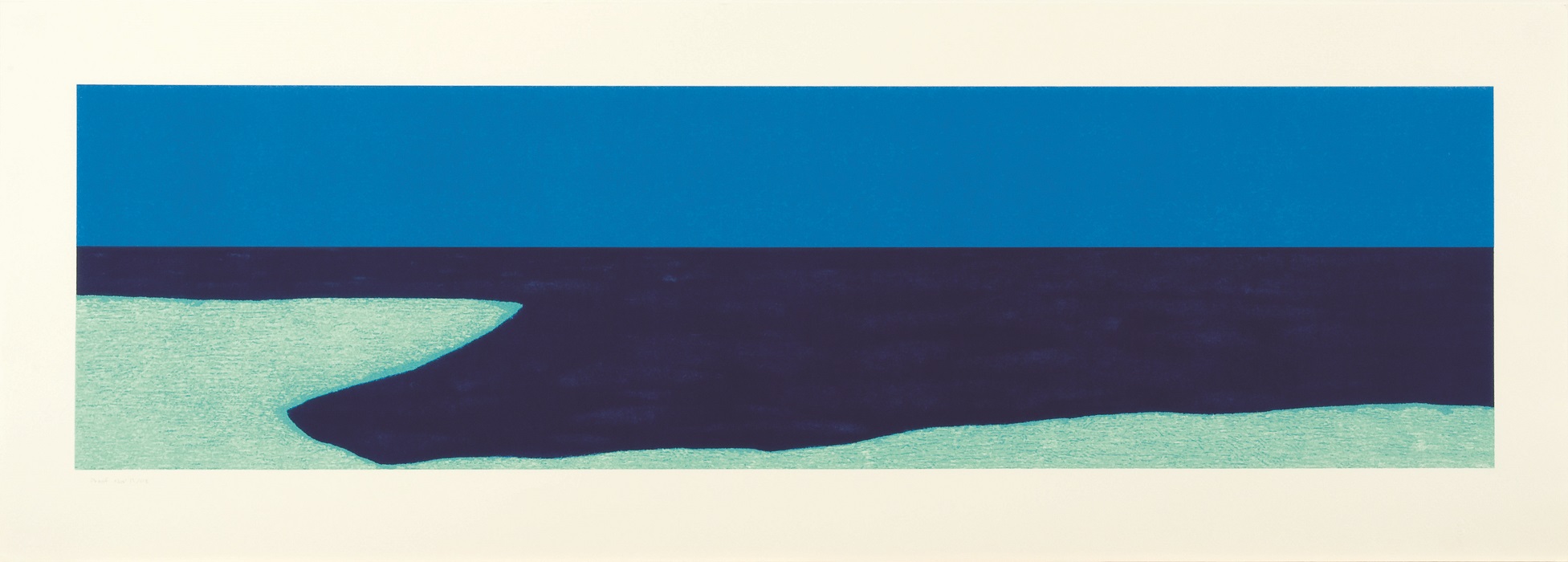
Itee Pootoogook_Floe Edge, Winter
Mohan Rana (born 1964, Delhi, India)
After Midnight
.
I saw the stars far off,
as far as I was from them,
in this moment I saw them,
in a moment of the twinkling past.
In the boundless depths of darkness,
these hours hunt the morning through the night.
.
And I can’t make up my mind:
am I living this life for the first time?
Or repeating it, forgetting as I live,
that first breath – every time?
.
Does the fish too drink water?
Does the sun feel the heat?
Does light see the dark?
Does the rain also get wet?
Do dreams ask questions about sleep – as I do?
.
I walked a long, long way…
and when I saw, I saw the stars – close by.
Today it rained all day long
and words washed away from your face.
.
Translation from Hindi: Lucy Rosenstein and Bernard O’Donoghue
. . .
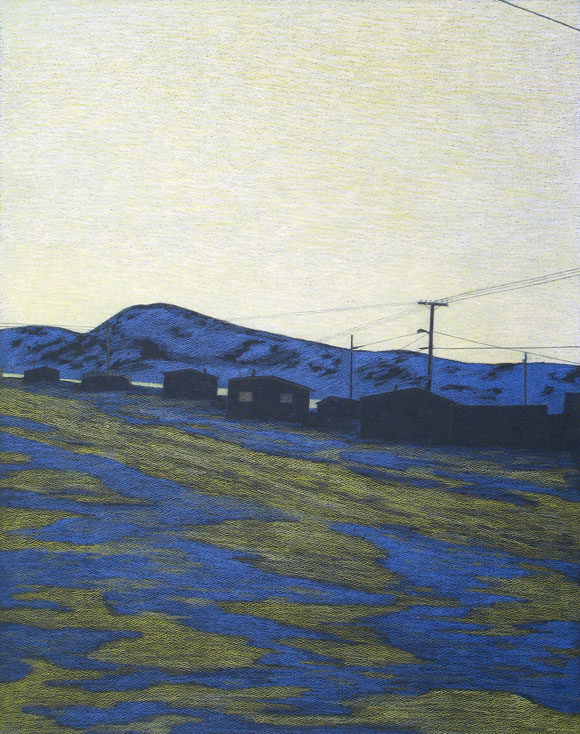
Itee Pootoogook_The ground is wet for it’s been raining during the night…It is early fall and it’s early morning_pencil crayon on paper_2010
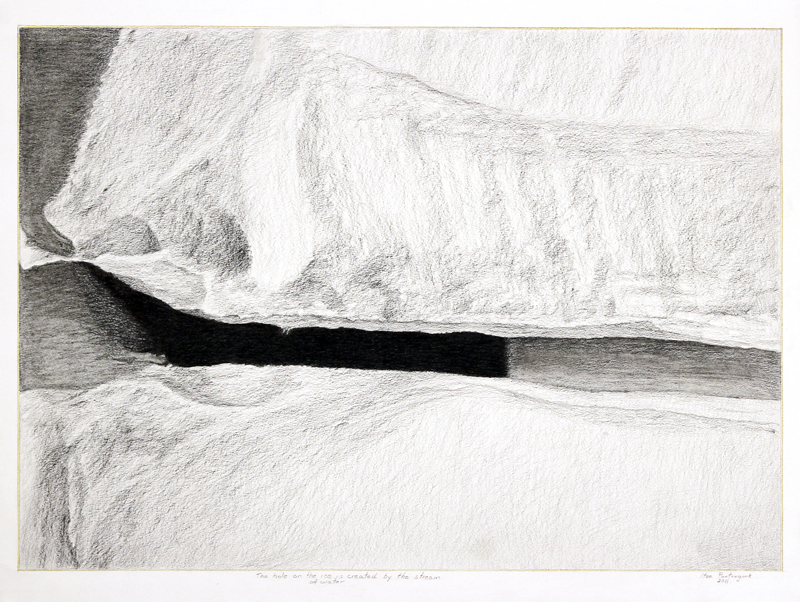
Itee Pootoogook_Water and Ice_coloured pencil on paper_2012
Marina Ivanovna Tsvetaeva (1892-1941)
from: Poems for Blok (1916)
.
Your name is a—bird in my hand,
a piece of ice on my tongue.
The lips’ quick opening.
Your name—four letters.
A ball caught in flight,
a silver bell in my mouth.
A stone thrown into a silent lake
is—the sound of your name.
The light click of hooves at night
—your name.
Your name at my temple
—sharp click of a cocked gun.
Your name—impossible—
kiss on my eyes,
the chill of closed eyelids.
Your name—a kiss of snow.
Blue gulp of icy spring water.
With your name—sleep deepens.
.
Translation from the Russian original: Ilya Kaminsky and Jean Valentine
. . .
Angelyn Hays (Texas/Florida, USA)
One of the Cardinal Seasons
After the hardest snow of the year
the birches huddle in rows.
Ice breaks their wooden bones,
and hangs them by the thumbs
in a March sun too weak to heal them.
Birds call to each other
from the tangle of bare arms.
A red-dark Cardinal feasts in my backyard,
singing to warm his lungs. He enters
just as I am ready to leave.
I had stopped the clock,
put away my mother’s china,
and wanted to sink to timeless black.
But the bird came for me,
signaling me to rise, recall his password.
The window is framed by trees, no longer trees,
sky, no longer sky, but now a watch
by which I measure my days.
Shouting the weight of his pleasure
from fevered beak, he rolls a black eye
and we click off the minute.
Then he swoops over my white garden,
drunk as Li Po, his floating path
a dance on an empty swingset of wind.
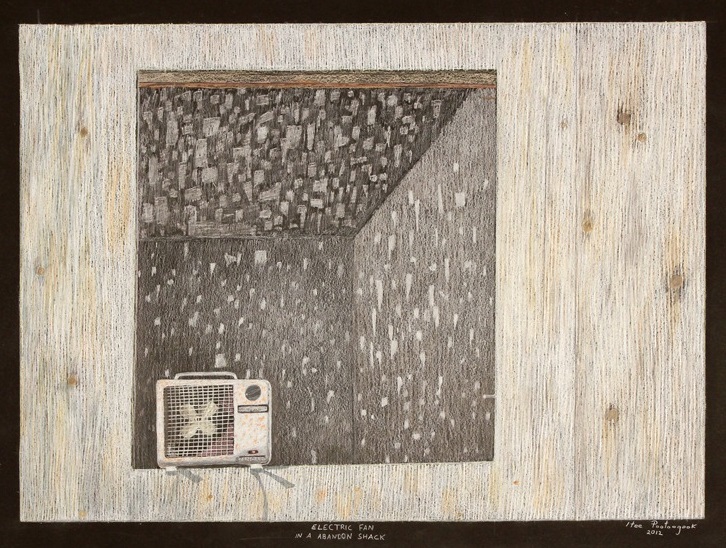
Itee Pootoogook_Electric fan in an abandoned shack_2012
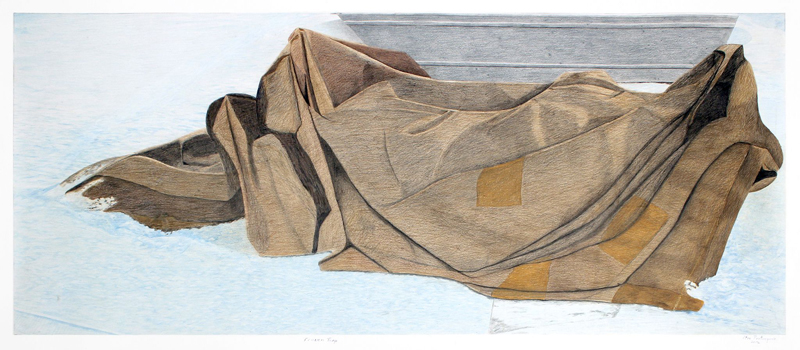
Itee Pootoogook_Frozen Tarp_coloured pencil_2013
Michael Valentine (Maryland, USA)
A Meadow in March
.
Early Spring snowfall
dusts late Winter bloom
crystalline fractals piling gently
all around
to rest upon vibrant petal
leaf
stem
and ground.
The field now
a riot of pixelated colour
struggling to be seen under
blank canvas tarp of
Winter’s last throes.
Portrait of Nature’s perfect balance
Yin meeting Yang
flowing together
each becoming the other
flower melts snow into water flowing into flower.
Demonstration of Tao
in this limbo-time between the seasons
that is no longer Winter
and not yet Spring,
when the Universe gives lessons
to remind us that
there is no such thing as
“impossible”.
. . .
Mitchell Walters (Temecula, California, USA)
The Shack
.
I walked to the river and back.
Something told me I should.
I saw things I hadn’t seen before:
A dog. A deer. A stream.
.
I saw an old abandoned shack.
It was made entirely of wood.
I walked to the shack and opened the door.
And that was the start of my dream.
. . . . .
Kerbel, Terada, Nauman: three Wordy conceptual artists – But Wait, There’s More!
Posted: March 25, 2014 Filed under: English, IMAGES | Tags: Wayne Reuben: Honest Ed's signpainter Comments Off on Kerbel, Terada, Nauman: three Wordy conceptual artists – But Wait, There’s More!
Janice Kerbel_one page of A letter by Rodolphe Boulanger de Huchette to Emma Bovary written by Gustave Flaubert in my hand
Currently, at the Art Gallery of Ontario in Toronto, Canada, there are works from the permanent collection on view by three conceptual artists who use words – just a phrase, or a crammed page – as the locus of their art. The artists are: Janice Kerbel (born 1969, Canada, now living in London, England); Ron Terada (also 1969, Canada); and Bruce Nauman (born 1941, USA).
Kerbel’s 5-poster series Remarkable, from 2007, presents the viewer with silkscreened prints on what is known as campaign poster paper – something used for 19th-century traveling circus billboard “announcements” or for election hoardings. Using bold black letters on white, Kerbel describes The Regurgitating Lady and The Human Firefly, as if inviting us in to a carnival side-show. Yet her characters are imaginary and so we become completely involved in the artist’s sometimes archaic use of language and her strong typographical arrangements.

Janice Kerbel_silkscreen print on campaign poster paper_The Temperamental Barometric Contortionist_2007
Vancouver-based Ron Terada has been very precisely focused in his art on phrases, sentences, written presentation. Twenty years ago he did a series of “ad paintings” that were a branching out of monochromatic minimalism in visual art. He worked in other media for several years then returned in 2010 with the large-scale white-on-black chapter pages of “Jack” (from a biography of painter Jack Goldstein, Jack Goldstein and the CalArts Mafia). Each chapter page is a painting – not a print. To the individual pages of a book, Terada brings the discipline of a serious painter.

Ron Terada_Jack_2010_acrylic on canvas

Ron Terada_born 1969_neon text sculpture_It is what it is It was what it was
Ron Terada’s neon text sculpture, It Is What It Is, It Was What It Was, reflects on present-day use of language, offering a general critique of complacency in society. Severe High makes reference to threat definitions for Homeland Security in the USA.
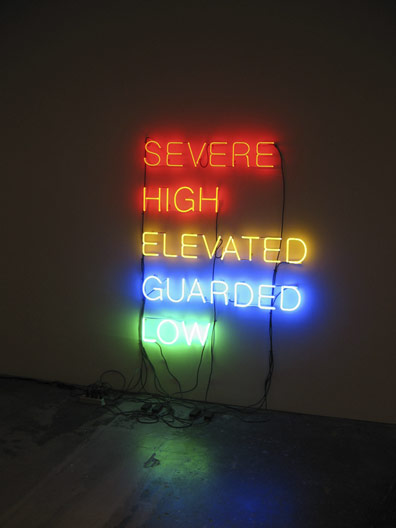
Bruce Nauman is a multimedia artist who has been heavy on “concept” and “performance”. The online, user-driven encyclopedia Wikipedia describes Nauman’s “practice” as being “characterized by an interest in language, often manifesting itself in a playful, mischievous manner.” And: [Nauman is] fascinated by the nature of communication and language’s inherent problems, as well as the role of the artist as a supposed communicator and manipulator of visual symbols.”
Among the A.G.O.’s pieces are two lithographs, Ah Ha (1975) and Pay Attention (1973):

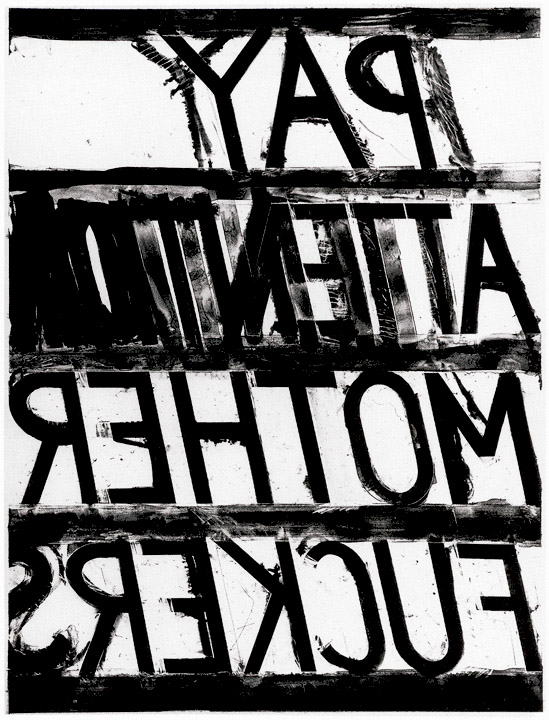
The reproduction of Pay Attention shown here (copied many times around the internet) is marred by the lack of print clarity in the word attention, which affects the viewer’s – reader’s ! – ability to quickly “get it”, that is, the power of the statement itself: Pay Attention, Motherfuckers! Interestingly, the print of Pay Attention that belongs to the A.G.O. is much clearer, so that all four words hit the mark. Which is important, especially since the statement is presented to us as a mirror image i.e. backwards.
Some of Nauman’s works now seem dated or stilted, but others have a fresh power in 2014 that comes out of our being awash now in “text” – as all words seem to be called these days – and “text” often without “context”. People’s ubiquitous use of :-) and, most especially, ;-), is indicative of the fact that words and phrases themselves are no longer adequate. What’s the tone – what’s the tone? It’s there you’ll find the meaning. The most effective of all the Nauman works at the A.G.O. is a 1985 videotape installation, Good Boy Bad Boy. There are two older-model TV sets side by side, and each shows its own videocassette of a man – mid-40s black guy, and a woman – mid-40s, white – each of whom speaks a set group of short sentences which are statements, and then does it all over again, but altering the vocal tone. To hear each of them “perform” these statements twice, changing his/her tone, is a simple and clear demonstration of the complexity and muddiness of Language. The man says: I was a bad girl. You were a bad girl. We were baaad girls. We were baaaaad! And he’s enjoying remembering being a slut. The woman says the same things and she is a scolding puritan; she may be speaking of a pet dog who pooped on the Persian carpet, or of two 12 year olds caught smoking cigarettes. Same phrases – entirely different meanings. A good contemporary example of this is two words: Hello and Whatever. Both have pleasant or neutral uses in conversation but both also can be altered via tonal change, pitch, even syllable stress, to communicate irate impatience or deliberate rudeness (Hello); and casual defiance or a kind of hybrid attitude of blasé and crass (Whatever).
Nauman is quoted at the A.G.O. exhibit: “When language begins to break down a little bit it becomes exciting and communicates in nearly the simplest way that it can function. You are forced to be aware of the sounds and the poetic parts of words.”

Some of Honest Ed’s iconic handpainted signs on display in 2012_Wayne Reuben has been, for decades, that man with the calligraphy brush and the poster paints.

Honest Ed’s signpainter, Wayne Reuben, at work in July 2013_photograph by Darren Calabrese, National Post
To whom shall we give the last Word? Why, Wayne Reuben – of course!
Wayne Reuben is the man behind the sometimes wacky ads, proclamations, commands and price cards at Honest Ed’s discount store, the building structure of which is a vivid Toronto landmark, what with the thousands of marquee bulbs that light up its red and yellow exterior. It’s Reuben’s handiwork when, out on the sidewalk, you read: Come In And Get Lost! And it’s Reuben’s blue and red paint letters that tell you, once you’re inside: Don’t Just Stand There – Buy Something!
Two weeks ago, hundreds of Torontonians lined up around the block to get the chance to pore over Mr. Reuben’s thousand-plus handpainted signs that Ed’s never trashed over the decades. The lucky buyer might’ve come away with Fancy Panties or Men’s Mesh Tops, a sign in the shape of a Hallowe’en pumpkin that reads WIGS $6.99, lovingly handpainted price boards for tinned sardines, coconut milk, hair grease or pomades – even Justin Bieber-photosilkscreened pyjamas. Along with Doug Kerr, the left-handed Reuben writes/paints in something like a serif font (and sans serif), to spell out Ed’s commercial message; and the tempera paint palette is strong and basic: blue, red, yellow, black.
So why would people line up to buy ephemeral signboards for 5 to 40 dollars? Is it nostalgia for the handmade? Or the curvilinear ease of Reuben’s brushstroke? No. It’s because Honest Ed Is For The Birds: Cheap Cheap Cheap!
;-)
Haiku harusamu 寒き春(さむきはる) / Haiku for This Cold Spring…Kyoshi & Issa
Posted: March 20, 2014 Filed under: English, Issa, Japanese, Kyoshi | Tags: Spring Haiku Comments Off on Haiku harusamu 寒き春(さむきはる) / Haiku for This Cold Spring…Kyoshi & Issa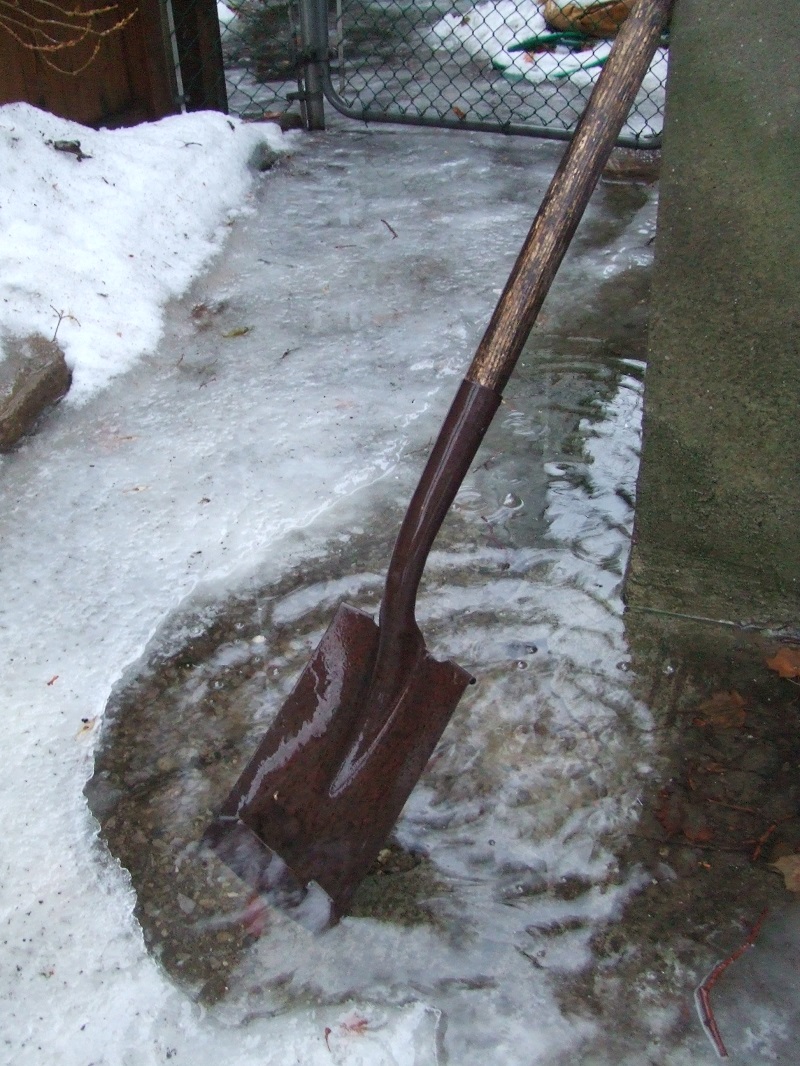
Takahama Kyoshi (1874-1959)
Translations by Katsuya Hiromoto
.
春風や闘志いだきて丘に立つ
harukaze ya / tohshi idaki te / oka ni tatsu
.
Spring wind:
Full of fight
I stand on the hill
.
眼つむれば若き我あり春の宵
Me tsumureba / wakaki ware ari / haru no yoi
.
Shutting my eyes
I find a young me found
In the spring evening
.
この庭の遅日の石のいつまでも
Kono niwa no / chijitsu no ishi no / itsumademo
.
The rocks in this garden
Remain forever
In the lengthening days of spring
.
何事も知らずと答へ老の春
Nanigoto mo / shirazu to kotae / oi no haru
.
”I know nothing”
Is my answer:
Spring in my old age
.
これよりは恋や事業や水温む
kore-yori wa / koi ya jigyoh ya / mizu nurumu
.
From this time on
Love, enterprise, and such:
Water has warmed up
. . .
The following haiku by Kyoshi were translated by Aya Nagayama and James W. Henry:
.
時ものを解決するや春を待つ
Toki mono o kaiketsu suru ya haru o matsu
.
May time solve
Worries and difficulties –
Awaiting the spring
(1914)
.
金の輪の春の眠りにはひりけり
Kin no wa no haru no nemuri ni hairikeri
.
I have entered
The golden circle of
Spring slumber
(1942)
.
闘志尚存して春の風を見る
Tohshi nao sonshite haru no kaze o miru
.
Steadfast in my soul
My fighting spirit remains
And I see the spring breeze
(1950)
.
独り句の推敲をして遅き日を
Hitori ku no suikou o shite osoki hi o
.
In your solitude
Honing and perfecting your haiku –
On a slow spring day
(1959)
. . .
Plus: two by Issa – to have with your cup of tea :-)
(Issa was the haiku pen-name of Kobayashi Nobuyuki Yataro. Issa means Cup of Tea.)
Issa / 一茶 (1763-1828)
.
まん六の春と成りけり門の雪
manroku no haru to nari keri kado no yuki
.
some “proper spring”
this is!
snow at the gate
(1822)
.
春立や愚の上に又愚にかへる
haru tatsu ya gu no ue ni mata gu ni kaeru
.
spring begins –
more foolishness
for this fool
(1823)
. . . . .
 Zócalo Poets