Poemas para Pascua: Machado, Alarcón, Calderón de la Barca
Posted: April 5, 2015 Filed under: English, Spanish | Tags: Poemas para Domingo de Pascua Comments Off on Poemas para Pascua: Machado, Alarcón, Calderón de la Barca
Antonio Machado (1875-1939)
Pascua de Resurrección (1912)
.
Mirad: el arco de la vida traza
el iris sobre el campo que verdea.
Buscad vuestros amores, doncellitas,
donde brota la fuente de la piedra.
En donde el agua ríe y sueña y pasa,
allí el romance del amor se cuenta.
¿No han de mirar un día, en vuestros brazos,
atónitos, el sol de primavera,
ojos que vienen a la luz cerrados,
y que al partirse de la vida ciegan?
¿No beberán un día en vuestros senos
los que mañana labrarán la tierra?
¡Oh, celebrad este domingo claro,
madrecitas en flor, vuestras entrañas nuevas!.
Gozad esta sonrisa de vuestra ruda madre.
Ya sus hermosos nidos habitan las cigüeñas,
y escriben en las torres sus blancos garabatos.
Como esmeraldas lucen los musgos de las peñas.
Entre los robles muerden
los negros toros la menuda hierba,
y el pastor que apacienta los merinos
su pardo sayo en la montaña deja.
. . .
Easter of Resurrection
.
Look: the arc of life traces
a rainbow on the greening fields.
Seek your loves, young maidens,
where the spring emerges from rock.
Where water laughs and dreams and flows,
that’s where love’s ballad is sung.
Eyes born closed to light,
held in your arms will gaze one day,
astonished, at spring sun,
eyes that will grow blind as they depart from life.
Won’t there drink, one day, at your breast
those who will work the earth tomorrow?
Oh, celebrate this bright Sunday
young mothers in flower, new life within you!
Bask in the smile from your earthly mother.
The storks are already settled in their beautiful nests
and they scribble on the towers in their white scrawl.
Mosses on the peaks gleam like emeralds.
Between the oaks, black bulls
graze on sparse grass,
and the shepherd tending his sheep
leaves his brown cape on the mountainside.
.
(Translation: Mary G. Berg & Dennis Maloney)
.
Easter of Resurrection is a poem from Machado’s first collection, Campos de Castilla (Fields of Castile), published in 1912.
. . .
Abel Alarcón (1881-1954)
Pascua
.
Elevó, adusto, el sacerdote anciano
de ácimo pan la nítida blancura;
trazo el signo de un símbolo su mano
y consumo la mística figura.
.
Plegose en el altar velo liviano
Y ante el pueblo, en beatifica postura,
Fulguró el sol flamante y soberano
De la enorme custodia, su hermosura.
.
Un torrente de luz bañó las naves;
Hubo explosión de gloria en el himnario;
Surgieron del armonio notas graves;
.
Cuando entre el humo undívago del ascua
Del coro voló un ave al campanario,
La campana mayor repicó a pascua.
. . .
Pedro Calderón de la Barca (1600-1681)
¿Qué quieres?
.
¿Qué quiero, mi Jesús?…Quiero quererte,
quiero cuanto hay en mí del todo darte
sin tener más placer que el agradarte,
sin tener más temor que el ofenderte.
.
Quiero olvidarlo todo y conocerte,
quiero dejarlo todo por buscarte,
quiero perderlo todo por hallarte,
quiero ignorarlo todo por saberte.
.
Quiero, amable Jesús, abismarme
en ese dulce hueco de tu herida,
y en sus divinas llamas abrasarme.
Quiero, por fin, en Ti transfigurarme,
morir a mí, para vivir tu vida,
perderme en Ti, Jesús, y no encontrarme.
. . .
More Easter Sunday poems / Otros poemas para el Domingo de Pascuas:
https://zocalopoets.com/tag/easter-sunday-poems/
. . . . .
Stevie Smith: Creencias / Convictions
Posted: April 5, 2015 Filed under: English, Spanish, ZP Translator: Alexander Best | Tags: Easter poems Comments Off on Stevie Smith: Creencias / Convictions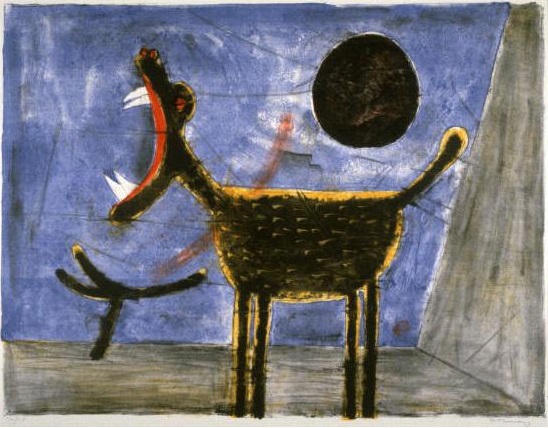
Stevie Smith (1902-1971)
Creencia 1
.
Cristo se murió por Dios y por mi
Sobre el palo crucificando;
Para Dios – la Palabra hablado,
Para mi – una espada;
Para Dios – un himno de alabanza,
Para mi – los días eternos;
Para Dios – una explicación,
Y para mi: Salvación.
. . .
Creencia 2
.
Yo caminaba en el Parque Pascua, por todos lados,
Y oí el ladrido lejano del perro salvaje.
Comprendí que Mi Señor ha resucitado
– Perro salvaje, tú ladras en vano.
. . .
Stevie Smith (1902-1971)
Conviction I
.
Christ died for God and me
Upon the crucifixion tree
For God a spoken Word
For me a Sword
For God a hymn of praise
For me eternal days
For God an explanation
For me salvation.
. . .
Conviction II
.
I walked abroad in Easter Park,
I heard the wild dog’s distant bark,
I knew my Lord was risen again…
– Wild dog, wild dog, you bark in vain.
. . . . .
María José Mures: “Abril” y otros poemas
Posted: April 4, 2015 Filed under: Spanish Comments Off on María José Mures: “Abril” y otros poemas
Hilo de Vida
Con un hilo que me dio
hice mi tela de araña,
me dio vida,
a punto del precipicio.
.
Quiero amarte
Quiero amarte,
decir más es estropearlo
llegar a ti como tú imaginas.
.
Metida en mí
pero fuera de sí
así quiero amarte
con el gemido de la más valiente.
.
Cómo decir
Cómo decirte que sin ti…
el mundo…
los mapas…
los mapas del mundo,
los océanos…
la noche…
los océanos de la noche,
mi cuerpo…
la ausencia…
mi cuerpo en tu ausencia,
tu sexo…
mi boca…
.
Qué es…
Te necesito y no sé…
es amor, es pasión, es querer
¡son tantas cosas!
.
Es una mirada que late
es un beso, una caricia
¡son tantas cosas!
Es una frágil desnudez
es el cuerpo que respiro
¡son tantas cosas!
.
Es un baile go-go
es un moldeado de dos cuerpos
¡son tantas cosas!
.
Son dos cuerpos amados
apasionados, queridos
¡es una sola cosa!
.
Átame
Átame a tu cuerpo
con la fuerza de tus manos
y olvídame tu inexistencia.
Mi corazón
sólo en él palpita,
a tu lado el pulso
encuentra dos caminos.
.
Descorcha otra botella
para regarnos
del fruto de la vid
y apagar esta pulsión.
Seamos la raíz
que busca la nada
ahondando en lo oculto.
.
Abril
Impulsos agotadores
en la mañana de abril
qué ilusiones, qué entereza
¡cuán imposible vivir sin ti!
.
Pecado sobre pecado
navegando sobre ti
qué dulce agonía
cuando estás en mí.
.
Fuego que arde en nosotros
toda la noche de abril.
Vientre en tus ojos
anhelándolo todo
y sólo en tus ojos
para ser feliz.
.
Cae la noche
y muchas estaciones
y aún vivo como en abril.
. . .
María José Mures nace el 4 de Abril de 1970 en Fernán Núñez, Córdoba, España. Es diplomada en Educación Especial por la Universidad de Córdoba y habilitada en Educación Infantil por la UNED. Es Máster en logopedia “Rehabilitación de los trastornos del lenguaje y el habla” por la Universitat Politècnica de Catalunya. Sus libros editados son:
Antes del Amor, Fernán Núñez, 2001
Zahorí, Valencia, 2004. Libro de relatos.
Cambalache, Madrid, 2005. Libro de poesía erótica.
Está incluida en Antología de poetas de Fernán Núñez, 2006.
.
Se siente atraída desde pequeña por las letras, escribe su primer poema La niña enamorada con doce años y desde entonces no ha dejado de “describir”. Su primer premio literario fue otorgado cuando estudiaba en el Instituto de Secundaria de su localidad, casualidad o no lo ganó con ese primer poema, posteriormente, en 2002 gana el segundo premio de poesía en Alfafar, Valencia. En 2007 gana el primer premio del V Concurso Nacional de Poesía Caños Dorados, con el poemario Entre la espada y tú amor.
Ha colaborado en el libro Romances y Canciones de Amor II, edición patrocinada por la Diputación Provincial de Ciudad Real, 2006.
.
Fue directora adjunta de Revista de Feria de su localidad durante dos años y después formó parte del grupo de redacción. Su producción poética y narrativa aparece en revistas como Baquiana, Alhucema, Arique, La pájara pinta, en el e-book de Registro Creativo XLVI de la Universidad de Montreal, y otras revistas literarias de formato digital.
En la actualidad trabaja como maestra de Pedagogía Terapéutica en Ciudad Real.
.
http://mariajosemures.blogspot.com.es/
. . . . .
Sexta-Feira Santa: Poemas
Posted: April 3, 2015 Filed under: Portuguese | Tags: Good Friday poems Comments Off on Sexta-Feira Santa: Poemas
José Carlos Brandão (Dois Córregos, Brasil, 1947)
Prece
.
Senhor, dai-me paciência para esperar.
Senhor, dai-me o silêncio das esferas
e a música, a inaudível música dos anjos.
Dai-me a palavra para cantar a vossa glória.
Dai-me a luz para ver a vossa face
e espantar-me
e cair por terra.
Dai-me a graça de ver,
refletido no lago do tempo,
o eterno.
. . .
A Sombra Na Montanha
.
Uma sombra cai
sobre a montanha.
É sol onde estou.
Ainda é sol.
Não desça a sombra, Senhor,
antes que eu suba a montanha.
. . .
Sementes
.
O meu pai passeava entre os túmulos
contando a história dos seus mortos,
.
sementes plantadas na terra
para florescer no devido tempo.
Os mortos vieram do passado longínquo
e se plantaram para não mais morrer.
.
Quando chegar a minha hora de ser semente
sei que a terra inteira não me bastará
.
para os frutos da minha ressurreição.
. . .
Amém
.
Ó Deus, quando me criaste um vulcão explodiu.
Os lagos se fizeram lavas e voaram como cisnes rubros.
Eu me julguei um cavalo voando além da terra e do céu.
Eu pensei que sabia todas as respostas.
.
Pensei que podia inundar o deserto com minhas ondas.
O meu mar de soberba era insaciável
Continua insaciável o meu abismo de soberba e molície.
A tua Mãe me pisou a cabeça, eu era a serpente.
.
A tua e minha Mãe me carregou no colo, eu era a criança desprotegida.
Eu era um verme do pó, indigno do perdão, indigno do Pão da tua carne.
O teu Verbo me salva contra qualquer expectativa.
O teu Verbo se ergue contra a minha insignificância e a luz é feita.
.
A tua Luz, ó meu Senhor, o teu Espírito desce contra as trevas da minha alma.
A tua língua de fogo se eleva e a minha alma será salva.
Ó Deus, amém.
.
Espero a condenação com a certeza dos pérfidos.
Espero a condenação: o meu prêmio, o labéu da minha infâmia.
Se queres salvar-me, amém. Ó Deus, amém.
. . .
Other Good Friday poems, in English and Spanish / Outros poemas (em espanhol e inglês):
https://zocalopoets.com/tag/poemas-para-viernes-santo/
. . . . .
Miguel Torga: “Pietà”
Posted: April 3, 2015 Filed under: Portuguese | Tags: Sexta Feira Santa: Poemas Comments Off on Miguel Torga: “Pietà”
Miguel Torga (1907-1995)
Pietà (1939)
.
Vejo-te ainda, Mãe, de olhar parado,
Da pedra e da tristeza, no teu canto,
Comigo ao colo, morto e nu, gelado,
Embrulhado nas dobras do teu manto.
.
Sobre o golpe sem fundo do meu lado
Ia caindo o rio do teu pranto;
E o meu corpo pasmava, amortalhado,
De um rio amargo que adoçava tanto.
.
Depois, a noite de uma outra vida
Veio descendo lenta, apetecida
Pela terra-polar de que me fiz;
.
Mas o teu pranto, pela noite além,
Seiva do mundo, ia caindo, Mãe,
Na sepultura fria da raiz.
. . . . .
A Paixão de Cristo em imagens:
Poemas de Amor en Quechua: akllasqa rimaykuna [ Qosqo Qhechwasimipi ]
Posted: March 31, 2015 Filed under: Poemas de Amor en Quechua: akllasqa rimaykuna [ Qosqo Qhechwasimipi ], Quechua, Spanish | Tags: Akllasqa rimaykuna, Poemas de Amor Comments Off on Poemas de Amor en Quechua: akllasqa rimaykuna [ Qosqo Qhechwasimipi ]
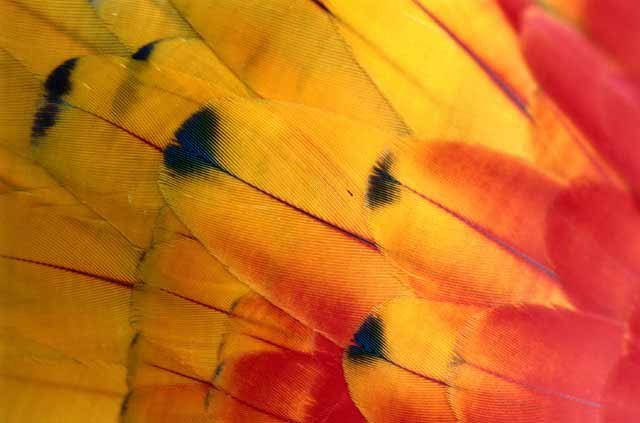
Ala de una mariposa “Troides Minos” en gran detalle_Derechos de autor_fotógrafo James Turner
Poemas de Amor en Quechua: akllasqa rimaykuna [ Qosqo Qhechwasimipi ]
. . .
Jorge Lira (Huñuq)
Kimsata khuyarkkani
.
Allillapakkchá kimsáta khuyarkkáni,
Allillapakkchá kimsáta khuyarkkáni,
Húhnin wañókktin, húhnin ripúkktin,
Sullk’ánwan kkhepanáypakk.
.
Wáh ripúkukk, llókklla mayúta
Ríspa hark’aykámuy;
Mituchawánpas, ch’anpachawánpas
Ríspa hark’aykámuy.
.
Wáh ripúkukk, mistisáta
Ríspa hark’aykámuy;
Sarachawánpas, mut’ichawánpas
Ríspa hark’aykámuy.
.
Mut’ichalláywan, sarachalláywan
Mána atikktínkka,
Mut’ichalláywan, akkhachalláykka
Akis atimúnkka.
. . .
Jorge Lira (Huñuq)
Canto de Amor: Tres Amantes Tengo…
.
Tres amantes tengo
Tres amores son míos
Porque si muriese uno y me deja el otro
Quedarmen pueda con el más mozo.
.
Oh, viajero, que te alejas
Ve, ataja ese río precipitado,
Anda tú, cierra su corriente
Con el barro o con el tepe.
.
Oh, tú que muy lejos te vas
Corre, ataja a esa mestiza
Yendo tú, dentenla allí
Con el maíz o con el mote.
.
Y si mi mote y mi maíz
Detenerla no pudieran
Mi chicha y mi mote verás
Como tienen un gran poder.
. . .
Sunicha chuhchachaymanta
.
Urpíchay súmakk rihch’aycha,
Sonkkóchay ch’áska ñawícha,
Sunícha chuhchachaymánta
Chakáta rurachisíani,
Sunícha chuhchachaymánta
Chakáta rurachisíani.
.
Taytáyki phiñarukúkktin,
Chaynínta apakunáypakk,
Chaynínta pussakunáypakk;
Mamáyki sintirukúkktin,
Chaynínta ripukunáypakk,
Chaynínta apakunáypakk.
.
Taytáyki phiñakusiáchun,
Mamáyki sintikusiáchun,
Chakáykka ruráskkas kásian,
Chaynínta ripukunáypakk;
Chakáykka ruráskkás kásian,
Chaynínta passakunáypakk.
. . .
De mi larga cabellera
.
Paloma mia de bello rostro
Tu de ojos de lucero, mi corazoncito
Para ti, de mi larga cabellera
Un puente mando hacer
De mis largas trenzas
Un puente estan tejiendo.
.
Por ese puente te conducire
Cuando tu padre este airado
Y por alli voy a llevarte
Cuando tu madre este resentida
Y por ese puente me marchare
Y haciendote pasar por alli partire.
.
Que importara el enojo de tu padre
Ni los sentimientos de tu madre
Pues mi puente ya queda hecho
Ese mi puente esta tendido y listo
Para alejarme, irme muy lejos
Para despedirme desde alli.
. . .
Kkóri ráphra pillpintúllay
.
Kkóri ráphra pillpintúllay,
Raphapápan killakúypi,
Tiyarínña kay muthúypi,
Takispátakk pitúllay.
.
Sinp’aykíta kacharíyña,
Kílla wách’ikk llusk’anánpakk,
Yanaykítakk tarinánpakk
Llánp’u kaynínpi kussíta.
.
Yanaykíta sillwilláyña,
Urpiykíta pupalláyña,
Munakúyta umiríspa,
Wayllukúyta umiríspa.
.
T’ánkar rúru, misk’i sónkko,
Munayllátan pukayánki,
Sonkkollaypákkñan kausánki,
Ñawiyki urmanay p’onkko.
Ala de una mariposa andina_fotógrafo Jorge Gajardo Rojas
Una Mariposa
.
Mariposa alas de oro
Tiembla a la luz de la luna
En la rama se posa
Y en mi canción es compañera.
.
Despliega tu cabellera
Y las flechas lunares se deslicen
Y en su suavidad sedeña
Feliz alegría halla tu amante.
.
Abraza y aprisiona a tu prenda
Cautívale tú
Aliméntale con tu amor
Nutriéndole con tus caricias.
.
Fruto de la zarza, de alma dulce
Te enciendes en belleza
Tu existencia será mía
Y tus ojos un lago en que me pierdo.
. . .
Gabriel y Gloria Escobar (Huñuqkuna)
Sunquyta
.
Maytan nini kay sunquyta,
“Ama munankicu” nispa;
qaparispan kuticiwan
“Manan atinicu” nispa.
.
Huh p’uncaymi llakikuna,
intuykusqan;
sapallanta sunquyta,
tapuykuni;
Imaraykun llakisqalla,
purikunki;
mana imapi kusikuyta,
tarispayki.
.
¿Manacu urqukunah,
asisqanta uyarinki?
¿T’ikakunah q’apayninta
q”awarinki?
¿Mayukunah takisqanta
callwakunah puxllasqanta?
.
Huhmanta qaparispa,
kuticiwan;
kusikuyqa manañan
ñuqapahcu;
unayñan sunquyta,
cinkacini;
wañusqatan sunquyta,
p’anpamuni.
.
Huh munayllan,
kay pacapi,
hap’iwaran;
pay raykullan,
kay allpapi,
kawsarani.
.
Cay munaymi
yanaywan cinkaripun;
cay munaymi ripukapun,
yanaypa wañusqanwanmi,
wañupun.
.
Maypiña purispapas,
kiskallatan tarimuni,
maytaña q”awaspaypas,
p”uyullan muyuriwan;
rit’ipas cullurispan,
waqayta yacaciwan;
mayupas qaparispan
waqasqayta musp”aciwan.
.
Manañan ñuqapah,
p’uncawqa kanmanñacu;
intipas k’ancaypas,
tutallan ñuqapah,
wañuymi kawsayniy.
. . .
Gabriel y Gloria Escobar (Huñuqkuna)
A Mi Corazón
.
¡Cuánto le digo a mi corazón!
“no quieras, no ames”
¡A gritos me responde,
no puedo, no puedo!
.
Un día, agobiado por las penas,
a solas pregunté a mi corazón:
¿Por qué tan triste y abatido andas,
sin encontrar en nada ninguna alegría?
.
¿No escuchas el reír de las montañas,
y sientes el perfume de las flores?
¿El cantar de los ríos,
el jugar de los peces?
.
Nuevamente a gritos me responde:
“Ya no existen alegrías para mí,
ya perdí hace tiempo el sentir,
muerto mi corazón ya se sepultó”.
.
Un amor sólo me sostuvo en esta tierra;
por ella solamente
vivía yo en este mundo,
ese amor, con mi amada lo he perdido,
ese amor se ha ido!
¡Muerta mi amada, ese amor ha muerto!
.
Donde voy, donde llego,
espinas sólo encuentro.
Donde voy, donde miro,
sólo las nubes me envuelven.
.
Los nevados al derretirse,
a llorar me enseñaron.
Los ríos con sus gritos
hacen que delire en mi llanto.
.
No creo que ya haya
día para mí,
aun la luz del sol
para mí es noche,
porque mi vida no es vida,
mi vida es muerte.
. . . . .
Yuyarillaway: Poemas de amor en quechua
Posted: March 30, 2015 Filed under: Poemas de amor en quechua: Yuyarillaway, Quechua, Spanish | Tags: Poemas quechuas Comments Off on Yuyarillaway: Poemas de amor en quechua
Recuérdame, Por Favor
(Harawi)
.
1.
Me recordarás cuando en algún lugar de la tierra
centelleante vuelva la luz del sol
haciendo huir la noche oscura.
2.
Me recordarás
cuando en alguna parte baja de la tierra
cansado y ardiendo
se oculte el sol entre las nubes.
3.
Te acordarás de mí
cuando en algún lugar de la tierra escuches
a alguien que cante
rodeado de palomas
entre los arbustos.
4.
Te recordaré
con tu rostro confundido
cuando el sol haya salido
afligido, anochecido.
. . .
[ Un único harawi, recogido en Puno. Del año 1925 – y antes. Letra de un autor anónimo. ]
. . .
Carnaval de Putina
(Carnaval)
.
1.
Como el año pasado, ahora
quizás en su pueblecito esté la gente,
quizás en su pueblicito esté la gente,
tal vez la tierra esté en su corazoncito.
2.
Elegida de mi corazón
para que te habré conocido;
padezco por miles,
¿cómo podre olvidarte?
3.
¿Para qué te habré conocido?
Convirtiendo la noche en día
solamente a ti te busco,
caminando sin rumbo.
4.
Sueño sólo contigo;
cuando me quedo dormido
mil veces te recuerdo
despierto sonámbulo.
5.
¿Qué me contaste
cundo te dije
no me vayas a olvidar?
Cogida de mis manos,
“solo con la muerte”, respondiste.
6.
¿Por qué me olvidas
sin antes haberte muerto?
Muerta si me olvidarías
y yo me quedaría aún alegre.
7.
¿Dónde te encontraré?
Penas de aquí, montañas de allá
¿Cómo podré olvidarte?
Ya mi corazón está acostumbrado a ti.
.
Fuga
.
Hermosa paloma, hermosa avecilla,
¿a dónde vas?
desapareciendo de mi vista,
saltando de mis manos,
llevándote mi corazón,
¿dónde estás?
. . .
[ Un carnaval muy antiguo, del distrito de Putina, en Lampa, Puno. Versión del compositor Zacarías Puntaca Farfán. ]
. . .
Agua de Río
(Wayno)
.
1.
¿Sueles llorar
aguita del río, ladronita de mi corazón?
¿Dónde? Palomita;
estrellita mía de ojos negros
regada con agua cristalina,
amada de mi corazón doliente.
2.
Flor que abres tus pétalos, entre espinas,
sólo la estrella del amanecer se parece a ti.
Golpeando tu puerta
voy a llamarte a media noche.
3.
Florecilla del amanecer
no vayas a abrir demasiado tus pétalos,
mi sufrimiento podría llover en la nieve blanca
cuando chorreen agua las nubes negras
inundando la tierra.
.
Fuga
.
Hay que bailar en cada fiesta,
en cadena, girando, girando
de pueblo en pueblo.
No me recuerdes todo esto después,
viéndome en otras manos.
. . .
[ Un wayno muy indígeno compuesto por Don Inocencio Mamani Mamani, distrito de Mañasu, Puno, 1925. ]
. . .
Nevado del Aussangate
(Wayno)
.
1.
Nevado del Aussangate, de Ocongate,
Montaña divina, huérfana de amores,
Sabrás ahora que amo,
que quiero a una bella Lauramarqueña.
2.
Ocongateña, hija pretenciosa del nevado,
Oh Lauramarqueña adorable,
Sabrás ahora como te amo,
Te raptaré en el corazón de la noche.
3.
Oh doncella sin amores ¡Vamos pues!
Por entre los maizales
viajemos juntos
Por las cumbres, por los nevados.
4.
Nevado grande del Aussangate
que abservas a los de arriba y a los de abajo,
he grabado en tus rocas
la ingratitud de una paloma.
. . .
[ Wayno de Lauramarka y Ocongate, provincia de Quispicanchis, Cuzco. Del libro: Canto de Amor (Padre Jorge Lira, 1959). ]
El Awsanqati (Aussangate) es uno de los dos grandes Dioses montaña del Cuzco.
Lauramarca – importante hacienda, muy cerca del nevado Awsanqati.
. . .
Nube Tranquila
.
1.
Parece que al frente, en aquiel cerro,
hay una nube sentada.
No es una nube,
aquella nube.
2.
Es la sombra
de mi amada
que simulando ser nube…
me cobija, me ampara.
. . .
[ Una canción huancavelicana, del libro Canciones del Ganado y Pastores, por Sergio Quijada Jara (Huancayo, 1957). ]
. . .
Río de Huancavelica
.
1.
Ve, corre por favor
impide que el río de Huancavelica
avance mas allá del andén de abajo.
Deténlo con piedrecitas, con bloques de hierba
y barro, para que mi amada no se vaya.
2.
Ve, corre por favor
atájalo, impide que la villenita
avance mas allá
del andén de abajo.
Atájala con tu aguardientito de caña,
con tu vinito,
que no se vaya.
3.
Anoche, en mis sueños,
me vi en otros brazos
casi me puse a llorar al despertar
preguntándome si podría ser cierto.
Sería mejor no dormir.
. . .
[ Un wayno mestizo – y antiguo – del departamento de Huancavelica. Isabel y Teresa Mesa ofrecieron los versos 1 y 2, en Huancayo (enero de 1985). Otros versos han sido compuestos – tardíamente – pero son de menos belleza; tal es el caso de la versión grabada por el Trío Amanecer (de Huancavelica). ]
. . .
¿Valdría La Pena Que La Ayude A Cruzar El Río?
(Wayno)
.
1.
Mi amada está llorando,
al frente, en la otra orilla,
sola, su propio dolor.
¿Valdría la pena que la ayude
a cruzar el río?
¿Para qué?
¿Para qué se vaya otra vez a otros brazos?
Ya no.
2.
Crié a una palomita
dándole de comer,
protegiéndola entre mis brazos;
¿Valdría la pena que siga
alimentadola?
¿Para qué?
¿Para qué se vaya, otra vez
a otros brazos?
Ya no.
. . .
[ Un wayno huancavelicano – antiguo y anónimo. Ofrecido por Samuel Gilvonio y Eddy Vargas, del Trío Los Willkas del Perú (Huancayo, 1985). ]
.
Transcripciones de: La Sangre de los Cerros (Urqukunapa Yawarnin): Antología de la poesía quechua que se canta en el Perú (Editores: Rodrigo, Edwin, y Luis Montoya: Lima, 1987).
. . .
Yuyarillaway
(Harawi)
.
1.
May pachachus llipipispa
k’anchay inti kutimunqa
k’illmi tutata ayqirichispa,
yuyarillawanki.
2.
May pachachus urayniqta
saykusqaña wasaykunqa
rawraq p’huyu chawpillampi,
yuyarillawanki.
3.
May pachachus uyarinki
urpisapa rikukuspa
sachaq chawpinpi waqachkaqta,
yuyariwanki.
4.
Nuqaqa inti p’awarimuqtin
chisiyaqtin llakikuspa
uyallaykiwan musphaspa,
yuyarillasqayki.
. . .
Putina Carnaval
(Carnaval)
.
Qayna wata kunan hina
ichari runa llaqtitanpi
ichari runaq llaqtitanpi
ichari qallpaq sunqitunpi
2.
Waranqata ñakarini
imapaqcha riqsirqayki
sunqullaypaq aqllakusqan
imaynallas qunqasqayki
3.
Tutatapis punchaychaspa
qanllataña maskasqayki
kunan hina purinaypaq
imapaqcha riqsirqayki
4.
P’uñukuspapas nuqaqa
qanllawansi musqukuni
musparispa riqcharini
waranqata yuyariyki
5.
Imataq niwarqanki
makiymanta h’apiykukuspa
qunqawankimantaq niqtiy
wañuyllawan niwarqanki
6.
Imanaqtin qunqawanki
manaraq wañukuskaspa
wañuspa qunqawankiman
kusisqara q’ipariyman
7.
Kayniq qaqa kayniq urqu
mayllapitaq tarisqayki
ñan q’anman sunquy yachasqaña
imaynalla qunqasqayki.
.
Hawachan
.
Sumaq urpi, sumaq urpi
may pin kanki, maytan rinki
ñawiymanta ch’inkarispa
makiymanta p’awarispa
sunqullayta aparikuspa.
. . .
Mayu Unu
(Waynu)
.
1.
Mayuq unitun sunquy suwita
waqaqchu kanki,
maypi urpisitu
yana ñawiyuq ch’askitallay;
ch’uya unuwan q’arpakusqay
manaq sunquywan munakusqay
2.
Chawpitutatan waqyaykusqayki
ch’aska q’uyllurpaq rikusyasqallan
punkuykita takaykamuspa;
kiskamanta phataq t’ika
3.
Waraq ritiq q’uyllur t’ikita
aman yupata p’anchirimunkichu
llakiytaqsi pararimunman;
yana phuyu thuqamuqtin
qalllpakunata qarpaspa.
.
Hawachan
.
Llaqtan llaqtanpi tusurikuspa
wifala, wifala muyu muyu
sapa fiestapi tusuna;
chaymantataq yuyariwaq
runaq makimpi rikuwaspa.
. . .
Awsanqati
(Waynu)
.
1.
Awsanqatiq, Ukhunqatiq
Mána munakuq awssanqati
Kúnan yachanki munasqayta
Lawramarkina wayllusqayta.
2.
Ukhunqatiña anchaykáchaq
Lawramarkina munaysapa
kúnan yachanki munasqayta
Tútaq sunqunpi suwarusqayki.
3.
Mána munakuq pasña ¡háku!
Sara sara chacrallanta
Qanwan kuska ripusunchis
Urquntapis qasantapis.
4.
Háwan qatiq, uran qatiq
Hatun Apu Awsanqati
Qaqaykipin siqimuni
Huk urpillay chiqniyninta.
. . .
Puyu Tiyachkan
.
1.
Chimpa urqupis
puyu tiyachkan
manas puyuchu
chayllay puyuqa.
2.
Warma yanaypa
llantuchallansi
puyu tukuspa
llantullawachkan.
. . .
Uran Pata Villamayu
.
1.
Uran pata Villamayuta
Curiya qarkaykamuy
champachawampas
rumichawampas
Curiya qarkaykamuy
amaya pasapuchunchu.
2.
Huran pata villinitata
Curiya qarkaykamuy
traguchawampas
winuchawanpas
Curiya qarkaykamuy
amaya pasakuchunchu
kuskalla tumaykusaq
amaya ripukuchunchu
3.
Chisituta suiñuchallaypi
hukpa brazumpi kachkasqani
rikcharimuspay waqarquniraq
ciertullaraqchu kanman nispa
amaya puñullasaqchu
amaya puñullasaqchu
. . .
Chimpachimuymanchuch
.
1.
Wak ladu chimpapi
yanay waqachkan
sapallampi, kikillampi
chimpachimuymanchuch
imapaq, hukpa brazullampaq
amaña.
2.
Quk urpichallatam uywakurqani
brazuy ukupi umipayaspay
umillaymanraqchuch
imapaq, kukpa brazullampaq
amaña.
. . . . .
Poemas de Amor – en el idioma quechua: amor de la tierra, y del pueblo: Urqukunapa Yawarnin
Posted: March 30, 2015 Filed under: Poemas de Amor – en el idioma quechua: Urqukunapa Yawarnin, Quechua, Spanish | Tags: Poemas quechuas Comments Off on Poemas de Amor – en el idioma quechua: amor de la tierra, y del pueblo: Urqukunapa Yawarnin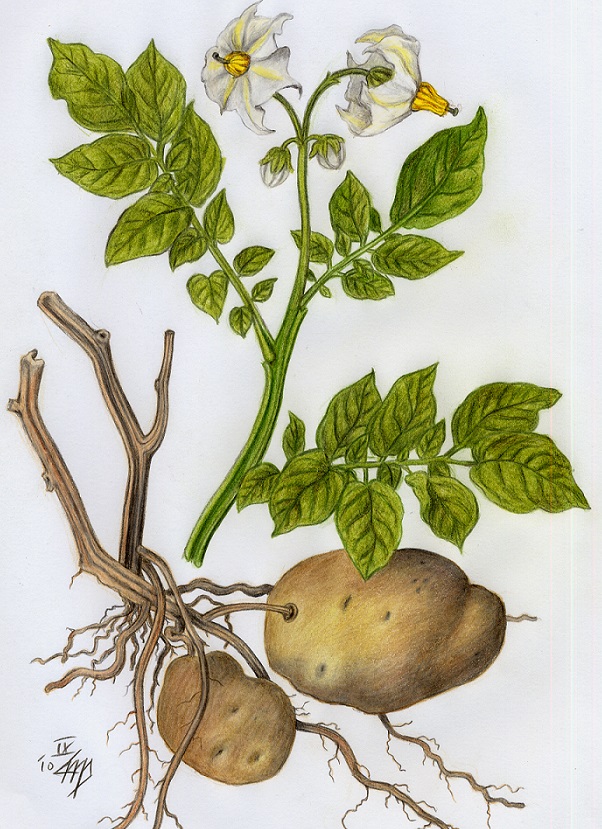
Poemas de Amor – en el idioma quechua: amor de la tierra, y del pueblo: Urqukunapa Yawarnin
. . .
Siembra de Papas
(Harawi)
.
1.
¿Estará creciendo todavía
o ya no?
¿Papita que sembre
en una tierra caliente?
¿Estará fruteando todavía
o ya no?
.
2.
Le estoy preguntando
a la papa que he sembrado,
solo por sus frutitos,
solo por sus raicitas.
3.
¿Recuerdas todavía,
o ya no,
que con las manos
y los pies
sembramos las papas?
Yo, mi niñito*,
yo si estoy recordando
que con las manos
y los pies
las sembranos.
.
4.
En las alturas de Qosñipata
están durmiendo las nubes.
Viéndolas dormir
lloro sangre,
recordando estas nubes
lloro sangre.
.
Fuga
.
¿Quién es ese que me llama
desde Qosñipata?
. . .
[ Harawi de Tocroyoq, Espinar, Cuzco. Cantado por Maximiliano Cruz Ch’uktaya, 1984. ]
*niñito (niñuchay): el hablante llama a un niño de los patrones.
. . .
Canto en la Siembra del Maíz
.
1.
Baja el agua del maíz agusanado,
baja al agua desde los arbustos,
¿será mi madre? ¿Será mi padre?
¿Será mi amada? ¿Será mi paloma?
¡Wawayay uuuyyy!
.
2.
Si fuera mi madre, si fuera mi padre,
si fuera mi amado, si fuera mi paloma,
me acompañarían a dormir por estos lugares,
me ayudarían a despertar a este, mi compadre.
¡Wawayay uuuyyy!
.
3.
¿Es tuya esta chacrita
con muros de amapolas?
¿Es tuya esta chacrita
con muros de claveles?
¡Wawayay uuuyyy! ¡Waaasuu!
.
4.
Ésta, esta es mi chacrita
Ésta, esta es mi chacrita,
su tierrita es de azúcar
su azufrecito es de chancaca.
¡Wawayay uuuyyy! ¡Waaasuu!
.
5.
Al borde de tu chacrita, hijito mío,
he plantado una flor de wampu, hijito mío,
el jovencito debiera ayudarme, hijito mío,
también su amita me olvido, hijito mío,
el joven debiera ayudar, hijito mío,
ya hasta mi compadre me ha visto, hijito mío…
¡Yuuu waaasuu!
.
6.
Ya la mariposa jaspeada,
la mariposa jaspeada,
ha dado vueltas a mi alforja.
¡Cómo se parte mi vida!
Wawayaaa waaasuuu…..
. . .
[ Apurímac – Artistas de Antabamba ]
Wanka = harawi
. . .
Aporque de la Papa
(Harawi)
.
1.
He salido a media noche;
he salido
a la hora del canto del gallo
mientras mis padres
trataban de impedir que saliera.
.
2.
Cuando aún no había llegado
al borde de la chacra
le diremos al Capitán, me dijeron,
le diremos al qollana, me contaron.
.
3.
¿Está bien ajustada tu lampa?
¿Está bien protegida tu cintura
para que le enlutes a los inútiles?
.
4.
Ahora si, mi mozo,
ahora si, mi mozo
mi cantito rodado.
.
5.
Tayankito, tayankito
tayankito cabezón
le haré llorar dijiste;
dices también que soy brujo.
Yo no te hice embrujar
fue la tierra quien te embrujó.
.
6.
Ahora sí, mi mozo,
ahora sí, mi mozo
mi cantito rodado.
. . .
[ Una canción agricola, muy antigua, de Huancabamba, Andahuaylas, Apurímac. Dos mujeres llamadas Harawiq la cantan. Del folleto de Carlos Vivanco Flores (Pueblo Chanka, obra constumbristas de Andahuaylas, 1972). ]
.
Paqchay es el primer aporque del sembrío de papas.
Qollana, jefe o caporal de un grupo de trabajadores. También es la residencia de un mandón de segundo orden en la parcialidad de abajo – urinsaya.
Alqarasu, inútil, en el quechua andahuaylino.
Alaymosca, canto rodado, piedra del río, muy resistente.
. . .
Canción del Aporque del Maíz
.
1.
Ayúdenme a aporcar mi maíz,
hermanitas vivaces y bonitas.
Ayúdenme a aporcar mi maíz,
hermanitos buen mozos.
2.
Estamos viniendo en este instante
causando miedo allachu,
bailaremos todos nuestro Punpin
al borde de nuestra chacra.
3.
Cantando y bailando
sembraremos nuestros alimentos,
cantando y bailando
aporcaremos el maíz.
4.
¡Qué hermosa produce la madre tierra
para dar de comer a sus hijos!
¡Qué hermoso es en Huancapi el punpin
nuestro canto y nuestro baile!
5.
Todas las chicas
bailaremos muy bonito con los mozos,
como los pies de la calandria de pecho amarillo.
Cantaremos todos juntas, dulcemente,
como mi canario amarillito.
Bailaremos dulcemente.
6.
Florcita amarilla del borde de la chacra
flor roja del borde de la chacra
siendo un picaflor podría sorberte
aun siendo una abejita pordría sorberte.
. . .
[ Canción del Sara Qallmay, Huancapi, Provincia de Victor Fajardo, Ayacucho. Cantado por el conjunto Waylla ichu. ]
.
Allachu, instrumento de trabajo para escarbar los tubérculos y arrancar plantas de raíces profundas.
Punpin, nombre del pukllay o carnaval en Fajardo.
. . .
Ronda, Mi Ronda
(Canción de la Cosecha)
.
Los hombres cantan:
Una cinta labrada, mi ronda ronda,
se extiende desde la torre de Huamanga,
mi ronda ronda.
Bailemos, cantemos, mi ronda ronda
en esta era tan preciosa mi ronda ronda.
.
Te dije que pises mi cebadita, mi ronda ronda
y no la pampa desnuda, mi ronda ronda.
Te dije que pises mi triguito, mi ronda ronda
y no la pampa en vano, mi ronda ronda.
.
Las mujeres cantan:
Una cinta labrada, mi ronda ronda
se extiende desde la torre de Lucanas,
mi ronda ronda.
Bailemos, cantemos, mi ronda ronda
en esta pampita tan, tan hermosa, mi ronda ronda,
en esta erita de Eqnune mi ronda ronda.
.
Te dije que pisaras mi cebadita, mi ronda ronda
y no la pampa desnuda, mi ronda ronda.
Te dije que pisaras mi triguito, mi ronda ronda
y no la pampa, en vano, mi ronda, mi ronda.
. . .
[ Qayra o danza de la cosecha de cebada y trigo en la comunidad de Eqnune, Lucanas, Ayacucho. ]
. . .
Transcripciones de: La Sangre de los Cerros (Urqukunapa Yawarnin): Antología de la poesía quechua que se canta en el Perú (Editores: Rodrigo, Luís, y Edwin Montoya, Lima, 1987).
. . .
Papa Tarpuy
(Harawi)
.
1.
Q’uñi uquchapi
papacha tarpusqay
wiñashanmanraqchu
icha manaraqchu
rurushanmanraqchu
icha manaraqchu.
2.
Papa tarpusqayta
tapurikushyani
papa tarpusqayta
tapupayashyani
ruruchanraykullas
raphichanraykullas.
3.
Yuyashankiraqchu
icha manañachu
makiway, chakiwan
tarpuyunqanchista
ñuqa niñuchay
yuyashallanimá
ñuqa niñuchay
yuyakushanimá
makiway, chakiwan
tarpuyusqanchista.
4.
Qusñipata patapiri
phuyullas puñushan
chayta qhawarispas
yawarta waqani
chayta yuyarispas
yawarta waqani.
. . .
Hawachan:
Pitaq chay, maytaq chay
q’usñipatamanta waqyamuwan.
. . .
Sara Wanka
.
1.
Utus Saramanta yaku urayamun
achas sachamantas yaku urayamun
ichari mamaychu, ichari taytaychus
ichari yanaychu, ichari urpiychus
Wawaya uuuyyy!
2.
Mamallay kaspaqa, taytallay kaspaqa
yanallay kaspaqa, urpillay kaspaqa
Kaynin kaynillayta puñuriysiwanman
kay cumpadrillayta rikchallaysiwanman
Wawayway uuuyyy!
3.
Kaychus kaychus chakrallayki
kaychus kaychus chakrachayki
clavilmanta qinchachayuq
amapula muquchayuq
Wawayay uuuyyy! Waaasuu!
4.
Kaymi kaymi chakrachayqa
kaymi kaymi chakrachayqa
azucarmanta allpachayuq
chankakamanta qullpachayuq
Wawayay uuuyyy! Waaasuu!
5.
Chakrallayki patallampi wawallay
wampu wayta plantarani wawallay
chayta warma yanapanman wawallay
amitampas qunqawanñam wawallay
chayta warma yanapanman wawallay
cumpadriypas rikuwanñam wawallay
Yuuuu waaasuu!
6.
Muru pillpichay muru pillpichay
alfurjachayman muyurirunñam.
Ima vidaymi partinakunan!
Wawayaaa waaasuu!
. . .
Papa Pakchay
(Harawi)
.
1.
Chawpitutan
lluqsimullarqani;
wallpawaqaytan
lluqsimullarqani
tayta mamallay
harkallawachkaptin.
2.
Manallaraqpas chayallaptiyqa
chakrapataman nispa willawanku;
capitanchaman nispa willawanku
qullanachaman nispa willawanku.
3.
Takllachayki allin kalsasqachu
cinturachayki allin watasqachu
alkanasulla lutuchinaykipaq.
4.
Ahora si musuy
Ahora si musuy
alaymuscachallay.
5.
Tayankuchay, tayankuchay
umasapa tayankuchay
waqachisaqmi niwasqanki;
layqan, layqan niwasqanki
mana nuqachu layqachiykiqa
allpaterram layqachisunkiqa.
6.
Ahora si musuy
ahora si musuy
alaymuscachallay.
. . .
Sara Hallmay
.
1.
Panichakuna sumaq vivachakuna
sarachallayta allmaykaysimuway
wawqichakuna, sumaq musuchakuna
sarachallayta hallmaykaysimuway.
2.
Kanachallanmi amullachkaniku
allachullayta qipirikullaspa
chakranchikpa patachallampiña
Pumpinllapi tusurikusunchik.
3.
Takiykuspa tusuykullaspanchik
kawsaychata tarpuykullasunchik
takiykuspa tusuykullasunchik
sarallata hallmaykullasunchik.
4.
Ima sumaqmi allpa pacha rurun
wawallankuna mikuykachinampaq
Punpin takiy punpin tusuyninchik
ima sumaqmi wankapi llaqtapi.
5.
Musukunawan llapa sipaskuna
sumaqchallata tusuykullasunchik
qillu qasqu tuyacha hinalla
miskichallata takiykullasunchik
qulluchallay canaro hinalla
miskichallata tusuykullasunchik.
6.
Chakra patachapi qillu chiwan
waycha
chakra patachapi pukachiwan
waycha
q’inticha kaspayqa
suqucharuykiman
tankacha kaspaypas
suqucharuykiman.
. . .
Pirwalla Pirwa
(Irapi taki)
.
Qarikuna:
Guiallallay, guiallay, guía guía guíalla guía…
Huamangallay Turrimanta pirwalla pirwa
labrada cinta chutakamun pirwalla pirwa
tusukusun, takikusun, pirwalla pirwa
cibadayta saruy niyki pirwalla pirwa
kay chika sumaq irachapi pirwalla pirwa
manay qala pampatachu pirwalla pirwa
triguchaytaman saruy niyki pirwalla pirwa
manay yanqa pampatachu pirwalla pirwa.
.
Warmikuna:
Lucanasniy turrimanta pirwalla pirwa
labrada cinta chutakamun pirwalla pirwa
tusukusun, takikusun pirwalla pirwa
kay chika sumaq pampachapi pirwalla pirwa
Iqnunillay irachapi pirwalla pirwa.
.
Cibadayta saruy niyki pirwalla pirwa
manan qala pampatachu pirwalla pirwa
triguchaytam saruy niyki pirwalla pirwa
manan yanqa pampatachu pirwalla pirwa.
. . . . .
Niyi Osundare: “Who’s Afraid of The Proverb?”
Posted: March 29, 2015 Filed under: English | Tags: African poets Comments Off on Niyi Osundare: “Who’s Afraid of The Proverb?”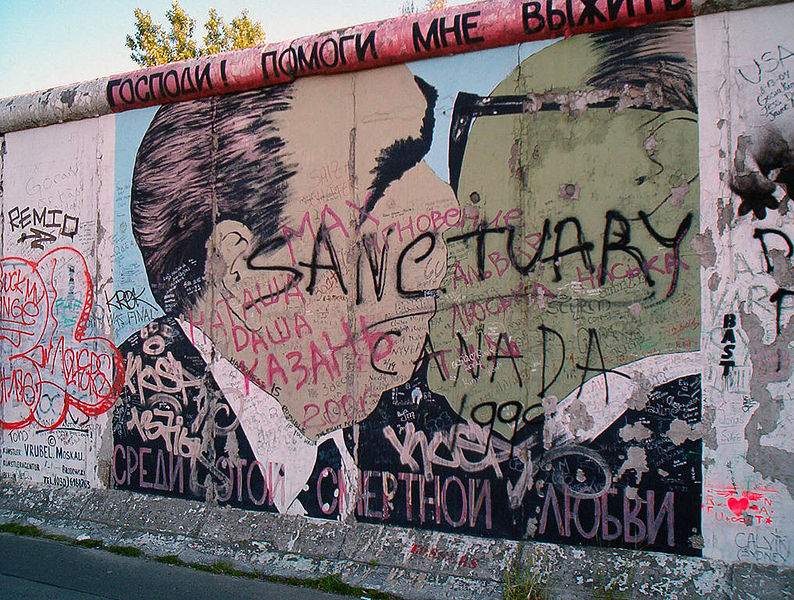
Photograph from 2005 of a fragment of The Berlin Wall (1961-1989)…Osundare’s poems, Checkpoint Charlie and Berlin 1884/5, treat “The Wall” “falling” with multiple ironies regarding History…
Niyi Osundare
(born 1947, Ikere-Ekiti, Nigeria)
. . .
The Large Heart
.
When last did you say hello to a neighbour
Or share with him the early pick
From your backyard garden?
.
When last did you lower that fence
Trim those thorny hedges
And throw a handshake across their forbidding top?
.
When last did you stop in the street
To crack a joke or savour banter
And spread the healing magic of laughter?
.
When last did you say “Bless you”
To soothe a sneeze, or “Take care”
To one who has stubbed a toe?
.
When last did you offer a meal
To a hungry stranger and command
The water from your well to was his feet?
.
When last did your dough of friendship
Rise in the furnace of the sun,
Your milk of mercy in the pitcher of the moon?
.
When last did you think about your fatter calf
And the skinny swansong of the begging bowl
The sin-phony of your silk, and the scream of the national rag?
.
When last did you throw a bridge
Across the gulf and sew little stars in the darkness of forgotten skies?
.
When last did you listen to the wails of the forest
Arrest the savagery of a wanton machete
Enlist in the Salvation Army of Earth and Sky?
.
A genuine smile is longer than a mile,
A large heart is not a medical problem.
. . .
Letter from The Editor
(who once lectured a Nigerian poet of my acquaintance on the virtues of “traveling poems”)
.
Thank you for your poems
Our Editorial Board was tremendously amused –
.
– but there are too many foreign places
In your verse, too many African names
Too strange for the sophisticated glide
.
Of our English tongue.
(You see, we prefer words which pose
No threat to the dental health of our readers.)
.
Too many matters better left to politics – and politicians;
What does poetry have to do
With those who rule us – or those we rule?
.
– with the whimsical temper of stocks and shares,
The cost of a ream of paper
Or the price of bread in the marketplace…?
.
Too strong, your feelings; too sharp
The thrust of your tropes…
We are a people tuned to tamer truths.
.
So: why not bend your wit to the rule of rhyme,
The supremacy of nothingness,
The post-modernity of silence…?
.
Send us poems unclogged by human kindness…
Send us poems that travel.
. . .
Checkpoint Charlie
.
A tortured rainbow:
mosaic of broken epics
.
Quarry for museum hounds
and undertakers for private temples.
.
Here, now, in the dust and concrete splinters,
The Wall
which grew so tall, so wide,
.
It cut the sky in two:
the sun rose on one side, set in the other.
.
Market forces howled and swaggered on one side,
the whimsical Babel of stocks ‘n shares.
.
On the other, human Need wrestled with human Greed
– culture with chaos, mercy with monopoly.
.
Then, a smiling comrade dropped the egg…
and the world couldn’t gather the shattered pieces…
.
Our guide told the story from his own side,
as I took another look at the boy
who sold “The Wall” for tourist dollars.
.
“Come buy History, come buy History!”, he screamed
again, his voice vanishing into the late morning traffic.
. . .
Berlin 1884/5
“Come buy History, come buy History!”
.
I looked round for vendors of my own past,
For that Hall where, many seasons ago,
My Continent was sliced up like a juicy mango…
.
…to quell the quarrel of alien siblings.
I looked for the knife which exacted the rift
– how many kingdoms held its handle?
.
The bravado of its blade,
The wisdom of potentates who put
The map before the man,
.
The cruel arrogance of empire,
Of kings/queens who laid claim to rivers, to mountains,
To other peoples and other gods, and other histories…
.
And they who went to bed under one conqueror’s flag,
Waking up beneath the shadows of another,
Their ears twisted to the syllable of alien tongues.
.
Gunboats,
Territories of terror…
.
Oh, that map – that knife, those contending emperors,
These bleeding scars in a Continent’s soul,
Insisting on a millennium of healing.
. . .
Skinsong 3
.
And pale shadows descend
Upon our noon of bronze:
“You have no past,” they say,
“Your history is darkness
Which never knew the faintest sun.”
.
“Tell us another lie,”
Retort the griots,
About trees without roots,
Rivers without sources,
Because without whys.
Tell us
About the bridge
Which looks forward
Without a backward glance.
. . .
End of History
.
Old truths tumble down
In sunrise cities;
A hated wall dissolves
In a haze of fireworks
And gathering shadows.
.
Old truths tumble
– On the compost of newer Truths.
.
And sunset pundits swear
They have climbed the mountain,
And seen History’s grave
In the elbow of misty valleys.
.
Pundits say
The sun has suddenly stopped
Its limbless journey across the sky.
.
Today I look History
In the face,
His/Her brow a taut membrane
Of inexhaustible riddles.
.
Today I look History
In the face,
And I remember the child in the tale
Who touched the elephant’s tale,
Vowing he had seen everything
About the giant in the forest.
. . .
Testament 1
.
I hold this shred of eternity
in my hand
pulsating like a purple pledge;
falling leaves twirl in the soundless wind
the sun brightens up its corner of the day.
.
The afternoon bell has come and gone,
burying rapid moments in decibels of silence.
.
I hold this shred of eternity
in my hand.
.
I sew that thread
into the memory of the sky
where clouds are cottonballs
waiting for the lyric of the loom.
.
I am a poet:
my memory is a house
of many rooms.
. . .
Who’s Afraid of The Proverb?
(To go with the song:
Owe lesin oro
Oro lesin owe
Toro ba sonu
Owe la fi nwa *)
.
I
.
Who’s afraid of the proverb
of the eloquent kernel in the pod
of silent moons?
.
Who’s afraid of the proverb
of the kola in the mouth of the mountain,
giant udder of the cow of the sky?
.
Who’s afraid of the proverb
of the drum which left its echoes
in the auricles of leaping streets?
.
Who’s afraid of the proverb
of the river which traverses the earth
in limbless intensity?
.
Who’s afraid of the proverb
of the sonic feathers of metaphors in flight,
the lift and thrust of impossible fancies?
.
Who’s afraid of the proverb
of the wind’s truthful lyre,
melodic thrum of Desire’s fingers?
,
Who’s afraid of the proverb
of the shortest distance
between many truths?
.
II
.
Who’s afraid of the proverb
who’s so fat on the Lactogen of the moment,
has lost all hint of the milk of dawn?
.
Who’s afraid of the proverb
stalking minnows in brackish waters,
scared of the shoals which surprise the deep?
.
Who’s afraid of the proverb,
anonymous spaces
in the abyss of the sky?
.
Who’s afraid of the proverb,
first clay in the furnace
of chilling fires?
.
Who’s afraid of the proverb,
silent salt in the feast
of delicious words?
.
Who’s afraid of the proverb?
Who’s afraid of
m-e-m-o-r-y?
. . .
* The proverb is the horse of the word.
The word is the horse of the proverb
When the word is lost
It is the proverb we use for finding it.
. . . . .
To read Osundare’s poem “Metamorphosis”, click on the following ZP link:
Poems of Protest from Prison: Nigeria, 1995
Posted: March 24, 2015 Filed under: English | Tags: African poets, Ken Saro-Wiwa Comments Off on Poems of Protest from Prison: Nigeria, 1995
Ken Saro-Wiwa (1941-1995)
. . .
The Call
.
Hear the call of the ravaged land
The raucous cry of famished earth
The dull dirge of the poisoned air
The piteous wail of sludged streams
Hear, oh, hear!
Stunted crops fast decay
Fishes die and float away
Butterflies lose wing and fall
Nature succumbs to th’ecological war.
. . .
Keep Out Of Prison
.
“Keep out of prison,” he wrote
“Don’t get arrested anymore.”
But while the land is ravaged
And our pure air poisoned
When streams choke with pollution
Silence would be treason
Punishable by a term in prison.
. . .
Ogoni Hymn
.
Creator of Ogoni
Land of glory and wealth
Grant us thy peace and lasting love
Plant justice over the land
Give us thy wisdom and the strength
To shame our enemies.
.
Creator of Ogoni
Land of glory and wealth
Grant everlasting blessings, Lord
To people of Gokana
Khana, Eleme, Tai and Babbe
Glorious Ogoniland.
. . .
Town-Crier
.
Take these cuffs from my legs
And set me free
Pick the lies from your teeth
And let me be
Town-crier, proud gong
Calling the lame and deaf
To defend their blasted land.
. . .
Stone Deaf
.
Tired
of the questions
bored
by the din
of the lone voice
piping
to ears hearing
only
the sounds of their choice.
. . .
For Zina
.
I have raised the questions, daughter
Which you and your kids must ponder
I feel guilty I did not sooner
In my lifetime urge them stronger
And now, ere I answers provide
I may in cold blood lie buried
Have I your futures compromised?
. . .
Night Time
.
The beep of insects
The hoo-hoo of bullfrogs
And the croak of toads
Companion of a night
When nightmares burgle our sleep.
. . .
Morning Song
.
This morning is sheer poetry
as from my detention cell
my heart sings with the red
freshness of hibiscus flowers
the vivid colour of the ixoras
shooting out of the green abundance
of a heart which resists surrender
to a garden of rank weed and mush.
. . .
I Lie Alone At Night
.
I lie alone at night
And think all of one year’s gone
Since I held you in my arms
In the bed we know so well.
.
I lie alone at night
And see the callous bandits
Break into our hallowed bedroom
Cruelly knife our togetherness.
.
I lie alone at night
And think of you lying lonely
Dreaming of my return
To the home we love so well.
.
I lie alone at night
And think of the thick boots
Which stalk the halls of tyranny
And crush us underfoot.
.
I lie alone at night
And wonder why you wait
And endure the gripping pain
Which is my lot to bear.
.
I lie alone at night
And think of the stranger moon
The stars beyond my gaze
Your beauty like moons and stars.
.
I lie alone at night
And pray the day will come
To mend your broken heart
And steel my breaking soul.
.
I lie alone at night
And dream a great new dawn
Without boots and knives
Broken hearts, breaking souls
Empty dreams and lonely beds
Stranger moons and searing pain
When you and I and all of us
Can hold hands and sing our love
Into a night captured by peace.
. . .
Fire
.
There is a fire in me
Burns all night and day
Flares at injustice
Leaps at oppression
Glows warmly in beauty.
. . .
Kenule “Ken” Beeson Saro-Wiwa (1941-1995) was a Nigerian writer and environmental activist, of Ogoni ethnicity. Ogoniland, situated in the Niger Delta, was exploited for crude oil extraction from the mid-1950s onward by the Dutch giant, Shell Oil. Ogoniland suffered extreme environmental degradation – from oil spills, flares, and waste dumping. Saro-Wiwa, from 1990 to 1995, with MOSOP (Movement for the Survival of the Ogoni People), led a non-violent campaign of resistance against Shell and the complicitness of Nigeria’s government, under the military dictatorship of General Sani Abacha. The writer/activist’s execution (along with eight others) provoked international outrage, resulting in Nigeria’s suspension for several years from the Commonwealth of Nations.
. . .
Nnimmo Bassey, co-ordinator of Oilwatch International and director of the Health of Mother Earth Foundation – from his introduction to The Last Writings of Ken Saro-Wiwa (published 2013):
Reading through the treasure trove of letters and poems compiled here evoked such intense memories of Ken’s resolute struggles against an oil behemoth and a deaf autocratic government. His crusade frames one of the most tumultuous periods in Nigeria’s history; his tragic story evokes anger and demands action to resolve the crises that first led the Ogoni people to demand that Shell clean up Ogoniland or clear out of the territory. It was Ken’s leadership, in great part, that forced Shell out of Ogoniland in 1993…..His pioneering work in building a virile environmental justice movement as well as that for the rights of minorities in Nigeria remains outstanding – and continues to inspire campaigners around the world.
. . . . .
 Zócalo Poets