Al Corrector de Texto por James Morris
Posted: June 28, 2011 Filed under: James Morris, Spanish, ZP Translator: Lidia García Garay Comments Off on Al Corrector de Texto por James Morris_____
Al Corrector de Texto
No hables de me sintáxis,
tú, dominador ligüístico de corazón negro.
Calla tu voz alta, ronca, de escarnio crítico.
Tú no puedes comprender mi estilo y mi visión.
Pon en paréntesis tus objeciones y tus agudos arrebatos,
El conocimiento del idioma que yo poseo va más allá de tu evasión de artificios.
Y a propósito,
mi Gramática era una encantadora mujer.
_____
Traducción al español por Lidia García Garay
Dos Poemas por Gwendolyn MacEwen
Posted: June 26, 2011 Filed under: English, Gwendolyn MacEwen, Spanish, ZP Translator: Lidia García Garay Comments Off on Dos Poemas por Gwendolyn MacEwen
La luz del sol en la esquina de Sherbourne y Bloor
Ya muy tarde mi bicicleta me lleva a través de la ciudad.
Me pregunto como nosotros
amoldamos nuestras vidas, estos desórdenes brillantes,
estos finos errores inspirados cuando – Mira –
El futuro está totalmente implícito en el presente,
el presente es el resultado lógico
De todos los puntos en el pasado y ese edificio al cruzar la calle
su construcción que viene desde Siempre.
Todo lo que hacemos hoy contiene las semillas de su propia transformación.
El puente yace sobre la quebrada honda.
Algo me dice: Nunca harás nada más vital, más
profundo, más perfecto o más necesario que
lo que estás haciendo en estos momentos.
Hoy ha sido Viernes, ese era su nombre – Viernes – y
la luz del sol en Sherbourne y Bloor complementa la ciudad.
*
El Parque: veinte años más tarde
No es el mismo parque, pero podría serlo.
Es Christie Pits al fin del verano,
La tristeza colosal del fin del verano.
Otra arena, otro coliseo,
Atletas diferentes con su esbeltez poderosa,
Diferentes corredores con su fuerza esbelta.
Sentado en la grama reverdecida y lujosa comtemplo
Estos espléndidos jugadores al fin de su juego.
*
Sunlight at Sherbourne and Bloor
Late afternoon my bike takes me across the city. I wonder how we
fashion our lives, these brilliant disorders, these fine, inspired errors when
– look – the future is utterly implicit in the present, the present is the logical outcome
Of all points in the past, and that building going up across the
street has been going up forever. Everything we do now contains the
seeds of its own unfolding. The bridge eases over the deep ravine.
Something tells me:
You will never do anything more vital, more profound, more perfect or more
Necessary than what you are doing right now.
Today has been Friday, that was its name – Friday – and the
Sunlight at Sherbourne and Bloor completes the city.
*
The Park: twenty years later
It’s not the same park, but it may as well be.
It’s Christie Pits at the end of summer,
The colossal sadness of the end of summer.
Another arena, another colosseum,
Different athletes and their mighty slenderness,
Different runners with their slender might.
I sit on the extravagant overgreen grass and watch
These splendid players at the end of their game.
———————————————————-
Gwendolyn MacEwen (1941-1987)
Traducción de estos dos poemas al español por Lidia García Garay
*
Gwendolyn MacEwen (1941-1987) was a Torontonian poet.
She taught herself to read Arabic, Greek and Hebrew, and won
the Governor General’s Award for Poetry in 1969 with her collection,
“The Shadow Maker”.
Translation of the above two poems into Spanish by Lidia García Garay
*
Gwendolyn MacEwen’s poetry reprinted with permission of Ms. MacEwen’s Estate
The Facts / Los Hechos
Posted: June 7, 2011 Filed under: Alexander Best, English, Spanish, ZP Translator: Lidia García Garay Comments Off on The Facts / Los Hechos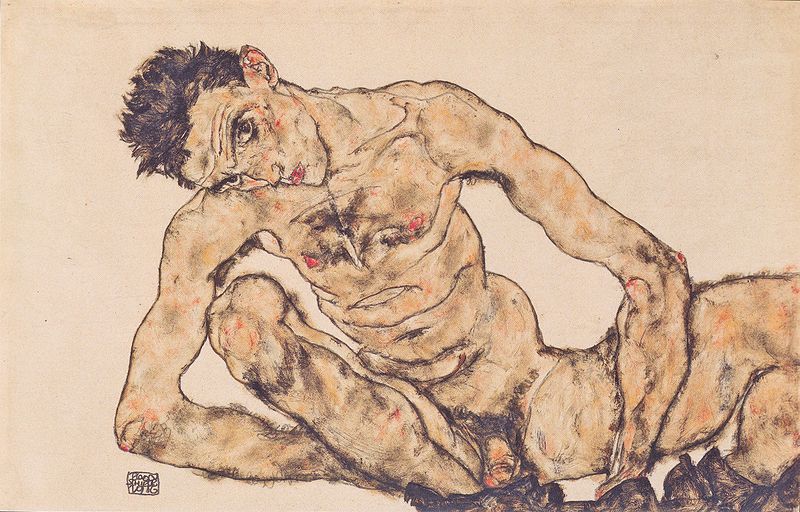
The Facts
by Alexander Best
.
My body’s made of clay – of iron, wool and gold – and
Mainly of clay.
The body falls apart; is brave; builds itself again – while I
Sleep; while I – crippled – walk.
A body’s made to love, though not to worship. For the
Soul must never be held. Still – I’ll
Take care of my mudcaked ” house “, at least for
This little while.
When your body’s well, I love it; when your body’s sick, too. Because it’s
There I find Us – for a time.
Oh, of all the wishes I might wish, I’d wish for — —
But the facts are enough.
Forever, You and I are
Pure as soil, delicate as dust, magical as ash.
Our body – weary, strong body –
Our body’s made of clay.
. . .
Los Hechos
por Alexander Best
.
Mi cuerpo está hecho de arcilla – y de hierro, lana y oro –
Y más que todo de arcilla.
El cuerpo se desintegra; es valiente, se reconstruye por sí mismo
– mientras duermo; cuando – lisiado – camino.
Un cuerpo está hecho para ser amado, sin embargo no lo idolatres.
Porque el alma no debe ser retenida.
Aun así yo cuido a mi ‘casa’ cubierta de barro endurecido, por lo menos
por un rato.
Cuando tu cuerpo está bien, lo amo, cuando está enfermo también.
Porque es allí donde encontramos a nosotros – por un rato.
Oh, de todos los deseos que yo pudiera desear —
Pero los hechos son suficientes.
Para siempre Tú y Yo somos
Puros como tierra, delicados como polvo, mágicos como la ceniza.
Nuestro cuerpo – cansado, fuerte –
Nuestro cuerpo está hecho de arcilla.
. . .
Traducción al español por Lidia García Garay
Kyoto Protocol: 2 poems by Alexander Best
Posted: June 1, 2011 Filed under: Alexander Best, English, Spanish, ZP Translator: Lidia García Garay Comments Off on Kyoto Protocol: 2 poems by Alexander BestHANDMADE POEM
_
One way
Right way
Lost and pounding
_
Treasure
Shovel
Message
Bottle
_
Plastic
Bagful
Urgent
Bubble
_
Soilmouth
Steepdrink
Skypit
Hovel
_
Un-way
Our way
Human foundling
_
Mousepad
Chisel
Boulder
Nipple
_
Clayclod
Seedhusk
Grounded
People
_
Yucca
Maize and
Grains
Astounding
_
Cellphone
Oatmeal
Idealogjam
_
Slowburn
Brainsmoke
Concrete
Feed me
_
Juice of
Grasses
Miles of
Malls and
_
Micro
Chip off
Old block
Heed me.
. . .
WATER SONNET
_
My love and I go down to the well
With buckets at our waists,
and dip the vessels in, refresh ourselves,
Then give we chase…
_
The sparkling drench is ours,
Extravagance of simple choice.
We swallow all, we surge and runneth o’er
By such device.
_
And liquid Time a-rushing flows
And tolls the bell for me,
And you – where did our children go?
Could we abandoned be?
_
My love and I went down to the well
And turned our buckets over;
And sat upon them;
Sighed and waited – waited, sighed –
Forever.
(September 2010)
. . . . .
POEMA AL AGUA
_
Mi amada y yo vamos al pozo
Con cántaros a la cintura,
Los metemos al agua, nos refrescamos y
luego correteamos…
_
El líquido brillante que nos empapa es nuestro,
una extravagancia fácil de escoger
nos la tomamos, resurgimos y
nos dejamos atropellar por tal método.
_
Y el Tiempo líquido corre y nos toca la campana
¿Y vosotros— adónde fueron vuestros hijos?
¿Hemos sido abandonados tal vez?
_
Mi amada y yo fuimos al pozo,
Pusimos nuestros cántaros boca abajo
y nos sentamos en ellos;
Suspiramos y esperamos – esperamos, suspiramos
Para siempre.
__________
Traducción al español por Lidia García Garay
‘El Buen Libro’ / ‘The Good Book’
Posted: June 1, 2011 Filed under: Alexander Best, English, Spanish, ZP Translator: Lidia García Garay Comments Off on ‘El Buen Libro’ / ‘The Good Book’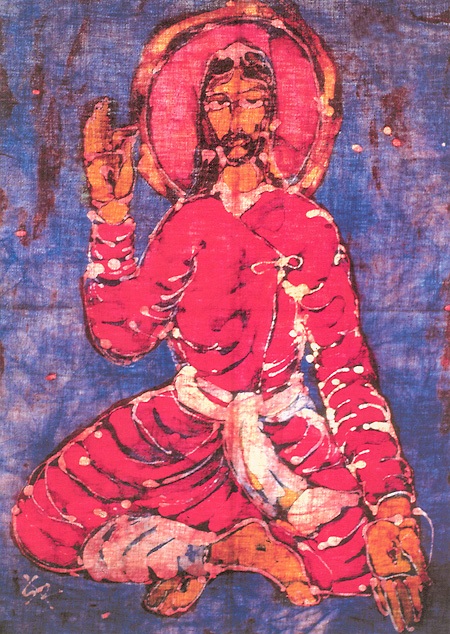
‘The Good Book’
by Alexander Best
.
I open the book, rather, The Good Book.
Is The Answer within these thousand-odd onion-skin pages?
No.
But it’s an amazing life-span’s read, just the same;
About folks – dead, all of ’em – who were
Rough, sweet, ignorant.
Naaah, Hollywood / Science
Can’t crack this nut – and I’m
Glad in that.
_
My
Favourite exasperating character is
Jesus:
Son of man, born of woman, had – (they say) – that
Divine spark, the same one burns in the billions of us.
He was a flesh-and-blood human being,
Like you and me
– but he was more than that. A
Deep and subtle thinker; simple, oblique and rich in his
Word; a vagrant who was a holy man
(such as the Hindus have). And once he
Got known – ( those Wonders with the loaves and fish; the
Leper and Lazarus; not to mention
the guy walked on water ) –
He was given no peace,
Not even on Sundays.
_
The Multitude trailed him…And here and there he sought an
Evening’s quiet in high-up mountain hollows where he
Lay with his head on a stone pillow, and
Still his restless spirit wouldn’t quit. Well…
Jesus came to a bad end, which was typical back then for
Anyone stubborn and puzzling who appeared to
Spring from nowhere.
_
People picture Jesus as a Hippy or Rastafarian, only
Jesus was more intelligent, sexy and strange than any
Social type that grew out of the twentieth century.
_
A poem is irritating if it goes on for long…but
not The Good Book. And
Jesus’ biography is merely a few chapters in it.
Oh, there’s
Plenty to read, for three-score-years-and-ten
( or however many grains of sand remain in your hourglass. )
_
I open my heart as wide as I’m able.
I close The Good Book.
This is enough for one day.
.
(2001)
. . . . .
‘El Buen Libro’
por Alexander Best
.
Abro el libro, mejor dicho, El Buen Libro.
¿Está La Respuesta en este libro de miles de páginas singulares de papel cebolla?
No.
Pero igualmente es una lectura de toda una vida
Acerca de gentes – todos muertos ya – que fueron
Toscos, dulces, ignorantes.
No, no, Hollywood / la Ciencia
No pueden abrirse paso a comprenderlo
Y me alegro de ello.
_
Mi personaje favorito, exasperante, es:
Jesús:
El hijo del Hombre, nacido de Mujer
Tuvo – dicen – esa chispa divina,
La misma que quema en miles de millones
De nosotros.
Él fue un hombre de carne y hueso,
Como tú y yo
– pero él fue más que eso:
Un pensador profundo, perspicaz, simple,
Indirecto y rico en Su Palabra; un vagabundo que era
Un hombre santo (como los hindús lo han sido).
Y una vez llegó a ser reconocido
– (esos milagros con el pan y el pescado; el leproso y Lázaro;
Sin mencionar que el hombre caminó sobre agua) –
No tuvo paz – aún en los domingos.
_
La multitud le seguía
Y buscó aquí y allá el silencio de una tarde donde descansar
Su cabeza, en los huecos
En la cima de la montaña,
Sobre una almohada de piedra,
Y todavía su espíritu agitado no descansaba…
_
Bueno,
Jesús terminó mal, que era típico entonces para una persona
Testaruda y misteriosa que se aparecía de la nada.
La gente se hace una idea de Jesús como un rastafari o un hippy pero
Solamente que Él era más inteligente, atractivo y misterioso
Que cualquier sujeto que germinó del siglo veinte.
_
Un poema fastidia si se alarga…pero no El Buen Libro.
Y la biografía de Jesús está en unos cuantos capítulos solamente.
Oh, hay mucho que leer, por setenta años,
o cuantos granos nos queden en nuestro reloj de arena.
_
Abro mi corazón tanto como puedo.
Cierro El Buen Libro.
Ésto es suficiente por un día.
.
(2001)
_____
Traducción al español por Lidia García Garay
Image: a batik textile of Jesus as guru, Jesus as bodhisattva, but showing stigmata upon both his hands
 Zócalo Poets