Gregory Porter: “Somos pintados sobre un lienzo ” / “Painted on canvases”
Posted: August 14, 2013 Filed under: English, Gregory Porter, Spanish, Translator's Whimsy: Song Lyrics / Extravagancia del traductor: Letras de canciones traducidas por Alexander Best, ZP Translator: Alexander Best Comments Off on Gregory Porter: “Somos pintados sobre un lienzo ” / “Painted on canvases”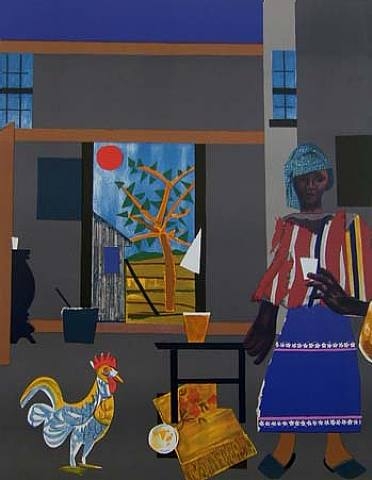 ZP_Romare Bearden (1911-1988)_Morning of the Rooster_1980
.
Gregory Porter (Cantante/compositor de jazz, nacido en 1971, EE.UU.)
“Somos pintados sobre un lienzo ”
.
Somos como niños
Somos pintados sobre un lienzo
logrando los tonos mientras pasamos
Empezamos con el “gesso”
puesto con pinteles por la gente que conocemos
Sea esmerado con la técnica mientras avanza
Se aleja para admirar mi vista
¿Puedo usar los colores que yo elijo?
¿Tengo algo que decir sobre lo que usted usa?
¿Puedo conseguir colores verde y colores azul?
.
Somos hechos del pigmento de pintura que se aplica
Nuestras historias son dichos por nuestros tonos
Como Motley y Bearden
Estos maestros de la paz, de la vida,
Hay capas de colores, del tiempo
Se aleja para admirar mi vista
¿Puedo usar los colores que yo elijo?
¿Tengo algo que decir sobre lo que usted usa?
¿Puedo conseguir unos verde y unos azul?
.
Somos como niños
Somos pintados sobre una gama de lienzos…
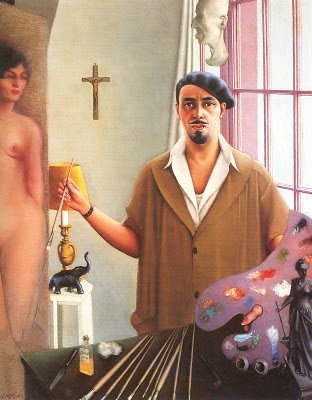 ZP_Archibald John Motley (1891-1981)_Self Portrait_1933
.
Gregory Porter (born 1971, American jazz vocalist/songwriter)
“Painted on canvases”
.
We are like children
we’re painted on canvases
picking up shades as we go
We start off with “gesso”
brushed on by people we know
Watch your technique as you go
Step back and admire my view
Can I use the colours I choose?
Do I have some say what you use?
Can I get some greens and some blues?
.
We’re made by the pigment of paint that is put upon
Our stories are told by our hues
Like Motley and Bearden
these masters of peace and life
layers of colours and time
Step back and admire my view
Can I use the colours I choose?
Do I have some say what you use?
Can I get some greens and some blues?
.
We are like children
We’re painted on canvases…
. . . . .
Maria Bethânia canta letras de Carlos Bahr & Adriana Calcanhotto / Maria Bethânia sings lyrics by Carlos Bahr & Adriana Calcanhotto
Posted: August 13, 2013 Filed under: English, Portuguese, Spanish, Translator's Whimsy: Song Lyrics / Extravagancia del traductor: Letras de canciones traducidas por Alexander Best, ZP Translator: Alexander Best Comments Off on Maria Bethânia canta letras de Carlos Bahr & Adriana Calcanhotto / Maria Bethânia sings lyrics by Carlos Bahr & Adriana Calcanhotto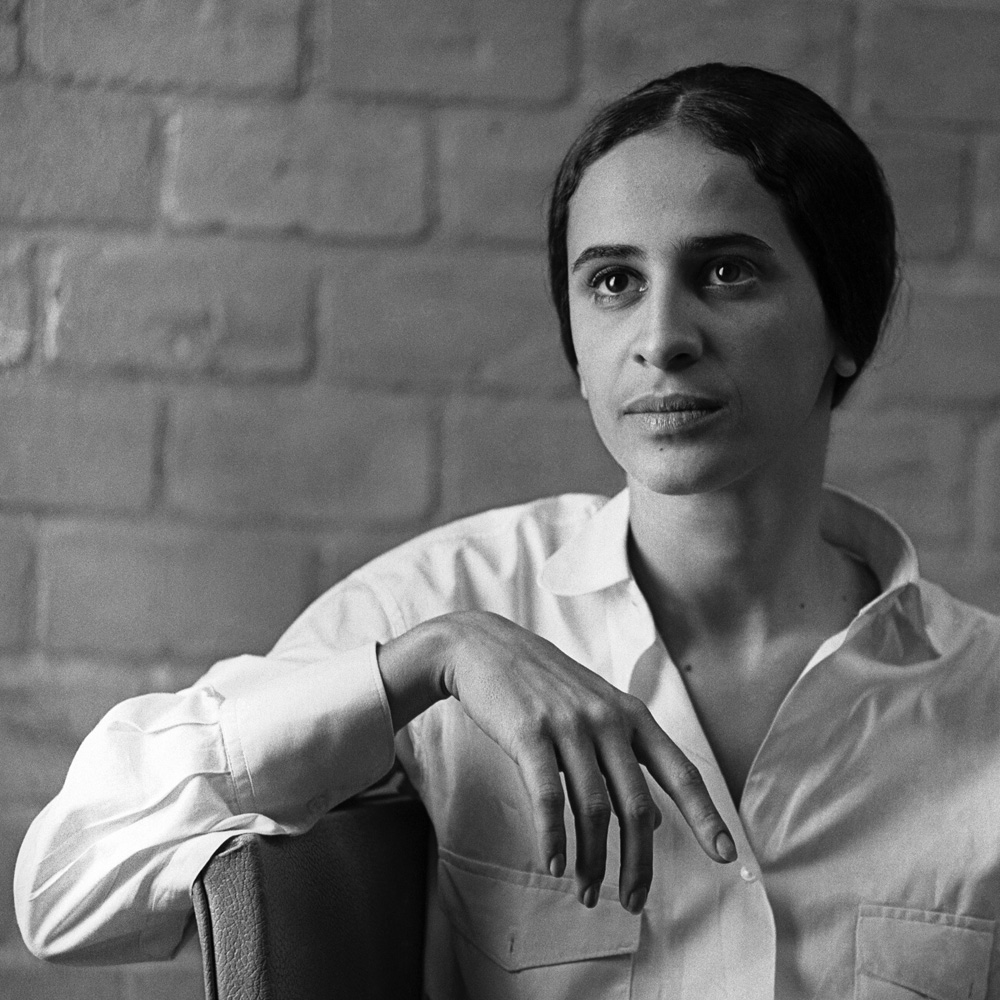 ZP_Maria Bethânia (born 1946), shown here at the age of 21, is a Brazilian singer and sister of Caetano Veloso
.
“Sin” / “Pecado”
Composer / Compositor: Carlos Bahr (Tango lyricist / Letrista de tango, 1902-1984, Buenos Aires, Argentina), with / con: Armando Pontier & Enrique Francini
As sung by / Cantada por: Maria Bethânia (from her album / de su álbum Pássaro Proibido, 1976)
.
I know not
whether this is forbidden;
if there’ll be forgiveness;
or if I’ll be carried to the brink of the abyss.
All that I know:
This is Love.
.
I know not
whether this Love is a sin;
if punishment awaits;
or if it disrespects all the decent laws
of humankind and of God.
.
All that I know: it’s a Love which stuns my Life
like a whirlwind; and
that I crawl, yes crawl, straight to your arms
in a blind passion.
.
And This is stronger than I am, than my Life,
my beliefs, my sense of duty.
It’s even stronger within me than
the fear of God.
.
Though it may be sin – how I want you,
yes, I want you all the same.
And even if everyone denies me that right,
I will seize hold of this Love.
. . .
Yo no sé
Si es prohibido
Si no tiene perdón
Si me lleva al abismo
Sólo se que es amor
.
Yo no sé
Si este amor es pecado
Si tiene castigo
Si es faltar a las leyes honradas
Del hombre y de Dios
.
Sólo sé que me aturde la vida
Como un torbellino
Que me arrastra y me arrastra a tus brazos
En ciega pasión
.
Es más fuerte que yo que mi vida
Mi credo y mi sino
Es más fuerte que todo el respeto
Y el temor a Dios
.
Aunque sea pecado te quiero
Te quiero lo mismo
Aunque todo me niegue el derecho
Me aferro a este amor.
. . .
“After having you” / “Depois de ter você ”
Composer / Composição: Adriana Calcanhotto (born in / nascida em 1965, Porto Alegre, Brasil)
As sung by / Cantada por: Maria Bethânia (from her album / em seu álbum Maricotinha, 2001)
.
After having you,
What reason is there to think of time,
how many hours have passed or remain?
If it’s night or if it’s warm out,
If we’re in summertime;
If the sun will show its face or not?
Or even what reason might a song like this serve?
After knowing you
– Poets? what’s the use of them?
Or of Gods – What purpose Doubts?
– Almond trees along the streets,
even the very streets themselves –
After having had You?
. . .
Depois de ter você,
Para que querer saber que horas são?
Se é noite ou faz calor,
Se estamos no verão,
Se o sol virá ou não,
Ou pra que é que serve uma canção como essa?
Depois de ter você, poetas para quê?
Os deuses, as dúvidas,
Para que amendoeiras pelas ruas?
Para que servem as ruas?
Depois de ter você.
. . .
Traducción/interpretación en inglés / Translation-interpretation from Spanish into English: Alexander Best
Tradução/interpretação em inglês / Translation-interpretation from Portuguese into English: Alexander Best
. . .
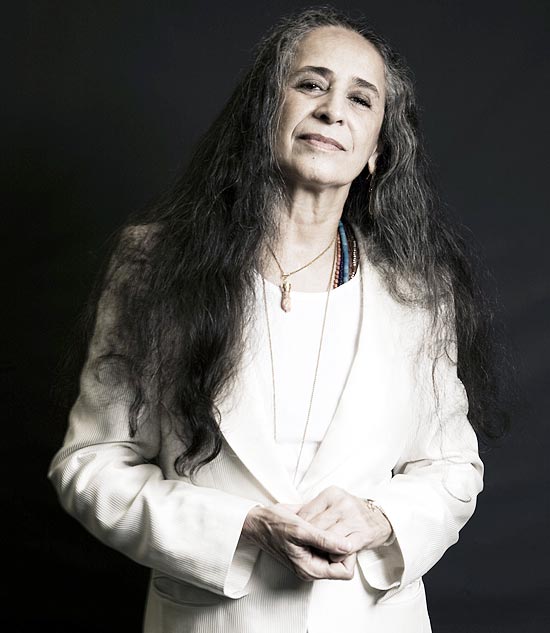 ZP_Maria Bethânia in 2010
. . . . .
Alan Clark: “La Lengua” y “Dentro de Ti”
Posted: July 31, 2013 Filed under: Alan Clark, English, Spanish, ZP Translator: Alexander Best Comments Off on Alan Clark: “La Lengua” y “Dentro de Ti”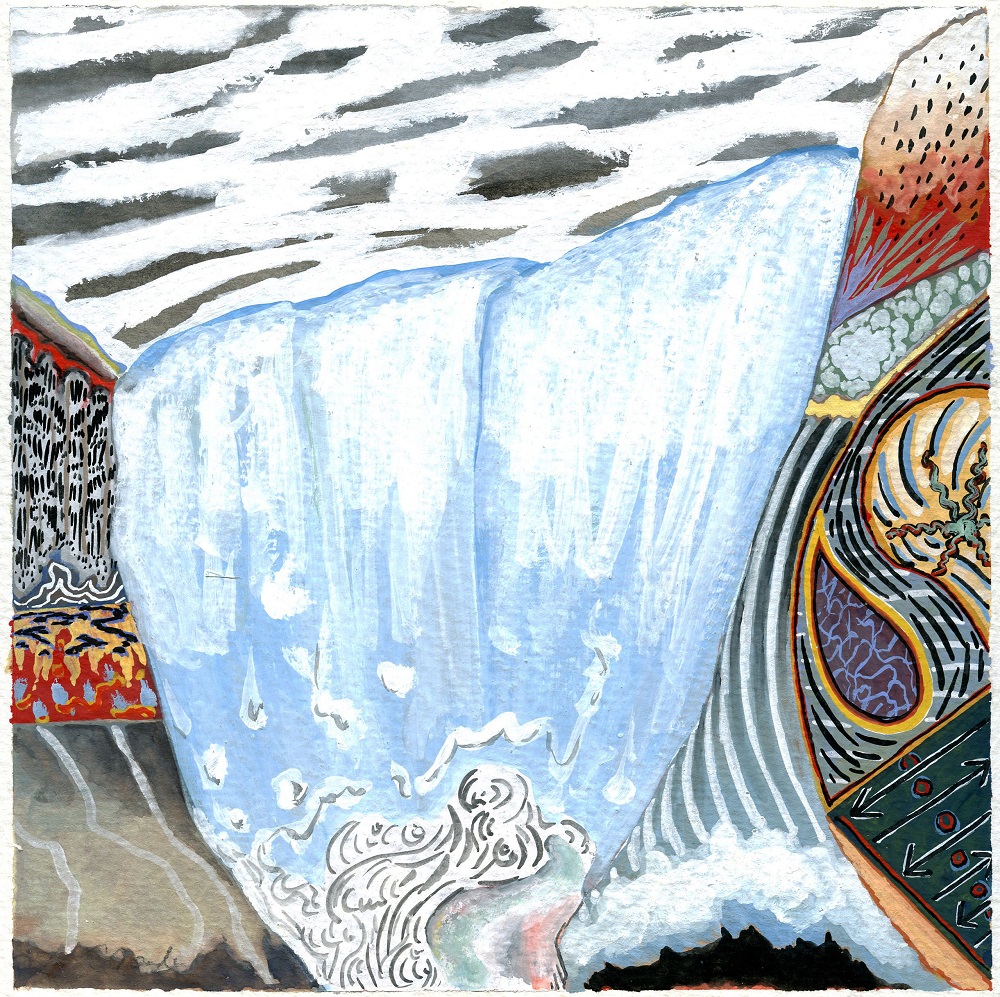 ZP_La Lengua_pintura de Alan Clark
.
La Lengua
.
Estoy “viviendo” tu leyenda sobre mi lengua
(es ésta la tierra santa en que vagaremos…)
Contigo…degustas como las palabras que me vienen,
esta lengua rastreando tus “dondes” más dulces,
y estas palabras hacen cosquillas en la garganta.
Pero está en tu piel que conozco lo que es
la adoración – la lengua, con franqueza, sobre
la piel de sal / sobre brazas de ti
(no bajo del agua sino en un nuevo aire de sal)
en que el universo – que es tú – ríe un “yo” para
bajarme más y más y inventir todas las palabras
que nunca te igualarán – la ola y “materia”
del cuento en el lenguaje de nuestro sueño
unido en nosotros…
Somos diosas y dioses del sudor,
del pecho, de las manos, y de los labios que
hablan solamente cuando no hay nada decir que:
Quede en en lugar oscuro donde están conocidos
tus muslos en lo de mi que está bastante liviano
para buscarte.
. . .
La Lengua
.
I’m living out your legend on my tongue
(this is the holy land we’re wandering in)
with you tasting like the words that come to me,
this tongue tracking down your softest “wheres”,
these words tickling my throat. But in your flesh
I know what worship is, tongue directly
to the salt skin and fathoms of yourself
(not under water, in a new salt air)
in which the universe of you is laughing me
to go down and down to make up all the words
that will never equal you, wave and matter
as the story in the language of our dream
together: goddesses and gods of sweat,
of breasts and hands and lips that only speak
when there’s nothing left to say but: Linger,
in the dark place where your thighs are met
by what of me is light enough to find you.
. . .
Dentro de Ti –
.
Puedo ver la materia prima de sombras
y como el barro se torne en una clase de luz;
que soy como un pez que debe nadar
dentro de un mundo donde se arremolinan la hierba del mar
mientras levantas las manos durante un día caluroso…
Me siento dentro de ti la verde pura de una planta que
se torna en el calor de un horno de sangre;
lo que está ni despierto ni durmiendo en
la concha de un otro día que promete
todo de sí mismo para expectativas no perladas…
El olor en tu animal, la flor de mi lengua de pavo real;
el diccionario de mis sentidos no deletreados como besos; y
siempre – siempre – la libertad del cielo
recogiendo las plumas de un pájaro – tú – que
se monta los alientos cuando miran tus ojos que
pueden asegurar – por la ley rarísima – algo que
nunca viere alguien:
las balanzas de los arcos de iris breves
y la creación del mundo.
. . .
In You –
.
I can see what stuff shadows are made of
and how clay can become a kind of light,
how I’m like a fish who can’t not swim
into a world where the seagrass is swirling
when you lift up your arms on a hot day…
feel in you the raw green of a plant
being turned into heat in an oven of blood,
what lies not awake, not asleep inside
the shell of another day promising
all of itself to no pearl expectations…
smell in your animal, the flower
of my peacock tongue, the dictionary
of my senses unspelled as kisses, and
always, always, the freedom of the sky
gathering the feathers of the bird you are,
who rides the winds when your eyes behold,
who can claim by the strangest of laws
what no-one else could ever see: the scales
of brief rainbows and the world’s creation.
. . .
Poeta y pintor, Señor Alan Clark divide su vida entre Maine en EE.UU. y el México. Guerrero y Sangre del Corazón fue publicado por Henning Bartsch (México, D.F.) Tiene también un poemario de 2010: Where They Know. Sus piezas del teatro incluyen: The End of It, The Couch – The Table – The Bed, and The Beast – y fueron montados en EE.UU. y México. En 2004 tuvo una exhibición de sus pinturas en Rockland, Maine en Farnsworth Art Museum – Sangre y Piedra.
.
Alan Clark is an artist and poet, dividing his life between Maine and Mexico. Guerrero and Heart’s Blood was published in Mexico City by Henning Bartsch. A book of poems, Where They Know, was published in 2010. Clark’s plays –including adaptations of Guerrero and Heart’s Blood – include: The End of It, The Couch – The Table – The Bed, and The Beast; these have been staged in the U.S.A. and in Mexico. Blood and Stone: Paintings by Alan Clark,was at the Farnsworth Art Museum, Rockland, Maine,in 2004.
Versiones en español / Spanish versions: Alexander Best
. . . . .
¿Eva, La Culpable? / Was IT All Eve’s Fault?
Posted: July 28, 2013 Filed under: English, Eva La Culpable...Was It All Eve's Fault?, Jee Leong Koh, Spanish, ZP Translator: Alexander Best Comments Off on ¿Eva, La Culpable? / Was IT All Eve’s Fault? ZP_El Adán reconsiderado…¡Piense en él dos veces!_Adam reconsidered…Give him a second thought!
.
“No Eva…Solo era una cantidad excesiva del Amor, su Culpa.”
(Aemilia Lanyer, poetisa inglés, 1569 – 1645, en su obra Salve Deus Rex Judaeorum: La Apología de Eva por La Mujer, 1611)
.
Jee Leong Koh
“Eva, La Culpable”
.
Aunque se ha ido del jardín, no se para de amarles…
Dios le convenció cuando sacó rápidamente de su manga planetaría
un ramo de luz. Miraron pasar el desfile de animales.
Le contó el chiste sobre el Arqueópterix, y se dio cuenta de
las plumas y las garras brutales – un poema – el primero de su tipo.
En una playa, alzado del océano con un grito, él entró en ella;
y ella, en olas onduladas, notó que el amor une y separa.
.
El serpiente fue un tipo más callado. Llegaba durante el otoño al caer la tarde,
viniendo a través de la hierba alta, y apenas sus pasos dividió las briznas.
Cada vez él le mostró una vereda diferente. Mientras que vagaban,
hablaron de la belleza de la luz golpeando en el árbol abedul;
el comportamiento raro de las hormigas; la manera más justa de
partir en dos una manzana.
Cuando apareció Adán, el serpiente se rindió a la felicidad la mujer Eva.
.
…Porque ella era feliz cuando encontró a Adán bajo del árbol de la Vida
– y aún está feliz – y Adán permanece como Adán: inarticulado, hombre de mala ortografía;
su cuerpo estando centrado precariamente en sus pies; firme en su mente que
Eva es la mujer pristina y que él es el hombre original. Necesitó a ella
y por eso rasguñó en el suelo – y creyó en el cuento de la costilla.
Eva necesitó a la necesidad de Adán – algo tan diferente de Dios y el Serpiente,
Y después de éso ella se encontró a sí misma afuera del jardín.
. . .
“Not Eve, whose Fault was only too much Love.”
(Aemilia Lanyer, English poetess, 1569 – 1645, in Salve Deus Rex Judaeorum: Eve’s Apologie in Defence of Women, 1611)
.
Jee Leong Koh
“Eve’s Fault”
.
Though she has left the garden, she does not stop loving them.
God won her when he whipped out from his planetary sleeve
a bouquet of light. They watched the parade of animals pass.
He told her the joke about the Archaeopteryx, and she noted
the feathers and the killing claws, a poem, the first of its kind.
On a beach, raised from the ocean with a shout, he entered her
and she realized, in rolling waves, that love joins and separates.
.
The snake was a quieter fellow. He came in the fall evenings
through the long grass, his steps barely parting the blades.
Each time he showed her a different path. As they wandered,
they talked about the beauty of the light striking the birch,
the odd behavior of the ants, the fairest way to split an apple.
When Adam appeared, the serpent gave her up to happiness.
.
For happy she was when she met Adam under the tree of life,
still is, and Adam is still Adam, inarticulate, a terrible speller,
his body precariously balanced on his feet, his mind made up
that she is the first woman and he the first man. He needed
her and so scratched down and believed the story of the rib.
She needed Adam’s need, so different from God and the snake
– and that was when she discovered herself outside the garden.
. . . . .
Jee Leong Koh nació en Singapur y vive en Nueva York. Es profesor, también autor de cuatro poemarios.
Jee Leong Koh was born in Singapore and now lives in New York City where he is a teacher.
He is the author of four poetry collections: Payday Loans, Equal to the Earth, Seven Studies for a Self Portrait and The Pillow Book.
. . .
Traducción en español / Translation into Spanish: Alexander Best
. . . . .
Alicia Claudia González Maveroff: “The Storyteller in The Zócalo” / “El Fabulador del Zócalo”
Posted: July 25, 2013 Filed under: Alicia Claudia González Maveroff, English, Spanish, ZP Translator: Alexander Best Comments Off on Alicia Claudia González Maveroff: “The Storyteller in The Zócalo” / “El Fabulador del Zócalo”
.
Alicia Claudia González Maveroff
“The Storyteller in The Zócalo”
.
Earlier today in the Square there was a storyteller
enchanting people with his words – everyone who
was in and around that patch of pavement where he stood.
Those who saw him there were all listening without
so much as uttering a sound.
In The Zócalo this man earns his livelihood, selling
pretty little dolls that wiggle and sway.
Even though you can’t see any strings pulled,
you don’t know how it’s done,
these little dolls –skeletons, rather –
dance, lie down, jump, kneel and walk,
while the vendor chatters like a “fairground charlatan”.
Incredible it was, the gift of the gab that fellow displayed.
He whiled away the time offering to passers-by
a cadaverous doll which seemed to be alive-and-kicking.
Children, mute, admired the dancing doll:
“Look how the dolly can dance!”
The adults present laughed to themselves, “Yeah, right,”
as if to say: “What a scam.”
Yet he captured every one of us, this guy with his confabulations,
presenting those dolls that never ceased to dance.
Who knows what the trick is? There’s no harm in it…
For that reason, in fact, one has to hand it to him this evening,
knowing that this is all a hoax yet rascal-ishly fascinating…
Me, he left me bamboozled, making me believe him,
so I’ve gone and bought one of those little dolls
– in order to be rewarded with a performance.
And I have left the Square happy, yes – knowing that he‘s a crook…
.
Mexico City, July 22nd, 2012
. . .
Alicia Claudia González Maveroff
“El Fabulador del Zócalo”
.
Estaba el fabulador en la plaza hoy temprano,
encantando con palabras,
a todos los que rodeaban el sector donde se hallaba.
Esos que allí se encontraban, lo escuchaban sin hablar.
En el Zócalo este hombre gana su vida, vendiendo
unos muñequitos lindos pequeños que se menean.
Aunque no se ven cordeles, ni sabemos como lo hace,
estos pequeños muñecos, a más decir esqueletos,
bailan, se barazan, se acuestan, saltan, se arrodillan y andan,
mientras el vendedor habla como “charlatan de feria”.
Es increible la labia que este señor nos demuestra.
Pasa su tiempo ofreciendo, a todos los transeuntes,
el muñeco cadaverico, que está vivito y coleando.
Mientras el muñeco baila, los niños, quietos, lo admiran.
¡Cómo baila el muñequito!
Los grandes, sonriendo “a penas”, como diciendo
“¡es un cuento!”
Pero a todos ha atrapado, este señor con su charla,
ofreciendo los muñecos que no paran de bailar.
¿Quién sabe como es el truco? No lo hacen nada mal…
Por eso, por la actuación, que ha brindado él esta tarde,
sabiendo que es un engaño, que es un vil fascinador…
Yo, me he dejado embaucar, haciendo que le creía,
le he comprado un muñequito, para premiar su actuación.
Y me he marchado contenta, sabiendo que es un ladrón…
.
México D.F., 22 – 07 – 2012
.
Alicia Claudia González Maveroff is a professor living in Buenos Aires, Argentina. Her credo, in a single precise sentence, is: I believe in Utopia – because Reality strikes me as impossible.
Alicia Claudia González Maveroff es una profesora que vive en Buenos Aires, Argentina. En una oración sucinta, su consejo es ésto: Creo en la utopía, porque la realidad me parece imposible.
.
Translation and interpretation from Spanish into English / Versión inglés: Alexander Best
. . . . .
Poemas japoneses – de guerra, del honor, de la ternura – traducidos por Nuna López
Posted: July 20, 2013 Filed under: Akiko Yosano, English, Japanese, Kaneko Misuzu, Sadako Kurihara, Spanish, ZP Translator: Nuna López | Tags: Poemas japoneses de guerra Comments Off on Poemas japoneses – de guerra, del honor, de la ternura – traducidos por Nuna López
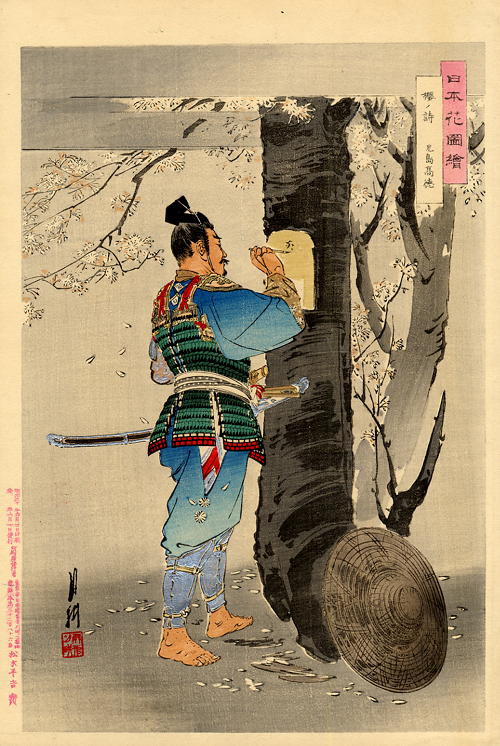 ZP_Samurai writing a poem on a flowering cherry-tree trunk by Ogata Gekko, 1859-1920_ print courtesy of ogatagekkodotnet
.
Ouchi Yoshitaka (a “daimyo” or feudal lord / un “daimyo” o soberano feudal, 1507-1551)
.
Both the victor and the vanquished are
but drops of dew, but bolts of lightning –
thus should we view the world.
. . .
Tanto el vencedor como el vencido no son
Sino gotas de rocío, relámpagos –
así deberíamos ver el mundo.
. . .
Hojo Ujimasa (1538-1590)
Hojo was a “daimyo” and “samurai” who, after a shameful defeat, committed “seppuku” or ritual suicide by self-disembowelment. He composed a poem before he killed himself:
.
“Death Poem”
.
Autumn wind of evening,
blow away the clouds that mass
over the moon’s pure light
and the mists that cloud our mind –
do thou sweep away as well.
Now we disappear –
well, what must we think of it?
From the sky we came – now we may go back again.
That’s at least one point of view.
. . .
Hojo Ujimasa (1538-1590)
“Poema de muerte”
.
Viento otoñal de la noche,
sopla lejos las nubes que obstruyen
la luz pura de la luna
y la neblina que nubla nuestra mente-
también bárrela lejos.
Ahora nosotros desaparecemos –
Y bien, ¿qué deberíamos pensar de esto?
Del cielo vinimos- ahora debemos regresar otra vez.
Ese es al menos un punto de vista.
. . .
The following poem by Akiko Yosano was composed as if to her younger brother who was drafted to fight in the Russo-Japanese War (1904-1905). It was never specifically anti-war only that the poet wished that her brother not sacrifice his life. At the time the poem was not censored but in the militaristic 1930s it was banned in Japan.
.
Akiko Yosano/ 与謝野晶子(1878-1942)
.
Oh, my brother, I weep for you.
Do not give your life.
Last-born among us,
You are the most beloved of our parents.
Did they make you grasp the sword
And teach you to kill?
Did they raise you to the age of twenty-four,
Telling you to kill and die?
.
Heir to our family name,
You will be master of this store,
Old and honoured, in Sakai, and therefore,
Brother, do not give your life.
For you, what does it matter
Whether Lu-Shun Fortress falls or not?
The code of merchant houses
Says nothing about this.
.
Brother, do not give your life.
His Majesty the Emperor
Goes not himself into the battle.
Could he, with such deeply noble heart,
Think it an honour for men
To spill one another’s blood
And die like beasts?
.
Oh, my brother, in that battle
Do not give your life.
Think of mother, who lost father just last autumn.
How much lonelier is her grief at home
Since you were drafted.
Even as we hear about peace in this great Imperial Reign,
Her hair turns whiter by the day.
.
And do you ever think of your young bride,
Who crouches weeping behind the shop curtains
In her gentle loveliness?
Or have you forgotten her?
The two of you were together not ten months before parting.
What must she feel in her young girl’s heart?
Who else has she to rely on in this world?
Brother, do not give your life.
. . .
Akiko Yosano/ 与謝野晶子(Poetisa japonesa, 1878-1942)
.
Oh, hermano mío, lloro por ti.
No entregues tu vida.
El más pequeño de nosotros,
El más amado por nuestros padres.
¿Ellos te hicieron empuñar la espada
y te enseñaron a matar?
¿Ellos te criaron hasta los veinticuatro
para matar y morir?
.
Heredero de nuestro nombre
Tú serás el dueño de esta tienda,
Vieja y honrada, en Sakai, y por eso,
Hermano, no entregues tu vida.
¿A ti que puede importarte
si la fortaleza Lu- Shun cae o no?
En el código de los comerciantes
No hay nada sobre esto.
.
Hermano, no entregues tu vida.
Su Majestad el Emperador
no pelea su propia batalla.
¿Puede él, con su profundamente noble corazón,
pensar que es un honor para los hombres
derramar la sangre de uno y otro
y morir como bestias?
Oh, hermano mío, en esa batalla
no entregues tu vida.
Piensa en mamá, que perdió a papá apenas el otoño pasado.
Qué tan solitaria es su pena en casa
desde que te enlistaron.
Incluso cuando escuchamos sobre paz en este gran Reino Imperial
su cabello se torna más blanco cada día.
.
¿Alguna vez piensas en tu joven novia,
que se acuclilla llorando tras las cortinas de la tienda
con su gentil afecto?
¿O la has olvidado?
Ustedes estuvieron juntos no más de diez meses antes de separarse.
¿Cómo debe sentirse ella en su joven corazón de niña?
¿En quién más puede confiar en este mundo?
Hemano, no entregues tu vida.
. . .
Kaneko Misuzu (Japanese poetess, 1903-1930)
“To Love Everything”
.
I wish I could love them,
Anything and everything.
.
Onions, tomatoes, fish,
I wish I could love them all.
.
Side dishes, and everything.
Because Mother made them.
.
I wish I could love them,
Anyone and everyone.
.
Doctors, and crows,
I wish I could love them all.
.
Everyone in the whole world
– Because God made them.
. . .
Kaneko Misuzu (Poetisa japonesa, 1903-1930)
“Amar todo”
.
Desearía poder amarlos,
a cualquier cosa y a todo.
Cebollas, tomates y pescados,
desearía poder amarlos todos.
Guarniciones y todo,
porque Mamá los hizo.
Desearía poder amarlos,
a cualquiera y a todos.
Doctores y cuervos,
desearía poder amarlos todos.
Todos en todo el mundo
– Porque Dios los hizo.
. . .
Kaneko Misuzu
“Me, the little bird, and the bell”
.
私が両手をひろげても、(watashi ga ryōte wo hirogete mo)
お空はちっとも飛べないが、(osora wa chitto mo tobenai ga)
飛べる小鳥は私のように、(toberu kotori ha watashi yō ni)
地面を速く走れない。(jimen wo hayaku hashirenai)
.
私が体をゆすっても、(watashi ga karada wo yusutte mo)
きれいな音はでないけど、(kirei na oto wa denai kedo)
あの鳴る鈴は私のように、(anonaru suzu wa watashi no yō ni)
たくさんな唄は知らないよ。(takusan na uta wa shiranai yo)
.
鈴と、小鳥と、それから私、(suzu to kotori to sorekara watashi)
みんなちがって、みんないい。(minna chigatte, minna ii)
. . .
Even if I stretch out my arms
I can’t fly up into the sky,
But the little bird who can fly
Cannot run fast along the ground like me.
.
Even if I shake my body,
No beautiful sound comes out,
But the ringing bell does not
Know many songs like me.
.
The bell, the little bird and, finally, me:
We’re all different, but we’re all good.
. . .
Kaneko Misuzu
“El pajarito, la campanilla y yo”
.
Aunque estire mis brazos
No puedo elevarme hacia el cielo
Pero el pajarito que puede volar
No puede correr rápido sobre la tierra, como yo.
.
Aunque sacuda mi cuerpo
Ningún bello sonido se escuchará
Pero la campanilla no conoce
Tantas canciones como yo.
.
La campanilla, el pajarito y finalmente, yo:
Todos somos diferentes pero todos igualmente buenos.
. . .
Kenzo Ishijima(Japanese Kamikaze pilot, WW2 / Piloto japonés kamikaze, Segunda Guerra Mundial)
.
Since my body is a shell
I am going to take it off
and put on a glory that will never wear out.
. . .
Ya que mi cuerpo es una carcasa
Voy a quitármela de encima
Y a vestirme de gloria que nunca se desgastará.
. . .
“Doki no Sakura”: a popular soldiers’ song of the Japanese Imperial Navy during WW2 in which a Kamikaze naval aviator addresses his fellow pilot – parted in death:
.
“Doki no Sakura”(“Cherry blossoms from the same season”)
.
You and I, blossoms of the same cherry tree
That bloomed in the naval academy’s garden.
Blossoms know they must blow in the wind someday,
Blossoms in the wind, fallen for their country.
.
You and I, blossoms of the same cherry tree
That blossomed in the flight school garden.
I wanted us to fall together, just as we had sworn to do.
Oh, why did you have to die, and fall before me?
.
You and I, blossoms of the same cherry tree,
Though we fall far away from one another.
We will bloom again together in Yasukuni Shrine.
Spring will find us again – blossoms of the same cherry tree.
. . .
“Doki no Sakura”: una canción popular entre los soldados japoneses de la Segunda Guerra Mundial:
.
“Flores de cerezo de la misma estación”
.
Tú y yo, flores de un mismo cerezo
que floreció en el jardín de la academia naval.
Flores sabedoras de que deben volar en el viento algún día,
flores en el viento, caídas por su país.
.
Tú y yo, flores de un mismo cerezo
que floreció en el jardín de la escuela de aviación.
Quería que cayéramos juntos, como habíamos jurado hacer.
Oh, ¿por qué tenías que morir y caer antes que yo?
.
Tú y yo, flores de un mismo cerezo,
aunque caemos lejos el uno del otro,
floreceremos juntos otra vez en el santuario Yasukuni.
La primavera nos encontrará otra vez – flores de un mismo cerezo.
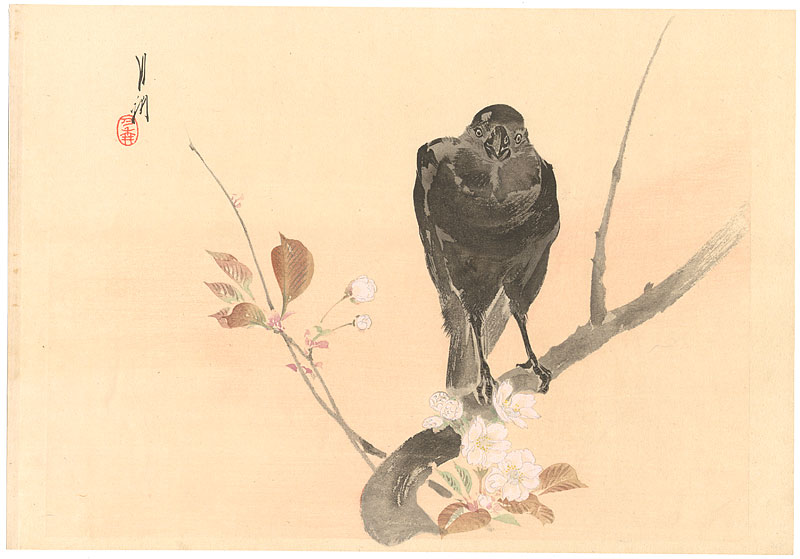 ZP_Cherry Blossom and Crow by Ogata Gekko, 1859 – 1920_print courtesy of ogatagekkodotnet
.
Sadako Kurihara (Japanese poetess, 1913-2005)
“ When we say ‘Hiroshima’ ”
.
When we say Hiroshima, do people answer,
gently, Ah, Hiroshima? …Say Hiroshima,
and hear Pearl Harbor. Say Hiroshima,
and hear Rape of Nanjing. Say Hiroshima,
and hear women and children in Manila, thrown
into trenches, doused with gasoline, and
burned alive. Say Hiroshima, and hear
echoes of blood and fire. Ah, Hiroshima,
we first must wash the blood off our own hands.
. . .
Sadako Kurihara (Poetisa japonesa, 1913-2005)
“Cuando decimos ‘Hiroshima’”
.
Cuando decimos Hiroshima, acaso la gente contesta,
gentilmente, Ah Hiroshima?… Di Hiroshima,
y escucha Pearl Harbor. Di Hiroshima,
y escucha la Violación de Nanjing. Di Hiroshima
y escucha a las mujeres y los niños en Manila, arrojados
en zanjas, empapados en gasolina y
quemados vivos. Di Hiroshima, y escucha
ecos de sangre y fuego. Ah, Hiroshima,
primero debemos lavarnos la sangre de nuestras propias manos.
. . .
Traducciones del inglés al español / Translations from English to Spanish: Nuna López
. . . . .
“Los Tres Arbolitos” de Clovis S. Palmer y “Árboles” de Joyce Kilmer
Posted: July 11, 2013 Filed under: Clovis S. Palmer, English, Joyce Kilmer, Spanish, ZP Translator: Alexander Best Comments Off on “Los Tres Arbolitos” de Clovis S. Palmer y “Árboles” de Joyce Kilmer
Clovis S. Palmer
“Los Tres Arbolitos”
.
Es redondo el mundo que nadie no ve,
y hay árboles de todas necesidades.
Algunos puedan ser grandes – otros, pequeños
– o, quizás, como muñequitos.
Puedan variar los árboles, tamaño por tamaño,
Están vistos por todas partes – y entre diques también.
Y nadie sabe de donde vienen.
.
Recordó mi mente unos tres arbolitos
– sobre una colina – a las tres y cuarto
– sí, sobre una colina y junto al molino
– tres arbolitos con miembros oleandos.
Estaban allá – cansados, hambrientos
– y esperaban por un jarrito de cerveza.
Sin embargo, se quedaron dormidos,
con sus manos colgantes
– directo allí.
. . .
Señor Palmer hoy es médico y escribió este poema cuando era niño de trece años (en 1987). En ese tiempo vivía en su pueblito natal de Manchioneal, Distrito de Portland, Jamaïca. Muestra el poema el “surrealismo natural” de la mente de la niñez. . . .Clovis S. Palmer
“Three Little Trees”
.
The world is round, which no one sees,
Having trees of all different needs.
Some may be big, some may be small – or even like a little doll.
Trees may vary from size to size,
Trees are seen from miles to miles.
Trees are seen from dam to dam and no one knows where they came from.
.
My mind went back on three little trees
Upon a hill – a quarter past three –
Upon the hill beside a mill, three little trees waving their limbs,
Hungry and tired the trees were there,
Waiting for a cup of beer.
Nevertheless, they fell asleep,
Having their hands hanging right there.
. . .
This poem was composed in 1987, in Manchioneal, Portland Parish, Jamaica, when Dr. Palmer was 13 years old. It displays the qualities of “natural surrealism” that only a child’s mind can create, whereas adults must strive greatly to see the world in such a way.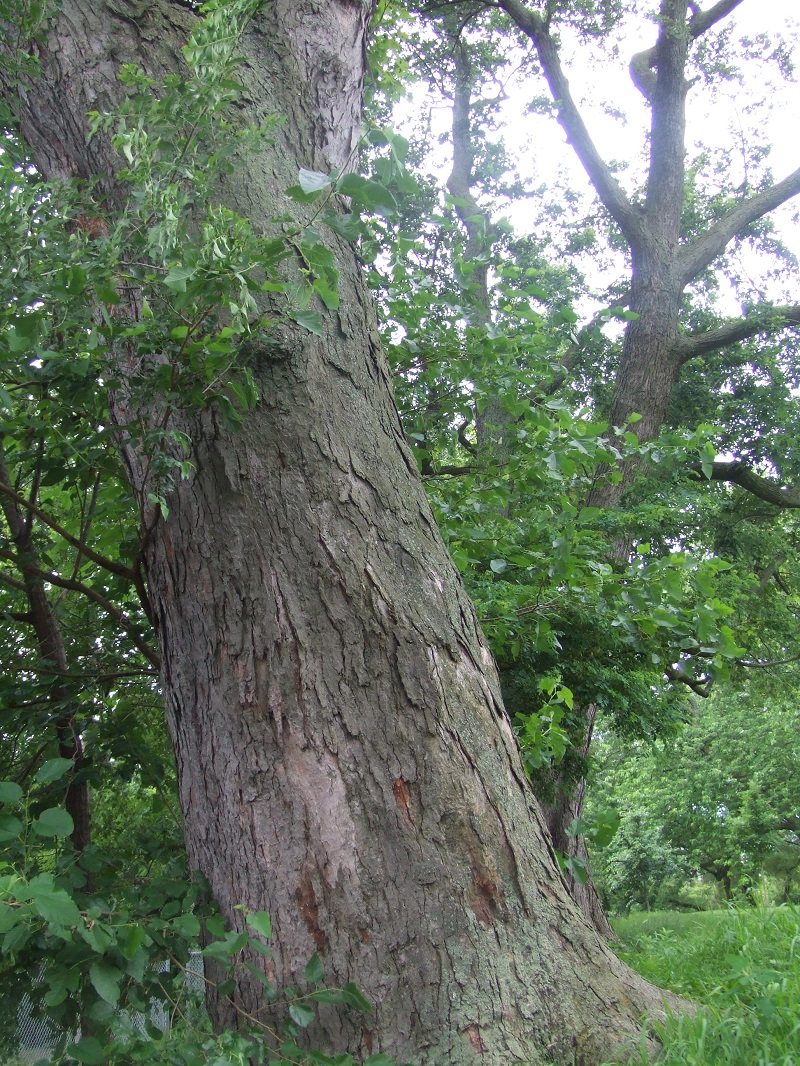
Joyce Kilmer (1886-1918)
“Árboles”
.
Creo que nunca veré
un poema tan hermoso como un árbol.
Un árbol cuya boca hambrienta esté pegada
al dulce seno fluyente de la tierra;
un árbol que mira a Dios todo el día.
Y alza sus brazos frondosos para rezar.
.
Un árbol que en verano podría llevar
un nido de petirrojos en sus cabellos;
en cuyo pecho se ha recostado la nieve;
quien vive íntimamente con la lluvia.
.
Los poemas están hechos por bufones como nosotros,
Pero solo Dios puede hacer un árbol.
. . .
Escrito en 1913, el poema “Árboles” es verso bien amado entre los hablantes del inglés americano y canadiense. Claro, es muy sentimental – faltando los sellos distintos del modernismo – pero dura su estima popular porque las palabras son sinceras – de lo más hondo del corazón. . . .Joyce Kilmer (1886-1918)
“Trees”
.
I think that I shall never see
A poem as lovely as a tree;
A tree whose hungry mouth is prest
Against the earth’s sweet flowing breast;
A tree that looks at God all day,
And lifts her leafy arms to pray;
A tree that may in summer wear
A nest of robins in her hair;
Upon whose bosom snow has lain;
Who intimately lives with rain.
Poems are made by fools like me,
But only God can make a tree.
. . .
Written in 1913, when Kilmer was 26 years old, “Trees” would become his most famous poem – sentimental, yes, a breeze to memorize, true, and popular among several generations of Americans and Canadians for its sincere tone, its plain heartfelt-ness (and with God mixed into the verse). Joyce Kilmer’s life was brief. He worked for Funk and Wagnalls Dictionary updating definitions of ordinary English-language words at a nickel a pop. When he had the chance to enlist during The Great War he was over to France in a jiffy, where he died from a German sniper’s bullet and was remembered by the men of his regiment for his valour and leadership abilities as sergeant.. . .
Versiones/interpretaciones en español: Alexander Best
. . . . .
“Yo cumplo mi encuentro con La Vida” / “I keep Life’s rendezvous”: Poemas para Viernes Santo / Good Friday poems: Countee Cullen
Posted: March 29, 2013 Filed under: Countee Cullen, English, Spanish, ZP Translator: Alexander Best | Tags: Black poets, Good Friday poems, Poemas para Viernes Santo, Poetas negros Comments Off on “Yo cumplo mi encuentro con La Vida” / “I keep Life’s rendezvous”: Poemas para Viernes Santo / Good Friday poems: Countee Cullen
ZP_Simon of Cyrene_painting by Theophilus of Knoxville, Tennessee
Countee Cullen (Poeta negro del “Renacimiento de Harlem”, E.E.U.U., 1903-1946)
“Habla Simón de Cirene”
.
Nunca me habló ninguna palabra
pero me llamó por mi nombre;
No me habló por señas,
y aún entendí y vine.
.
Al princípio dije, “No cargaré
sobre mi espalda Su cruz;
Sólo procura colocarla allá
porque es negra mi piel.”
.
Pero Él moría por un sueño,
Y Él estuvo muy dócil,
Y en Sus ojos hubo un resplandor
que los hombres viajarán lejos para buscar.
.
Él – el mismo – ganó mi piedad;
Yo hice solamente por Cristo
Lo que todo el Imperio romano no pudo forjar en mí
con moretón de látigo o de piedra.
. . .
Countee Cullen (1903-1946)
“Simon the Cyrenian Speaks”
.
He never spoke a word to me,
And yet He called my name;
He never gave a sign to me,
And yet I knew and came.
At first I said, “I will not bear
His cross upon my back;
He only seeks to place it there
Because my skin is black.”
But He was dying for a dream,
And He was very meek,
And in His eyes there shone a gleam
Men journey far to seek.
It was Himself my pity bought;
I did for Christ alone
What all of Rome could not have wrought
With bruise of lash or stone.
.
Luke 23:26
“And as they led Him away, they laid hold upon one Simon, a Cyrenian, coming out of the country,
and on him they laid the cross, that he might bear it after Jesus”.
. . .
“Tengo un encuentro con La Vida”
.
Tengo un encuentro con La Vida,
durante los días que pasen,
antes de que pasen como un bólido mi juventud y mi fuerza de mente,
antes de que las dulces voces se vuelvan mudas.
.
Tengo un ‘rendez-vous’ con Esta Vida.
cuando canturrean los primeros heraldos de la Primavera.
Por seguro hay gente que gritaría que sea tanto mejor
coronar los días con reposo en vez de
enfrentar el camino, el viento, la lluvia
– para poner oídos al llamado profundo.
.
No tengo miedo ni de la lluvia, del viento, ni del camino abierto,
pero aún tengo, ay, tan mucho miedo, también,
por temor de que La Muerte me conozca y me requiera antes de que
yo cumpla mi ‘rendez-vous’ con La Vida.
. . .
“I have a rendezvous with Life”
.
I have a rendezvous with Life,
In days I hope will come,
Ere youth has sped, and strength of mind,
Ere voices sweet grow dumb.
I have a rendezvous with Life,
When Spring’s first heralds hum.
Sure some would cry it’s better far
To crown their days with sleep
Than face the road, the wind and rain,
To heed the calling deep.
Though wet nor blow nor space I fear,
Yet fear I deeply, too,
Lest Death should meet and claim me ere
I keep Life’s rendezvous.
. . .
Countee Cullen produced most of his famous poems between 1923 and 1929; he was at the top of his form from the end of his teens through his 20s – very early for a good poet.
His poems “Heritage”, “Yet Do I Marvel”, “The Ballad of the Brown Girl”, and “The Black Christ” are classics of The Harlem Renaissance. We feature here two of Cullen’s lesser-known poems
– including Spanish translations.
. . . . .
Traducciones del inglés al español: Alexander Best
“The Last Supper or: From now on, the worms speak for him” / “La Última Cena”
Posted: March 29, 2013 Filed under: English, Mario Meléndez, Spanish, ZP Translator: Alexander Best Comments Off on “The Last Supper or: From now on, the worms speak for him” / “La Última Cena”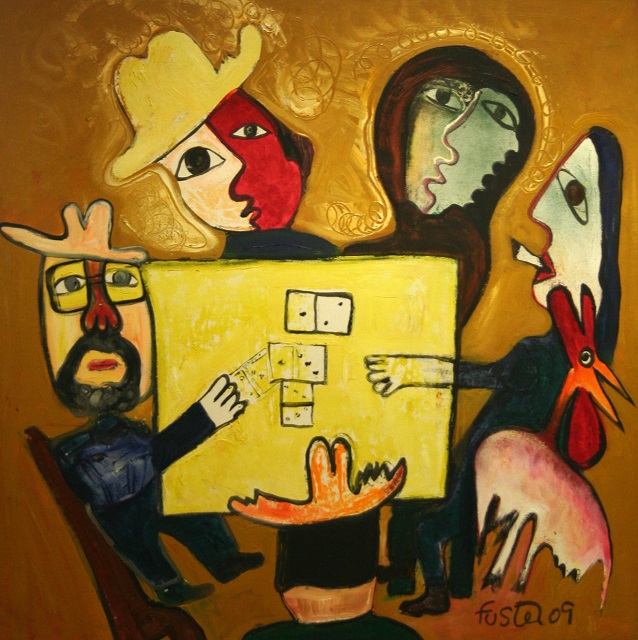
ZP_Jugando al Dominó_Playing at Dominos_José Fuster
Mario Meléndez (nace/born 1971, Chile)
“La Última Cena” / “The Last Supper or: From now on, the worms speak for him”
.
Y el gusano mordió mi cuerpo
y dando gracias
lo repartió entre los suyos diciendo
“Hermanos
éste es el cuerpo de un poeta
tomad y comed todos de él
pero hacedlo con respeto
cuidad de no dañar sus cabellos
o sus ojos o sus labios
los guardaremos como reliquia
y cobraremos entrada por verlos”.
.
And the worm bit into my body
and, giving thanks,
divided it among his brethren, saying:
“Brothers,
this is the body of a poet
– take it, eat all of it,
but do this with respect,
careful not to harm the hair upon his head,
or his eyes, or his lips
– we will keep those as sacred relics
and we’ll charge an entry fee for people to see them.”
.
Mientras esto ocurría
algunos arreglaban las flores
otros medían la hondura de la fosa
y los más osados insultaban a los deudos
o simplemente dormían a la sombra de un espino.
.
While this was going on
some were arranging flowers,
others were gauging the depth of the grave,
and the boldest ones were busy offending the relatives and mourners
– or merely sleeping ‘neath the shade of a hawthorn tree.
.
Pero una vez acabado el banquete
el mismo gusano tomó mi sangre
y dando gracias también
la repartió entre los suyos diciendo
“Hermanos
ésta es la sangre de un poeta
sangre que será entregada a vosotros
para el regocijo de vuestras almas
bebamos todos hasta caer borrachos
y recuerden
el último en quedar de pie
reunirá los restos del difunto”.
.
But once the banquet was finished
the same worm drank my blood
and, also giving thanks,
shared my blood among the rest of those present,
saying:
“Brothers,
this is the blood of a poet,
blood consecrated for you
for the sake of your souls’ rejoicing
– drink all of it until you fall down drunk,
that you may remember:
in high heaven it’s a stubborn fact –
you will be reunited with the remains of the deceased.”
.
Y el último en quedar de pie
no solamente reunió los restos del difunto
los ojos, los labios, los cabellos
y una parte apreciable del estómago
y los muslos que no fueron devorados
junto con las ropas
y uno que otro objeto de valor
sino que además escribió con sangre
con la misma sangre derramada
escribió sobre la lápida
“Aquí yace Mario Meléndez
un poeta
las palabras no vinieron a despedirlo
desde ahora los gusanos hablaremos por él”.
.
And the last-gasp fact…
not only was it the ‘joining-together’ of all of them
with the remains of the deceased –
his eyes, his lips, the hair upon his head,
an appreciable part of his stomach,
the thighs which were not devoured,
together with his clothing
and one or another item of value –
but that, moreover,
it was written in blood – that same spilt blood –
he wrote upon his own headstone:
“Here lies Mario Meléndez, a poet.
Words never came to bid him farewell,
and from now on,
the worms speak for him.”
.
Traducción/interpretación en inglés: Alexander Best
. . .
Mario Meléndez studied journalism at La República University in Santiago, Chile. In 1993 – the bicentennial of Linares – he won that city’s Municipal Prize for Literature. In 2003, in Rome, he was made an honorary member of the Academy of European Culture, after speaking at the First International Gathering for Amnesty and Solidarity of The People. In 2005 he won the Harvest International Prize for best poem in Spanish from the University of California Polytechnic.
Poemas para El Día Internacional de la Mujer: una poetisa anishinaabe que deseamos honrar: Joanna Shawana / Poems for International Women’s Day: an Anishinaabe poet we wish to honour: Joanna Shawana
Posted: March 8, 2013 Filed under: English, Joanna Shawana, Joanna Shawana: poetisa anishinaabe/Anishinaabe poet, Spanish, ZP Translator: Alexander Best | Tags: Poemas para El Día Internacional de la Mujer, Poems for International Women's Day Comments Off on Poemas para El Día Internacional de la Mujer: una poetisa anishinaabe que deseamos honrar: Joanna Shawana / Poems for International Women’s Day: an Anishinaabe poet we wish to honour: Joanna Shawana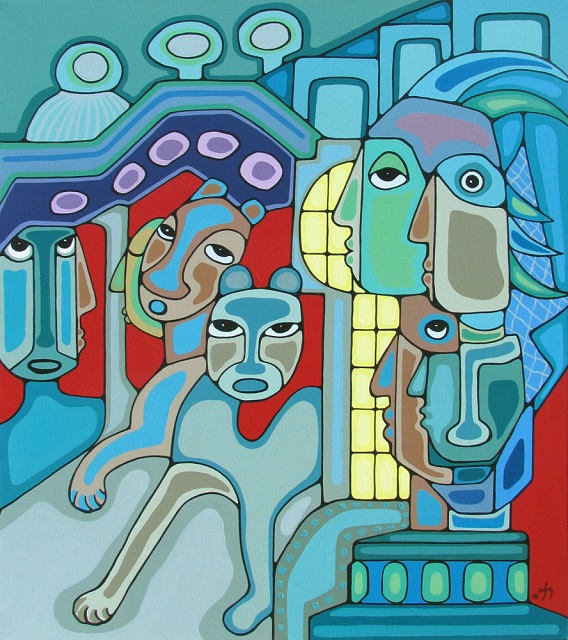
ZP_Manitoulin Island artist Daphne Odjig_Echoes of the Past_Daphne Odjig_Pintora indígena de la Isla de Manitoulin_Ecos del Pasado
Joanna Shawana / Niimkiigiihikgad-Kwe
(Anishinaabe poet from Wikwemikong, of the Ojibwe-Odawa First Nations Peoples, Mnidoo Mnis/Manitoulin Island, Ontario)
“Grandmother Moon”
.
During this cold dark night
Grandmother Moon sits high
Above the sky
.
Our Grandmother
Surrounded with stars
Emphasizing the life of the universe
.
As the night comes to end
Our Grandmother Moon slowly fades
Over the horizon
.
To greet Grandfather Sun
To greet him
As the new day begins
.
Grandmother Moon will rise again
She will shine and guide me on my path
As I walk on this journey.
. . .
Joanna Shawana / Niimkiigiihikgad-Kwe
(Poetisa anishinaabe de Wikwemikong, Mnidoo Mnis/Isla de Manitoulin, Ontario, Canadá)
“La Luna – Mi Abuela”
.
Durante esta noche fría y oscura
La Luna Mi Abuela se sienta
Alta en el cielo
.
Nuestra Abuela
Está rodeada de estrellas
Que hacen hincapié en la vida del universo
.
Como cierra la noche
Lentamente Nuestra Abuela La Luna destiñe
Encima del horizonte
.
Para dar la bienvenida al Abuelo El Sol
Para saludarle
Como comienza el nuevo día
.
Ella saldrá de nuevo, La Luna-Abuela,
Brillará y me guiará en mi camino
Como ando en este paso.
. . .
“All I Ask”
.
My fellow woman
My sisters
I am weak
I am hurt
All I ask of you is
Please
Hear what I have to say
Hear what I have to share
I am not here
To be looked down
I am not here
To be judged
For what had happened to me
All I ask of you is
Please
Hear what I have to share
My fellow women
My sisters
Listen to my words
See the pain in my eyes
All I ask of you is
Please
Hear what I have to say
Hear what I have to share
Help me
To get through my pain
Help me
To understand what is happening
Help me
To be a better person
So please
Hear what I have to say
Hear what I have to share.
. . .
“Todo lo que te pido…”
.
Mi compañera
Mis hermanas
Soy débil
Estoy dolida
Todo lo que te pido es
Por favor, escucha lo que tengo que decir
Escucha lo que tengo que compartirte
No estoy aquí
Para ser mirada por ustedes por encima del hombro
No estoy aquí
Para ser juzgada de
Lo que me había pasado
Todo lo que les pido es
Por favor, escuchen lo que tengo que compartirles,
Mis compañeras, mis hermanas,
Escuchen mis palabras
Vean el dolor en mis ojos
Todo lo que les pido es
Por favor,
Escuchen lo que tengo que decir
Escuchen lo que tengo que compartirles
Ayúdame a
Superar mi sufrimiento
Ayúdenme a
Comprender lo que pasa
Ayúdenme a
Ser una mejor persona
– Entonces,
Por favor,
Escucha lo que tengo que decirte,
Escuchen lo que tengo que compartir con ustedes…
. . .
“Hidden”
.
Hidden secrets
Hidden feelings
Hidden thoughts
.
Why do people need to hide
Their secrets
Their feelings and thoughts?
.
What are people afraid of?
Afraid of their own secrets
Afraid of their own feelings and thoughts
.
How can one person reveal?
To reveal their secrets
To reveal their feelings and thoughts
.
There is no reason to hide their secrets
There is no reason to hide their feelings
There is no reason to hide their thoughts.
. . .
“Escondido”
.
Secretos escondidos
Sentimientos escondidos
Pensamientos escondidos
.
¿Por qué la gente necesita ocultar algo?
Ocultar sus secretos, sus sentimientos y sus pensamientos
.
¿De qué tiene miedo la gente?
Tiene miedo de sus propios secretos,
Tiene miedo de sus corazonadas y sus ideas
.
¿Cómo revele una persona?
A revelar sus secretos
A revelar sus pensamientos
.
No hay razón para ser una tumba
No hay razón para engañarse a sí mismo sus sentimientos
No hay razón para esconder sus pensamientos.
. . .
“Wandering Spirit”
.
This wandering spirit of mine
Wanders off to the world of the unknown
The unknown of today and tomorrow
.
This wandering spirit of mine
Waits to hear your voice
Waits to listen for what will be said
.
This wandering spirit of mine
– Help me to discover the unknown
– Help me to understand
What the unknown needs to offer
.
Help this wandering spirit
That wanders off to the world of the unknown
That wonders what the future holds
.
This wandering spirit of mine
– Help me find peace and harmony
– Help me find tranquillity in life.
. . .
“Espíritu vagabundo”
.
Mi espíritu vagabundo
Se aleja al mundo de lo desconocido
Lo desconocido de hoy, de mañana
.
Este espíritu mío errante
Está aguardando tu voz
Está aguardando por lo que diremos
.
Espíritu mío, espíritu vagabundo
– Ayúdame a descubrir lo desconocido
– Ayúdame a entender
Lo que lo desconocido necesita ofrecerme
.
Ayúda a este espíritu errante
Que se aleja al mundo de lo desconocido
Y que se pregunta lo que va a contener el futuro
.
Este espíritu mío, mi espíritu andante
– Ayúdame a encontrar la paz y la armonía
– Ayúdame a encontrar la tranquilidad en la vida.
“Walk with Me”
.
Come and walk with me
On this path
Which I am walking on
.
We might slip and fall
To the cycle
That we once lived in
.
Let us
Help each other to understand
What we have been through
.
Let us walk together
Come and hold my hand
Hold it tight and never let go
.
Come and walk with me
Let us find what our future holds for us
Let us walk together on this path.
. . .
“Camina conmigo”
.
Ven – camina conmigo
A lo largo de este camino
Donde estoy caminando
.
Resbalemos y caigamos
Al ciclo
Que estaba nuestra vida
.
Ayudémonos a comprender,
La una a la otra,
Lo que salimos adelante, lo que sobrevivimos
.
Caminemos juntos,
Ven – toma mi mano –
Agárrate bien – nunca suéltame la mano
.
Ven – camina conmigo
Busquemos lo que habrá para nosotros en el futuro
Caminemos juntos en este camino.
. . .
Joanna Shawana moved down to Toronto in 1988. She began writing in 1994. A single parent, and now a grandmother, she has worked for an agency providing services to Native people in the city – Anishnawbe Health Toronto. Her bio. from her book of poems Voice of an Eagle states: A Catholic upbringing clashed with Native heritage teachings, which confused her path. However, through the years she gained more knowledge from her Native elders and began to clearly understand what it meant to be Nishnawbe Kwe (Native Woman). Thus, her journey in stabilizing her identity began… Joanna writes: ” When I look back and see what I have left behind, inside I cry for the little girl who witnessed that life, the teenager who was abused, and the woman who almost gave in, but I know now that my inner strength will never allow me to leave my path. Healing is a continuous part of life and it will be so until the day comes that the Creators call me. So as you travel along your path, remember – do not give in or give up! ”
.
Joanna Shawana fue víctima de mucho maltrato durante su juventud, también como una mujer joven. Desde 1988 ha vivido en la ciudad de Toronto donde trabaja con la agencia indígena Fortaleza de Anishnawbe Toronto. Dice: ” La curación es una parte continua de la vida y ésa será hasta que el día que me llamarán los Creadores. Entonces, mientras viajas en tu camino, recuerda – ¡no te des por vencido y no dejes de intentar! ”
.
Translations into Spanish / Traducciones en español: Alexander Best
. . . . .
 Zócalo Poets