Jackie Robinson: “El Primero”
Posted: January 31, 2014 Filed under: English, Spanish, ZP Translator: Alexander Best | Tags: Black History Month, El Mes de la Historia Afroamericana, Poema para Jackie Robinson Comments Off on Jackie Robinson: “El Primero”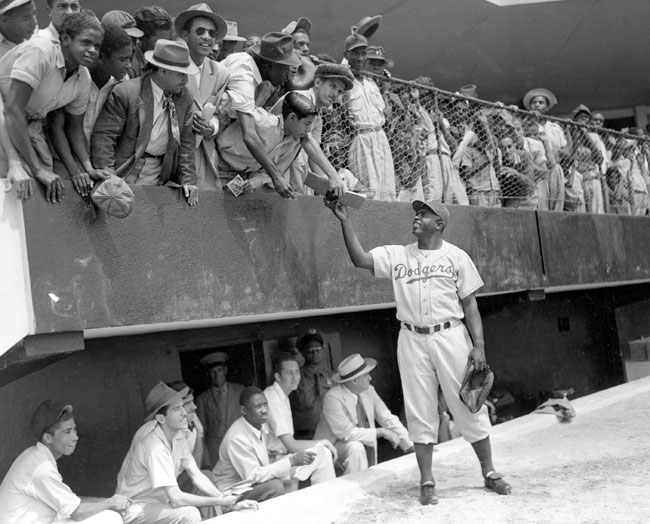
Jackie Robinson durante el entrenamiento-primavera de marzo 1948_Ciudad Trujillo, La República Dominicana_Jackie Robinson, first baseman of the Brooklyn Dodgers, returns an autograph book to a fan during the Dodgers’ spring training in Ciudad Trujillo, now Santo Domingo, in the Dominican Republic on March 6th, 1948
Un poema para Jackie Robinson (31 de enero, 1919 – 24 de octubre, 1972): beisbolista que fue el primer jugador afroamericano en las Ligas Mayores del siglo XX (15 de abril, 1947, con los Brooklyn Dodgers):
J. Patrick Lewis (nacido 1942)
“El Primero”
.
Corro por la línea,
ocho pies, nueve…
y amago sentir la ráfaga de aire entre
el rozamiento del hombre tercera-base y el pentágono.
Whitey Ford mira por mí
– un ratero jugueteando con su incredulidad –
mirlo fantasmal saltando el desafío
estremeciéndome y avanzado palmo a palmo por el borde
hacia Leyenda.
Calculo el final,
mis pistones listos,
deslizándome abajo del guante de Yogi.
¡Está dejado atónito Todo en el Estadio Yankee!
Pero se puede oír la ovación desde la distancia de Harlem.
.
Versión de Alexander Best
. . .
A poem about Jackie Robinson (January 31st, 1919 – October 24th, 1972), the first African-American major-league baseball player in the twentieth century (April 15th, 1947, with the Brooklyn Dodgers):
J. Patrick Lewis (born 1942)
“The First”
.
I run down
the line, eight feet,
nine. . .and feint to feel
the rush between the third
baseman’s brush back and home.
Whitey Ford stares through me, a sneak thief
playing on his disbelief, a phantom blackbird hopping
on and off
the dare, flinching,
inching along the ledge
to legend. I time the windup,
my pistons primed to shovel under
Yogi’s glove. Yankee Stadium is stunned!
But you can hear the cheering all the way from Harlem.
. . .
© J. Patrick Lewis, from his 2012 collection When Thunder Comes:
Poems for Civil Rights Leaders, published by Chronicle Books
. . . . .
Dany Laferrière: “Fire is nothing next to Ice…”
Posted: January 29, 2014 Filed under: Dany Laferrière, English, French, ZP Translator: Alexander Best Comments Off on Dany Laferrière: “Fire is nothing next to Ice…”
Dany Laferrière (Windsor Klébert Laferrière)
(né 1953, à Petit Goâve, Haïti, vivant à Montréal, Canada)
Extraits de Chronique de la dérive douce / Excerpts from Chronicle of the Sweet Year Adrift (1994):
.
En plein hiver
je rêve à une île dénudée
dans la mer des Caraïbes
avant d’enfouir
ce caillou brûlant
si profondément
dans mon corps
que j’aurai
du mal
à le retrouver.
.
In the midst of winter
I dream of an island bare,
in the Caribbean sea,
before burying this smouldering head
so deep within my body that
I’d be hard put to find it again.

Le feu n’est rien
à côté de la glace
pour brûler un homme
mais pour ceux qui
viennent du sud,
la faim peut mordre
encore plus durement
que le froid.
.
Fire is nothing next to Ice
for burning a man
but for those who come from the south,
Hunger can bite much harder than the cold.
.
Translation from French: Alexander Best
. . .
Dany Laferrière est un écrivain haïtien-canadien qui a reçu le prix Médicis en 2009 pour son roman L’Énigme du Retour. Le Médicis est décerné à un auteur qui n’a pas encore une notoriété correspondant à son talent.
En décembre de 2013 Laferrière est devenu membre de l’Académie française.
.
Dany Laferrière is a Haitian-Canadian writer who received the Médicis Prize in 2009 for his novel The Enigma of Return. The Prix Médicis is given to an author whose fame is not yet as big as his artistry. In December of 2013 Laferrière was elected to the Académie Française, France’s most learnéd body on French linguistic matters.
. . . . .
Norman Jordan: “Como brotar un poema”
Posted: January 28, 2014 Filed under: English, Norman Jordan, POETS / POETAS, Spanish, ZP Translator: Alexander Best | Tags: El Movimiento del Arte Negro – Cleveland en los años 60 y 70 Comments Off on Norman Jordan: “Como brotar un poema”
Norman Jordan (nacido en 1938, Virgina del Oeste, EE.UU.)
“El Sacrificio”
.
El precio de leche ha subido de nuevo
y el bebé está bebiendo más…
Carajo, supongo que tendré que
abandonar los cigarillos
– por lo tanto arruinaré mis chances de
agarrar el cáncer.
WTF – no se puede tener todo.
. . .
Norman Jordan (born 1938, West Virginia, USA)
“The Sacrifice”
.
The price of
milk has
gone up again
and the baby
is drinking more.
Hell,
I guess I’ll
have to give up
cigarettes
and blow my
chances
of catching lung
cancer.
What the fuck,
you can’t have
everything.
. . .
“Alimentando a los Leones”
.
Se atreven en nuestro barrio
con el sol
un ejército de trabajadores sociales
llevando sus maletines;
relleno de mentiras y sonrisitas tontas;
distribuyendo cheques de asistencia y vales de despensa;
apurando de un departamento al otro para
llenar su cuota
– y largarse
antes del ocaso.
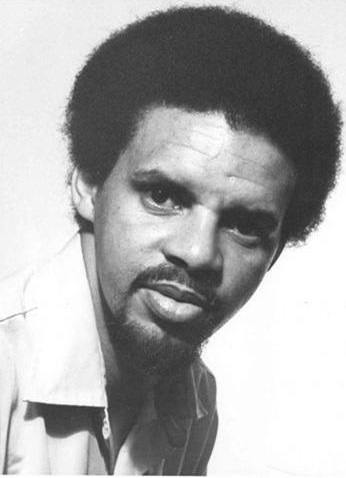
El poeta en 1970
“Feeding the Lions”
.
They come into
our neighbourhood
with the sun,
an army of
social workers
carrying briefcases,
filled with lies
and stupid grins,
passing out relief
cheques
and food stamps,
hustling from one
apartment to another
so they can fill
their quota
and get back out
before dark.
. . .
“Como brotar un poema”
.
En primer lugar,
pon unas siete cucharadas de palabras
en un frasco galón
.
Cubre las palabras
con ideas líquidas
y déjalas absorber por una noche
.
Por la mañana
vierte las viejas ideas y
enjuaga las palabras con pensamientos frescos
.
Inclina al revés en un rincón el frasco
y déjalo desaguar
.
Sigue con el enjuague, día con día,
hasta que se forma un poema
.
Finalmente,
coloca el poema en el sol
para que pueda agarrar el color de la Vida.
. . .
“How to sprout a poem”
.
First, place
about seven
tablespoons of words
in a gallon jar
.
Cover the words
with liquid ideas
and let soak overnight
.
The following morning,
pour off the old ideas
and rinse
the words with fresh thoughts
Tilt the jar upside down
in a corner
and let it drain
.
Continue rinsing daily
until a poem forms
.
Last, place the poem
in the sunlight
so it can take on
the colour of Life.
. . . . .
Lucille Clifton: “Oh Dios bufonesco” y “El martes” / “Oh antic God” and “Tuesday”
Posted: January 23, 2014 Filed under: English, Lucille Clifton, Spanish, ZP Translator: Alexander Best Comments Off on Lucille Clifton: “Oh Dios bufonesco” y “El martes” / “Oh antic God” and “Tuesday”
ZP_Retrato de Lucille Clifton por Summer Pierre_Oh, reza que lo que queremos vale correr el riesgo…Reza que lo que estamos corriendo hacia…es lo que queremos.
Lucille Clifton (poeta/educadora estadounidense, 1936 – 2010)
“Oh Dios bufonesco”
.
Oh Dios bufonesco
regrésame
mi madre durante la treintena
inclinando atrás del porche del frente
el cojín enorme de su pecho
apoyando contra el pasamanos
llamándome a la cama.
.
Casi llego a la-edad-por-dos de esa mujer muerta.
.
Apenas puedo recordar su canción
el olor de sus manos
aunque su cabello indómito roza mis sueños, las noches.
Regrésame, oh Dios de entonces – Dios de ahora,
el canto de mi madre,
su joven voz que tararea mi nombre.
. . .
Lucille Clifton (poet/educator, U.S.A., 1936 – 2010)
“Oh antic God”
.
Oh antic God
return to me
my mother in her thirties
leaned across the front porch
the huge pillow of her breasts
pressing against the rail
summoning me in for bed.
.
I am almost the dead woman’s age times two.
.
I can barely recall her song
the scent of her hands
though her wild hair scratches my dreams
at night. Return to me, oh Lord of then
and now, my mother’s calling,
her young voice humming my name.
. . .
“El martes” (un poema sobre “9-11”)
.
Trueno, relámpago – y nuestro mundo es
otro lugar; no permanecerá ningún día;
no quedará insensible, ninguna sangre.
.
Conocen esta tormenta en otros lugares:
Israel, Irlanda, Palestina.
Pero Dios ha bendecido “America”
(es lo que cantamos…)
.
Y Dios ha bendecido “America” – sí –
a aprender que no hay nadie exento…
Es Uno el Mundo:
todo miedo – es uno
toda vida – es uno;
aún toda muerte.
Todo Uno.
. . .
“Tuesday” (a poem about “9-11”)
.
thunder and lightning and our world
is another place no day
will ever be the same no blood
untouched
.
they know this storm in otherwheres
israel ireland palestine
but God has blessed America
(we sing)
.
and God has blessed America
to learn that no one is exempt
the world is one all fear
is one all life all death
– all one.
. . .
Traducciones del inglés: Alexander Best
. . . . .
Saeed Jones: Disposición de Sueño / Claro, lo veía venir – que yo estaba destinado a ser una gacela
Posted: January 21, 2014 Filed under: Saeed Jones, Saeed Jones: Disposición de Sueño y A Ser Una Gacela, Spanish, ZP Translator: Alexander Best Comments Off on Saeed Jones: Disposición de Sueño / Claro, lo veía venir – que yo estaba destinado a ser una gacela
Saeed Jones
Disposición de Sueño
.
I
He decidido permitirte quedar aquí – bajo nuestra cama, en el suelo,
no el espacio entre el colchón y el armazón metálico.
Por favor – saca tu mano debajo de mi almohada.
Y quita tus sábanas también.
Rózalas bajo la cama y haz fantasmas pretendidas.
No quiero que repiqueteas los resortes de cama,
pues – que te quedes, que te calles.
Confúndete por las sombras.
Aprende las nanas pelusones.
.
II
Haré lo correcto por ti:
migajas cepillados de las sábanas,
(son de pepitas chocolate-blanco – creo),
o las cráckeres de rincones.
Cuenta con una uva caída – ocasionalmente;
un hueso de durazno con pelusa fina, amarilla,
(donde fue mi lengua mojada – un sabor que recuerdes, quizás.)
Me dicen que hay hombres que pueden sobrevivir
comiendo ácaros del polvo – solamente, y para unas semanas.
Si hace falta, hay una lupa en la mesilla de noche.
. . .
Saeed Jones
Claro, lo veía venir – que yo estaba destinado a ser una gacela
.
Cuando gruñía a la mesa el abuelito,
yo quería saltar en un sprint.
Es lo que hacían los gacelas cuando estuvieron sobresaltados.
Saltaban en el aire como ratoneras salidas, pues no existieron
salvo que como desenfoques marrones de movimiento atajando por las planicies.
A veces, la gacela dentro de mí intentaba hacer un sprint a pesar de mí mismo,
pero mis huesos estevados y torpes me quedaron en un trote firme.
Horas y horas, yo corría a través del jardín trasero.
.
Vivíamos en Memphis… Hubieron leones detrás de cada roble y alambrado.
Un día, mientras yo correteaba el patio – solo, como siempre –
alguién disparó un arma en la distancia. El sonido hice ecos de la casa.
Me quedé muy quieto, en el centro del patio
– bastante inmóvil que me camuflé en el césped. (Fue un barrio muy duro.)
Todo el tiempo las armas parecieron estar disparando.
Cuando la abuela oyó el tiro, irrumpió en el jardín cercado y se paró en el porche.
Por un instante, me miró como si estuve tirado. Mi respuesta a su mirada fija:
salí corriendo.
.
Versiones en español: Alexander Best
. . .
Saeed Jones viene de Memphis, Tennessee, EE.UU., y ahora vive en la ciudad de Nueva York. Tiene un título en Maestría en Bellas Artes ortogado por la Universidad Rutgers en Newark, New Jersey. En 2011 fue nominado al Premio Pushcart. El poeta comenta:
Las preguntas – ¿Soy un poeta gay qué es también negro? o ¿Soy un poeta negro qué es gay también? – estoy bailando con estas preguntas, y molestan mi paz. La verdad es que el asunto de ser negro/gay ¿y importan esos nombres? sea un debate eterno que puede agotar la energía que me necesita para escribir poemas. Pero, además de todo éso, ¡quizás quiero cascar todas las etiquetas!
. . .
Para leer los poemas originales (en inglés) cliquea aquí: https://zocalopoets.com/category/saeed-jones/
. . . . .
Alicia Claudia González Maveroff: “Verdun”
Posted: October 21, 2013 Filed under: Alicia Claudia González Maveroff, English, Spanish, ZP Translator: Alexander Best Comments Off on Alicia Claudia González Maveroff: “Verdun”
Alicia Claudia González Maveroff
“Verdun”
.
And now that I’m going, now that I depart,
now that autumn will be my spring;
yes, now that I’m going, I know that for always
I will carry within me
this river, and this autumn red
in the pupil of my eye.
Well, now that I go, knowing that
tomorrow I journey through another river,
perhaps seeking that “bonanza” of calm
that rivers just don’t have because
they “walk fast – and keep moving…”;
in my soul the memory remains –
of the river, road, bridge;
those autumn colours – red, yellow –
painted among the trees.
I had already loved before, long before,
many landscapes, blue skies, other trees…
But – here today –
I loved this river, this bridge and this road;
these trees – red and yellow –
painted by autumn.
.
(Toronto, Canada, 21-10-2011)

. . .
“Verdun”
.
Y ahora que me voy, ahora que parto,
ahora que el otoño será mi primavera,
ahora que me voy, sé que por siempre,
seguro llevaré este río en mi memoria
y el rojo del otoño en mis pupilas.
Bien, ahora que me voy, sabiendo
que caminaré mañana en otro río,
tal vez lo haga buscando yo “la calma”
que el agua de los ríos no la tiene,
porque “caminan fuerte y siempre pasan”.
Más quedan en mi alma, los recuerdos,
el río, el camino, el puente
el rojo y amarillo del otoño,
pintado entre los árboles.
Yo ya había amado antes:
amé muchos paisajes, hace tiempo,
amé cielos celestes y otros árboles…
Pero hoy aquí, yo amé:
este rió, este puente, este camino
y estos árboles de rojo y amarillo
pintados en otoño…
.
(Toronto, Canadá, 21-10-2011)
. . .
Preguntamos al poeta: Que es el significado del título del poema?
Y ella nos dijo:
Te comento que el poema se llama “Verdun” por el barrio de Montréal, Québec. Allí viví cuando visité Canadá y me enamoré de este país. El poema lo escribí en Toronto, mientras paseaba, para dejárselo a la amiga que visité. Esta es la historia de porque el nombre. Caminábamos cerca del río San Lorenzo, en Verdun, mirando el río, pasábamos por un puente rojo y gris y los árboles otoñales estaban pintados de rojo y amarillo, como describo en el poema. En el final del mismo dice “…yo ya había amado antes: amé muchos paisajes hace tiempo, amé cielos celestes y otros árboles…”
Aquí hago referencia a otro sitio, en la otra punta del mapa; hablo de otro río – el “Bug” en Polonia, donde he estado muchas veces (es uno de “mis sitios en el mundo” – y tengo algunos otros en mi corazón.) Allí también caminaba junto al río, en la campiña polaca, cerca de hermosos bosques y con bellos cielos, casas campesinas con techos negros de paja (algo bellisímo), diferente para mí que vivo en Buenos Aires, en el “Fin del Mundo” (como dice el Papa Francisco.) Pero ya entonces mis amigos polacos me decían que yo venia “del fin del mundo”, aunque al estar allí en Polonia, yo en broma les decía que yo estaba visitando “el fin del mundo…” Te confieso que no he encontrado el fin del mundo, por más que recorro no logro hallarlo. Curiosamente, el nombre de este río polaco que llega desde Rusia a Polonia quiere decir Dios, tal vez sea Él quien me lleve por estos lugares…¿? Lo cierto es que son lugares que están en mí por lo que he podido experimentar…
. . .
We asked the poet to talk about the name of her poem – Verdun. Here’s what Alicia told us:
“Verdun is after the Montreal borough of the same name. I lived there when I visited Canada – and fell in love with the country. The poem itself I wrote in Toronto, while passing through, to leave for the friend I’d visited. … So, in Montreal (Verdun) we were walking alongside the St. Lawrence River and we passed by a red and grey bridge, and there were autumn trees with leaves all yellow and red. After seeing this there came into my mind these words: “I had already loved before, long before, many landscapes, blue skies, other trees…” I was thinking then of another place, another point, on the map, and another river – the River “Bug” in Poland. I’ve been there many times – it’s one of my special places in this world – and I have a few others, too, in my heart. So I was walking along the “Bug”, in the Polish countryside, close to lovely woods, and a pretty sky overhead, and the rural houses with their black straw roofs – something so beautiful – and quite different for someone like me who lives in Buenos Aires (at “the End of the Earth”, as Pope Francis says.) I confess that I’ve yet to encounter “the End of the Earth”; as much as I’ve traversed the globe I haven’t attained such a feat! Oddly, the name of that Polish river – “Bug” – that flows between Russia and Poland – is supposed to mean “God”…and maybe it’s He who carries me to all these various places…? One thing’s certain: these places are “within me”, too, and I’ve been able to experiment with them…”
. . .
Translations from Spanish into English: Alexander Best

. . . . .
Ralph Carmichael: “Un lugar tranquilo” / “A Quiet Place”
Posted: October 1, 2013 Filed under: English, Ralph Carmichael, Spanish, Translator's Whimsy: Song Lyrics / Extravagancia del traductor: Letras de canciones traducidas por Alexander Best, ZP Translator: Alexander Best Comments Off on Ralph Carmichael: “Un lugar tranquilo” / “A Quiet Place”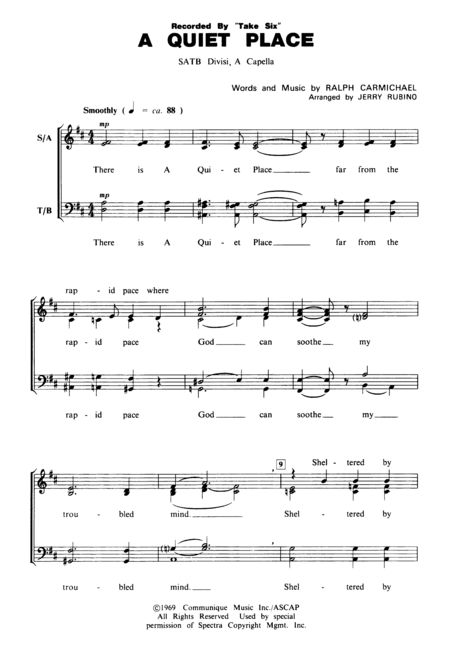
.
Ralph Carmichael (Compositor góspel, nacido 1927)
“Un lugar tranquilo”
.
Hay un lugar tranquilo
lejos del paso raudo
donde Dios puede calmar mi mente afligida.
Guardado por árbol y flor,
está allí que dejo atrás mis penas
durante la hora quieta con Él.
.
En un jardín pequeño
o alta montaña,
Encuentro allí
una nueva fortaleza
y mucho ánimo.
.
Y luego salgo de ese lugar sereno
bien listo para enfrentar un nuevo día
con amor por toda la raza humana.
. . .
Ralph Carmichael es un compositor de canciones ‘pop’ / cristianas contemporáneas.
Su canción “A Quiet Place” (“Un lugar tranquilo”) fue adaptada por un cantautor góspel estadounidense, Mervyn Warren, con su grupo “a capela” cristiano, Take 6, organizado en la Universidad Adventista Oakwood, de Huntsville, Alabama, EE.UU., durante los años 80. El arreglo musical de Señor Warren – hecho para seis voces en 1988 – es exquisitamente dulce y sensitivo. Éste no es el sonido tradicional de la música góspel, sino algo afinado y jazzístico.
Escuche la canción (versión original en inglés) en este videoclip del Festival de Jazz de Vitoria-Gasteiz (País Vasco, 1997):
http://www.youtube.com/watch?v=SH2orpg6ww4
. . .
Ralph Carmichael (born 1927)
“A Quiet Place” (1969)
.
There is a quiet place
far from the rapid pace
where God can soothe my troubled mind.
.
Sheltered by tree and flower
there in my quiet hour with Him
my cares are left behind.
.
Whether a garden small
or on a mountain tall
new strength and courage there I find.
.
And then from that quiet place
I go prepared to face a new day
with love for all mankind.
. . .
Ralph Carmichael is a composer and arranger of both pop music and contemporary Christian songs.
From 1962 to 1964 he arranged music for Nat King Cole, including Cole’s final hit, “L-O-V-E”.
“A Quiet Place” dates from 1969.
Mervyn Warren and Claude McKnight arranged a number of Christian songs – both traditional and “new” – for their six-part-harmony “barbershop”-style Gospel vocal sextet, Take 6.
Take 6 was formed at the Seventh-Day-Adventist college, Oakwood University, in Huntsville, Alabama in the early 1980s.
Mervyn Warren – most especially – is responsible for the exquisitely tender or playful harmonies that characterize Take 6’s unique sound. His 1988 arrangement of “A Quiet Place” is a good example of his genius as arranger. Astonishingly, Warren’s magnificent arrangements were never published or transcribed – all members learned their harmonies “in the moment” – through many hours of vocal jamming and experiment. Warren later left the group because the revelation of his homosexuality put him at cross-purposes with the Seventh-Day-Adventist credo.
Listen to Take 6 perform “A Quiet Place” (Mervyn Warren’s arrangement) on the following YouTube clip from a 1997 concert in Spain at the Festival de Jazz de Vitoria Gasteiz – their unusual Gospel sound is belovéd of Jazz aficionados, too!
http://www.youtube.com/watch?v=SH2orpg6ww4
. . . . .
Véronique Tadjo: “Cocodrilo” / “Crocodile”
Posted: August 27, 2013 Filed under: English, French, Spanish, Véronique Tadjo, ZP Translator: Alexander Best Comments Off on Véronique Tadjo: “Cocodrilo” / “Crocodile”
Véronique Tadjo (nacido en 1955, Paris/Abidjan, Costa de Marfil)
“Cocodrilo”
.
No es la vida fácil ser un cocodrilo
especialmente si no quiere ser un cocodrilo
El coco que usted puede ver – en la página opuesta* –
no es feliz en su
piel de coco
Era su preferencia
ser diferente
Habría preferido
llamar la atención de
Los niños
y jugar con ellos
Platicar con sus padres
Dar paseos
por la aldea
Excepto, excepto, excepto…
.
Cada vez que sale del agua
Los pescadores
tiran lanzas
Los niños
huyen
Las muchachas
abandonan sus jarros
.
Su vida es
una vida
de soledad y de la pena
Vida sin cuate y sin cariño,
sin ningún lugar a visitar
.
En todas partes – Desconocidos
.
Ese cocodrilo
Vegetariano
Un cocodrilo
y bueno para nada
Un cocodrilo
que se siente un
Horror sagrado de la sangre
.
Por favor:
Escríbale,
Escríbale a:
Cocodrilo Amable,
Caleta número 3,
Cuenca del Rio Níger.
.
*La versión original en francés presenta un dibujo hecho por Señora Tadjo.
.
Traducción en español: Alexander Best
. . .
Véronique Tadjo (née en 1955, Paris/Abidjan, Côte d’Ivoire)
“Crocodile”
.
Ce n’est pas facile d’être un crocodile
Surtout si on na’a pas envie
D’être un crocodile
Celui que vous voyez
Sur la page opposée
N’est pas bien
Dans sa peau
De croco
il aurait aimé
Etre different
Il aurait aimé
Attirer
Les enfants
Jouer
Avec eux
Converser
avec les parents
Se balader
Dans
Le village
Mais, mais, mais
.
Quand il sort
De l’eau
Les pêcheurs
Lancent des sagaies
Les gamins
Détalent
Les jeunes filles
Abandonnent leurs canaris
.
Sa vie
Est une vie
De solitude
Et de tristesse
.
Sans ami
Sans caresse
Nulle part
Où aller
.
Partout –
Etranger
.
Un crocodile
Crocodile
Végétarien
Et bon à rien
Qui a
Une sainte horreur
Du sang
.
S’il vous plaît
Ecrivez,
Ecrivez à:
Gentil Crocodile,
Baie Numéro 3,
Fleuve Niger.
. . .
Véronique Tadjo (born 1955, Paris/Abidjan, Ivory Coast)
“Crocodile”
.
It’s not easy to be a crocodile
Especially if you don’t want
To be a crocodile
The one you see
On the opposite page*
Is not happy
in his croc’s
Skin
He would have liked
To be different
He would have liked
To attract
Children
Play
with them
Talk
With their parents
Walk around
in the village
But, but, but
.
When he comes out
Of the water
Fisherman
Throw spears
Children
Take off
Young girls
Abandon their water jugs
.
His life
Is a life
Of solitude
And sadness
.
Without a friend
Without affection
Nowhere
To go
.
Everywhere
Strangers
.
A Crocodile
Vegetarian
Crocodile
And good for nothing
Who has
A holy horror
Of blood
.
Please
Write,
Write to:
Nice Crocodile,
Bay Number 3,
Niger River.
.
*The original French-language version of this poem featured a drawing by Tadjo herself of a crocodile.
. . . . .
Irene Rutherford McLeod: “Perro solitário” / “Lone Dog”
Posted: August 27, 2013 Filed under: English, Irene Rutherford McLeod, Spanish, ZP Translator: Alexander Best Comments Off on Irene Rutherford McLeod: “Perro solitário” / “Lone Dog”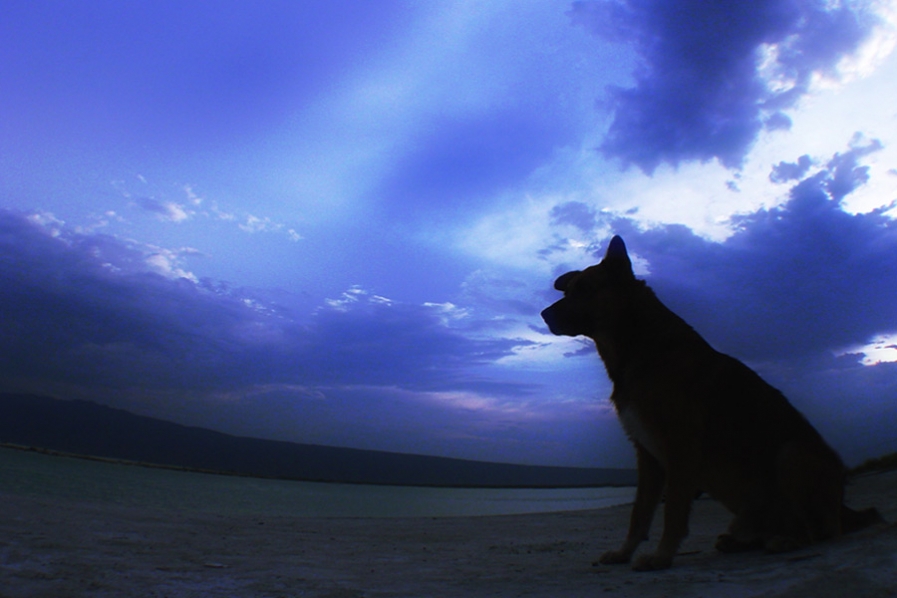 ZP_Perro solitário_Las Playitas_Cuatro Ciénegas_Coahuila_México_fotógrafo Hector Garza
.
Irene Rutherford McLeod (1891-1968)
“Perro solitário”
.
Soy un perro magro, un perro agudo – salvaje y solitário;
Un perro alborotador y firme, estoy cazando yo solo;
Un perro malo – y me cabreo – provocando a los tontos borregos;
Me gusta sentirme y aullar a la luna – para evitar que los almas gordas duerman.
.
Nunca ser un cachorro del regazo o lamer los pies sucios,
Un perrito dócil, elegante, arrastrándome por mi carne,
Ni la alfombrilla del hogar ni el plato bien llenado,
Sino puertas cerradas, piedras afiladas – y golpes, patadas: el odio.
.
Ningunos otros perros – para mí – corriendo hombro a hombro,
Algunos han corrido un rato corto – pero ningunos pueden durar.
El camino solo es mío – ¡Ah! – la senda ardua me parece bien:
¡Viento furioso, estrellas indómitas, el hambre de la búsqueda!
. . .
Irene Rutherford McLeod (1891-1968)
“Lone Dog”
.
I’m a lean dog, a keen dog, a wild dog, and lone;
I’m a rough dog, a tough dog, hunting on my own;
I’m a bad dog, a mad dog, teasing silly sheep;
I love to sit and bay the moon, to keep fat souls from sleep.
.
I’ll never be a lap dog, licking dirty feet,
A sleek dog, a meek dog, cringing for my meat,
Not for me the fireside, the well-filled plate,
But shut door, and sharp stone, and cuff and kick and hate.
.
Not for me the other dogs, running by my side,
Some have run a short while, but none of them would bide.
O mine is still the lone trail, the hard trail, the best –
Wide wind, and wild stars, and hunger of the quest!
.
Traducción del inglés al español / Translation from English into Spanish: Alexander Best
. . . . .
“Quien nace chicharra, muere cantando.”: ¡Las cigarras torontonienses hacen un gran zumbido! / “He who is born a cicada will die singing.”: Torontonian cicadas are right now making a big noise!
Posted: August 25, 2013 Filed under: English, Ernesto Cardenal, Spanish, ZP Translator: Alexander Best Comments Off on “Quien nace chicharra, muere cantando.”: ¡Las cigarras torontonienses hacen un gran zumbido! / “He who is born a cicada will die singing.”: Torontonian cicadas are right now making a big noise! ZP_Cicada from Borneo_© photographer Alex Hyde
 Zócalo Poets