Black History Month: Love Poems for the Belovéd; for God; for a Child
Posted: February 14, 2015 Filed under: English, Eric Merton Roach, Esther Phillips, Gladys Waterberg, Kendel Hippolyte, Margaret D. Gill, Mervyn Morris, R.L.C. McFarlane | Tags: Black History Month: Love Poems, Día del Amor y la Amistad Comments Off on Black History Month: Love Poems for the Belovéd; for God; for a Child
Eric Merton Roach (1915-1974, Trinidad and Tobago)
A Lover Speaks (1948)
.
Climb up a rainbow’s arch
And be arrayed in all that loveliness;
Be gilded as a sunset cloud
Or take the moon’s soft radiance for gown
And the great stars for diamonds,
Be costumed like a queen in cloth of gold
And all the earth’s rare and famous finery,
Be what you will for I am fancy free.
.
Become all legend beauty,
The glorious goddess from Olympus leaping,
Contested Helen or the Pharaoh queen,
Isolde or Deidre,
All that fair company that pass
In love and sorrow down the corridors
Of rhyme and story.
Be what you will for I am fancy free.
.
But, when your bright imaginings shall end
And you are your black hair,
Black eyes, deep lips and dark complexion;
When you are native to this time and island,
Attractive in the streets and gay and graceful,
Your beauty maddening in the moment’s dusk,
Your Naiad nakedness in the clean sea;
When you are you
Then shall my fancy not be free
But slave and bound to what I love to see.
. . .
Eric Merton Roach
Song
.
Buy her wine and roses,
gladden her laughter,
tell her she’s legend
like Ledas daughter,
a boldly made beauty
aching the eye, Isis, Astarte.
.
But never ask her
of hearts that keep honour,
puritan modes,
ethics and codes.
Cords that should bind her
to one bed
crumble in
her passionate blood.
.
To the body only
that ripe beauty,
golden as honey
hum your canzone.
. . .
R. L. C. McFarlane (born 1925, Jamaica)
O Girl, How Should I Tell You
.
O girl, how should I tell you how
You shatter all philosophy,
And melt the hardened theory,
And lay the walls of reason low?
.
For so I yield within an hour
The strength that I had wrought with pain,
And am become a fool again,
Colonial to an alien power,
.
Seeking the furtherance of my being
Within another’s happiness;
Enwombed in utter helplessness
– Blank days that jump the time for freeing.
.
No, stand apart and keep your state
Free of my tribute, lest we prove
How in the curious knot of love
The mind conceals a knife of hate.
. . .
Mervyn Morris (born 1937, Jamaica)
Love-Story
.
Love gave her eyes:
the tough man snatched,
locked them up tight.
.
Love gave her hand:
the tough man tickled it
early one night.
.
Love gave her tongue:
the tough man found
it tasted right.
.
Love gave her body:
the tough man smiled,
switched off the light.
.
Love gave her heart:
the tough man fled,
flaccid with fright.
. . .
Esther Phillips (born 1950, Barbados)
Guilt
.
Between the silent Seraphim,
Wings overarching me,
I kneel before Your Mercy Seat.
.
Oh, do not speak, I fear
Your anger; I cannot bear
The censure in Your voice.
.
Commune with me,
Your great Heart to
My trembling heart.
.
Feel my love torn,
The greater portion Yours
And still shall always be.
.
The rest is his, and he
And I are flesh – eyes, lips,
Hands and thighs, and sweetness.
.
Do not forsake me,
Oh, do not cast me off!
Was it for love You died
That I might live
– And love?
. . .
Esther Phillips
Night Errant
.
You hate the ignoble
thing, the unworthy.
You believe man is
the measure (despite
your brilliance.)
So when the wolf rips
the night open,
the night you had so drawn
with soft colours,
you deny, you deny,
you deny.
And the creature,
on cue, disappears;
the air, snarled, lies
heavy between us.
.
I’ve not much use
for a cerebral-shaped heart
nurtured on some one-eyed
philosophy.
.
Love me with your own
heart hoarding the traitor,
the rough rage, your un-
certain compassion.
. . .
Kendel Hippolyte (born 1952, Saint Lucia)
Mamoyi
.
The child is sleeping,
folded in among the brown boughs of my arms,
and a promise, formed beyond language, drawn upward
like sap through a pith, stirs through me.
In its slow course, I feel a vow so deep
it does not reach the flower and fade of word
but leaves me steeped, resined, in its truth.
Because I wish this child, awake, a man,
to know that he can keep, lifelong,
the trust, the self-astonishing joy that he has now
and he can draw from them the strength to make
his true path from the place I am
to where he will become, for his own child, a tree,
I vow: these boughs will never break.
. . .
Margaret D. Gill (born 1953, Barbados)
I want to make you cry tonight
.
I want to make you
cry tonight
I want to shake you
and break you
and take you apart and then –
want to create you
tonight
.
To begin you
And sing you
And bring you
to
where
(if you care to)
They say heaven is
heaven is
heaven is.
.
I want to make you
cry tonight
Like a big ole man child.
Shall I liberate you from all that holding in and
holding on and
self sufficient?
I may not succeed now! But
I shall certainly try –
cry
cry, cry
cry (it’s good for you).
. . .
Gladys Waterberg (born 1959, Surinam)
Poem
.
Never before
the past
has been
such a
great future dream
than
when I met you
the first time
and wished
that the future
would never
become part
of the past.
. . .
More Love Poems at ZP:
“And Don’t Think I Won’t Be Waiting”: Love poems by Audre Lorde
.
Melvin Dixon as translator: a handful of “love letter” poems by Léopold Sédar Senghor
.
“Baby, I’m for real”: Black-American Gay poets from a generation ago
. . . . .
Manuel Iris: poemas inspirados por Jazz (Davis y Monk) – con Gabriel Okara
Posted: February 10, 2015 Filed under: English, Gabriel Okara, Spanish Comments Off on Manuel Iris: poemas inspirados por Jazz (Davis y Monk) – con Gabriel Okara
Manuel Iris (México, nacido 1983, poeta yucateco / ganador del Premio Nacional de Poesía, Mérida, 2009)
[ de su poemario Overnight Medley (ARC Edições, Brasil, 2014) ]
Escrito en Oquedad
I fall in love too easily / Me enamoro tan fácilmente (versión de Miles Davis, 1963)
.
Afuera, corazón
quédate afuera
.
no nades en mi pecho
.
tuércete
respira
como pez fuera del mar
pero también de ella
.
no mueras, sin embargo
y calla
no renuncies
.
aprende a consumirte
y no solloces
.
duerme.
.
Afuera, corazón
quédate afuera
.
no vengas a buscarla.
. . .
La canción jazz que incentiva…
.
I fall in love too easily, I fall in love too fast;
I fall in love too terribly hard for love to ever last!
My heart should be well schooled, ’cause I’ve been fooled in the past…
And still: I fall in love too easily, I fall in love too fast.
.
I fall in love too easily, I fall in love too fast;
I fall in love too terribly hard, for love to ever last!
My heart should be well schooled, ’cause I’ve been fooled in the past…
And still: I fall in love too easily, I fall in love too fast.
.
[Julie Styne & Sammy Cahn, 1945]
. . .
Me enamoro – de golpe y sopetón,
Me enamoro apresuradamente;
Sí, caigo en Amor tan terriblemente duro
que no pueda persistir el arranque de pasión.
Mi corazón ya debe ser bien educado
Porque yo he sido engañado en el pasado;
Y todavía, me enamoro fácilmente,
¡Hey presto, caigo en Amor!
.
[Compositor y Letrista: Julie Styne y Sammy Cahn, 1945]
.
[ I fall in love too easily: del álbum Seven Steps to Heaven, grabado en 1963 por el “new” Miles Davis Quintet ]
. . .
Gabriel Okara (Nigeria, born 1921)
Piano and Drums
.
When at break of day at a riverside
I hear the jungle drums telegraphing
the mystic rhythm, urgent, raw,
like bleeding flesh, speaking of
primal youth and the beginning,
I see the panther ready to pounce,
the leopard snarling, about to leap,
and the hunters crouch with spears poised;
.
And my blood ripples, turns torrent,
topples the years, and at once I’m
in my mother’s laps – a suckling;
at once I’m walking simple
paths with no innovations,
rugged, fashioned with the naked
warmth of hurrying feet and groping hearts,
in green leaves and wild flowers pulsing.
.
Then I hear a wailing piano
solo, speaking of complex ways in
tear-furrowed concerto;
of faraway lands
and new horizons, with
coaxing diminuendo, counterpoint,
crescendo. But lost in the labyrinth
of its complexities, it ends in the middle
of a phrase – at a daggerpoint.
.
And I am lost in the morning mist
of an age at a riverside;
keep wandering in the mystic rhythm
of jungle drums – and the concerto…
. . .
Manuel Iris
Round Midnight
.
“And I am lost in the morning mist
of an age at a riverside; keep
wandering in the mystic rhythm
of jungle drums – and the concerto…”
[Gabriel Okara, Piano and drums]
.
El Arquitecto calla, piensa. Planea
juntar las puntas de la media noche
para hacer de nuevo el puente
entre tu voz y tu verdad primera.
.
El inicio es torpe. Borro y escribo:
Thelonius Monk ató puntas de la media noche
para tender la melodía que funciona
como puente de tu voz
al grito primigenio.
.
Acaso ha mejorado. Sigo escribiendo pero entonces apareces. Entras al cuarto y a pesar de que te veo de frente, prefiero la otra imagen que hay en el espejo, la variación del vidrio boquiabierto junto a ti.
.
Me detiene boquiabierto: evidente efectismo. Pongo de nuevo esa canción del Arquitecto y dejo que te vayas. Continúo:
.
Thelonius Monk ha atado los extremos de la media noche
para iniciar la variación de los andamios
que se alargan de tu hablar
a tu gemir de orgasmo al primitivo
tiempo de los otros los pre-humanos
que se aman contemplando el fuego.
.
Thelonius Monk armó la media noche circular
y entonces la ternura más rudimentaria
se apropió de ti te convirtió en la imagen
del primer amor que es casi el eufemismo
de quedar en celo es casi ronda casi
día siguiente…
La canción termina pero alguna variación es todavía posible. Callo. Imagino al arquitecto componiendo partituras que sirven nada más para salir o para entrar en ellas. Pongo play:
.
…pensaba
unir las puntas de la media noche
y la ternura más homínida posible
el más elemental amor te vio las manos
y pensó en dejarlas en la piedra para siempre
en invocarte como a la cacería y te volvió rupestre
y te dejó en la cueva del amor original
del eufemismo de quedar en celo
de ser Thelonius Monk haciendo los andamios
que se alargan de tu voz a los aullidos de tu risa
hacia el temblor de orgasmo
y vas del piano al tambor y vas también
en dirección contraria.
Caigo en cuenta
de que el puente es una forma de la eternidad
que el Arquitecto escribe los reflejos de tu rostro
cuando entras por la puerta tu precisa variación
tus puntos tus momentos de llegada
o de partida.
. . .
[ ‘Round Midnight: del álbum Misterioso, grabado en 1958 por Thelonius Monk ]
. . . . .
Cumpleaños de Bob Marley: “400 años” y “Tontos tercos”
Posted: February 6, 2015 Filed under: Bob Marley, English, Spanish | Tags: Black History Month, El Mes de la Historia Afroamericana Comments Off on Cumpleaños de Bob Marley: “400 años” y “Tontos tercos”
400 años, una canción de Peter Tosh, del album “Catch a Fire” (“Coge un Fuego”), grabado en 1973 por Bob Marley & The Wailers (“Los Plañideros”):
. . .
400 years, 400 years, 400 years…Wo-o-o-o,
And it’s the same philosophy.
I’ve said it’s four hundred years, 400 years, 400 years…Wo-o-o-o,
Look, how long!
And the people they still can’t see.
Why do they fight against the poor youth of today?
And without these youths, they would be gone, all gone astray.
.
Come on, let’s make a move, make a move, make a move…Wo-o-o-o,
I can see time, the time has come.
And if a-fools don’t see, fools don’t see, fools don’t see…Wo-o-o-o,
I can’t save the youth.
But the youth is gonna be strong!
So, won’t you come with me?
I’ll take you to a land of liberty
Where we can live – yes, live a good, good life,
And be free.
.
Look how long! (400 years, 400 years, 400 years…)
Way too long! (Wo-o-o-o…)
That’s the reason my people, my people can’t see.
Said: it’s four hundred long years (400 years, 400 years. Wo-o-o-o)
Give me patience – and it’s the same philosophy.
.
It’s been 400 years, 400 years, 400 years…
Wait so long! Wo-o-o-o,
How long?
400 long, long years…
. . .
400 años, 400 años, y seguimos teniendo la misma filosofía…
Yo he dicho que es 400 años, 400 años, y todavía la gente no ve más allá…
¿Por qué luchar contra los pobres jóvenes de hoy?
Sin ellos hoy estarían todos yendo por el mal camino…
Vamos, movámonos, la hora ha llegado, y aunque los tontos no lo ven como salvar a la juventud – pero ellos son fuertes…
Entonces, ¿por qué no vienes conmigo? Te llevaré a un lugar – la tierra de la libertad – donde podremos vivir bien y ser libres…
Mira – tan largo – 400 años, 400 años, tanto tiempo que no pueden ver más allá…
400 años, 400 años…Dame paciencia…la misma filosofía…
Hemos atravesado 400 años – hemos esperado tanto tiempo…largos años…
. . .
La frase 400 años hace referencia al principio del comercio de la esclavitud africana (durante el siglo XVI.) El primero ingenio azucarero jamaicano fue fundado en Sevilla La Nueva (cerca de Bahía Santa Ana) por los Españoles durante su periodo colonizador (1509–1655) en “Santiago” (el primero nombre castellano para Jamaica). En hecho, es la mayoría de Jamaicanos que son descendientes de esos esclavos…
Para leer otras letras de Bob Marley & The Wailers que se tratan de liberarse de las formas diversas de la esclavitud, cliquea en el enlace:
https://zocalopoets.com/2013/02/06/mind-is-your-only-ruler-sovereign-marcus-garvey-and-bob-marley-emancipense-de-la-esclavitud-mental-nadie-mas-que-nosotros-puede-liberar-nuestras-mentes/
. . . . .
Stiff-necked Fools (1980/1983)
.
Stiff-necked fools, you think you are cool
To deny me for simplicity.
Yes, you have gone for so long
With your love for vanity now.
Yes, you have got the wrong interpretation
Mixed up with vain imagination.
.
So take Jah Sun, and Jah Moon,
And Jah Rain, and Jah Stars,
And forever, yes, erase your fantasy, yeah!
.
The lips of the righteous teach many,
But fools die for want of wisdom.
The rich man’s wealth is in his city;
The righteous’ wealth is in his Holy Place.
So take Jah Sun, and Jah Moon,
And Jah Rain, and Jah Stars,
And forever, yes, erase your fantasy, yeah!
Destruction of the poor is in their poverty;
Destruction of the soul is vanity, yeah!
.
So stiff-necked fools, you think you are cool
To deny me for simplicity, yeah!
Yes, you have gone, gone for so long
With your love for vanity now.
.
But I don’t wanna rule ya!
I don’t wanna fool ya!
I don’t wanna school ya,
Things you might never know about!
.
Yes, you have got the wrong interpretation
Mixed up with vain imagination…
Stiff-necked fools, you think you are cool
To deny me for, ooh-ooh, simplicity!
. . .
Stiff-necked Fools: Marley has used phrases from The Bible in this song, particularly Proverbs 10, verses 15 and 21.

The Battle of Adwa fought in 1896 was the climactic confrontation of the First Italo-Ethiopian War, and it secured Ethiopian sovereignty. Painting from the collection of the Tropenmuseum in The Netherlands_Una representación de la victoria etíope contra los italianos en la Batalla de Adwa (1896).
El imperio de Etiopía quedó independiente durante la era de dominio européo en África; este hecho histórico fue de suma importancia al nacimiento de un movimiento afro-caribeño cuasi-bíblico: el Rastafarianismo. Robert Nesta Marley permanece el “Rasta” más famoso mundial.
Tontos tercos
.
Tontos tercos, piensan que son ‘cool’
para negarme la simplicidad.
Sí, tu te has ido por largo tiempo
Con tu amor por vanidad ahora.
Sí, tu tienes mala interpretación
Mezclada con vana imaginación.
.
Así que toma el Sol de Jah, la Luna de Jah y la Lluvia de Jah, las Estrellas de Jah,
Y para siempre, sí, borra tu fantasía, yeah-yeah.
.
Los labios del justo enseñan a muchos,
Pero los necios mueren por falta de entendimiento.
La riqueza del hombre rico está en su ciudad;
La riqueza de los justos está en su santo lugar.
.
Así que toma el Sol de Jah, la Luna de Jah y la Lluvia de Jah, las Estrellas de Jah,
Y para siempre, sí, borra tu fantasía, yeah-yeah.
La destrucción de los pobres esta en su pobreza;
¡La destrucción del alma es la vanidad, sí!
.
Entonces, tontos tercos, piensan que son ‘cool’
Para negarme la simplicidad, yeah-yeah.
Sí, tu te has ido por largo tiempo
Con tu amor por vanidad ahora.
¡Pero yo no quiero ya las reglas!
¡No quiero ser tonto ya!
Yo no quiero ya la escuela:
Cosas tuyas..¡puede ser que nunca sepamos de ellas!
.
Sí, tienen mala interpretación
Mezclada con vana imaginación…
Tontos tercos, ¡piensan que son ‘cool’
Para negar a mí, ooh-ooh, la simplicidad!
. . .
Marley utiliza unas frases biblicas en sus letras aqui: por ejemplo, Proverbios 10, versos 15 y 21.
. . .
Bob Marley & The Wailers: “Stiff-necked Fools” / “Tontos tercos” fue grabado en 1980 y lanzado póstumamente, en 1983. Puede oír el sonido frágil de la voz de Marley, porque sufría del cáncer que pronto le mataría…
http://youtu.be/0sBrvhMeGlw
.
Retrato en lo alto por Bruce Patrick Jones: Silueta de Robert Nesta Marley (1945-1981)
. . . . .
Marcus Garvey: “Those Who Know”
Posted: February 6, 2015 Filed under: English, Marcus Garvey | Tags: Black History Month Comments Off on Marcus Garvey: “Those Who Know” Marcus Mosiah Garvey (1887-1940, born Saint Ann’s, Jamaica) was a Black Renaissance Man: energetic, intense, full of creative ideas – and “all over the map”. A political leader, prosyletizer, journalist, publisher, and all-round entrepreneur, he was most especially a passionate, moralizing orator.
Dusé Mohamed Ali (1866-1945), the Egyptian-Sudanese founder of the African Times and Orient Review (in London in 1912) was one of Garvey’s mentors during the Jamaican’s time in England; Garvey’s pan-African and Black Nationalist thrust owed much to Ali’s example.
Though Garvey found himself on the wrong side of the NAACP’s W.E.B. DuBois (calling DuBois’ mulatto-ness “a monstrosity” ) and on the right side of Edward Young Clarke (Imperial Wizard of the KKK) – “repatriation” of “Africans” from the U.S.A. “back to” Liberia being the agreed goal – still, Garvey’s legacy has been much more solid than the sometimes madcap careenings of his tumultuous life.
However one perceives, weighs, accepts or judge’s this complex thinker’s worldview, Garvey nevertheless gives good advice to all of us in the following poem…
. . .
Marcus Mosiah Garvey (1887-1940)
“Those Who Know”
.
You may not know, and that is all
That causes you to fail in life;
All men should know, and thus not fall
The victims of the heartless strife.
Know what? Know what is right and wrong,
Know just the things that daily count,
That go to make all life a song,
And cause the wise to climb the mount.
.
To make man know, is task, indeed,
For some are prone to waste all time:
It’s only few who see the need
To probe and probe, then climb and climb.
The midnight light, the daily grind,
Are tasks that count for real success
In life of those not left behind,
Whom Nature chooses then to bless.
.
The failing men you meet each day,
Who curse their fate, and damn the rest,
Are just the sleeping ones who play
While others work to reach the best.
All life must be a useful plan,
That calls for daily, serious work –
The work that wrings the best from man –
The work that cowards often shirk.
.
All honour to the men who know,
By seeking after Nature’s truths.
In wisdom they shall ever grow,
While others hum the awful ‘blues’.
Go now and search for what there is –
The knowledge of the Universe.
Make it yours, as the other, his;
And be as good, but not the worse.
. . . . .
Image: Bruce Patrick Jones: Silhouette of Marcus Garvey
Maya Angelou: “La vida no me asusta…” / “Life doesn’t frighten me”
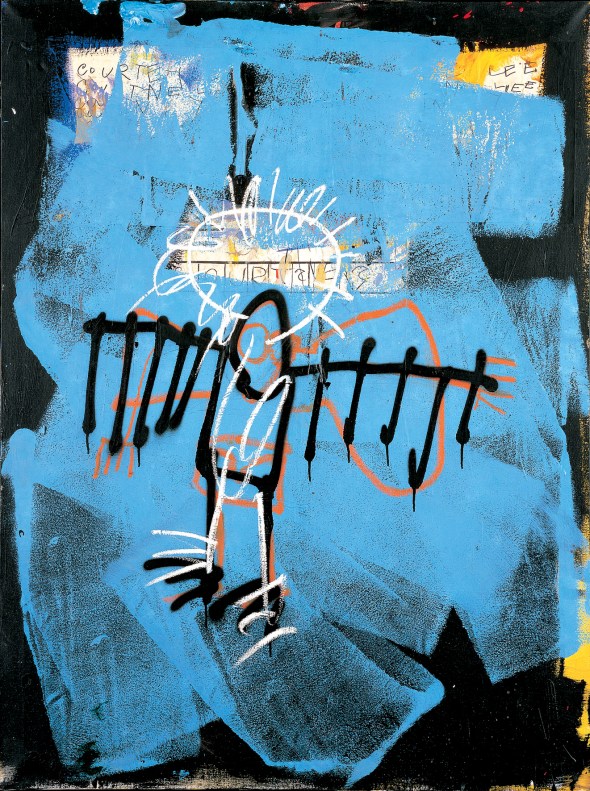
Posted: February 5, 2015 Filed under: English, Maya Angelou, Spanish, ZP Translator: Alexander Best | Tags: Black History Month, Jean-Michel Basquiat Comments Off on Maya Angelou: “La vida no me asusta…” / “Life doesn’t frighten me”
Maya Angelou (born Marguerite Annie Johnson, 1928-2014)
Life doesn’t frighten me (1993)
.
Shadows on the wall, noises down the hall,
Life doesn’t frighten me at all.
Bad dogs barking loud, big ghosts in a cloud,
That doesn’t frighten me at all.
.
Mean old Mother Goose, lions on the loose,
They don’t frighten me at all.
Dragons breathing flame on my counterpane,
That doesn’t frighten me at all.
.
– I go Boo, make them shoo,
I make fun, a-waaay they run!
I won’t cry, so they fly,
I just smile, and they go wild!
Life doesn’t frighten me at all.
.
Tough guys in a fight, all alone at night,
Life doesn’t frighten me at all.
Panthers in the park, strangers in the dark,
No, they don’t frighten me at all.
.
That new classroom where
Boys all pull my hair,
They don’t frighten me – at all.
Kissy little girls
With their hair in curls,
They don’t frighten me – at all.
.
Don’t show me frogs and snakes
And listen for my screams
– IF I’m afraid at all,
It’s ONLY in my dreams…
.
I have got a magic charm that I keep up my sleeve,
I can walk the ocean floor and never have to breath.
Life doesn’t frighten me – not at all – not at all,
Life doesn’t frighten me at all.
. . .
“Life doesn’t frighten me”, Maya Angelou’s children’s poem paired posthumously with paintings by Jean-Michel Basquiat, was published in 1993 by Stewart, Tabori & Chang press (editor Sara Jane Boyers).
Maya Angelou (1928-2014)
“La vida no me asusta…”
.
Sombras en la pared, ruidos abajo el corredor,
no, esta vida no me da miedo – ni una pizca.
Perros malos que ladran tan altos, fantasmas en una nube
– no, esos no me asustan, para nada.
.
La infame Mamá Ganso, y leones cuando están sueltos,
no me dan miedo, sí – no me dan miedo.
Dragones que respiran la llama…sobre mi ventanilla,
no, esto no me asusta – ni una pizca.
Digo: ¡Bu! Y los ahuyento.
Los burlo de ellos ¡y huyen!
No voy a llorar, ¡pues se echan a volar!
Solo sonrío – ¡y se vuelven locos!
La vida no me da miedo, de veras.
.
Matones en una pelea, solitaria en la noche,
La vida no me asusta – ni una pizca.
Panteras en el parque, desconocidos en la oscuridad,
no, ellos no me dan miedo, ah no.
.
Esa nueva aula donde los chicos jalan mi cabello,
Ellos no me dan miedo – ni una pizca.
Chicas cursis con su pelo chino,
no, ellas no me asustan, para nada.
.
No me mostras ranas y culebras
– pues esperar mis gritos…
SI yo tenga miedo – quizás –
SOLO exista en mis sueños…
.
Poseo un amuleto mágico que guardo en la manga,
Puedo caminar por el suelo marino y nunca no tengo que respirar.
Esta vida no me da miedo – ni una pizca – para nada,
no, la vida no me asusta, ah no.
. . .
“La vida no me asusta” es un poema de Maya Angelou escrito para niños, y emparejado póstumamente con unas pinturas de Jean-Michel Basquiat (“la estrella fugaz” del mundo-arte en los años 80). Fue publicado en 1993 por Stewart, Tabori & Chang (editor: Sara Jane Boyers).
. . . . .
Nicomedes Santa Cruz: “Congo”
Posted: February 1, 2015 Filed under: Nicomedes Santa Cruz, Spanish | Tags: El Mes de la Historia Afroamericana Comments Off on Nicomedes Santa Cruz: “Congo”
Nicomedes Santa Cruz (1925-1992, poeta afroperuano)
Congo (para Patrice Lumumba)
.
Mi madre parió un negrito
al divorciarse de su hombre,
es congo, congo, conguito,
Y Congo tiene por nombre.
.
Todos piden que camine
y lo parieron ayer.
Otros, que se elimine
sin acabar de nacer…
.
¡Ay Congo,
Yo sí me opongo!
.
El mundo te mira absorto
por tu nacimiento obscuro.
Te consideran aborto
por tu gatear inseguro.
.
¡Ay Congo,
Cuánto rezongo!
.
Yo he visto blancos nacer
en condiciones iguales,
y sus tropiezos de ayer
se consideran normales.
.
Mi Congo, congolesito
que Congo tiene por nombre,
hoy día es sólo un negrito
mañana será un gran hombre:
A las Montañas Mitumba
llegará su altiva frente,
Y el caudaloso Luaba
Tendrá en sanguíneo torrente.
.
¡Sí Congo,
Y no supongo!
.
África ha sido la madre
que pariera en un camastro
Al niño Congo, sin padre,
Que no desea padastro.
.
¡África, tierra sin frío,
madre de mi obscuridad;
cada amanecer ansío,
cada amanecer ansío,
cada amanecer ansío
tu completa libertad!
. . . . .
Other poems by Nicomedes Santa Cruz / Otros poemas por Nicomedes Santa Cruz: https://zocalopoets.com/2012/02/12/nicomedes-santa-cruz-black-rhythms-of-peru-ritmos-negros-del-peru/
.
Bruce Patrick Jones: Silueta de La Mujer como El Árbol con Raíces
Tanya Tagaq: Nunavut’s radical throat-singer
Posted: December 30, 2014 Filed under: Alootook Ipellie, IMAGES Comments Off on Tanya Tagaq: Nunavut’s radical throat-singer
. . .
Inuk artist and poet Alootook Ipellie (Iqaluit, Baffin Island, 1951-2007) might’ve thrilled to the vocal sounds – both traditional and progressive/highly original – of contemporary singer Tanya Tagaq (born 1975). The following poem, which Ipellie wrote in 1974, could’ve been referring to the future Tagaq – just substitute “singer” for “dancer”!
.
Alootook Ipellie
One of those Wonderful Nights
.
It was one of those wonderful nights
When we gathered at the dance house.
I recall the familiar sights
When everyone laughed and danced
And had a tremendous time.
The great drums were booming,
Hands were clapping,
And happy faces were rocking back
And forth with the rhythmic dancing
Of the woman who had four legs.
Happy were those days when this
Woman danced all night long without
Resting for a moment.
She gave us so much joy,
So much feeling for life,
That the hazards of the land were
Forgotten —
On one of those wonderful nights
When we gathered at the dance house.
. . .
.
.
.
.
.
. . . . .
Poema de un recuerdo especial navideño / A special “Christmas memory” poem…
Posted: December 24, 2014 Filed under: English, Rita Bouvier, Spanish, ZP Translator: Alexander Best Comments Off on Poema de un recuerdo especial navideño / A special “Christmas memory” poem…
Rita Bouvier (1950, Sakitawak, Saskatchewan, Canadá)
A veces me percato llorando – al momento más raro…
.
A veces me percato llorando – al momento más raro…
.
Una voz inesperada – mon oncle André / de mi tío Andrés –
llamándome la mañana de Navidad para darme “mejores deseos”.
.
Y soy, de nuevo, esa pequeña niña
andando por el lago congelado
con su abuelo,
para chequear las trampas ha colocado,
en esta escarcha, bajo una luna explotando sobre las isletas envolventes…
.
La escarcha está mordiendo,
y él me hace señas para caminar en la sombra de tu cuerpo
radiante.
.
Pronto asegura que nos encontraremos en el medio del matorral,
y levantaremos una fogata
para calentar nuestros cuerpos.
. . .
Rita Bouvier (born 1950, Sakitawak, Saskatchewan)
Sometimes I Find Myself Weeping At The Oddest Moment
.
Sometimes I find myself
weeping
at the oddest moment
An unexpected voice
mon oncle André
calling Christmas Day
wishing me
a Merry Christmas
And I am
that little girl
walking across the lake
with her grandfather
to check on the snares
and traps he has set
in this frost
exploding moon
in surrounding islands
The frost is biting
and he motions I walk
in the shade
of his warm body
Soon he claims
we will be
in the thick of brush
and we will make a fire
to warm our bodies.
. . .
From Blueberry Clouds © 1999 Rita Bouvier
. . . . .
Why I Hate Religion But Love Jesus
Posted: December 24, 2014 Filed under: English, Jefferson Bethke | Tags: Spoken-Word Poetry about Jesus Comments Off on Why I Hate Religion But Love Jesus Jefferson Bethke
Why I Hate Religion But Love Jesus
.
What if I told you: Jesus came to abolish religion?
What if I told you: getting you to vote Republican really wasn’t his mission?
Because Republican doesn’t automatically mean Christian.
And just because you call some people blind doesn’t automatically give you vision.
.
If religion is so great, why has it started so many wars?
Why does it build huge churches, but fails to feed the poor?
Tells single moms God doesn’t love them if they’ve ever been divorced?
Yet God in the Old Testament actually calls religious people whores.
.
Religion preaches grace, but another thing they practice;
Tends to ridicule God’s people – they did it to John the Baptist.
Cant fix their problems, so they try to mask it,
Not realizing that’s just like spraying perfume on a casket.
Because the problem with religion is that it never gets to the core,
It’s just behaviour modification – like a long list of chores.
Let’s dress up the outside, make things look nice and neat;
It’s funny – that’s what they do to mummies, while the corpse rots underneath.
.
Now I ain’t judging, I’m just saying be careful of putting on a fake look,
Because there’s a problem if people only know that you’re a Christian
by that little section on your Facebook.
In every other aspect of life you know that logic’s unworthy;
It’s like saying you play for the Lakers just because you bought a jersey!
.
But see: I played this game too; no one seemed to be on to me;
I was acting like a church kid while addicted to pornography.
I’d go to church on Sunday, but on Saturday got ‘faded’,
As if I was simply created to have sex and get wasted.
Spent my whole life putting on this façade of neatness,
But now that I know Jesus, I boast in my weakness.
.
If grace is water, then the church should be an ocean,
Cuz it’s not a museum for good people – it’s a hospital for the broken.
I no longer have to hide my failures, I don’t have to hide my sin,
Because my salvation doesn’t depend on me – it depends on Him.
Because when I was God’s enemy and certainly not a fan,
God looked down on me and said: “I want that man!”
Which is so different from religious people, and why Jesus called ’em fools;
Don’t you see he’s so much better than just following some rules?
.
Now let me clarify: I love the church, I love the Bible, and I believe in sin.
But my question is: if Jesus were here today, would your church let Him in?
Remember, He was called a drunkard and a glutton by “religious men”;
The Son of God does not support self-righteousness – not now, not then.
.
Now back to the topic…one thing I think is vital to mention:
How Jesus and religion are on opposite spectrums.
One is the work of God, one is a man-made invention;
One is the cure and one is the infection.
Because Religion says do, Jesus says done.
Religion says slave, Jesus says son.
Religion puts you in shackles but Jesus sets you free.
Religion makes you blind, but Jesus lets you see.
.
This is what makes religion and Jesus two different clans;
Religion is man searching for God, but Christianity is God searching for man.
Which is why salvation is freely mine, forgiveness is my own,
Not based on my efforts, but Christ’s obedience alone.
.
Because He took the crown of thorns, and blood dripped down His face,
He took what we all deserved – that’s why we call it grace.
While being murdered he yelled “father forgive them, they know not what they do”,
Because when he was dangling on that cross, he was thinking of You!
.
He paid for all your sin, and then buried it in the tomb,
Which is why I’m kneeling at the cross now, saying: come on, there’s room!
So know I hate religion, in fact I literally resent it,
Because when Jesus cried “It is finished” – I believe He meant it.
. . .
Spoken-Word performer and poet Jefferson Bethke is from Tacoma, Washington, U.S.A.
He explains:
This poem I wrote to highlight the difference between Jesus and false religion. In the scriptures Jesus received the most opposition from the most religious people of his day. At its core Jesus’ gospel and the good news of the Cross is in pure opposition to self-righteousness/self-justification. Religion is Man-centred, Jesus is God-centred. This poem highlights my journey to discover this truth. Religion either ends in pride or despair. Pride because you make a list and can do it and act better than everyone, or despair because you can’t do your own list of rules and feel “not good enough” for God. With Jesus, though, you have humble, confident joy because He represents you, you don’t represent yourself, and His sacrifice puts us in perfect standing with God!
. . . . .

Edna St.Vincent Millay: Para Jesús – En Su Cumpleaños / To Jesus, On His Birthday
Posted: December 24, 2014 Filed under: Edna St.Vincent Millay, English, Spanish, ZP Translator: Alexander Best Comments Off on Edna St.Vincent Millay: Para Jesús – En Su Cumpleaños / To Jesus, On His Birthday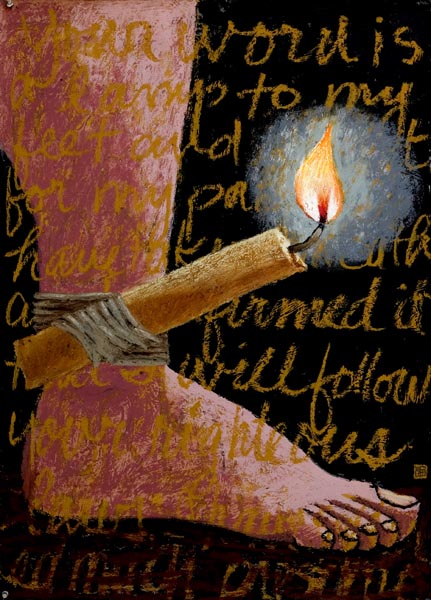
Salmos 119: 105: Lámpara es a mis pies tu palabra, y lumbrera a mi camino. Pintura por Wayne Forte_A Lamp Unto My Feet copyright 2007 by Wayne Forte
 Zócalo Poets