Amy Lowell, Charles Cros, João Teixeira: “Lilacs” / “Lilas”
Posted: May 18, 2015 Filed under: Amy Lowell, English, French, Portuguese, Spanish Comments Off on Amy Lowell, Charles Cros, João Teixeira: “Lilacs” / “Lilas”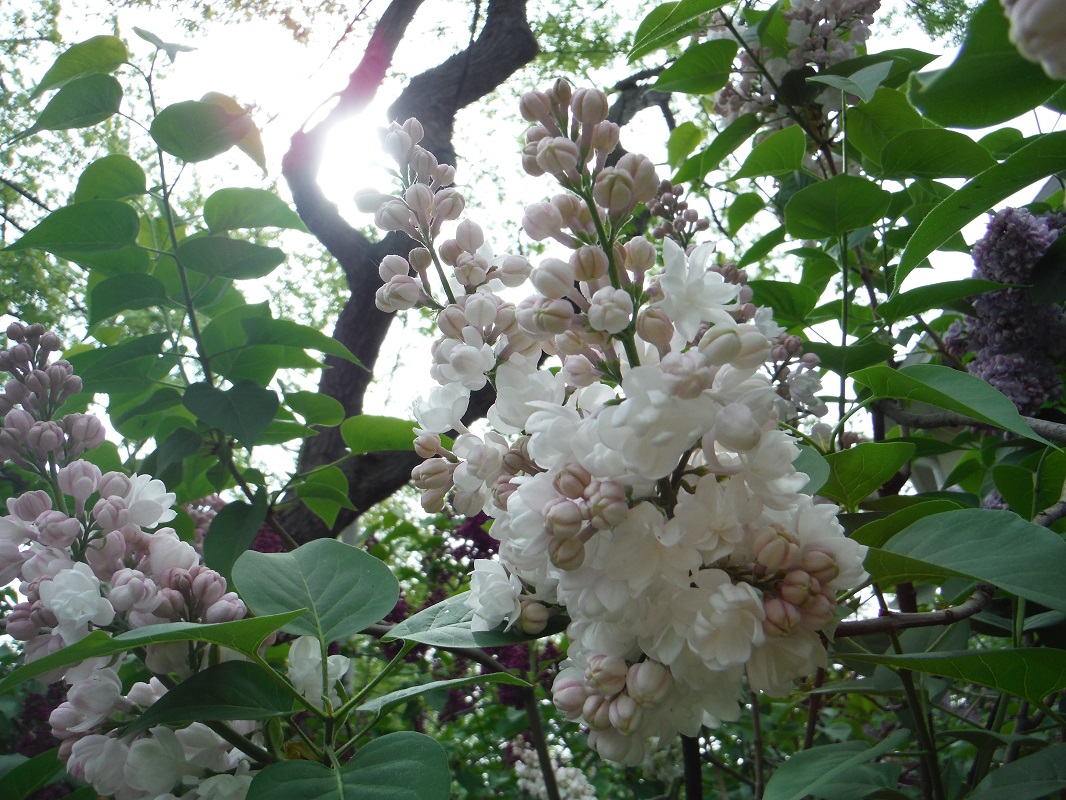
Extracto de “Lilas” por Amy Lowell (poetisa estadounidense, 1874-1925)
Versión de Michael Toora (2011)
.
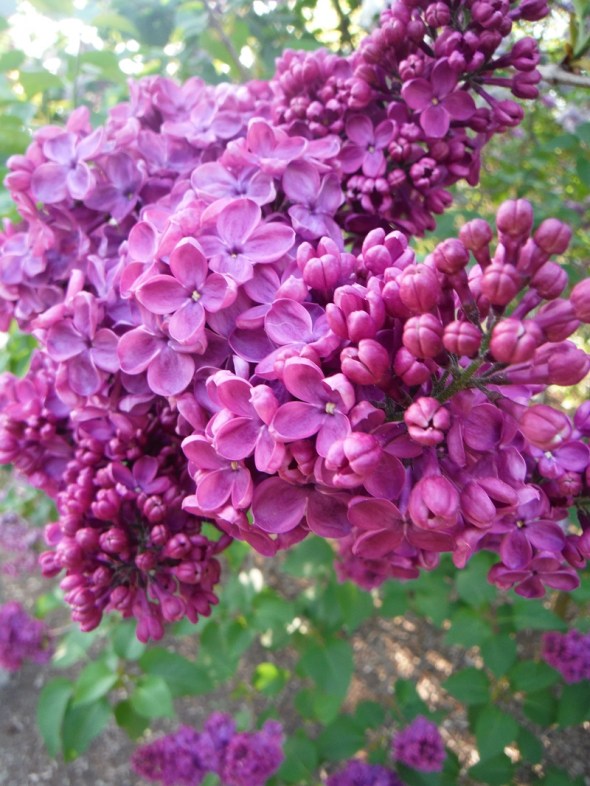
Lilacs / Lilas
False blue, / De un falso azul,
White, / Blancas,
Purple, / Moradas,
Colour of lilac, / De color lila,
You have forgotten your Eastern origin, / Habéis olvidado vuestro origen oriental,
The veiled women with eyes like panthers, / A las mujeres con velo y ojos de pantera,
The swollen, aggressive turbans of jeweled pashas. / A los hinchados y agresivos turbantes de enjoyados pachás.
Now you are a very decent flower, / Ahora sois una flor muy decente,
A reticent flower, / Una flor reticente,
A curiously clear-cut, candid flower, / Una flor curiosamente clara y candida,
Standing beside clean doorways, / De pie junto a portales limpios,
Friendly to a house-cat and a pair of spectacles, / Amiga del gato doméstico, y de un par de anteojos,
Making poetry out of a bit of moonlight / Convirtiendo en poesía un cachito de luz de luna
And a hundred or two sharp blossoms. / Y cien o doscientos flores estilosas.
 . . .
. . .
Charles Cros (poète français, 1842-1888)
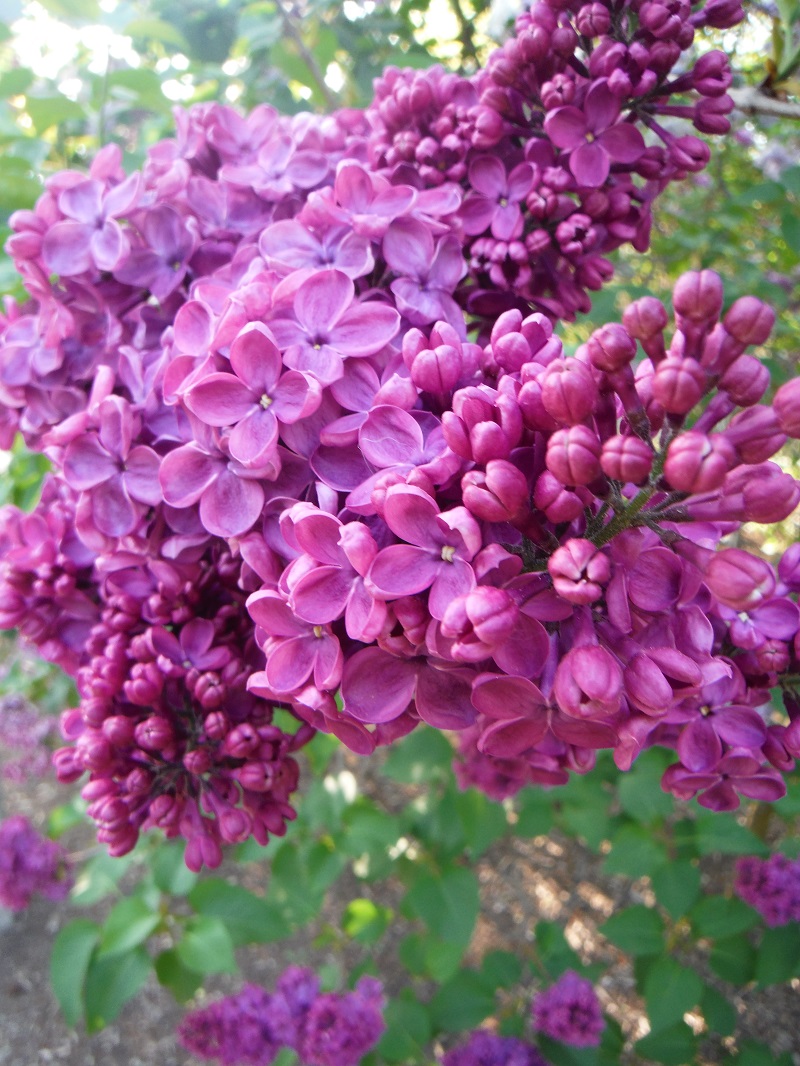
Lilas
.
Ma maîtresse me fait des scènes.
Paradis fleuri de lilas
Se viens humer tes odeurs saines.
.
Les moribonds disent : Hélas !
Les vieux disent des mots obscènes
Pour couvrir le bruit de leurs glas.
.
Dans le bois de pins et de chênes
Les obus jettent leurs éclats.
Victoire ? Défaite ? Phalènes.
Pluie améthyste les lilas,
Sans souci d’ambitions vaines,
Offrent aux plus gueux leurs galas.
.
La mer, les montagnes, les plaines,
Tout est oublié. Je suis las,
Las de la bêtise et des haines.
.
Mais mon coeur renaît aux lilas.
. . .
João de Sousa Teixeira (Brasil)
Lilás (2011)
.
Que flor é esta, assim-assim,
com o nome da coloração?
Os lilases deste jardim,
cores ou flores, o que são?
.
Neste enigma aparente
entre o ser e o que assemelha,
as dúvidas ficam p’ra gente
e todo o mel para a abelha…
. . . . .

Patti Masterman (contemporary U.S. poet)
The Lilac Tree
.
One day a lavender sheen appeared
Just across the worn out fence,
And thus she met the Lilac bush,
And she was then possessed of it.
.
That fall, at its earthly altar,
She did her sacrifice;
The corpse of hare and linnet,
And the unlucky field mice.
.
Come spring, she reaped the harvest;
The blooms were heavy, strong:
The odour of fresh Lilacs
About the breeze were blown.
.
Twelve years she served the Lilac,
No matter what the weather,
And at its gnarly feet were laid
Remains of bone and feather.
.
The twelfth year came, and she was ill,
She dragged herself beneath its leaves.
That spring was the most splendid yet;
In brilliant blooms, the branches grieved.
.
The Lilac never bloomed again,
It shut its face for fear of sun,
And those who’d thought to steal a bloom
In spring, found always there was none.
. . .
Walt Whitman (1819-1892)
When Lilacs last in the dooryard bloom’d
(Excerpt)
.
Passing the visions, passing the night,
Passing, unloosing the hold of my comrades’ hands,
Passing the song of the hermit bird and the tallying song of my soul,
Victorious song, death’s outlet song, yet varying ever-altering song,
As low and wailing, yet clear the notes, rising and falling, flooding the night,
Sadly sinking and fainting, as warning and warning, and yet again bursting with joy,
Covering the earth and filling the spread of the heaven,
As that powerful psalm in the night I heard from recesses,
Passing, I leave thee lilac with heart-shaped leaves,
I leave thee there in the door-yard, blooming, returning with spring.
. . . . .
Alexander Best: El arce en mi traspatio / The Maple tree in my backyard
Posted: May 11, 2015 Filed under: Alexander Best, English, Spanish | Tags: Poemas para el Cambio de Estaciones Comments Off on Alexander Best: El arce en mi traspatio / The Maple tree in my backyard
El arce sin hojas_22 de abril 2015

El arce echando hojas_1 de mayo…
Alexander Best
El arce en mi traspatio
.
Buenos días, Árbol…
Sí, has visto tanto:
canículas, tormentas,
tiempos congelados profundos que se quiebran.
¿Cuántos “anillos” hay dentro de tu tronco?
Un siglo y un cuarto – es lo que pienso.
Un retoño eras en mil novecientos,
y has aguantado nevascas y trueno.
En esos brazos amplios ellos viven y se jalan:
mapache en su siesta, ardilla y su nido;
pájaro-trepador al revés, pájaro-carpintero con su mazo;
y la pura voz del cardenal – el amante en su alba.
Eres escultura escueta; eres febrero en su rigor.
Eres junio, julio, y la fronda que timbra con
todas criaturas – incluyendo a mí;
tu paraguas – parasol – nosotros buscamos.
Octubre llega, y nos expones los colores más vívidos
– pues aúlla el aire.
.
Giran las estaciones, pero te mantienes en tus trece…
Árbol, me enseñas La Vida
– porque estoy listo ahora.
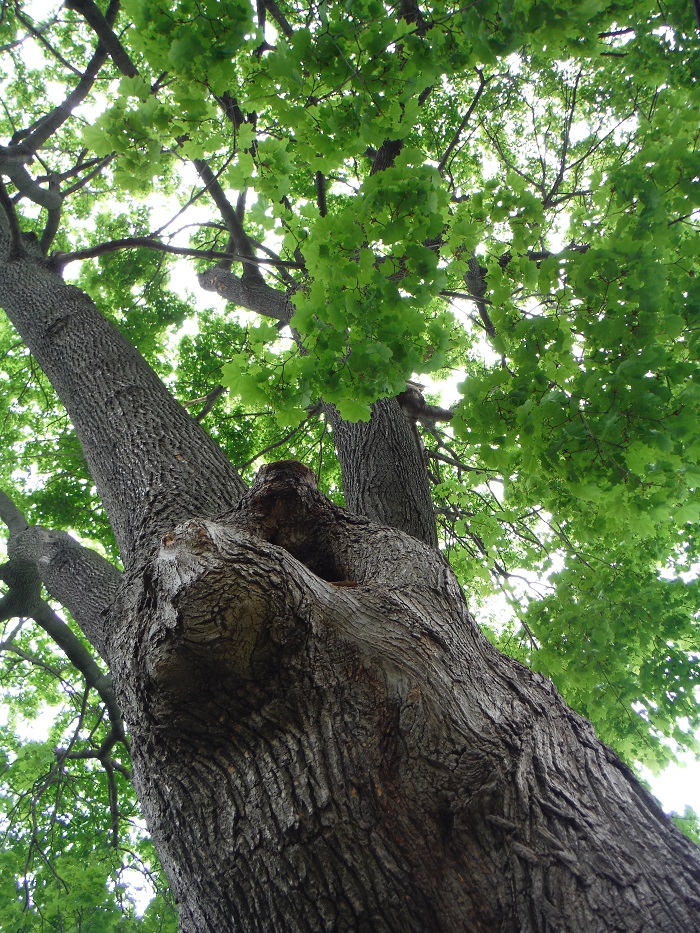
El arce echando hojas_11 de mayo…

El arce_enteramente echado de hojas_18.05.2015
Alexander Best
The Maple tree in my backyard
.
“Morning”, Tree… Yes, you’ve seen much:
heat waves, storms, deep freezes that crunch.
How many “rings” are there in your trunk?
A century – plus a quarter, I think.
Sapling you were in 1900,
and you’ve stood fast: hard blizzards and thunder.
In those broad arms they live and they scurry:
raccoon at siesta, the nesting squirrel;
upside-down nuthatch, a woodpecker’s hammer;
cardinal’s voice – the dawn-pure lover.
You’re sculpture, stark; you’re February strong;
in June and July that canopy rings
with birds and creatures – including me;
your umbrella – or parasol – all of us seek.
October comes, and you glorious show
most vividest colours – and then the winds howl.
Seasons revolve, yet steady you are:
Tree, you’re teaching me Life
– for now I am ready.
. . .
Otros ZP poemas sobre árboles / Other ZP poems about trees:
https://zocalopoets.com/category/poets-poetas/clovis-s-palmer/
. . . . .
James Baldwin: poemas de “Jimmy’s Blues” (1983)
Posted: May 8, 2015 Filed under: James Baldwin, Spanish, ZP Translator: Alexander Best Comments Off on James Baldwin: poemas de “Jimmy’s Blues” (1983)
James Baldwin (Novelista/ensayista/activista estadounidense, 1924-1987)
“Culpa, Deseo y Amor”
.
A la esquina oscura
donde la Culpa y el Deseo
están intentando sostenerle la mirada
– en breve, uno de ellos va prender un cigarillo
y aludir al próximo almacén abandonado –
pues el Amor llega, andando encorvado…
Un silencio detonado.
Y el Amor se para, un poco apartado de ellos,
pero visible en la luz amarilla, callado y humeante.
Mientras tanto, la Culpa y el Deseo discutían,
y intentaban no estar escuchado por este intruso…
.
Cada vez que el Deseo miró hacia el Amor,
esperando encontrar a un testigo,
pues la Culpa gritó más fuerte
– y agitó sus caderas –
y el fuego del cigarillo
amenazó a incendiarse el almacén.
.
El Deseo, en hecho, cruzó la calle, de vez en cuando,
para oír lo que diga el Amor…
Pero la Culpa paró una carga
de otra gente,
pues se arrodilló en el medio de la calle,
y,
mientras la carga de otra gente
huyeron la mirada y juraro que
no podían ver nada – y no aseverarían de ningún modo –
pues el Amor se alejó.
Y la Culpa logró, sobre el cuerpo en pie del Deseo,
ese alivio inflamatorio y pasajero que estampa su unión
(¿para siempre?)
y que crea un problema de tráfico
masivo.
. . .
“El Dador” (para Berdis)
.
Si la esperanza de regalando – dando –
es de amando a los vivos,
pues el dador arriesga la locura
en el acto de dar.
.
Esa lección yo vea
en las caras que me rodean.
.
Necesitadas, ciegas, sin esperanza, abajo,
¿Cuál regalo les daría el regalo ser regalados?
El dador también está a la deriva
como ellos que claman hacia el regalo.
.
Si no pueden reclamarlo, si no está allí,
si sus dedos vacíos golpean el aire vacío,
y el dador se arrodilla en oración
– comprende que todo su dar es dar para nada –
y que nada fue lo que pensaba,
y mueve en su cama culpable, para mirar
a las multitudes habreadas que se paran allí,
si él sube de su cama – para maldecir el cielo:
él debe comprender que
a todo aquel a quien se haya dado mucho, mucho se le demandará
– sacado de él, y justamente –
¡No puedo decirte cuánto debo!
. . .
¡Amén!
.
No, no siento la llegada de Muerte; siento su ida.
Ha lanzado su manos en el aire – por un rato –
y pienso que le conozco más bien que antes.
.
Esos brazos, me agarraban un ratito…
Pero, cuando nos encontramos de nuevo,
existirá entre nosotros
esa comprensión secreta.
. . .
[Del poemario Jimmy’s Blues (1983)]
. . .
Dr. Kenneth Clark y James Baldwin: entrevista de 1963, (en inglés, con subtítulos en español)
https://www.youtube.com/watch?v=WgaQ4W1IEis
. . . . .
James Baldwin: poems from “Jimmy’s Blues” (1983)
Posted: May 5, 2015 Filed under: A FEW FAVOURITES / UNA MUESTRA DE FAVORITOS, English, James Baldwin Comments Off on James Baldwin: poems from “Jimmy’s Blues” (1983)
James Baldwin in 1945_age 21
James Baldwin (American novelist, essayist, activist, 1924-1987)
“Guilt, Desire and Love”
.
At the dark street corner
where Guilt and Desire
are attempting to stare
each other down
(presently, one of them
will light a cigarette
and glance in the direction
of the abandoned warehouse)
Love came slouching along,
an exploded silence
standing a little apart
but visible anyway
in the yellow, silent, steaming light,
while Guilt and Desire wrangled,
trying not to be overheard
by this trespasser.
.
Each time Desire looked towards Love,
hoping to find a witness,
Guilt shouted louder
and shook them hips
and the fire of the cigarette
threatened to burn the warehouse down.
.
Desire actually started across the street,
time after time,
to hear what Love might have to say,
but Guilt flagged down a truckload
of other people
and knelt down in the middle of the street
and, while the truckload of other people
looked away, and swore that they
didn’t see nothing
and couldn’t testify nohow,
and Love moved out of sight,
Guilt accomplished upon the standing body
of Desire
the momentary, inflammatory soothing
which seals their union
(for ever?)
and creates a mighty traffic problem.
. . .
“Munich, Winter 1973” (for Y.S.)
.
In a strange house,
a strange bed
in a strange town,
a very strange me
is waiting for you.
.
Now
it is very early in the morning.
The silence is loud.
The baby is walking about
with his foaming bottle,
making strange sounds
and deciding, after all,
to be my friend.
.
You
arrive tonight.
.
How dull time is!
How empty—and yet,
since I am sitting here,
lying here,
walking up and down here,
waiting,
I see
that time’s cruel ability
to make one wait
is time’s reality.
.
I see your hair,
which I call red.
I lie here in this bed.
.
Someone teased me once,
a friend of ours—
saying that I saw your hair red
because I was not thinking
of the hair on your head.
.
Someone also told me,
a long time ago:
my father said to me,
It is a terrible thing,
son,
to fall into the hands of the living God.
Now,
I know what he was saying.
I could not have seen red
before finding myself
in this strange, this waiting bed.
Nor had my naked eye suggested
that colour was created
by the light falling, now,
on me,
in this strange bed,
waiting
where no one has ever rested!
.
The streets, I observe,
are wintry.
It feels like snow.
Starlings circle in the sky,
conspiring,
together, and alone,
unspeakable journeys
into and out of the light.
.
I know
I will see you tonight.
And snow
may fall
enough to freeze our tongues
and scald our eyes.
We may never be found again!
.
Just as the birds above our heads
circling
are singing,
knowing
that, in what lies before them,
the always unknown passage,
wind, water, air,
the failing light
the falling night
the blinding sun
they must get the journey done.
Listen.
They have winds and voices,
are making choices,
are using what they have.
They are aware
that, on long journeys,
each bears the other,
whirring,
stirring,
love occuring
in the middle of the terrifying air.
. . .
“Conundrum”
(on my birthday – for Rico)
.
Between holding on,
and letting go,
I wonder
how you know
the difference.
.
It must be something like
the difference
between heaven and hell,
but how, in advance,
can you tell?
.
If letting go
is saying no,
then what is holding on
saying?
.
Come.
Can anyone be held?
Can I – ?
The impossible conundrum,
the closed circle,
why
does lightning strike this house
and not another?
Or, is it true
that love is blind
until challenged by the drawbridge
of the mind?
.
But, saying that,
one’s forced to see one’s definitions
as unreal.
We do not know enough about the mind,
or how the conundrum of the imagination
dictates, discovers,
or can dismember what we feel,
or what we find.
.
Perhaps
one must learn to trust
one’s terror:
the holding on,
the letting go,
is error:
the lightning has no choice,
the whirlwind has one voice.
. . .
“Some Days” (for Paula)
1.
Some days worry
some days glad
some days
more than make you
mad.
Some days,
some days, more than
shine:
when you see what’s coming
on down the line!
2.
Some days you say,
oh, not me never – !
Some days you say
bless God forever.
Some days, you say,
curse God, and die,
and the day comes when you wrestle
with that lie.
Some days tussle
then some days groan
and some days
don’t even leave a bone.
Some days you hassle
all alone.
3.
I don’t know, sister,
what I’m saying,
nor do no man,
if he don’t be praying.
I know that love is the only answer
and the tight-rope lover
the only dancer.
When the lover come off the rope
today,
the net which holds him
is how we pray,
and not to God’s unknown,
but to each other – :
the falling mortal is our brother!
4.
Some days leave
some days grieve
some days you almost don’t believe.
Some days believe you,
some days don’t,
some days believe you
and you won’t.
Some days worry
some days mad
some days more than make you
glad.
Some days, some days,
more than shine,
witnesses,
coming on down the line!

“The Giver” (for Berdis)
.
If the hope of giving
is to love the living,
the giver risks madness
in the act of giving.
.
Some such lesson I seemed to see
in the faces that surrounded me.
.
Needy and blind, unhopeful, unlifted,
what gift would give them the gift to be gifted!
The giver is no less adrift
than those who are clamouring for the gift.
.
If they cannot claim it, if it is not there,
if their empty fingers beat the empty air,
and the giver goes down on his knees in prayer,
knows that all of his giving has been for naught,
and that nothing was ever what he thought,
and turns in his guilty bed to stare
at the starving multitudes standing there,
and rises from bed to curse at heaven,
he must yet understand that to whom much is given
much will be taken – and justly so:
I cannot tell how much I owe.


James Baldwin photographed in Saint Paul de Vence_France_late 1970s_ copyright Dmitri Kasterine
“Amen”
.
No, I don’t feel death coming.
I feel death going:
having thrown up his hands,
for the moment.
.
I feel like I know him
better than I did.
Those arms held me,
for a while,
and, when we meet again,
there will be that secret knowledge
between us.
. . .
“The darkest hour”
.
The darkest hour
is just before the dawn,
and that, I see,
which does not guarantee
power to draw the next breath,
nor abolish the suspicion
that the brightest hour
we will ever see
occurs just before we cease
to be.
. . .
James Baldwin is justly famous for the hard-hitting candour of his essays about race relations in his native U.S.A. during the final simmering decades of the “Jim Crow” era. The stepson of a Harlem pastor, yet openly gay abroad (France and Istanbul), Baldwin also wrote a small number of poems: the rare Gypsy manuscript from his youth, plus Jimmy’s Blues (published in 1983, from which the above have been chosen). His trademark searing honesty about how one will have no choice but to face Life combines with the cadences of a Black-American upbringing: the presence of the Blues and Gospel.
. . . . .
Lorna Goodison: “Mi Testamento”
Posted: May 4, 2015 Filed under: English, Lorna Goodison, Spanish, ZP Translator: Alexander Best Comments Off on Lorna Goodison: “Mi Testamento”
Lorna Goodison (poetisa jamaiquina, 1947)
Mi Testamento
.
Hijo,
eso es mi testamento
– aunque lo doy antes de tiempo –
dado que advinan para mí las quiromantes
una “línea” de vida muy prolongada.
Y además, ¿quién sabe si hubiere algo que vale legarte,
(si yo lo adquiera),
antes de mi “línea” de vida
se mueve poco a poco hasta el lado oscuro
de mi mano?
.
Pero, para comenzar:
el don para la música – de cantar,
esta fuente agradable y directa de liberación
yo no recibí,
entonces dejo para tí la esperanza que
Dios puede captar la indirecta.
.
Y pues:
el derecho de llamar a todos más mayores:
Señor, Señorita, también Doña,
por el amor extenso de nuestras formas más sencillas.
Pues:
Come el pan y la sal de cada día
dando gracias – y ¡qué nunca entiendas El Hambre!
.
También: los libros. (Quiero decir: el amor de libros.)
Y ojalá que se ganes – como yo he ganado – amigos auténticos…
Pero…por si acaso,
Ama los libros.
Porque, cuando el empastado de un libro se hace a pedacitos,
todavía pueda componerlo;
no es el caso con las amistades.
.
Ah, también:
no oro, nunca del oro.
Tanta gente mueren por el oro – ¡tanta matará por eso!
Y además, su rostro es demasiado audaz.
.
Esta comtemplación es la última que te daré:
la mayoría de veces deberías enseñar una pátina de tono más sutil,
pues,
cuando floreces
lo valorán.
.
(1985)
. . .
Lorna Goodison (Kingston, Jamaica, born 1947)
My Will
.
Son, my will:
albeit premature –
when the palm readers
divine
for me an extended
life line.
Besides, who knows what
worth bequeathing
I could acquire
before the life line
inches to the darker side
of my hand.
.
But, for a start:
the gift of song,
this sweet immediate source
of release was not given me,
so I leave it for you, in the hope
that God takes hints.
Then: the right to call
all older than you
Miss, mister, or mistress,
in the layered love of our
simplest ways;
eat each day’s salt and bread
with praise;
and may you never know hungry.
And books – I mean the love of them.
.
May you, like me, earn good
friends,
but just to be sure,
love books.
When bindings fall apart
they can be fixed;
you will find
that is not always so
with friendships.
.
And no gold.
Too many die / kill for it;
besides, its face is too bold.
.
This observation is the
last I give:
most times, assume a
patina a shade subdued,
so when you bloom
they will value it.
. . .
[“My Will” was first published in Jamaica Journal Quarterly (February-April 1985).]
. . . . .
Martin Carter: poeta-activista de Guyana: “Estás involucrado”
Posted: April 29, 2015 Filed under: Martin Wylde Carter, Spanish, ZP Translator: Alexander Best | Tags: Poetas de Guyana Comments Off on Martin Carter: poeta-activista de Guyana: “Estás involucrado”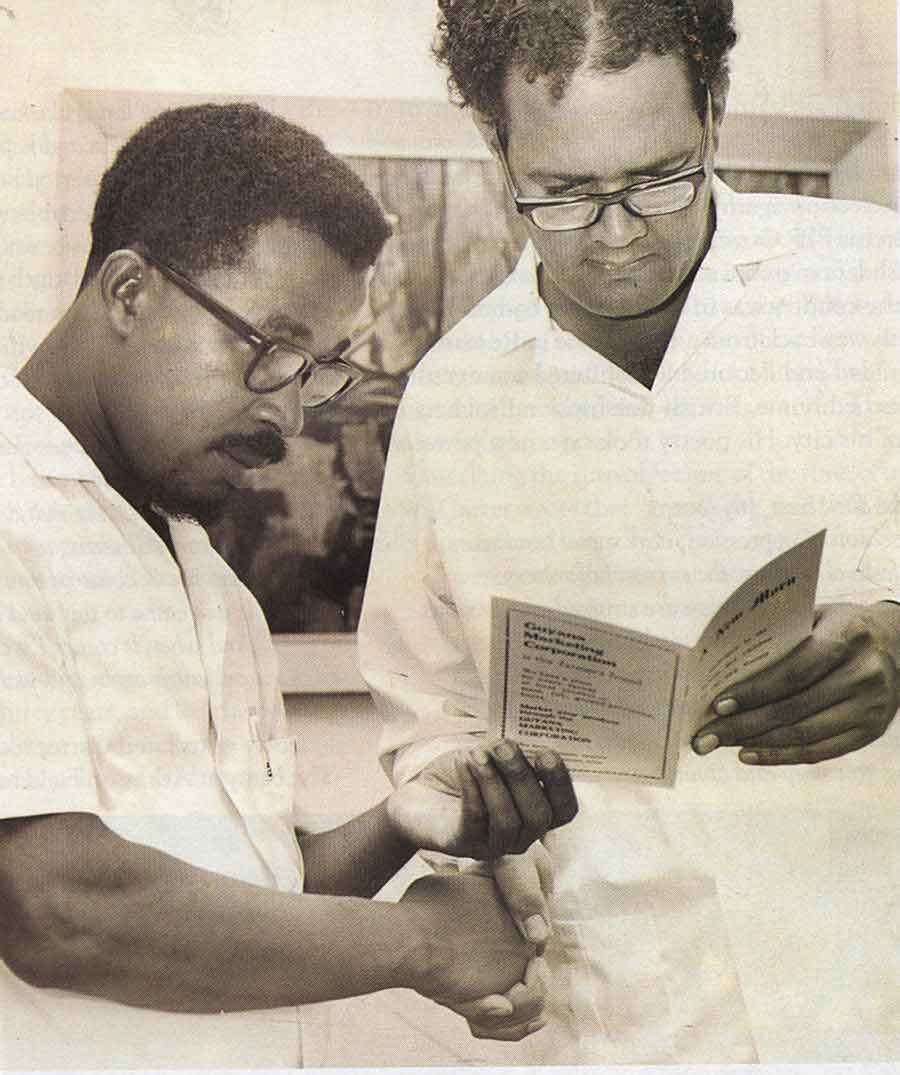
Martin Carter (al derecho) con un poeta-compañero Ernest Perry_Georgetown, Guyana
Martin Wylde Carter (poeta-activista de Guyana, 1927-1997)
“Ahora es el tiempo oscuro, mi Corazón”
.
Ahora es el tiempo oscuro, mi Corazón.
Mayates castaños están gateandos por todo el país.
Se esconde dentro del cielo el sol brillante.
Flores rojas se doblan en una tremenda pena.
.
Sí, Corazón – el tiempo oscuro…
Es la estación de tiranía, de metal negro, y de lágrimas.
Hay un festival de armas, un carnaval de miseria.
En todas partes, la cara de la gente está tenso, inquieto.
.
¿Quién está viniendo, caminando en la negrura de la noche?
¿De quién esa bota de acero que pisotea el fino césped?
Es el hombre de la muerte, mi Corazón,
el invasor extraño que te mira en tu reposo –
y él está apuntando a tu sueño.
. . .
“Estás involucrado”
.
Éso yo he aprendido:
hoy eres una mota, y
mañana – un héroe.
Pero…
héroe o monstruo – ¡estás devorado!
.
Como tiembla el telar la plantilla,
como teje un adorno la telaraña.
Estamos todos implicados – enredados –
¡todos están tomados!
. . .
“Dicen que yo soy…”
.
Dicen que soy un poeta escribiendo para ellos:
a veces yo río, a veces asiento con la cabeza – solemnemente.
No quiero mirarles a los ojos
no sea que chillaran pues escabullirse de mí.
.
No puede escribir el poeta para ellos que no piden su ser honrado – sino mentiras.
Porque los poemas están escritos para los moribundos o para los niños no nacidos
– no importa lo que digamos.
.
Pero su audiencia no existe, remota en una matriz o en algún lecho de agonía.
Solo quiere decir ésto:
nosotros que desean poemas de honradez,
tienen que volverse nacido de nuevo, y morir primero para hacer eso.
. . .
“Para un hombre que andaba de soslayo”
.
Orgulloso, descalzo, doy zancadas por la calle,
y él que quiere mi camisa – pues aggárela.
Solo recibe el dador.
El indeseado desea el mundo, y
el talón moreteado de su pie patea como un metéoro.
La oscuridad sombría atrás de la ilusión azul
se para como un altar en un templo de una tierra renunciada.
Ellos fracasaron como morir, entonces perecen desgarbadamente.
(Al menos Laocoonte, aún con todas las culebras, luchó bien…)
. . .
Martin Wylde Carter fue un poeta y activista guyanés.
Su obra Poemas de Resistencia (1954) lo consagró como una voz políticamente entregada por la lucha de descolonización y los derechos del trabajador pobre. Aunque en sus inicios su poesía estaba muy comprometida con los movimientos sociales, Carter evolucionó durante los años 60/70/80 hacia una lírica más personal.
. . . . .
Martin Carter: Guyanese poet and political activist
Posted: April 28, 2015 Filed under: English, Martin Wylde Carter | Tags: Guyanese poets Comments Off on Martin Carter: Guyanese poet and political activist
A fanciful German map of the north coast of South America, from 1635, based on Sir Walter Raleigh’s description of the chimerical El Dorado. Guiana was his misnomer for the entire region, and based on his 1595 voyage and book entitled “The discovery of the large, rich, and beautiful Empire of Guiana, with a relation of the great and golden city of Manoa”.
Martin Wylde Carter (Guyanese poet and political activist, 1927-1997)
. . .
Not I with This Torn Shirt
.
They call here,
– Magnificent Province!
Province of mud!
Province of flood!
Plantation – feudal coast!
.
Who are the magnificent here?
Not I with this torn shirt
but they, in their white mansions
by the trench of blood!
.
I tell you
this is no magnificent province
no El Dorado for me
no streets paved with gold
but a bruising and battering for self preservation
in the white dust and grey mud.
.
I tell you and I tell no secret –
now is long past time for worship
long past time for kneeling
with clasped hands at altars of poverty.
.
How are the mighty slain?
by this hammer of my hand!
by this anger in my life!
by this new science of men alive
everywhere in this province!
Thus – are the mighty slain!
.
(1950s)
. . .
Do Not Stare at Me
.
Do not stare at me from your window, lady,
do not stare and wonder where I came from
Born in this city was I, lady,
hearing the beetles at six o’clock,
and the noisy cocks in the morning
when your hands rumple the bed sheet
and night is locked up the wardrobe.
.
My hand is full of lines
like your breast with veins, lady –
So do not stare and wonder where I came from.
My hand is full of lines
like your breast with viens, lady,
and one must rear, while one must suckle life.
.
Do not stare at me from your window, lady.
Stare at the wagon of prisoners!
Stare at the hearse passing by your gate!
Stare at the slums in the south of the city!
Stare hard and reason, lady, where I came from
and where I go.
.
My hand is full of lines
like your breast with veins, lady,
and one must rear, while one must suckle life.
.
(1950s)
. . .
Tomorrow and The World
.
I am most happy
as I walk the seller of sweets says “friend”
and the shoemaker with his awl and waxen thread
reminds me of tomorrow and the world.
.
Happy is it to shake your hand
and to sing with you, my friend.
Smoke rises from the furnace of life
– red red red the flames!
.
Green grass and yellow flowers
smell of mist the sun’s light
everywhere the light of the day
everywhere the songs of life are floating
like new ships on a new river sailing, sailing.
.
Tomorrow and the world
and the songs of life and all my friends –
Ah yes, tomorrow and the whole world
awake and full of good life.
.
(1950s)
. . .
You Are Involved
.
This I have learnt:
today a speck
tomorrow a hero.
Hero or monster,
you are consumed!
.
Like a jig
shakes the loom;
like a web
is spun the pattern.
All are involved,
all are consumed!
.
(1950s)
. . .
This is The Dark Time, My Love
.
This is the dark time, my love.
All round the land brown beetles crawl about.
The shining sun is hidden in the sky.
Red flowers bend their heads in awful sorrow.
.
This is the dark time, my love.
It is the season of oppression, dark metal, and tears.
It is the festival of guns, the carnival of misery.
Everywhere the faces of men are strained and anxious.
.
Who comes walking in the dark night time?
Whose boot of steel tramps down the slender grass?
It is the man of death, my love, the strange invader
watching you sleep and aiming at your dream.
.
(1950s)
. . .
Words
.
These poet words, nuggets out of corruption
or jewels dug from dung or speech from flesh
still bloody red, still half afraid to plunge
in the ceaseless waters foaming over death.
.
These poet words, nuggets no jeweller sells
across the counter of the world’s confusion
but far and near, internal or external,
burning the agony of earth’s complaint.
.
These poet words have secrets locked in them
like nuggets laden with the younger sun.
Who will unlock must first himself be locked;
who will be locked must first himself unlock.
.
(1957)
. . .
After One Year
.
After today, how shall I speak with you?
Those miseries I know you cultivate
are mine as well as yours, or do you think
the impartial bullock cares whose land is ploughed?
.
I know this city much as well as you do,
the ways leading to brothels and those dooms
dwelling in them, as in our lives they dwell.
So jail me quickly, clang the illiterate door
if freedom writes no happier alphabet.
.
Old hanging ground is still green playing field.
Smooth cemetery proud garden of tall flowers.
But in your secret gables real bats fly
mocking great dreams that give the soul no peace,
and everywhere wrong deeds are being done.
.
Rude citizen! think you I do not know
that love is stammered, hate is shouted out
in every human city in this world?
Men murder men, as men must murder men,
to build their shining governments of the damned.
.
(1960s)
. . .
They Say I Am
.
They say I am a poet write for them:
Sometimes I laugh, sometimes I solemnly nod.
I do not want to look them in the eye
lest they should squeal and scamper far away.
.
A poet cannot write for those who ask
hardly himself even, except he lies;
Poems are written either for the dying
or the unborn, no matter what we say.
.
That does not mean his audience lies remote
inside a womb or some cold bed of agony.
It only means that we who want true poems
must all be born again, and die to do so.
.
(1960s)
. . .
My Hand in Yours
.
As in sleep, my hand in yours, yours
in mine. Your voice in my hearing
and memory, like the sound of stars
as they shine, not content with light
only. My fingertips walk on your face
gently. They tiptoe, as a dream does,
away from sleep into waking. In a tree
somewhere a bird calls out. And I wake up,
my hand still in yours, in the midst
of the sound of stars and a far bird.
.
(1972)
. . .
In the When Time
.
In the when time of the lost search
behind the treasure of the tree’s rooted
and abstract past of a dead seed:
in that time is the discovery.
Remembrance in the sea, or under it,
or in a buried casket of drowned flowers.
.
It remains possible to glimpse morning
before the sun; possible to see too early
where sunset might stain anticipated
night. So sudden, and so hurting
is the bitten tongue of memory.
.
(1973)
. . .
On a Child Killed by a Motor Car
.
Child, a moment of love ago
you danced in the eye of the woman
who made you. When another moment,
like the innocent wheat that made the loaf
of bread she sent you for,
in this field of the heart’s ploughed land
you were threshed!
.
(1974)
. . .
On the Death by Drowning of the Poet, Eric Roach
.
It is better to drown in the sea
than die in the unfortunate air
which stifles. I heard the rattle
in the river; it was the paddle stroke
scraping the gunwale of a corial.
Memory at least is kind; the lips of death
curse life. And the window in the front of my house
by the gate my children enter by, that window
lets in the perfume of the white waxen glory
of the frangipani, and pain.
.
(1974)
. . .
For a Man who Walked Sideways
.
Proudful and barefoot I stride the street;
who wants my shirt can have it.
Only the giver gets. The unwanted
wants the world. The bruised heel of his foot
kicks like a meteor. And the dim dark behind
the blue illusion stands like an altar in a temple
in a forsaken land. Having failed to learn
how to die, they all perish ungracefully.
Laocoön, for all the snakes, struggled well.
.
(1974)

. . .
There is No Riot
.
Even that desperate gaiety is gone.
Empty bottles, no longer trophies,
are weapons now. Even the cunning
grumble. “If is talk you want,” she said,
“you wasting time with me – try the church.”
One time, it was because rain fell
there was no riot. Another time
it was because the terrorist forgot
to bring the bomb. Now, in these days,
though no rain falls, and bombs are well remembered,
there is no riot. But everywhere
empty and broken bottles gleam like ruin.
.
(1975)
. . .
Being Always
.
Being, always to arrange
myself in the world, and the world
in myself, I try to do both. How
both are done is difficult. Why,
I have to ask, do I have to
arrange anything when every
thing is already arranged
by love’s and death’s inscrutable
laws, mortal judiciary, time’s
dollhouse of replaceable heads,
arms and legs? In another
house, not time’s, time itself arranges
mine and the world’s replacement.
.
(1979)
. . .
No Easy Thing
.
I must repeat that which I have declared
Even to hide it from your urgent heart:
No easy thing is it to speak of love
Nor to be silent when it all consumes!
.
You do not know everywhere I go;
You go with me clasped in my memory:
One night I dreamed we walked beside the sea
And tasted freedom underneath the moon.
.
Do not be late, needed and wanted love.
What’s withheld blights both love and us:
As well as blame your hair for blowing wind
As me for breathing, living, loving you.
.
(1970s)
. . .
Two (from “Four Poems”)
.
Not so is it done, O no
not so. It is done, so,
as I think I am doing it,
neither not, nor so, but only
just in a wait, in a
moment, in a year, in
and this moment, this
yester just so. Because
a poet cannot truly speak
to himself save in his
own country: even among
the fearers of joy, enviers
of pride. Standard bearers
of his and their defeat. Just
so. And the sly drum.
.
(1980s)
. . .
Bitter Wood
.
Here be dragons, and bitter
cups made of wood; and the hooves
of horses where they should not
sound. Yet on the roofs of houses
walk the carpenters, as once did
cartographers on the spoil
of splendid maps. Here is where
I am, in a great geometry, between
a raft of ants and the green sight
of the freedom of a tree, made
of that same bitter wood.
.
(1988)
. . .
We would like to thank Bruce Paddington in Caribbean Beat (Issue 13, Spring 1995), and Gemma Robinson in The Guyana Chronicle (May 2nd, 2014) for introducing us to Martin Carter, a great Caribbean poet still too little known. We are grateful also to poets/editors Stewart Brown and Ian McDonald for their critical appraisal in a survey of Carter’s oeuvre from the 1950s through the 1980s: Poems by Martin Carter (Macmillan Caribbean Writers Series, 2006).
. . . . .
Alexander Best: Earth Day poems / “Poema al Agua” para El Día de La Tierra
Posted: April 22, 2015 Filed under: Alexander Best, English, Spanish, ZP Translator: Lidia García Garay | Tags: Poems for Earth Day Comments Off on Alexander Best: Earth Day poems / “Poema al Agua” para El Día de La Tierra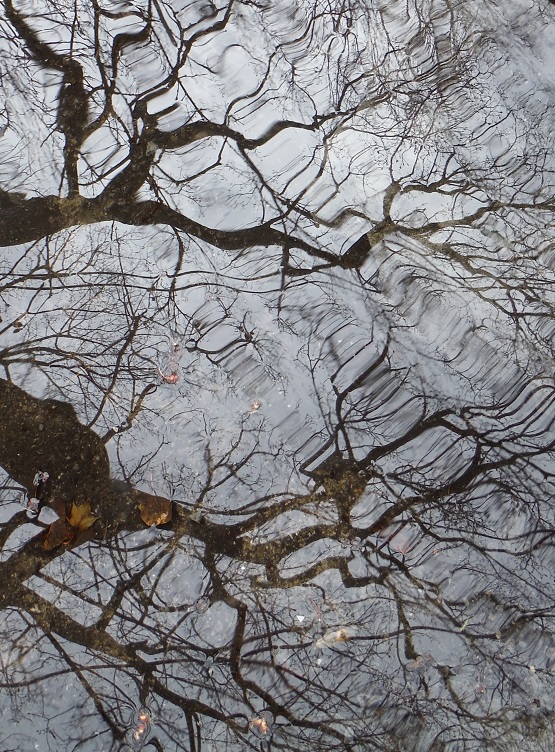
Handmade Poem
.
One way
Right way
Lost and pounding
.
Treasure
Shovel
Message
Bottle
.
Plastic
Bagful
Urgent
Bubble
.
Soilmouth
Steepdrink
Skypit
Hovel
.
Un-way
Our way
Human foundling
.
Mousepad
Chisel
Boulder
Nipple
.
Clayclod
Seedhusk
Grounded
People
.
Yucca
Maize and
Grains
Astounding
.
Cellphone
Oatmeal
Idealogjam
.
Slowburn
Brainsmoke
Concrete
Feed me
.
Juice of
Grasses
Miles of
Malls and
.
Micro
Chip off
Old block
– Heed me!
.
(September 2010)
. . .
Water Sonnet
.
My love and I go down to the well
With buckets at our waists,
and dip the vessels in, refresh ourselves,
Then give we chase…
.
The sparkling drench is ours,
Extravagance of simple choice.
We swallow all, we surge and runneth over
By such device.
.
And liquid Time a-rushing flows,
And tolls the bell for me,
And us – where did our children go?
Could we abandoned be?
.
My love and I went down to the well
And turned our buckets over;
And sat upon them;
Sighed and waited
– waited, sighed –
Forever.
.
(September 2010)
. . .
Poema al Agua
.
Mi amada y yo, vamos al pozo
Con cántaros a la cintura,
Los metemos al agua, nos refrescamos y
luego correteamos…
.
El líquido brillante que nos empapa es nuestro,
una extravagancia fácil de escoger;
nos la tomamos, resurgimos y
nos dejamos atropellar por tal método.
.
Y el Tiempo líquido corre y nos toca la campana
¿Y vosotros— adónde fueron vuestros hijos?
¿Hemos sido abandonados tal vez?
.
Mi amada y yo fuimos al pozo,
Pusimos nuestros cántaros boca abajo
y nos sentamos en ellos;
Suspiramos y esperamos – esperamos, suspiramos
Para siempre.
.
Traducción al español: Lidia García Garay
. . .
ZP Editor’s note:
I wrote the two poems above at the request of Kate Castelo, a friend who lives in Vancouver. She was involved in a climate-change awareness initiative in British Columbia in the autumn of 2010, and “engaged” poetry reflecting on global development, pollution, and natural resource use/abuse, was sought by the organizers. The Kyoto Protocol was much in the news five years ago, and every issue is still current and of great concern. My second poem (“Water Sonnet”) I composed in a lovely traditional metre which contrasts all the more with the poem’s theme: Canada’s longstanding cultural tradition of taking Water for granted. My translation mentor, Lidia García Garay, kindly created a Spanish version of the poem…
.
The Kyoto Protocol is an international treaty extending the 1992 United Nations Framework Convention on Climate Change (UNFCCC) that commits State Parties to reduce greenhouse gas emissions, based on the premise that A. Global Warming does exist, and that B. Man-made CO2 Emissions have caused it.
The Protocol was adopted in Kyoto, Japan, in December of 1997, and entered into force in February of 2005. There are currently 192 Parties (Canada withdrew, effective December 2012) to the Protocol. The Kyoto Protocol implemented the objective of the UNFCCC to fight global warming by reducing greenhouse gas concentrations in the atmosphere to “a level that would prevent dangerous anthropogenic interference with the climate system” (Article 2). It is based on the principle of common but differentiated responsibilities: it puts the obligation to reduce current emissions on developed countries on the basis that they are historically responsible for the current levels of greenhouse gases in the atmosphere.
Negotiations were held in Lima in 2014 to agree on a post-Kyoto legal framework that would obligate all major polluters to pay for CO2 emissions. China, India, and the United States have all signaled that they will not ratify any treaty that will commit them legally to reduce CO2 emissions.
. . .
Other Earth Day features at Zócalo Poets:
https://zocalopoets.com/category/guest-editors-2/duane-taylor/
.
https://zocalopoets.com/category/poets-poetas/maurice-kenny/
.
https://zocalopoets.com/category/poets-poetas/rita-joe/
.
“Earth Day” poems: Japanese poets on Nature – and Human Nature
. . . . .
Ya viene la lluvia: Langston Hughes, Sara Teasdale, Robert Creeley
Posted: April 15, 2015 Filed under: English, Langston Hughes, Robert Creeley, Sara Teasdale, Spanish, ZP Translator: Alexander Best Comments Off on Ya viene la lluvia: Langston Hughes, Sara Teasdale, Robert Creeley
Langston Hughes (1902-1967)
April Rain Song
.
Let the rain kiss you
Let the rain beat upon your head with silver liquid drops
Let the rain sing you a lullaby
The rain makes still pools on the sidewalk
The rain makes running pools in the gutter
The rain plays a little sleep song on our roof at night
And I love the rain.
. . .
Canto de la Lluvia en Abril
.
Que la lluvia te bese;
Que la lluvia golpee sobre tu cabeza, con gotas de líquido plateado;
Que la lluvia te cante un arrorró…
Hace la lluvia charcos quietos en la banqueta;
Hace charcos fluidos en la alcantarilla.
Canta las noches un pequeño canto de tranquilidad en nuestro techo.
Y me encanta la lluvia.
. . .
Sara Teasdale (1884-1933)
Spring Rain
.
I thought I had forgotten,
But it all came back again
Tonight with the first spring thunder
In a rush of rain.
.
I remembered a darkened doorway
Where we stood while the storm swept by,
Thunder gripping the earth
And lightning scrawled on the sky.
.
The passing motor buses swayed,
For the street was a river of rain,
Lashed into little golden waves
In the lamp light’s stain.
.
With the wild spring rain and thunder
My heart was wild and gay;
Your eyes said more to me that night
Than your lips would ever say. . . .
.
I thought I had forgotten,
But it all came back again,
Tonight with the first spring thunder
In a rush of rain.
. . .
Lluvia de Primavera
.
Yo pensaba que yo había olvidado…
Pero me regresaron los pensamientos
– esta noche, con el primer trueno de la primavera,
en un torrente.
.
Me acordé un portal oscuro
donde nos quedamos mientras barría con todo la tormenta,
el trueno agarrando la tierra
y el relámpago garabateado sobre el cielo.
.
Los camiones pasandos se bamboleaban
porque la calle era un río de lluvia,
azotado en alas doradas
bajo de la farola.
.
Era salvaje y alegre mi corazón,
con la lluvia y trueno loco de la primavera;
Y tus ojos me dijeron más en esa noche,
más que nunca hayan dicho tus labios…
.
Yo pensaba que yo había olvidado…
Pero me regresaron los pensamientos
– esta noche, con el primer trueno de la primavera,
en un torrente.
. . .
Robert Creeley (1926-2005)
The Rain
.
All night the sound had
come back again,
and again falls
this quiet, persistent rain.
.
What am I to myself
that must be remembered,
insisted upon
so often? Is it
.
that never the ease,
even the hardness,
of rain falling
will have for me
.
something other than this,
something not so insistent –
am I to be locked in this
final uneasiness?
.
Love, if you love me,
lie next to me.
Be for me, like rain,
the getting out
.
of the tiredness, the fatuousness, the semi-
lust of intentional indifference.
Be wet
with a decent happiness.
. . .
La Lluvia
.
Durante la noche el sonido había vuelto,
y de nuevo está cayendo esta lluvia silenciosa – y persistente.
.
¿Qué soy, a mi mismo, que se debe ser recordado, insistido – tan frecuentemente?
.
Es que el alivio, aún la dureza, de la lluvia que cae, nunca tendrá para mí algo otro que ésto:
algo no tan insistente; ¿encerraré en esta ansiedad final?
.
Querida, si me amas pues échate por mi lado.
Sé, para mí, como la lluvia:
la expulsión de cansancio, de necedad, de la semi-lujuria de un pasotismo deliberado.
Sé mojida con una dicha digna.
. . . . .
Estaciones del corazón: “Chaparrones de abril”
Posted: April 9, 2015 Filed under: Alexander Best, Spanish Comments Off on Estaciones del corazón: “Chaparrones de abril”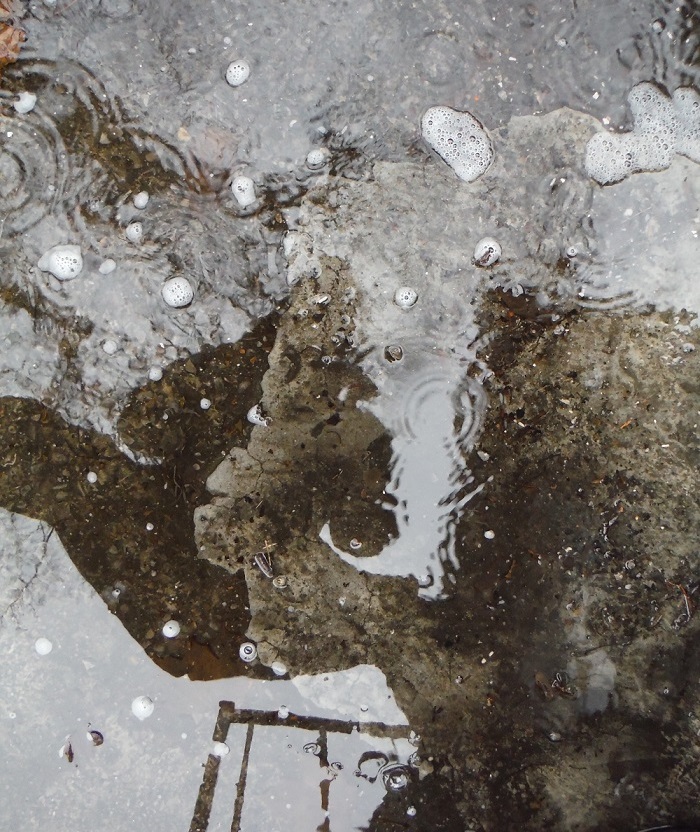
Chaparrones de abril (09 abril 2015)
.
Bien. Llega la primavera, después de este invierno de un largo exorbitante.
Y está lloviendo – mucha lluvia, aunque queda frío el tiempo.
Pronto veramos nuestra primera verdura, ¿no?
Y es lo mismo en el corazón…
Ahora comprendo esa certeza en el fondo de mi alma:
que el Amor sobrevive, en su poder – su energía dinámica;
y que aparece, súbitamente, de su sueño invernal.
Baja duro la lluvia, y lo requiere el corazón; está sediento mi ser.
El Amor debe crecer: siendo vivo – grande-simple – es su solo motivo.
. . .
April Showers (09-04-2015)
.
Well…
Spring’s arriving, after a winter of such exorbitant length.
And it’s raining, how it’s raining!, even though the temperature’s still chilly.
Soon we’ll be seeing our first green, right?
And it’s the same in our heart…
Now I understand that faith in the deep of me – my soul:
that Love survives in all its power, in all its dynamic force;
and that It appears again – so suddenly – from its winter dream-sleep.
The rain falls hard, and that’s what the heart requires; my whole being thirsts.
Love wants to grow: to feel alive – grand and simple – is its sole reason.
. . .
.
Alexander Best: Once Haikus: “Deshielo en Enero” / Eleven Haiku: “Mid-Winter Thaw”
.
. . . . .
 Zócalo Poets