D.H. Lawrence: “Un dolor rumiando” / “Brooding Grief”
Posted: November 2, 2015 Filed under: D.H. Lawrence, English, Spanish, ZP Translator: Alexander Best | Tags: All Souls Day poems, Poemas para El Día de Los Muertos Comments Off on D.H. Lawrence: “Un dolor rumiando” / “Brooding Grief”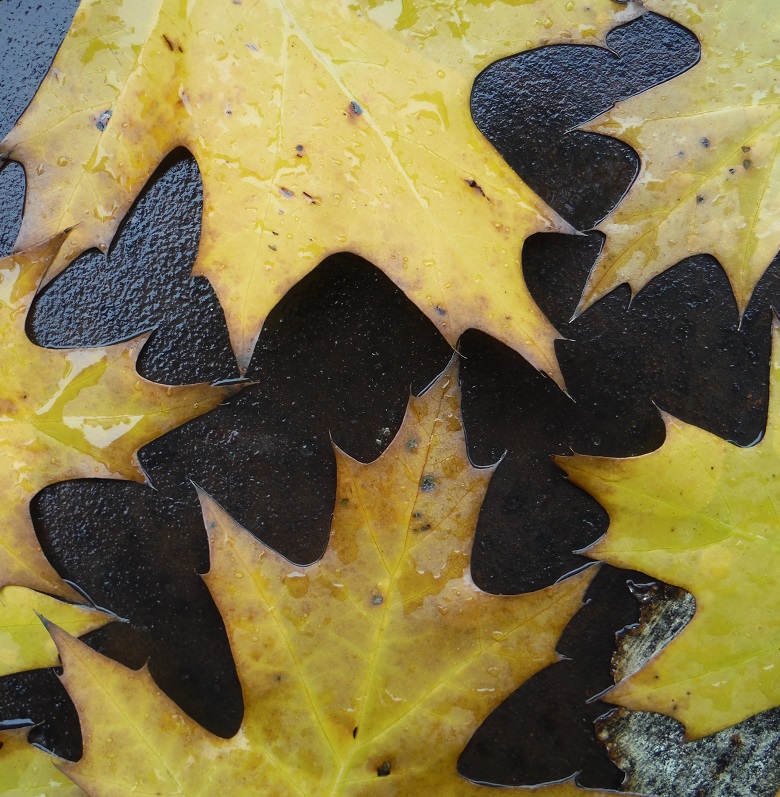
D.H. Lawrence (1885-1930)
Un dolor rumiando
.
De la oscuridad hay una hoja amarilla
que me sobrepasa
– que me salta – como una rana.
¿Porqué me da un susto – pues me quedo quieto?
.
Yo estuve mirando a la mujer que me parió;
una mujer estirada en una sombra manchada del cuarto del enfermo;
y ella estuvo rígida con una voluntad para morir
.
– y esa hoja ligera me arrancó –
me retomó a este lío lluvioso
de hojas, de farolas, de tránsito,
todo mezclando en frente de mí.
. . .
D.H. Lawrence
Brooding Grief
.
A yellow leaf from the darkness
Hops like a frog before me.
Why should I start and stand still?
.
I was watching the woman that bore me
Stretched in the brindled darkness
Of the sick-room, rigid with will
To die: and the quick leaf tore me
Back to this rainy swill
Of leaves and lamps and traffic mingled before me.
. . . . .
Frances Bellerby: “Día de los Difuntos” / “All Souls’ Day”
Posted: November 2, 2015 Filed under: English, Frances Bellerby, Spanish, ZP Translator: Alexander Best Comments Off on Frances Bellerby: “Día de los Difuntos” / “All Souls’ Day”
Frances Bellerby (1899-1975)
Día de los Difuntos
.
Arranquemos por ese viejo camino nuestro,
cerca del arroyo,
y pateemos las hojas, como siempre,
para creer el ritmo de olas que se quiebran.
.
Este día no respira y no muestra ningún color,
sino las hojas que, en su muerte,
brillan como nunca más.
.
El amarillo de la Mariposa-Azufre,
y el castaño de la polilla Roble-Eggar
– quizás tú digas.
Y yo me preguntes por que el verano no parece perdido
si dos personas estaban juntos,
y presenciando la variedad de luz;
pues los dos mismos, entran la noche del año
durante un noviembre delustrado.
.
El arroyo, lente como un gusano – ¡cómo está quieto!
Sobre la puerta expuesta de esa araña,
mira – perlas mates. Y El Tiempo está relleno,
rebosante, no puede más agarrar.
.
En el próximo momento
– y lo sabemos bien, cariño – tú y yo –
lo que no puede contener el pequeño día
debe desparramar a la eternidad.
.
Pues, mientras tanto, tal vez deberíamos desplazarnos
suaves como los gatos.
Dejemos todo no dicho
hasta ninguna sombra de riesgo queda
para perturbar a los muertos benignos.
.
Ah. Pero siempre eras liviano como una hoja.
Y raramente hablas mientras caminamos.
Aún allí por mi costado estás andado
a través de las hojas vívidas.
.
Pero toca mi mano para que yo no tenga miedo;
porque parece ahora como si una neblina desciende
y las hojas donde pisas no se mueven.
. . .
Frances Bellerby
All Souls’ Day
.
Let’s go our old way
by the stream, and kick the leaves
as we always did, to make
the rhythm of breaking waves.
.
This day draws no breath –
shows no colour anywhere
except for the leaves – in their death
brilliant as never before.
.
Yellow of Brimstone Butterfly,
brown of Oak Eggar Moth –
you’d say. And I’d be wondering why
a summer never seems lost
.
if two have been together
witnessing the variousness of light,
and the same two in lustreless November
enter the year’s night…
.
The slow-worm stream – how still!
Above that spider’s unguarded door,
look – dull pearls…Time’s full,
brimming, can hold no more.
.
Next moment (we well know,
my darling, you and I)
what the small day cannot hold
must spill into eternity.
.
So perhaps we should move cat-soft
meanwhile, and leave everything unsaid,
until no shadow of risk can be left
of disturbing the scatheless dead.
.
Ah, but you were always leaf-light.
And you so seldom talk
as we go. But there at my side
through the bright leaves you walk.
.
And yet – touch my hand
that I may be quite without fear,
for it seems as if a mist descends,
and the leaves where you walk do not stir.
. . . . .
Carl Sandburg: “Tema en amarillo”
Posted: October 31, 2015 Filed under: Carl Sandburg, English, Spanish, ZP Translator: Alexander Best Comments Off on Carl Sandburg: “Tema en amarillo”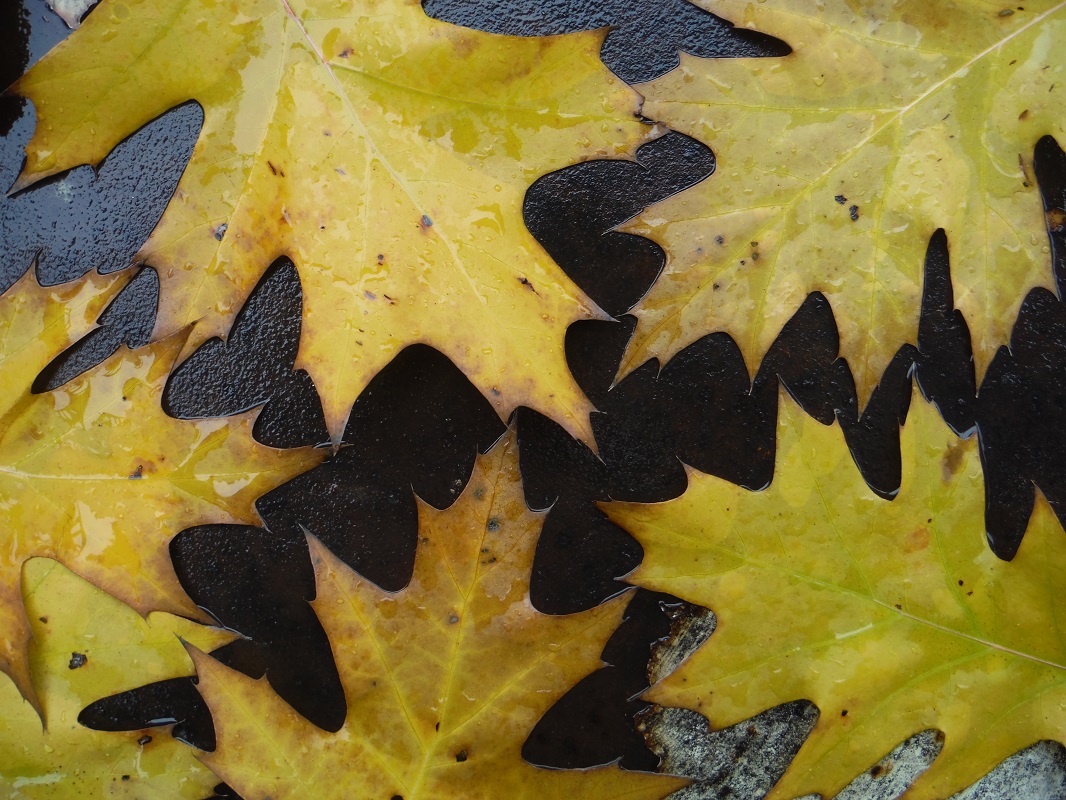
Carl Sandburg (1878-1967)
Tema en amarillo
.
Diviso las colinas
con bolas amarillas – en otoño.
Ilumino los maizales de la planicie
– racimos anaranjados y leonados-dorados –
y me llaman:
calabazas.
.
En el último día de octubre,
cuando el crepúsculo se cae,
los niños se dan la mano
y me rodean para cantar del espectro
y de la luna de cosecha.
Soy la calabaza de Hallowe’en
– con dientes espantosos –
y las criaturas saben que
solo les bromeo.
. . .
Carl Sandburg
Theme in Yellow
.
I spot the hills
With yellow balls in autumn.
I light the prairie cornfields
Orange and tawny gold clusters
And I am called pumpkins.
On the last of October
When dusk is fallen
Children join hands
And circle round me
Singing ghost songs
And love to the harvest moon;
I am a jack-o’-lantern
With terrible teeth
And the children know
I am fooling.
. . . . .
Pumpkin-carving in Toronto / Hallowe’en’s origins in Samhain
Annie Finch: “Un otoño definitivo”
Posted: October 31, 2015 Filed under: Annie Finch, English, Spanish, ZP Translator: Alexander Best Comments Off on Annie Finch: “Un otoño definitivo”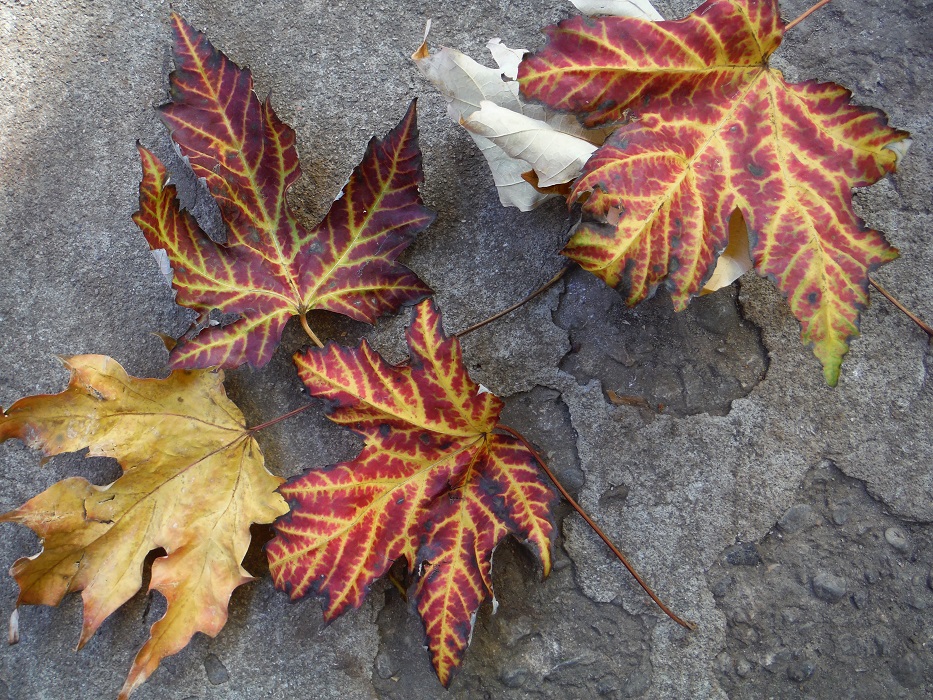
Annie Finch (n. 1956, New Rochelle, Nueva York, EE.UU.)
Un otoño definitivo
.
En el patio las hojas del arce cambian su color
– al negro.
La luz pilota más bajo, y
hay una chara azul que mete nuestras memorias frías
afuera
– más allá del sol.
.
Cada vez, tus rastros llegan por las sombras, y
visitan debajo de mis dedos de espejo que
levantan y tapan el sol.
.
Ven – yo te delinearé un otoño definitivo – el final.
Y tú puedes delinear tu regreso al hogar – el último,
hasta la nieve o el sol.
. . .
Annie Finch (born 1956)
Final Autumn
.
Maple leaves turn black in the courtyard.
Light drives lower and one bluejay crams
our cold memories out past the sun,
.
each time your traces come past the shadows
and visit under my looking-glass fingers
that lift and block out the sun.
.
Come—I’ll trace you one final autumn,
and you can trace your last homecoming
into the snow or the sun.
. . .
Del poemario Calendarios / from the volume Calendars, Tupelo Press, © 2003, Annie Finch
. . . . .
Dante Gabriel Rossetti: “Canto del Otoño”
Posted: October 30, 2015 Filed under: Dante Gabriel Rossetti, English, Spanish, ZP Translator: Alexander Best Comments Off on Dante Gabriel Rossetti: “Canto del Otoño”
Dante Gabriel Rossetti (1828-1882)
Canto del Otoño
.
¿No sabes que la caída de la hoja obliga en el corazón un dolor lánguido?
¿Y que está cubierto, y que el reposo es una buena cosa,
en otoño, a la caída de la hoja?
.
Y como el latido raudo del cerebro
flaquea porque está en vano…
En el otoño, a la caída de la hoja,
¿no conoces que el júbilo sufre un dolor?
.
¿No conoces que, a la caída de la hoja,
que el alma alimenta, como una gavilla desecada
– amarrada para la cosecha –
pues la Muerte parece como algo hermoso
– en otoño, a la caída de la hoja?
. . .
Dante Gabriel Rossetti (1828-1882)
Autumn Song
.
Know’st thou not at the fall of the leaf
How the heart feels a languid grief
Laid on it for a covering,
And how sleep seems a goodly thing
In Autumn at the fall of the leaf?
.
And how the swift beat of the brain
Falters because it is in vain,
In Autumn at the fall of the leaf
Knowest thou not? and how the chief
Of joys seems—not to suffer pain?
.
Know’st thou not at the fall of the leaf
How the soul feels like a dried sheaf
Bound up at length for harvesting,
And how death seems a comely thing
In Autumn at the fall of the leaf?
. . . . .
William Shakespeare: “Soneto 73”
Posted: October 27, 2015 Filed under: English, Spanish, William Shakespeare Comments Off on William Shakespeare: “Soneto 73”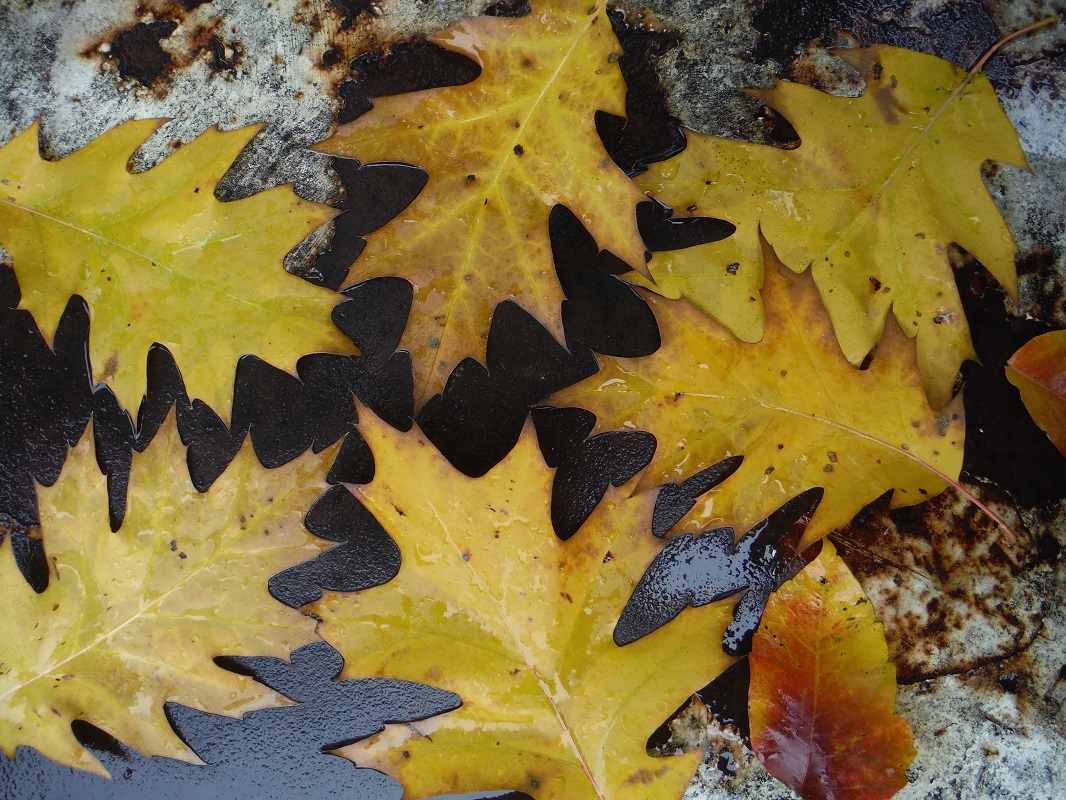
William Shakespeare (1564-1616)
Sonnet 73
.
That time of year thou mayst in me behold
When yellow leaves, or none, or few, do hang
Upon those boughs which shake against the cold,
Bare ruin’d choirs, where late the sweet birds sang.
In me thou see’st the twilight of such day
As after sunset fadeth in the west,
Which by and by black night doth take away,
Death’s second self, that seals up all in rest.
In me thou see’st the glowing of such fire
That on the ashes of his youth doth lie,
As the death-bed whereon it must expire,
Consum’d with that which it was nourish’d by.
This thou perceiv’st, which makes thy love more strong,
To love that well which thou must leave ere long.
. . .
William Shakespeare (1564-1616)
Soneto 73
.
Ese tiempo del año puedes en mí contemplar
cuando hojas amarillas, o ninguna, o pocas,
cuelgan de esas ramas que tiemblan contra el frío,
desnudos coros arruinados donde recientemente cantaban los dulces pájaros:
en mí ves el crepúsculo del día que tras el ocaso se va apagando en el poniente,
el cual poco a poco la negra noche se lleva,
segundo yo de la muerte que todo lo sella en el descanso.
En mí ves la lumbre del fuego que sobre las cenizas de su juventud
reposa como el lecho de muerte sobre el que debe expirar,
consumido por lo que lo nutrió.
Esto percibes, lo que te hace el amor más fuerte:
para amar bien lo que has de dejar en breve.
. . .
Traducción en español:
Pedro Dominguez Caballero de Rodas y Beatriz Hernández Pérez
. . . . .
Robert Frost: “No hay nada de oro que puede durar”
Posted: October 16, 2015 Filed under: English, Robert Frost, Spanish, ZP Translator: Alexander Best Comments Off on Robert Frost: “No hay nada de oro que puede durar”
Robert Frost (1874-1963)
No hay nada de oro que puede durar (1923)
.
¿La primera verde de la Naturaleza?
Eso es dorado – con
su tinte más terco guardar.
Su hoja precoz es una flor,
pero solo vive una hora.
Pues hoja se hunde, hoja por hoja;
y el Edén al luto se hundió.
Y el alba baja a cada día
– no hay nada de oro que puede durar.
. . .
Robert Frost
Nothing Gold Can Stay (1923)
.
Nature’s first green is gold,
Her hardest hue to hold.
Her early leaf’s a flower;
But only so an hour.
Then leaf subsides to leaf.
So Eden sank to grief,
So dawn goes down to day.
Nothing gold can stay.
. . . . .
Erica Jong: “Punto de vista otoñal”
Posted: October 15, 2015 Filed under: English, Erica Jong, Spanish, ZP Translator: Alexander Best Comments Off on Erica Jong: “Punto de vista otoñal”
Erica Jong (n. 1942)
Punto de vista otoñal
.
Ahora, asentándome, con cajas en el piso,
y la radio sonando a las paredes vacias,
ganchos para cuadros dejados encallandos
en los cuadrados sin tachas donde estuvieron pinturas.
.
Y hay algo que nos recuerda que
este día es como todas las otras mudanzas.
Es el hallazgo de las sobras sucias de la vida de alguien otro:
pelo caído en el lavabo,
el hueso de un melocotón,
y cerillos quemados en el rincón.
Son cosas no preservadas pero nunca escobadas fuera
– como fragmentos de sueños alarmantes que
nos tropezamos todo el día…
.
En ordenar nuestras vidas, las desechamos,
fregamos limpias las duelas de esta casa – nuestro hogar –
en caso de que el desecho de las vidas que no hemos llevado
se vuelva – por una manera rara y aterradora – lo nuestro.
Y tenemos planes que no tolerarán nuestros temores
– un año compuesto como cuartos en una nueva casa,
las copas polvorientas ahora enjuagadas,
los jarrones llenados,
los libreros combandos con libros pesados del invierno.
Mirando al cuarto en su estado de siempre-ser,
nos contentamos con pasar el plumero y con la expectación.
Regresaremos aquí de las calles oscuras y silenciosas,
nuestros brazos llenos de libros y provisiones,
ansios como siempre estamos en el invierno,
y buscando La Buena Vida que hemos hecho.
.
Me miro, en ese tiempo: tensa, solemne,
en tacones que pellizcan,
no disfrutando la luz de metas cumplidas,
pero mirando al pasado – a ahora –
y veré a una chica en huaraches
– perezosa, quemada –
parada dentro de un cuarto escueto,
rica con promesa y con sensaciones envidiosas.
.
Ahora nosotros planeamos, y retrasamos, y avanzamos al porvenir
– casi como, cuando el cuarto nos contendrá
(con todo nuestro cachivache atesorado) –
habremos rellenado cualquier hueco que nos obliga a vagabundear,
descontentos en nosotros mismos.
.
El cuarto no cambiará:
alfombra, sillón, nuevas capas de pintura
– estos no harán ninguna diferencia.
Nuestros ojos son caprichosos
pero quedamos iguales debajo de los bronceados:
pálidos, asustados, y
sonando nosotros mismos hacia atrás y hacia adelante,
dentro del Tiempo,
y sonando nuestros seres sonandos.
.
Quedo a la espera de verme
mirando hacia atrás.

Erica Jong (born 1942)
Autumn Perspective
.
Now, moving in, cartons on the floor,
the radio playing to bare walls,
picture hooks left stranded
in the unsoiled squares where paintings were,
and something reminding us
this is like all other moving days;
finding the dirty ends of someone else’s life,
hair fallen in the sink, a peach pit,
and burned-out matches in the corner;
things not preserved, yet never swept away
like fragments of disturbing dreams
we stumble on all day. . .
in ordering our lives, we will discard them,
scrub clean the floorboards of this our home
lest refuse from the lives we did not lead
become, in some strange, frightening way, our own.
And we have plans that will not tolerate
our fears– a year laid out like rooms
in a new house–the dusty wine glasses
rinsed off, the vases filled, and bookshelves
sagging with heavy winter books.
Seeing the room always as it will be,
we are content to dust and wait.
We will return here from the dark and silent
streets, arms full of books and food,
anxious as we always are in winter,
and looking for the Good Life we have made.
.
I see myself then: tense, solemn,
in high-heeled shoes that pinch,
not basking in the light of goals fulfilled,
but looking back to now and seeing
a lazy, sunburned, sandaled girl
in a bare room, full of promise
and feeling envious.
.
Now we plan, postponing, pushing our lives forward
into the future–as if, when the room
contains us and all our treasured junk
we will have filled whatever gap it is
that makes us wander, discontented
from ourselves.
.
The room will not change:
a rug, or armchair, or new coat of paint
won’t make much difference;
our eyes are fickle
but we remain the same beneath our suntans,
pale, frightened,
dreaming ourselves backward and forward in time,
dreaming our dreaming selves.
.
I look forward and see myself looking back.
. . . . .
Richard O. Moore: “Evocación”
Posted: October 14, 2015 Filed under: English, Richard O. Moore, Spanish, ZP Translator: Alexander Best Comments Off on Richard O. Moore: “Evocación”
Richard O. Moore (1920-2015)
Evocación
.
Agarrando en una estación tarde
a un desplazamiento de mundos,
dentro del equilibrio dorado del otoño,
del amor y de la razón,
.
hicimos nuestra paz.
Nos quedamos quieto en octubre,
dentro de la luz decreciente,
y buscamos, uno al otro,
reposo y liberación de un silencio,
y de la condenación lente de una expresión
que es débil y cae del silencio.
.
En el sol de octubre,
por el río verde,
hablábamos.
Y en octubre – tarde en octubre –
las hojas de los arces plateados
habían descendido.
.
Pero lo que dijimos
– entre las hojas vivas –
estuvo perdido:
presto como la caída de las hojas,
y quebradizo,
y de un rojo sangre.
.
Para Kenneth Rexroth, 1950
. . .
Richard O. Moore
A Reminiscence
.
Held in a late season
At a shifting of worlds,
In the golden balance of autumn,
Out of love and reason
.
We made our peace;
Stood still in October
In the failing light and sought,
Each in the other, ease
.
And release from silence,
From the slow damnation
Of speech that is weak
And falls from silence.
.
In the October sun
By the green river we spoke,
Late in October, the leaves
Of the water maples had fallen.
.
But whatever we said
In the bright leaves was lost,
Quick as the leaf-fall,
Brittle and blood red.
.
For Kenneth Rexroth, 1950
. . .
De / From:
Writing the Silences © 2010, Richard O. Moore & University of California Press
. . . . .
Paul Laurence Dunbar: “Feliz Otoño”
Posted: October 10, 2015 Filed under: English, Paul Laurence Dunbar, Spanish, ZP Translator: Alexander Best Comments Off on Paul Laurence Dunbar: “Feliz Otoño”
Paul Laurence Dunbar (1872-1906)
Feliz Otoño
.
Es una farsa – estos cuentos que dicen,
sobre las brisas que suspiran,
y gemidos en el campo y valle
– porque está muriendo el año.
Tantos principios son muy absurdos
– no me importa quien los ha aprendido –
porque no hay nada entendida por bestia o pájaro
para hacer un otoño solemne.
.
En tiempos solemnes, cuando el luto domina
con el semblante angustiante,
notarás que hay más negro y gris en su ropa.
Ahora los tintes púrpuros están en todas partes;
el cielo es azul, y suave;
aun la hierba pone el suelo
de verde modesto al amarillo.
.
El erizo de la semilla ríe y raja sobre mota-hierba de pluma,
y estramonio;
y las hojas que deben estar arregladas en negro
están todas adornadas en carmesí.
Una mariposa va más allá, sobre sus alas,
y un pájaro-cantante viene después;
y La Naturaleza, de la tierra hasta el cielo,
se desborda con risa.
Las olas pequeñas tocan los arroyuelos,
como unas chamacas brillantes;
la luz del sol corre en las colinas,
y ríe entre las hierbas del campo.
.
Nuestra tierra está tan llena de diversión,
no puede contenerla;
y arroyos de júbilo corren tan libremente que
el cielo parece llover con la dicha.
.
No me hables de días solemnes
durante el tiempo esplendoroso del otoño,
porque el sol muestra rayos más raros,
y estos se vuelven biselados y esbeltos.
En hecho: es el clímax del año
– el momento más alto para vivir –
hasta que, naturalmente,
su hurra que rebosa pues se integra al
Día de Acción de Gracias.
. . .
Paul Laurence Dunbar
Merry Autumn
.
T’s all a farce, — these tales they tell
About the breezes sighing,
And moans astir o’er field and dell,
Because the year is dying.
Such principles are most absurd, —
I care not who first taught ’em;
There’s nothing known to beast or bird
To make a solemn autumn.
In solemn times, when grief holds sway
With countenance distressing,
You’ll note the more of black and grey
Will then be used in dressing.
Now purple tints are all around;
The sky is blue and mellow;
And e’en the grasses turn the ground
From modest green to yellow.
The seed burrs all with laughter crack
On featherweed and jimson;
And leaves that should be dressed in black
Are all decked out in crimson.
A butterfly goes winging by;
A singing bird comes after;
And Nature, all from earth to sky,
Is bubbling o’er with laughter.
The ripples wimple on the rills,
Like sparkling little lasses;
The sunlight runs along the hills,
And laughs among the grasses.
The earth is just so full of fun
It really can’t contain it;
And streams of mirth so freely run
The heavens seem to rain it.
Don’t talk to me of solemn days
In autumn’s time of splendor,
Because the sun shows fewer rays,
And these grow slant and slender.
Why, it’s the climax of the year,—
The highest time of living!—
Till naturally its bursting cheer
Just melts into Thanksgiving.
. . . . .
 Zócalo Poets