“Where I’m From” by Luca
Posted: June 27, 2011 Filed under: English, Luca Comments Off on “Where I’m From” by Luca_____
I’m from the artwork that mother makes and buys,
I’m from apple,
pod to phone and touch to tik.
I’m from the cotton fluff dragged around by the dog,
that reminds me of those bottles,
which I keep procrastinating to put outside.
I’m from the pear tree,
the ivy and the ferns which grow on one side.
I’m from the trees and the gardens
(which are all so natural),
also the gates and high hedges,
which people like to keep private.
I’m from No and Na,
Dino, too,
all three are gone,
they’re all on my mother’s side.
I’m from the stories, relived by dad,
and from the brunch,
and the pancakes.
I’m from fun which is only age,
replaced with a smile.
I’m from what God said to his people
(in the Torah, probably),
the most golden rule of all;
Do Unto Others, As Others Would do Unto Y’all.
I’m from roast turkey and chicken,
a few ribs will do,
from chocolate pecan pie
to whipped cream sundaes,
so much you can barely see the ice cream.
I’m from the little blue photo album, which is rarely seen.
_____
LUCA, age 10
Absence / Ausencia by Luis Ronald Calderón Sánchez
Posted: June 27, 2011 Filed under: English, Luis Ronald Calderón Sánchez, Spanish, ZP Translator: Alexander Best Comments Off on Absence / Ausencia by Luis Ronald Calderón Sánchez
ABSENCE
I consider the shelf full of books
and a feeling of your presence
seizes nostalgia in me,
and I say: you will return…
Moments pleasant, sad, tiresome,
shake the vault of remembrance
and I see many-coloured chimeras
in the pupils of your faraway eyes, eyes
at times slipping away from your face
in a lost gaze
studying the enigma of the universe
in the labyrinth of a utopia
in the twists and turns of memory
in the obstacles of time
and you are always touching life
weighing the infinite
distilling it
like a teardrop that falls
between phantoms in a dream.
_____
Traducción al inglés por Alexander Best
Translation into English by Alexander Best
*
AUSENCIA
Contemplo los estantes llenos de libros
la sensación de su calidad presencia
embarga mi nostalgia
y digo, volverá…
Los momentos gratos
los tristes y los fastidiosos
sacuden la bóveda de mis recuerdos
y veo sus quimeras
pintadas en las pupilas de sus ojos errantes
a veces escurriéndose por el rostro
con la mirada perdida
escudriñando el enigma del universo
perdida en el laberinto de una utopía
en los recovecos de la memoria
en los escollos del tiempo
y siempre palpando la vida
sopesando el infinito
destilándolo
como se escurre una lágrima
entre los fantasmas del sueño.
_____
Luis Ronald Calderón Sánchez
Cuando Me Haya Ido / When I’m Gone
Posted: June 27, 2011 Filed under: English, Luis Ronald Calderón Sánchez, Spanish, ZP Translator: Alexander Best Comments Off on Cuando Me Haya Ido / When I’m Gone_____
Cuando me haya ido
cuando mi aliento te sueñe lejos
cuando tu mirada se pierda en el alba
recuérdame
recuérdame
que partiré en tu otoño
y en tu primavera
recuérdame
recuérdame
que partiré en tu ocaso
y en tu alborada
recuérdame
recuérdame
aun cuando el invierno que me caiga
haga alianzas con Neptuno
búscame
búscame
aun cuando sepas que me entregué a la tierra
que no queda más que olvido
búscame
búscame
búscame en las raíces de tu nostalgia
y encontrarás mi faz revuelta en tu silueta.
_____
When I’m Gone
When I’m gone
when my breath’s a faint far-off sound
when your gaze merges with the dawn
Remember me
Remember me
that I will leave in your autumn
and in your spring
Remember me
Remember me
that I depart at dusk
and in your sunrise
Remember me
Remember me
even when winter snows me under
make an alliance with Neptune
and Look for me
Search for me
even when you know that I’ve given myself up to the earth,
that there’s nothing left but oblivion
Look for me
Search for me
Seek me out in the roots of your reminiscence
and you will find my weather-beaten face in your own silhouette.
_____
Luis Ronald Calderón Sánchez
_____
Translation into English by Alexander Best
Traducción al inglés por Alexander Best
Dos Poemas por Gwendolyn MacEwen
Posted: June 26, 2011 Filed under: English, Gwendolyn MacEwen, Spanish, ZP Translator: Lidia García Garay Comments Off on Dos Poemas por Gwendolyn MacEwen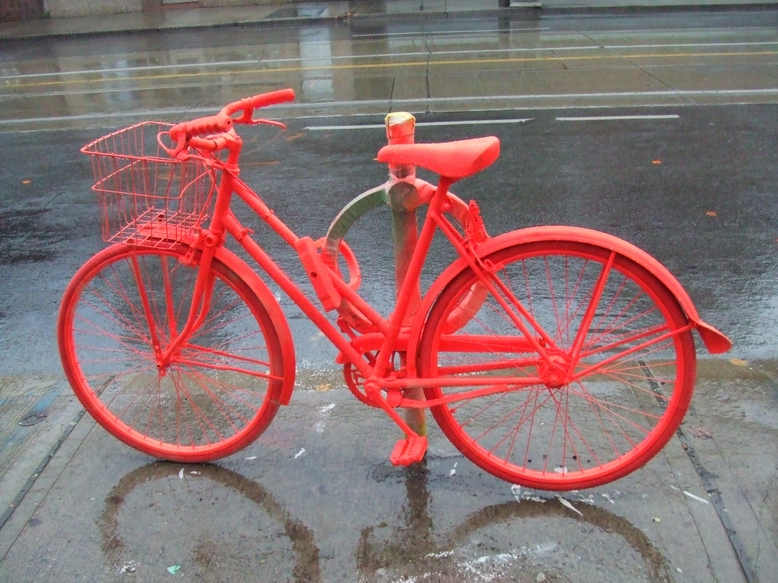
La luz del sol en la esquina de Sherbourne y Bloor
Ya muy tarde mi bicicleta me lleva a través de la ciudad.
Me pregunto como nosotros
amoldamos nuestras vidas, estos desórdenes brillantes,
estos finos errores inspirados cuando – Mira –
El futuro está totalmente implícito en el presente,
el presente es el resultado lógico
De todos los puntos en el pasado y ese edificio al cruzar la calle
su construcción que viene desde Siempre.
Todo lo que hacemos hoy contiene las semillas de su propia transformación.
El puente yace sobre la quebrada honda.
Algo me dice: Nunca harás nada más vital, más
profundo, más perfecto o más necesario que
lo que estás haciendo en estos momentos.
Hoy ha sido Viernes, ese era su nombre – Viernes – y
la luz del sol en Sherbourne y Bloor complementa la ciudad.
*
El Parque: veinte años más tarde
No es el mismo parque, pero podría serlo.
Es Christie Pits al fin del verano,
La tristeza colosal del fin del verano.
Otra arena, otro coliseo,
Atletas diferentes con su esbeltez poderosa,
Diferentes corredores con su fuerza esbelta.
Sentado en la grama reverdecida y lujosa comtemplo
Estos espléndidos jugadores al fin de su juego.
*
Sunlight at Sherbourne and Bloor
Late afternoon my bike takes me across the city. I wonder how we
fashion our lives, these brilliant disorders, these fine, inspired errors when
– look – the future is utterly implicit in the present, the present is the logical outcome
Of all points in the past, and that building going up across the
street has been going up forever. Everything we do now contains the
seeds of its own unfolding. The bridge eases over the deep ravine.
Something tells me:
You will never do anything more vital, more profound, more perfect or more
Necessary than what you are doing right now.
Today has been Friday, that was its name – Friday – and the
Sunlight at Sherbourne and Bloor completes the city.
*
The Park: twenty years later
It’s not the same park, but it may as well be.
It’s Christie Pits at the end of summer,
The colossal sadness of the end of summer.
Another arena, another colosseum,
Different athletes and their mighty slenderness,
Different runners with their slender might.
I sit on the extravagant overgreen grass and watch
These splendid players at the end of their game.
———————————————————-
Gwendolyn MacEwen (1941-1987)
Traducción de estos dos poemas al español por Lidia García Garay
*
Gwendolyn MacEwen (1941-1987) was a Torontonian poet.
She taught herself to read Arabic, Greek and Hebrew, and won
the Governor General’s Award for Poetry in 1969 with her collection,
“The Shadow Maker”.
Translation of the above two poems into Spanish by Lidia García Garay
*
Gwendolyn MacEwen’s poetry reprinted with permission of Ms. MacEwen’s Estate
8 Refreshments
Posted: June 10, 2011 Filed under: Alexander Best, English Comments Off on 8 Refreshments8 Refreshments
by ALEXANDER BEST
Zephyr yolk X wire
Vagrant usher tendon silk
Radish quartz prong ox
Knobby merry lonesome knocking
Just idle healthy guilty
Fickle earnest draughty cleft
Billow addle zap yearn.
Able blunt crass dense
Ember flood gravel hunch
Idol jail kite lung
Marrow nugget octave plank
Quell rot stew tempt
Unguent vault war X
Yoke zoom alter bless.
_
Vacant product precious stirrup
Nestle truncheon human onion
Bridle pithy biscuit bully
Bilk bulge tank rock
Sluggish fluid volley banquet
Spacious silo plasma oath
Dogma cretin copper clasp
Charcoal sinew golden roost
Prowling boiler brainy crop
Chasm wisdom locket tooth
Juice of mechanism, dust.
_____
Grain grease grind Jerome
Randall regent burgeon sting
Clever handle leering Mack
Wolfgang dogged blinding patch
Bigbang twinkling cavern Dot
Kidney urchin beggar Bill
Esther hinge palaver speech
Maud balloon reluctant shell.
_____
Thoughtful magic telephone
Melancholic Magnavox
Carefree threadbare cranium
Kitchen-cupboard knowledgebox
Mystery-killing minivan
Arch triumphant ampersand
Trusted axle tattletale
Fiddle-headed firebrand.
_____
Piñata frenetic sonata potato
Replenish agnostic electric example
Elastic torrential terrific potential
Alannah Sophia Felipe Rodrigo.
_____
Avalanche zealotry badgering yellowing
Clavicle xylophone destiny wintergreen
Elegant violence fisticuffs underbrush
Genuine Tantalus hectoring slavering
Inglenook rodeo jabberer quiver
Keyhole prism lean one
Moot null knot mote
Old loon physics kickstart
Quiet jollity rhapsody industry
Simian honesty telethon garrison
Uppermost fundament vanity entity
Wanderlust drudgery execute cinnamon
Yesterday brilliantine Zanzibar absolute.
_____
Satchel dismal dispatch signal
Chilly pungent gentle jungle
Bottle leeward gleeful sinner
Tuber robot pedant single
Medal dirty dainty baron
Tea-rose frigid summer bedlam
Gallant lambaste giddy rondo
Nervous ruckus wondrous someone
Antler harlot clanging ginger
Language harvest winsome sterling
Learned randy maelstrom harbour
Sticky mingle selfish larder
Diesel hazard strumming rustic
Humid dorsal finish weapon
Distant weeping rusty hatchet
Perish peephole wretched gung-ho
Churlish holy cudgel satchel.
_____
Anthill banknote cloudburst dustup
Eyetooth figleaf greasepaint hogwash
Inkblot jamjar kinship landsend
Mankind neatfreak oddball packrat
Queenbee ripcord sickbed taproot
Uproar voicebox whirlwind exit
Xerox yesman.
Ashpit bookmark clubfoot debtload
Ebbtide fishcake goatskin hairshirt
Inchworm joyride keepsake larkspur
Meathook nightwatch outlaw placename
Quicksand ropeburn searchlight torchsong
U-turn vicegrip worldview extract
Xiphoid* youngblood.
* xiphoid = “ shaped like a sword ”
The Facts / Los Hechos
Posted: June 7, 2011 Filed under: Alexander Best, English, Spanish, ZP Translator: Lidia García Garay Comments Off on The Facts / Los Hechos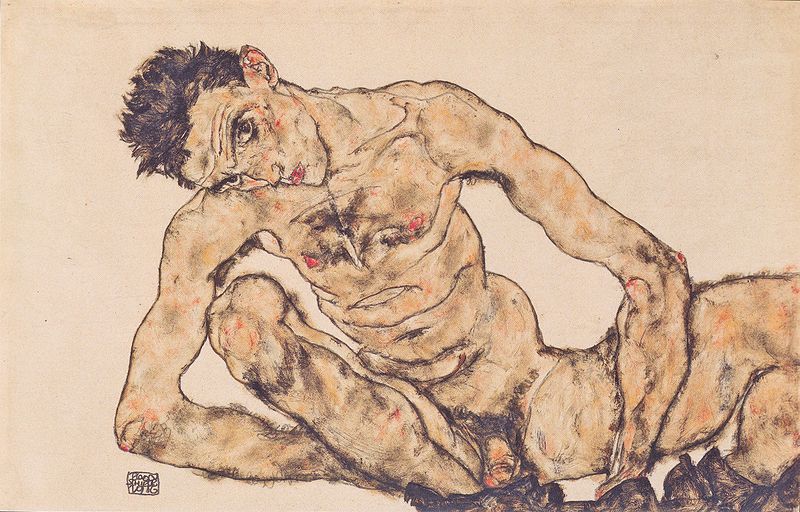
The Facts
by Alexander Best
.
My body’s made of clay – of iron, wool and gold – and
Mainly of clay.
The body falls apart; is brave; builds itself again – while I
Sleep; while I – crippled – walk.
A body’s made to love, though not to worship. For the
Soul must never be held. Still – I’ll
Take care of my mudcaked ” house “, at least for
This little while.
When your body’s well, I love it; when your body’s sick, too. Because it’s
There I find Us – for a time.
Oh, of all the wishes I might wish, I’d wish for — —
But the facts are enough.
Forever, You and I are
Pure as soil, delicate as dust, magical as ash.
Our body – weary, strong body –
Our body’s made of clay.
. . .
Los Hechos
por Alexander Best
.
Mi cuerpo está hecho de arcilla – y de hierro, lana y oro –
Y más que todo de arcilla.
El cuerpo se desintegra; es valiente, se reconstruye por sí mismo
– mientras duermo; cuando – lisiado – camino.
Un cuerpo está hecho para ser amado, sin embargo no lo idolatres.
Porque el alma no debe ser retenida.
Aun así yo cuido a mi ‘casa’ cubierta de barro endurecido, por lo menos
por un rato.
Cuando tu cuerpo está bien, lo amo, cuando está enfermo también.
Porque es allí donde encontramos a nosotros – por un rato.
Oh, de todos los deseos que yo pudiera desear —
Pero los hechos son suficientes.
Para siempre Tú y Yo somos
Puros como tierra, delicados como polvo, mágicos como la ceniza.
Nuestro cuerpo – cansado, fuerte –
Nuestro cuerpo está hecho de arcilla.
. . .
Traducción al español por Lidia García Garay
Kyoto Protocol: 2 poems by Alexander Best
Posted: June 1, 2011 Filed under: Alexander Best, English, Spanish, ZP Translator: Lidia García Garay Comments Off on Kyoto Protocol: 2 poems by Alexander BestHANDMADE POEM
_
One way
Right way
Lost and pounding
_
Treasure
Shovel
Message
Bottle
_
Plastic
Bagful
Urgent
Bubble
_
Soilmouth
Steepdrink
Skypit
Hovel
_
Un-way
Our way
Human foundling
_
Mousepad
Chisel
Boulder
Nipple
_
Clayclod
Seedhusk
Grounded
People
_
Yucca
Maize and
Grains
Astounding
_
Cellphone
Oatmeal
Idealogjam
_
Slowburn
Brainsmoke
Concrete
Feed me
_
Juice of
Grasses
Miles of
Malls and
_
Micro
Chip off
Old block
Heed me.
. . .
WATER SONNET
_
My love and I go down to the well
With buckets at our waists,
and dip the vessels in, refresh ourselves,
Then give we chase…
_
The sparkling drench is ours,
Extravagance of simple choice.
We swallow all, we surge and runneth o’er
By such device.
_
And liquid Time a-rushing flows
And tolls the bell for me,
And you – where did our children go?
Could we abandoned be?
_
My love and I went down to the well
And turned our buckets over;
And sat upon them;
Sighed and waited – waited, sighed –
Forever.
(September 2010)
. . . . .
POEMA AL AGUA
_
Mi amada y yo vamos al pozo
Con cántaros a la cintura,
Los metemos al agua, nos refrescamos y
luego correteamos…
_
El líquido brillante que nos empapa es nuestro,
una extravagancia fácil de escoger
nos la tomamos, resurgimos y
nos dejamos atropellar por tal método.
_
Y el Tiempo líquido corre y nos toca la campana
¿Y vosotros— adónde fueron vuestros hijos?
¿Hemos sido abandonados tal vez?
_
Mi amada y yo fuimos al pozo,
Pusimos nuestros cántaros boca abajo
y nos sentamos en ellos;
Suspiramos y esperamos – esperamos, suspiramos
Para siempre.
__________
Traducción al español por Lidia García Garay
‘El Buen Libro’ / ‘The Good Book’
Posted: June 1, 2011 Filed under: Alexander Best, English, Spanish, ZP Translator: Lidia García Garay Comments Off on ‘El Buen Libro’ / ‘The Good Book’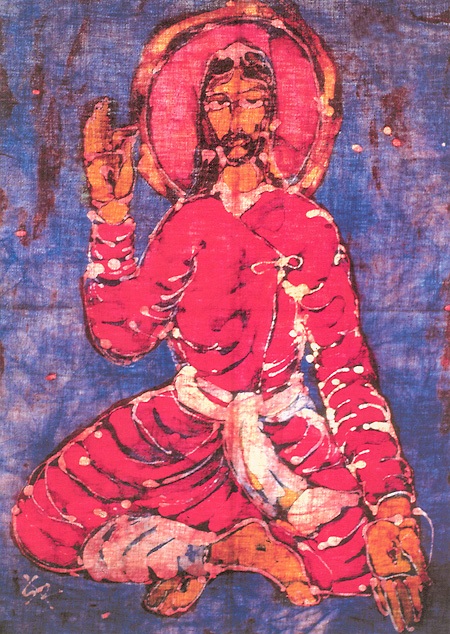
‘The Good Book’
by Alexander Best
.
I open the book, rather, The Good Book.
Is The Answer within these thousand-odd onion-skin pages?
No.
But it’s an amazing life-span’s read, just the same;
About folks – dead, all of ’em – who were
Rough, sweet, ignorant.
Naaah, Hollywood / Science
Can’t crack this nut – and I’m
Glad in that.
_
My
Favourite exasperating character is
Jesus:
Son of man, born of woman, had – (they say) – that
Divine spark, the same one burns in the billions of us.
He was a flesh-and-blood human being,
Like you and me
– but he was more than that. A
Deep and subtle thinker; simple, oblique and rich in his
Word; a vagrant who was a holy man
(such as the Hindus have). And once he
Got known – ( those Wonders with the loaves and fish; the
Leper and Lazarus; not to mention
the guy walked on water ) –
He was given no peace,
Not even on Sundays.
_
The Multitude trailed him…And here and there he sought an
Evening’s quiet in high-up mountain hollows where he
Lay with his head on a stone pillow, and
Still his restless spirit wouldn’t quit. Well…
Jesus came to a bad end, which was typical back then for
Anyone stubborn and puzzling who appeared to
Spring from nowhere.
_
People picture Jesus as a Hippy or Rastafarian, only
Jesus was more intelligent, sexy and strange than any
Social type that grew out of the twentieth century.
_
A poem is irritating if it goes on for long…but
not The Good Book. And
Jesus’ biography is merely a few chapters in it.
Oh, there’s
Plenty to read, for three-score-years-and-ten
( or however many grains of sand remain in your hourglass. )
_
I open my heart as wide as I’m able.
I close The Good Book.
This is enough for one day.
.
(2001)
. . . . .
‘El Buen Libro’
por Alexander Best
.
Abro el libro, mejor dicho, El Buen Libro.
¿Está La Respuesta en este libro de miles de páginas singulares de papel cebolla?
No.
Pero igualmente es una lectura de toda una vida
Acerca de gentes – todos muertos ya – que fueron
Toscos, dulces, ignorantes.
No, no, Hollywood / la Ciencia
No pueden abrirse paso a comprenderlo
Y me alegro de ello.
_
Mi personaje favorito, exasperante, es:
Jesús:
El hijo del Hombre, nacido de Mujer
Tuvo – dicen – esa chispa divina,
La misma que quema en miles de millones
De nosotros.
Él fue un hombre de carne y hueso,
Como tú y yo
– pero él fue más que eso:
Un pensador profundo, perspicaz, simple,
Indirecto y rico en Su Palabra; un vagabundo que era
Un hombre santo (como los hindús lo han sido).
Y una vez llegó a ser reconocido
– (esos milagros con el pan y el pescado; el leproso y Lázaro;
Sin mencionar que el hombre caminó sobre agua) –
No tuvo paz – aún en los domingos.
_
La multitud le seguía
Y buscó aquí y allá el silencio de una tarde donde descansar
Su cabeza, en los huecos
En la cima de la montaña,
Sobre una almohada de piedra,
Y todavía su espíritu agitado no descansaba…
_
Bueno,
Jesús terminó mal, que era típico entonces para una persona
Testaruda y misteriosa que se aparecía de la nada.
La gente se hace una idea de Jesús como un rastafari o un hippy pero
Solamente que Él era más inteligente, atractivo y misterioso
Que cualquier sujeto que germinó del siglo veinte.
_
Un poema fastidia si se alarga…pero no El Buen Libro.
Y la biografía de Jesús está en unos cuantos capítulos solamente.
Oh, hay mucho que leer, por setenta años,
o cuantos granos nos queden en nuestro reloj de arena.
_
Abro mi corazón tanto como puedo.
Cierro El Buen Libro.
Ésto es suficiente por un día.
.
(2001)
_____
Traducción al español por Lidia García Garay
Image: a batik textile of Jesus as guru, Jesus as bodhisattva, but showing stigmata upon both his hands
“This poem’s about…” by Alexander Best
Posted: May 26, 2011 Filed under: Alexander Best, English Comments Off on “This poem’s about…” by Alexander Best“This poem’s about”
.
This poem’s about what’s inbetween, this part’s
the piece got left out.
Crawled up to the roof where calmness is. A
guy’s up there, kind and cool, big and
warm and vague — didn’t beat me.
In my room: dumptrucks heave along, dragging
dreams through potholes. Oil-burning “steam shovels”
unearth me at devilish dawn, pound the 8 X 12-foot ground,
pluck me from the floorboards, with crooked steel teeth
— and fling.
This dream lives life in secret;
rectangled in a cupboard; a thing pretzel-bawdy,
its mouth at its crotch and a scald-pipe
collars the throat.
This poem’s about what’s inbetween, the
bit unmentioned, put neat-to-the-side.
On the table: an eavestrough-vase holds sculpture of
tough-skin-slicing weeds — rumex crispus L. — grew in a
dry oasis ‘neath the expressway. These weeds
proclaim the Dot. And a bricked-in, coal-chunk’d,
wall-eyed cot railroads fright from me, in a
room’s as trusted, big-busted, nut-clamped and
breakneck’d as within’s the rattled world without.
This poem can’t take the hint. Ignored, dropped,
still it’s self-propelled on a head of fumes.
At last, this poem describes the face in shadow,
turned toward an ancient painted place,
filthy t-shirt stretched ‘cross
cave-bound eyes like tissue of silk.
This poem’s what’s behind the shrapnel mask,
it records the dear loss of the fake.
This poem, it gladly ends.
(2004)
_____
 Zócalo Poets