Poema para El Día de Acción de Gracias
Posted: October 9, 2011 Filed under: English, Olga García Echeverría, Spanish, ZP Translator: Alexander Best | Tags: Poemas para el Día de Acción de Gracias, Thanksgiving poems Comments Off on Poema para El Día de Acción de Gracias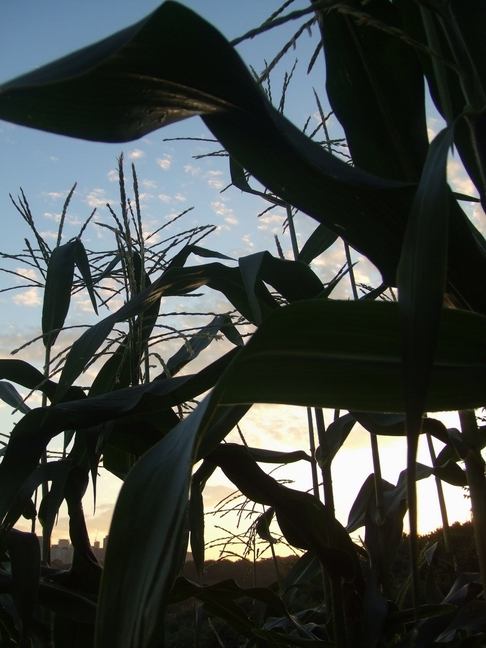
Olga García Echeverría:
“Quemando Tortillas”
Corazón, no esperes tortillas
recién hechas a mano, redondas
y perfectas como la cara de la luna
las mías, si algún día llego a hacerlas
saldrán cuadradas como hojas de papel
dices tú que en otros tiempos
las mujeres enamoraban con el sudor
el calor y la energía de sus manos
tantas gotas de deseo
envueltas en masa de maíz
de niña me gustaba hacer tortillas
de tierra, me gustaba lo húmedo del olor
y lo negro que se me metía bajo las uñas
mi cocina ideal era un mundo sin paredes
un lugar entre plantas y hierbas, bajo un cielo
que parecía espejo del mar
ahora de mujer
quiero darte mi esencia de comer
que me sientas viva en tu boca
pero la idea de hacer tortillas a mano
¡me choca! aburrida quemaría
una tras otra
una tras otra
lo que quiero es entregarme entera
caminar descalza
bailar bajo un cielo
chorreado de estrellas
en vez de tortillas
haré poema tras poema
recién hechos a mano de mujer
calientitos y blanditos
color chichiltic
sabor a mango
tamaño a luna entera
redondos y perfectos
como la espiral
de tu ombligo
la palabra, como el maíz, mi amor
también es indígena
_____
Olga García Echeverría es una escritora, también una maestra.
Vive en Los Angeles, California.
Olga nos muestra que ¡La Poesía es Comida del Alma!
_____
“Burning Tortillas”
Darling, don’t expect
fresh, hand-made tortillas,
perfect circles like the face of the moon
Mine, if one day I
get around to making them, will come out
square,
like sheets of paper
You tell me that in olden times
women used to fall in love with the
sweat – heat – the energy of their own hands
so many drops of desire
enveloped in that cornflour
As a little girl I loved making “mudpies” out of
earth, loved the damp smell
and the black that got under my fingernails
my ideal kitchen was a world without walls
among plants and herbs, a sky above me
that seemed like a mirror of the sea
Now as a grown woman
I want to give you my essence – to eat – so that you’ll
feel me – alive – in your mouth
But the very idea of making tortillas – and by hand –
well, it annoys me ! Bored, I’d burn the lot,
one after another
after another
What I really want is to
give myself over entirely to
walking barefoot
dancing under a sky
gushing with stars
Instead of tortillas you’ll get
poem after poem – hot off the press – made of
A Woman who’s a little sizzler and kind-a tender,
chichiltic-coloured, mango-flavoured
Poems full-moon-sized, round and perfect like the
spiral of your navel
Because words, like corn, my love,
are also Native in us…
_____
Olga García Echeverría is a writer and teacher, in Los Angeles, California.
She demonstrates that: Poetry is Food for the Soul !
Translation/interpretation from Spanish into English by Alexander Best
Nawal Naffaa: “Slip”
Posted: October 2, 2011 Filed under: Arabic, English, Nawal Naffaa Comments Off on Nawal Naffaa: “Slip”_____
“Slip”
I count up the corpses and aircraft
Falling in pieces from the news
I count the bullets that are exhumed,
The bullets that are buried
And the bullets preparing
To be shot loose.
I follow the ritual of food.
I finish my plate
By eating the plate
After a backbreaking day of the work I do.
When did I get this heartless?
Tomorrow, I’ll make room in a corner of your chest
Where I can cry
And I just might exhume the corpse out of my chest
And prepare a ritual
Of proper burial.
اعُدّ الجثث والطائرات
المتساقطة من نشرات الاخبار
اعد الرصاصات المنزوعة
الرصاصات المدفونة
والرصاصات الجاهزة
للاطلاق
واتابع طقوس الطَعام
آتي على الطبق
آكل الطبق
بعد يوم عمل شاق!
متى اصبحت قاسية هكذا؟
غداً أفسِحُ لي ركناً في صدركَ
كي ابكي هناك
فقد انزِع الجثث من صدري
وأُعِدّ طقوساً لائقةً لدفنها

_____
Palestinian poet Nawal Naffaa was born in 1970.
She writes in Arabic.
To create in two “languages” – painting and poetry – holds
great meaning for her and she often strives to merge the two
via “painting within writing – using metaphor in poetry”.
“Slip” captures – in strong, simple metaphors – the
“stunning” effectiveness, the “numbing” capability,
in acts of war.
*
For this translation from Arabic into English
we are grateful to A. Z. Foreman.
Visit his site: http://www.poemsintranslation.blogspot.com
“Supplica a mia Madre” – PierPaolo Pasolini
Posted: October 2, 2011 Filed under: English, Italian, PierPaolo Pasolini Comments Off on “Supplica a mia Madre” – PierPaolo Pasolini_____
“Supplica a mia Madre”
È difficile dire con parole di figlio
ciò a cui nel cuore ben poco assomiglio.
Tu sei la sola al mondo che sa, del mio cuore,
ciò che è stato sempre, prima d’ogni altro amore.
Per questo devo dirti ciò ch’è orrendo conoscere:
è dentro la tua grazia che nasce la mia angoscia.
Sei insostituibile. Per questo è dannata
alla solitudine la vita che mi hai data.
E non voglio esser solo. Ho un’infinita fame
d’amore, dell’amore di corpi senza anima.
Perché l’anima è in te, sei tu, ma tu
sei mia madre e il tuo amore è la mia schiavitù:
ho passato l’infanzia schiavo di questo senso
alto, irrimediabile, di un impegno immenso.
Era l’unico modo per sentire la vita,
l’unica tinta, l’unica forma: ora è finita.
Sopravviviamo: ed è la confusione
di un vita rinata fuori dalla ragione.
Ti supplico, ah, ti supplico: non voler morire.
Sono qui, solo, con te, in un futuro aprile…
(1962)
_____
“Prayer to my Mother”
It’s so hard to say in a son’s words
what I’m so little like in my heart.
Only you in all the world know what my
heart always held, before any other love.
So, I must tell you something terrible to know:
from within your kindness my anguish grew.
You’re irreplaceable. And because you are,
the life you gave me is condemned to loneliness.
And I don’t want to be alone. I have an infinite
hunger for love, love of bodies without souls.
For the soul is inside you, it is you, but
you’re my mother and your love’s my slavery:
My childhood I lived a slave to this lofty
incurable sense of an immense obligation.
It was the only way to feel life,
the unique form, sole colour; now, it’s over.
We survive, in the confusion
of a life reborn outside reason.
I pray you, oh, I pray: Don’t die.
I’m here, alone, with you, in a future April…
(1962)
_____
PierPaolo Pasolini (1922-1975)
was a controversial Italian film director,
newspaper columnist, novelist and poet.
He embraced Communism while at
the same time being a Celebrity. He
viewed the new (1970s) “consumer society”
of Italy and its main “tool” – Television –
as destroyers of Italian grass-roots culture
and regional dialects.
Internationally he is praised as an “auteur”
film director, beginning with 1961’s “Accattone”.
But it can be argued that Pasolini the poet was
the superior artist…
“En el lado sentimental” – Billie Holiday
Posted: October 1, 2011 Filed under: English, Spanish, Translator's Whimsy: Song Lyrics / Extravagancia del traductor: Letras de canciones traducidas por Alexander Best Comments Off on “En el lado sentimental” – Billie Holiday
 “On the sentimental side”
(Johnny Burke and Jimmy Monaco,
composers – as sung by Billie Holiday, 1938)
.
If you wonder why I’m near you,
Even though I’ve been denied,
I’m inclined to be a little
On the sentimental side.
.
I suppose I should forget you,
If I had an ounce of pride,
But I guess I can’t help being
On the sentimental side.
.
I should act gay,
Laugh it off and say Farewell,
Say it just didn’t wear well
– but I’m not that way…
.
I’m in hopes you’ll think it over,
And perhaps be satisfied
With a simple sort of person
On the sentimental side.
_____
“En el lado sentimental”
– canción popular americana del año 1938,
cantada por Billie Holiday
.
Si te maravillas que estoy aquí – cerca de ti,
Aunque he sido denegado,
Es porque me inclino a ser
Un poco sentimental.
.
Se supone que tengo que olvidarte,
Si yo tuviera una pizca de orgullo,
Pero no puedo evitar
Ser sentimental.
.
Yo debería hacerme alegre,
Reírme y decir: Adiós.
Decir: No importa que no duró nuestro Amor
– pero esto no es como soy… …
.
Espero que tú reflexiones sobre todo,
Y, quizás, te contentes
Con un tipo simple
– sí, que soy yo –
Alguien sentimental.
. . . .
Traducción al español: Alexander Best
Imagen: Foto colorizada de Billie Holiday – de los años 30
Image: colourized black and white photograph of Billie Holiday – from the late 1930s
John Clare: The Gipsy Camp + The Braggart
Posted: September 30, 2011 Filed under: English, John Clare Comments Off on John Clare: The Gipsy Camp + The Braggart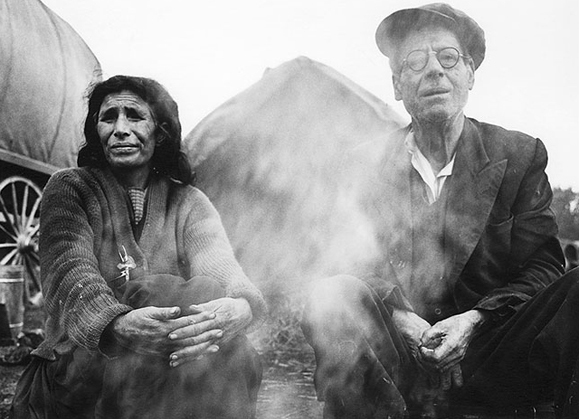 ZP_Julia and Bernie McDonagh_Irish Travellers_photographed by Alen MacWeeney in the 1960s
The Gipsy Camp
.
The snow falls deep; the Forest lies alone:
The boy goes hasty for his load of brakes,
Then thinks upon the fire and hurries back;
The Gipsy knocks his hands and tucks them up,
And seeks his squalid camp, half hid in snow,
Beneath the oak, which breaks away the wind,
And bushes close, with snow like hovel warm:
There stinking mutton roasts upon the coals,
And the half roasted dog squats close and rubs,
Then feels the heat too strong and goes aloof;
He watches well, but none a bit can spare,
And vainly waits the morsel thrown away:
‘Tis thus they live – a picture to the place;
A quiet, pilfering, unprotected race.
. . .
The Braggart
.
With careful step to keep his balance up
He reels on warily along the street,
Slabbering at mouth and with a staggering stoop
Mutters an angry look at all he meets.
Bumptious and vain and proud he shoulders up
And would be something if he knew but how;
To any man on earth he will not stoop
But cracks of work, of horses and of plough.
Proud of the foolish talk, the ale he quaffs,
He never heeds the insult loud that laughs:
With rosy maid he tries to joke and play,–
Who shrugs and nettles deep his pomp and pride.
And calls him ‘drunken beast’ and runs away–
King to himself and fool to all beside.
* * *
John Clare (1793-1864) was an English poet active mainly
in the 1830s and ’40s. Coming from a poor rural
family in Northamptonshire, he spent most of his life as
a field hand, hired labourer, and observant vagabond.
Except for one excursion to London, where briefly he
was flavour-of-the-season – “The Peasant Poet” –
(an inaccurate, sentimental moniker) – he stuck close
to his county, covering many miles on foot, even
wandering “back home” from Northborough Asylum
where he would spend the last twenty years of his life.
Alexander Best: Five Poems Inspired by John Clare
Posted: September 30, 2011 Filed under: Alexander Best, English Comments Off on Alexander Best: Five Poems Inspired by John ClareAlexander Best
FIVE POEMS
INSPIRED BY JOHN CLARE
(2002)
.
THE BEGGAR
.
The beggar keeps his coarse hair in a braid:
A bell-rope length of several colours made.
and grey or sunburnt are his torso’s hues,
and lady’s sandals make the soundest shoes.
In season’s heat he trails around a coat
Of winter’s weight; he’s pungent as a goat.
His voice is dumb, his body fairly hums;
He’s like a monk, avoids the other bums.
His fingers tabulate a host of fears;
He quivers with the ringing in his ears.
The patient few observe him after dark
and see he takes old cig’rette butts apart;
and twists them up into a grimy page
and sucks upon the thing a pleasant age.
Beggar he is, though never asks a penny.
About his life are strange opinions many.
. . .
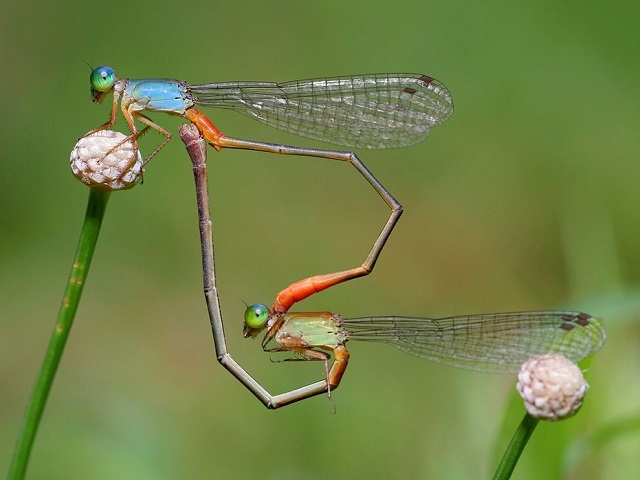
THE DRAGONFLIES
.
As summer’s end progresses, so do they:
The Great-Lakes Dragonflies at duty play.
By hundreds in tall grass they mate and sun
and shimmer in the sex act till it’s done.
and some are luminescent, slim as pins;
Enamel drops of life poise at their ends.
and male and female grip — the shape’s a heart;
As if to silk the frankness of this earth.
Though Love in Nature’s not one minor role
— it’s breadth: orchestral movement of the whole.
and in the list’ning heat they do their thing;
They reproduce their kind, to grasses cling.
and mower’s blade ne’er touched this place all year;
T’was man’s neglect brought gorgeous insects here.
THE ADDICT
.
He lives for life’s caprice and easy mood,
Constructing selves that seem of solid good.
and when he lands a job, works hard enough,
and loves the toiling group, the hearty laugh.
Then shirks his people, culprits “buddy”, vents;
and frigs off, scores, and does whate’er he wants.
Is slow to answer mother overwrought
and quick to anger, should the lover doubt.
Invents some fine excuse — a reg’lar fiend;
Can always trust the trusting, stupid friend.
He squanders all his gifts; the wallet takes;
Then shrills his hurt when later brung to task.
Discov’ry of his stealth’s a stunning sting,
Oh, loveliness and charm — his very being.
The tether’s end he’ll reach — a noose, ere long?
and lies and cheats and still he carries on…
. . .
THE CROWS
.
I always fear they’re vanquished till I hear them…
Then, halting in my tracks, I know I love them.
For several frozen months their voice is silent
— it’s tough, you see, for they’re my psychic pilot.
In winter’s final days they start their talking
And by their dialogues is summer’s clocking.
At first their “caw” is bluntest proclamation:
We are the overseers of tarnation.
Come warm spring afternoons and much of summer,
They speak like castanets and make me slumber.
With comic delicacy they “clippety-clack”
And always keep their distance, handsome-black.
If crows came close, would people in pursuit…
With rocks and pellet-guns and steel-toe boot.
What is it ’bout this bird inspires hate?
The proud and practised crows, black-handsome, great,
Stand highest up of buildings, stroll and call
Then something puts them silent in the Fall.
. . .
ENCLOSURE
.
There’s solace in the knowledge: I am here;
This open-air “enclosure” gives me scare.
Who hacked these limbs, who hid the foot-shaped paths?
I crane my neck, I scratch and spit; swear oaths.
A satchel’s on the ground, inside’s a blade;
My Heart is wild, a poison’s in the blood.
I’ve clutched at straws and thatch, fistfuls of grass;
Will weeds apply to choke the gap and gush.
And slow my ’motions, feelings hot run cold.
( I hardened all my hopes as best I could. )
And sorrow is the marrow of my being;
Tomorrow is a narrow road I’m steering.
My love’s a Way that now is lost to me;
At last, the poet swallowed by his theme…
. . . . .
Author’s note:
In these poems I have tried to look upon Man and Nature
in 21st-century urban life with the same keen eye and
sensitivity as John Clare’s poems of rural life did in the 1830s
and ’40s.
“Enclosure”, while here representing the confusing state of
doomed or hopeless love, is also a reference to the fencing-in
of common pastures (The Enclosures), the removal of
ancient paths and the felling of old tree-groves – upheavals in
England’s countryside during The Industrial Revolution –
traumatic for Clare, who felt a deep communion with the land.
Un Sueño Diferido: Langston Hughes
Posted: September 26, 2011 Filed under: English, Langston Hughes, Spanish | Tags: Black poets Comments Off on Un Sueño Diferido: Langston Hughes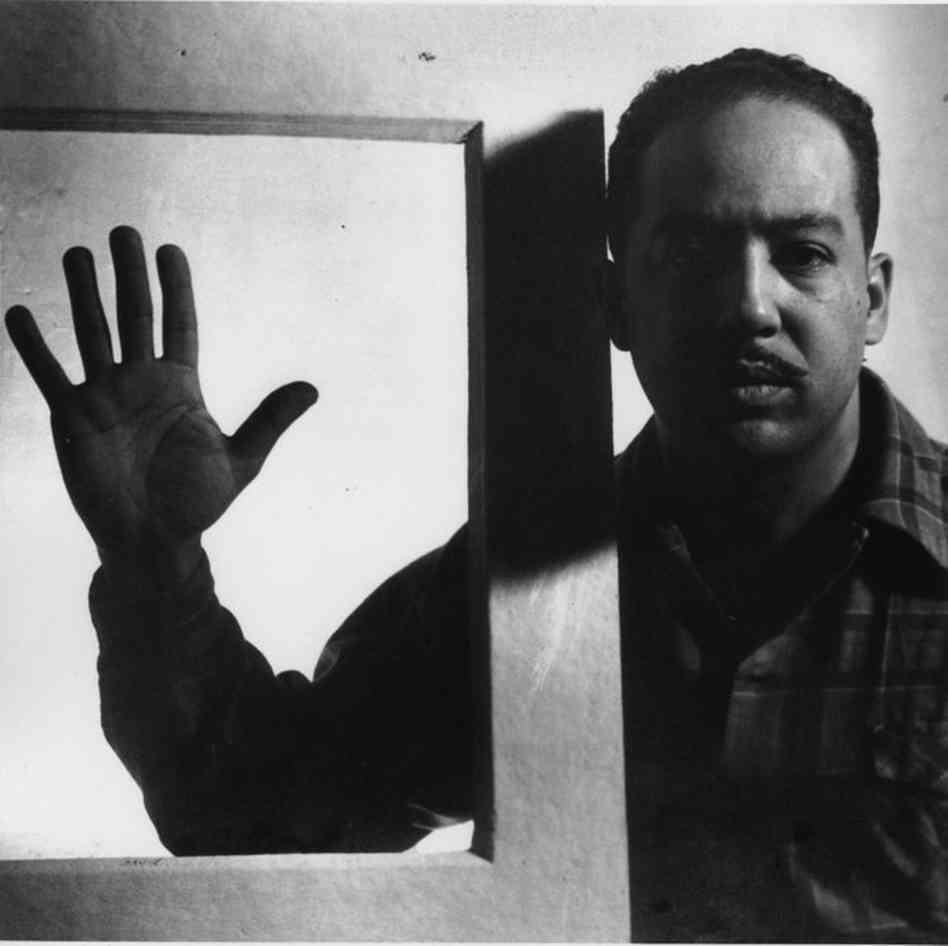
A Dream Deferred
.
What happens to a dream deferred ?
Does it dry up
Like a raisin in the sun ?
Or fester like a sore –
And then run?
Does it stink like rotten meat ?
Or crust and sugar over –
Like a syrupy sweet?
Maybe it just sags
Like a heavy load.
Or does it explode ?
*
Un Sueño Diferido
.
¿Qué pasa de un sueño diferido?
¿Se marchita
como una pasa en el sol?
¿O se encona como una llaga –
y entonces corre?
¿Apesta como carne putrida?
¿O endurece y se vuelve dulce –
como un postre con jarabe?
Tal vez solo se hunda
como una carga pesada.
¿O explota?
_____
Gracias al Super Forero de Sevilla, España,
por su traducción al español
_____
Langston Hughes (1902-1967) was a Black-American
poet and novelist at the forefront of The Harlem
Renaissance. Born in the small town of Joplin, Missouri,
he would later capture in his poems the vibrancy of his
adopted home – New York City.
Written in 1951, the minute-long “A Dream Deferred”
is perhaps the most famous American poem of the
20th century.
_____
Langston Hughes (1902-1967) fue un novelista y
poeta Negro, de Los Estados Unidos.
Nació en el pueblo pequeño de
Joplin, Missouri, pero Hughes se hizo en la vanguardia
del Renacimiento de Harlem. Abarcan sus poemas la
vitalidad y la urgencia de su ciudad adoptiva
– Nueva York.
“Un Sueño Diferido” (escrito en 1951) es, quizás,
el poema de Los Estados Unidos el más famoso del siglo XX.
“Soledad” por Robert Hayden
Posted: September 26, 2011 Filed under: English, Robert Hayden, Spanish | Tags: Black poets Comments Off on “Soledad” por Robert Hayden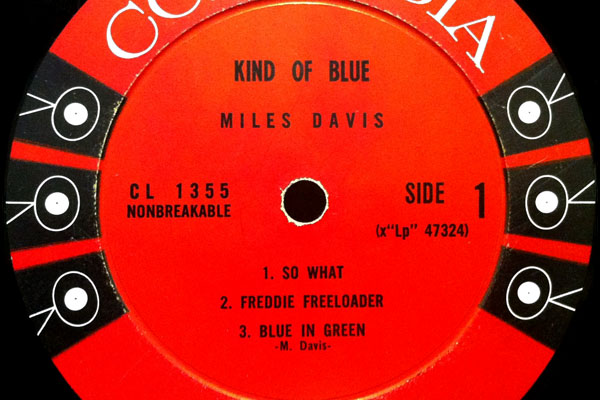
Robert Hayden
“Soledad”
.
Naked he lies in the blinded room,
chain-smoking, cradled by drugs, by jazz,
as never by any lover’s cradling flesh.
Miles Davis coolly blows for him,
oh pena negra *, sensual flamenco blues!
The redclay foxfire voice of Lady Day,
Lady of the pure black magnolias,
sobsings her sorrow and loss and fare ye well,
dryweeps the pain his treacherous jailors have
released him from for a while.
His fears and his unfinished self await him
down in the anywhere streets.
He hides on the dark side of the moon,
takes refuge in a stainedglass cell,
flees to a caulkless country of crystal.
Only the ghost of Lady Day
knows where he is, only the music, and he
swings those swings beyond
complete immortal now.
.
* pena negra – black sorrow/struggle
. . .
Robert Hayden
“Soledad”
.
Él, desnudo, está tendido en el cuarto con persianas,
fumando cigarillos, uno tras otro, acunado por la droga,
por el Jazz, como nunca por la piel de ningún amante.
Miles Davis* “toca” frescamente por él, ¡ay, pena negra, el
blues flamenco-sensual!
La voz arcilla-rojo – fuego-zorro, de Lady Day**,
Dama de las magnolias puras-negras,
solloza-canta su dolor y pérdida y
¡qué-será-será/hasta-luego!,
seca-llora la pena de cuál cosa
él está liberado por sus carceleros traicioneros.
Sus miedos y su ser incompleto
le esperan bajo en las calles de alguna parte.
Se esconde en el lado oscuro de la luna,
busca un refugio en una celda de cristal de colores,
huye a un país cristalino.
Solo sabe donde él está el espíritu de Lady Day,
solo sabe la música, y él
columpia el columpio,
danza el “swing”
más allá de
Ahora inmortal-total.
.
* Miles Davis: Trompetista negro-americano del jazz “cool”
** Lady Day: Billie Holiday – Cantante negra-americana del jazz, blues y pop
Traducción al español: Alexander Best
_____
Robert Hayden (1913-1980) was a Black-American poet
born in Detroit. His first book, Heart-Shape in the Dust,
from 1940, is based on life in the “Paradise Valley” slum.
In 1944 he joined Fisk College where he taught for more
than twenty years as professor of English, followed by
a decade at University of Michigan.
Hayden’s 1971 poem, “Soledad” (Loneliness, Solitude), is
about a friend – and drug addiction.
¡ Xoloitzcuintle soy !
Posted: September 16, 2011 Filed under: Alexander Best, English, Náhuatl Comments Off on ¡ Xoloitzcuintle soy !_____
¡ Xoloitzcuintle soy !
Xoloitzcuintle am I !
The Original Dog of The Americas
and
The Royal Dog of the Aztecs !
I am famed for my smooth skin, my energy,
a playful mind and affectionate nature.
I have lasted to this day…
*
No other animal has stood – sunburnt –
atop the temple of Teotihuacán.
I have quivered beside immense, reclining Chac-Mool,
when his belly-bowl was full of fresh blood.
I have splashed in Xochimilco with royal maidens;
I have floated in salty Zumpango with wrinkled old priests.
*
I have tried to snatch the gold pellets tossed by my Master
when He plays patolli; I have leapt for the ball
when it bounces off the buttocks of nobles engaged in
games of tlachtli.
*
I have licked the copal-xocotl from His divine ankles,
when Moctezuma emerged from His temazcal;
I have nuzzled His armpits inside His bed-chamber,
wearing my collar of quetzal plumes.
*
I have pricked my paws on metl thorns,
trying to sniff out chinicuiles to eat; singed them
while stealing tlaxcalli off the comal.
I have lapped up pulque from my Master’s cup
– wobbled then fell down; been bitten by nimble Coyote.
*
I have suckled pups at my own teats;
and my seed has reached the womb of
The Royal Bitch (La Perra Real).
*
¡ Soy Xoloitzcuintle !
For centuries I throve at the pinnacle.
I am the youthful spirit of the ancient world,
and though the centre has shifted,
neither do I dance at the periphery…
Escúchame – whoever you may be –
Let me teach you to live in the modern world…
_____
Glossary:
Italicized words are in the Náhuatl (Aztec) language:
Xoloitzcuintle – lean, hairless dog, native to Mexico
– in Aztec religion, a gift to mankind from the god Xolotl
to guide the dead on the journey to the AfterLife.
“Xolos” were much-loved companion dogs, but
some were raised separately and plumpened
to be served at Aztec banquets.
patolli – board game involving gambling, played by the
Aztecs and the Mayans
tlachtli – skilful ballgame played on a stone court where
players bounce a natural-rubber ball weighing at least
5 lbs. (invention of the Olmec people) off their hips or
rear-ends – it is still played in the 21st century
copal-xocotl – the plant ‘saponaria americana’, the
root of which provided a sudsy soap
temazcal – stone sauna bath, often the size of a small house
quetzal – forest bird of Central America and Mexico, with
iridescent green (or green-gold) feathers
chinicuiles – highly-nutritious edible caterpillars
(still eaten in Mexico) that infest metl plants
tlaxcalli – flat maize bread, a daily staple of the Aztecs and
Mayans, still eaten in Mexico and called by its Spanish
name, ” tortilla ”
metl (maguey or agave) – Mexican plant of the “succulent”
family, used in the making of both pulque and tequila
comal – clay earthenware griddle placed over an open fire
– in use to this day – there is also a cast-iron skillet-like
version for the modern kitchen
pulque – milk-like alcoholic drink derived from fermented
sap of the metl plant – a ritual beverage of the Aztec
nobility and later a popular drink of the Mexican masses
Grito (para México)
Posted: September 16, 2011 Filed under: Alexander Best, English, Spanish Comments Off on Grito (para México)_____
Grito (para México)
Del tingo al tango
ha pasado el tiempo del
trastorno, de la
trácala, de los
tiliches tilingos.
Ay, ay, ay, ay…¡Cantemos, no lloremos!
Ha pasado el tiempo del
miedo enojado, del
enojo temeroso – y del
odio (ese lagartijo guapísimo).
Ha hablado la lengua de las lágrimas
– ¡qué logro, esa lucidez del korazón! –
pero ha terminado también su tiempo.
¡Kantemos, no lloremos!
Saboréen todos los kolores:
del tomate, camote, mazorca de elote;
pulque con chile, canela para chocolate.
Y
Norteños chicharrones,
Indios con pelo pintado de güero,
Bonitas con chongos largos negros,
Chilangos kool,
Mujeres machas,
Bandoleros cachondos,
Gringos de ojos grises :
Los xocoyotes les miran a ustedes…
– entonces, ¡ sean sinceros, todos !
¡Kantemos, no lloremos!
Y pronto
podremos contemplar en nuestra cara,
por fin,
la prueba del tornasol – Esperanza.
A esta Vida digo:
¡ Viva, Viva, Viva !
_____
I Shout
(for México)
From pillar to post
there’s been the time of
disorder – confusion,
fraud – the bullshit artist
– silly junk.
Oh me, oh my…Let us sing – not cry !
There’s been the time of
angry fear,
fearful wrath – and
hate (that most handsome lizard).
The tongue of tears has spoken
– such an achievement, that clarity of heart ! –
but even its time has passed.
Let us sing – not cry !
Savour all the colours:
tomato, sweet potato, cobs of corn;
maguey-liquor with chile, cinnamon for cocoa.
And
sunburnt norteño hicks,
bleached-blond Natives,
pretty girls with long black braids,
hipsters from the Capital,
proud-hard-women,
horny-Heart-stealers,
grey-eyed gringos :
The youngest kids are watching…
– so, all of you be sincere !
Let us sing – not cry !
And soon
we’ll be able to behold on our face,
at last,
the litmus test – that sunflower Hope.
To this Life I say:
Long live you, Long live you, Long may you live !

 Zócalo Poets