Cronin, Sirr y Donnelly: Tres poetas irlandeses / Cronin, Sirr and Donnelly: Three Irish poets
Posted: March 17, 2012 Filed under: English, Spanish | Tags: Saint Patrick's Day Poems Comments Off on Cronin, Sirr y Donnelly: Tres poetas irlandeses / Cronin, Sirr and Donnelly: Three Irish poets_____
Traducciónes del inglés al español /
Translations from English into Spanish:
© Jorge Fonderbrider y Gerardo Romano
_____
Anthony Cronin
(nace/born 1928, Enniscorthy, condado de Wexford, Irlanda /
Enniscorthy, County Wexford, Ireland)
“Profeta”
Cuando volvieron los rumores a aquel pequeño caserío blanco,
rumores extraños sobre sus hábitos y su discurso,
los vecinos sacudieron la cabeza sin asombro,
su madre estaba perpleja más que orgullosa.
Y entrando al anochecer a ciudades alumbradas por lámparas,
viendo la cálida penumbra roja detrás de los postigos,
permaneciendo despierto en cuartos extraños sobre ríos,
pensaba que sería como ellos si pudiera.
Y cuando al fin el poder cortesano prestó atención
y lo clavó más tarde en ese horrible sitio, supo que
lo que intentaba decir sería olvidado
salvo por algunos tan solos como él.
_____
“Prophet”
When word came back to that small whitewashed village,
Strange rumours of his ways and of his talk,
The neighbours shook their heads and didn’t wonder,
His mother was bewildered more than proud.
And coming into lamplit towns at evening,
Seeing the warm red gloom behind the blinds,
Lying awake in strange rooms above rivers,
He thought he would be like them if he could.
And when at last the courteous powers took notice,
And nailed him to that awful point in time,
He knew that what he meant would be forgotten
Except by some as lonely as himself.
_____
Peter Sirr
(nace/born 1960, Waterford, Irlanda/Ireland)
“Cuerpo y Alma”
Cordero desgrasado, mermelada de damasco, pan mojado en leche
mientras cebollas, ajo y jenjibre se suavizan
sin haber olvidado las bananas,
las hojas de laurel
ni dos huevos batidos en la leche sobrante
y todo para ser horneado, y servido
sobre una base de arroz azafranado
cosas que se consiguen
en la mayoría de los buenos kioskos, el único
todavía abierto, el triste negocio
que también vende zoquetes en pilas de a seis
grises, azul marino, negros, puestos en una canasta
como un altar cerca de las góndolas frías
donde manteca, leche, fiambres, queso
se ubican detrás de velos de plástico,
todo el negocio un altar para mantener la desolación
oh compradores de sombríos zoquetes y manteca
los insomnes que se levantan
y llegan corriendo al lugar, descalzos, sin aliento
señalándole cosas a la mujer sentada detrás del mostrador
delante de los cigarrillos, al lado de la máquina de la Lotería, cerca
de los bastoncitos de chocolate; y él que vuelve a casa caminando, cansado
desde la fiesta lejana, el cordero desgrasado, el fuego lento
debajo de la pesada sartén, el ajo, las cebollas, la luz
damasco, el pasto lechoso, los corderos danzantes
en los cráteres del planeta, las mujeres durmiendo sobre camas de jenjibre
entrando en un sueño para comprar
brazaletes, sedas, mermelada de damascos.
_____
“Body and Soul”
Minced lamb, apricot jam, milky bread
while onions, garlic, ginger soften
not having forgotten bananas, bay leaves
nor neglected
two eggs beaten into the remaining milk
the whole to be baked, and served
on a bed of saffron rice
details available
in most good newsagents, the one
still open, the sad small place
selling also socks in piles of six
grey, navy, black, set down in a basket
shrine-like near the cold shelves
where butter, milk, rashers, cheese
sit behind plastic veils,
the whole shop a shrine to the sustenance of desolation
oh purchasers of sombre socks and butter
the restless having woken
and hurried to the place, barefoot, breathless
pointing things out to the woman who sits behind the counter
in front of the cigarettes, beside the Lotto machine, near
the chocolate fingers: and exhausted walker home
from the faraway party, the minced lamb, the low flame
under the heavy pan, the garlic, the onions, the apricot
light, the milky grass, the lambs dancing
in the planet’s craters, the women sleeping on beds of ginger
entering in a dream to buy
bangles, silks, apricot jam.
_____
Charles Donnelly
(1914-1937, nació en Killybrackey, condado de Tyrone, Irlanda del Norte,
y se murió en España (en La Guerra Civil). Born in Killybrackey,
County Tyrone, Northern Ireland – died in Spain, fighting in The Spanish
Civil War.)
“La Tolerancia de los Cuervos”
La muerte llega en gran número por problemas
resueltos en los mapas, disposiciones bien ordenadas,
ángulos de elevación y dirección;
llega inocente a manos de instrumentos que podrían gustarle a los niños,
guardándolos debajo de las almohadas,
inocentemente clavados en toda carne.
Y con la carne se desmorona la mente
que arrastra al pensamiento de la mente
que despoja con claridad al pensamiento de un propósito esperando.
El avance del veneno en los nervios y
el colapso de la disciplina se detiene.
El cuerpo espera la tolerancia de los cuervos.
_____
“The Tolerance of Crows”
Death comes in quantity from solved
Problems on maps, well-ordered dispostions,
Angles of elevation and direction:
Comes innocent from tools children might
Love, retaining under pillows,
Innocently impales on any flesh.
And with flesh falls apart the mind
That trails thought from the mind that cuts
Thought clearly from a waiting purpose.
Progress of poison in the nerves and
Discipline’s collapse is halted.
Body awaits the tolerance of crows.
_____
Saint Dallán Forgaill: “Be Thou my Vision” / “Rop tú mo baile”
Posted: March 17, 2012 Filed under: English, Irish, Saint Dallán Forgaill | Tags: Saint Patrick's Day Poems Comments Off on Saint Dallán Forgaill: “Be Thou my Vision” / “Rop tú mo baile”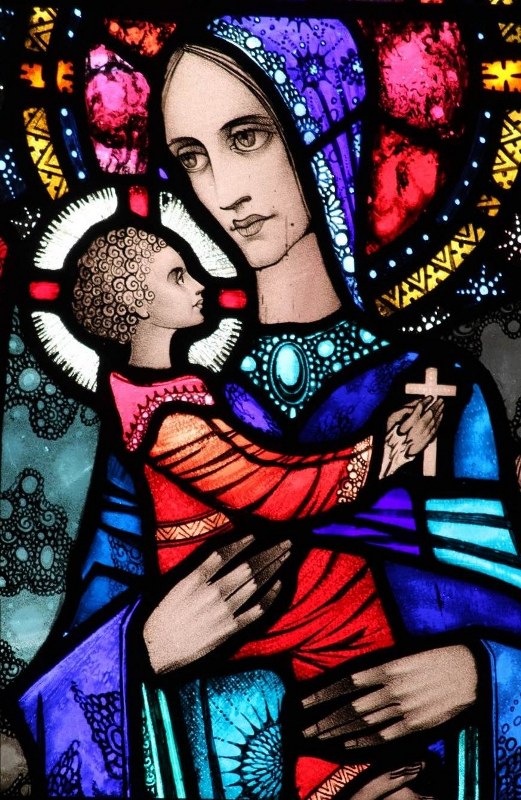
“Rop tú mo baile”
(Saint Dallán Forgaill, c.530-598)
Rop tú mo baile, a Choimdiu cride:
ní ní nech aile acht Rí secht nime.
Rop tú mo scrútain i l-ló ‘s i n-aidche;
rop tú ad-chëar im chotlud caidche.
Rop tú mo labra, rop tú mo thuicsiu;
rop tussu dam-sa, rob misse duit-siu.
Rop tussu m’athair, rob mé do mac-su;
rop tussu lem-sa, rob misse lat-su.
Rop tú mo chathscíath, rop tú mo chlaideb;
rop tussu m’ordan, rop tussu m’airer.
Rop tú mo dítiu, rop tú mo daingen;
rop tú nom-thocba i n-áentaid n-aingel.
Rop tú cech maithius dom churp, dom anmain;
rop tú mo flaithius i n-nim ‘s i talmain.
Rop tussu t’ áenur sainserc mo chride;
ní rop nech aile acht Airdrí nime.
Co talla forum, ré n-dul it láma,
mo chuit, mo chotlud, ar méit do gráda.
Rop tussu t’ áenur m’ urrann úais amra:
ní chuinngim daíne ná maíne marba.
Rop amlaid dínsiur cech sel, cech sáegul,
mar marb oc brénad, ar t’ fégad t’ áenur.
Do serc im anmain, do grád im chride,
tabair dam amlaid, a Rí secht nime.
Tabair dam amlaid, a Rí secht nime,
do serc im anmain, do grád im chride.
Go Ríg na n-uile rís íar m-búaid léire;
ro béo i flaith nime i n-gile gréine
A Athair inmain, cluinte mo núall-sa:
mithig (mo-núarán!) lasin trúagán trúag-sa.
A Chríst mo chride, cip ed dom-aire,
a Flaith na n-uile, rop tú mo baile.
_____
“Be thou my vision”
Hymn verses
set to the Irish folktune ‘Slane’, English lyrics by
Eleanor Hull (1912), based on Saint Dállan’s poem,
“Rop tú mo baile”
* * *
Be thou my vision, O Lord of my heart,
naught be all else to me, save that thou art;
Thou my best thought by day or by night,
Waking or sleeping, thy presence my light.
*
Be thou my wisdom, thou my true word,
I ever with thee and thou with me Lord;
Thou my great Father, I thy true son;
Thou in me dwelling, and I with thee one.
*
Be thou my breastplate, sword for the fight;
Be thou my dignity, thou my delight;
Thou my soul’s shelter, thou my high tower:
Raise thou me heavenward, O Power of my power.
*
Riches I heed not, nor man’s empty praise:
Thou mine inheritance now and always;
Thou and thou only – first in my heart;
High King of Heaven, my treasure thou art.
*
High King of Heaven, my victory won,
May I reach Heaven’s joys, O Bright Heaven’s sun!
Heart of my own heart, whatever befall,
Still be my vision, O Ruler of all.
* * *
Poemas para El Día Internacional de la Mujer: Tres poetas que deseamos honrar / Poems for International Women’s Day: Three poets we wish to honour
Posted: March 8, 2012 Filed under: Ana Castillo, bell hooks, English, Freedom Nyamubaya, Spanish, ZP Translator: Alexander Best, ZP Translator: Lidia García Garay Comments Off on Poemas para El Día Internacional de la Mujer: Tres poetas que deseamos honrar / Poems for International Women’s Day: Three poets we wish to honour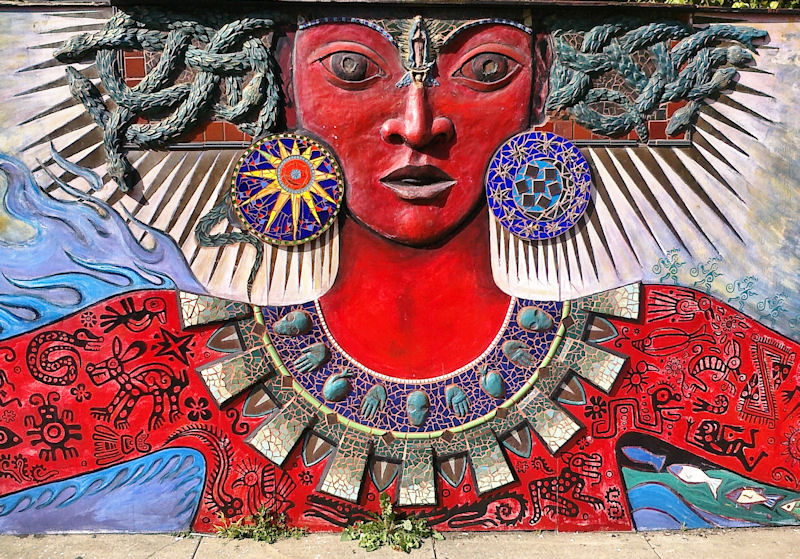 ZP_Itzpapalotl_Goddess mural in San Francisco_near 16th and Sanchez streets
.
bell hooks
(nace/born 1952, Kentucky, EEUU/USA)
En ese momento que… / The moment that…
*
En ese momento que decidimos amar
Empezamos a ir en contra de
La dominación, en contra de
La opresión.
En ese momento que decidimos amar
Empezamos a irnos hacia la libertad;
A actuar de maneras que nos liberan – y que liberan a otros también.
Esa acción es el testimonio del amor como la práctica de la libertad.
*
The moment we choose to love
we begin to move
against domination,
against oppression.
The moment we choose to love
we begin to move towards freedom;
to act in ways that liberate ourselves – and others.
That action is the testimony of love as the practice of freedom.
_____
Freedom Nyamubaya
(nace/born 1958, Zimbabwe)
La Poesía
*
Alguien dijó, no eres poeta,
pero olvidó que la poesía es un arte y
El Arte is un ritmo significativo.
Pues entonces, ¿qué es ritmo,
si puedo preguntar?
Algunos dicen que es sílabas marchando
otros dicen: sonidos marchando
pero dime como puedo casarlos a los dos.
Luchamos contra Shakespeare en el campo de batalla,
Los Negros lucharon contra los Bóeres con las lanzas.
Éstas son sílabas que marchan
y son el Arte – a alguna gente,
pues, ¿cómo yo puedo casarlos a los dos?
¿Y qué decimos de un ritmo diferente?
Mueren en los guetos la gente,
por redadas de policía y disparos del ejército.
Los obreros se asfixian en las minas de carbón,
excavando el carbón que no pueden comprar
para cocinar a diario para alimentarse.
Algo poético, ésto.
Pues quedemos en no estar de acuerdo.
El Arte sirve.
_____
Freedom Nyamubaya
Poetry
*
One person said, you are not a poet,
but forgot that poetry is an art and
Art is meaningful rhythm.
Now what is rhythm
if I may ask?
Some say it’s marching syllables,
others say it’s marching sounds,
but tell me how you marry the two.
We fought Shakespeare on the battlefield,
Blacks fought the Boers with their spears.
These are marching syllables
and Art to some,
but how can I marry the two?
How about a different rhythm?
People die in the ghettoes,
from police raids and army shots.
Workers suffocate under coal mines,
digging the coal they can’t afford to buy
for cooking daily to feed themselves.
Poetic stuff, this.
Then let’s agree to disagree.
Art serves.
_____
Ana Castillo
(nace/born 1953, Chicago, Illinois, EEUU/USA)
Pido lo Imposible
*
Yo pido lo imposible: ámame por siempre
Ámame cuando todo el amor se haya ido.
Ámame con la dedicación de un monje.
Cuando el mundo en su totalidad,
y todo lo que para ti es sagrado, te aconsejan
contra ello: ámame aún más.
Cuando la cólera te llene y no tenga nombre: ámame.
Cuando cada paso de tu puerta a nuestro trabajo te fatigue,
ámame; y del trabajo de retorno a casa, ámame.
Ámame cuando estés aburrido,
cuando cada mujer que veas sea más bella que la anterior,
o más patética, ámame como siempre lo haz hecho:
no como admirador o juez pero con
la compasión que guardas para ti mismo
en tu nostalgia.
Ámame tanto cuanto aprecias tu soledad,
la anticipación de tu muerte,
misterios de la carne, mientras se rompe y se sana.
Ámame como tu más atesorada memoria de la infancia
– y si no hay ninguna a recordar –
imagínate una, y yo allí contigo.
Ámame marchita tanto como me amastes nueva.
Ámame como si yo fuera para siempre
y haré de lo imposible
un acto simple,
al amarte, amarte como yo te amo.
_____
Ana Castillo
I Ask The Impossible
*
I ask the impossible: love me forever.
Love me when all desire is gone.
Love me with the single mindedness of a monk.
When the world in its entirety,
and all that you hold sacred, advise you
against it: love me still more.
When rage fills you and has no name: love me.
When each step from your door to our job tires you,
love me; and from job to home again, love me, love me.
Love me when you’re bored,
when every woman you see is more beautiful than the last,
or more pathetic, love me as you always have:
not as admirer or judge but with
the compassion you save for yourself
in your solitude.
Love me as you relish your loneliness,
the anticipation of your death,
mysteries of the flesh, as it tears and mends.
Love me as your most treasured childhood memory
– and if there is none to recall –
imagine one, place me there with you.
Love me withered as you loved me new.
Love me as if I were forever
and I will make the impossible
a simple act,
by loving you, loving you as I do.
_____
Traducciones del inglés al español:
Alexander Best (“En ese momento que…” y “La Poesía”)
Lidia García Garay (“Pido lo Imposible”)
_____
Murielle Jassinthe: Of Country Bodies
Posted: March 6, 2012 Filed under: English, Murielle Jassinthe, ZP Translator: Alexander Best Comments Off on Murielle Jassinthe: Of Country Bodies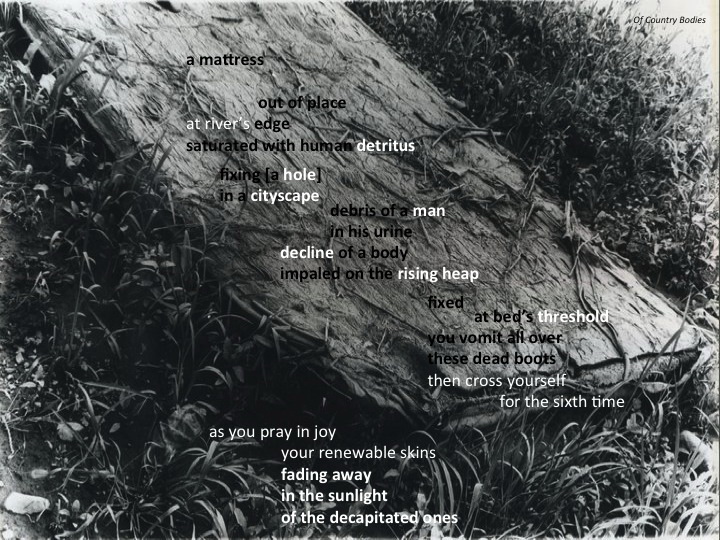
Jassinthe writes of this poem:
“I’m speaking here of two homeless drug-addicts. Having no shelter other than the banks of an urban river, there they sleep where solitude isolates them, pushes them toward a more physical closeness. Drug-taking and love-making help them forget the cold, the loneliness – and their Being.”
_____
Murielle Jassinthe was born in Québec in 1982 – of Haitian parentage.
Currently she’s pursuing a Masters in African and Francophone Literatures at Laval University where she works also as a research assistant. Two years ago, Éditions Bruno Doucey published “Land of Women” – an anthology of Haitian women poets spanning a century-and-a-half. Jassinthe’s poetry was included – one of the youngest voices. Last year, at Laval University’s Lantiss, she worked both as actress and production assistant on a play by Haitian playwright Guy Régis, Jr., entitled “La mort de soi dans sa longue robe de Mariée”. Also in 2011 Murielle received a writer’s grant from Première Ovation, and was mentored by poet Alix Renaud for the creation of her collection of poems with photographs, “Trouble Optik” – from which comes the poem we feature here.
_____
Poem translation from French into English:
Alexander Best – with Murielle Jassinthe
Murielle Jassinthe: The maternal angle / L’angle maternel
Posted: March 6, 2012 Filed under: English, French, Murielle Jassinthe, ZP Translator: Alexander Best Comments Off on Murielle Jassinthe: The maternal angle / L’angle maternel_____
Murielle Jassinthe
L’angle maternel * The maternal angle
_
La langue de ma mère * The language of my mother
se tord en ma bouche * gets twisted in my mouth
attise la brûlure * fans the burn
à l’oeil nu * clear and direct
métallique conte nocturne * metallic nocturne tale
ses chants de volaille * these birdsongs
ne se mangent * can only be eaten
que par la bouche colonial * by the colonial mouth
_
digérés par ce vent de sel * digested by this saltwind
mes viscères rubiconds haïssent * that my bloody guts hate
les odeurs transfigurent * the smell transforms
ma veste ma peau d’être * my coat my skin myself
fort ce hâle qui me fait cuir * strong this browning that
davantage que le soleil * burns even more than sun
la main le regard * hand and eyes
m’ont fait cuire * have baked me.
_
je me sens * I feel
j’exhale * I exhale
danse pour la terre seule * dance for the earth
creuset de fièvre
* alone feverish
verve lente douce * slow sweet verve
érosion qui s’inscrit * erosion that etches
en mes muscles * into my muscles
ma tête arabesque * my headband’s
est porte-étendard * a standard-bearer
_
la langue de ma mère * my mother tongue
se tord en ma bouche. * writhes in my mouth.
_____
The poet states:
“I’m writing here about feelings of cultural dislocation. The Haitian Creole language – that is, the mother tongue – that I have not mastered speaking. This native language of my mother and father which is not mine. All the same, there exist the words, my love of language to describe and to shout out my identity, suffering, joy, injustice, love, desire, fear, etc: The World in all its wonderful ugliness and tortuous beauty. And I am proud, as well, of my people – Haitians – I am one of their blazing torches.”
_____
Résumé par le poète:
“J’écris à propos d’un sentiment de dépossession culturelle. De cette langue créole, le
langue maternelle, que je ne maîtrise pas. La langue maternelle de ma mère et de mon père
qui n’est pas la mienne. Toutefois, il me reste les mots, mon amour de la langue pour
décrier et crier mon identité, la souffrance, la joie, l’injustice, l’amour, le désir, la peur, etc:
Le monde dans toute son admirable laideur et sa tortueuse beauté. Aussi, je suis fière de
mon people, les Haïtiens, et j’en suis l’un des flambeaux.”
_____
Poem translation from French into English /
Traduction du poème, français-anglais:
Alexander Best – with/avec Murielle Jassinthe
Hector Poullet: “Mi yo doubout an péyi-la…” / “Standing tall in our country…”
Posted: February 29, 2012 Filed under: Creole / Kréyòl, English, French, Hector Poullet | Tags: Black poets Comments Off on Hector Poullet: “Mi yo doubout an péyi-la…” / “Standing tall in our country…”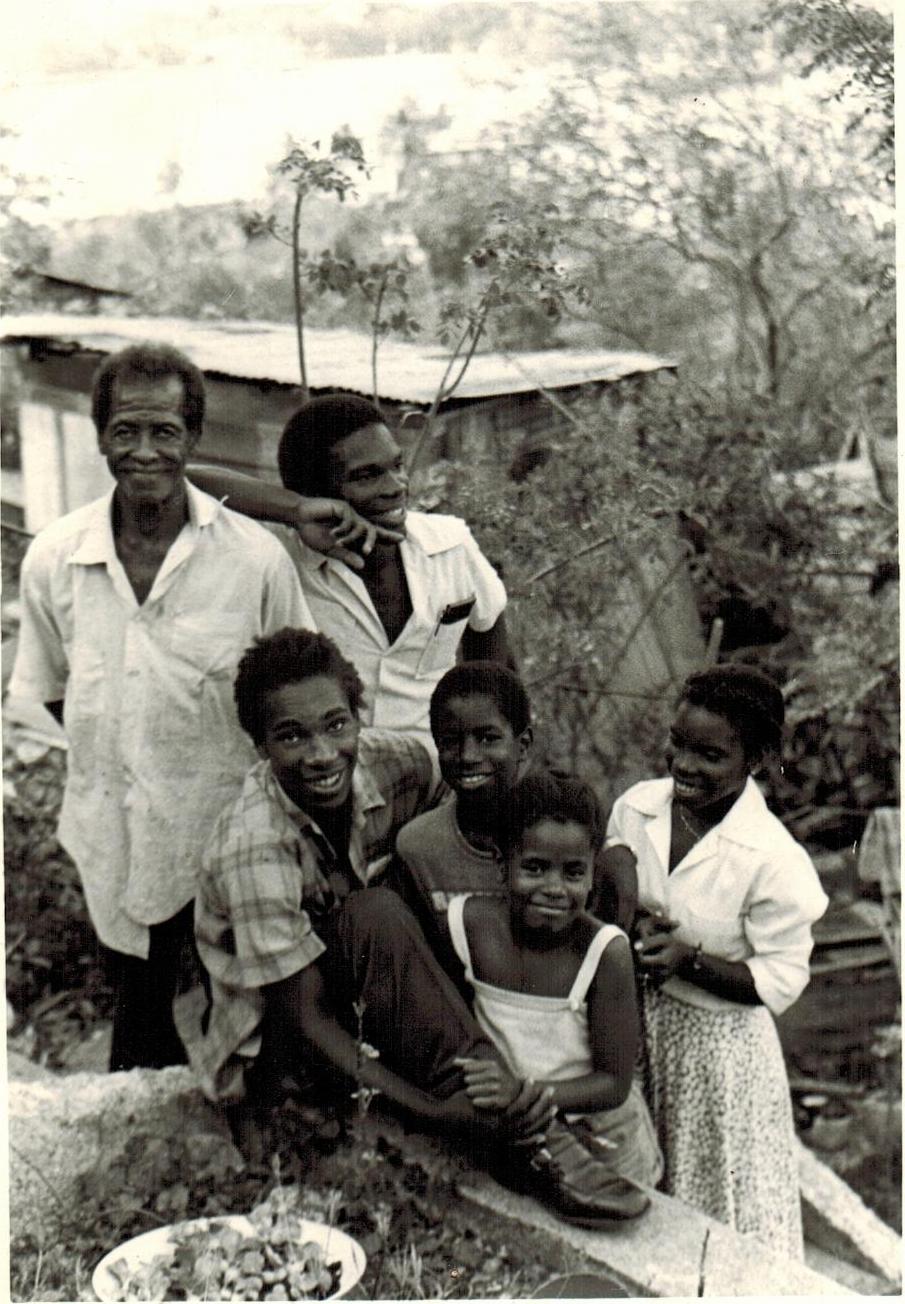
Hector Poullet (né/born 1938)
(Écrivain noir, créoliste, de La Guadeloupe
/ Black Creole-language writer, Guadeloupe)
E mi sé ti moun péyi-la
Mi yo
Mi yo doubout an péyi-la
An mitan lanmé
An mitan soley
Yo la
Po nwè
Po jonn
Po rouj
Po shapé
Po blan
Nou byen fouté pa mal !
Nou sa sé zenfan péyi-la
Sé swé a yo ki ka rozé péyi-la
_____
Voici les enfants du pays, Here are the children of the country,
Les voici, Here they are,
Les voici érigés au pays, Standing tall in our country,
Au coeur même de la mer, With hearts as much of the sea as sun.
Au coeur même du soleil.
Ils sont là There they are: the
Peaux noires Black skins, yellows,
Peaux jaunes Red skins and shedded skins,
Peaux rouges White skins, too.
Peaux échappées et
Peaux blanches
Quelle importance ! And it’s so important –
Ce sont, nous le savons, That they are – and we know it –
Les fils de ce pays; The children of this country;
Leur sueur nourrit la terre de ce pays! Their sweat nourishes this earth!
_____
Mildred Barya: “Una Gota de Sangre” / “A Drop of Blood”
Posted: February 23, 2012 Filed under: English, Mildred Barya, Spanish, ZP Translator: Alexander Best | Tags: Black poets, Poetas negros Comments Off on Mildred Barya: “Una Gota de Sangre” / “A Drop of Blood”
Mildred Barya (nace 1976)
“Una Gota de Sangre”
El día que me llegó la regla
Exclamó mi madre:
“¡Ahora eres mujer!”
Entonces me pregunté:
¿Qué yo había sido antes?
¿Y cómo me ha hecho una mujer
Una gota de sangre?
*
Cuando llevaron a mi hermano al círculo,
Él se estremeció a la sensación de un cuchillo afilado.
Pero le convencieron:
“No debes tener miedo,
No muestres ninguna cobardía.
Tan pronto como te cortemos la piel
Te harás un hombre.”
*
Cuando mi madre tenía a Junior
Tan pesado en su vientre
Se apuraba de la mesa
Y corría al lavaplatos.
El día que le llevaron al hospital
Cayó al suelo una bolsa de agua
Pues una gota de sangre.
Gritó mi padre: “¡Mujer!”
*
Leí en Las Sagradas Escrituras
Como fue sacrificado el Hijo de Hombre.
Antes de dar su último aliento,
Manaron fuera de él
Agua y la sangre.
En este momento se hizo Hombre
Que era el Dios.
*
Supongo que haya algo en una gota de sangre
Que nos hace hombres y mujeres.
_____
Mildred Barya (born 1976)
“A Drop of Blood”
The day I got my first period,
Mother exclaimed:
“You’ve become a woman!”
And so I wondered,
What had I been earlier?
And how could a drop of blood
Make me a woman?
*
When they took my brother to the circle,
He flinched at the feel of a sharp knife.
But the elders convinced him:
“You must not fear
Do not show any cowardice
Once we slice off the skin
You become a man.”
*
When mother was heavy with Junior,
She would rush off the table
And run to the sink.
The day she was taken to hospital
A bag of water dropped to the ground,
Then a drop of blood.
Father cried: “Woman!”
*
I read in the Holy Scriptures
How the Son of Man was crucified
Before he breathed his last.
Water and blood flowed out,
There he became Man,
Who was God.
*
I guess there’s something in a drop of blood
That makes us men and women.
_____
Mildred Barya, poeta, nació en Uganda.
Ganó el Premio Pan-Africano del Foro Literário
en 2008. Barya también es periodista y escritor
de viaje. Vive en Syracuse, Nueva York, EEUU.
*
Poet Mildred Barya was born in Uganda.
She won the 2008 Prize of the Pan African
Literary Forum. Barya is also a journalist
and travel-writer. Currently she lives in
Syracuse, New York.
*
Translation from English into Spanish /
Traducción del inglés al español: Alexander Best
Poema para Miércoles de Ceniza / Ash Wednesday Poem
Posted: February 22, 2012 Filed under: English, Spanish, ZP Translator: Alexander Best | Tags: Ash Wednesday poem, Poema para Miércoles de Ceniza Comments Off on Poema para Miércoles de Ceniza / Ash Wednesday Poem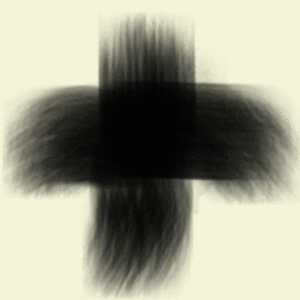
Poema para Miércoles de Ceniza / Ash Wednesday Poem
Once, in winter, Una vez, durante el invierno,
I stood, Yo estaba de pie,
White flakes brushing my face. Copos blancos rozando la cara.
With white fingers, Con dedos pálidos,
I waited with the others. Esperé con los otros.
We shivered on the steps, Temblamos en los escalones,
Stuck out our tongues Sacamos la lengua
To catch snowflakes Para agarrar los copos de nieve
So cold they would burn. Tan frío que nos quemaban.
Soon the big doors opened Pronto abrieron las puertas grandes
On smoke and candles Al humo y a los cirios
And a cold thumb brushed Y un pulgar frío me rozó
My forehead with a cross of ashes. La frente con una cruz de cenizas.
“Dust to Dust” he muttered “El Polvo al Polvo,” masculló
While snowflakes Mientras los copos de nieve
Melted in my hair Se derritieron en mi cabello.
*
( Autor anónimo /Anonymous )
Traducción en español: Alexander Best
Mardi Gras: “I’m walkin’ to New Orleans…”
Posted: February 21, 2012 Filed under: English Comments Off on Mardi Gras: “I’m walkin’ to New Orleans…”
“Walkin’ to New Orleans”
by Bobby Charles Guidry, written for
“Fats” Domino, Jr., early-rock’n’roll pianist and singer
(born 1928, New Orleans, Louisiana, USA)
_
It’s time I’m walkin’ to New Orleans
I’m walkin’ to New Orleans
I’m going to need two pair of shoes
When I get through walkin’ to you
When I get back to New Orleans
*
I’ve got my suitcase in my hand
Now, ain’t that a shame
I’m leavin’ here today
Yes, I’m goin’ back home to stay
Yes, I’m walkin’ to New Orleans
*
You used to be my honey
Till you spent all my money
No use for you to cry
I’ll see you bye and bye
Cause I’m walkin’ to New Orleans
*
I’ve got no time for talkin’
I’ve got to keep on walkin’
New Orleans is my home
That’s the reason why I’m goin’
Yes, I’m walkin’ to New Orleans
I’m walkin’ to New Orleans
I’m walkin’ to New Orleans
I’m walkin’ to New Orleans…
Andre Bagoo: Carnival Monday in Trinidad
Posted: February 20, 2012 Filed under: Andre Bagoo, English Comments Off on Andre Bagoo: Carnival Monday in Trinidad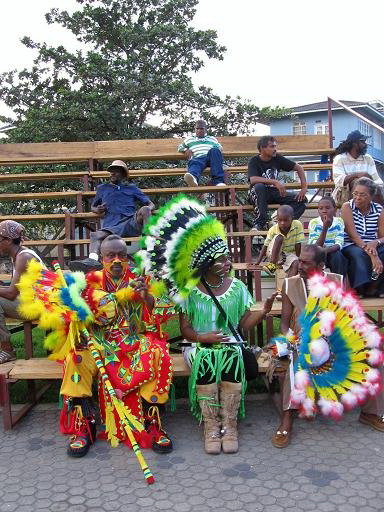
Andre Bagoo
“Carnival”
You are not my mother so you hold
my hand tighter than you should.
The wind blows my Indian feather,
And throws red dust into my face.
This is supposed to be fun, but when
We reach the Savannah stage I am terrified.
Your son, my half brother, is cold
He does not chip to the dollar wine.
This Kiddies’ Carnival experiment
Has gone awry. I’ve lost my axe.
You say you have to leave me here
It is five o’clock and Panorama is tonight.
You are going and my father is going
But my mother is staying home and
I am staying home to wash all this
Glitter and Vaseline off my small body.
But somewhere near that Savannah stage
The crowds crush my black cardboard axe.
_____
Andre Bagoo is a journalist and poet
from Trinidad, West.Indies.
He was born in 1983.
The poem above gives us Trinidad Carnival
through a child’s eyes, and will be found in
Bagoo’s collection of poems, “Trick Vessels”,
to be published by Shearsman in March 2012.
_____
Glossary:
Savannah: Queen’s Park Savannah, huge park in Port-of-Spain;
central festivities site for Carnival – Parade of Bands,
Crowning of Calypso Monarchs, etc.
chip – to step or shuffle in time to the music
dollar wine – a reference to the 1991 calypso hit by Colin Lucas,
“Dollar Wine”
Panorama: Carnival competition for Best
Pan Orchestra (i.e. Steel Band)
_____
 Zócalo Poets