“They now gonna make us shut up”: The Black Nationalist / Third-World Socialist poetry of Amiri Baraka
Posted: February 1, 2013 Filed under: Amiri Baraka, English, English: Black Canadian / American | Tags: Black History Month poems Comments Off on “They now gonna make us shut up”: The Black Nationalist / Third-World Socialist poetry of Amiri Baraka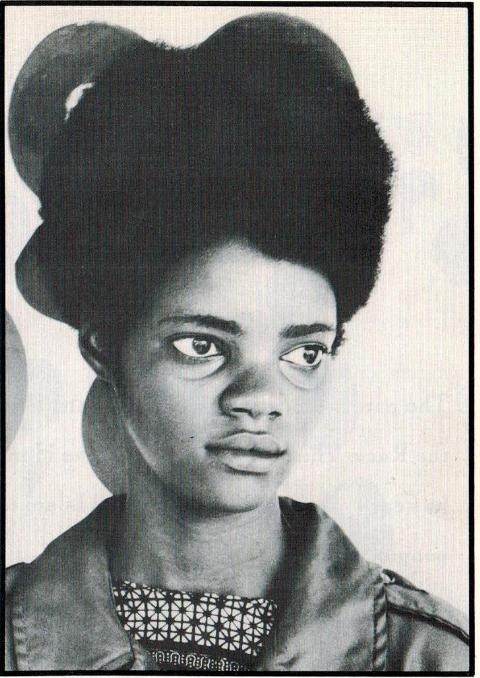
ZP_photograph by Fundi_Billy Abernathy_from the 1970 Imamu Amiri Baraka book In Our Terribleness_I love you black perfect woman. Your spirit will rule the twenty first century. This is why we ourselves speed to grace…
Amiri Baraka (born Everett LeRoi Jones, 1934)
“Numbers, Letters” (written in 1965)
.
If you’re not home, where
are you? Where’d you go? What
were you doing when gone? When
you come back, better make it good.
What was you doing down there, freakin’ off
with white women, hangin’ out
with Queens, say it straight to be
understood straight, put it flat and real
in the street where the sun comes and the
moon comes and the cold wind in winter
waters your eyes. Say what you mean, dig
it out put it down, and be strong
about it.
.
I cant say who I am
unless you agree I’m real
.
I cant be anything I’m not
except these words pretend
to life not yet explained,
so here’s some feeling for you
see how you like it, what it
reveals, and that’s Me.
.
Unless you agree I’m real
that I can feel
whatever beats hardest
a our black souls
I am real, and I can’t say who
I am. Ask me if I know, I’ll say
yes, I might say no. Still, ask.
I’m Everett LeRoi Jones, 30 yrs old.
.
A black nigger in the universe. A long breath singer,
wouldbe dancer, strong from years of fantasy
and study. All this time then, for what’s happening
now. All that spilling of white ether, clocks in ghostheads
lips drying and rewet, eyes opening and shut, mouths churning.
.
I am a meditative man, And when I say something it’s all of me
saying, and all the things that make me, have formed me, coloured me
this brilliant reddish night. I will say nothing that I feel is
lie, or unproven by the same ghostclocks, by the same riders
Always move so fast with the word slung over their backs or
in saddlebags, charging down Chinese roads. I carry some words,
some feeling, some life in me. My heart is large as my mind
this is a messenger calling, over here, over here, open your eyes
and your ears and your souls; today is the history we must learn
to desire. There is no guilt in love.
.
(from “Black Magic”, published 1969)
. . .
“Black Art”
.
Poems are bullshit unless they are
teeth or trees or lemons piled
on a step. Or black ladies dying
of men leaving nickel hearts
beating them down. Fuck poems
and they are useful, wd they shoot
come at you, love what you are,
breathe like wrestlers, or shudder
strangely after pissing. We want live
words of the hips world live flesh &
coursing blood. Hearts Brains
Souls splintering fire. We want poems
like fists beating niggers out of Jocks
or dagger poems in the slimy bellies
of the owner-jews. Black poems to
smear on girdlemamma mulatto bitches
whose brains are red jelly stuck
between ’lizabeth taylor’s toes. Stinking
Whores! We want “poems that kill”.
Assassin poems, Poems that shoot
guns. Poems that wrestle cops into alleys
and take their weapons leaving them dead
with tongues pulled out and sent to Ireland. Knockoff
poems for dope selling wops or slick halfwhite
politicians Airplane poems, rrrrrrrrrrrrrrrrrr
rrrrrrrrrrrrrrrr…tuhtuhtuhtuhtuhtuhtuhtuhtuh
…rrrrrrrrrrrrrrrr…Setting fire and death to
whities ass. Look at the Liberal
Spokesman for the jews clutch his throat
& puke himself into eternity…rrrrrrr
There’s a negroleader pinned to
a bar stool in Sardi’s eyeballs melting
in hot flame Another negroleader
on the steps of the white house one
kneeling between the sheriff’s thighs
negotiating cooly for his people.
Agggh … stumbles across the room …
Put it on him, poem. Strip him naked
to the world! Another bad poem cracking
steel knuckles in a jewlady’s mouth
Poem scream poison gas on beasts in green berets
Clean out the world for virtue and love,
Let there be no love poems written
until love can exist freely and
cleanly. Let Black People understand
that they are the lovers and the sons
of lovers and warriors and sons
of warriors Are poems & poets &
all the loveliness here in the world
.
We want a black poem. And a
Black World.
Let the world be a Black Poem
And Let All Black People Speak This Poem
silently
Or LOUD
.
(from “Black Magic”, published 1969)

ZP_from page 1 of In Our Terribleness_Some elements and meaning in black style_by Imamu Amiri Baraka_with Fundi_1970
“J. said, “Our whole universe is generated by a rhythm””
.
Is Dualism, the shadow inserted
for the northern trip, as the northern
trip, minstrels of the farther land,
the sun, in one place, ourselves, somewhere
else. The Universe
is the rhythm
there is no on looker, no outside
no other than the real, the universe
is rhythm, and whatever is only is as
swinging. All that is is funky, the bubbles
in the monsters brain, are hitting it too,
but the circles look like
swastikas, the square is thus
explained, but the nazis had dances, and even some of the
victims would tell you that.
.
There is no such thing as “our
universe”, only degrees of the swinging, what
does not swing is nothing, and nothing swings
when it wants to. The desire alone is funky
and it is this heat Louis Armstrong scatted in.
.
What is not funky is psychological, metaphysical
is the religion of squares, pretending no one
is anywhere.
Everything gets hot, it is hot now, nothing cold exists
and cold, is the theoretical line the pretended boundary
where your eye and your hand disappear into desire.
.
Dualism is a quiet camp near the outer edge of the forest.
There the inmates worship money and violence. they are
learning right now to sing, let us join them for a moment
and listen. Do not laugh, whatever you do.
.
(from “Funk Lore” – New Poems, 1984-1995)
. . .
“Brother Okot”
.
Our people say
death lives
in the West
(Any one
can see
plainly, each evening
where the sun
goes to die)
.
So Okot
is now in the West
.
Here w/ us
in hell
.
I have heard
his songs
felt the earth
drum his
dance
his wide ness
& Sky self
.
Ocoli Singer
Ocoli Fighter
.
Brother Okot
now here w/ us
in the place
.
Where even the Sun
dies.
.
Editor’s note:
Okot p’Bitek (1931-1982) was a Ugandan poet, author of the epic poem “Song of Lawino”,
written in the Acholi language. (Acholi = Ocoli).
One of Okot p’Bitek’s daughters, Juliane Okot Bitek, is a poet whose work was featured by
Zócalo Poets in February 2012.
. . .
“Syncretism”
.
BAD NEWS SAY
KILL
DRUM
But Drum
no
die
just
act slick
drum turn
mouth
tongue
drum go voice
be hand
on over
hauls
dont die
how some ever
drum turn slick
never
no drum
never
never
die
be a piano
a fiddle
a nigger tap
fellah
drum’ll
yodel
if it need to
Thing say Kill drum
but drum
dont die/dont even
disappear
& drum cant die
& wdn’t
no way!
.
(from “Funk Lore” – New Poems, 1984-1995)
. . .
“Bad People”
.
We want to be happy
neglecting
to check
the definition
.
We want to love
& be loved
but
What does that
mean?
.
Then you, backed up against
yr real life
.
claim you want
only
to be correct.
.
Imagine the jeers,
the cat calls
the universal dis
.
such ignorance
justifiably
creates.
.
(from “Funk Lore” – New Poems, 1984-1995)
. . . . .
ZP Editor’s note:
“They now gonna make us shut up” is the opening line of Baraka’s 1969 poem “The People Burning”.
.
Editor Paul Vangelisti wrote in a 1995 foreword to an Amiri Baraka anthology that the poet “remains difficult to approach” – that is, for readers trying to place his ‘opus’ – since the U.S. literary establishment is “positioned somewhere between Anglo-American academicism and the Entertainment industry.” Baraka cannot be fitted neatly anywhere – though he has been compared to Ezra Pound for “making poetry and politics reciprocal forms of action” (M.L. Rosenthal, 1973).
Imamu Amiri Baraka (Arabic for Spiritual Leader-Blesséd-Prince) was born Everett LeRoi Jones in Newark, New Jersey, and was one of the “urgent new voices” – black voices – of the 1960s. Like a number of U.S. cities with Black citizens who were barred from “getting ahead” and who felt fed up with a normalized police brutality, Newark experienced what were then called “race riots”, in July 1967, leaving 26 people dead. Over the decades Baraka has stuck by his city, continuing to live there through thick and thin.
.
The poet had often signed his poems “Roi”, up until 1966, at which time he took his Muslim name. After the assassination of Malcolm X Baraka became more forceful in his poetry – promoting a Black Nationalist culture – and trying to give poetic shape to Anger. But in the 1970s he distanced himself from Black Nationalism, finding in it “certain dead ends theoretically and ideologically”, and he gravitated toward Third-World Liberation movements involving Marxism.
.
Baraka has been brought to task over the years for sexism, anti-Semitism, and homophobia in his writing (from the 1960s especially) – but he was, in his poetic passion, giving expression to his full self – his ugly thoughts as well as his ideas and yearnings. In that sense Baraka was ordinary not special – yet he was egocentric enough to want to ‘say it all’.
About the criticisms against the “prejudices” evident in his work he has said:
“The anger was part of the mindset created by, first, the assassination of John Kennedy, followed by the assassination of Patrice Lumumba, followed by the assassination of Malcolm X – amidst the lynching, and national oppression. A few years later, the assassination of Martin Luther King and Robert Kennedy. What changed my mind was that I became a Marxist, after recognizing classes within the Black community…..”
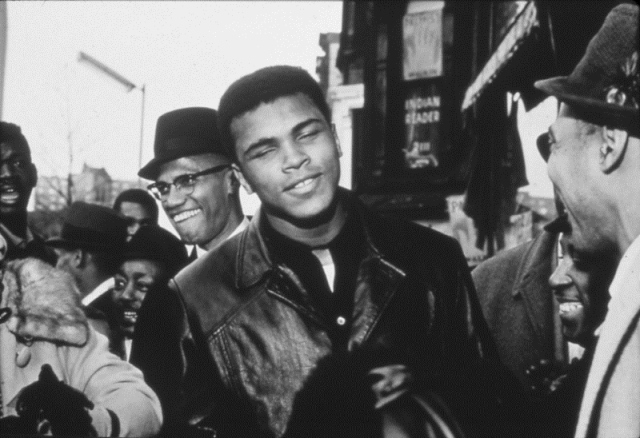
ZP_Muhammad Ali with Malcolm X in the background_1964 photograph by Robert L. Haggins
Baraka’s poetry from the 1990s took as its template Blues and Jazz structures and he penned poems that in their own weird ways honoured Ma Rainey, Bessie Smith, Duke Ellington, Charlie Parker, John Coltrane, Thelonius Monk and Sun Ra. There was also polemic and vitriol, sometimes downright pessimistic, in poems about Clarence Thomas and Spike Lee. Still “making poetry and politics reciprocal forms of action”, as Rosenthal had described Baraka in the early 1970s, it came as no surprise when the poet wrote an inflammatory poem, “Somebody Blew Up America”, about the September 11th, 2001, World Trade Center attack.
. . . . .
All poems © Amiri Baraka
Amiri Baraka and Langston Hughes: “Throw jesus out yr mind” / “Goodbye, Christ”
Posted: February 1, 2013 Filed under: Amiri Baraka, English, English: Black Canadian / American, Langston Hughes | Tags: Black History Month poems Comments Off on Amiri Baraka and Langston Hughes: “Throw jesus out yr mind” / “Goodbye, Christ”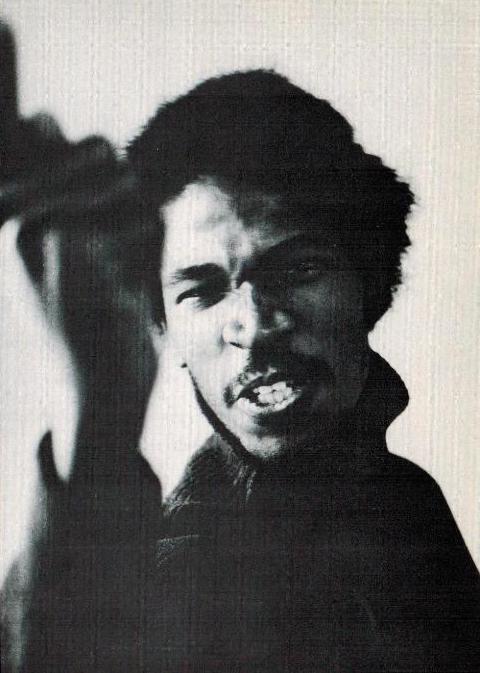
ZP_photograph by Fundi_Billy Abernathy_from the 1970 Imamu Amiri Baraka book In Our Terribleness
Amiri Baraka (born 1934, Newark, New Jersey, U.S.A.)
“When We’ll Worship Jesus”
(written after 1970, published in Baraka’s poetry collection “Hard Facts”, 1975)
.
We’ll worship Jesus
When Jesus do
Something
When jesus blow up
the white house
or blast nixon down
when jesus turn out congress
or bust general motors to
yard bird motors
jesus we’ll worship jesus
when jesus get down
when jesus get out his yellow lincoln
w/the built in cross stain glass
window & box w/black peoples
enemies we’ll worship jesus when
he get bad enough to at least scare
somebody – cops not afraid
of jesus
pushers not afraid
of jesus, capitalists racists
imperialists not afraid
of jesus shit they makin money
off jesus
we’ll worship jesus when mao
do, when toure does
when the cross replaces Nkrumah’s
star
Jesus need to hurt some a our
enemies, then we’ll check him
out, all that screaming and hollering
& wallering and moaning talkin bout
jesus, jesus, in a red
check velvet vine + 8 in.heels
jesus pinky finger
got a goose egg ruby
which actual bleeds
jesus at the Apollo
doin splits and helpin
nixon trick niggers
jesus w/his one eyed self
tongue kissing johnny carson
up the behind
jesus need to be busted
jesus need to be thrown down and whipped
till something better happen
jesus aint did nothin for us
but kept us turned toward the
sky (him and his boy allah
too, need to be checkd out!)
we’ll worship jesus when he get a boat load of ak-47s
and some dynamite
and blow up abernathy robotin
for gulf
jesus need to be busted
we ain’t gonna worship nobody
but niggers getting up off
the ground
not gon worship jesus
unless he just a tricked up
nigger somebody named
outside his race
need to worship yo self fo
you worship jesus
need to bust jesus ( + check
out his spooky brother
allah while you heavy
on the case
cause we ain gon worship jesus
we aint gon worship
jesus
not till he do something
not till he help us
not till the world get changed
and he ain, jesus ain, he cant change the world
we can change the world
we can struggle against the forces of backwardness, we can
change the world
we can struggle against our selves, our slowness, our connection
with
the oppressor, the very cultural aggression which binds us to
our enemies
as their slaves.
we can change the world
we aint gonna worship jesus cause jesus dont exist
xcept in song and story except in ritual and dance, except in
slum stained
tears or trillion dollar opulence stretching back in history, the
history
of the oppression of the human mind
we worship the strength in us
we worship our selves
we worship the light in us
we worship the warmth in us
we worship the world
we worship the love in us
we worship our selves
we worship nature
We worship ourselves
we worship the life in us, and science, and knowledge, and
transformation
of the visible world
but we aint gonna worship no jesus
we aint gonna legitimize the witches and devils and spooks and
hobgoblins
the sensuous lies of the rulers to keep us chained to fantasy and
illusion
sing about life, not jesus
sing about revolution, not no jesus
stop singing about jesus,
sing about creation, our creation, the life of the world and
fantastic
nature how we struggle to transform it, but dont victimize our
selves by
distorting the world
stop moanin about jesus, stop sweatin and crying and stompin
and dyin for jesus
unless thats the name of the army we building to force the land
finally to
change hands. And lets not call that jesus, get a quick
consensus, on that,
lets damn sure not call that black fire muscle
no invisible psychic dungeon
no gentle vision strait jacket, lets call that peoples army, or
wapenduzi or
simba
wachanga, but we not gon call it jesus, and not gon worship
jesus, throw
jesus out yr mind. Build the new world out of reality, and new
vision
we come to find out what there is of the world
to understand what there is here in the world!
to visualize change, and force it.
we worship revolution
. . . . .
Langston Hughes (1902-1967)
“Goodbye, Christ” (published in “The Negro Worker” Socialist journal, Nov.-Dec. 1932)
.
Listen, Christ,
You did alright in your day, I reckon –
But that day’s gone now.
They ghosted you up a swell story, too,
Called it Bible –
But it’s dead now.
The popes and the preachers’ve
Made too much money from it.
They’ve sold you too many
.
Kings, generals, robbers, and killers –
Even to the Tzar and the Cossacks,
Even to Rockefeller’s Church,
Even to “The Saturday Evening Post”.
You ain’t no good no more.
They’ve pawned you
Till you’ve done wore out.
.
Goodbye,
Christ Jesus Lord God Jehova,
Beat it on away from here now.
Make way for a new guy with no religion at all –
a real guy named
Marx Communist Lenin Peasant Stalin Worker ME –
I said, ME!
.
Go ahead on now,
You’re getting in the way of things, Lord.
And please take Saint Gandhi with you when you go,
And Saint Pope Pius,
And Saint Aimee McPherson,
And big black Saint Becton
Of the Consecrated Dime.
And step on the gas, Christ!
Move!
.
Don’t be so slow about movin’!
The world is mine from now on –
And nobody’s gonna sell ME
To a king, or a general,
Or a millionaire.
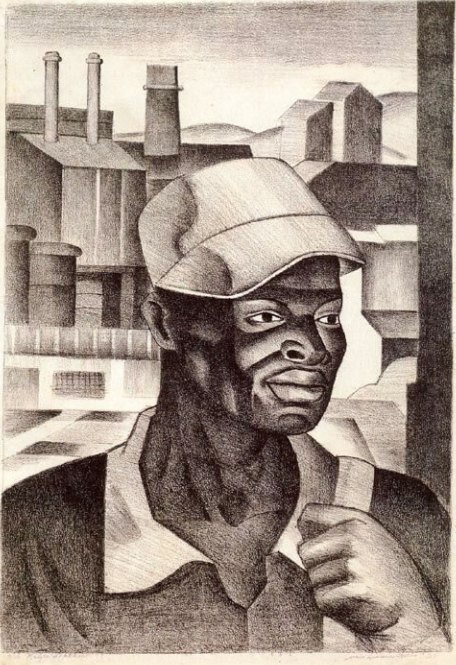
ZP_Negro Worker_1938 lithograph by James Lescesne Wells
Langston Hughes
“A Christian Country” (Feb. 1931)
.
God slumbers in a back alley
With a gin bottle in His hand.
Come on, God, get up and fight
Like a man.
. . .
Langston Hughes
“Tired” (Feb. 1931)
.
I am so tired of waiting,
Aren’t you?
For the world to become good
And beautiful and kind.
Let us take a knife
And cut the world in two –
And see what worms are eating
At the rind.
. . .
Langston Hughes
“Bitter Brew” (1967, published posthumously)
.
Whittle me down
To a strong thin reed
With a piercing tip
To match my need.
.
Spin me out
To a tensile wire
To derrick the stones
Of my problems higher.
.
Then simmer me slow
In the freedom cup
Till only an essence
Is left to sup.
.
May that essence be
The black poison of me
To give the white bellies
The third degree.
.
Concocted by history
Brewed by fate –
A bitter concentrate
Of hate.
. . . . .
It may seem curious to place Langston Hughes on the same page with Amiri Baraka yet these two strikingly different poets do intersect. Both wrote passionate and angry poems about Jesus Christ – about belief in Jesus Christ – during periods when each was exploring elements of one of those other great world religions: Socialism/Communism.
.
Though the life lived by Hughes appears to have been more conservative and/or Bohemian-Establishment than Baraka’s, Hughes’ conventional rhyming verse poetry shows real guts. The poem “Goodbye, Christ” haunted Hughes, being re-printed and circulated by zealously orthodox American Christians , becoming a thorn that pierced Hughes’ side from 1940 onward when the FBI put the poet under surveillance for alleged Communist activity. He was denounced as a communist by a U.S. senator in 1948 and was subpoena’d in 1953 to appear before Senator Joseph McCarthy’s subcommittee on subversive “un-American” activities. It “exonerated” him because it couldn’t link him to anyone juicy to nail. Though Hughes had been involved in Leftist politics – his “turning” came after a trip to Haiti in 1931 (followed by visits to Moscow in 1932-33 and Spain in 1937) – he was never a member of any Socialist or Communist party organization.
.
We have included what is believed to be one of the last poems Langston Hughes wrote before he died in 1967: “Bitter Brew”. In miniature it quick-sketches the emotional and psychological geography for the new-angry Black America that an up-and-coming LeRoi Jones/Amiri Baraka would map out in greater detail…
. . . . .
Langston Hughes: “Montage of a Dream Deferred”
Posted: February 1, 2013 Filed under: English, English: Black Canadian / American, Langston Hughes | Tags: Black History Month poems Comments Off on Langston Hughes: “Montage of a Dream Deferred”
Langston Hughes (born February 1st 1902, died 1967)
“Montage of a Dream Deferred” (1951): a selection of poems
.
“Children’s Rhymes”
.
When I was a chile we used to play,
“One – two – buckle my shoe!”
and things like that. But now, Lord,
listen at them little varmints!
.
By what sends
the white kids
I ain’t sent:
I know I can’t
be President.
.
There is two thousand children
In this block, I do believe!
.
What don’t bug
them white kids
sure bugs me:
We knows everybody
ain’t free!
.
Some of these young ones is cert’ly bad –
One batted a hard ball right through my window
And my gold fish et the glass.
.
What’s written down
for white folks
ain’t for us a-tall:
“Liberty And Justice –
Huh – For All.”
.
Oop-pop-a-da!
Skee! Daddle-de-do!
Be-bop!
.
Salt’ peanuts!
.
De-dop!
. . .
“Necessity”
.
Work?
I don’t have to work.
I don’t have to do nothing
but eat, drink, stay black, and die.
This little old furnished room’s
so small I can’t whip a cat
without getting fur in my mouth
and my landlady’s so old
her features is all run together
and God knows she sure can overcharge –
which is why I reckon I does
have to work after all.
. . .
“Question (2)”
.
Said the lady, Can you do
what my other man can’t do –
that is
love me, daddy –
and feed me, too?
.
Figurine
.
De-dop!
. . .
“Easy Boogie”
.
Down in the bass
That steady beat
Walking walking walking
Like marching feet.
.
Down in the bass
That easy roll,
Rolling like I like it
In my soul.
.
Riffs, smears, breaks.
.
Hey, Lawdy, Mama!
Do you hear what I said?
Easy like I rock it
In my bed!
. . .
“What? So Soon!”
.
I believe my old lady’s
pregnant again!
Fate must have
some kind of trickeration
to populate the
cllud nation!
Comment against Lamp Post
You call it fate?
Figurette
De-daddle-dy!
De-dop!
. . .
“Tomorrow”
.
Tomorrow may be
a thousand years off:
TWO DIMES AND A NICKEL ONLY
Says this particular
cigarette machine.
.
Others take a quarter straight.
.
Some dawns
wait.
. . .
“Café: 3 a.m.”
.
Detectives from the vice squad
with weary sadistic eyes
spotting fairies.
Degenerates,
some folks say.
.
But God, Nature,
or somebody
made them that way.
Police lady or Lesbian
over there?
Where?
. . .
“125th Street”
.
Face like a chocolate bar
full of nuts and sweet.
.
Face like a jack-o’-lantern,
candle inside.
.
Face like a slice of melon,
grin that wide.
. . .
“Up-Beat”
.
In the gutter
boys who try
might meet girls
on the fly
as out of the gutter
girls who will
may meet boys
copping a thrill
while from the gutter
both can rise:
But it requires
Plenty eyes.

“Mystery”
.
When a chile gets to be thirteen
and ain’t seen Christ yet,
she needs to set on de moaner’s bench
night and day.
.
Jesus, lover of my soul!
.
Hail, Mary, mother of God!
.
Let me to thy bosom fly!
.
Amen! Hallelujah!
.
Swing low, sweet chariot,
Coming for to carry me home.
.
Sunday morning where the rhythm flows,
How old nobody knows –
yet old as mystery,
older than creed,
basic and wondering
and lost as my need.
.
Eli, eli!
Te deum!
Mahomet!
Christ!
.
Father Bishop, Effendi, Mother Horne,
Father Divine, a Rabbi black
as black was born,
a jack-leg preacher, a Ph.D.
.
The mystery
and the darkness
and the song
and me.
. . .
“Nightmare Boogie”
.
I had a dream
and I could see
a million faces
black as me!
A nightmare dream:
Quicker than light
All them faces
Turned dead white!
Boogie-woogie,
Rolling bass,
Whirling treble
Of cat-gut lace.
. . .
“Blues at Dawn”
.
I don’t dare start thinking in the morning.
I don’t dare start thinking in the morning.
If I thought thoughts in bed,
Them thoughts would bust my head –
So I don’t dare start thinking in the morning.
.
I don’t dare remember in the morning
Don’t dare remember in the morning.
If I recall the day before,
I wouldn’t get up no more –
So I don’t dare remember in the morning.
. . .
“Neighbour”
.
Down home
he sets on a stoop
and watches the sun go by.
In Harlem
when his work is done
he sets in a bar with a beer.
He looks taller than he is
and younger than he ain’t.
He looks darker than he is, too.
And he’s smarter than he looks,
He ain’t smart.
That cat’s a fool.
Naw, he ain’t neither.
He’s a good man,
except that he talks too much.
In fact, he’s a great cat.
But when he drinks,
he drinks fast.
Sometimes
he don’t drink.
True,
he just
lets his glass
set there.
. . .
“Subway Rush Hour”
.
Mingled
breath and smell
so close
mingled
black and white
so near
no room for fear.
. . .
“Brothers”
.
We’re related – you and I,
You from the West Indies,
I from Kentucky.
.
Kinsmen – you and I,
You from Africa,
I from U.S.A.
.
Brothers – you and I.
. . .
“Sliver”
.
Cheap little rhymes
A cheap little tune
Are sometimes as dangerous
As a sliver of the moon.
A cheap little tune
To cheap little rhymes
Can cut a man’s
Throat sometimes.
. . .
“Hope (2)”
.
He rose up on his dying bed
and asked for fish.
His wife looked it up in her dream book
and played it.
. . .
“Harlem (2)”
.
What happens to a dream deferred?
.
Does it dry up
like a raisin in the sun?
Or fester like a sore –
and then run?
Does it stink like rotten meat?
Or crust and sugar over –
like a syrupy sweet?
.
Maybe it just sags
like a heavy load.
.
Or does it explode?
. . .
“Letter”
.
Dear Mama,
Time I pay rent and get my food
and laundry I don’t have much left
but here is five dollars for you
to show you I still appreciates you.
My girl-friend send her love and say
she hopes to lay eyes on you sometime in life.
Mama, it has been raining cats and dogs up
here. Well, that is all so I will close.
You son baby
Respectably as ever,
Joe
. . .
“Motto”
.
I play it cool
And dig all jive.
That’s the reason
I stay alive.
.
My motto,
As I live and learn,
Is:
Dig And Be Dug
In Return.
. . . . .
From Hughes’ introduction to his 1951 collection “Montage of a Dream Deferred”:
“In terms of current Afro-American popular music and the sources from which it has progressed – jazz, ragtime, swing, blues, boogie-woogie, and be-bop – this poem on contemporary Harlem, like be-bop, is marked by conflicting changes, sudden nuances, sharp and impudent interjections, broken rhythms, and passages sometimes in the manner of the jam session, sometimes the popular song, punctuated by the riffs, runs, breaks, and distortions of the music of a community in transition.”

Editor’s note:
Langston Hughes’ poems “Theme for English B” and “Advice” – both of which were included in his publication of “Montage of a Dream Deferred” – are featured in separate Hughes’ posts on Zócalo Poets.
. . . . .
“Montage of a Dream Deferred”- from The Collected Poems of Langston Hughes, edited by Arnold Rampersad, with David Roessel, 1994
All poems © The Estate of Langston Hughes
Langston Hughes: “Tarea para el segundo curso de inglés” / “Theme for English B”, translated into Spanish by Óscar Paúl Castro
Posted: February 1, 2013 Filed under: English, Langston Hughes, Spanish | Tags: Black History Month poems Comments Off on Langston Hughes: “Tarea para el segundo curso de inglés” / “Theme for English B”, translated into Spanish by Óscar Paúl Castro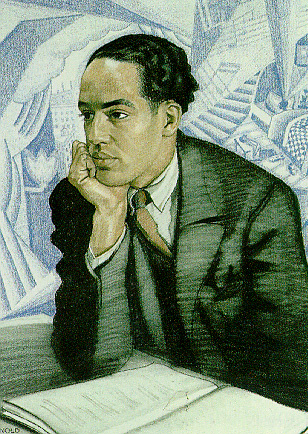
ZP_Langston Hughes_pastel drawing by Winold Reiss
Langston Hughes (1 febrero 1902 – 1967)
“Tarea para el segundo curso de inglés”
.
El profesor nos dijo:
Pueden irse a casa.
Esta noche escribirán una página:
que lo que escriban venga de ustedes,
así expresarán algo auténtico.
.
Me pregunto si es así de simple.
Tengo veintidós años, soy de color, nací en Winston-Salem.
Ahí asistí a la escuela, después en Durham, después aquí.
La Universidad está sobre la colina, dominando Harlem.
Soy el único estudiante de color en la clase.
Las escaleras que descienden por la colina desembocan en Harlem:
después de atravesar un parque, cruzar la calle san Nicolás,
la Octava Avenida, la Séptima, llego hasta el edificio “Y”
― la YMCA de Harlem Branch ― donde tomo el elevador,
entro en mi cuarto, me siento y escribo esta página:
.
Para ti no debe ser fácil poder identificar lo que es auténtico, tampoco lo es
para mí a esta edad: veintidós años. Supongo, sin embargo, que en todo
lo que siento, veo y escucho, Harlem, te escucho a ti:
te escucho, me escuchas; tú y yo ―juntos― estamos en esta página.
(También escucho a Nueva York) ¿Quién eres―Quién soy?
Bien: me gusta comer, dormir, beber, estar enamorado.
Me gusta trabajar, leer, me gusta aprender, e intentar comprender el sentido de la vida.
Quisiera una pipa como regalo de Navidad,
quizás unos discos: Bessie, bebop, o Bach.
Supongo que el hecho de ser negro no significa que me gusten
cosas distintas a las que les gustan a personas de otras razas.
¿En esta página que escribo se notará mi color?
Ciertamente ―siendo lo que soy― no será una página en blanco.
Y sin embargo
será parte de usted, maestro.
Usted es blanco,
y aun así es parte de mí, como yo soy parte de usted.
Eso significa ser americano.
Quizá usted no quiera ser parte de mí a veces.
Y en ocasiones yo no quiero ser parte de usted.
Pero, indudablemente, ambos somos parte del otro.
Yo aprendo de usted,
y supongo que usted aprende de mí:
aun cuando usted es mayor ―y blanco―
y, de alguna forma, más libre.
.
Está es mi tarea del Segundo Curso de Inglés.
(1951)
. . .
Langston Hughes (born February 1st 1902, died 1967)
“Theme for English B”
.
The instructor said,
Go home and write
a page tonight.
And let that page come out of you –
Then, it will be true.
.
I wonder if it’s that simple?
I am twenty-two, coloured, born in Winston-Salem.
I went to school there, then Durham, then here
to this college on the hill above Harlem.
I am the only coloured student in my class.
The steps from the hill lead down into Harlem
through a park, then I cross St. Nicholas,
Eighth Avenue, Seventh, and I come to the Y,
the Harlem Branch Y, where I take the elevator
up to my room, sit down, and write this page:
.
It’s not easy to know what is true for you or me
at twenty-two, my age. But I guess I’m what
I feel and see and hear, Harlem, I hear you:
hear you, hear me – we two – you, me, talk on this page.
(I hear New York too.) Me – who?
Well, I like to eat, sleep, drink, and be in love.
I like to work, read, learn, and understand life.
I like a pipe for a Christmas present,
or records – Bessie, bop, or Bach.
I guess being coloured doesn’t make me not like
the same things other folks like who are other races.
So will my page be coloured that I write?
Being me, it will not be white.
But it will be
a part of you, instructor.
You are white –
yet a part of me, as I am a part of you.
That’s American.
Sometimes perhaps you don’t want to be a part of me.
Nor do I often want to be a part of you.
But we are, that’s true!
As I learn from you,
I guess you learn from me –
although you’re older – and white –
and somewhat more free.
.
This is my page for English B.
(1951)
. . .
Traducción en español © Óscar Paúl Castro (nace 1979, Culiacán, México)
Óscar Paúl Castro, un poeta y traductor, es licenciado en Lengua y Literatura Hispánicas por la Universidad Autónoma de Sinaloa.
. . . . .
Love poems, Blues poems – from The Harlem Renaissance
Posted: February 1, 2013 Filed under: English, English: Black Canadian / American, Langston Hughes, Love poems and Blues poems – from The Harlem Renaissance | Tags: Black History Month poems Comments Off on Love poems, Blues poems – from The Harlem Renaissance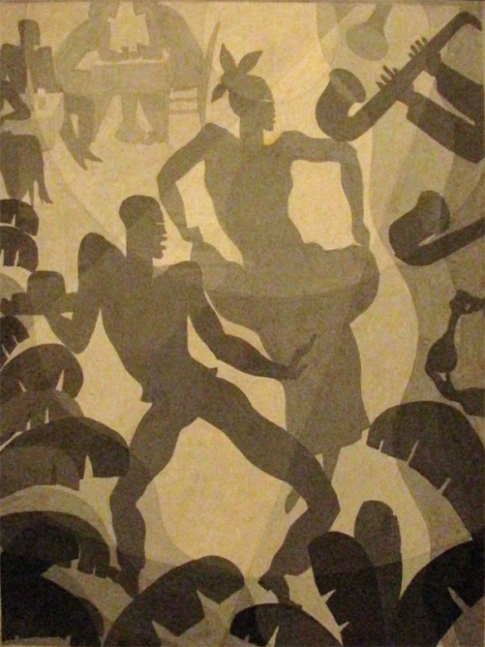
ZP_Dance_by Aaron Douglas 1899-1979
Love poems, Blues poems – from The Harlem Renaissance:
Langston Hughes verses composed between 1924 and 1930:
. . .
“Subway Face”
.
That I have been looking
For you all my life
Does not matter to you.
You do not know.
.
You never knew.
Nor did I.
Now you take the Harlem train uptown;
I take a local down.
(1924)
. . .
“Poem (2)” (To F. S.)
.
I loved my friend.
He went away from me.
There’s nothing more to say.
The poem ends,
Soft as it began –
I loved my friend.
(1925)
. . .
“Better”
.
Better in the quiet night
To sit and cry alone
Than rest my head on another’s shoulder
After you have gone.
.
Better, in the brilliant day,
Filled with sun and noise,
To listen to no song at all
Than hear another voice.
. . .
“Poem (4)” (To the Black Beloved)
.
Ah,
My black one,
Thou art not beautiful
Yet thou hast
A loveliness
Surpassing beauty.
.
Oh,
My black one,
Thou art not good
Yet thou hast
A purity
Surpassing goodness.
.
Ah,
My black one,
Thou art not luminous
Yet an altar of jewels,
An altar of shimmering jewels,
Would pale in the light
Of thy darkness,
Pale in the light
Of thy nightness.
. . .
“The Ring”
.
Love is the master of the ring
And life a circus tent.
What is this silly song you sing?
Love is the master of the ring.
.
I am afraid!
Afraid of Love
And of Love’s bitter whip!
Afraid,
Afraid of Love
And Love’s sharp, stinging whip.
.
What is this silly song you sing?
Love is the master of the ring.
(1926)
. . .
“Ma Man”
.
When ma man looks at me
He knocks me off ma feet.
When ma man looks at me
He knocks me off ma feet.
He’s got those ‘lectric-shockin’ eyes an’
De way he shocks me sho is sweet.
.
He kin play a banjo.
Lordy, he kin plunk, plunk, plunk.
He kin play a banjo.
I mean plunk, plunk…plunk, plunk.
He plays good when he’s sober
An’ better, better, better when he’s drunk.
.
Eagle-rockin’,
Daddy, eagle-rock with me.
Eagle rockin’,
Come an’ eagle-rock with me.
Honey baby,
Eagle-rockish as I kin be!
. . .
“Lament over Love”
.
I hope my child’ll
Never love a man.
I say I hope my child’ll
Never love a man.
Love can hurt you
Mo’n anything else can.
.
I’m goin’ down to the river
An’ I ain’t goin’ there to swim;
Down to the river,
Ain’t goin’ there to swim.
My true love’s left me
And I’m goin’ there to think about him.
.
Love is like whiskey,
Love is like red, red wine.
Love is like whiskey,
Like sweet red wine.
If you want to be happy
You got to love all the time.
.
I’m goin’ up in a tower
Tall as a tree is tall,
Up in a tower
Tall as a tree is tall.
Gonna think about my man –
And let my fool-self fall.
(1926)
. . .
“Dressed Up”
.
I had ma clothes cleaned
Just like new.
I put ’em on but
I still feels blue.
.
I bought a new hat,
Sho is fine,
But I wish I had back that
Old gal o’ mine.
.
I got new shoes –
They don’t hurt ma feet,
But I ain’t got nobody
For to call me sweet.
. . .
“To a Little Lover-Lass, Dead”
.
She
Who searched for lovers
In the night
Has gone the quiet way
Into the still,
Dark land of death
Beyond the rim of day.
.
Now like a little lonely waif
She walks
An endless street
And gives her kiss to nothingness.
Would God his lips were sweet!
. . .
“Harlem Night Song”
.
Come,
Let us roam the night together
Singing.
.
I love you.
Across
The Harlem roof-tops
Moon is shining.
Night sky is blue.
Stars are great drops
Of golden dew.
.
Down the street
A band is playing.
.
I love you.
.
Come,
Let us roam the night together
Singing.
. . .
“Passing Love”
.
Because you are to me a song
I must not sing you over-long.
.
Because you are to me a prayer
I cannot say you everywhere.
.
Because you are to me a rose –
You will not stay when summer goes.
(1927)
. . .
“Desire”
.
Desire to us
Was like a double death,
Swift dying
Of our mingled breath,
Evaporation
Of an unknown strange perfume
Between us quickly
In a naked
Room.
. . .
“Dreamer”
.
I take my dreams
And make of them a bronze vase,
And a wide round fountain
With a beautiful statue in its centre,
And a song with a broken heart,
And I ask you:
Do you understand my dreams?
Sometimes you say you do
And sometimes you say you don’t.
Either way
It doesn’t matter.
I continue to dream.
(1927)
. . .
“Lover’s Return”
.
My old time daddy
Came back home last night.
His face was pale and
His eyes didn’t look just right.
.
He says, “Mary, I’m
Comin’ home to you –
So sick and lonesome
I don’t know what to do.”
.
Oh, men treats women
Just like a pair o’ shoes –
You kicks ’em round and
Does ’em like you choose.
.
I looked at my daddy –
Lawd! and I wanted to cry.
He looked so thin –
Lawd! that I wanted to cry.
But the devil told me:
Damn a lover
Come home to die!
(1928)
. . .
“Hurt”
.
Who cares
About the hurt in your heart?
.
Make a song like this
for a jazz band to play:
Nobody cares.
Nobody cares.
Make a song like that
From your lips.
Nobody cares.
. . .
“Spring for Lovers”
.
Desire weaves its fantasy of dreams,
And all the world becomes a garden close
In which we wander, you and I together,
Believing in the symbol of the rose,
Believing only in the heart’s bright flower –
Forgetting – flowers wither in an hour.
(1930)
. . .
“Rent-Party Shout: For a Lady Dancer”
.
Whip it to a jelly!
Too bad Jim!
Mamie’s got ma man –
An’ I can’t find him.
Shake that thing! O!
Shake it slow!
That man I love is
Mean an’ low.
Pistol an’ razor!
Razor an’ gun!
If I sees man man he’d
Better run –
For I’ll shoot him in de shoulder,
Else I’ll cut him down,
Cause I knows I can find him
When he’s in de ground –
Then can’t no other women
Have him layin’ round.
So play it, Mr. Nappy!
Yo’ music’s fine!
I’m gonna kill that
Man o’ mine!
(1930)
. . . . .
In the manner of all great poets Langston Hughes (February 1st, 1902 – 1967) wrote love poems (and love-blues poems), using the voices and perspectives of both Man and Woman. In addition to such art, Hughes’ homosexuality, real though undisclosed during his lifetime, probably was responsible for the subtle and highly-original poet’s voice he employed for three of the poems included here: Subway Face, Poem (2), and Desire. Hughes was among a wealth of black migrants born in The South or the Mid-West who gravitated toward Harlem in New York City from about 1920 onward. Along with Countee Cullen, Zora Neale Hurston, Wallace Thurman and many others, Hughes became part of The Harlem Renaissance, that great-gorgeous fresh-flowering of Black-American culture.
. . . . .
Johnson, Fauset, Bennett: Black Blossoms of the 1920s
Posted: February 1, 2013 Filed under: English, Georgia Douglas Johnson, Gwendolyn Bennett, Helene Johnson, Jessie Redmon Fauset | Tags: Black History Month poems, Black-American women poets of the 1920s Comments Off on Johnson, Fauset, Bennett: Black Blossoms of the 1920s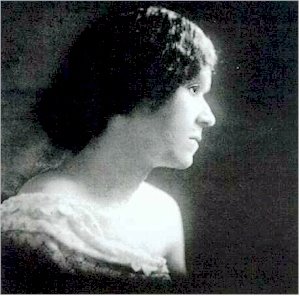
ZP_Georgia Douglas Johnson was the author of The Heart of a Woman (1918) and Bronze (1922).
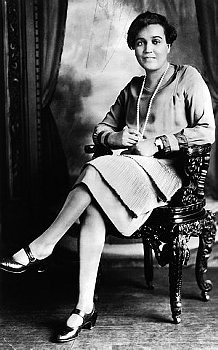
ZP_Jessie Redmon Fauset was literary editor for The Crisis from 1918 to 1927.
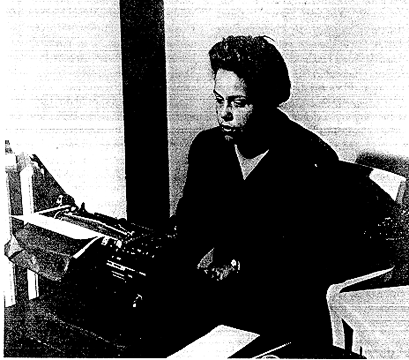
ZP_Gwendolyn Bennett at her typewriter. She contributed to the academic journal Opportunity, had a story included in the infamous one-issue Fire! and her 1924 poem To Usward was “a rallying cry to the New Negro”.
Georgia Douglas Johnson (1880-1966)
“Black Woman” (1922)
.

Don’t knock at the door, little child,
     I cannot let you in,
You know not what a world this is
     Of cruelty and sin.
Wait in the still eternity
     Until I come to you,
The world is cruel, cruel, child,
     I cannot let you in!
.

Don’t knock at my heart, little one,
     I cannot bear the pain
Of turning deaf-ear to your call
     Time and time again!
You do not know the monster men
     Inhabiting the earth,
Be still, be still, my precious child,
     I must not give you birth!


.     .     .


Georgia Douglas Johnson

“Common Dust”

.
And who shall separate the dust
What later we shall be:
Whose keen discerning eye will scan
And solve the mystery?
.
The high, the low, the rich, the poor,
The black, the white, the red,
And all the chromatique between,
Of whom shall it be said:
.
Here lies the dust of Africa;
Here are the sons of Rome;
Here lies the one unlabelled,
The world at large his home!
.
Can one then separate the dust?
Will mankind lie apart,
When life has settled back again
The same as from the start?
. . .
Jessie Redmon Fauset (1882-1961)
“La Vie C'est La Vie” (1922)
.
On summer afternoons I sit
Quiescent by you in the park
And idly watch the sunbeams gild
And tint the ash-trees' bark.
.
Or else I watch the squirrels frisk
And chaffer in the grassy lane;
And all the while I mark your voice
Breaking with love and pain.
.
I know a woman who would give
Her chance of heaven to take my place;
To see the love-light in your eyes,
The love-glow on your face!
.
And there's a man whose lightest word
Can set my chilly blood afire;
Fulfillment of his least behest
Defines my life’s desire.
.
But he will none of me, nor I
Of you. Nor you of her. 'Tis said
The world is full of jests like these.—
I wish that I were dead.


.     .     .
Jessie Redmon Fauset
“Oriflamme”
.
“I can remember when I was a little young girl, how my old mammy would sit out of doors in the evenings and look up at the stars and groan,
and I would say, ‘Mammy, what makes you groan so?’ And she would say, ‘I am groaning to think of my poor children;
they do not know where I be and I don’t know where they be. I look up at the stars and they look up at the stars!’”
—Sojourner Truth (1797-1883)
.

I think I see her sitting bowed and black,
Stricken and seared with slavery's mortal scars,
Reft of her children, lonely, anguished, yet
Still looking at the stars.
.
Symbolic mother, we thy myriad sons,
Pounding our stubborn hearts on Freedom's bars,
Clutching our birthright, fight with faces set,
Still visioning the stars!


.     .     .

Gwendolyn Bennett (1902-1981)
“Hatred” (1926)
.
I shall hate you
Like a dart of singing steel
Shot through still air
At even-tide,
Or solemnly
As pines are sober
When they stand etched
Against the sky.
Hating you shall be a game
Played with cool hands
And slim fingers.
Your heart will yearn
For the lonely splendor
Of the pine tree
While rekindled fires
In my eyes
Shall wound you like swift arrows.
Memory will lay its hands
Upon your breast
And you will understand
My hatred.


.     .     .

Gwendolyn Bennett

“Fantasy” (1927)

.
I sailed in my dreams to the Land of Night
Where you were the dusk-eyed queen,
And there in the pallor of moon-veiled light
The loveliest things were seen ...
.
A slim-necked peacock sauntered there
In a garden of lavender hues,
And you were strange with your purple hair
As you sat in your amethyst chair
With your feet in your hyacinth shoes.
.
Oh, the moon gave a bluish light
Through the trees in the land of dreams and night.
I stood behind a bush of yellow-green
And whistled a song to the dark-haired queen...

.     .     .
Helene Johnson (1906-1995) was just that much younger than the other women poets,
and a letting-go of the conventions of 19th-century “romantic” verse form and literary style
plus an embracing of colloquial speech and Jazz rhythm is evident in the following poem, “Bottled”, which she wrote at the age of 21.
.
Helene Johnson
“Bottled” (1927)
.
Upstairs on the third floor
Of the 135th Street Library
In Harlem, I saw a little
Bottle of sand, brown sand,
Just like the kids make pies
Out of down on the beach.
But the label said: “This
Sand was taken from the Sahara desert.”
Imagine that! The Sahara desert!
Some bozo’s been all the way to Africa to get some sand.
And yesterday on Seventh Avenue
I saw a darky dressed to kill
In yellow gloves and swallowtail coat
And swirling at him. Me too,
At first, till I saw his face
When he stopped to hear a
Organ grinder grind out some jazz.
Boy! You should a seen that darky’s face!
It just shone. Gee, he was happy!
And he began to dance. No
Charleston or Black Bottom for him.
No sir. He danced just as dignified
And slow. No, not slow either.
Dignified and proud! You couldn’t
Call it slow, not with all the
Cuttin’ up he did. You would a died to see him.
The crowd kept yellin’ but he didn’t hear,
Just kept on dancin’ and twirlin’ that cane
And yellin’ out loud every once in a while.
I know the crowd thought he was coo-coo.
But say, I was where I could see his face,
.
And somehow, I could see him dancin’ in a jungle,
A real honest-to cripe jungle, and he wouldn’t leave on them
Trick clothes-those yaller shoes and yaller gloves
And swallowtail coat. He wouldn’t have on nothing.
And he wouldn’t be carrying no cane.
He’d be carrying a spear with a sharp fine point
Like the bayonets we had “over there.”
And the end of it would be dipped in some kind of
Hoo-doo poison. And he’d be dancin’ black and naked and
.
Gleaming.
And He’d have rings in his ears and on his nose
And bracelets and necklaces of elephants teeth.
Gee, I bet he’d be beautiful then all right.
No one would laugh at him then, I bet.
Say! That man that took that sand from the Sahara desert
And put it in a little bottle on a shelf in the library,
That’s what they done to this shine, ain’t it? Bottled him.
Trick shoes, trick coat, trick cane, trick everything-all glass-
But inside –
Gee, that poor shine!
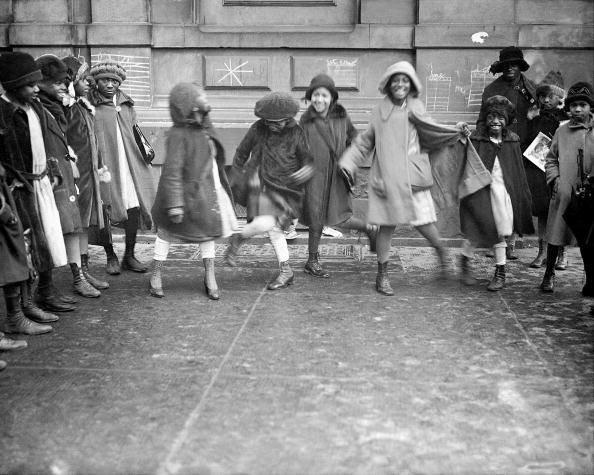
ZP_Youngsters playing in the street_an undated photograph from 1920s Harlem

ZP_Regina Anderson 1901-1993, Librarian at the 135th Street Harlem branch of the New York Public Library, playwright, and midwife to The Harlem Renaissance
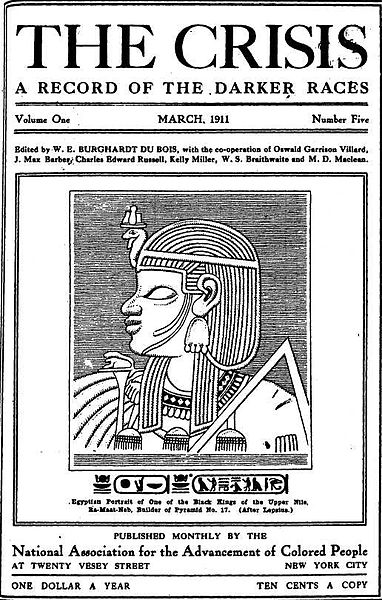
W. E. B. Du Bois (1868-1963) was a sociologist and civil-rights activist. He co-founded The National Association for the Advancement of Colored People in 1909, and its monthly current-affairs journal, The Crisis – A Record of the Darker Races, which included poems, reviews and essays, was published from 1910 onward. Du Bois, as the editor of The Crisis, stated: “The object of this publication is to set forth those facts and arguments which show the danger of race prejudice, particularly as manifested today toward colored people. It takes its name from the fact that the editors believe that this is a critical time in the history of the advancement of men. Finally, its editorial page will stand for the rights of men, irrespective of color or race, for the highest ideals of American democracy, and for reasonable but earnest and persistent attempts to gain these rights and realize these ideals.”
“Go on and up!”: the tight-rope-walking poetry of Paul Laurence Dunbar
Posted: February 1, 2013 Filed under: English, English: Nineteenth-century Black-American Southern Dialect, Go on and up!: poems by Paul Laurence Dunbar, Paul Laurence Dunbar | Tags: Black History Month poems Comments Off on “Go on and up!”: the tight-rope-walking poetry of Paul Laurence Dunbar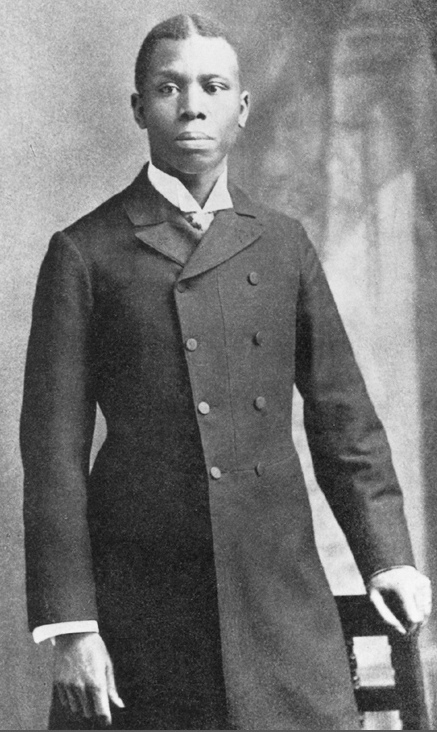
ZP_Paul Laurence Dunbar_a studio photographic portrait from 1896
Paul Laurence Dunbar (1872-1906, Dayton, Ohio, U.S.A.)
“Accountability”
.
Folks ain’t got no right to censuah othah folks about dey habits;
Him dat giv’ de squir’ls de bushtails made de bobtails fu’ de rabbits.
Him dat built de gread big mountains hollered out de little valleys,
Him dat made de streets an’ driveways wasn’t shamed to make de alleys.
.
We is all constructed diff’ent, d’ain’t no two of us de same;
We cain’t he’p ouah likes an’ dislikes, ef we’se bad we ain’t to blame.
Ef we’se good, we needn’t show off, case you bet it ain’t ouah doin’
We gits into su’ttain channels dat we jes’ cain’t he’p pu’suin’.
.
But we all fits into places dat no othah ones could fill,
An’ we does the things we has to, big er little, good er ill.
John cain’t tek de place o’ Henry, Su an’ Sally ain’t alike;
Bass ain’t nuthin’ like a suckah, chub ain’t nuthin’ like a pike.
.
When you come to think about it, how it’s all planned out it’s splendid.
Nuthin’s done er evah happens, ‘dout hit’s somefin’ dat’s intended;
Don’t keer whut you does, you has to, an’ hit sholy beats de dickens –
Viney, go put on de kittle, I got one o’ mastah’s chickens.
. . .
“A Negro Love Song”
.
Seen my lady home las’ night,
Jump back, honey, jump back.
Hel’ huh han’ an’ sque’z it tight,
Jump back, honey, jump bck.
Hyeahd huh sigh a little sigh,
Seen a light gleam f’om huh eye,
An’ a smile go flittin’ by –
Jump back, honey, jump back.
.
Hyeahd de win’ blow thoo de pine,
Jump back, honey, jump back.
Mockin’-bird was singin’ fine,
Jump back, honey, jump back.
An’ my hea’t was beatin’ so,
When I reached my lady’s do’,
Dat I couldn’t ba’ to go –
Jump back, honey, jump back.
.
Put my ahm aroun’ huh wais’,
Jump back, honey, jump back.
Raised huh lips an’ took a tase,
Jump back, honey, jump back.
Love me, honey, love me true?
Love me well ez I love you?
An’ she answe’d, “ ’Cose I do” –
Jump back, honey, jump back.
. . .
“Jilted”
.
Lucy done gone back on me,
Dat’s de way wif life.
Evaht’ing was movin’ free,
T’ought I had my wife.
Den some dahky comes along,
Sings my gal a little song,
Since den, evaht’ing’s gone wrong,
Evah day dey’s strife.
.
Didn’t answer me to-day,
W’en I called huh name,
Would you t’ink, she’d ac’ dat way
W’en I ain’t to blame?
Dat’s de way dese women do,
W’en dey fin’s a fellow true,
Den dey ’buse him thoo an’ thoo;
Well, hit’s all de same.
.
Somep’n’s wrong erbout my lung,
An’ I’s glad hit’s so.
Doctah says ’at I’ll die young,
Well, I wants to go!
Whut’s de use o’ livin’ hyeah,
W’en de gal you loves so deah,
Goes back on you clean an’ cleah –
I sh’d like to know!
. . .
“Drizzle”
.
Hit ‘s been drizzlin’ an’ been sprinklin’,
Kin’ o’ techy all day long.
I ain’t wet enough fu’ toddy,
I ‘s too damp to raise a song,
An’ de case have set me t’inkin’,
Dat dey ‘s folk des lak de rain,
Dat goes drizzlin’ w’en dey’s talkin’,
An’ won’t speak out flat an’ plain.
.
Ain’t you nevah set an’ listened
At a body ‘splain his min’?
W’en de t’oughts dey keep on drappin’
Was n’t big enough to fin’?
Dem ‘s whut I call drizzlin’ people,
Othahs call ’em mealy mouf,
But de fust name hits me bettah,
Case dey nevah tech a drouf.
.
Dey kin talk from hyeah to yandah,
An’ f’om yandah hyeah ergain,
An’ dey don’ mek no mo’ ‘pression,
Den dis powd’ry kin’ o’ rain.
En yo’ min’ is dry ez cindahs,
Er a piece o’ kindlin’ wood,
‘T ain’t no use a-talkin’ to ’em,
Fu’ dey drizzle ain’t no good.
.
Gimme folks dat speak out nachul,
Whut ‘ll say des whut dey mean,
Whut don’t set dey wo’ds so skimpy
Dat you got to guess between.
I want talk des’ lak de showahs
Whut kin wash de dust erway,
Not dat sprinklin’ convusation,
Dat des drizzle all de day.
. . .
“The Lawyer’s Ways”
.
I ‘ve been list’nin’ to them lawyers
In the court house up the street,
An’ I ‘ve come to the conclusion
That I’m most completely beat.
Fust one feller riz to argy,
An’ he boldly waded in
As he dressed the tremblin’ pris’ner
In a coat o’ deep-dyed sin.
.
Why, he painted him all over
In a hue o’ blackest crime,
An’ he smeared his reputation
With the thickest kind o’ grime,
Tell I found myself a-wond’rin’
In a misty way and dim,
How the Lord had come to fashion
Sich an awful man as him.
.
Then the other lawyer started,
An’ with brimmin’, tearful eyes,
Said his client was a martyr
That was brought to sacrifice.
An’ he give to that same pris’ner
Every blesséd human grace,
Tell I saw the light o’ virtue
Fairly shinin’ from his face.
.
Then I own ‘at I was puzzled
How sich things could rightly be;
An’ this aggervatin’ question
Seems to keep a-puzzlin’ me.
So, will some one please inform me,
An’ this mystery unroll–
How an angel an’ a devil
Can persess the self-same soul?
. . .
“Tim”
.
Well, mebbe ya don’t remember Tim
Little feller, lank an’ slim
Jest about as big as a minute
With an eye like coal, with a sparkle in it.
Newsboys ust to carry The Press
Littlest one on the force I guess
But he wasn’t afeared to run and holler
Spry as a cricket an’ bright as a dollar.
Wall, like a book I knowed this Tim
use to work along a’ him
When The Press was a little measley sheet,
An’ I reckon this team was hard to beat.
Sell papers, well know you’re a talkin’ sin;
When we got out we made a din
All up and down the busy street
Till every blesséd printed sheet
We had was gone, then me and Tim
We’d hurry home in the twilight dim
Down to our cellar an’ while away
The darkenin’ hours in quiet play.
Fur we wuz only kids, us two
And played like other youngsters do.
Orphans, we wuz without friend
His aid er helpin’ hand to lend
Yes we wuz poor as poor could be
But we wuz happy – Tim and me.
And the days went by like a song of joy
You know what it is to be a boy
I reckon you’ll laugh when you hear me say
That we fell in love in a boyish way.
. . .
“To a Captious Critic”
.
Dear critic, who my lightness so deplores,
Would I might study to be prince of bores,
Right wisely would I rule that dull estate –
But, sir, I may not, till you abdicate.
. . .
“Song”
.
My heart to thy heart,
My hand to thine;
My lip to thy lips,
Kisses are wine
Brewed for the lover in sunshine and shade;
Let me drink deep, then, my African maid.
.
Lily to lily,
Rose unto rose;
My love to thy love
Tenderly grows.
Rend not the oak and the ivy in twain,
Nor the swart maid from her swarthier swain.
. . .
“Ode to Ethiopia”
.
O Mother Race! to thee I bring
This pledge of faith unwavering,
This tribute to thy glory.
I know the pangs which thou didst feel,
When Slavery crushed thee with its heel,
With thy dear blood all gory.
.
Sad days were those – ah, sad indeed!
But through the land the fruitful seed
Of better times was growing.
The plant of freedom upward sprung,
And spread its leaves so fresh and young –
Its blossoms now are blowing.
.
On every hand in this fair land,
Proud Ethiope’s swarthy children stand
Beside their fairer neighbour;
The forests flee before their stroke,
Their hammers ring, their forges smoke –
They stir in honest labour.
.
They tread the fields where honour calls;
Their voices sound through senate halls
In majesty and power.
To right they cling; the hymns they sing
Up to the skies in beauty ring,
And bolder grow each hour.
.
Be proud, my Race, in mind and soul;
Thy name is writ on Glory’s scroll
In characters of fire.
High ‘mid the clouds of Fame’s bright sky
Thy banner’s blazoned folds now fly,
And truth shall lift them higher.
.
Thou hast the right to noble pride,
Whose spotless robes were purified
By blood’s severe baptism.
Upon thy brow the cross was laid,
And labour’s painful sweat-beads made
A consecrating chrism.
.
No other race, or white or black,
When bound as thou wert, to the rack,
So seldom stooped to grieving;
No other race, when free again,
Forgot the past and proved them men
So noble in forgiving.
.
Go on and up! Our souls and eyes
Shall follow thy continuous rise;
Our ears shall list thy story
From bards who from thy root shall spring,
And proudly tune their lyres to sing
Of Ethiopia’s glory.
. . .
“We Wear the Mask”
.
We wear the mask that grins and lies,
It hides our cheeks and shades our eyes,
This debt we pay to human guile;
With torn and bleeding hearts we smile,
And mouth with myriad subtleties.
.
Why should the world be over-wise
In counting all our tears and sighs?
Nay, let them only see us, while
We wear the mask.
.
We smile, but, O great Christ, our cries
To thee from tortured souls arise.
We sing, but oh the clay is vile
Beneath our feet, and long the mile;
But let the world dream otherwise,
We wear the mask!
. . .
“Misappreshension”
.
Out of my heart, one day, I wrote a song,
With my heart’s blood imbued,
Instinct with passion, tremulously strong,
With grief subdued;
Breathing a fortitude
Pain-bought.
And one who claimed much love for what I wrought,
Read and considered it,
And spoke:
“Ay, brother – ’tis well writ,
But where’s the joke?”
. . .
“Unexpressed”
.
Deep in my heart that aches with the repression,
And strives with plenitude of bitter pain,
There lives a thought that clamours for expression,
And spends its undelivered force in vain.
.
What boots it that some other may have thought it?
The right of thoughts’ expression is divine;
The price of pain I pay for it has bought it,
I care not who lays claim to it –’t is mine!
.
And yet not mine until it be delivered;
The manner of its birth shall prove the test.
Alas, alas, my rock of pride is shivered –
I beat my brow – the thought still unexpressed.
. . .
“A Choice”
.
They please me not – these solemn songs
That hint of sermons covered up.
’T is true the world should heed its wrongs,
But in a poem let me sup,
Not simples brewed to cure or ease
Humanity’s confessed disease,
But the spirit-wine of a singing line,
Or a dew-drop in a honey cup!
. . .
“Equipment”
.
With what thou gavest me, O Master,
I have wrought.
Such chances, such abilities,
To see the end was not for my poor eyes,
Thine was the impulse, thine the forming thought.
.
Ah, I have wrought,
And these sad hands have right to tell their story,
It was no hard up striving after glory,
Catching and losing, gaining and failing,
Raging me back at the world’s raucous railing.
Simply and humbly from stone and from wood,
Wrought I the things that to thee might seem good.
.
If they are little, ah God! but the cost,
Who but thou knowest the all that is lost!
If they are few, is the workmanship true?
Try them and weigh me, whate’er be my due!
. . . . .
Paul Laurence Dunbar was born in Dayton, Ohio, in 1872 – less than a decade after the Emancipation Act – to a mother and a father who had been slaves in Kentucky. His mother had learned to read expressly for the purpose of saying aloud the Bible and Dunbar learned to read at his mother’s knee – from The Good Book. He wrote his first poem at the age of 6 and by the end of high school in Dayton he had had poems published in The Herald newspaper. His first book of poems, Oak and Ivy, was published in 1893. Editor and critic William Dean Howells wrote a glowing review of Dunbar’s second book of poetry, Majors and Minors, in 1896. Combining the two books into one, Lyrics of Lowly Life, with an introduction by the influential Howells, Dunbar had a best-seller and was soon nationally famous. Drawing attention to Dunbar’s dark skin, as if mulatto writers somehow didn’t count, Howells had written that Dunbar was “the only man of pure African blood and of African civilization to feel the Negro life aesthetically and express it lyrically”. Hogwash, a good half of that extravagant statement. But Howells was writing for white readers of poetry who preferred something authentic, something other than the common Coon Songs/Minstrel Music of the 1890s. And all this just as Jim Crow legislation – ‘separate but equal’ bylaws – became firmly entrenched.
Thereafter, Dunbar would walk a literary tightrope. He tried to be true to his own ambition to develop and showcase his considerable range as a poet while being clamoured after for Negro-Dialect poems (verses using everyday Black speech from The South – which had constituted just a quarter of the 100-plus poems in Lyrics). And yet – Dunbar’s Negro-Dialect poems can in instances go beyond the popular Minstrel-influenced poems and songs of the era because he voiced in them a very-real sadness sometimes, some subtly subversive wit – and cynicism as well. It is notable that he also wrote other Peoples’ dialect poems that showed a supple command of Irish, German and Southern-White speech patterns. Briefly and unhappily Dunbar was married to Alice Ruth Moore – later a journalist and anti-lynching campaigner – from 1898 to 1902. Diagnosed with tuberculosis in 1900 he was prescribed “the whiskey diet” plus the pure air of Colorado. Feeling perhaps that Time was running out, he began writing essays and unusual, inventive stage plays – which scholars since the 1990s have been re-appraising (along with Dunbar’s Negro-Dialect poems). His health worsened and he returned to Ohio in 1904, dying there in 1906 at the age of 33. After much academic argument about Paul Laurence Dunbar’s legacy it is now agreed that he was the finest Black-American poet before the cultural blossoming of the 1920s Harlem Renaissance.
. . . . .
Zócalo Poets will return February 2013 / Zócalo Poets…Volveremos en febrero de 2013
Posted: December 31, 2012 Filed under: English, Jakuren, Japanese, Oliver Herford, Yosano Hiroshi, ZP Translator: Alexander Best Comments Off on Zócalo Poets will return February 2013 / Zócalo Poets…Volveremos en febrero de 2013¿Eres poeta o poetisa?
¡Mándanos tus poemas – en cualquier idioma!
Are you a poet or poetess?
Send us your poems – in any language!
zocalopoets@hotmail.com
.

.
与謝野 鉄幹 / Yosano Hiroshi (1873-1935)
.
yama fukami /deep in the mountains /en lo profundo de la cordillera
haru to mo shiranu / beyond the knowledge of spring /
más allá del conocimiento de la primavera
matsu no to ni / on a pine bough door /sobre una puerta de ramas de pino
taedae kakaru / there are faintly suspended / hay, delicadamente suspendidos,
yuki no tamamizu / beads of liquid snow / gotas de nieve líquida.
. . .
Oliver Herford (1863-1935)
“I heard a bird sing”
.
I heard a bird sing
In the dark of December.
A magical thing
And sweet to remember.
.
“We are nearer to Spring
Than we were in September,”
I heard a bird sing
In the dark of December.
. . .
“Oí un pájaro, cantante pájaro” (Oliver Herford, 1863-1935)
.
Oí un pájaro, cantante pájaro,
En l’ oscuridad de diciembre
– algo mágico, esa voz, y
Dulce en mi recuerdo.
.
“Estamos más cerca de la primavera
Que estuvimos en septiembre.”
Oí un pájaro, cantante pájaro,
En la luz tenue, diciembre.
. . .
藤原定長 / Jakuren (1139-1202)
.
kaze wa kiyoshi / the breeze is fresh / fresca, la brisa,
tsuki wa sayakeshi / the moon is bright; / brillante, la luna;
iza tomoni / come, we shall dance till dawn, / ven, bailaremos hasta el alba,
odori akasan / and say farewell to age… / y a la vejez diremos Adiós.
oi no nagori ni…
.
Translations of ‘tanka’ poems by Yosano Hiroshi and Jakuren from Japanese © Michael Haldane
Translations into Spanish / Traducciones al español: Alexander Best
. . . . .
“Just enough snow to make you look carefully at familiar streets”: the Haiku of Richard Wright
Posted: December 27, 2012 Filed under: English, Richard Wright | Tags: Haiku written in English Comments Off on “Just enough snow to make you look carefully at familiar streets”: the Haiku of Richard Wright
ZP_El Círculo de Amigos…bajo la nieve
.
Just enough snow
To make you look carefully
At familiar streets.
.
On winter mornings
The candle shows faint markings
Of the teeth of rats.
.
In the falling snow
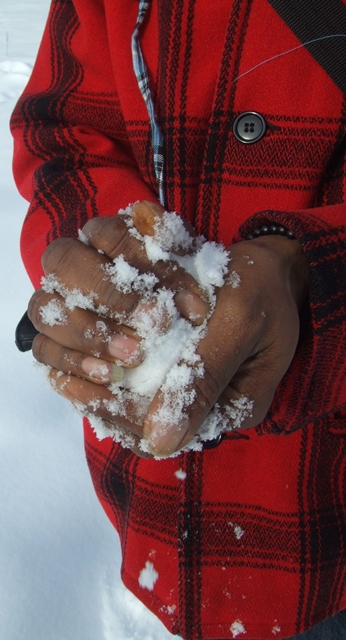
A laughing boy holds out his palms
Until they are white.
.
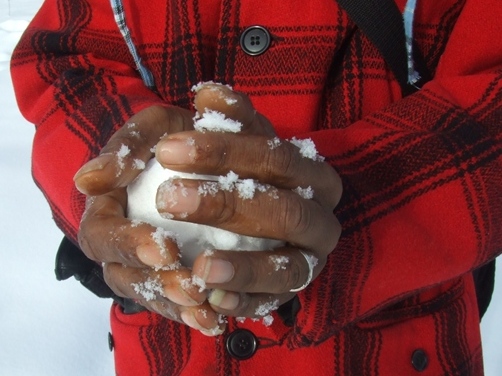
The snowball I threw
Was caught in a net of flakes
And wafted away.
.
.
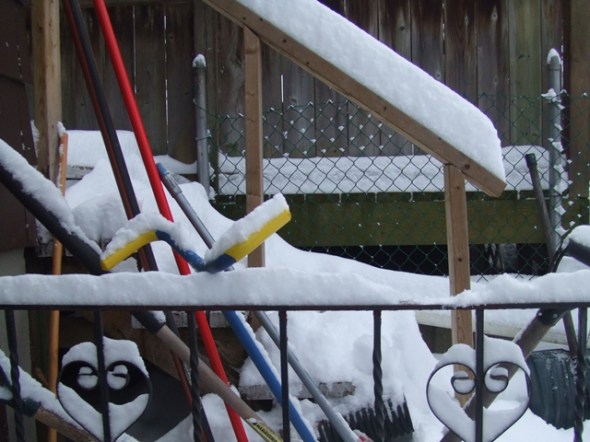
A freezing morning:
I left a bit of my skin
On the broomstick handle.
.
The Christmas season:
A whore is painting her lips
Larger than they are.
.

.
Standing patiently
The horse grants the snowflakes
A home on his back.
.
In the falling snow
the thick wool of the sheep
gives off a faint vapour.
.
Entering my town
In a fall of heavy snow
I feel a stranger.
.
In this rented room
One more winter stands outside
My dirty windowpane.
.


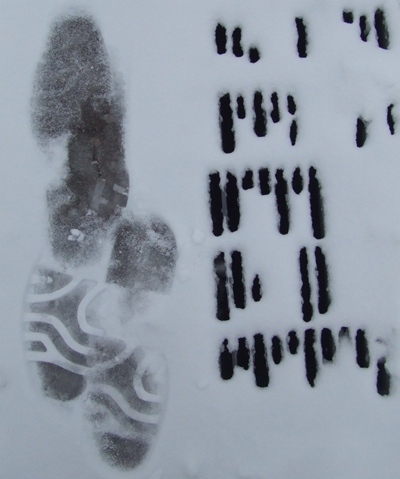
.
The call of a bird
sends a solid cake of snow
sliding off the roof.
.
I slept so long and sound,
but I did not know why until
I saw the snow outside.
.
The smell of sunny snow
is swelling the icy air –
the world grows bigger.
.
The cold is so sharp
that the shadow of the house
bites into the snow.
.
What do they tell you
each night, O winter moon,
before they roll you out?
.
Burning out its time
And timing its own burning,
One lovely candle.
. . .
Richard Nathaniel Wright (born Roxie, Mississippi,1908, died Paris, 1960) was a rigorous Black-American short-story writer, novelist, essayist, and lecturer. He joined the Communist Party USA in 1933 and was Harlem editor for the newspaper “Daily Worker”. Intensely racial themes were pervasive in his work and famous books such as Uncle Tom’s Children (1938), Native Son (1940) and Black Boy (1945) were sometimes criticized for their portrayal of violence – yet, as the 1960s’ voices of Black Power would phrase it – a generation later – he was just “telling it like it is.”
.
Wright discovered Haiku around 1958 and began to write obsessively in this Japanese form using what was becoming the standard “shape” in English: 5 syllables, 7 syllables, 5 syllables, in three separate lines, and with the final line adding an element of surprise – delicate or otherwise. One of Haiku’s objectives is, to paraphrase Matsuo Bashō, a 17th-century Japanese poet: In a haiku poem, if you reveal 70 to 80 percent of the subject – that’s good – but if you show only 50 to 60 percent, then the reader or listener will never tire of that particular poem.
What do you think – does Wright succeed?
.
The 4 Seasons are themes in Haiku; here we have presented a palmful of Wright’s Winter haiku. Wright was frequently bedridden during the last year of his life and his daughter Julia has said that her father’s haiku were “self-developed antidotes against illness, and that breaking down words into syllables matched the shortness of his breath.” She also added: her father was striving “to spin these poems of light out of the gathering darkness.”
We are grateful to poet Ty Hadman for these quotations from Wright’s daughter, Julia.
. . .
The above haiku were selected from the volume Richard Wright: Haiku, This Other World, published posthumously, in 1998, after a collection of several thousand Haiku composed by Wright was ‘ found ‘ in the Rare Book and Manuscript Library of Yale University.
. . . . .
Kwanzaa yenu iwe na heri! Harambee! / Happy Kwanzaa – Let’s all pull together!
Posted: December 26, 2012 Filed under: English, Swahili | Tags: Kwanzaa poems Comments Off on Kwanzaa yenu iwe na heri! Harambee! / Happy Kwanzaa – Let’s all pull together!.
Vickie M. Oliver-Lawson
“Remembering the Seven Principles of Kwanzaa”
.
First fruits is what the name Kwanzaa means
It’s celebrated everywhere by kings and queens
Based on seven principles that still exist
If you check out this rhyme, you’ll get the gist
.
Umoja, a Swahili name for unity
Is the goal we strive for across this country
Kujichagulia means self-determination
We define ourselves, a strong creation.
Ujima or collective work and responsibility
Is how we build and maintain our own community
For if my people have a problem, then so do I
So let’s work through it together with our heads held high.
.
Ujamaa meaning cooperative economics is nothing new
We support and run our own stores and other businesses, too
Nia is purpose, us developing our potential
As we build our community strong to the Nth exponential
Kuumba is the creative force which lies within our call
As we leave our community much better for all
As a people, let’s move forward by extending our hand
For Imani is the faith to believe that we can.
.
These seven principles help to make our nation strong
If you live to these ideals, you can’t go wrong
But you must first determine your own mentality
And believe in yourself as you want you to be
And no matter how far, work hard to reach your goal
As we stand, as a people, heads up, fearless and bold.
.
Ms. Vickie M. Oliver-Lawson is a retired public school administrator, wife, and mother from Baltimore, Maryland, U.S.A. She is the author of several books, including “Vocal Moments”, “In the Quilting Tradition” and “Timeless Influences” (2009). She contributes to the Examiner news website.
. . .
Journalist Will Jones writes:
“ Kwanzaa was created as an Afrocentric holiday in 1966 by the black-militant history professor Maulana Karenga, and was intended to be a secular cultural celebration rooted in notions of African pride and community empowerment, rather than in any long-standing religious tradition like Christmas or Hanukkah. And in its very nature, Kwanzaa seems as appealing to many as it is appalling to others. It certainly presumes a level of self-awareness and racial identity that some can find off-putting. But at the same time, many who celebrate Kwanzaa or in tandem with Christmas say the holiday is less about being counter to any other mainstream holiday, and more of a vehicle to celebrate African-American culture and a shared heritage.
Kwanzaa, which means “first fruits” in Swahili, revolves around seven core principles, each celebrated on one day of the week-long observance, with simple, often homemade gifts and feasts. Each day a red, black or green candle is lit in a Kinara in honour of each of the seven principles: Umoja, unity; Kujichagulia, self-determination; Ujima, collective work and responsibility; Ujamaa, cooperative economics; Nia, purpose; Kuumba, creativity; and Imani, faith. ”
Kwanzaa, beginning always on December 26th, lasts seven days, being completed on January 1st.
. . . . .
 Zócalo Poets