O Festival Internacional do Tambor Muhtadi: “Quero ser tambor” / “I want to be a drum”
Posted: June 10, 2013 Filed under: English, José Craveirinha, Portuguese Comments Off on O Festival Internacional do Tambor Muhtadi: “Quero ser tambor” / “I want to be a drum”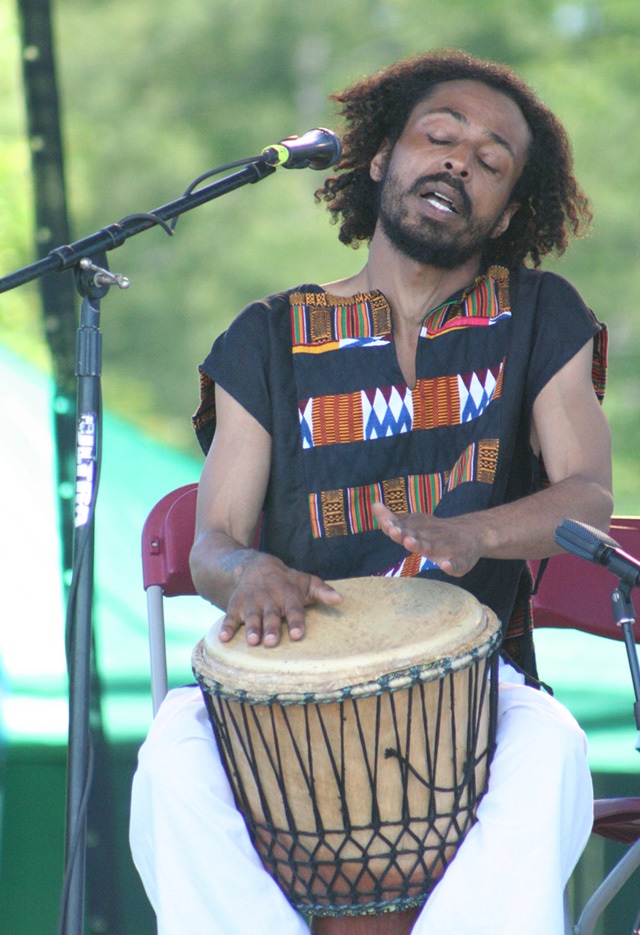 A performer deeply involved in the energy of The Drum_Muhtadi International Drumming Festival in Toronto_June 9th 2013_photograph by Elisabeth Springate
.
José Craveirinha
(1922–2003, Maputo, Moçambique)
“Quero ser tambor”
.
Tambor está velho de gritar
Oh velho Deus dos homens
deixa-me ser tambor
corpo e alma só tambor
só tambor gritando na noite quente dos trópicos.
.
Nem flor nascida no mato do desespero
Nem rio correndo para o mar do desespero
Nem zagaia temperada no lume vivo do desespero
Nem mesmo poesia forjada na dor rubra do desespero.
.
Nem nada!
.
Só tambor velho de gritar na lua cheia da minha terra
Só tambor de pele curtida ao sol da minha terra
Só tambor cavado nos troncos duros da minha terra.
.
Eu!
.
Só tambor rebentando o silêncio amargo da Mafalala
Só tambor velho de sentar no batuque da minha terra
Só tambor perdido na escuridão da noite perdida.
.
Ó velho Deus dos homens
eu quero ser tambor
e nem rio
e nem flor
e nem zagaia por enquanto
e nem mesmo poesia.
.
Só tambor ecoando como a canção da força e da vida
Só tambor noite e dia
dia e noite só tambor
até à consumação da grande festa do batuque!
.
Oh velho Deus dos homens
deixa-me ser tambor
só tambor!
.
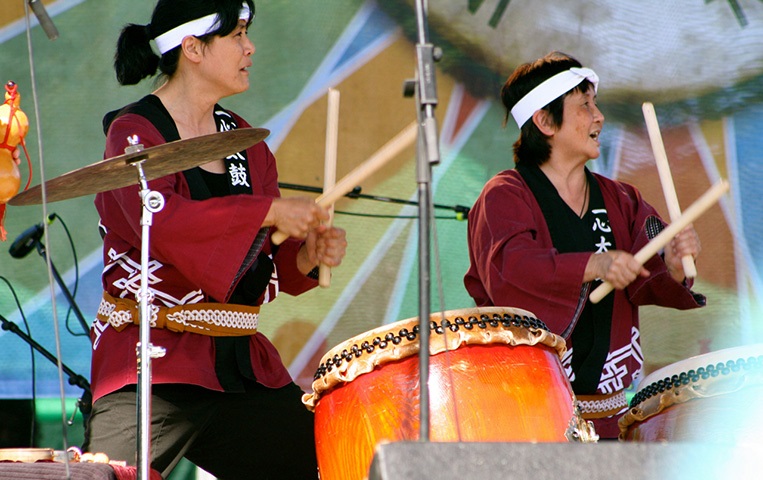 Isshin Daiko (“One Heart” Japanese-traditional drummers)_Muhtadi International Drumming Festival in Toronto_June 9th 2013_photograph by Elisabeth Springate
.
José Craveirinha
“I want to be a drum”
.
The drum is all weary from screaming
Oh ancient God of mankind
let me be a drum because I want to be a drum
body and soul – just a drum
just a drum playing in the hot tropical night.
I don’t want to be a flower born in the forest of despair
I don’t want to be a river flowing toward the sea of despair
I don’t want to be an assegai spear tempered in the hot flame of despair
Not even a poem forged in the searing pain of despair.
.
Nothing like that – I want to be a drum!
.
Just a drum worn from wailing in the full moon of my land
Just a drumskin cured in the sun of my land
Just a drum carved from the solid tree trunks of my land.
.
Just a drum splitting the bitter silence of Mafalala village
Just a drum worn from sitting in on the batuque jam-sessions of my land
Just a drum lost in the darkness of the lost night.
.
Oh ancient God of mankind
I want to be a drum – just a drum
not a river
not a flower
not an assegai spear just for now
and not even a poem – I don’t want to be a poem.
Only a drum echoing like the song of strength and life
Only a drum night and day,
day and night, only a drum
until the final great batuque jam session!
Oh ancient God of mankind
let me be a drum
just a drum!
. . .
Mafalala – a neighbourhood or bairro in the city of Maputo, Mozambique
batuque – festival of drumming
assegai – an African hardwood, used to make the iron-tipped “zagaia” spear
.
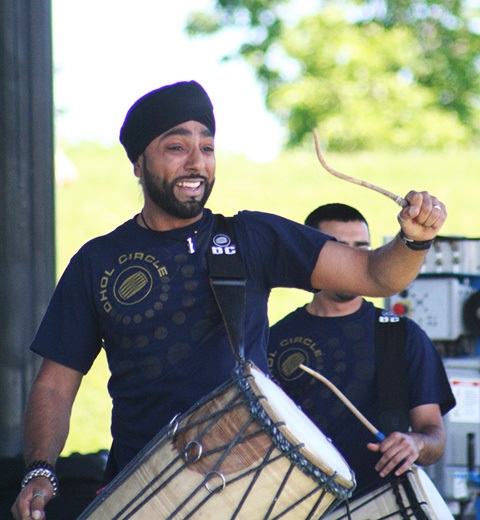 Dhol Circle_Muhtadi International Drumming Festival in Toronto_June 9th 2013_photograph by Elisabeth Springate
.
José Craveirinha é considerado o poeta maior de Moçambique. Em 1991, tornou-se o primeiro autor africano galardoado com o Prémio Camões, o mais importante prémio literário da língua portuguesa.
José Craveirinha (1922 – 2003) was a Mozambican journalist, short-story writer, and poet. He was the child of a Portuguese father and a black (Ronga) Mozambican mother. An impassioned supporter of the anti-Colonial group Frelimo during the Portuguese Colonial War/War of Liberation, he was imprisoned from 1966 to 1974. Craveirinha was one of the pioneers of Poesia Moçambicana da Negritude, a literary movement that highlighted African traditions and the reaffirmation of African values.
.
Master drummer Muhtadi Thomas came to Canada in 1974 from Trinidad and Tobago. He settled in Toronto where he has established himself as the premier percussion-instrument mentor among students in the city’s school and community programmes. He plays djembe, bongos, congas, timbales, plus T&T’s steel pan – among other world drums. June 8th and 9th, 2013, marked the 14th year of the Muhtadi International Drumming Festival.
.
Our thanks to Professor Kwachirere of the University of Zimbabwe for his Portuguese-into-English poem translation
. . . . .
“Orfeu Negro” and the origins of Samba + Wilson Batista’s “Kerchief around my neck” and Noel Rosa’s “Idle youth”
Posted: February 8, 2013 Filed under: English, Noel Rosa, Orfeu Negro and the origins of Samba + Wilson Batista's “Kerchief around my neck” and Noel Rosa's “Idle youth”, Portuguese, Wilson Batista | Tags: Black History Month photographs Comments Off on “Orfeu Negro” and the origins of Samba + Wilson Batista’s “Kerchief around my neck” and Noel Rosa’s “Idle youth”
ZP_poster for Orfeu Negro
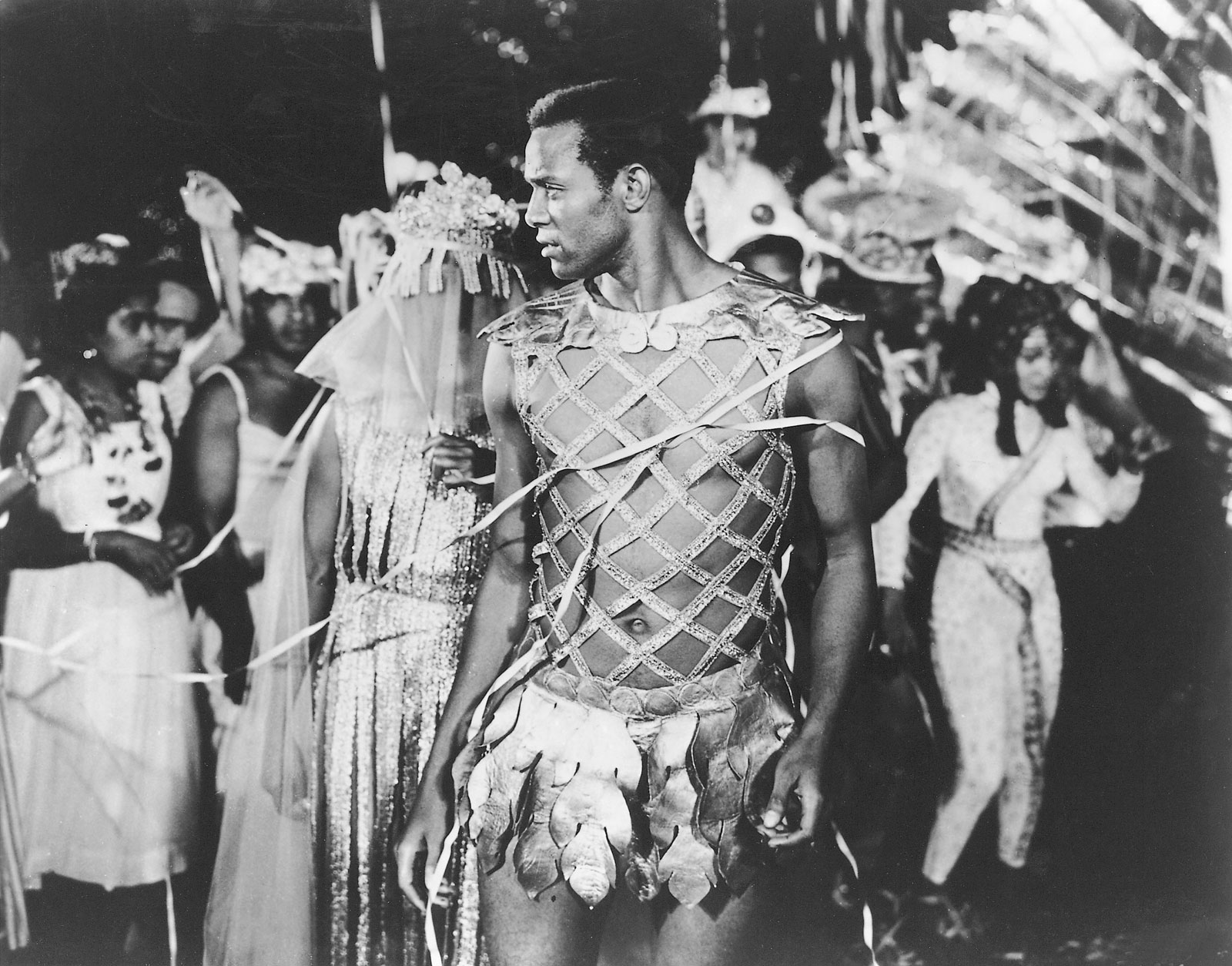
ZP_Breno Mello, 1931 – 2008, as Orpheus in the 1959 Marcel Camus film, Orfeu Negro_Mello was a soccer player whom Camus chanced to meet on the street in Rio de Janeiro. Camus decided to cast the non-actor as the lead in the film. Mello turned out to be exactly right for the role of the star-crossed Everyman enchanted by tricky Fate – his Love is stalked by Death.
- ZP_Marpessa Dawn, American-born actress of Black and Filipino heritage who played Eurydice opposite Breno Mello as Orpheus in the 1959 film Orfeu Negro. She is seen here in a photograph taken at the 1959 Cannes Film Festival. Dawn would later have a bizarre role as Mama Communa in the often-censored or banned 1974 Canadian film by European director Dusan Makavejev – Sweet Movie. A long way from her role in Orfeu Negro…yet she brought something of her beautiful wholesomeness even to the disturbing scenarios of Sweet Movie. Marpessa Dawn died in 2008 at the age of 74 in Paris.

ZP_a 1956 record album by Agostinho Dos Santos who sang the now internationally famous songs from the 1959 film Orfeu Negro_ A Felicidade and Manhã de Carnaval
Orfeu Negro (Black Orpheus), a 1959 film in Portuguese with subtitles, was directed by Marcel Camus in Rio de Janeiro, Brazil. Set at Carnaval time, it featured a mainly Black cast and told a modern Brazilian version of the Greek legend of Orpheus and Eurydice. The Morro da Babilônia “favela” (Babylon Hill “slum”) was used for filming many scenes. Orfeu Negro is a nearly perfect film. Exuberant and pensive, charming and mysterious, it is an engrossing story of doomed Lovers accompanied by the exquisitely-intimate singing of Agostinho Dos Santos of Luiz Bonfá’s songs in the then-nascent bossa nova style. And add to all that the “crazy Life force” pulse of Samba at night in the streets…
Samba – the word – is derived via Portuguese from the West-African Bantu word “semba”, which means “invoke the spirit of the ancestors”. Originating in Salvador da Bahia, Brazil, by the 1920s the Samba sound was emerging with usually a 2/4 tempo, the use of choruses with hand-claps plus declaratory verses, and much of it in batucada rhythm which included African-influenced percussion such as tamborim, repinique, cuica, pandeiro and reco-reco adding many layers to the music. The “voice” of the cavaquinho (which is like a ukulele) provided a pleasing contrast and a non-stop little wooden whistle, the apito, made the urgent breath of human beings palpable.
In the late 1920s in the Rio favela of Mangueira – among others – there began one of the earliest “samba schools”, initiating the transformation of Rio de Janeiro’s Carnaval (which had existed on and off since the 18th century but which was neither a large city-wide event nor one with a strong Black Brazilian influence). In the 21st century, of course, Carnaval in Rio de Janeiro has become the most massive festival in the world; in 2011, for example, close to 5 million people took part, with more than 400,000 of them being foreign visitors. But back in the 1920s…the original Mangueira cordões or cords (also known as blocos or blocks) consisted of groups of masked participants, all men, who were led down the street by a “teacher” blowing an apito whistle. Following them was a mobile orchestra of percussion. In the years that followed the Carnaval procession expanded to include 1. the participation of women 2. floats 3. a theme 4. a mestre-sala (master of ceremonies) and a porta-bandeira (flag-bearer).
Notable early composers and singers of Samba (sambistas) included Pixinguinha, Cartola, Ataulfo Alves and Jamelão among men and Clementina de Jesus, Carmelita Madriaga, Dona Ivone Lara and Jovelina Pérola Negra among women. But this is just the beginning of a long list…
The “fathers” of Samba were Rio musicians but the “mothers” of Samba were the Tias Baianas or the Aunties from Salvador da Bahia (a smaller though culturally rich city further up the Atlantic Coast). Hilária Batista de Almeida, also known as Tia Ciata (1854-1924), was born in Bahia but lived in Rio de Janeiro from the 1870s onward. Involved in persecuted “roots” rituals, she became a Mãe Pequena or Little Mother – Iyakekerê in the Yoruba language – one type of venerated priestess in the Afro-Brazilian religion, Candomblé. The Bahia African rhythms that were crucial to her ceremonies at Rua Visconde de Itaúna, number 177, were incorporated into their compositions by musicians such as Pixinguinha and Donga who were used to playing the maxixe (a 19th-century tango-like dance still popular in Rio in the early 20th century). That musical fusion was the birth of samba carioca – the early Samba sound of Rio. Pelo Telefone (“Over the Telephone”), from 1917, the humorous lyrics of which concern a gambling house (casa de jogo do bicho) and someone waiting for a telephone call tipping him off that the police are about to carry out a raid, is considered the first true Samba song.
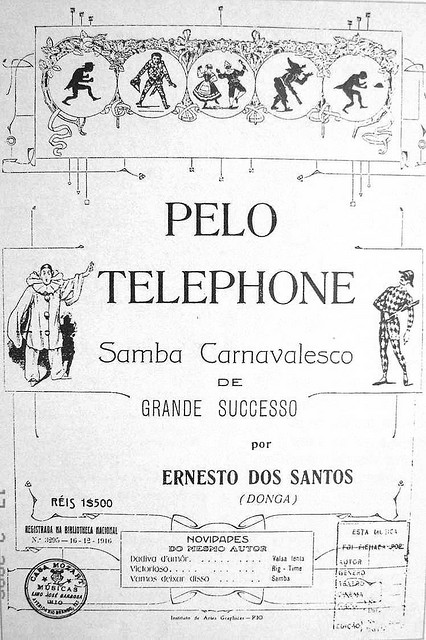
ZP_1917 sheet music for what is believed to be the earliest Samba carioca_Pelo Telefone
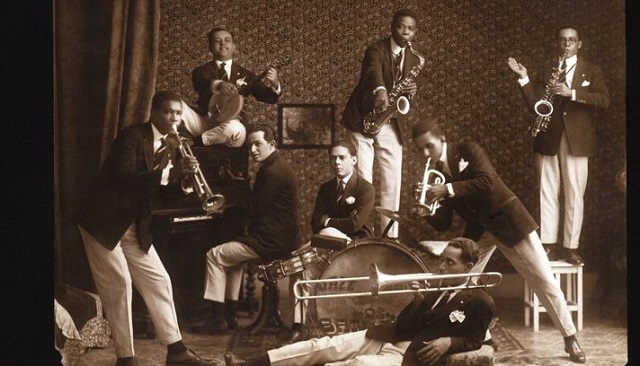
ZP_Os Oito Batutas_The Eight Batons or Eight Cool Guys_around 1920. These Rio musicians had played maxixes and choros for bourgeois theatre-goers in the lobby at intermissions. They began to add ragtime and foxtrot numbers, the latest American imports. But in their spare time, under the influence of the Afro-Brazilian Tias Baianas, they were already synthesizing a new music, the Samba carioca…
As in Trinidad with “rival” Calypsonians and in Mexico with musical “duels” between Cantantes de Ranchera, so in Brazil there were Samba compositions in which musicians responded to one another. It was during the 1930s that White Brazilian composers began to absorb the Samba and alter its lyrical content…and gradually the special sound of Rio’s favelas (via Bahia) became the national music of Brazil…We are grateful to Bryan McCann for the following translations of two vintage Samba lyrics from Portuguese into English.
.
Wilson Batista (Black sambista, 1913 – 1968)
“Kerchief around my neck” (1933)
.
My hat tilted to the side
Wood-soled shoe dragging
Kerchief around my neck
Razor in my pocket
I swagger around
I provoke and challenge
I am proud
To be such a vagabond
.
I know they talk
About this conduct of mine
I see those who work
Living in misery
I’m a vagabond
Because I had the inclination
I remember, as a child I wrote samba songs
(Don’t mess with me, I want to see who’s right… )
My hat tilted to the side
Wood-soled shoe dragging
Kerchief around my neck
Razor in my pocket
I swagger around
I provoke and challenge
I am proud
To be such a vagabond
.
And they play
And you sing
And I don’t give in!
. . .
Wilson Batista
“Lenço no pescoço”
.
Meu chapéu do lado
Tamanco arrastando
Lenço no pescoço
Navalha no bolso
Eu passo gingando
Provoco e desafio
Eu tenho orgulho
Em ser tão vadio
.
Sei que eles falam
Deste meu proceder
Eu vejo quem trabalha
Andar no miserê
Eu sou vadio
Porque tive inclinação
Eu me lembro, era criança
Tirava samba-canção
(Comigo não, eu quero ver quem tem razão…)
.
E eles tocam
E você canta
E eu não dou!
. . .
A response-Samba to Batista’s…
Noel Rosa (White sambista, 1910 – 1937)
“Idle Youth” (1933)
.
Stop dragging your wood-soled shoe
Because a wood-soled shoe was never a sandal
Take that kerchief off your neck
Buy dress shoes and a tie
Throw out that razor
It just gets in your way
With your hat cocked, you slipped up
I want you to escape from the police
Making a samba-song
I already gave you paper and a pencil
“Arrange” a love and a guitar
Malandro is a defeatist word
What it does is take away
All the value of sambistas
I propose, to the civilized people,
To call you not a malandro
But rather an idle youth.
.
Malandro in Brazil meant: rogue, scoundrel, street-wise swindler
. . .
Noel Rosa
“Rapaz folgado”
Deixa de arrastar o teu tamanco
Pois tamanco nunca foi sandália
E tira do pescoço o lenço branco
Compra sapato e gravata
Joga fora esta navalha que te atrapalha
Com chapéu do lado deste rata
Da polícia quero que escapes
Fazendo um samba-canção
Já te dei papel e lápis
Arranja um amor e um violão
Malandro é palavra derrotista
Que só serve pra tirar
Todo o valor do sambista
Proponho ao povo civilizado
Não te chamar de malandro
E sim de rapaz folgado.

ZP_Carnaval in Rio de Janeiro_a 1950s glamour photograph of professional revelers
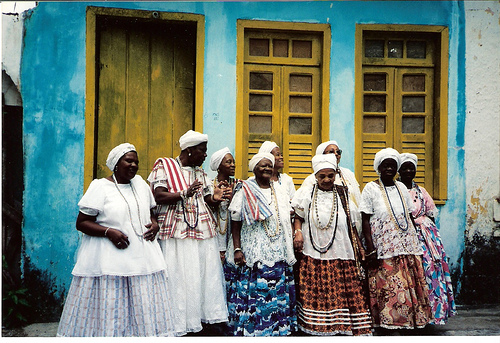
ZP_Irmandade da Boa Morte_Sisterhood of the Good Death_women devotees of Candomblé in contemporary Bahia_photo by Jill Ann Siegel
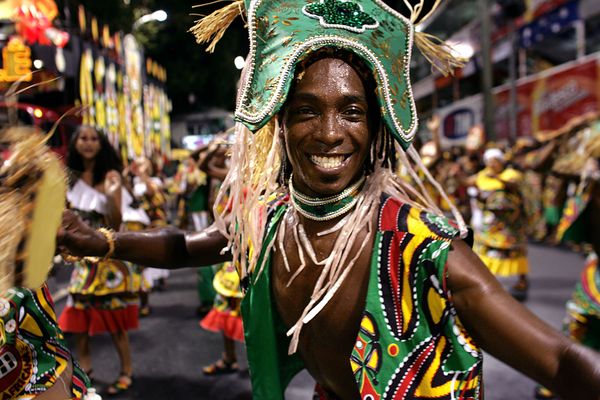
ZP_Carnaval in Salvador da Bahia, Brazil_photo by David Turnley
For those who observe Lent…just a reminder: next week, February 13th, is Ash Wednesday.
–But up until then … … !
And so, tonight, Friday February 8th, the mayor of Rio will hand over “the keys to the city” to Rei Momo, King Momo (from the Greek Momus – the god of satire and mockery) a.k.a. The Lord of Misrule and Revelry. A symbolic act signifying that the largest party in the world is about to begin. Enjoy!
. . . . .
Cicatrizes da Vida: poemas brasileiros em inglês / Scars of Life: Brazilian poems in English
Posted: October 27, 2012 Filed under: English, Portuguese, Valdeck Almeida de Jesus, ZP Translator: Alexander Best | Tags: Poemas brasileiros em inglês Comments Off on Cicatrizes da Vida: poemas brasileiros em inglês / Scars of Life: Brazilian poems in EnglishValdeck Almeida de Jesus
“Aqui e agora”
.
Aqui e agora
Eu sou,
Sou tudo:
O mundo, o sol, o mar
O mar distante
O sol presente
O mundo invisível.
Sou nada:
O mar, o sol, o mundo
O mundo real
O sol no infinito
O mar da melancolia
Melancolia e saudade
Daquilo que não vivi.
. . .
“Here and Now”
.
Here and now
I am – I am
Everything:
The world, the sun and sea
– the distant sea,
The sun this very moment,
The invisible world.
.
I am nothing:
The sea, the sun, the world,
The real world,
The sun in its infinity,
And a sea of melancholy –
Melancholy and longing, yearning
– for that which I did not live.
. . .
“Cicatrizes”
.
A vida é uma sucessão,
Successão de cicatrizes…
Cicatrizes do amor
Cicatrizes da alegria
Cicatrizes da dor
Cicatrizes da euphoria.
Não quero viver
Sem cicatrizes
– alegres os tristes,
Quase felizes
Meus dias terão
Várias cicatrizes.
. . .
“Scars”
.
Life is a kind of succession…
– a succession of scars –
Love’s scars,
Scars of happiness,
Of grief, of euphoria.
I don’t wish to live
Without those scars
– scars joyful, scars sad,
Almost happy, my days…
And they’ll have numerous scars.
. . .
“Vida”
.
Viver en tento,
Morrer não quero,
Sorrir desejo,
Mas não consigo;
Me ver em ti,
Procuro sempre;
Amar com garra
E com segurança,
Estou tentando
Desde sempre.
Se não consigo
Ser mais autêntico,
É porque sou humano
E por tal, falho.
. . .
“Life”
.
To live with care,
And not want to die,
I wish to smile,
But maybe not with you…
.
To see myself in you
– always I seek that –
And to love with gusto, with sureness
(I’ve been trying to do that since forever!)
.
But if not with you…
Well, to be more real,
And it’s all because I’m human and,
For that reason,
Flawed.
.
“Aqui e agora”, “Cicatrizes”, “Vida”: © Valdeck Almeida de Jesus
. . .
Valdeck Almeida de Jesus é jornalista, escritor e poeta. Nasceu em 1966 em Jequié, Bahia, Brasil.
A journalist, writer and poet, Valdeck Almeida de Jesus was born in 1966.
He hails from Jequié, Bahia State, Brazil.
.
Tradução de português para inglês / Translations from Portuguese into English:
Alexander Best
Lupicínio Rodrigues: “Volta” / “Come back to me”
Posted: October 13, 2012 Filed under: English, Lupicínio Rodrigues, Portuguese, Translator's Whimsy: Song Lyrics / Extravagancia del traductor: Letras de canciones traducidas por Alexander Best, ZP Translator: Alexander Best Comments Off on Lupicínio Rodrigues: “Volta” / “Come back to me”
“Volta”
(Letras/música: Lupicínio Rodrigues, compositor brasileiro, 1914-1974:
canção cantada por Gal Costa, 1973)
.
Quantas noites não durmo
A rolar-me na cama
A sentir tantas coisas
Que a gente não pode explicar – quando ama.
.
O calor das cobertas
Não me aquece direito
Não há nada no mundo
Que possa afastar esse frio do meu peito.
.
Volta,
Vem viver outra vez ao meu lado
Não consigo dormir sem teu braço
Pois meu corpo está acostumado.
.
Volta,
Vem viver outra vez ao meu lado
Não consigo dormir sem teu braço
Porque meu coração está acostumado…
. . .
“Come back”
(words and music by Lupicínio Rodrigues, Brazilian composer, 1914-1974:
as sung by Brazilian singer Gal Costa, 1973)
.
How often I can’t sleep!
– tossing and turning in bed –
Feeling so many things
That people – who are in love – cannot explain.
.
The heat of the blankets
Doesn’t warm me well
And there’s no-one in this world
Can keep this chill from my breast.
.
Return to me,
Come live again at my side
I can’t keep sleeping without your arms around me
– well, my body’s grown used to you!
.
Come back,
And live once more by my side
I can’t go on sleeping without your embrace
– and my heart’s accustomed to you now…
.
Translation/interpretation from the Portuguese: Alexander Best
Dois poemas / dois fotos para o Dia das Crianças – Agradecimentos a Lourdes Neves Cúrcio / Vera Gonçalves
Posted: October 12, 2012 Filed under: Portuguese | Tags: Poemas para o Dia das Crianças Comments Off on Dois poemas / dois fotos para o Dia das Crianças – Agradecimentos a Lourdes Neves Cúrcio / Vera Gonçalves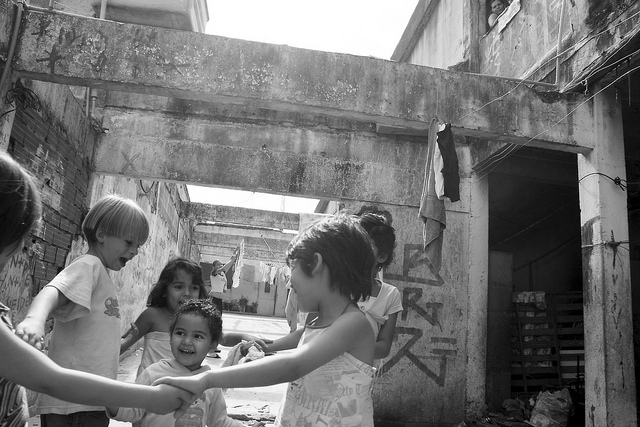
Lourdes Neves Cúrcio
“Ser Criança”
.
Ser criança é se entreter
Entre brinquedos e sonhos
É se alegrar, é viver
É expressar a candura
Respirar felicidade
Transmitir docilidade
Encantamento e ternura
.
Criança que tem alma pura
E tamanha espontaneidade
No agir e no falar,
Que sabe ter sinceridade
Que cativa com o sorriso
E traz a inocência no olhar
.
Saber viver é sentir
A alegria de ser criança
É deixar o coração
Se encher de felicidade
E transbordar esperança
.
Feliz é aquele que sabe
Interpretar o olhar
E o sorriso da criança,
Quem com ela é paciente
Quem valoriza o seu mundo
E a preserva do mal,
Fazendo com que ela possa
Vivenciar sua infância
Desfrutar de seu espaço
E ser simplesmente criança.

Lourdes Neves Cúrcio
“Súplica”
.
Proteja sempre, Senhor,
Todas as nossas crianças
Que elas sejam resguardadas
Dos atos de atrocidade,
São anjos, são indefesas,
Não devem ser hostilizadas.
Temos visto, ultimamente,
Seus sonhos interrompidos
Com frieza e crueldade,
Temos visto suas vidas
Ceifadas com precocidade.
Crianças são mimosas flores
Alegrando e ornamentando
Para a vida desabrochando,
Precisam ser bem cultivadas
Preservadas da violência
E não brutalmente arrancadas
Do jardim da existência.
Proteja sempre, Senhor,
As crianças do mundo inteiro
Queremos vê-las sorrindo
Brincando e acalentando
Seus sonhos mais verdadeiros.
Que a criança desfrute
Da infância em plenitude
Que possa viver e crescer
Cercada de muito amor
Sem dentro de si conviver
Com o estigma da dor.
. . .
“Ser Criança” & “Súplica”
© Lourdes Neves Cúrcio (Brasil)
Canção/Oração a Nossa Senhora Aparecida – Dia da Padroeira do Brasil, 12 de outubro 2012
Posted: October 12, 2012 Filed under: Portuguese | Tags: Oração a Nossa Senhora Aparecida Comments Off on Canção/Oração a Nossa Senhora Aparecida – Dia da Padroeira do Brasil, 12 de outubro 2012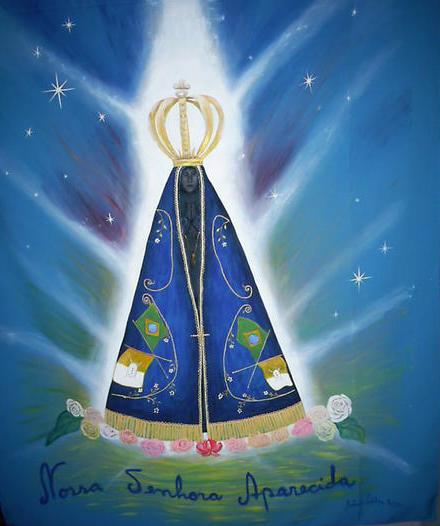
“Nossa Senhora Aparecida”
(Canção da dupla sertaneja Rick e Renner)
.
Ô Senhora Aparecida, Rainha da Minha Fé,
A força de quem é forte, escudo de quem não é,
Poe a sua mão sagrada sobre a cabeça da ente,
Consolo dos oprimidos, proteçao dos inocentes,
Nos livre da ignorancia que nesse mundo existe,
Miséria, violencia e fome,
Nossa verdade mais triste.
.
Ô Senhora Aparecida, Nossa Senhora Aparecida
És a Luz do Meu Caminho, Direçao da Minha Vida.
.
Ô Senhora Aparecida, olha pra nossas crianças,
Nosso fruto inocente precisa de esperança,
Precisar crescer na vida em graça e sabedoria
Porque sonho de menino é a cordar no outro dia,
Não existe amanhã se o hoje morre agora,
Estamos de coração em tuas mãos, Virgem Senhora.
.
Ô Senhora Aparecida, Nossa Senhora Aparecida
És a Luz do Meu Caminho, Direçao da Minha Vida.
.
Ô Senhora Aparecida não nos deixe perecer,
Somos um povo que sonha um povo que reza e crê,
Acenda a luz da esperança ao pobre que nada tem,
Mostre que a maior riqueza é viver fazendo o bem,
Não permita que o homem possa se afastar de Deus,
Cuide Mãe Aparecida os humildes Filhos Teus.
.
Ô Senhora Aparecida, Nossa Senhora Aparecida
És a Luz do Meu Caminho, Direçao da Minha Vida.
.
Ô Senhora Aparecida que esta tão perto do pai,
Me responda por favor pra onde esse mundo vai,
Mostre a magica da vida e a força do perdao
O que devemos fazer pra ganhar a salvação,
por que eu não sei rezar foi que fiz essa canção,
Ô Mãe, aceite esse meu canto como Minha Oração.
.
Ô Senhora Aparecida, Nossa Senhora Aparecida
És a Luz do Meu Caminho, Direçao da Minha Vida.
Ô Senhora Aparecida…..
The Face of Summer: ひまわり Tornasol Sunflower Tournesol Girasole Girassol ひまわり
Posted: July 31, 2012 Filed under: English, French, Italian, Japanese, Portuguese, Spanish Comments Off on The Face of Summer: ひまわり Tornasol Sunflower Tournesol Girasole Girassol ひまわり
Mang Ke (1950 – )
Sunflower in the Sun (Excerpt)
きみは見たのか
陽光の中のあのひまわりを
見たまえ、うつむくこともなく
頭(こうべ)をうしろにふり向け
そっぽをむいてしまった
まるで一口に
あの頸にかけられた
あの太陽の手に引っ張られている縄を
噛み切ろうとするかのように
きみは見たのか
あの頭をもたげ
太陽に怒りの視線をなげかえすひまわりを
その首は太陽をさえぎるほど
その首はたとえ太陽のない時でも
やはり光の束を輝き放っている ….. …..
*
Mang Ke
Sunflower in the Sun (excerpt)
Do you see?
Do you see that sunflower in the sun?
You see, it didn’t bow its head
But turned its head back
As if to bite through
The rope around its neck
Held by the sun’s hands.
*
Do you see it?
Do you see that sunflower, raising its head
Glaring at the sun?
Its head almost eclipses the sun
Yet even when there is no sun
Its head still glows. ….. …..
Anónima
Invocación (un extracto)
Quédate bajo el brillo tornasol
o arrástrame
a tu sombría transparencia
Murciélago de luz
que sabe tanto de volar
como de sueño
agarrado
del techo
y de cabeza hacia la oscuridad.
Quédate bajo el brillo tornasol y arrástrame
a tu sombría transparencia
Soy sólo yo, a contracorriente
sólo mi corazón,
piedra vertiginosa
que rueda.
Dale Harris (New Mexico, USA)
Manzano Sunflowers
You missed Indian Market
And of course the sunflowers.
As usual they swept across August
At first a few, a yellow trickle along the fence line
Then more, making pools in the pasture
And splashing down into the “arroyo”
Then, incredibly many more,
Dappling the distance,
As though a giant hand had buttered the land.
*
Yet with the entire prairie to expand into,
They prefer crowds of themselves
They mass along the roadside,
Lined up as though a parade were about to pass.
Here and there one stands alone,
But not for long.
Soon his kin will come
And there will be sunflower squalor,
There will be sunflower squalor, a floral slum.
*
Once they are out,
They will not be ignored.
Stretching their skinny stalks,
They top our roof-line,
Press against the window screens,
And peep in at the door.
Familiar foot paths to the out buildings are obscured,
And from the road we seem afloat,
Our cabin, an odd tin boat
In a sea of sunflower faces.
*
They are the most staccato of flowers.
I catch them humming snatches of polkas
And John Philip Sousa marches,
Bobbing in the wind to the Boogaloo,
The Boogie Woogie and the Lindy Hop.
I call their names,
Clem, Clarissa, Sarah Jane
To try and tame them.
*
My neighbour comes by.
She has a field full
They’re useless, she complains.
Her horses can’t eat them.
I should hope not! I exclaim,
After she’s gone.
*
I don’t remember if you even liked sunflowers
But you liked Life
And they are all about that.
Today I wrote to your family, finally.
I expect they are occupying themselves,
With beautiful gestures
In order to get over the grief of you.
As for me, I have sunflowers…

Michèle Corti
Tournesol
Vieille fleur du Pérou au bel astre pareil,
Sunflower, Sonnenblume, Girasol, Girassole
L’oiseau trouve un abri sous ton grand parasol,
Au plus chaud de l’été, éclosent tes merveilles.
*
“Hélianthus annuus” ou même “grand soleil”
Tu envahis les champs de mille têtes fières
Qui rebrodent d’or pur notre dame la Terre
Frissonnante d’azur, émeraude et vermeil.
*
De ton coeur irradié par l’astre solennel
Va couler la douceur d’une huile flavescente
Radieux tournesol, sur ta tige puissante
Tu règnes glorieux, et parais éternel !
*
La folie de Vincent a cru, dans tes pétales
Entrevoir les grands feux d’un lointain paradis
Tu as su fasciner le grand peintre maudit
Qui, au milieu des champs recherchait les étoiles…
Eugenio Montale (1896-1981)
Portami il girasole ch’io lo trapianti
Portami il girasole ch’io lo trapianti
nel mio terreno bruciato dal salino,
e mostri tutto il giorno agli azzurri specchianti
del cielo l’ansietà del suo volto giallino.
*
Tendono alla chiarità le cose oscure,
si esauriscono i corpi in un fluire
di tinte: queste in musiche. Svanire
è dunque la ventura delle venture.
*
Portami tu la pianta che conduce
dove sorgono bionde trasparenze
e vapora la vita quale essenza;
portami il girasole impazzito di luce.
Lô Borges e Márcio Borges
Um Girassol da Cor do Seu Cabelo
(Letras cantada por Milton Nascimento)
Vento solar e estrelas do mar
a terra azul da cor de seu vestido
vento solar e estrelas do mar
você ainda quer morar comigo.
*
Se eu cantar não chore não
é só poesia
eu só preciso ter você por mais um dia
ainda gosto de dançar, bom dia,
como vai você?
*
Sol, girassol, verde vento solar
você ainda quer morar comigo
vento solar e estrelas do mar
você ainda quer morar comigo.
芝不器男 Fukio Shiba (1903-1930)
Sunflower Haiku
向日葵の蕊(しべ)を見るとき海消えし
Looking into the sunflower’s centre,
the sea has disappeared.
The Voice of Summer: セミ Cigarra Cicada Cigale Cicala Cigarra セミ
Posted: July 31, 2012 Filed under: English, French, Italian, Japanese, Portuguese, Spanish Comments Off on The Voice of Summer: セミ Cigarra Cicada Cigale Cicala Cigarra セミ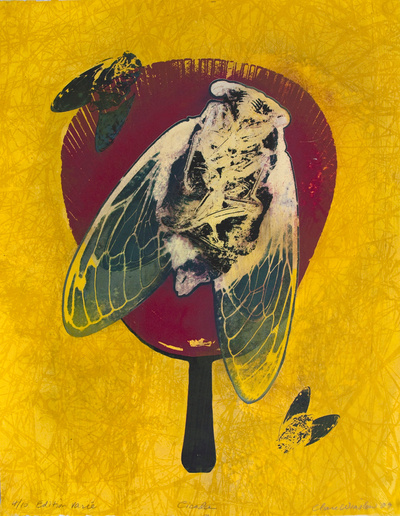
Matsuo Bashō (1644-1694)
セミ
静けさや
岩に滲み入る
蝉の声
shizukesaya
iwa ni shimiiru
semi no koe
utter silence
penetrating the rocks
the cicada’s voice
María Elena Walsh (1930-2011)
Como la Cigarra
Tantas veces me mataron,
tantas veces me morí,
sin embargo estoy aqui
resucitando.
Gracias doy a la desgracia
y a la mano con puñal
porque me mató tan mal,
y seguí cantando.
*
Cantando al sol como la cigarra
después de un año bajo la tierra,
igual que sobreviviente
que vuelve de la guerra.
*
Tantas veces me borraron,
tantas desaparecí,
a mi propio entierro fui
sola y llorando.
Hice un nudo en el pañuelo
pero me olvidé después
que no era la única vez,
y volví cantando.
*
Tantas veces te mataron,
tantas resucitarás,
tantas noches pasarás
desesperando.
A la hora del naufragio
y la de la oscuridad
alguien te rescatará
para ir cantando.
Roderic Quinn (Australia, 1867-1949)
The Song of the Cicadas
Yesterday there came to me
from a green and graceful tree
as I loitered listlessly
nothing doing, nothing caring,
light and warmth and fragrance sharing
with the butterfly and the bee,
while the sapling-tops a-glisten
danced and trembled, wild and willing
such a sudden sylvan shrilling
that I could not choose but listen
Green Cicadas, Black Cicadas,
happy in the gracious weather,
Floury-baker, Double-Drummer,
all as one and all together,
how they voiced the golden summer.
*
Stealing back there came to me
as I loitered listlessly
‘neath the green and graceful tree,
nothing doing, nothing caring,
boyhood moments spent in sharing
with the butterfly and the bee
youth and freedom, warmth and glamour
while Cicadas round me shrilling,
set the sleepy noontide thrilling
with their keen insistent clamour.
*
Green Cicadas, Black cicadas,
happy in the gracious weather
Floury-bakers, double-drummers
all as one and all together—
how they voice the bygone summers!
Marcel Pagnol (1895-1974)
La Cigale
Le soleil fendille la terre,
Aucun bruit ne trouble les champs;
On n’entend plus les joyeux chants
Des oiseaux qui chantaient naguère.
Tous par la chaleur assoupis
Sous les buissons se sont tapis.
Seule une cigale est sur l’aire.
*
Son ventre sonore se meut;
Sur une gerbe elle est posée;
Seule elle n’est point épuisée
Par l’astre à l’haleine de feu.
Et la chanteuse infatigable
Jette dans l’air brûlant et bleu
Sa ritournelle interminable.
Francesco Fabris Manini
La Cicala
La cicala del mattino frinisce
E mi sveglia su una tazzina di caffè
Bisbigliando gracili parole su ascolti assonnati
Di spettinati pensieri.
L’uscio s’apre al giorno con forzati ardori
Che dissolverà la sera sui passi
Di un solitario ritorno.
Olegário Mariano (1889-1958)
A Última Cigarra
Todas cantaram para mim. A ouvi-las,
Purifiquei meu sonho adolescente,
Quando a vida corria doidamente
Como um regato de águas intranqüilas.
*
Diante da luz do sol que eu tinha em frente,
Escancarei os braços e as pupilas.
Cigarras que eu amei! Para possui-las,
Sofri na vida como pouca gente.
*
E veio o outono… Por que veio o outono ?
Prata nos meus cabelos… Abandono…
Deserta a estrada… Quanta folha morta!
*
Mas, no esplendor do derradeiro poente,
Uma nova cigarra, diferente;
Como um raio de sol, bateu-me à porta.
正岡 子規 Masaoka Shiki (1867-1902)
セミ
tsuku tsuku boshi / tsuku tsuku boshi / bakari nari
nothing but
cic-cic-cicada
cic-cic-cicada
António Botto: “O mais importante na vida é ser-se criador – criar beleza.” / “The most important thing in life is to create – to create beauty.”
Posted: July 1, 2012 Filed under: António Botto, English, Portuguese | Tags: Gay poets Comments Off on António Botto: “O mais importante na vida é ser-se criador – criar beleza.” / “The most important thing in life is to create – to create beauty.”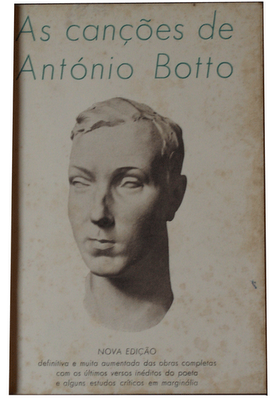
António Botto (Lisbon, Portugal, 1897-1959)
Selected poems from “Canções” (“Songs”)
In love –
Now don’t question me! –
There were always
Two kinds of men.
*
This is quite true
And greater than life’s self is.
No one down here can deny it
Or dismiss.
*
One kind of man
Looks on, without love or sin:
The other kind
Feels, grows passionate, comes in.
_____
No amor,
Não duvides amor meu –
Dois tipos de homem
Houve sempre.
*
E esta verdade
Que é maior que a própria vida,
Só por Ele – vê lá bem!,
Poderá ser desmentida.
*
– Um,
A contemplar se contenta;
E outro,
Apaixona-se, intervém…
_____
You’re wrong, I tell you again.
*
In love
The only lie we find out in the future
Is that which seems
The best truth now,
The truth that seems to fall in with our fates.
*
Love never really lies:
It simply exaggerates.
_____
Enganas-te, digo ainda.
*
No amor,
– Apenas, é mentira no futuro
Aquilo
Que nos parece uma verdade presente.
*
O amor não mente, nunca!
Exagera simplesmente.
_____
I’ve left off drinking, my friend.
Yes, I have set wine aside.
*
But if
You really want
To see me drunk –
This is between us, you see –,
Take slowly up to your mouth
The glass meant for me,
Then pass it over to me.
_____
Deixei de beber, amigo.
*
Sim, já desprezei o vinho.
*
Entanto,
Se tu afirmas que tens
O prazer de me ver ébrio,
– Que isto fique entre nós dois:
Aproxima da tua boca
A taça que me destinas,
E dá-ma depois.
_____
The most important thing in life
Is to create – to create beauty.
*
To do that
We must foresee it
Where our eyes cannot really see it.
*
I think that dreaming the impossible
Is like hearing the faint voice
Of something that wants to live
And calls to us from afar.
*
Yes, the most important thing in life
Is to create.
*
And we must move
Towards the impossible
With shut eyes, like faith or love.
_____
O mais importante na vida
É ser-se criador – criar beleza.
*
Para isso,
É necessário pressenti-la
Aonde os nossos olhos não a virem.
*
Eu creio que sonhar o impossível
É como que ouvir a voz de alguma coisa
Que pede existência e que nos chama de longe.
*
Sim, o mais importante na vida
É ser-se criador.
E para o impossível
Só devemos caminhar de olhos fechados
Como a fé e como o amor.
_____
Translations from the Portuguese: Fernando Pessoa
_____
António Botto published Canções (Songs) in
Lisbon in 1920. He was 23. And he began to rub shoulders
with the city’s intellectual élite during what was to be a short
period of bohemianism leading up to the military coup
of 1926 and the establishment of the Estado Novo (New State),
an authoritarian dictatorship.
A second edition of Canções was
printed in 1922 – and this time it created a critical furor
as “Literature of Sodom”. Botto made no secret of his
homosexuality – he flirted in public, and that took guts –
and many of his first-person-voice love poems are
frankly addressed to men. Though Fernando Pessoa – one
of Portugal’s heavyweights in the Modernist movement (and also
the translator into English of Botto’s poems) – defended Botto in
print, it was a defence of the aesthetic ideal of male beauty
– a Classical Greek (Hellenic) value that had influenced all
Mediterranean cultures – not a public endorsement of the fact that
Botto was writing about loving men. Botto was just too ahead of his time;
he was “pushing the boundaries”, as we call it now.
A conservative university-student league called verses such as
“Listen, my angel: what if I should kiss your skin,
what if I should kiss your mouth, which is all honey within?”
“disgraceful language” and Botto a “shameless”
author, pressuring the government to take action, which it did,
seizing and burning books by Botto as well as “Decadência” by Judith
Teixeira, a lesbian poet.
*
We thank University of Toronto professor Josiah Blackmore
for re-issuing the Songs of Botto; he is a poet too little known
in the English language.
William Blake: “Quinta-feira Santa” / Holy Thursday
Posted: April 5, 2012 Filed under: English, Portuguese, William Blake Comments Off on William Blake: “Quinta-feira Santa” / Holy Thursday_____
William Blake (1757-1827)
“Quinta-feira Santa”
É coisa santa de se ver,
Em terra fértil e opulenta,
Deixar na miséria um bebê,
Nutrido por mão avarenta?
*
Este grito é uma canção?
Será ela de alegria?
E tantas crianças pobres?
É uma terra de indigência!
*
E seu sol nunca tem brilho.
Seus campos secos, desertos
Seus caminhos, com espinhos
E lá é um eterno inverno.
*
Pois onde quer que o sol brilhe
Onde quer que a chuva assente:
Bebês não podem passar fome
Nem miséria assustar a mente.
(1794, Canções da Experiência)
Tradução inglês-português: Mário Alves Coutinho, Leonardo Gonçalves
_____
William Blake (1757-1827)
“Holy Thursday”
Is this a holy thing to see
In a rich and fruitful land,
Babes reduced to misery,
Fed with cold and usurious hand?
*
Is that trembling cry a song?
Can it be a song of joy?
And so many children poor?
It is a land of poverty!
*
And their sun does never shine,
And their fields are bleak and bare,
And their ways are filled with thorns:
It is eternal winter there.
*
For where-e’er the sun does shine,
And where-e’er the rain does fall,
Babe can never hunger there,
Nor poverty the mind appall.
(1794, Songs of Experience)
Editor’s note: In this poem Blake drew attention to the misery of orphans and foundlings in England.
And Maundy/Holy Thursday – the day before Good Friday – was when the monarch and the nobility
would make ostentatious displays of charity toward the poor.
 Zócalo Poets