Kerbel, Terada, Nauman: three Wordy conceptual artists – But Wait, There’s More!
Posted: March 25, 2014 Filed under: English, IMAGES | Tags: Wayne Reuben: Honest Ed's signpainter Comments Off on Kerbel, Terada, Nauman: three Wordy conceptual artists – But Wait, There’s More!
Janice Kerbel_one page of A letter by Rodolphe Boulanger de Huchette to Emma Bovary written by Gustave Flaubert in my hand
Currently, at the Art Gallery of Ontario in Toronto, Canada, there are works from the permanent collection on view by three conceptual artists who use words – just a phrase, or a crammed page – as the locus of their art. The artists are: Janice Kerbel (born 1969, Canada, now living in London, England); Ron Terada (also 1969, Canada); and Bruce Nauman (born 1941, USA).
Kerbel’s 5-poster series Remarkable, from 2007, presents the viewer with silkscreened prints on what is known as campaign poster paper – something used for 19th-century traveling circus billboard “announcements” or for election hoardings. Using bold black letters on white, Kerbel describes The Regurgitating Lady and The Human Firefly, as if inviting us in to a carnival side-show. Yet her characters are imaginary and so we become completely involved in the artist’s sometimes archaic use of language and her strong typographical arrangements.

Janice Kerbel_silkscreen print on campaign poster paper_The Temperamental Barometric Contortionist_2007
Vancouver-based Ron Terada has been very precisely focused in his art on phrases, sentences, written presentation. Twenty years ago he did a series of “ad paintings” that were a branching out of monochromatic minimalism in visual art. He worked in other media for several years then returned in 2010 with the large-scale white-on-black chapter pages of “Jack” (from a biography of painter Jack Goldstein, Jack Goldstein and the CalArts Mafia). Each chapter page is a painting – not a print. To the individual pages of a book, Terada brings the discipline of a serious painter.

Ron Terada_Jack_2010_acrylic on canvas

Ron Terada_born 1969_neon text sculpture_It is what it is It was what it was
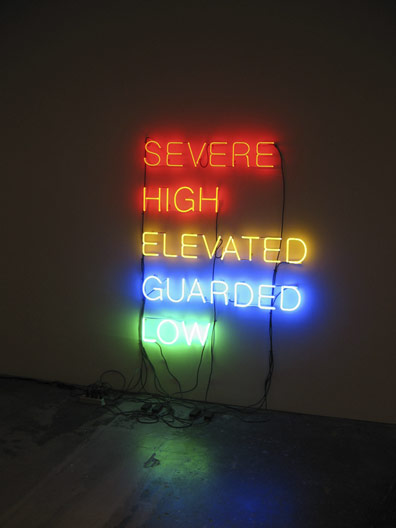
Ron Terada’s neon text sculpture, It Is What It Is, It Was What It Was, reflects on present-day use of language, offering a general critique of complacency in society. Severe High makes reference to threat definitions for Homeland Security in the USA.
Bruce Nauman is a multimedia artist who has been heavy on “concept” and “performance”. The online, user-driven encyclopedia Wikipedia describes Nauman’s “practice” as being “characterized by an interest in language, often manifesting itself in a playful, mischievous manner.” And: [Nauman is] fascinated by the nature of communication and language’s inherent problems, as well as the role of the artist as a supposed communicator and manipulator of visual symbols.”
Among the A.G.O.’s pieces are two lithographs, Ah Ha (1975) and Pay Attention (1973):


The reproduction of Pay Attention shown here (copied many times around the internet) is marred by the lack of print clarity in the word attention, which affects the viewer’s – reader’s ! – ability to quickly “get it”, that is, the power of the statement itself: Pay Attention, Motherfuckers! Interestingly, the print of Pay Attention that belongs to the A.G.O. is much clearer, so that all four words hit the mark. Which is important, especially since the statement is presented to us as a mirror image i.e. backwards.
Some of Nauman’s works now seem dated or stilted, but others have a fresh power in 2014 that comes out of our being awash now in “text” – as all words seem to be called these days – and “text” often without “context”. People’s ubiquitous use of :-) and, most especially, ;-), is indicative of the fact that words and phrases themselves are no longer adequate. What’s the tone – what’s the tone? It’s there you’ll find the meaning. The most effective of all the Nauman works at the A.G.O. is a 1985 videotape installation, Good Boy Bad Boy. There are two older-model TV sets side by side, and each shows its own videocassette of a man – mid-40s black guy, and a woman – mid-40s, white – each of whom speaks a set group of short sentences which are statements, and then does it all over again, but altering the vocal tone. To hear each of them “perform” these statements twice, changing his/her tone, is a simple and clear demonstration of the complexity and muddiness of Language. The man says: I was a bad girl. You were a bad girl. We were baaad girls. We were baaaaad! And he’s enjoying remembering being a slut. The woman says the same things and she is a scolding puritan; she may be speaking of a pet dog who pooped on the Persian carpet, or of two 12 year olds caught smoking cigarettes. Same phrases – entirely different meanings. A good contemporary example of this is two words: Hello and Whatever. Both have pleasant or neutral uses in conversation but both also can be altered via tonal change, pitch, even syllable stress, to communicate irate impatience or deliberate rudeness (Hello); and casual defiance or a kind of hybrid attitude of blasé and crass (Whatever).
Nauman is quoted at the A.G.O. exhibit: “When language begins to break down a little bit it becomes exciting and communicates in nearly the simplest way that it can function. You are forced to be aware of the sounds and the poetic parts of words.”

Some of Honest Ed’s iconic handpainted signs on display in 2012_Wayne Reuben has been, for decades, that man with the calligraphy brush and the poster paints.

Honest Ed’s signpainter, Wayne Reuben, at work in July 2013_photograph by Darren Calabrese, National Post
To whom shall we give the last Word? Why, Wayne Reuben – of course!
Wayne Reuben is the man behind the sometimes wacky ads, proclamations, commands and price cards at Honest Ed’s discount store, the building structure of which is a vivid Toronto landmark, what with the thousands of marquee bulbs that light up its red and yellow exterior. It’s Reuben’s handiwork when, out on the sidewalk, you read: Come In And Get Lost! And it’s Reuben’s blue and red paint letters that tell you, once you’re inside: Don’t Just Stand There – Buy Something!
Two weeks ago, hundreds of Torontonians lined up around the block to get the chance to pore over Mr. Reuben’s thousand-plus handpainted signs that Ed’s never trashed over the decades. The lucky buyer might’ve come away with Fancy Panties or Men’s Mesh Tops, a sign in the shape of a Hallowe’en pumpkin that reads WIGS $6.99, lovingly handpainted price boards for tinned sardines, coconut milk, hair grease or pomades – even Justin Bieber-photosilkscreened pyjamas. Along with Doug Kerr, the left-handed Reuben writes/paints in something like a serif font (and sans serif), to spell out Ed’s commercial message; and the tempera paint palette is strong and basic: blue, red, yellow, black.
So why would people line up to buy ephemeral signboards for 5 to 40 dollars? Is it nostalgia for the handmade? Or the curvilinear ease of Reuben’s brushstroke? No. It’s because Honest Ed Is For The Birds: Cheap Cheap Cheap!
;-)
Haiku harusamu 寒き春(さむきはる) / Haiku for This Cold Spring…Kyoshi & Issa
Posted: March 20, 2014 Filed under: English, Issa, Japanese, Kyoshi | Tags: Spring Haiku Comments Off on Haiku harusamu 寒き春(さむきはる) / Haiku for This Cold Spring…Kyoshi & Issa
Takahama Kyoshi (1874-1959)
Translations by Katsuya Hiromoto
.
春風や闘志いだきて丘に立つ
harukaze ya / tohshi idaki te / oka ni tatsu
.
Spring wind:
Full of fight
I stand on the hill
.
眼つむれば若き我あり春の宵
Me tsumureba / wakaki ware ari / haru no yoi
.
Shutting my eyes
I find a young me found
In the spring evening
.
この庭の遅日の石のいつまでも
Kono niwa no / chijitsu no ishi no / itsumademo
.
The rocks in this garden
Remain forever
In the lengthening days of spring
.
何事も知らずと答へ老の春
Nanigoto mo / shirazu to kotae / oi no haru
.
”I know nothing”
Is my answer:
Spring in my old age
.
これよりは恋や事業や水温む
kore-yori wa / koi ya jigyoh ya / mizu nurumu
.
From this time on
Love, enterprise, and such:
Water has warmed up
. . .
The following haiku by Kyoshi were translated by Aya Nagayama and James W. Henry:
.
時ものを解決するや春を待つ
Toki mono o kaiketsu suru ya haru o matsu
.
May time solve
Worries and difficulties –
Awaiting the spring
(1914)
.
金の輪の春の眠りにはひりけり
Kin no wa no haru no nemuri ni hairikeri
.
I have entered
The golden circle of
Spring slumber
(1942)
.
闘志尚存して春の風を見る
Tohshi nao sonshite haru no kaze o miru
.
Steadfast in my soul
My fighting spirit remains
And I see the spring breeze
(1950)
.
独り句の推敲をして遅き日を
Hitori ku no suikou o shite osoki hi o
.
In your solitude
Honing and perfecting your haiku –
On a slow spring day
(1959)
. . .
Plus: two by Issa – to have with your cup of tea :-)
(Issa was the haiku pen-name of Kobayashi Nobuyuki Yataro. Issa means Cup of Tea.)
Issa / 一茶 (1763-1828)
.
まん六の春と成りけり門の雪
manroku no haru to nari keri kado no yuki
.
some “proper spring”
this is!
snow at the gate
(1822)
.
春立や愚の上に又愚にかへる
haru tatsu ya gu no ue ni mata gu ni kaeru
.
spring begins –
more foolishness
for this fool
(1823)
. . . . .
Thomas Moore: “A Canadian Boat Song”
Posted: March 17, 2014 Filed under: English, Thomas Moore | Tags: Poems for Saint Patrick's Day Comments Off on Thomas Moore: “A Canadian Boat Song”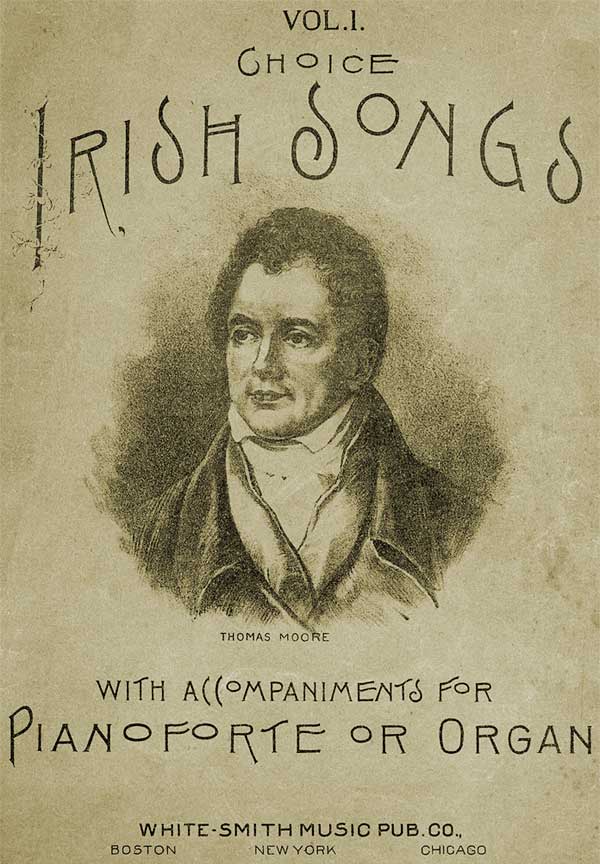
Irish songbook_published in 1892 in the USA, with an engraving of Thomas Moore on the cover
.
Thomas Moore (Irish poet, singer, songwriter, born Dublin, 1779-1853)
”A Canadian Boat Song” (1804)
. . .
Thomas Moore, who would later be renowned for poems and songs such as “The Minstrel Boy”, “The Last Rose of Summer” and “Believe Me, If All Those Endearing Young Charms”, visited Canada when he was 25 years old. He wrote “A Canadian Boat Song” during his time here in 1804.
.
*St. Anne’s: Moore visited this church – Ste-Anne-du-Bout-de-l’île–located in the town of Ste. Anne de Bellevue, on the tip of Montreal Island where the St. Lawrence River joins the Ottawa River.
*Utawa: an 18th/early 19th-century spelling of Ottawa
*“this green isle”: Montreal Island (L’île de Montréal )
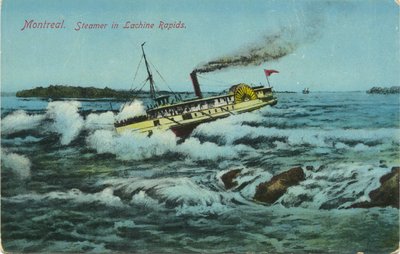
The Lachine Rapids, near Montreal Island_early 20th century postcard_These are The Rapids that Thomas Moore wrote about in his A Canadian Boat Song.
. . .
Zocalo Poets Editor’s Note:
My mother Eileen is a native of Belfast, Northern Ireland, though her family emigrated to Canada more than sixty years ago. Ma is in her eighties now, and she most definitely lives in the “here and now”. Yet she has powerful memories of those early years in the new country. She tells me: “I learned A Canadian Boat Song in the early 1950s, after coming to Canada. It was a camp song for the Eaton’s Girls’ Club up at Shadow Lake near Uxbridge. …I also have a memory from back in Ireland: the sound of a marching flute band going by. As children, we simply followed the band, and whistled and sang, as they marched along. They were playing “The Minstrel Boy” by Thomas Moore – and all of it on flutes!”
.
For more favourite poems of my mother, click on the following ZP link:
.

Montreal celebrated its 191st St.Patrick’s Day Parade on Sunday, March 16th, 2014.
. . . . .
Seamus Heaney: ”El Subterráneo”: versión de Óscar Paúl Castro
Posted: March 17, 2014 Filed under: English, Seamus Heaney, Spanish Comments Off on Seamus Heaney: ”El Subterráneo”: versión de Óscar Paúl Castro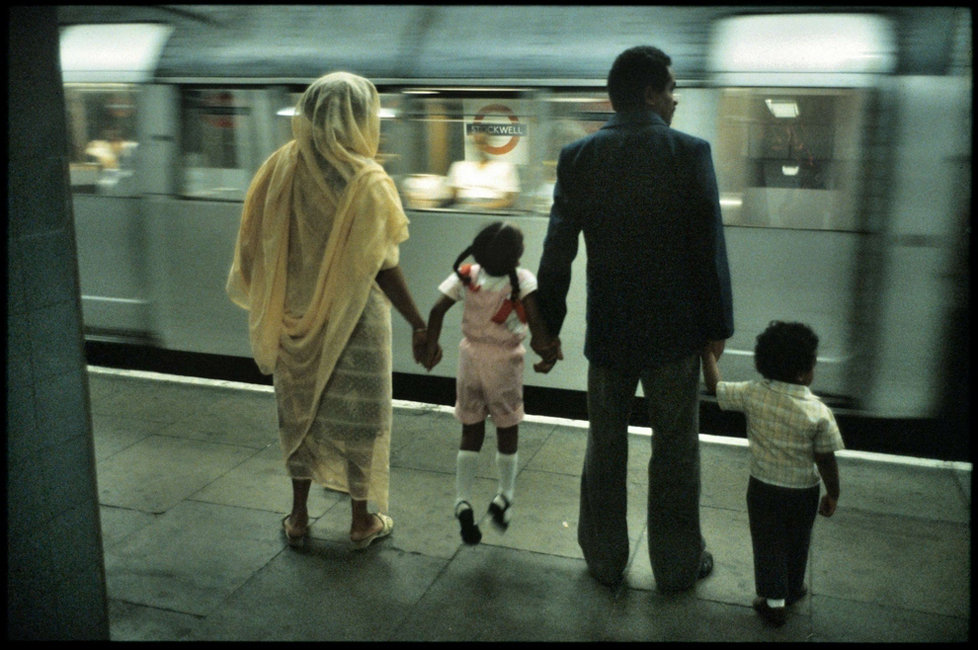
1980s photograph from Bob Mazzer’s decades-long “camera journal” about London’s subway system a.k.a. The Underground_Bob Mazzer, fotógrafo_foto del Metro o Subterráneo de Londres, años 1980
Seamus Heaney (Poeta irlandés, 1939-2013)
”El Subterráneo” (versión de Óscar Paúl Castro)
.
Corríamos envueltos por la bóveda del túnel,
Tú ibas adelante, llevabas puesto tu abrigo bueno,
Y yo, como un ágil dios, ya casi lograba darte alcance
Cuando repentinamente viraste al advertir una brizna de hierba
.
O alguna una blanca flor reciénnacida, jaspeada de rojo,
Tu abrigo se plegó con violencia y uno tras otro
Se desprendieron los botones, marcando el camino
Que va del Subterráneo al Albert Hall.
.
Era nuestra luna de miel, pasamos el día vagando y se nos hizo
Tarde para el concierto de los Proms, el eco de nuestros pasos aún
Muere en ese corredor; por eso ahora vuelvo, como Hansel bajo la luz
De la luna desandando el camino de piedras, recogiendo botón tras botón
.
Hasta llegar a esta fría estación iluminada con luz artificial
De la que ya han partido todos los trenes, las desnudas vías ―como mi ser―
Están tensas y empapadas, toda mi atención concentrada en el eco
De tus pasos tras de mí, la maldición caerá sobre nosotros si miro atrás.
. . .
Óscar Paúl Castro, traductor (Culiacán, México,1979): Sr. Castro ha publicado traducciones en las revistas TextoS, Punto de Partida, Periódico de Poesía de la UNAM, en Refundación, Espiral y Timonel.
.

Bob Mazzer, photographer_from his London subway series, 1980s_Bob Mazzer, fotógrafo_foto del Metro o Subterráneo de Londres, años 1980
”The Underground” (1984)
.
There we were in the vaulted tunnel running,
You in your going-away coat speeding ahead
And me, me then like a fleet god gaining
Upon you before you turned to a reed
.
Or some new white flower japped with crimson
As the coat flapped wild and button after button
Sprang off and fell in a trail
Between the Underground and the Albert Hall.
.
Honeymooning, moonlighting, late for the Proms,
Our echoes die in that corridor and now
I come as Hansel came on the moonlit stones
Retracing the path back, lifting the buttons
.
To end up in a draughty lamplit station
After the trains have gone, the wet track
Bared and tensed as I am, all attention
For your step following and damned if I look back.
. . . . .
Seamus Heaney: “Ruedas dentro de ruedas”: versión de Miguel A. Montezanti
Posted: March 17, 2014 Filed under: English, Seamus Heaney, Spanish Comments Off on Seamus Heaney: “Ruedas dentro de ruedas”: versión de Miguel A. Montezanti
Un extracto del comentario por el traductor Miguel A. Montezanti:
”La traducción debería presentarse por sí sola, criatura libre…Pero diré que Seamus Heaney es un poeta difícil de traducir: apenas puede aspirarse a reproducir lo que dice, lo cual en poesía, como se sabe, puede no ser lo más importante. [Importan mucho] su autorreferencialidad lingüística, asentada sobre la dialéctica sutil entre el gaélico y el inglés, su riqueza sonora, y su rescate de formas sucintas pero complejas…”
.
Seamus Heaney
(nacido en “Mossbawn”, Castledawson, Condado de Londonderry, Irlanda del Norte, 1939-2013)
Ruedas dentro de ruedas
I.
La primera captación en serio que tuve de las cosas.
fue cuando aprendí el arte de pedalear
(con la mano) una bici, colocada al revés
e impulsé la rueda trasera preternaturalmente ligero.
Yo amaba la desaparición de los rayos
el modo como el hueco entre el eje y la llanta
susurraba transparente. Si le arrojabas
una papa, el aire enmarcado en el aro
revolvía papilla y te la salpicaba en la cara;
si lo tocabas con una paja, la pajita chasqueaba.
Algo acerca del modo de esos impulsos pedaleros
funcionaba al principio muy palpablemente en tu contra
y luego comenzaba a impeler tu mano hacia delante
hacia un envión nuevo…; todo eso entraba en mí
como un acceso de poder libre, como si la fe
capturara y revolviera los objetos de la fe
en una órbita lindera con la añoranza.
II
Pero lo bastante no era bastante. ¿Quién ha visto
alguna vez el límite de lo otorgado?
En unos campos más allá de casa había un pozo
(lo llamábamos “El pozo”. Era más que un agujero
con agua, con espinos pequeños
de un lado, y del otro, un fango cenagoso
todo pisoteado por ganado).
También amaba eso. Amaba el olor turbio,
la vida sumidera del lugar como aceite viejo de cadena.
Allí, acto seguido, llevé la bicicleta.
coloqué el asiento y el manubrio
en el fondo suave, hice que las cubiertas
tocaran la superficie del agua y luego di vuelta los pedales
hasta que, como una rueda de molino arrojando con el pedaleo,
(pero aquí a la inversa y azotando una cola de caballo)
la rueda trasera sumergida, refrescando el mundo
revolvía un rociado y espuma de suciedad ante mis ojos
y me bañaba con mis propios barros regenerados.
Durante semanas hice un nimbo de viejo destello.
Luego el eje se engranó, las llantas se oxidaron, la cadena se cortó.
III
Nada igualó esa ocasión después de aquello
hasta que en el circo, entre tambores y spots,
chicas vaqueras giraron, cada una inmaculada
en el centro inmóvil de un lazo.
Perpetuum mobile. Pura pirueta
Acróbatas, funambuleros. Volteretas. Stet!
. . .
Wheels within wheels
I / The first real grip I ever got on things / Was when I learned the art of pedalling / (By hand) a bike turned upside down, and drove / Its back wheel preternaturally fast. / I loved the disappearance of the spokes, / The way the space between the hub and rim / Hummed with transparency. If you threw / A potato into it, the hooped air / Spun mush and drizzle back into your face; / If you touched it with a straw, the straw frittered. / Something about the way those pedal treads / Worked very palpably ay first against you / And then began to sweep your hand ahead / Into a new momentum – that all entered me / Like an access of free power, as if relief / Caught up and spun the objects of belief / In an orbit coterminous with longing.
II / But enough was not enough. Who ever saw / The limit in the given anyhow? / In fields beyond our house there was a well / (‘The well’ we called it. It was more a hole / With water in it, with small hawthorn trees / On one side, a muddy, dungy ooze / On the other, all tramped through by cattle). / I loved that too. I loved the turbid smell, / The sump-life of the place like old chain oil. / And there, next thing, I brought my bicycle. / I stood its saddle and its handlebars / Into the soft bottom, I touched the tyres / To the water’s surface, then turned the pedals / Until like a mill-wheel pouring at the treadles / (But here reversed and lashing a mare’s tail) / The world-refreshing and immersed back wheel / Spun lace and dirt-suds there before my eyes / And showered me in my own regenerate clays. / For weeks I made a nimbus of old glit. / Then the hub jammed, rims rusted, the chain snapped.
III / Nothing rose to the occasion after that / Until, in a circus ring, drumrolled and spotlit, / Cowgirls wheeled in, each one immaculate / At the still centre of a lariat. / Perpetuum mobile. Sheer pirouette. / Tumblers, jongleurs. Ring-a-rosies. Stet !
. . . . .
Robert Leighton & Henry Van Dyke: “Late Spring” / John Clare: “The Winter’s Spring”
Posted: March 16, 2014 Filed under: English, John Clare, Robert Leighton Comments Off on Robert Leighton & Henry Van Dyke: “Late Spring” / John Clare: “The Winter’s Spring”
Robert Leighton (born Dundee, Scotland, 1822-1869)
Late Spring
.
Spring is with us by the sun,
Yet it has not given us one
Little snow-drop to remind us
That the flowery days are near:
For the winds are blowing chilly,
And the firstling of the year
Slumbers with the sleeping lily,
‘Neath their coverlet, the sere
And sodden mortcloth that old Autumn
Lay with on her bier.
.
Spring is with us by the date,
And Winter cancell’d: yet we wait
Balmly fingers to unbind us,
Roots and budlets to unfold.
But the herald larks are roaming
Up the heights of blue and gold:
They can see the Spring a-coming
While we shiver in the cold.
Hark! they sing to Him who taught them
Notes so sweet and bold.

Henry Van Dyke (born Germantown, Pennsylvania, USA, 1852-1933)
Late Spring (excerpt)
Come, put your hand in mine,
True love, long sought and found at last,
And lead me deep into the Spring divine
That makes amends for all the wintry past.
For all the flowers and songs I feared to miss
Arrive with you;
And in the lingering pressure of your kiss
My dreams come true;
And in the promise of your generous eyes
I read the mystic sign
Of joy more perfect made
Because so long delayed,
And bliss enhanced by rapture of surprise.
Ah, think not early love alone is strong;
He loveth best whose heart has learned to wait:
Dear messenger of Spring that tarried long,
You’re doubly dear because you come so late.

John Clare (born Helpston, Northamptonshire, England, 1793-1864)
The Winter’s Spring
.
The winter comes; I walk alone,
I want no bird to sing;
To those who keep their hearts their own
The winter is the spring.
No flowers to please–no bees to hum–
The coming spring’s already come.
.
I never want the Christmas rose
To come before its time;
The seasons, each as God bestows,
Are simple and sublime.
I love to see the snowstorm hing;
‘Tis but the winter garb of spring.
.
I never want the grass to bloom:
The snowstorm’s best in white.
I love to see the tempest come
And love its piercing light.
The dazzled eyes that love to cling
O’er snow-white meadows see the spring.
.
I love the snow, the crumpling snow
That hangs on everything,
It covers everything below
Like white dove’s brooding wing,
A landscape to the aching sight,
A vast expanse of dazzling light.
.
It is the foliage of the woods
That winters bring–the dress,
White Easter of the year in bud,
That makes the winter Spring.
The frost and snow his posies bring,
Nature’s white spurts of the spring.
Las Desaparecidas canadienses: El Día Internacional de la Mujer 2014 / International Women’s Day 2014
Posted: March 8, 2014 Filed under: Anna Marie Sewell, English, Spanish, ZP Translator: Alexander Best Comments Off on Las Desaparecidas canadienses: El Día Internacional de la Mujer 2014 / International Women’s Day 2014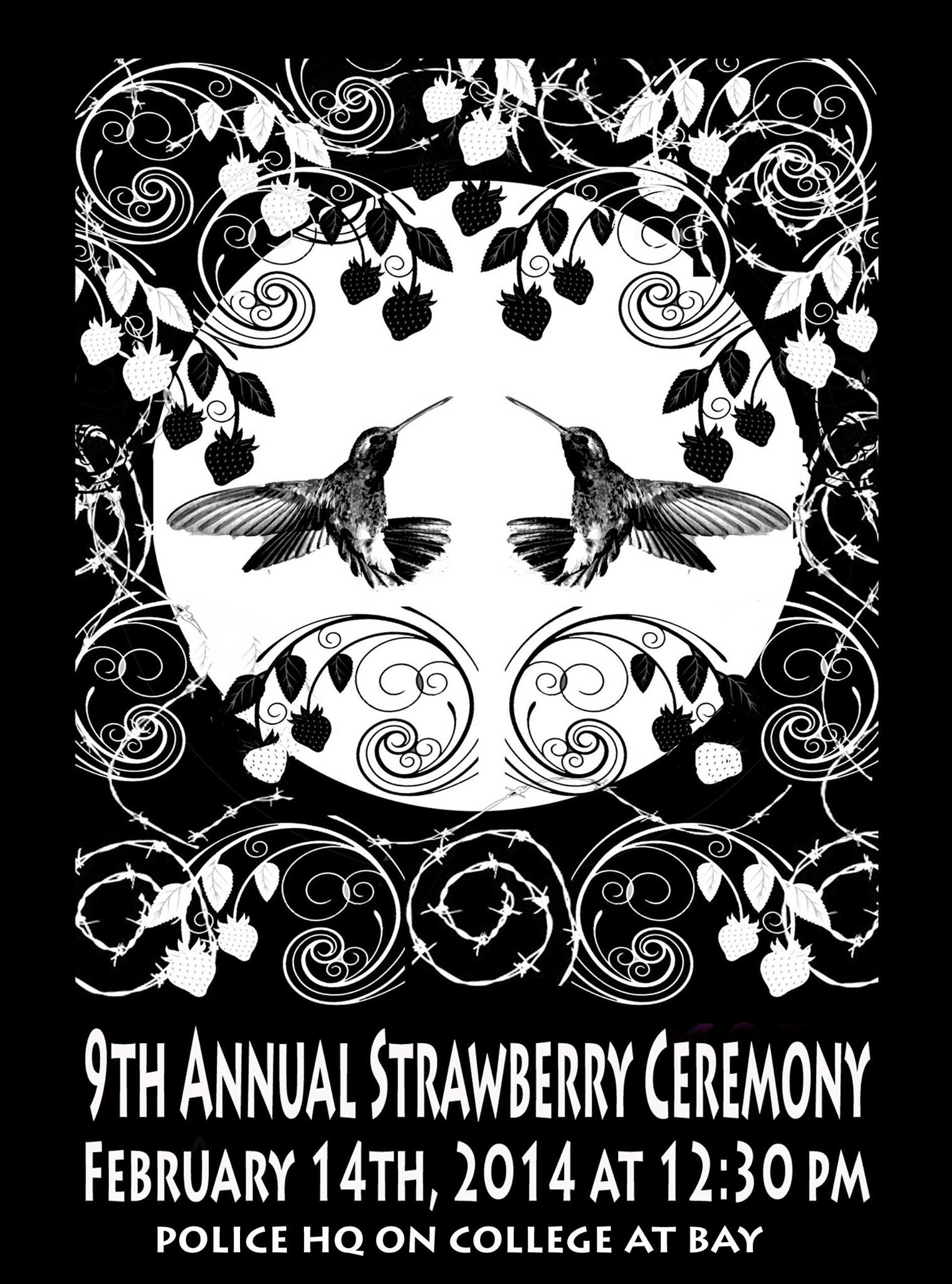
Ceremonia de Fresa (“Baya de Corazón”) por Las Mujeres Indígenas – Desaparecidas o Matadas – en Canadá_Lugar: en frente de la sede central de policía en Toronto_14 de febrero, 2014_Strawberry Ceremony 2014_For Missing or Murdered Aboriginal Women in Canada_Toronto, Canada
.
Anna Marie Sewell
“Lavando el Mundo”
.
En la oscuridad al fin de este año,
hay tanto amontanado contra la luz entre nosotros,
contra las “apuestas”,
a pesar de las lágrimas, en el viento amargo de esta estación;
Escucha el sueño en que las abuelas se mantienen
– hombro con hombro –
al borde de una colina,
inclinándose al unísono, agarrando una cosa – juntas.
Pregúntales, en su mundo de sueños: ¿Porqué lloran ustedes?
Y te mostraron sus chales en muchos colores, extenderán sus alas,
te barrerán dentro de ellas para enseñarte como
– una vez, cada año –
cuando hace el tiempo más oscuro,
lavamos el mundo entero durante solamente un día.
Un día para llorar.
.
De un alba al próximo:
recordando a los caídos,
lamentando a los destrozados,
gimiendo por nuestros arrepentimientos.
El amor perdido, las palabras injustas y acciones malas;
momentos desequilibrados…
y todas las rajaduras entre corazón y corazón,
entre padre y criatura,
entre el amante y su querida amiga,
entre nación y nación,
animal – y animal del otro tipo.
.
Por lo que escogemos y lo que descuidamos,
por lo que deseamos que habíamos sabido,
por cada mano soltado / cada lengua desenfrenada,
un susurro quedándose corto y inaúdito;
el pan lejos del hambre;
la disculpa;
el desconcierto;
el camino fracturado.
.
Estas cosas que recogemos en esta cobija
– pardo, carmelito, canela –
Lavamos el Mundo, y entre nosotros
agarramos la cobija, llenándola con lágrimas.
Y cuando hemos llorado
– de un alba al próximo –
pues subiremos y bailaremos,
acunando un océano de tinieblas amargas que nos cura.
.
Déjales poner tus manos sobre la verdad de una belleza perdida
– intensa pero blanda como musgo –
y esta cobija lleno de las lágrimas del polvo y de los moribundos
se vuelve
– al momento que llega la luz del amanecer –
la promesa lavada y limpia por nuestra pena.
No es – tanto – la redención
sino la lógica de las estaciones que
clama por la justicia, para recuperar el ritmo.
Algun día, los legisladores tendrán que salir de sus salones de ecos, y
juntarse con la danza de la abuela,
para llevarla y llorarla – limpiada – hasta que
la luz pasa a través de sus cuerpos y
traduce a un arco de iris a lo largo de la tierra.
Ella me dice éso – y sus ojos están rojos.
Y encoge los hombros.
Y camina arduamente por el manto profundo de nieve
que cubre este resto de un otro año
esperando.
.
Versión de Alexander Best
. . .
Anna Marie Sewell
“Washing the World”
.
In the dark at this end of the year,
so much stacked up against the light
between us, against the odds,
despite the tears, in this season’s bitter wind,
listen to a dream
in which grandmothers stand
shoulder to shoulder, on the rim of a hill,
they bend as one, and grasp one thing together.
Ask them, in the dream world, why
do they cry?
And they will show you in reply:
their shawls of many colours, spread these wings,
sweep you in and teach you how
once a year, in the dark of the year,
we wash the whole world in a day.
For one day, we cry.
.
From one dawn to the next:
remembering the fallen
mourning for the broken
wailing for regrets.
Love lost, wrong words, wrong actions,
unbalanced moments and all the cracks
between heart and heart, parent and child,
lover and beloved friend, nation and nation,
creature, and creature of another kind.
.
For what we choose and what we neglect to choose,
for what we wish we’d known,
for each hand unclasped,
the tongue unbridled,
one whisper falling short of heard,
the bread far from the hunger,
the apology,
the confusion,
the broken road.
.
These things we gather in this blanket,
brown and sand and beige,
we wash the world, between us
we hold this blanket, fill it with our tears,
and when we have cried
from one dawn to the next,
then we will rise, and we dance
cradling this ocean, bitter, healing, dark.
Let them lay your hands upon the truth of beauty lost,
heavy, soft as moss,
this blanket full of tears and dust and dying
becomes, as the light is returning,
the promise,
washed clean
by our sorrow.
Not so much redemption
as the logic of seasons
calls for justice, to restore the rhythm
one day, the lawmakers must exit
their echoing halls, fall in
with the grandmother’s
dancing,
carrying it,
cry it clean,
until light through their bodies
translates to rainbows strung over the land.
She tells me that – her eyes all red.
And shrugs.
And trudges off through the deep
snow blanket that covers
this end of another year
waiting.
. . .
Anna Marie Sewell is Ojibway, and Mi’kmaw from Listuguj Mi’kmaw First Nation in Québec – Polish, too! She is the author of Fifth World Drum (Frontenac House, 2009) and was Edmonton’s 4th Poet Laureate (2011-2013). She has other work as well – as part of The Learning Centre Literacy Association at http://prairiepomes.com/tag/anna-marie-sewell/.
Sewell will be opening for Joy Harjo at the Edmonton Poetry Festival – April 20th, 2014.
.
As with Las Mujeres de Juarez in México, so too in Canada, Native Women who are poor and therefore invisible become “Las Desaparecidas canadienses” (The Vanished Canadian Women). They are our oh-so-progressive country’s Open-Secret Shame. Women from small towns and Reserves, faceless in big Canadian cities; the roll call of missing or dead along British Columbia’s “Highway of Tears”…There are eight hundred Native and Inuk women who have gone missing – or have been found murdered – often without resolution of the crime – in the last two decades in Canada. This has occurred in a nation with statistically low murder rates nationally. The pattern is a systemic one; the disappearance of these women and girls is not important enough in Canadian society for a concerted effort at crime-solving; their lives are expendable because they are not “mainstream”. With all due respect to her untimely end, they are no Jane Creba.
Jorge Antonio Vallejos, a.k.a. Black Coffee Poet, has been concerned with just such human-rights issues for several years now. For a committed perspective about this national tragedy – violence against women – visit Vallejos’ site: http://blackcoffeepoet.com/.
. . . . .
Kaiso – Calypso – Soca: Pepper It T&T-Style !
Posted: February 28, 2014 Filed under: English: Trinidadian, IMAGES | Tags: Black History Month Comments Off on Kaiso – Calypso – Soca: Pepper It T&T-Style !
McCartha Linda Sandy-Lewis, better known as Calypso Rose_The greatest of the female Calypsonians, and still going strong in her 70s…
.
Through great extemporaneous performers, singers, composers and arrangers, Calypso music has been evolving for more than a century. The Roaring Lion, Lord Invader, Lord Pretender, Lord Kitchener, Calypso Rose, Lord/Ras Shorty, David Rudder – the list could go on and on; so many have been innovators or have deepened the tradition. Political, social and sexual commentary, as well as a healthy joie-de-vivre for fête-ing, have all characterized Calypso. The music has branched out into Chutney Soca via Indian pioneers such as Drupatee Ramgoonai; has voyaged through temporary influences from Ragga and Dancehall; has even fallen prey to the ghastly Auto-Tune audio processor so rampant in popular music. Still, Calypso at its best – and it still can be at its best – can’t be beat. (Except maybe by Pan !)
.
Julian Whiterose’s “Iron Duke in the Land” – the first-ever Kaiso (Calypso) recording, from 1912:
.
Lord Executor’s “I don’t know how de young men livin’” (1937):
.
Lord Executor
“I don’t know how de young men livin’” (1937)
.
I don’t know how de young men livin’, dey never have a shillin’,
I don’t know how de young men livin’, dey never have a shillin’ –
Tommy, open de door, give me de bottle and lemme go,
Tommy, open de door, give me meh bottle and lemme go.
.
In de day he walk ’bout, only comin’ with his sweet mouth.
Calling for his minou, callin’ pound-plantain and callaloo – Ah,
Tommy, open de door, give me de bottle and lemme go,
Tommy, open de door, give me meh bottle and lemme go.
.
In de night he come an’ peep, only longing for a place to sleep,
And to cast his weary head as a lump of lead on de cosy bed – Ah,
Tommy, open de door, give me de bottle and lemme go,
Tommy, open de door, give me meh bottle and lemme go.
.
You can see dat villain next day, half crazy and toutoulbey.
His watchikong, goodness knows, and half of his feet expose – Ah,
Tommy, open de door, give me de bottle and lemme go,
Tommy, open de door, give me meh bottle and lemme go.
.
Who can measure de human mind when it is uncultured and unrefined?
An impulse of society – and not to be mentioned in history!
Tommy, open de door, give me de bottle and lemme go,
Tommy, open de door, give me meh bottle and lemme go!
.
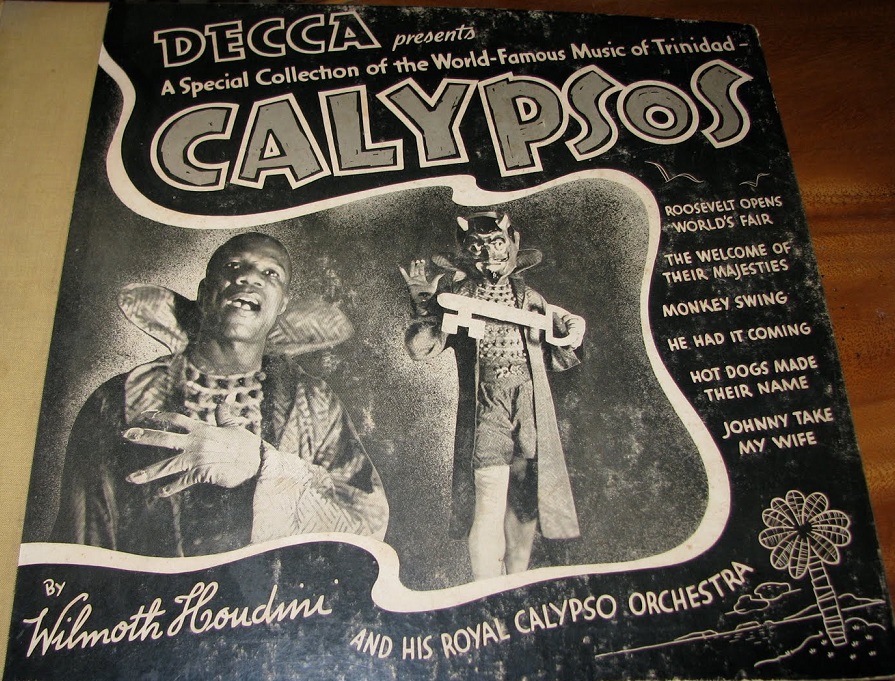
Frederick Wilmoth Hendricks a.k.a. Wilmoth Houdini (1895-1977)_1939 Calypsos recorded in NYC by the Trinidadian native
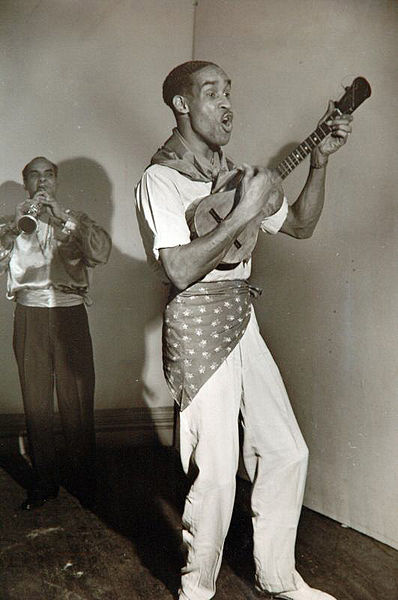
Duke of Iron_1940s
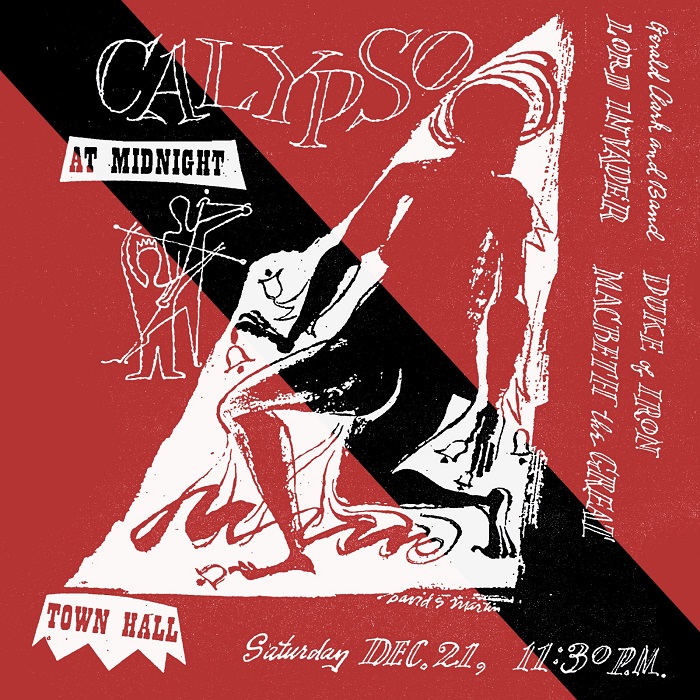
A recording of a 1946 Calypso concert in NYC featuring Lord Invader, Duke of Iron, and MacBeth the Great
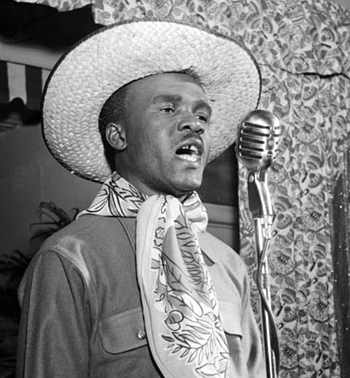
Lord Invader_1940s
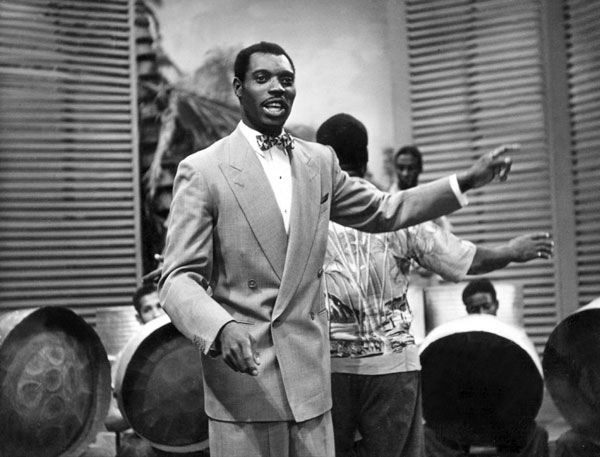
Lord Kitchener in 1951
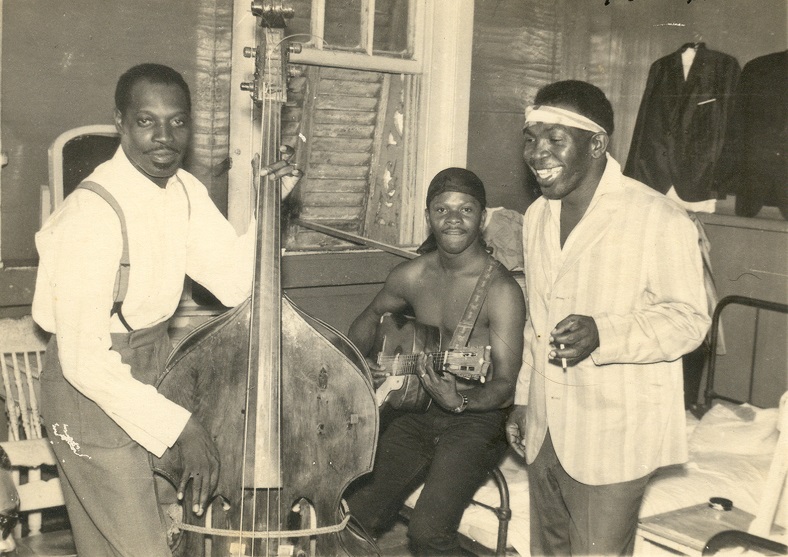
1962: Lord Kitchener, Lord Superior and Lord Melody_Kitch, Supie and Mel were in Georgetown, Guyana for a calypso show.
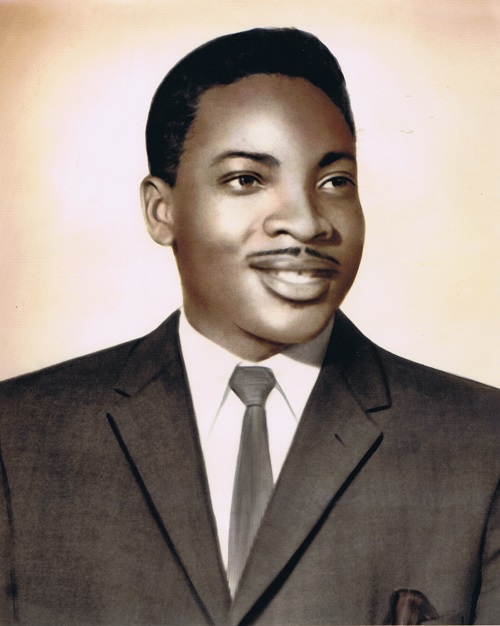
The Mighty Sparrow_early 1960s
“Your calypso name is given to you by your peers, based on your style. In the old days they tried to emulate British royalty. There was Lord Kitchener, Lord Nelson, Duke. When I started singing, the bands were still using acoustic instruments and the singers would stand flat footed, making a point or accusing someone in the crowd with the pointing of a finger, but mostly they stood motionless. When I sing, I get excited and move around, much like James Brown – and that was new to them. The older singers said “Why don’t you just sing instead of hopping around like a little Sparrow.” It was said as a joke, but the name stuck.” (The Mighty Sparrow, interviewed)
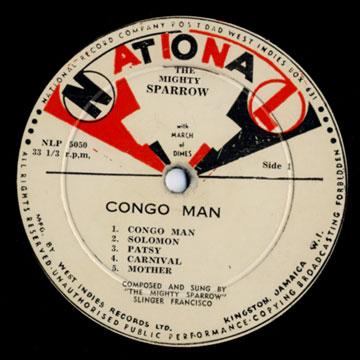
The Mighty Sparrow_Congo Man album from 1965_The calypso single Congo Man itself has been banned in the past for radio play but it demonstrates devilish wit and honesty along with the controversy. A song of its time, though politically incorrect in the 21st century !
The Mighty Sparrow’s “Jean and Dinah” (Yankees Gone) (1956):
.
Calypso Rose’s “Palet” (Popsicle) from the 1970s:
.
Lord Shorty’s “Endless Vibrations”(1974):
.
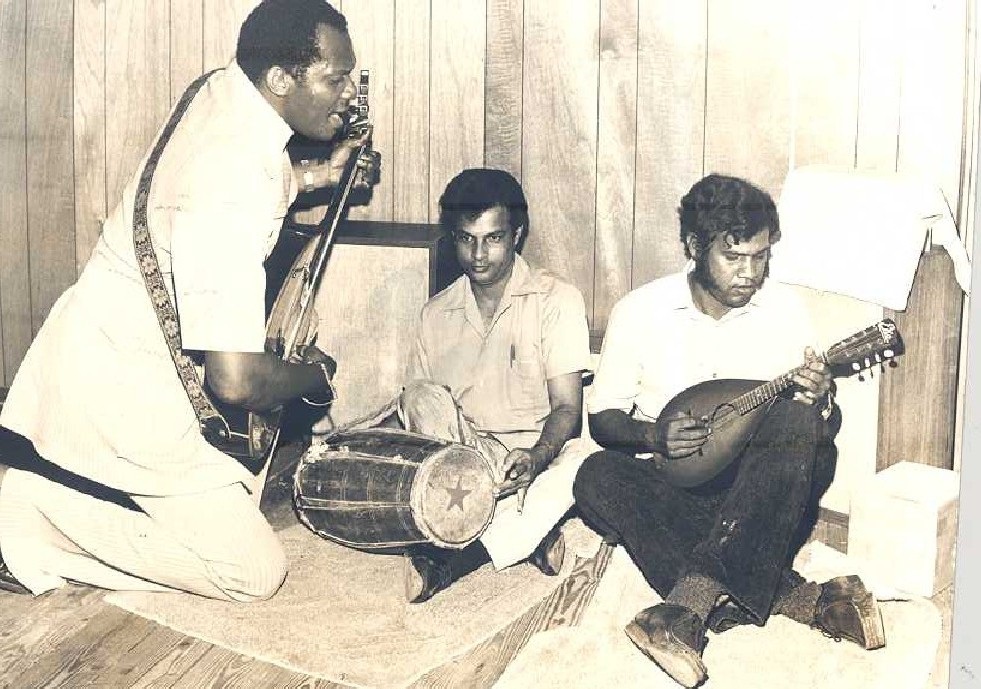
Lord Shorty (later Ras Shorty) with Robin Ramjitsingh and Bisram Moonilal_early 1970s


Lord Kitchener record album cover_Hot Pants, from 1972
Black Stalin (Leroy Calliste, born 1941, San Fernando, Trinidad)
“Caribbean Unity” (1979)
.
You try with a federation
De whole ting get in confusion
Caricom and then Carifta
But some how ah smellin disaster
Mister West Indian politician
I mean yuh went to big institution
And how come you cyah unite 7 million?
When ah West Indian unity I know is very easy
If you only rap to yuh people and tell dem like me – dem is:
.
One race (de Caribbean man)
From de same place (de Caribbean man)
Dat make de same trip (de Caribbean man)
On de same ship (de Caribbean man)
So we must push one common intention
Is for a better life in de region
For we woman, and we children
Dat must be de ambition of de Caribbean man
De Caribbean man, de Caribbean man…
.
You say dat de federation
Was imported quite from England
And you goin and form ah Carifta
With ah true West Indian flavour
But when Carifta started runnin
Morning, noon and night all ah hearin
Is just money-speech dem prime minister givin
Well I say no set ah money could form ah unity
First of all your people need their identity, like:
.
One race (de Caribbean man)
From de same place (de Caribbean man)
Dat make de same trip (de Caribbean man)
On de same ship (de Caribbean man)
So we must push one common intention
Is for a better life in de region
For we woman, and we children
Dat must be de ambition of de Caribbean man
De Caribbean man, de Caribbean man…
.
Caricom is wastin time
De whole Caribbean gone blind
If we doh know from where we comin
Then we cyah plan where we goin
Dats why some want to be communist
But then some want to be socialist
And one set ah religion to add to de foolishness!
Look, ah man who doh know his history
He have brought no unity
How could ah man who doh know his roots form his own ideology? – like:
.
One race (de Caribbean man)
From de same place (de Caribbean man)
Dat make de same trip (de Caribbean man)
On de same ship (de Caribbean man)
So we must push one common intention
Is for a better life in de region
For we woman, and we children.
Dat must be de ambition of de Caribbean man
De Caribbean man, de Caribbean man…
.
De Federation done dead and Carifta goin tuh bed
But de cult of de Rastafarian spreadin through de Caribbean
It have Rastas now in Grenada, it have Rastas now in St. Lucia,
But tuh run Carifta, yes you gettin pressure
If the Rastafari movement spreadin and Carifta dyin slow
Then there’s somethin that Rasta done that dem politician doh know – that we:
.
One race (de Caribbean man)
From de same place (de Caribbean man)
Dat make de same trip (de Caribbean man)
On de same ship (de Caribbean man)
So we must push one common intention
Is for a better life in de region
For we woman, and we children
Dat must be de ambition of de Caribbean man
De Caribbean man, de Caribbean man!
.
Caricom:
The Caribbean Community (CARICOM) is an organization of more than a dozen nations and dependencies, established during the 1970s. Its main purposes have been to promote economic integration and cooperation among its members, to ensure that the benefits of integration are equitably shared, and to coordinate foreign policy.
The Caribbean Free Trade Association was formed in the 1960s among English-speaking Caribbean nations to make economic links more streamlined. Diversifying and liberalizing trade plus ensuring fair competition have all been CARIFTA goals.
.
Black Stalin’s “Caribbean Unity” (1979):
.
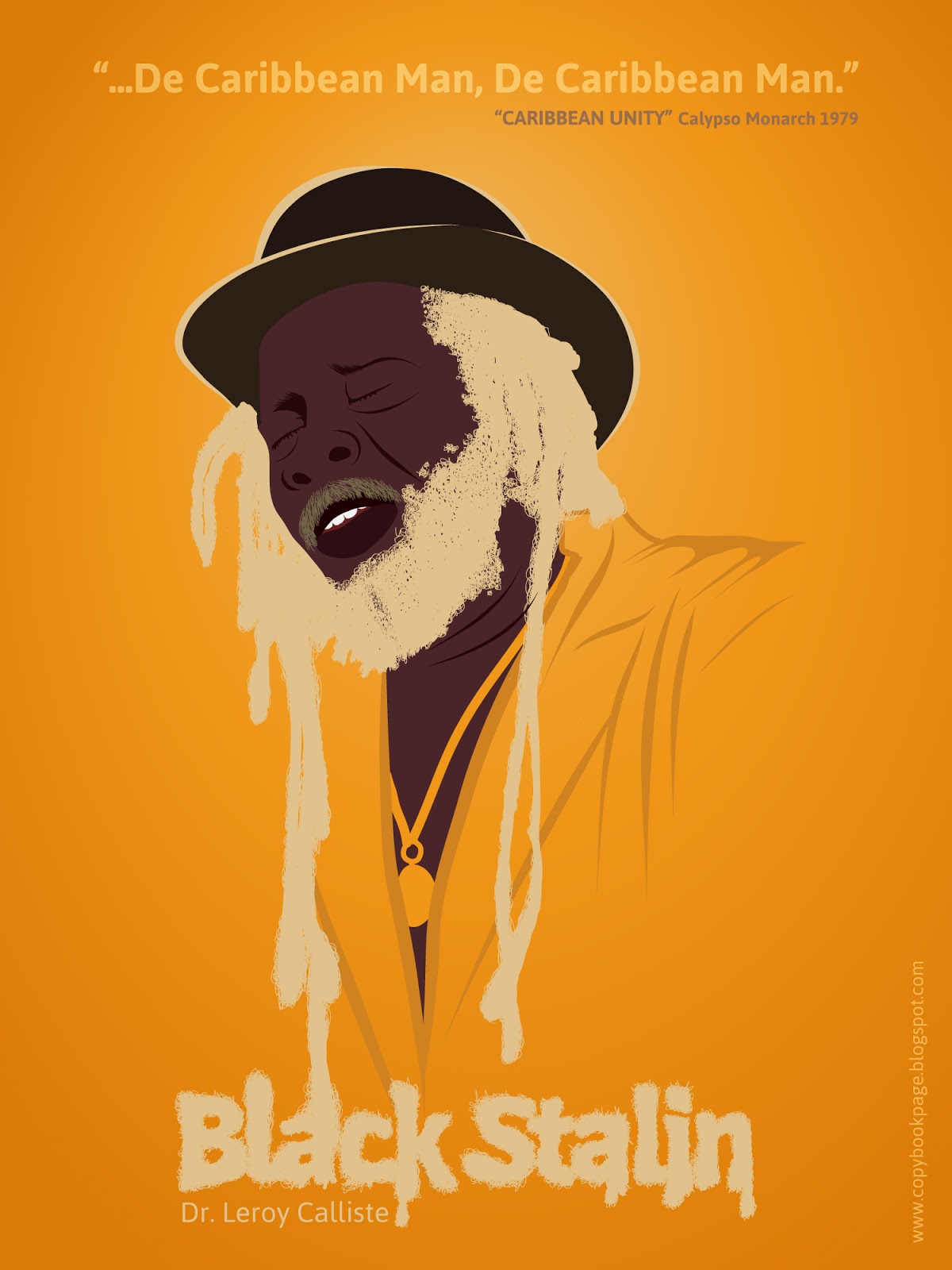
Artist Seon Thompson’s tribute poster to Black Stalin
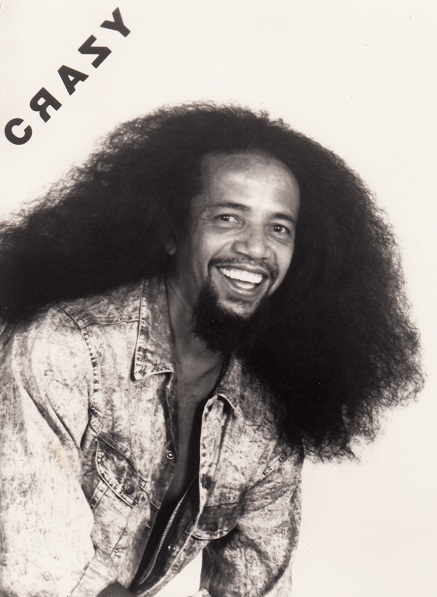
Edwin Ayoung, better known as Crazy_1980s
Crazy’s “Young Man”(1980):
.
Explainer’s “Lorraine”(1981):
.
The Mighty Gabby (an honorary Trini!): “Boots”(1983):
.
Lord Nelson’s “Meh Lover” (1983):
.
The Mighty Shadow’s “Jitters” (1985):
.
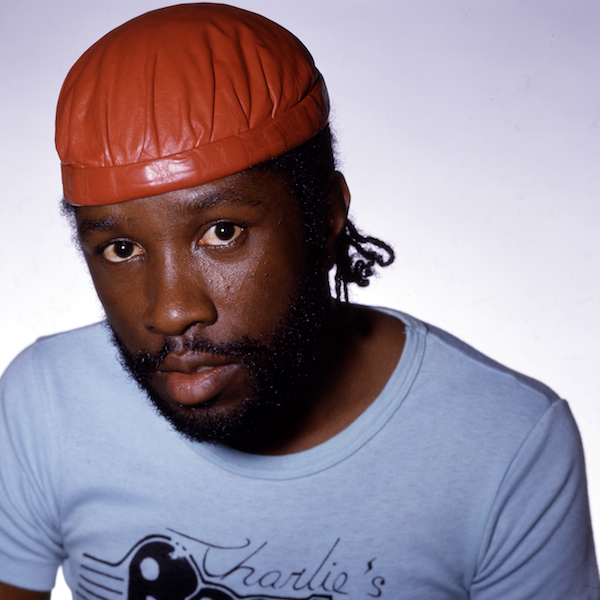
David Rudder
David Rudder and Charlie’s Roots: “The Hammer”(1986):
. . . . .
Abertura do Carnaval Brasileiro 2014: “Mangueira é Mãe” (Favela is a Mother’s Heart)
Posted: February 28, 2014 Filed under: English, Portuguese, ZP Translator: Daniel Vianna Comments Off on Abertura do Carnaval Brasileiro 2014: “Mangueira é Mãe” (Favela is a Mother’s Heart)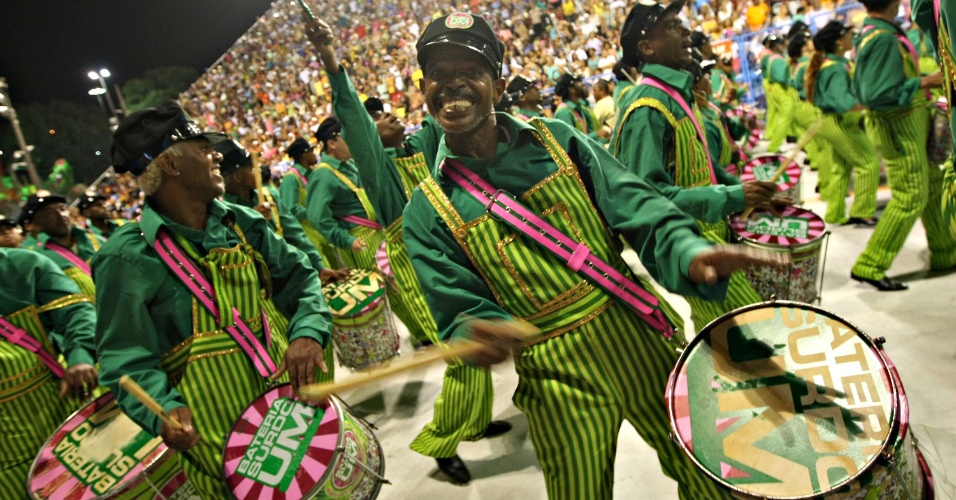
.
Today is the opening day of Carnaval 2014 throughout Brazil. The song below speaks of the Mangueira (Mango Tree) district of Rio de Janeiro, a favela (poor neighbourhood or shantytown) where Samba music began to evolve during the 1920s, and which has its own Samba School, G.R.E.S. Estação Primeira de Mangueira, that has sent participants to Carnaval competitions for decades.
.
“Favela is a mother’s heart”
(as sung by Alcione, with Marcelo Falcão and Serginho Meriti: 2008)
.
Anywhere I go I ask God to bless me, and come with me,
to where my life sends me – that’s where I’ll be.
I’m here at the bottom of the hill,
facing the favela, standing still.
Having a snack
Next to the bend
Where the road ends.
Under the bridge, where the crowd meets,
They’re chilling out
Dancing all night at the ball;
Come morning sun
everyone’s gone
smiling ear to ear.
If you know what’s good,
do you know what’s good? Favela – Mangueira!
Favela is a mother’s heart,
Mangueira is a mother’s heart,
Favela is a mother’s heart…
.
So we’re there at the burger van
Praying to the Samba Palace, the shrine of swing,
the place that crowns those samba kings,
making us tremble – as only drums can.
Down here we see the hill, a family (and what a family!)
and come February it’s Carnival in the city.
Green and Pink are the colours of the team
And when the sound comes down
It shakes the dust – moves the crowd.
The come-and-go never stops
Good / bad people, always busy,
The gossip never ending.
No wonder, I’m talking about Mangueira!
and the people that live near the freeway, Avenida Visconde de Niterói.
So many dead ends and lanes
–This hill is ours!
But poverty hurts…
.
I could be here
or else downtown
– in Chalé, Candelária, Olaria, Fundação –
or in any place where samba sounds.
You can have funk, swing, pagode;
In Mangueira everything is found,
– but you need to be in the know!
.
Green and Pink, the colours of our team
And when that sound comes down
It shakes the dust – moves the crowd.
Favela – Mangueira – is a mother’s heart, A Mother’s Heart!
.
Translation from Portuguese into English: Daniel Vianna
. . .
“Mangueira é Mãe”
(cantado por Alcione, Marcelo Falcão, Serginho Meriti: 2008)
.
Só peço a Deus que me acompanhe, me abençoe onde quer que eu vá
Eu tô na vida, eu tô no mundo, eu tô aonde o destino mandar
Tô aqui no pé da ladeira
De frente pro morro da mangueira
No trailer da mina
Tô quase na esquina
Do buraco quente
Embaixo do viaduto, e como tem gente
Gente que fica de zoeira
No samba, no baile a noite inteira
Que sai de manhã
com sorriso lindo, largo que não tem tamanho
Pra quem tem juízo. Mangueira é uma mãe…
Mangueira é uma mãe…..
E aqui estamos juntos no trailer da mina
Reverenciando o Palácio do Samba
Pensar que daqui saíram tantos bambas
Que a gente até treme no pé da colina
Daqui debaixo vejo o morro, uma comunidade (e que comunidade!)
E quando chega fevereiro é carnaval na cidade
É verde e rosa as cores da primeira estação
E quando desce a ladeira
Sacode a poeira e anima o povão
O sobe-e-desce é constante
Gente do bem e do mal, tá servidão
O comentário é geral
Também pudera, tô falando de Mangueira
De gente que vive à beira da avenida
Visconde de Niterói
é tanto beco, é tanta boca de siri nesse negócio
O morro é nosso!
Mas a pobreza é que dói
Tô no chalé
Na candelária
Na olaria, fundação, eu tô na área
Tem funk in lata, tem suingue, tem pagode
Na mangueira tem de tudo
Mas só para, só para quem pode!
É verde e rosa as cores da primeira estação
E quando desce a ladeira
Sacode a poeira e anima o povão
Mangueira é uma mãe…..
.
. . .
. . .
To learn more about the history of Samba music click the following ZP link:
. . . . .
“The Great Black North”: Ian Keteku, Andrea Thompson and Kevan Anthony Cameron
Posted: February 26, 2014 Filed under: English | Tags: Spoken-Word and Slam Poetry: Canada Comments Off on “The Great Black North”: Ian Keteku, Andrea Thompson and Kevan Anthony Cameron
“The Great Black North” Anthology in concert: February 26th, 2014, 6 pm – 7:30 pm, Riverdale Branch, Toronto Public Library
 “El Amor Mata”:
Spoken-Word poetry performance by Ian Keteku, Farafina Rojo and Balan Santos (guitar):
. . .
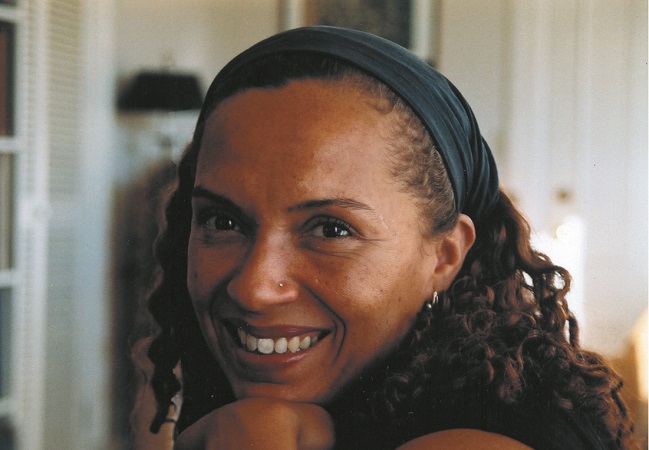 “Firebelly” by Andrea Thompson:
. . .
 Kevan Anthony Cameron a.k.a. Scruffmouth
“Black His Story” (February 2004)
.
From under the griot tree the groundhog arose,
and this is how his story goes . . .
His story has always been pure as snow and clear as rain.
Clearly, his story was written, recorded, and remembered to be right
and white as he is.
His story is not finished,
the story tellers continue to diminish our exposure to the gory details
that are nonetheless real.
Shield yourselves from the sun,
wear sunscreen and all of that shit.
Shitstory is made up of pointy white hoods telling falsehoods
and passing them into law.
Shitstory is no more than picking a nigger to string up.
His story is bullshit
in the form of chronological sequence with the realness removed
to make him look good,
even though his face is still hidden by a pointy white hood.
Invisible like the Man who would remember soon enough when they
let him out of the machine.
Invisible like the hand of Big Brother reaching down to smother
the words that we wail
or the songs that we speak.
I was here, but I disappear.
I am everywhere.
I am an impossible existence made possible by the spirit of persistence.
I am an impossibility that was eradicated, annihilated, and still I rise
from a past that has been vapourized.
“You heard we quit? No way, bullshit. I told you before
I come back with more hits,
I provide right flav…”
Our story is misconstrued.
Confused, Infused, and Abused by his story.
But my story’s a mystery when used in place of his story.
In this atrocious condition we concede to the cowardly volition
of historical tradition.
The imposition being that we were separated, lost, forgotten,
and freed somewhere along the way,
but since “freedom is slavery”
we are still subjugated today.
So when we rise up and see our dark shadows,
we know what is to be done
during the six weeks of optic white winter that hide us from the sun.
Continually they avert their eyes,
waiting from Spring to arrive.
But seasons are reversed
so they shiver from the frigid breath of the earth,
and hyporthermic evil cannot be nursed back to health.
Blackness may be cursed
but the sickness will swiftly target the wickedness of power and wealth
and those were last shall soon be the first.
The first of the month is a yesterday of birth
signified by the magnificent amethyst and a strong black fist.
Born from her story that his story denied
we respond to the question of prejudice with pride.
And all seasonal synchronicity aside,
how can our story be adequately displayed during
a month of merely 28 days?
Black History?
Black His Story is an oxymoron,
but it nuh easy fuh see
when truth is expensive and ignorance is free.
. . .
Kevan Anthony Cameron / Scruffmouth writes: “This was the first poem I ever penned with the intention of performing at a Slam, way back in 2003/2004, in anticipation of the Black History Month Slam on February 2nd, 2004, which was a day after my birthday. I share my birthday with notable poets such as Langston Hughes, Saul Williams & Big Boi from OutKast, so I write with the intention of divine intervention.” (Quotation from Vancouver Poetry House website)
. . . . .
 Zócalo Poets