The Three Kings / Die heil’gen drei Könige aus Morgenland
Posted: December 24, 2014 Filed under: English, English: Scots, German | Tags: Heinrich Heine Comments Off on The Three Kings / Die heil’gen drei Könige aus Morgenland The Three Kings,
a Scots Vernacular poem, based on Heinrich Heine’s
Die heil’gen drei Könige aus Morgenland:
There were three kings cam frae the East;
They spiered in ilka clachan:
“O, which is the wey to Bethlehem,
My bairns, sae bonnily lachin’?”
.
O neither young nor auld could tell;
They trailed till their feet were weary.
They followed a bonny gowden starn,
That shone in the lift say cheery.
.
The starn stude ower the ale-hoose byre
Whaur the stable gear was hingin’.
The owsen mooed, the bairnie grat,
The kings begoud their singin’.
. . .
Scots words used – and their Standard English equivalents:
spiered = asked
clachan = village
bairns = children
lachin’ = laughing
starn = star
lift = sky
gear = equipment
owsen = oxen
bairnie = baby
grat = cried
begoud = began
. . .
Heine’s poem in the original German:
Die heil’gen drei Könige aus Morgenland
.
Die heil’gen drei Könige aus Morgenland,
Sie frugen in jedem Städtchen:
Wo geht der Weg nach Bethlehem,
Ihr lieben Buben und Mädchen?
.
Die Jungen und Alten, sie wußten es nicht,
Die Könige zogen weiter;
Sie folgten einem goldenen Stern,
Der leuchtete lieblich und heiter.
.
Der Stern blieb stehn über Josephs Haus,
Da sind sie hineingegangen;
Das Oechslein brüllte, das Kindlein schrie,
Die heil’gen drei Könige sangen.
. . . . .
Why I Hate Religion But Love Jesus
Posted: December 24, 2014 Filed under: English, Jefferson Bethke | Tags: Spoken-Word Poetry about Jesus Comments Off on Why I Hate Religion But Love Jesus Jefferson Bethke
Why I Hate Religion But Love Jesus
.
What if I told you: Jesus came to abolish religion?
What if I told you: getting you to vote Republican really wasn’t his mission?
Because Republican doesn’t automatically mean Christian.
And just because you call some people blind doesn’t automatically give you vision.
.
If religion is so great, why has it started so many wars?
Why does it build huge churches, but fails to feed the poor?
Tells single moms God doesn’t love them if they’ve ever been divorced?
Yet God in the Old Testament actually calls religious people whores.
.
Religion preaches grace, but another thing they practice;
Tends to ridicule God’s people – they did it to John the Baptist.
Cant fix their problems, so they try to mask it,
Not realizing that’s just like spraying perfume on a casket.
Because the problem with religion is that it never gets to the core,
It’s just behaviour modification – like a long list of chores.
Let’s dress up the outside, make things look nice and neat;
It’s funny – that’s what they do to mummies, while the corpse rots underneath.
.
Now I ain’t judging, I’m just saying be careful of putting on a fake look,
Because there’s a problem if people only know that you’re a Christian
by that little section on your Facebook.
In every other aspect of life you know that logic’s unworthy;
It’s like saying you play for the Lakers just because you bought a jersey!
.
But see: I played this game too; no one seemed to be on to me;
I was acting like a church kid while addicted to pornography.
I’d go to church on Sunday, but on Saturday got ‘faded’,
As if I was simply created to have sex and get wasted.
Spent my whole life putting on this façade of neatness,
But now that I know Jesus, I boast in my weakness.
.
If grace is water, then the church should be an ocean,
Cuz it’s not a museum for good people – it’s a hospital for the broken.
I no longer have to hide my failures, I don’t have to hide my sin,
Because my salvation doesn’t depend on me – it depends on Him.
Because when I was God’s enemy and certainly not a fan,
God looked down on me and said: “I want that man!”
Which is so different from religious people, and why Jesus called ’em fools;
Don’t you see he’s so much better than just following some rules?
.
Now let me clarify: I love the church, I love the Bible, and I believe in sin.
But my question is: if Jesus were here today, would your church let Him in?
Remember, He was called a drunkard and a glutton by “religious men”;
The Son of God does not support self-righteousness – not now, not then.
.
Now back to the topic…one thing I think is vital to mention:
How Jesus and religion are on opposite spectrums.
One is the work of God, one is a man-made invention;
One is the cure and one is the infection.
Because Religion says do, Jesus says done.
Religion says slave, Jesus says son.
Religion puts you in shackles but Jesus sets you free.
Religion makes you blind, but Jesus lets you see.
.
This is what makes religion and Jesus two different clans;
Religion is man searching for God, but Christianity is God searching for man.
Which is why salvation is freely mine, forgiveness is my own,
Not based on my efforts, but Christ’s obedience alone.
.
Because He took the crown of thorns, and blood dripped down His face,
He took what we all deserved – that’s why we call it grace.
While being murdered he yelled “father forgive them, they know not what they do”,
Because when he was dangling on that cross, he was thinking of You!
.
He paid for all your sin, and then buried it in the tomb,
Which is why I’m kneeling at the cross now, saying: come on, there’s room!
So know I hate religion, in fact I literally resent it,
Because when Jesus cried “It is finished” – I believe He meant it.
. . .
Spoken-Word performer and poet Jefferson Bethke is from Tacoma, Washington, U.S.A.
He explains:
This poem I wrote to highlight the difference between Jesus and false religion. In the scriptures Jesus received the most opposition from the most religious people of his day. At its core Jesus’ gospel and the good news of the Cross is in pure opposition to self-righteousness/self-justification. Religion is Man-centred, Jesus is God-centred. This poem highlights my journey to discover this truth. Religion either ends in pride or despair. Pride because you make a list and can do it and act better than everyone, or despair because you can’t do your own list of rules and feel “not good enough” for God. With Jesus, though, you have humble, confident joy because He represents you, you don’t represent yourself, and His sacrifice puts us in perfect standing with God!
. . . . .

Edna St.Vincent Millay: Para Jesús – En Su Cumpleaños / To Jesus, On His Birthday
Posted: December 24, 2014 Filed under: Edna St.Vincent Millay, English, Spanish, ZP Translator: Alexander Best Comments Off on Edna St.Vincent Millay: Para Jesús – En Su Cumpleaños / To Jesus, On His Birthday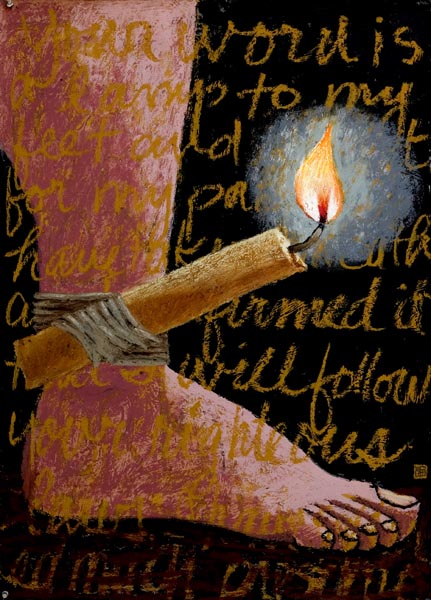
Salmos 119: 105: Lámpara es a mis pies tu palabra, y lumbrera a mi camino. Pintura por Wayne Forte_A Lamp Unto My Feet copyright 2007 by Wayne Forte
Edna St.Vincent Millay (1892-1950)
To Jesus, On His Birthday
.
For this your mother sweated in the cold,
For this you bled upon the bitter tree:
A yard of tinsel ribbon bought and sold;
A paper wreath; a day at home for me.
The merry bells ring out, the people kneel;
Up goes the man of God before the crowd;
With voice of honey and with eyes of steel
He drones your humble gospel to the proud.
Nobody listens. Less than the wind that blows
Are all your words to us you died to save.
O Prince of Peace! O Sharon’s dewy Rose!
How mute you lie within your vaulted grave.
The stone the angel rolled away with tears
Is back upon your mouth these thousand years.
. . .
Composed in 1928, Millay’s standard-form Shakespearean sonnet packs a punch with its passionate theme: an anti-materialist Christmas message + a condemnation of the shallow and conformist once-a-year Christian. The conservative structure of the poem throws into high relief Millay’s radical content.
. . .
Edna St.Vincent Millay (1892-1950)
Para Jesús – En Su Cumpleaños
.
Para ésto sudaba tu Madre en el frío,
Para ésto sangrabas sobre el amargo palo:
Una yarda de listón-oropel – comprado, vendido;
Una guirnalda de papel, y un día en casa para mi.
.
Las campanillas felices repican, se arrodilla la gente;
El Hombre de Dios se pone de pie ante la multitud;
Y con voz meliflua y con ojos de acero
Zumba Tu humilde Evangelio a los orgullosos.
.
Nadie eschucha. Menos que el viento que sopla
Son todas Tus Palabras que nos dio con Tu muerte.
¡Oh Principe de Paz! ¡Oh Rosa rociada de Sarón!
Mudo, te echas dentro Tu tumba abovedada.
.
La peña que apartó el angel lagrimoso
Permanece sobre Tu boca estos mil años.
. . .
Compuesto por Sra. Millay en 1928, este “soneto inglés”de forma regular (catorce versos y una estructura de rima ABAB CDCD EFEF GG en su versión original) expone un tema apasionado casi enojado: el rechazo del Santo Navideño que se trata de regalos y de purpurina chillona + una condena del cristiano-“de vez en cuando”.
. . . . .
Jane Kenyon: Al solsticio de invierno / At the winter solstice
Posted: December 21, 2014 Filed under: English, Jane Kenyon, Spanish, ZP Translator: Alexander Best Comments Off on Jane Kenyon: Al solsticio de invierno / At the winter solstice
Jane Kenyon
Al solsticio de invierno
.
Los pinos parecen negros en la media-luz del alba.
Quietud…
Mientras dormíamos, una pulgada de nieve simplificó el campo.
Hoy, entre todos los días, el sol no brillará más que es meramente necesario.
.
Anoche, dentro la iglesia del pueblito, los niños
– pastores y sabios –
empujaron cerca el pesebre, en obedencia, deseando solo que pasa el tiempo.
La niña vestido como María se estremecía – agachándose sobre el heno acre;
y – como la Madre del Cristo – se preguntaba por que ella estaba La Elegida.
.
Después del cuadro vivo: un alboroto de tarjetas, regalos y dulces navideños…
Algunos se quedaron para despejar de los bancos los fragmentos y cintas vividas;
también para levantar a su sitio tradicional el púlpito.
.
Cuando abrí la biblia centenaria por leer el cuento de Luca sobre la Epifania,
polvo negro de la encuadernación cayó sobre mis manos – y el mantel.
. . .
Jane Kenyon
At the winter solstice
.
The pines look black in the half-
light of dawn. Stillness…
While we slept an inch of new snow
simplified the field. Today of all days
the sun will shine no more
than is strictly necessary.
.
At the village church last night
the boys – shepherds and wisemen –
pressed close to the manger in obedience,
wishing only for time to pass;
but the girl dressed as Mary trembled
as she leaned over the pungent hay,
and like the mother of Christ
wondered why she had been chosen.
.
After the pageant, a ruckus of cards,
presents, and homemade Christmas sweets.
A few of us stayed to clear the bright
scraps and ribbons from the pews,
and lift the pulpit back into place.
.
When I opened the hundred-year-old Bible
to Luke’s account of the Epiphany
black dust from the binding rubbed off
on my hands, and on the altar cloth.
.
1990
. . .
Otros poemas por Jane Kenyon:
https://zocalopoets.com/2014/11/20/jane-kenyon-poemas-intimos-sobre-un-esposo/
.
https://zocalopoets.com/2014/11/20/winter-arrives-three-poems-by-jane-kenyon/
. . . . .
Winter Solstice poems in Scots and Gaelic
Posted: December 21, 2014 Filed under: English, English: Scots, Gaelic: Scottish Comments Off on Winter Solstice poems in Scots and Gaelic
December Gloaming (poet unknown)
.
In the cauld dreich days when it’s nicht on the back o four,
I try to stick to my wark as lang as may be;
But though I gang close by to the window and glower,
I canna see.
.
But I’m sweir, rale sweir, to be lichtin’ the lamp that early;
And aye I wait whiles there’s ony licht i’ the sky.
Sae I sit by the fire and see there mony a ferly
Till it’s mirk oot-by.
.
But it’s no’ for lang that I sit there, daein’ naething;
For it’s no’ like me to be wastin’ my time i’ the dark;
Though your life be toom, you can aye thank God for ae thing –
There’s aye your wark.
.
But it wadna be wark I wad think o’, if you were aside me.
I wad dream by the ingle neuk, wi’ never a licht;
The glint o’ your een wad be licht eneuch to guide me
The haill forenicht.
.
I wadna speak, for there’s never nae sense in speakin’;
By the lowe o’ the fire I wad look at your bonny hair.
To ken you were near wad be a’ that my her’t wad be seekin’ –
That and nae mair.
. . .
The above poem (December Gloaming) uses Scots Vernacular. Here are a few of its words and phrases with their Standard English counterparts:
dreich = dreary
on the back o four = after 4 p.m.
gang close = stare darkly
sweir = unwilling
mony a ferly = many a strange thing
oot-by = outside
toom = empty
aye = always
ingle neuk = chimney-side
forenicht = evening
lowe = gleam
. . .
William Neill (Prestwick, Ayrshire, Scotland, 1922-2010)
Solstice Wood
.
There is a spinney on the ridge
and I am certain
that it was always there.
When the winter solstice comes
and a red sphere falls behind trees,
I like to think
I am not entirely alone
but that other eyes across time
are with me, and show the same pleasure
that this is the shortest day,
as the druid wheel of the sun
rolls swiftly towards Springtime.
. . .
Solstice Wood, in Neill’s original Gaelic:
Doire A’ Ghrianstad
.
That doire bheag air an druim
is that mi cinnteach,
gu robh i an còmhnaidh ann.
Nuair thig grianstad a’ geamhraidh
is cruinne ruadh a’ tuiteam air cul chraobh
is caomh leam creidsinn
nach eil mi gu tur nam aonar
ach tha sùilean eile thar tìm
maille rium, is an aon tlachd aca
on is e sin an là as giorra
is roth draoidheil na grèine
na rolladh gu luath dhan Earrach.
. . .
Derick Thomson (Ruaraidh MacThòmais)
(Stornoway, Isle of Lewis, Scotland, 1921-2012)
When This Fine Snow is Falling
.
When this fine snow is falling,
climbing quietly to the windows,
dancing on air-currents,
piling itself up against walls
in lovely drifts,
while my son leaps with joy,
I see in his eyes the elation
that every winter brought to my people:
the reflection of snow in my father’s eyes,
and my grandfather as a boy snaring starlings.
.
And I see, through the window of this snowdrift,
and in the glass that dancingly reflects it,
the hill-pass cutting through the generations
that lie between me, on the scree,
and my ancestors, out on the shieling,
herding milk-cows and drinking buttermilk.
I see their houses and fields reflected
on the lonely horizon,
and that is part of my heritage.
.
When their boyhood came to an end
they strove with the land, and ploughed the sea
with the strength of their shoulders,
and worshipped, sometimes;
I spend their strength, for the most part,
Ploughing in the sand.
. . .
When This Fine Snow is Falling, in Thomson’s original Gaelic:
Troimh Uinneig a’ Chithe
.
Nuair that ‘n sneachda min seo a’ tuiteam,
a’ streap gu sàmhach ris na h-uinneagan,
a’ mirean air sruthan na h-iarmailt,
ga chàrnadh fhéin ri gàrraidhean
‘na chithean sàr-mhaiseach,
is mo mhac ‘na leum le aoibhneas,
chì mi ‘na shùilean-san greadhnachas gach geamhradh
a thàinig a riamh air mo dhaoine:
faileas an t-sneachda an sùilean m’ athar,
‘s mo sheanair ‘na bhalach a’ ribeadh dhìdeigean.
.
Is chì mi troimh uinneig a’ chithe seo,
‘s anns an sgàthan that mire ris,
am bealach that bearradh nan linntean
eadar mise, ‘s mi falbh nan sgàirneach,
agus mo shinnsrean, a-muigh air àirigh,
a’ buachailleachd chruidh-bainne ‘s ag òl a’ bhlàthaich.
Chì mi faileas an taighean ‘s am buailtean
air fàire an uaigneis,
‘s that siud mar phàirt de mo dhualchas.
.
Iadsan a’ fàgail staid a’ bhalaich,
‘s a’ strì ri fearann, ‘s a’ treabhadh na mara
le neart an guaillibh,
‘s ag adhradh, air uairibh;
is mise caitheamh an spionnaidh, ach ainneamh,
a’ treabhadh ann an gainneamh.
. . . . .
Claude McKay: The Flame Heart
Posted: December 21, 2014 Filed under: Claude McKay, English Comments Off on Claude McKay: The Flame Heart
Claude McKay (Jamaica/U.S.A., 1889-1948)
The Flame Heart
.
SO much have I forgotten in ten years,
So much in ten brief years! I have forgot
What time the purple apples come to juice,
And what month brings the shy forget-me-not.
I have forgot the special, startling season
Of the pimento’s flowering and fruiting;
What time of year the ground doves brown the fields
And fill the noonday with their curious fluting.
I have forgotten much, but still remember
The poinsettia’s red, blood-red in warm December.
.
I still recall the honey-fever grass,
But cannot recollect the high days when
We rooted them out of the ping-wing path
To stop the mad bees in the rabbit pen.
I often try to think in what sweet month
The languid painted ladies used to dapple
The yellow by-road mazing from the main,
Sweet with the golden threads of the rose-apple.
I have forgotten–strange–but quite remember
The poinsettia’s red, blood-red in warm December.
.
What weeks, what months, what time of the mild year
We cheated school to have our fling at tops?
What days our wine-thrilled bodies pulsed with joy
Feasting upon blackberries in the copse?
Oh some I know! I have embalmed the days
Even the sacred moments when we played,
All innocent of passion, uncorrupt,
At noon and evening in the flame-heart’s shade.
We were so happy, happy, I remember,
Beneath the poinsettia’s red in warm December.
. . . . .
International Day to End Violence against Sex Workers: December 17th
Posted: December 17, 2014 Filed under: English | Tags: El Día Internacional para Terminar La Violencia contra Trabajadoras Sexuales Comments Off on International Day to End Violence against Sex Workers: December 17th

Jorge Antonio Vallejos a.k.a. ‘Black Coffee Poet’ (Toronto, Canada)
White Van: A Poem for Sex Workers (2011)
.
White van rolls around town like PacMan, lookin’ for prey:
women to gobble up.
Ladies of the Night stand around, whether they’re hot or cold, wet or dry,
waiting for a paying guy, tools of their trade on display:
high heels, tights, low-cut tops, purse carrying rubbers to cover his cock.
.
The will to work, a hard job seen as easy, often times called sleazy
– by those who don’t know.
Hyper-masculine music getting out violent labels: Bitch, Ho;
really, they should all know: the streets are Ground Zero.
.
Working Girls vilified, seen as the enemy;
bullshit “stings” and arrests wasting peoples’ time and money.
Street-Walkers dehumanized, portrayed as there for the taking;
cabbies, cops, politicians, talking service – bullshit faking –
often times forcing Working Girls – yes, that’s called “breaking”.
.
White van rolling, patrolling…
looking for that one single Worker who’s strolling…
Tools of their shade: vehicle with a sliding door and no windows;
rope, bags, needles, coke and a shovel.
.
They avoid the girls who stand at corners like hooker Harvey’s;
who stand around in support and warmth – in a huddle.
Remote spots are the key to their sick victory;
Moss Park and St. James Cathedral
are the beginning for many acts of unforgiveable evil.
.
Bagged and shoved in the back by one man, two man, god-damn.
Drugged and driven out of town is the plan;
gang-raped in her front and in her back, cigarette burning ends the attack.
Stops of corn hide the assault, the hours of misery, the trauma for life.
The final words: I forgot the shovel.
.
Middle-age Man and his Right Hand walk back to white van;
it’s do or die, her one chance to scram.
Running, hiding, laying with the corn…
Crying on Mother Earth, bleeding on her, nails digging in her;
holding on till dawn; staying put long enough till white van is gone.
.
Thumbing her way back home to smalltown Ontario…
It’s over: this sad reality has always been a scary scenario.
Stitched, bruised, burned, scarred
– reminders of a life and job that’s always hard.
White van, two man, All Man – when the fuck we gonna change, man?!
. . .
Visit Black Coffee Poet’s site:
http://blackcoffeepoet.com/
. . . . .
Antonio Valeriano: Nican mopohua and Mexico’s Our Lady of Guadalupe
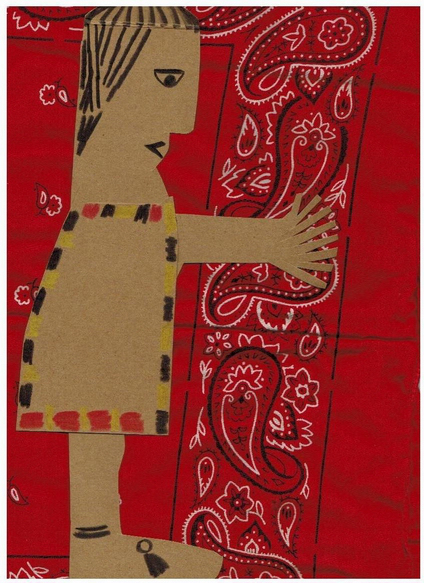
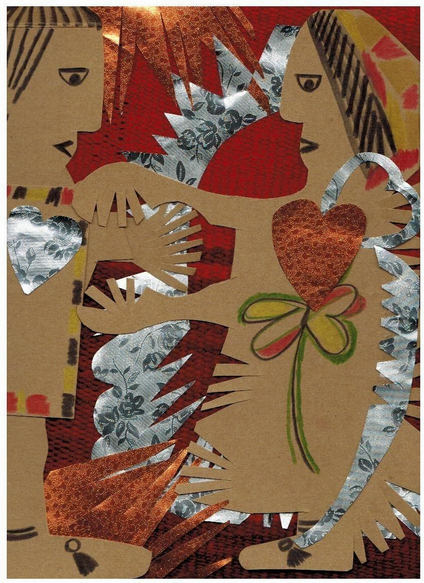
Posted: December 12, 2014 Filed under: English, IMAGES, Náhuatl Comments Off on Antonio Valeriano: Nican mopohua and Mexico’s Our Lady of GuadalupeDecember 1531: Juan Diego Cuauhtlatoatzin’s encounter with Santa Maria Totlaconantzin (Our Lady of Guadalupe):

…..Auh in acico in inahuac tepetzintli in itocayocan Tepeyacac,
ye tlatlalchipahua…..
*
Concac in icpac tepetzintli cuicoa, yuhquin nepapan tlazototome cuica;
cacahuani in intozqui, iuhquin quinananquilia tepetl, huel cenca teyolquima,
tehuellamachti in incuic; quicenpanahuia in coyoltotl in tzinitzcan ihuan in
occequin tlazototome ic cuica…..
*
“Canin ye nica? Canin ye ninotta? Cuix ye oncan in quitotehuaque huehuetque
tachtohuan tococolhuan, in xochitlalpan in tonacatlalpan,
cuix ye oncan ilhuicatlalpan?”…..
*
In oyuhceuhtiquiz in cuicatl, inomocactimoman in yeequicaqui
hualnotzalo inicpac tepetzintli, quilhuia: “Juantzin, Juan Diegotzin”…..
*
Auh in ye acitiuh in icpac tepetzintli, in ye oquimottili ce Cihuapilli
oncanmoquetzinoticac, quihualmonochili inic onyaz in inahuactzinco…..
*
Auh in tetl, in texcalli in ic itech moquetza, inic quimina…..
*
Auh in mizquitl, in nopalli ihuan occequin nepapan xiuhtotontin
oncan mochichihuani yuhquin quetzaliztli. Yuhqui in teoxihuitl in
iatlapalio neci. Auh in icuauhyo, in ihuitzyo, in iahuayo yuhqui in
cozticteocuitlatl in pepetlaca…..
*
Quimolhuili: “Tlaxiccaqui noxocoyotl Juantzin, campa in timohuica?”
*
Auh in yehuatl quimonanquilili: “Notecuiyoé, Cihuapillé, Nochpochtziné!
Ca ompa nonaciz mochantzinco México-Tlatilolco,
nocontepotztoca in Teyotl…..”


…..And as he drew near the little hill called Tepeyac
it was beginning to dawn…..
*
He heard singing on the little hill, like the song of many precious birds;
when their voices would stop, it was as if the hill were answering them;
extremely soft and delightful; their songs exceeded the songs of the
coyoltotl and the tzinitzcan and other precious birds…..
*
“Where am I? Where do I find myself? Is it possible that I am in the
place our ancient ancestors, our grandparents, told about, in the
land of the flowers, in the land of corn, of our flesh, of our sustenance,
possibly in the land of heaven?”…..
*
And then when the singing suddenly stopped, when it could no longer
be heard, he heard someone calling him, from the top of the hill, someone
was saying to him: “Juan, Dearest Juan Diego”…..
*
And when he reached the top of the hill, a Maiden who was standing there,
who spoke to him, who called to him to come close to her…..
*
And the stone, the crag on which she stood, seemed to be giving out rays…..
*
And the mesquites and nopales and the other little plants that are up there
seemed like emeralds. Their leaves, like turquoise. And their trunks, their
thorns, their prickles, were shining like gold…..
*
She said to him, “Listen, my dearest-and-youngest son, Juan,
Where are you going?”
*
And he answered her: “My Lady, my Queen, my Beloved Maiden!
I am going as far as your little house in Mexico-Tlatilolco,
to follow the things of God…..”
* * * * *
On December 9th, 1531, Juan Diego Cuauhtlatoatzin (1474-1548)
encountered a radiant native-Mexican woman at Tepeyac Hill
(site of a former temple to the Aztec Earth-Mother goddess Tonantzin).
He knew her to be Santa María Totlaconantzin – Mary, Our
Precious Mother – and she spoke to him in his own language – Náhuatl.
*
Tepeyac is now the location of the largest shrine in Latin America –
La Basílica de Nuestra Señora de Guadalupe / The Basilica of
Our Lady of Guadalupe – the name by which Juan Diego’s
Virgin Mary is known in México today…
Popularly, she is also called The Mother of All México.
And December 12th is Our Lady of Guadalupe’s “santo” or feast/saint’s day.
*
The above text – in the original Náhuatl (language of the Aztecs)
plus English translation by D. K. Jordan – is taken from
Nican mopohua (“Here is recounted…”)
by Antonio Valeriano (1556), and is the first chapter in the
written telling of the miraculous life of Juan Diego Cuauhtlatoatzin.
Valeriano was a native-Mexican scholar in three languages
– his birth-language, Náhuatl, plus Spanish and Latin.
Nican mopohua forms part of a larger volume,
Huei tlamahuiçoltica (“The Great Happening”),
published by Luis Laso de la Vega in 1649. The book is a
crucial Náhuatl text from the 16th and 17th centuries
– a period of immense trauma during which a new race
– el Mestizo – and a new nationality – Mexican – were being forged.
Pro-Sex Poems of Love and Desire: Lenore, Nikki, Olga, Maxine
Posted: December 10, 2014 Filed under: English, Lenore Kandel, Maxine Kumin Comments Off on Pro-Sex Poems of Love and Desire: Lenore, Nikki, Olga, Maxine
Excerpts from Antoinette May’s 1967 interview with Lenore Kandel in Les Gals magazine, Summer 1967 issue, volume 2, number 3:
Late last year (1966) Lenore and her poetic description of the love act [using the word FUCK (ZP editor)] made headlines.
Lenore’s new book, published by Grove Press, is called, “Word Alchemy”.
“Word” is a four letter word, but hardly controversial. Alchemy might be more promising. With this in mind Les Gals editor Antoinette May climbed the three steep winding flights of stairs to Lenore’s apartment situated above a North Beach laundry.
The rooms that Lenore shares with her husband are musty, dusty and dark. “I don’t worry about inanimate things,” she explained unnecessarily. Once the latent housewife in Antoinette overcame the desire to tidy up, she became aware of the casual comfort of the place. Indian hangings and tapestries dominated the decor which definitely inclined one to recline for repose or anything else. The place had a definite lived-in, loved-in look that seemed pleasant and appropriate.
Lenore’s “Love Book” provoked numerous individuals (including the San Francisco pornography squad) not so much because of its subject matter, but, rather, by its choice of words.
Many people took offence when they found words heretofore confined to sidewalks and school desks suddenly appearing in printed books. Their outrage resulted in a lengthy court trial and the conviction of three booksellers. Lenore herself was not on trial, although everyone, including the judge, had difficulty remembering the fact.
LES GALS: Was shock appeal what it’s all about?
LENORE: Certainly not. I used that particular verb [FUCK (ZP editor)] because our English vocabulary is very limited. To intercourse with love just doesn’t sound right . Fornicate and copulate seem so medical.
LES GALS: Yes, but the verb you chose is an offence to a vast number of people.
LENORE: That’s because a word with a beautiful meaning—for two bodies to join through passion and love—has become aggressive. It’s a put-down word now, not a love word.
LES GALS: But don’t you think that by using the word so freely in your book, you’ll detract even more from its very special power and intimacy?
LENORE: No, if everyone used it appropriately—as a love word—it would be heard less.
. . .
LES GALS: Were you surprised by the guilty verdict?
LENORE: I was surprised that it was unanimous. It’s frightening. Police censorship is disrespectful to people. People should be allowed to make up their own minds. For some reason it’s okay to to sell black garter magazines that depict sex as something to snigger over. The movie ads—no matter how vulgar—are allowed as well, because they’re admittedly ‘bad’. Where I got in trouble was in saying that sex and the spirit are both beautiful parts of nature and equally divine. I don’t think there has been a trial since Salem where the words blasphemy or sacrilege have been used.
LES GALS: In the introduction to your new book –“Word Alchemy”– you are quoted as saying your favourite word is “yes”. Do you believe in sex for sex’s sake”?
LENORE: Sexuality with someone you love is far more than a physical act—but that doesn’t mean I’m putting down the physical act. I just want something more than that.
LES GALS: One witness for the defence said that reading your book would help married couples perform the love act better. Do you believe this?
LENORE: Not necessarily perform better, but I do think it could help them communicate better. Married people have so many hassles because they can’t communicate. It’s a terrible thing that two people who should be closest to each other often aren’t. So many men get this good girl-bad girl hangup. They have certain desires that they should express to their wives but instead they fulfill themselves with someone else. This is wrong and unnecessary.
. . .
LES GALS: If you had children would you allow them to read “The Love Book”?
LENORE: I think the important thing is to tell the truth. If children grow up in the environment where truth is a part of life they won’t have dirty minds. There’s certainly nothing harmful in my book, but an honest parent might say to a very small child, “This is a book you’ll understand and enjoy when you are older.” Children mature at different levels. It really depends on the individual. I think it’s a strange thing in our culture that death and torture are acceptable—children can see it everywhere they look—yet the love and tenderness between a man and a woman is something to conceal and feel guilty about. I think this must be very confusing to children.

Lenore Kandel in 1967
Lenore Kandel (1932-2009)
Invocation for Mitreya (from the collection Word Alchemy, 1967)
.
To invoke the divinity in man with the mutual gift of love
with love as animate and bright as death
the alchemical transfiguration of two separate entities
into one efflorescent deity made manifest in radiant human flesh
our bodies whirling through cosmos, the kiss of heartbeats
the subtle cognizance of hand for hand, and tongue for tongue
the warm moist fabric of the body opening into star-shot rose
flowers
the dewy cock effulgent as it bursts the star
sweet cunt-mouth of world serpent Ouroboros girding the
universe
as it takes its own eternal cock, and cock and cunt united
join the circle
moving through realms of flesh made fantasy and fantasy made
flesh
love as a force that melts the skin so that our bodies join
one cell at a time
until there is nothing left but the radiant universe
the meteors of light flaming through wordless skies
until there is nothing left but the smell of love
but the taste of love, but the fact of love
until love lies dreaming in the crotch of god. . . .
. . .
Nikki Giovanni (born 1943)
Seduction
.
one day
you gonna walk in this house
and i’m gonna have a long African
gown
you’ll sit down and say “The Black…”
and i’m gonna take one arm out
then you – not noticing me at all – wil say “What about this brother…”
and i’m going to be slipping it over my head
and you’ll rap on about “The Revolution…”
while i rest your hand against my stomach
you’ll go on – as you always do – saying
“I just can’t dig…”
while i’m moving your hand up and down
and i’ll be taking your dashiki off
then you’ll say “What we really need…”
and taking your shorts off
the you’ll notice
your state of undress
and knowing you you’ll just say
“Nikki,
isn’t this counterrevolutionary?”
. . .


Olga Broumas (born 1949)
She Loves (1977)
.
Deep prolonged entry with the strong pink cock
the sit-ups it evokes from her, arms fast
on the climbing invisible rope to the sky,
clasping and unclasping the cosmic lorus *


Inside, the long breaths of lung and cunt
swell the vocal cords and a rasp a song
loud sudden overdrive into disintegrate,
spinal melt, video hologram in the belly.
Her tits are luminous and sway to the rhythm
and I grab them and exaggerate their orbs.
Shoulders above like loaves of heaven,
nutmeg-flecked, exuding light like violet diodes
closing circuit where the wall, its fuse box,
so stolidly stood. No room for fantasy.
We watch ourselves transform the past
with such disinterested fascination,
the only attitude that does not stall
the song by an outburst of consciousness
and still lets consciousness, loved and incurable
voyeur, peek in. I tap. I slap. I knee, thump, bellyroll.
Her song is hoarse and is taking me,
incoherent familiar path to that self we are all
cortical cells of. Every o in her body
beelines for her throat, locked on
a rising ski-lift up the mountain, no
grass, no mountaintop, no snow.
White belly folding, muscular as milk.
Pas de deux, pas de chat, spotlight
on the key of G, clef du roman, tour de force letting,
like the sunlight lets a sleeve worn against wind, go.
.
* umbilical cord
. . .

Maxine Kumin (1925-2014)
Together (1970)
.
The water closing
over us and the
going down is all.
Gills are given.
We convert in a
town of broken hulls
and green doubloons.
O you dead pirates
hear us! There is
no salvage. All
you know is the colour
of warm caramel. All
is salt. See how
our eyes have migrated
to the uphill side?
Now we are new round
mouths and no spines
letting the water cover.
It happens over
and over, me in
your body and you
in mine.

. . .
Maxine Kumin
After Love (1970)
.
Afterward, the compromise.
Bodies resume their boundaries.
These legs, for instance, mine.
Your arms take you back in.
Spoons of our fingers, lips
admit their ownership.
The bedding yawns, a door
blows aimlessly ajar
and overhead, a plane
singsongs coming down.
Nothing is changed, except
there was a moment when
the wolf, the mongering wolf
who stands outside the self
lay lightly down, and slept.
. . .
Maxine Kumin
Looking back on my Eighty-First Year (2008)
.
How did we get to be old ladies—
my grandmother’s job—when we
were the long-leggèd girls?
— Hilma Wolitzer
.
Instead of marrying the day after graduation,
in spite of freezing on my father’s arm as
here comes the bride struck up,
saying, I’m not sure I want to do this,
I should have taken that fellowship
to the University of Grenoble to examine
the original manuscript
of Stendhal’s unfinished Lucien Leuwen,
I, who had never been west of the Mississippi,
should have crossed the ocean
in third class on the Cunard White Star,
the war just over, the Second World War
when Kilroy was here, that innocent graffito,
two eyes and a nose draped over
a fence line. How could I go?
Passion had locked us together.
Sixty years my lover,
he says he would have waited.
He says he would have sat
where the steamship docked
till the last of the pursers
decamped, and I rushed back
littering the runway with carbon paper . . .
Why didn’t I go? It was fated.
Marriage dizzied us. Hand over hand,
flesh against flesh for the final haul,
we tugged our lifeline through limestone and sand,
lover and long-leggèd girl.
. . .
For more poems click on the following links:
“And Don’t Think I Won’t Be Waiting”: Love poems by Audre Lorde
https://zocalopoets.com/category/poets-poetas/pat-parker/
Pro-Sex Poems of Love and Desire: Herrick and St.Vincent Millay
Posted: December 9, 2014 Filed under: Edna St.Vincent Millay, English, Robert Herrick Comments Off on Pro-Sex Poems of Love and Desire: Herrick and St.Vincent Millay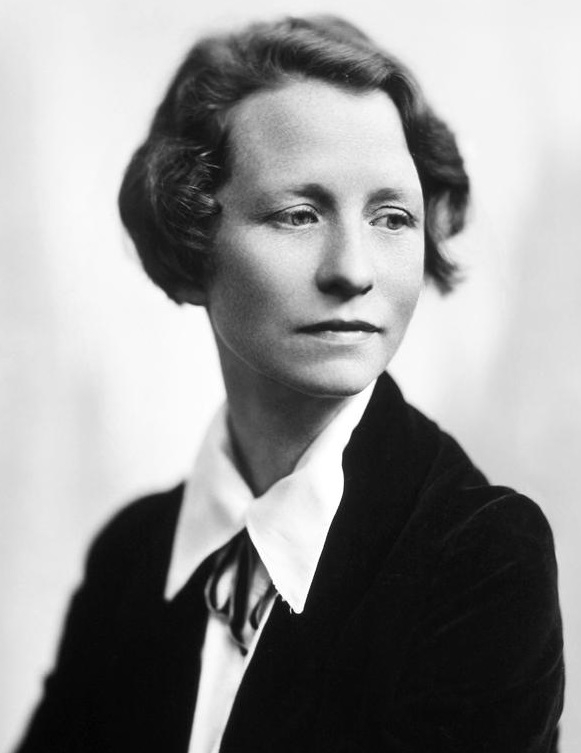
Edna St.Vincent Millay_1892-1950
Robert Herrick (1591-1674)
Love Lightly Pleased
.
Let fair or foul my mistress be,
Or low, or tall, she pleaseth me;
Or let her walk, or stand, or sit,
The posture her’s, I’m pleased with it;
Or let her tongue be still, or stir
Graceful is every thing from her;
Or let her grant, or else deny,
My love will fit each history.
. . .
Delight in Disorder
.
A sweet disorder in the dress
Kindles in clothes a wantonness;
A lawn about the shoulders thrown
Into a fine distraction;
An erring lace, which here and there
Enthrals the crimson stomacher;
A cuff neglectful, and thereby
Ribbons to flow confusedly;
A winning wave, deserving note,
In the tempestuous petticoat;
A careless shoe-string, in whose tie
I see a wild civility;–
Do more bewitch me, than when art
Is too precise in every part.
. . .
Upon the Nipples of Julia’s Breast
.
Have ye beheld (with much delight)
A red rose peeping through a white?
Or else a cherry (double graced)
Within a lily? Centre placed?
Or ever marked the pretty beam
A strawberry shows half drowned in cream?
Or seen rich rubies blushing through
A pure smooth pearl, and orient too?
So like to this, nay all the rest,
Is each neat niplet of her breast.
. . .
A Hymn to Love
.
I will confess
With cheerfulness,
Love is a thing so likes me,
That, let her lay
On me all day,
I’ll kiss the hand that strikes me.
.
I will not, I,
Now blubb’ring cry,
It, ah! too late repents me
That I did fall
To love at all–
Since love so much contents me.
.
No, no, I’ll be
In fetters free;
While others they sit wringing
Their hands for pain,
I’ll entertain
The wounds of love with singing.
.
With flowers and wine,
And cakes divine,
To strike me I will tempt thee;
Which done, no more
I’ll come before
Thee and thine altars empty.
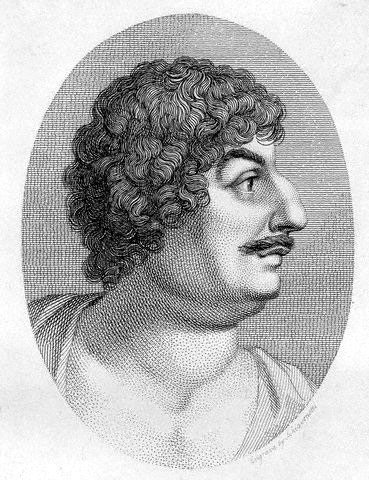
17th century poet Robert Herrick
Edna St.Vincent Millay (1892-1950)
I, being born a woman and distressed (1923)
.
I, being born a woman and distressed
By all the needs and notions of my kind,
Am urged by your propinquity to find
Your person fair, and feel a certain zest
To bear your body’s weight upon my breast:
So subtly is the fume of life designed,
To clarify the pulse and cloud the mind,
And leave me once again undone, possessed.
Think not for this, however, the poor treason
Of my stout blood against my staggering brain,
I shall remember you with love, or season
My scorn with pity, — let me make it plain:
I find this frenzy insufficient reason
For conversation when we meet again.
. . .
What lips my lips have kissed, and where, and why (1923)
.
What lips my lips have kissed, and where, and why,
I have forgotten, and what arms have lain
Under my head till morning; but the rain
Is full of ghosts tonight, that tap and sigh
Upon the glass and listen for reply,
And in my heart there stirs a quiet pain
For unremembered lads that not again
Will turn to me at midnight with a cry.
Thus in the winter stands the lonely tree,
Nor knows what birds have vanished one by one,
Yet knows its boughs more silent than before:
I cannot say what loves have come and gone,
I only know that summer sang in me
A little while, that in me sings no more.
. . .
I, too, beneath your moon, Almighty Sex (1939)
.
I too beneath your moon, almighty Sex,
Go forth at nightfall crying like a cat,
Leaving the lofty tower I laboured at
For birds to foul and boys and girls to vex
With tittering chalk; and you, and the long necks
Of neighbours sitting where their mothers sat
Are well aware of shadowy this and that
In me, that’s neither noble nor complex.
Such as I am, however, I have brought
To what it is, this tower; it is my own;
Though it was reared To Beauty, it was wrought
From what I had to build with: honest bone
Is there, and anguish; pride; and burning thought;
And lust is there, and nights not spent alone.
. . . . .
 Zócalo Poets