Kaiso – Calypso – Soca: Pepper It T&T-Style !
Posted: February 28, 2014 Filed under: English: Trinidadian, IMAGES | Tags: Black History Month Comments Off on Kaiso – Calypso – Soca: Pepper It T&T-Style !
McCartha Linda Sandy-Lewis, better known as Calypso Rose_The greatest of the female Calypsonians, and still going strong in her 70s…
.
Through great extemporaneous performers, singers, composers and arrangers, Calypso music has been evolving for more than a century. The Roaring Lion, Lord Invader, Lord Pretender, Lord Kitchener, Calypso Rose, Lord/Ras Shorty, David Rudder – the list could go on and on; so many have been innovators or have deepened the tradition. Political, social and sexual commentary, as well as a healthy joie-de-vivre for fête-ing, have all characterized Calypso. The music has branched out into Chutney Soca via Indian pioneers such as Drupatee Ramgoonai; has voyaged through temporary influences from Ragga and Dancehall; has even fallen prey to the ghastly Auto-Tune audio processor so rampant in popular music. Still, Calypso at its best – and it still can be at its best – can’t be beat. (Except maybe by Pan !)
.
Julian Whiterose’s “Iron Duke in the Land” – the first-ever Kaiso (Calypso) recording, from 1912:
.
Lord Executor’s “I don’t know how de young men livin’” (1937):
.
Lord Executor
“I don’t know how de young men livin’” (1937)
.
I don’t know how de young men livin’, dey never have a shillin’,
I don’t know how de young men livin’, dey never have a shillin’ –
Tommy, open de door, give me de bottle and lemme go,
Tommy, open de door, give me meh bottle and lemme go.
.
In de day he walk ’bout, only comin’ with his sweet mouth.
Calling for his minou, callin’ pound-plantain and callaloo – Ah,
Tommy, open de door, give me de bottle and lemme go,
Tommy, open de door, give me meh bottle and lemme go.
.
In de night he come an’ peep, only longing for a place to sleep,
And to cast his weary head as a lump of lead on de cosy bed – Ah,
Tommy, open de door, give me de bottle and lemme go,
Tommy, open de door, give me meh bottle and lemme go.
.
You can see dat villain next day, half crazy and toutoulbey.
His watchikong, goodness knows, and half of his feet expose – Ah,
Tommy, open de door, give me de bottle and lemme go,
Tommy, open de door, give me meh bottle and lemme go.
.
Who can measure de human mind when it is uncultured and unrefined?
An impulse of society – and not to be mentioned in history!
Tommy, open de door, give me de bottle and lemme go,
Tommy, open de door, give me meh bottle and lemme go!
.
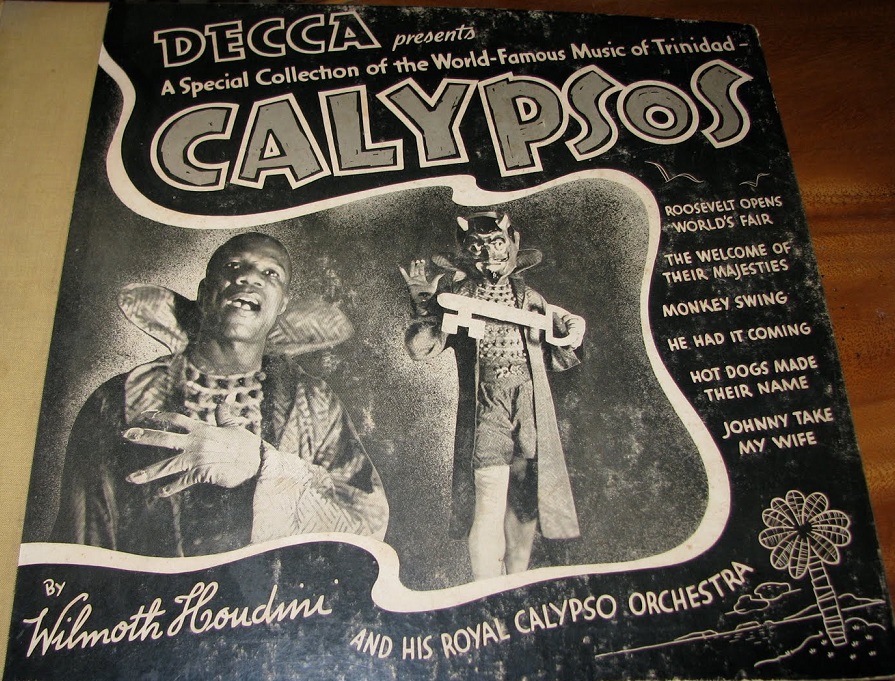
Frederick Wilmoth Hendricks a.k.a. Wilmoth Houdini (1895-1977)_1939 Calypsos recorded in NYC by the Trinidadian native
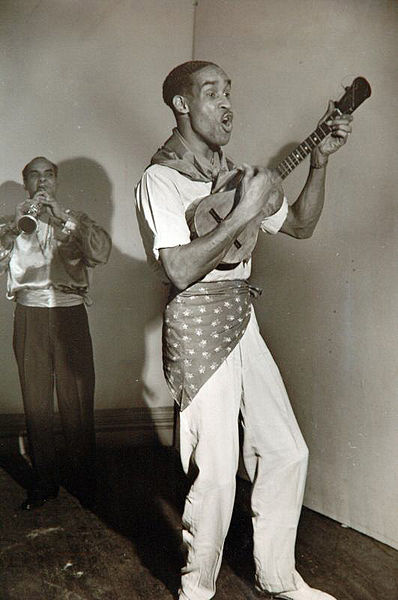
Duke of Iron_1940s
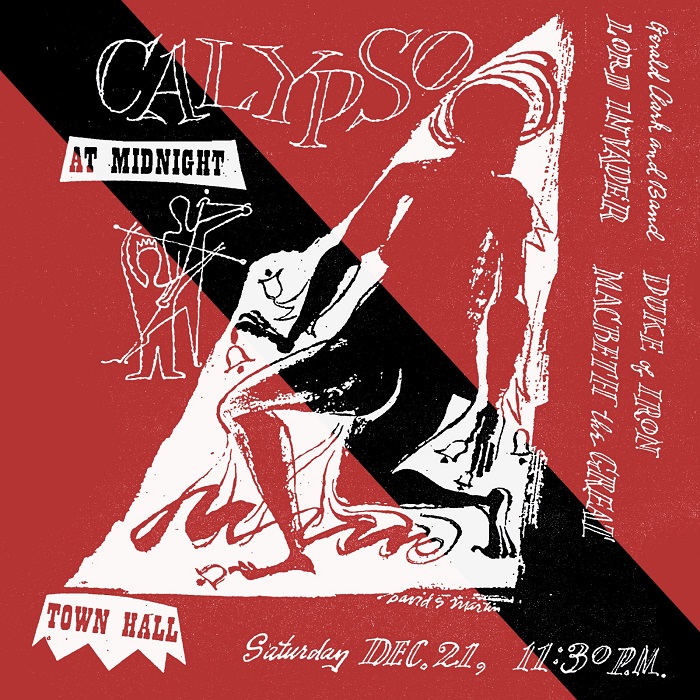
A recording of a 1946 Calypso concert in NYC featuring Lord Invader, Duke of Iron, and MacBeth the Great
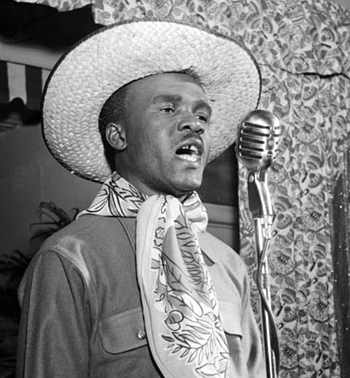
Lord Invader_1940s
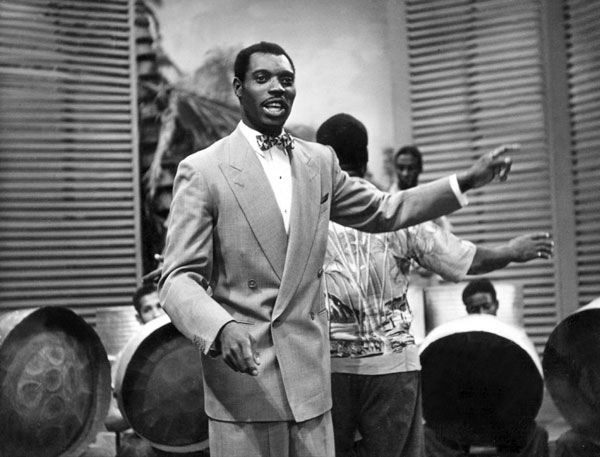
Lord Kitchener in 1951
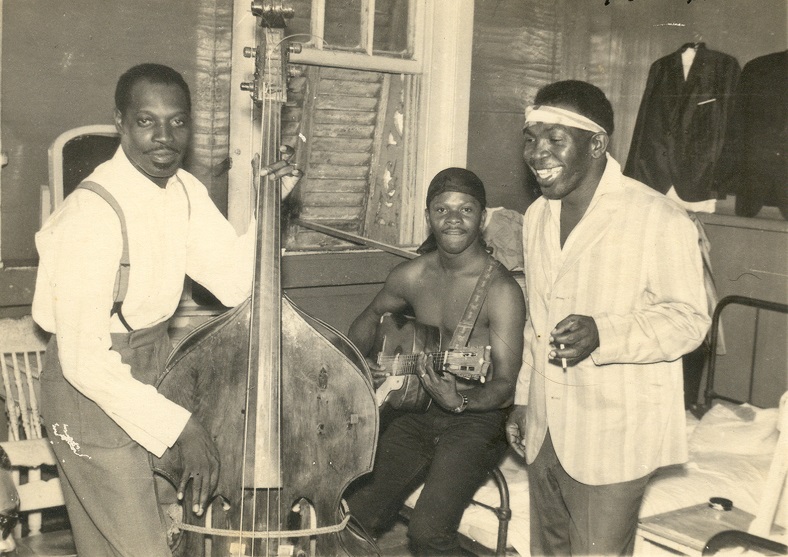
1962: Lord Kitchener, Lord Superior and Lord Melody_Kitch, Supie and Mel were in Georgetown, Guyana for a calypso show.
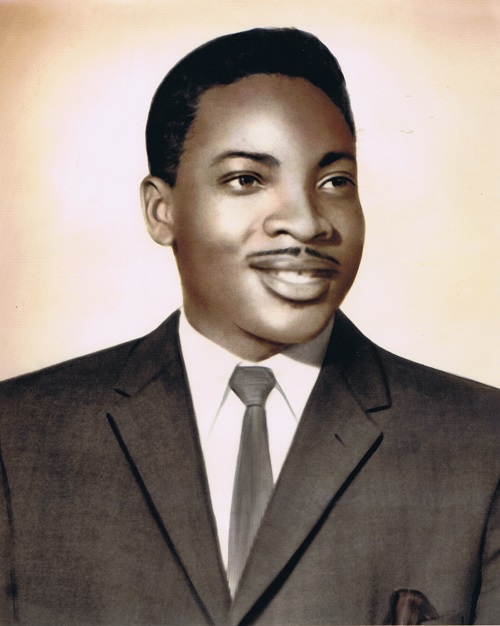
The Mighty Sparrow_early 1960s
“Your calypso name is given to you by your peers, based on your style. In the old days they tried to emulate British royalty. There was Lord Kitchener, Lord Nelson, Duke. When I started singing, the bands were still using acoustic instruments and the singers would stand flat footed, making a point or accusing someone in the crowd with the pointing of a finger, but mostly they stood motionless. When I sing, I get excited and move around, much like James Brown – and that was new to them. The older singers said “Why don’t you just sing instead of hopping around like a little Sparrow.” It was said as a joke, but the name stuck.” (The Mighty Sparrow, interviewed)
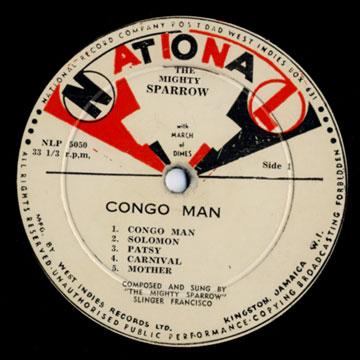
The Mighty Sparrow_Congo Man album from 1965_The calypso single Congo Man itself has been banned in the past for radio play but it demonstrates devilish wit and honesty along with the controversy. A song of its time, though politically incorrect in the 21st century !
The Mighty Sparrow’s “Jean and Dinah” (Yankees Gone) (1956):
.
Calypso Rose’s “Palet” (Popsicle) from the 1970s:
.
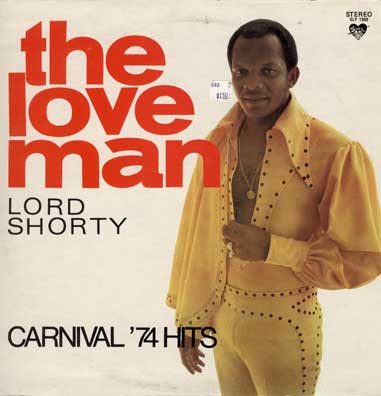
Lord Shorty’s “Endless Vibrations”(1974):
.
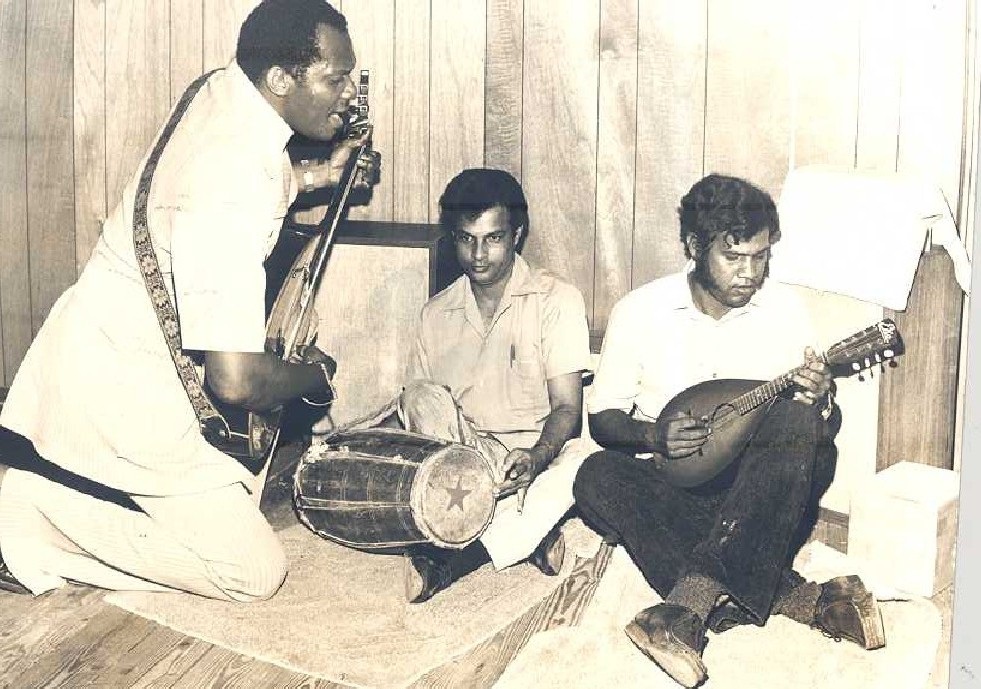
Lord Shorty (later Ras Shorty) with Robin Ramjitsingh and Bisram Moonilal_early 1970s
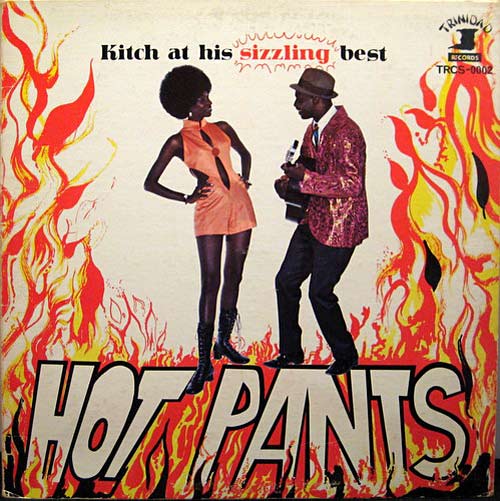
Lord Kitchener record album cover_Hot Pants, from 1972
Black Stalin (Leroy Calliste, born 1941, San Fernando, Trinidad)
“Caribbean Unity” (1979)
.
You try with a federation
De whole ting get in confusion
Caricom and then Carifta
But some how ah smellin disaster
Mister West Indian politician
I mean yuh went to big institution
And how come you cyah unite 7 million?
When ah West Indian unity I know is very easy
If you only rap to yuh people and tell dem like me – dem is:
.
One race (de Caribbean man)
From de same place (de Caribbean man)
Dat make de same trip (de Caribbean man)
On de same ship (de Caribbean man)
So we must push one common intention
Is for a better life in de region
For we woman, and we children
Dat must be de ambition of de Caribbean man
De Caribbean man, de Caribbean man…
.
You say dat de federation
Was imported quite from England
And you goin and form ah Carifta
With ah true West Indian flavour
But when Carifta started runnin
Morning, noon and night all ah hearin
Is just money-speech dem prime minister givin
Well I say no set ah money could form ah unity
First of all your people need their identity, like:
.
One race (de Caribbean man)
From de same place (de Caribbean man)
Dat make de same trip (de Caribbean man)
On de same ship (de Caribbean man)
So we must push one common intention
Is for a better life in de region
For we woman, and we children
Dat must be de ambition of de Caribbean man
De Caribbean man, de Caribbean man…
.
Caricom is wastin time
De whole Caribbean gone blind
If we doh know from where we comin
Then we cyah plan where we goin
Dats why some want to be communist
But then some want to be socialist
And one set ah religion to add to de foolishness!
Look, ah man who doh know his history
He have brought no unity
How could ah man who doh know his roots form his own ideology? – like:
.
One race (de Caribbean man)
From de same place (de Caribbean man)
Dat make de same trip (de Caribbean man)
On de same ship (de Caribbean man)
So we must push one common intention
Is for a better life in de region
For we woman, and we children.
Dat must be de ambition of de Caribbean man
De Caribbean man, de Caribbean man…
.
De Federation done dead and Carifta goin tuh bed
But de cult of de Rastafarian spreadin through de Caribbean
It have Rastas now in Grenada, it have Rastas now in St. Lucia,
But tuh run Carifta, yes you gettin pressure
If the Rastafari movement spreadin and Carifta dyin slow
Then there’s somethin that Rasta done that dem politician doh know – that we:
.
One race (de Caribbean man)
From de same place (de Caribbean man)
Dat make de same trip (de Caribbean man)
On de same ship (de Caribbean man)
So we must push one common intention
Is for a better life in de region
For we woman, and we children
Dat must be de ambition of de Caribbean man
De Caribbean man, de Caribbean man!
.
Caricom:
The Caribbean Community (CARICOM) is an organization of more than a dozen nations and dependencies, established during the 1970s. Its main purposes have been to promote economic integration and cooperation among its members, to ensure that the benefits of integration are equitably shared, and to coordinate foreign policy.
The Caribbean Free Trade Association was formed in the 1960s among English-speaking Caribbean nations to make economic links more streamlined. Diversifying and liberalizing trade plus ensuring fair competition have all been CARIFTA goals.
.
Black Stalin’s “Caribbean Unity” (1979):
.
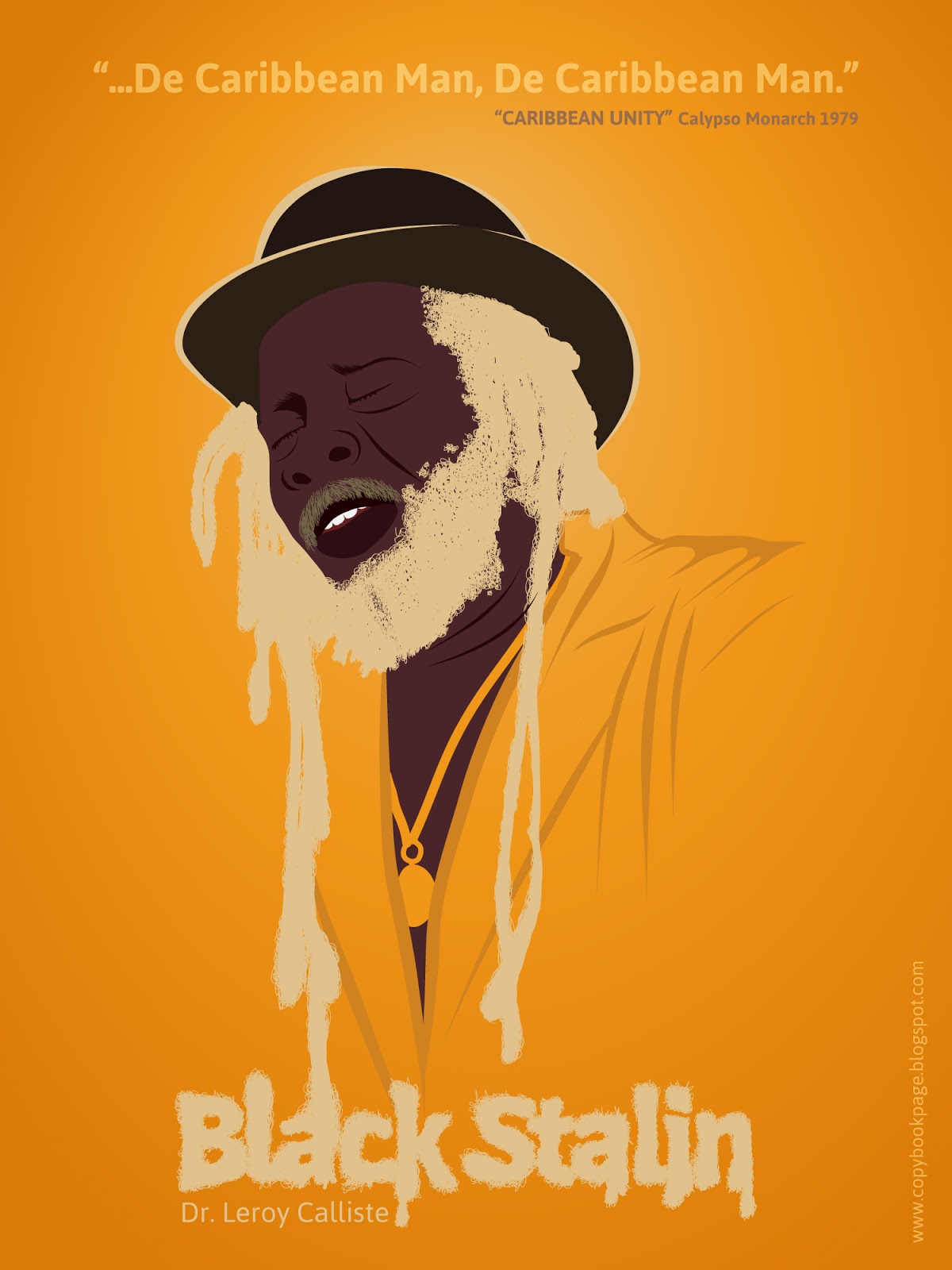
Artist Seon Thompson’s tribute poster to Black Stalin
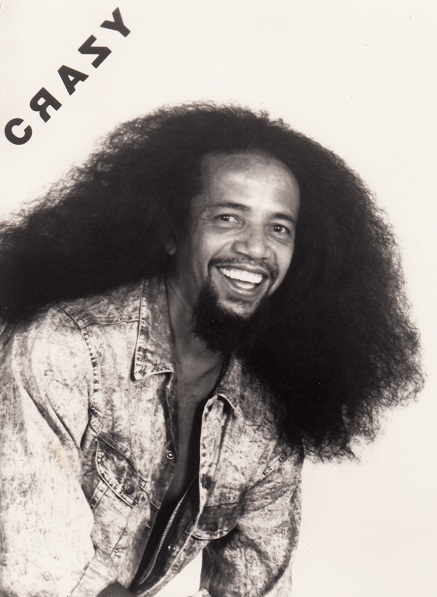
Edwin Ayoung, better known as Crazy_1980s
Crazy’s “Young Man”(1980):
.
Explainer’s “Lorraine”(1981):
.
The Mighty Gabby (an honorary Trini!): “Boots”(1983):
.
Lord Nelson’s “Meh Lover” (1983):
.
The Mighty Shadow’s “Jitters” (1985):
.
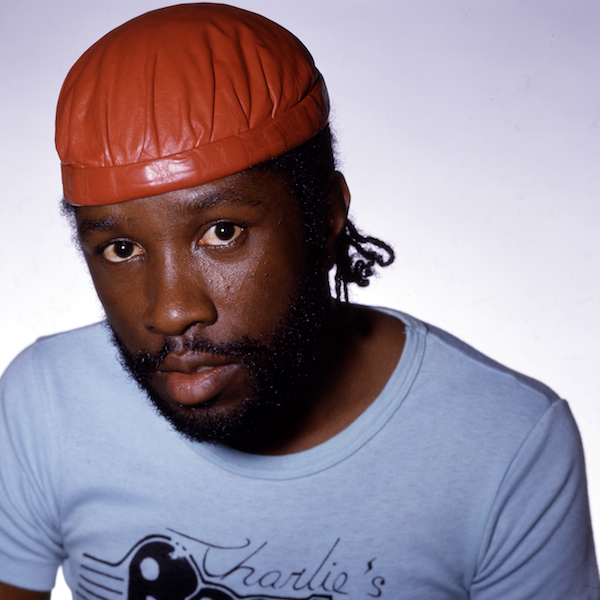
David Rudder
David Rudder and Charlie’s Roots: “The Hammer”(1986):
. . . . .
“Many People – One Carnival”: J’Ouvert Morning…An’ de lime go be good !
Posted: February 28, 2014 Filed under: IMAGES Comments Off on “Many People – One Carnival”: J’Ouvert Morning…An’ de lime go be good !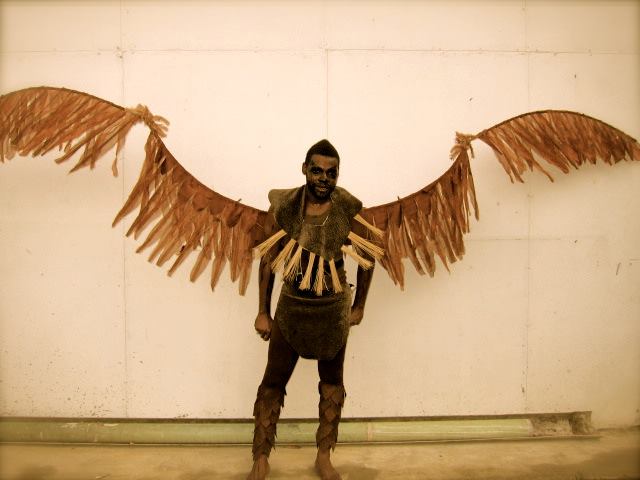

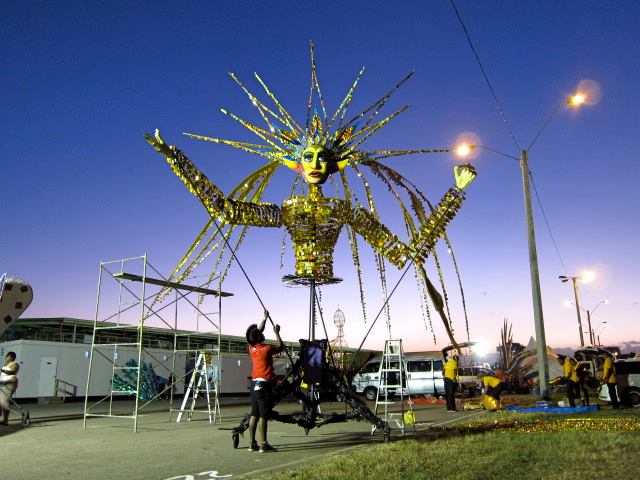
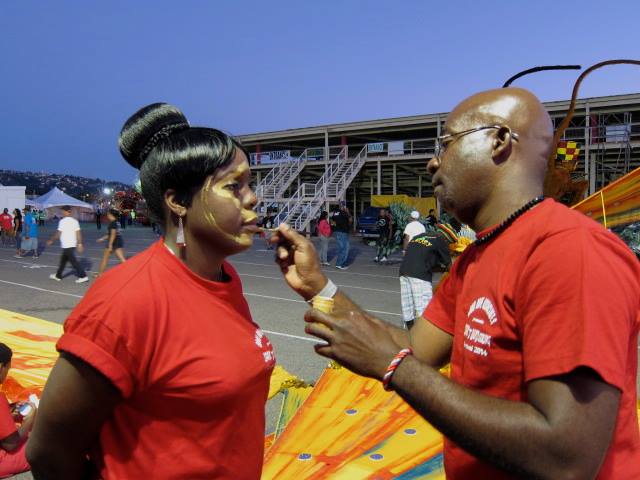

Preparations to “play Mas’” in Port of Spain…
(“J’Ouvert” or Opening Day of Trinidad and Tobago Carnival 2014 is Monday, March 3rd.)
A Special Thank-You to Andre Bagoo for providing these photographs!
. . .
Willie Cole: Neo-African sculpture with American plenty
Posted: February 23, 2014 Filed under: IMAGES Comments Off on Willie Cole: Neo-African sculpture with American plenty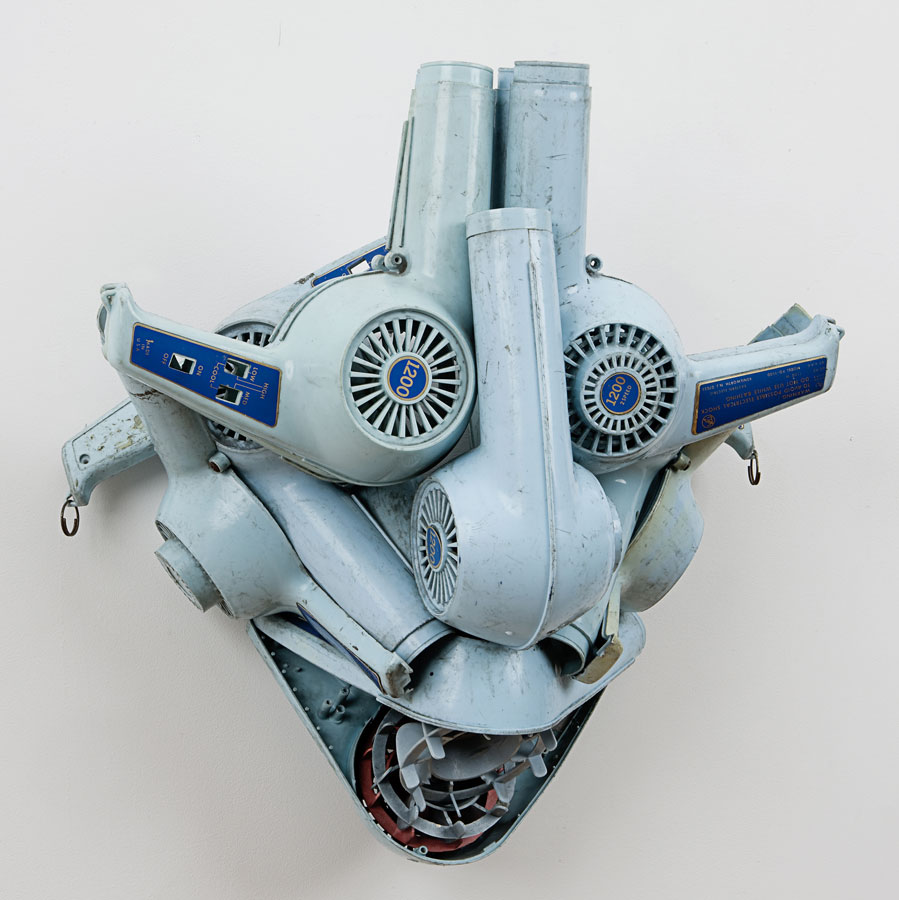
Willie Cole_Wind mask_assemblage with hairdryers_1991
For the decade of the 1990s, Willie Cole (born 1955) was inspired principally by the archaic cast-iron steam iron. The Newark, New Jersey-born sculptor and conceptual artist created faux–anthropological research into The People of Iron a.k.a. The Cult of The Domestic. By the end of the decade he had chronicled their journey from slavery to freedom through sculpture, printmaking – and branding (with iron, that is). The elliptical association with the fact of American slavery cannot be missed by any viewer with historical intelligence. Cole’s shoe sculptures, and those with hair dryers, bicycle parts, kitchen chairs and so forth, are visually strong and metaphorically rich – and only an African-American sculptor could use materials in this way to create something fresh and “American” yet linked to the beauty of African “traditional” art.
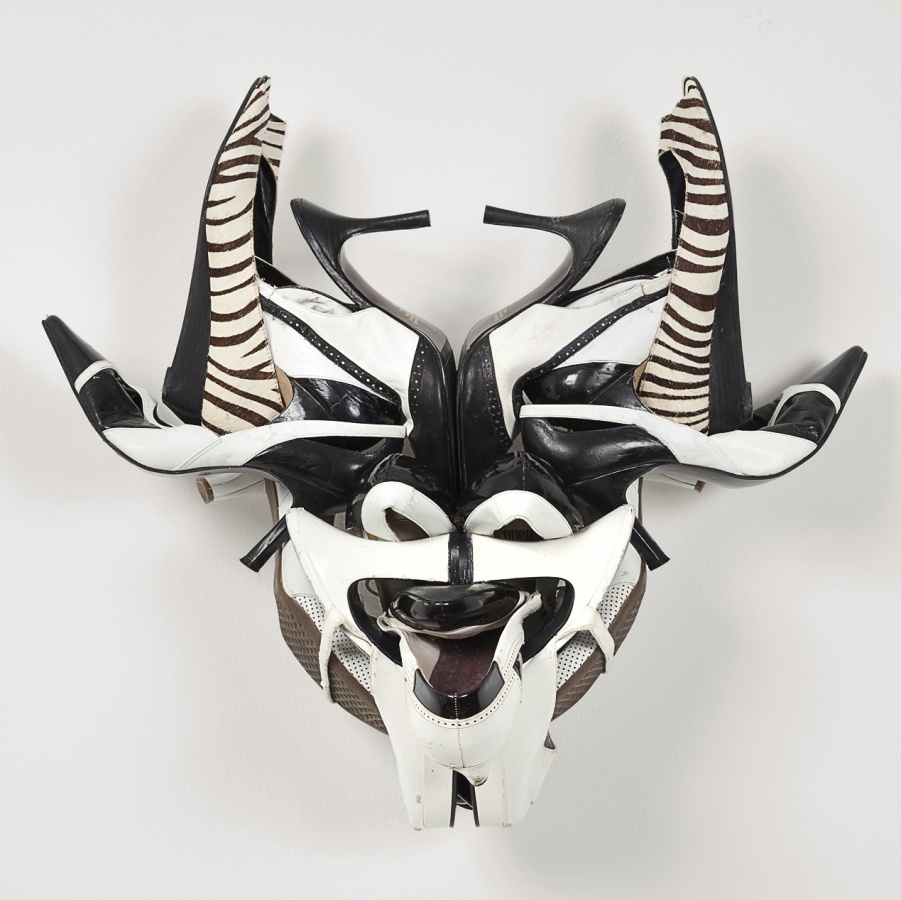
Willie Cole_Zebra-town Mask_a sculpture in shoes
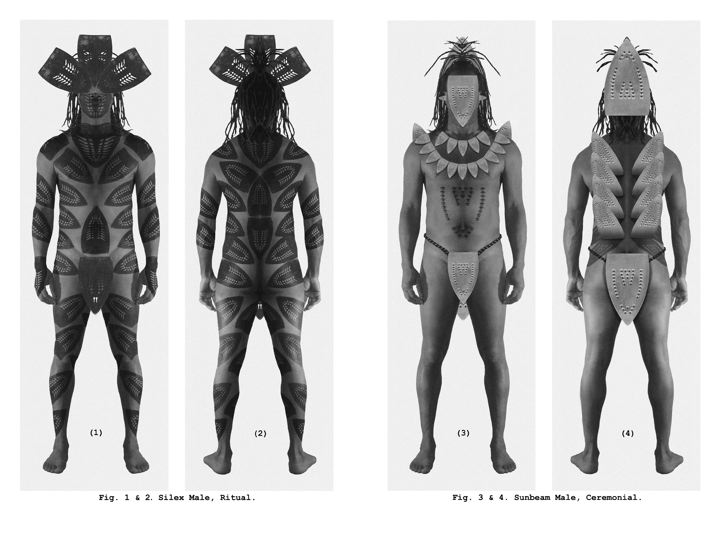
Willie Cole_Steam Iron series
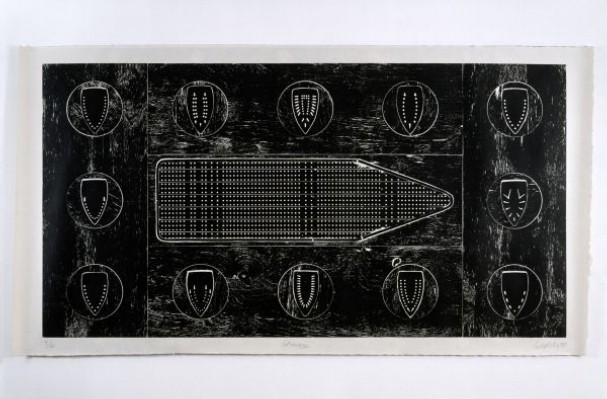
Willie Cole_Stowage_2007

Willie Cole_Pressed Iron Blossom number 3
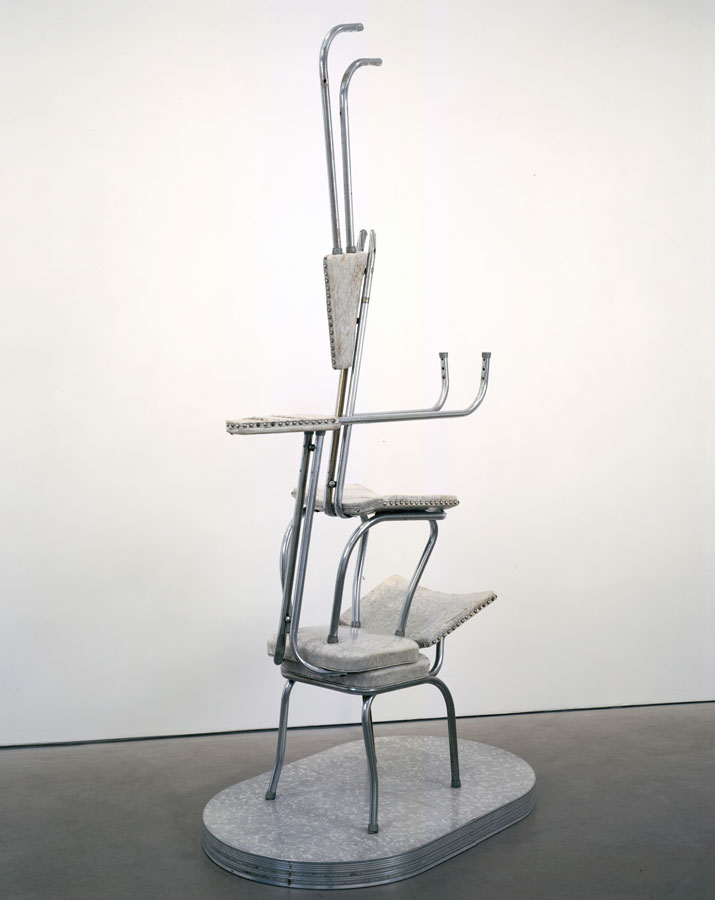
Willie Cole_Kitchen tji wara_2004
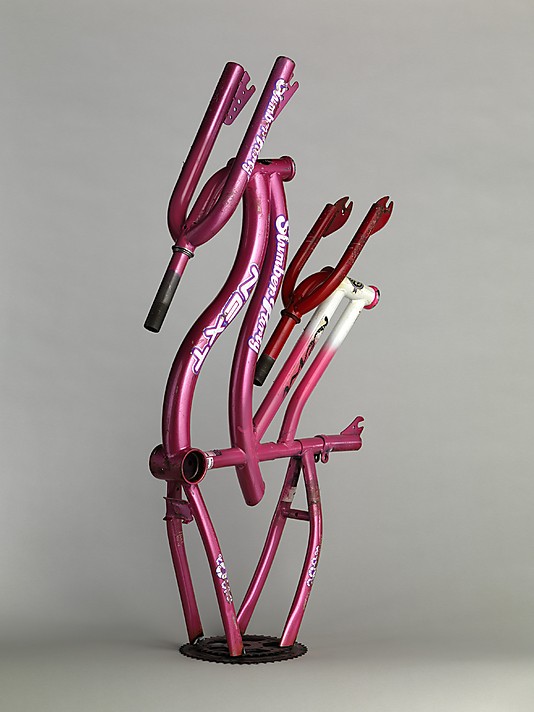
Willie Cole_Kent tji wara_2007_sculpture made up of bicycle parts
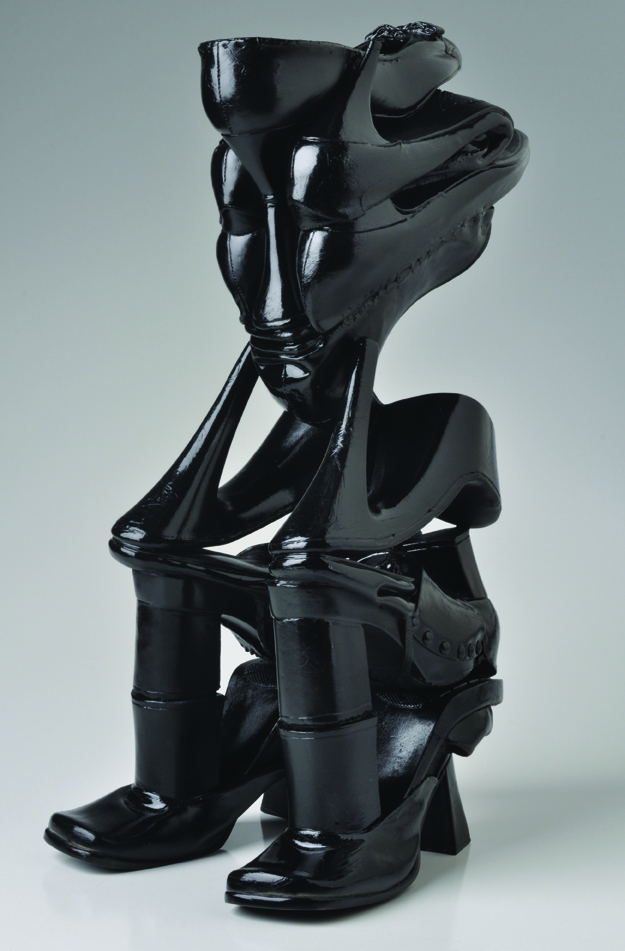
Willie Cole_Black Worrier_sculpture constructed of women’s shoes
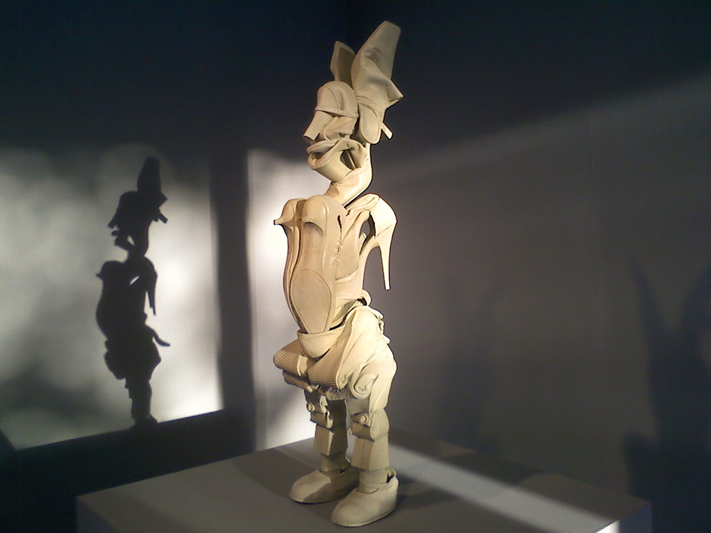
Willie Cole_Downtown Goddess_a sculpture in women’s shoes
. . . . .
Danny Simmons: Abstract Expressionism via “Oil on Smartphone”
Posted: February 23, 2014 Filed under: IMAGES Comments Off on Danny Simmons: Abstract Expressionism via “Oil on Smartphone”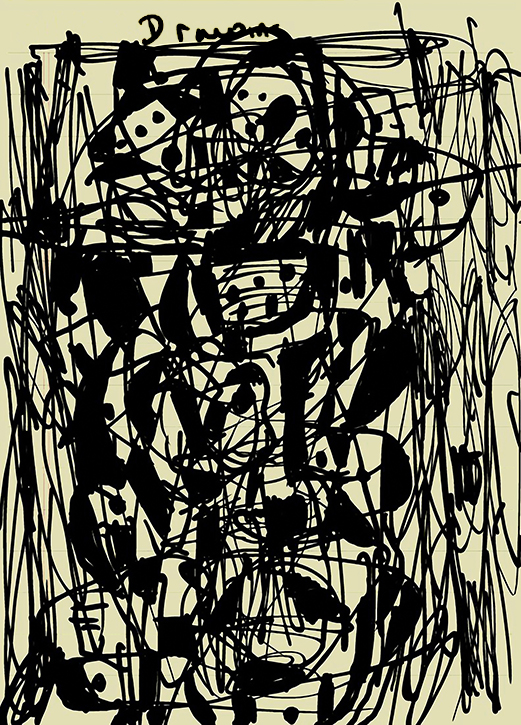
Danny Simmons_Dreaming Eloquently_Digital print_2013
.
Daniel “Danny” Simmons, Jr., is a painter from Queens, New York City. Self-taught, he used to watch his mother, an amateur painter, while she worked. In the early 1990s he began to concentrate seriously on painting, incorporating influences from Catalan painter Joan Miró, and developing a style he calls Neo-African Abstract Expressionism. His artwork is in the collections of the Brooklyn Museum, The Shomburg Center for Black Culture, and The Smithsonian. In 1995, with his brothers Joseph and Russell, he founded Rush Philanthropic Arts Foundation, out of which grew Rush Arts Gallery in Manhattan and Corridor Gallery in Brooklyn. Though he has long painted in oils, recently Simmons has started to make “Digital Prints” – Smartphone Art. Using a Samsung Galaxy Note II phone and the accompanying stylus he has learned a new way to draw and paint using the device’s embedded app. Rather than printing multiples of these phone-sketches or phone-paintings he prints just one – making it an original artwork with value beyond a print. Simmons uses a professional digital printing house whose staff vectorize the image files so that the resolution holds together and then they print the images on high-quality paper. Asked what he thinks about when he’s painting – and “painting”– Danny Simmons has said: “I’m really trying to get at how people are connected to each other and invoke the feeling that these paintings are taking you to a place where a lot of people can be transported to at the same time, and find a common ground there. Society is so polarizing – between rich and poor, races and religions – but one of the things that can bring people together is art.” (Quotation from WhiteHot magazine interview with Paul Laster, December 2013)
.
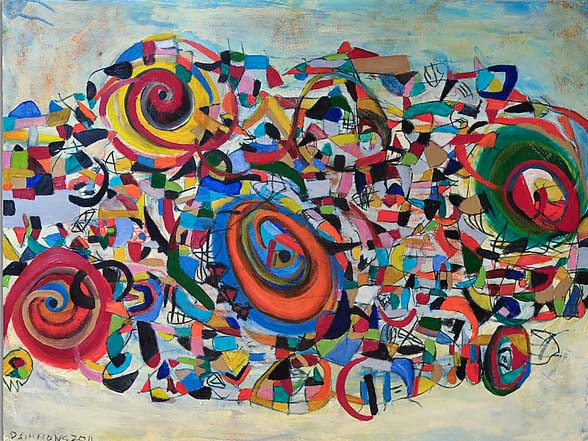
Danny Simmons_The Ju Ju Man’s One Man Band_Oil and charcoal on paper_2011
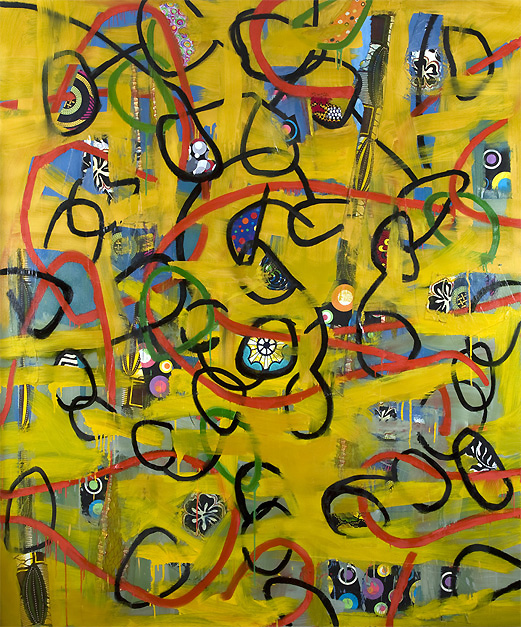
Danny Simmons_Loopy Loo_Oil on canvas_2013
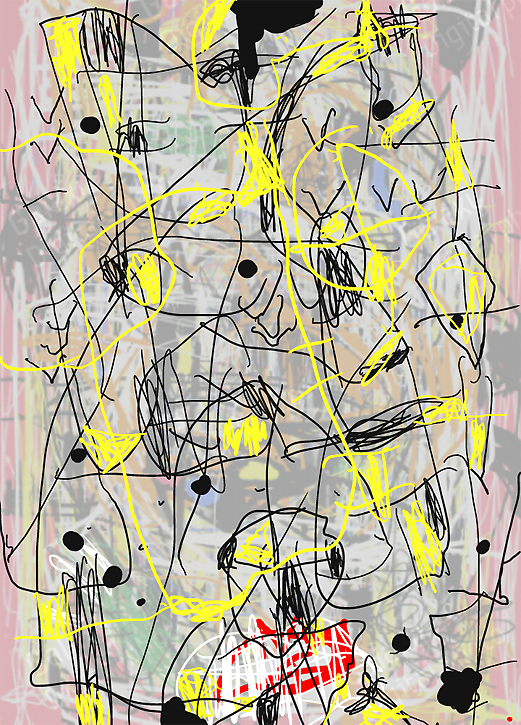
Danny Simmons_Just a Memory_Digital print_2013

Danny Simmons_Over and Under_Digital print_2013
. . . . .
Lois Mailou Jones: Pioneer and Mentor
Posted: February 20, 2014 Filed under: IMAGES | Tags: Black History Month Comments Off on Lois Mailou Jones: Pioneer and Mentor
Lois Mailou Jones_Pattern_1982
.
Boston-born Lois Mailou Jones (1905-1998) was a painter, art teacher and mentor, who taught at Howard University in Washington, D.C., for almost half a century. Jones was of that generation of trail-blazers in Black-American art; and among Black women she was one of the first to establish an artistic reputation beyond the USA. Jim-Crow “policies” still being entrenched, her early entries into art exhibitions were sometimes rejected when organizers discovered that the paintings were by a Black person; Jones from time to time had Céline Marie Tabary – a Parisian fellow-artist who came to teach at Howard for a decade or so – deliver her paintings (especially after an award was taken away from her upon the “revelation” of her race.)
In 1934 Jones had attended a summer session at Columbia University, and began to study African masks and to incorporate depictions of them into her oil studies. “Les Fétiches” (1938), her painting of several African masks grouped together, Jones painted while visiting Paris where she also absorbed some of the “active” artistic philosophy of the French-Caribbean-African Négritude movement. (Léon Damas, Léopold Sédar Senghor, and Aimé Césaire spearheaded that mainly literary Black-Francophone movement.)
After a letter correspondence lasting many years, Jones and Haitian artist Louis Vergniaud Pierre-Noel married in 1953. They took trips to Haiti and also to African nations during the 1960s and 1970s. Haitian and pan-African themes became central to Jones’ work.
Lois Mailou Jones’ most important achievement may be that she was an exacting and supportive mentor to younger generations of Black artists, among them Martha Jackson-Jarvis and David C. Driskell.
.

Lois Mailou Jones_Painting (Untitled)_1976
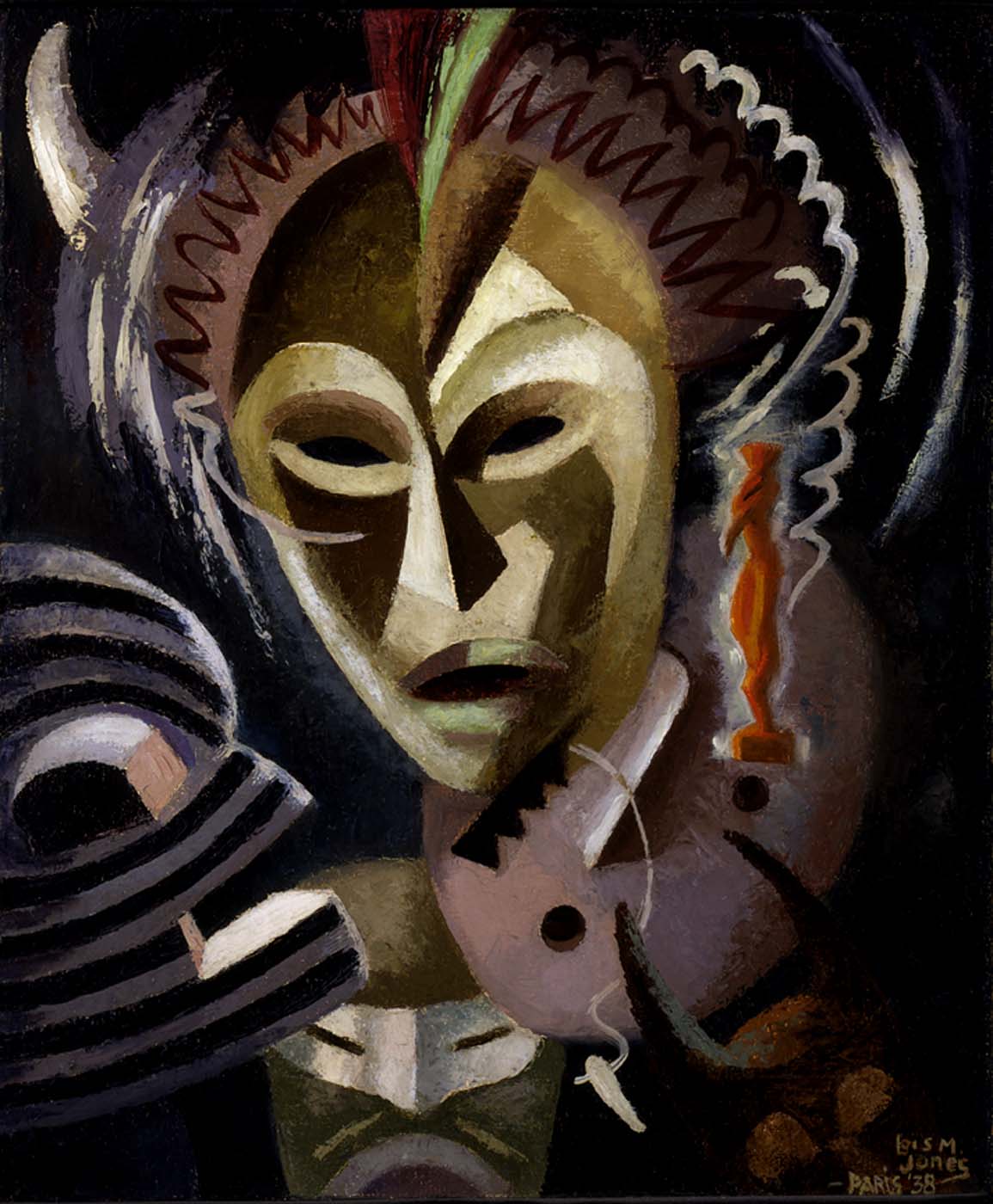
Lois Mailou Jones_Les Fétiches_oil on linen_1938

Lois Mailou Jones_The Ascent of Ethiopia_Oil on canvas_1932
. . . . .
Amor o Libertad: una canción “Soul” de los años 70: “Libre” por Deniece Williams
Posted: February 14, 2014 Filed under: IMAGES | Tags: Día de San Valentín, Love Songs in translation: Canciones de Amor: traducidas Comments Off on Amor o Libertad: una canción “Soul” de los años 70: “Libre” por Deniece Williams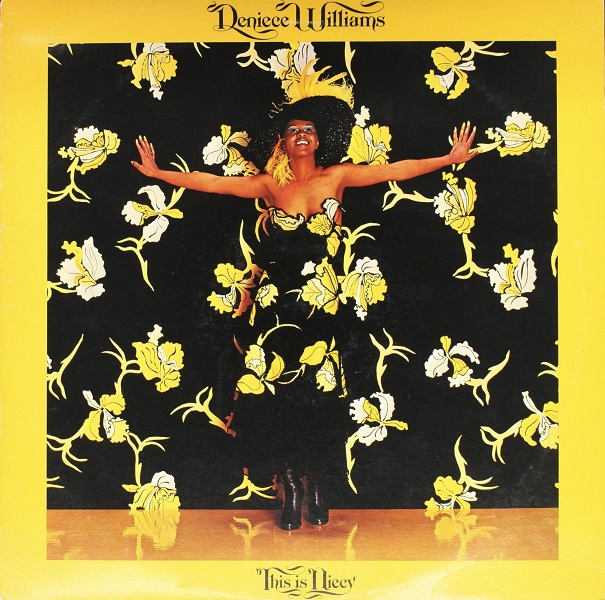
Deniece Williams (nacido en 1950)
“Libre” (1976)
.
Susurrando en su oído,
mi pocón mágica de Amor;
diciéndole que soy sincera
– y que no hay nada que es demasiado bueno para nosotros
.
Pero – quiero ser libre – libre – libre…
Y tengo que ser yo, sí, yo, sí – yo.
.
Manos coqueteandos en su cabeza
dan misterio a nuestras noches;
hay alegría todo el tiempo – ah, ¡como me complace ese hombre!
.
Pero – quiero ser libre – libre – libre…
Y tengo que ser yo, sí, yo, sí – yo.
.
Sintiéndote cerca de mí
hace sonreír todos mis sentidos;
no desperdiciemos nuestro arrobamiento
porque me quedo aquí solo un ratito
.
Y quiero ser libre – libre – libre…
Y tengo que ser yo, sí, yo, ah sí – yo.
. . .
Deniece Williams (born 1950)
“Free” (1976)
.
Whispering in his ear
My magic potion for love
Telling him I’m sincere
And that there’s nothing too good for us
.
But I want to be free, free, free
And I’ve just got to be me yeah, me, me
.
Teasing hands on his mind
Give our nights such mystery
Happiness all the time
Oh and how that man pleases me
.
But I want to be free, free, free
And I’ve just got to be me, me, me
.
Feeling you close to me
Makes all my senses smile
Let’s not waste ecstasy
‘Cause I’ll only be here for a while
.
And I’ve got to be free, free, free-eee, ohh-ohh
And I just wanna be me, yeah – me.
. . .
.
. . . . .
Amor y un alma vieja: “Yendo a la deriva” por Jimi Hendrix
Posted: February 14, 2014 Filed under: IMAGES | Tags: Día de San Valentín, Love Songs in translation: Canciones de Amor: traducidas Comments Off on Amor y un alma vieja: “Yendo a la deriva” por Jimi Hendrix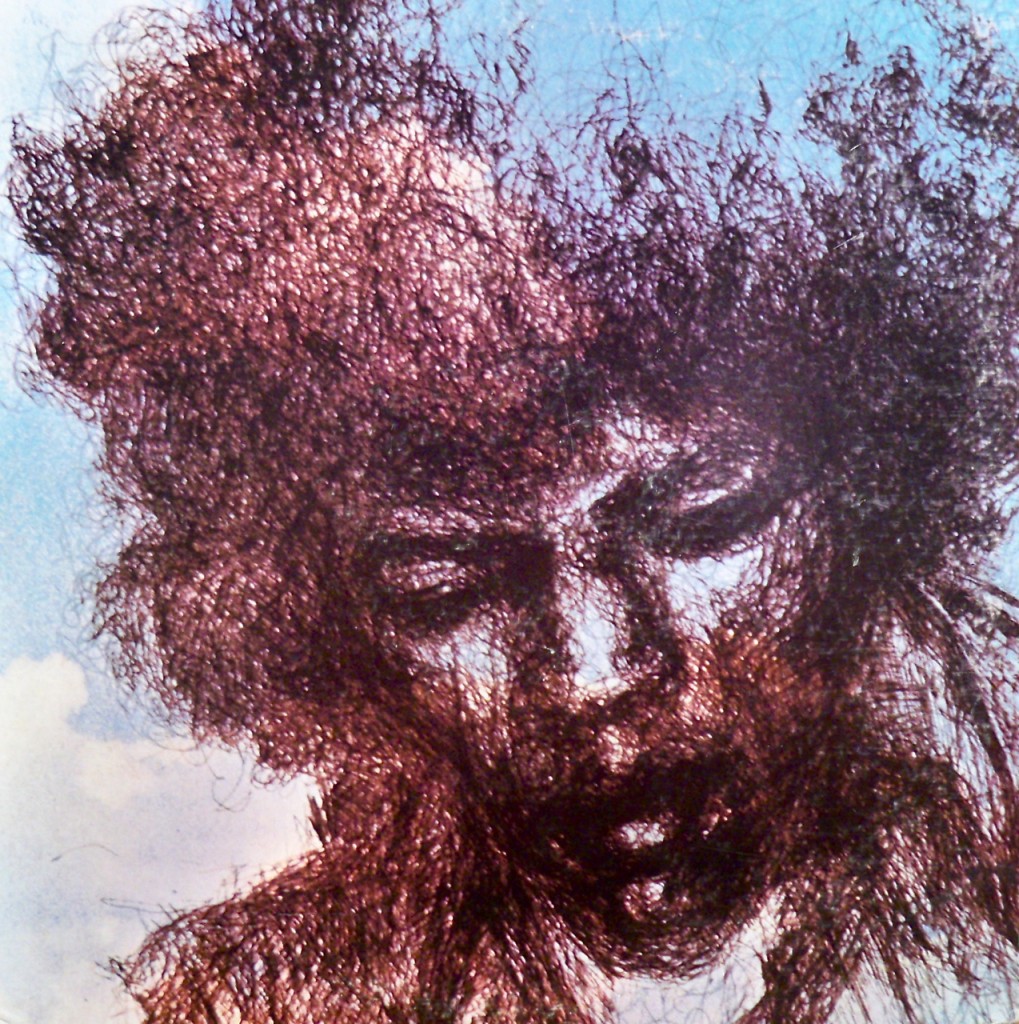 Jimi Hendrix (1942-1970)
“Yendo a la deriva” (1970)
.
Yendo a la deriva
En un mar de lágrimas olvidadas
En un bote salvavidas
Navegando para
Tu amor: mi hogar.
Ah ah ah…
.
Yendo a la deriva
En un mar de antiguas angustias
En un bote salvavidas
Tirando para
Tu amor,
Tirando para
mi hogar.
Ah ah ah oooo ah…
. . .
Jimi Hendrix (1942-1970)
“Drifting” (1970)
.
Drifting
On a sea of forgotten teardrops
On a lifeboat
Sailing for
Your love
– Sailing home.
Ah ah ah…
.
Drifting
On a sea of old heartbreaks
On a lifeboat
Sailing for
Your love
– Sailing home.
Ah ah ah oooo ah…
. . .
. . . . .
Black Hairstory Month: Baldheads, Dreads; Wigs & Things
Posted: February 10, 2014 Filed under: Black Hairstory Month, IMAGES | Tags: Black Hairstory Month Comments Off on Black Hairstory Month: Baldheads, Dreads; Wigs & Things. . .
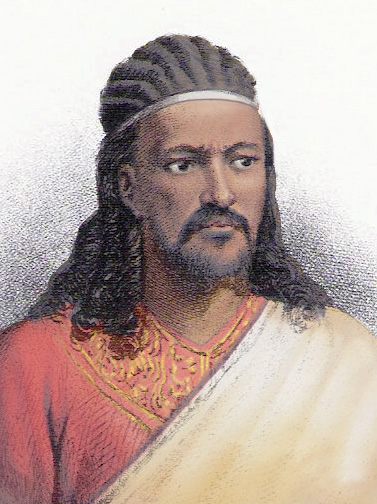
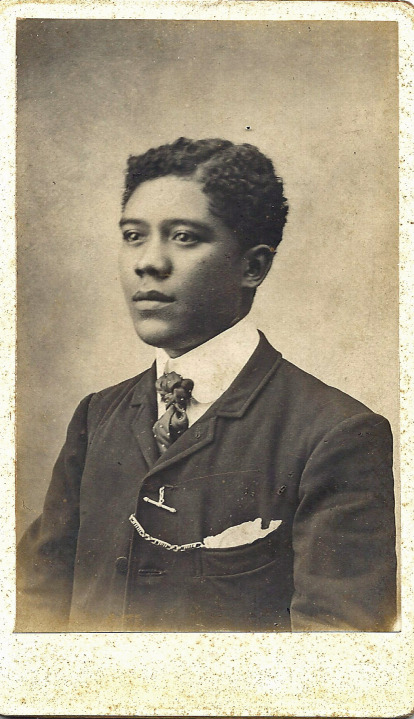
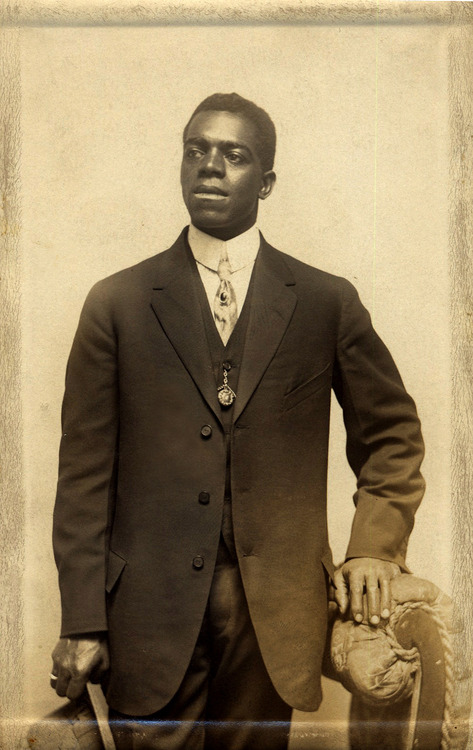
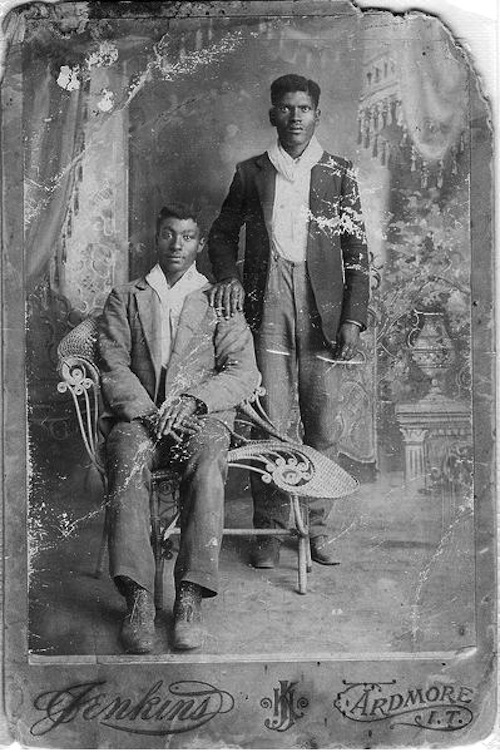
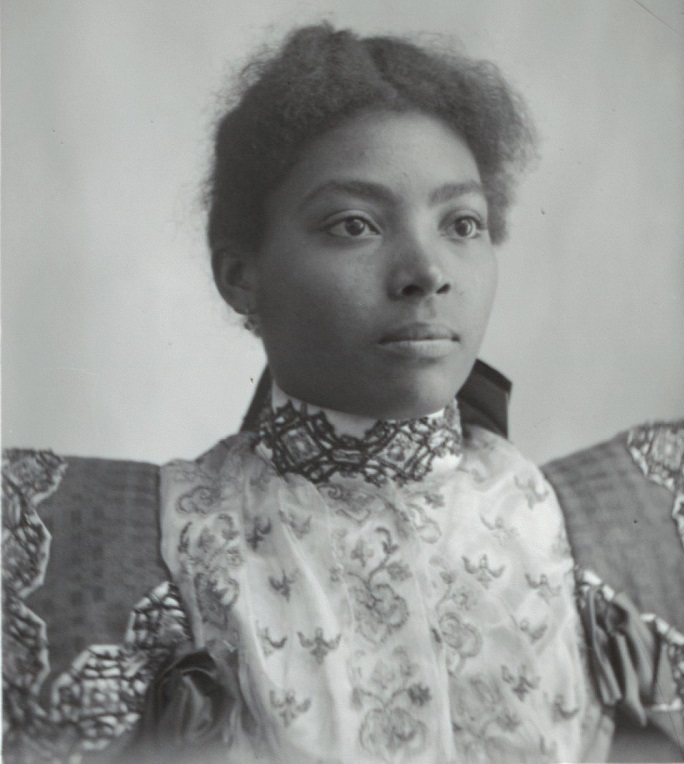
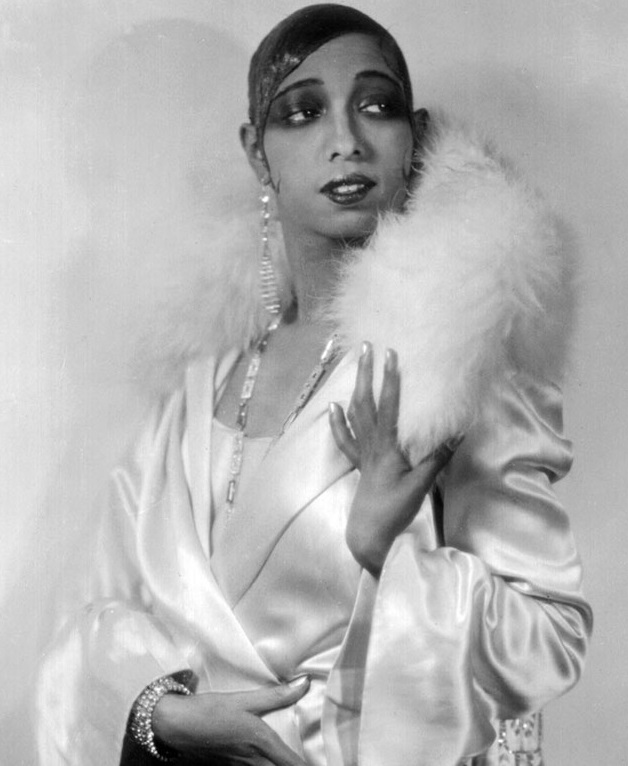
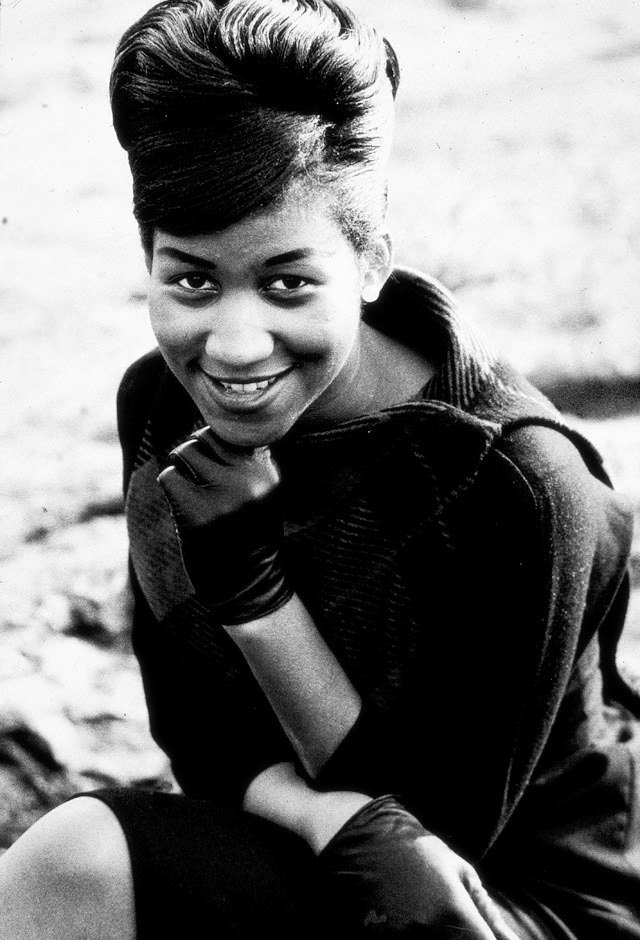
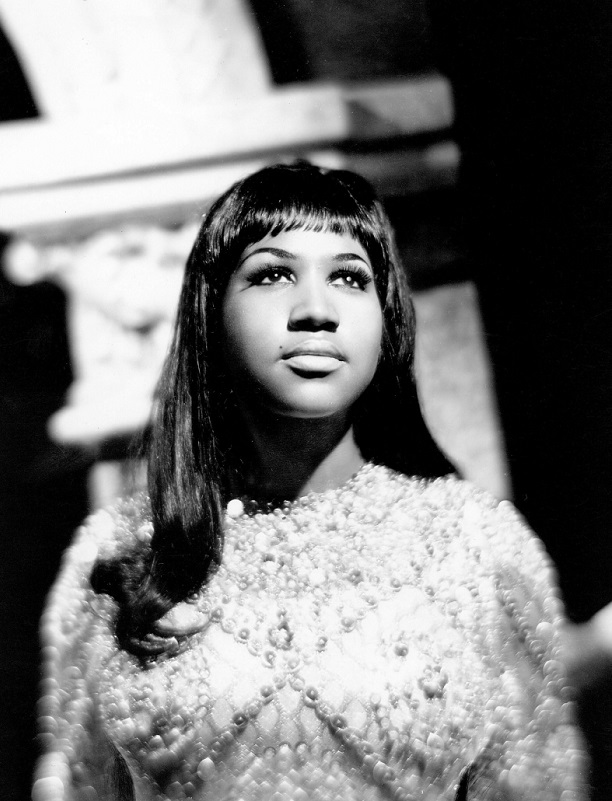
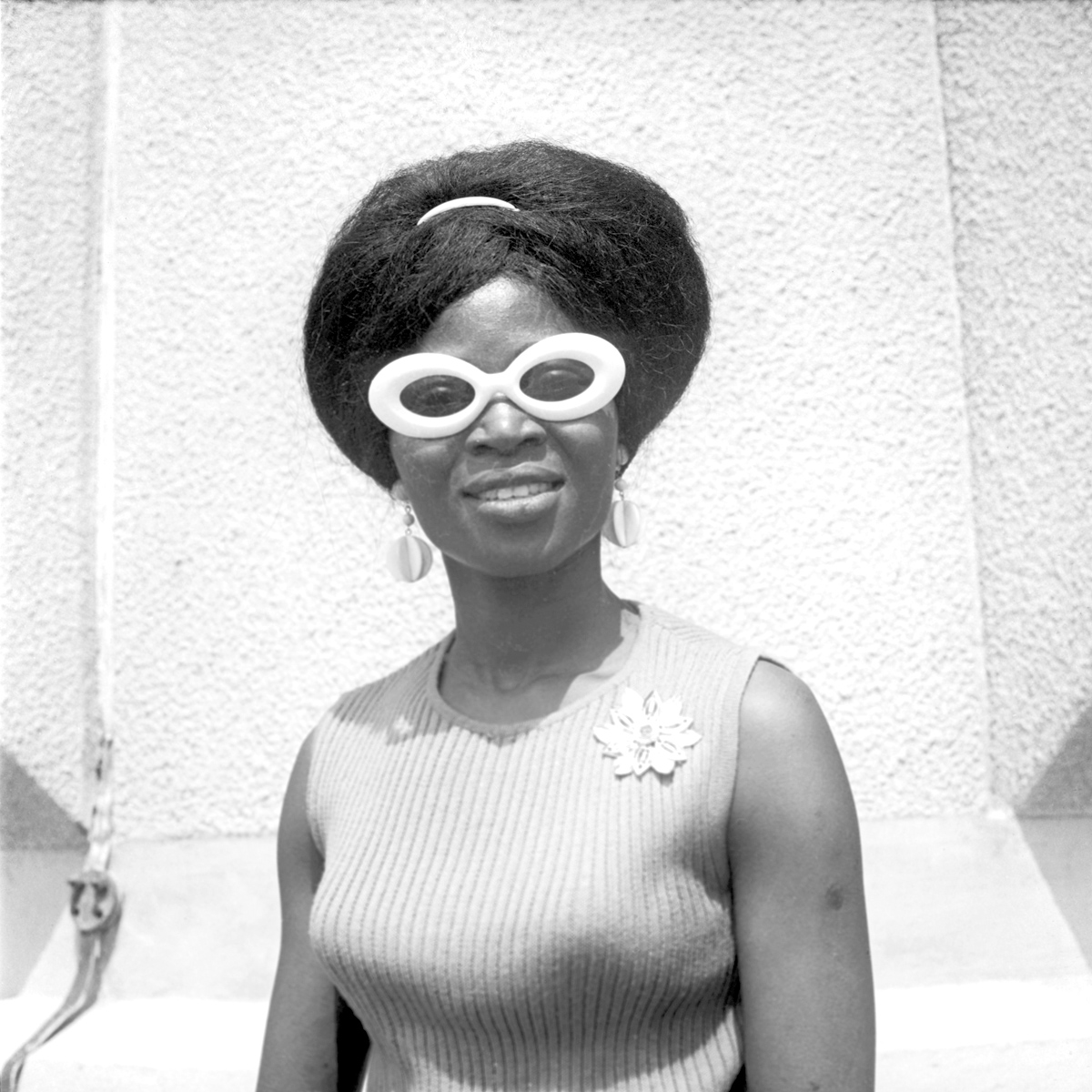
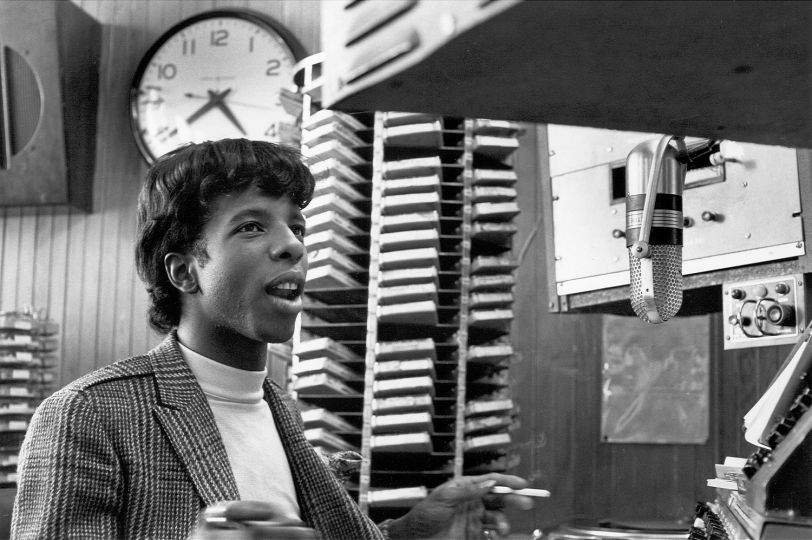
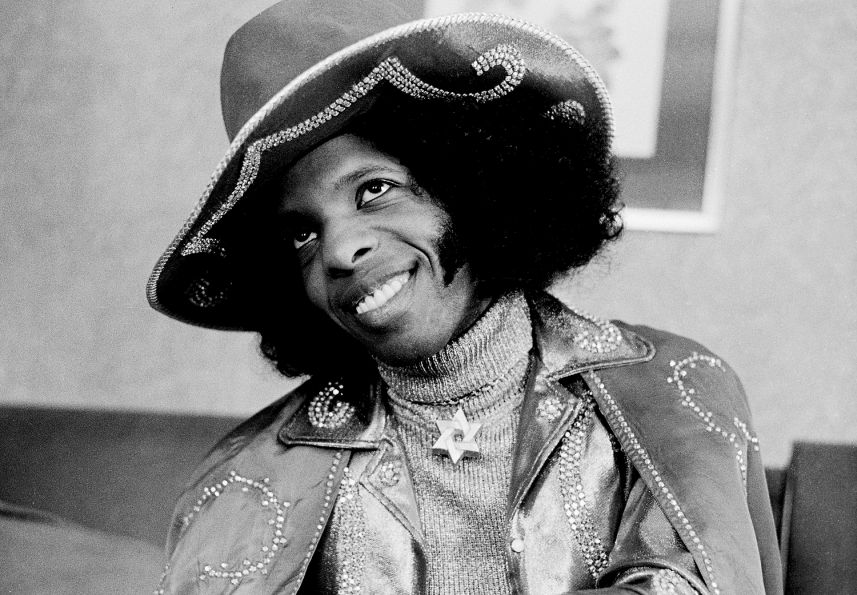
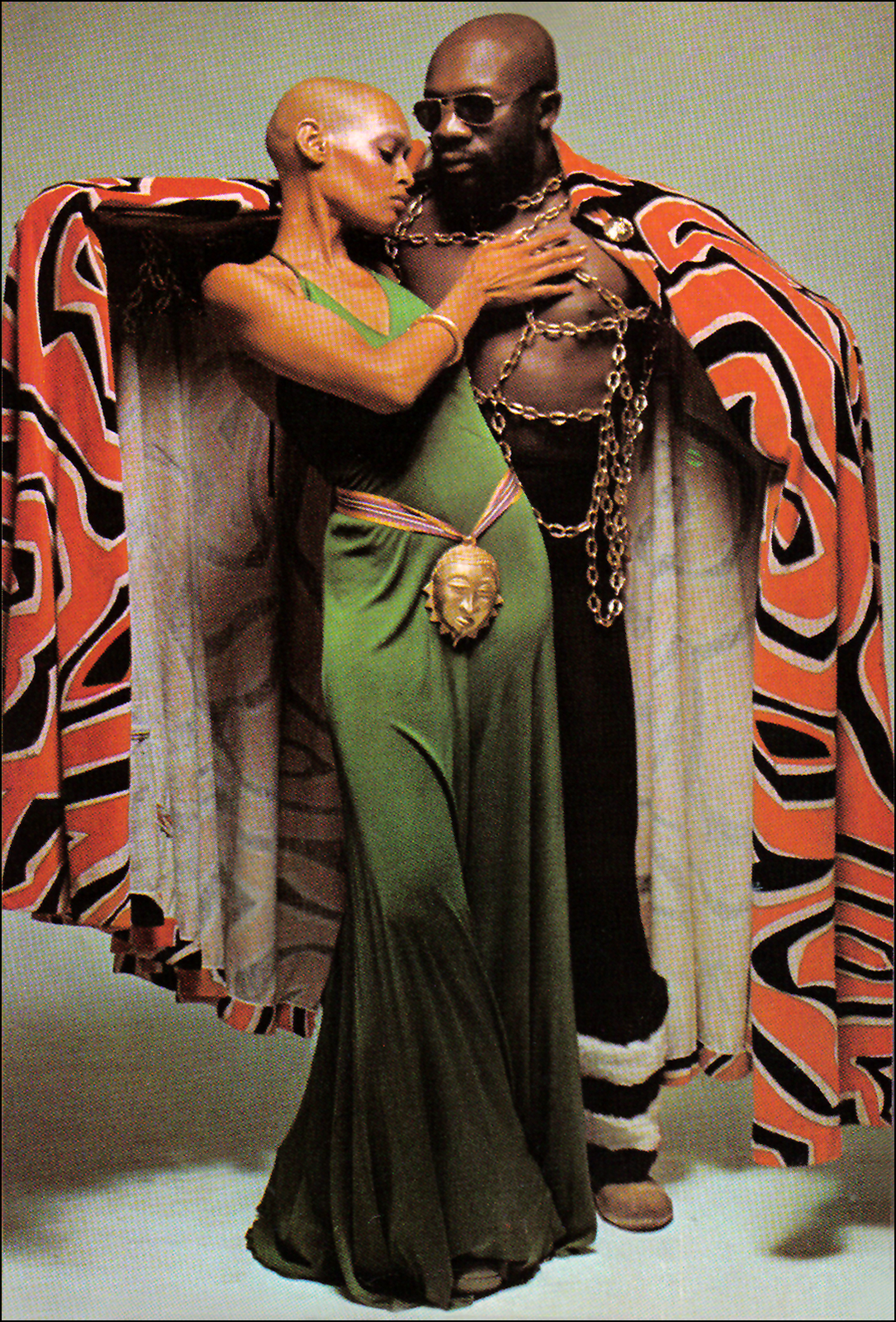
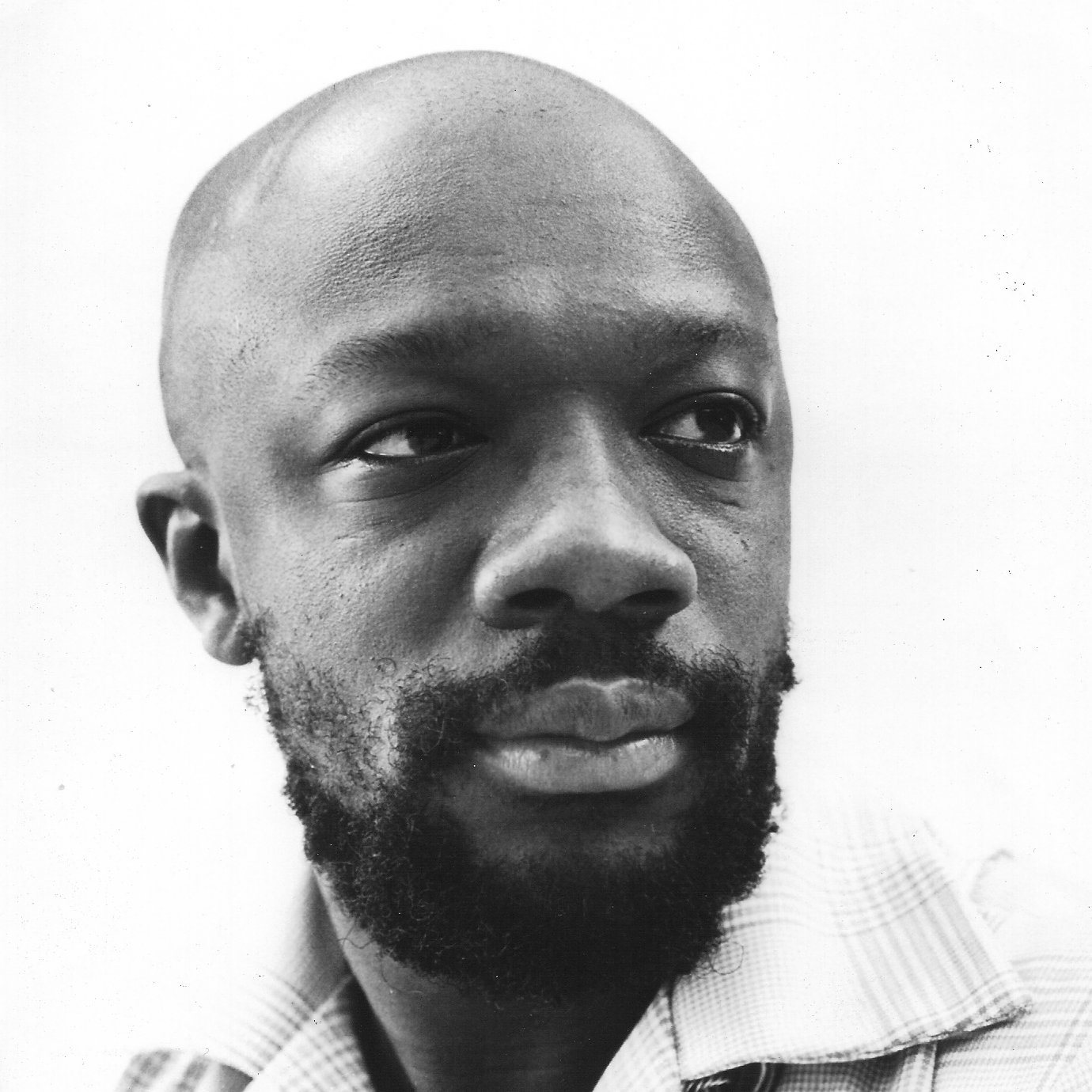
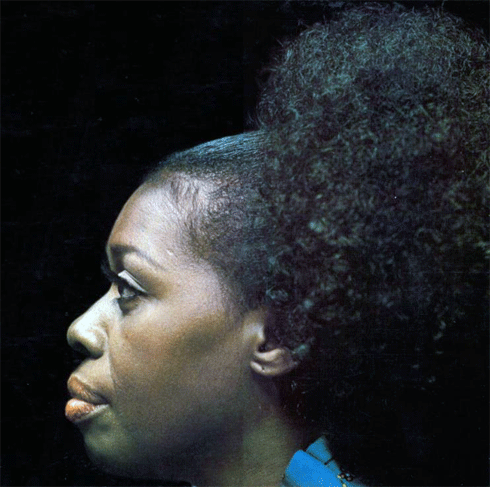
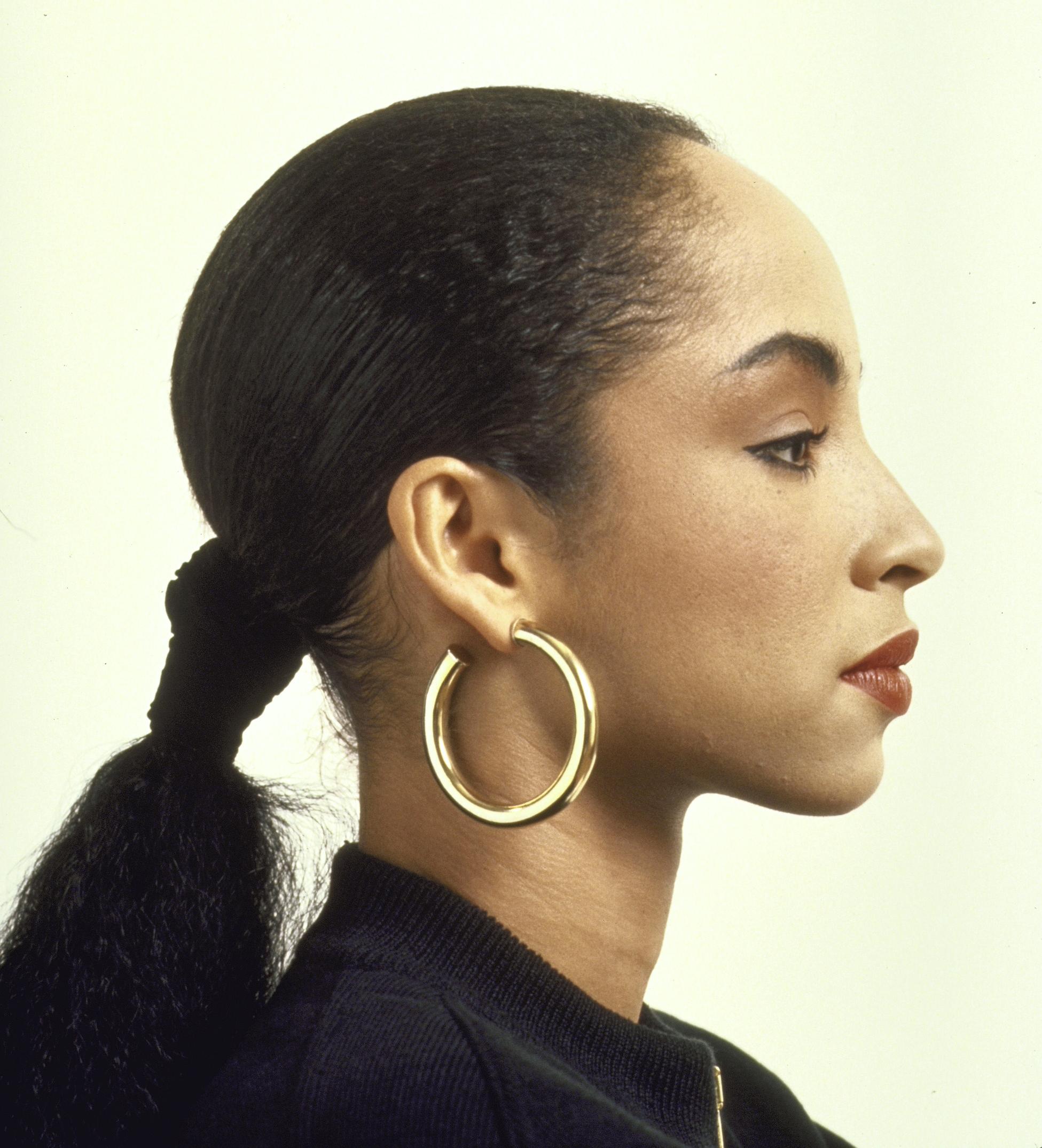
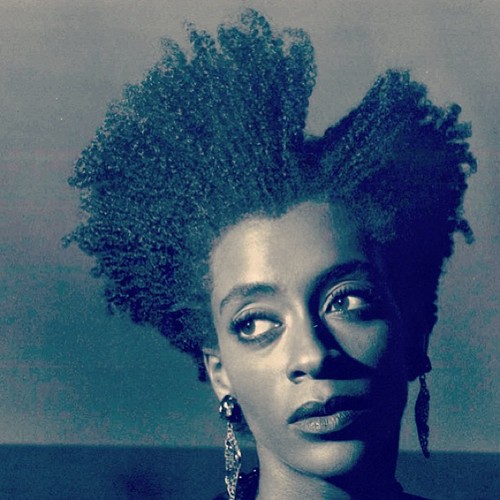
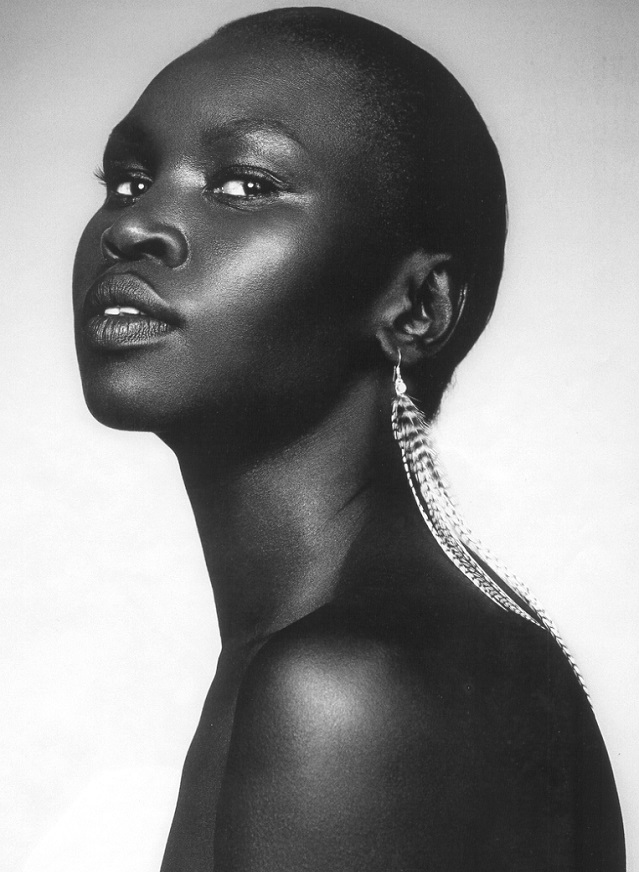
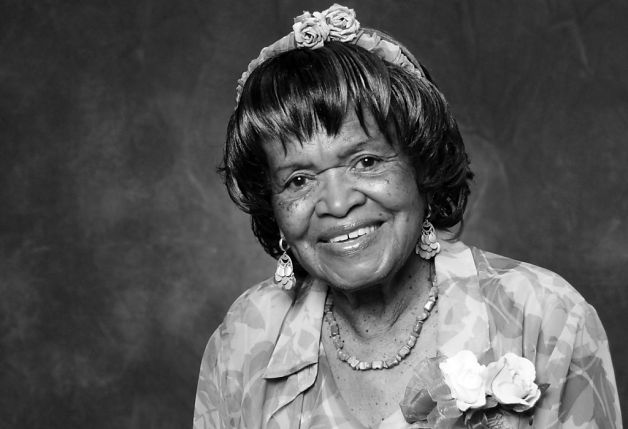
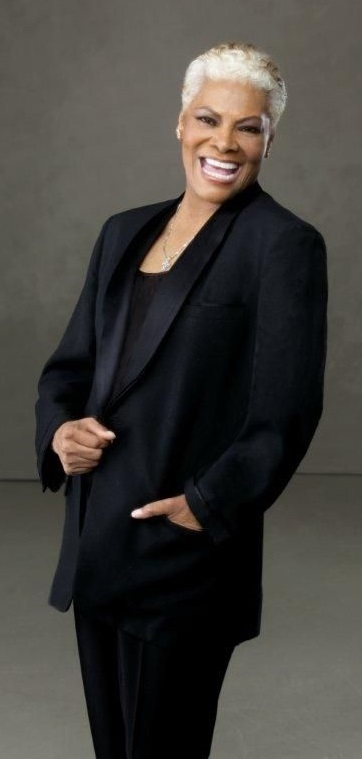
Okhai Ojeikere (born Johnson Donatus Aihumekeokhai Ojeikere) died just over a week ago, on February 2nd, 2014, at the age of 83. Born in 1930 in the Nigerian village of Ovbiomu-Emai, he later mainly worked and lived in Ketu, Nigeria. At the age of 20 he decided to pursue photography; he began with a humble Brownie D camera without flash, and a friend taught him the technical fundamentals of the art. He worked as a darkroom assistant from 1954 till about 1960 for the Ministry of Information in Ibadan. In 1961 he became a studio photographer for Television House Ibadan, and from 1963 to 1975 he was with West Africa Publicity in Lagos. In 1968, under the auspices of the Nigerian Arts Council, he embarked upon an ambitious project of photo-documenting the many varieties of Nigerian hairstyles. He printed close to a thousand such pictures. A selection of Okhai Ojeikere’s prints was featured in the Arsenale at the 55th Venice Biennale in 2013. To honour Ojeikere’s life we present a century of Black hairstyles, with Ojeikere’s own photographs being Images 17 through 20.
. . . .
.
 .
.
 .
.
 .
.
 .
.
 .
.
 .
.
 .
.

 .
.
 .
.
 .
.
 .
.
 .
.
 .
.
 .
.



.
 .
.
 .
.
 .
.
 .
.
 .
.
 .
.
 .
.
.
.


















Be Yourself !
Hale Woodruff’s “Afro Emblems” and Ashanti Gold Weights
Posted: February 10, 2014 Filed under: IMAGES | Tags: Black History Month Comments Off on Hale Woodruff’s “Afro Emblems” and Ashanti Gold Weights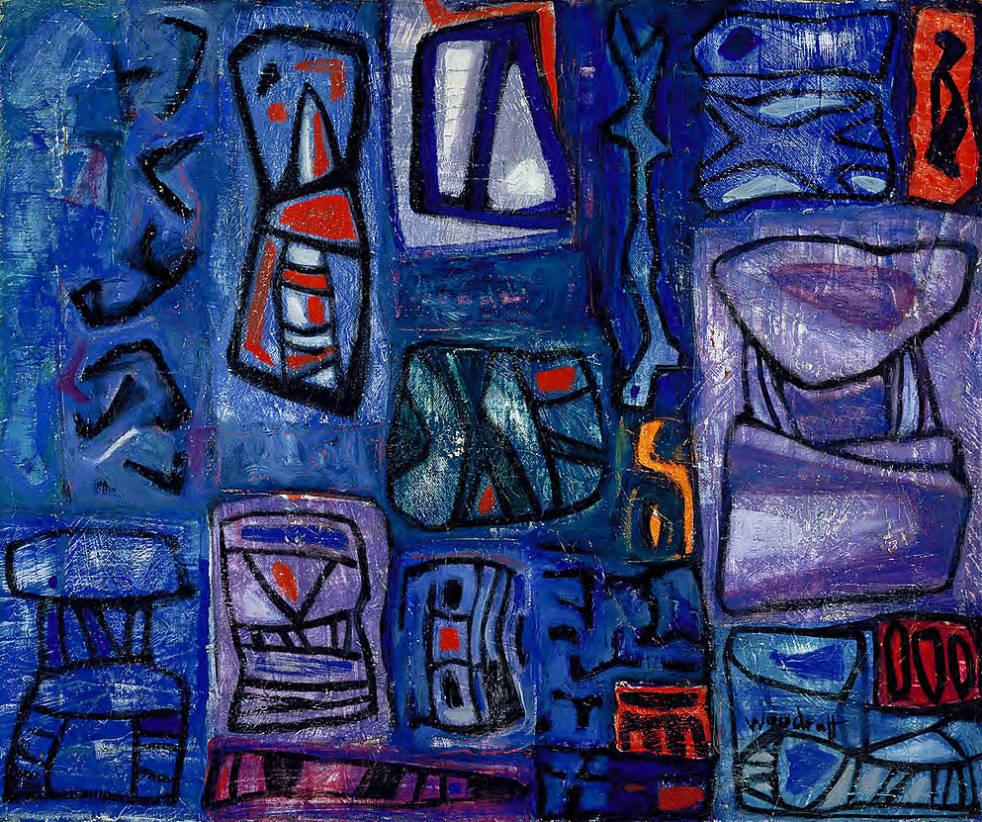
Afro Emblems by Hale Woodruff_1950_oil on linen_18 X 22 inches
Hale Aspacio Woodruff (Cairo, Illinois, USA, 1900-1980) first grew interested in African art in the 1920s, when an art dealer gave him a German book on the subject. He couldn’t read the text but appreciated studying the pictures; on a trip to Europe some years later he bought African sculpture for his own personal inspiration. For “Afro Emblems”, Woodruff divided his canvas into rough rectangles, filling each shape with an emblem inspired by Ashanti or Akan gold weights. [ See paragraph below. ] Woodruff’s bold black outlines and dashes of colour stand out from the blue background, creating an abstract African-influenced pattern.
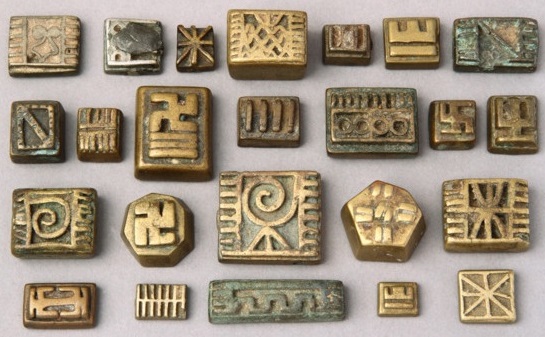
Ashanti gold-dust weights made of brass_19th century
Ashanti or Akan Gold Weights
.
Natural gold resources in the dense forests of southern Ghana brought wealth and influence to the Ashanti (Asante) people. Wealth increased by transporting gold to North Africa via trade routes across the Sahara Desert. In the 15th and 16th centuries this gold attracted other traders, from the great Songhay Empire (in today’s Republic of Mali), from the Hausa cities of northern Nigeria and from Europe. European interest in the region, initially in gold and then in enslaved Africans, brought about great changes, not least the creation of the British Gold Coast Colony in the 19th century. (In 1959, this “Colony” de-Colonized, becoming the modern West-African nation of Ghana.)
.
Asante State had grown out of a group of smaller states to become a centralized hierarchical kingdom. By the early 1700s the Asante State’s increased power meant it was able to displace the former dominant state, Denkyira, which had, through conquest, controlled major trade routes to the Atlantic coast as well as some of the richest gold mines. Once the Asante became dominant in this region, both gold and slaves passed through its state capital, Kumasi.
Gold was central to Asante art and belief. Gold entered the Asante court via tribute or war and was fashioned into jewellery and ceremonial objects there by artisans from conquered territories. The court’s power was further demonstrated through its regulation of the regional gold trade. Everyone involved in trade and commerce owned, or had access to, a set of weights and scales. The weights, produced in brass, bronze or copper (usually by the ‘lost wax’ process), corresponded to a standardized weight system derived from North African / Islamic, Dutch and Portuguese precedents. Since each weight had a known measurement, merchants too employed them for secure, fair-trade arrangements with one another. Other gold-trade equipment included shovels for scooping up gold dust, spoons for lifting gold dust from the shovel and putting it on the scales and boxes for storing gold dust.
. . .
Wilson Pickett: Engine Number 9
Posted: February 9, 2014 Filed under: IMAGES | Tags: Black History Month Comments Off on Wilson Pickett: Engine Number 9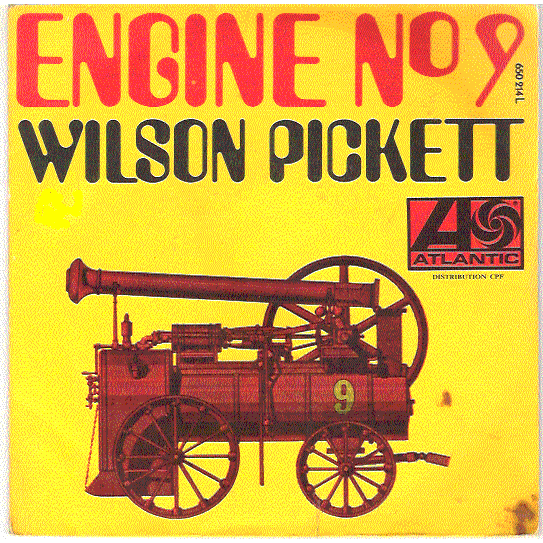
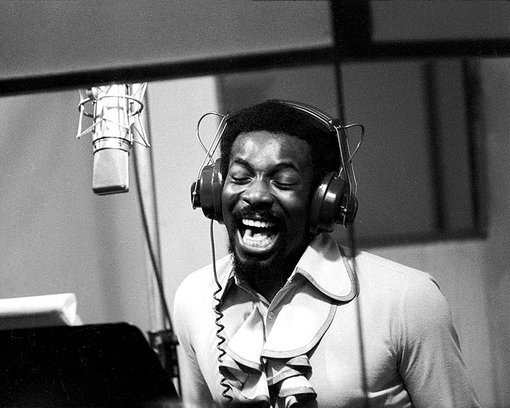

Wilson Pickett (1941-2006) was born in Alabama into a family of many kids, and a father who was working up in Detroit, Michigan. In an interview in later years Pickett described his mother during his childhood: “She was the baddest woman – in my book. I get scared of her even now. She used to hit me with anything, skillets, stove wood… One time I ran away and cried for a week. Stayed in the woods, me and my little dog.” When he was fourteen he headed up to Detroit and lived with his father. It was then that he seriously began to sing in church ensembles that toured around; one of them, The Violinaires, helped him to really hone his singing skills. Gospel singers were beginning to “cross over” into the secular music market and this transition led the way to what would come to be known as Soul music. The Falcons, with Eddie Floyd, were at the forefront of this evolution, and Pickett joined the group at the age of 18 in 1959. His first songwriting began, with “I Found a Love”. “If You Need Me” and “It’s Too Late” would follow – but the latter two he recorded solo – commencing a career under his own name. James Brown is undisputably Soul’s Number 1 Man, but if you listen to Pickett and Brown, Pickett’s voice is undeniably more interesting: complex; capable of bird-like shrieks and astonishing wails; hoarse from crying? shouting? at Love gone wrong or Love going oh so good. James Brown had the crazy looks and stage personality, but Pickett’s voice is richer, takes more chances, and makes the weirdest deep-from-within sounds.
.
Listen to Wilson Pickett in this 1970 recording of Leon Gamble and Kenny Huff’s “Engine Number 9”. The instrumental sound is a hybrid of Blues and Rock. And Pickett’s voice is all Soul:
. . .
“Engine, Engine number 9”
(words and music by Leon Gamble and Kenny Huff / Owws and Uhs by The Wicked Pickett!)
.
Engine, engine, number 9:
Can you get me back on time?
Move on, move on down the track,
Keep that steam comin´ out your stack.
Huh! Keep on movin´,
Keep on movin´, keep on movin´…
Oww! Uh!
.
Engine, engine, number 9:
Keep on movin´ down the line.
Seems like I been gone for days,
I can´t wait to see my baby´s face.
Look-a-here: Been so long since I held her,
Been so long since I held her…
Oww!
.
Been so long since I held her,
Been so long since I kissed her…
Owwww!
Engine, engine, number 9:
Move on, move on down the line.
Seems like I been gone for days,
I can´t wait to see my baby´s face.
Move on, move on, woaaah, move on!
Owwwww! Gotta git there…
[ Oh, this is soundin’ alright…
I think I’m gonna hold it a little bit longer,
I’m gonna let the boys “cook” this a little bit… ]
Etcetera…
. . . . .
 Zócalo Poets