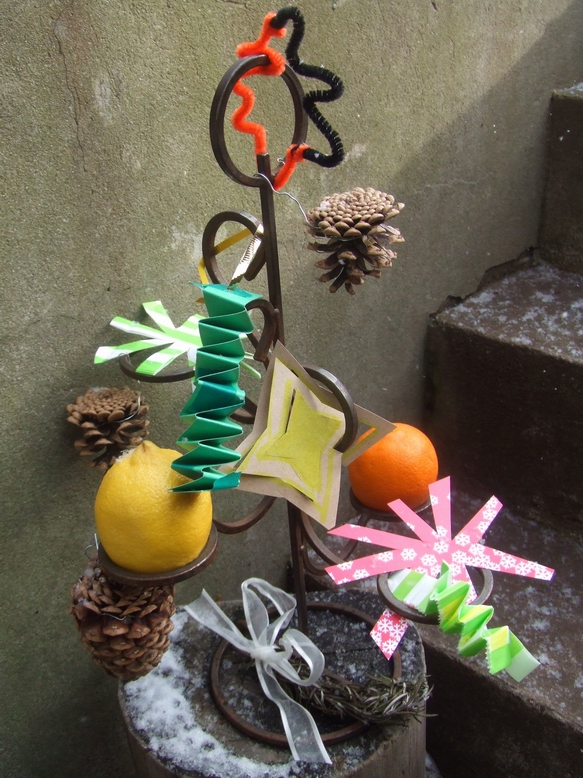
At bukas ay araw ng Pasko… / And tomorrow will be Christmas Day…
Posted: December 24, 2011 Filed under: English, Tagalog / Filipino | Tags: Christmas carols and songs Comments Off on At bukas ay araw ng Pasko… / And tomorrow will be Christmas Day…
“Noche Buena”
Kay sigla ng gabi
Ang lahat ay kay saya
Nagluto ang Ate ng manok na tinola
Sa bahay ng Kuya ay mayro’ng litsonan pa
Ang bawat tahanan may handang iba’t iba
Tayo na giliw
Magsalo na tayo
Mayro’n na tayong
Tinapay at keso
Di ba Noche Buena
Sa gabing ito
At bukas ay araw ng Pasko
*
A Filipino Christmas song:
“Holy Night” (Christmas Eve)
How lively the night,
How jolly one and all !
Older Sis has cooked tinola,
At Big Bro’s they’re roasting lechón !
Everyone’s prepared something different…
Shall we go, my belovéd,
and join in the feasting ?
Already we have bread and cheese !
Isn’t Noche Buena this very night ?
And tomorrow will be Christmas Day !
*
Music: Felipe de León
Lyrics (Tagalog): Levi Celerio
*
tinola – chicken stew
lechón – whole roasted pig
_____
Los peregrinos piden posada: el villancico “En Nombre del Cielo”
Posted: December 24, 2011 Filed under: English, Spanish | Tags: Christmas carols and songs Comments Off on Los peregrinos piden posada: el villancico “En Nombre del Cielo”_____
En Nombre del Cielo
José:
En Nombre del Cielo
os pido posada,
Pues no puede andar
mi esposa amada.
Huesped:
Aquí no es mesón,
Sigan adelante,
Yo no puedo abri,
No sea algún tunante.
José:
No seas inhumano,
Tennos caridad.
Que el Díos de los Cielos
Te lo premiará.
Huesped:
Ya se pueden ir
Y no molestar,
Porque si me enfado
Los voy a apalear.
José:
Mi esposa es María,
Es Reina del Cielo,
Y madre va a ser
Del Divino Verbo.
Huesped:
¿Eres tú, José?
¿Tu esposa es María?
¡Entren, peregrinos,
No los conocía!
_____
In the Name of Heaven
(Pray Give Us Lodging)
Joseph:
Pray, give us lodging, dear sir,
in the Name of Heaven,
All day since morning to travel we’re given,
Mary, my wife, is expecting a child,
She must shelter this night,
Let us in ! Let us in !
Host:
You cannot stop here,
I won’t make of my house an inn,
I do not trust you, your story is thin.
Rob me you might – then run away
— find somewhere else you can stay,
Go away ! Go away !
Joseph:
Please show us pity ! Your heart can’t be this hard !
Look at poor Mary, so worn and so tired !
We are most poor but I’ll pay what I can
— God will reward you, good man,
Let us in ! Let us in !
Host:
You try my patience, I’m tired and must rest,
I’ve told you nicely – but still you insist.
If you don’t stop this bother, I’ll fix you
— I guarantee !
Go away ! Go away !
Joseph:
Sir, I must tell you, my wife is
The Queen of Heaven,
chosen by God to deliver His Son.
JESUS is coming to earth on this eve
(O Heaven, make him believe !)
Let us in ! Let us in !
Host:
Joseph, dear Joseph – O how am I so blind ?
Not to know you and The Virgin so fine !
Enter, blesséd pilgrims, my house is your own
— Praise be to God on His throne !
Please come in ! Please come in !
_____
A Christmas tradition in rural México and especially
its Indigenous towns, “Las Posadas” – “The Lodgings” –
re-enacts Joseph and pregnant Mary’s search for shelter
(and a birthing place for Jesus) along the road to
Bethlehem.
Participants in the Posada procession go from house to
house singing call-and-response verses till the Gospel
story is fulfilled. This community ritual is a kind of
novena, and for the devout it requires nine days of
“posadas” in order to properly arrive at the precious
hour of Christmas Eve which, in Spanish, is called
Noche Buena (“Holy Night”).
“En Nombre del Cielo” is a classic Mexican carol.
“Scrunter”: The Cheeky Caroler
Posted: December 24, 2011 Filed under: English: Trinidadian | Tags: Black poets, Christmas carols and songs Comments Off on “Scrunter”: The Cheeky Caroler_____
Home-Made Wine (Aye, Miss Gloria)
Lyrics by the Calypsonian “Scrunter”
(Irwin Reyes Johnson) from Trinidad and Tobago
*
Note:
“parang” is Trinidad Christmas music,
originally from Venezuela – and
“paranging” is caroling – singers and musicians
going from house to house and given food and
drink for Nativity/Good Will songs sung in Spanish
and English.
“wine” is a double-entendre – it means, of course,
the alcoholic drink, but also: to dance freely, with
vitality and erotic possibility
*
Leh we go !
Ah went paranging by meh neighbour,
Ah went by Miss Gloria (aye Miss Gloria)
Ah say, madame – what you have to offer?
She said, ah have everyt’ing right here (aye Miss Gloria)
Ah doh buy whiskey – neither strong rum
– it is against my religion (aye Miss Gloria)
Ah have homemade wine in all description
Rude boy, you could sample any one.
Pommecité (pom pom pom), Hog Plum, Cashew and Guava
Banana, Five-Finger, Balata and Cane
Ah want some homemade wine, madame Gloria
Gimme some homemade wine, it nice
Ah want some homemade wine, madame Gloria
Gimme some homemade wine, it sweet
Pom pom, pom pom pom pom…….
Ah have black cake from Joan already
So right now ah doh want no more (aye Miss Gloria)
But all dem local wine you present me
Ah got to taste some a dem for sure (aye Miss Gloria)
Oh madame, which one is yuh favourite?
Bring it out, quick – lemme taste it (aye Miss Gloria)
Is you who make – and you must know
– Ah want a good head before ah go !
Citrus, Hibicus, Dandyroot, Passionfruit
Temawee, Strawberry, Aloes and Rice wine
She say, Cocoa wine does give me short breath
And sometimes it make me upset (aye Miss Gloria)
Maybe de seed does have it so strong
Or ah leave it in de jam too long (aye Miss Gloria)
When it comes to wine ah have de recipe
Go out deh – ask anybody (aye Miss Gloria)
Any function, any party
Dem people does come running-running to me !
Cocoa, Long mango, Carili, Temawee,
Guava, Balata, Plantain and Cane wine
Paw-paw, Aloes (aye Miss Gloria)
Corn wine, Ah have cane wine
Fig wine (aye Miss Gloria)
Pom pom, pom pom pom pom,
Coconut wine
Hard wine ! Aye Miss Gloria !
Pom pom, pom pom pom pom,
It sweet, it sweet,
It nice nice nice nice nice…
_____
Jakuren: The First Day of Winter
Posted: December 22, 2011 Filed under: English, Jakuren, Japanese Comments Off on Jakuren: The First Day of Winter
Poems of Mediaeval Japan by
Jakuren (Buddhist monk and poet: 1139-1202)
* Transliterated Japanese on the left *
yomosugara throughout the night
kusa no iori ni we kept the brushwood burning
shiba taite in my lowly hut,
katarishi koto o and the words that we exchanged
itsuka wasuren I never shall forget
* * *
miyamabi ni deep in this mountain
fuyugomorisuru I keep the winter indoors:
oi no mi o who would care to call
tare ka towamashi on so aged a body,
kimi naranaku ni were it not for you?
* * *
izukuyori you found a path in my dream
yoru no yumeji o the mountain
tadorikoshi is deeply in snow now
miyama wa imada
yuki no fukakini
* * *
ikanishite wondering how you
kimi imasuran have been of late, as the breath
konogoro no of snow in the wind
yukige no kaze no blows colder every day
hibi ni samuki ni
* * *
Mon Pays – c’est l’Hiver ! “Québécitude” in song
Posted: December 22, 2011 Filed under: English, French, Gilles Vigneault, Translator's Whimsy: Song Lyrics / Extravagancia del traductor: Letras de canciones traducidas por Alexander Best, ZP Translator: Alexander Best Comments Off on Mon Pays – c’est l’Hiver ! “Québécitude” in song
MY COUNTRY
My country’s not a country, it’s winter,
my garden’s not a garden, it’s a vast plain,
my road is no road – it’s the snow !
My country’s not a country – it’s winter !
A ceremony all in white
where snow marries wind,
in this blizzard-land
my father built a house
and I’m going to honour
his ways, his example…
My guest room will be where
you return, season by season
and you’ll build too – right beside it.
My country’s not a country, it’s winter,
My refrain’s no refrain, it’s a gust of wind,
My house isn’t mine – it’s the winter-chill’s !
My country’s not a country – it’s winter !
All around my solitary land
I cry out before the silence,
to everyone on earth:
My house is yours, too.
Inside four walls of ice
with time and space
I make the fire, and a place
for People of the Horizon
– and these people are of my people.
My country’s not a country, it’s winter,
my garden’s not a garden, it’s the vast plain,
my road is no road – it’s the snow !
My country’s not a country – it’s winter !
My country’s no country but the contrary
of country – neither land nor nation,
my song’s not a song – it’s my life !
And for you I wish to master these winters !
_____
MON PAYS
Mon pays ce n’est pas un pays, c’est l’hiver
Mon jardin ce n’est pas un jardin, c’est la plaine
Mon chemin ce n’est pas un chemin, c’est la neige
Mon pays ce n’est pas un pays, c’est l’hiver.
Dans la blanche cérémonie où la neige au vent se marie
Dans ce pays de poudrerie mon père a fait bâtir maison
Et je m’en vais être fidèle à sa manière à son modèle
La chambre d’amis sera telle qu’on viendra des autres saisons
pour se bâtir à côté d’elle.
Mon pays ce n’est pas un pays, c’est l’hiver
Mon refrain ce n’est pas un refrain, c’est rafale
Ma maison ce n’est pas ma maison, c’est froidure
Mon pays ce n’est pas un pays, c’est l’hiver.
De ce grand pays solitaire je crie avant que de me taire
A tous les hommes de la terre ma maison c’est votre maison
Entre mes quatre murs de glace je mets mon temps et mon espace
À préparer le feu, la place pour les humains de l’horizon
Et les humains sont de ma race.
Mon pays ce n’est pas un pays, c’est l’hiver
Mon jardin ce n’est pas un jardin, c’est la plaine
Mon chemin ce n’est pas un chemin, c’est la neige
Mon pays ce n’est pas un pays, c’est l’hiver.
Mon pays ce n’est pas un pays, c’est l’envers
D’un pays qui n’était ni pays ni patrie
Ma chanson ce n’est pas une chanson, c’est ma vie
C’est pour toi que je veux posséder mes hivers.
_____
Gilles Vigneault (born 1928) wrote “Mon Pays” for a 1965 NFB film,
La neige a fondu sur la Manicouagan. This new folk song became an
instant classic – emblematic for Québec’s growing nationalist movement.
Editor’s note:
Almost two generations later the song does show its age, for the Canadian
essential-ideal of The Great White North – intrinsic to Canadians outside of
Québec as well – holds less sway in our collective identity. Too, “Mon Pays”
is dated in that it captures the spirit of an isolated – if friendly – culture:
not the rumbling, restless Québec of the 1960s. Rather the lyrics might well
describe a People more remote in time – the Far-North Inuit of the 19th-century.
Still, if there has been a place in Canada where winter is embraced and
not merely borne, it is Québec, where coureurs de bois and habitants
were the first of Canada’s White arrivals to adapt the Naskapi/Montagnais
Native People’s’ inventions – toboggans and snowshoes – to daily use both
practical and recreational.
And Québec leads the nation for Winter fun – not drear – with many jovial
outdoor festivals and an entrenched culture of open-air ice-skating parties !
_____
Translation from French into English: Alexander Best
Hanukkah Poems: Light the Candle !
Posted: December 20, 2011 Filed under: English | Tags: Hanukkah poems Comments Off on Hanukkah Poems: Light the Candle !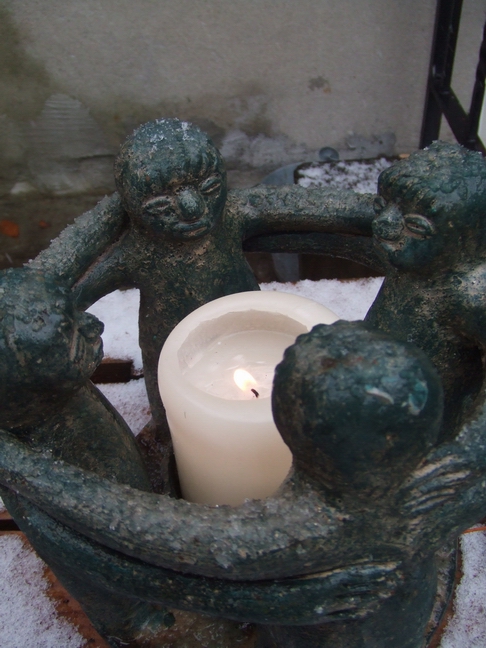
Mark Strand (born 1934)
“The Coming of Light”
Even this late it happens:
the coming of love, the coming of light.
You wake and the candles are lit as if by themselves,
stars gather, dreams pour into your pillows,
sending up warm bouquets of air.
Even this late the bones of the body shine
and tomorrow’s dust flares into breath.
_____
Aileen Fisher (1906-2002)
“Light the Festive Candles”
Light the first of eight tonight—
the farthest candle to the right.
Light the first and second, too,
when tomorrow’s day is through.
Then light three, and then light four—
every dusk one candle more
Till all eight burn bright and high,
honouring a day gone by
When the Temple was restored,
rescued from the Syrian lord,
And an eight-day feast proclaimed—
The Festival of Lights—well named
To celebrate the joyous day
when we regained the right to pray
to our own God in our own way.
_____
Canciones sefardíes de la Turquía
Posted: December 20, 2011 Filed under: Ladino/Judeoespañol, Spanish Comments Off on Canciones sefardíes de la Turquía_____
Canciones sefardíes de la Turquía (2009)
en el idioma judeoespañol:
ג’ודיאו-איספאניול
Sephardic songs from Turkey (2009)
in Ladino (Judeo-Spanish)
* * *
Avram Avinu / Abraham our Father
Kuando el rey Nimrod al kampo saliya
Mirava en el cielo la esteriya
Vide luz santa en la cuderiya
Ke aviya de naser Avram Avinu.
Avram Avinu
Padre kerido
Padre bendiço
Luz de Israel
La mujer de terah kedo prenyada
De diya el ediya él le preguntava
De ke teneş la kara tan demudada
Eya ya saviya el bien ke teniya.
Avram Avinu
Padre kerido
Padre bendiço
Luz de Israel
* * *
Irme Kero Madre / Mother, I want to go
to Jerusalem
Ir me kero madre a Yeruşalayim
A pizar las yervas i artarme d’eyas
En él me arrimo yo
En él m’afiguro yo
Él es senyor de todo’l mundo.
A Yeruşalayim lo veyo d’enfrente
Pedri ayi mis ijos i paryentes
En él me arrimo yo
En él m’afiguro yo
Él es senyor de todo’l mundo.
יהודה עמיחי / Yehuda Amichai : “The two of us together and each one alone”
Posted: December 19, 2011 Filed under: English, Hebrew, Yehuda Amichai Comments Off on יהודה עמיחי / Yehuda Amichai : “The two of us together and each one alone”יהודה עמיחי
שנינו ביחד וכל אחד לחוד
ילדה שלי, עוד קיץ עבר
ואבי לא בא ללונה פארק.
הנדנדות מוסיפות לנוד.
שנינו ביחד וכל אחד לחוד.
אופק הים מאבד ספינותיו –
קשה לשמר על משהו עכשיו.
מאחורי ההר חכו הלוחמים.
כמה זקוקים אנו לרחמים.
שנינו ביחד וכל אחד לחוד.
ירח מנסר את העבים לשניים –
בואי ונצא לאהבת בינים.
רק שנינו נאהב לפני המחנות.
אולי אפשר עוד הכל לשנות.
שנינו ביחד וכל אחד לחוד.
אהבתי הפכה אותי כנראה
כים מלוח לטפות מתוקות של יורה;
אני מובא אליך לאט ונופל.
קבליני. אין לנו מלאך גואל.
כי שנינו ביחד .כל אחד לחוד.
_____
Look, sweetie, one more summer’s turned dark
And my dad hasn’t come to the amusement park.
The swings keep swinging on their own.
The two of us together and each one alone.
The horizon loses its ships off the shore.
Hard to hold on to a thing anymore.
The fighters waited behind the hill.
How much we need of mercy still !
The two of us together and each one alone.
The moon is sawing the clouds in two.
Let hand-to-hand love bring me against you.
We alone will make love where the two camps fight.
Perhaps we can still make everything right.
The two of us together and each one alone.
As the first sweet rain was once salt sea
So, it would seem, has my love changed me.
I am brought to you slowly, and fall. My dear,
Receive me. No angel redeems us here.
Because the two of us are together. Each is alone.
_____
Yehuda Amichai (1924 – 2000) was one of
the first poets to compose in colloquial Hebrew.
Written in 1955, this simple, complex poem
makes reference to lease contracts:
“the two of us together and each one alone” – direct
from Hebrew and equivalent to the English legal
phrase “both jointly and severally” — which we
can now read as the Palestinian-Israeli land
struggle. The poem also draws upon a popular Israeli
children’s song of the 1950s:
“Daddy, come, let’s go to the Amusement Park !”
_____
We are grateful to A. Z. Foreman for his translation
of the above poem from Hebrew into English.
Visit his website: poemsintranslation.blogspot.com
О́сип Мандельшта́м / Osip Mandelstam: “Maddening cherry brandy”
Posted: December 15, 2011 Filed under: English, Osip Mandelstam, Russian Comments Off on О́сип Мандельшта́м / Osip Mandelstam: “Maddening cherry brandy”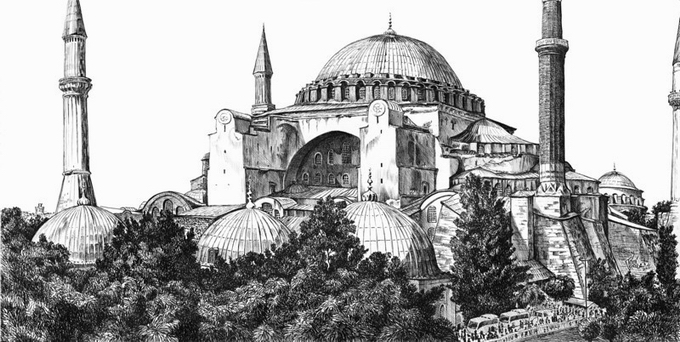
Hagia Sophia
Hagia Sophia: it was at this place
The Lord ordained that peoples and Caesars halt.
Your dome is, in a witness’s phrase,
As if hung by a chain from heaven’s vault.
And when Ephesian Diana allowed the looting
Of a hundred and seven green marble columns
For alien gods, it proved for ages yet to come
A monument to Justinian.
But what was it your generous builder meant
When he laid down apses and exhedrae,
As great his spirit as his intent,
Indicating to them east and west?
And bathing in the world, the shrine inspires awe,
Its forty windows are a celebration of light;
On the dome’s supporting vaults, the four
Archangels cause the most delight.
And the wisdom of his hemispherical dome
Shall outlive peoples, outlast the ages still to come,
While the full-voiced sobbing of the Seraphim
Shall not let its darkened gilding dim.
1912
_____
Ленинград
Я вернулся в мой город, знакомый до слез,
До прожилок, до детских припухлых желез.


Ты вернулся сюда, так глотай же скорей
Рыбий жир ленинградских речных фонарей,


Узнавай же скорее декабрьский денек,
Где к зловещему дегтю подмешан желток.


Петербург! я еще не хочу умирать!
У тебя телефонов моих номера.


Петербург! У меня еще есть адреса,
По которым найду мертвецов голоса.


Я на лестнице черной живу, и в висок
Ударяет мне вырванный с мясом звонок,


И всю ночь напролет жду гостей дорогих,
Шевеля кандалами цепочек дверных.


1930
Leningrad
I returned to my city, familiar as tears,
As veins, as mumps from childhood years.
You’ve returned here, so swallow as quick as you can
The cod-liver oil of Leningrad’s riverside lamps.
Recognize when you can December’s brief day:
Egg yolk folded into its ominous tar.
Petersburg, I don’t yet want to die:
You have the numbers of my telephones.
Petersburg, I have addresses still
Where I can raise the voices of the dead.
I live on the backstairs and the doorbell buzz
Strikes me in the temple and tears at my flesh.
And all night long I await those dear guests of yours,
Rattling, like manacles, the chains on the doors.
1930
_____
Я скажу тебе с
последней прямотой…
"Mа Vоiх аigrе еt fаussе..."
Paul Verlaine


Я скажу тебе с последней
Прямотой:
Все лишь бредни, шерри-бренди,
Ангел мой.


Там где эллину сияла
Красота,
Мне из черных дыр зияла
Срамота.


Греки сбондили Елену
По волнам,
Ну а мне - соленой пеной
По губам.


По губам меня помажет
Пустота,
Строгий кукиш мне покажет
Нищета.


Ой-ли, так-ли, дуй-ли, вей-ли,
Все равно.
Ангел Мэри, пей коктейли,
Дуй вино!


Я скажу тебе с последней
Прямотой:
Все лишь бредни, шерри-бренди,
Ангел мой.


1931
I’ll tell you bluntly…
"Mа Vоiх аigrе еt fаussе..."
(My sour, false Voice...)
Рaul Verlaine
I’ll tell you bluntly
One last time:
It’s only maddening cherry brandy,
Angel mine.
Where the Greeks saw just their raped
Beauty’s fame,
Through black holes at me there gaped
Nought but shame.
But the Greeks hauled Helen home
In their ships.
Here a smudge of salty foam
Flecks my lips.
What rubs my lips and leaves no trace?
— Vacancy.
What thrusts a V-sign in my face?
— Vagrancy.
Quickly, wholly, or slowly as a snail,
All the same,
Mary, angel, drink your cocktail,
Down your wine.
I’ll tell you bluntly
One last time:
It’s only maddening cherry brandy,
Angel mine.
1931
_____
Osip Mandelstam (1891-1938) was from a Polish-Jewish
family and grew up in St.Petersburg (later Leningrad), Russia.
His first poems appeared in 1913, and, after The Revolution
and Stalin’s increasing tendency toward totalitarianism,
Mandelstam made no effort to hide his non-conformist views.
Seized at a Moscow reading in 1934, he was banished from “the
big cities”. During The Great Purge of 1937, accused of
anti-Soviet views, he was arrested again and died en route to a
Gulag camp in Siberia.
Translations from Russian into English: Bernard Meares
_____
 Zócalo Poets