Pauline Johnson / “Tekahionwake”: “Let her be natural”
Posted: April 11, 2013 Filed under: English, Pauline Johnson, Pauline Johnson's "Flint & Feather" Comments Off on Pauline Johnson / “Tekahionwake”: “Let her be natural”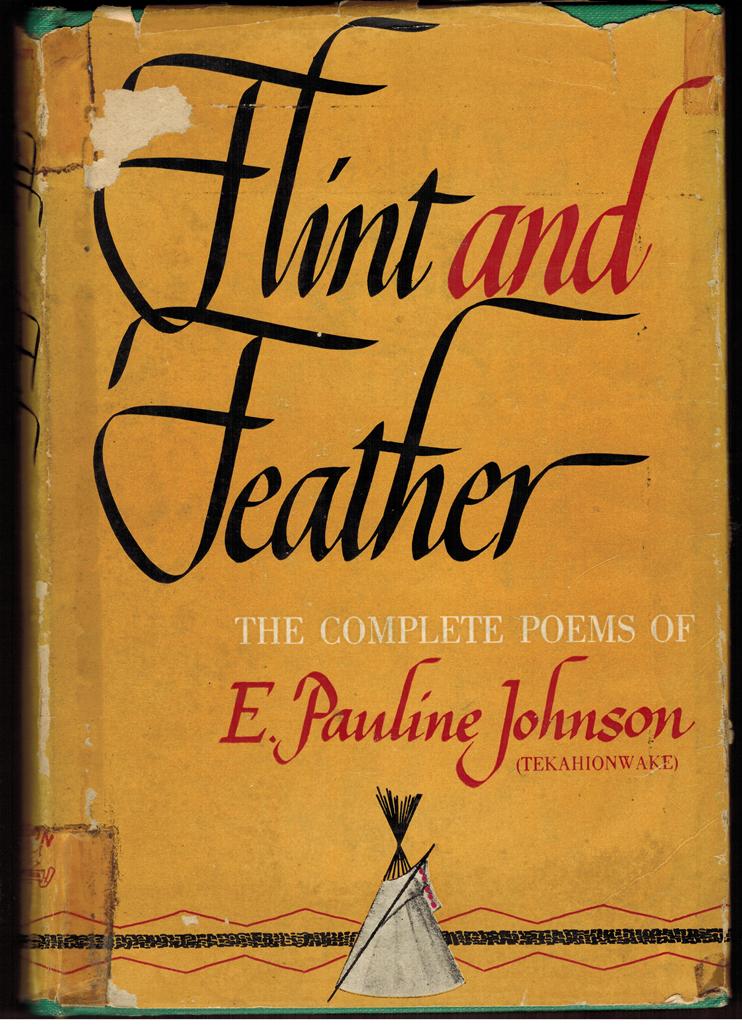
ZP_E. Pauline Johnson gathered together her complete poems, though others have since been discovered, for publication in 1912, the year before her death. In her Author’s Forward to Flint and Feather she writes: This collection of verse I have named Flint and Feather because of the association of ideas. Flint suggests the Red man’s weapons of war, it is the arrow tip, the heart-quality of mine own people, let it therefore apply to those poems that touch upon Indian life and love. The lyrical verse herein is as a Skyward floating feather, Sailing on summer air. And yet that feather may be the eagle plume that crests the head of a warrior chief; so both flint and feather bear the hall-mark of my Mohawk blood._Book jacket shown here is from a 1930s edition of Flint and Feather.
Pauline Johnson / “Tekahionwake”
(1861 – 1913, born at Six Nations of the Grand River First Nation, Ontario, Canada)
.
“The Cattle Thief”
.
They were coming across the prairie, they were
galloping hard and fast;
For the eyes of those desperate riders had sighted
their man at last –
Sighted him off to Eastward, where the Cree
encampment lay,
Where the cotton woods fringed the river, miles and
miles away.
Mistake him? Never! Mistake him? the famous
Eagle Chief!
That terror to all the settlers, that desperate Cattle
Thief –
That monstrous, fearless Indian, who lorded it over
the plain,
Who thieved and raided, and scouted, who rode like
a hurricane!
But they’ve tracked him across the prairie; they’ve
followed him hard and fast;
For those desperate English settlers have sighted
their man at last.
.
Up they wheeled to the tepees, all their British
blood aflame,
Bent on bullets and bloodshed, bent on bringing
down their game;
But they searched in vain for the Cattle Thief: that
lion had left his lair,
And they cursed like a troop of demons – for the women
alone were there.
“The sneaking Indian coward,” they hissed; “he
hides while yet he can;
He’ll come in the night for cattle, but he’s scared
to face a man.”
“Never!” and up from the cotton woods rang the
voice of Eagle Chief;
And right out into the open stepped, unarmed, the
Cattle Thief.
Was that the game they had coveted? Scarce fifty
years had rolled
Over that fleshless, hungry frame, starved to the
bone and old;
Over that wrinkled, tawny skin, unfed by the
warmth of blood.
Over those hungry, hollow eyes that glared for the
sight of food.
.
He turned, like a hunted lion: “I know not fear,”
said he;
And the words outleapt from his shrunken lips in
the language of the Cree.
“I’ll fight you, white-skins, one by one, till I
kill you all,” he said;
But the threat was scarcely uttered, ere a dozen
balls of lead
Whizzed through the air about him like a shower
of metal rain,
And the gaunt old Indian Cattle Thief dropped
dead on the open plain.
And that band of cursing settlers gave one
triumphant yell,
And rushed like a pack of demons on the body that
writhed and fell.
“Cut the fiend up into inches, throw his carcass
on the plain;
Let the wolves eat the cursed Indian, he’d have
treated us the same.”
A dozen hands responded, a dozen knives gleamed
high,
But the first stroke was arrested by a woman’s
strange, wild cry.
And out into the open, with a courage past
belief,
She dashed, and spread her blanket o’er the corpse
of the Cattle Thief;
And the words outleapt from her shrunken lips in
the language of the Cree,
“If you mean to touch that body, you must cut
your way through me.”
And that band of cursing settlers dropped
backward one by one,
For they knew that an Indian woman roused, was
a woman to let alone.
And then she raved in a frenzy that they scarcely
understood,
Raved of the wrongs she had suffered since her
earliest babyhood:
“Stand back, stand back, you white-skins, touch
that dead man to your shame;
You have stolen my father’s spirit, but his body I
only claim.
You have killed him, but you shall not dare to
touch him now he’s dead.
You have cursed, and called him a Cattle Thief,
though you robbed him first of bread –
Robbed him and robbed my people – look there, at
that shrunken face,
Starved with a hollow hunger, we owe to you and
your race.
What have you left to us of land, what have you
left of game,
What have you brought but evil, and curses since
you came?
How have you paid us for our game? how paid us
for our land?
By a book, to save our souls from the sins you
brought in your other hand.
Go back with your new religion, we never have
understood
Your robbing an Indian’s body, and mocking his
soul with food.
Go back with your new religion, and find – if find
you can –
The honest man you have ever made from out a
starving man.
You say your cattle are not ours, your meat is not
our meat;
When you pay for the land you live in, we’ll pay
for the meat we eat.
Give back our land and our country, give back our
herds of game;
Give back the furs and the forests that were ours
before you came;
Give back the peace and the plenty. Then come
with your new belief,
And blame, if you dare, the hunger that drove him to
be a thief.”
. . .
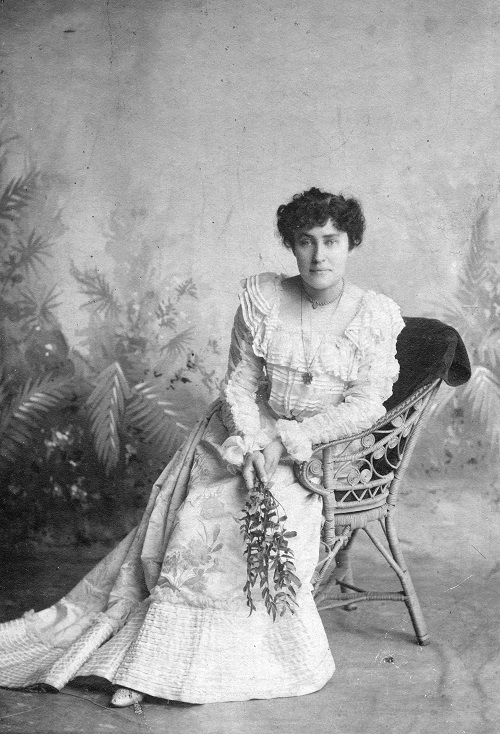
ZP_Studio photographic portrait of Pauline Johnson, 1902
“A Cry from an Indian Wife” (1885)
.
My forest brave, my Red-skin love, farewell;
We may not meet to-morrow; who can tell
What mighty ills befall our little band,
Or what you’ll suffer from the white man’s hand?
Here is your knife! I thought ’twas sheathed for aye.
No roaming bison calls for it to-day;
No hide of prairie cattle will it maim;
The plains are bare, it seeks a nobler game:
‘Twill drink the life-blood of a soldier host.
Go; rise and strike, no matter what the cost.
Yet stay. Revolt not at the Union Jack,
Nor raise Thy hand against this stripling pack
Of white-faced warriors, marching West to quell
Our fallen tribe that rises to rebel.
They all are young and beautiful and good;
Curse to the war that drinks their harmless blood.
Curse to the fate that brought them from the East
To be our chiefs – to make our nation least
That breathes the air of this vast continent.
Still their new rule and council is well meant.
They but forget we Indians owned the land
From ocean unto ocean; that they stand
Upon a soil that centuries agone
Was our sole kingdom and our right alone.
They never think how they would feel to-day,
If some great nation came from far away,
Wresting their country from their hapless braves,
Giving what they gave us – but wars and graves.
Then go and strike for liberty and life,
And bring back honour to your Indian wife.
Your wife? Ah, what of that, who cares for me?
Who pities my poor love and agony?
What white-robed priest prays for your safety here,
As prayer is said for every volunteer
That swells the ranks that Canada sends out?
Who prays for vict’ry for the Indian scout?
Who prays for our poor nation lying low?
None – therefore take your tomahawk and go.
My heart may break and burn into its core,
But I am strong to bid you go to war.
Yet stay, my heart is not the only one
That grieves the loss of husband and of son;
Think of the mothers o’er the inland seas;
Think of the pale-faced maiden on her knees;
One pleads her God to guard some sweet-faced child
That marches on toward the North-West wild.
The other prays to shield her love from harm,
To strengthen his young, proud uplifted arm.
Ah, how her white face quivers thus to think,
Your tomahawk his life’s best blood will drink.
She never thinks of my wild aching breast,
Nor prays for your dark face and eagle crest
Endangered by a thousand rifle balls,
My heart the target if my warrior falls.
O! coward self I hesitate no more;
Go forth, and win the glories of the war.
Go forth, nor bend to greed of white men’s hands,
By right, by birth we Indians own these lands,
Though starved, crushed, plundered, lies our nation low…
Perhaps the white man’s God has willed it so.
.
Editor’s note: “the war” referred to in Johnson’s poem is The NorthWest Rebellion (or NorthWest Resistance) of 1885, led by Louis Riel.
. . .
“The Wolf”
.
Like a grey shadow lurking in the light,
He ventures forth along the edge of night;
With silent foot he scouts the coulie’s rim
And scents the carrion awaiting him.
His savage eyeballs lurid with a flare
Seen but in unfed beasts which leave their lair
To wrangle with their fellows for a meal
Of bones ill-covered. Sets he forth to steal,
To search and snarl and forage hungrily;
A worthless prairie vagabond is he.
Luckless the settler’s heifer which astray
Falls to his fangs and violence a prey;
Useless her blatant calling when his teeth
Are fast upon her quivering flank–beneath
His fell voracity she falls and dies
With inarticulate and piteous cries,
Unheard, unheeded in the barren waste,
To be devoured with savage greed and haste.
Up the horizon once again he prowls
And far across its desolation howls;
Sneaking and satisfied his lair he gains
And leaves her bones to bleach upon the plains.
. . .
“The Indian Corn Planter”
.
He needs must leave the trapping and the chase,
For mating game his arrows ne’er despoil,
And from the hunter’s heaven turn his face,
To wring some promise from the dormant soil.
.
He needs must leave the lodge that wintered him,
The enervating fires, the blanket bed–
The women’s dulcet voices, for the grim
Realities of labouring for bread.
.
So goes he forth beneath the planter’s moon
With sack of seed that pledges large increase,
His simple pagan faith knows night and noon,
Heat, cold, seedtime and harvest shall not cease.
.
And yielding to his needs, this honest sod,
Brown as the hand that tills it, moist with rain,
Teeming with ripe fulfilment, true as God,
With fostering richness, mothers every grain.
. . .
Emily Pauline Johnson (1861 – 1913) took on the Mohawk-language name Tekahionwake (meaning “double life”) around the time, as a young adult, she became aware of her ability not only as a woman who was writing poetry but also as a performer. Words such as transgressive and performativity – belovéd of academics in the 21st century – were words she mightn’t have known yet she “enacted” their meanings – and without the cadre of professionals to chatter about “who she really was”. And who was she – really? Well, she was complex – in some ways uncategorizable. A young woman who helped to support her widowed mother (her father, Brantford Six Nations Chief George Henry Martin Johnson (Onwanonsyshon) died in 1884) via the publication of her sentimental-exotic yet oddly-truthful poems; whose attachment to her father’s Native-ness was deeply felt during the onset of the Erasure Period chapter in First-Nations history in that New Nation – Canada. Pauline Johnson was mixed-race – Mohawk father of chieftain lineage, mother (Emily Susana Howells), a kind of English “rose” in a young British-colonial country. Enamoured of The Song of Hiawatha, and of Wacousta – Pauline was yet entranced by and deeply listened to the Native oral histories of John Smoke Johnson, her paternal grandfather. This was Pauline Johnson.
From about 1892 until 1909, Johnson, aided by impresario Frank Yeigh, toured as “The Mohawk Princess”, orating passionate poem-recitals while decked out in a mish-mashed Native costume which presented to Late-Victorian and Edwardian-era audiences a glamorous spectacle of Indian-ness. In the July/August 2012 issue of the Canadian magazine The Walrus, Emily Landau writes: “…and although her (Johnson’s) branding played into the stereotypes, her stories broke (the audiences) down.” Poems such as “The Indian Thief” and “A Cry from an Indian Wife” (both featured here) gave Native women a voice – using Victorian melodrama to present brief morality tales where what the Native woman says is right. Landau remarks that Johnson performed with “a mix of poise and campy histrionics. In a trademark flourish, she (would) shed the buckskin during intermission, returning in a staid silk evening gown and pumps, eliciting gasps from spectators as they marveled at the transformation. The two modes of dress served as an external manifestation of Johnson’s own dual identity: her (other) name, Tekahionwake, meant “double life” in Mohawk.”
Landau continues: “In an 1892 essay entitled “A Strong Race Opinion: On the Indian Girl in Modern Fiction,” Johnson called out white writers for their generic, latently racist depictions of Native femininity. Without fail, she says, the Indian girl, always named Winona or some such, has no tribal specificity, merely serving as a self-sacrificing, mentally unhinged outlet for the white hero’s magnanimity. Johnson entreated writers to give their “Indian girl” characters the same dignity and distinction as they did their white characters. “Let the Indian girl in fiction develop from the ‘dog-like,’ ‘fawn-like,’ ‘deer-footed,’ ‘fire-eyed,’ ‘crouching,’ ‘submissive’ book heroine into something of the quiet, sweet womanly woman if she is wild, or the everyday, natural, laughing girl she is if cultivated and educated; let her be natural,” she wrote, “even if the author is not competent to give her tribal characteristics.”
In her own act, Johnson drew from the dominant white theatrical modes. Melodrama, the most popular form in the late nineteenth century, was characterized by an excess of spectacle, histrionic gestures, and amplified emotions. With her over-the-top theatrics, she was a hit with crowds hungry for sentiment. One of her most popular stories, “A Red Girl’s Reasoning,” tells of a young half-Indian woman who leaves her husband after he refuses to recognize the legitimacy of her nation’s rituals; another heroine, the half-Cree Esther of “As It Was in the Beginning,” kills her faithless white lover.”
Johnson stopped touring in 1909. She had developed breast cancer, and worsening health led to early retirement. Settling in Vancouver, she still wrote – adapting stories as told to her by her friend, Squamish Chief Joseph Capilano. Johnson died in 1913; a monument – and her ashes – are in Vancouver’s Stanley Park.
And – we quote Landau again: “…Enterprising as she was, Johnson was also an idealist. Her proud biracial identity, within which her Aboriginal and European selves peacefully coexisted, constituted an anomaly in an era when race was considered a fixed trait. The unified persona she presented onstage, nurtured in her childhood and reflected in her writings, represented more than just an amplified, campy theatrical ruse: it was a vision of what she imagined for Canada. Surveying Canada’s beaming multiculturalism today, flawed as it may be, Johnson seems like quite an oracle.”
.
We wish to thank editor Emily Landau of Toronto Life for her critical analysis of the career of Pauline Johnson.
. . . . .
What did Jesus mean by: “Blessed are the poor in spirit for theirs is the kingdom of heaven” ? A Poet’s Interpretation…
Posted: March 29, 2013 Filed under: Alice Walker, English | Tags: Easter poems Comments Off on What did Jesus mean by: “Blessed are the poor in spirit for theirs is the kingdom of heaven” ? A Poet’s Interpretation…
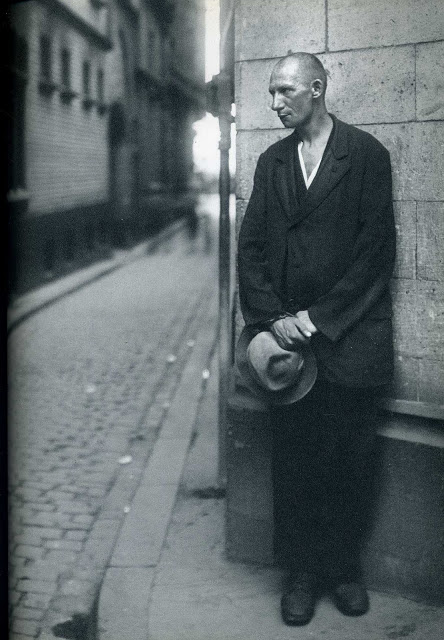
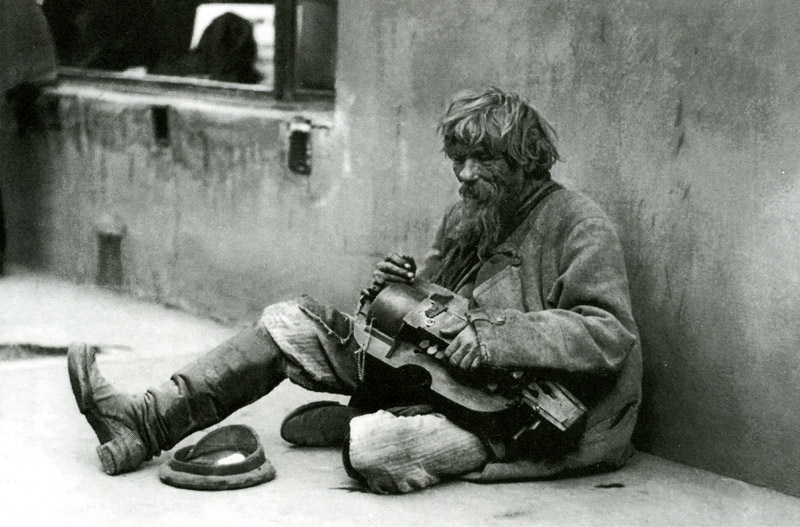
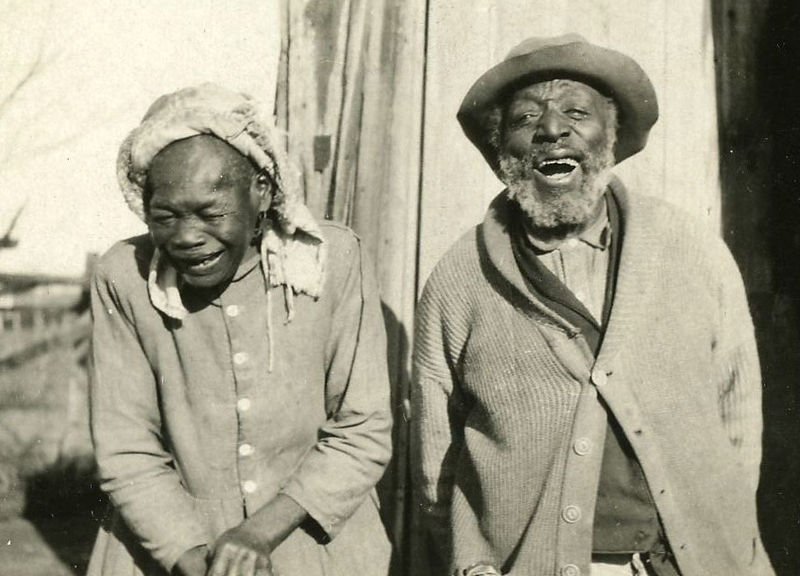
Alice Walker (born 1944, Eatonton, Georgia, U.S.A.)
“Blessed are the poor in spirit (for theirs is the kingdom of heaven)”
.
Did you ever understand this?
If my spirit was poor, how could I enter heaven?
Was I depressed?
Understanding editing,
I see how a comma, removed or inserted
with careful plan,
can change everything.
I was reminded of this
when a poor young man
in Tunisia
desperate to live
and humiliated for trying
set himself ablaze;
I felt uncomfortably warm
as if scalded by his shame.
I do not have to sell vegetables from a cart as he did
or live in narrow rooms too small for spacious thought;
and, at this late date,
I do not worry that someone will
remove every single opportunity
for me to thrive.
Still, I am connected to, inseparable from,
this young man.
Blessed are the poor, in spirit, for theirs is the kingdom of heaven – Jesus.
(Commas restored).
Jesus was, as usual, talking about solidarity: about how we join with
others
and, in spirit, feel the world, and suffering, the same as them.
This is the kingdom of owning the other as self, the self as other;
that transforms grief into
peace and delight.
I, and you, might enter the heaven
of right here
through this door.
In this spirit, knowing we are blessed,
we might remain poor.
.
© 2011, Alice Walker
.
“Blessed are the poor in spirit for theirs is the kingdom of heaven”
is quoted from the Book of Matthew, Chapter 5, verse 3, in The Bible.
. . .
Alice Walker is a Pulitzer-Prize-winning novelist, short-story writer, poet and activist. Earlier this month Walker was interviewed for The Observer Magazine by Alex Clark. Walker told her:
“In each of us, there is a little voice that knows exactly which way to go. And I learned very early to listen to it…”
. . .
Photographs:
Ethiopia, 1985 – Sebastião Salgado
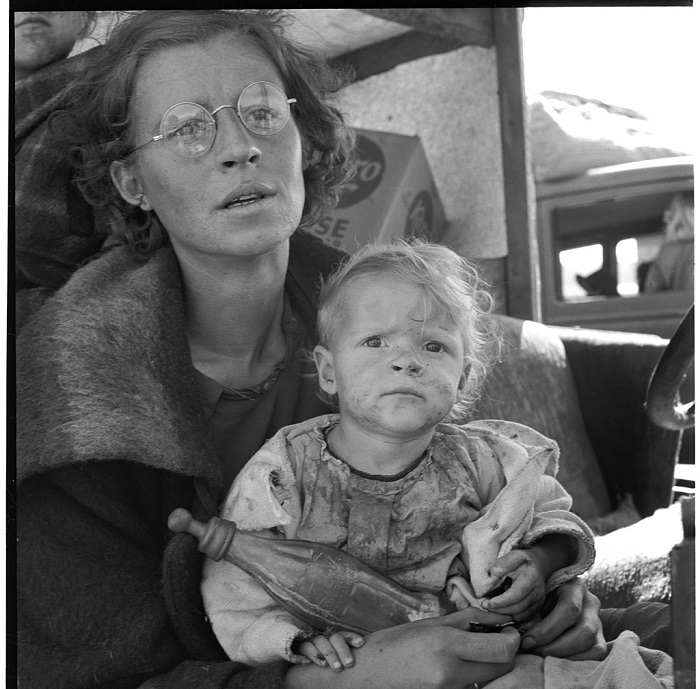
Tulelake, California, 1930s – Family on the road – Dorothea Lange
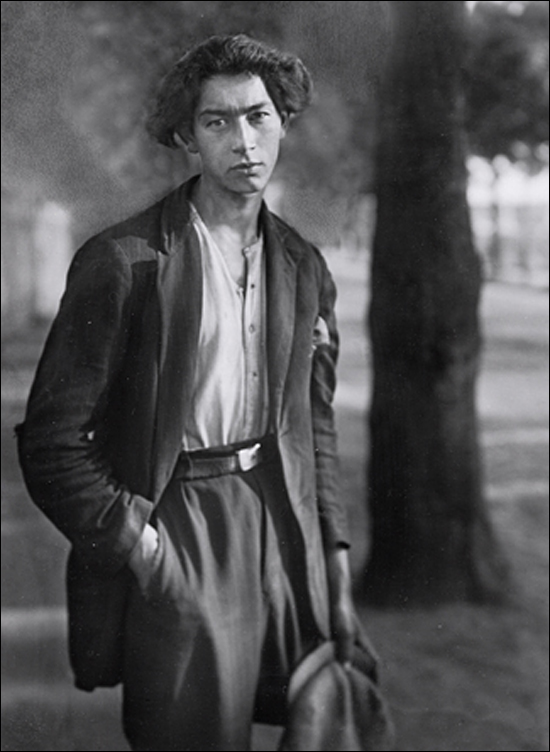
Germany, 1930 – Gypsy man – August Sander
Germany, late 1920s – Beggar – August Sander
Russia, around 1920 – Beggar with lyra – Nikolai Svischev-Paola
Oklahoma, U.S.A., 1914 – Old couple, sharecroppers – photographer unknown
Al-Ma’arri: the poet as religious sceptic
Posted: March 29, 2013 Filed under: Al-Ma'arri, English Comments Off on Al-Ma’arri: the poet as religious sceptic “Champion of the World”, a painting by Brian Whelan, 2011. Jesus to the left, Beelzebub on the right, and God-the-Referee – centre!
.
Al-Ma’arri (Ma’arri, Syria, 973-1058)
.
Whenever man from speech refrains, his foes are few,
Even though he’s stricken down by fortune and falls low.
Silently the flea sips up its fill of human blood,
Thus making less the heinousness of its sin:
It follows not the way parched mosquitoes go,
Trumpeting with high-trilled note, you smarting all the while.
If an insolent man thrusts a sword of speech against you,
Oppose him with your patience, so you may break its edge.
…..
The body, which gives you during life a form,
Is but your vase: be not deceived, my soul!
Cheap is the bowl for storing honey in,
But precious for the contents of the bowl.
…..
We laugh, but inept is our laughter,
We should weep, and weep sore,
Who are shattered like glass and thereafter
Remolded no more.
…..
Two fates still hold us fast,
A future and a past;
Two vessels’ vast embrace
Surrounds us—time and space.
And when we ask what end
Our Maker did intend,
Some answering voice is heard
That utters no plain word.
…..
You said, “A wise one created us”;
That may be true, we would agree.
“Outside of time and space,” you postulated.
Then why not say at once that you
Propound a mystery immense
Which tells us of our lack of sense?
…..
They all err—Muslims, Jews,
Christians, and Zoroastrians:
Humanity follows two world-wide sects:
One, man intelligent without religion,
The second, religious without intellect.
…..
So, too, the creeds of man: the one prevails
Until the other comes; and this one fails
When that one triumphs; ah, the lonesome world
Will always want the latest fairy tales.
…..
There was a time when I was fain to guess
The riddles of our life, when I would soar
Against the cruel secrets of the door,
So that I fell to deeper loneliness.
.
(Translation from Arabic: Henry Baerlein, 1909)
…..
Live well! Be wary of this life, I say;
Do not o’erload yourself with righteousness.
Behold! the sword we polish in excess,
We gradually polish it away.
.
(Translation from Arabic: Henry Baerlein, 1909)
…..
What is religion? A maid kept close that no eye may view her;
The price of her wedding gifts and dowry baffles the wooer.
Of all the goodly doctrine that I from the pulpit heard
My heart has never accepted so much as a single word.
…..
Traditions come from the past, of high import if they be true;
Ah, but weak is the chain of those who warrant their truth.
Consult thy reason and let perdition take others all:
Of all the conference Reason best will counsel and guide.
A little doubt is better than total credulity.
. . .
Translations* from Arabic into English: Reynold Alleyne Nicholson (1868-1945)
*Except for two poems translated by Henry Baerlein
. . .
Al-Ma’arri (973-1058), whose full name was Abū al-ʿAlāʾ al-Maʿarrī, (in Arabic: أبو العلاء أحمد بن عبد الله بن سليمان التنوخي المعري ) was born in Ma’arra, Syria. He was a poet of common sense, a rationalist, a reasonable sceptic – and yet a pious man, too. Are his poems heretical? To some, yes. Yet he wrote his Truth. Not until the Enlightenment in the 18th century would such confident scepticism in Western thought arise again among poets and writers. Al-Ma’arri’s sarcasm was egalitarian; Judaism, Christianity, and his own Islam all got from him a good tongue-lashing. Reason he valued – above “tradition” or “revelation”. Al-Ma’arri’s writings put us in mind of Xenophanes of Colophon, Lucretius, and the Cārvāka philosophers of India – all of whom were sharp minds that pierced beyond received Wisdom.
. . .
“Yo cumplo mi encuentro con La Vida” / “I keep Life’s rendezvous”: Poemas para Viernes Santo / Good Friday poems: Countee Cullen
Posted: March 29, 2013 Filed under: Countee Cullen, English, Spanish, ZP Translator: Alexander Best | Tags: Black poets, Good Friday poems, Poemas para Viernes Santo, Poetas negros Comments Off on “Yo cumplo mi encuentro con La Vida” / “I keep Life’s rendezvous”: Poemas para Viernes Santo / Good Friday poems: Countee Cullen
ZP_Simon of Cyrene_painting by Theophilus of Knoxville, Tennessee
Countee Cullen (Poeta negro del “Renacimiento de Harlem”, E.E.U.U., 1903-1946)
“Habla Simón de Cirene”
.
Nunca me habló ninguna palabra
pero me llamó por mi nombre;
No me habló por señas,
y aún entendí y vine.
.
Al princípio dije, “No cargaré
sobre mi espalda Su cruz;
Sólo procura colocarla allá
porque es negra mi piel.”
.
Pero Él moría por un sueño,
Y Él estuvo muy dócil,
Y en Sus ojos hubo un resplandor
que los hombres viajarán lejos para buscar.
.
Él – el mismo – ganó mi piedad;
Yo hice solamente por Cristo
Lo que todo el Imperio romano no pudo forjar en mí
con moretón de látigo o de piedra.
. . .
Countee Cullen (1903-1946)
“Simon the Cyrenian Speaks”
.
He never spoke a word to me,
And yet He called my name;
He never gave a sign to me,
And yet I knew and came.
At first I said, “I will not bear
His cross upon my back;
He only seeks to place it there
Because my skin is black.”
But He was dying for a dream,
And He was very meek,
And in His eyes there shone a gleam
Men journey far to seek.
It was Himself my pity bought;
I did for Christ alone
What all of Rome could not have wrought
With bruise of lash or stone.
.
Luke 23:26
“And as they led Him away, they laid hold upon one Simon, a Cyrenian, coming out of the country,
and on him they laid the cross, that he might bear it after Jesus”.
. . .
“Tengo un encuentro con La Vida”
.
Tengo un encuentro con La Vida,
durante los días que pasen,
antes de que pasen como un bólido mi juventud y mi fuerza de mente,
antes de que las dulces voces se vuelvan mudas.
.
Tengo un ‘rendez-vous’ con Esta Vida.
cuando canturrean los primeros heraldos de la Primavera.
Por seguro hay gente que gritaría que sea tanto mejor
coronar los días con reposo en vez de
enfrentar el camino, el viento, la lluvia
– para poner oídos al llamado profundo.
.
No tengo miedo ni de la lluvia, del viento, ni del camino abierto,
pero aún tengo, ay, tan mucho miedo, también,
por temor de que La Muerte me conozca y me requiera antes de que
yo cumpla mi ‘rendez-vous’ con La Vida.
. . .
“I have a rendezvous with Life”
.
I have a rendezvous with Life,
In days I hope will come,
Ere youth has sped, and strength of mind,
Ere voices sweet grow dumb.
I have a rendezvous with Life,
When Spring’s first heralds hum.
Sure some would cry it’s better far
To crown their days with sleep
Than face the road, the wind and rain,
To heed the calling deep.
Though wet nor blow nor space I fear,
Yet fear I deeply, too,
Lest Death should meet and claim me ere
I keep Life’s rendezvous.
. . .
Countee Cullen produced most of his famous poems between 1923 and 1929; he was at the top of his form from the end of his teens through his 20s – very early for a good poet.
His poems “Heritage”, “Yet Do I Marvel”, “The Ballad of the Brown Girl”, and “The Black Christ” are classics of The Harlem Renaissance. We feature here two of Cullen’s lesser-known poems
– including Spanish translations.
. . . . .
Traducciones del inglés al español: Alexander Best
“The Last Supper or: From now on, the worms speak for him” / “La Última Cena”
Posted: March 29, 2013 Filed under: English, Mario Meléndez, Spanish, ZP Translator: Alexander Best Comments Off on “The Last Supper or: From now on, the worms speak for him” / “La Última Cena”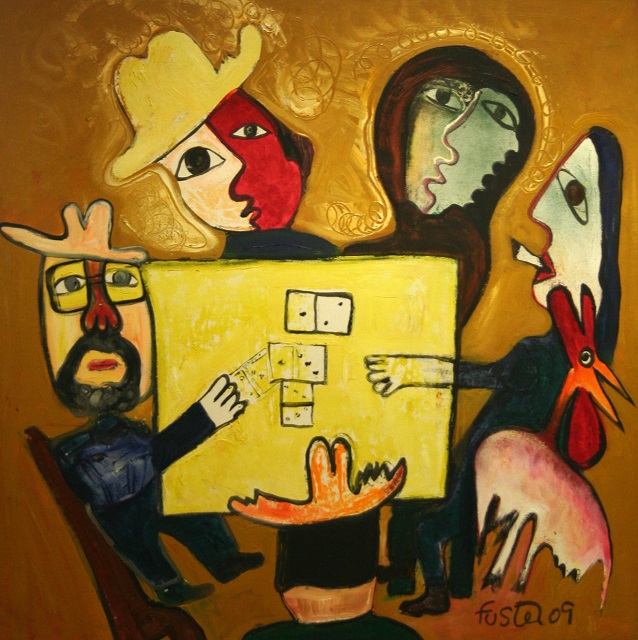
ZP_Jugando al Dominó_Playing at Dominos_José Fuster
Mario Meléndez (nace/born 1971, Chile)
“La Última Cena” / “The Last Supper or: From now on, the worms speak for him”
.
Y el gusano mordió mi cuerpo
y dando gracias
lo repartió entre los suyos diciendo
“Hermanos
éste es el cuerpo de un poeta
tomad y comed todos de él
pero hacedlo con respeto
cuidad de no dañar sus cabellos
o sus ojos o sus labios
los guardaremos como reliquia
y cobraremos entrada por verlos”.
.
And the worm bit into my body
and, giving thanks,
divided it among his brethren, saying:
“Brothers,
this is the body of a poet
– take it, eat all of it,
but do this with respect,
careful not to harm the hair upon his head,
or his eyes, or his lips
– we will keep those as sacred relics
and we’ll charge an entry fee for people to see them.”
.
Mientras esto ocurría
algunos arreglaban las flores
otros medían la hondura de la fosa
y los más osados insultaban a los deudos
o simplemente dormían a la sombra de un espino.
.
While this was going on
some were arranging flowers,
others were gauging the depth of the grave,
and the boldest ones were busy offending the relatives and mourners
– or merely sleeping ‘neath the shade of a hawthorn tree.
.
Pero una vez acabado el banquete
el mismo gusano tomó mi sangre
y dando gracias también
la repartió entre los suyos diciendo
“Hermanos
ésta es la sangre de un poeta
sangre que será entregada a vosotros
para el regocijo de vuestras almas
bebamos todos hasta caer borrachos
y recuerden
el último en quedar de pie
reunirá los restos del difunto”.
.
But once the banquet was finished
the same worm drank my blood
and, also giving thanks,
shared my blood among the rest of those present,
saying:
“Brothers,
this is the blood of a poet,
blood consecrated for you
for the sake of your souls’ rejoicing
– drink all of it until you fall down drunk,
that you may remember:
in high heaven it’s a stubborn fact –
you will be reunited with the remains of the deceased.”
.
Y el último en quedar de pie
no solamente reunió los restos del difunto
los ojos, los labios, los cabellos
y una parte apreciable del estómago
y los muslos que no fueron devorados
junto con las ropas
y uno que otro objeto de valor
sino que además escribió con sangre
con la misma sangre derramada
escribió sobre la lápida
“Aquí yace Mario Meléndez
un poeta
las palabras no vinieron a despedirlo
desde ahora los gusanos hablaremos por él”.
.
And the last-gasp fact…
not only was it the ‘joining-together’ of all of them
with the remains of the deceased –
his eyes, his lips, the hair upon his head,
an appreciable part of his stomach,
the thighs which were not devoured,
together with his clothing
and one or another item of value –
but that, moreover,
it was written in blood – that same spilt blood –
he wrote upon his own headstone:
“Here lies Mario Meléndez, a poet.
Words never came to bid him farewell,
and from now on,
the worms speak for him.”
.
Traducción/interpretación en inglés: Alexander Best
. . .
Mario Meléndez studied journalism at La República University in Santiago, Chile. In 1993 – the bicentennial of Linares – he won that city’s Municipal Prize for Literature. In 2003, in Rome, he was made an honorary member of the Academy of European Culture, after speaking at the First International Gathering for Amnesty and Solidarity of The People. In 2005 he won the Harvest International Prize for best poem in Spanish from the University of California Polytechnic.
Alan Clark: “Guerrero and Heart’s Blood” / “Guerrero y Sangre del Corazón”
Posted: March 19, 2013 Filed under: Alan Clark, English, Spanish Comments Off on Alan Clark: “Guerrero and Heart’s Blood” / “Guerrero y Sangre del Corazón”
ZP_Mythic by Alan Clark_Mítico por Alan Clark
Un extracto en cinco voces – de “Guerrero y Sangre del Corazón” por Alan Clark:
.
Guerrero habla:
“Yo soy Gonzalo Guerrero, Capitán al servicio de Nachancán, Señor de Chetumal. Casado. Un padre. Cortado y cubierto de cicatrices y decorado con tintes. Un guerrero conocido entre mi gente como “hombre valiente”.
Yo no soy aquel que fui. En Palos, donde nací, mi anterior familia vive todavia, a menos que haya habido una plaga o una guerra. Mi padre y mi madre quizás vivan aún. Pero lo dudo.
Había un árbol alto junto a la vieja casa, al que mi hermano Rodrigo y yo solíamos atar una soga, que dejábamos caer al suelo, luego trepábamos hasta lo más delgado del tronco y -pas!- soltábamos la cuerda y volábamos en el cielo cálido y azul entre el estruendo de las hojas. Les hacíamos jugarretas.
A nuestras hermanas, las espíabamos cuando se bañaban, y detestábamos la escuela y al cura de la iglesia, que nos pegaba en el nombre de Dios.
Ahora estoy muy lejos de todo eso. Soy algo así como un noble, y jefe en tiempo de guerra. Ahora escucho mensajes en el humo de papeles ensangrentados que los sacerdotes encienden en la cima de los templos, papeles empapados en la sangre de sus propios miembros desgarrados. A veces la sangre es mía. Me toca oficiar cuando se hace un sacrificio, y sentir como los cielos y la tierra cambian y se estremecen y se reconstruyen a sí mismos con el advenimiento de la más suprema de las ofrendas sagradas. Como un pequeño trozo del esclavo, del niño, o del cautivo, que quizás yo mismo haya sometido con estas manos. Su terror anticipa el temblor aún mayor del mundo una vez que hayamos cortado y ofrendado y ungido. Me tomó mucho tiempo vencer mi propio terror y repulsión.
El gran Señor Nachancán, quien me tomó luego que escapé de su espantoso vecino y enemigo, vió en mi lo que quizás yo nunca hubiese visto por mi mismo. Me dijo que de una sola mirada, cuando fui llevado ante él, consumido y cubierto con mis andrajos de esclavo, supo mi lugar en los cielo, a pesar de mi apariencia. Incluyendo mi negra barba crecida y despareja.
. . .
Habla Nachancán:
“Ja. Las noticias sobre los extranjeros habían llegado a mí aún antes de que desembarcaran. Mis mensajeros esparcieron las nuevas. Lo recuerdo bien. Conejo Dos pidió las jaulas y los postes. Kinich Ek quería a las dos mujeres. Le dimos una. Le arrancaron el corazón antes de terminar el día, como a los otros tres. Yo tomé una, para que ayudara a mi esposa y para interrogarla. Hace ya un año que murió. Mi mujer es muy dura con sus esclavos. Pero los alimenta bien.
Eran un grupo raro. Les arrancamos sus andrajos impregnados de sal para ver si eran humanos, como nosotros. Nuestros magos y sacerdotes los atormentaban y les lanzaron hechizos de humo. Eran hombres, pero blancos y peludos. Y hablaban un idioma que no pudimos entender, y temblaban en el calor, implorándonos por señas que les diéramos agua y comida. Los pusimos en jaulas para que engordaran. No sabían mal, cocidos con chiles. Nada mal…
Sólo quise uno para mí. Fue primero con Conejo, que es cruel y estúpido, hasta que un día huyó y vino a mí. Desde el primer momento vi en él a alguien de provecho, alguien para nosotros. Mi lengua se adelantó a mi voluntad: dénmelo.
.
Habla Nachancán:
Extraño pocas cosas. Mi naturaleza es afable como esta sonrisa que ven. Y la risa siempre a flor de labios – lo que a veces ha hecho pensar a mis enemigos que estoy loco…sus cabezas no sonríen desde donde nos miran, sobre los escalones del templo. Pronto sus ceños fruncidos desaparecerán. Y entonces las moscas se reirán para mí.
Cuando llegó, el extranjero Guerrero, noté que su presencia alteraba mucho a mi hija, Mucuy, que le lanzó una mirada de odio, y luego le ignoró. Cuando llegó la siguiente oportunidad de sangrarme, pedí a los dioses que me dieran su respaldo. Las serpientes no dicen más que lo necesario.
. . .
Aguilar habla:
¿Y dónde está la maldita gloria para el que va a morir? Esta noche se van a llevar a uno de mis pupilos a la piedra. Su nombre es Pop Che. Durante semanas he estado llevándole agua y comida. Pero no quería comer. ¿Puede alguien culparlo? Y, oh Dios, sólo es un muchachito. Un granjero que un día se puso su camisa de algodón, desenpolvó su lanza, se puso algunas plumas en el pelo –y dejó a su mujer, a sus hijos, y a su anciana madre, para ir a pelear contra Nachancán y los soldados perdidos de Guerrero. Y ahora está aquí con nosotros. Todo mi coraje es inútil. ¿Y qué han logrado todas mis plegarias por él? Le darán la bebida, lo pintarán, y…
.
Pero ¡ay!, la sangre de mi corazón se va con él. Qué puedo hacer más que seguir rezando y llevarle más agua. ¿Decirle que el dios que ni siquiera acepta lo espera en los cielos para tomarlo en sus brazos celestiales? Ya vienen. Los tambores han comenzado a sonar. Ay, ese sonido me llega como si me golpeasen a mí. Estoy asqueado y harto de todo.
.
Aguilar habla:
No es tan malo ser esclavo. No es tan malo estar vestido con harapos desechados, ser pateado e insultado y golpeado hasta morir por gente perdida en supersticiones. Y admite que hay cierto arte en lo que hacen, y a veces gran belleza en sus vestidos tejidos, y en sus vasijas de barro pintado. Inclusive en el brillante decorado de las piedras y del oro con los que se adornan, y con los que a veces se perforan grotescamente. Sus canciones y cantos, el embrujo de los tambores y las flautas, las trompetas y las caracolas. No soy ciego ni sordo a estas cosas. ¡Pero sus dioses me consternan, representan el horror del deseo de sangre del demonio, y en el momento del sacrificio quisiera aullar, conjurar la venganza de Dios para que desmenuzara hasta hacerlos polvo estos templos blanqueados de cal y manchados de sangre! Dios salve nuestras almas.
. . .
Alicia habla:
¡Gonzalo! ¡Gonzalo! Los viejos ojos de tu madre están puestos en ti. Dondequiera que estés, estos ojos te acompañan. Hoy me puse a quemar algunas ramas del viejo árbol que da las naranjas que tanto te gustaban. Esas ramas ya están viejas y secas porque hace ya tanto que te fuiste. ¿Para siempre? Y porque tu padre ha muerto. Murió la muerte rápida y fea de la plaga –su lengua estaba negra y gruesa, se ahogaba- y no podía decir tu nombre. Tu hermano y tus hermanas están bien. Eres tío de una horda de niños.
Gonzalo. Por el amor que te tengo, te entiendo y te veo, dondequiera que estés. En las cavernas de tu corazón, en el poder de tus brazos y de tu mente, siempre me he maravillado. Tal como ahora que sueño y te veo. Y no me preocupo, sólo te extraño. ¿Será que te has ido para siempre de tu hogar, de nosotros? En donde tu padre te engendró de la pasión por su madre, que te trajo con alegría y dolor, mi primer hijo. Mi amor por ti, buen hijo errante, jamás ha mermado, ni lo hará jamás, aún después de nuestra muerte terrenal. Y ahora, para verte, sólo me queda esperar ese día, porque estos viejos ojos ya no lo ven todo.
Con esta vieja mano alzo una naranja al sol, y huelo en el humo que se levanta de las viejas ramas de tu árbol favorito, el sabor de la fruta que aún perdura en él. Y con las cenizas que queden, abonaré mi jardín en tu nombre. Buen hijo.
. . .
Mucuy habla:
Acerca tuyo, esposo mío, déjame hablar. Tu fértil esposa ha yacido despierta junto a ti muchas noches, sintiéndose feliz y afortunada. Que al principio no podía entender. Tu eras un extraño, y –casi- parecías un animal. Tu cuerpo enfermo y pálido, tus mejillas cubiertas de pelo, y tu hablar rápido y extraño, me descorazonaba. Cuando me miraste por primera vez, me estremecí y sentí que gritaba por dentro, así que le pedí a mi madre que me explicara porque me causabas tanta confusión, que me dijera qué y quién eras, un hombre que daba tan mala impresión en todo. Si bien uno del que mi padre se expresó como si fuese su propio hijo. Pero finalmente el amor se reveló en mi corazón. Y te encontré esperándome como el sol cuando llueve, y crecí, y aprendí que nuestras caricias arrojaban una luz secreta mientras la luna aguardaba en su oscuro mundo para brillar sobre lo que surgiera. En ti encuentro, dentro de mis más ardientes deseos y mi famoso carácter, toda la suavidad y el peligro que toda mujer anhela, y escuché tus palabras que vagaban como los inseguros pasos de la niñez hacia mí, y temblé al sentir como te arrimabas a mí como las aguas del mar de Cozumel, que llegan a azotar día y noche, como el temblor de mis nervios mientras me preparo a mi festín de ti, con mis lenguas y dientes deseando tu sabor.
.
Así he llegado a conocerte, y de ello nació esta mujer fuerte, que en su pasión nutre la vida de toda su gente… porque antes sólo era buena para esperar, hasta que el mar te arrojó de quien sabe donde, más allá de donde los soles salen para alumbrar los días. Tu viniste de algún otro lugar, de donde te enviaron los dioses y las diosas.
.
Mucuy habla de su intimidad con Guerrero:
Ay, tu lengua tropezando y enredándose con la mía, pareciera haberse convertido en aquella con la que naciste. Te veo caminar entre los hombres, algunos de ellos hermanos míos, los mejores hijos de Nachancán y de la madre que tengo la bendición de poder ver
todos los días, y veo que tú eres uno de nosotros tanto como es posible, y por eso perdono tan fácilmente tus cuestionamientos, tus sueños, mi apetito nocturno, para ayudar a revelarte, mientras los años se desenredan en nuestros cuerpos acostados, o caminando entrelazados tal como nuestros espíritus lo están, y entender tus necesidades antes que tú mismo. Hemos susurrado mucho más allá del tiempo en que los pájaros se van a dormir acurrucándose en sus alas, sobre el misterio de cómo llegamos a ser uno.
.
Mucuy habla sobre la necesidad de que Guerrero participe en los sacrificios:
¿Acaso no soy, querido esposo, padre de mi hija e hijos, también tu maestra en las cosas que tanto te hacen temblar? Al fin ascenderás las escaleras del templo, y te infligirás las heridas que sangren y alimenten los fuegos de lo que verás, las cosas que ves tú mucho más claramente que yo, que te digo: mi tierno y sobrecogedor hombre –¡ve con papá Nachancán y con Pool, y los demás, esta noche, y sé un hombre! Nadie espera que puedas saber qué tanto dependen de ti este ritual y esta vida, aunque me hayas dicho que va contra tu formación. Sé valiente, mi querido esposo, y conoce la sangre que se derramará sobre ti; saboréala si puedes. El muchacho nació para esto. Su corazón fue medido desde el comienzo del mundo –para esto. El dios cuyos días han vuelto a llegar, ha hablado, y mantiene unidas las piedras sobre las que reposa –para esto. Espera que nuestros ojos se glorifiquen en estas muertes –por él. Para que nosotros en él lo veamos y honremos.
.
Traducción del inglés al español: Lisa Primus
. . .
Gonzalo Guerrero (1470-1536) fue un marino español y uno de los primeros europeos que vivió en el seno de una sociedad indígena. Murió luchando contra los conquistadores españoles. Guerrero es un personaje porfiado porque se aculturó al punto de ser un jefe maya durante la conquista de Yucatán. En México se refieren a él como Padre del Mestizaje. Presentamos aquí la obra del escritor y pintor Alan Clark – “Guerrero and Heart’s Blood /Guerrero y Sangre del Corazón” (Henning Bartsch, México, D. F., 1999) con la traducción de Lisa Primus.

ZP_Blood and Stone by Alan Clark_Sangre y Piedra por Alan Clark
An excerpt in five voices – from “Guerrero and Heart’s Blood” by Alan Clark:
.
Guerrero speaks:
I am Gonzalo Guerrero, Captain in the service of Nachancan, Lord of Chektumal. Married. A father. Cut and scarred and decorated with inks. A warrior, who is known among my people as a “brave man”.
.
I am no more what I used to be. In Palos, where I was born, my old family still lives. Unless there’s been a plague, or a war. My father and mother may still be alive, my brothers and sisters who I played with, and tormented. Maybe nothing has changed. Maybe everything. But I doubt that.
.
There was tall tree by our old house, my brother Rodrigo and I would tie a rope to, then pull it down to the ground, climb onto its thin trunk, and snap! Let the rope go and fly into the hot blue air in a clamor of leaves. We played tricks on our sisters, spied on them in their baths when we were all older. And hated the fathers of the church, who beat us in the name of God.
.
Now I’m far away from all of that. I am a kind of lord myself, and a chief in time of war. Now I harken to the messages in the smoke of blood stained papers the priests ignite on the temple tops. Papers drenched in their own blood, from their own shredded members. Sometimes the blood is my own. I am in attendance when a sacrifice is made, and feel the earth and the skies change and quiver and recast themselves at the advent of this most supreme offering. I eat some small piece of the slave or the child or the captive I myself, with these same hands, may have subdued. Their terror anticipates the wide world’s trembling when we have cut and offered and anointed. It took a long time to get past my own terror and revulsion.
.
The great Lord Nachancan, who took me in after I had escaped from his horrific neighbor and enemy, saw in me what I had perhaps would never have seen, myself. He told me that from one look, as I was brought before him, worn out, in my slave’s rags, he knew my place in the heavens and was undeceived by my appearance otherwise. Even by my ragged, black beard.
. . .
Nachancan speaks:
Ha. The word about the strangers was in my ear before they landed. My messengers had run with the news. I remember it well. Two Rabbit called for the cages and the long poles. Kinich Ek wanted the two women. We gave him one. Her heart was out before the day ended. The other I took to help my wife, and to question. It was only a year ago she died. My wife works her slaves very hard. But feeds them well.
.
They were a strange crew. We stripped them of their salty rags to see if they were human, like ourselves. Our priest and magician poked them all over and spelled them with smokes. They were men, but white and hairy, and spoke in a tongue we didn’t understand. They shivered in the heat, begging us by signs for food and drink. We put them into the cages. They did not taste too bad, cooked with chilies. Not too bad…
.
Only one I wanted for myself. He went first to Rabbit, who is stupid and cruel, until the day he ran to me. From the first, I saw him as someone of use, someone for us. My tongue spoke out ahead of me: Give me him.
.
There is little I miss. My nature is this smile you see, and the laughter that brims in my blood. Which has sometimes made my enemies think I am a fool. Their heads don’t smile from where they stare out on the temple steps. Soon enough their sagging frowns are gone, and then the buzzards make a laughing sign to me.
.
When he came, the stranger, Guerrero, I could see the sight of him upset too much my daughter, Mucuy. She glowered and shot an arrow from her eyes, and then would look no more. When I next bled myself, I asked the gods to second me in what I’d seen. The serpent speaks no more than we can know.
. . .
Aguilar speaks:
And where is the glory for the one who’s going to die? They’re taking a ward of mine up to the stone tonight. His name is Pop Che. For weeks I’ve brought him his food and water. But he won’t eat. Can you blame him? And, O God, he’s only a little man, a farmer who put on his cotton shirt one day, and dusted off his spear, left his wife and his children, and old mother, to go fight against Nachancan and the lost Guerrero’s soldiers.
.
And now he’s here with us. All my raging is useless. What have my prayers for him accomplished? They’ll give him the drink, paint him and feather him, and then….
.
But O! my heart’s blood goes with him. What else can I do? Tell him that the God he doesn’t even want, is waiting in heaven to hold him in his heavenly arms?
.
Here they come. The drums have started. Ah! That sound pounds into me as if it was me they were striking. I am sick and weak with everything.
.
It is not so bad, to be a slave. It is not so bad to be dressed in rags, to be kicked and insulted and worked almost to death by people lost in their superstitions. I will even admit there’s a certain art in what they do, and sometimes great beauty in their woven cloths, in their painted earthenwares. Even in the glittering ornateness of the stones and gold with which they adorn themselves. And are sometimes pierced to grotesqueness by!
.
I am not blind and deaf to these things. But their gods dismay me, are the horror of the Devil’s own wish for blood. And at the moment of sacrifice, I want to howl! and call God’s vengeance down to crumble to dust these whitewashed and bloodstained temples. God save all our souls…
. . .
Alicia speaks:
Gonzalo. Gonzalo. Your mother’s eyes are on you. Wherever you are, these eyes are on you. Today I’m burning some branches from the old tree that bears the fruit, the oranges you love, branches old and dry now because you’ve been gone so long. Forever?
.
Your father is dead. He died the fast and ugly death of plague, and couldn’t even speak your name. Your brothers and sister are well. You are now the uncle to a horde of growing kin.
.
Gonzalo. In my love for you, I understand and see you, wherever you may be. Of the passions of your heart, of the power of your arms and mind, I have always been in wonderment. This is no less so this hour I dream and see you. O, and I do not worry, but only miss you so! Forever gone from us and this, your home? Where your father seeded you in passion with his wife, who bore you happily in pain. My first born child.
.
My love for you, good son and wanderer, has never ceased, nor will it ever, even beyond our earthly dying. And now I only wait to see you then, because these old eyes cannot see everything they wish to.
.
With this hand I lift an orange to the sun, and smell in the smoke that rises from the worn out branches of your favorite tree, the savor of the fruit that lived within. And with the ashes left, will feed my garden in your name. Good son.
. . .
Mucuy speaks:
About you, my husband, let me speak. Your fertile wife has lain awake beside you many nights, and felt a wonder at her fortune. Which at first she could not feel. You were a stranger, almost, it seemed, a beast. Your body was sick and pale, your cheeks filled with hair, your strange, fast words dismaying me. When you first looked at me, I shivered and grew shrill, and asked my mother to explain the confusions you provoked, to tell me who and what you were, a man so alrogether wrong. But one of whom my father spoke as if you were a son.
.
But then my love unclouded in my heart. I found you waiting there for me like sun and summer rain. And I grew, and knew our touches cast in secret lightness while the moon was waiting in her darkest world to shine on what would be.
.
I found in you, inside my fiercest wish and famous temper, all my softness, and the danger any woman wants. And listened to your words, which wandered like the hesitating steps of childhood toward me, and trembled for the way you washed against me, like the waters of the sea off Cozumel, coming in to thunder day and night, like the trembling of my nerves as I’m edging toward my feast of you, whose taste my tongues and teeth desire.
.
Like this, I’ve come to know you, and out of this become the woman who is strong, and in her passion feeds the life of all her people. Because before, I was only great in waiting – when you washed ashore from nowhere, from somewhere out beyond where all the suns rise up to gleam awake the days. From somewhere else you came, the goddesses and gods had sent you.
.
And O, your stumbling tongue in tangling with my own, has since become as if it was the one you hatched with. I watch you walk among the men, some of them my brothers, the strongest sons of Nachancan, and the mother who I live in blessedness to see each day, and know that you are one of us as much as you can be, your dreams my nightly appetite to help explain to you, as the years unravel in our bodies lying down, or walking braided as our spirits are, and understand your needs before you do yourself. We’ve whispered long past the hour the birds have gone to sleep inside their wings, about the mystery of why we came to be as one.
.
Mucuy speaks about his need to attend the sacrifices:
Am I not, dear husband, father of my daughter and sons, also yet your teacher in the things that make you tremble so? At last! To climb the temple steps and prick upon yourself the wound that bleeds, and feeds the fire of what you’ll see there, the things you see so much more than I!
.
Who say to you, my tender, overwhelming man: Go to, with father Nachancan, and Pool, and the others on this night and be a man! No one expects that you can know how much this ritual, how much this life depends on you, you have told me goes against your way. Be brave, my darling husband, and know the blood that will spatter onto you, and taste it if you can. The boy is born for this. His heart is measured since the world began, for this. The God whose day has come around again, has spoken, and commands the stones themselves he rests upon, to worship him.
. . . . .
Alan Clark writes:
Gonzalo Guerrero (1470-1536) was a sailor from Palos de la Frontera, Spain, and was shipwrecked around 1511 while sailing from Panama to Santo Domingo with a dozen or so others. They drifted for a couple of weeks before Caribbean currents brought them to the shores of what is now the State of Quintana Roo in modern-day México where they were captured by Maya people and put into cages. Eight years later when Hernán Córtes arrived at Kùutsmil (Cozumel ) to begin what would be the Conquest of México, there were only two from this shipwreck still alive – Guerrero, and a priest named Jerónimo de Aguilar. Guerrero was by this time married with children, the first mestizos in México, and was a chief in time of war for the Maya lord Nachancán. Aguilar was a slave living in another city state.
.
I’ve attempted, through Guerrero’s wife, Mucuy – and through Nachancán, Aguilar, Guerrero’s mother in Spain (whom I’ve called Alicia), and of course through Guerrero himself – to give both the inner and outer picture/story of this man, a people, and the times in which they lived.
.
Guerrero and Heart’s Blood was published in 1999 by Henning Bartsch, México City. Although I never had the theatre in mind when I was writing it, Guerrero has had a variety of stagings in both the U.S.A. and México. Heart’s Blood is an accompanying story, told by Aguilar, and was performed in both Spanish and English in México as an adapted monologue by Alejandro Reza, with a score for cello by Vincent Carver Luke. The translation into Spanish is by Lisa Primus. My painting, on the cover of the original book, is called “Blood and Stone”.
. . . . .
Poems for Saint Patrick’s Day: favourites of “me Ma”
Posted: March 17, 2013 Filed under: Eavan Boland, English | Tags: Poems for Saint Patrick's Day Comments Off on Poems for Saint Patrick’s Day: favourites of “me Ma”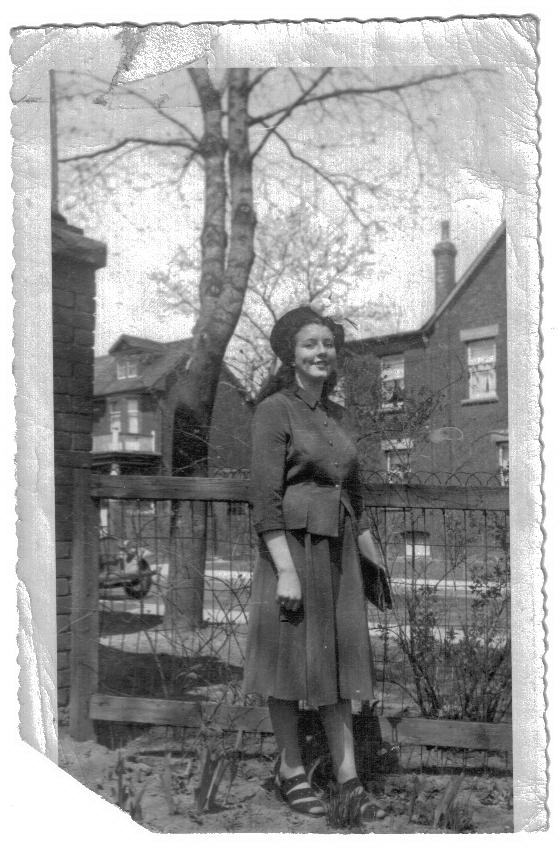
ZP_Eileen Thompson in 1948, not long after her arrival in Toronto from Belfast, Northern Ireland_Now in her 80s she is an avid reader – still – and she has chosen the two poems we feature here.
“Donal Og” / “Young Donald”
(from an old Irish Gaelic ballad, probably composed in the 10th century)
Translation by Augusta, Lady Gregory (1852-1932)
.
It is late last night the dog was speaking of you;
the snipe was speaking of you in her deep marsh.
It is you are the lonely bird through the woods;
and that you may be without a mate until you find me.
.
You promised me, and you said a lie to me,
that you would be before me where the sheep are flocked;
I gave a whistle and three hundred cries to you,
and I found nothing there but a bleating lamb.
.
You promised me a thing that was hard for you,
a ship of gold under a silver mast;
twelve towns with a market in all of them,
and a fine white court by the side of the sea.
.
You promised me a thing that is not possible,
that you would give me gloves of the skin of a fish;
that you would give me shoes of the skin of a bird;
and a suit of the dearest silk in Ireland.
.
When I go by myself to the Well of Loneliness,
I sit down and I go through my trouble;
when I see the world and do not see my boy,
he that has an amber shade in his hair.
.
It was on that Sunday I gave my love to you;
the Sunday that is last before Easter Sunday.
And myself on my knees reading the Passion;
and my two eyes giving love to you for ever.
.
My mother said to me not to be talking with you today,
or tomorrow, or on the Sunday;
it was a bad time she took for telling me that;
it was shutting the door after the house was robbed.
.
My heart is as black as the blackness of the sloe,
or as the black coal that is on the smith’s forge;
or as the sole of a shoe left in white halls;
it was you that put that darkness over my life.
.
You have taken the east from me; you have taken the west from me;
you have taken what is before me and what is behind me;
you have taken the moon, you have taken the sun from me;
and my fear is great that you have taken God from me!
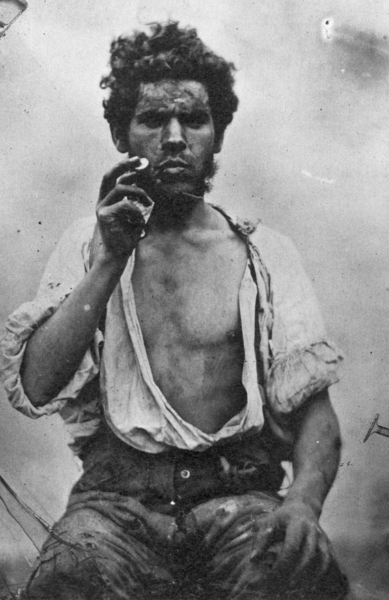
ZP_Irish labourer_a photograph from around 1850
Eavan Boland (born 1944, Dublin)
“Quarantine”
.
In the worst hour of the worst season
of the worst year of a whole people
a man set out from the workhouse with his wife.
He was walking – they were both walking – north.
.
She was sick with famine fever and could not keep up.
He lifted her and put her on his back.
He walked like that west and west and north.
Until at nightfall under freezing stars they arrived.
.
In the morning they were both found dead.
Of cold. Of hunger. Of the toxins of a whole history.
But her feet were held against his breastbone.
The last heat of his flesh was his last gift to her.
.
Let no love poem ever come to this threshold.
There is no place here for the inexact
praise of the easy graces and sensuality of the body.
There is only time for this merciless inventory:
.
Their death together in the winter of 1847.
Also what they suffered. How they lived.
And what there is between a man and woman.
And in which darkness it can best be proved.
. . . . .
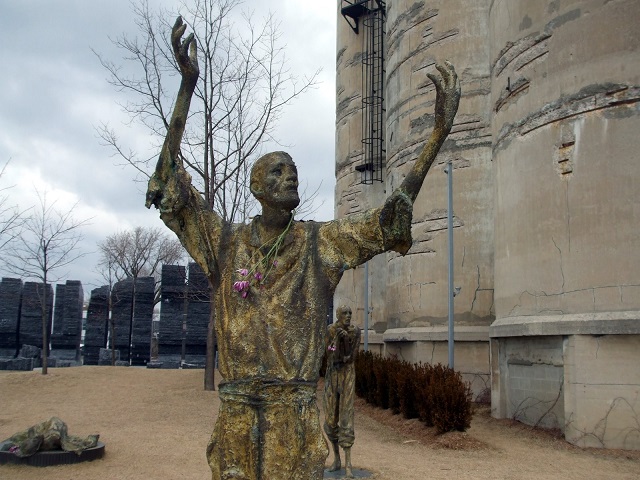
ZP_The Jubilant Man, a sculpture by Rowan Gillespie at Ireland Park in Toronto_The Irish Potato Famine, known as An Gorta Mór or The Great Hunger, occurred between 1845 and 1852. 30,000 forced-out or fleeing Irish arrived in Toronto during 1847 alone – their numbers being greater than the actual population of Toronto at the time.
Alexander Best: “Notes on Normal”
Posted: March 11, 2013 Filed under: Alexander Best, English Comments Off on Alexander Best: “Notes on Normal”
ZP_Norval Morrisseau, 1932-2007_Conversation, a serigraph from 1978
Alexander Best
“Notes on Normal”
.
The investment advertisement spoke of “smart risk”.
The sign on the bottled-water truck read: “Taste you can trust.”
At the townhouse complex, little notices
skewered the golf-green grass. They gave the date and time of
spraying and when the lawn would be “safe” again.
.
An office worker took two puffs of her cigarette then
tossed it onto the granite slab; it was back to the salt mines.
Two beggars stood nearby.
It didn’t get ugly over the “Hollywood butt”;
another one would be along in awhile.
. . .
Last night I awoke; it was slow and easy.
Down the hall, my neighbour picked out chords on his guitar.
The sound wasn’t loud; the house was unusually quiet.
3 a.m. Oh, but he hit the right notes!
I lay there and listened.
Then the music stopped.
.
My mind went this way and that. Those years returned, and
I knew there was no playing with the facts:
how ignorant I’d been — aggressive and stupid. And hadn’t it
gone on — and on.
Sleep came again, and took me.
. . .
Finally, he died.
Yes, he was old, but he’d been old for two-and-a-half decades,
since the age of forty-five.
The florid beard, silver in the black, had
given him a weight; and he’d been listened to, the difficult
so-and-so.
.
His Uncle. The only man left of that small,
snuffed-or-petered-out generation.
And these past five years, the beard gone, his face was
crunched and unintelligible.
.
What a waste.
So much could’ve happened that didn’t.
Yet so much had happened that had to.
And though he felt regret — fibrous and stony — he felt also
the uselessness of regrets.
.
That tightly-wound, far-flung bunch, their story was told.
And the estranged pair of them — Uncle and him —
they were one and complete.
. . .
I told someone off the other day, really laid it on thick.
She’d been burying me in bullshit for quite some time.
Who doesn’t she despise in our society?
.
Now I’m doubtful. I feel guilt. Was I perhaps too…
— no, I didn’t go far enough.
. . .
Oh privileged people —
when you extract head from navel, the
muffled hums and haws will become
well-spoken excuses.
.
Shut up and get on with it.
I expect more of thee!
. . .
Smug. It defines him.
Orthodoxy in all the obvious opinions; a crass certitude;
Hypocrisy.
And in one so young!
.
Facts. What he does with them is…
terrifying.
.
But now I say to myself:
Fool. Look around.
This is the only world he knows.
. . .
He was mistaken.
He’d thought it sensible to share so much — to be ‘modern’ —
with the old dear / battleaxe who’d given him Life.
But he didn’t know when to stop.
And now they are both of them
undignified.
.
How does one repair such damage?
.
Learning to be silent,
this will be hard work.
But the birds, cat and dog; the piano.
Maybe a ginger beer — she likes that —
in the backyard, when the hot days come.
It can be enough.
. . .
The funeral was a brisk affair; the woman’s decline had been
gradual, her death no surprise. Still, the hour was a solemn one.
He was the brother of someone who’d known the deceased,
a stranger in a small congregation, all of whom appeared to
be familiars. But afterward, he observed how
people departed in two distinct groups which had little or
nothing to say to one another.
.
His sister — the “someone who’d known the deceased” — was,
in truth, a very important person — mourner — in the pews.
But only the dead woman had known that.
.
Two square-looking, thirty-something women
— they’d sat in the front row —
attempted to pick him up as he
walked away from the cut-stone chapel.
One called him “distinguished”; the other, “hot”.
The coffin was carried down the steps, and
dayglo arrows marked the route to the grave.
It was a cold, early-spring afternoon.
. . .
The dream startled me awake.
I had to walk around, move myself here and there.
Downstairs, I put the kettle on.
.
First I was hunched over, then I was on the attack.
A door, off its hinges, was my shield, then my weapon.
There was no ground yet we weren’t falling.
There was no sky yet we kept breathing.
There was no room for us, in fact,
yet we had ample space for a struggle.
And who was we?
.
(2004)
. . . . .
Les Tendresses pour Yonge Street ( Tokens of Affection for Yonge Street )
Posted: March 10, 2013 Filed under: Alexander Best, English Comments Off on Les Tendresses pour Yonge Street ( Tokens of Affection for Yonge Street )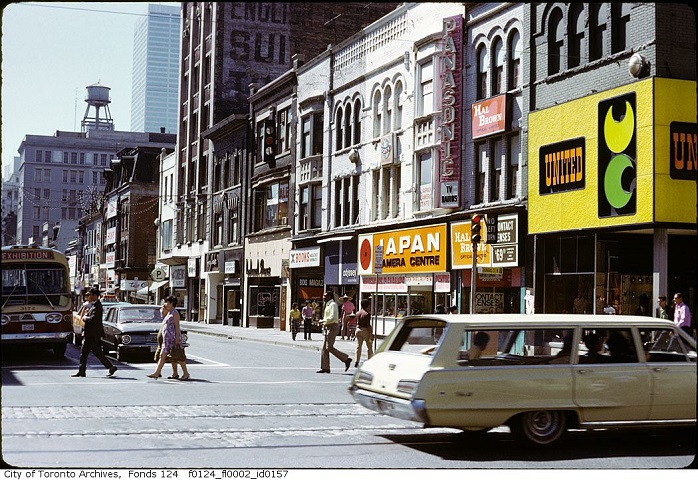
ZP_Corner of Yonge and Dundas, Toronto, 1972, looking south_The buildings on the right side were all demolished to make way for construction of The Eaton Centre which opened in 1977.
Alexander Best
LES TENDRESSES POUR YONGE STREET #1
( TOKENS OF AFFECTION FOR YONGE STREET…..)
.
Playoffs had begun; things were looking up for The Leafs…
Ten young guys, walking south to Carlton Street. Jock-ish
In their jerseys, ballcaps, space-age sneakers.
Cases of beer: treasure borne on shoulders and heads.
.
The creature of them halted in front of a shop-window: leopard-bikinis and
Lacey things. Big noise from the boys, sports-monkey-like.
.
Two teenage girls appeared on the sidewalk, slowing down, unsure.
(Awkward experiment: elegant hair, in the style of Marie-Antoinette, combined
with denim ensembles, ‘racing stripes’ down the sides of their pant-legs.)
.
The guys turned from window-display toward the girls, emitting a lusty
Oh Yeah!
One of the girls (shy one) couldn’t help but grin, showing
Microchip-circuitry of railroad-tracks; her mouth was a mess. The boys
Paused — taking in this ruination of her face — glanced among themselves,
Then voiced an even huge-r Oh Yeeaahhh of instinctual approval.
.
Girl’s friend rummaged for an itzy-bitzy disposable camera, held it out, simply
Aimed it at the mass of boys, and clicked.
Females, a-giggle, clumped north in their trendy ‘big-foot’ shoes. The
Manimal continued its way down the street.
. . .
LES TENDRESSES POUR YONGE STREET #2
“Homo sum, humani nihil a me alienum puto.” / “I am a human being, I consider nothing that is human alien to me.”
(Publius Terentius Afer a.k.a. Terence – Roman playwright, 195–159 BCE)
.
I waited for the streetcar, in Monday’s midnight mist.
Cabbie pulled up, East-African guy, insisted I get in.
No money, I told him. Shift was over, he said. “You and I, we go in the
Same direction,” he assured me. Small as a boy, he was confident like a man.
.
Inside the car, passing the famous hockey-arena…
“Do you know this is a ‘gay area’ where you are standing on the corner?”
“Oh, really?” my mild response.
.
Left hand on the steering-wheel, he extended his right and placed the tips of his
Slim fingers on the vulnerable spot where my neck joins my breastbone.
“Let me see you” — his tone was oddly reverential.
.
I unbuttoned my shirt. He ran his hand over my chest and stomach.
“Ah,” he said gravely, “I am touching you, beautiful forest!”
The car skirted a grove of highrise apartment blocks, swinging onto the bridge that
Leads to a more sky-wide part of the city.
.
He patted my zipper: “Show me this one.”
He held my sex; it changed size. Chain of lights moved north, another south, on the
Riverside-highway below us. He considered me, in the palm of his hand:
“Alabaster plus two jewels,” he said. “ — but not so hard!” he added, joy flashing in his
Eyes. Our road lay arrow-straight, and luck – the traffic was serene.
.
I began to touch him, at the navel-gap in his shirt.
“No. This cannot. I am married.” — he spoke in a hush.
“Maybe I’m married, too,” I said. “You are wearing no ring,” he observed.
“True.” And I touched him again.
.
“Please do not,” he said firmly. Then, with a radiant smile showing teeth of
Stained ivory: “You will make us an accident…We must not have such a
Tragic romance!”
He refreshed me with these words. The car smelled of fake pine; radio-voice
Rhapsodized about a computer.
.
He caressed my thigh with his free hand. I told him my name; he, his; the
Bible came into it. When I was let out, he tapped a
Farewell-flourish on the car-horn.
.
A poet wrote: “It is only the sacred things that are worth touching.”
Thank you, stranger of the City, for revealing my body as sacred again.
In touching it you touched my soul.
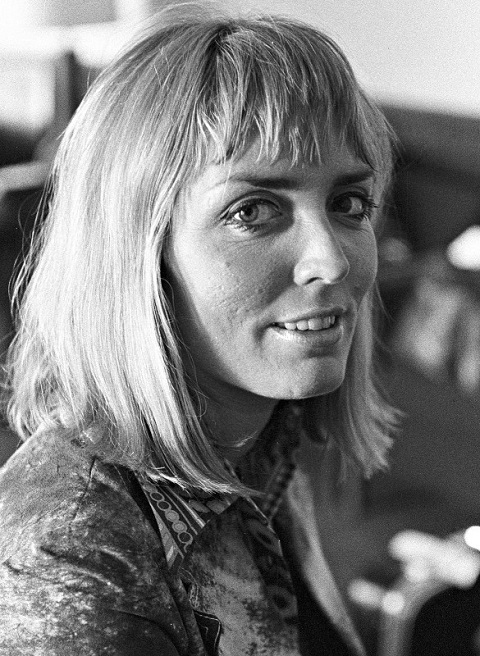
ZP_Xaviera Hollander, the so-called Happy Hooker_She lived in Toronto during the mid-1970s and her liberated, guilt-free approach to sex was exactly what Toronto the Good needed_The Yonge Street Strip, mainly between Gerrard and Dundas, was the most honest zone in the city – a place of risqué fun and sleaze. Some of those qualities of random adventure and weird spontaneity still existed on the Yonge Street of the late 1990s – and the poet hopes he has captured a little of that in these three poems…
LES TENDRESSES POUR YONGE STREET #3
.
It was along by the Zanzibar Tavern…
Delivery van struck a man. Soft-hard sound, and he
Flipped through the air as if juggled.
.
Magnificent. People spun ’round.
He wasn’t out-cold; dusted himself off, embarrassed.
He began to walk; straightaway teetered, fell
Crumpled against a newspaper box.
Blood on his neck; humanity gawked.
.
An efficient person called the hospital on his pocket-phone.
The van-driver was sorry, impatient.
.
An old man and woman — he reedy, she petite — approached the
Injured one: “What is your name, dear?” said the woman, bending.
“What is my name? — What is my name?!?”
“Don’t, now…you’ve had a shock,” she said.
.
The man’s accent was distinctive; words in the shape of fear.
He’d’ve hailed from a dozen lands — to be precise.
.
The woman gestured for her mate to lean down with his good ear:
“He can stay with us…The children are gone — they needn’t know.”
Her husband’s eyebrows went up; held themselves aloft; settled down.
“Yes…I don’t see why not.”
.
The nameless fellow was arranged into the ambulance by two delicate,
Burly attendants. The couple was helped in next; one guy taking the
Old lady’s patent-leather handbag, the other the
Old gentleman’s cane.
.
(1999 – 2000)

ZP_Yonge Street, Toronto, in the 21st century_Looking south from the corner of Yonge and Gerrard
Alexander Best: “The Soul in darkness”: 12 poems
Posted: March 10, 2013 Filed under: Alexander Best, English Comments Off on Alexander Best: “The Soul in darkness”: 12 poems


Alexander Best
“The Soul in darkness”
.
He’s destroyed his health — that much is plain.
A cough that never really leaves,
those hollows under his eyes.
Oh, it wasn’t any one thing he did…
but it all adds up.
.
Many of his habits were simple.
Taking his tea and a smoke by the window
while the sun rose, after a night of prowling.
He’d bring coffee to homeless guys with
winning, tooth-fractured smiles.
He’d talk to cats in the laneways; crouched down,
scratched them under their chins.
When money was scarce, still he managed
to buy drinks for charming strangers whose charm vanished
once they asked if he could lend them sixty bucks…
.
It was no one thing, true,
yet it all added up.
Life diminished him,
no matter what.
. . .
Each day brought some small joy or other.
What people called boredom
he called freedom to roam.
He listened to the water rush along the gutter toward the grate
— it was full of energy and romance.
At night when it rained,
he heard the wet wheels of traffic going this way or that
while he lay in his bed.
The city-hall tower was many blocks away,
but once in a while he heard the bell striking the hour,
and it pleased him.
He thought to himself:
this must be what it’s like to live forever.
. . .
They started out as friends.
Nearly always, it was good times.
Each trusted him whom he didn’t know.
By the end, they’d hurt one another a lot.
Accidental hurts? It was hard to tell
— but they hit their mark.
By the time it was really over, they’d become strangers
of the type that make up the faceless throng.
. . .
The number of times I’ve looked on people with desire.
Turning a corner. In a streetcar, an elevator.
At the cinema, courthouse.
In a glance, I’ve given myself to hundreds, and
I’ve taken thousands.
. . .
A beggar asked for change. I rummaged in my pockets.
He took a good look at me, in my old wool greatcoat;
declared: A blank cheque’ll do.
I smiled, gave him a two-dollar coin.
Noisily my awful boots squish-squished as I
strode up the street.
We both chuckled.
. . .
Nothing is clear to me.
Even the cloudless sky.
Every wall is a mirror.
So many years have passed that
some things are easier — time is thoughtful.
But nothing is clear.
. . .
The thought of living without him was unbearable.
And yet, that’s just what they’d been doing, for years.
Out of solitude came a knowledge he felt with his whole body:
their love was for all time.
Everywhere he went, he walked with a light step.
. . .
I waited. On the bench
by the massive oak tree.
Noone came.
I stayed too long,
my feet were like lead going home.
But memory calls.
I must go back.
. . .
The one dearest to him was ill.
Said his head throbbed, like it was his heart
— a loud beating,
outside his body.
He knew what that was like.
. . .
He went out on a limb — the old oak tree.
He sighed. Looked at the rope held coiled in his hand.
A nighthawk squawked.
That’s the wisdom I needed, he whispered aloud.
He lowered himself to the ground, with care
— didn’t want to sprain an ankle.
. . .
In the darkness of his room,
one after another, he strikes wooden matches,
leans each one against the inside of a small copper pot.
They spark, then swell to a crisp. And he says to himself:
Lovely they are, their whole life long.
. . .
Meal done, now’s the hour; some light in the sky still,
and man-made glows begin to warm each room.
Ahh,
spirit’s gone to my belly
— words don’t come…and that’s that.
.
Poem, shall we lie down, you and I?
And write ourselves tomorrow?
. . .
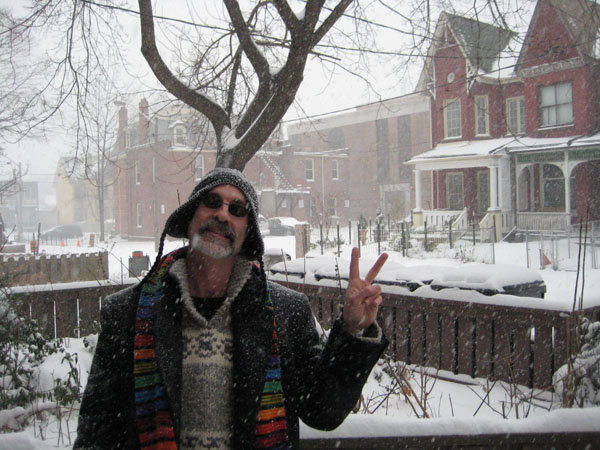
The poet in 2008
Editor’s note:
I wrote these poems in 2003 during the years when I went from one temporary job to the next, and was numb from emotional distress in my personal life. I seemed only to “camp” wherever I was living; I moved nine times between 1999 to 2010. Putting furniture out on the street, I would find what I needed for my next room on another curb. Everyone has crises in his or her life and we respond variously – with adequate action or with the inertia and blah mechanisms of Depression. I believe that this sequence of poems reflects – in its pensive, wistful, and “world-weary” tone – the influence of Constantine Cavafy (Konstantin Kavafis) whose poems in translation I was discovering at the time. These poems wrote themselves; my pen moved across the page of its own accord. The gift of composing Poetry has meant my survival; I am most grateful for that.
. . . . .
 Zócalo Poets