Vinícius de Moraes: Fidelidade, Separação, Intimidade: Three Sonnets
Posted: July 7, 2014 Filed under: English, Portuguese, Vinícius de Moraes Comments Off on Vinícius de Moraes: Fidelidade, Separação, Intimidade: Three Sonnets
Ipanema Beach in Rio, at sunset_vintage colour photograph from the 1960s
Vinícius de Moraes
(lyricist and poet, Rio de Janeiro, 1913-1980)
.
Sonnet on Fidelity
.
Above all, to my love I’ll be attentive
First, and always with such ardour, so much
That even when confronted by this great
Enchantment my thoughts ascend to more delight.
.
I want to live it through in each vain moment
And in its honour I must spread my song
And laugh with my delight and shed my tears
When she is sad or when she is contented.
.
And thus, when afterward comes looking for me
Who knows what death, anxiety of the living,
Who knows what loneliness, end of the loving,
.
I could say to myself of the love I had:
Let it not be immortal, since it is a flame
But let it be infinite – while it lasts.
. . .
Sonnet on Separation
.
Suddenly, laughter became sobbing
Silent and white like the mist
And united mouths became foam
And upturned hands became astonished.
.
Suddenly, the calm became the wind
That extinguished the last flame in the eyes
And passion became foreboding
And the still moment became drama.
.
Suddenly, no more than suddenly,
He who’d become a lover became sad
And he who’d become content became lonely.
.
The near became the distant friend
Life became a vagrant venture
– suddenly, no more than suddenly.
. . .
Sonnet on Intimacy
.
Farm afternoons, there’s much too much blue air.
I go out sometimes, follow the pasture track,
Chewing a blade of sticky grass, chest bare,
In threadbare pyjamas of three summers back,
.
To the little rivulets in the river-bed
For a drink of water, cold and musical,
And if I spot in the brush a glow of red,
A raspberry, spit its blood at the corral.
.
The smell of cow manure is delicious.
The cattle look at me unenviously
And when there comes a sudden stream and hiss
.
Accompanied by a look not unmalicious,
All of us, animals, unemotionally
Partake together of a pleasant piss.
. . .
Translations from Portuguese into English:
Ashley Brown (Fidelity, Separation) and Elizabeth Bishop (Intimacy)
. . .
Soneto de Fidelidade
.
De tudo, ao meu amor serei atento
Antes, e com tal zêlo, e sempre, e tanto
Que mesmo em face do maior encanto
Dêle se encante mais meu pensamento.
.
Quero vivê-lo em cada vão momento
E em seu louvor hei de espalhar meu canto
E rir meu riso e derramar meu pranto
Ao seu pesar ou seu contentamento.
.
E assim, quando mais tarde me procure
Quem sabe a morte, angústia de quem vive,
Quem sabe a solidão, fim de quem ama
.
Eu possa me dizer do amor (que tive):
Que não seja imortal, pôsto que é chama
Mas que seja infinito enquanto dure.
. . .
Soneto de Separação
.
De repente do riso fez-se o pranto
Silencioso e branco como a bruma
E das bocas unidas fez-se a espuma
E das mãos espalmadas fez-se o espanto.
.
De repente da calma fez-se o vento
Que dos olhos desfez a última chama
E da paixão fez-se o pressentimento
E do momento imóvel fez-se o drama.
.
De repente, não mais que de repente,
Fez-se de triste o que se fez amante
E de sozinho o que se fez contente.
.
Fez-se do amigo próximo o distante
Fez-se da vida uma aventura errante
De repente, não mais que de repente.
. . .
Soneto de Intimidade
.
Nas tardes da fazenda ha muito azul demais.
Eu saio as vezes, sigo pelo pasto, agora
Mastigando um capim, o peito nu de fora
No pijama irreal de ha três anos atrás.
.
Desço o rio no vau dos pequenos canais
Para ir beber na fonte a agua fria e sonora
E se encontro no mato o rubro de uma aurora
Vou cuspindo-lhe o sangue em torno dos currais.
.
Fico ali respirando o cheiro bom do estrume
Entre as vacas e os bois que me olham sem ciume
E quando por acaso uma mijada ferve
.
Seguida de um olhar não sem malícia e verve
Nos todos, animais, sem comoção nenhuma
Mijamos em comum numa festa de espuma.
. . .
These three sonnets were written in the late 1930s, when de Moraes was in his mid twenties. The poet would later become famous as the lyricist for the 1962 international bossa-nova hit song, A Garota de Ipanema (The Girl from Ipanema).
. . . . .
Castro Alves: “O Navo Negreiro” / “The Slave Ship”
Posted: June 28, 2014 Filed under: Castro Alves, English, Portuguese Comments Off on Castro Alves: “O Navo Negreiro” / “The Slave Ship”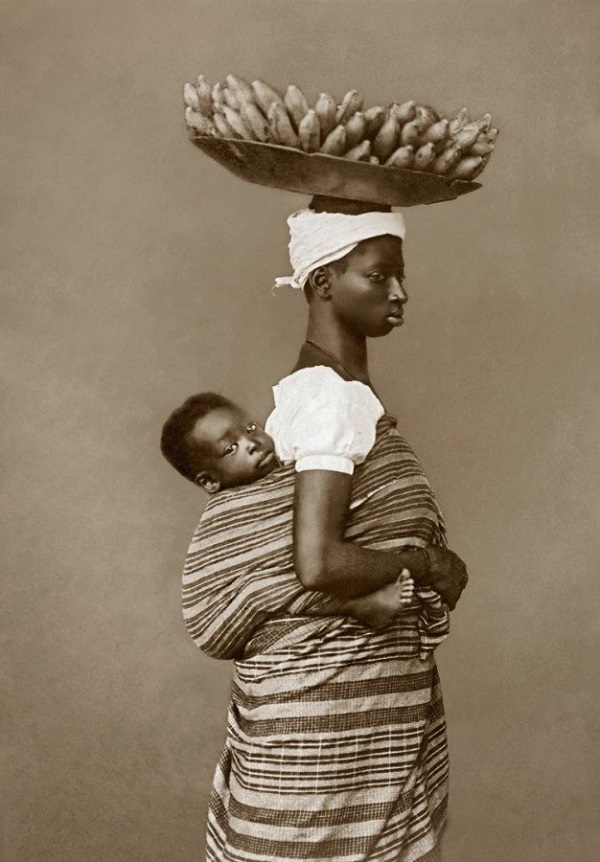
O Navio Negreiro é um poema de Castro Alves – e um dos mais conhecidos da literatura brasileira. O poema descreve com imagens e expressões terríveis a situação dos Africanos arrancados de suas terras, separados de suas famílias e tratados como animais nos “navios negreiros” que os traziam para ser propriedade de senhores e trabalhar sob as ordens dos feitores.
Foi escrito no ano de 1869, quando o poeta tinha vinte e dois anos de idade, e quase vinte anos depois da promulgação da Lei Eusébio de Queirós, que proibiu o tráfico de escravos (1850).
. . .
The Slave Ship (O Navo Negreiro) by Castro Alves is a classic of Late Romantic 19th-century poetry in Brazil. An ambitious, panoramic “story”, The Slave Ship shows a poet caught up in the great social/political theme of his time: Abolitionism – the movement to end Slavery. Written in 1869, this poem radiates all the idealism of youth – Alves was 22 – and is meant to agitate the reader through moral drama. O Navo Negreiro was not published till 1880, nine years after Castro Alves’ death from tuberculosis – he was 24 – in the city of Salvador da Bahia.
In 1888, Slavery was finally abolished in Brazil.
.
The use of slaves in Brazil began in the first half of the 16th century, and involved not the African “trade” but the Indigenous Peoples of Brazil. But by the second half of the 16th century the Portuguese colonists began a systematic importation of forced human labour via West African kingdoms. The sugar and coffee plantation economies – not to mention gold mining and cattle ranching – relied heavily on such regimented labour, although small “free” farmers existed too, though these mostly eked out a living in states such as Minas Gerais. Between 1600 and the mid-nineteenth century – when the “Middle Passage” trans-Atlantic slave trade was blockaded by the English navy – roughly 4 million Africans of various ethnicities and language groups had been brought to Brazil as slaves. Brazil’s importation of Africans for “use” in an economy that grew greatly because of a forced-labour economy was similar to the pattern of the U.S.A. – particularly during the 18th and 19th centuries.
. . .
Castro Alves (1847-1871)
O Navo Negreiro (1869)
‘Stamos em pleno mar… Doudo no espaço
Brinca o luar — dourada borboleta;
E as vagas após ele correm… cansam
Como turba de infantes inquieta.
‘Stamos em pleno mar… Do firmamento
Os astros saltam como espumas de ouro…
O mar em troca acende as ardentias,
— Constelações do liquido tesouro…
‘Stamos em pleno mar… Dois infinitos
Ali se estreitam num abraço insano,
Azuis, dourados, placidos, sublimes…
Qual dos dous é o céu? qual o oceano?…
‘Stamos em pleno mar. . . Abrindo as velas
Ao quente arfar das virações marinhas,
Veleiro brigue corre à flor dos mares,
Como roçam na vaga as andorinhas…
Donde vem? onde vai? Das naus errantes
Quem sabe o rumo se é tao grande o espaço?
Neste saara os corcéis o pó levantam,
Galopam, voam, mas nao deixam traço.
Bem feliz quem ali pode nest’hora
Sentir deste painel a majestade!
Embaixo — o mar em cima — o firmamento…
E no mar e no céu — a imensidade!
Oh! que doce harmonia traz-me a brisa!
Que música suave ao longe soa!
Meu Deus! como é sublime um canto ardente
Pelas vagas sem fim boiando à toa!
Homens do mar! ó rudes marinheiros,
Tostados pelo sol dos quatro mundos!
Crianças que a procela acalentara
No berço destes pélagos profundos!
Esperai! esperai! deixai que eu beba
Esta selvagem, livre poesia,
Orquestra — é o mar, que ruge pela proa,
E o vento, que nas cordas assobia…
Por que foges assim, barco ligeiro?
Por que foges do pavido poeta?
Oh! quem me dera acompanhar-te a esteira
Que semelha no mar — doudo cometa!
Albatroz! Albatroz! aguia do oceano,
Tu que dormes das nuvens entre as gazas,
Sacode as penas, Leviathan do espaço,
Albatroz! Albatroz! da-me estas asas.
. . .
Que importa do nauta o berço,
Donde é filho, qual seu lar?
Ama a cadência do verso
Que lhe ensina o velho mar!
Cantai! que a morte é divina!
Resvala o brigue à bolina
Como golfinho veloz.
Presa ao mastro da mezena
Saudosa bandeira acena
As vagas que deixa após.
Do Espanhol as cantilenas
Requebradas de langor,
Lembram as moças morenas,
As andaluzas em flor!
Da Italia o filho indolente
Canta Veneza dormente,
— Terra de amor e traiçao,
Ou do golfo no regaço
Relembra os versos de Tasso,
Junto às lavas do vulcao?
O Inglês — marinheiro frio,
Que ao nascer no mar se achou,
(Porque a Inglaterra é um navio,
Que Deus na Mancha ancorou),
Rijo entoa patrias glóorias,
Lembrando, orgulhoso, históorias
De Nelson e de Aboukir.. .
O Francês — predestinado —
Canta os louros do passado
E os loureiros do porvir!
Os marinheiros Helenos,
Que a vaga jônia criou,
Belos piratas morenos
Do mar que Ulisses cortou,
Homens que Fidias talhara,
Vao cantando em noite clara
Versos que Homero gemeu…
Nautas de todas as plagas,
Vós sabeis achar nas vagas
As melodias do céu!…
Desce do espaço imenso, ó aguia do oceano!
Desce mais… inda mais… nao pode olhar humano
Como o teu mergulhar no brigue voador!
Mas que vejo eu ai… Que quadro d’amarguras!
É canto funeral!… Que tétricas figuras!…
Que cena infame e vil… Meu Deus! Meu Deus! Que horror!
. . .
Era um sonho dantesco… o tombadilho
Que das luzernas avermelha o brilho.
Em sangue a se banhar.
Tinir de ferros… estalar de açoite…
Legiões de homens negros como a noite,
Horrendos a dançar…
Negras mulheres, suspendendo às tetas
Magras crianças, cujas bocas pretas
Rega o sangue das maes:
Outras moças, mas nuas e espantadas,
No turbilhao de espectros arrastadas,
Em ânsia e magoa vas!
E ri-se a orquestra irônica, estridente…
E da ronda fantastica a serpente
Faz doudas espirais…
Se o velho arqueja, se no chao resvala,
Ouvem-se gritos… o chicote estala.
E voam mais e mais…
Presa nos elos de uma só cadeia,
A multidao faminta cambaleia,
E chora e dança ali!
Um de raiva delira, outro enlouquece,
Outro, que martirios embrutece,
Cantando, geme e ri!
No entanto o capitao manda a manobra,
E após fitando o céu que se desdobra,
Tão puro sobre o mar,
Diz do fumo entre os densos nevoeiros:
“Vibrai rijo o chicote, marinheiros!
Fazei-os mais dançar!…”
E ri-se a orquestra irônica, estridente. . .
E da ronda fantastica a serpente
Faz doudas espirais…
Qual um sonho dantesco as sombras voam!…
Gritos, ais, maldiçõoes, preces ressoam!
E ri-se Satanas!…
. . .
Senhor Deus dos desgraçados!
Dizei-me vós, Senhor Deus!
Se é loucura… se é verdade
Tanto horror perante os céus?!
O mar, por que nao apagas
Co’a esponja de tuas vagas
De teu manto este borrao?…
Astros! noites! tempestades!
Rolai das imensidades!
Varrei os mares, tufao!
Quem sao estes desgraçados
Que nao encontram em vos
Mais que o rir calmo da turba
Que excita a fúria do algoz?
Quem sao? Se a estrela se cala,
Se a vaga à pressa resvala
Como um cumplice fugaz,
Perante a noite confusa…
Dize-o tu, severa Musa,
Musa libérrima, audaz!…
Sao os filhos do deserto,
Onde a terra esposa a luz.
Onde vive em campo aberto
A tribo dos homens nus…
Sao os guerreiros ousados
Que com os tigres mosqueados
Combatem na solidao.
Ontem simples, fortes, bravos.
Hoje miseros escravos,
Sem luz, sem ar, sem razao. . .
Sao mulheres desgraçadas,
Como Agar o foi também.
Que sedentas, alquebradas,
De longe… bem longe vêm…
Trazendo com tibios passos,
Filhos e algemas nos braços,
N’alma — lagrimas e fel…
Como Agar sofrendo tanto,
Que nem o leite de pranto
Têm que dar para Ismael.
Lá nas areias infindas,
Das palmeiras no pais,
Nasceram crianças lindas,
Viveram moças gentis…
Passa um dia a caravana,
Quando a virgem na cabana
Cisma da noite nos véus…
… Adeus, ó choça do monte,
… Adeus, palmeiras da fonte!…
… Adeus, amores… adeus!…
Depois, o areal extenso…
Depois, o oceano de pó..
Depois no horizonte imenso
Desertos… desertos só…
E a fome, o cansaço, a sede…
Ai! quanto infeliz que cede,
E cai p’ra nao mais s’erguer!…
Vaga um lugar na cadeia,
Mas o chacal sobre a areia
Acha um corpo que roer.
Ontem a Serra Leoa,
A guerra, a caça ao leao,
O sono dormido à toa
Sob as tendas d’amplidao?
Hoje… o porao negro, fundo,
Infecto, apertado, imundo,
Tendo a peste por jaguar…
E o sono sempre cortado
Pelo arranco de um finado,
E o baque de um corpo ao mar…
Ontem plena liberdade,
A vontade por poder…
Hoje… cúum’lo de maldade,
Nem sao livres p’ra morrer. .
Prende-os a mesma corrente
— Férrea, lúgubre serpente —
Nas roscas da escravidao.
E assim zombando da morte,
Dança a lúgubre coorte
Ao som do açoute… Irrisao!…
Senhor Deus dos desgraçados!
Dizei-me vós, Senhor Deus,
Se eu deliro… ou se é verdade
Tanto horror perante os céus?!…
O mar, por que nao apagas
Co’a esponja de tuas vagas
Do teu manto este borrao?
Astros! noites! tempestades!
Rolai das imensidades!
Varrei os mares, tufao?…
. . .
Existe um povo que a bandeira empresta
P’ra cobrir tanta infâmia e cobardia!…
E deixa-a transformar-se nessa festa
Em manto impuro de bacante fria!…
Meu Deus! meu Deus! mas que bandeira é esta,
Que impudente na gavea tripudia?
Silêncio. Musa… chora, e chora tanto
Que o pavilhão se lave no teu pranto!…
Auriverde pendao de minha terra,
Que a brisa do Brasil beija e balança,
Estandarte que a luz do sol encerra
E as promessas divinas da esperança…
Tu que, da liberdade após a guerra,
Foste hasteado dos heróis na lança
Antes te houvessem roto na batalha,
Que servires a um povo de mortalha!…
Fatalidade atroz que a mente esmaga!
Extingue nesta hora o brigue imundo
O trilho que Colombo abriu nas vagas,
Como um iris no pélago profundo!
Mas é infâmia demais!… Da etérea plaga
Levantai-vos, heróis do Novo Mundo!
Andrada! arranca esse pendao dos ares!
Colombo! fecha a porta dos teus mares!
. . . . .
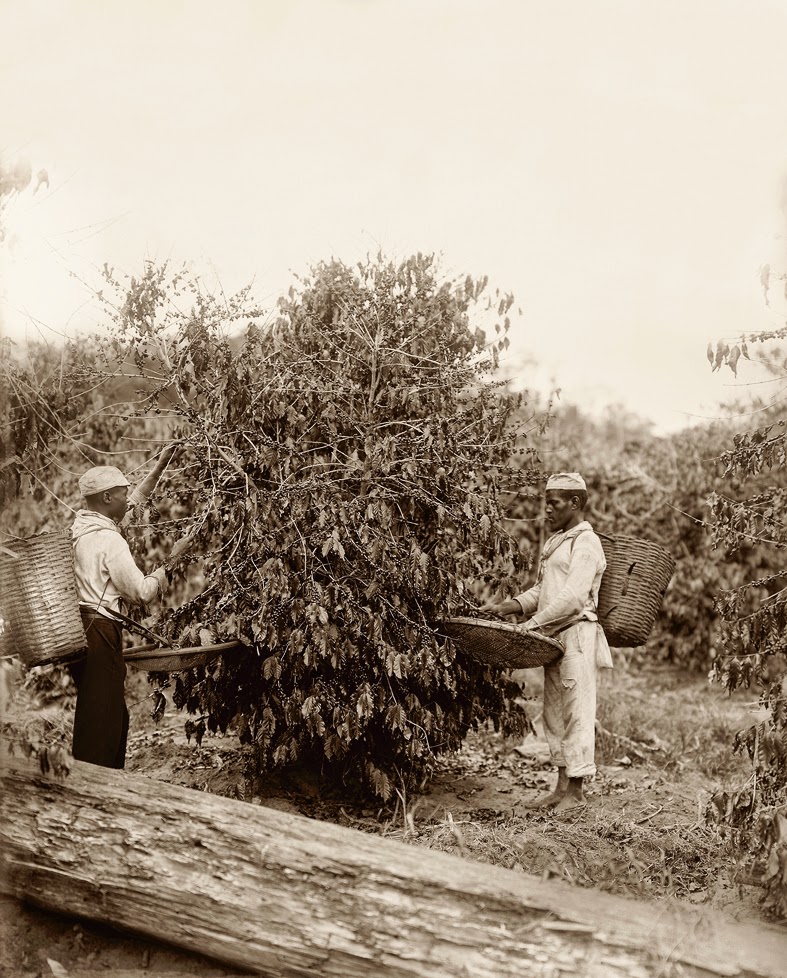
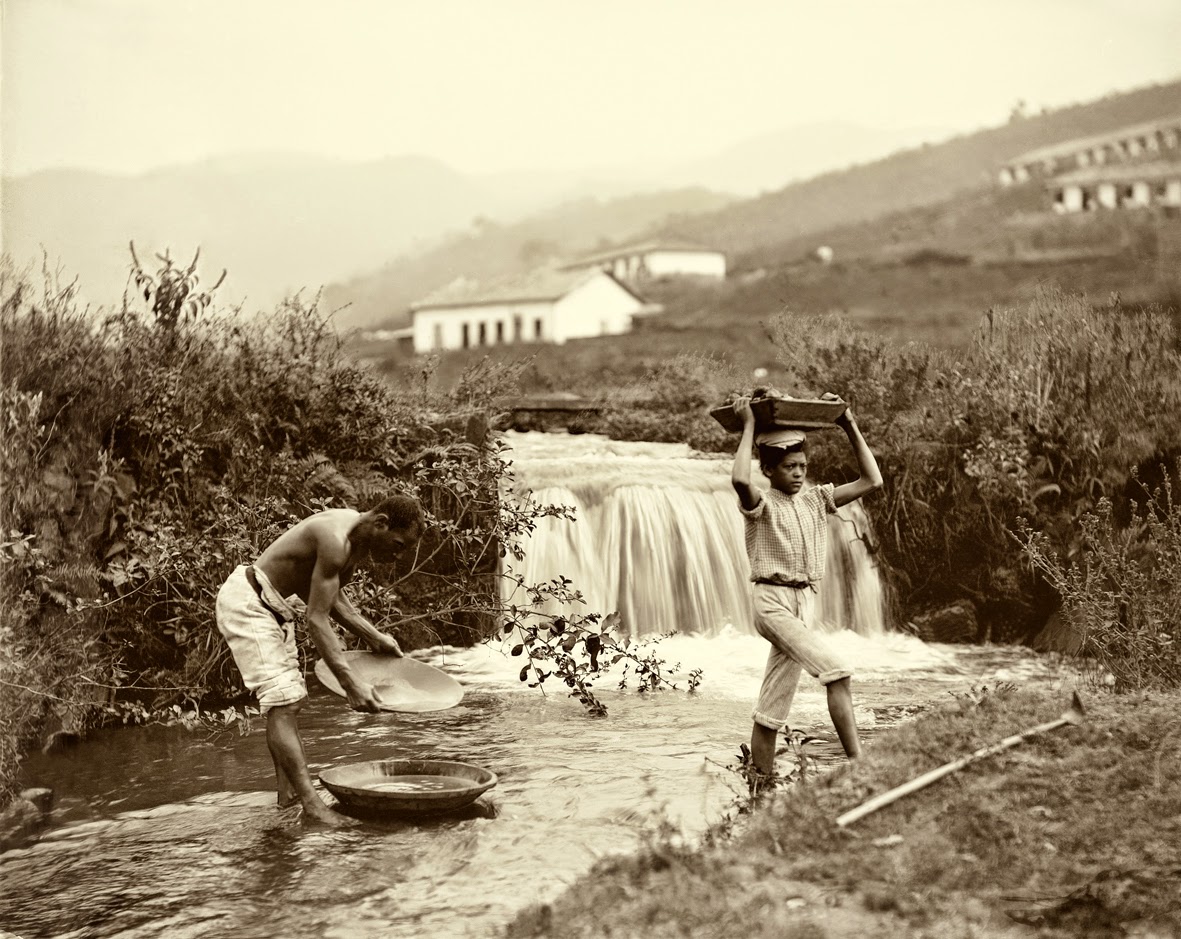
As fotografias são do acervo do Instituto Moreira Salles, algumas delas foram feitas há mais de 130 anos. A qualidade do material, tanto no sentido gráfico quanto em detalhes de comentários nas suas legendas, impressiona e aproxima aqueles que querem entender o cenário escravocrata brasileiro.
Elas datam entre 1860 e 1885, período em que movimento abolicionista tomou maiores proporções. São registros muitas vezes idealizados, de tom artístico, se assemelhando às pinturas da época. Diferente de alguns casos de propaganda abolicionista nos Estados Unidos, o objetivo dessas fotos não é denunciar barbaridades.
Verde – Negro / Green – Black
Posted: June 26, 2014 Filed under: English, Manuel Bandeira, Portuguese Comments Off on Verde – Negro / Green – Black
Verde – Negro
dever
de ver
tudo verde
tudo negro
verde-negro
muito verde
muito negro
ver de dia
ver de noite
verde noite
negro dia
verde-negro
verde vós
verem eles
virem eles
virdes vós
verem todos
tudo negro
tudo verde
verde–negro

Green – Black
green
grin
all green
all black
green-black
very green
very black
see the day
see the night
a green night
a black day
green-black
wait your turn
turn around
round the turn
I see
I agree
I am green
ay sí
I see all
all black
all green
green–black
. . . . .
Manuel Bandeira: “Down with the purists – Let’s hear it for all words !”
Posted: June 24, 2014 Filed under: English, Manuel Bandeira Comments Off on Manuel Bandeira: “Down with the purists – Let’s hear it for all words !”
Manuel Bandeira (1886-1968, Recife, Pernambuco, Brazil)
Dead of Night
.
Dead of night.
Near the lamp post
the toads gobble mosquitoes.
.
No one passes by on the street,
not even a drunk.
.
And still, there is somehow a procession of shadows,
shadows of all those who have passed by,
those who are still alive and those who are already dead.
.
The gutter is wet as if with tears.
The voice of the night…
(No, not this night, but another – larger.)
. . .
Café Moment
.
As the cortège passed by,
the men who at that moment were in the café
tipped their hats without thinking
in an automatic salute to the departed:
they were involved in life,
absorbed in life,
confident of life.
.
But one of them uncovered, in a grand gesture, slow and deliberate,
and stared after the coffin a long time.
This man knew how life is a torment,
savage and without purpose
– that life is a hoax,
and he saluted the body that passed by,
free, now and forever, of the extinguished soul.
. . .
Guinea Pig
.
When I was six years old,
they gave me a guinea pig.
What heartache it brought me –
all the little beast wanted to do was hide under the stove!
I brought it into the living room,
into the nicest, neatest parts of the house,
yet all it wanted was to hide under the stove.
It didn’t pay the slightest attention to any of my caresses.
.
That guinea pig was my first romance.
. . .
In the Mouth
.
These Carnival songs always seem so sad:
passion,
jealousy,
and the pain of what one cannot say.
.
Happily, there is always alcoholism.
And in those three days of Carnival, there is the perfumed ether
revelers squirt at each other.
My ambition is to be like that nutcase kid…
Last year he accosted the pretty women
asking for some of that ether
“In the mouth! In the mouth!”
Some turned away from him, repelled,
but some gave him what he asked for.
.
There are still women pure enough to want to please an addict.
.
Dorinha, my sweet…
If she were pure enough, I’d bawl at her just like that kid:
“In the mouth! In the mouth!”
. . .
Art of Love
.
If you want to know the happiness of Love, forget about your Soul.
The soul is what wastes love.
Only in God is it able to find satisfaction,
not in another soul.
Only in God – or out of this world.
Souls can’t communicate.
Let your Body get close to another Body,
because bodies get close: Souls don’t.
. . .
Satellite
.
Late afternoon.
In a leaden sky
the soiled Moon
hangs
very cosmographically –
a satellite.
.
No metaphor,
no myth,
stripped of its old secrets and melancholy,
no longer a gulf of dreams,
the star of lunatics and lovers,
but only what it is:
a satellite.
.
Ah, Moon of the late afternoon,
having quit your job as a romantic
without any care at all for your sentimental responsibilities…
.
But I, too, am weary of the hype,
and like you this way,
just as you are
– a satellite.

New Moon
.
My new room
faces east.
In my room, once again, I am mounted over the harbour entrance.
.
After ten years of a courtyard,
The dawn and I became reacquainted.
I can bathe my eyes again in the bloodless tides of sunrise.
.
Every morning, the airport across the road offers me lessons in
departure.
.
I shall learn with it
how to leave
one time –
without fear,
without remorse,
without regret.
.
Don’t think that I wait for the full moon,
that sun of dementia,
vague and noctambular.
What I want the most,
what I need the most,
is the new moon.
. . .
The Cactus
.
That cactus there reminded us of the strenuous gestures of statues:
Laocoön strangled by serpents,
Ugolino and his starving sons.
It evoked as well the dry Northeast, palm trees, sawgrass…
It was enormous, even for this exceptional and extravagant land.
.
One day, it was uprooted by a furious gale.
The cactus fell across the street,
smashed the eaves of houses on the other side,
blocked trolleys, wagons, cars, carriages,
and snapped power lines, depriving the city of
light and power
for twenty-four hours.
.
It was gorgeous, obdurate, and harsh.
. . .
Theme and Variations
.
But why should there be
so much suffering
if in the sky there is the slow
declension of the night?
.
But why should there be
so much suffering
if the wind out there
is a song of the night?
.
But why should there be
so much suffering
if into the dew now
the flower of night releases its perfume?
.
But why should there be
so much suffering
if my thought
rides free on the night?
. . .
Poetics
.
I’ve had it with diffident lyricism,
well-mannered lyricism,
the civil-servant’s lyricism that comes with a
time card, office procedures,
and expressions of esteem for the administrative director,
Sir.
I’ve had it with lyricism that has to stop in midstream to consult a dictionary
for the exact definition of a word.
Down with the purists!
.
Let’s hear it for all words, especially those that everyone screws up,
all the mangled constructions, and violations of syntax,
and the subtle rhythms that can’t be scanned.
.
I’ve had it with lounge-lizard lyricism,
political,
rachitical,
syphilitical,
all lyricism that yields to any outside influence.
.
Anyway, all this other stuff isn’t lyricism.
It’s accounting, it’s cosine tables, it’s handbooks for the would-be lover
with form letters and hints for more effective foreplay – and so on…
.
I prefer the lyricism of loonies,
the lyricism of drunkards,
the hard-earned, bitter lyricism of the drunkards,
the lyricism of Shakespeare’s clowns.
I want nothing more to do with any lyricism that isn’t liberation.
. . .
The Last Poem
.
This is how I want my last poem to be:
It should be gentle, so that it says the simplest, least calculated things
It should be ardent, like a sob too sudden for tears
It should have the beauty of a flower that has almost no scent
The purity of the flame that consumes the clearest diamonds
The passion of suicides who kill themselves without explanation.
. . .
All of the above translations from the Portuguese © David R. Slavitt (2002)
. . . . .
Primeiro dia de Verão: um poema
Posted: June 21, 2014 Filed under: English, Júlio Castañon Guimarães, Portuguese Comments Off on Primeiro dia de Verão: um poema
Júlio Castañon Guimarães (born 1951, Minas Gerais, Brazil)
Summer
[ Toute l’âme résumée – Stéphane Mallarmé ]
.
the sun
pricks the pores
ravages blemishes of spirit
.
what the sea gives back to the sand
the day outlines
in biceps and trunk and thighs
that embrace the landscape
Gloria the bay
the line of the horizon
.
in the hair below the belly button
a drop gathers in the entire summer
.
and it distills it
on the tongue
in a stain of salt.
. . .
Translation from Portuguese into English:
David William Foster
. . .
Verão
.
o sol
agulha os poros
devasta laivos de espírito
.
o que o mar devolve à areia
o dia desenha
em bíceps e tronco e coxas
que abraçam a paisagem
a Glória a baía
a linha do horizonte
.
nos pêlos abaixo do umbigo
uma gota recolhe todo o verão
.
e o resume
na língua
em um laivo da sal.
. . . . .
Augusto dos Anjos: “Intimate Verses” and “Immortal Lust” / translation by Daniel Vianna
Posted: June 20, 2014 Filed under: Augusto dos Anjos, English, Portuguese, ZP Translator: Daniel Vianna Comments Off on Augusto dos Anjos: “Intimate Verses” and “Immortal Lust” / translation by Daniel Vianna

Egon Schiele_O Abraço_The Embrace_1915
Augusto dos Anjos (Brazilian pre-Modernist poet, 1884-1914)
Versos Íntimos
.
Vês! Ninguém assistiu ao formidável
Enterro de tua última quimera.
Somente a Ingratidão – esta pantera –
Foi tua companheira inseparável!
Acostuma-te à lama que te espera!
O Homem, que, nesta terra miserável,
Mora, entre feras, sente inevitável
Necessidade de também ser fera.
Toma um fósforo. Acende teu cigarro!
O beijo, amigo, é a véspera do escarro,
A mão que afaga é a mesma que apedreja.
Se a alguém causa inda pena a tua chaga,
Apedreja essa mão vil que te afaga,
Escarra nessa boca que te beija!
. . .
Intimate verses
.
Look! No one saw the amazing
Burial of your one final dream.
Only the ungrateful and mean
Gave you a shoulder for weeping!
Get used to the cesspit that awaits!
Man, in this miserable land,
Surrounded by wild beasts, can only stand
By dishing out even stronger bites.
Take a match – light your cigarette!
The kiss, the friend, precedes the spit,
The hand caresses – before the stick.
If someone saves you from hell,
Stone the hand that treats you well,
Spit on those who try to kiss you!
. . .
Volúpia Imortal
.
Cuidas que o genesíaco prazer,
Fome do átomo e eurítmico transporte
De todas as moléculas, aborte
Na hora em que a nossa carne apodrecer?!
Não! Essa luz radial, em que arde o Ser,
Para a perpetuação da Espécie forte,
Tragicamente, ainda depois da morte,
Dentro dos ossos, continua a arder!
Surdos destarte a apóstrofes e brados,
Os nossos esqueletos descarnados,
Em convulsivas contorções sensuais,
Haurindo o gás sulfídrico das covas,
Com essa volúpia das ossadas novas
Hão de ainda se apertar cada vez mais!
. . .
Immortal Lust
.
Do you really think that life-giving bliss,
The driving hunger of eurythmic atoms,
Will abort the molecules in motion
At the time when our flesh becomes putrid?!
No! This radial light that burns Being,
To perpetuate a victorious Species,
Tragically, even after we decease,
Inside the bones – goes on – keeps on – burning!
Deaf from abuses and offenses,
Our fleshless carcasses,
Convulsing and contorting the core,
Exhaling sulfuric gases from the tomb,
With the fresh lust of new bones,
Will yet press together more!
.
Portuguese to English translation: Daniel Vianna
. . .
“O Tygre”: William Blake / “The Tyger”
Posted: June 19, 2014 Filed under: English, Portuguese, William Blake | Tags: Augusto de Campos as translator: Concrete Poetry from Brazil Comments Off on “O Tygre”: William Blake / “The Tyger”

 .
.
 .
.
 .
.
 .
.

A poesia concreta: Tudo Está Dito / Everything Was Said: the “Concrete” poems of Augusto de Campos
Posted: June 16, 2014 Filed under: Augusto de Campos, English, Portuguese Comments Off on A poesia concreta: Tudo Está Dito / Everything Was Said: the “Concrete” poems of Augusto de Campos
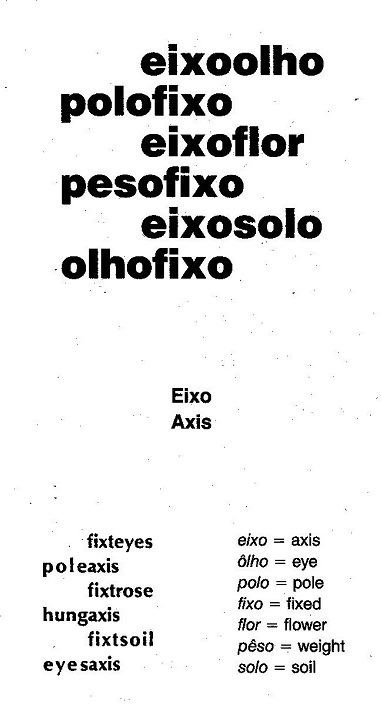
Augusto de Campos_Axis_1957_translated by Edwin Morgan

Augusto de Campos_Tudo Está Dito_1974
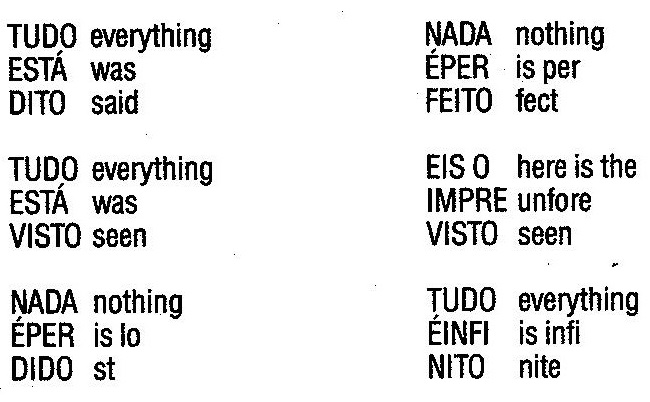
Augusto de Campos_Everything was said_1974
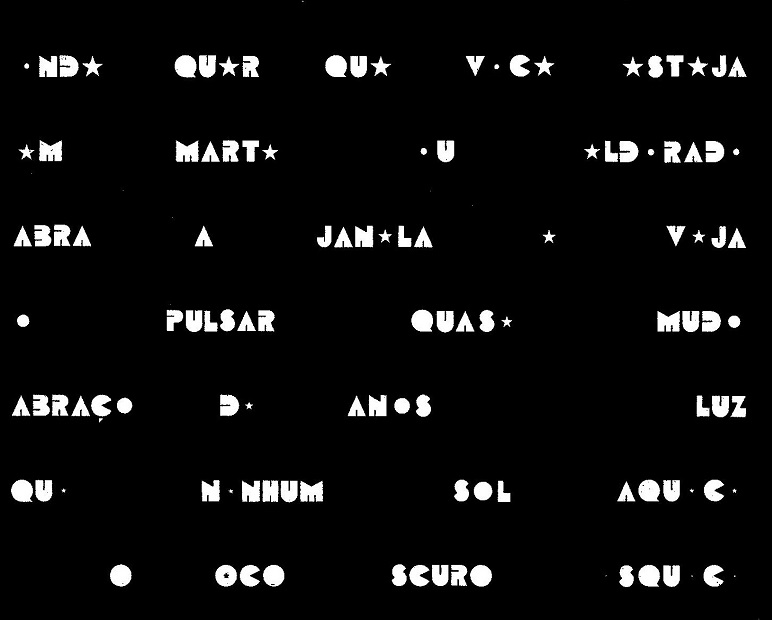
Augusto de Campos_O Pulsar_1975
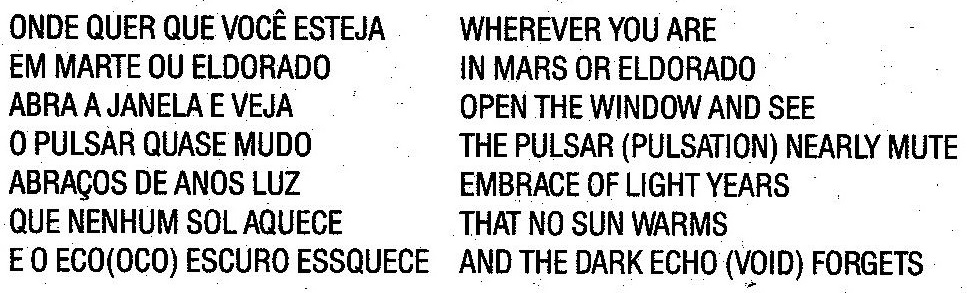
Augusto de Campos_The Pulsar_1975
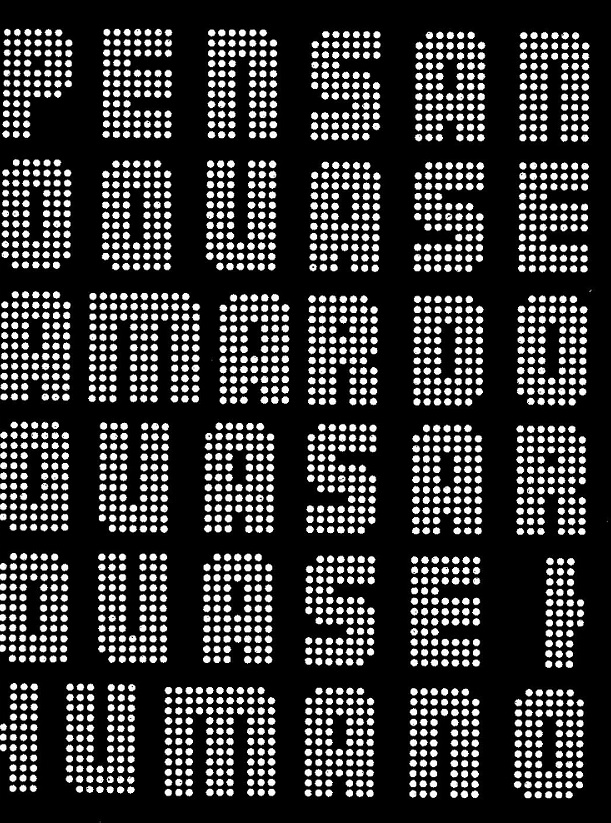
Augusto de Campos_O Quasar_1975

Augusto de Campos_The Quasar_1975

Augusto de Campos_Memos_1976
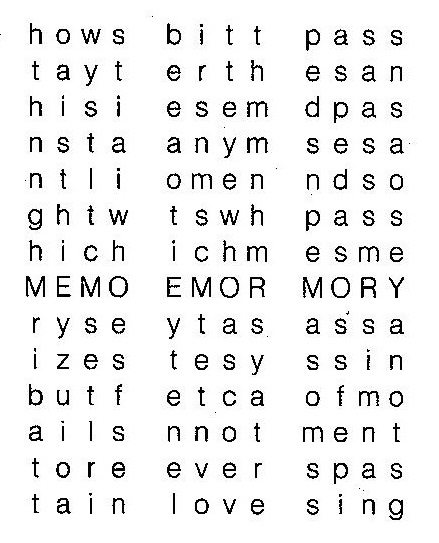
Augusto de Campos_Memos_1976_translated by Claus Cluver
.
Copyright dos poemas e traduções
© 1983 Wesleyan University Press
.
The phrase Concrete Poetry was coined in 1956 in São Paulo, Brazil, after an exhibition of such poems (I Exposição Nacional de Arte Concreta) that included works by the group Noigandres (Augusto and Haroldo de Campos, Décio Pignatari and Ronaldo Azeredo). The poets Ferreira Gullar and Wlademir Dias-Pino were also featured. Eventually, a Brazilian Concrete Poetry manifesto was published. The manifesto’s core value was that of using words as part of a specifically visual work so that those words are not mere unseen vehicles for ideas.
Although the term Concrete Poetry is contemporary, the idea of using letter arrangements to enhance the meaning of a poem is an ancient one. Such poetry originated in the then-Greek city of Alexandria (in Egypt) during the 3rd and 2nd centuries BCE.

Old fashioned metal typesetters’ blocks_These tools were used by the print and publishing trades before the advent of the computer era_The Concrete Poetry movement relied on such standard building blocks for its words-as-objects format.

Gregório de Matos as Hell’s Mouth poet (A Boca do Inferno): a 17th-century poetical critique of the colonial city of Salvador da Bahia / translation by Daniel Vianna
Posted: June 10, 2014 Filed under: English, Gregório de Matos, Portuguese, ZP Translator: Daniel Vianna Comments Off on Gregório de Matos as Hell’s Mouth poet (A Boca do Inferno): a 17th-century poetical critique of the colonial city of Salvador da Bahia / translation by Daniel Vianna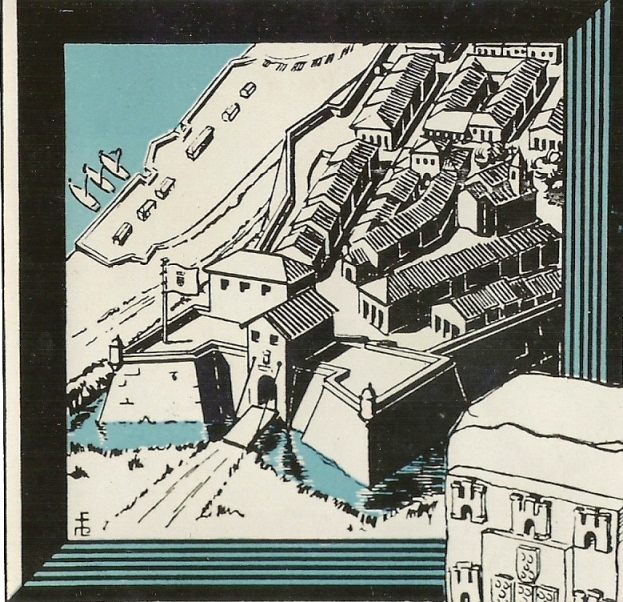
Salvador da Bahia_a print of the city as it might have looked during the 17th century_by Paulo Lachenmeyer
Gregório de Matos
Diagnosis of the ailments that left the Body of the Republic – and all its limbs – ill; and a complete definition of what at all times is Bahia
.
What’s missing in this city?…The Truth.
What more is there gives it dishonour?… Honour.
Is there anything left to blame? – Shame.
.
Regardless of its great fame,
The devil is now living
In this city that is missing
Truth, honour, shame.
What brought it so much pain?… Bargaining.
What caused such perdition?… Ambition.
And amidst this insanity?… Usury.
.
Amazing misadventure
Of an ignorant, sad people,
Who know very little but:
Bargaining, ambition, usury.
.
Which markets do they follow?… The Black Slave.
Which “goods”, not so hollow?… Mulattoes.
And they prefer which people?… Mestizos.
.
To the devil the ignoble,
To the devil all these asses,
Who prefer among all races:
The Negro, Mulatto, Mestizo.
.
Who makes the fines so stiff?… Bailiffs.
Who makes the food come later?… Jailers.
Who takes all for their families?…Deputies.
.
It’s we are taxed to eternity,
And the land is left there – starving,
When we hear them come a-knocking:
Bailiffs, jailers, deputies.
.
And what justice is left?… It’s a wreck.
Is it freely dispensed?… It’s for sale!
Why are people so scared?…’cause it’s fake.
.
Help me God, so I can take
what the King gives us for free;
our Justice is known to be
A wreck – and for sale – and fake.
.
What’s going on with the clergy?… Simony.
And the members of the Church?… Lust.
Is there anything left to see?… Yes – Envy.
.
The same old story
Still drives the Holy See:
What brings them to their knees is:
Simony, lust and envy.
.
Is their anything monks won’t shun?… It’s Nuns.
What occupies their evenings?… Bickering.
Entangled they get in disputes?… With Prostitutes!
.
I would rather be mute
Than to utter hard truths:
The profession of monks is:
Nuns, bickering – and prostitutes.
.
Has the sugar run out?… It’s down.
Have we got better luck?… Now it’s up.
Has the treasury been fed?… They’re dead.
.
Cidade-Bahia has known
What happens to the sickest:
They fall ill, they get fever;
They’re down, and it’s up – now they’re dead.
.
Parliament don’t help?… It can’t.
It don’t have the power?… It won’t.
And if government tries?… It dies.
.
Who would think that such lies
noble parliament drives,
in predicament finds, and still:
it can’t, it won’t – and it dies.
.
Portuguese to English translation: Daniel Vianna
. . .
Gregório de Matos
Juízo anatômico dos achaques que padecia o corpo da República em todos os membros, e inteira definição do que em todos os tempos é a Bahia
.
Que falta nesta cidade?… Verdade.
Que mais por sua desonra?… Honra.
Falta mais que se lhe ponha?… Vergonha.
.
O demo a viver se exponha,
Por mais que a fama a exalta,
Numa cidade onde falta
Verdade, honra, vergonha.
.
Quem a pôs neste rocrócio?… Negócio.
Quem causa tal perdição?… Ambição.
E no meio desta loucura?… Usura.
.
Notável desaventura
De um povo néscio e sandeu,
Que não sabe que perdeu
Negócio, ambição, usura.
.
Quais são seus doces objetos?… Pretos.
Tem outros bens mais maciços?… Mestiços.
Quais destes lhe são mais gratos?… Mulatos.
.
Dou ao Demo os insensatos,
Dou ao Demo o povo asnal,
Que estima por cabedal,
Pretos, mestiços, mulatos.
.
Quem faz os círios mesquinhos?… Meirinhos.
Quem faz as farinhas tardas?… Guardas.
Quem as tem nos aposentos?… Sargentos.
.
Os círios lá vem aos centos,
E a terra fica esfaimando,
Porque os vão atravessando
Meirinhos, guardas, sargentos.
.
E que justiça a resguarda?… Bastarda.
É grátis distribuída?… Vendida.
Que tem, que a todos assusta?… Injusta.
.
Valha-nos Deus, o que custa
O que El-Rei nos dá de graça.
Que anda a Justiça na praça
Bastarda, vendida, injusta.
Que vai pela clerezia?… Simonia.
E pelos membros da Igreja?… Inveja.
Cuidei que mais se lhe punha?… Unha
.
Sazonada caramunha,
Enfim, que na Santa Sé
O que mais se pratica é
Simonia, inveja e unha.
.
E nos frades há manqueiras?… Freiras.
Em que ocupam os serões?… Sermões.
Não se ocupam em disputas?… Putas.
.
Com palavras dissolutas
Me concluo na verdade,
Que as lidas todas de um frade
São freiras, sermões e putas.
.
O açúcar já acabou?… Baixou.
E o dinheiro se extinguiu?… Subiu.
Logo já convalesceu?… Morreu.
.
À Bahia aconteceu
O que a um doente acontece:
Cai na cama, e o mal cresce,
Baixou, subiu, morreu.
.
A Câmara não acode?… Não pode.
Pois não tem todo o poder?… Não quer.
É que o Governo a convence?… Não vence.
.
Quem haverá que tal pense,
Que uma câmara tão nobre,
Por ver-se mísera e pobre,
Não pode, não quer, não vence.
. . . . .
Gregório de Matos: Seeking Christ (Buscando a Cristo) / translation by Daniel Vianna
Posted: June 10, 2014 Filed under: English, Gregório de Matos, Portuguese, ZP Translator: Daniel Vianna Comments Off on Gregório de Matos: Seeking Christ (Buscando a Cristo) / translation by Daniel Vianna
Gregório de Matos_xilogravura por Érick Lima
 Zócalo Poets