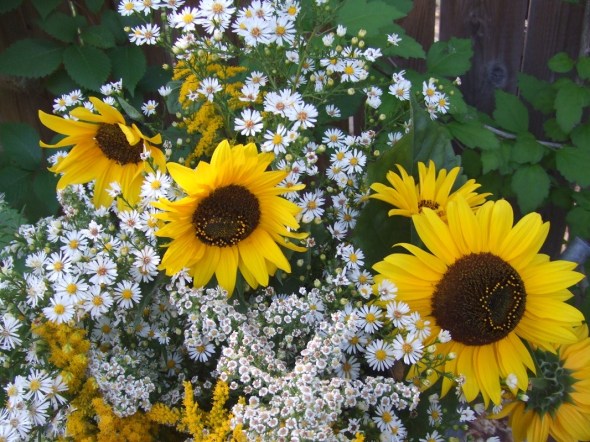
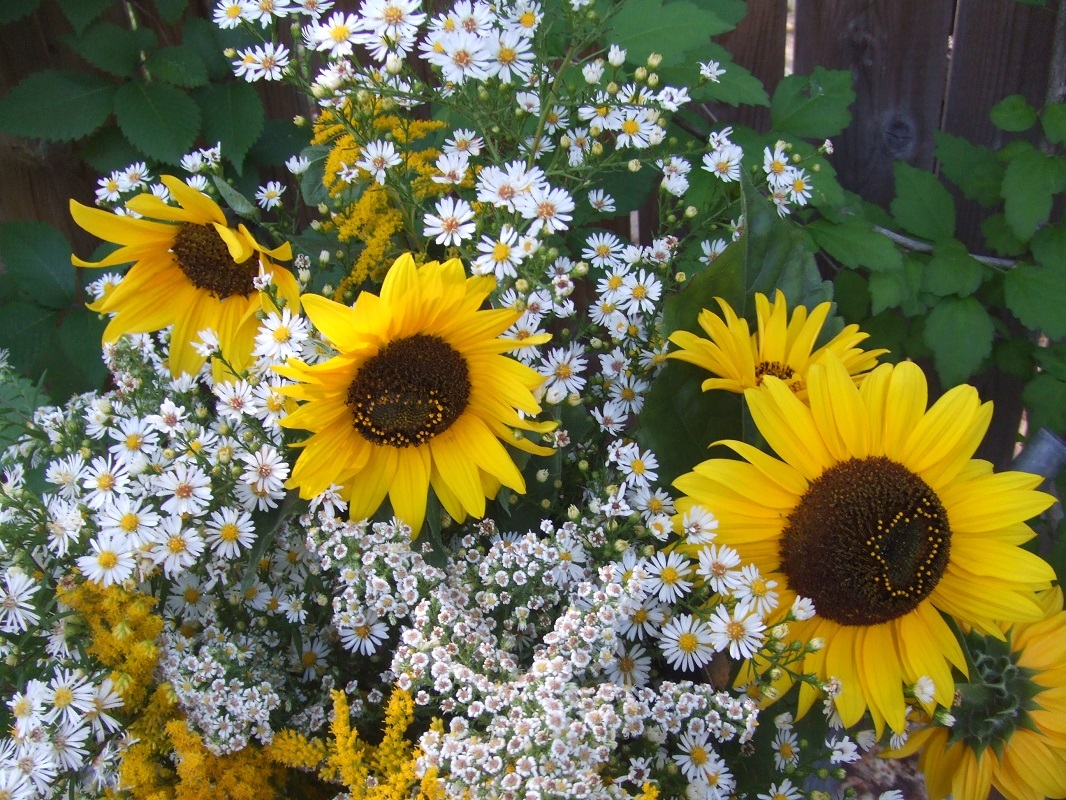
“Flor de mi alma” / “Flower of my soul”
Posted: September 27, 2014 Filed under: Alexander Best, English, Spanish | Tags: Love poems, Poemas de Amor Comments Off on “Flor de mi alma” / “Flower of my soul”
“Flor de mi alma”
.
Flor de mi mente:
Creces en mí el alcance – la gama –
de las perspectivas de Pensamiento – de La Idea.
.
Flor de mi corazón:
Me ayudas recordar los Gozos – y la Pena –
de estar enamorado.
Y eso es algo bueno, porque tú me haces más humano.
.
Flor de mi alma:
Me tocas con tu sonrisa…
Y esa energía alcanza en ese lugar invisible de mí
– lo más profundo –
donde vive el auténtico Yo.
. . .
“Flower of my Soul”
.
Flower of my Intelligence:
You make bloom in me the scope – the spectrum –
of Thought, of Ideas.
.
Flower of my Heart:
You help me to recall the Joys – and the Pain – of being in Love.
And that’s something good, because it makes me more human.
.
Flower of my Soul:
You touch me with your smile…
And such energy reaches all the way to that invisible place
– the deepest place –
where lives the authentic Me.
Alicia Claudia González Maveroff: It depends, doesn’t it? / Depende…
Posted: September 23, 2014 Filed under: Alicia Claudia González Maveroff, English, Spanish, ZP Translator: Alexander Best | Tags: Poemas para el Cambio de Estaciones Comments Off on Alicia Claudia González Maveroff: It depends, doesn’t it? / Depende…
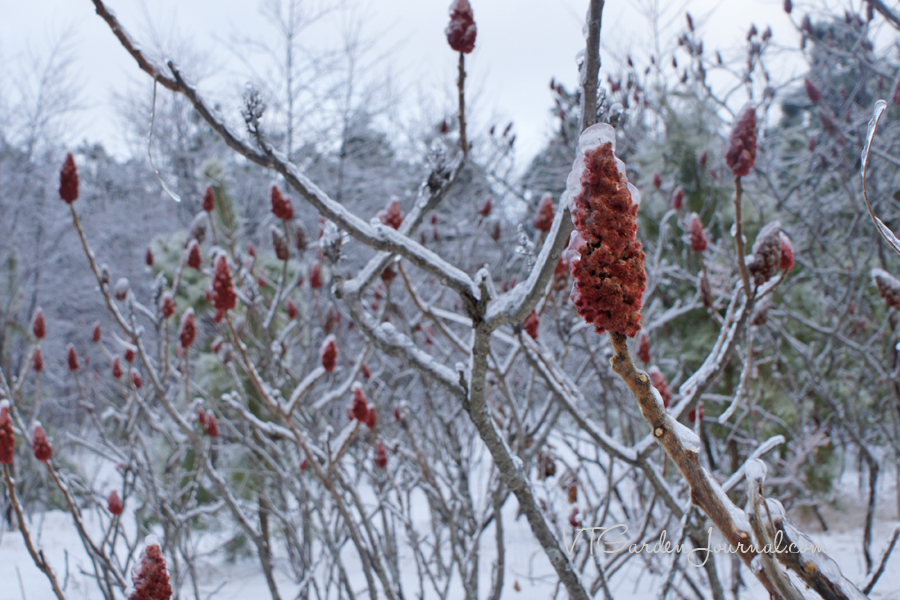
Zumaque canadiense durante el invierno_Sumac in winter_Canadá
Alicia Claudia González Maveroff
It depends, doesn’t it?
.
There are those who look out at the sea and perceive only the waves, and so they meet up with water
– doesn’t it all depend on our gaze?
.
He who looks at the countryside yet cannot distinguish the horizon perhaps is he who might go into the woods only searching for firewood.
.
But there are others of us – she who is
in flux – who will uncover the real magic.
.
She looks at the naked tree in winter
and she smiles, in faith,
awaiting the fruit such trees will bear – in time.
.
And there are those of us who,
even before our eyes open each morning to see the world around us
– well, we’ve already dreamed of such worlds!
. . .
Alicia Claudia González Maveroff
Depende…
.
Hay quien mira el mar y solo ve las olas,
solo encuentra el agua…
Todo depende de la mirada.
Quien mira el campo y no distingue el horizonte,
quien entra al bosque y solo va por leña.
Otros en cambio, de lo real descubren la magia.
Miran un árbol desnudo en el invierno
y sonríen confiados esperando que de sus frutos
cuando sea el tiempo.
Y están aquellos que antes de abrir los ojos
y ver el paisaje,
ya lo han soñado.
. . . . .
Poema para el Cambio de Estaciones: Una Afirmación de la Naturaleza – en la Mitad de Esta Vida
Posted: September 23, 2014 Filed under: Alexander Best, Spanish | Tags: Poemas para el Cambio de Estaciones Comments Off on Poema para el Cambio de Estaciones: Una Afirmación de la Naturaleza – en la Mitad de Esta Vida
Una Afirmación de la Naturaleza – en la Mitad de Esta Vida
.
¿Cuántas lecciones tengo que aprender?
Que la inteligencia de emociones es muy difícil a lograr.
Que la mente ligera no es suficiente.
Que alimenta al alma la creatividad,
y la imaginación es enigmática y grande.
Que el seso debe ser perspicaz – y sabio;
y el corazón, aún más sabio.
Que es sentido común mantener la boca cerrada;
y decirle a él que le amas sobrepasar morderse la lengua.
Que jugarlo cauteloso nos pone en un destino sombrío;
y correr el riesgo requiere muchas agallas.
Y que todo el asunto no significa nada si no hay Amor en la mezcla.
Y, aunque los seres humanos nos deilusionan, todavía son llenos de sorpresas.
Por lo tanto seguiremos – curioso al Fin.
. . . . .
Rubén Darío: Song of Autumn in Spring / Canción de Otoño en Primavera
Posted: September 23, 2014 Filed under: English, Rubén Darío, Spanish, ZP Translator: Alexander Best | Tags: Poemas de Otoño Comments Off on Rubén Darío: Song of Autumn in Spring / Canción de Otoño en Primavera
Rubén Darío (Nicaragua, 1867-1916)
Canción de Otoño en Primavera
.
Juventud, divino tesoro,
ya te vas para no volver.
Cuando quiero llorar, no lloro,
y a veces lloro sin querer.
Plural ha sido la celeste
historia di mi corazón.
Era una dulce niña, en este
mundo de duelo y aflicción.
Miraba como el alba pura;
sonreía como una flor.
Era su cabellera obscura
hecha de noche y de dolor.
Yo era tímido como un niño.
Ella, naturalmente, fue
para mi amor hecho de armiño,
Herodías y Salomé.
Juventud, divino tesoro,
ya te vas para no volver.
Cuando quiero llorar, no lloro,
y a veces lloro sin querer.
Y más consoladora y más
halagadora y expresiva
la otra fue más sensitiva,
cual no pensé encontrar jamás.
Pues a su continua ternura
una pasión violenta unía.
En un peplo de gasa pura
una bacante se envolvía.
En brasos tomó mi ensueño
y lo arrulló como un bebé
y le mató, triste y pequeño,
falto de luz, falta de fe.
Juventud, divino tesoro,
ya te vas para no volver.
Cuando quiero llorar, no lloro,
y a veces lloro sin querer.
Otra juzgó que era mi boca
El estuche de su pasión;
y que me roería, loca,
con sus dientes el corazón,
poniendo en un amor de exceso
la mira de su voluntad,
mientras eran abrazo y beso
síntesis de la eternidad;
y de nuestra carne ligera
imaginó siempre un Edén,
sin pensar que la Primavera
y la carne acaban también.
Juventud, divino tesoro,
ya te vas para no volver.
Cuando quiero llorar, no lloro,
y a veces lloro sin querer.
Y las demás! En tantos climas,
en tantas tierras siempre son,
si no pretextos di mis rimas,
fantasmas de mi corazón.
En vano busqué a la princesa
que estaban triste de esperar.
La vida es dura. Amarga y pesa.
Ya no hay princesa que cantar.
Mas a pesar del tiemp terco,
Mi sed de amor no tiene fin;
con el cabello gris, me acerco
a los rosales del jardín.
Juventud, divino tesoro,
ya te vas para no volver.
Cuando quiero llorar, no lloro,
y a veces lloro sin querer.
¡Mas es mía el alba de oro!
Rubén Darío (Nicaragua, 1867-1916)
Song of Autumn in Springtime
.
Youth’s a treasure that only the gods may keep,
and how it flees from me, forever – now.
I can’t seem to cry, when I need to,
and sometimes tears come when I don’t want them to.
.
The stories of this heart are countless,
can never be told – and
she was a darling child,
in this world of pain and woe.
.
Like daybreak, pure delight she was;
her smile – like flowers after rain.
Her hair was as the night,
fashioned of darkness and unhappiness.
.
Like a kid I was, awkward and shy,
couldn’t ever have been any other way.
And she was as Herodias or Salomé,
my love ermine-draped.
.
Youth’s a treasure only the gods may keep,
and how it flees from me, forever – now.
I can’t seem to cry, when I need to,
and sometimes tears come when I don’t want them to.
.
And there was another one…
More sensitive, quiet, loving, kind;
her will to live, to love, was greater
than I’d hoped to find.
.
Yet there went with her tender grace
a kind of violence of love;
in a peplos of loveliness
was hidden a passion – raving like a Maenad.
.
Youth’s a treasure only the gods may keep,
and how it flees from me, forever – now.
I can’t seem to cry, when I need to,
and sometimes tears come when I don’t want them to.
.
Still another imagined my lips
to be a casket made to bury our love.
She gnawed at the very heart of me,
that’s what she strove to do.
Excess of passion, that was her will;
love’s flame for me she was,
and she could make each embrace, each kiss,
Eternity in synthesis.
.
She pronounced our flesh could never die,
that Desire might restore Eden;
but she forgot one thing:
that the flowers of Spring, and this flesh,
an End must bring.
.
Youth’s a treasure only the gods may keep,
and how it flees from me, forever – now.
I can’t seem to cry, when I need to,
and sometimes tears come when I don’t want them to.
.
And all the others!
Different climates, many lands,
they were just a pretext for my rhymes,
phantoms of my heart.
.
I sought for a princess in vain,
one who had waited, a-sorrowing.
This life is hard, and bitter with pain.
And there’s no princess exists now to sing.
.
Yet despite th’autumnal season’s meanings,
My thirst for love knows no end;
Gray-haired I am, yet still
you’ll find me circling the late-bloom rose.
.
Youth’s a treasure only the gods may keep,
and how it flees from me, forever – now.
I can’t seem to cry, when I need to,
and sometimes tears come when I don’t want them to.
Ah, but the Dawn belongs to me!
. . . . .
Translator’s note:
I have been faithful to the title of the original, calling my English-language version Song of Autumn in Springtime. Yet something doesn’t feel right; Song of Springtime in Autumn would fit Darío’s content better. True, he writes as if an old man reminisces – there is great nostalgia – about past Romance, yet he also tells us that he will still seek out the blooming rose in the garden of Life, and that Dawn belongs to him. And isn’t the dawn that fresh beginning to each day – its Springtime?
A.B.
Poemas para el último día del Verano
Posted: September 22, 2014 Filed under: English, Henri Cole, Pedro Serrano, Spanish, ZP Translator: Alexander Best | Tags: Poemas para el Cambio de Estaciones Comments Off on Poemas para el último día del Verano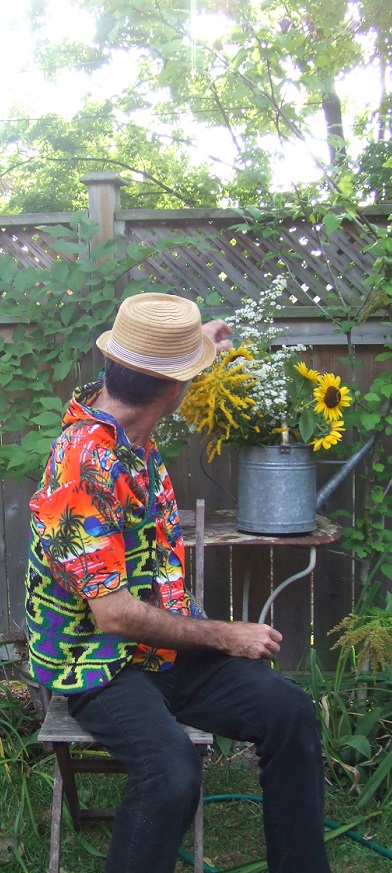
Pedro Serrano (Canada/México, nacido en 1947)
El último día del verano
.
El último día del verano
me ha traído la sospecha de que toda vida
es una ficción:
sigo queriendo amar a la mujer que amo,
las temperaturas son extremadamente altas,
aquí, en el comedor,
mi ciudad está sufriendo la metamorfosis inversa
de mariposa a gusano,
la banda de Liverpool actúa en el parque municipal
con acento che y con poco público,
el equipo local no gana los partidos, los empata,
las plantas se secan misteriosamente
y el silencio es el himno que espera al otoño.
El último día del verano
es un baile de grillos, y un consumo
de luna. Ficción.
. . .
Pedro Serrano (Canada/Mexico, born 1947)
The last day of summer
.
The last day of summer
I had been under the suspicion that all of Life was mere
invention, pretence, hogwash:
I keep on wanting to love the woman I love;
temperatures remain exceedingly high
here in the diningroom;
my city suffers from a kind of inverse metamorphosis
– butterfly to worm;
that band from Liverpool performs in the civic park
– with an Argentine accent and next to no audience;
our local team doesn’t win any games – they all end in ties;
plants dry up mysteriously
and Silence is a hymn that awaits the autumn.
This last day of summer
is the crickets’ dance;
this last day, consumed by the moon.
Pure fiction.

Henri Cole (Japón/EE.UU., nacido en 1956)
Brasas
.
Pobre Verano, no comprende el hecho de su muerte; le quedan pocos días.
Pero aun está conmigo el lago con sus pinceladas de índigo
y el sol encendido recolocando la soledad.
Me siento como criatura que ha descubierto un hogar;
eso es mi madriguera / nido / intento para decir:
Yo existo.
.
La rosa no puede pararse y ser de nuevo un capullo.
Es una dolencia, quererlo.
A lo largo de la orilla, la luna esparce su luz sobre todo, como una fogata;
y dentro de la noche verde-negro, los pinos altos ofrecen, estiran, sus brazos
– como Dios
que ofreció, estiró, sus brazos para decir que
Él era aislado y que
Él hacía para Su Mismo
un hombre.

Henri Cole (Japan/USA, born 1956)
Embers
.
Poor Summer, it doesn’t know it’s dying.
A few days are all it has. Still, the lake
is with me, its strokes of blue-violet
and the fiery sun replacing loneliness.
I feel like an animal that has found a place.
This is my burrow, my nest, my attempt
to say, I exist. A rose can’t shut itself
and be a bud again. It’s a malady,
wanting it. On the shore, the moon sprinkles
light over everything, like a campfire,
and in the green-black night, the tall pines
hold their arms out as God held His arms
out to say that He was lonely and that
He was making Himself a man.
. . . . .
La llave de agua chorreante
Posted: September 22, 2014 Filed under: Alexander Best, Spanish | Tags: Poemas de Amor y Soledad, Poemas para el Cambio de Estaciones Comments Off on La llave de agua chorreante
La llave de agua chorreante
.
Cariño,
¿cuándo fue la última vez que dije Te Amo?
Pasa mucho durante una ruptura
– la hora punta de sentimientos –
que podamos olvidar.
Simplemente, quiero decirte:
Te amo.
.
Ajá, soy soso; yo pronunciaba esas dos palabras con demasiado frecuencia en este año pasado.
Y bueno – paciencia –
yo llevaba puesto mi corazón en la manga;
y tú eras Señor Inescrutable.
El Amor es como agua chorreante, agua del grifo;
pero cuando el grifo está prendido no puedo apagarlo en un suspiro, ¿verdad?
No es un aparato mecánico el Amor – aunque conlleva unas “mangueras” y unos “flujos”.
.
Eh, tengo una idea: que chorree ese cabrón…
Y llenaremos la cubeta
– la regadera –
con Energía para Un Porvenir que Da Vida,
bien, cualquier cosa – Avenida – que venga, fluida y creciente.
De la pena hasta el gozo: sencillamente hazlo.
La Vida Quiere Seguir Viviendo.
Los clichés – a veces son ciertos, ¿no?
. . . . .
“Por ahí, por aquí, en algún lugar”: poema con el corazón en la mano
Posted: September 22, 2014 Filed under: Alexander Best, Spanish | Tags: Poemas de Amor y Soledad, Poemas para el Cambio de Estaciones Comments Off on “Por ahí, por aquí, en algún lugar”: poema con el corazón en la mano
Por ahí, por aquí, en algún lugar…
“Por ahí, por aquí, en algún lugar”
.
Por ahí, por aquí, en algún lugar…
Un giro del destino – via la mano de Dios o Diosa –
me trajo el Desconocido Perfecto.
Esa persona era un trotamundos perspicaz y pulcro;
un ser resistente – y dulce.
Jugamos al Frisbee;
nos alimentamos con salmón ahumado, el uno al otro;
y hicimos el amor – a través de un solo beso.
.
Por lo tanto, pasó un año cuando escribimos cartas
y charlamos por pocas llamadas celular
– malas conexiones cada rara vez.
.
Y, después de ese año, era yo el viajero; y volé por las alas de una murraca metálico tintinando…
Nos reunimos de nuevo, en el otro lado, sólo para enterarme que
el Desconocido Perfecto era reservado, aún cerrado.
Él, por su comportamiento – sin palabras – me enseñó:
No me toques.
Y éso me hizo daño en la médula.
Pero no fue la culpa de nadie;
y, supongo,
él tuvo sus motivos – candorosos (debo creerlo.)
.
¡Puede ser un hueco vasto y vacío La Vida!
Pues cocinamos el huachinango al escabeche;
tomamos los tranvías en busca de churros más exquisitos;
y hicimos el amor – a través de un solo beso.
.
Sin embargo, no triunfará la relación íntima
cuando nos separa, los dos, este Mundo tan ancho.
Ah sí, he llorado un rato largo.
.
Todavía existe el Desconocido Perfecto;
ahora, en mis sueños, contemplo su cara bien recordado.
Y hoy, al final, tengo la comprensión:
que, a través de un solo beso,
hay un sentimiento de honradez y potencia tan grande
– que no pueda vivir por ahí, por aquí, en algún lugar –
sino en el fondo de mí, donde mora la desapercibida Verdad.
. . . . .
“How Can I Begin?”: poems from Milk Stone by Pat Lowther
Posted: September 13, 2014 Filed under: English, Pat Lowther Comments Off on “How Can I Begin?”: poems from Milk Stone by Pat Lowther
“How Can I Begin?”: poems from Milk Stone by Pat Lowther
. . .
How Can I Begin
.
How can I begin?
So many skins
of silence upon me
Not that they blunt me,
but I have become
accustomed to
walking like a pregnant woman
carrying something
alive yet remote.
My thoughts,
though less articulate
than image,
still have in them
something like a skeleton,
a durable beginning
waiting for
unpredicted flesh
and deliverance.
I would ask
you: learn as I learn
patience with mine
and your own silence.
. . .
String-figure man outside the door
.
Didn’t I too catch the sun
in a cradle spun
of my own gut string?
If now outside my house some thing
makes a sound like dry skins scraping,
should my bones dissolve to jelly
in my narrowing flesh?
It is fitting to strangle me in the mesh
of my own making.
I who made the sun
come in my belly.
I shall open my door
and accept the evil as I did before
the shining One.
. . .
Stone Deaf
.
Imagine it
– tympanum, cochlea,
cunning little frogs-legs ossicles,
all that delicate absurd machinery
petrified, rattling stonily
in the skull’s cavity
like garnets in a hollow rock.
.
Or like a whale’s eardrum
I saw once preserved,
blank as a great flint chip
and lonely as one cymbal.
.
And the blood’s surf beating
then always like the sea
unheard on solitary stone.
. . .
Periodicity
.
Fragments of shell
shards of protein alphabet
.
my hands are blind
.
at my skin’s circumference
i fumble
seams openings
(is this an organ
for breaking shells?)
.
i smell snow on this beach
what colour
are my eyes?
. . .
Touch Home
.
My daughter, a statistic
in a population explosion
exploded
popped
out of my body like a cork.
.
The doctors called for oxygen,
the birth too sudden, violent,
the child seemed pale
.
But my daughter lay
in perfect tranquillity
touching the new air
with her
elegant hands.
. . .
The Last Room
.
I am waiting for you
in the lowest room beneath the building
.
I am smooth as a gourd
without resistance
my shape spreads
downward
seeking the lowest
centre of gravity
.
I spend hours memorizing
the labyrinth
beneath our skins
by which I came
.
waiting for your long shadow
in the passage
.
I am green as a gourd
but inside I am red
.
All through the folded hours
I am burning
quietly
.
I am becoming a red hollow
skin
a gourd for drinking
.
Only now do I recognize
shards patterning the dust
between my legs
.
they are my former skins
.
How many times
have I come here
.
How long have I been waiting
. . .
Wanting
.
Wanting
to be broken
utterly
split apart with a mighty tearing
like an apple broken
to unfold
the delicate open veined petal pattern
inside the fruit
.
I am arrogant
knowing
what I can do
for a man
.
I am arrogant
for fear
I may be broken
utterly open
and he not see
the flower shape of me
. . .
Demons
.
It’s a kind of justice
for our having left them
face down
while we grew branched
metaphysics
.
They held out
dumb paws for grace
We gave them ritual
.
Even the spare comfort
they negotiated
we fattened on,
driving them always
to the edges
.
It’s a kind of justice
that in certain seasons
they possess us
like planets,
like territories
. . .
For Selected Friends
.
Work one face of a stone
only
so I can always have you:
at times I am one-dimensional.
Love on paper.
.
It’s easier to photograph you
with my mind
arresting you at mid-point
in some brilliant exposition
before discovery moves you
off the surface.
.
Although I know you’re
a cave splendid with crystals
and white bats,
sometimes I am
afraid to go there.
. . .
Letter to the Majority
.
We are not what you think we are.
In another space
enclosing another space
we have grown
whole crops of quiet.
Even our laughter
laughing at ourselves
has been too soft for you to hear.
You have thought us a mirror
to your torments
and your homely pleasures.
You have been watching
motion on a screen only.
.
You send us casual
directives – Eat me, Drink me.
We brush your language
from the pages of books.
It is a momentary diversion.
The only way you can
speak to us
is by speaking to the whole world.
. . .
All poems © Pat Lowther Estate and Borealis Press, from Milk Stone (published 1974)
. . .
Toronto poet Sonia Di Placido is running a poetry workshop about Pat Lowther and her complete + unpublished poems every Saturday beginning September 13th through November 29th, 2014. The workshop is part of Di Placido’s Poetry of the Canadian Moderns series. Click the link for more details:
http://diplacido.wordpress.com/
. . . . .
“Hoofs part the sky”: two poems by Tares Oburumu (Nigeria)
Posted: September 2, 2014 Filed under: English, Tares Oburumu | Tags: Nigerian poets Comments Off on “Hoofs part the sky”: two poems by Tares Oburumu (Nigeria)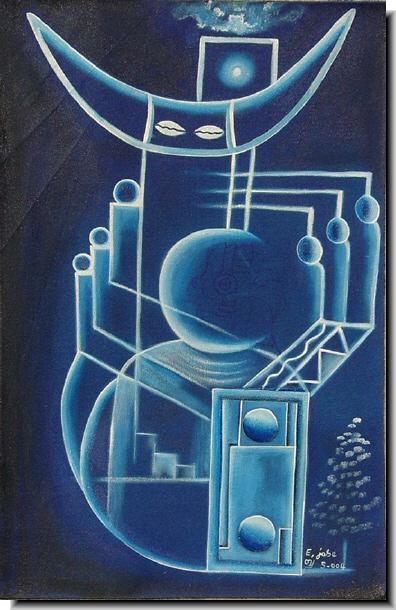
Just My Feeling by Edrisa Jobe (born in The Gambia, 1968)
Tares Oburumu
Parting
.
I
He saw in his eyes,
Paper-dreams folded in a basket.
Leaking roundwinds leaving him, leaving
Fisichella’s ways to Fishtown.
The tears there are like rivers
that never fill their brims in February.
Drifts of sorrow begotten in loneliness,
flowing the petty life of the sea to full.
Before butterflies go the gallops of white horses.
Go rose-thread; beauty flying an airplane past changed seasons
seasoning changes that stifle their own climes,
Turn a painted lady into British intelligence: A kite
in my hands flown frabjously close to the sky
Above gravity clasped between Iguana’s fringes.
A thousand Lynslager-blades fell
on the gods’ umbilical cord.
Saves the boy in the Queen’s recollections
to see the birth of death poised to conquer
a politics of waters in Annie Pepple House:
A hell burning out in the dry sun.
.
II
.
Noo,
Fold flagpole painted green on a white flag,
Tamp it into a faded pocket of futility.
Come to red tarmac, slowly.
Softly come round a box of airplane
sprawling in the open.
Fly into the future that awaits you in an orphan,
waking the Sahara with keener cries,
To be let loose in the winds.
Another Saro is dead.
There is death in killing a triplet.
Bring sweet Slessor from the Englands,
In your return flight back home.
Ogoni child seated on uranium laments…
And when you come, slowly,
Softly, touch down on a grave and dearth
of funerary voices: the shooting stars,
Who seemed to have willingly walked past the Redemption Gates.
Seeing you are wrapped in a coalsack nebula,
Silhouetted against a feel of eyes
in the beginning.
Hatched from eagles’ eggs. Crushed below
the underbrush of insects and arachnids,
Collected in a waste-basket.
. . .
Chimes – Before and After
.
Hoofs part the sky;
Riders—Horsemen of the sixth year,
Riders come into view covering their faces: feathery clouds
of angst, made from fabrics weaved in a furlough.
Who is he that comes to this candidatural boom?
This patented-grimace snuffing fresh badges
In green garments tugged at,
In an exercise hushed in a Damisa.
It frayed the nerves of an apocalypse.
Sheathed its sword in crimson where
a coat of arms laments.
He is an Angel—Light-bearer against profiteers.
He who rides on dark nimbus marching before
a slew of cherubims in great bowls of thunder and lightning.
He is an eastern grail,
Announcing a republic with Hitler’s counter-tenor.
The militia quells. A beauty to behold, mighty to hear.
Iron-ears wired to the wind listen
to music raised above the Mansion Gates,
A garden tended to by a Pam-swindling Bello,
dead in a blue colure, drifting eulogies to eleven saints and ties.
One Maimalri in the tack fastening
Largema tailored his rank
for the funeral of tribes,
the tribes that died awake. Counter-vailing drums
beat out a storm.
East crashed its airplane into the North.
An arc forms in mid-air and descends stairs for a West
stained with lifeblood of cows, wooing a Southern rebel
seated on shore fishing in the dark
walled off a world to be redeemed.
Loosened from paradise grip, a
thousand bowels of death-coloured dragons fell
on a fleet of ships flown beneath a day-crescent.
A human face at the other side of a war-mountain
leans on a tree and judges half of a sun
blown into smithereens.
A surgeon’s skill hurries to the battlefront,
Picks bone on flesh. Yet the tribes are lost in a new body:
an Angel of presence who flinches at vultures
fondling carrion under its wings flying without lead among eagles
into darkness.
*
Death is in the call…
From behind dark, I call.
From behind the flourescence of Tafewa Square,
I am that war gone awry.
Voice – from a deserter’s whisper – calls
for Shodenide’s night-rousing owls to accost
a foliage dressed in carom-silks, carom-greens. Shaped as bats
bouncing back into darkness, merging with wings of eagles.
Under them the horses come to war-brook.
There, a certain redness has transformed fishes into blood.
Nibbling at doubt; the health of another war at rest,
Waiting to tend to the wounds of reeds on broken reefs.
In their motions a flag is drowned.
Homespun pledges fixate on the tongue
Cast on a stale air. Fasten an azimuth to a bounty
stored as sand in hourglasses, sprinting to find
statecraft where they may meet stars,
Lawyering in the hands that rock the cradle.
In a planet calcifying blood of votes.
The soldier in me rose from dead war-dresses
to skewed apparitions. Hearing his own call,
To share the upper chambers among worms,
That ate Akintola’s bones in his grave
—mark of a century in need of bone and flesh,
to stand a skeleton against deads
coming to rend the cities in hundred pieces.
. . .
Tares Banigoe Oburumu is a poet from Delta state, Nigeria. He holds a B.A. in philosophy from the University of Benin. Currently working on his first fullscale collection of poetry, he also released this past July an e-chapbook (A Breath of Me) published through Green Griots Literary Consultancy / Poetry Mill (under the editorship of Senator Iyere Ihenyen).
. . . . .
Lenrie Peters: 9 poems from “Katchikali” (1971)
Posted: September 1, 2014 Filed under: English, Lenrie Peters | Tags: Gambian poets Comments Off on Lenrie Peters: 9 poems from “Katchikali” (1971)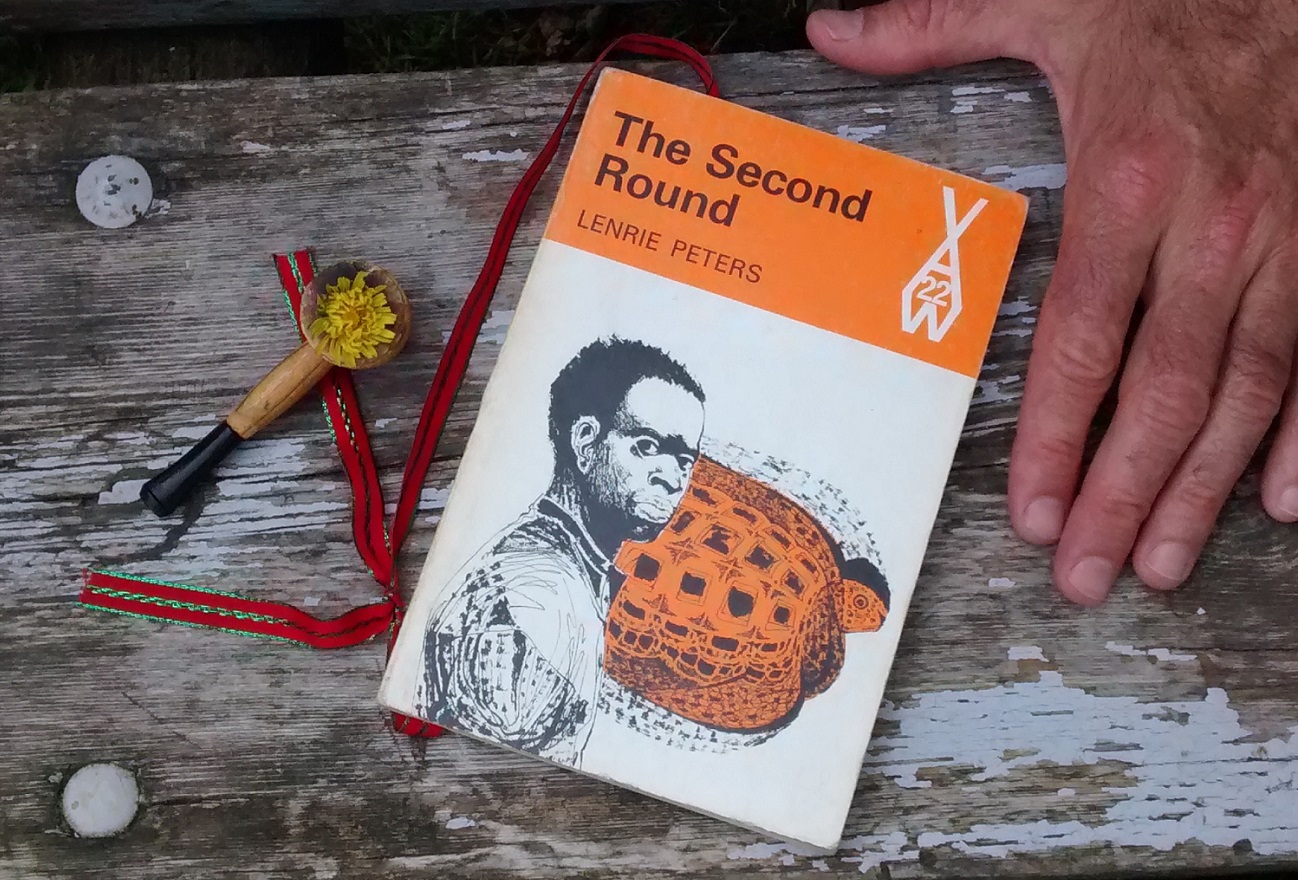
 Zócalo Poets