Auld Lang Syne: Tonight at Midnight
Posted: December 31, 2011 Filed under: English, English: Scots, Robert Burns Comments Off on Auld Lang Syne: Tonight at Midnight_____
Auld Lang Syne
Should auld acquaintance be forgot,
And never brought to mind?
Should auld acquaintance be forgot,
And auld lang syne!
For auld lang syne, my jo,
For auld lang syne.
We’ll tak a cup o’ kindness yet,
For auld lang syne.
And surely ye’ll be your pint stowp!
And surely I’ll be mine!
And we’ll tak a cup o’ kindness yet,
For auld lang syne.
For auld lang syne, my jo,
For auld lang syne.
We’ll tak a cup o’ kindness yet,
For auld lang syne.
We twa hae run about the braes,
And pou’d the gowans fine;
But we’ve wander’d mony a weary fit,
Sin’ auld lang syne.
For auld lang syne, my jo,
For auld lang syne.
We’ll tak a cup o’ kindness yet,
For auld lang syne.
We twa hae paidl’d in the burn,
Frae morning sun till dine;
But seas between us braid hae roar’d
Sin’ auld lang syne.
For auld lang syne, my jo,
For auld lang syne.
We’ll tak a cup o’ kindness yet,
For auld lang syne.
And there’s a hand, my trusty fere!
And gie’s a hand o’ thine!
And we’ll tak a right gude-willie waught,
For auld lang syne.
For auld lang syne, my jo,
For auld lang syne.
We’ll tak a cup o’ kindness yet,
For Auld Lang Syne.
_____
“Old Long Past” (For the Sake of Times Gone By)
And for old long past, my joy*,
For old long past,
We’ll take a cup of kindness yet,
For the sake of times gone by.
CHORUS: Should old acquaintance be forgot,
And never brought to mind?
Should old acquaintance be forgot,
And days of old long past.
And surely you’ll pay for your 3-pint-vessel!
And surely I’ll pay for mine!
And we’ll take a cup of kindness yet,
For the sake of times gone by.
CHORUS
We two have run about the hillsides
And pulled wild daisies fine;
But we’ve wandered many a weary foot
Since old long past.
CHORUS
We two have paddled in the stream,
From morning sun till noon;
But seas between us broad have roared
Since old long past.
CHORUS
And here’s a hand, my trusty friend!
And give me a hand of yours!
And we’ll take a right good-will drink,
For the sake of times gone by.
CHORUS: Should old acquaintance be forgot,
And never brought to mind?
Should old acquaintance be forgot,
And days of Old Long Past.
*joy — “joy” means sweetheart, but “dear” or “friend”
may also be sung
_____
Robert Burns (1759-1796) wrote his poem “Auld Lang Syne”
in 1788. It is in Scots’ dialect which is not, strictly speaking,
a hybrid of Gaelic and English, since it is derived also from
other linguistic strains.
A variant is spoken in Northern Ireland, where it is known as
Ulster Scots.
“Auld Lang Syne” has become a New Year’s Eve favourite,
the words sung to a traditional folk melody at the stroke
of midnight and into the first minutes of January 1st.
_____
Good King Wenceslas: English Carol, Czech Tale
Posted: December 26, 2011 Filed under: English | Tags: Christmas carols and songs Comments Off on Good King Wenceslas: English Carol, Czech Tale_____
Good King Wenceslas
Good King Wenceslas looked out
On the Feast of Stephen,
When the snow lay round about
Deep and crisp and even,
Brightly shone the moon that night
Though the frost was cruel,
When a poor man came in sight
Gathering winter fuel.
“Hither, page, and stand by me,
If thou know’st it, telling
– Yonder peasant, who is he?
Where and what his dwelling?”
“Sire, he lives a good league hence
Underneath the mountain,
Right against the forest fence
By Saint Agnes’ fountain.”
“Bring me flesh and bring me wine
Bring me pine logs hither,
Thou and I will see him dine
When we bear him thither.”
Page and monarch, forth they went
Forth they went together,
Through the rude wind’s wild lament
And the bitter weather.
“Sire, the night is darker now
And the wind blows stronger,
Fails my heart, I know not how,
I can go no longer.”
“Mark my footsteps, my good page,
Tread thou in them boldly,
Thou shalt find the winter’s rage
Freeze thy blood less coldly.”
In his master’s steps he trod
Where the snow lay dinted,
Heat was in the very sod
Which the Saint had printed.
Therefore, Christians, All, be sure
– Wealth or rank possessing –
Ye who now will bless the poor
Shall yourselves find blessing !
_____
John Mason Neale wrote the lyrics for this English carol
in 1853. He based them upon a translation of the story
“Sankt Wenceslaw und Podiwin”, written in
1847 by Czech nationalist poet, Václav Alois Svoboda.
The name Václav is, in fact, Wenceslas in its original Czech.
Wenceslas was real; he lived from 907 to 935, was the first
generation of his family to be Christianized, and became
Duke of Bohemia. Known for his piety and kindness, still he
came to a gory end at the hands of his brother Boleslaw (urged
on by their mother).
A cult of Wenceslas spread quickly after his death – later seen
as a martyrdom – and he became a prime example of what in
the High Middle Ages would be called rex justus – the righteous
king – a monarch whose power derives from moral goodness
not brute force.
He is the patron saint of The Czech Republic, where he is known
as Svatý Václav (Saint Wenceslas).
* The Czech version of the carol is featured above. *
_____
Su Nombre es Jesús y Soy Su Niña / His Name is Jesus and I’m His Child : Zella Jackson Price
Posted: December 24, 2011 Filed under: English, Spanish, ZP Translator: Lidia García Garay | Tags: Christmas carols and songs Comments Off on Su Nombre es Jesús y Soy Su Niña / His Name is Jesus and I’m His Child : Zella Jackson Price_____
Soy Su Niña
(canción evangélica de Zella Jackson Price, 1982)
Es posible que no sea lo mejor de todo
o tenga lo mejor de algo,
algunas veces me siento que soy
lo menos de todo.
Pero conozco a alguien que tiene todo
Y Él es mi Todo,
Y yo estoy feliz de
tan sólo saber que:
Soy Su Niña.
Su nombre es Jesús,
El Hijo Recto de Diós,
El Lirio del Valle y
La Estrella más Brillante de la Mañana.
Su nombre es Jesús,
y Él es mi Todo
– Ohhh sí –
y estoy feliz de
tan sólo saberlo:
¡ Soy Su Niña !
*
Traducción del inglés al español: Lidia García Garay
Translation from English into Spanish: Lidia García Garay
*
I’m His Child
(as sung by Zella Jackson Price, 1982)
I may not be the best of anything
Or have the best of anything,
Sometimes I feel like I’m the least of all.
But I know someone who has everything
And He is my Everything,
And I happy just to know that
I’m His Child !
His name is Jesus,
the Righteous Son of God, the
Lily of the Valley and the
Brightest Morning Star.
His name is Jesus, and
He’s my Everything
– Ohhh yes he is –
And I am happy just to know that
I’m His Child !
_____
Iesus Ahattonnia / Jesus, He is Born (The Huron Carol)
Posted: December 24, 2011 Filed under: English, Huron / Wendat, Jean de Brébeuf | Tags: Christmas carols and songs Comments Off on Iesus Ahattonnia / Jesus, He is Born (The Huron Carol)
.
Iesus Ahattonnia
.
Ehstehn yayau deh tsaun we yisus ahattonnia
O na wateh wado:kwi nonnwa ‘ndasqua entai
ehnau sherskwa trivota nonnwa ‘ndi yaun rashata
Iesus Ahattonnia, Ahattonnia, Iesus Ahattonnia
.
Ayoki onki hm-ashe eran yayeh raunnaun
yauntaun kanntatya hm-deh ‘ndyaun sehnsatoa ronnyaun
Waria hnawakweh tond Yosehf sataunn haronnyaun
Iesus Ahattonnia, Ahattonnia, Iesus Ahattonnia
.
Asheh kaunnta horraskwa deh ha tirri gwames
Tishyaun ayau ha’ndeh ta aun hwa ashya a ha trreh
aundata:kwa Tishyaun yayaun yaun n-dehta
Iesus Ahattonnia, Ahattonnia, Iesus Ahattonnia
.
Dau yishyeh sta atyaun errdautau ‘ndi Yisus
avwa tateh dn-deh Tishyaun stanshi teya wennyau
aha yaunna torrehntehn yataun katsyaun skehnn
Iesus Ahattonnia, Ahattonnia, Iesus Ahattonnia
.
Eyeh kwata tehnaunnte aheh kwashyehn ayehn
kiyeh kwanaun aukwayaun dehtsaun we ‘ndeh adeh
tarrya diskwann aunkwe yishyehr eya ke naun sta
Iesus Ahattonnia, Ahattonnia, Iesus Ahattonnia.
. . .
“Jesus, He is Born”
.
Have courage, you who are human beings:
Jesus, he is born
The okie spirit who enslaved us has fled
Don’t listen to him for he corrupts the spirits of our thoughts
Jesus, he is born
The okie spirits who live in the sky are coming with a message
They’re coming to say, “Rejoice!
Mary has given birth. Rejoice!”
Jesus, he is born
Three men of great authority have left for the place of his birth
Tiscient, the star appearing over the horizon leads them there
That star will walk first on the path to guide them
Jesus, he is born
The star stopped not far from where Jesus was born
Having found the place it said,
“Come this way”
Jesus, he is born
As they entered and saw Jesus they praised his name
They oiled his scalp many times, anointing his head
with the oil of the sunflower
Jesus, he is born
They say, “Let us place his name in a position of honour
Let us act reverently towards him for he comes to show us Mercy
It is the will of the spirits that you love us, Jesus,
and we wish that we may be adopted into your family.”
Jesus, he is born.
. . .
English translation from Huron: John Steckley
.
Editor’s note:
There is a famous version of The Huron Carol
in English (“T’was in the Moon of Wintertime…”) but its
lyrics were written by Jesse Edgar Middleton and are not
a translation of Brébeuf’s Huron original.
_____
The Huron Carol / Iesus Ahattonnia is the oldest
Canadian Christmas carol. It dates from 1643, with
lyrics composed for the purpose of religious conversion,
in the Huron language (Wendat) by Father Jean de Brébeuf,
a Jesuit priest at Sainte-Marie aux-pays-des-Huron, the
French-Canadian Christian mission that was near what is
now Georgian Bay, Ontario.
Brébeuf was burned at the stake during the Beaver Wars, an
aggressive push for land expansion plus control of the fur trade
that involved the Dutch, English, French, and
the Iroquois Confederacy.
The Huron were casualties of this struggle, and dispersed to
Québec in the east and, eventually, southwest to Oklahoma.
In the 21st century the Huron/Wendat People are revitalizing their
language which, 50 years ago, was virtually extinct.
. . . . .
At bukas ay araw ng Pasko… / And tomorrow will be Christmas Day…
Posted: December 24, 2011 Filed under: English, Tagalog / Filipino | Tags: Christmas carols and songs Comments Off on At bukas ay araw ng Pasko… / And tomorrow will be Christmas Day…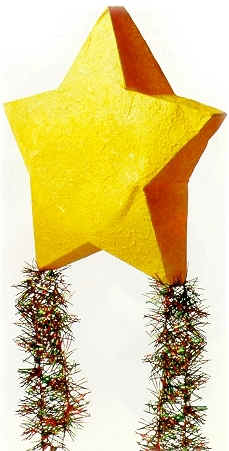
“Noche Buena”
Kay sigla ng gabi
Ang lahat ay kay saya
Nagluto ang Ate ng manok na tinola
Sa bahay ng Kuya ay mayro’ng litsonan pa
Ang bawat tahanan may handang iba’t iba
Tayo na giliw
Magsalo na tayo
Mayro’n na tayong
Tinapay at keso
Di ba Noche Buena
Sa gabing ito
At bukas ay araw ng Pasko
*
A Filipino Christmas song:
“Holy Night” (Christmas Eve)
How lively the night,
How jolly one and all !
Older Sis has cooked tinola,
At Big Bro’s they’re roasting lechón !
Everyone’s prepared something different…
Shall we go, my belovéd,
and join in the feasting ?
Already we have bread and cheese !
Isn’t Noche Buena this very night ?
And tomorrow will be Christmas Day !
*
Music: Felipe de León
Lyrics (Tagalog): Levi Celerio
*
tinola – chicken stew
lechón – whole roasted pig
_____
Los peregrinos piden posada: el villancico “En Nombre del Cielo”
Posted: December 24, 2011 Filed under: English, Spanish | Tags: Christmas carols and songs Comments Off on Los peregrinos piden posada: el villancico “En Nombre del Cielo”_____
En Nombre del Cielo
José:
En Nombre del Cielo
os pido posada,
Pues no puede andar
mi esposa amada.
Huesped:
Aquí no es mesón,
Sigan adelante,
Yo no puedo abri,
No sea algún tunante.
José:
No seas inhumano,
Tennos caridad.
Que el Díos de los Cielos
Te lo premiará.
Huesped:
Ya se pueden ir
Y no molestar,
Porque si me enfado
Los voy a apalear.
José:
Mi esposa es María,
Es Reina del Cielo,
Y madre va a ser
Del Divino Verbo.
Huesped:
¿Eres tú, José?
¿Tu esposa es María?
¡Entren, peregrinos,
No los conocía!
_____
In the Name of Heaven
(Pray Give Us Lodging)
Joseph:
Pray, give us lodging, dear sir,
in the Name of Heaven,
All day since morning to travel we’re given,
Mary, my wife, is expecting a child,
She must shelter this night,
Let us in ! Let us in !
Host:
You cannot stop here,
I won’t make of my house an inn,
I do not trust you, your story is thin.
Rob me you might – then run away
— find somewhere else you can stay,
Go away ! Go away !
Joseph:
Please show us pity ! Your heart can’t be this hard !
Look at poor Mary, so worn and so tired !
We are most poor but I’ll pay what I can
— God will reward you, good man,
Let us in ! Let us in !
Host:
You try my patience, I’m tired and must rest,
I’ve told you nicely – but still you insist.
If you don’t stop this bother, I’ll fix you
— I guarantee !
Go away ! Go away !
Joseph:
Sir, I must tell you, my wife is
The Queen of Heaven,
chosen by God to deliver His Son.
JESUS is coming to earth on this eve
(O Heaven, make him believe !)
Let us in ! Let us in !
Host:
Joseph, dear Joseph – O how am I so blind ?
Not to know you and The Virgin so fine !
Enter, blesséd pilgrims, my house is your own
— Praise be to God on His throne !
Please come in ! Please come in !
_____
A Christmas tradition in rural México and especially
its Indigenous towns, “Las Posadas” – “The Lodgings” –
re-enacts Joseph and pregnant Mary’s search for shelter
(and a birthing place for Jesus) along the road to
Bethlehem.
Participants in the Posada procession go from house to
house singing call-and-response verses till the Gospel
story is fulfilled. This community ritual is a kind of
novena, and for the devout it requires nine days of
“posadas” in order to properly arrive at the precious
hour of Christmas Eve which, in Spanish, is called
Noche Buena (“Holy Night”).
“En Nombre del Cielo” is a classic Mexican carol.
Jakuren: The First Day of Winter
Posted: December 22, 2011 Filed under: English, Jakuren, Japanese Comments Off on Jakuren: The First Day of Winter
Poems of Mediaeval Japan by
Jakuren (Buddhist monk and poet: 1139-1202)
* Transliterated Japanese on the left *
yomosugara throughout the night
kusa no iori ni we kept the brushwood burning
shiba taite in my lowly hut,
katarishi koto o and the words that we exchanged
itsuka wasuren I never shall forget
* * *
miyamabi ni deep in this mountain
fuyugomorisuru I keep the winter indoors:
oi no mi o who would care to call
tare ka towamashi on so aged a body,
kimi naranaku ni were it not for you?
* * *
izukuyori you found a path in my dream
yoru no yumeji o the mountain
tadorikoshi is deeply in snow now
miyama wa imada
yuki no fukakini
* * *
ikanishite wondering how you
kimi imasuran have been of late, as the breath
konogoro no of snow in the wind
yukige no kaze no blows colder every day
hibi ni samuki ni
* * *
Mon Pays – c’est l’Hiver ! “Québécitude” in song
Posted: December 22, 2011 Filed under: English, French, Gilles Vigneault, Translator's Whimsy: Song Lyrics / Extravagancia del traductor: Letras de canciones traducidas por Alexander Best, ZP Translator: Alexander Best Comments Off on Mon Pays – c’est l’Hiver ! “Québécitude” in song
MY COUNTRY
My country’s not a country, it’s winter,
my garden’s not a garden, it’s a vast plain,
my road is no road – it’s the snow !
My country’s not a country – it’s winter !
A ceremony all in white
where snow marries wind,
in this blizzard-land
my father built a house
and I’m going to honour
his ways, his example…
My guest room will be where
you return, season by season
and you’ll build too – right beside it.
My country’s not a country, it’s winter,
My refrain’s no refrain, it’s a gust of wind,
My house isn’t mine – it’s the winter-chill’s !
My country’s not a country – it’s winter !
All around my solitary land
I cry out before the silence,
to everyone on earth:
My house is yours, too.
Inside four walls of ice
with time and space
I make the fire, and a place
for People of the Horizon
– and these people are of my people.
My country’s not a country, it’s winter,
my garden’s not a garden, it’s the vast plain,
my road is no road – it’s the snow !
My country’s not a country – it’s winter !
My country’s no country but the contrary
of country – neither land nor nation,
my song’s not a song – it’s my life !
And for you I wish to master these winters !
_____
MON PAYS
Mon pays ce n’est pas un pays, c’est l’hiver
Mon jardin ce n’est pas un jardin, c’est la plaine
Mon chemin ce n’est pas un chemin, c’est la neige
Mon pays ce n’est pas un pays, c’est l’hiver.
Dans la blanche cérémonie où la neige au vent se marie
Dans ce pays de poudrerie mon père a fait bâtir maison
Et je m’en vais être fidèle à sa manière à son modèle
La chambre d’amis sera telle qu’on viendra des autres saisons
pour se bâtir à côté d’elle.
Mon pays ce n’est pas un pays, c’est l’hiver
Mon refrain ce n’est pas un refrain, c’est rafale
Ma maison ce n’est pas ma maison, c’est froidure
Mon pays ce n’est pas un pays, c’est l’hiver.
De ce grand pays solitaire je crie avant que de me taire
A tous les hommes de la terre ma maison c’est votre maison
Entre mes quatre murs de glace je mets mon temps et mon espace
À préparer le feu, la place pour les humains de l’horizon
Et les humains sont de ma race.
Mon pays ce n’est pas un pays, c’est l’hiver
Mon jardin ce n’est pas un jardin, c’est la plaine
Mon chemin ce n’est pas un chemin, c’est la neige
Mon pays ce n’est pas un pays, c’est l’hiver.
Mon pays ce n’est pas un pays, c’est l’envers
D’un pays qui n’était ni pays ni patrie
Ma chanson ce n’est pas une chanson, c’est ma vie
C’est pour toi que je veux posséder mes hivers.
_____
Gilles Vigneault (born 1928) wrote “Mon Pays” for a 1965 NFB film,
La neige a fondu sur la Manicouagan. This new folk song became an
instant classic – emblematic for Québec’s growing nationalist movement.
Editor’s note:
Almost two generations later the song does show its age, for the Canadian
essential-ideal of The Great White North – intrinsic to Canadians outside of
Québec as well – holds less sway in our collective identity. Too, “Mon Pays”
is dated in that it captures the spirit of an isolated – if friendly – culture:
not the rumbling, restless Québec of the 1960s. Rather the lyrics might well
describe a People more remote in time – the Far-North Inuit of the 19th-century.
Still, if there has been a place in Canada where winter is embraced and
not merely borne, it is Québec, where coureurs de bois and habitants
were the first of Canada’s White arrivals to adapt the Naskapi/Montagnais
Native People’s’ inventions – toboggans and snowshoes – to daily use both
practical and recreational.
And Québec leads the nation for Winter fun – not drear – with many jovial
outdoor festivals and an entrenched culture of open-air ice-skating parties !
_____
Translation from French into English: Alexander Best
Hanukkah Poems: Light the Candle !
Posted: December 20, 2011 Filed under: English | Tags: Hanukkah poems Comments Off on Hanukkah Poems: Light the Candle !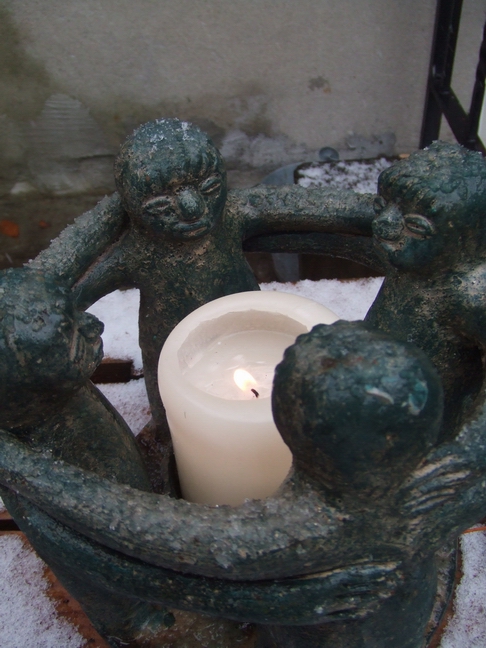
Mark Strand (born 1934)
“The Coming of Light”
Even this late it happens:
the coming of love, the coming of light.
You wake and the candles are lit as if by themselves,
stars gather, dreams pour into your pillows,
sending up warm bouquets of air.
Even this late the bones of the body shine
and tomorrow’s dust flares into breath.
_____
Aileen Fisher (1906-2002)
“Light the Festive Candles”
Light the first of eight tonight—
the farthest candle to the right.
Light the first and second, too,
when tomorrow’s day is through.
Then light three, and then light four—
every dusk one candle more
Till all eight burn bright and high,
honouring a day gone by
When the Temple was restored,
rescued from the Syrian lord,
And an eight-day feast proclaimed—
The Festival of Lights—well named
To celebrate the joyous day
when we regained the right to pray
to our own God in our own way.
_____
יהודה עמיחי / Yehuda Amichai : “The two of us together and each one alone”
Posted: December 19, 2011 Filed under: English, Hebrew, Yehuda Amichai Comments Off on יהודה עמיחי / Yehuda Amichai : “The two of us together and each one alone”יהודה עמיחי
שנינו ביחד וכל אחד לחוד
ילדה שלי, עוד קיץ עבר
ואבי לא בא ללונה פארק.
הנדנדות מוסיפות לנוד.
שנינו ביחד וכל אחד לחוד.
אופק הים מאבד ספינותיו –
קשה לשמר על משהו עכשיו.
מאחורי ההר חכו הלוחמים.
כמה זקוקים אנו לרחמים.
שנינו ביחד וכל אחד לחוד.
ירח מנסר את העבים לשניים –
בואי ונצא לאהבת בינים.
רק שנינו נאהב לפני המחנות.
אולי אפשר עוד הכל לשנות.
שנינו ביחד וכל אחד לחוד.
אהבתי הפכה אותי כנראה
כים מלוח לטפות מתוקות של יורה;
אני מובא אליך לאט ונופל.
קבליני. אין לנו מלאך גואל.
כי שנינו ביחד .כל אחד לחוד.
_____
Look, sweetie, one more summer’s turned dark
And my dad hasn’t come to the amusement park.
The swings keep swinging on their own.
The two of us together and each one alone.
The horizon loses its ships off the shore.
Hard to hold on to a thing anymore.
The fighters waited behind the hill.
How much we need of mercy still !
The two of us together and each one alone.
The moon is sawing the clouds in two.
Let hand-to-hand love bring me against you.
We alone will make love where the two camps fight.
Perhaps we can still make everything right.
The two of us together and each one alone.
As the first sweet rain was once salt sea
So, it would seem, has my love changed me.
I am brought to you slowly, and fall. My dear,
Receive me. No angel redeems us here.
Because the two of us are together. Each is alone.
_____
Yehuda Amichai (1924 – 2000) was one of
the first poets to compose in colloquial Hebrew.
Written in 1955, this simple, complex poem
makes reference to lease contracts:
“the two of us together and each one alone” – direct
from Hebrew and equivalent to the English legal
phrase “both jointly and severally” — which we
can now read as the Palestinian-Israeli land
struggle. The poem also draws upon a popular Israeli
children’s song of the 1950s:
“Daddy, come, let’s go to the Amusement Park !”
_____
We are grateful to A. Z. Foreman for his translation
of the above poem from Hebrew into English.
Visit his website: poemsintranslation.blogspot.com
 Zócalo Poets