Kumukutikutitap: Ryan Cayabyab & Jose Javier Reyes / “A-twinkle and a-glimmer”: a contemporary Filipino Christmas song
Posted: December 24, 2013 Filed under: English, Tagalog / Filipino | Tags: Filipino Christmas songs Comments Off on Kumukutikutitap: Ryan Cayabyab & Jose Javier Reyes / “A-twinkle and a-glimmer”: a contemporary Filipino Christmas song
The Parol or Paritaán, is the Christmas lantern of the Philippines. Often constructed of bamboo and paper, it is now made of many materials. Originally candle-lit, electric lights – bulbs or LED in a garland – are used now in a variety of colours. The Parol’s design is star-shaped – meant to evoke the Star of Bethlehem that guided the Three Wise Men/Kings to the Christ-Child’s Manger. The Parol also symbolizes hope and goodwill / the victory of light over darkness. These three Parols were made by Kat Estacio, Caroline Mangosing and Katrina Estacio at the Kapisanan Community Centre, Toronto, Canada.
Jose Javier Reyes (lyrics) – Ryan Cayabyab (music)
“Kumukutikutitap”
.
Kumukutikutitap, bumubusibusilak
Ganyan ang indak ng mga bumbilya
Kikindat-kindat, kukurap-kurap
Pinaglalaruan ng inyong mga mata
.
Kumukutikutitap, bumubusibusilak
Ganyan ang indak ng mga bumbilya
Kikindat-kindat, kukurap-kurap
Pinaglalaruan ng inyong mga mata
.
Iba’t – ibang palamuti
Ating isabit sa puno
Buhusan ng mga kulay
Tambakan ng mga regalo
.
Tumitibok-tibok, sumisinok-sinok
Wag lang malundo sa sabitin
Pupulupot-lupot paikot ng paikot
Koronahan ng palarang bituin
.
Dagdagan mo pa ng kendi
Ribon, eskosesa’t guhitan
Habang lalong dumadami
Regalo mo’y dagdagan
.
Kumukutikutitap, bumubusibusilak
Ganyan ang kurap ng mga bituin
Tumitibok-tibok, sumisinok-sinok
Koronahan ng palarang bituin
.
Dagdagan mo pa ng kendi
Ribon, eskosesa’t guhitan
Habang lalong dumadami
Regalo mo’y dagdagan
.
Kumukutikutitap, bumubusibusilak
Ganyan ang kurap ng mga bituin
Tumitibok-tibok, sumisinok-sinok
Koronahan pa ng palarang bituin

Young members of the Ryan Cayabyab Singers_December 2013
Jose Javier Reyes (lyrics) – Ryan Cayabyab (music)
“Kumukutikutitap”
.
A-twinkle and a-glimmer
A-sparkle and a-shimmer
That’s the way the lights are a-dancing
They’re winking here and there
And blinking everywhere
Bright and sparkly colours playing with your eyes
.
A-twinkle and a-glimmer
A-sparkle and a-shimmer
That’s the way they start are a-winking
Pulsating to the beat
Hiccuping to the beat
Now crown it all with a big parol!
.
Let’s hang ‘em on that big old Christmas tree
All those different festive decorations
Pour in all the colours
Now pile it all up with gifts!
.
Pulsating to the beat
Hiccuping to the beat
Be careful that tree doesn’t topple!
Going round and round
And shiny toys abound
Crown it all with a big parol!
.
Add more candies, more goodies
Ribbons, a little drummer boy and dollies
With all the presents piled high
Bring in more gifts – don’t be shy!
.
A-twinkle and a-glimmer
A-sparkle and a-shimmer
That’s the way the stars are a-winking
Pulsating to the beat
Hiccuping to the beat
Now crown it all with a big parol!
.
A special thank-you to Roseanne in Cebu for this English translation of the Tagalog lyrics!
.
To listen to this song in its original Tagalog version with an all-male choir’s playful a-cappella interpretation, click here: http://youtu.be/LAGKW4tmxTA
. . . . .
Wilson Alwyn Bentley: “Ice Flower” Photomicrographs
Posted: December 23, 2013 Filed under: English, German | Tags: Cryology Comments Off on Wilson Alwyn Bentley: “Ice Flower” Photomicrographs
Sabine Schiffner (born 1965, Bremen, Germany)
“Cryology – or the Study of Snow”
.
they say that when
wilson a. bentley* from montana
wasn’t playing
the clarinet he would grab
his camera and go
out into the snow
to capture snowflake after snowflake
in his attentive lens
recording them before they reverted
to drops of half-frozen water
and so revealing feathers
or many-pointed stars
or branching tree-like
mosaics or sparkling
constructs with disjointed frosted arms
and columns goblets even pyramids
countless crystalline forms
.
wilson a. bentley was nicknamed
flakey by his neighbours
they laughed at him behind his back
but needed him and his clarinet
for their concerts in church
they thought it was
ridiculous for him to try and hold on
to what disappears and
his obsession
made him a bit odd
what they didn’t know
was that he not only
saw the flakes but heard them
like the notes played
on a clarinet.
. . .
In the original German:
Sabine Schiffner
“Kryologie”
(die lehre vom schnee)
.
von wilson a. bentley aus montana
wird berichtet er habe wenn er nicht
eben klarinette spielte die kamera
zur hand genommen und sei mit ihr
raus aus dem haus und in den schnee getreten und
habe zärtlich flock’ um flocke aufgefangen
und vor die linse komplimentiert wo er sie
dokumentierte bevor sie wieder wurden was sie vorher
waren nämlich ein tropfen halb gefrornes wasser mit
einer gänsefeder hingewischt sie stellten sich
als stern mit viel verschiednen enden dar
oder dendritengruppen mit diversen
plättchen oder als strahlenförmige
gebilde mit abgebrochnem arm
mit reif als säule als pokal und micht zuletze als pyramide
unendlich kristalline formen
wilson a. bentley heiss bei seinen
nachbarn snowflake sie
lachten hinter seinem rücken über ihn jedoch sie brauchten
ihn und seine klarinette fur die konzerte
in der kirche sie hielten
es für lächerlich das festzuhalten was
sofort wieder vergeht und dass er sich
so sehr gezwungen sah es festzuhalten
machte ihn fremd
sie wussten nicht dass er die flocken
night nur sah sondern auch hörte
wie die musik die seine klarinette
spielt

* Wilson Alwyn Bentley (February 9th, 1865 – December 23rd, 1931) was, in fact, from Jericho, Vermont, USA – not from the state of Montana. He became famous as a photographer of snowflakes.
Bentley was fascinated by snow crystals as a teenager and attempted to draw the flakes he placed under a microscope – but they were too complex to draw before they melted. And so he attached a bellows camera to a compound microscope and successfully “captured” an image of a snowflake when he was 20 years old. His procedure became to catch a crystal on a blackboard then transfer it quickly to a microscope slide. He called snowflakes “ice flowers”. The type of glass-plate photographs he made – several thousand of them – are known as “photomicrographs”.
. . .
Sabine Schiffner’s Kryologie (die lehre vom schnee) from her 2007 book of poems, Dschinn, is here featured in a translation from German into English © Paul Archer

“Ye are the Light of the World”: Winter Solstice and The Birth of the Babe / “Vosotros sois la luz del mundo”: el Solsticio de Invierno y el Nacimiento de Jesús
Posted: December 21, 2013 Filed under: English, Spanish | Tags: “Esta Pequeña Luz en Mí”, “This Little Light of Mine” Comments Off on “Ye are the Light of the World”: Winter Solstice and The Birth of the Babe / “Vosotros sois la luz del mundo”: el Solsticio de Invierno y el Nacimiento de Jesús
. . .
Today, December 21st, marks the Winter Solstice, when, in Canada and elsewhere in the northern hemisphere, we experience our shortest day and our longest night. Here in Toronto, that means: sunrise at 7:48 a.m. and sunset at 4:44 p.m. The winter solstice has been symbolically important throughout the ages…It is when there is a reversal of the ebbing presence of the sun in the sky. Concepts of the birth or re-birth of Sun Gods, or the year as re-newed, life-death-rebirth cycles, “new beginnings” – these have ancient roots in our human psyche. Consequently, it is not hard to understand why The Birth of Jesus Christ might have been “fixed” at around the same time – the metaphor of Light, and of Returning Light, is just so strong!
.
This Little Light of Mine is a popular children’s gospel song based on a spiritual that speaks of God’s perfect love. It was written by Harry Dixon Loes, a music composer and teacher, around 1920.
It is perhaps based upon two quotations from The Gospels:
“Ye are the light of the world. A city that is set on an hill cannot be hid. Neither do men light a candle, and put it under a bushel, but on a candlestick; and it giveth light unto all that are in the house. Let your light so shine before men, that they may see your good works, and glorify your Father which is in heaven.” Matthew 5:14-16
“No man, when he hath lighted a candle, putteth it in a secret place, neither under a bushel, but on a candlestick, that they which come in may see the light.” Luke 11:33
. . .
Harry Dixon Loes (1895-1965)
“This Little Light of Mine”
.
This little light of mine,
I’m gonna let it shine.
This little light of mine,
I’m gonna let it shine,
Let it shine, let it shine, let it shine.
.
Won’t let Satan blow it out,
I’m gonna let it shine.
Won’t let Satan blow it out,
I’m gonna let it shine,
Let it shine, let it shine, let it shine.
.
Let it shine till Jesus comes,
I’m gonna let it shine.
Let it shine till Jesus comes.
I’m gonna let it shine,
Let it shine, let it shine, let it shine.
.
Hide it under a bushel, no!
I’m gonna let it shine.
Hide it under a bushel, no!
I’m gonna let it shine,
Let it shine, let it shine, let it shine.
.
Let it shine over the whole wide world,
I’m gonna let it shine.
Let it shine over the whole wide world,
I’m gonna let it shine, let it shine, let it shine, let it shine.
. . .
Hoy es el Solsticio de Invierno…y aquí en Toronto occure la salida del sol a las 7:48 y la puesta del sol a las 16:44. La palabra solsticio se deriva del Latín sol (‘Sol’) y sístere (‘permanecer quieto’).
El significado o interpretación de este evento – el Solsticio de Invierno – ha variado en las distintas culturas mundiales, pero la mayoría de ellas lo reconoce como un período de renovación y re-nacimiento.
Y es obvio el significado en el contexto cristiano, ¿no?
.
“Vosotros sois la luz del mundo; una ciudad asentada sobre un monte no se puede esconder. Ni se enciende una luz y se pone debajo de un almud, sino sobre el candelero, y alumbra a todos los que están en casa. Así alumbre vuestra luz delante de los hombres, para que vean vuestras buenas obras, y glorifiquen a vuestro Padre que está en los cielos.”
Mateo 5: 14-16
.
“Esta Pequeña Luz en Mí”
(canción góspel para niños, del año 1920, Harry Dixon Loes, compositor)
.
Hay una lucecita en mí
que dejaré brillar,
Hay una lucecita en mí
que dejaré brillar,
Hay una lucecita en mí
que dejaré brillar,
Brillará, brillará, brillará…
.
No esconderé su brillo, no,
la dejaré brillar,
No esconderé su brillo, no,
la dejaré brillar,
No esconderé su brillo, no,
la dejaré brillar,
Brillará, brillará, brillará…
.
El diablo no la robará,
la dejaré brillar,
El diablo no la robará,
la dejaré brillar,
El diablo no la robará,
la dejaré brillar,
Brillará, brillará, brillará…
.
Hasta que venga Jesús,
la dejaré brillar,
Hasta que venga Jesús,
la dejaré brillar,
Hasta que venga Jesús,
la dejaré brillar,
Brillará, brillará, brillará…
. . . . .
Fuyugomori / 冬篭り : Issa’s Haiku of Winter Seclusion
Posted: December 13, 2013 Filed under: English, Issa, Japanese | Tags: Haiku Comments Off on Fuyugomori / 冬篭り : Issa’s Haiku of Winter Seclusion
Toronto, Canada, December 2013…
The early arrival of not cold but unusually cold temperatures we associate with January – normally – may have people feeling sad – or feeling S.A.D. (Seasonal Affective Disorder). Well, poetry’s been there before; witness these Haiku composed two hundred years ago…
. . .
Kobayashi Issa / 小林 一茶 (Japanese poet and lay Buddhist priest, 1763-1828)
.
no nashi wa tsumi mo mata nashi fuyugomori
no good deeds
but also no sins…
winter isolation.
(1819)
.
asana-asana yaki daiko kana fuyugomori
morning after morning –
damn roasted radishes –
winter seclusion!
(1794)
.
fuyugomori akumono-gui no tsunori keri
winter seclusion…
on a foul food eating
binge.
(1821)
“Foul food” may have referred to cicada pupae or “bee worms” but might also have meant beef – something prohibited by Issa’s Buddhism.
.
he kurabe ga mata hajimaru zo fuyugomori
the farting contest
begins again…
winter confinement.
(1816)
.
hito soshiru kai ga tatsunari fuyugomori
another party held
to badmouth other people –
winter confinement.
(1822)
.
sewazuki ya fushô-bushô ni fuyugomori
the busy-body reluctantly
begins…
his winter seclusion.
(1825)
.
neko no ana kara mono wo kau samusa kana
buying from the peddlar
through the cat’s door…
it’s cold!
(1822)
.
fuyugomoru mo ichi nichi futsuka kana
one more day
of winter confinement…
makes two.
(1824)
. . . . .
Gabi Greve writes:
Fuyugomori / 冬篭り means “winter seclusion/isolation/confinement” in Japanese.
In rural Japan, especially in the Northern areas along the coast of the Sea of Japan, the winter was long and brought enormous amounts of snow. There was nothing much to do but wait it out. Farmhouses were difficult to heat and the family huddled around the hearth – irori – in the kitchen. Great endurance was required during such winter seasons.
Fuyugomori also may refer to cold-season hibernation – the habit of bears – and the “fantasy” of numerous Canadians at this time of year!
.
. . . . .
“Sentient beings can get completely lost in it”: the erotic poems of Ikkyū
Posted: December 9, 2013 Filed under: English, Ikkyū | Tags: Erotic poetry Comments Off on “Sentient beings can get completely lost in it”: the erotic poems of Ikkyū
Ikkyū / 一休宗純 (Zen Buddhist monk, 1394-1481, Kyoto, Japan)
.
It is nice to get a glimpse of a lady bathing—
you scrubbed your flower face and cleansed your lovely body
while this old monk sat in the hot water
feeling more blessed than even the emperor of China.
.
A woman is enlightenment when you’re with her and the red thread
of both your passions flares inside you – and you see.
.
A sex-loving monk, you object!
Hot-blooded and passionate, totally aroused.
Remember, though, that lust can consume all passion,
Transmuting base metal into pure gold.
.
Ten days in this temple and my mind is reeling.
Between my legs the red thread stretches and stretches.
If you come some other day and ask for me,
Better look in a fish stall, a sake shop, or a brothel.
.
Follow the rule of celibacy blindly, and you are no more than an ass;
Break it and you are only human.
The spirit of Zen is manifest in ways countless as the
sands of the Ganges.
.
With a young beauty, sporting in deep love play;
We sit in the pavilion, a pleasure girl and this Zen monk.
Enraptured by hugs and kisses,
I certainly don’t feel as if I am burning in hell.
.
A Man’s Root
Eight inches strong, it is my favourite thing;
If I’m alone at night, I embrace it fully—
A beautiful woman hasn’t touched it for ages.
Within my fundoshi there is an entire universe!

Fundoshi, traditional Japanese underwear, is a loin cloth made of one length of white linen or cotton.
A Woman’s Sex
It has the original mouth but remains wordless;
It is surrounded by a magnificent mound of hair.
Sentient beings can get completely lost in it.
But it is also the birthplace of all the Buddhas of the
ten thousand worlds.
.
The Dharma Master of Love
My life has been devoted to love play;
I’ve no regrets about being tangled in red thread from
head to foot,
Nor am I ashamed to have spent my days as a
Crazy Cloud—
But I sure don’t like this long, long bitter autumn of
no good sex!
.
To Lady Mori with Deepest Gratitude and Thanks
The tree was barren of leaves but you brought a new spring.
Long green sprouts, verdant flowers, fresh promise.
.
(Mori, a blind minstrel, was 77-year-old Ikkyū‘s young mistress.)
.
Pleasure, pain, are equal in a clear heart.
No mountain hides the moon.
.
I’m up here in the hills starving myself
But I’ll come down for you.
.
I think of your death, I think of our touching,
My head quiet in your lap.
.
Suddenly nothing but grief
So I put on my father’s old ripped raincoat.
.
Translations from the Japanese: John Stevens, Stephen Berg
. . . . .
“Bird-songs accompany our laughter”: poems of love and desire
Posted: December 9, 2013 Filed under: Creole / Kréyòl, English | Tags: Erotic poetry Comments Off on “Bird-songs accompany our laughter”: poems of love and desire
Suzanne Dracius (born 1951, Martinique)
“Women’s Wicked Desires”
.
Women too revel in riding
Thighs spread apart
Seated astride shamelessly
As they say in polite language…
À la Andromaque
That’s why you won’t talk about it
That’s how you will be happy to
Do all of these things you are saying
Promptly at dawn
All of these honeyed things
Forbidden in theory
As they say
Women’s wicked desires
What can befall us
By doing all that you are asking for
If we do them for fun
Since today’s strong woman
Won’t be abused for it
I do hope you can grasp
How I defy the kind of feminine prudishness
That wants to hold me back
When I dare perform
The saucy somersaults you ask
Even though I know I shouldn’t
Since I’m a well-bred young lady
As they say
Now I am the wicked one
And I am asking you to do all these juicy things
And sing my song in tune with me
As they say
A woman’s wicked desires.
Do I really need to leave my senses
For us to enjoy some pleasure
The wild way
With dazzling unbridled wantonness
With cuddling which was not done openly
The snuggling that we see today
Wickedly as they say
With a frenzy to swoon
To women it is pleasure
To ride astride
As in the frescoes of Pompeii
Thighs wildly spread apart
Soaking your potent organ
Just like on Rue d’Enfer in Saint-Pierre
Doing all these forbidden things
Truly paradisiacal
Women’s wicked desires
To put myself in all the positions you ask
In mystical cries
Ho misticri, krik krak monkey!
To offer myself in all these forbidden positions
And krik and krak
And krik krak
So the audience doesn’t fall asleep
Poetically
Philosophically
Oh Lord! Dear, dear, dear Lafilo!
I’m taking to flying
I’m stepping out
Running like a maroon
To get myself off
– Epicurean Caribbean style.
.
Translation from the Creole: Hanétha Vété-Congolo
. . .
Here is the original poem – in Creole:
.
Suzanne Dracius
“Fantasm Fanm”
.
Pou fanm tou sé bèl plézi
Di monté adada osi
An mannyè kal…
Ifourchon
“À la Romaine, à l’Andromaque”
Sé pousa ou pé di hak
Sé konsa ou ké kontan
Fè tout sé bagay ou ka di
O pipiri
Tout sé bagay ki intèwdi
An téyori
Kon yo ka di
An fantasm fanm
Sa ki pé rivé nou davré
Di fè tousa ou ka mandé
A sipozé ki nou ka fèy
Dépi nou fè sa épi
Ti bren foli
Puis fanm jodi
Pé ké modi
Mwen ka espéré kou pé konpwann
Sa ki sé kalté pidè fanm
Lè man noz fè
Sa ou ka di-a
mèm si man sav
Ki fo pa fèy
An jèntifi
De bonnfanmi
Kon yo ka di
Atjolman sé mwen ki bandi
Ek sé mwen ké mandé-w li
An mélodi
An narmoni
Kon yo ka di
An fantasm fanm
Es fok tèt an mwen pati
Pou nou pwan titak plézi
An vakabonnajri
Kon yo ka di
An féyéri
An barbari
Pichonnaj ki pa té ka fèt an gran lari
Dousinaj ki nou ka vwè jodi
An pitènri
Kon yo ka di
An frénézi
An malkadi
Pou an fanm sé bèl plézi
Di monté adada osi
Kon sou lérwin Ponpéyi
Alabodaj an bèl péyi
“À l’Andromaque, à la Romaine”
Pa an sèl wozé pijé grènn
An mannyè pakoté Senpyè
An mannyè a lari Lanfè
Fè tout sé bagay intèrwdi
An paradi
Fantasm fanm
Fè tout sé bagay man ka di
An mistik kri
Yé mistikri
Fè krik krak
Kon yo ka di
Yé krak yé kri
An filozofi
Pou lakou pa domi
An poyézi
An malapri
An malfini
Lafilo!
Lavol an pri
Épi kouri
– Caribéenne épicurie –
. . .
Obediah Michael Smith(born 1954, Bahamas)
“Bee Mad” (for L.M.M.)
.
how can you withhold from me
where your thighs meet
like honey in the crotch of a tree
and not expect me to buzz as angrily as a bee.
. . .
“Chapel Steeple” (for M.B.)
.
I’ve had my head between her legs,
where her thighs meet
bushy place to ramble wild,
berries growing by the spring I make flow
in this I wash my face to wake myself
face in the Bible she opens to let me read
to convert me to true love, to the truth of love,
to let me taste the fruit of love.



Ken Forde
“Nectar”
.
In this tome
of silence,
I will enter
your quietude;
have you come
with me
to a place
of red and yellow bloomings,
humming birds
their feathered flash
tongued nectar
sweet and fragrant.
With you
I will leap
across the distance
to this place
of caimate purples
and sapodilla browns,
our skins caressed
by warm fingered sun.
Bird-songs accompany
our laughter.
. . .
Colin Robinson
“Loosening my Tongue” (for Reggie)
.
is an old
metaphor is a young
man you
are an old
metaphor loosening my tongue
flicks to the back of a youthened
mouth
a second set of teeth
yawns
spit
wide
flies hungry
watering for a metaphor that I can swallow whole
that will go
somewhere
that will last a whole poem
something hard and round and risky
musky ancient hairy language
reaches back
coughing up cotton
congealed in
big blue balls
of speech
old stiffened yellow rubber socks
policy proposal political position posture
place sex into my mouth again
unsheathe, untangle old poetry
poke at my prostate
full of old fragments
waiting for your big hands
to rub it soothe
a gasping warm white
stanza flows between my legs
into a purposeful brown
man
hole
envelopes my tongue
young
man you
are a
metaphor on the tip of my tongue
making my poems come
whole again
. . .
The above poems are © their respective authors:
Suzanne Dracius: “Fantasm Fanm”
Obediah Michael Smith: “Bee Mad”, “Chapel Steeple”
Ken Forde: “Nectar”
Colin Robinson: “Loosening my Tongue”
. . . . .
Poemas para o Dia Mundial de Combate à AIDS / Poemas para el Día Mundial de la Lucha contra el SIDA / Poems for World AIDS Day / Poèmes pour la Journée mondiale de lutte contre le SIDA
Posted: December 1, 2013 Filed under: English, French, Portuguese, Spanish, World AIDS Day: 25th Anniversary Poems in 4 Languages | Tags: World AIDS Day: 25th Anniversary: Poems Comments Off on Poemas para o Dia Mundial de Combate à AIDS / Poemas para el Día Mundial de la Lucha contra el SIDA / Poems for World AIDS Day / Poèmes pour la Journée mondiale de lutte contre le SIDA . . .
. . .
“Não ser amado é uma simples desventura; a verdadeira desgraça é não saber amar.” (Albert Camus)
.
“No ser amado es una simple desventura;
la verdadera desgracia es no saber amar.” (Albert Camus)
.
“To be unloved is merely misfortune; the true tragedy is in not loving.” (Albert Camus)
.
“Il y a seulement de la malchance à n’être pas aimé; il y a du malheur à ne point aimer.” (Albert Camus)
. . .
Liduina Felipe M. Fernandes (Mossoró, Brasil)
“Dia de Celebrar a Vida todos os dias”
.
1º de dezembro – dia de comemorar
O Dia Mundial de Combate à AIDS
Para que todos possam espalhar
Que a melhor solução
É sempre a informação
Educação e prevenção.
Dia de celebrar a vida.
Dia de socializar conhecimentos,
Respeitar, e não discriminar
Pois a vida pede dignidade,
Solidariedade e qualidade
E não apenas quantidade.
Dia de compreender que não basta falar
É preciso garantir condições para que a vida
Se possa resgatar e preservar.
Dia de gritar que direitos sociais legais
Carecem de aplicação no dia-a-dia,
Pois se forem “leis de papel”
Onde estará a garantia
De que tudo que foi escrito
É sinônimo real de cidadania?
1º de dezembro – dia de refletir
Que todo dia é dia de viver e de lutar
Pelo direito à vida,
Pelo respeito à saúde,
Pela consciência individual e coletiva
Para que todos, sem discriminação,
Respeitando as diferenças, possam desfrutar
De melhores dias sem AIDS.
E todas as armas violentas biológicas e “fabricadas”
Que nada mais fazem do que vidas, desrespeitar e ceifar.
1º de dezembro – dia de lembrar
De que todos os dias devemos, a vida, celebrar!
. . .
Maria do Rosário Lino (Brasil)
“Saudação à Vida” (2000)
.
Era um médico
e peregrinava
pelos templos
do mundo
onde a natureza
humana
lhe pedia ajuda.
.
Percorrendo aldeias
miseráveis
transportava
sua profissão
como um sacerdócio
onde o ócio
não havia.
.
Perplexo,
combatia
a mortandade social
que estagnava
as possibilidades
de nascedouros.
.
Paz e saúde
a toda a gente
era sua passagem
pelas cidadelas
e sua mensagem
era a superação
das mazelas
como produto
de uma fé
que se prova,
bebendo em pé,
no copo
da força de vontade.
Saciedade, nunca!
.
É preciso
epidemizar
o bem estar
de todos,
do café da manhã
ao jantar,
do deitar-se
ao levantar,
quando então
se pronunciará
a morte da decadência
ao bem da ciência
e um dia,
com a sapiência
e muita sorte,
a decadência
da morte.
. . .
Rui de Noronha (Maputo, Moçambique, 1909 – 1943)
“Mulher”
.
Chamam-te linda, chamam-te formosa,
Chamam-te bela, chamam-te gentil…
A rosa é linda, é bela, é graciosa,
Porém a tua graça é mais subtil.
.
A onda que na praia, sinuosa,
A areia enfeita com encantos mil,
Não tem a graça, a curva luminosa
Das linhas do teu corpo, amor e ardil.
.
Chamam-te linda, encantadora ou bela;
Da tua graça é pálida aguarela
Todo o nome que o mundo à graça der.
.
Pergunto a Deus o nome que hei-de dar-te,
E Deus responde em mim, por toda parte:
Não chames bela – Chama-lhe Mulher!
. . .
Rui de Noronha
“Amar”
.
Amar é um prazer, se nós amamos
Alguém que pode amar-nos e nos ama.
Amar é um prazer, se por nós chama
Continuamente alguém que nós chamamos.
.
Então a vida inteira a rir levamos,
O mesmo fogo ardente nos inflama,
E os ideais da vida, o bem, a fama,
Mãos dadas pelo mundo procuramos.
.
No encapelado mar desta existência,
O amor é compassiva indulgência
A culpa original dos nosso pais.
.
Que resta ao homem, suprimido o amor?
Buscar a morte p’ra fugir a dor,
Tristeza, indiferença – e nada mais.

New York Times, July 3rd,1981: First newspaper publication of an indirect reference to what would later come to be known as Acquired Immune Deficiency Syndrome or AIDS_Medical correspondent Lawrence K. Altman’s article about Kaposi’s Sarcoma – which can be a cancer of opportunity for someone with a severely weakened immune system – was buried on p.20. GRID (Gay-related immunodeficiency disease) – as the unknown disease was called in the first year – was emerging in the USA between 1981-1982, and was largely associated with white, gay men in San Francisco and New York…

…Meanwhile, in two African nations, another part of the same medical story was developing… Slim Disease – so called because people’s bodies just wasted away – appeared in 1982 in Tanzania and in the Rakai District of Uganda bordering Lake Victoria, and was debilitating mostly heterosexual men and women. By October 1985, in an issue of the British peer-reviewed medical journal, The Lancet,
Dr. David Serwadda of the Makerere Medical School in Kampala would publish with his team an article entitled: “Slim Disease: a new disease in Uganda and its association with HTLV-III infection”. Soon after, researchers on opposite continents understood that those different early names – whether GRID or SLIM – were, in fact, describing one disease: AIDS. Image shown here: a Ministry of Health public poster, Zimbabwe,1989

“Fight AIDS! We need healthcare and research, not bigotry!.” A 1985 demonstration in front of New York City Hall as a City Council committee considered legislation to bar pupils and teachers with the AIDS virus from public schools_photograph by Rick Maiman_By the end of 1981, 159 cases of the mysterious new disease had been reported in the USA. By 1985, 15,527 cases of AIDS had been reported, with 12,529 deaths. Ten years later, in 1995, it was 513,486 cases and 319,849 deaths, making AIDS the leading cause of death for Americans ages 25 to 44.
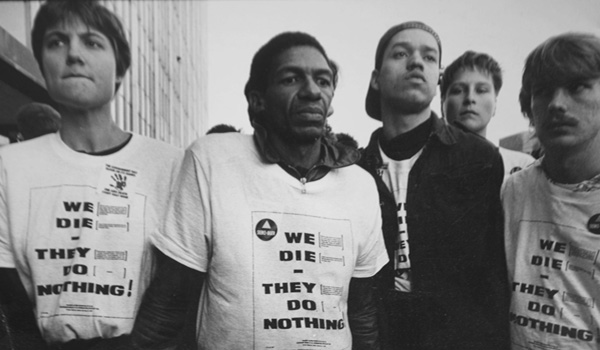
ACT UP_AIDS Coalition to Unleash Power_was founded in 1987 by a group of gay men. Seen here, a demonstration at the Food and Drug Administration in Washington, D.C._1988_photograph © Donna Binder

Poster aimed at helping people get past their fear of knowledge about HIV_USA, around 1990

Tanzanian safe sex poster drawn by Father Bernard Joinet_The Fleet of Hope in the Flood of AIDS_A rubber lifeboat is the metaphor for condoms_1994

Members of ACT UP protest during a session of the National Conference on Women and HIV being held in Pasadena, California_1997_Associated Press photo
. . .
Jaime Gil de Biedma (1929-1990, Barcelona, España – fallecido por el SIDA)
“Mañana de ayer, de hoy”
.
Es la lluvia sobre el mar.
En la abierta ventana,
contemplándola, descansas
la sien en el cristal.
.
Imagen de unos segundos,
quieto en el contraluz
tu cuerpo distinto, aún
de la noche desnudo.
.
Y te vuelves hacia mí,
sonriéndome. Yo pienso
en cómo ha pasado el tiempo,
y te recuerdo así.
. . .
S. Luz Teresa nació en San Jerónimo, Guerrero, México. En 1986 necesitó una cirugía, en la cual requirió de transfusiones –siendo alguna de éstas las que le causó su infección por VIH. Falleció en 1996.
S. Luz Teresa
“¡Auxilio!”
.
¡Auxilio! Se me está acabando el oxígeno, tengo SIDA,
soy un enfermo de SIDA
quiero gritarlo
para poder vivir en paz
y saber con quién cuento
y quién me rechazará.
¡Silencio! ¡Cállate!
Habla más bajo que te pueden oír
y me callo y me resigno
no por mí, por mi familia
porque la gente insensata
que, lamentablemente,
es mucha todavía,
por el simple hecho de saber
que conviven con una persona
como yo, los señalaría
¡me ahoga esta miseria!
¿Por qué a ellos que son
los únicos prudentes?
¡Maldición!
¿Cuándo aprenderán a distinguir
qué es lo que vale de la vida?
¿Cuándo aprenderán
a respetar el silencio?
¿Cuándo dejarán de cuestionarse
si estás o no infectado?
¿Cuándo cambiarán el morbo
por comprensión o cariño?
¿Cuándo?
¿Cuándo sabrán ser amigos?
Espero que no sea dentro de
mucho tiempo.
Porque si esto sucediera,
nadie más tendría que mentir
y ocultar su mal,
nos haría ciudadanos de nuevo,
nos cuidaríamos mutuamente,
porque como nosotros estamos
mucho más conscientes
de cuan dura
es nuestra enfermedad
quisiéramos que nadie
más sufriera
esta larga agonía,
igual que nuestras familias
y nuestros doctores,
aquellos que sabiendo la verdad
nos tocan, nos cuidan
y nos quieren
y no se infectan
y hacen que nos sintamos bien
y nos alientan a que,
por encima de nuestros problemas,
tracemos nuevas metas,
que en ocasiones
estemos contentos,
que no nos impacientemos
y que no olvidemos del todo
nuestra capacidad de amar.
No, no les estoy pidiendo amor,
seria una propuesta absurda,
sólo les pido comprensión
y eso es mucho más sencillo
soy un enfermo de SIDA
que simplemente,
quiere vivir en paz.
. . .
Jordi Demarto (España)
“No te duermas” (2005)
.
Cuando mi cuerpo invadiste
No fui capaz de evitar,
Sentirme sucio, muy triste
Hasta me hiciste llorar.
.
¿Qué será ahora de mi vida,
Mis proyectos de futuro?
Ahora tenía el SIDA.
Fue un golpe tan fuerte y duro.
.
Más tarde ya comprendí
“Gracias a la información”
Que mi vida no acababa
– No moriría mañana,
deshuesado y sin razón.
.
Sentí la fuerza de un oso,
Y hasta ganas de volar,
cada año un lazo rojo
nos ayuda a no olvidar.
.
Que la guerra sigue en pie,
Que esta guerra ha de acabar,
En todos los continentes
“y sin África olvidar”.
.
Que la vida no se acaba,
Que no hay que dejarse vencer
Por un virus despiadado
Que hoy no podemos vencer.
.
Sigamos luchando en la vida
Sin confiar en la suerte.
¡No te quedes ahí sentado!
¡No des tu tiempo a la muerte!
. . .
Arjona Delia (Argentina)
“Lucha contra el SIDA” (2011)
.
El cuerpo se daña en agonía,
pierden la esperanza y valentía,
lágrimas, sollozos y lamentos,
acerca la muerte día a día.
.
Cuida tu vida y la de los demás,
del virus letal, cruel enfermedad,
que te lo trasmiten al amar,
cuando no te saben cuidar.
.
Lucha, no te des por vencido,
si la herida te hace sangrar
yo te ofrezco mi mano para andar,
en mi corazón tendrás lugar.
.
No temas, aprende sobre el sida,
la ignorancia es la que contamina,
la mejor defensa es la prevención,
y contar con buena información.
.
http://www.arjonadelia.blogspot.com
. . .
Craig G. Harris (Black gay poet, U.S.A., died in 1991 of complications from AIDS)
“Alive after his passion” (for Elias)
.
green mangos
with salt and
vinegar,
hearts of palm
and holy ghosts
make me
speak in
tongues
with garlic breath,
dance to unheard
beats,
fall beneath your
holy temple,
inhaling grey
incense dust,
writhing in
shed snake skins,
purified in the
flame,
wrapped
in unspeakable
joy.
.
(1987)
.
Phillis Levin (New York City)
“What the Intern Saw” (1988)
.
I
He saw a face swollen beyond ugliness
Of one who just a year ago
Was Adonis
Practicing routines of rapture.
.
A boy who could appear
To dodge the touch of time,
Immortal or immune –
A patient in a gown,
Almost gone.
II
In the beautiful school of medicine
He read about human suffering,
A long horrible drama
Until the screen of anaesthesia
And penicillin’s manna.
.
But now, in myriad sheets
Of storefront glass refracting evening’s
Razor blue, in a land of the freely
Estranged from the dead, he meets
That face – and fear seizes his body.
III
His feet have carried him to bed.
He thinks he must be getting old
To so revise
His nature and his plan.
.
He shuts his eyes
And in his sleep he sees a gleaming bar,
The shore of pain.
It isn’t far.
People live there.
. . .
Adam Johnson (Gay U.K. poet, 1965-1993, died of complications from AIDS)
“December 1989”
.
The nascent winter turns
Each root into a nail,
And in the West there burns
A sun morbid and pale.
.
Now, from the city bars
We drift, into a cool
Gymnasium of stars –
The drunkard and the fool:
.
Into the night we go,
Finding our separate ways –
The darkness fraught with snow,
The leaves falling like days.
. . .
Clovis S. Palmer (Jamaica/Australia)
“Guilt”
.
Whoi! Mother, father, mi baby – gone
Whoi! Sister, brother, mi uncle – gone
Whoi! Daughter, mi son, mi family – gone
Whoi! What stain have I bestowed?
.
She held her son, the flesh melted from his bones,
Tears streamed down her cheeks, like raindrops down the window screen.
Unexplainable, undeniable, but beneath the ground he must go
– Singing, mourning, cries of pain –
Who next will suffer this dreadful stain?
.
The sunset kisses the Blue Mountain range,
Darkness covers the Kingston plains.
Tomorrow we shall start again –
Who next will suffer this dreadful stain?
.
The sun seeps over the Caribbean Sea,
Today my brother I shall not see.
Like the petals from roses – gone too soon –
Red ribbons I left on his tomb.
. . .
“HIV/AIDS is defined by people: their complex lives, their bravery, their fear, their sadness, their need, their laughter, their inconsistencies – basically, their rich humanity. These people taught me how to write about hope, and the beauty in the ordinariness of all of our lives.” (Kwame Dawes)
.
Kwame Dawes (born 1962, Ghana – raised in Jamaica)
“Coffee Break”
[This 2008 poem was inspired by caregiver John Marzouca of Jamaica]
.
It was Christmastime,
the balloons needed blowing,
and so in the evening
we sat together to blow
balloons and tell jokes,
and the cool air off the hills
made me think of coffee,
so I said, “Coffee would be nice,”
and he said, “Yes, coffee
would be nice,” and smiled
as his thin fingers pulled
the balloons from the plastic bags;
so I went for coffee,
and it takes a few minutes
to make the coffee
and I did not know
if he wanted cow’s milk
or condensed milk,
and when I came out
to ask him, he was gone,
just like that, in the time
it took me to think,
cow’s milk or condensed;
the balloons sat lightly
on his still lap.
.
“Coffee Break” © Kwame Dawes
.
. . .
Kwame Dawes
“Cleaning”
[This 2008 poem was inspired by Dr. Peter Figueroa of Jamaica]
.
After a while, you don’t bother
with the brief and the pajamas;
you leave him on the sheet,
make him shit himself, then
shift over to the other side
until I can come, lift up
the body, wipe his bottom
with a soft cotton cloth, bundle
up the sheet with two more
in the corner, straighten
out the plastic over the mattress—
sometimes you have to wipe
it, too, then put a towel
under him until the other
sheet dry, and all the time,
you don’t say a word,
you don’t ask for nothing.
You let your hand brush
against your father’s back
and pray his dignity will last
another day. This is how
a man must care for his father;
quiet, casual, and steady.
.
“Cleaning” © Kwame Dawes
.

Kenya_poster encouraging Safe Sex_1990s

Poster from Morocco promoting safe sex_The Arabic reads: Tradition does not rhyme with Prevention.

Safe sex poster from Cuba_The Spanish reads: Enjoy Life, Avoid AIDS._How do I show that I love you? (With a flower AND a condom.)
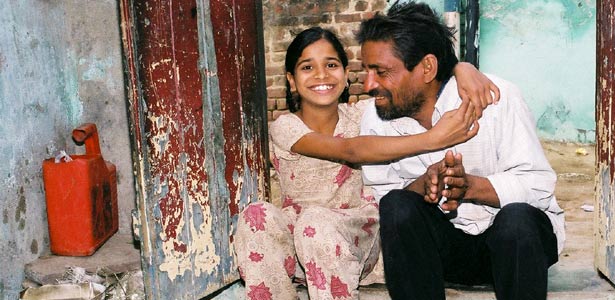
A schoolteacher fired after testing HIV-positive is embraced by his daughter_India_2004_photograph by W. Phillips

A Haitian woman takes the opportunity to be tested for HIV_Haiti_2007_photograph © Thony Belizaire

South African women reminding passing motorists that condom use drastically reduces the spread of HIV_2009
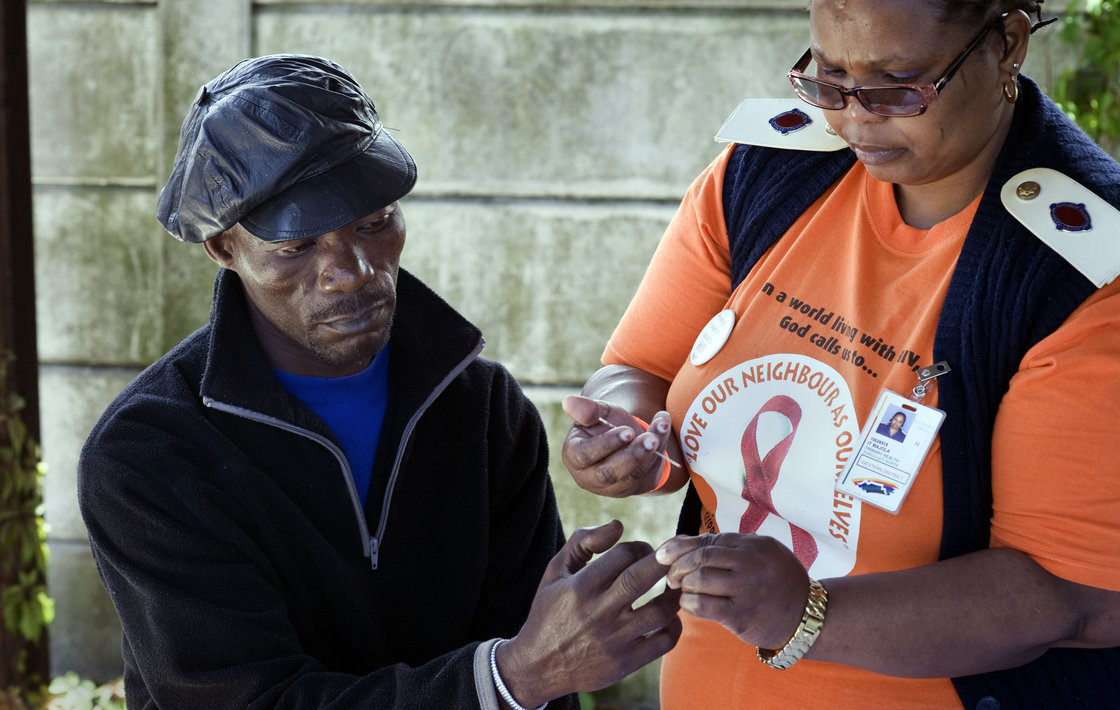
At a roadside HIV-testing table near Cape Town, South Africa, a nurse tests a man’s blood_2012_photograph by Rodger Bosch_While South Africa has the highest percentage worldwide of people living with HIV – about 6 million in a nation of 53 million – it also has the world’s largest treatment programme using Anti-Retroviral drugs distributed from several thousand health clinics.

South African Archbishop Emeritus Desmond Tutu has been a vigorous campaigner for access to treatment for TB, HIV and AIDS; he has also publicly promoted condom use for disease prevention, a most forward-looking approach for a Man of the Church.

HIV-positive activists at a rally in India

The International Medical Corps organized an advice and training programme for women at Mera Kachori Afghan Refugee Camp in Pakistan_December 2012

Fight HIV not People with HIV! Activist with banner outside the Russian Embassy in New York City_2013

In Guandong, China, some bold HIV-related policy decisions will come into play. In the wake of concerted advocacy efforts the ban on HIV-positive teachers in the classroom will be lifted_June 2013
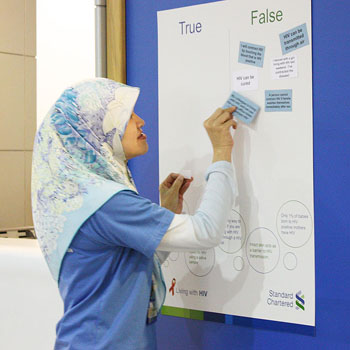
Standard Chartered Bank in Brunei Darussalam on the island of Borneo conducted a Living With HIV morning huddle with its staff. True or False statement cards were used to test staff’s knowledge of HIV facts_October 2013

Melbourne, Australia, November 30th 2013_World AIDS Day event
. . .
“This is my dedication and tribute to my patients who live with HIV. I will never be the same because of the way you have touched me, seeing how you continue to move forward every day in this society – with its preconceptions and misbeliefs.” [Paula V. Reid, April 2013]
.
Paula V. Reid (Nurse, North Carolina, U.S.A.)
“The Unique Woman”
.
Hello, I am special just like you.
Why should anyone feel differently?
Is it because I may be
a drug abuser,
a prostitute,
a homeless person,
or do you believe I’m a nobody?
Have you ever thought I could be
your mother,
your sister,
your friend?
Would that make a difference?
But in the whole scheme of things, does it really matter?
Because the most important issue is
I am a woman that needs your help.
Are you in a position to give me that help?
I need to be loved.
I need to be cherished.
I need to be cared for.
I face extraordinary challenges every day
and many times face them alone.
Some women have children,
spouses and loved ones to care for.
Where do I get the strength
and energy to keep going?
Don’t I need compassion?
That is why I am the unique woman.
I hear you talk about me in the hallway and stairwells.
“I have to see that HIV lady down the hall.”
“Oh boy, I am the next one up for an HIV case.”
Treat me the way you would want to be treated.
That is what I ask of you.
Don’t ask me: “How did you get it?”
unless it is relevant to my care for that day.
When I cry, cry with me.
When I laugh, laugh with me.
Then, when I am alone it won’t be so bad.
My walk is hard and the road is tough,
but with your help it could be gentler.
I am reaching out to you.
. . .
Rory Kilalea / ‘Murungu’ (Zimbabwe)
“Prayer”
.
I do not know how to pray.
I only know how to talk
at you, God.
As a stillness supreme
evading my eyes,
avoiding my ears.
Yet I know You are there.
It is only the reflection I miss.
. . .
Senator Ihenyen (Nigeria)
“Is It Because…”
…you did not kiss my hand
like you used to
when with so much love in my eyes
I held it up to your lips
beaming with the crystals in my heart –
Is it because I now have HIV?
When you poured the red wine into the glasses
you did not hold yours to my waiting lips
like you used to
so that – as transparent as the two glasses –
we could see the colours in our hearts –
Is it because I now have HIV –
Or because you never really loved me?
.
(2013)
. . .
Senator Ihenyen (Nigeria)
“Stranger in the Mirror
of My Life”
.
Before me is a mirror
a mirror beside my bed
away from the sun
burning brightly outside the window-blinds
in my darksome room.
For a moment
before the mirror
I stand to see the face of the victim
whose result returned a death sentence
after a test,
and another test, and yet another,
but they kept coming back
one and the same
like the torrent of tears that keep returning to your eyes
when the heart remains wet with worries
Wavering worries of one’s life walking away from the door,
as the wall clock thcks unrestrained, untouched, unconcerned,
like the footsteps of the world moving on,
unaffected, unmoved, unstirred.
In the mirror
I found a face
a certain face too afraid to look at me.
The face of a stranger –
a strange face sketched in the shadows of my unlit room,
against the fiery fingers of the sun flicking the window-blinds on a fateful morning
to irradiate my day.
I know this face hiding in the mirror isn’t me –
It couldn’t be me!
I looked straight into her eyes,
and it was then she looked back at me –
petrified, she crept back into the closet of her life.
I walk slowly and gently towards her,
and the stranger suddenly steps closer and closer towards me.
And when my feet froze on the floor
Upon the freezing fear that gripped me,
the stranger in the mirror suddenly startles – faint-hearted, intimidated –
this stranger is not me,
No, not me!
She is just a shadow –
the shadow of someone too locked-up in her closet to open up to me.
She is a stranger too steeped in shame to stand up to herself
and say:
“I’m Hannah,
I’m HIV-positive –
but see how beautiful life could be
when I open the window-blinds in my heart
and let the rays of the sun
overshadow the stranger in the mirror of my life.”
.
(2013)
.
“Is It Because…” and “Stranger in the Mirror of My Life” © Senator Ihenyen
From his just-released 2013 e-book Stranger in the Mirror of My Life: Poems for Everyone Affected by HIV/AIDS
. . .
“[The poem below] came as result of belonging to what is sometimes called a “sero-discordant couple” – one partner HIV-negative, the other positive. It’s not a difference easy to negotiate, as perhaps the poem makes clear. Early on, my new lover offered me the choice to avoid commitment, citing his condition; but I chose instead to go forward with the relationship – a decision I don’t regret. I believe that medical research will find a fully satisfactory treatment for HIV and that this epidemic will come to an end. When that happens – what joy it will bring.” (Alfred Corn)
.
Alfred Corn (born 1943, Georgia, U.S.A.)
“To a Lover who is HIV-positive” (2002)
.
Grief; and a hope
that springs from your intention
to forward projects as assertive
or lasting as flesh ever upholds.
.
Love; and a fear
that the so far implacable
cunning of a virus will smuggle away
substantial warmth, the face, the response
telling us who we are and might be.
.
Guilt; and bewilderment
that, through no special virtue of mine
or fault of yours, a shadowed affliction
overlooked me and settled on you. As if
all, always, got what was theirs.
.
Anger; and knowledge
that our venture won’t be joined
in perfect safety. Still, it’s better odds
than the risk of not feeling much at all.
Until you see yourself well in them,
Love, keep looking in my eyes.
. . .
Mike Kwambo (Nairobi, Kenya)
“Positive”
.
Positive…
the status of my HIV.
Negative…
your attitude towards me.
Nonchalant…
is how I choose to be.
Pretenders…
you allegedly sympathize with me.
True colours…
you show them when I turn my back.
Pity…
I surely do not need it right now.
Life…
I am full of it and I am living>
Understanding…
I have a condition, like anyone else.
Positive…
the status of my attitude.
Determination…
is filled inside of me.
Oh yes…
I have the will to live.
I am positive…
in every aspect
of the word!
.
(2009)
. . .
Tikum Mbah Azonga (Le Cameroun)
“Venez vous voir (La séropositivité n`est pas la mort)”
.
Si vous êtes séropositif, mon ami,
Ne désesperez pas
Surtout pas!
Venez nous voir même en catinimi.
.
Nous sommes là pour vous tous
Les activités de conseil –
Pour les amis comme vous au conseil,
C`est notre affaire de toujours.
.
Venez nous voir en toute confidentialité –
Nos sessions de counseling se font en douceur.
Vous n`est pas seul car d`autres sont venus sans rancoeur
Et sont partis satisfaits et pleins de vitalité.
.
(2009)
. . .
Tikum Mbah Azonga (Le Cameroun)
“Les confidences d’une mère (La transmission mère-enfant)”
.
Je m`appelle Marthe.
Je suis mère de trois enfants
Dont le dernier a huit mois,
Les trois autres – que Dieu soit loué!
Ont trois, cinq et sept ans –
Je me suis fait dépister a chaque grossesse.
.
Dieu merci, tout a été négative,
Mais si j`avais été testé positive
J`aurais suivi les conseils du médicin,
J`aurais pris des médicaments
Pour ne pas contaminer mon bébé.
.
Avais-je peur du test? Jamais!
Car il y a le counseling.
Alors, si vous êtes enceinte
Comme moi, faîtes
–vous dépister protéger votre bébé.
.
(2009)
. . .
Alassane Ndiaye (Sénégal)
“Sous Le Soleil De L’Amour”
.
Notre premier baiser
A cette saveur lactée
Ce parfum de rose
Aux vapeurs poivrées
.
Et tes lévres douces
Et fermes comme la chaire
Fraiche d’une pomme
Croustillantes comme le pain nouveau
Embrassent ma bouche
Suscitant le désir coupable
.
Tu es une étoile qui chaque jour
Brille dans le ciel trouble de mon existence
Un soleil qui transperce le voile sombre de mon esprit
Une source où s’abreuvent les âmes en peine
– Je t’aime.
.
(2000)
.
. . .
Ibrahim Coulibaly (Côte d’Ivoire)
“Ton Sourire et Ta Voix”
.
Mon regard dans le vent
Je vois dans le ciel sourire ta beauté
Qui fait voyager mon esprit
Dans le train merveilleux de ton charme.
En moi luit la lumière du bonheur
Car ta voix d’or
Ta voix aux mille couleurs
Fait couler sur moi des mélodies de miel.
L’harmonie de ton corps est un tableau
Que jamais ne pourra effacer la force des mots.
Si j’étais une larme dans tes yeux
Jusque sur tes lèvres je coulerai
Si une larme dans mes yeux tu étais
Jamais je ne pleurerais
De peur de te perdre.
.
(2013)
. . . . .
Poèmes sur l’Amitié pour la Journée mondiale de lutte contre le SIDA – Poems of Friendship for World AIDS Day
Posted: December 1, 2013 Filed under: Emmanuel W. Védrine, English, French | Tags: Poems of Friendship for World AIDS Day 2013 Comments Off on Poèmes sur l’Amitié pour la Journée mondiale de lutte contre le SIDA – Poems of Friendship for World AIDS Day
Emmanuel W. Védrine (Haïti)
.
I want you to know there is
Someone who’s thinking of you,
Someone who wants to help you
Along the way,
Someone who can take your problems away,
Someone who wants to be with you
When the sun is shining
And when there is rain.
I want you to know there is
Someone who won’t let you down,
Someone who will care for you,
Someone you can talk to,
Someone who will make your days brighter
And who will make you feel happier.
I want you to know
This person is me,
Someone who
Thinks about you.
. . .
Emmanuel W. Védrine (Haiti)
.
Je veux que tu saches
Qu’il y a quelqu’un qui pense à toi,
Quelqu’un qui veut t’aider
Au long de la route.
Quelqu’un qui veut solutionner tes problèmes,
Quelqu’un qui veut être avec toi
Quand le soleil brille
Et quand le temps est à la pluie.
Je veux que saches
Qu’il y a quelqu’un
Qui ne te laissera pas toute seule,
Quelqu’un avec qui
Tu peux parler avec aisance
Et tu seras contente,
Contente plus que jamais.
C’est bien moi,
Quelqu’un qui pense à toi.
.
(Traduction du créole haïtien – French translation from the original Creole)
. . .
Emmanuel W. Védrine
“Who are you?”
.
Who are you? You know who you are.
Is it the way you appear in other people’s eyes
That tells you who you are?
Is it what they say about you
That tells you who you are?
.
Sometimes I laugh and I laugh
When someone is taken for what that person is not.
How many mistakes do we make when we judge people?
You can see what a person is on the outside
But not what they have in their heart.
.
Who are you? Is it society that tells you who you are?
How do you see society?
What can you do to change the world?
Is it your passport that tells you who you are?
Tell me who you are, then each of us can bring
A stone for the reconstruction of the world.
. . .
Emmanuel W. Védrine
.
Qui êtes vous? Vous savez qui vous êtes.
Le regard des autres vous dit-il
Qui vous êtes?
Ce qu’ils disent à votre propos vous dit-il
Qui vous êtes?
.
Parfois je ris et je ris
Quand quelqu’un est pris pour ce qu’il n’est pas.
Combien d’erreurs sont faites à juger autrui?
Ce qui se voit est l’apparence;
Le contenu du coeur est invisible.
.
Qui êtes vous? La société dit-elle qui vous êtes?
Comment percevez-vous la société?
Que pouvez vous faire pour changer le monde?
Votre passeport détermine-t-il qui vous êtes?
Dites-moi qui vous êtes et alors chacun de nous peut apporter
Une pierre à la reconstruction du monde.
.
(Traduction du créole haïtien – French translation from the original Creole)
. . . . .
Thanksgiving Poems: a Cornucopia
Posted: November 28, 2013 Filed under: Emily Dickinson, English, Guido Guinizelli, Gwendolyn Brooks, Henri Nouwen, Luci Shaw, Paul Laurence Dunbar, Rabindranath Tagore, Walt Whitman, William Matthews | Tags: Thanksgiving poems, Thanksgiving: USA Comments Off on Thanksgiving Poems: a Cornucopia
Emily Dickinson (1830-1886)
“I had no time to Hate”
.
I had no time to Hate –
Because
The Grave would hinder Me –
And Life was not so
Ample I
Could finish – Enmity –
.
Nor had I time to Love –
But since
Some Industry must be –
The little Toil of Love –
I thought
Be large enough for Me –
. . .
Emily Dickinson
“They might not need me – yet they might”
.
They might not need me – yet they might –
I’ll let my Heart be just in sight –
A smile so small as mine might be
Precisely their necessity.

Emily Dickinson
“Who has not found the Heaven – below”
.
Who has not found the Heaven – below –
Will fail of it above –
For Angels rent the House next ours,
Wherever we remove –
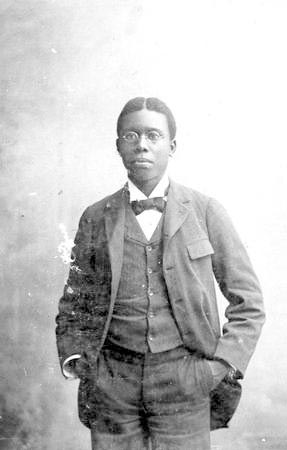
Paul Laurence Dunbar (1872-1906)
“A Prayer”
.
O Lord, the hard-won miles
Have worn my stumbling feet:
Oh, soothe me with thy smiles,
And make my life complete.
.
The thorns were thick and keen
Where’er I trembling trod;
The way was long between
My wounded feet and God.
.
Where healing waters flow
Do thou my footsteps lead.
My heart is aching so;
Thy gracious balm I need.
. . .
Paul Laurence Dunbar
“The Sum”
.
A little dreaming by the way,
A little toiling day by day;
A little pain, a little strife,
A little joy,–and that is life.
.
A little short-lived summer’s morn,
When joy seems all so newly born,
When one day’s sky is blue above,
And one bird sings,–and that is love.
.
A little sickening of the years,
The tribute of a few hot tears,
Two folded hands, the failing breath,
And peace at last,–and that is death.
.
Just dreaming, loving, dying so,
The actors in the drama go–
A flitting picture on a wall,
Love, Death, the themes; but is that all?
. . .
Guido Guinizelli (1230-1276)
“Of Moderation and Tolerance”
.
He that has grown to wisdom hurries not,
But thinks and weighs what Reason bids him do;
And after thinking he retains his thought
Until as he conceived the fact ensue.
Let no man to o’erweening pride be wrought,
But count his state as Fortune’s gift and due.
He is a fool who deems that none has sought
The truth, save he alone, or knows it true.
Many strange birds are on the air abroad,
Nor all are of one flight or of one force,
But each after his kind dissimilar:
To each was portion’d of the breath of God,
Who gave them divers instincts from one source.
Then judge not thou thy fellows what they are.
.
Translation from the Italian: Dante Gabriel Rossetti (1861)
. . .
Luci Shaw (born 1928)
“But not forgotten”
.
Whether or not I find the missing thing
it will always be
more than my thought of it.
Silver-heavy, somewhere it winks
in its own small privacy
playing
the waiting game for me.
.
And the real treasures do not vanish.
The precious loses no value
in the spending.
A piece of hope spins out
bright, along the dark, and is not
lost in space;
verity is a burning boomerang;
love is out orbiting and will
come home.
. . .
Henri Nouwen (1932-1996)
“Hope”
.
Hope means to keep living
amid desperation,
and to keep humming in darkness.
Hoping is knowing that there is love,
it is trust in tomorrow
it is falling asleep
and waking again
when the sun rises.
In the midst of a gale at sea,
it is to discover land.
In the eye of another
it is to see that he understands you.
As long as there is still hope
there will also be prayer.
And God will be holding you
in His hands.
. . .
Walt Whitman(1819-1892)
“When I heard the learn’d astronomer”
.
When I heard the learn’d astronomer,
When the proofs, the figures, were ranged in columns before me,
When I was shown the charts and diagrams, to add, divide, and measure them,
When I sitting heard the astronomer where he lectured
with much applause in the lecture-room,
How soon unaccountable I became tired and sick,
Till rising and gliding out I wander’d off by myself,
In the mystical moist night air, and from time to time,
Look’d up in perfect silence at the stars.

Gwendolyn Brooks (1917-2000)
“Speech to the Young, Speech to the Progress-Toward
(Among them Nora and Henry III)”
.
Say to them
say to the down-keepers,
the sun-slappers,
the self-soilers,
the harmony-hushers:
“Even if you are not ready for day
it cannot always be night.”
You will be right.
For that is the hard home-run.
Live not for the battles won.
Live not for the-end-of-the-song.
Live in the along.
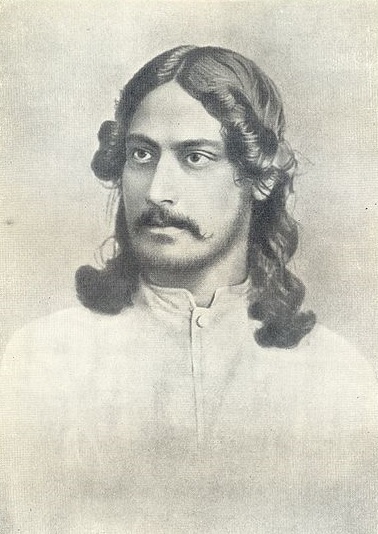
Rabindranath Tagore (1861-1941)
“Closed Path”
.
I thought that my voyage had come to its end
at the last limit of my power,
that the path before me was closed,
that provisions were exhausted,
and the time come to take shelter in a silent obscurity.
.
But I find that Thy Will knows no end in me.
And when old words die out on the tongue,
new melodies break forth from the heart;
and where the old tracks are lost,
new country is revealed with its wonders.
. . .
William Matthews (1942-1997)
“Onions”
.
How easily happiness begins by
dicing onions. A lump of sweet butter
slithers and swirls across the floor
of the sauté pan, especially if its
errant path crosses a tiny slick
of olive oil. Then a tumble of onions.
.
This could mean soup or risotto
or chutney (from the Sanskrit
chatni, to lick). Slowly the onions
go limp and then nacreous
and then what cookbooks call clear,
though if they were eyes you could see
.
clearly the cataracts in them.
It’s true it can make you weep
to peel them, to unfurl and to tease
from the taut ball first the brittle,
caramel-coloured and decrepit
papery outside layer, the least
.
recent the reticent onion
wrapped around its growing body,
for there’s nothing to an onion
but skin, and it’s true you can go on
weeping as you go on in, through
the moist middle skins, the sweetest
.
and thickest, and you can go on
in to the core, to the bud-like,
acrid, fibrous skins densely
clustered there, stalky and in-
complete, and these are the most
pungent, like the nuggets of nightmare
.
and rage and murmury animal
comfort that infant humans secrete.
This is the best domestic perfume.
You sit down to eat with a rumour
of onions still on your twice-washed
hands and lift to your mouth a hint
.
of a story about loam and usual
endurance. It’s there when you clean up
and rinse the wine glasses and make
a joke, and you leave the minutest
whiff of it on the light switch,
later, when you climb the stairs.
. . . . .
“El amor después del amor”: Derek Walcott
Posted: November 28, 2013 Filed under: Derek Walcott, English, Spanish | Tags: Poemas de dar gracias / agradecimiento, Poems of thankfulness / appreciation Comments Off on “El amor después del amor”: Derek Walcott
Derek Walcott (Poeta caribeño, nacido en Santa Lucía, 1930)
“El amor después del amor” (Traducción: Alex Jadad)
.
Llegará el día
en que, exultante,
te vas a saludar a ti mismo al llegar
a tu propia puerta, en tu propio espejo,
y cada uno sonreirá a la bienvenida del otro,
y dirá: Siéntate aquí. Come.
Otra vez amarás al extraño que fuiste para ti.
Dale vino. Dale pan. Devuélvele el corazón
a tu corazón, a ese extraño que te ha amado
toda tu vida, a quien ignoraste
por otro, y que te conoce de memoria.
Baja las cartas de amor de los estantes,
las fotos, las notas desesperadas,
arranca tu propia imagen del espejo.
Siéntate. Haz con tu vida un festín.
. . .
Derek Walcott (Saint Lucia, born 1930)
“Love After Love”
.
The time will come
when, with elation,
you will greet yourself arriving
at your own door, in your own mirror
and each will smile at the other’s welcome,
.
and say: Sit here. Eat.
You will love again the stranger who was your self.
Give wine. Give bread. Give back your heart
to itself, to the stranger who has loved you
.
all your life, whom you ignored
for another, who knows you by heart.
Take down the love letters from the bookshelf,
.
the photographs, the desperate notes,
peel your own image from the mirror.
Sit. Feast on your life.
. . .
 Zócalo Poets