Dany Laferrière: “Fire is nothing next to Ice…”
Posted: January 29, 2014 Filed under: Dany Laferrière, English, French, ZP Translator: Alexander Best Comments Off on Dany Laferrière: “Fire is nothing next to Ice…”
Dany Laferrière (Windsor Klébert Laferrière)
(né 1953, à Petit Goâve, Haïti, vivant à Montréal, Canada)
Extraits de Chronique de la dérive douce / Excerpts from Chronicle of the Sweet Year Adrift (1994):
.
En plein hiver
je rêve à une île dénudée
dans la mer des Caraïbes
avant d’enfouir
ce caillou brûlant
si profondément
dans mon corps
que j’aurai
du mal
à le retrouver.
.
In the midst of winter
I dream of an island bare,
in the Caribbean sea,
before burying this smouldering head
so deep within my body that
I’d be hard put to find it again.

Le feu n’est rien
à côté de la glace
pour brûler un homme
mais pour ceux qui
viennent du sud,
la faim peut mordre
encore plus durement
que le froid.
.
Fire is nothing next to Ice
for burning a man
but for those who come from the south,
Hunger can bite much harder than the cold.
.
Translation from French: Alexander Best
. . .
Dany Laferrière est un écrivain haïtien-canadien qui a reçu le prix Médicis en 2009 pour son roman L’Énigme du Retour. Le Médicis est décerné à un auteur qui n’a pas encore une notoriété correspondant à son talent.
En décembre de 2013 Laferrière est devenu membre de l’Académie française.
.
Dany Laferrière is a Haitian-Canadian writer who received the Médicis Prize in 2009 for his novel The Enigma of Return. The Prix Médicis is given to an author whose fame is not yet as big as his artistry. In December of 2013 Laferrière was elected to the Académie Française, France’s most learnéd body on French linguistic matters.
. . . . .
Norman Jordan: “Como brotar un poema”
Posted: January 28, 2014 Filed under: English, Norman Jordan, POETS / POETAS, Spanish, ZP Translator: Alexander Best | Tags: El Movimiento del Arte Negro – Cleveland en los años 60 y 70 Comments Off on Norman Jordan: “Como brotar un poema”
Norman Jordan (nacido en 1938, Virgina del Oeste, EE.UU.)
“El Sacrificio”
.
El precio de leche ha subido de nuevo
y el bebé está bebiendo más…
Carajo, supongo que tendré que
abandonar los cigarillos
– por lo tanto arruinaré mis chances de
agarrar el cáncer.
WTF – no se puede tener todo.
. . .
Norman Jordan (born 1938, West Virginia, USA)
“The Sacrifice”
.
The price of
milk has
gone up again
and the baby
is drinking more.
Hell,
I guess I’ll
have to give up
cigarettes
and blow my
chances
of catching lung
cancer.
What the fuck,
you can’t have
everything.
. . .
“Alimentando a los Leones”
.
Se atreven en nuestro barrio
con el sol
un ejército de trabajadores sociales
llevando sus maletines;
relleno de mentiras y sonrisitas tontas;
distribuyendo cheques de asistencia y vales de despensa;
apurando de un departamento al otro para
llenar su cuota
– y largarse
antes del ocaso.
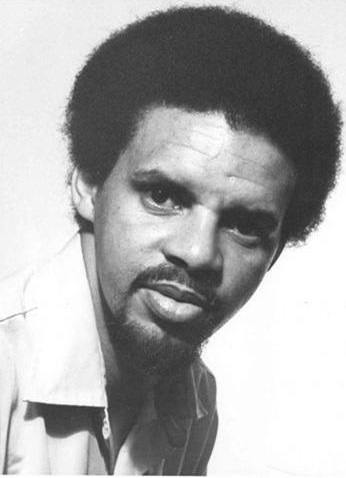
El poeta en 1970
“Feeding the Lions”
.
They come into
our neighbourhood
with the sun,
an army of
social workers
carrying briefcases,
filled with lies
and stupid grins,
passing out relief
cheques
and food stamps,
hustling from one
apartment to another
so they can fill
their quota
and get back out
before dark.
. . .
“Como brotar un poema”
.
En primer lugar,
pon unas siete cucharadas de palabras
en un frasco galón
.
Cubre las palabras
con ideas líquidas
y déjalas absorber por una noche
.
Por la mañana
vierte las viejas ideas y
enjuaga las palabras con pensamientos frescos
.
Inclina al revés en un rincón el frasco
y déjalo desaguar
.
Sigue con el enjuague, día con día,
hasta que se forma un poema
.
Finalmente,
coloca el poema en el sol
para que pueda agarrar el color de la Vida.
. . .
“How to sprout a poem”
.
First, place
about seven
tablespoons of words
in a gallon jar
.
Cover the words
with liquid ideas
and let soak overnight
.
The following morning,
pour off the old ideas
and rinse
the words with fresh thoughts
Tilt the jar upside down
in a corner
and let it drain
.
Continue rinsing daily
until a poem forms
.
Last, place the poem
in the sunlight
so it can take on
the colour of Life.
. . . . .
George Jackson: Letter from a Soledad Brother
Posted: January 28, 2014 Filed under: English | Tags: Black Power Movement Comments Off on George Jackson: Letter from a Soledad Brother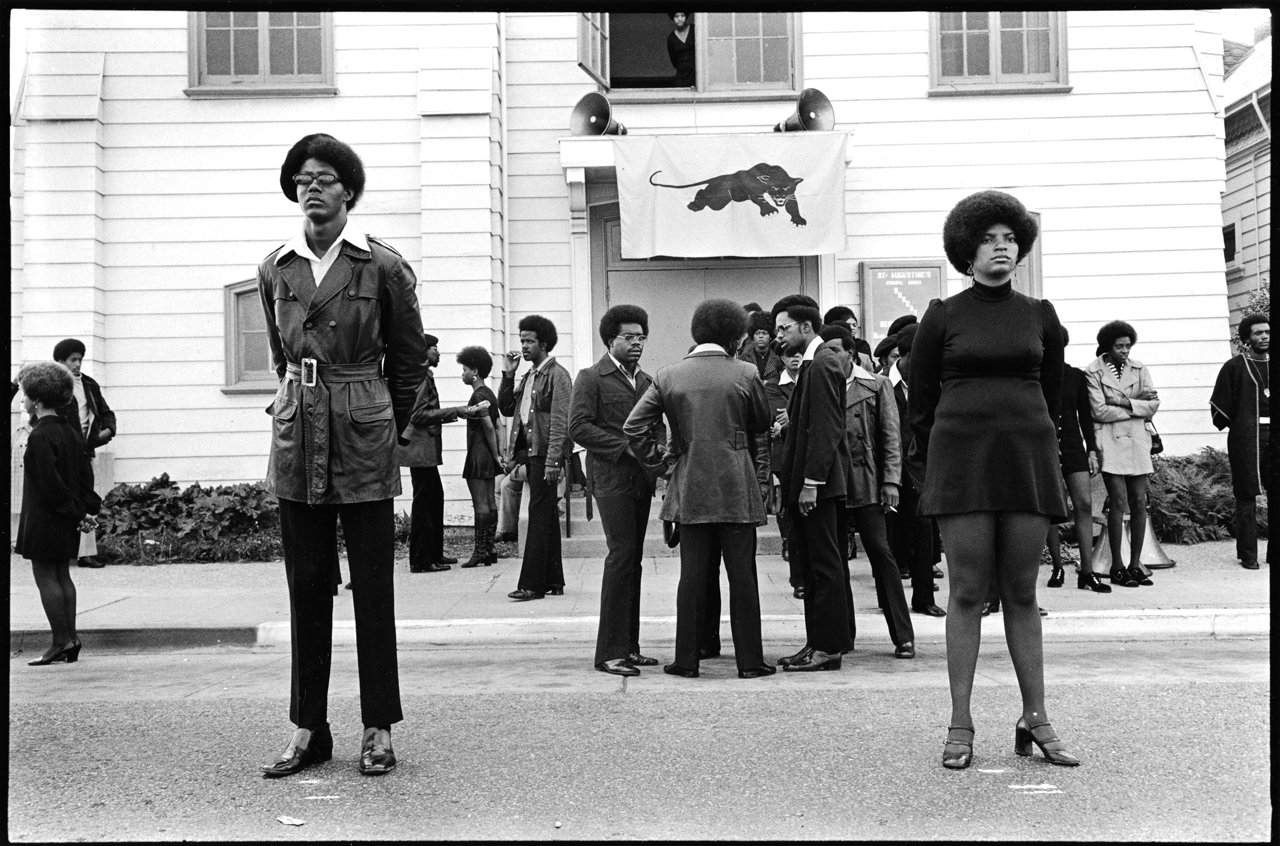
Glen Wheeler and Claudia Grayson, known as Sister Sheeba, stand outside George Jackson’s funeral at St. Augustine’s Church in Oakland, California_August 1971
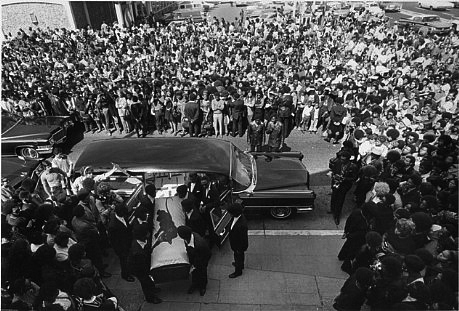
Crowd outside in Oakland, California, when George Jackson’s coffin was being brought into St. Augustine’s Church_photograph by Stephen Shames_August 1971
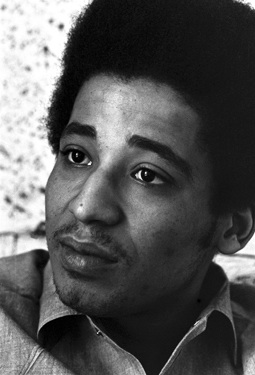
In 1960, at the age of eighteen, George Jackson (1941-1971)was accused of stealing $70 from a gas station in Los Angeles. Though there was evidence of his innocence, his court-appointed lawyer maintained that because Jackson had a record – two previous instances of petty crime – he should plead guilty in exchange for a light sentence in the county jail. He did so – and received an indeterminate sentence of one year to life. Jackson spent the next ten years in Soledad Prison, seven and a half of them in solitary confinement. Instead of succumbing to the dehumanization of prison existence, he transformed himself into a leading theoretician of the prison movement and a perceptive writer. Soledad Brother, which contains the letters that he wrote from 1964 to 1970, is his testament.
.
Excerpt from Soledad Brother: The Prison Letters of George Jackson:
March 1967
Dear Mama,
Papa has had the “true release, and at last the clasp of peace.” For him to have received this at such a great age and without violence is no small consolation. I loved him dearly and thought of him as one of our most practical and level-headed kin. You probably don’t remember the long walks and talks Papa and I used to take, or the long visits when he lived on Lake Street and we lived on Warren. But I remember. He used to say things, probably just thinking aloud, sure that I wasn’t listening or would not comprehend. But I did, and I think I knew him better than most. Do you remember how I used to answer “What” to every question put to me, and how Papa would deride me for this? He later in the course of our exchanges taught me to answer questions with “Why” instead of “What.”
Another of our games helped me greatly with my powers of observation. When we would walk, he told me to always look at the large signboards as deeply as possible and after we had passed one, he would make me recite all that was on it. I would never remember as much detail as he, but I did win a kind word or two on occasion. We played this same game at his house with pictures and objects spread out on the table or bed.
I wish he could have survived to see and enjoy the new world we plan to create from this chaos. If I could have gotten out of here last year he would never have gone out on sardines and crackers. I don’t know how anyone else views the matter and don’t care, but now for me his is one more voice added to the already thunderous chorus that cries from unmarked and unhallowed graves for vindication.
Don’t wait for me to change or modify my attitudes in the least. I cannot understand, as you put it, or as you would have me understand. I am a man, you are a woman. Being a woman, you may expect to be and enjoy being tyrannized. Perhaps you actually like walking at the heel of another, or otherwise placing yourself beneath another, but for me this is despicable. I refuse to even attempt to understand why I should debase myself or concede or compromise any part, the smallest part, of anything on earth to anyone who is not of my kind in thought and form. I love you, Mama, but I must be frank. Why did Papa die alone and hungry? Why did you think me insane for wanting a new bicycle instead of the old one I stole piece by piece and put together? Why did you allow us to worship at a White altar? Why even now, following tragedy after tragedy, crisis after crisis, do you still send Jon to that school where he is taught to feel inferior, and why do you continue to send me Easter cards? This is the height of disrespect you show me. You never wanted me to be a Man nor Jon either. You don’t want us to resist and defeat our Enemies. What is wrong with you, Mama? No other mama in history has acted the way you act under stress situations.
I won’t be a good “boy” ever.
Love,
George
. . . . .
Walter Rodney: Tribute to George Jackson
Posted: January 28, 2014 Filed under: English | Tags: Black Power Movement Comments Off on Walter Rodney: Tribute to George Jackson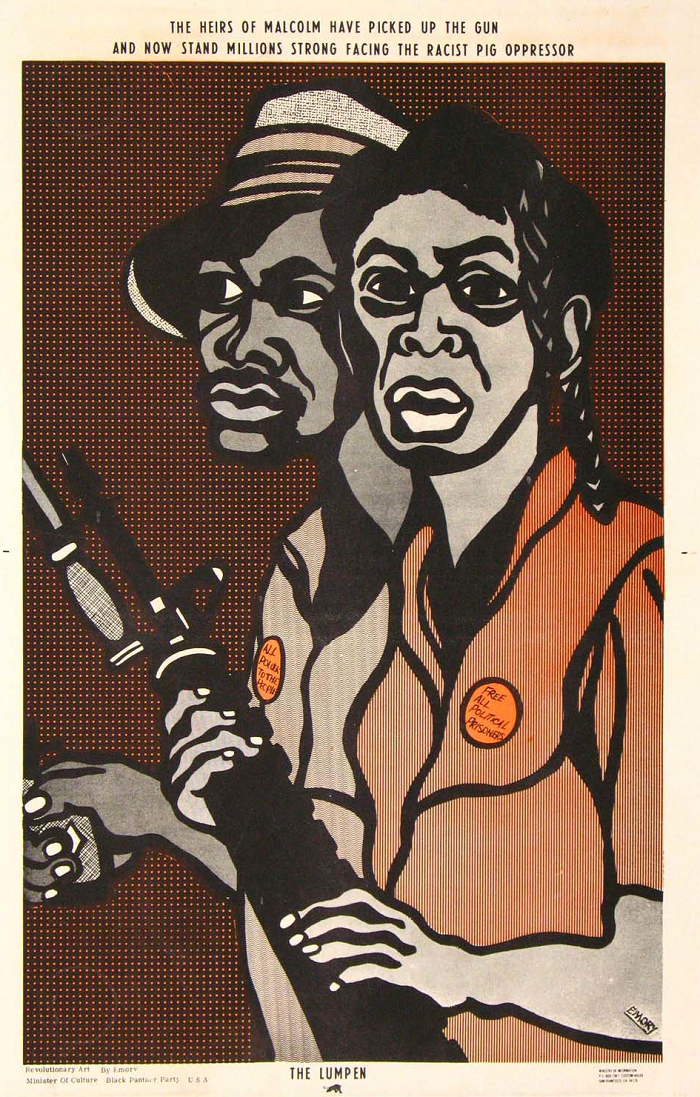
Emory Douglas poster for The Black Panthers
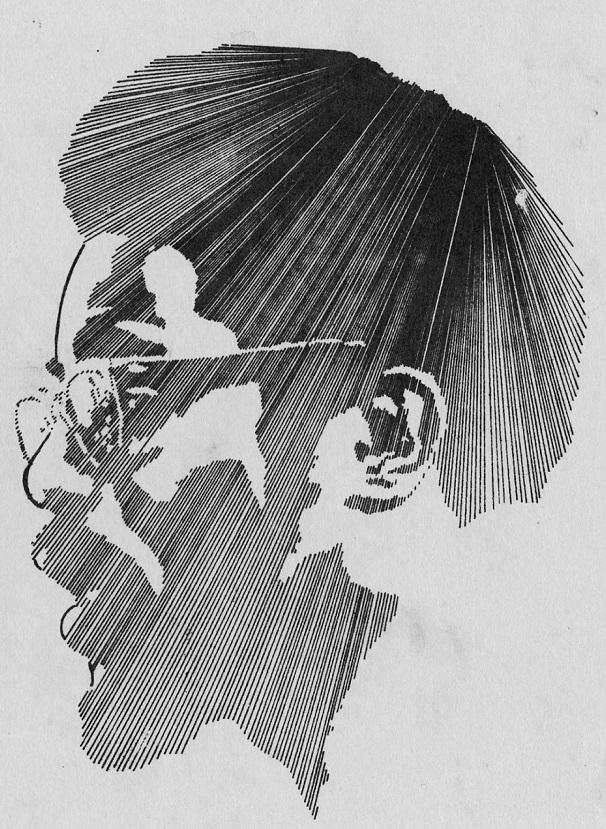
Portrait of Walter Rodney, Guyanese historian and activist, 1942-1980
Walter Rodney: a tribute to George Jackson, November 1971:
To most readers in this continent, starved of authentic information by the imperialist news agencies, the name of George Jackson is either unfamiliar or just a name. The powers that be in the United States put forward the official version that George Jackson was a dangerous criminal kept in maximum security in America’s toughest jail and still capable of killing a guard at Soledad Prison [Monterey County, California]. They say that he himself was killed attempting escape this year in August. Official versions given by the United States of everything from the Bay of Pigs in Cuba to the Bay of Tonkin [Gulf of Tonkin] in Vietnam have the common characteristic of standing Truth on its head. George Jackson was jailed ostensibly for stealing 70 dollars. He was given a sentence of one year to life because he was Black, and he was kept incarcerated for years under the most dehumanizing conditions because he discovered that Blackness need not be a badge of servility but rather could be a banner for uncompromising Revolutionary struggle. He was murdered because he was doing too much to pass this attitude on to fellow prisoners. George Jackson was political prisoner and a Black freedom fighter. He died at the hands of the Enemy.
.
Once it is made known that George Jackson was a Black Revolutionary in the White Man’s jail, at least one point is established, since we are familiar with the fact that a significant proportion of African nationalist leaders graduated from colonialist prisons, and right now the jails of South Africa hold captive some of the best of our Brothers in that part of the continent. Furthermore, there is some considerable awareness that ever since the days of slavery the U.S.A. is nothing but a vast prison as far as African descendants are concerned. Within this prison, Black Life is cheap, so it should be no surprise that George Jackson was murdered by the San Quentin prison authorities [at San Quentin State Prison, Marin County, California] who are responsible to America’s chief prison warder – Richard Nixon. What remains is to go beyond the generalities and to understand the most significant elements attaching to George Jackson’s life and death.
.
When he was killed in August this year, George Jackson was twenty nine years of age and had spent the last 11 years behind bars—seven of these in special isolation. As he himself put it, he was from the lumpen. He was not part of the regular producer force of workers and peasants. Being cut off from the system of production, lumpen elements in the past rarely understood the society which victimized them and were not to be counted upon to take organized revolutionary steps within capitalist society. Indeed, the very term lumpen proletariat was originally intended to convey the inferiority of this sector as compared with the authentic Working Class.
Yet George Jackson, like Malcolm X before him, educated himself, painfully, behind prison bars to the point where his clear vision of historical and contemporary reality and his ability to communicate his perspective frightened the U.S. power structure into physically liquidating him. Jackson’s survival for so many years in a vicious jail, his self-education, and his publication of Soledad Brother, were tremendous personal achievements, and in addition they offer an interesting insight into the revolutionary potential of the Black mass in the U.S.A., so many of whom have been reduced to the status of lumpen.
Etc…
To read Rodney’s full letter from November 1971 visit Revolutionary Frontlines at WordPress.
Etheridge Knight: “My Life, the quality of which…”
Posted: January 28, 2014 Filed under: English, Etheridge Knight | Tags: The Black Arts Movement: Indianapolis in the 1960s and 70s Comments Off on Etheridge Knight: “My Life, the quality of which…”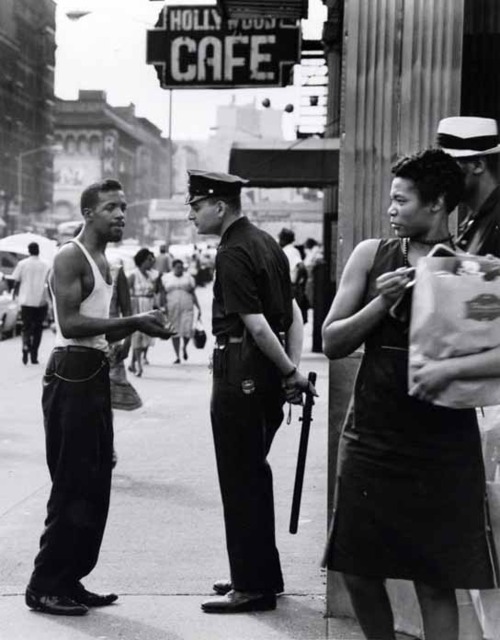
Street Scene_Lenox Avenue at 116th in Harlem_1960s
Etheridge Knight (Corinth, Mississippi, USA, 1931-1991)
“My Life, the quality of which…”
.
My Life, the quality of which,
from the moment my father grunted and ‘cummed’,
until now, as the sounds of my words
bruised your ears,
is,
and can be felt,
in the one word:
Desperation
– but you have to feel for it.
. . .
“A WASP Woman visits a Black Junkie in Prison”
.
After explanations and regulations, he
Walked warily in.
Black hair covered his chin, subscribing to
Villainous ideal.
“This can not be real,” he thought, “this is a
Classical mistake;
This is a cake baked with embarrassing icing;
Somebody’s got
Likely as not, a big fat tongue in cheek!
What have I to do
With a prim and proper-blooded lady?”
Christ in deed has risen
When a Junkie in prison visits with a WASP woman.
.
“Hold your stupid face, man,
Learn a little grace, man; drop a notch the sacred shield.
She might have good reason,
Like: ‘I was in prison and ye visited me not,’ or—some such.
So sweep clear
Anachronistic fear, fight the fog,
And use no hot words.”
.
After the seating
And the greeting, they fished for a denominator,
Common or uncommon;
And could only summon up the fact that both were human.
“Be at ease, man!
Try to please, man!—the lady is as lost as you:
‘You got children, Ma’am?’” he said aloud.
.
The thrust broke the dam, and their lines wiggled in the water.
She offered no pills
To cure his many ills, no compact sermons, but small
And funny talk:
“My baby began to walk… simply cannot keep his room clean…”
Her chatter sparked no resurrection and truly
No shackles were shaken
But after she had taken her leave, he walked softly,
And for hours used no hot words.
. . .
“A Fable”
.
Once upon a today and yesterday and nevermore there were 7 men and women all locked / up in prison cells. Now these 7 men and women were innocent of any crimes; they were in prison because their skins were black. Day after day, the prisoners paced their cells, pining for their freedom. And the non-black jailers would laugh at the prisoners and beat them with sticks and throw their food on the floor. Finally, prisoner #1 said, “I will educate myself and emulate the non-coloured people. That is the way to freedom—c’mon, you guys, and follow me.” “Hell, no,” said prisoner #2. “The only way to get free is to pray to my God and he will deliver you like he delivered Daniel from the lion’s den, so unite and follow me.” “Bullshit,” said prisoner #3. “The only way / out is thru this tunnel i’ve been quietly digging, so c’mon, and follow me.” “Unh-uh,” said prisoner #4, “that’s too risky. The only right / way is to follow all the rules and don’t make the non-coloured people angry, so c’mon brothers and sisters and unite behind me.” “Fuck you!” said prisoner #5, “The only way / out is to shoot our way out, if all of you get / together behind me.” “No,” said prisoner #6, “all of you are incorrect; you have not analyzed the political situation by my scientific method and historical meemeejeebee. All we have to do is wait long enough and the bars will bend from their own inner rot. That is the only way.” “Are all of you crazy,” cried prisoner #7. “I’ll get out by myself, by ratting on the rest of you to the non-coloured people. That is the way, that is the onlyway!” “No-no,” they all cried, “come and follow me. I have the / way, the only way to freedom.” And so they argued, and to this day they are still arguing; and to this day they are still in their prison cells, their stomachs / trembling with fear.
. . .
“Feeling Fucked Up”
.
Lord she’s gone done left me done packed / up and split
and I with no way to make her
come back and everywhere the world is bare
bright bone white crystal sand glistens
dope death dead dying and jiving drove
her away made her take her laughter and her smiles
and her softness and her midnight sighs—
Fuck Coltrane and music and clouds drifting in the sky
fuck the sea and trees and the sky and birds
and alligators and all the animals that roam the earth
fuck marx and mao fuck fidel and nkrumah and
democracy and communism fuck smack and pot
and red ripe tomatoes fuck joseph fuck mary fuck
god jesus and all the disciples fuck fanon nixon
and malcolm fuck the revolution fuck freedom fuck
the whole muthafucking thing
all i want now is my woman back
so my soul can sing.
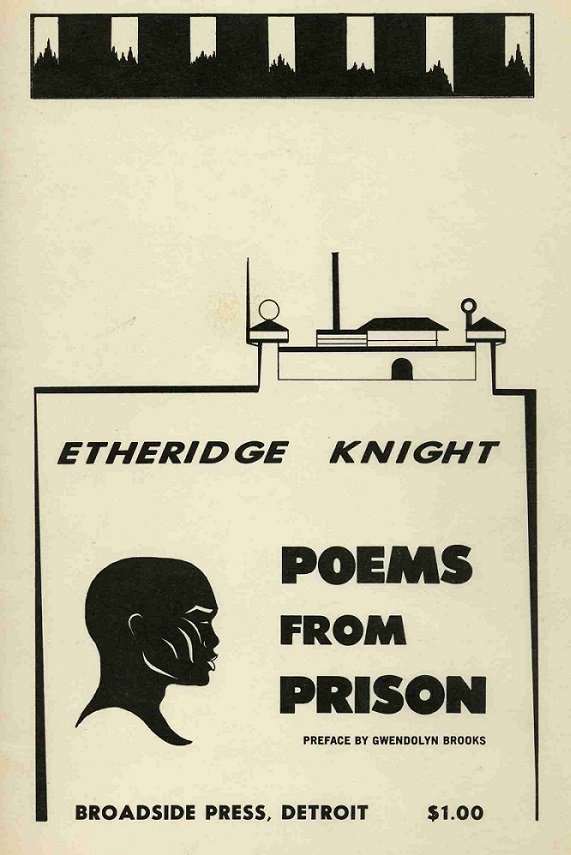
Etheridge Knight was many things during his life: one of seven children whose family went from Mississippi to Kentucky to Indianapolis; shoe-shine boy; poolhall habitué; medic during the Korean War; heroin addict; ex-temporaneous “toaster”; purse snatcher + 8-year prison inmate; a serious and dedicated poet. His poetry volumes included Poems from Prison (1968) and Belly Songs and Other Poems (1973).
. . . . .
Etheridge Knight: 9 “Senryu”
Posted: January 28, 2014 Filed under: English, Etheridge Knight | Tags: Haiku written in English Comments Off on Etheridge Knight: 9 “Senryu”
Etheridge Knight (Corinth, Mississippi, USA, 1931-1991)
.
1
Eastern guard tower
glints in sunset; convicts rest
like lizards on rocks.
.
2
The piano man
is stingy, at 3 a.m.
his songs drop like plum.
.
3
Morning sun slants cell.
Drunks stagger like cripple flies
On jailhouse floor.
.
4
To write a blues song
is to regiment riots
and pluck gems from graves.
.
5
A bare pecan tree
slips a pencil shadow down
a moonlit snow slope.
.
6
The falling snow flakes
Cannot blunt the hard aches nor
Match the steel stillness.
.
7
Under moon shadows
A tall boy flashes knife and
Slices star bright ice.
.
8
In the August grass
Struck by the last rays of sun
The cracked teacup screams.
.
9
Making jazz swing in
Seventeen syllables AIN’T
No square poet’s job.

These short poems, written by Etheridge Knight when he was in prison for robbery (1960-1968), are a kind of hybrid between haiku and senryu – senryu having the same structure as haiku but being concerned directly with human beings, whether the tone be serious, ironic or humorous. In poem #9 the word AIN’T is “boldfaced” on purpose – a reference to its importance in Black-American vernacular.
For more haiku composed in English click this link: https://zocalopoets.com/category/richard-wright/
. . . . .
Zora Neale Hurston: Jump at the Sun!
Posted: January 25, 2014 Filed under: English, English: Black Canadian / American Comments Off on Zora Neale Hurston: Jump at the Sun!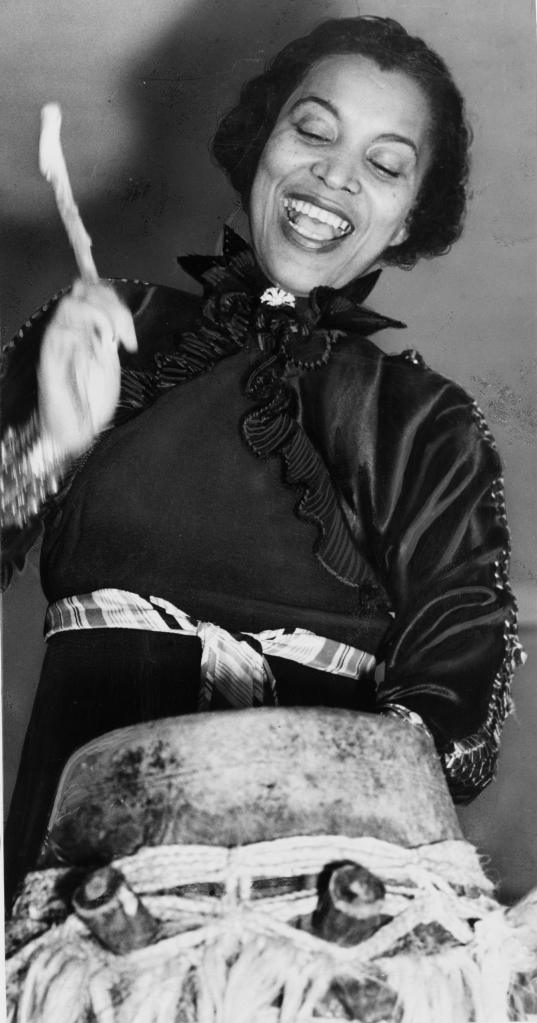
.
“Jump at the sun.” That’s what Zora Neale Hurston’s mother encouraged her to do – and Zora did.
Born in 1891 in Notasulga, Alabama, to a preacher-tenant farmer-carpenter father and a schoolteacher mother, Hurston was raised in the little all-black town of Eatonville, Florida. And from there she jumped very far indeed, becoming one of the main female forces of The Harlem Renaissance (known at the time as The New Negro Movement).
.
But first it was Howard University in Washington, D.C., where Hurston enrolled in 1918 and earned an associate’s degree. Moving to Manhattan on a scholarship, she was the only black student at Barnard College, Columbia University. Margaret Mead was a classmate, and Franz Boas one of her professors; Hurston earned a B.A. in Anthropology in 1928 at the age of 37. Yet her literary involvements had already begun; a short story, Spunk, appeared in Alain Locke’s 1925 anthology The New Negro, and she was among the contributors to the famous one-issue Fire! of 1926.
.
A complex character, not a “team player” for upliftment of The Race – as W.E.B. DuBois might have insisted a writer be – Hurston went her own way and explored Black culture via anthropological folkloric studies of the U.S., Jamaica and Haiti (Mules and Men, Tell my Horse) and through her own unvarnished novels of Black-American life, including Their Eyes Were Watching God, her 1937 dialect-rich tale of the trials and tribulations of Janie Crawford (Eatonville and Hurston’s own third marriage were inspirations). Hurston’s earlier works had been criticized by Sterling Brown as inadequate because they were not in the “protest tradition” and not bitter enough; Alain Locke reviewed Their Eyes and called Hurston’s characters “pseudo-primitives”; and the most damning statement of all came from Richard Wright, who wrote that Their Eyes carries “no theme, no message, no thought.” Yet the book was a best-seller for its time, then went immediately out of print come War-time.
In 1940 Hurston was traveling the lecture circuit, with several books, essays and field studies to her credit, but by the time she died, in 1960, living hand to mouth near Fort Pierce, Florida, she was pretty much gone and forgotten. It wasn’t until Robert Hemenway’s 1977 biography appeared – and, movingly, a young Alice Walker in 1973 seeking out Hurston’s unmarked grave and “naming” it – that Zora Neale Hurston began to be re-assessed and appreciated more fully.
.
“Pretty much gone and forgotten?”
Well…Hurston became persona non grata after a 1948 scandal in which she was accused of meeting regularly with a boy in a basement for sex. The charges were based on malicious rumour – there were people who were suspicious of her free spirit – perhaps its proto-feminism? She was visiting Honduras doing a field study during the dates mentioned and so was declared innocent – but the bad rep, the taint, from allegations of child molestation – even though she was cleared – clung, broadcast as they were by the newspapers of the day. This “event” in Hurston’s life broke her essential joie de vivre; she never showed the same spark after this betrayal of her integrity.
.
Another important personal “event” – though this one she controlled and was not the victim of – was that after The Supreme Court’s historic 1954 decision in Brown vs. Board of Education (that separate public schools for Blacks are “inherently unequal” – not “separate but equal”), Hurston came out plainly and publicly on the wrong side of history when she stated: “This whole matter revolves around the self-respect of my people. How much satisfaction can I get from a court order? For somebody to associate with me who does not wish me near them. If there are adequate Negro schools and prepared instructors and instructions, then there’s nothing different except the presence of White people. For this reason, I regard the ruling of the United States Supreme Court as insulting rather than honouring my Race.” How to lose friends and influence people…Yet Hurston was both wrong and right in what she said – there are many truthful angles to be viewed and she had the guts to speak her mind – then pay the price.
.
Alice Walker and Robert Hemenway began the journey back from oblivion for Zora Neale Hurston – a figure in Black-American letters and scholarship who could not be intellectually “boxed in” – she was too busy jumping at the sun.
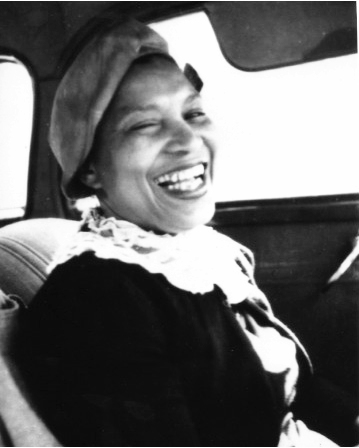
And January 25th 2014 is the opening day of the 25th anniversary of the week-long Zora! Fest held in Eatonville, Florida. Her hometown community has re-claimed their famous – infamous? – wild individualist of a daughter as one of their own again in naming their yearly arts, music and culture festival after her.
 .
.
Excerpt from chapter 1 of Their Eyes Were Watching God:
“Seeing the woman as she was made them remember the envy they had stored up from other times. So they chewed up the back parts of their minds and swallowed with relish. They made burning statements with questions, and killing tools out of laughs. It was mass cruelty. A mood come alive. Words walking without masters; walking altogether like harmony in a song.
“What she doin’ comin’ back here in dem overhalls? Can’t she find no dress to put on? Where’s dat blue satin dress she left here in? Where all dat money her husband took and died and left her? What dat ole forty year ole woman doin’ wid her hair swingin’ down her back lak some young gal? Where she left dat young lad of a boy she went off here wid? Thought she was goin’ to marry! Where he left her? What he done wid all her money? Betcha he off wid some gal so young she ain’t even got no hairs – why she don’t stay in her class?!”
When she got to where they were she turned her face on the bander log and spoke. They scrambled a noisy “Good evenin’ ” and left their mouths setting open and their ears full of hope. Her speech was pleasant enough, but she kept walking straight on to her gate. The porch couldn’t talk for looking.
The men noticed her firm buttocks like she had grapefruits in her hip pockets; the great rope of black hair swinging to her waist and unraveling in the wind like a plume; then her pugnacious breasts trying to bore holes in her shirt. They, the men, were saving with the mind what they lost with the eye. The women took the faded shirt and muddy overalls and laid them away for remembrance. It was a weapon against her strength and if it turned out of no significance, still it was a hope that she might fall to their level some day.
But nobody moved, nobody spoke, nobody even thought to swallow spit until after her gate slammed behind her.”
.
Two of Hurston’s most famous quotations:
“I am not tragically coloured. There is no great sorrow dammed up in my soul, nor lurking behind my eyes. I do not mind at all. I do not belong to that sobbing school of Negrohood who hold that Nature somehow has given them a lowdown dirty deal. Even in the helter-skelter skirmish that is my life, I have seen that the world is to the strong regardless of a little pigmentation more or less. No, I do not weep at the world — I am too busy sharpening my oyster knife.”
Zora Neale Hurston
.
“Sometimes I feel discriminated against, but it does not make me angry. It merely astonishes me. How can anyone deny themselves the pleasure of my company? It’s beyond me.”
Zora Neale Hurston
. . . . .
Lucille Clifton: “Oh Dios bufonesco” y “El martes” / “Oh antic God” and “Tuesday”
Posted: January 23, 2014 Filed under: English, Lucille Clifton, Spanish, ZP Translator: Alexander Best Comments Off on Lucille Clifton: “Oh Dios bufonesco” y “El martes” / “Oh antic God” and “Tuesday”
ZP_Retrato de Lucille Clifton por Summer Pierre_Oh, reza que lo que queremos vale correr el riesgo…Reza que lo que estamos corriendo hacia…es lo que queremos.
Lucille Clifton (poeta/educadora estadounidense, 1936 – 2010)
“Oh Dios bufonesco”
.
Oh Dios bufonesco
regrésame
mi madre durante la treintena
inclinando atrás del porche del frente
el cojín enorme de su pecho
apoyando contra el pasamanos
llamándome a la cama.
.
Casi llego a la-edad-por-dos de esa mujer muerta.
.
Apenas puedo recordar su canción
el olor de sus manos
aunque su cabello indómito roza mis sueños, las noches.
Regrésame, oh Dios de entonces – Dios de ahora,
el canto de mi madre,
su joven voz que tararea mi nombre.
. . .
Lucille Clifton (poet/educator, U.S.A., 1936 – 2010)
“Oh antic God”
.
Oh antic God
return to me
my mother in her thirties
leaned across the front porch
the huge pillow of her breasts
pressing against the rail
summoning me in for bed.
.
I am almost the dead woman’s age times two.
.
I can barely recall her song
the scent of her hands
though her wild hair scratches my dreams
at night. Return to me, oh Lord of then
and now, my mother’s calling,
her young voice humming my name.
. . .
“El martes” (un poema sobre “9-11”)
.
Trueno, relámpago – y nuestro mundo es
otro lugar; no permanecerá ningún día;
no quedará insensible, ninguna sangre.
.
Conocen esta tormenta en otros lugares:
Israel, Irlanda, Palestina.
Pero Dios ha bendecido “America”
(es lo que cantamos…)
.
Y Dios ha bendecido “America” – sí –
a aprender que no hay nadie exento…
Es Uno el Mundo:
todo miedo – es uno
toda vida – es uno;
aún toda muerte.
Todo Uno.
. . .
“Tuesday” (a poem about “9-11”)
.
thunder and lightning and our world
is another place no day
will ever be the same no blood
untouched
.
they know this storm in otherwheres
israel ireland palestine
but God has blessed America
(we sing)
.
and God has blessed America
to learn that no one is exempt
the world is one all fear
is one all life all death
– all one.
. . .
Traducciones del inglés: Alexander Best
. . . . .
Claude McKay: “The Snow Fairy”
Posted: January 21, 2014 Filed under: Claude McKay, English Comments Off on Claude McKay: “The Snow Fairy”
Claude McKay (1889-1948)
“The Snow Fairy”
.
I
Throughout the afternoon I watched them there,
Snow-fairies falling, falling from the sky,
Whirling fantastic in the misty air,
Contending fierce for space supremacy.
And they flew down a mightier force at night,
As though in heaven there was revolt and riot,
And they, frail things had taken panic flight
Down to the calm earth seeking peace and quiet.
I went to bed and rose at early dawn
To see them huddled together in a heap,
Each merged into the other upon the lawn,
Worn out by the sharp struggle, fast asleep.
The sun shone brightly on them half the day,
By night they stealthily had stol’n away.
.
II
And suddenly my thoughts then turned to you
Who came to me upon a winter’s night,
When snow-sprites round my attic window flew,
Your hair disheveled, eyes aglow with light.
My heart was like the weather when you came,
The wanton winds were blowing loud and long;
But you, with joy and passion all aflame,
You danced and sang a lilting summer song.
I made room for you in my little bed,
Took covers from the closet fresh and warm,
A downful pillow for your scented head,
And lay down with you resting in my arm.
You went with Dawn. You left me ere the day,
The lonely actor of a dreamy play.

Editor’s note:
“The Snow Fairy” is taken from Claude McKay’s poetry collection Harlem Shadows, published in 1922, and one of the first books of The Harlem Renaissance. Its form is the traditional English sonnet – each verse an iambic pentametre, and the end-word rhyme pattern being abab–cdcd–efef–gg in a 14-verse stanza. McKay wrote numerous nuanced and delicate poems but was also capable of using the sonnet form to convey an inspirational rallying cry, as in his sonnet “If We Must Die”, composed in 1919 during the “Red Summer” race riots in the USA.
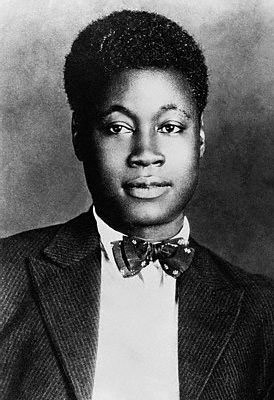
Claude McKay in his 20s
For more Winter poems by Claude McKay click here: https://zocalopoets.com/2012/02/08/claude-mckay-the-tropics-in-new-york/
. . . . .
Maya Angelou: “A pesar de todo – me levanto” / “Still I Rise”
Posted: January 15, 2014 Filed under: English, Maya Angelou, Spanish Comments Off on Maya Angelou: “A pesar de todo – me levanto” / “Still I Rise”
Maya Angelou (Marguerite Ann Johnson) (St. Louis, Missouri, 1928- )
“A pesar de todo – me levanto”
.
Podrás inscribirme en la historia
Con tus mentiras amargas y retorcidas,
Podrás arrastrarme en la basura misma
Y a pesar de todo, como el polvo, me levantaré.
.
¿Te desconcierta mi insolencia?
¿Por qué te acosa la melancolía?
Porque camino como si tuviese pozos de petróleo
Bombeando en mi sala de estar.
.
Igual que las lunas y los soles,
Con la certeza de las mareas,
Igual que las esperanzas que alto vuelan
A pesar de todo me levantaré.
.
¿Querías verme destruida?
¿Con la cabeza inclinada y los ojos cerrados?
Los hombros caídos como lágrimas.
Debilitada por mis gritos conmovedores.
.
¿Te ofende mi arrogancia?
No lo tomes tan a mal
Porque me río como si tuviera minas de oro
Cavándose en el patio de atrás.
.
Puedes dispararme las palabras,
Puedes cortarme con los ojos,
Puedes matarme con tu odio,
Y a pesar de todo, como el aire, me levantaré.
.
¿Te desconcierta mi sensualidad?
¿Te resulta una novedad
Que baile como si tuviera diamantes
En el medio de mis muslos?
.
Desde los cobertizos de una vergüenza histórica
Me levanto
De un pasado enraizado en el dolor
Me levanto
Soy un océano negro, impetuoso y extenso,
Fluyendo y embraveciendo soporto la marea.
Dejando atrás noches de espanto y miedo
Me levanto
En un nuevo día asombrosamente claro
Me levanto
Con los talentos que mis ancestros dieron,
Yo soy el sueño y la esperanza del esclavo.
Me levanto
Me levanto
Me levanto.


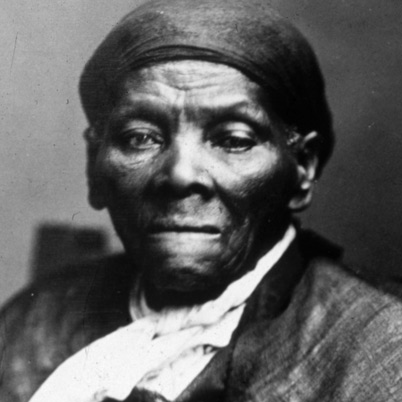
“Still I Rise”
.
You may write me down in history
With your bitter, twisted lies,
You may tread me in the very dirt
But still, like dust, I’ll rise.
.
Does my sassiness upset you?
Why are you beset with gloom?
‘Cause I walk like I’ve got oil wells
Pumping in my living room.
.
Just like moons and like suns,
With the certainty of tides,
Just like hopes springing high,
Still I’ll rise.
.
Did you want to see me broken?
Bowed head and lowered eyes?
Shoulders falling down like teardrops.
Weakened by my soulful cries.
.
Does my haughtiness offend you?
Don’t you take it awful hard
‘Cause I laugh like I’ve got gold mines
Diggin’ in my own back yard.
.
You may shoot me with your words,
You may cut me with your eyes,
You may kill me with your hatefulness,
But still, like air, I’ll rise.
.
Does my sexiness upset you?
Does it come as a surprise
That I dance like I’ve got diamonds
At the meeting of my thighs?
.
Out of the huts of history’s shame
I rise
Up from a past that’s rooted in pain
I rise
I’m a black ocean, leaping and wide,
Welling and swelling I bear in the tide.
Leaving behind nights of terror and fear
I rise
Into a daybreak that’s wondrously clear
I rise
Bringing the gifts that my ancestors gave,
I am the dream and the hope of the slave.
I rise
I rise
I rise.
. . .
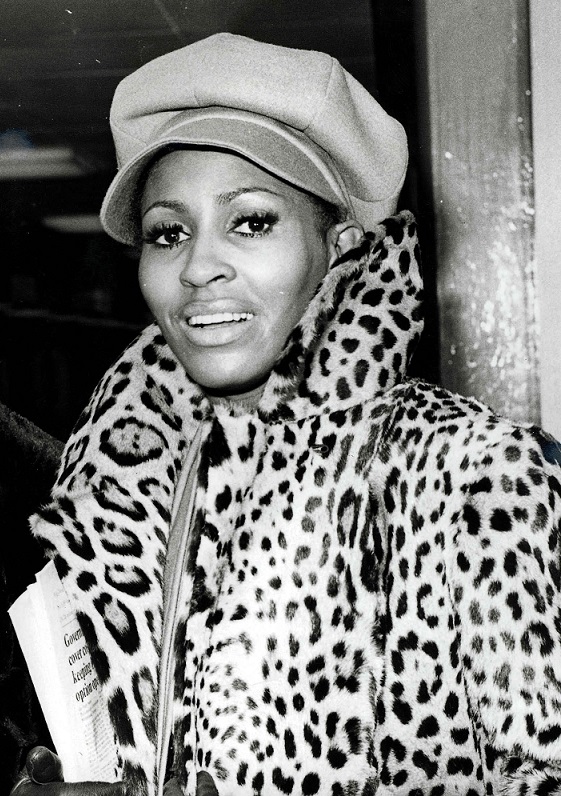
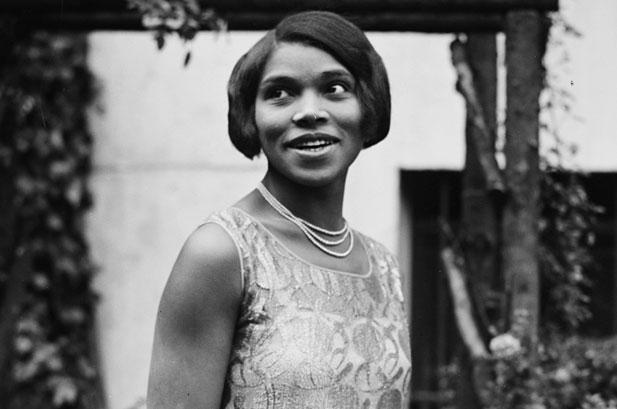
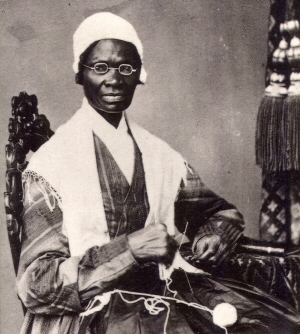
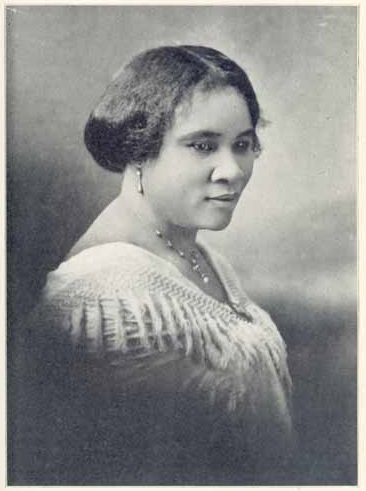
Fotos / Photos:
Bell Hooks, Rosemary Brown, Tina Turner, Marian Anderson, Zora Neale Hurston, Madam C. J. Walker, Dr. Susan S. McKinney Steward, Susan Paul Smith Vashon, Frances Ellen Watkins Harper, Harriet Tubman, Sojourner Truth
. . . . .
 Zócalo Poets