Poema para Miércoles de Ceniza / Ash Wednesday Poem
Posted: February 22, 2012 Filed under: English, Spanish, ZP Translator: Alexander Best | Tags: Ash Wednesday poem, Poema para Miércoles de Ceniza Comments Off on Poema para Miércoles de Ceniza / Ash Wednesday Poem
Poema para Miércoles de Ceniza / Ash Wednesday Poem
Once, in winter, Una vez, durante el invierno,
I stood, Yo estaba de pie,
White flakes brushing my face. Copos blancos rozando la cara.
With white fingers, Con dedos pálidos,
I waited with the others. Esperé con los otros.
We shivered on the steps, Temblamos en los escalones,
Stuck out our tongues Sacamos la lengua
To catch snowflakes Para agarrar los copos de nieve
So cold they would burn. Tan frío que nos quemaban.
Soon the big doors opened Pronto abrieron las puertas grandes
On smoke and candles Al humo y a los cirios
And a cold thumb brushed Y un pulgar frío me rozó
My forehead with a cross of ashes. La frente con una cruz de cenizas.
“Dust to Dust” he muttered “El Polvo al Polvo,” masculló
While snowflakes Mientras los copos de nieve
Melted in my hair Se derritieron en mi cabello.
*
( Autor anónimo /Anonymous )
Traducción en español: Alexander Best
This Passionate Earth: “To Patrice Lumumba” by Roberto Armijo
Posted: February 15, 2012 Filed under: English, Roberto Armijo, Spanish Comments Off on This Passionate Earth: “To Patrice Lumumba” by Roberto Armijo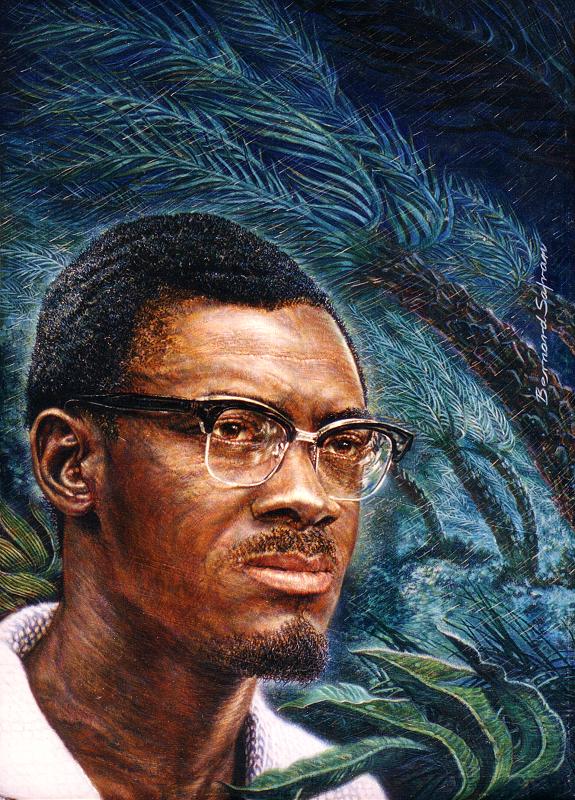
Roberto Armijo
(El Salvador, 1937-1997)
“To Patrice Lumumba”
.
This passionate earth.
Earth in love with the bare feet of the antelope’s nomadic gallop.
Earth exploded into reeds ants fountains and geraniums.
Tortured earth climbing in the wild vine that formed your flesh,
Your tongue, your nightingale breast, your assassinated whistle.
You came from the dark sorrow that
bled in the deep African night, you came from a village,
And you wanted the world of tomorrow to also be for Black people.
You didn’t want them extinguished between manure and the dark insides of mines.
You told your brothers that beyond sea, sky, and trees
Humanity was already tilling its path, destiny, and hope.
You knew it was necessary to open their eyes,
Extend their hands and ignite them with joy,
But those who hated your voice,
Those who shook and hovered around your shadow,
Those who assassinated you
Distort your death…your silence:
They pulled out your murmuring heart
And drowned the dove asleep in your blood
But they couldn’t cut off your clear and wild voice,
And since then you haunt their dreams
And the fearful search for you in your apartment’s darkest places
So as not to hear the rumour spread by your songs and poems
That sing in every young breast, on every separate untamed lip
And is freed, trembling,
To arrive each morning at the markets where the partitioned earth surges with
Flowers, vegetables and fruits,
As your voice travels over cities remote regions, wilderness,
Reaching jungles where the wild leopard, the rhinoceros and
The birds are sheltered below the shadow of trees.
Today more than ever they hate you, cannot stand
Hearing your name:
They corner you and blind you under portfolios and padlocks,
In their feverish anger they spit at you and crush you.
But they can’t, they can’t extinguish your voice,
Because in every abused heart, in every affronted Black person,
You are awakening man-the-sleeping-creature, and
With your songs you sing of hope for Black people
And all the people of the world.
* * * * *
Written in the 1970s, Armijo’s poem was a deeply-felt
tribute to a revolutionary hero – Patrice Lumumba –
from an earlier time, 1960-1961, and from another continent,
Africa – The Republic of The Congo specifically.
Patrice Lumumba was briefly Prime Minister of his
newly-independent country, was deposed in a
military coup then executed. The “Congo Crisis” lasted six
years and involved a Cold-War power struggle among
Belgium, The Soviet Union, The USA, and the
secessionist province of Katanga.
*
Roberto Armijo’s own country, El Salvador,
was at the onset of a similar conflict at
the time he wrote this poem – a civil war
exacerbated by powerful foreign (mainly
the USA) manipulation of the country’s
internal affairs.
* * * * *
Roberto Armijo
(Poeta d’El Salvador, 1937-1997)
“A Patricio Lumumba”
.
Esta tierra ardorosa.
La tierra enamorada del pie descalzo del nómada galope del antílope.
La tierra torturada trepadora en la enredadera salvaje
Modeló tu carne tu lengua tu pecho de ruiseñor tu silbo asesinado.
Tu venías del dolor oscuro que sangraba en la honda noche de Africa
Venías de la aldea
Y deseabas que la mañana del mundo también fuera del negro.
Tu no querías que el negro se apagara entre el estierco
Y la oscuridad de las minas.
A tus hermanos les hablabas que mas allá del mar del cielo y de los árboles
El hombre ya labraba su destino su misión su esperanza.
Tu sabías que era necesario abrir los ojos
Extender las manos y encenderlas de júbilo
Pero los que odiaban tu voz los que temblaban y rondaban tu sombre
Urdían tu muerte tu silencio
Te asesinaron
Te sacaron el corazón rumoroso
Y ahogaron la paloma dormida de tu sangre
Pero tu voz clara y silvestre no la pudieron segar
Y desde entonces temen
Te sueñan y medrosos buscan los sitios más oscuros de tu habitaciones
Para no oír el rumor dilatado de tus canciones
De tus poemas que en cada pecho joven
En cada labio indómito y segregado canta y se suelta temblando
Para llegar matinal a los mercados donde se alza la tierra repartida
En las flores las verduras y las frutas
Tu voz recorre las ciudades las regiones remotas y agrestes
Llega a las selvas donde se guarecen bajo la sombre de los árboles
El leopardo salvaje en rinoceronte y los pájaros.
Hoy más que nunca te odian ya no quisieran
ni oír tu nombre.
Te arrinconan y bajo portafolios y candados
Te ciegan y en su fiebre colérica te escupen te estrujan.
Pero no pueden pero no pueden apagar tu voz
Porque en cada pecho maltratado en cada negro afrentado
Estás tú despertando al hombre a la criatura dormida
Y con tus versos cantas la mañana del negro
Y del hombre del mundo.
.
Translation from Spanish into English: David Volpendesta
Traducción del español al inglés: David Volpendesta
_____
Poemas de Amor del idioma zapoteco
Posted: February 14, 2012 Filed under: English, Poemas de Amor del idioma zapoteco, Spanish, Victor Terán, Zapotec | Tags: Love poems, Poemas de Amor Comments Off on Poemas de Amor del idioma zapoteco
Victor Terán
(nace 1958, Juchitán, Oaxaca, México;
Idioma: Zapoteco Istmeño / Language:
Isthmus Zapotec)
Lu ti nagana
Lu ti neza
chupa ná’
nagu’xhugá
zuguaa’.
Tobi ri’
nadxii naa,
xtobi ca
nadxiee laa.
Nisaguié,
nisaguié,
gudiibixendxe
ladxiduá’.
Gubidxaguié’,
gubidxaguié’,
binduuba’ gu’xhu’
ndaani’ bizaluá’.
_____
Duda
Sobre un camino
Que se bifurca,
Confundido
Me hallo.
Ésta
Me ama,
Aquella la amo.
Lluvia,
Lluvia,
Lava con mucho esmero
El alma mía.
Sol en flor,
Sol en flor,
Barre el humo
De mis ojos.
_____
Indecision
Upon a road
which forks,
confused
I stand.
One woman
loves me,
another
I love.
Rain,
rain,
meticulously cleanse
my soul.
The blossoming sun,
the blossoming sun,
sweep the smoke
from my eyes.
_____ _____ _____
Biluxe
Biluxe
Ne ngasi nga laani.
Lu neza zadxaagalulu’
Ca ni bidxagalú cou’
Biá’ dxi
Gúcalu’ bandá’ xtibe;
Ti bi’cu’, ti bihui,
Ti binni.
Gasti’ zadxaa
Ne laaca ca bigose
Guxhuuna’ íquelu’
Gusiquichi ique badunguiiu
Bichaabe lii.
Ne laaca decheyoo
Bizucánelu’ laabe
Gusicabe guendarusiaanda’ xtibe.
Gasti’ zadxaa.
Lii siou’ nga zusácalu’
Guidxilayú ma qui gapa
Xiñee guireexieque,
Ma qui gapa xiñee
quiidxi guendanabani.
Ne zoyaalu’ guendanabani xtilu’,
Ladxido’lo zapapa
Bia’ qui guchendaxhiaasi layú,
Ne nalu’ ne ñeelu’
Zusiaandu’ laaca’,
Qui zánnalu paraa zuhuaalu’,
Ne nisi lulu’, nisi nalu’
Zaniibihuati guiá’ ne guete’.
_____
Se acabó
Se acabó
y eso es todo.
Sobre tus pasos encontrarás
las cosas mismas que hallaste
durante los días
que fuiste su sombre;
Un perro , un cerdo,
una persona.
Nada cambiará
y los mismos zanates
que te ensuciaron la cabeza
blanquearán la del joven
que tomó tu lugar.
Y detrás de la casa
donde se recostaban
ella asentará su olvido.
Nada cambiará,
sin embargo supondrás
que no tiene sentido ya
el movimiento de la tierra,
ya no existen motivos
para afferarse a la vida.
Y morderás tu hombría,
tu corazón vibrará
con las alas a punto de golpear la tierra,
y tus brazos y tus piernas
los pondrás en el olvido,
perdido en tu sitio
te verás moviendo tontamente
los ojos y los brazos de norte a sur.
_____
It’s Over
It’s over…
and that is all.
Along your pathway you will find
the same things you discovered
during the days when you were her shadow:
A dog, a pig,
A person.
Nothing will change…
And the same “zanates”(little crows)
that soiled your head
will whiten that of the young man
who took your place.
And behind the house
where you and she
used to lie,
she will lay down her memory.
Nothing will change…
However, you will think
that the earth’s movement
no longer makes any sense,
that there are no more reasons
to cling to life.
And you will swallow your manly pride;
your heart will pulsate,
its wings nearly striking the ground,
and your arms and legs
will be caste into oblivion…
Lost within your space,
you will find yourself
foolishly moving your eyes and arms
from north to south.
_____
Traducciones del zapoteco al español: el poeta
Translations from Zapotec into Spanish: the poet
Traducciones del español al inglés /
Translations from Spanish into English:
© Carlos Montemayor, Donald Frischmann, 2004

Poemas de Amor del idioma maya
Posted: February 14, 2012 Filed under: English, Gerardo Can Pat, Maya, Poemas de Amor del idioma maya, Spanish | Tags: Love poems, Poemas de Amor Comments Off on Poemas de Amor del idioma maya
Gerardo Can Pat (1957-1994,
Tibolón, Yucatán, México;
Idioma: Maya / Language: Maya)
Teech yeten teen
Wey yóok’olkaabe’ teech yéeten teen,
ka’atulo’on tyo’lal yaakunal núupo’on,
in yaakumech teche’a k’áaten,
yaakumabaa ka’ach to’on ka’atulo’on.
*
Teche’ mina’anech tin wiknal nejla’e’,
le yaakunale’ p’áat chen túun bejla’e’,
ba’ale’ tene’ leyli’ tin pa’tike’,
le yaabilaj ma’ táan dzikteno’.
*
Ka’atulo’on t-wayak’taj ya’ankach ba’alo’ob,
ti’ junp’éel lu’umkabil k-ti’al ka’atulo’on,
mix jach chichani’ mix jach nojochi’,
tu p’iis u ti’al k-yaakuntikbaa ka’achij.
*
Jaytéenak táan k-máan in lochmaj a kaal,
jaytéenak ta wa’ajten a yaakumajen,
le o’olal chan junp’éel ba’al in wojel,
teche’ mixbiik’in ken a tu’ubsilen.
*
Tin dzajtech u dzook ba’ax yaan tene’,
in yaakunal yéeten mis juntuusil,
ba’ale’ teche’ we’ek’ech men sajkil,
le o’olal bejla’e’ bey ma’ k’ajobae’.
*
Wa ti’ junp’éel k’iin ku suut a tuukule’,
wek’ a sajkilil ki’imakunta wóod,
tumen in sa’as tech’ mina’an mixba’al,
juntulili’on tu ka’atéen k’p’áatal.
_____
Tú y yo
En el mundo tú y yo
fuimos hechos inseparables por el amor.
Igual que tú, yo te amo,
juntos el amor nos hizo.
*
Juntos muchas cosas soñamos:
un mundo sólo para nosotros,
no grande ni pequeño,
exacto para este amor.
*
¡Cuántas veces caminamos, abrazándonos,
y tú diciendo que me amabas!
Sólo una cosa sé:
no has de olvidarme.
*
Te entregué lo que tenía:
mi amor sin un solo engaño.
Hoy el miedo te ha derrotado
y por eso parecemos desconocidos.
*
Pero si algún día tuvieras firme otra vez
el pensamiento
y vencieras este miedo, escucha:
no tengo nada que perdonarte,
otra vez seremos los dos uno solo.
_____
You and I
In this world, you and I
were made inseparable by love.
Just as you love me, I love you.
Love made us as one.
*
Together, we dreamed of many things:
a world just for us…
not large or small,
but just right for this love.
*
How many times we walked,
our arms around each other
– and you saying you loved me!
I know just one thing:
you will not forget me.
*
I gave you all that I had:
my love, without deceit.
Today fear has overcome you
and we are like strangers.
*
But if some day you were to
recover your reason
and overcome this fear, remember:
I have nothing to forgive you for;
we will again be as one.
_____
Taan a bin
In wojel ta bin, mixbik’in suunakech,
ma’alob xen ta beel, min tuklil in k’áastikech,
in dzíibolale’, ka’a anchak máax yaakuntikech,
wa le ka tuklil, le te’e ku binitiktech.
*
Ma’tuklil tyo’lal, wa kin p’áatal tin juunal,
kex mixmáak yaanten, ka’a páatak u náayskinwóol,
ma’ táan u páajtal, in k’at-óoltik u laak’ ba’al,
xi iktech ma’alobil x-ch’úupal ki’imakchak a wóol.
*
Kex túun yajtin wóol, tyo’lal tun tan a p’atken
ma’ tin tuklaje’, wa bey ken a beetiten,
tyo’lal óotzilen, lebeetik ma’ yakuntken,
wa túun ta bine’, mix u suut a wich ti’ ten.
*
In k’áat-óolale’, xi’iktech yéeten ya’ab utzil,
tumen tin wicho’obe’ táan u yalkab u ja’il,
tyo’lal mixbik’in bin suunaken in wilech,
tu xu’upul in wiik’, tu bin xan in kuxtalil.
*
Teche’ táan a bin. Tene’kin p’áatal.
_____
Te vas
Yo sé que te vas y no regresarás.
Si, prosigue tu camino, que no te detendré.
Ojalá haya quien te quiera,
si acaso eso te falta.
*
No pienses que si quedo solo
no tendré a nadie que me consuele.
¿Que más pudo desear para ti?
Que estés bien, que seas dichosa.
*
Me lastima que te alejes,
pues nunca pensé que esto hicieras.
Si por mi pobreza te vas,
ni siquiera a mirarme vuelvas.
*
Pero deseo que te vaya bien.
Corren lágrimas ahora en estos ojos
que nunca te volverán a ver.
Se me acaba el aire junto con mi vida.
*
Te vas, yo me quedo.
_____
You Are Leaving
I know that you are leaving and will not return.
Yes, follow your path, I won’t stop you.
I hope there will be someone to love you,
if that is what you need.
*
Don’t think that if I am left alone
I won’t have anyone to console me.
What more can I wish you
– but that you be well, be happy?
*
It hurts me that you are going away,
since I never thought you would.
If you are leaving because I’m poor,
don’t even look back.
*
But I hope things go well for you.
Tears now run from these eyes
that will never see you again.
My breath and my life are running out…
*
You are leaving, I am staying.
_____
Traducciones del maya al español y inglés:
Translations from Maya into Spanish and English:
© Carlos Montemayor, Donald Frischmann, 2004

Nicomedes Santa Cruz: “Black Rhythms of Peru” / “Ritmos negros del Perú” – “Latin America” / “América Latina”
Posted: February 12, 2012 Filed under: English, Nicomedes Santa Cruz, Spanish, ZP Translator: Alexander Best, ZP Translator: Lidia García Garay | Tags: Black poets Comments Off on Nicomedes Santa Cruz: “Black Rhythms of Peru” / “Ritmos negros del Perú” – “Latin America” / “América Latina”
Nicomedes Santa Cruz
( Poeta y músico afro-peruano, 1925-1992)
“Ritmos negros del Perú” (1957)
Ritmos de la esclavitud
contra amarguras y penas.
Al compás de las cadenas
Ritmos negros del Perú.
*
De África llegó mi abuela
vestida con caracoles,
la trajeron lo´epañoles
en un barco carabela.
La marcaron con candela,
la carimba fue su cruz.
Y en América del Sur
al golpe de sus dolores
dieron los negros tambores
ritmos de la esclavitud
*
Por una moneda sola
la revendieron en Lima
y en la Hacienda “La Molina”
sirvió a la gente española.
Con otros negros de Angola
ganaron por sus faenas
zancudos para sus venas
para dormir duro suelo
y naíta´e consuelo
contra amarguras y penas…
*
En la plantación de caña
nació el triste socabón,
en el trapiche de ron
el negro cantó la zaña.
El machete y la guadaña
curtió sus manos morenas;
y los indios con sus quenas
y el negro con tamborete
cantaron su triste suerte
al compás de las cadenas.
*
Murieron los negros viejos
pero entre la caña seca
se escucha su zamacueca
y el panalivio muy lejos.
Y se escuchan los festejos
que cantó en su juventud.
De Cañete a Tombuctú,
de Chancay a Mozambique
llevan sus claros repiques
ritmos negros del Perú.
_____
Nicomedes Santa Cruz
(Black Peruvian poet and singer, 1925-1992)
Black Rhythms of Peru (1957)
Rhythms of slavery
Against bitterness and sorrows.
Keeping time to the beat of the chains
– Black rhythms of Peru.
*
From Africa arrived my grandmother
Adorned with conch-shells,
They brought her, those Spaniards,
In a three-masted ship.
Marked by wax and fire – the
“carimba” scar was the cross she bore.
And in South America
To each strike, in her suffering,
The Black drums gave
Rhythms to that slavery.
*
For one coin
They sold my grandmother again
In Lima
And at Hacienda La Molina
She served the Spanish people.
With other Blacks from Angola
She earned for her tasks
Mosquito bites on her veins
Sleeping upon hard ground,
And nuthin’ ain’t no consolation
Against bitterness and sorrows…
*
On the sugarcane plantation
Was born that sad “socabón” dance
In the rum-press at the mill,
The Black man sang of Zaña.
The “machete” and the scythe
Cut his dark hands;
And the Indians with their reed-flutes,
The Black man and his tambourine,
Sang of their sad luck
Keeping time to the beat of the chains.
*
They died, those old Black folks…
But within the dried fibres of the cut cane
One hears the Zamacueca dance
And the distant Panalivio.
One hears the festivities they
Sang of in their youth.
From Cañete to Timbuktu,
From Chancay to Mozambique
They carried the clear pitter-patter,
The tap-tap-tap of those
Black rhythms of Peru.
_____
Glossary:
Zaña: 16th-century Spanish-Colonial town in Peru – inhabited by
wealthy, pious Spanish families involved in sugar and cotton
plantations based upon African slavery and Native-Indian servitude.
Raided by English pirates in 1686 – many people were killed,
prosperous families abandoned the town, and slaves
became unexpectedly “free”… La Zaña is an Afro-Peruvian dance
originating in the town.
Zamacueca, Panalivio: Afro-Peruvian dances of the 18th
and 19th centuries – the Zamacueca was a courtship dance and
the Panalivio’s lyrics often told of the trials of slavery.
*
Cañete, Chancay: Peruvian Spanish-Colonial towns – prominent in
the 17th through the 19th centuries – surrounded by haciendas
and sugar/cotton plantations. Large African-born and native-
born Black slave populations.
* * *
Nicomedes Santa Cruz:
“América Latina”(1963) / “Latin America”(1963)
Mi cuate My pal
Mi socio My mate
Mi hermano My brother
Aparcero Sharecropper
Camarado Colleague
Compañero Comrade
Mi pata My buddy
M´hijito My boy
Paisano… Compatriot…
He aquí mis vecinos. Here I have my neighbours
He aquí mis hermanos. Here I have my brothers
*
Las mismas caras latinoamericanas The same Latin-American faces
de cualquier punto de América Latina: from every corner of Latin America:
Indoblanquinegros Indianwhiteblacks
Blanquinegrindios Whiteblackindians
y Negrindoblancos and Blackindianwhites
*
Rubias bembonas Blondes with thick lips
Indios barbudos Bearded Indians
y negros lacios and straight-haired Blacks
*
Todos se quejan: All of them complain
-¡Ah, si en mi país – Oh, if only in my country
no hubiese tanta política…! there wasn’t so much “politics”…!
-¡Ah, si en mi país – Oh, if only in my country
no hubiera gente paleolítica…! there weren’t such paleolithic people…!
-¡Ah, si en mi país – Oh, if only in my country
no hubiese militarismo, there was no militarism,
ni oligarquía or oligarchy
ni chauvinismo or chauvinism
ni burocracia or bureaucracy
ni hipocresía or hypocrisy
ni clerecía or clergy
ni antropofagia… or anthropophagy…
-¡Ah, si en mi país…! – Oh, if only – in my country…!
*
Alguien pregunta de dónde soy Someone asks where I’m from
(Yo no respondo lo siguiente): (I do not answer with the following):
Nací cerca de Cuzco I was born close to Cuzco
admiro a Puebla Puebla I admire
me inspira el ron de las Antillas I’m inspired by rum from The Antilles
canto con voz argentina I sing in an Argentinian voice
creo en Santa Rosa de Lima I believe in Saint Rose of Lima
y en los Orishas de Bahía. and in the Orishas of Bahia.
Yo no coloreé mi Continente I didn’t paint my Continent
ni pinté verde a Brasil the green of Brazil
amarillo Perú the yellow of Peru
roja Bolivia Bolivia’s red
*
Yo no tracé líneas territoriales I drew no border-lines
separando al hermano del hermano. separating brother from brother
*
Poso la frente sobre Río Grande I rest by the Rio Grande
me afirmo pétreo sobre el Cabo de Hornos I stand firm at Cape Horn
hundo mi brazo izquierdo en el Pacífico my left hand I dip down into the Pacific
y sumerjo mi diestra en el Atlántico. and into the Atlantic I submerge my right.
*
Por las costas de oriente y occidente By the coasts East and West
y doscientas millas entro and two-thousand miles inland
a cada Océano from each Ocean
sumerjo mano y mano I immerse both hands
y así me aferro a nuestro Continente and in this way I hold our Continent
en un abrazo Latinoamericano. in a Latin-American embrace.
*
Translation from the original Spanish into English:
“Black Rhythms of Peru”: Alexander Best
“Latin America”: Lidia García Garay
Nicolás Guillén: “The Bongo’s Song” / “La canción del bongó”
Posted: February 12, 2012 Filed under: English, Nicolás Guillén, Spanish, ZP Translator: Alexander Best | Tags: Black History Month poems Comments Off on Nicolás Guillén: “The Bongo’s Song” / “La canción del bongó”
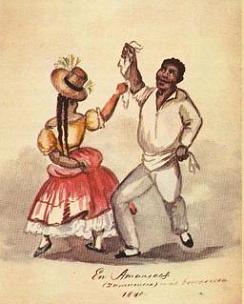
ZP_The Rooster Dances to My Bongo Beat_El Gallo Baila Con Mi Bongo_painting by_pintura de_George Rodez
Nicolás Guillén
( Poeta afro-cubano, 1902-1989 )
“La canción del bongó” (1930)
.
Esta es la canción del bongó:
—Aquí el que más fino sea,
responde, si llamo yo.
Unos dicen: Ahora mismo,
otros dicen: Allá voy.
Pero mi repique bronco,
pero mi profunda voz,
convoca al negro y al blanco,
que bailan el mismo son,
cueripardos y almiprietos
más de sangre que de sol,
pues quien por fuera no es de noche,
por dentro ya oscureció.
Aquí el que más fino sea,
responde, si llamo yo.
En esta tierra, mulata
de africano y español
(Santa Bárbara de un lado,
del otro lado, Changó),
siempre falta algún abuelo,
cuando no sobra algún Don
y hay títulos de Castilla
con parientes en Bondó:
Vale más callarse, amigos,
y no menear la cuestión,
porque venimos de lejos,
y andamos de dos en dos.
Aquí el que más fino sea,
responde si llamo yo.
Habrá quién llegue a insultarme,
pero no de corazón;
habrá quién me escupa en público,
cuando a solas me besó…
A ése, le digo:
—Compadre,
ya me pedirás perdón,
ya comerás de mi ajiaco,
ya me darás la razón,
ya me golpearás el cuero,
ya bailarás a mi voz,
ya pasearemos del brazo,
ya estarás donde yo estoy:
ya vendrás de abajo arriba,
¡que aquí el más alto soy yo!
_____
Nicolás Guillén
(Cuban poet, 1902-1989)
“The Bongo’s Song” (1930)
(To Lino Dou)
.
This is the bongo’s song:
“Let the finest of you here
answer when I call you!
Some say: I’ll be right there,
others say: Just a minute.
But my harsh peal,
but my deep voice,
summons blacks and whites,
who dance to the same son,
men with brownish skins and blackish souls
caused more by blood than by the sun,
for who on the outside are not night,
have already darkened on the inside.
Let the finest of you here
answer when I call you.
.
“In this land made mulatto
by Africans and Spaniards
(Santa Bárbara on the one hand,
Changó on the other),
there is always a missing grandfather,
when there isn’t an excess of Dons.
Some have titles from Castile
and relatives in Bondó :
it is better to keep quiet, my friends,
and not stir up the matter
because we came from far away,
and we walk two by two.
Let the finest of you here
answer when I call you!
.
“There’ll be those who will insult me,
but not of their full accord;
there’ll be those who spit on me in public,
yet when we are alone they kiss me…
To them I say:
My friends,
you’ll soon be begging my pardon,
you’ll soon be eating my ajiaco,
you’ll soon be saying I’m right,
you’ll soon be beating my leather,
you’ll soon be dancing to my voice,
we’ll soon walk arm in arm,
you’ll soon be where I am:
you’ll soon be moving up,
for the highest here is me!”
.
Translation from Spanish into English
© 2003, KEITH ELLIS
* * *
Glossary:
Son – Quintessential original Cuban musical style, nascent in
the late 19th-century, flowered fully in the 20th; a hybrid of
Bantu-African percussion – bongos, maracas – with Spanish guitars
and melodies, combined with African “call-and-response”
song structure; the precursor of modern-day “Salsa” music
Mulatto – “mixed-race” i.e. African and European ancestry
Santa Bárbara – Roman-Catholic saint, syncretized into
Santería, a Caribbean religion combining West-African and
Christian beliefs; practised in Cuba.
Changó – Yoruba-African God of fire, thunder and lightning
Don – prefix of Spanish nobility
Bondó – a “typical” African town/province name, found in
Congo, Ivory Coast, Kenya, Mali, Uganda
Ajiaco – a hearty Cuban soup consisting of chicken, pork,
plaintains, sweet potatoes, taro, black pepper and lime juice
_____
Bob Marley: ¡Despierten y Vivan! / Wake Up and Live!
Posted: February 6, 2012 Filed under: Bob Marley, English, Spanish, Translator's Whimsy: Song Lyrics / Extravagancia del traductor: Letras de canciones traducidas por Alexander Best, ZP Translator: Alexander Best | Tags: Black poets Comments Off on Bob Marley: ¡Despierten y Vivan! / Wake Up and Live!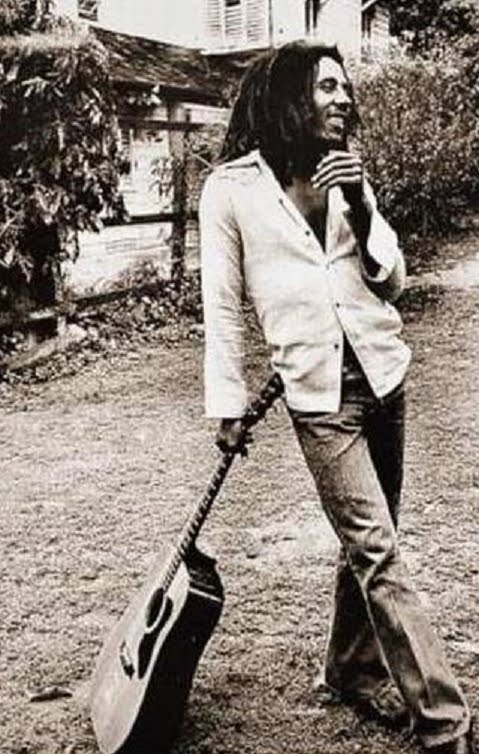
“Wake up and Live!”
Wake up and live, y’all,
Wake up and live,
Wake up and live now,
Wake up and live!
*
Me say: Life is one big road with lots of signs,
So when you riding through the ruts,
Don’t you complicate your mind.
Flee from hate, mischief and jealousy,
Don’t bury your thoughts
– put your vision to reality, yeah!
*
All together now:
Wake up and live, y’all,
Wake up and live,
Wake up and live now,
Wake up and live!
*
Rise, ye mighty people,
There’s work to be done.
So let’s do it, a little by little.
Rise from your sleepless slumber, yeah!
We’re more than sand on the seashore,
We’re more than numbers.
*
All together now:
Wake up and live, y’all,
Wake up and live,
Wake up and live now,
Wake up and live!
*
Woah, one-one cocoa full a basket,
When you use to live big today –
tomorrow you buried in a casket.
One-one cocoa full a basket, yeah,
When you use to live big today –
Tomorrow: buried in a casket!
*
All together now:
Wake up and live, y’all,
Wake up and live,
Wake up and live now,
Wake up and live!
_____
¡Despierten y Vivan!
Despierten y vivan, todos ustedes,
Despierta y vive,
Despierta y vive ahora,
Despierta y vive!
*
Digo: La vida es un camino grande con un montón de signos,
Así que cuando montas a caballo a través de los surcos,
no te complicas la mente.
Huid de odio, maldad y los celos –
No entierres los pensamientos,
ponga su visión en realidad, ¡sí!
*
Despierten y vivan, todos ustedes,
Despierta y vive,
Despierta y vive ahora,
Despierta y vive!
*
Aumenten, ustedes-los-poderosos,
Hay trabajo por hacer,
Así que vamos a hacerlo, poco a poco.
Aumente del sueño sin dormir, sí, sí,
Somos mucho más que arena en la orilla del mar,
Somos mucho más que unos números.
*
Todos juntos ahora:
Despierten y vivan, todos ustedes,
Despierta y vive,
Despierta y vive ahora,
¡Despierta y vive!
*
¿No lo ves? Una pila de cacao en una canasta,
Cuando estás viviendo “a lo grande” hoy día –
Mañana, ¡serás enterrado en un ataúd!
¿No lo ves? Una pila de cacao en una canasta,
Cuando estás viviendo “a lo grande” hoy día –
Mañana, ¡serás enterrado en un ataúd!
*
Todos juntos ahora:
Despierten y vivan, todos ustedes,
Despierta y vive,
Despierta y vive ahora,
¡Despierta y vive!
_____
Letras de una canción de 1979 – del poeta-músico
jamaicano Robert Nesta Marley a.k.a. Bob Marley
(6 febrero, 1945 – mayo 1981)
Traducción del inglés al español: Alexander Best
*
Song lyrics from 1979 by Jamaican poet and musician
Robert Nesta Marley a.k.a. Bob Marley
(February 6th, 1945 – May 1981)
Translation into Spanish: Alexander Best
_____
Langston Hughes: “La Señora y su Señora” / “Madame et sa Madame” / “Madam and her Madam”
Posted: February 1, 2012 Filed under: English: Black Canadian / American, French, Langston Hughes, Spanish, ZP Translator: Lan Truong, ZP Translator: Lidia García Garay | Tags: Black poets Comments Off on Langston Hughes: “La Señora y su Señora” / “Madame et sa Madame” / “Madam and her Madam”_____
Langston Hughes (February 1st, 1902 – 1967)
“Madam and Her Madam”
I worked for a woman,
She wasn’t mean–
But she had a twelve-room
House to clean.
*
Had to get breakfast,
Dinner, and supper, too–
Then take care of her children
When I got through.
*
Wash, iron, and scrub,
Walk the dog around–
It was too much,
Nearly broke me down.
*
I said, Madam,
Can it be
You trying to make a
Pack-horse out of me?
*
She opened her mouth.
She cried, Oh, no!
You know, Alberta,
I love you so!
*
I said, Madam,
That may be true–
But I’ll be dogged
If I love you!
_____
“La Señora y su Señora”
por Langston Hughes
Trabajé para una mujer
No era muy malvada—
Ella tenía una casa de doce cuartos
que yo tenía que limpiar.
*
Tenía que hacer desayuno,
Almuerzo y cena también—
Después atender a los niños,
Al terminar.
*
Lavar, planchar, y limpiar
Llevar a caminar al perro…
Era demasiado,
Casi me destroza.
*
Yo le dije, Señora,
¿Es posible que usted
Está tratando de convertirme
En un caballo de carga?
*
Ella habrió su boca
Y exclamó:
¡Oh, no!
Sabes Alberta,
¡Yo a tí te quiero mucho!
*
Yo le dije: Señora,
Puede que eso sea verdad—
¡Pero que desgracia la mía
Si yo la quiero a usted!
*
Traducción del inglés al español: Lidia García Garay
_____
“Madame et sa Madame”
par Langston Hughes
J’ai travaillé pour une femme,
Elle n’était pas méchante—
Elle avait une maison avec
douze chambres
Que je devais nettoyer.
Préparer le petit déjeuner,
Le déjeuner et le dîner aussi—
Je devais garder ses enfants
Après tout ca.
Faire la lessive et la repasser,
et nettoyer le plancher,
Promener son chien—
C’était trop!,
Le travail m’a fait presque craquer.
*
Je lui ai dit: Madame,
Est-ce qu’il est possible
Que vous essayiez
De me transformer en cheval de trait?
*
Elle a ouvert sa bouche.
Et elle a dit: Pas du tout!
Tu sais Alberta,
Je t’aime beaucoup!
*
Je lui ai dit: Madame,
Cela peut être la vérité
Mais je serais foutue
si je vous aime!
*
Traduction de l’anglais au français:
Lidia García Garay, Lan Truong
_____
Langston Hughes: “La Vida es buena” / “La Vie est bien” / “Life is Fine”
Posted: February 1, 2012 Filed under: English: Black Canadian / American, French, Spanish, ZP Translator: Lan Truong, ZP Translator: Lidia García Garay | Tags: Black poets Comments Off on Langston Hughes: “La Vida es buena” / “La Vie est bien” / “Life is Fine”_____
Langston Hughes (February 1st, 1902 – 1967)
“Life is Fine”
I went down to the river,
I set down on the bank.
I tried to think but couldn’t,
So I jumped in and sank.
I came up once and hollered!
I came up twice and cried!
If that water hadn’t a-been so cold
I might’ve sunk and died.
But it was Cold in that water! It was cold!
*
I took the elevator
Sixteen floors above the ground.
I thought about my baby
And thought I would jump down.
I stood there and I hollered!
I stood there and I cried!
If it hadn’t a-been so high
I might’ve jumped and died.
But it was high up there! It was high!
*
So since I’m still here livin’,
I guess I will live on.
I could’ve died for love–
But for livin’ I was born
Though you may hear me holler,
And you may see me cry–
I’ll be dogged, sweet baby,
If you gonna see me die.
Life is fine! Fine as wine! Life is fine!
_____
“La Vida es Buena”
por Langston Hughes
Fuí al río
Me senté a la orilla
Traté de pensar sin éxito alguno,
Entonces me lancé al agua y me hundí
¡Salí una vez y grité!
¡Sali una segunda vez y lloré!
Si el agua no hubiera estado tan fría
Me habría hundido y habría muerto
¡Pero estaba
Frío en el agua!
¡Hacía frío!
*
Tomé el ascensor
Quince pisos arriba
Pensé en mi amor
Y pensé que me tiraría
¡Estube un rato y grité!
¡Estube un rato y lloré!
Si no hubiera estado tan alto
Habría saltado y muerto.
¡Pero estaba muy alto allá arriba!
*
Entonces ya que estoy aquí vivo,
Supongo que seguiré viviendo.
Yo podría haber muerto por amor,
Pero para vivir nací
Aunque me oigan gritar—
Y me oigan llorar
Que desgracia la mía, dulce amor,
Si tu me vas a ver morir.
¡La Vida es Buena! ¡Buena como el vino! ¡La Vida es Buena!
*
Traducción del inglés al español: Lidia García Garay
_____
“La Vie est Bien”
par Langston Hughes
(1er février, 1902 – 1967)
Je suis allé à la rivière,
me suis assis sur le bord,
J’ai essayé de penser mais je n’en ai pas pu,
alors je me suis jeté dans l’eau et j’ai coulé,
Je suis sorti de là et j’ai beuglé!
Une deuxième fois et j’ai pleuré.
Si l’eau n’avait pas été si froide
j’aurais coulé et été mort.
Mais il faisait froid dans l’eau!
*
J’ai pris l’ascenseur,
suis monté dans le seizième étage,
J’ai pensé a mon amour
Et j’ai pensé à me jeter du haut de l’édifice.
Je suis resté un moment et j’ai beuglé!
Je suis resté là et j’ai pleuré!
Si où j’était n’était si haut
j’aurais eu me jeter et mourir.
Mais il était très haut là bas!
*
Alors, comme je suis encore ici et vivant,
Ça veut dire que je vais continuer à vivre.
Je serais mort à cause de l’amour
Mais je suis né pour vivre.
Vous pouvez m’entendre hurler
Et vous pouvez me voir pleurer –
Je serais foutu, mon amour,
Si tu me vois mourir.
La vie est bonne! Comme le vin est bon! La vie est bien!
*
Traduction de l’anglais au français:
Lidia García Garay, Lan Truong
_____
Langston Hughes: “Yo también, canto a América…”/ “I, too, sing America…”
Posted: February 1, 2012 Filed under: English, Langston Hughes, Spanish | Tags: Black poets Comments Off on Langston Hughes: “Yo también, canto a América…”/ “I, too, sing America…”_____
Langston Hughes (1 febrero 1902 – 1967)
“Yo también, canto a América”
Yo también, canto a América.
Yo soy el hermano de piel oscura.
Ellos me mandan a comer a la cocina
cuando vienen las visitas.
Pero yo me río,
Y como bien,
Y crezco fuerte.
Mañana,
Yo comeré en la mesa
Cuando las visitas lleguen.
Entonces,
Nadie se atreverá
A decirme,
“Come en la cocina,”
Además,
Ellos verán que tan bello soy
Y sentirán vergüenza-
Yo, también, soy América.
(1925)
Traducción del inglés al español:
Anónimo/Anónima (de los años sesenta)
_____
“I, too, sing America”
I, too, sing America.
I am the darker brother.
They send me to eat in the kitchen
When company comes,
But I laugh,
And eat well,
And grow strong.
Tomorrow,
I’ll be at the table
When company comes.
Nobody’ll dare
Say to me,
“Eat in the kitchen,”
Then.
Besides,
They’ll see how beautiful I am
And be ashamed–
I, too, am America.
(1925)
_____
 Zócalo Poets