José López Vásquez: One’s own personal “Calvary” / Su “Calvario” personal
Posted: April 6, 2012 Filed under: English, José López Vásquez, Spanish Comments Off on José López Vásquez: One’s own personal “Calvary” / Su “Calvario” personal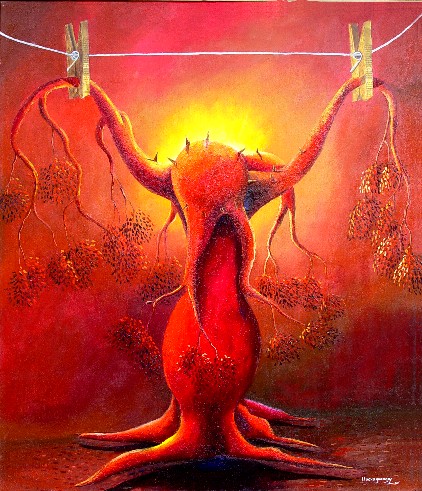
José López Vásquez (nace/born 1986, Managua, Nicaragua)
“Calvario”
No tuve última cena, no conocí huerto de olivos,
no tuve discípulos pero si un Iscariote.
Sobraron Caífaces, Pilatos, Heródes, para condenar
mis parábolas, pero no hubo un Barrabás que compitiera en
Pascua conmigo.
En mi tórrido sendero al Gólgota no hubo
Verónica ni Cirineo pero si hubo latigazos,
mofa y escupitajos. En mi crucificción no
hubo un pretoriano que humedeciera al menos
con vinagre mis labios, ni un Dimas ni un
Gestas ni una María acompañándome.
Ningún Arimateano me bajó de la cruz.
Nunca resucité.
_____
“Calvary”
I had no Last Supper, I knew no olive grove,
had no disciples, only an Iscariot*.
There were plenty of Caliphs, Pilates and Herods to condemn
my parables, but there was no Barabbas that might’ve
competed with me at Easter.
On my torrid path to Golgotha there was
neither Veronica nor Simon of Cyrene but there were lashes of the whip,
jeers and gobs of spit. At my crucifixion
there was no Praetorian guard who might’ve
moistened my lips with vinegar, neither was there a Dismas**
nor a Gestas** or a Mary Magdalene to keep me company.
Not a single Arimathean lowered me from the cross.
And I never rose from the dead.
*Judas
**Dismas and Gestas, the Good Thief and Bad Thief,
crucified alongside Jesus
Translation from Spanish into English: Alexander Best
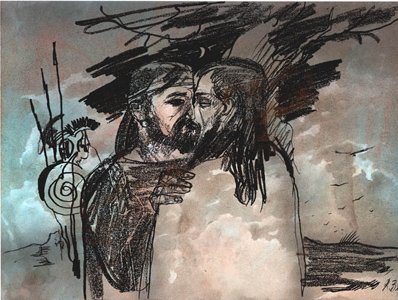
Daniel Chirom: Leonardo and The Last Supper
Posted: April 5, 2012 Filed under: Daniel Chirom, English, Spanish, ZP Translator: Alexander Best Comments Off on Daniel Chirom: Leonardo and The Last SupperDaniel Chirom (born 1955, Argentina)
Leonardo and The Last Supper
.
Under commission to Ludovico il Moro
I did “The Last Supper”, in careful detail, over a period of three years.
I made not a single mistake
– it was my intention that Christ and his apostles
would be disintegrating over time.
When perhaps the Supper is to be served again
another Ludovico will order me to re-do it
– at least until the wine runs out.
I trust in the eternal thirst of humankind.
. . .
Editor’s note:
Ludovico il Moro was Duke of Milan, and a patron of the arts.
In 1496 he commissioned Leonardo da Vinci to paint “The Last Supper”
on a wall inside a Dominican convent. Da Vinci did not use
traditional fresco techniques, rather he experimented.
His method, and the paints he used, have not stood the test of time;
the mural has had to be restored repeatedly.
.
Translation from Spanish into English: Alexander Best
. . .
Daniel Chirom (nace 1955, Argentina)
Leonardo y la última cena
.
Por encargo de Ludovico el Moro
deletreé durante tres años la Última Cena.
No cometí ningún error,
fue mi voluntad que Cristo y sus apóstoles
se fueran desintegrando con el tiempo.
Cuando la Cena sea nuevamente servida
otro Ludovico me encargará rehacerla
hasta que el vino vuelva a escasear.
Confío en la eterna sed del hombre.
. . .
“An Acrostic to Benito Juárez” by Rubi / “Acróstico a Benito Juárez” por Rubi
Posted: March 21, 2012 Filed under: English, Spanish, ZP Translator: Alexander Best | Tags: Poema a Benito Juárez Comments Off on “An Acrostic to Benito Juárez” by Rubi / “Acróstico a Benito Juárez” por Rubi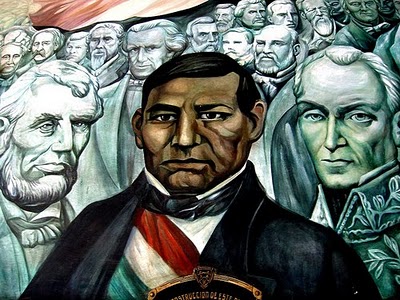
“Acróstico a Benito Juárez” por Rubi / “An Acrostic to Benito Juárez” by Rubi
B enito Juárez B enito Juárez:
E ra mexicano. E specially Mexican was he.
N acido en Oaxaca, N atal place? Oaxaca, and he was
I ndígeno – ¡seguro! I ndigenous – for sure!
T oda su infancia T ending sheep was the task
O vejas cuidaba. O f his childhood.
* *
J uárez político J uárez the Politician
U nió a los pobres, U nited with the poor, en-
A mó la justicia, A moured of justice,
R echazó a los franceses. R epelled the French.
E n conclusión él fue Ever known shall he be, the
Z apoteco valiente. Z apotec most brave.
_____
Hoy día – el 21 marzo – se celebra el natalicio del prócer mexicano – Benito Juárez .
Rubi…¡te agradecemos!
Benito Juárez (1806-1872) was President of México, serving five terms between 1858 and 1872.
Illiterate till the age of 12, by 1834 he was a lawyer, and by 1847 – governor of the state of Oaxaca.
As President he began nation-wide reforms, including the promotion of a civil society
– this included the curtailment of the powers of the dominant Catholic Church. He brought an end to
the Franco-Mexican War (“The Maximilian Affair”) of the 1860s, and his political movement,
La Reforma, though interrupted by the sometimes-regressive presidency of Porfirio Díaz, is
clearly viewed as the first push toward modernization of Mexico’s economy, politics, and society.
Today, March 21st, is Benito Juárez’ birth date.
Interpretación del poema en inglés / Poem interpretation into English from Spanish:
Alexander Best
Ailbhe Ní Ghearbhuigh: Habla la “Voz” irlandesa / The Irish “Voice” Speaks
Posted: March 17, 2012 Filed under: Ailbhe Ní Ghearbhuigh, English, Irish, Spanish | Tags: Saint Patrick's Day Poems Comments Off on Ailbhe Ní Ghearbhuigh: Habla la “Voz” irlandesa / The Irish “Voice” Speaks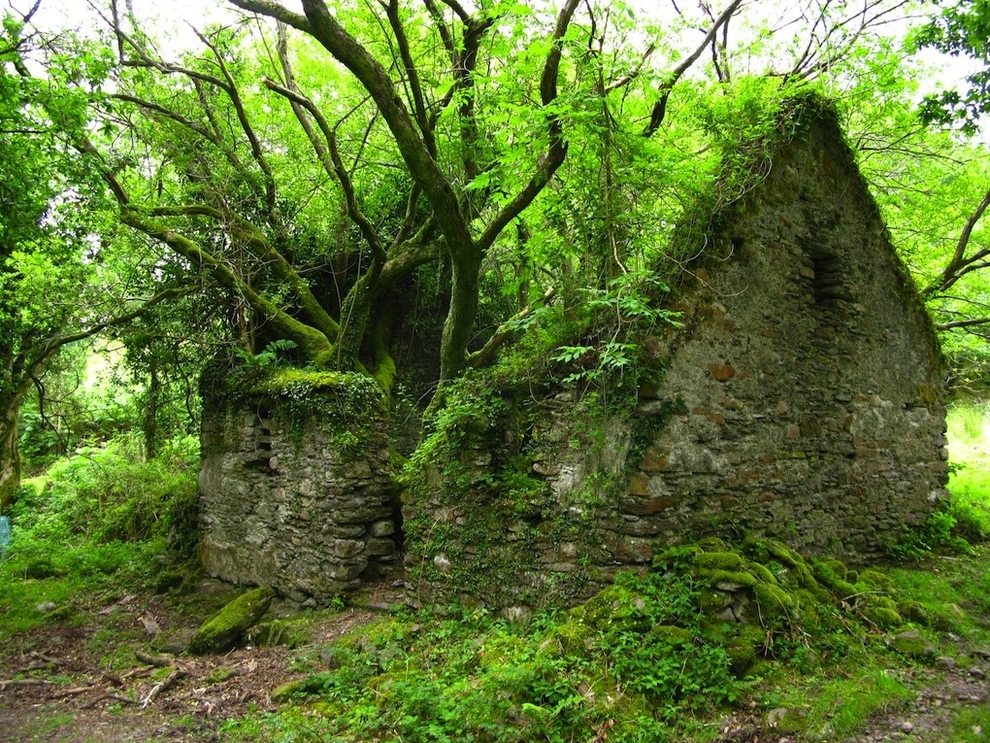
.
Ailbhe Ní Ghearbhuigh
(nace 1984, Tralee, condado de Kerry, Irlanda
/ born 1984, Tralee, County Kerry, Ireland)
“Cuando Uno Se Desespera”
.
Hay algunos días cuando
– admitámoslo –
me canso de
unirme por su defensa
Me agoto de estar arraigado
aquí junto a su cabecera
Esta lengua
que ha sido violada,
estoy esperando que se recupere,
cuidando de ella, diligentemente,
deseándole que la Vida entre en ella de nuevo
Y cuando veo
sus huesos pudriéndose
calcificándose
Sé que
algún día
no quedará nada
sólo el polvo, mudo…
como yo – si pensamos en esto.
_____
“Laethanta Lagmhisnigh”
.
Admhaím corrlá
bím traochta
dá cosaint os comhair an tsaoil
Bím bréan de bheith fréamhaithe
cois leapan
na teangan éignithe
seo
ag guí biseach uirthi
á faire go cúramach
ag impí beatha inti arís
Is nuair a chím
a cnámha lofa
ag cailciú
tuigim
ná beidh fágtha
lá éigin
ach smúit bhalbh . . .
ach an oiread liom féin.
_____
“When One Despairs”
.
Some days, let’s admit it,
I tire
of rallying to her defence
I weary of being rooted
here by her bedside
this language
that has been violated
hoping she’ll come around
watching her assiduously
wishing the life back into her again
And when I see
her rotting bones
calcifying
I know that
one day
there will be nothing left
nothing but dust, mute . . .
like myself, come to think of it.
_____
“Un Tema de Cierto Pesar”
.
No, no estoy tan deprimido que
me quedo
debajo del edredón
todo el día
– eso sería una exageración.
Sólo es que
mi ojo
me hizo feliz verle a usted,
Desconocido,
a quien dejé ahí
anoche.
Y esta mañana
en mi boca
hay un sabor de cerveza negra
– y el pesar.
_____
“Áiféilín”
.
Nílim chomh duairc
go bhfanfainn
fén duvet
ar feadh an lae
sin áibhéil.
Níl ann ach gur
thug mo shúil
taithneamh éigin duit,
a stróinséir
is gur fhágas
im dhiaidh tú
oíche aréir
agus go bhfuil
blas pórtair
is áiféala
im’ bhéal
ar maidin.
_____
“A Matter of Some Regret”
.
No, I’m not so depressed
as to stay
under the duvet
all day
That would be an exaggeration.
It’s just that
my eye
gladdened at the sight of you,
Stranger,
left behind
last night.
And this morning
there’s a taste of stout
and regret
in my mouth.
.
.
© Ailbhe Ní Ghearbhuigh
Translation from Irish into English:
© Gabriel Rosenstock
_____
“Barrio Chino”
.
Barrio chino
bullicio sin final
un sonido resaltó
entre los enredados sonidos
jalándome hacia
su súplica…
era un pescado
en una vasija poco profunda
pataleando
con mucha urgencia.
Una mujer que lo miraba
con ojos saltados
como los ojos del pescado,
alcanzando la orilla
sin esperanzas.
_____
“Herida”
.
El Corrib* se desbordó
anoche
una poza debajo del Arco
el cielo amenaza esta mañana
y a mi casi me aplastan
en la luz roja del semáforo
un hombre de nariz aguileña
sentado en un pequeño muro,
dolor en sus ojos.
un cisne en sus brazos,
una bolsa negra la cobijaba,
una herida brillante es su blanco cuello.
.
.
*Corrib – un río en el condado de Galway, Irlanda
_____
“Chinatown”
.
rírá síoraí Chinatown
éiríonn torann amháin
os cionn an chlampair
is meallann mé chuige
lena impí…
iasc a bhí ann
in árthach íseal
ag slup slaparnach
le hoiread práinne.
Bean á fhaire
a súile ar bolgadh
amhail súil an éisc
ag cur thar maoil
le neart gan feidhm.
_____
“Cneá”
.
bhris an Choirib a bruacha
aréir
bhí tuile fén bPóirse
bhagair an spéir ar maidin,
is ba dhóbair gur deineadh leircín díom
ag solas tráchta dearg
bhí fear cromógach suite
ar bhalla íseal,
goin ina shúile.
ina bhaclainn, bhí eala,
sac dubh uimpi
is cneá dearg ar a muineál bán.
_____
“Chinatown”
.
Chinatown
the racket’s neverending
one sound rose
above the jingle jangle
drawing me towards
its plea…
it was a fish
in a shallow vessel
slup-slopping about
with much urgency.
A woman watching it
her eyes bulging
like the eyes of the fish
bulging to the brim
helplessly.
.
.
Translation from the Irish: Gabriel Rosenstock
_____
“Wound”
.
the Corrib* broke its banks
last night
a pool under the Arch
the sky threatened this morning
and I was almost flattened
at a red traffic light
a hook-nosed man sat
on a low wall,
hurt in his eyes.
in his arms was a swan,
a black sack around her,
a bright red wound on her white neck.
.
.
*Corrib – a river in County Galway, Ireland
Translation from the Irish: by the poet herself.
_____
About the Poet:
Ailbhe Ní Ghearbhuigh’s first collection of poetry, Péacadh, was published in 2008. She has read poetry in Montréal, New York, Paris and Baile an Fheirtéaraigh. She was raised speaking Irish and English, but writes in Irish only as she thinks it’s a more exciting language.
_____
Traducciones del inglés en español /
Translations from English into Spanish:
Alexander Best (“Cuando Uno se Desespera” y “Un Tema de Cierto Pesar”)
Lidia García Garay (“Barrio Chino” y “Herida”/ “Chinatown” and “Wound”)
_____
Caitríona Ní Chléirchín: La nueva poetisa lírica irlandesa / The new love lyricist of Irish poetry
Posted: March 17, 2012 Filed under: Caitríona Ní Chléirchín, English, Irish, Spanish, ZP Translator: Alexander Best, ZP Translator: Lidia García Garay | Tags: Saint Patrick's Day Poems Comments Off on Caitríona Ní Chléirchín: La nueva poetisa lírica irlandesa / The new love lyricist of Irish poetry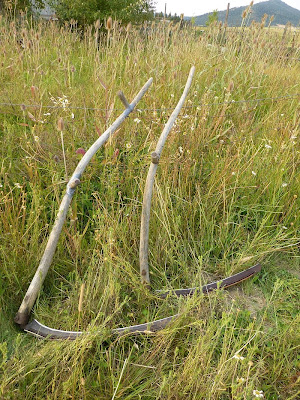 .
.
Caitríona Ní Chléirchín
(nace/born 1978, Gortmoney, Emyvale,
condado de Monaghan, Irlanda/Ireland)
“Segando con Guadaña”
.
Érase una vez, la guadaña
era afilada
con la piedra de guadaña
ocultada
debajo del tocador
por miedo de que
un niño hiciera pedazos de ella.
.
Hoy día, no quedan ni guadaña ni piedra de guadaña
sólo los pedazos de recuerdo.
_____
“Spealadóireacht”
.
Tráth, cuireadh
faobhar ar speal
le cloch faobhair
a cuireadh faoi cheilt
faoin drisiúr
ar eagla go ndéanfadh
leanbh conamar de.
.
Inniu, níl speal, ná cloch faobhair,
ná drisiúr a thuilleadh,
níl ach conamar na gcuimhní againn.
_____
“Scything”
.
Once, a scythe
would be sharpened
with the scything stone
hidden
under the dresser
for fear
a child would make fragments of it.
.
Today, no scythe or scything stone remains
only the fragments of memory.
_____
“Abeja”
.
Como una abeja casi en mi corazón,
apareciste floreando por mis pechos,
y todos tus besos eran las picaduras más dulces,
atrayéndome con besos-picaduras.
Hiciste la miel en mi ombligo,
pero la picadura la más grande fue entre mis piernas.
Me pinchaste
con palabras tan suaves.
Revoloteó el corazón
y debajo de ti
como un azahar o un tallo, me doblé.
Me abriste como una puerta de miel
y todo mi dulzura bebiste.
Está moteado ahora el cuerpo con picaduras azules-rojas,
con salpicadura de gema morada,
y pintada por todo con mordiscos de amor y odio.
Clavaste en mí tu aguijón,
y llena mi cabeza tu zángano.
Una abeja salvaje, un abejorro zumbando
dentro de mí para siempre,
nunca mostrándome ninguna clemencia.
_____
“Beach”
.
Ba gheall le beach i mo chroí thú.
Tháinig tú amach ag bláthú trí mo chíocha
is ba chealg mhilis iad na póga
cealgphógadh do mo chealgadh.
Rinne tú mil i m’imleacán,
ach chuaigh an chealg ba mhó idir an dá chos.
Phrioc tú mé
le briathra míne.
Tháinig eitilt ar mo chroí
is lúb mé fút mar bhláth, mar ghas.
D’oscail tú mé mar dhoras meala
is d’ól tú uaim
achan mhilseacht.
Anois tá mo cholainn breactha le cealga gormdhearga,
buailte le seodchealga corcra
clúdaithe le baill seirce is fuatha ó bhun go barr.
Sháigh tú ionam do chealg bheiche
is níor stad do dhordán riamh i m’inchinn.
Beach fhiáin ab ea thú, bumbóg ag crónán go síoraí ionam
is ní raibh trócaire ar bith agat dom.
_____
“Bee”
.
Like a bee almost in my heart,
you emerged flowering though my breasts,
and your every kiss was the sweetest sting,
enticing me with sting-kissing.
You made honey in my navel,
but the greatest sting went between my legs.
You pricked me
with words so gentle.
My heart fluttered
and beneath you
like a blossom or a stem, I bent.
You opened me like a honey door
and all my sweetness you drank.
My body is speckled now with blue-red stings,
with purple gem-sting stippling,
and dappled all over with love and hate bites.
You thrust your bee-sting into me,
and your drone still fills my brain.
A wild bee, a bumbling humming bee
forever inside me,
never showing any mercy.
_____
The poet tells us:
“The ‘musics’ of Irish and English are different…In Irish you can hear the sea, the mountains,you can hear echoes of loss. I’m not saying you can’t hear these in English – just that Irish is more musical, less clinical. English has been described by some Irish speakers as the language to sell pigs in – I think that’s too harsh. I think in the way we speak English in Ireland you can hear the longing for Irish. Irish is more elemental, earthy, more natural in a way – a language greatly wounded and for that reason maybe closer to the body and emotion – for me as a poet.”
_____
© Caitríona Ní Chléirchín
Translations from Irish to English:
by the poet herself.
.
Translations from English into Spanish /
Traducciones del inglés al español:
Alexander Best (“Bee”)
Lidia García Garay (“Scything”)
_____
Poems for Saint Patrick’s Day: Love and The Poet / Poemas para el Día de San Patricio: Amor y El Poeta
Posted: March 17, 2012 Filed under: English, Poemas para el Día de San Patricio: Amor y el Poeta, Spanish, William Butler Yeats, ZP Translator: Alexander Best | Tags: Saint Patrick's Day Poems Comments Off on Poems for Saint Patrick’s Day: Love and The Poet / Poemas para el Día de San Patricio: Amor y El Poeta
William Butler Yeats (1865-1939)
“Memoria” (1919)
Una tenía la cara linda,
Y dos o tres eran encantadoras,
Pero cara y encanto fueron en vano
Porque la hierba de la sierra
Siempre conserva la forma
Donde se ha tendido la liebre del monte.
_____
“Canción de Muchacha” (1933)
Salí sola
Para cantar una canción o dos,
Se me antoja un hombre
Y usted sabe quien es.
*
Otro se apareció
que dependía de un bastón
Para estar de pié;
Me senté y lloré.
*
Y ésta fue toda mi canción
– cuando todo ha sido dicho
¿Vi a un anciano joven,
O a un joven anciano?
_____
“Canción para beber” (1910)
El vino entra vía la boca
Y el amor entra vía el ojo;
Es toda la verdad que sabremos
Antes de envejecer y morir.
Levanto el vaso a mi boca,
Te miro, y suspiro.
_____
“La Espuela” (1936)
Tu piensas que es horrible que lujuria y furia
Me adoran en la vejez…
No eran una peste cuando yo era joven;
¿Tengo algo más para espolearme cantar?
_____
“Un Voto Jurado en lo Más Profundo” (1919)
Habían otros – porque no cumpliste
Ese voto jurado en lo más profundo – que han sido amigos míos;
Pero siempre cuando miro a la muerte en la cara,
Cuando trepo a las cumbres de sueño,
O cuando me estremezco con el vino,
De súbito me encuentro con tu cara.
__________
William Butler Yeats (1865-1939)
“Memory” (1919)
One had a lovely face,
And two or three had charm,
But charm and face were in vain
Because the mountain grass
Cannot but keep the form
Where the mountain hare has lain.
_____
“Girl’s Song” (1933)
I went out alone
To sing a song or two,
My fancy on a man,
And you know who.
*
Another came in sight
That on a stick relied
To hold himself upright;
I sat and cried.
*
And that was all my song
– when everything is told,
Saw I an old man young
Or young man old?
_____
“Drinking Song” (1910)
Wine comes in at the mouth
And love comes in at the eye;
That’s all we shall know for truth
Before we grow old and die.
I lift the glass to my mouth,
I look at you, and I sigh.
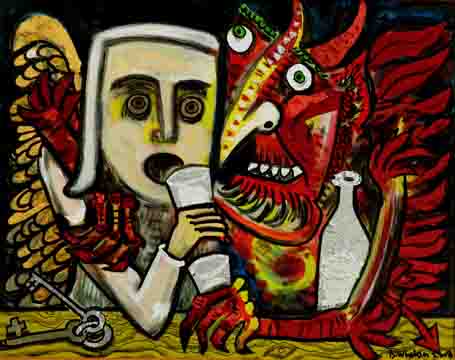
Poteen Drinkers by Brian Whelan_2011
“The Spur” (1936)
You think it horrible that lust and rage
Should dance attention upon my old age;
They were not such a plague when I was young;
What else have I to spur me into song?
_____
“A deep-sworn vow” (1919)
Others because you did not keep
That deep-sworn vow have been friends of mine;
Yet always when I look death in the face,
When I clamber to the heights of sleep,
Or when I grow excited with wine,
Suddenly I meet your face.
_____
Translation into Spanish /
Traducción en español: Alexander Best
Cronin, Sirr y Donnelly: Tres poetas irlandeses / Cronin, Sirr and Donnelly: Three Irish poets
Posted: March 17, 2012 Filed under: English, Spanish | Tags: Saint Patrick's Day Poems Comments Off on Cronin, Sirr y Donnelly: Tres poetas irlandeses / Cronin, Sirr and Donnelly: Three Irish poets_____
Traducciónes del inglés al español /
Translations from English into Spanish:
© Jorge Fonderbrider y Gerardo Romano
_____
Anthony Cronin
(nace/born 1928, Enniscorthy, condado de Wexford, Irlanda /
Enniscorthy, County Wexford, Ireland)
“Profeta”
Cuando volvieron los rumores a aquel pequeño caserío blanco,
rumores extraños sobre sus hábitos y su discurso,
los vecinos sacudieron la cabeza sin asombro,
su madre estaba perpleja más que orgullosa.
Y entrando al anochecer a ciudades alumbradas por lámparas,
viendo la cálida penumbra roja detrás de los postigos,
permaneciendo despierto en cuartos extraños sobre ríos,
pensaba que sería como ellos si pudiera.
Y cuando al fin el poder cortesano prestó atención
y lo clavó más tarde en ese horrible sitio, supo que
lo que intentaba decir sería olvidado
salvo por algunos tan solos como él.
_____
“Prophet”
When word came back to that small whitewashed village,
Strange rumours of his ways and of his talk,
The neighbours shook their heads and didn’t wonder,
His mother was bewildered more than proud.
And coming into lamplit towns at evening,
Seeing the warm red gloom behind the blinds,
Lying awake in strange rooms above rivers,
He thought he would be like them if he could.
And when at last the courteous powers took notice,
And nailed him to that awful point in time,
He knew that what he meant would be forgotten
Except by some as lonely as himself.
_____
Peter Sirr
(nace/born 1960, Waterford, Irlanda/Ireland)
“Cuerpo y Alma”
Cordero desgrasado, mermelada de damasco, pan mojado en leche
mientras cebollas, ajo y jenjibre se suavizan
sin haber olvidado las bananas,
las hojas de laurel
ni dos huevos batidos en la leche sobrante
y todo para ser horneado, y servido
sobre una base de arroz azafranado
cosas que se consiguen
en la mayoría de los buenos kioskos, el único
todavía abierto, el triste negocio
que también vende zoquetes en pilas de a seis
grises, azul marino, negros, puestos en una canasta
como un altar cerca de las góndolas frías
donde manteca, leche, fiambres, queso
se ubican detrás de velos de plástico,
todo el negocio un altar para mantener la desolación
oh compradores de sombríos zoquetes y manteca
los insomnes que se levantan
y llegan corriendo al lugar, descalzos, sin aliento
señalándole cosas a la mujer sentada detrás del mostrador
delante de los cigarrillos, al lado de la máquina de la Lotería, cerca
de los bastoncitos de chocolate; y él que vuelve a casa caminando, cansado
desde la fiesta lejana, el cordero desgrasado, el fuego lento
debajo de la pesada sartén, el ajo, las cebollas, la luz
damasco, el pasto lechoso, los corderos danzantes
en los cráteres del planeta, las mujeres durmiendo sobre camas de jenjibre
entrando en un sueño para comprar
brazaletes, sedas, mermelada de damascos.
_____
“Body and Soul”
Minced lamb, apricot jam, milky bread
while onions, garlic, ginger soften
not having forgotten bananas, bay leaves
nor neglected
two eggs beaten into the remaining milk
the whole to be baked, and served
on a bed of saffron rice
details available
in most good newsagents, the one
still open, the sad small place
selling also socks in piles of six
grey, navy, black, set down in a basket
shrine-like near the cold shelves
where butter, milk, rashers, cheese
sit behind plastic veils,
the whole shop a shrine to the sustenance of desolation
oh purchasers of sombre socks and butter
the restless having woken
and hurried to the place, barefoot, breathless
pointing things out to the woman who sits behind the counter
in front of the cigarettes, beside the Lotto machine, near
the chocolate fingers: and exhausted walker home
from the faraway party, the minced lamb, the low flame
under the heavy pan, the garlic, the onions, the apricot
light, the milky grass, the lambs dancing
in the planet’s craters, the women sleeping on beds of ginger
entering in a dream to buy
bangles, silks, apricot jam.
_____
Charles Donnelly
(1914-1937, nació en Killybrackey, condado de Tyrone, Irlanda del Norte,
y se murió en España (en La Guerra Civil). Born in Killybrackey,
County Tyrone, Northern Ireland – died in Spain, fighting in The Spanish
Civil War.)
“La Tolerancia de los Cuervos”
La muerte llega en gran número por problemas
resueltos en los mapas, disposiciones bien ordenadas,
ángulos de elevación y dirección;
llega inocente a manos de instrumentos que podrían gustarle a los niños,
guardándolos debajo de las almohadas,
inocentemente clavados en toda carne.
Y con la carne se desmorona la mente
que arrastra al pensamiento de la mente
que despoja con claridad al pensamiento de un propósito esperando.
El avance del veneno en los nervios y
el colapso de la disciplina se detiene.
El cuerpo espera la tolerancia de los cuervos.
_____
“The Tolerance of Crows”
Death comes in quantity from solved
Problems on maps, well-ordered dispostions,
Angles of elevation and direction:
Comes innocent from tools children might
Love, retaining under pillows,
Innocently impales on any flesh.
And with flesh falls apart the mind
That trails thought from the mind that cuts
Thought clearly from a waiting purpose.
Progress of poison in the nerves and
Discipline’s collapse is halted.
Body awaits the tolerance of crows.
_____
Poemas para El Día Internacional de la Mujer: Tres poetas que deseamos honrar / Poems for International Women’s Day: Three poets we wish to honour
Posted: March 8, 2012 Filed under: Ana Castillo, bell hooks, English, Freedom Nyamubaya, Spanish, ZP Translator: Alexander Best, ZP Translator: Lidia García Garay Comments Off on Poemas para El Día Internacional de la Mujer: Tres poetas que deseamos honrar / Poems for International Women’s Day: Three poets we wish to honour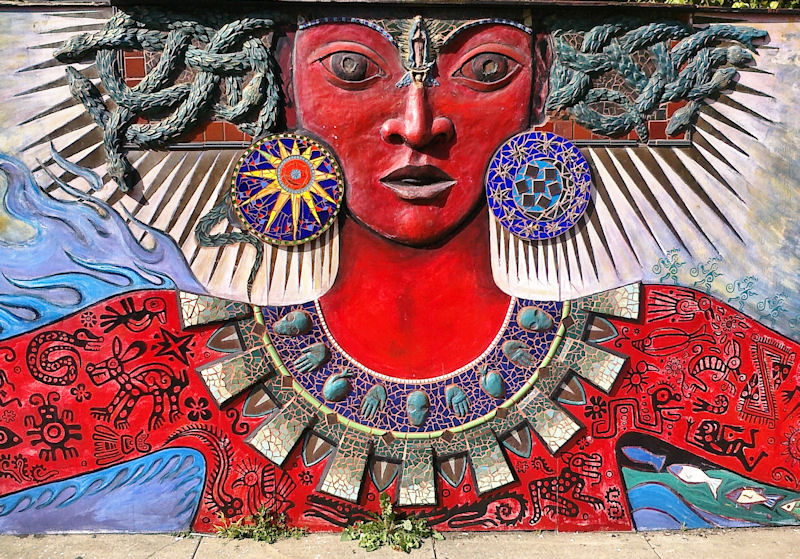 ZP_Itzpapalotl_Goddess mural in San Francisco_near 16th and Sanchez streets
.
bell hooks
(nace/born 1952, Kentucky, EEUU/USA)
En ese momento que… / The moment that…
*
En ese momento que decidimos amar
Empezamos a ir en contra de
La dominación, en contra de
La opresión.
En ese momento que decidimos amar
Empezamos a irnos hacia la libertad;
A actuar de maneras que nos liberan – y que liberan a otros también.
Esa acción es el testimonio del amor como la práctica de la libertad.
*
The moment we choose to love
we begin to move
against domination,
against oppression.
The moment we choose to love
we begin to move towards freedom;
to act in ways that liberate ourselves – and others.
That action is the testimony of love as the practice of freedom.
_____
Freedom Nyamubaya
(nace/born 1958, Zimbabwe)
La Poesía
*
Alguien dijó, no eres poeta,
pero olvidó que la poesía es un arte y
El Arte is un ritmo significativo.
Pues entonces, ¿qué es ritmo,
si puedo preguntar?
Algunos dicen que es sílabas marchando
otros dicen: sonidos marchando
pero dime como puedo casarlos a los dos.
Luchamos contra Shakespeare en el campo de batalla,
Los Negros lucharon contra los Bóeres con las lanzas.
Éstas son sílabas que marchan
y son el Arte – a alguna gente,
pues, ¿cómo yo puedo casarlos a los dos?
¿Y qué decimos de un ritmo diferente?
Mueren en los guetos la gente,
por redadas de policía y disparos del ejército.
Los obreros se asfixian en las minas de carbón,
excavando el carbón que no pueden comprar
para cocinar a diario para alimentarse.
Algo poético, ésto.
Pues quedemos en no estar de acuerdo.
El Arte sirve.
_____
Freedom Nyamubaya
Poetry
*
One person said, you are not a poet,
but forgot that poetry is an art and
Art is meaningful rhythm.
Now what is rhythm
if I may ask?
Some say it’s marching syllables,
others say it’s marching sounds,
but tell me how you marry the two.
We fought Shakespeare on the battlefield,
Blacks fought the Boers with their spears.
These are marching syllables
and Art to some,
but how can I marry the two?
How about a different rhythm?
People die in the ghettoes,
from police raids and army shots.
Workers suffocate under coal mines,
digging the coal they can’t afford to buy
for cooking daily to feed themselves.
Poetic stuff, this.
Then let’s agree to disagree.
Art serves.
_____
Ana Castillo
(nace/born 1953, Chicago, Illinois, EEUU/USA)
Pido lo Imposible
*
Yo pido lo imposible: ámame por siempre
Ámame cuando todo el amor se haya ido.
Ámame con la dedicación de un monje.
Cuando el mundo en su totalidad,
y todo lo que para ti es sagrado, te aconsejan
contra ello: ámame aún más.
Cuando la cólera te llene y no tenga nombre: ámame.
Cuando cada paso de tu puerta a nuestro trabajo te fatigue,
ámame; y del trabajo de retorno a casa, ámame.
Ámame cuando estés aburrido,
cuando cada mujer que veas sea más bella que la anterior,
o más patética, ámame como siempre lo haz hecho:
no como admirador o juez pero con
la compasión que guardas para ti mismo
en tu nostalgia.
Ámame tanto cuanto aprecias tu soledad,
la anticipación de tu muerte,
misterios de la carne, mientras se rompe y se sana.
Ámame como tu más atesorada memoria de la infancia
– y si no hay ninguna a recordar –
imagínate una, y yo allí contigo.
Ámame marchita tanto como me amastes nueva.
Ámame como si yo fuera para siempre
y haré de lo imposible
un acto simple,
al amarte, amarte como yo te amo.
_____
Ana Castillo
I Ask The Impossible
*
I ask the impossible: love me forever.
Love me when all desire is gone.
Love me with the single mindedness of a monk.
When the world in its entirety,
and all that you hold sacred, advise you
against it: love me still more.
When rage fills you and has no name: love me.
When each step from your door to our job tires you,
love me; and from job to home again, love me, love me.
Love me when you’re bored,
when every woman you see is more beautiful than the last,
or more pathetic, love me as you always have:
not as admirer or judge but with
the compassion you save for yourself
in your solitude.
Love me as you relish your loneliness,
the anticipation of your death,
mysteries of the flesh, as it tears and mends.
Love me as your most treasured childhood memory
– and if there is none to recall –
imagine one, place me there with you.
Love me withered as you loved me new.
Love me as if I were forever
and I will make the impossible
a simple act,
by loving you, loving you as I do.
_____
Traducciones del inglés al español:
Alexander Best (“En ese momento que…” y “La Poesía”)
Lidia García Garay (“Pido lo Imposible”)
_____
Etta James: “Mi Fuerte Amante” / “Tough Lover”
Posted: February 28, 2012 Filed under: English: Black Canadian / American, Etta James, Spanish, Translator's Whimsy: Song Lyrics / Extravagancia del traductor: Letras de canciones traducidas por Alexander Best, ZP Translator: Lidia García Garay Comments Off on Etta James: “Mi Fuerte Amante” / “Tough Lover”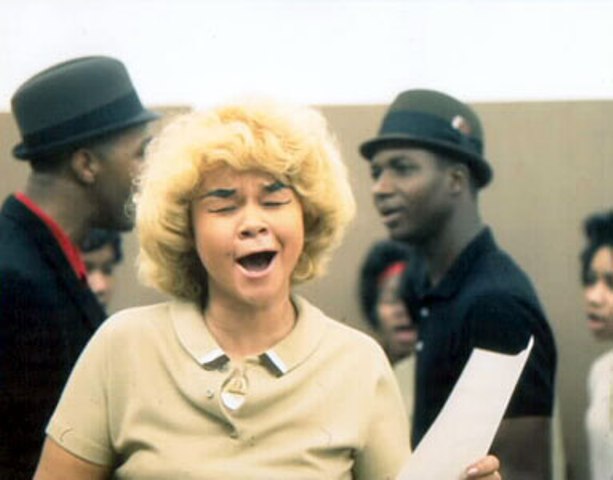
Etta James
“Mi Fuerte Amante” (1956)
Tengo un amante que me mueve tanto,
Sabe hacer ‘el rocanrol’,
Porque es fuerte – mi amante –
Es un amante vigoroso,
Amante recio,
Un amante fuerte – ¡eso es!
*
Cuando me besa,
Me emociona;
Cuando se sacude,
No me quedo quieta.
Es un amante vigoroso,
Amante recio,
Un amante fuerte – ¡aaah, sííí!
*
Las Siete Hermanas no lo pueden tener,
Estoy hablando acerca del Amor –
Y es veloz – él – como el viento.
Habla la gente que estoy enbrujada.
Pero no es el vudú – ¡es ese “twist”!
El Amante más grande de nuestra era,
Aún Don Juan no tiene ningun’esperanza.
Te hace reír,
Te hace llorar,
Se pone tan recio que
Pued’hacer a un’estatua de Venus resucitar.
Hace todo lo que quiera – aún:
Pisotear los zapatos de gamuza-azul de Jesse James.
Es un amante audaz,
y duro, y recio,
Un amante fuerte – ¡ajá, ajá!
*
¿Tienes amante que quieras amar?
¡Golpéale en la cabeza una vez – o dos!
Será tu amante vigoroso – ¡sí, sí! –
Un amante recio – ¡eso es!
Un amante fuerte – ¡aaah, sííí!
Glosario:
Las Siete Hermanas se llaman Las Pléyades – en la mitología griega.
Las dos más famosas – Electra y Maia – eran “Fuerzas de la Naturaleza”.
Jesse James era un forajido estadounidense de la era “Viejo Oeste”.
_____
Etta James (1938-2012)
escribió las letras y grabó esta canción
en 1956 – a la edad tierna de dieciocho años.
Su personalidad era fuerte y burlona pero pudo
cantar también la música íntima del Blues.
*
Traducción / interpretación en español: Lidia García Garay
_____
Etta James
“Tough Lover” (1956)
Well, I’ve got a lover that moves me so
He sho knows how to rock’n’roll
‘Cause he’s a tough lover – yeah, yeah
He’s a tough lover – wooooo
Tough Lover – yeah, yeah
Tough Lover – unh hunh!
*
When he kisses me
I get a thrill
But when he does that wiggle
I can’t keep still
‘Cause he’s a tough lover – yeah, yeah
He’s a tough lover – wooooo!
Tough Lover – yeah, yeah
Tough Lover – unh hunh!
*
The Seven Sisters have nothin’ on him
I’m talkin’ about love – and he’s fast as the wind
People all talk about he’s got me fixed
It ain’t hoodoo – it’s just that twist!
He’s the greatest lover ever come to pass
Don Juan ain’t got a half of a chance.
He can make you laugh
He can make you cry
He’s so tough he’ll make Venus come alive.
He can do anything that he wants to do –
Step on Jesse James’s blue-suede shoes
‘Cause he’s a tough lover – yeah, yeah
He’s a tough lover – wooooo!
Tough Lover – yeah, yeah
Tough Lover – unh hunh!
*
You got a lover
That you wanna love right?
Just pop him ’side the head
– Once or twice!
He’ll be a tough lover – yeah, yeah
He’ll be your tough lover – wooooo!
Tough lover – yeah, yeah
Tough lover – unh hunh!
_____
Etta James (1938-2012)
was a rock’n’roll “mama” even
at the tender age of 18, which is when she
wrote and recorded this song with her band,
The Peaches. Her vocal delivery was often
rough-and-tough in sound – but also full of
fun. The “wooooo’s” in her singing she
borrowed from Little Richard, with whom
she toured in the 1950s. By middle age she
was undisputedly the best living Blues singer
in The United States.
_____
Mildred Barya: “Una Gota de Sangre” / “A Drop of Blood”
Posted: February 23, 2012 Filed under: English, Mildred Barya, Spanish, ZP Translator: Alexander Best | Tags: Black poets, Poetas negros Comments Off on Mildred Barya: “Una Gota de Sangre” / “A Drop of Blood”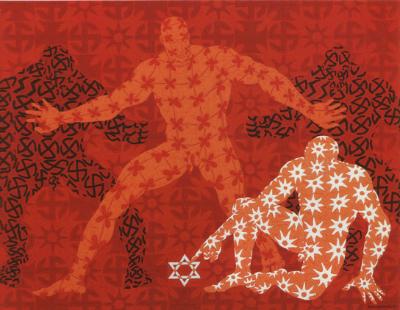
Mildred Barya (nace 1976)
“Una Gota de Sangre”
El día que me llegó la regla
Exclamó mi madre:
“¡Ahora eres mujer!”
Entonces me pregunté:
¿Qué yo había sido antes?
¿Y cómo me ha hecho una mujer
Una gota de sangre?
*
Cuando llevaron a mi hermano al círculo,
Él se estremeció a la sensación de un cuchillo afilado.
Pero le convencieron:
“No debes tener miedo,
No muestres ninguna cobardía.
Tan pronto como te cortemos la piel
Te harás un hombre.”
*
Cuando mi madre tenía a Junior
Tan pesado en su vientre
Se apuraba de la mesa
Y corría al lavaplatos.
El día que le llevaron al hospital
Cayó al suelo una bolsa de agua
Pues una gota de sangre.
Gritó mi padre: “¡Mujer!”
*
Leí en Las Sagradas Escrituras
Como fue sacrificado el Hijo de Hombre.
Antes de dar su último aliento,
Manaron fuera de él
Agua y la sangre.
En este momento se hizo Hombre
Que era el Dios.
*
Supongo que haya algo en una gota de sangre
Que nos hace hombres y mujeres.
_____
Mildred Barya (born 1976)
“A Drop of Blood”
The day I got my first period,
Mother exclaimed:
“You’ve become a woman!”
And so I wondered,
What had I been earlier?
And how could a drop of blood
Make me a woman?
*
When they took my brother to the circle,
He flinched at the feel of a sharp knife.
But the elders convinced him:
“You must not fear
Do not show any cowardice
Once we slice off the skin
You become a man.”
*
When mother was heavy with Junior,
She would rush off the table
And run to the sink.
The day she was taken to hospital
A bag of water dropped to the ground,
Then a drop of blood.
Father cried: “Woman!”
*
I read in the Holy Scriptures
How the Son of Man was crucified
Before he breathed his last.
Water and blood flowed out,
There he became Man,
Who was God.
*
I guess there’s something in a drop of blood
That makes us men and women.
_____
Mildred Barya, poeta, nació en Uganda.
Ganó el Premio Pan-Africano del Foro Literário
en 2008. Barya también es periodista y escritor
de viaje. Vive en Syracuse, Nueva York, EEUU.
*
Poet Mildred Barya was born in Uganda.
She won the 2008 Prize of the Pan African
Literary Forum. Barya is also a journalist
and travel-writer. Currently she lives in
Syracuse, New York.
*
Translation from English into Spanish /
Traducción del inglés al español: Alexander Best
 Zócalo Poets