Remembrance Day: Japanese + American poems of war and “peece”
Posted: November 11, 2012 Filed under: Akiko Yosano, English, Hiroshi Kashiwagi, Japanese, Sadako Kurihara | Tags: Remembrance Day poems Comments Off on Remembrance Day: Japanese + American poems of war and “peece”
Ouchi Yoshitaka (a “daimyo” or feudal lord, 1507-1551)
.
Both the victor and the vanquished are
but drops of dew, but bolts of lightning –
thus should we view the world.
. . .
Uesugi Kenshin (a “daimyo” or feudal lord, 1530-1578)
.
Even a life-long prosperity is but one cup of ‘sake’;
A life of forty-nine years is passed in a dream;
I know not what life is, nor death.
Year in year out – all but a dream.
Both Heaven and Hell are left behind;
I stand in the moonlit dawn,
Free from clouds of ‘attachment’.
. . .
北条 氏政
(1538-1590)
雨雲の おほへる月も 胸の霧も はらひにけりな 秋の夕風
我が身今 消ゆとやいかに 思ふべき 空より来たり 空へ帰れば
吹きとふく 風な恨みそ 花の春 紅葉も残る 秋あらばこそ
. . .
Hojo Ujimasa (1538-1590)
Hojo was a “daimyo” and “samurai” who, after a shameful defeat, committed “seppuku” or ritual suicide by self-disembowelment. He composed a poem before he killed himself:
“Death Poem”
.
Autumn wind of evening,
blow away the clouds that mass
over the moon’s pure light
and the mists that cloud our mind –
do thou sweep away as well.
Now we disappear –
well, what must we think of it?
From the sky we came – now we may go back again.
That’s at least one point of view.
. . .
The following poem by Akiko Yosano was composed as if to her younger brother who was drafted to fight in the Russo-Japanese War (1904-1905). It was never specifically anti-war only that the poet wished that her brother not sacrifice his life. At the time the poem was not censored but in the militaristic 1930s it was banned in Japan.
.
Akiko Yosano / 与謝野 晶子 (1878-1942)
.
Oh, my brother, I weep for you.
Do not give your life.
Last-born among us,
You are the most belovéd of our parents.
Did they make you grasp the sword
And teach you to kill?
Did they raise you to the age of twenty-four,
Telling you to kill and die?
.
Heir to our family name,
You will be master of this store,
Old and honoured, in Sakai, and therefore,
Brother, do not give your life.
For you, what does it matter
Whether Lu-Shun Fortress falls or not?
The code of merchant houses
Says nothing about this.
.
Brother, do not give your life.
His Majesty the Emperor
Goes not himself into the battle.
Could he, with such deeply noble heart,
Think it an honour for men
To spill one another’s blood
And die like beasts?
.
Oh, my brother, in that battle
Do not give your life.
Think of mother, who lost father just last autumn.
How much lonelier is her grief at home
Since you were drafted.
Even as we hear about peace in this great Imperial Reign,
Her hair turns whiter by the day.
.
And do you ever think of your young bride,
Who crouches weeping behind the shop curtains
In her gentle loveliness?
Or have you forgotten her?
The two of you were together not ten months before parting.
What must she feel in her young girl’s heart?
Who else has she to rely on in this world?
Brother, do not give your life.

Nogi Maresuke / 乃木 希典
(1849-1912)
Two poems written during the Russo-Japanese War of 1904-1905
– Nogi Maresuke was a commanding general:
.
Mountain and river, grass and tree, grow more barren;
for ten miles winds smell of blood in the fresh battlefield.
Conquering horses do not advance nor do men talk;
outside Jinzhou Castle, I stand in the setting sun.
…..
Emperor’s army, a million, conquered the powerful foe;
field battles and fort assaults made mountains of corpses.
Ashamed – how can I face their fathers, grandfathers?
We triumph today?
. . .
Kenzo Ishijima (Japanese Kamikaze pilot, WW2)
.
Since my body is a shell
I am going to take it off
and put on a glory that will never wear out.
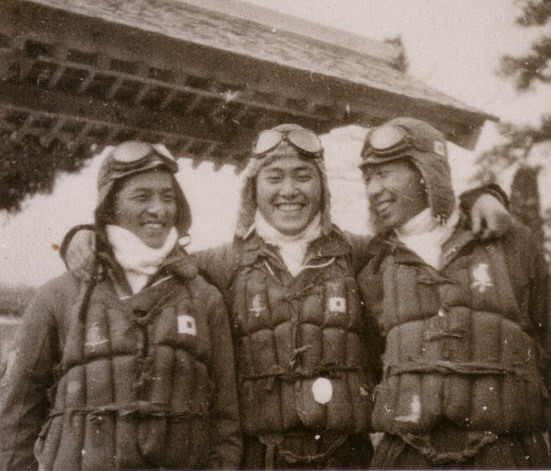
A popular soldiers’ song of the Japanese Imperial Navy during WW2 in which a Kamikaze naval aviator addresses his fellow pilot – parted in death:
“Doki no Sakura” (Cherry blossoms from the same season)
.
You and I, blossoms of the same cherry tree
That bloomed in the naval academy’s garden.
Blossoms know they must blow in the wind someday,
Blossoms in the wind, fallen for their country.
.
You and I, blossoms of the same cherry tree
That blossomed in the flight school garden.
I wanted us to fall together, just as we had sworn to do.
Oh, why did you have to die, and fall before me?
.
You and I, blossoms of the same cherry tree,
Though we fall far away from one another.
We will bloom again together in Yasukuni Shrine.
Spring will find us again – blossoms of the same cherry tree.
. . .
Sadako Kurihara (1912-2005)
Sadako was a controversial poet in Japan, censored during the post-War American Occupation for describing in detail the horrors post-Atomic Bomb in Hiroshima (she was present Aug.6th 1945). She also took a tough, critical stand toward Japan’s aggressions (sometimes referred to as the Asian Holocaust) against China and Korea.
.
“ When we say ‘Hiroshima’ ”
.
When we say Hiroshima, do people answer,
gently, Ah, Hiroshima? ..Say Hiroshima,
and hear Pearl Harbor. Say Hiroshima,
and hear Rape of Nanjing. Say Hiroshima,
and hear women and children in Manila, thrown
into trenches, doused with gasoline, and
burned alive. Say Hiroshima, and hear
echoes of blood and fire. Ah, Hiroshima,
we first must wash the blood off our own hands.
. . .
Hiroshi Kashiwagi (Librarian and poet, born 1922, Sacramento, California)
Hiroshi is a “Nisei”(2nd generation Japanese-American). He was interned at Tule Lake Segregation Camp from 1942-1946. Here is a poem he wrote about his childhood in California:
.
“Pee in the puddle”
.
Wes was fat, something
of a classroom joke
we laughed when he
was late which was
almost every day and
we laughed when he
came on time. John
was always so fair
he let me play
Chinese tag with
them on the way
home from school
but I’d like to remember
him as our fourth
grade Santa Claus
though actually he
was slender with
a high nose and
very German it was
he who thought we
.
should pee in the
puddle. He called
our things brownies
I know he got it
from mine theirs
were white blue
white I wonder
what became of
Wes. I know John
was killed during
World War II
flying for the RAF
crazy guy couldn’t
wait for the U.S.
to enter the war.
I suppose Wes is
still fat and lazy
probably a father many times
.
anyway we wasted
a lot of time
after school. Three
golden loops rising
out of the
brown puddle into
which in time we
all three were
shoved when at
last I came home
crying for my
bread and jam I
was smelling quite
a bit of pee.
Remembering now
I can almost
smell it Wes’s
John’s and mine.
. . . . .
Poems about Elections / Los poetas hablan de Elecciones: 6 nov. 2012
Posted: November 6, 2012 Filed under: Alexander Best, English, Spanish Comments Off on Poems about Elections / Los poetas hablan de Elecciones: 6 nov. 2012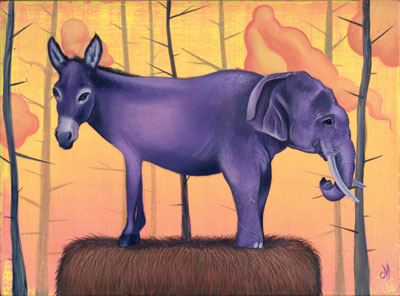
Poems about Elections / Los poetas hablan de Elecciones: 6 nov. 2012
.
By now many citizens of the USA – and countless people worldwide – are good and tired of news coverage – hasn’t media been droning on for twelve months? – of the Democratic (Obama) and Republican (Romney) campaigns leading up to the USA’s presidential election. And today – Tuesday, November 6th – is when voters cast their ballots – in hope, in anger, out of a mechanical sense of duty – or even for their very first time…
And so we present a selection of poems – some of them satirical – about election politics.
. . .
They’re predicting this one’ll be a nailbiter and a humdinger,
like Kennedy’s election over Nixon back in 1960
– just too close to call.
.
Alexander Best
“Swing-State Boogie”
.
“It’s no exaggeration to say
That the undecideds could
Go either way.”<*>
And gosh, who knew? that
How it goes
Depends on news from
O – HI – O ?
<*>Quotation from George Bush Sr., whose mastery of the backwards witty and bafflingly mundane in political comment was surpassed only by his son, George Bush Jr.
. . .
The following poem, “The Poor Voter on Election Day”, was written at a time when Democracy meant only white men voted – and no women. (And people doubtless did vote with their left hands too, though Whittier seemed to think all power lay in the right…)
But Whittier’s idealistic political sentiment is as American in 2012 – even with contemporary cynicism factored in – as it was in 1852.
.
John Greenleaf Whittier (1807-1892)
“The Poor Voter on Election Day” (1852)
.
The proudest now is but my peer,
The highest not more high;
Today, of all the weary year,
A king of men am I.
Today alike are great and small,
The nameless and the known
My palace is the people’s hall,
The ballot-box my throne!
.
Who serves today upon the list
Beside the served shall stand;
Alike the brown and wrinkled fist,
The gloved and dainty hand!
The rich is level with the poor,
The weak is strong today;
And sleekest broadcloth counts no more
Than homespun frock of gray.
.
Today let pomp and vain pretence
My stubborn right abide;
I set a plain man’s common sense
Against the pedant’s pride.
Today shall simple manhood try
The strength of gold and land
The wide world has not wealth to buy
The power in my right hand!
.
While there’s a grief to seek redress,
Or balance to adjust,
Where weighs our living manhood less
Than Mammon’s vilest dust —
While there’s a right to need my vote
A wrong to sweep away,
Up! clouted knee and raggéd coat!
A man’s a man to-day!
. . .
Hoy, en la ocasión de la Elección en los EE.UU., le presentamos poemas de dos poetas que hablaron de la política con pasión y con escepticismo:
.
Guillermo Aguirre y Fierro*
(1887-1949, San Luis Potosí, México)
“La Elección”
*Poema anónimo publicado en el periódico “El Cronista del Valle” (Brownsville, Texas, mayo de 1926). Historiador Antonio Saborit ha dicho que –seguramente – el poema fue escrito por Guillermo Aguirre y Fierro.
.
El león falleció ¡triste desgracia!
Y van, con la más pura democracia,
a nombrar nuevo rey los animales.
Las propagandas hubo electorales,
prometieron la mar los oradores,
y aquí tenéis algunos electores:
aunque parézcales a ustedes bobo
las ovejas votaron por el lobo;
como son unos buenos corazones
por el gato votaron los ratones;
a pesar de su fama de ladinas
por la zorra votaron las gallinas;
la paloma inocente,
inocente votó por la serpiente;
las moscas, nada hurañas,
querían que reinaran las arañas;
el sapo ansía, y la rana sueña
con el feliz reinar de la cigüeña;
con un gusano topo
que a votar se encamina por el topo;
el topo no se queja,
más da su voto por la comadreja;
los peces, que sucumben por su boca,
eligieron gustosos a la foca;
el caballo y el perro, no os asombre,
votaron por el hombre,
y con dolor profundo
por no poder encaminarse al trote,
arrastrábase un asno moribundo
a dar su voto por el zopilote.
Caro lector que inconsecuencias notas,
dime: ¿no haces lo mismo cuándo votas?
. . .
Jorge Valenzuela (Chile)
“Poema sobre las Elecciones”
.
A prepararse señores
se vienen las municipales
se renovarán los alcaldes
y también los concejales.
Volverán las calles sucias
las paredes muy pintadas
afiches en las casas
y las voces destempladas.
Las campañas en terreno
las visitas puerta a puerta
para cuadrar como sea
las ficticias encuestas.
Los diarios-la televisión
y las radios saturadas
destacando al candidato
ofreciendo todo y nada.
Los operativos sociales
los alimentos en cajas
materiales de todo tipo
para reparar bien las casas.
Al final de la contienda
vencedores y vencidos
si te he visto no me acuerdo
y el voto se ha perdido.
. . .
At the age of 27 NDP candidate Ruth Ellen Brosseau won the Québec seat of Berthier-Maskinongé in the May 2011 Canadian federal election. A French-speaking riding of which she had little knowledge – she has since been on a big learning curve with the French language – and she lived in Kingston at the time, not Trois-Rivières – Brosseau campaigned only barely because she was on vacation in Las Vegas in the days leading up to the vote. Yet she won – and by a healthy margin. What’s her secret ?!? Because Barack Obama and Mitt Romney – who spent over a billion dollars each on their campaigns – would dearly love to know!
.
Adrian deKuyper
“When the Bell Tolls” (A Limerick)
.
With hard work and much dedication
Our MPs do their best for our nation
So we salute Ms. Brosseau
Who it seems did not know
That when the bell tolls – don’t take a vacation.
. . .
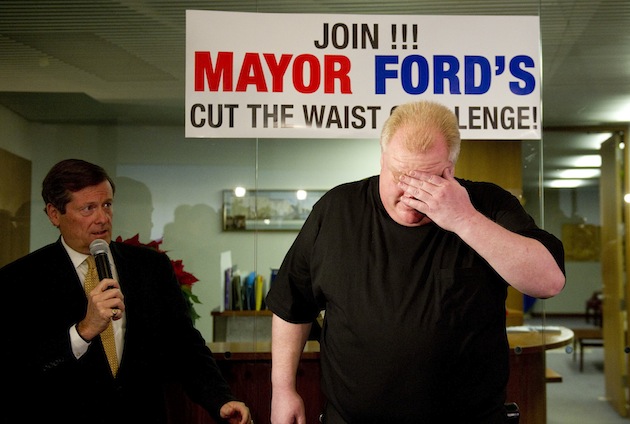
And a poetical angle on local (Toronto) politics in-the-moment…
.
Alexander Best
“Pass the gravy boat!”
or
“Stop the almost-a-train-wreck!”
(A poem for Rob Ford)
.
He barked: I’ll stop the gravy train!
Toronto folks, they listened.
But pugfaced Rob, our city’s mayor,
Keeps changing his positions.
.
He drives himself to City Hall
And, ‘texting’, gives ‘the finger’.
When brought to task, shrugs: Lighten up, o-kay!?
Bad feelings linger.
.
Please hire a driver, Mr. Ford,
And concentrate on business:
The mayoralty and civic tasks – the voters’ god-damn business.
.
Don’t commandeer a rush-hour bus
For your high-school football team
– shenanigans like that just make the People – goofball! – steam.
.
Our previous mayor froze out the Right
– that’s why there’s hothead You.
But calling Leftys pinko-fascists’s
Not the thing to do.
.
People joke about your weight,
Yeah, you’re an easy target.
But being mayor’s a hefty job
So please, won’t you get on it?!
.
You are a big man, 300 pounds plus,
With energy to burn.
So show big spirit for Trawno – Team Us –
And focus, listen, learn!
. . . . .
El Tzompantli…y una Danza de las Calaveras / Tzompantli…and The Skeleton Dance
Posted: November 2, 2012 Filed under: English, Spanish | Tags: Poemas para El Día de Los Muertos Comments Off on El Tzompantli…y una Danza de las Calaveras / Tzompantli…and The Skeleton Dance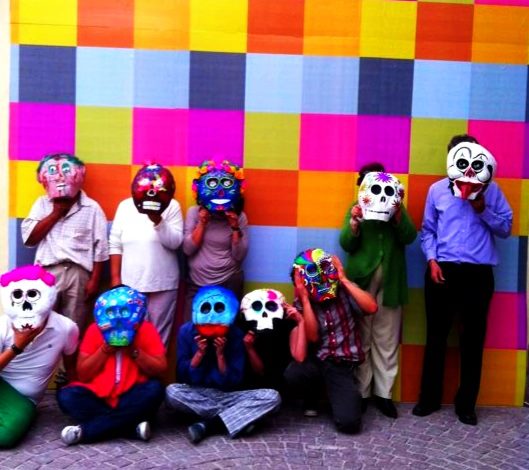
Danza de las Calaveras / Dance of the Skeletons
.
Cuando el reloj marca la una, las calaveras salen de su tumba, tumba que tumba, tumba, tumba, tumba.
When the clock strikes one the skeletons leave their tombs for fun – crying “timber!” and they tumble and they fall down clunk.
Cuando el reloj marca las dos, las calaveras tienen mucha tos, tumba que tumba, tumba, tumba, tumba.
When the clock strikes two those skeletons cough, oh yes they do – they cry “timber!” and they tumble and they fall down clunk.
Cuando el reloj marca las tres, las calaveras van a ver a Andrés, tumba que tumba, tumba, tumba, tumba.
When the clock strikes three they’re on their way to see Bea and Lee – the skeletons tumble, cry “timber!”, they fall down clunk.
Cuando el reloj marca las cuatro, las calaveras miran su retrato, tumba que tumba, tumba, tumba, tumba.
When the clock strikes four, they glance at the mirrored door – they see their spitting image – the latest in their lineage – they’ll cry “timber!” and they’ll tumble and they’ll fall down clunk.
Cuando el reloj marca las cinco, las calaveras siempre dan un brinco, tumba que tumba, tumba, tumba, tumba.
When the clock strikes five, we’ll be glad we’re still alive, those skeletons always jump up and down – yeah, they really go to town – and then they cry “timber!” while they tumble and they fall down clunk.
Cuando el reloj marca las seis, las calaveras miran al revés, tumba que tumba, tumba, tumba, tumba.
When the clock strikes six, for eyes they’ll have an X, those skeletons see inside out, they’re weird without a doubt – and they cry “timber!” as they tumble, falling down clunk clunk.
Cuando el reloj marca las siete, las calaveras se sacan un diente, tumba que tumba, tumba, tumba, tumba.
When the clock strikes seven, how far is it to heaven? yet they’ll pull out their one good tooth and that’ll do us for the Truth – our skeletons “timber!” and tumble and fall down clunk.
Cuando el reloj marca las ocho, las calaveras miran a Pinocho, tumba que tumba, tumba, tumba, tumba.
When the clock strikes eight the skeletons make a date with Kate – and Nate – and how they tumble! crying “timber!” falling down clunk clunk.
Cuando el reloj marca las nueve, a las calaveras todo se les mueve, tumba que tumba, tumba, tumba, tumba.
When the clock strikes nine, will you still be friend of mine? those skeletons get a move on, no longer are they Love’s pawn – still, they tumble, crying “timber!” and they fall down clunk.
Cuando el reloj marca las diez, las calaveras andan sobre un pie, tumba que tumba, tumba, tumba, tumba.
When the clock strikes ten if you kind-a got the yen then we’ll hop along on one foot – that’s just how the skeletons do’ it – and then we’ll cry “timber!”, and we’ll tumble down and clink-clank-clunk.
Cuando el reloj marca las once, las calaveras ya no se conocen, tumba que tumba, tumba, tumba, tumba.
When that clock strikes eleven will we settle like the raven? and the skeletons lose their minds and we try to turn back Time – but no, it’s “timber!” – and tumble – and fall down clunk.
Cuando el reloj marca las doce, las calaveras vuelven a su pose, tumba que tumba, tumba, tumba, tumba.
When the clock strikes twelve, into the past we’ll delve, the skeletons return to their poses ‘neath slabs of stone with roses – we’ll cry “timber!” and we’ll tumble and we’ll all fall down.
. . .
Dance of the Skeletons es un poema escrito en inglés por Alexander Best y inspirado por Danza de las Calaveras – un poema anónimo para niños (de Argentina).
Dance of the Skeletons is inspired by, and loosely based upon, Danza de las Calaveras, a Spanish-language children’s poem for which we thank Grupo Fray Luis Beltran in Argentina.
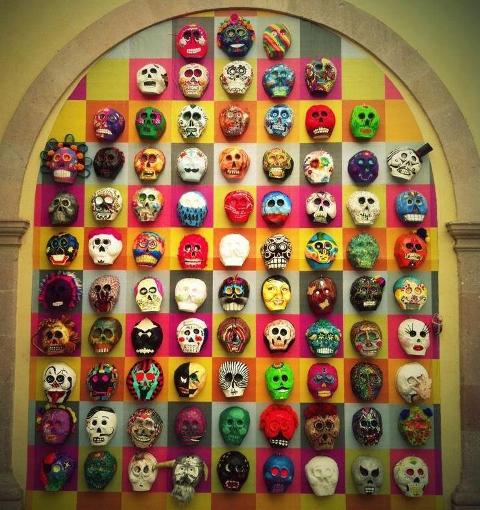
“¡Que viva la muerte misma, y mi Zacatecas querido!”: una muestra de calaveras literarias de 2012: Diana, Georgina, Esteban
Posted: November 2, 2012 Filed under: Spanish | Tags: Poemas para El Día de Los Muertos Comments Off on “¡Que viva la muerte misma, y mi Zacatecas querido!”: una muestra de calaveras literarias de 2012: Diana, Georgina, Esteban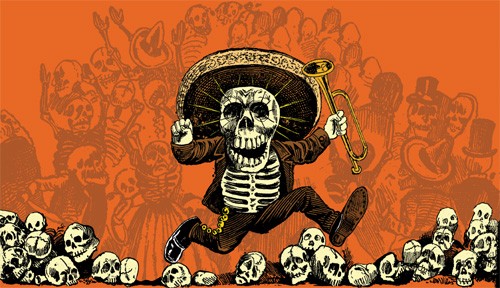
“¡Que viva la muerte misma, y mi Zacatecas querido!”:
una muestra de calaveras literarias de 2012
.
Diana de Jerez
“Calavera a Zacatecas”
.
Ha llegado la calaca
a nuestro estado bendito,
en busca de personajes
que cumplan los requisitos.
.
Afuera de catedral
mira pasar a la gente,
a ver cual se va a llevar
si a un santo o a un delincuente.
.
Ahora ha pensado en cargar
del diario ametralladora,
porque esta inseguridad
ni sus huesitos perdona.
.
En su morral carga tortas
en vez de cargar muertitos,
porque la crisis es dura,
no le alcanza pa’ taquitos.
.
Cuidado con la catrina
y me voy a despedir,
ahí les encargo un altar
por si me llevara a mí.
. . .
Georgina (de Ojocaliente)
.
Se acerca el 2 de Noviembre
y los muertos con muchas ganas
piden a gritos que llegue el día
y así sacar a pasear sus almas
.
Les pareció que Zacatecas
era la ciudad indicada
para mover todo su esqueleto
en sus típicas callejoneadas
.
Se reunieron las huesuditas
en la plaza bicentenario
todas querían encontrar pareja
de preferencia los funcionarios
.
Una calaca le dice a otra:
¿Y a ellos para que los queremos?
¡no seas tonta amiguita!
solo los estafaremos
.
Pobrecitos inocentes
no saben o que les espera
si no ayudan a toda su gente
debajo estarán de la tierra
.
Después de un rato de baile
a lo lejos se ve más gente
va llegando el Gobernador
con todo su gabinete
.
¡Miguelito, Miguelito!
le gritan sin presunción
ahora te haremos campaña
pero para llevarte al panteón
.
El Gobernador asustado
sale corriendo de la plaza
pero lo que no se imagina
es que lo buscaran en su casa
.
Las flacas muy preparadas
le piden cooperación
para seguir la pachanga
que termina en el panteón
.
Vámonos pues amiguitas
les dice Miguel Alonso
dejen en paz a los funcionarios
que ya borrachos están en el pozo
.
Yo les invito más tequila
y saben que mucho las quiero
pero déjenme en Zacatecas
porque de aquí sale buen dinero
.
Las calacas resignadas
aceptan su petición
pues se llevan buena tajada
cuando se hace la repartición
.
Así me gusta mis chulas
que jalen bien parejo
si me siguen ayudando
hasta de funcionarias las dejo…
. . .
Esteban (de Zacatecas)
.
Advierto zacatecanos,
la muerte salió del panteón,
como buenos mexicanos,
¡Hay que darle chicharrón!
.
Yo rápido les platico,
que me espera un buen camote,
pero bien que les platico,
que de loco me dan mote.
.
En Zacatecas anda la calaca,
aunque Nahle no lo acepte,
y aunque la catrina no peca,
de una vez que se lo inyecte.
.
Pero mejor les cuento,
de un noble escritor,
don Ramón con monumento,
pues lo merece nuestro embajador.
.
Oriundo de nuestra tierra,
del merito Jerez,
pueblo que por donde quiera,
te maravilla lo que ves.
.
El ilustre López Velarde,
a la muerte acompañó,
cansado de tanto alarde,
su Suave Patria nos heredó.
.
Orgullosos es que estamos,
de nuestro estado de cantera,
plata lo que habitamos,
y el paraíso de cualquiera.
.
Les digo que ando a prisa,
ya me voy, ya me despido.
¡Que viva la muerte misma,
y mi Zacatecas querido!
. . . . .
Reconocimiento: nuestros agradecimientos al sitio de web Zacateks
Robert Gurney: “Santiago de Chuco”… y César Vallejo
Posted: November 1, 2012 Filed under: César Vallejo, English, Robert Gurney, Spanish Comments Off on Robert Gurney: “Santiago de Chuco”… y César Vallejo
Robert Gurney
“Santiago de Chuco”
(to César Vallejo)
.
El reloj
con la cara azul
.
la Virgen negra
en la parroquia oscura
.
la foto de Vallejo
en la fachada del Cabildo
.
las placas de latón
que necesitaban limpiarse
.
las nubes tan bajas
como las de Inglaterra
.
el paraguas negro
que tal vez llevara en París,
colgado de un clavo,
que se encontraba abierto
.
la escultura del poeta
sentado
.
los baúles
donde quizás guardara una vez
el Orbe de Juan Larrea
.
esa momia extraña
agachada
en una vitrina de cristal
.
el pequeño horno,
extrañamente erótico,
cavado en el muro
.
el poema a la madre
.
la foto de la cara
de su madre
.
el altar familiar
.
vi estas cosas
en Santiago de Chuco.
.
Pero el objeto que me llamó
realmente la atención
fue ese gramófono RCA,
His Master’s Voice,
La Voz del Amo,
con la misma imagen del perro blanco
y la trompeta enorme
que yo escuché una vez,
la cabeza sostenida en las manos ahuecadas,
tendido en la alfombra,
bajo la aspidistra de mi abuela
en Dunstable.
. . .
Robert Gurney
“Santiago de Chuco”
(to César Vallejo)
.
The clock
with the blue face
.
the black Madonna
in the Parish Church
.
the photo of Vallejo
on the wall
of the Town Hall
.
the brass plaques
in need of polishing
.
the grey clouds
as low as those of England
.
the black umbrella
he may have used in Paris
hanging from a nail
open on a wall
.
the sculpture of the poet
sitting down
.
the trunks
where once
he may have kept
his copy of Juan Larrea’s Orbe
.
that strange mummy
sitting in a glass case
.
the little oven,
strangely erotic,
sunk in the white wall
.
the poem to the mother
.
the photograph of
his mother’s face
.
the altar
in the family house
.
these things caught my eye
in Santiago de Chuco
but none of them more
than that RCA gramophone,
His Master’s Voice,
with the same picture of the white dog
and the enormous horn,
as on the one that I once listened to,
my head cupped in my hands,
lying on the floor
beneath my grandmother’s aspidistra
in Dunstable.
. . . . .
César Vallejo
(born in Santiago de Chuco, Perú, 1892,
died in Paris, France, 1938)
“Black Stone on Top of a White Stone”
.
I shall die in Paris, in a downpour,
on a day I already remember.
Shall die in Paris – this doesn’t throw me off –
maybe on a Thursday, like today, in autumn.
.
Thursday it shall be, because today, Thursday,
as I set down these lines, I have ‘put my shoulder
to the grindstone’ – for evil. Never before have I turned,
as today, to seeing my total way to aloneness.
.
César Vallejo is dead. They all struck him,
though he did nothing to them; let him have it
hard with a stick, the lash of a rope as well.
The witnesses are:
Thursdays, shoulder bones, loneliness, rain, the roads…
. . .
César Vallejo (1892-1938)
“Piedra Negra Sobre Piedra Blanca”
.
Me moriré en París con aguacero,
un día del cual tengo ya el recuerdo.
Me moriré en París – y no me corro –
tal vez un jueves, como es hoy, de otoño.
.
Jueves será, porque hoy, jueves, que proso
estos versos, los húmeros me he puesto
a la mala y, jamás como hoy, me he vuelto,
con todo mi camino, a verme solo.
.
César Vallejo ha muerto, le pegaban
todos sin que él les haga nada;
le daban duro con un palo y duro
también con una soga; son testigos
los días jueves y los huesos húmeros,
la soledad, la lluvia, los caminos…
.
Vallejo translation into English: Alexander Best
. . . . .
Robert Gurney nació en Luton, Inglaterra, en 1939. Es un profesor de poesía francesa moderna, y de literatura española y latinomericana. Ha publicado diversos libros incluyendo tres poemarios: Luton Poems (2005), El cuarto oscuro (2008), y Poemas a la Patagonia (2004 y 2009). Él, su esposa Paddy, sus hijos y nietos viven en St Albans, Inglaterra. ‘Santiago de Chuco’ se toma de su próximo libro La libélula y otros poemas/The Dragonfly and Other Poems (edición bilingüe, Lord Byron Ediciones, Madrid, 2012). En prensa: La casa de empeño/The Pawn Shop (bilingüe, 2013).
.
Robert Gurney was born in Luton, England, in 1939. He is a Lecturer in modern French poetry, Spanish and Latin- American Literature. He writes in both Spanish and English and his poetry collections include: Luton Poems (2005), El cuarto oscuro (2008), and Poemas a la Patagonia (2004 and 2009). He, his wife Paddy, sons and grandsons live in St Albans, England. ‘Santiago de Chuco’ is taken from his forthcoming book La Libélula y otros poemas/The Dragonfly and Other Poems (bilingual edition, Lord Byron Ediciones, Madrid, 2012). Upcoming: La casa de empeño/The Pawn Shop (bilingual, 2013).
Filíocht do Samhain, Là na Marbh / Irish poems, verses for Samhain + All Souls Day
Posted: October 31, 2012 Filed under: Cathal Ó Searcaigh, English, Irish, Rody Gorman | Tags: Samhain and All Souls Day poems Comments Off on Filíocht do Samhain, Là na Marbh / Irish poems, verses for Samhain + All Souls Day
Cathal Ó Searcaigh
“Samhain 1994”
.
Anocht agus mé ag meabhrú go mór fá mo chroí
Gan de sholas ag lasadh an tí ach fannsholas gríosaí
Smaointím airsean a dtug mé gean dó fadó agus gnaoi.
A Dhia, dá mba fharraige an dorchadas a bhí eadrainn
Dhéanfainn long den leabaidh seo anois agus threabhfainn
Tonnta tréana na cumhaí anonn go cé a chléibhe…
Tá sé ar shiúl is cha philleann sé chugam go brách
Ach mar a bhuanaíonn an t-éan san ubh, an crann sa dearcán;
Go lá a bhrátha, mairfidh i m’anamsa, gin dá ghrá.
. . .
Cathal Ó Searcaigh
(born 1956, Gort an Choirce, County Donegal, Ireland)
“November* 1994”
Editor’s note: the word Samhain is, in contemporary Irish,
also synonymous with the word for November.
.
Tonight as I search the depths of my heart,
in the dark of the house and the last ember-light,
I’m thinking of one I loved long ago.
.
And if the darkness between us became like the sea,
I’d make a boat of this bed, plunge its bow
through the waves that barge the heart’s quay.
.
Although he is gone and won’t ever be back,
I’ll guard in my soul the last spark of his love,
like the bird in the egg and the tree in the nut.
.
Translation from Irish: Nigel McLoughlin
.
. . .
Rody Gorman
“Mo Mharana”
.
D’fhág mé an suíochán
Ina gcaitheadh is a gcognaíodh sé féin
Gan bhogadh tamall fada,
Mar a bhfuair sé bás
Thall i gcois an tinteáin.
.
Shuigh mé go ndearna mé mo mharana
Sa deireadh. Cheap mé dán
Agus fuair mé réidh leis.
. . .
Rody Gorman (born 1960, Dublin, Ireland)
“Contemplation”
.
I avoided the chair
in which he’d spent and chewed away,
and didn’t move for a long time,
he’d died
over there by the fireplace.
.
In the end, I sat
in contemplation. I composed a poem
and had done with it.
.
Translation from Irish: Michael S. Begnal
.
“Samhain 1994” and “Mo Mharana” © Cathal Ó Searcaigh, Rody Gorman
. . .
“All Hallow’s”
(Irish-American poem – Author unknown)
.
The voices of the dead…
Are you with me, grandfather?
Do you hear me, spirits of the past?
Is the night hurrying because of you?
.
The answers are not in unhoped for words
but the images of night:
the cloak, the stillborn wind ripping brown leaves,
rain on the sidewalk, clay earth
becoming mud, mute stars,
the tree sighing as it dies,
the ending of the day, the halo of dawn,
the night-touch, the wolves’ howl,
the heart, the soul, of the dark.
.
Because we know, we know you well.
The voices of the dead carry my heart,
whispering, wind-voiced.
What do they know but Time?
Timelessness is not theirs;
they surpass it, as they surpass the images of night.
My time is coming.
I must leave, as we all must, as the dead have,
wandering in their cities of different light,
strange and still, touching each other
as they pass, tenderly,
with the fingertips, as they pass,
walking home.
. . .
Irish lyric tenor John McCormack (1884-1945) was one of the earliest singing voices to be put on “phonograph record”. Pianist and composer Charles Marshall (1857-1927) wrote the music and words for the following sentimental popular song, “I Hear You Calling Me”, which was recorded by both men (John’s voice, Charles at the piano) in 1908. The song’s tender theme is entirely appropriate for All Souls Day.
.
“I Hear You Calling Me”
.
I hear you calling me –
You called me when the moon had veiled her light,
before I went from you into the night…
I came,
do you remember?
back to you
for one last kiss
beneath the kind star’s light.
.
I hear you calling me –
And oh, the ringing gladness of your voice,
that warmth that made my longing heart rejoice.
You spoke,
do you remember?
and my heart
still hears
the distant music of your voice.
.
I hear you calling me –
Though years have stretched their weary length between
and on your grave the mossy grass is green.
I stand –
do you behold me listening here?
.
Hearing your voice through all the years between
– I hear you calling me…
. . .
Thomas Moore (born Dublin, 1779, died 1852)
Editor’s note: Moore was a great collector of Irish Traditional poems and songs,
told or sung to him by people who were illiterate. Some of these verses he ‘tweaked’, making them rather more sophisticated than the folk originals – but the presence of Death remains, as in the earlier anonymous oral versions.
.
“Oh, ye Dead!”
(Irish Traditional)
.
Oh, ye Dead! oh, ye Dead! whom we know by the light you give
From your cold gleaming eyes, though you move like men who live,
Why leave you thus your graves,
In far off fields and waves,
Where the worm and the sea-bird only know your bed,
To haunt this spot where all
Those eyes that wept your fall,
And the hearts that wail’d you, like your own, lie dead?
.
It is true, it is true, we are shadows cold and wan;
And the fair and the brave whom we loved on earth are gone;
But still thus even in death,
So sweet the living breath
Of the fields and the flowers in our youth we wander’d o’er,
That ere, condemn’d, we go
To freeze ‘mid *Hecla’s snow,
We would taste it a while, and think we live once more!
.
* Hecla refers to Mount Hecla, the active volcano in Iceland (not Ireland). Stories grew up around reports – possibly by mediaeval sailors – of the mystical strangeness of Hecla.
. . .
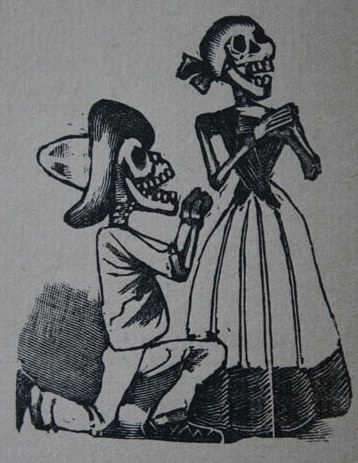
“The Unquiet Grave”
(Traditional – Ireland, Scotland, England)
.
The wind doth blow today, my Love,
A few small drops of rain
I never had but one true Love
In cold clay she is laid.
.
I’ll do as much for my true Love
As any young man may
I’ll sit and mourn all on her grave
A twelve-month and a day.
.
The twelve-month and the day being gone
A voice spoke from the deep:
Who is it sits all on my grave
And will not let me sleep?
.
”Tis I, ’tis I, thine own true Love
Who sits upon your grave
For I crave one kiss from your sweet lips
And that is all I seek.
.
You crave one kiss from my clay cold lips
But my breath is earthly strong,
Had you one kiss from my clay cold lips
Your time would not be long.
.
My time be long, my time be short,
Tomorrow or today,
May God in Heaven have all my soul
– But I’ll kiss your lips of clay!
.
See down in yonder garden green,
Love, where we used to walk
The sweetest flower that ever grew
Is withered to the stalk.
The stalk is withered dry, my Love,
And will our hearts decay
So make yourself content, my Love,
Till death calls you away…
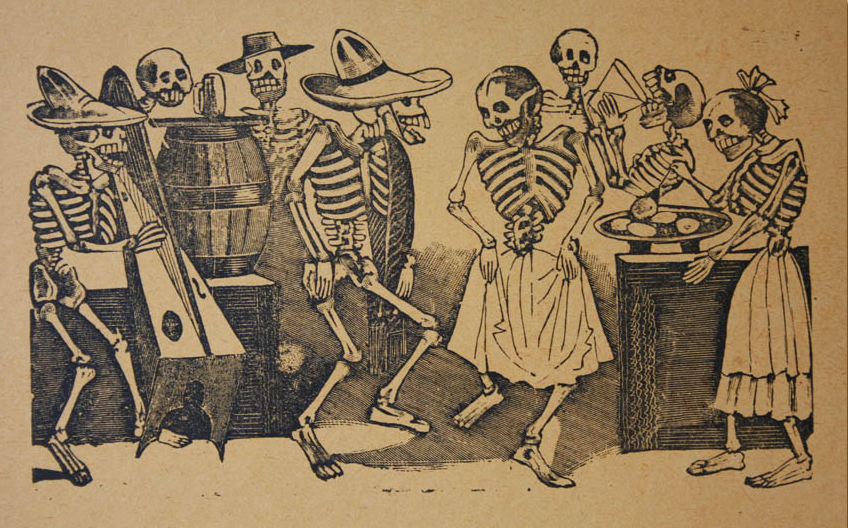
“Quick! we have but a second!”
(Irish Traditional)
.
Quick! we have but a second,
Fill round the cup while you may;
For Time – the churl – hath beckon’d,
And we must away, away!
Grasp the pleasure that’s flying,
For oh, not Orpheus’ strain
Could keep sweet hours from dying,
Or charm them to life again.
.
Then, quick! we have but a second,
Fill round the cup while you may.
For Time – the churl – hath beckon’d,
And we must away, away!
.
See the glass, how it flushes,
Like some young (maiden’s) lip,
And half meets thine, and blushes
That thou shouldst delay to sip.
Shame, oh shame unto thee,
If ever thou see’st that day,
When a cup or lip shall woo thee,
And turn untouch’d away!
.
Then, quick! we have but a second,
Fill round, fill round while you may,
For Time – the churl – hath beckon’d,
And we must away, away!
“I seek freedom in the indefinable”: Five Poems by Lelawattee Manoo-Rahming
Posted: October 27, 2012 Filed under: English, Lelawattee Manoo-Rahming | Tags: Poets from Trinidad and Tobago Comments Off on “I seek freedom in the indefinable”: Five Poems by Lelawattee Manoo-RahmingLelawattee Manoo-Rahming
(born 1960, Trinidad and Tobago)
The Om
.
My Tanty used to sing/pray
evening ragas to the Earth Goddess
morning oblations to the Sun God
.
Now my Aunty prays
that I find salvation in the cross
in the church that has freed her
from indenture, from coolieness
.
Yet I seek freedom
in the indefinable
the OM
the puja breath that expands
my rib cage
with blessed pitchpine smoke
into an oval
large as the cosmic egg
.
The sea breath
OM
That echoes
In the conch shell
Blowing across the Caroni
Infinite like green plains
Of sugarcane
Or a milky river veiling
The face of the goddess
. . .
The Broken Key
.
1
Half left in the keyhole
Bright bronze blocking
Locking the door
.
Only a tiny drill
Can turn into powder
The hardened one
Reopen the door
Allow a human being
To become the way
For grace to come through
.
2
Half broken off
Round with jagged edge
As if the full moon
Had been gnawed by some
Celestial beast
Gnawed like the ropes
That bind us together
One tug away from
SNAP
CRACK
The sound of a key breaking
In the keyhole of our door
How can we reopen the door?
How can we ever let grace
Come through again?
. . .
Fusion
.
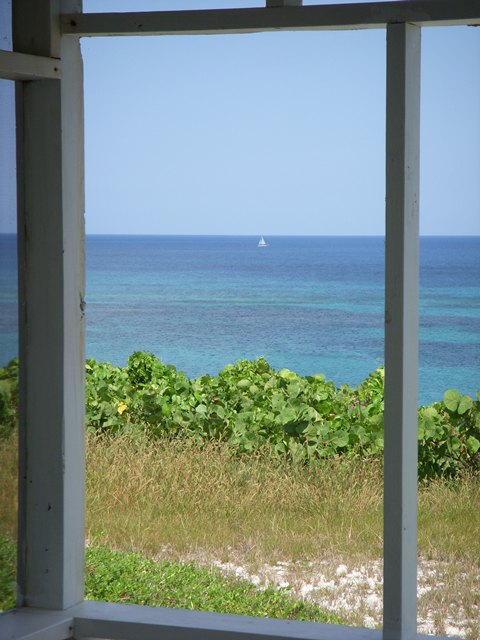
A quartet of ospreys calls
Kee-uk kee-uk cheep cheep
Kee-uk kee-uk cheep cheep
Riding on air currents
Beneath a periwinkle sky
Decibelled by steelpan carols
.
A sailboat chips along
Over cobalt blue near the horizon
As David Rudder’s voice solos
From the CD-player
.
A soulful Go Tell It on The Mountain
.
A white and orange tabby saunters
Along the boardwalk
Sasses Meow
Without stopping to marvel
At the ingenuity
Of Zanda and Hadeed’s
Playful panjazz fusion
.
The Mighty Shadow melodies
Greetings in a lover’s kaiso
While at the foot of the dune
Sixty feet down
The sea swashes in threes
A soft wetsandsmooth
Rake and Scrape response
Submerged voices of ghost Tainos
. . .
Beneath the Trees
.
These round roots encircle me
Like tubes
In a hospital bed but here there is no
Antiseptic scent
No sterile handwashing
.
Here the earth smells like wet moss
And when I bite into these roots
They taste of peppery pine
And green fruit: sugar apple maybe
.
Beneath these trees
I need no clothes to feel clothed
These gnarled roots with their humus
Coating warm my nakedness
In a cocoon soft like corn silk
.
The phloem and xylem passages
That carry messages
Between the sun and these roots
Water and feed my muscles
Giving them a turgidity
Like the fullness of youth
.
These roots do not just encase me
They cradle me
Like a mother’s arms
.
My heartbeat echoes
Through these roots
This earth
And I know
I have become
an incarnation
of Sita
Returning to her mother
Bhumi Devi: the great Earth Mother
Beneath these trees
. . .
Alphabet of Memory
.
I took with me seeds
Tiny dots of bhandhania
Flat, almost round disks of pimento pepper
And oval, plump legumes of seim
That I planted
With varying degrees of success
Wanting to feel at home
Where I have traveled to
.
Then I found
In a cobwebby closet
The alphabet of memory
I had brought with me
Some letters sharp as a tropical noonday
Others hazy
As a smoky dry season dusk
.
Letters which I shuffled
And then played a game of scrabble
Until I had used them all up
To create words
Then poems
To make me feel at home
. . .
Poet’s glossary:
Coolieness: East Indian Indentured Labourers who were brought to the West Indies, and their descendents are sometimes called ‘coolie’, as an insult. In my poem, ‘Coolieness’ refers to the East Indian culture that still exists in Trinidad and Tobago.
.
Puja (Bhojpuri Hindi): A personal, familial, or public Hindu prayer service or worship.
.
Caroni: A river in Trinidad and Tobago. The river plains, called the Caroni Plains were once used for sugar cane farming.
.
David Rudder: A calypsonian from Trinidad and Tobago.
.
Zanda: Clive Alexander, aka Zanda, or Clive Zanda Alexander, is a jazz pianist from Trinidad and Tobago.
.
Hadeed: Annise Hadeed is a steel pan soloist and composer from Trinidad and Tobago.
.
The Mighty Shadow: A calypsonian from Trinidad and Tobago.
.
Kaiso (Trinidad and Tobago Creole): Calypso
.
phloem and xylem: The primary components of the vascular tissues in plants, which transport the fluid and nutrients throughout the plant.
.
Sita: (Sanskrit: meaning “furrow”) is the wife of Lord Rama and one of the principal figures of the Ramayana, the epic Hindu scripture. As the devoted wife of Lord Rama, Sita is regarded as the most esteemed exemplar of womanly elegance and wifely virtue in Hinduism.
.
Bhandhania: The Hindi name for the herb, used in cooking, otherwise known as wild coriander or culantro.
.
Seim: The Hindi name for the Hyacinth bean, the green pods of which are used as a vegetable.
. . . . .
Lelawattee Manoo-Rahming is an engineer, poet and fiction writer. She won the David Hough Literary Prize (2001) and the Canute A. Brodhurst Prize (2009) from The Caribbean Writer Literary Journal; and the Commonwealth Broadcasting Association 2001 Short Story Competition. She is the author of two poetry collections: Curry Flavour, published by Peepal Tree Press (2000) and Immortelle and Bhandaaraa Poems, published by Proverse Hong Kong (2011).
.
Zócalo Poets wishes to thank guest-editor Andre Bagoo
for introducing us to the poetry of Lelawattee Manoo-Rahming.
Cicatrizes da Vida: poemas brasileiros em inglês / Scars of Life: Brazilian poems in English
Posted: October 27, 2012 Filed under: English, Portuguese, Valdeck Almeida de Jesus, ZP Translator: Alexander Best | Tags: Poemas brasileiros em inglês Comments Off on Cicatrizes da Vida: poemas brasileiros em inglês / Scars of Life: Brazilian poems in EnglishValdeck Almeida de Jesus
“Aqui e agora”
.
Aqui e agora
Eu sou,
Sou tudo:
O mundo, o sol, o mar
O mar distante
O sol presente
O mundo invisível.
Sou nada:
O mar, o sol, o mundo
O mundo real
O sol no infinito
O mar da melancolia
Melancolia e saudade
Daquilo que não vivi.
. . .
“Here and Now”
.
Here and now
I am – I am
Everything:
The world, the sun and sea
– the distant sea,
The sun this very moment,
The invisible world.
.
I am nothing:
The sea, the sun, the world,
The real world,
The sun in its infinity,
And a sea of melancholy –
Melancholy and longing, yearning
– for that which I did not live.
. . .
“Cicatrizes”
.
A vida é uma sucessão,
Successão de cicatrizes…
Cicatrizes do amor
Cicatrizes da alegria
Cicatrizes da dor
Cicatrizes da euphoria.
Não quero viver
Sem cicatrizes
– alegres os tristes,
Quase felizes
Meus dias terão
Várias cicatrizes.
. . .
“Scars”
.
Life is a kind of succession…
– a succession of scars –
Love’s scars,
Scars of happiness,
Of grief, of euphoria.
I don’t wish to live
Without those scars
– scars joyful, scars sad,
Almost happy, my days…
And they’ll have numerous scars.
. . .
“Vida”
.
Viver en tento,
Morrer não quero,
Sorrir desejo,
Mas não consigo;
Me ver em ti,
Procuro sempre;
Amar com garra
E com segurança,
Estou tentando
Desde sempre.
Se não consigo
Ser mais autêntico,
É porque sou humano
E por tal, falho.
. . .
“Life”
.
To live with care,
And not want to die,
I wish to smile,
But maybe not with you…
.
To see myself in you
– always I seek that –
And to love with gusto, with sureness
(I’ve been trying to do that since forever!)
.
But if not with you…
Well, to be more real,
And it’s all because I’m human and,
For that reason,
Flawed.
.
“Aqui e agora”, “Cicatrizes”, “Vida”: © Valdeck Almeida de Jesus
. . .
Valdeck Almeida de Jesus é jornalista, escritor e poeta. Nasceu em 1966 em Jequié, Bahia, Brasil.
A journalist, writer and poet, Valdeck Almeida de Jesus was born in 1966.
He hails from Jequié, Bahia State, Brazil.
.
Tradução de português para inglês / Translations from Portuguese into English:
Alexander Best
Frida + Diego: poems, pictures / pinturas, poemas
Posted: October 20, 2012 Filed under: Eduardo Urueta, English, Frida + Diego: poems + pictures / pinturas + poemas, Hellen Chinchilla, José Pablo Sibaja Campos, Spanish, ZP Translator: Alexander Best Comments Off on Frida + Diego: poems, pictures / pinturas, poemas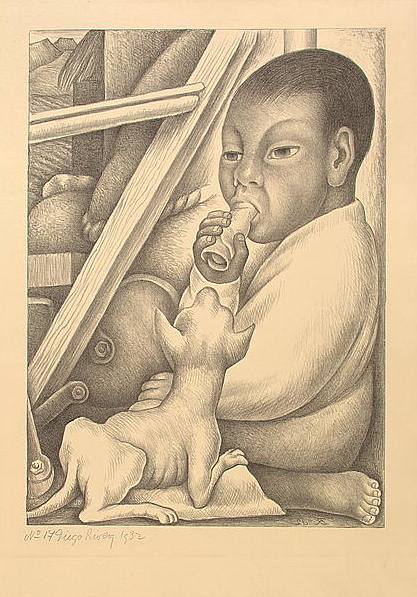
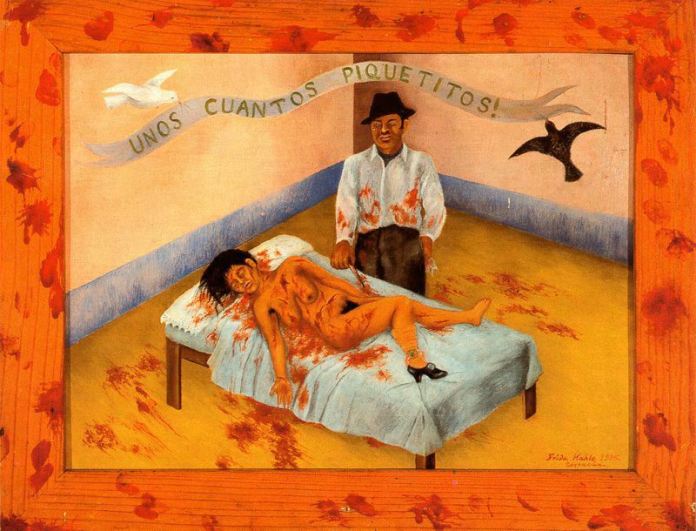
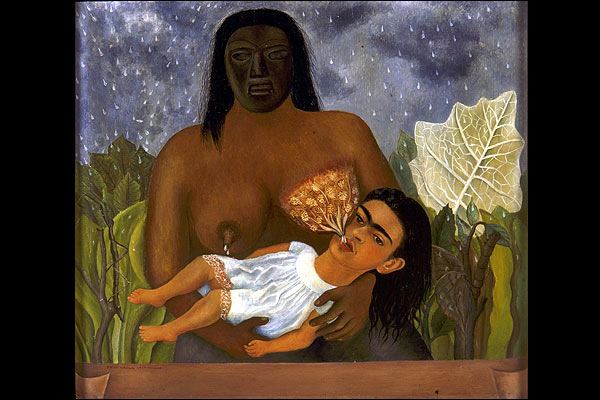
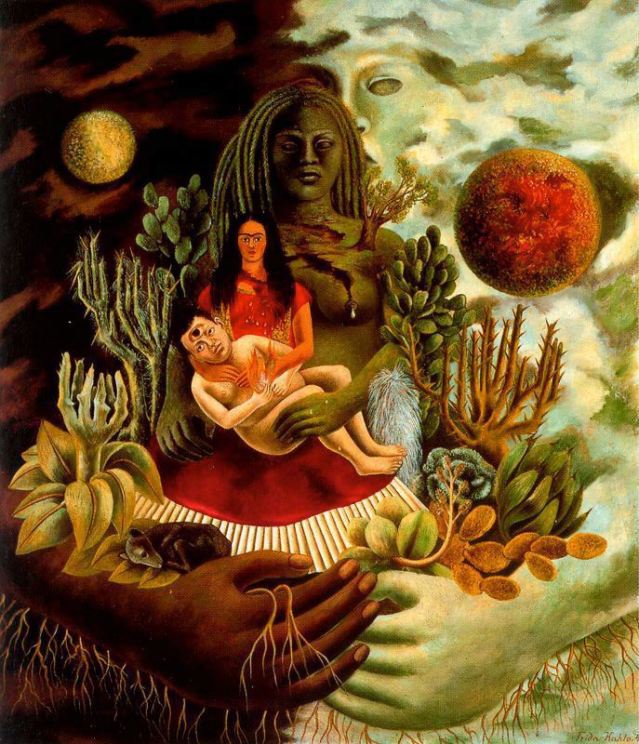
Today in Toronto, at the Art Gallery of Ontario, a first-time-ever exhibition in Canada opens: “Frida and Diego: Passion, Politics and Painting”. Combining the divergent artworks of México’s famous bohemian ‘power couple” of the twentieth century, Frida Kahlo and Diego Rivera – an odd yet charismatic pair of artists/soul-mates.
.
Diego Rivera (1886-1957) put México on the map internationally for his enormous public murals depicting Mexican history with a distinct Marxist perspective – and by placing Indigenous people front-and-centre in his work. Arguably, fellow muralists José Orozco and David Siqueiros were superior artists but Rivera’s vast energy and robust national/historical vision place him at the forefront. Though in his smaller painted canvases (some of which may be seen at the A.G.O. show) Rivera is wildly uneven as to technique and intellectual perspective – he can be cloying and mediocre – still, he is an exceptional figure for his vitality alone.
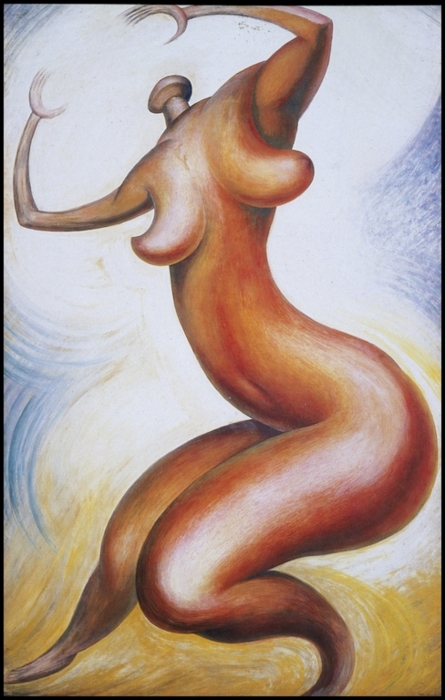
A maverick originality defines Frida Kahlo (1907-1954). In her short gutsy life she altered people’s perception of what it meant to be a woman painter. Though her small-size – and they are almost always small – canvases lack painterly finesse , nonetheless they are deeply affecting for their self-absorbed even disturbingly raw subject matter/point of view. Here was something new in a female painter – and Kahlo has been embraced by Surrealists, Feminists, champions of “Mestizaje”, Disabled and Chronic-Pain Activists, Body Self-Modifiers, and dedicated Non-Conformists. All have found what they needed in the work and life of this complex artist and woman – one who continues to fascinate a new generation now discovering her.
.
We present three poems in translation from Spanish by young poets who have meditated upon the “meaning of” Diego and of Frida…
. . .
Hoy en Toronto, el 20 de octubre, se inaugurará en La Galería de Arte de Ontario una exposición centrada en obras de los artistas Frida Kahlo y Diego Rivera – y titulada: Frida y Diego: Pasión, Política y Pintura. Es la primera vez que están en Canadá las pinturas de estos “compañeros” lo más famosos del arte mexicano del siglo XX.
Y para celebrar este hecho – las reflexiones de tres poetas…
. . .
Eduardo Urueta (pseudonym)
“Poem for Diego Rivera” (December 2011)
.
México:
The wet-nurse that breastfed you,
Who gave you your icy tone in love,
And who drew you, with his plump hands, as
Black women, soldiers on fire, Communists, kids;
México misses you –
this place is a fountain of the dismal…
.
So pronounced is your brow – like your temper.
So easygoing – so bearable – these mummy-like buildings.
The México of your tree-of-awareness is – like you – dead.
They’ve got skeletons – ‘at par’ now.
We are grey dust – smog – save for
Guanajuato which keeps on with its brightly-coloured houses in the hills and its
Streets smelling of oil paints – almost kissing us.
.
The buckets which by you got filled in two days
And by the third became big round chests or trunks-ful,
Were:
1. a nude portrait of (audacious poetess) Guadalupe Amor
2. a transvestite you never wanted and who ‘rouged’ you with his bearded cheeks,
And
3. your dead son by your first wife, Angelina Beloff.
.
So much matrimony to satisfy your hefty body,
So much travel to make ‘bug out’ those toad-eyes of yours,
So many kilometres of walls
To fill this country UP with History.
.
You are in debt.
You await – you hope for – a novice urbanization.
You have to hope – always – that the
Wall of memory (painted by you)
Bears the weight of – can hold up – the sky for you.
People will continue to love
The “Bellas Artes” fresco,
and that staircase mural decorated by your hands
– until the thing collapses and falls down…
. . .
Eduardo Urueta (Seudónimo)
“Poema para Diego Rivera” (diciembre 2011)
.
México:
la nodriza que te amamantó,
quien te dio tu gélido acento de amor,
y quien te dibujó, en las manos llenas,
mujeres morenas, soldados en combustión, comunistas, niños;
te extraña
– es una fuente sombría.
.
Tan pronunciada tu frente, como tu genio
Tan llevadera la momia de los edificios.
El México de tu árbol-conciencia,
como tú, está muerto.
Se hicieron a la par esqueletos.
Somos polvo gris,
excepto Guanajuato que sigue con casas de color en sus cerros
y sus calles huelen a aceite de pintura, a besos.
.
Los cubos que en ti cupieron dos días
y al tercero se volvieron un baúl redondo,
fueron
Un retrato desnudo de Guadalupe Amor,
Un hombre travesti que nunca quisiste y que ruborizaste de rosa
sus mejillas de hombre barbón,
y tu hijo muerto de Angelina Beloff.
.
Tanto matrimonio para llenar tu cuerpo gordo
tanto viaje
para llenar tus ojos de sapo
tanto kilómetro de muros
para llenar de historia al país
.
En deuda estás.
Te espera el blanco de la novicia urbanización
Te ha de esperar, siempre
el muro de la memoria
te ha de sufrir el cielo
por sujetarte el peso.
Te seguirá amando Bellas Artes
su escalera adornada de tus manos
hasta que se derrumbe…
José Pablo Sibaja Campos
“To Frida”
.
Today, when inexorable Time has shown us
How many calendars have gone up in smoke;
Now that the leaves have begun to fall from the trees;
Only just today when the sky seems to be transforming itself into a violent sea;
I – pausing before your face and its glance – have got to say:
Frida Camarada Kahlo,
That which you painted at one time or another as if wanting to speak to me;
The same fixed glance with which you have turned yourself into a nereid, a sea-nymph,
from that murky sea many people wanted to conquer but which few have achieved.
.
To be sure, Frida, there are those who look for you under the shade of some Rivera painting;
Others, naïve ones, find you within the shuttered corridors of a dream
– Poor them! – sad…blind.
They don’t notice that you live in your paintings, your paintings live in you.
Come, Frida, rise up and walk, as if you were the biblical Lazarus.
Show yourself again and let us once more call you:
Woman, Artist, Revolutionary.
. . .
José Pablo Sibaja Campos
“A Frida”
.
Hoy que el inexorable tiempo nos ha enseñado
Cuantos calendarios ha quemado ya.
Ahora que las hojas han empezado a caer de los árboles,
Justo hoy que el cielo parece convertirse en un mar violento,
Tengo que decirlo, me detuve ante tu mirada
Frida Camarada Kahlo
Esa que pintaste una y otra vez como queriendo hablarme,
La misma mirada con la que te has convertido en la nereida
Del turbio mar que muchos quisieron conquistar
Pero que pocos han logrado.
.
Es cierto Frida algunos te buscan balo la sombra de un tal Rivera,
Otros ingenuos,
Te hallan en los postigos pasillos del sueño
Pobre de ellos, tristes…ciegos.
No se dan cuenta que vives en tu obra y tu obra en ti.
Ven Frida levántate y anda, cual si fueras el Lázaro bíblico
Muéstrate de nuevo y déjanos llamarte una vez más;
Mujer, Artista, Revolucionaria.
. . .
Hellen Chinchilla
“Between transgression and normalcy”
.
Why?
Why do you have to be along that line where there are no lines – no horizons?
Why are you not the same as all the others?
Why must you be seen as transgressive and not as normal?
Where is that fine line that keeps you apart?
Apart to be what you must be!
Forced by life, by decision, and by pain to be in that line off to one side,
where the others, even though they wanted not to be there,
are leaving behind the boundaries of the hetero…
Oh, you knew how to love…
You – different Woman,
Woman-transgressor,
Normal Woman – and then some.
Woman.
Hellen Chinchilla
“Entre la transgresión y la normalidad”
.
¿Por qué?
¿Por qué debes estar en la línea dónde no hay líneas?
¿Por qué no eres de las mismas?
¿Por qué tienes que ser vista como transgresora y no como normal?
¿Dónde está esa delgada línea que te mantiene al margen,
Al margen de ser lo que debes ser?
Obligada por vida, decisión y dolor a estar en la línea de al lado
En donde las otras, aunque quieran no pueden estar
Dejando atrás la frontera de lo hetero…
– Supiste amar…
Mujer diferente,
Mujer transgresora,
Mujer normal – o una más…
Mujer.
. . . . .
Traducciones del español al inglés / Translations from Spanish into English: Alexander Best
“A Frida” y “Entre la transgresión y la normalidad” y “Poema para Diego Rivera”
© José Pablo Sibaja Campos, Hellen Chinchilla, Eduardo Urueta
. . . . .
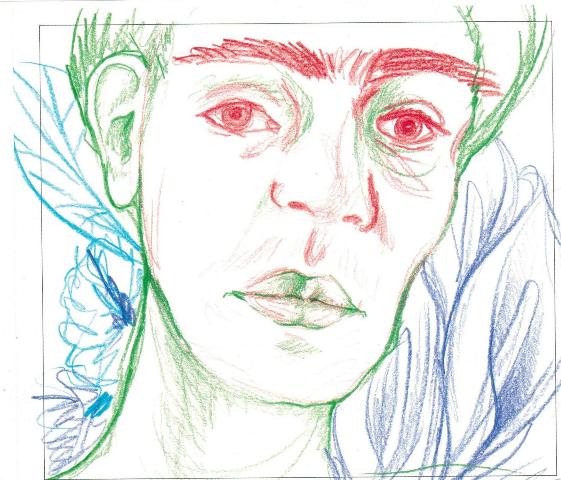
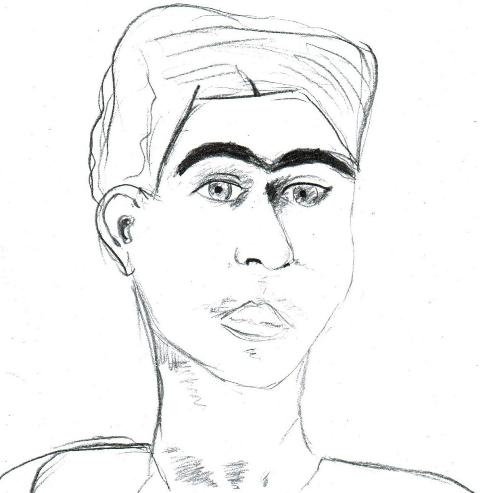
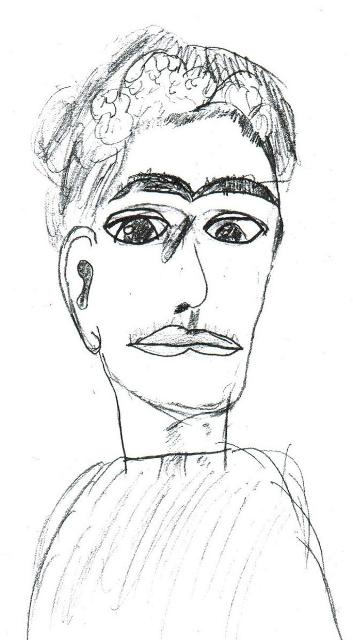
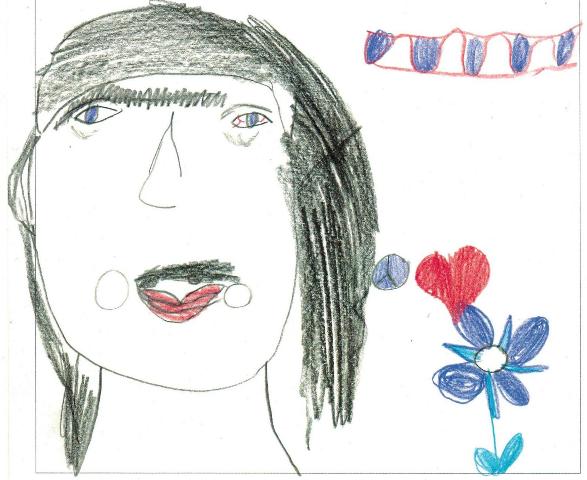
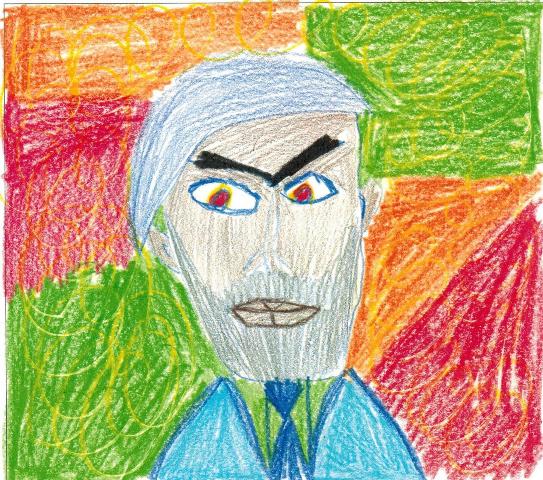
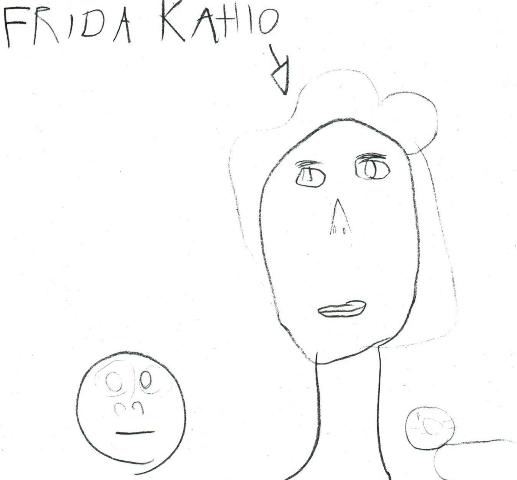
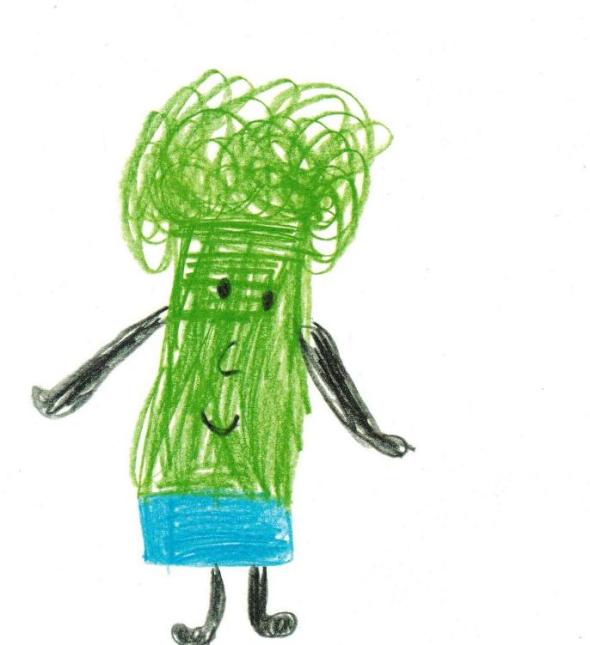
Retratos de Frida Kahlo: dibujos hechos por unos adolescentes y niños en Toronto, Canadá, otoño de 2012:
Lupicínio Rodrigues: “Volta” / “Come back to me”
Posted: October 13, 2012 Filed under: English, Lupicínio Rodrigues, Portuguese, Translator's Whimsy: Song Lyrics / Extravagancia del traductor: Letras de canciones traducidas por Alexander Best, ZP Translator: Alexander Best Comments Off on Lupicínio Rodrigues: “Volta” / “Come back to me”
“Volta”
(Letras/música: Lupicínio Rodrigues, compositor brasileiro, 1914-1974:
canção cantada por Gal Costa, 1973)
.
Quantas noites não durmo
A rolar-me na cama
A sentir tantas coisas
Que a gente não pode explicar – quando ama.
.
O calor das cobertas
Não me aquece direito
Não há nada no mundo
Que possa afastar esse frio do meu peito.
.
Volta,
Vem viver outra vez ao meu lado
Não consigo dormir sem teu braço
Pois meu corpo está acostumado.
.
Volta,
Vem viver outra vez ao meu lado
Não consigo dormir sem teu braço
Porque meu coração está acostumado…
. . .
“Come back”
(words and music by Lupicínio Rodrigues, Brazilian composer, 1914-1974:
as sung by Brazilian singer Gal Costa, 1973)
.
How often I can’t sleep!
– tossing and turning in bed –
Feeling so many things
That people – who are in love – cannot explain.
.
The heat of the blankets
Doesn’t warm me well
And there’s no-one in this world
Can keep this chill from my breast.
.
Return to me,
Come live again at my side
I can’t keep sleeping without your arms around me
– well, my body’s grown used to you!
.
Come back,
And live once more by my side
I can’t go on sleeping without your embrace
– and my heart’s accustomed to you now…
.
Translation/interpretation from the Portuguese: Alexander Best
 Zócalo Poets