A poesia concreta: Tudo Está Dito / Everything Was Said: the “Concrete” poems of Augusto de Campos
Posted: June 16, 2014 Filed under: Augusto de Campos, English, Portuguese Comments Off on A poesia concreta: Tudo Está Dito / Everything Was Said: the “Concrete” poems of Augusto de Campos
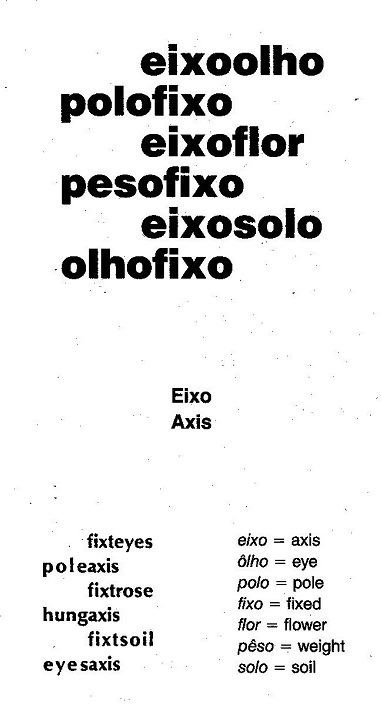
Augusto de Campos_Axis_1957_translated by Edwin Morgan

Augusto de Campos_Tudo Está Dito_1974
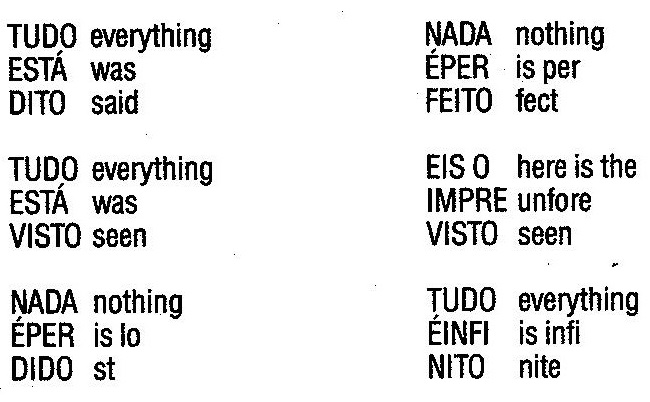
Augusto de Campos_Everything was said_1974
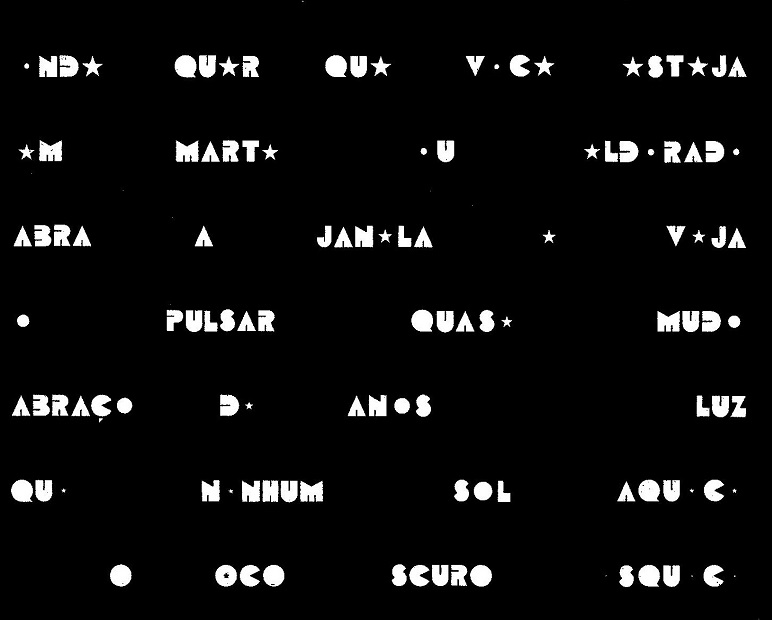
Augusto de Campos_O Pulsar_1975
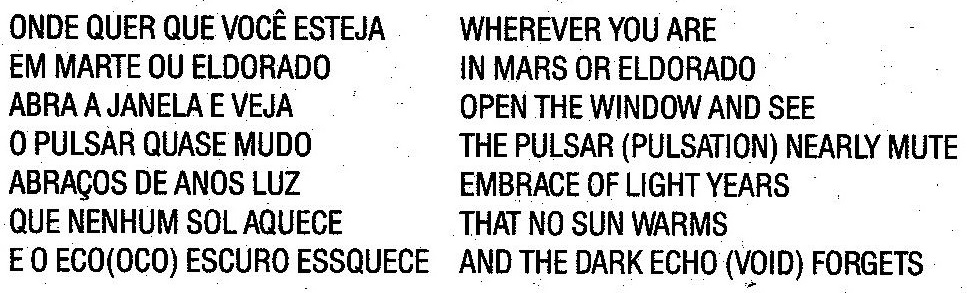
Augusto de Campos_The Pulsar_1975
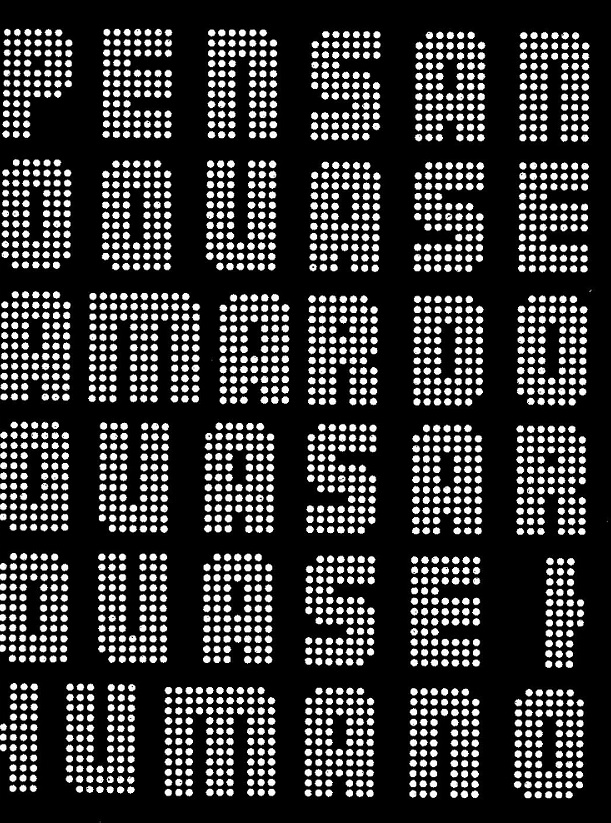
Augusto de Campos_O Quasar_1975
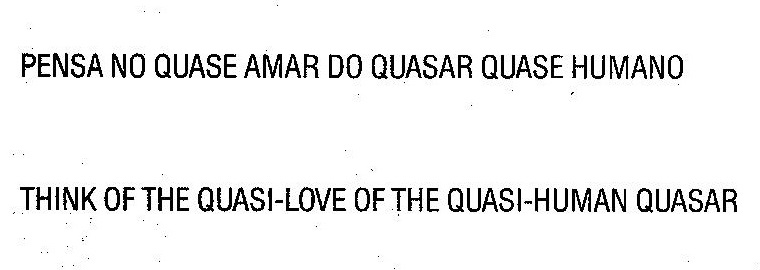
Augusto de Campos_The Quasar_1975

Augusto de Campos_Memos_1976
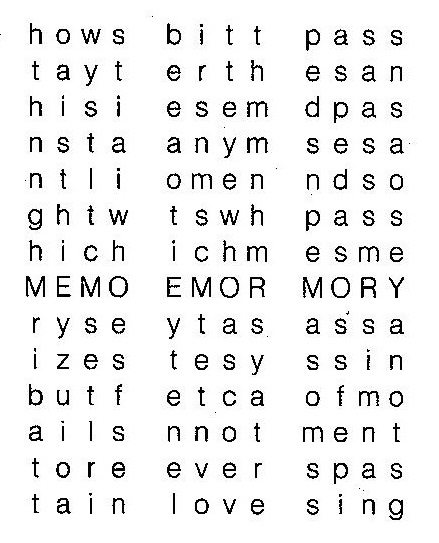
Augusto de Campos_Memos_1976_translated by Claus Cluver
.
Copyright dos poemas e traduções
© 1983 Wesleyan University Press
.
The phrase Concrete Poetry was coined in 1956 in São Paulo, Brazil, after an exhibition of such poems (I Exposição Nacional de Arte Concreta) that included works by the group Noigandres (Augusto and Haroldo de Campos, Décio Pignatari and Ronaldo Azeredo). The poets Ferreira Gullar and Wlademir Dias-Pino were also featured. Eventually, a Brazilian Concrete Poetry manifesto was published. The manifesto’s core value was that of using words as part of a specifically visual work so that those words are not mere unseen vehicles for ideas.
Although the term Concrete Poetry is contemporary, the idea of using letter arrangements to enhance the meaning of a poem is an ancient one. Such poetry originated in the then-Greek city of Alexandria (in Egypt) during the 3rd and 2nd centuries BCE.

Old fashioned metal typesetters’ blocks_These tools were used by the print and publishing trades before the advent of the computer era_The Concrete Poetry movement relied on such standard building blocks for its words-as-objects format.

Gregório de Matos as Hell’s Mouth poet (A Boca do Inferno): a 17th-century poetical critique of the colonial city of Salvador da Bahia / translation by Daniel Vianna
Posted: June 10, 2014 Filed under: English, Gregório de Matos, Portuguese, ZP Translator: Daniel Vianna Comments Off on Gregório de Matos as Hell’s Mouth poet (A Boca do Inferno): a 17th-century poetical critique of the colonial city of Salvador da Bahia / translation by Daniel Vianna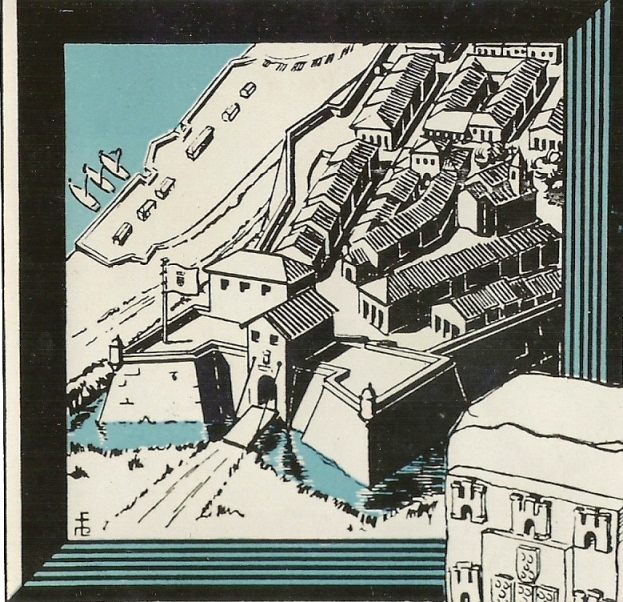
Salvador da Bahia_a print of the city as it might have looked during the 17th century_by Paulo Lachenmeyer
Gregório de Matos
Diagnosis of the ailments that left the Body of the Republic – and all its limbs – ill; and a complete definition of what at all times is Bahia
.
What’s missing in this city?…The Truth.
What more is there gives it dishonour?… Honour.
Is there anything left to blame? – Shame.
.
Regardless of its great fame,
The devil is now living
In this city that is missing
Truth, honour, shame.
What brought it so much pain?… Bargaining.
What caused such perdition?… Ambition.
And amidst this insanity?… Usury.
.
Amazing misadventure
Of an ignorant, sad people,
Who know very little but:
Bargaining, ambition, usury.
.
Which markets do they follow?… The Black Slave.
Which “goods”, not so hollow?… Mulattoes.
And they prefer which people?… Mestizos.
.
To the devil the ignoble,
To the devil all these asses,
Who prefer among all races:
The Negro, Mulatto, Mestizo.
.
Who makes the fines so stiff?… Bailiffs.
Who makes the food come later?… Jailers.
Who takes all for their families?…Deputies.
.
It’s we are taxed to eternity,
And the land is left there – starving,
When we hear them come a-knocking:
Bailiffs, jailers, deputies.
.
And what justice is left?… It’s a wreck.
Is it freely dispensed?… It’s for sale!
Why are people so scared?…’cause it’s fake.
.
Help me God, so I can take
what the King gives us for free;
our Justice is known to be
A wreck – and for sale – and fake.
.
What’s going on with the clergy?… Simony.
And the members of the Church?… Lust.
Is there anything left to see?… Yes – Envy.
.
The same old story
Still drives the Holy See:
What brings them to their knees is:
Simony, lust and envy.
.
Is their anything monks won’t shun?… It’s Nuns.
What occupies their evenings?… Bickering.
Entangled they get in disputes?… With Prostitutes!
.
I would rather be mute
Than to utter hard truths:
The profession of monks is:
Nuns, bickering – and prostitutes.
.
Has the sugar run out?… It’s down.
Have we got better luck?… Now it’s up.
Has the treasury been fed?… They’re dead.
.
Cidade-Bahia has known
What happens to the sickest:
They fall ill, they get fever;
They’re down, and it’s up – now they’re dead.
.
Parliament don’t help?… It can’t.
It don’t have the power?… It won’t.
And if government tries?… It dies.
.
Who would think that such lies
noble parliament drives,
in predicament finds, and still:
it can’t, it won’t – and it dies.
.
Portuguese to English translation: Daniel Vianna
. . .
Gregório de Matos
Juízo anatômico dos achaques que padecia o corpo da República em todos os membros, e inteira definição do que em todos os tempos é a Bahia
.
Que falta nesta cidade?… Verdade.
Que mais por sua desonra?… Honra.
Falta mais que se lhe ponha?… Vergonha.
.
O demo a viver se exponha,
Por mais que a fama a exalta,
Numa cidade onde falta
Verdade, honra, vergonha.
.
Quem a pôs neste rocrócio?… Negócio.
Quem causa tal perdição?… Ambição.
E no meio desta loucura?… Usura.
.
Notável desaventura
De um povo néscio e sandeu,
Que não sabe que perdeu
Negócio, ambição, usura.
.
Quais são seus doces objetos?… Pretos.
Tem outros bens mais maciços?… Mestiços.
Quais destes lhe são mais gratos?… Mulatos.
.
Dou ao Demo os insensatos,
Dou ao Demo o povo asnal,
Que estima por cabedal,
Pretos, mestiços, mulatos.
.
Quem faz os círios mesquinhos?… Meirinhos.
Quem faz as farinhas tardas?… Guardas.
Quem as tem nos aposentos?… Sargentos.
.
Os círios lá vem aos centos,
E a terra fica esfaimando,
Porque os vão atravessando
Meirinhos, guardas, sargentos.
.
E que justiça a resguarda?… Bastarda.
É grátis distribuída?… Vendida.
Que tem, que a todos assusta?… Injusta.
.
Valha-nos Deus, o que custa
O que El-Rei nos dá de graça.
Que anda a Justiça na praça
Bastarda, vendida, injusta.
Que vai pela clerezia?… Simonia.
E pelos membros da Igreja?… Inveja.
Cuidei que mais se lhe punha?… Unha
.
Sazonada caramunha,
Enfim, que na Santa Sé
O que mais se pratica é
Simonia, inveja e unha.
.
E nos frades há manqueiras?… Freiras.
Em que ocupam os serões?… Sermões.
Não se ocupam em disputas?… Putas.
.
Com palavras dissolutas
Me concluo na verdade,
Que as lidas todas de um frade
São freiras, sermões e putas.
.
O açúcar já acabou?… Baixou.
E o dinheiro se extinguiu?… Subiu.
Logo já convalesceu?… Morreu.
.
À Bahia aconteceu
O que a um doente acontece:
Cai na cama, e o mal cresce,
Baixou, subiu, morreu.
.
A Câmara não acode?… Não pode.
Pois não tem todo o poder?… Não quer.
É que o Governo a convence?… Não vence.
.
Quem haverá que tal pense,
Que uma câmara tão nobre,
Por ver-se mísera e pobre,
Não pode, não quer, não vence.
. . . . .
Gregório de Matos: Seeking Christ (Buscando a Cristo) / translation by Daniel Vianna
Posted: June 10, 2014 Filed under: English, Gregório de Matos, Portuguese, ZP Translator: Daniel Vianna Comments Off on Gregório de Matos: Seeking Christ (Buscando a Cristo) / translation by Daniel Vianna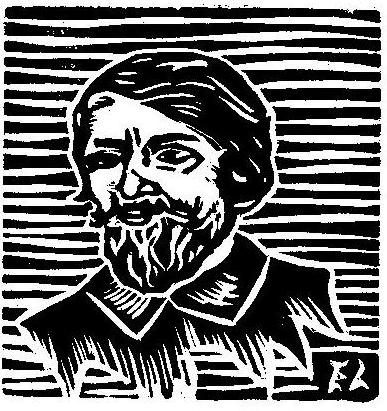
Gregório de Matos_xilogravura por Érick Lima
Gregório de Matos (1636-1696, Brazilian Baroque poet)
Seeking Christ
.
I run to your arms so sacred,
so bare on this holy cross;
Nailed open, there they greet me
– no, they do not chastise.
To your divine eyes, darkened,
that sweat, that blood, have opened;
To forgive me, have awoken,
and, closed, do not condemn.
.
To your nailed feet that don’t leave me,
To your blood, spilled, that cleanses me,
To your bowed head now calling me.
To your bared side I shall bind me,
I’ll fasten myself to those precious nails;
to be bound most firmly, and steady,
enduring as one – without fail.
.
Portuguese to English translation: Daniel Vianna
. . .
Gregório de Matos
Buscando a Cristo
.
A vós correndo vou, braços sagrados,
Nessa cruz sacrossanta descobertos
Que, para receber-me, estais abertos,
E, por não castigar-me, estais cravados.
.
A vós, divinos olhos, eclipsados
De tanto sangue e lágrimas abertos,
Pois, para perdoar-me, estais despertos,
E, por não condenar-me, estais fechados.
.
A vós, pregados pés, por não deixar-me,
A vós, sangue vertido, para ungir-me,
A vós, cabeça baixa, p’ra chamar-me
.
A vós, lado patente, quero unir-me,
A vós, cravos preciosos, quero atar-me,
Para ficar unido, atado e firme.
. . . . .
The Rwanda Genocide, twenty years later: 100 Days of photographs + poems by Wangechi Mutu and Juliane Okot Bitek
Posted: May 31, 2014 Filed under: 7 GUEST EDITORS, English, Juliane Okot Bitek | Tags: Wangechi Mutu: 100 days of photographs for The Rwanda Genocide Comments Off on The Rwanda Genocide, twenty years later: 100 Days of photographs + poems by Wangechi Mutu and Juliane Okot Bitek
Wangechi Mutu_Day 44_Rwanda Genocide 20th anniversary
The Rwanda Genocide (April to July, 1994) was one of the 20th century’s many horrific episodes in what has come to be known by the clinical phrase of “ethnic cleansing”. The Genocide was the culminating event in a civil war involving the Hutu, Tutsi, and Twa peoples, and 800,000 people were killed in a mere three months. Both perpetrators and victims have had to re-build their traumatized nation, coming face to face with each other’s capability for depravity and also with that miraculous human need to acknowledge what happened – and to forgive.
When I tell you that the photographs of Wangechi Mutu are poems I honour her visual artistry in the highest way I know how: to give it the name of that uniquely human skill – poem-making – that I value above all else. At Day 100 she commenced with a moving image of a clay-caked woman whose eyes were – mercifully – closed. Other human figures followed. Why were they all women? Was it because it is mainly men who do these mass-killings worldwide? Then came photographs of limbs – hands, feet, bodies bagged – and these are piercingly close to “documentary” photography.
But she goes further still with images completely devoid of people or their “parts”. These may be the most powerful of all. Because of the hand-drawn number cards placed somewhere within each photograph, these person-empty pictures seem to indicate that something we cannot look upon has been left out. My mind wanders toward a hacked-up body dumped at a building site or an abandoned lot; by a rusty gate or in the loneliest corner of a concrete yard.
.
Juliane Okot Bitek happened to see Wangechi’s first Instagram picture, Day 100, from April 6th, 2014 – that being the 20th anniversary of the beginning of those awful events of The Genocide. And she responded as only a poet might do: to commit to an epic poem-making journey for 100 numbered poems. If Wangechi’s pictures are raw or allusive, Juliane’s poems are everything that words are most suited for: questioning/wondering aloud; feeling all feelings, wherever they go / thinking all thoughts, though they be inconclusive. This is the very core of poetry, and there is no other kind of language that can handle such horror and humanly touch all the marks: to speak of the un-speakable. It is Poetry alone that best honours suffering, loss, shame, responsibility.
Wangechi Mutu and Juliane Okot Bitek are both African-born. Each has lived far away from the land of her birth for a long time now – Wangechi in Brooklyn, New York, and Juliane in Vancouver, British Columbia, Canada. Is it possible that the geographical distance each has achieved – from Kenya and Uganda respectively – both countries having felt seismic social effects from the terror of Rwanda’s Civil War – has helped them to turn Pain into Art? For this is, surely, one of the greatest goods of artistic achievement: to do something beautiful with our pain. These two artists – one a collagist and sculptor who is experimenting with photography for the first time, the other a poet who is creating epic poetry in real time – merge empathy, an imaginative rendering of the facts, and the search for meaning to create unique works-in-progress: call them 100 Days.
.
We invite our readers to scroll down through ZP May 2014 to read and reflect upon Juliane’s poems and to behold Wangechi’s photographs thus far. And to click on the links below and follow their journey through June and into July – until they have reached Day 1.
Alexander Best
Editor, Zócalo Poets
May 31st, 2014
. . .
https://www.facebook.com/hashtag/kwibuka20?source=feed_text&story_id=624576410970511
http://www.julianeokotbitek.com
. . .
Juliane Okot Bitek
100 Days: a poetic response to Wangechi Mutu’s #Kwibuka20#100 Days
.
Day 44
A hundred days of shallow breathing interspersed with deep sighs
A hundred days zooming into nothing
A hundred days of years and years that morphed into decades
of life as a gift, of life as worth living
A hundred days on a hundred days-ing, we weren’t counting
It wasn’t as if after all those days
a veil would lift and it would have taken just those days, nothing more
It wasn’t as if after all those days
there was a chance that normal would morph back
as if all the seeds that had sprouted in those one hundred days
would un-sprout themselves into nothingness
.
Day 45
We watched as faith crumbled off the walls in dull clumps
We watched as prayers dissipated into clouds which then returned as drizzle to mock us
Although sometimes it rained
& sometimes it rained hard, as if the earth was sobbing
but it was never so – the earth remained dispassionate to our circumstances
Eventually our superstitions burst like bubbles
or floated away like motes in the light
There was nothing left to hold on to, not even time which stretched and then crunched itself wilfully
Cats and dogs roamed about, feral and hungry,
People crouched in the shadows, not all feral and all the time hungry.
At a half past all time, even decay stopped for a moment
Ours remains Eden, not even a spate of killing can change that.
.
Day 46
If truth is to be known in order to be acknowledged, then this is the truth that we know:
we know the numbers
we know the number of days
we know the circumstances
where the machetes came from and who wielded them
where the dotted line was signed
we know who fled
who advanced while chanting our names out loud
the names they called us
and the papers and airwaves on which these names can still be found
we know who claim to be the winners & the victims
we know where the markers are for where we buried the children
we know the cyclical nature of these things
the impossibility of knowing everything that happened
we know that the true witnesses cannot speak
and that those who have words cannot articulate the inarticulable
we know that there are those who died without telling what they knew
we know that there are those who live without telling what they know
we know that some people choose to tell and some stories choose to remain untold
.
Day 47
I remember how my sister used to look up when she remembered
Sometimes she would have a small laugh before she started to recall a story
Often she’d be laughing so hard at the reveries that we all started to laugh
Soon enough we were all laughing so hard because she was laughing
And then she laughed because we laughed
And the memory of that story dissolved into the laughter and became infused with it
My sister is not here anymore
I wonder if she remembers laughing
I wonder if she remembers anything
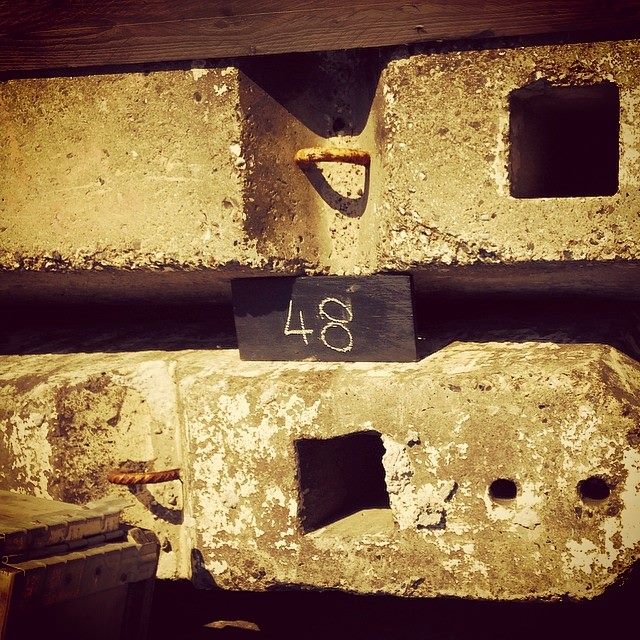
Wangechi Mutu_Day 48_Rwanda Genocide 20th anniversary
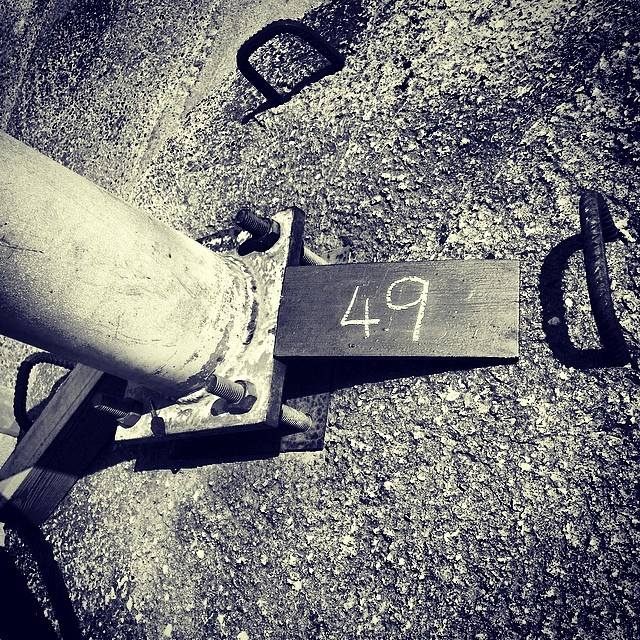
Wangechi Mutu_Day 49_Rwanda Genocide 20th anniversary
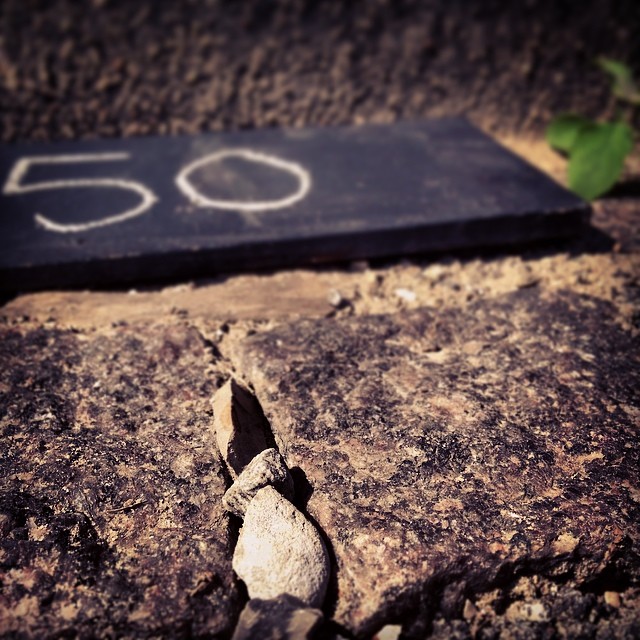
Wangechi Mutu_Day 50_Rwanda Genocide 20th anniversary
Day 48
So what is it to be alive today?
I no longer think about the hard beneath my feet
or the give of my body into sleep
or the way my skin used to dissolve so deliciously from touch
Is this what it is to become a haunt?
.
Day 49
There we were, lining up like frauds
There we were, receiving medals and commendations
like frauds
There we were, listening to speeches and reading the adorations
about us as heroes – like frauds
There we were
holding in ourselves, like frauds
All we did was stay alive
While many, many others died.
.
Day 50
This is the nature of our haunting:
silent witnesses & silence itself
neither revealing nor capable
of explication
of what any of that meant
What do we need nature for?
All it does is replicate its own beauty.
. . .
The Rwanda Genocide, twenty years later: 100 Days of photographs + poems by Wangechi Mutu and Juliane Okot Bitek
Posted: May 24, 2014 Filed under: 7 GUEST EDITORS, English, Juliane Okot Bitek | Tags: Wangechi Mutu: 100 days of photographs for The Rwanda Genocide Comments Off on The Rwanda Genocide, twenty years later: 100 Days of photographs + poems by Wangechi Mutu and Juliane Okot BitekJuliane Okot Bitek
100 Days: a poetic response to Wangechi Mutu’s #Kwibuka20#100 Days
. . .
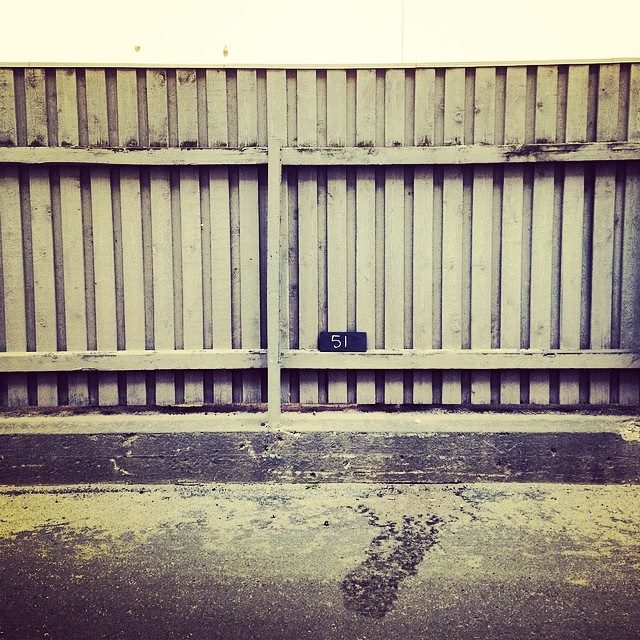
Wangechi Mutu_Day 51_Rwanda Genocide 20th anniversary
Day 51
I waited for my heart to harden after the kids were gone
I waited for the years of love to dissolve as if they never happened
I waited for the day when the remembrances of silly family laughter
would disappear with the setting sun
& I would wake up innocent,
as if I had never known anything good
It was starting to happen in small ways
I couldn’t recall the last good day
And then all the flowers poured in
In wreaths and ribbons and bouquets
Thousands and thousands and thousands of flowers
Each dead at the stalk
All dead from the moment they were cut
Every single one dead in their glorious & beautiful selves
Just like the people we lost
In those one hundred days.
.
Day 52
So what if we were all Christian,
Would the media brand it
Christian on Christian violence?
How do the dead declare the part of their identity they were killed for?
.
Day 53
There were echoes if one listened for them
This wasn’t the first time
There were echoes in Acholi
There were echoes in Armenia
There were echoes in the Americas
In Bangladesh
In Bosnia
Cambodia
The Congo
China
There were echoes in Darfur
There were echoes in England
There were echoes in Finland
In Georgia
In Germany
In Hawai’i
In Herero
In India
In Ireland
Japan
Kenya
Latvia
Mongolia
Nakapiripirit
Nairobi
There were echoes in Orange County
There were echoes in Ovambo
In Poland
In Palestine
In Queensland
In Russia
South Africa
Southern Sudan
Tonga
Uganda
Vietnam
Wales
There were echoes in Xenophobic attacks everywhere
Yugoslavia, Zimbabwe.
Where on this planet has not been touched?
The earth palpitates with violence
as if it needs violence
as if violence is a heartbeat – if not here now it’s over there
if it’s not over there now, it’s on its way here
Ours wasn’t the first or the only one;
It was our most painful.
.
Day 54
It is absurd to think that a little girl will forget
how her mother’s hands felt when she used to plait her hair
some tugging, some lining the scalp with an oiled wooden comb
for clean patterns
some cool oil, some warmth when her hands gently repositioned her head like so
sometimes a last pat on the back of her head, sometimes her neck.
Okay, it’s done, you can go out and play now
Absurd that any little girl would forget that – and has.
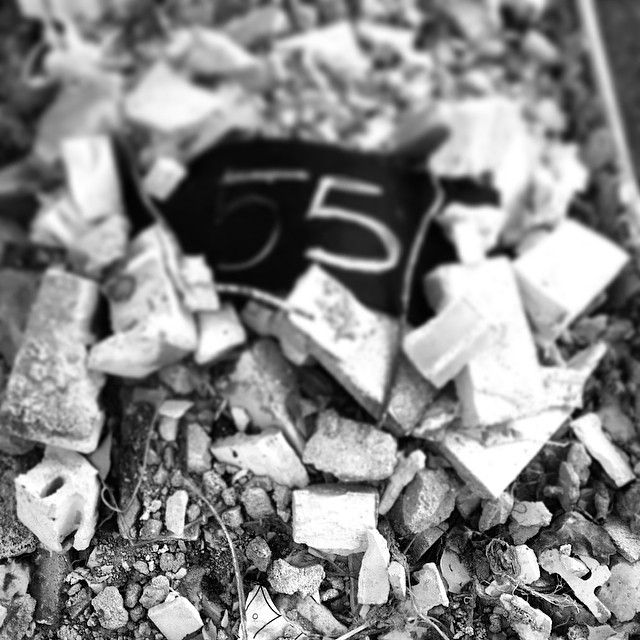
Wangechi Mutu_Day 55_Rwanda Genocide 20th anniversary
Day 55
Our lives became both
endless and immediate
There were no guards at the door
There was no door
& the only tax required was a last breath out
One moment you were alive
& the next gone
One minute you were alive
& moments after that you wouldn’t die
your chest gargled endlessly
we were afraid of being heard & then we weren’t
One minute we cared & the next nothing mattered
.
Day 56
Before the maiden voyage
we heard that every water-faring vessel
needed sacrifice
The sacrifice had to be young
The sacrifice had to be blemish free
The sacrifice had to have no dimples, no piercing in the ear
The sacrifice could be male or female
Stay close to home, we were beseeched
Stay close to home lest the sacrifice gatherers came by
We stayed close to home, in those first days
We stayed close to home but the sacrifice gatherer didn’t seem to care for details
They came to harvest all kinds of bodies for a ship whose size has never been measured
.
Day 57
We were halfway to dead when we were reminded
that we were halfway to dead
Hovering, suspecting, tripping
or tiptoeing over the terrain
lest any semblance of confidence betrayed us again.
Ghosts flitted about
attentive to our progress
Chrissie knew
Chrissie could see that having never left ourselves
we were never going to arrive
.
Day 58
Karmic proportions may indicate
that we wanted, expected, earned what we got,
that we wanted it
that we had to go through it
that we had to overcome the trials of life
And you who hasn’t gotten it yet
were and/or are lucky
think again
think again
as long as we’re caught inside the neveragainness of things
we will remain blind to the hundreddaysness of others
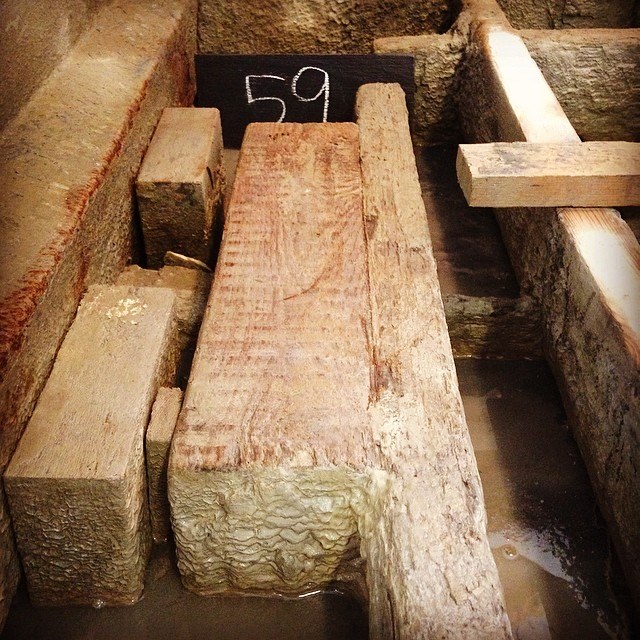
Wangechi Mutu_Day 59_Rwanda Genocide 20th anniversary
Day 59
You want me to talk about what happened
because you say you want to understand
because when you engage with people like me, you say you can make a difference
because you say we all need to make a difference
because all of it, as you say, begins with me telling you what happened
Change the blue dice
Choose the cast
Lock up the hypnotic evil-thought-bearing others
When you engage, you say, you can relieve me of my nightmares
you say you can help me to heal, to look forward without anxiety
When you engage, you say, you will do so with understanding
because you think that at the level of articulation that I have
you say you will have understood
because you will have gotten it, you say,
because you feel me, you say,
because you’re incensed, you say, & will continue to be.
Dear God (or whatever is left)
save us from all the saviours of the world
.
Day 60
I’m coming to understand what seems to be so apparent in nature:
time passes
things change
some live, some die
none escapes this life without an end
I’m coming to understand that there isn’t much more else to it:
time passes
things change
some live, some die
none of us escapes a final end.
.
Day 61
Incredulity is a soft-paced wonder
& in the thick of days
Memory is a slippery thing
What do we remember from those one hundred days?
What happened on the tenth day or night
Might have well happened today, or yesterday
Incredulous is word from an innocent space
It is tepid, blubbery sometimes
because everything can happen and everything did.
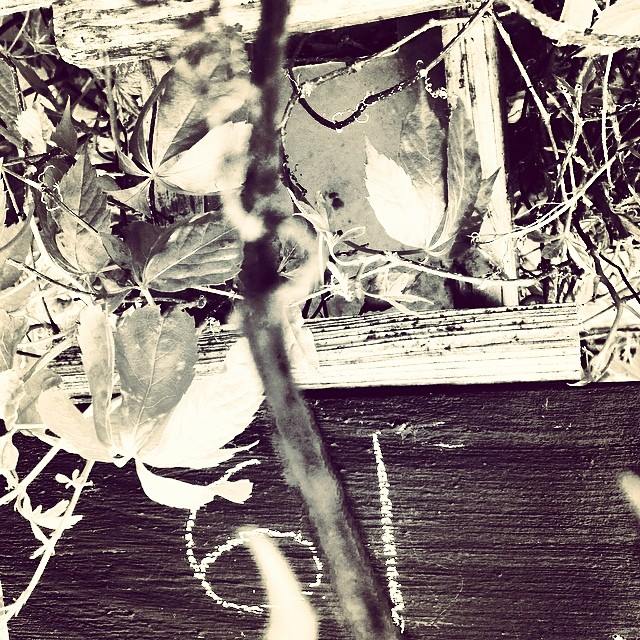
Wangechi Mutu_Day 61_Rwanda Genocide 20th anniversary
. . .
https://www.facebook.com/hashtag/kwibuka20?source=feed_text&story_id=624576410970511
. . . . .
100 Days, 50 Days In: A Poet’s Journey
Posted: May 16, 2014 Filed under: 7 GUEST EDITORS, English, Juliane Okot Bitek | Tags: Wangechi Mutu: 100 days of photographs for The Rwanda Genocide Comments Off on 100 Days, 50 Days In: A Poet’s JourneyI am keenly aware of the paradox in thinking about the halfway point of writing and posting one hundred poems. For those who lived through or must still live through their own hundred days, there is no luxury of knowing a halfway point and yet I’m exhausted by the knowledge that this is only the halfway point.
I’ve come to appreciate the ability to count and depend on the passage of days as a reliable indicator that time passes. I’ve been watching how Wangechi Mutu’s photographs have morphed from very personal, embodied experiences of pain and death to images that radiate loss and loneliness through the passage of time and neglect. And I have looked at the poems I’ve written, thinking about what I can see – and what remains inaccesible to me.
When I wrote the first poem, Day 100, I gathered my visual cues about the landscape from Sometimes in April (directed by Raoul Peck and starring Idris Elba and Carole Karemera) – a collection of delicious greens and mist and rain. I have never been to Rwanda, but this is familiar land, it does not seem very different from places I’ve been, places that are encased with an intense and terrible beauty. I thought about how impossible it would have been to try and read the land for any sign of impending disaster. I imagined what it might have been like to be immersed in those one hundred days, and I also remembered what it was like to be “inside” those endless days of uncertainty during the years of unstable government in Uganda when I was a teenager during the eighties. I thought about the people who lived through the war in northern Uganda (1986-2007) and those who were taken by the Lord’s Resistance Army, many who never returned.
And the ridiculousness of measured time when the experience of those days plays out like a rubber band – stretching, snapping, stretching and snapping, and every time differently. I’ve also been thinking about how much these 100 Days have a way of taking Memory of those days beyond the realm of public commemoration: speeches, flowers, and eternal flames. 100 Days of poems is not an accurate depiction for anyone to depend on, but they are a way to enter into the private space not reflected by events outside. They have to be an imperfect collection; they’re barely edited and most of the time completely unchecked – emotionally. There’s been no time to craft these poems, to practice an art; this is raw expression. These are what I imagine 100 Days would sound like, if I could have a conversation with someone who has journeyed twenty years without much to celebrate. What must it mean to look forward when all that provided the impetus for your future remains deeply embedded in the past?
Mid-May: almost halfway through a hundred days and I check in with myself. I feel stretched, vulnerable, worn out. I must post a poem every day and yet I cannot write a poem every day – so I write ahead when I can. I feel vulnerable to the voices that can prevent me from sleeping and are an insistent whisper in my head during the day. I read through the poems already posted and look for cues and patterns but it’s like looking at my back in the mirror. A friend tells me that anger becomes apparent in Day 59. Do betrayal and anger occupy different spaces in these poems? I don’t know how to read these poems but I know what I carry.
Twenty years after the genocide in Rwanda is twenty years after the ANC won elections in South Africa; there is mourning and celebration at the same time. And gratitude for having come through – how can there not be? But what do we do with the persistent heartbroken-ness? How do you remember the worst time of your life after twenty years? War persists. A powerful undercurrent of apathy buoys others who understand that war “over there” has nothing to do with life “over here”. Some things get done through obligation and sometimes pity, without any acknowledgement of the connectedness that binds us all. War is a contagion; none of us is immune. As long as commemorations continue to focus on the might and muscle of the winners, there may never be enough space to hold dialogue with those who are yet to heal from the wounds of war.
Juliane Okot Bitek
May 16th, 2014
. . . . .
The Rwanda Genocide, twenty years later: 100 Days of photographs + poems by Wangechi Mutu and Juliane Okot Bitek
Posted: May 5, 2014 Filed under: 7 GUEST EDITORS, English, Juliane Okot Bitek | Tags: Wangechi Mutu: 100 days of photographs for The Rwanda Genocide Comments Off on The Rwanda Genocide, twenty years later: 100 Days of photographs + poems by Wangechi Mutu and Juliane Okot Bitek
Juliane Okot Bitek
100 Days: a poetic response to Wangechi Mutu’s #Kwibuka20#100 Days
. . .

Wangechi Mutu_Day 62_Rwanda Genocide 20th anniversary
Day 62
Unless you believe in the eye of the needle
This kind of poverty will never be about material
It won’t be about ragged clothing
or mud huts with broken walls
or river blindess
or murram roads
or bad humoured fields that hoard curses
There won’t be a harvest this year or next
This isn’t the poverty of sleep
or for that matter, dreams
This is my deep loss, my poverty:
He will never touch my hand again
He will never touch my hand
.
Day 63
Walter says life is hard
He says that there is nothing we can do about it
Walter says I have to be happy to be alive
Walter says to be alive is better than being dead
Be happy, Walter says
Be happy to be alive
If being dead is not all that it’s cracked up to be
Then what was that all that rush about?
For my happiness?
.

Wangechi Mutu_Day 64_Rwanda Genocide 20th anniversary
Day 64
There have been three so far
Three men who walk with your gait
Who turn, head first, the way you used to
Walk like you did, sauntering like a cat
Laugh with your laugh
Flick the wrist the way you used to
just before you pointed your finger to make a point
All three men wore you face for a moment
Lighted mine up
You mean to say?
And then you were gone again
and the men were just ordinary men
doing ordinary things
Three imposters
Three who acquiesced to your tricks of reminding me
that you used to be by me
.
Day 65
Often times I want to become words
I want to inhabit forgetting as a state of being
Other times I think that if we wore a cloak of silence
Then our invisibility would not be seen as repair
or a sign that everything was good
The problem of becoming silence is that silence doesn’t exist
It wasn’t ever completely silent
Nothing stopped to pay attention
Nature chattered on, busy with life cycling
And subsumed us into the process
.
Day 66
Sometimes I want to melt into the earth
I want to imagine that some time in the future
Children will run over the soil that I’ve become
.
Day 67
Some days
I want to stare at the sky
Perhaps I can learn something, anything
Some days I think about how important the sky has become
I think about it so much and in so doing, I make it exist
I make the sky an endless and expansive backdrop of blue
If there was a sky, how could it witness what it did
& maintain that calm hue?
.
Day 68
There’s no denying that these haunted days
Are not necessarily days of grey
There are flowers everywhere
Beauty is always undeniable
These hundred days are haunted days not grey ones
These hundred days are filled with ghosted moments
just like every day
.
Day 69
The world turns as it does
Spinning on its own axis and then around the sun.
Perhaps this galaxy is also spinning around something bigger
Perhaps all the worlds spin in order to avoid dealing with the numbers:
Fourteen
Three
All of them
Six from my in-laws
and all of my siblings, parents and their children
Twenty seven
Thirteen
Everyone
Everyone
All of them
Six
Nine
Twelve
My husband and all my children – seven in all
Two
Nineteen
I don’t know
I can’t count anymore
Nobody came back
I don’t know if they ran away to safety or
If they’re just all gone
.
Day 70
Too close for comfort when everyone around looks like you.
Too close when they speak your language
Too close when you’re from the same house
Same meal at the table
Same sofa
Same containment of the heart
We became other people
We were them, those ones
And in being slaughtered and reported as slaughtered
We lost any claim to intimacy or self
Even animals don’t commit slaughter

Wangechi Mutu_Day 70_Rwanda Genocide 20th anniversary
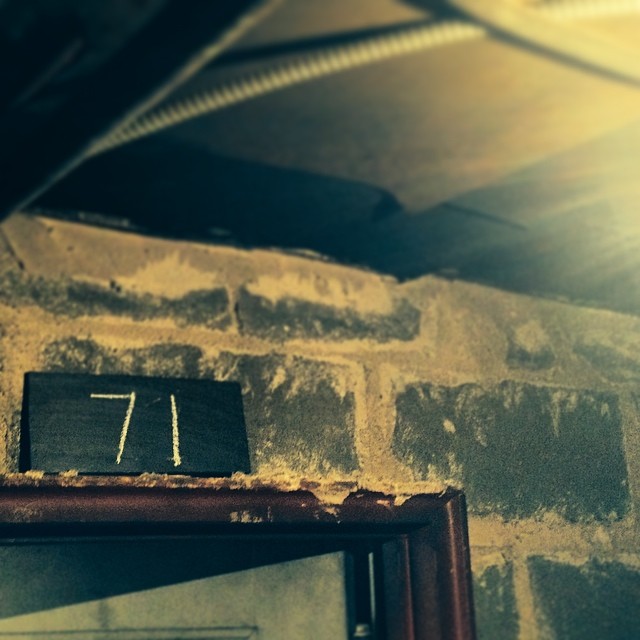
Wangechi Mutu_Day 71_Rwanda Genocide 20th anniversary
Day 71
Who says alas in the presence of betrayal?
Who dizzies away, swirling skirts & claims of nausea
Alas, alas all the hand wringing!
It shouldn’t have been this way?
It shouldn’t?
It shouldn’t have been
forms the dregs from the past
It shouldn’t have been this way
Would it have been better that this was lobbed at your head?
Would it have been better if yours was the stuff of our nightmares?
.
Day 72
The difference between the top screw
and the bottom screw is this: direction
We are squeezed in by the past and the present
Everything is relative, they say
God and religion and offer escape from the screw
in the name of forgiveness, reconciliation & clean heartedness
Be like Jesus, forgive
Be like Jesus, remember to pray and to pay taxes
Be like Jesus, wear robes,
Have your first cousin shout in the streets about the second coming of yourself
Be like Jesus, hang out with prostitutes – love the sinner and all that
Above all be like Jesus and demand an answer in the moment of your cross
Why, God, have you forsaken us?

Wangechi Mutu_Day 72_Rwanda Genocide 20th anniversary
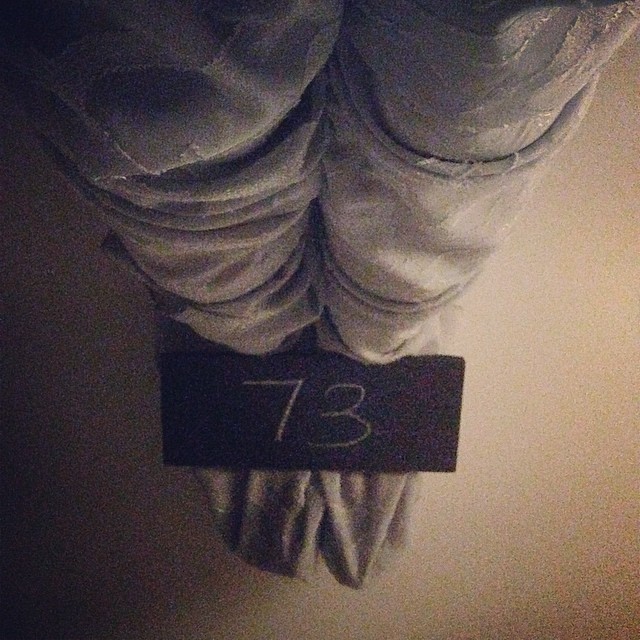
Wangechi Mutu_Day 73_Rwanda Genocide 20th anniversary
Day 73
There are witness stones along all roads
Between Jinja and Kampala
The road to Damascus
The roads leading to Kigali or Rome
Even the road less travelled
The old majesty of Kenyatta Avenue
Khao San, Via Dolorosa
And the Sea to Sky highway
where every few steps they say
is marked by the blood
of a foreign and indentured worker
Did you ever know stones in the road to scream?
They did in those days, you know
They still do sometimes
.
Day 74
In thirty- nine days there will be no more hindsight for sure
Today already there’s hardly any
No foresight
No insight
No encryption
In thirty-nine days, like today
There will be the same dullness about
The same powdery taste to everything
The same floaty feeling — the eerie pull to something beyond now
Ants keep busy
They have figured out that life is for living
And death is for dying
There is no space for those of us
Who are not dead and have yet to be resurrected
.
Day 75
There is evidence that this was a conspiracy of silence:
the insistence of green grass
the luminosity of a full moon
the leathered skin of the dead
the smile of skulls
flowers
the roar of the rushing river
endless, endless hills
If there was a shocked response
If this was an unnatural state of being
If this was a never, ever kind of situation
Why didn’t the world turn upside down?
. . .
https://www.facebook.com/hashtag/kwibuka20?source=feed_text&story_id=624576410970511
.
Days 76 – 100:
https://zocalopoets.com/2014/05/01/the-rwanda-genocide-twenty-years-later-100-days-of-photographs-poems-by-wangechi-mutu-and-juliane-okot-bitek/
The Rwanda Genocide, twenty years later: 100 Days of photographs + poems by Wangechi Mutu and Juliane Okot Bitek
Posted: May 1, 2014 Filed under: 7 GUEST EDITORS, English, Juliane Okot Bitek | Tags: Wangechi Mutu: 100 days of photographs for The Rwanda Genocide Comments Off on The Rwanda Genocide, twenty years later: 100 Days of photographs + poems by Wangechi Mutu and Juliane Okot Bitek
Wangechi Mutu_Day 100_Rwanda Genocide 20th anniversary_April 6th, 2014
On April 6th, 2014, Wangechi Mutu posted a picture on social media via Facebook and Instagram. It was the photograph of a woman whose somber pose was that of an exhausted spirit. She titled the picture #100Days #Kwibuka20 – and immediately, I knew what I had to do. The photograph provided me an “in” to the conversation that I’ve wanted to be a part of for more than twenty years. I wanted to think about what it means to be a witness, however obliquely, and how to create solidarity with people who have some idea about the experiences of people I know and love. I decided to write and post “100 Days,” a poem for every day from April 6th forward, inspired by Wangechi Mutu’s work.
Twenty one years ago, I stood in front of the television with both hands on my pregnant belly and wondered what kind of world my child was going to be born into. The burning of David Koresh and the Branch Davidians in Waco, Texas, was live on TV. I saw the images and listened to the commentaries that attempted to justify why the actions taken by the State were valid. It was a trick of time and distance. I understood in that moment that there wasn’t a loud enough scream from me that could stop the horror I was watching on the screen. My feet would not carry me fast enough to Waco from my living room in Vancouver. And even if I was there in Waco, I didn’t have the authority to stop the order, or the strength to stop the firing on the compound that seemed unending in that moment. It was a moment of utter anxiety. I was reminded about how the pain and suffering of others can unite us by our connections to our own pain.
My own homeland, Acholiland, had been burning, so to speak, in a horrific war that pitted the government of Uganda against the Lord’s Resistance Army. As in other landscapes of war, it was the People of the land that suffered the brunt of it as thousands were maimed, killed, and displaced over time. That engagement had been going on since 1987 when the LRA rose as the only guerrillas that the Ugandan army hadn’t been able to quell. By April 1993, I was well aware of a powerlessness that tinges every accomplishment because of that knowledge that people you know are hurting and there’s nothing you can do to stop it.
By April 6th, 1994, my son was a toddler. I was a young mother, used to carrying apprehension and holding on to hope. I wasn’t writing much in those days, caught up in motherhood as I was, but I knew that the downing of the plane that carried the presidents of Rwanda and Burundi was the beginning of something awful. It might have been suggested from bits and pieces of news that trickled through to us in Canada. Time would bear it out that we were right. In those same one hundred days, South Africa had just conducted successful elections and Nelson Mandela became the first president of a free South Africa. The Bosnian War had been going on for exactly two years and wasn’t going to cease until the end of 1995. Kurt Cobain’s suicide on April 8th excavated a huge loss in the Grunge community and radio listeners who loved his music everywhere.
Not everyone was dying on the news. O.J. Simpson held the TV airwaves in a live chase in his white Bronco with the LAPD in pursuit – it was important that he was caught before he killed himself, the commentators told us. All this information was coming at me from the tube and there was nothing coming out of me. It was as if the knowledge congealed inside me and stayed put. Time went on as it does. The child grew, another came, and I got older but I never engaged with that knowledge.
Eventually, the news would become headlines and some media would write about or show horrific images of the death and destruction in Rwanda. Almost a million people would die in Rwanda in those one hundred days. Afterwards, the horror would spill into the Democratic Republic of Congo and over five million would die. The war in Darfur would be called genocide but the one in northern Uganda wouldn’t. Technicalities mattered as definitions do, but our pain wasn’t any less. Twenty years later and several declarations have come and gone, “Never Again” being the most common one. The Globe and Mail recently referred to April as “Never Again” Time, challenging the idea that it is enough merely to make the claim – yet the killings in CAR and South Sudan continue unabated.
.
“Never Again” Time: http://www.theglobeandmail.com/globe-debate/genocide-america-says-never-again-but-keeps-turning-a-blind-eye/article11541517/
.
I wrote to Wangechi and suggested that I compose a poetic response to her photos, and she agreed. I have been posting a poem a day, thinking about what it means to engage with such knowledge today, twenty years after. What do commemorations and declarations do for people who are still deeply haunted and scarred by those events that we think of as History? What is it to be in a world that witnessed yet did nothing about your suffering? How do we hold just enough bitterness to keep us focused on what needs our attention? Above all, what does it mean for us to witness the suffering of others? It is so easy to stay hypnotized by the swirl of information that comes at us from the internet, in print and, of course, on television. How much out there does not reflect the reality of our day to day hauntedness?
If these should be a hundred days of thinking about what a genocide means in our time, I hope that we can make time to think about the impact of the intimate losses of so many of us, everyday that we forget. I’m humbled and happy to be invited to post these poems at Zócalo Poets. These poems are not meant to be a monument or even a voice for anyone who lost and was lost in the Rwanda Genocide. Rather, I hope to seek solidarity with those who continue to mourn the promise of the past and find strength to get through another day.
.
Juliane Okot Bitek
April 30th, 2014
. . .
100 Days: a poetic response to Wangechi Mutu’s #Kwibuka20#100 Days
.
Day 76
Another angle would have you believing that this is how it went down
This and specifically this.
And they will be right.
This is how it went down:
There were days upon days
Days upon days
Days upon days
Days upon days
Days that never seemed to end
Who’s to say when the first of a hundred days began?
.
Day 77
We tried to sing but ended up croaking
We who used to be songbirds
In time, our throats had gotten dry
This is what happens when you start counting
Days in hundreds from a date that never was

Wangechi Mutu_Day 77_Rwanda Genocide 20th anniversary

Wangechi Mutu_Day 78_Rwanda Genocide 20th anniversary
Day 78
Insouciance must be blue
How else could we explain a sky that witnesses
And still insists on magical hues of its self?
Insouciance has to be blue
From royalty to madness
From the marked maleness of babies
To those that stayed death
From indigo at midnight
To the peasant hue of the mother of God
Another young woman to whom a hole in the pale sky announced
That she would bear a child
That she would bear
A boy dressed in madness
How else can we explain the resonances, echoes and exceptions?
The mother of God in us mothers of sons who had to be killed
& God in the mothers whose sons had to be killed
.
Day 79
A piece of cloth in a breeze
A clump of mud
A memory of desire
A broken yellow pencil with black stripes
Staedler Noris HB2 Made in Germany
A small stone
A clump of grass
A day
A pinched nerve
A delicate smell
A hill
A faded sign above the shop
Reads oca Cola It’s the Real
A child runs across the way
A list of jumbled images
None of which takes me away long enough to forget
.
Day 80
There is something inconsequential about all of this
One foot in front of another
One foot in front of another
To what end?
A nothing in front of a nothing
Round a round
Round a round
Never again and reconciliation
Like wayward birds about my head
Round a round a round a round a round
Blindfold me or not
Here’s another spot on the map
Where people are walking
One foot over another
One foot over another hundred days
.

Wangechi Mutu_Day 81_Rwanda Genocide 20th anniversary
Day 81
Nine times
Nine times they called out
Nine times, just nine
We know this because each call caused a finger to fall
We know this because there was one finger left
The ringed one
Only the ringed one
.
Day 82
This is to confirm that there is something to be said
For tying the waist really tight
Tight, tight, tight, tight
Tighter than when spoiling for a fight
Tighter that when getting ready to receive a heavy burden
Tight enough for days that rolled upon days
It was the tightness in our waists that kept us going
.
Day 83
We failed to read the clouds
As we had been taught to do in high school
Cumulonimbus chasing cotton balls
Cumulonimbus alone
Cumulonimbus with or without rain
What did it all mean?
What did it mean that we failed to read the sky?
It wasn’t in the cowrie shell readings
It wasn’t in the tea
Perhaps Cumulonimbus was a script in the sky
A writing that was not familiar
Not then and definitely not now
.
Day 84
Impressionistic moments follow each other
Like Monet come to life
It’s after two in the afternoon
Now it’s evening
Now suddenly night
Food, blanket
No food, no blanket
It’s all the same
There were no hundred days
Just a jumble of impressions
Moments that sometimes piled up
On top of each other
Sometimes moments lay side by side
Holding hands
Sleeping hungry
Or without blankets
.
Day 85
And God said: Let there be light
And there was light from the beginning of the world
There was light on this day like all the other days
Every day there was light enough to see everything
We didn’t always need to see
We didn’t need to see everything everyday
.
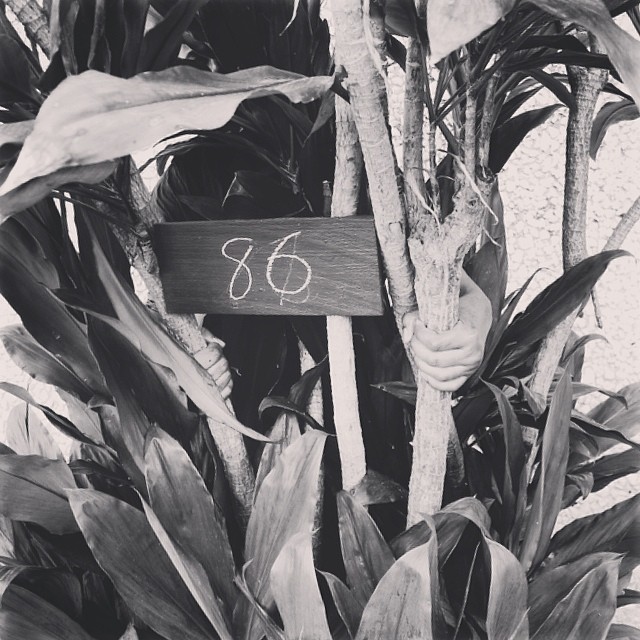
Wangechi Mutu_Day 86_Rwanda Genocide 20th anniversary
Day 86
My country belongs to God.
These are our scriptures:
Happy shall he be
that taketh and dasheth
thy little children unto the rock
Psalms 137:9
Vengeance is mine, sayeth the Lord
Romans 12:19
I will be there
where there are two or more gathered in my name
Christ proclaims in Matthew 18:20
Jesus must have a permanent presence in the church
Where the door has been propped ajar for eternity
Jesus Christ must live here
Where congregants were struck in supplication
Pleading for their lives, pleading, pleading for their lives
Where shall we find comfort?
Where can we go in this country of God?
.
Day 87
Reconciliation is minding my business
Reconciliation is minding my life
Reconciliation is aimed at my head
Reconciliation leaves me no choice
Don’t get me wrong
Reconciliation is a grand thing
Reconciliation photographs very well
Reconciliation makes people smile
Reconciliation feels good, dresses well
Writes well, conjures good dreams
Reconciliation wants me to wipe my tears dry
To wipe the slate clean — well at least wipe it
It wants me to forget my first born daughter
The one I could not bury
The one whose body I walked away from
.
Day 88
After all this, today
Another vigorous attempt to divvy up moments equally
Stillness, nothingness
A vacuous attempt to move, to sound, to connect to anyone, anyhow
Time flashes
Time drags
In another couple of months we will begin to grasp
The unending nature of these one hundred days
As nothing except what it was –
A nothingness that compounded nothing into being
.
Day 89
What do crickets know about innocence?
Were they not there?
Did they not see more than we did
Staying closer to the ground than we ever were?
Innocence in that ghastly cry –Why? Why do we do this to ourselves?
Innocence in that other proclamation – Never, never, never again
Innocence is power without experience
Innocence is a knowing untempered
Crickets know that there is no innocence on hallowed ground
.
Day 90
How these hundred days
Should be days to think
About reconciliation and forgiveness
To consider the irrationality of ethnic cleansing
To see the phoenix rise again
& grief overcome
To witness humanity & good
& the power of God
To make miracles
That ultimately
Commemoration is a crafted affair
A beautiful thing
A symbol of power and resonance
The everlasting flame
We don’t have to remember
The empty space in our arms
That our lost children will never fill
This is not our liberty
We’re not free to forget
.
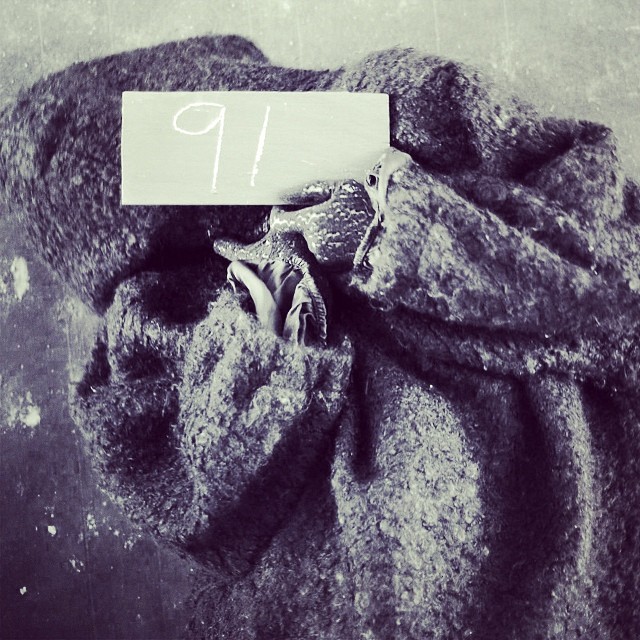
Wangechi Mutu_Day 91_Rwanda Genocide 20th anniversary
Day 91
We couldn’t have known, nine days in,
That it would ever be over
It was a time warp that had us
In flashes and then in woozy moments
That took forever
A machete hangs in a museum in Ottawa
A machete hangs perpetually in a museum in Ottawa
A machete hangs like a mockery of time
Like a semblance of that reality
In which another machete
Other machetes hang for what seemed a long time
But eventually they came down
Again and again and again and again and again
Even time marked by machete strokes
Can never be accurate
.
Day 92
We wish for absolution, for a clearing,
for a forgetting, a filling of the heart
& a joyousness once more
We wish for children of innocence
we wish for an instantiation of things
a rationality that resonates with our emotions
We wish for the silence of the moon
the quieting of ghosts
& a peace to rest in
.
Day 93
Suffice to say that there was nothing sufficient for some
Elsewhere:
Elections, and the winners won
A car chase
War ended
Another war continued
Jackal emerged
Earth rattled
Now headlines
Now pictures
Now memories
Now colour
Now movement
Now silence
Now drama
Nothing reflects the efficiency with which those days went by
We were betrayed by a month and a half that now we call commemoration
.
Day 94
We walked when our legs could carry us
hinky pinky ponky
hinky pinky ponky
Childhood rhythms carried us along
hinky pinky ponky
hinky pinky ponky
Songs from days of innocence
Like holding hands, like soft embraces
hinky pinky ponky
hinky pinky ponky
Father had a donkey
We needed a rhythm to walk
To move, to drag ourselves along
Who could count past four?
Acel ariyo adek angwen
Who could count past four?
hinky pinky ponky
hinky pinky ponky
Father had a donkey
Donkey die
Father cry
hinky pinky ponky
It seemed as though there was a time before tears
It seemed a dream to think that there was a time when fathers could cry
.

Wangechi Mutu_Day 95_Rwanda Genocide 20th anniversary
Day 95
Time, they taught us
Was linear and exact
Time was a series of beats, a line extending from the beginning of things
Forget the idea that illumination is an indication of knowing
Forget that
We were trapped in a hundred days, a hundred days
Of light, each following the other, each following the other
Time bore witness to our erratic heartbeats but we
remain trapped in a hundred days that have morphed into years and years
How can we exist outside of betrayal by time and land?
.
Day 96
What is the essence of beauty?
Why do mists swirl and rise but never completely disappear?
Why should iron gleam through soil?
Why should our dances be graceful, our cloths bright
Our memories long, our language rich and layered?
Why should beauty render us speechless?
What is it to come from a land that swallows its own people?
.

Wangechi Mutu_Day 97_Rwanda Genocide 20th anniversary
Day 97
The poet told us of her brother
The poet told us of her drunken brother, speaking of his dreams
He was an alcoholic, he was always drunk
The poet told us about her drunken brother who spoke of his mad, mad dream
She told us how he spoke like a mad man, about this dream
Like a prophet, insisting on an unknown truth
Like the drunken man that he was, imposing faith that no one wanted to hear
Like Jesus
Like all the holy prophets, even the ones we forgot
The poet told us about her brother who spoke of a dream
In which everybody would die
They would kill everybody
Except me, she said
Except me
.
Day 98
If this should be a list of betrayals where should we begin?
At last, we’re here
At last, we’re gone
What is this life beyond one hundred days?
What is this life beyond one hundred days, twenty times over?
What days are left?
We were already in medias res
We were always inside one hundred days
.
Day 99
It was sunrise every morning
It was the same land
The same sky
The same rivers, hills, valleys
It was the same road that led away and back home
Same sweet air that amplified the voices through whispers, gossip, airwaves
Words leapt into our eyes and burned this new knowledge that was never new
But it was the earth that betrayed us first
In those one hundred days that would never end
.
Day 100
It was the earth that betrayed us first.
It was the earth that held on to its beauty, compelling us to return.
It was the breezes that were there, and then they were not there.
It was the sun that rose and fell, rose and fell, as if there was nothing different: as if nothing changed.
. . .
Wangechi Mutu was born in Nairobi, Kenya, in 1972. A collage artist and sculptor, she lives in Brooklyn, New York.
https://www.facebook.com/hashtag/kwibuka20?source=feed_text&story_id=624576410970511
http://wangechimutu.com/
Juliane Okot Bitek is a poet and a scholar who lives in Vancouver, British Columbia.
Her ancestral homeland is Acholiland in northern Uganda.
To read a previous Guest Editor feature by Juliane click the following link:
https://zocalopoets.com/2013/11/11/remembrance-day-reflections-juliane-okot-bitek/
. . . . .
Poems for Earth Day + A Meditation on Extinction by Duane Taylor
Posted: April 22, 2014 Filed under: 7 GUEST EDITORS, Duane Taylor, English | Tags: Poems for Earth Day Comments Off on Poems for Earth Day + A Meditation on Extinction by Duane Taylor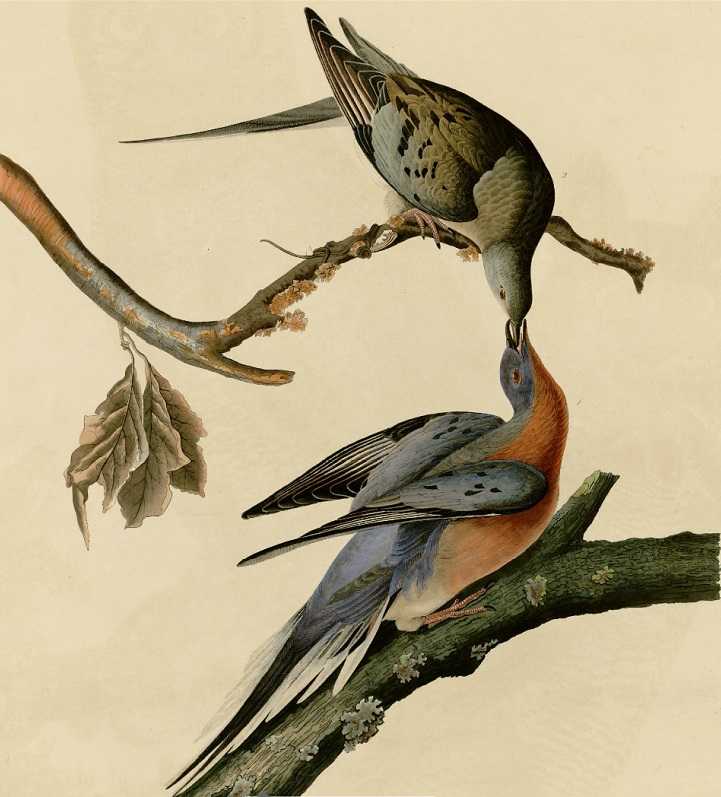
Passenger Pigeons by James John Audubon (1785-1851)
.
Duane Taylor, a Health Sciences student in Toronto, is our Zócalo Poets Guest Editor for Earth Day 2014. He sent us the following “contemplation” (with poems):
. . .
In the poem, ‘In Memoriam, AHH’, Alfred, Lord Tennyson (1809-1892) memorializes his dear friend, Arthur Hallam. Tennyson questions what the loss of a single life or a whole species means to God and Nature. Like many of his contemporaries, Tennyson spoke of a conflict between his faith and the then-novel idea of Evolution – though it had not yet been named as that.
Tennyson’s conflict was somewhat different than the one we’d likely find today—there was no question of God’s place in the universe. The being whose place was being called into question was Man’s.
.
Alfred Tennyson
In Memoriam A. H. H. (1849)
[ excerpt ]
.
LV
The wish, that of the living whole
No life may fail beyond the grave,
Derives it not from what we have
The likest God within the soul?
Are God and Nature then at strife,
That Nature lends such evil dreams?
So careful of the type she seems,
So careless of the single life;
That I, considering everywhere
Her secret meaning in her deeds,
And finding that of fifty seeds
She often brings but one to bear,
I falter where I firmly trod,
And falling with my weight of cares
Upon the great world’s altar-stairs
That slope thro’ darkness up to God,
I stretch lame hands of faith, and grope,
And gather dust and chaff, and call
To what I feel is Lord of all,
And faintly trust the larger hope.
LVI
‘So careful of the type?’ but no.
From scarped cliff and quarried stone
She cries, ‘A thousand types are gone:
I care for nothing, all shall go.
‘Thou makest thine appeal to me:
I bring to life, I bring to death:
The spirit does but mean the breath:
I know no more.’ And he, shall he,
Man, her last work, who seem’d so fair,
Such splendid purpose in his eyes,
Who roll’d the psalm to wintry skies,
Who built him fanes of fruitless prayer,
Who trusted God was love indeed
And love Creation’s final law?
Tho’ Nature, red in tooth and claw
With ravine, shriek’d against his creed?
Who loved, who suffer’d countless ills,
Who battled for the True, the Just,
Be blown about the desert dust,
Or seal’d within the iron hills?
No more? A monster then, a dream,
A discord. Dragons of the prime,
That tare each other in their slime,
Were mellow music match’d with him.
.
O life as futile, then, as frail!
O for thy voice to soothe and bless!
What hope of answer, or redress?
Behind the veil, behind the veil.
. . .
In Christian theology, mankind is the pinnacle of Creation, the one who has been given dominion over all living things and the Earth, the one to whom, after God, all must bow.
But the theory of Evolution tells us, as it told Tennyson, that mankind is just one of countless species, or ‘types’, that has existed and will die and be replaced. Man’s time at the pinnacle is fleeting; after he is gone the earth will endure and more types will follow.
We see this truth set literally in stone; fossils speak of animals that no longer live. Moreover, they tell us of species so entirely absent that all of the species related to them, all of the species they saw, lived with and ate, are gone too. Entire worlds replaced at the rate of a few types at a time.
So little does Nature care for the type that it is estimated that 99.9% of all of the species that have ever existed are extinct.
One of these species was the Passenger Pigeon.
.
Prior to the 20th century, the Passenger Pigeon was a familiar sight, much like the Rock Dove (the ‘pigeons’ which are found in cities worldwide) is today. On their own, they were somewhat unremarkable birds. However, with a single exception, Passenger Pigeons were never on their own.
They existed in numbers that are impossible to conceive for us now. Billions of birds blackened the skies as they migrated across the North American continent.
They were so numerous that giant trees, overloaded with roosting birds, splintered and broke under the weight. A flock once took three days to pass overhead. In one grouping, the naturalist Alexander Wilson estimated there were 2,230,272,000 individuals – approximately eight times the total population of Rock Pigeons in the world.
And yet, as with all living things, they went.

Jacob Cartwright and Nick Jordan_Where is that Vanished Bird? (The Passenger Pigeon)_photomontage, 2007
. . .
Jenny McBride (Chicago, USA)
Nature is Dying
.
“Nature is dying,” said the doctor.
I already knew
About the huge flocks of birds
There used to be,
He said prothonotaries filling a tree
In the city where he grew up.
One of his friends
Told of Dakota blackbird flocks
Miles long, took hours to pass
“A long time ago.” said the doctor
But he’s less than 80.
.
But I hadn’t even heard about monarchs
Thick, even coming smack through the city
Sheets of orange butterflies.
“Nature is dying,” said the doctor.
“We’re trying to save her but…
“I’m not sure how good a job we’re doing.”
.
Even I’ve seen eternal lights go out
And I’m not half his age.
Those who are half my age, teens now
May mark the last phase of the change.
“Nature is dying,” said the doctor.
Nothing I didn’t know
Except that monarchs used to migrate
Right through Chicago
As if it weren’t even there.
We’re trying to save her
But it’s a struggle of attrition.
. . .
In much the same way it would be inconceivable to us that the ubiquitous rock doves could ever disappear, it was inconceivable to the people of the time that their Passenger Pigeons could ever disappear.
But through hunting and habitat destruction, over the course of fifty years, the flocks of billions were winnowed down to a single life.
This single life, like Tennyson’s friend toward whom Nature was so careless, had a name: Martha. She was a 29-year old female, who spent her final years in the Cincinnati Zoo. She was an ‘endling’, the term given to the last known member of a species. Martha died on September 1st, 1914. It’s sometimes said that the Passenger Pigeon is the only species whose exact time and place of extinction is known.
While the idea is poetic, it isn’t necessarily true.
For many species, prior to the final extinction, there is what’s known as a functional extinction. This is when a species has declined past any hope of recovery. This can happen when there are too few members of a species left, as it did with the Passenger Pigeon. Martha may have been the last single life of her type in September of 1914 , but her type had met its true end some unknown years hence, when the last fifty, forty or ten birds were shot in some unknown forest, field or plain. No one but God or Nature will ever know.
Still, the simplicity of a species ending at a precise time and date, like the period at the end of a sentence rather than an ellipsis, is a beautiful idea.
We can’t know when our own functional extinction will come, but, as with “In Memoriam, A.H.H”, we find answers in verse.

Woolly Mammoth and Cro-Magnon Boy, a 21st-century “cave drawing”
. . .
Archibald Lampman (1861-1899) was one of the late 19th-century Canadian poets who would come to be known as The Confederation Poets.
He wrote “The City at the End of Things” as an elegy for a natural world that had been destroyed by urbanization. Mankind’s ‘endling’ makes an appearance, and the poem suggests that in destroying Nature we destroy ourselves.
.
Archibald Lampman
The City at the End of Things (1899)
.
Beside the pounding cataracts
Of midnight streams unknown to us
‘Tis builded in the leafless tracts
And valleys huge of Tartarus.
Lurid and lofty and vast it seems;
It hath no rounded name that rings,
But I have heard it called in dreams
The City of the End of Things.
Its roofs and iron towers have grown
None knoweth how high within the night,
But in its murky streets far down
A flaming terrible and bright
Shakes all the stalking shadows there,
Across the walls, across the floors,
And shifts upon the upper air
From out a thousand furnace doors;
And all the while an awful sound
Keeps roaring on continually,
And crashes in the ceaseless round
Of a gigantic harmony.
Through its grim depths re-echoing
And all its weary height of walls,
With measured roar and iron ring,
The inhuman music lifts and falls.
Where no thing rests and no man is,
And only fire and night hold sway;
The beat, the thunder and the hiss
Cease not, and change not, night nor day.
And moving at unheard commands,
The abysses and vast fires between,
Flit figures that with clanking hands
Obey a hideous routine;
They are not flesh, they are not bone,
They see not with the human eye,
And from their iron lips is blown
A dreadful and monotonous cry;
And whoso of our mortal race
Should find that city unaware,
Lean Death would smite him face to face,
And blanch him with its venomed air:
Or caught by the terrific spell,
Each thread of memory snapt and cut,
His soul would shrivel and its shell
Go rattling like an empty nut.
It was not always so, but once,
In days that no man thinks upon,
Fair voices echoed from its stones,
The light above it leaped and shone:
Once there were multitudes of men,
That built that city in their pride,
Until its might was made, and then
They withered age by age and died.
But now of that prodigious race,
Three only in an iron tower,
Set like carved idols face to face,
Remain the masters of its power;
And at the city gate a fourth,
Gigantic and with dreadful eyes,
Sits looking toward the lightless north,
Beyond the reach of memories;
Fast rooted to the lurid floor,
A bulk that never moves a jot,
In his pale body dwells no more,
Or mind or soul – an idiot!
But sometime in the end those three
Shall perish and their hands be still,
And with the master’s touch shall flee
Their incommunicable skill.
A stillness absolute as death
Along the slacking wheels shall lie,
And, flagging at a single breath,
The fires shall moulder out and die.
The roar shall vanish at its height,
And over that tremendous town
The silence of eternal night
Shall gather close and settle down.
All its grim grandeur, tower and hall,
Shall be abandoned utterly,
And into rust and dust shall fall
From century to century;
Nor ever living thing shall grow,
Nor trunk of tree, nor blade of grass;
No drop shall fall, no wind shall blow,
Nor sound of any foot shall pass:
Alone of its accursèd state,
One thing the hand of Time shall spare,
For the grim Idiot at the gate
Is deathless and eternal there.
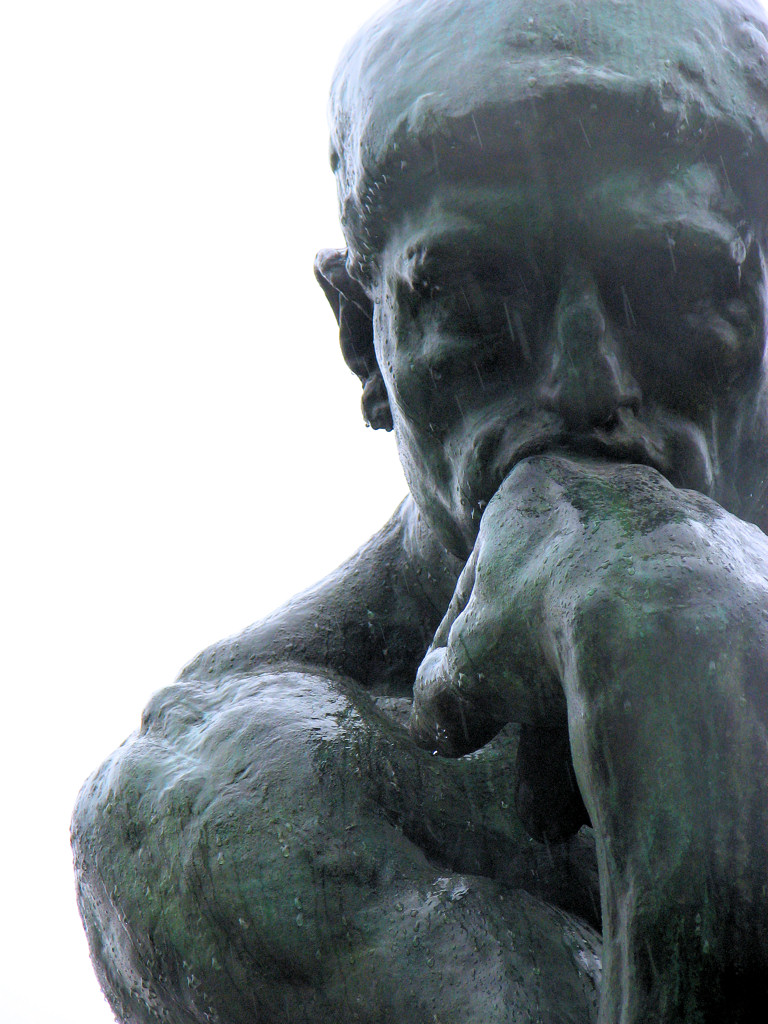
August Rodin_Le Penseur or The Thinker (seen here in the rain)_a 1904 bronze-cast sculpture at the Musée Rodin, Paris_photograph by Innoxiuss
And once that last grinning ‘endling’ is gone and mankind, like the Passenger Pigeon, is a memory of Nature, what remains?
T.S. Eliot’s “The Hollow Men”, and its final stanza, present us with one of our possible futures.
.
T.S. Eliot
The Hollow Men (1925)
.
Mistah Kurtz—he dead.
A penny for the Old Guy
I
We are the hollow men
We are the stuffed men
Leaning together
Headpiece filled with straw. Alas!
Our dried voices, when
We whisper together
Are quiet and meaningless
As wind in dry grass
Or rats’ feet over broken glass
In our dry cellar
Shape without form, shade without colour,
Paralysed force, gesture without motion;
Those who have crossed
With direct eyes, to death’s other Kingdom
Remember us—if at all—not as lost
Violent souls, but only
As the hollow men
The stuffed men.
II
Eyes I dare not meet in dreams
In death’s dream kingdom
These do not appear:
There, the eyes are
Sunlight on a broken column
There, is a tree swinging
And voices are
In the wind’s singing
More distant and more solemn
Than a fading star.
Let me be no nearer
In death’s dream kingdom
Let me also wear
Such deliberate disguises
Rat’s coat, crowskin, crossed staves
In a field
Behaving as the wind behaves
No nearer—
Not that final meeting
In the twilight kingdom
III
This is the dead land
This is cactus land
Here the stone images
Are raised, here they receive
The supplication of a dead man’s hand
Under the twinkle of a fading star.
Is it like this
In death’s other kingdom
Waking alone
At the hour when we are
Trembling with tenderness
Lips that would kiss
Form prayers to broken stone.
IV
The eyes are not here
There are no eyes here
In this valley of dying stars
In this hollow valley
This broken jaw of our lost kingdoms
In this last of meeting places
We grope together
And avoid speech
Gathered on this beach of the tumid river
Sightless, unless
The eyes reappear
As the perpetual star
Multifoliate rose
Of death’s twilight kingdom
The hope only
Of empty men.
V
Here we go round the prickly pear
Prickly pear prickly pear
Here we go round the prickly pear
At five o’clock in the morning.
Between the idea
And the reality
Between the motion
And the act
Falls the Shadow
For Thine is the Kingdom
Between the conception
And the creation
Between the emotion
And the response
Falls the Shadow
Life is very long
Between the desire
And the spasm
Between the potency
And the existence
Between the essence
And the descent
Falls the Shadow
For Thine is the Kingdom
For Thine is
Life is
For Thine is the
This is the way the world ends
This is the way the world ends
This is the way the world ends
Not with a bang but a whimper.
. . . . .
La poesía bíblica: Mateo 11: 28-30 / The Good Book’s poetry: Matthew 11: 28-30
Posted: April 20, 2014 Filed under: English, Spanish | Tags: Easter poems, Poemas para Domingo de Pascua Comments Off on La poesía bíblica: Mateo 11: 28-30 / The Good Book’s poetry: Matthew 11: 28-30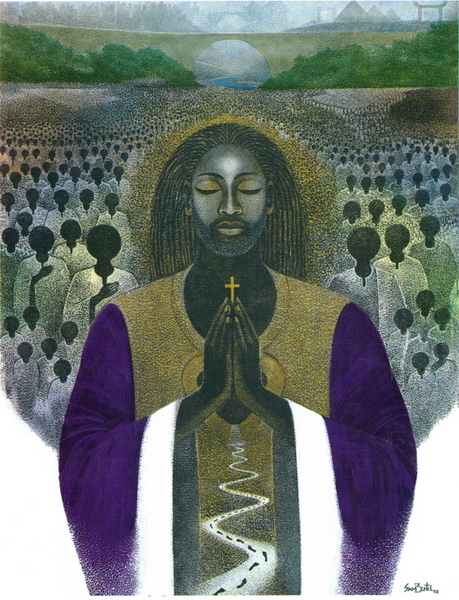
Footsteps to Jesus_Pisadas a Jesús
Matthew 11: 28–30 (King James Version)
Come unto me, all ye that labour and are heavy laden, and I will give you rest.
Take my yoke upon you, and learn of me; for I am meek and lowly in heart: and ye shall find rest unto your souls.
For my yoke is easy, and my burden is light.
. . .
Mateo 11: 28–30 (Reina-Valera)
Venid a mí, todos los que estáis trabajados y cargados, y yo os haré descansar.
Llevad mi yugo sobre vosotros y aprended de mí, que soy manso y humilde de corazón, y hallaréis descanso para vuestras almas.
Porque mi yugo es fácil, y ligera mi carga.
. . .

Reina-Valera_primera página de la Biblia del Oso_ traducción al castellano de Casiodoro de Reyna_Basilea_1569
. . .
. . . . .
 Zócalo Poets