I come from the east, with a clutch under my arm: five Irish women poets
Posted: March 17, 2015 Filed under: English, Irish Comments Off on I come from the east, with a clutch under my arm: five Irish women poets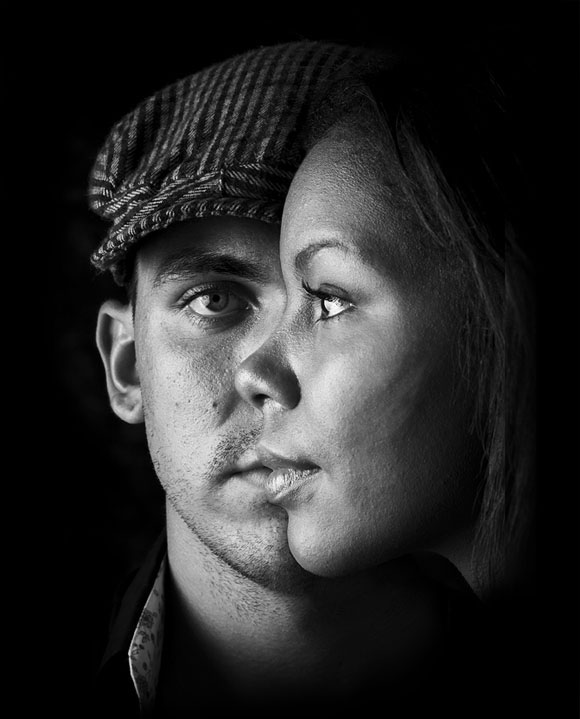
Double portrait in black and white © Cory Smith
Vona Groarke (Edgeworthstown / Athlone, Ireland, born 1964)
The Clutch Handbag
.
Black bombazine with grosgrain binding,
a clasp of diamanté butterflies and a row
of bevelled ivory sequins threaded with slipknots.
.
Finesse. A lipstick of a certain red,
a bronze compact, the cachet
of an embossed cigarette case.
.
Emerald lining that is like glossy music
from a dance-hall band or the sheen
of sable eyes on the mink stole
.
whose snout rounds on the very shape
of a tear in the satin no bigger than
her incarnadine thumbnail
.
through which five decades
have slipped like small coins
skittering the open notes
.
of a foxtrot or an old-time waltz
that nobody, but nobody,
recalls.
. . .
from the collection Spindrift © Vona Groarke and The Gallery Press
. . .
Máire Mhac an tSaoi (Dublin, Ireland, born 1922)
A fhir dar fhulaingeas
.
A fhir dar fhulaingeas grá fé rún,
Feasta fógraím an clabhsúr:
Dóthanach den damhsa táim,
Leor mo bhabhta mar bhantráill.
.
Tuig gur toil liom éirí as,
Comhraím eadrainn an costas:
‘Fhaid atáim gan codladh oíche
Daorphráinn orchra mh’osnaíle.
.
Goin mo chroí, gad mo gháire,
Cuimhnigh, a mhic mhínáire,
An phian, an phláigh, a chráigh mé,
Mo dhíol gan ádh gan áille.
.
Conas a d’agróinnse ort
Claochló gréine ach t’amharc,
Duí gach lae fé scailp dhaoirse –
Malairt bhaoth an bhréagshaoirse!
.
Cruaidh an cás mo bheith let ais,
Measa arís bheith it éagmais;
Margadh bocht ó thaobh ar bith
Mo chaidreamh ortsa, a óigfhir.
. . .
from the collection An paróiste míorúilteach/The miraculous parish ( Rogha
dánta/Selected poems), edited by Louis de Paor, © Máire Mhac an tSaoi and The O’Brien Press/Clóiar-Chonnacht
. . .
Máire Mhac an tSaoi
Man for whom I endured
.
Man, for whom I suffered love
In secret, I now call a halt.
I’ll no longer dance in step.
Far too long I’ve been enthralled.
.
Know that I desire surcease,
Reckon up what love has cost
In racking sighs, in blighted nights
When every hope of sleep is lost.
.
Harrowed heart, strangled laughter;
Though you’re dead to shame, I charge you
With my luckless graceless plight
And pain that plagues me sorely.
.
Yet, can I blame you that the sun
Darkens when you are in sight?
Until I’m free each day is dark –
False freedom to swap day for night!
.
Cruel fate, if by your side.
Crueller still, if set apart.
A bad bargain either way
To love you or to love you not.
. . .
Translation from Irish into English: Biddy Jenkinson
. . .
Eiléan Ní Chuilleanáin (Cork, Ireland, born 1942)
The Bend in the Road
.
This is the place where the child
Felt sick in the car and they pulled over
And waited in the shadow of a house.
A tall tree like a cat’s tail waited too.
They opened the windows and breathed
Easily, while nothing moved. Then he was better.
.
Over twelve years it has become the place
Where you were sick one day on the way to the lake.
You are taller now than us.
The tree is taller, the house is quite covered in
With green creeper, and the bend
In the road is as silent as ever it was on that day.
.
Piled high, wrapped lightly, like the one cumulus cloud
In a perfect sky, softly packed like the air,
Is all that went on in those years, the absences,
The faces never long absent from thought,
The bodies alive then and the airy space they took up
When we saw them wrapped and sealed by sickness
Guessing the piled weight of sleep
We knew they could not carry for long;
This is the place of their presence: in the tree, in the air.
. . .
from the collection The Girl Who Married the Reindeer
© Eiléan Ní Chuilleanáin and The Gallery Press
. . .
Nuala Ní Dhomhnaill (Dingle/Tipperary, Ireland, born 1952)
Venio Ex Oriente
.
Tugaim liom spíosraí an Oirthir
is rúin na mbasár
is cúmhraín na hAráibe
ná gealfaidh do láimhín bán.
.
Tá henna i m’chuid ghruaige
is péarlaí ar mo bhráid
is tá cróca meala na bhfothach
faoi cheilt i m’imleacán.
.
Ach tá mus eile ar mo cholainnse,
boladh na meala ó Imleacht Shlat
go mbíonn blas mísmín is móna uirthi
is gur dorcha a dath.
. . .
From Selected Poems © 2004, Nuala Ní Dhomhnaill and New Island Books
. . .
Nuala Ní Dhomhnaill
“I Come from The East”
.
Eastern spices I bring with me,
and from bazaars, a mystery:
and perfumes from Arabic land
would not make bright your small white hand.
.
My hair is henna-brown
and pearls from my neck hang down
and my navel here conceals
vials of the honey of wild bees.
.
But my body breathes another musk
that smells of wild mint and turf:
scent of honey from an ancient hill
that has darkness in its tint.
. . .
Translation from Irish into English: Michael Hartnett
. . .
Dairena Ní Chinnéide (Dingle, County Kerry, Ireland)
Suantraí na Meánmhara
.
Chuaigh an Trodaí fén uisce
is bhí pátrúin a saoil san uisce glas
comharthaí ón bhfarraige eachtrannach
ag cur comhairle uirthi fanacht fó thoinn.
d’oscail domhan mealltach
is bhí sí ar a suaimhneas
i bhfad ó chlann is leannáin
domhan draíochta an Trodaí fé uisce
fhliuch sí, is fhliuch sí í féin
d’fhonn fothain a fháil ón teas
shnámh sí lena súile oscailte
is shnámhfadh sí go dtí an Ghréig
chun éalú óna laincisí saolta
léirphictiúir ghrinneall na Meánmhara
is macalla na dtonn in suantraí aici.
. . .
from the collection An Trodaí & Dánta Eile / The Warrior & Other Poems
© Dairena Ní Chinnéide and Cló Iar-Chonnacht
. . .
Dairena Ní Chinnéide
Mediterranean Lullaby
.
The Warrior went under water
and the patterns of her life lay in the green
signs from a foreign ocean
advising her to stay under the waves
a magically enticing world opened
and she was at peace
far from her family and her lover
the magical Warrior world under the waves
she wet and wet herself
to take shelter from the heat
she swam with her eyes open
and she would swim to Greece
to escape her mortal ties
images from the bottom of the Mediterranean
and echoes of the waves her lullaby.
. . .
Translation from Irish into English: Dairena Ní Chinnéide
. . . . .
“Home” / “Zu Hause”: an Irish poet in German
Posted: March 17, 2015 Filed under: English, German Comments Off on “Home” / “Zu Hause”: an Irish poet in German
Paula Meehan (born Dublin, Ireland, 1955. Meehan is an Irish poet and playwright, who studied at Trinity College, Dublin, and at Eastern Washington University, Washington State, U.S.A. )
Home
.
I am the blind woman finding her way home by a map of tune.
When the song that is in me is the song I hear from the world
I’ll be home. It’s not written down and I don’t remember the words.
I know when I hear it I’ll have made it myself. I’ll be home.
.
A version I heard once in Leitrim was close, a wet Tuesday night
in the Sean Relig bar. I had come for the session, I stayed
for the vision and lore. The landlord called time,
the music dried up, the grace notes were pitched to the dark.
When the jukebox blared out I’d only four senses and he left me senseless,
I’d no choice but to take to the road. On Grafton Street in November
I heard a mighty sound: a travelling man with a didgeridoo
blew me clear to Botany Bay. The tune too far back to live in
but scribed on my bones. In a past life I may have been Kangaroo,
rocked in my dreamtime, convict ships coming o’er the foam.
.
In the Puzzle Factory one winter I was sure I was home.
The talking in tongues, the riddles, the rhymes, struck a chord
that cut through the pharmaceutical haze. My rhythm catatonic,
I lulled myself back to the womb, my mother’s heart
beating the drum of herself and her world. I was tricked
by her undersong, just close enough to my own. I took then
to dancing; I spun like a Dervish. I swear I heard the subtle
music of the spheres. It’s no place to live, but –
out there in space, on your own, hung aloft the night.
The tune was in truth a mechanical drone;
I was a pitiful monkey jigging on cue. I came back to earth
with a land, to rain on my face, to sun in my hair. And grateful too.
.
The wisewomen say you must live in your skin, call it home,
no matter how battered or broken, misused by the world, you can heal.
This morning a letter arrived on the nine o’clock post.
The Department of Historical Reparation, and who did I blame?
The Nuns? Your Mother? The State? Tick box provided,
we’ll consider your case. I’m burning my soapbox, I’m taking
the very next train. A citizen of nowhere, nothing to my name.
I’m on my last journey. Though my lines are all wonky
they spell me a map that makes sense. Where the song that is in me
is the song I hear from the world, I’ll set down my burdens
and sleep. The spot that I lie on at last the place I’ll call home.
. . .
Paula Meehan
Zu Hause
.
Ich bin die blinde Frau, die ihren Heimweg nach einer Karte von Klängen findet.
Wenn das Lied in mir auch das Lied von der Welt ist,
bin ich zu Hause. Es steht nirgends geschrieben, und die Worte sind mir entfallen.
Wenn ich es höre, weiß ich, daß es von mir ist. Dann bin ich zu Hause.
.
Eine Version von einst in Leitrim kam nahe, ein nasser Dienstag abend
in der Sean Relig Bar. Ich war für die Session gekommen und blieb
um der Vision und Legenden willen. Der Wirt rief zum Ende,
die Musik erstarb, die Ornamente tappten ins Dunkel.
Als die Jukebox plärrte I’d only four senses and he left me senseless,
blieb mir nur noch der Aufbruch. Auf der Grafton Street im November
hörte ich einen mächtigen Sound: Ein Weitgereister mit einem Didgeridoo
blies mich geradewegs bis zur Botany Bay. Die Melodie zu vergangen, um sie zu leben,
aber eingeschrieben in meine Knochen. In einem früheren Leben war ich wohl Känguruh,
in meiner Traumzeit gewiegt, als Sträflingsschiffe das schäumende Meer querten.
.
Im Irrenhaus eines Winters war ich sicher, zu Hause zu sein.
Die phantastischen Reden, die Reime und Rätsel trafen Töne,
die durch den Pharmadunst schnitten. Katatonisch mein Rhythmus,
sank ich zurück in den Leib meiner Mutter, ihr Herz schlug
die Trommel ihrer ureigenen Welt. Ich ließ mich
von ihrer Begleitung, der meinen sehr nahe, verführen, begann dann
zu tanzen; ich wirbelte wie ein Derwisch. Ich schwöre, ich hörte
sehr leise die Sphärenmusik. Kein Ort zum Leben, doch –
da draußen im All, ganz allein, hoch droben über der Nacht.
Die Melodie war in Wahrheit ein mechanisches Summen;
ich ein erbärmlicher Affe, der auf Stichwort herumhüpfte. Abrupt
kehrte ich auf die Erde zurück, zu Regen im Gesicht und Sonne im Haar. Und
noch dankbar dazu.
.
Die weisen Frauen meinen, du mußt in deiner Haut leben, nenn das dein Zuhause,
egal wie geschlagen, gebrochen, mißbraucht von der Welt, du kannst heilen.
Heute morgen um neun kam ein Brief bei mir an.
Das Ministerium für Historische Wiedergutmachung, und wen beschuldigte ich?
Die Nonnen? Deine Mutter? Den Staat? Zutreffendes bitte ankreuzen,
Ihr Fall wird bearbeitet. Ich lasse Ideale Ideale sein und nehme
den allernächsten Zug. Bürgerin, besitzlos, von Nirgendwo.
.
Dies ist meine letzte Reise. Obwohl meine Zeilen ganz schief sind,
verraten sie mir eine Karte, die Sinn ergibt. Wo das Lied, das in mir ist,
das Lied von der Welt ist, werde ich meine Bündel absetzen
und schlafen. Wo ich am Schluß liege, den Platz werde ich Zuhause nennen.
. . .
Translation into German from English: Dörte Eliass
. . .
Two Irish women poets – in Spanish: Ailbhe Ní Ghearbhuigh and Caitríona Ní Chléirchín. Click on their names in the right-hand column!
. . . . .
El Día Internacional de La Mujer 2015: Toronto, Canadá / International Women’s Day 2015: Toronto, Canada
Posted: March 7, 2015 Filed under: English, Spanish, ZP Translator: Alexander Best | Tags: International Women's Day poems Comments Off on El Día Internacional de La Mujer 2015: Toronto, Canadá / International Women’s Day 2015: Toronto, Canada El Día Internacional de La Mujer 2015, en Toronto, Canadá…
En solidaridad con La Marcha Mundial de Mujeres…
. . .
Arjona Delia (escritora/poeta/artista, Argentina)
Homenaje a La Mujer 1
.
En este día de marzo
en el mundo las recordamos,
unidas y con esfuerzo
ser reconocidas logramos.
.
Muchas no eran respetadas,
siempre las humillaban,
se las desvalorizaba
por su condición de mujer.
.
Hemos logrado ya mucho,
pero falta por recorrer,
algunas sufren violencia
no las tratan como un ser.
.
No todas son felices
no disfrutan la igualdad.
¡Luchemos incansablemente
para nuestra meta alcanzar!
.
Logramos un día tener
muy bien merecido quizás,
¡pero el día de la mujer
que sea por la eternidad!
. . .
Arjona Delia (writer/poet/artist from Argentina)
Tribute to Woman 1
.
On this day in March [March 8th]
all over the world we recall them,
united, in strength;
our achievement:
that they be recognized.
.
Many were not treated well,
have been shamed,
have been de-valued
for being Women.
.
Though we’ve attained much already,
there is still further to go:
there are women suffering violence,
and they are not treated like human beings.
.
Not all of us are happy
or enjoy equality.
Let us struggle
without letting up,
that we might reach our goal!
.
We will attain that well-earned day,
one day – perhaps.
But
The Day of All Women
– let such a day be for all time!
. . .
Tribute to Woman 2
.
To all women on this day [March 8th],
I render you this tribute:
for giving your blood,
for giving your life,
for fighting for the cause
– and being indefatigable.
.
Originators of Life,
your essence shines;
your soft, warm hands
like the sun in its rising.
.
You shelter us even before we are born,
give protection, well-being;
you are a fountain of purity and power,
of maternal love, of total dedication.
.
And when trouble surges,
women are fierce as a storm;
or they refresh your soul,
like the spring rain.
.
Like coffee on winter nights,
or fresh water when you’re parched,
women are your treasure,
providing loving care, peace and consolation.
.
What would we do if they were not here?!
There would be no Life in this World.
Spouses, mothers, companions and friends in the struggle:
Congratulations to every one of you on this day!
. . .
Homenaje a La Mujer 2
.
A las mujeres en este día
quiero rendirles mi homenaje,
por dar su sangre y su vida,
por ser luchadoras incansables.
.
Engendradoras de la vida,
su esencia de mujer resplandece,
sus manos son suaves y tibias
como el Sol cuando amanece.
.
Nos cobijan antes de nacer
dando protección y bienestar,
fuente de pureza y de poder,
de amor maternal y entrega total.
.
Y cuando surgen problemas
son fuertes como la tormenta,
o pueden refrescarte el alma,
como lluvia de primavera.
.
Como café en noches de invierno,
o agua fresca para el sediento.
Son el tesoro más valioso,
brindan cariño, paz y consuelo.
.
¡Qué haríamos si no estuvieran!
No existiría en el mundo vida.
Esposas, madres y compañeras,
¡Felicidades en su día!
. . .
Tribute to Woman 1 and 2 are poems from Arjona Delia’s collection A woman, a calm sea,
© 2009. Delia’s latest book of poetry, Women – Free! has just been launched (March 2015).
.
Homenaje a la Mujer 1 y 2 son poemas publicados en el libro Una mujer, un mar en calma.
Todos los derechos reservados © 2009 Arjona Delia
Fue lanzado este mes (marzo de 2015) su nuevo libro – ¡Mujer Libre!

Toronto’s International Women’s Day march, 2015
.
Declaración de la escritora:
Cuando uno escribe se siente libre. Puede volar con la imaginación y atrapar en el papel los sentimientos del alma. El lápiz se desliza y expresa los temores, los miedos, los amores y los desamores. Escribir historias y fantasías como una forma de desahogo. Escribir para vivir, porque las letras sobrevivirán cuando tú hayas muerto.
. . .
Agradecimientos: Arjona Delia – de su blogspot
. . .
Otros poemas / More poems!
.
Llegará pronto La Primavera…
Posted: March 7, 2015 Filed under: English, Joyce Wakefield, Spanish Comments Off on Llegará pronto La Primavera…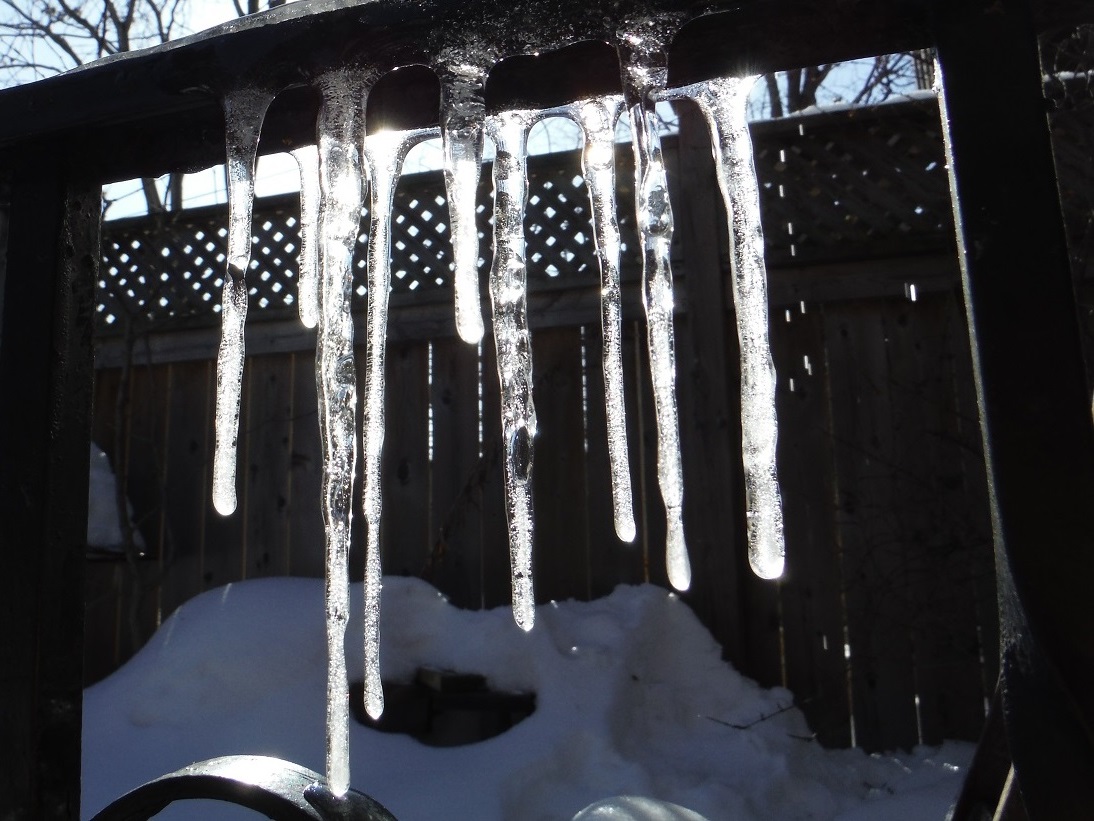
Una temperatura de menos 1 grados centígrados, aquí en Toronto…¡pero está viniendo La Primavera!
.
Joyce Wakefield
Conversación en Invierno
.
Te escucho mientras me explicas
La diferencia entre el cerebro del lado derecho y del lado izquierdo.
El olor de frío en la superficie de tu cara me distrae.
Lo lamo como una criatura con un helado de cucurucho,
con dedos pegajosos y una lengua dulce.
.
He ido estar aquí, antes, entonces
Pauso con tus palabras.
He dormido en esta piel,
He sonado estos huesos de invierno.
.
Despierto en la oscuridad entre nosotros,
Oigo la escarcha que barre el porche,
Que se acerca lentamente al alba,
Y echo mano a tu mano.
.
¿Y qué? tu susurras, con una voz que está ronca con sueños.
Mis labios, hinchados contigo, y fríos,
Están silenciados.
. . .
Joyce Wakefield
Winter Conversation
.
I listen to you explain the difference
between a right brain thought and a left.
I am distracted by the smell
of cold on your face.
I lick it away like a child
with an ice cream cone,
sticky fingers and sweet tongue.
Aware that I have been here before
I pause in your words.
I have slept in this flesh,
dreamed these winter bones.
Waking in the darkness between us
I hear frost sweeping the porch,
edging toward the morning.
I reach for your hand.
What? you whisper, voice hoarse with dream.
My lips, swollen with you, cold,
are silent.
. . . . .
Andre Bagoo: “I am the Archipelago”: Eric Roach and Black Identity
Posted: February 28, 2015 Filed under: 7 GUEST EDITORS, Andre Bagoo, English, Eric Merton Roach | Tags: Black History Month Comments Off on Andre Bagoo: “I am the Archipelago”: Eric Roach and Black Identity
“I am the Archipelago”: Eric Roach and Black Identity
By Andre Bagoo
.
THOSE who know Eric Roach, know how the story ends. This year marks the centenary of the Trinidadian poet who was born in 1915 at Mount Pleasant, Tobago. He worked as a schoolteacher, civil servant and journalist, among other things. Along the way, he published in periodicals regularly. But in 1974, he wrote the poem ‘Finis’, drank insecticide, then swam out to sea at Quinam Bay. The first-ever collected edition of his poetry only appeared two decades after his death. In it, Ian McDonald describes Roach as, “one of the major West Indian poets”. He places Roach alongside Claude McKay, Derek Walcott, Louise Bennett, Martin Carter and Edward Kamau Brathwaite.
.
Too often is the discourse on Roach coloured by his story’s ending. We cannot ignore the facts of what occurred at Quinam Bay, yes, but sometimes they distract from the poet’s genuine achievements. Notwithstanding the emerging consensus on his stature, he is still best known for his ill-fated death. Yet the journey is sometimes more important than the destination.
.
In an introduction to the same collected edition of Roach’s poems published by Peepal Tree Press in 1992, critic Kenneth Ramchand states: “in the English-speaking Caribbean, is there anyone who had written as passionately about slavery and its devastations before ‘I am the Archipelago’ (1957) hit our colonised eardrums?” Ramchand notes that Roach was, “committed, as selflessly and as passionately as one can be, to the idea of a unique Caribbean civilisation taking shape out of the implosion of cultures and peoples in the region.” For Ramchand, “the ultimate justification of [Roach’s] art would be that it contributed to the making and understanding of this new, cross-cultural civilisation.” That cross-cultural civilisation is the one Walcott speaks of when he remarks:
.
Break a vase, and the love which reassembles the fragments is stronger than the love which took its symmetry for granted when it was whole….This gathering of broken pieces is the care and pain of the Antilles….Antillean art is this restoration of our shattered histories, our shards of vocabulary, our archipelago becoming a synonym for pieces broken off from the original continent.
.
This is really a call for the new breed of Caribbean poets, the breed that reverses colonialisation’s history of plunder. Just as our colonial overlords of the past have done, poets, now, are free to pillage from whichever continent they choose. This is not a process of retribution, but rather the restoration of the resilience of the human spirit itself amid the sea of history. It also asserts the reality of the fact that we are as much a part of world culture as anyone else and cannot be marginalised from it.
.
Roach – sometimes called the “Black Yeats”– was one in a long line of poets for whom imitation and allusion are, in fact, blatant acts of rebellion. He also saw himself as key to the process of forming a West Indian Federation, a political union which he felt required a new poetry. Though that union never came to pass, Roach’s work still serves to engage key aspects of Caribbean identity.
The narrative of Black identity, whatever that may be, has to some extent played on the idea of separate black and white races. It has also called for a rejection of “white” ideas and a return to African ideas. But these are uneasy dichotomies which paper over the realities of history over time, the mixing of races and the idea that race itself is an invention. At the same time, these categories ignore the complexity of colonisation. That process of colonisation saw states and peoples being exploited for economic resources and then, in the mid-20th century, abandoned by colonial motherlands under the pretence of liberation – even as strong economic subservience remains in place to this very day.
.
And this is why Roach remains relevant: he not only asserts that the English language is as much ours as theirs, but also sings of the true implications of history, a history sometimes obscured by neat narratives of “independence” and “emancipation”. This is why Roach is still alive.
. . .
I AM THE ARCHIPELAGO
.
I am the archipelago hope
Would mould into dominion; each hot green island
Buffeted, broken by the press of tides
And all the tales come mocking me
Out of the slave plantations where I grubbed
Yam and cane; where heat and hate sprawled down
Among the cane – my sister sired without
Love or law. In that gross bed was bred
The third estate of colour. And now
My language, history and my names are dead
And buried with my tribal soul. And now
I drown in the groundswell of poverty
No love will quell. I am the shanty town,
Banana, sugarcane and cotton man;
Economies are soldered with my sweat
Here, everywhere; in hate’s dominion;
In Congo, Kenya, in free, unfree America.
.
I herd in my divided skin
Under a monomaniac sullen sun
Disnomia deep in artery and marrow.
I burn the tropic texture from my hair;
Marry the mongrel woman or the white;
Let my black spinster sisters tend the church,
Earn meagre wages, mate illegally,
Breed secret bastards, murder them in womb;
Their fate is written in unwritten law,
The vogue of colour hardened into custom
In the tradition of the slave plantation.
The cock, the totem of his craft, his luck,
The obeahman infects me to my heart
Although I wear my Jesus on my breast
And burn a holy candle for my saint.
I am a shaker and a shouter and a myal man;
My voodoo passion swings sweet chariots low.
.
My manhood died on the imperial wheels
That bound and ground too many generations;
From pain and terror and ignominy
I cower in the island of my skin,
The hot unhappy jungle of my spirit
Broken by my haunting foe my fear,
The jackal after centuries of subjection.
But now the intellect must outrun time
Out of my lost, through all man’s future years,
Challenging Atalanta for my life,
To die or live a man in history,
My totem also on the human earth.
O drummers, fall to silence in my blood
You thrum against the moon; break up the rhetoric
Of these poems I must speak. O seas,
O Trades, drive wrath from destinations.
.
(1957)
. . .
Andre Bagoo is a Trinidadian poet and journalist, born in 1983. His second book of poems, BURN, is published by Shearsman Books. To read more ZP features by Andre Bagoo, click on his name under “Guest Editors” in the right-hand column.
. . . . .
Mildred K. Barya: Birmingham Postcard and The Promised Land
Posted: February 28, 2015 Filed under: 7 GUEST EDITORS, English, Langston Hughes, Mildred K. Barya | Tags: Black History Month Comments Off on Mildred K. Barya: Birmingham Postcard and The Promised Land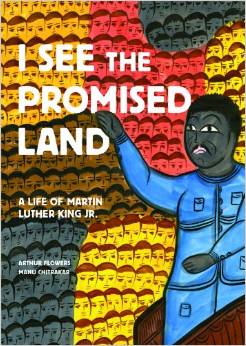
Mildred K. Barya
Birmingham Postcard and The Promised Land
.
After eleven months in Birmingham, Alabama, I left for Denver, Colorado. I was excited about my new teaching and studying life in Denver, but also sad to be leaving a place that had been home to me in every sense of the word. I wondered if I would ever find the same generosity.
The moment I arrived in Birmingham, I was received with love, a welcome dinner, laughter, and in a matter of hours I felt at home. Love continued throughout my stay. Within two weeks I found an apartment—with help from my new friends and fellow teachers—moved in and was told to make a list of whatever item I needed. Within twenty-four hours my house was filled with every lovely thing—a beautiful brown couch, an orange armchair that became my favorite relaxing seat, got me floating gently into pleasantness, leaving all tiredness behind. I was also given a computer table and chair, a dining table complete with four chairs, a brand new bed and mattress, and everything that I needed for the kitchen: plates, glasses, cups, kettle, pots, pans, and utensils.
I felt lifted up, light, fluid, melted by all that love; I wondered what I had done to deserve such care and compassion. I had simply showed up, and the residents had done what they thought was theirs to do; for them hospitality was second nature. Humbled and eased into comfort, it was not hard to enjoy my job.
.
In my short teaching career, I had thought it was okay to like students, be friendly and helpful, but also to maintain a respectable distance. My students at Alabama School of Fine Arts changed all that. It was love or nothing. Bonding. Knowing that I was from Uganda, they were keen to introduce Southern cooking to me. Before I knew it we were having buffets in class: collard greens cooked Southern style, shrimp, ham, chicken, grits…And never did any one of them falter in their assignments or fail to submit work on time. Their stories were delightful, wonderfully crafted, heartfelt and compelling.
.
When it was time for my departure, all I could think of was my students’ warmth and laughter, intelligence and humor; their remarkable poems and stories; their honesty, enthusiasm, and trust. I was aware by then that most of them had shared with me truths and concerns they wouldn’t have revealed to others. They had sensed that I would understand and help. They transformed me, giving me the best alive experiences.
.
The month of February was especially packed with activities that involved marches, visits to the Civil Rights Museum, (just a few blocks away from the school), and, opposite the museum, the 16th Street Baptist Church where four young girls had died in a bomb explosion during the peak of the Civil Rights Movement. I was glad to witness the 50th Anniversary celebrations at the church in 2013, and to chat with the “babies” who had been a year old during those turbulent times of the 1960s, and who were now mature men and women. I wondered how much they remembered, and if a lot had changed after all.
.
On a Sunday, in that baptist church with its red cushioned chairs, I sat in the chair that had welcomed Martin Luther King, Jr., and I listened to the energetic, soulful singing, feeling transported to a time in the past, a time before I was even conceived. I felt one with history, the present, and the future. Everything flowed seamlessly back and forth, there was no boundary separating the three. I had to pinch myself to know where I was and was not. In that moment I understood the impression of liminal spaces, when the curtain wall cracks just enough to let in a little light for one to perceive briefly another lifetime. I looked into the mosaic glass window (now restored) that had splintered as the bomb exploded that September day in 1963, claiming those four young girls. I glanced around me and wondered how I came to be so lucky to be in the past and present at the same time. I said a prayer for little girls who are still growing and don’t know the terrible times that befell those who came before them. I prayed for the little boys too, that amongst them we might have as many Kings as seashells on the shore.
.
The Civil Rights Museum taught me about what got “left out” in school. I learnt the true meaning of struggle; that revolutions whose time has come can never be extinguished; that the past is vital and breathing in the hearts of all who care; that the fruits of today are the pains of yesterday. And when I set my eyes to the Vulcan, the world’s largest cast-iron statue – now 110 years old and still watching over the city – I realized that the god of forge and the goddess of fire are precisely what all men, women, and children need, and that that was what Birmingham had given me.
Back in class we ended the 2013 commemorations with two poems by Langston Hughes, Daybreak in Alabama and Birmingham Sunday, which we read out loud.
But the most wholesome tribute to Martin Luther King Jr. and his legacy is Arthur Flowers’ book: I See The Promised Land, published by Tara Books in 2010. An extraordinary graphic version of King’s life, it beckons the reader to sit down and listen to a good story “replete with the Will of the Gods, with Fate and Destiny and The Human Condition.” Arthur, being a hoodoo Lord of the Delta, a Memphis native, strings out the narrative with griot rhythms and an invocation to Legba to open the gate. The story is riveting, and the book stands out as a distinctive collaboration with Manu Chitrakar and Guglielmo Rossi. Chitrakar’s free-floating images are rich with color and texture, deeply steeped in the Patua scroll-painting tradition of Bengal, India. Flowing in and out of the text, they are the perfect complement to the narrative. I See The Promised Land is a book everyone should read, an essential addition to any art or biography collection.
. . .
Langston Hughes (1902-1967)
Daybreak in Alabama
.
When I get to be a composer
I’m gonna write me some music about
Daybreak in Alabama
And I’m gonna put the purtiest songs in it
Rising out of the ground like a swamp mist
And falling out of heaven like soft dew.
I’m gonna put some tall tall trees in it
And the scent of pine needles
And the smell of red clay after rain
And long red necks
And poppy colored faces
And big brown arms
And the field daisy eyes
Of black and white black white black people
And I’m gonna put white hands
And black hands and brown and yellow hands
And red clay earth hands in it
Touching everybody with kind fingers
And touching each other natural as dew
In that dawn of music when I
Get to be a composer
And write about daybreak
In Alabama.
. . .
Birmingham Sunday
(September 15th, 1963)
.
Four little girls
Who went to Sunday School that day
And never came back home at all–
But left instead
Their blood upon the wall
With spattered flesh
And bloodied Sunday dresses
Scorched by dynamite that
China made aeons ago
Did not know what China made
Before China was ever Red at all
Would ever redden with their blood
This Birmingham-on-Sunday wall.
Four tiny little girls
Who left their blood upon that wall,
In little graves today await:
The dynamite that might ignite
The ancient fuse of Dragon Kings
Whose tomorrow sings a hymn
The missionaries never taught
In Christian Sunday School
To implement the Golden Rule.
Four little girls
Might be awakened someday soon
By songs upon the breeze
As yet unfelt among
Magnolia trees.
. . . . .
To read more essay-and-poem features by Mildred K. Barya at Zócalo Poets, click on her name under “Guest Editors” in the right-hand column…
Jackie Ormes: Torchy, Candy, Patty-Jo & Ginger!
Posted: February 28, 2015 Filed under: English | Tags: Black History Month Comments Off on Jackie Ormes: Torchy, Candy, Patty-Jo & Ginger!
Jackie Ormes_ Silhouette by Bruce Patrick Jones
Jackie Ormes (1911-1985), considered to be the first Black-American Woman cartoonist /syndicated comic-strip writer/illustrator, was born Zelda Mavin Jackson in Monongahela, Pennysylvania, just outside of Pittsburgh. She began her newspaper career as a proofreader for the Pittsburgh Courier, an African-American weekly that appeared every Saturday. .
Nancy Goldstein, author of an exceptionally-detailed 2008 biography of Ormes, states:
“In the United States at mid (20th) century – a time of few opportunities for women in general and even fewer for African-American women – Jackie Ormes blazed a trail as a popular cartoonist with the major Black newspapers of the day.” Her cartoon characters Torchy Brown (1937-38, 1950-54), Candy (1945), and the memorable duo of Patty-Jo and Ginger (Ginger a glamorous quasi-“pin-up” girl, and Patty-Jo her frank and accurate kid sister, 1945-56) delighted readers of the Pittsburgh Courier and the Chicago Defender.
“Torchy Brown in Dixie to Harlem” was a comic-strip telling the tale of a Mississippi teenager who finds fame and fortune as a singer and dancer at The Cotton Club. “Candy”, a single-panel comic, featured a wise-cracking housemaid. In the 11-year-running “Patty-Jo ‘n’ Ginger”, precocious child Patty-Jo “kept it real” (as only a child could) in her commentaries about a range of topics – racial segregation, U.S. Foreign policy, education reform, the atom bomb, McCarthy’s “Red” paranoia, etc., while her older “Sis”, Ginger, posed or strutted in mute mannequin glamour. Both Ginger, and the later Torchy Brown (of Torchy Brown in “Heartbeats”) presented gorgeous and fashionable Black women in an era when few such images were to be found. The final newspaper strip for “Heartbeats” in 1954 also hit home on themes of racism and environmental pollution.
Briefly, from 1947-1949, Ormes was contracted by a doll company to design a realistic Black girl doll (not a Mammy or Topsy stereotype), and she would become an avid doll collector in later life. Married happily for four and a half decades, she retired from cartooning in 1956 but continued to draw and paint still-lifes, portraits and murals. One of the founding directors of the DuSable Museum of African-American History in Chicago, she was deeply committed to her community.
But it is Jackie Ormes’ special populist-art contribution to American culture – her unique comics – that we remember today – during Black History Month 2015!


Kendel Hippolyte: Blues Rizado y Blues Cuerdo
Posted: February 27, 2015 Filed under: English, Kendel Hippolyte, Spanish, ZP Translator: Alexander Best Comments Off on Kendel Hippolyte: Blues Rizado y Blues Cuerdo
Kendel Hippolyte (poeta de Santa Lucía, Caribe, nacido 1952)
Blues Rizado*
.
en la ciudad aquí afuera, me estoy ahogando en mi rarezas,
de un esfuerzo por quedarme auténtico…
la cabeza flotante, el cuerpo hundiendo,
mi cabeza va navegando pero estoy sumergiendo…
.
las mujeres venden ciruelas, los hombres venden barras de chocolate…
compra uno – o el otro – quizás los dos
pero cuídate con el comprando, porque algunos se pudren ya
– es valuable el dinero, y la putrfacción propaga tan fácilmente…
.
hacia arriba de los caminos cruzados, intercambio mi rostro
pero no hay nadie que lo compre – ¿y quién necesita un rostro?
me embolso mi cara y me maquillo con una inexpresiva,
muy tarde para las caras, y me pongo la vacía…
.
anoche, estaba oscuro como alquitrán, los faros se fundieron,
y ahora, por fin, conozco adonde voy…
estoy buscando a Kinky (“Rizado”) – ha cambiado su dirección, es el mismo lugar pero ha cambiado su dirección
.
vivo por el resto de mi miedo y estoy muriendo en mi “vivo”,
tengo que aprender como cantar desafinado,
me siento extraño, al primero, pero me sentiré de acuerdo, muy pronto,
tan pronto como puedo aprender esta canción, voy a sentirme bien.
. . .
* Rizado tiene aquí el sentido de pelo rizado o de la mente excéntrica/estrafalária. También es simplemente un apodo encantador.
. . .
Kendel Hippolyte
Kinky Blues
.
in the city out here, i’m drowning in my weird
from trying to stay real
head floating, body going under
head sailing, but i’m going under
.
the women sell plums, the men sell chocolate bars
buy one or the other or both
but watch your buying, some are rotten already
money is precious and rot spreads too easy
.
up at the crossroads, i’m selling my face
but no one’s buying – who needs a face
i pocket my face, put on a blank
too late for faces, i put on a blank
.
last night dark as asphalt, my headlight blew out
now i finally know where i’m going
looking for kinky, he’s changed his address
still the same place, but he’s changed his address
.
living out my afraid, i’m dying in my alive
i must learn to sing out of key
feels strange at first, but i’ll soon be alright
soon’s i learn this song, i’ll be alright.
. . .
Blues Cuerdo
.
Ah, he intentado ser cuerdo, sí, tan largo tiempo,
pues ahora estoy intentando a ver el beneficio
– me pregunto, me pregunto
.
Desde muchos años me he quedado quieto, agarrando,
y yo había debido pensado que: es lo correcto hacer
– ya no más, ya no más
.
Porque estoy perdiendo motivos para constreñir mi alma,
quizás debo ponerla en libertad, dejarme entregarme
por esta hambre (qué hambre)
.
¿Y supón que yo permito quedar libre el mismo, mi naturaleza?
¿Se desbocaría hacia una biblia? ¿una mujer? ¿un lazo de horca?
– me pregunto, me pregunto
.
¿Cielo azul? ¿Nube negra? ¿Triunfar o fracasar?
¿Cómo lo sabré? ¿Y cómo yo escogiere?
Oigo un trueno.
. . .
Del poemario Visión por la noche (Night Vision), lanzado por TriQuarterly Books © 2005 Kendel Hippolyte
. . .
Sane Blues
.
Oh i’ve tried for so long to be sane
And now i’m trying to see my gain
i wonder
i wonder
.
For years i’ve kept myself held tight
I must have thought that this was right
No longer
No longer
.
‘Cause i’m losing the reasons for holding it in
Perhaps i should let go, let my self give in
to this hunger
this hunger
.
Suppose i let that self run loose?
Would it run to a bible? A woman? A noose?
i wonder
i wonder
.
Blue sky? Black cloud? Win or lose?
How can i know? How do i choose?
.
i hear thunder.
. . .
From: Night Vision (TriQuarterly Books) © 2005 Kendel Hippolyte
. . . . .
Kendel Hippolyte: Snow as metaphor…
Posted: February 27, 2015 Filed under: English, Kendel Hippolyte Comments Off on Kendel Hippolyte: Snow as metaphor…
Kendel Hippolyte
Snow
.
It’s snowing in our land.
The warmth evaporates, the cold settles
on hill and house, on friends we knew, on families.
A fallout from a cold war covers them
and they diminish, disappear into a blizzard.
Snow falls, a blitz of words.
News crackles in the air like frostbite,
a bland subtle obliteration hiding from us
the common ground.
.
Till even flesh and blood numb into snowmen,
caricatures formed with the precipitate from TV screens.
The flakes, the white lies, drift, bury the mindscape,
and we shape our effigies
– honkies, terrorists, reactionaries –
then smash them.
.
Snow in the tropics.
Lately we pass each other in a gorge,
fearful between its east and west walls.
We do not call out, we whisper, we dare not declare
that despite this, despite the chillblain hardening over our hearts,
we still are
what we have always been:
Man-Woman, looking for fruitful ground again.
.
We walk, the flakes fall, wintering the mind,
blurring a dimming memory of garden, shared fruit in warm air.
And we know
by our cold silence, our static fear,
trudging through drift and blur, hoping we’ll find our homes again,
we are becoming snow.
. . .
Kendel Hippolyte was born in Castries, Saint Lucia, in 1952. He has written a half dozen books of poetry, most recently Fault Lines, published by Peepal Tree Press in 2012. Fault Lines was awarded the OCM Bocas Prize for Caribbean Literature in 2013. Hippolyte has twice won the Minvielle and Chastanet Fine Arts Award for Literature, the premier arts award in Saint Lucia, and was awarded the St. Lucia Medal of Merit for his contribution to the arts. He has taught at St.Mary’s College in Vigie, and Sir Arthur Lewis College at the Morne. He co-founded the Lighthouse Theatre Company, where he is actively involved as both a playwright and director. Mr. Hippolyte is married to fellow St-Lucian poet and teacher Jane King.
. . .

 Zócalo Poets