Mon Pays – c’est l’Hiver ! “Québécitude” in song
Posted: December 22, 2011 Filed under: English, French, Gilles Vigneault, Translator's Whimsy: Song Lyrics / Extravagancia del traductor: Letras de canciones traducidas por Alexander Best, ZP Translator: Alexander Best Comments Off on Mon Pays – c’est l’Hiver ! “Québécitude” in song
MY COUNTRY
My country’s not a country, it’s winter,
my garden’s not a garden, it’s a vast plain,
my road is no road – it’s the snow !
My country’s not a country – it’s winter !
A ceremony all in white
where snow marries wind,
in this blizzard-land
my father built a house
and I’m going to honour
his ways, his example…
My guest room will be where
you return, season by season
and you’ll build too – right beside it.
My country’s not a country, it’s winter,
My refrain’s no refrain, it’s a gust of wind,
My house isn’t mine – it’s the winter-chill’s !
My country’s not a country – it’s winter !
All around my solitary land
I cry out before the silence,
to everyone on earth:
My house is yours, too.
Inside four walls of ice
with time and space
I make the fire, and a place
for People of the Horizon
– and these people are of my people.
My country’s not a country, it’s winter,
my garden’s not a garden, it’s the vast plain,
my road is no road – it’s the snow !
My country’s not a country – it’s winter !
My country’s no country but the contrary
of country – neither land nor nation,
my song’s not a song – it’s my life !
And for you I wish to master these winters !
_____
MON PAYS
Mon pays ce n’est pas un pays, c’est l’hiver
Mon jardin ce n’est pas un jardin, c’est la plaine
Mon chemin ce n’est pas un chemin, c’est la neige
Mon pays ce n’est pas un pays, c’est l’hiver.
Dans la blanche cérémonie où la neige au vent se marie
Dans ce pays de poudrerie mon père a fait bâtir maison
Et je m’en vais être fidèle à sa manière à son modèle
La chambre d’amis sera telle qu’on viendra des autres saisons
pour se bâtir à côté d’elle.
Mon pays ce n’est pas un pays, c’est l’hiver
Mon refrain ce n’est pas un refrain, c’est rafale
Ma maison ce n’est pas ma maison, c’est froidure
Mon pays ce n’est pas un pays, c’est l’hiver.
De ce grand pays solitaire je crie avant que de me taire
A tous les hommes de la terre ma maison c’est votre maison
Entre mes quatre murs de glace je mets mon temps et mon espace
À préparer le feu, la place pour les humains de l’horizon
Et les humains sont de ma race.
Mon pays ce n’est pas un pays, c’est l’hiver
Mon jardin ce n’est pas un jardin, c’est la plaine
Mon chemin ce n’est pas un chemin, c’est la neige
Mon pays ce n’est pas un pays, c’est l’hiver.
Mon pays ce n’est pas un pays, c’est l’envers
D’un pays qui n’était ni pays ni patrie
Ma chanson ce n’est pas une chanson, c’est ma vie
C’est pour toi que je veux posséder mes hivers.
_____
Gilles Vigneault (born 1928) wrote “Mon Pays” for a 1965 NFB film,
La neige a fondu sur la Manicouagan. This new folk song became an
instant classic – emblematic for Québec’s growing nationalist movement.
Editor’s note:
Almost two generations later the song does show its age, for the Canadian
essential-ideal of The Great White North – intrinsic to Canadians outside of
Québec as well – holds less sway in our collective identity. Too, “Mon Pays”
is dated in that it captures the spirit of an isolated – if friendly – culture:
not the rumbling, restless Québec of the 1960s. Rather the lyrics might well
describe a People more remote in time – the Far-North Inuit of the 19th-century.
Still, if there has been a place in Canada where winter is embraced and
not merely borne, it is Québec, where coureurs de bois and habitants
were the first of Canada’s White arrivals to adapt the Naskapi/Montagnais
Native People’s’ inventions – toboggans and snowshoes – to daily use both
practical and recreational.
And Québec leads the nation for Winter fun – not drear – with many jovial
outdoor festivals and an entrenched culture of open-air ice-skating parties !
_____
Translation from French into English: Alexander Best
Reesom Haile: the Lively Voice of Eritrea / la Voz Vivaz de Eritrea
Posted: December 1, 2011 Filed under: English, Reesom Haile: La voz vivaz de Eritrea / the lively voice of Eritrea, Spanish, Tigrinya, ZP Translator: Alexander Best | Tags: African poetry - Eritrea, Black poets Comments Off on Reesom Haile: the Lively Voice of Eritrea / la Voz Vivaz de Eritrea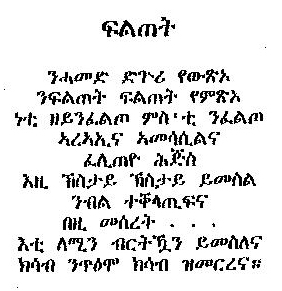


_____ * _____ * _____
KNOWLEDGE
First the earth, then the plow:
So knowledge comes out of knowledge.
We know, we don’t know.
We don’t know we know.
We know we don’t know.
We think
This looks like that –
This lemon, that orange –
Until we taste the bitter.
_____
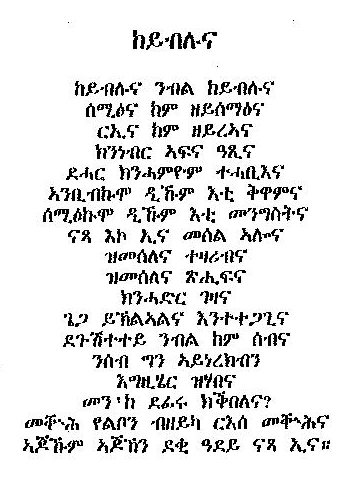
DEVELOPMENT
Change.
Like a child, an infant.
“Let’s go ! Let’s go !”
And our household grows.
“Let’s run.”
We can slow
And sit and stretch
In the sun
Till it sets, but tomorrow
Dawned yesterday.
_____
UNDER CONSIDERATION
Consider this.
Consider that.
Excellent.
Write it
And propose it
For consideration.
Also consider
The official response,
“It’s under consideration.”
Who is considering whom?
When? Where?
How? Why?
Give up? Consider this.
_____
LEARNING FROM HISTORY
We learned from Marx and Lenin:
To be equal trim your feet
For one-size-fits-all shoes.
We made their mistakes, too.
Equally, we all make mistakes.
The evil is in not being corrected.
Aren’t we known
By what we do, undo and do again?
_____
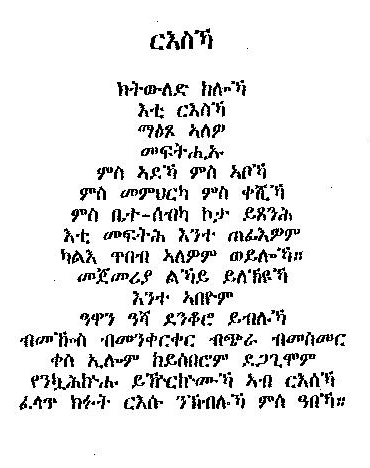
YOUR HEAD
From birth you need
A door in your head to live.
Mother, father, teacher, preacher,
Sister, brother, relations, friends
Or others of your kind
May have the key
Or it may be lost.
But they still have other ways
To open the lock.
Rancid butter rubbed on your skull
May let the sunshine in.
The phrase, “What are you,
Stupid? Dumb?” might throw the bolt.
A flywhisk works on the less fragile.
A wooden spoon, a ruler or a good stick
Does the trick on harder nuts and…
Voilà! An open mind!
_____
SPEAK OUT
To speak out and to be spoken about,
Or to see no evil, hear no evil,
Shut up, keep it to yourself
And only complain in private?
That is not the question.
Read the constitution
Of our democratic state.
Exercise your rights
To tell it like it is,
Write as you see fit
And get a good night’s sleep.
You also have the right to take
Back what you say by mistake.
The freedom to express
Cannot be given up.
It comes from God.
Be free and brave.
Only one prison remains:
Our minds.
_____ * _____ * _____
El Saber
Al primero la tierra, pues el arado:
Tan que el saber viene del saber.
Sabemos, no sabemos.
No sabemos que sabemos.
Sabemos que no sabemos.
Pensamos que
Ésto parace como éso
– este limon, esa naranja –
hasta que degustemos el amargor.
_____
El Desarrollo
Cambio.
Como niño, como bebé.
¡Vamos! ¡Vamos!
Y crecen nuestro hogar.
¡Corramos!
Podemos aflojar el paso
Y sentarnos, estirando,
Bajo del sol,
Hasta el anochecer, pero
Ayer amaneció la mañana.
_____
Sobre la Consideración
Considera ésto.
Considera éso.
Escríbelo
Y proponlo
Por la consideración.
Considera también
La respuesta oficial:
“Éso es algo que estamos considerando.”
¿Quién está considerando a quién?
¿Cuándo? ¿Dónde?
¿Cómo – y Porqué?
¿Estás perplejo?
Considera ésto.
_____
Aprendiendo de la Historia
Aprendimos de Marx y Lenin:
A ser igual, recorta tus pies
por zapatos de unitalla.
(Cometimos sus errores también.)
Por otro lado, cometemos los errores
Todos nosotros.
Lo mal es no estar corregido.
¿ Nos conoce la gente
De lo que hacemos, deshacemos y hacemos de nuevo – no?
_____
Tu Cabeza
Del nacer te necesita
Una puerta en la cabeza para vivir.
Madre, padre, maestro, pastor.
Hermana, hermano, la familia y los amigos,
O unos otros de tu tipo
Tengan la llave
O la llave esté perdido.
Pero quedan otras maneras
Para abrir la cerradura.
La mantequilla rancia, frotada sobre el cráneo,
pueda dejar entrar la luz del sol.
La frase, “¿Eres cuál – Tonto? o Bobo?
Quizás levantará el pestillo.
Sirve bien un matamoscas sobre la gente menos delicada.
Una cuchara/regla de madera,
O un palo bueno,
Con las “cáscaras de nuez” mas duras
Logran el truco…
¡Y ya está! ¡La mente abierta!
_____
Habla – Di lo que piensas
¿Decir lo que se piensa y ser alguien discutido?
O: ¿A ver nada de mal, a oír nada de mal,
Cállate, guárdalo a tu mismo
Y quejarte en privado?
Éso no es la pregunta.
Leye la constitución
De nuestro estado democrático.
Ejerce tus derechos
A decir lo que es tu verdad,
Escribe por tu manera
Y duerme bien.
Tienes también el derecho de
Retirar lo que dijiste en error.
La libertad de expresar
no debe estar cedido.
Es algo de Dios.
Sé libre y valiente.
Solamente queda una cárcel:
Nuestra mente.
_____ * _____ * _____
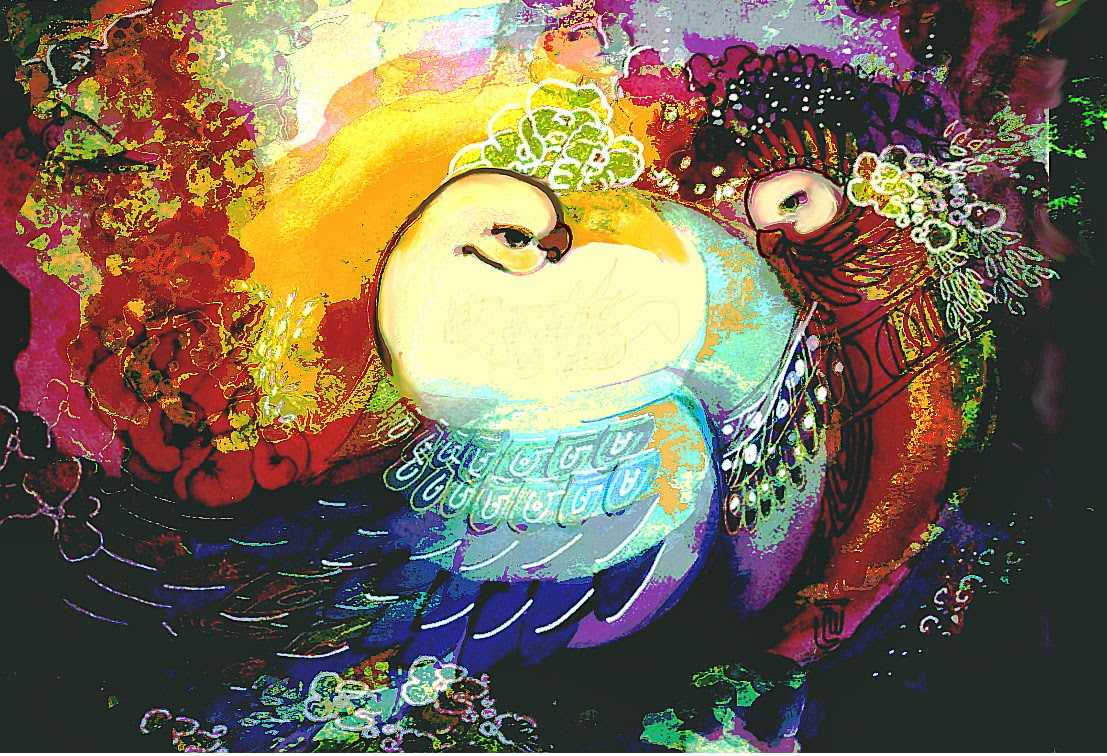
Reesom Haile, who died in 2003, was a much-loved Eritrean
poet and public personality.
After working as a radio and television journalist in Ethiopia, he
studied in the USA where he completed a doctorate at New York
University. A consultant to the U.N., government and NGOs for
twenty years, he returned in 1994 to Eritrea whose thirty-year
independence struggle with Ethiopia had just drawn to a close.
(After five years of relatively peaceful relations the two
countries engaged in a border war (1998-2000)
– over Red Sea access – that claimed 100,000 lives.) The reality of
war has formed the backdrop to, and sometimes the impetus for,
Haile’s verse.
His language, Tigrinya, is spoken by half (about 3,000,000 people)
the countryfolk in a nation which includes 9 languages and a variety
of ethnic groups. Tigrinya derives from ancient Ge’ez, as do Tigre
and Amharic. And Ge’ez is related – like Arabic and Hebrew –
to Aramaic, said to be the language spoken by Jesus.
This is poetry that embraces the Eritrean people, turns an eye
both wry and loving on their history and politics, and also issues
a sincere challenge to “get cracking” !
It is verse of vitality and wit, and is rendered beautifully
into English by Professor Charles Cantalupo of Pennsylvania State
University – a poet himself and a translator who balances gravity of
theme with a lightness of touch, thereby giving us something
of the essential character of Reesom Haile.
*
The poems featured here are from Reesom Haile’s collection:
We Have Our Voice (Lawrenceville and Asmara: The Red Sea Press,
2000) – the first-ever bilingual edition (Tigrinya + English)
of Tigrinya poems. Zócalo Poets is grateful to Professor Cantalupo for
assistance in posting the Tigrinya originals.
Translations from the English into Spanish: Alexander Best
_____
Mucho amado por sus compatriotas, Reesom Haile fue un poeta y
erudito. Su país, Eritrea, está situado al noreste de África, con una
costa al borde del Mar Rojo.
Durante su vida – se murió en 2003 – escribió dos mil poemas en el
lenguaje Tigriña, un idioma antiguo de la familia lingüística semítica
(como árabe, hebreo, y arameo – “la lengua de Jesús de Nazaret”.)
Lleno de inteligencia, vitalidad y ingenio, sus poemas han estado
traducido por el profesor universitario Charles Cantalupo
(de Penn State) con tanta franqueza, con tanto encanto.
Traducción del inglés al español: Alexander Best
“In all its breadth and ceaseless treasure”: the Contemporary Gaelic Poems of Lewis MacKinnon
Posted: November 30, 2011 Filed under: English, Gaelic: Scottish, In all its breadth and ceaseless treasure: Lewis MacKinnon and the contemporary Gaelic poem, Lewis MacKinnon Comments Off on “In all its breadth and ceaseless treasure”: the Contemporary Gaelic Poems of Lewis MacKinnon
Gaelic-language poems by Lewis MacKinnon:
Your Speech
Listening to your speech today;
A bag-of-wind speech,
A speech without ceasing,
A speech without shape,
A speech without feeling,
A speech without essence,
A speech without a path,
A speech as crazy as the birds,
A speech that was not heard,
A speech no one noticed,
A speech bawling out in the cold wind,
A speech alone, forgotten,
A speech misunderstood,
A speech calling out for aid,
A beautiful, meek, melodious, open speech, without blemish;
_____
A’ Chainnt Agad
Ag éisdeachd ris a’ chainnt agad
an diugh;
Cainnt ghuthmhor
Cainnt gun stad
Cainnt gun chruth
Cainnt gun fhaireachdainn
Cainnt gun bhrìgh
Cainnt gun rathad
Cainnt cho gòrach ri eòin nan speuran
Cainnt nach deach a chluinntinn
Cainnt air nach d’ thug neach-eiginn aire
Cainnt ag éibheachd ‘san t-soirbheas fhuar
Cainnt ‘na h-aonar, air a dìochuimhneachadh
Cainnt nach deach a tuigsinn
Cainnt ag gairm oirnn airson cuideachaidh,
Cainnt bhriagha, mhacanta, bhinn, fhosgarra, gun smal
____
Institutional Thoughts
Through the looking glass of faith
and the remains of empires,
and the institutions built by these,
a person arrives at this place in time and being;
Where the creed of his belief and the learning of colonizers
influences his every deed;
Even when he is sitting in some meeting or other
and struggling in his mind against ideas and words;
That someone else is putting forward;
Struggling for no real cause whatsoever;
But the fear of the loss of control;
That lurks under the surface of the legacy,
those institutions left from long ago;
_____
Smuaintean Air Stéidhichidhean
Troimh ghloine-seallaidh a’ chreideimh agus
fuigheall nan Ìmpireachdan,
is na stéidhichidhean a chaidh a thogail leotha,
ruigidh duin’ an t-àite seo ann an àm agus bith;
Far an toir creud a’ chreideis aig’ agus ionnsachadh
a’ luchd-ionnsaidh buaidh do gach
gnìomh a nì e;
Fìu ‘s nuair a tha e ‘na shuidhe ann an coinneimh air
choireigin
a’ dèanadh strì ‘na inntinn an aghaidh bheachdan is fhaclan;
A tha cuideigin eile a’ cur air adhart;
A’ dèanadh strì gun fhìor adhbhar sam bith;
Ach eagal call a’ smachd a tha fo uachdar na dìleib,
a dh’ fhàg na stéidhichidhean seo bho chionn fhada;
_____
Facebook and Gaelic
Writing in an unknown language,
old, shaky, alone,
in order that people will have a mere knowledge of it;
I write in this loneliness,
and I often suppose that there isn’t one person
on the surface of the earth,
that is in the same situation as me;
But I paused and I thought about the whole thing;
And then, it struck me
that Facebook
is kind of like Gaelic;
And I decided
that I would offer
Facebook the Gaelic language,
to be a friend to it,
in all its breadth
and ceaseless treasure;
And instead of being afraid
of an intrusion in its personal life
I welcome
any and all scrutinizing
that can be done of it
And I’ll provide Facebook
its date of birth,
its religious persuasion,
its sexual orientation,
its life history,
its stories,
its music,
its customs,
its expressions,
its hobbies,
its hopes,
its fears,
its musical interests,
where it was raised,
and what it is up to at this very moment
_____
Làrach Nan Ceanglaichean Agus A’ Ghàidhlig
A’ sgrìobhadh ann an cànain neo-aithnichte
sean, cugallach, aonaranach,
airson ‘s gum bi beagan eòlais aig daoin’ oirre
Is mar a sgrìobhas mi ‘san aonaranachas seo
gu tric saoilidh mi nach eil aon duin’ eile
air uachdar an t-saoghail
‘san aon suidheachadh ‘s a tha mise
Ach stad mi is smaointich mi
air a’ ghnothach
Is a’ sin, bhuail orm
gu bheil Làrach nan Ceanglaichean
car coltach ris a’ Ghàidhlig;
Agus chuir mi romham
gun tairginn-sa do Làrach nan Ceanglaichean
a’ Ghàidhlig,
a bhith ‘na caraid dhi,
‘na farsaingeachd air fad
‘na stóras gun chrìch
Agus an àite a bhith fo eagal
air foirneachd a beatha phearsanta
cuiridh mi fàilte air
sgrùdadh sam bith a théid a dhèanadh oirre
Agus bheir mi
ceann-là a breith,
a creideamh gneitheach,
a gné,
eachdraidh a beatha,
a sgeulachdan,
a h-òrain,
a ceòl,
a cleachdaidhean,
a gnàthsan-chainnt,
na cur-seachadan aice,
a dòchasan,
a h-eagail,
a sùim ciùil,
far an deach a togail,
is gu dé tha i ris an dràsda-fhéin
_____
A Fart
Now drawing the last gasp
and dying;
Free, unfettered, finally;
From the beliefs of people
who think that you died,
long ago;
But surprisingly,
you are still kicking in the hidden coffin,
with very little of your ancient little-known breath remaining;
And similar to a fart that is made someplace,
that is too confining,
and the smell wafts about choking everyone that is there,
and making them uncomfortable with shame,
You keep unexpectedly appearing;
And there are still those,
that are going around,
with their hands
tightly gripped on their noses;
Afraid of these little wiffs
that disperse;
You know that attitude you get
and how it’s shouted out, “Who did that anyway?”
And despite an immeasurable lack of attention,
you continue to fall out,
just like that fart,
that comes without welcome, without warning
_____
Braoim
A-nist a’ tarraing na h-uspaig mu dheireadh
is ag eugachdainn;
Saor, gun bhannan mu dheireadh thall;
O bheachdan dhaoine
a tha ‘smaoineachadh gun do dh’ eug thu,
o chionn iomadach bliadhna;
Ach gu h-iongantach,
tha thu fhathast air crith ‘sa’ chistidh fhalaichte seo,
le glé bheag dhen anail aosda neo-aithnicht’ agad air fhàgail,
Is mar bhraoim a chaidh a dhèanadh an àiteigin
a bha tuilleadh ‘s seasgair,
is a’ fàileadh a’ flodradh mun cuairt
a’ tachdadh a h-uile duin’ ann,
is ‘gan dèanadh mì-chomhfhurtail,
fo nàire;
Tha thu an còmhnaidh gun fhios a’ nochdadh;
Agus tha feadhainn ann,
a tha ‘dol air adhart fhathast,
leis na làmhan aca,
le fìor ghréim air an sròin;
Fo eagal nan oiteagan beaga seo,
a théid an sgapadh;
Fhios agad a’ freagairt a gheobh thu,
“Có rinn sin co-dhiubh?”
Agus a dh’ aindeoin cion-aire gun mheud,
théid agad air tuiteam a-mach,
dìreach mar a thuiteas am braoim ud,
a thig gun fhàilte, gun rabhadh
_____
Limited Pieces
I would like to meet with you again
one day,
where there is nothing between us,
but the awareness of one another;
Far away from the field of memory,
where there aren’t,
Memories
Experiences
Beliefs
Judgements
Pre-meditations
Or feelings
And there we can meet again
Since I would like to give, the pieces of you,
that do not completely constitute any of those above,
that I have been keeping so close to me,
for so long,
back to you
_____
Criomagan Beaga
Bu mhath leam coinneachadh riut
là air choireigin,
far nach eil sion sam bith ann eadarainn,
ach an t-eòlas air ré an duin’ eile;
Fad air falbh o’ phàirc a’ chuimhne
far nach eil
Cuimhnichean
Féin-fhiosrachaidhean
Creideamhan
Breitheanais
Beachdan a bh’ ann roimhe
No faireachdainnean
Is a’ sin faodaidh sinn coinneachadh a-rithist
A chionn ‘s bu mhath leam na criomagan dhìot
nach dèan suas gu h-iomlan gin dhen fheadhainn gu h-àrd,
a tha mi ‘gléidheadh cho dlùth dhomh,
fad an t-saoghail,
a thoirt air ais dhut
_____
Innards
I dug you out from the shape of your human body
And I looked at you sincerely;
To see if I could find
Out what was bothering you;
You, lamenting the deeds that you committed
And all your passions
With the hope that you would have another chance
To go back
And put things right;
In order to get some relief
You permitted me to search your insides;
You never uttered a word
When I went in
At ease, peaceful
Somehow content
That you were finally
Getting some attention
For the painful burden you
Were carrying;
And in I went
And I started
And God all mighty If I am not still there
Lost in your complexity;

Mionach
Chladhaich mi thu a-mach á cruth daonna na bothaig agad
Agus choimhead mi ort gu fìrinneach
Fiach a gheobhainn a-mach
Gu dé bha ‘cur ort
Thusa ‘caoineadh nan gnìomhan a rinn thu
Is na mianntan uile agad
Leis an dòchas gum biodh seans’ eile agad
A dhol air ais
A chur rudan ceart
Gus faothachadh ‘fhaighinn
Leig thu dhomh lorg ‘nad bhroinn
Cha d’ thuirt thu guth
Nuair a chaidh mi a-staigh
Socair, ciùin,
Is leig thu dhomh do mhionach a bhuntainn
Dòigh air choireiginn
Toilichte
Gu robh thu mu dheireadh thall
A’ faighinn air’ air an uallach phianail
A bha thu air giùlain
Chaidh mi a-staigh
Is thòisich mi
Is a Dhia nan gràsan nach eil mi fhathast ann
Air chall ‘san iom-fhillteachd agad
_____*_____*_____
Lewis MacKinnon (Lodaidh Macfhionghain) was born in 1970
in Inverness, Cape Breton, Nova Scotia, Canada.
Son of a Gaelic-speaking father and a French-Acadian mother, he is
an accomplished singer/songwriter as well as a poet.
His poems featured here were composed in Gaelic – using Nova Scotian
Gaelic’s spelling and punctuation, not Scottish Gaelic’s – then translated /
interpreted into English by the author himself.
Two of the poems, “Limited Pieces” and “Innards”, are exquisite in their
subtle intensity and candour – among the best love poems by any
Canadian poet.
MacKinnon’s 2008 book of poems, Giant and other Gaelic Poems /
Famhair agus dàin Ghàidhlig eile, includes 89 poems in Gaelic
with English versions.
“En el lado sentimental” – Billie Holiday
Posted: October 1, 2011 Filed under: English, Spanish, Translator's Whimsy: Song Lyrics / Extravagancia del traductor: Letras de canciones traducidas por Alexander Best Comments Off on “En el lado sentimental” – Billie Holiday
 “On the sentimental side”
(Johnny Burke and Jimmy Monaco,
composers – as sung by Billie Holiday, 1938)
.
If you wonder why I’m near you,
Even though I’ve been denied,
I’m inclined to be a little
On the sentimental side.
.
I suppose I should forget you,
If I had an ounce of pride,
But I guess I can’t help being
On the sentimental side.
.
I should act gay,
Laugh it off and say Farewell,
Say it just didn’t wear well
– but I’m not that way…
.
I’m in hopes you’ll think it over,
And perhaps be satisfied
With a simple sort of person
On the sentimental side.
_____
“En el lado sentimental”
– canción popular americana del año 1938,
cantada por Billie Holiday
.
Si te maravillas que estoy aquí – cerca de ti,
Aunque he sido denegado,
Es porque me inclino a ser
Un poco sentimental.
.
Se supone que tengo que olvidarte,
Si yo tuviera una pizca de orgullo,
Pero no puedo evitar
Ser sentimental.
.
Yo debería hacerme alegre,
Reírme y decir: Adiós.
Decir: No importa que no duró nuestro Amor
– pero esto no es como soy… …
.
Espero que tú reflexiones sobre todo,
Y, quizás, te contentes
Con un tipo simple
– sí, que soy yo –
Alguien sentimental.
. . . .
Traducción al español: Alexander Best
Imagen: Foto colorizada de Billie Holiday – de los años 30
Image: colourized black and white photograph of Billie Holiday – from the late 1930s
“De mis manos te doy a Ti”: una canción evangélica de Trinidad y Tobago
Posted: July 30, 2011 Filed under: English, Spanish, Translator's Whimsy: Song Lyrics / Extravagancia del traductor: Letras de canciones traducidas por Alexander Best, ZP Translator: Lidia García Garay Comments Off on “De mis manos te doy a Ti”: una canción evangélica de Trinidad y Tobago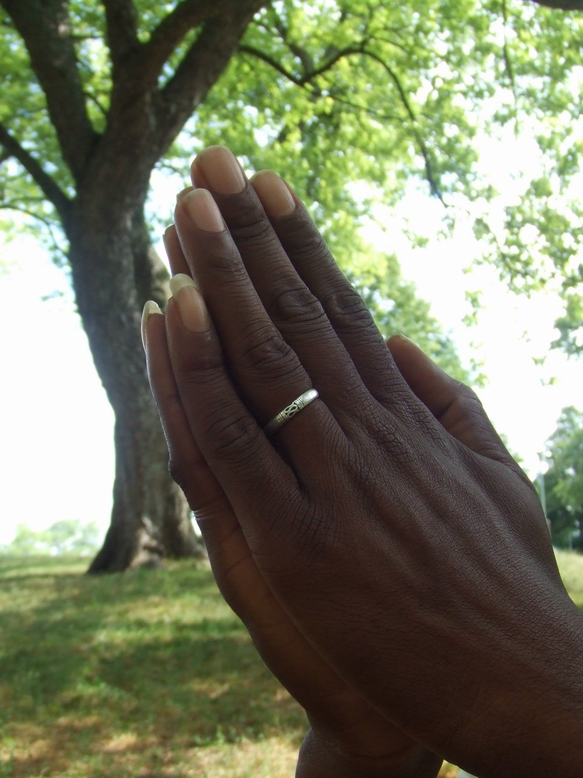
De mis manos te doy a Ti, ah Señor,
De mis manos te doy a Ti.
Te doy a Ti como tú me diste a mí,
De mis manos te doy a Ti.
Nos guiaste fuera de la oscuridad
Cuando no sabíamos donde ir.
Entonces nos pediste que te siguiéramos
Y dijimos: NO.
De mis manos te doy a Ti, ah Señor,
De mis manos te doy a Ti.
Te doy a Ti como tú me diste a mí,
De mis manos te doy a Ti.
Sufriste por la Humanidad
Para que pudiéramos estar contigo,
Ah, ¡ que podamos mostrarte un poco de
Agradecimiento
En lo que decimos y hacemos !
De nuestras manos te damos a Ti, ah Señor,
De nuestras manos te damos a Ti.
Te damos a Ti como tú nos diste a nosotros,
De nuestras manos te damos a Ti…
*
” Of my hands I give to You ”
Of my hands I give to You, Oh Lord,
Of my hands I give to You.
I give to You as You gave to me,
Of my hands I give to You.
You led us out of darkness
When we knew not where to go,
You asked us then to follow You,
And we said: NO.
Of my hands I give to You, Oh Lord,
Of my hands I give to You.
I give to You as You gave to me,
Of my hands I give to You.
You suffered for the sake of Man
That we might be with You,
Oh, may we show some gratefulness
In what we say and do !
Of our hands we give to You, Oh Lord,
Of our hands we give to You.
We give to You as You gave to us,
Of our hands we give to You…
_____
“Of my hands I give to You” is a gospel song written by R. Repp,
recorded in the 1970s in Port of Spain, Trinidad,
by The Goretti Group Singers with The Dennis De Souza Trio.
“En Mi Vida” por John Lennon
Posted: July 16, 2011 Filed under: English, John Lennon, Spanish, Translator's Whimsy: Song Lyrics / Extravagancia del traductor: Letras de canciones traducidas por Alexander Best, ZP Translator: Alexander Best Comments Off on “En Mi Vida” por John Lennon _____
_____
“En mi Vida ”
Hay lugares que recuerdo
Durante toda mi vida
Aunque algunos han cambiado,
Unos para siempre y no para mejor
Algunos han desaparecido
Y otros quedan todavía,
Todos éstos lugares tienen sus momentos
Con amantes y amigos que aún puedo recordar,
Hay muertos y otros que viven,
En mi vida… les he amado a todos.
Pero, entre todos estos amigos y amantes
No hay nadie como tu,
Y pierden estas memorias su sentido
Cuando pienso en el amor como algo nuevo,
Aunque sé que no perderé el cariño
Por la gente y las cosas que ántes fueron,
Sé que pararé a menudo
a pensar en ellos,
En mi vida…a tí te amo más.
Aunque sé que no perderé el cariño
Por la gente y las cosas que ántes fueron,
Sé que pararé a menudo
a pensar en ellos,
En mi vida…a tí te amo más.
En mi vida…a tí te amo más.
_____
Traducción al español por Alexander Best
Translation into Spanish by Alexander Best
_____
*
“In My Life”
(poem by John Lennon, set to music by Paul McCartney, 1965)
There are places I remember
All my life though some have changed,
Some forever not for better
Some have gone and some remain,
All these places have their moments
With lovers and friends I still can recall,
Some are dead and some are living,
In my life I’ve loved them all.
But of all these friends and lovers
There is no one compares with you ,
And these memories lose their meaning
When I think of love as something new,
Though I know I’ll never lose affection
For people and things that went before,
I know I’ll often stop and think about them,
In my life I love you more.
Though I know I’ll never lose affection
For people and things that went before,
I know I’ll often stop and think about them,
In my life I love you more.
In my life I love you more.
 Zócalo Poets