Mao Zedong: Winter Clouds…& so forth
Posted: January 9, 2012 Filed under: Chinese (Mandarin), English, Mao Zedong Comments Off on Mao Zedong: Winter Clouds…& so forth
Winter Clouds
– a lu shi
(1962)
Winter clouds snow-laden, cotton fluff flying,
None or few the unfallen flowers.
Chill waves sweep through steep skies,
Yet earth’s gentle breath grows warm.
Only heroes can quell tigers and leopards
And wild bears never daunt the brave.
Plum blossoms welcome the whirling snow;
Small wonder flies freeze and perish.
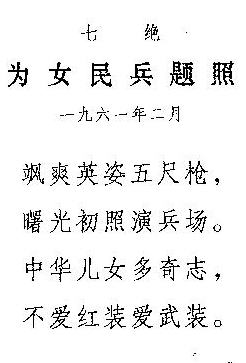
Militia Women – Inscription on a Photograph
– a jue ju
(1961)
How bright and brave they look,
shouldering five-foot rifles
On the parade ground lit up by
the first gleams of day.
China’s daughters have high-aspiring minds,
They love their battle array,
not silks and satins.
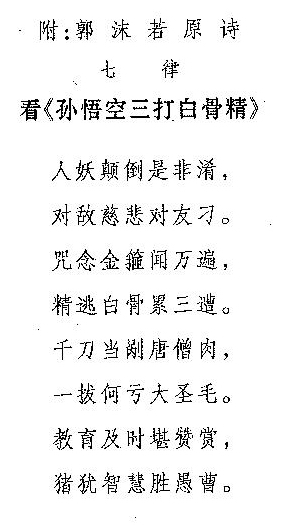
Guo Moruo’s Poem
On Seeing The Monkey Subdue The Demon
– a lu shi
Confounding humans and demons, right and wrong,
The monk was kind to foes and vicious to friends.
Endlessly he intoned “The Incantation of The Golden Hoop”,
And thrice he let the White Bone Demon escape.
The monk deserved to be torn limb from limb;
Plucking a hair means nothing to the wonder-worker.
All praise is due to such timely teaching,
Even the pig grew wiser than the fools.
Mao Zedong: Loushan Pass
Posted: January 9, 2012 Filed under: English, Mao Zedong Comments Off on Mao Zedong: Loushan Pass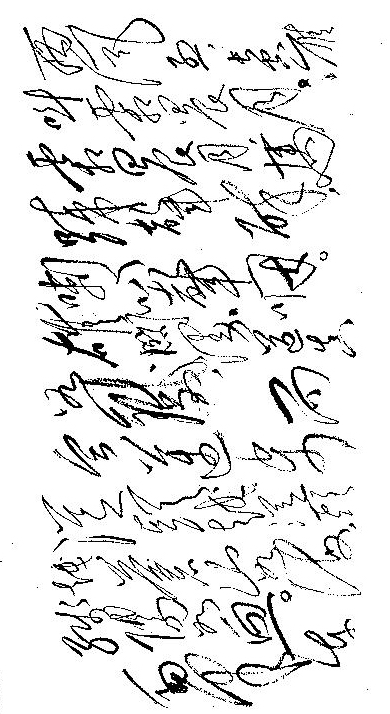
Loushan Pass
– to the tune of Yi Qin E
(February 1935)
Fierce the west wind,
Wild geese cry under the frosty morning moon.
Under the frosty morning moon
Horses’ hooves clattering,
Bugles sobbing low.
Idle boast, the strong pass is a wall of iron,
With firm strides we are crossing its summit.
We are crossing its summit,
The rolling hills sea-blue,
The dying sun blood-red.
_____
Mao Zedong (1893-1976) tried to exemplify the well-rounded
Revolutionary, and so composed poetry in the moment – even while
leading “The Long March” over the mountain pass at Loushan.
The poem above was written in a type of verse called “ci”,
a form established during the Tang Dynasty (618-907 A.D.)
The “ci” poem was always written to be sung – and with a
particular tune in mind.
Mao as poet wrote in other classical verse forms as well
– like “lu” and “jue”, both of the “shi” form –
while proclaiming heroically his subject matter.
“Shi”, a classical Chinese verse form with strict tonal patterns and
rhyme schemes, also dates back to the Tang Dynasty.
_____
Sviaty Vechir: Ukrainian Holy Evening
Posted: January 6, 2012 Filed under: English, Ivan Malkovych, Ukrainian | Tags: Christmas poems Comments Off on Sviaty Vechir: Ukrainian Holy Evening
_____
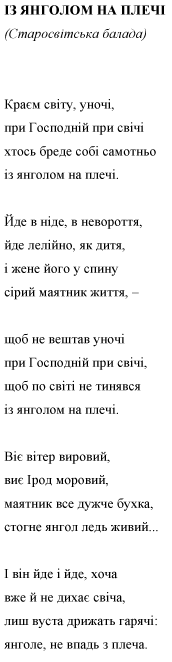
An Angel on My Shoulder
(An Old-World Ballad)
Along the edge of the world at night
in the light of the Lord’s candle
somebody is wandering alone
with an angel on his shoulder.
He’s walking towards nowhere, to non-return,
he’s walking lazily like a child,
and the gray pendulum of life
prods him from behind,
so he won’t roam at night
in the light of the Lord’s candle,
so he won’t ramble around
with an angel on his shoulder.
A whirling wind blows,
a pestilential Herod howls,
the pendulum is striking stronger,
the barely alive angel is moaning.
But he keeps going on and on,
though the candle’s no longer breathing,
just his lips quiver:
angel, don’t fall from my shoulder.
_____
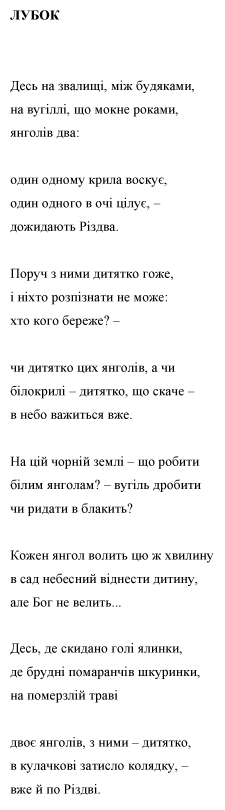
Folk Scene
On a heap amidst thistles,
on coal, soggy from rains,
two angels dwell.
They wax each other’s wings,
they kiss each other’s eyes,
awaiting Christmas.
Near them a lovely infant,
and no one can guess
who’s guarding whom?
Is the infant guarding angels or
do white-winged ones watch the child,
leaping, aiming for heaven?
What can white angels do
on this black soil? Crush coal
or weep into blue skies?
Each angel would carry the baby
into heaven’s garden any moment,
God does not will it . . .
On a heap of discarded Christmas trees,
and dirty orange peels,
on the frozen grass –
two angels and an infant
clutching a Christmas carol in its fist
– Christmas has gone.
_____
Ivan Malkovych / Іван Малкович,
born in Ukraine in 1961,
gave up poetry ten years ago to devote himself
to writing children’s books in Ukrainian – and this
creative task he describes as “the noblest work”.
When Christmas imagery appears in his poetry he
up-ends cliché with his alert, quizzical mind
yet a real love of Ukrainian tradition also comes through,
making these unusual poems special for January 6th:
Ukrainian Christmas Eve.
_____
Translations from Ukrainian into English:
Michael M. Naydan (An Angel on My Shoulder)
Bohdan Boychuk and Myrosia Stefaniuk (Folk Scene)
Рождество Христово – Ио́сиф Алекса́ндрович Бро́дский
Posted: January 6, 2012 Filed under: English, Joseph Brodsky, Russian | Tags: Christmas poems Comments Off on Рождество Христово – Ио́сиф Алекса́ндрович Бро́дский_____
Ио́сиф Алекса́ндрович Бро́дский
Рождество 1963: 1
Спаситель родился
в лютую стужу.
В пустыне пылали пастушьи костры.
Буран бушевал и выматывал душу
из бедных царей, доставлявших дары.
Верблюды вздымали лохматые ноги.
Выл ветер.
Звезда, пламенея в ночи,
смотрела, как трех караванов дороги
сходились в пещеру Христа, как лучи.
_____
Christmas 1963: 1
The saviour was born
into fierce, brutish cold.
Shepherds’ small campfires blazed in the wasteland.
A blizzard seethed and battered the souls
of the humble kings who bore gifts for the infant.
The camels lifted their shaggy legs in sequence.
The wind howled.
The star, aflame in the night,
looked on as the paths of the three processions
converged on Christ’s cave like beams of light.
_____
Рождество 1963: 2
Волхвы пришли. Младенец крепко спал.
Звезда светила ярко с небосвода.
Холодный ветер снег в сугроб сгребал.
Шуршал песок. Костер трещал у входа.
Дым шел свечой. Огонь вился крючком.
И тени становились то короче,
то вдруг длинней. Никто не знал кругом,
что жизни счет начнется с этой ночи.
Волхвы пришли. Младенец крепко спал.
Крутые своды ясли окружали.
Кружился снег. Клубился белый пар.
Лежал младенец, и дары лежали.
_____
Christmas 1963: 2
The magi had come. The infant soundly slept.
The star shone brightly from the vaulted sky.
A cold wind swept the snow up into drifts.
The sand rustled. A bonfire crackled nearby.
Smoke plumed skyward. Flames hooked and writhed.
The shadows cast by the fire grew now shorter,
now suddenly longer. No one there yet realized
that on that very night life’s count had started.
The magi had come. The infant soundly slept.
Steep arches loomed above the manger.
Snow swirled about. White steam rose in wisps.
With gifts piled near him, the child slept like an angel.
_____
Joseph Brodsky / Ио́сиф Алекса́ндрович Бро́дский
(1940-1996) was born of Jewish parents
in Leningrad. He began to write poetry in his mid-teens
and taught himself English so that he could translate John
Donne into Russian. In 1960 he met the 70-year-old
Anna Akhmatova, who had written the great epic poem
“Requiem” about Stalin’s Terror in the 1930s.
Her encouragement brought out in the young Brodsky
a flow of ideas and creativity – such that by 1963 he was
being denounced as a social parasite and anti-Soviet.
Arrested, put on trial, he spent 18 months at a labour camp
in the Arctic.
He kept on with his poetry after his release but
harassment became routine. In 1972, after persecution by
authorities who sought to have him declared schizophrenic and,
therefore, “useless to society”, he was put on a plane out of the
USSR and, with the help of foreign poets who valued his work,
he settled in the USA.
The Nativity – and the many themes of Life it touches upon –
was a constant topic in Brodsky’s poetry. He wrote
one or more Nativity poems per year between 1961 and
1995.
_____
We are grateful to Jamie Olson
for his translation from the Russian.
Visit his site: http://www.theflaxenwave.com
Día De Los Reyes: canta Mercedes Sosa…de Melchor, Gaspar y Baltasar
Posted: January 6, 2012 Filed under: English, Spanish, ZP Translator: Alexander Best | Tags: Christmas carols and songs, Mercedes Sosa Comments Off on Día De Los Reyes: canta Mercedes Sosa…de Melchor, Gaspar y Baltasar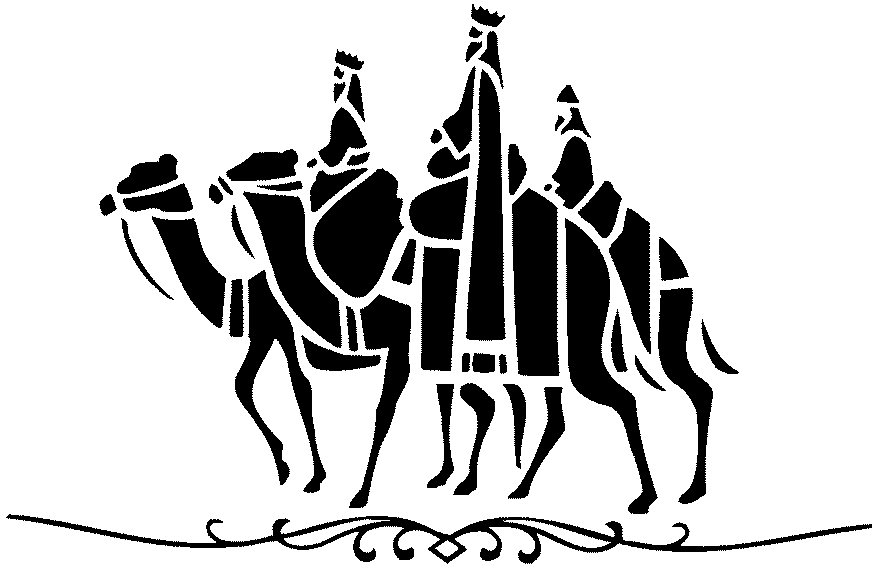
Canción por
Mercedes Sosa:
Los Reyes Magos
Llegaron ya, los reyes y eran tres
Melchor, Gaspar y el negro Baltasar.
Arrope y miel
Le llevaron
Y un poncho blanco de alpaca real.
Changos y chinitas duérmanse
Que ya Melchor, Gaspar y Baltasar
Todos los regalos dejaron
Para jugar mañana al despertar.
El Niño Dios muy bien lo agradeció
Comió la miel y el poncho le abrigó.
Y fue después
Que sonrió,
Y a medianoche el sol relumbró.
_____
A Song by
Mercedes Sosa:
The Three Wise Men (Adoration of the Magi)
They arrived already, those Kings, and three there were:
Melchior, Caspar, and black Balthazar.
Grape syrup and honey they took to Him
And a poncho of royal alpaca wool.
Monkeys, ladybugs – go to sleep !
All the gifts and toys are already there,
from Melchior, Caspar and Balthazar,
for Him in the morning – when he lets out a “peep”.
The Child God was truly grateful for
the poncho that wrapped him up warmly
– oh, and the honey He ate !
And it was after that
He smiled.
And at midnight the
Sun shone bright !
_____
Translation / interpretation from Spanish into English: Alexander Best
 Zócalo Poets