Poema para Miércoles de Ceniza / Ash Wednesday Poem
Posted: February 22, 2012 Filed under: English, Spanish, ZP Translator: Alexander Best | Tags: Ash Wednesday poem, Poema para Miércoles de Ceniza Comments Off on Poema para Miércoles de Ceniza / Ash Wednesday Poem
Poema para Miércoles de Ceniza / Ash Wednesday Poem
Once, in winter, Una vez, durante el invierno,
I stood, Yo estaba de pie,
White flakes brushing my face. Copos blancos rozando la cara.
With white fingers, Con dedos pálidos,
I waited with the others. Esperé con los otros.
We shivered on the steps, Temblamos en los escalones,
Stuck out our tongues Sacamos la lengua
To catch snowflakes Para agarrar los copos de nieve
So cold they would burn. Tan frío que nos quemaban.
Soon the big doors opened Pronto abrieron las puertas grandes
On smoke and candles Al humo y a los cirios
And a cold thumb brushed Y un pulgar frío me rozó
My forehead with a cross of ashes. La frente con una cruz de cenizas.
“Dust to Dust” he muttered “El Polvo al Polvo,” masculló
While snowflakes Mientras los copos de nieve
Melted in my hair Se derritieron en mi cabello.
*
( Autor anónimo /Anonymous )
Traducción en español: Alexander Best
Mardi Gras: “I’m walkin’ to New Orleans…”
Posted: February 21, 2012 Filed under: English Comments Off on Mardi Gras: “I’m walkin’ to New Orleans…”
“Walkin’ to New Orleans”
by Bobby Charles Guidry, written for
“Fats” Domino, Jr., early-rock’n’roll pianist and singer
(born 1928, New Orleans, Louisiana, USA)
_
It’s time I’m walkin’ to New Orleans
I’m walkin’ to New Orleans
I’m going to need two pair of shoes
When I get through walkin’ to you
When I get back to New Orleans
*
I’ve got my suitcase in my hand
Now, ain’t that a shame
I’m leavin’ here today
Yes, I’m goin’ back home to stay
Yes, I’m walkin’ to New Orleans
*
You used to be my honey
Till you spent all my money
No use for you to cry
I’ll see you bye and bye
Cause I’m walkin’ to New Orleans
*
I’ve got no time for talkin’
I’ve got to keep on walkin’
New Orleans is my home
That’s the reason why I’m goin’
Yes, I’m walkin’ to New Orleans
I’m walkin’ to New Orleans
I’m walkin’ to New Orleans
I’m walkin’ to New Orleans…
Andre Bagoo: Carnival Monday in Trinidad
Posted: February 20, 2012 Filed under: Andre Bagoo, English Comments Off on Andre Bagoo: Carnival Monday in Trinidad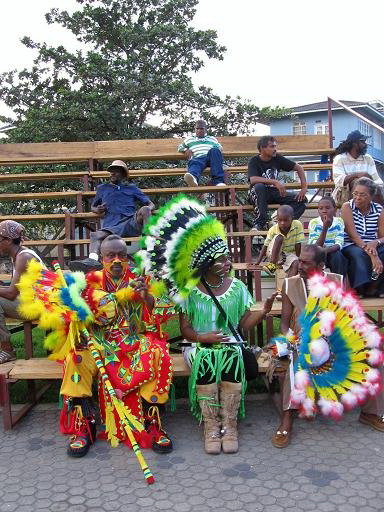
Andre Bagoo
“Carnival”
You are not my mother so you hold
my hand tighter than you should.
The wind blows my Indian feather,
And throws red dust into my face.
This is supposed to be fun, but when
We reach the Savannah stage I am terrified.
Your son, my half brother, is cold
He does not chip to the dollar wine.
This Kiddies’ Carnival experiment
Has gone awry. I’ve lost my axe.
You say you have to leave me here
It is five o’clock and Panorama is tonight.
You are going and my father is going
But my mother is staying home and
I am staying home to wash all this
Glitter and Vaseline off my small body.
But somewhere near that Savannah stage
The crowds crush my black cardboard axe.
_____
Andre Bagoo is a journalist and poet
from Trinidad, West.Indies.
He was born in 1983.
The poem above gives us Trinidad Carnival
through a child’s eyes, and will be found in
Bagoo’s collection of poems, “Trick Vessels”,
to be published by Shearsman in March 2012.
_____
Glossary:
Savannah: Queen’s Park Savannah, huge park in Port-of-Spain;
central festivities site for Carnival – Parade of Bands,
Crowning of Calypso Monarchs, etc.
chip – to step or shuffle in time to the music
dollar wine – a reference to the 1991 calypso hit by Colin Lucas,
“Dollar Wine”
Panorama: Carnival competition for Best
Pan Orchestra (i.e. Steel Band)
_____
Ataulfo Alves: “In a masquerade of Joy I hid my Sadness…”
Posted: February 20, 2012 Filed under: Ataulfo Alves, English, Portuguese, Translator's Whimsy: Song Lyrics / Extravagancia del traductor: Letras de canciones traducidas por Alexander Best, ZP Translator: Alexander Best | Tags: Black poets, Poetas negros Comments Off on Ataulfo Alves: “In a masquerade of Joy I hid my Sadness…”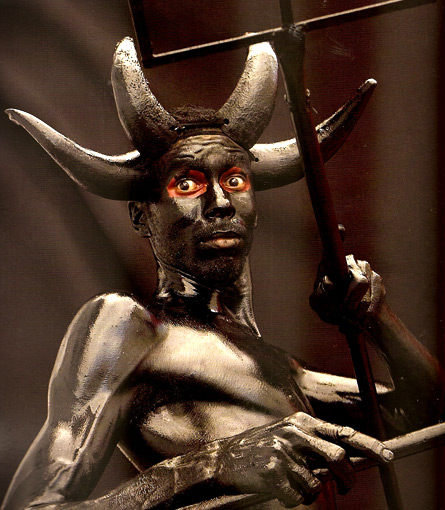
Ataulfo Alves (Sambista brasileiro, 1906-1969)
“Ilusão de carnaval”
.
Mascarado de alegria
Escondi minha tristeza
Terminada a folia
Sou mais triste com certeza
Ilusão de carnaval
Enganei somente a mim
Sem pensar que afinal
Carnaval também tem fim.
*
Ataulfo Alves
(Brazilian Samba composer, 1906-1969)
“Carnival Illusion”
.
In a masquerade of Joy
I hid my Sadness.
Revelry done,
More sad than ever
Am I…
.
You Illusion – oh Carnival !
I merely tricked myself
Without thinking that,
After all,
Carnival too comes to an end.
.
Translation from Portuguese:
Alexander Best

Nigel Darbasie: “Empires of Imagination”
Posted: February 20, 2012 Filed under: English, Nigel Darbasie Comments Off on Nigel Darbasie: “Empires of Imagination”_____
“Monday Jump-Up”
Is ol’ mas’ one carnival,
the best we could have fashioned
from our fathers’ discarded clothes.
In fat-pants and suspenders,
felt hats at our eyebrows,
we went to the railway station,
jammin’ steelband a cappella
as we headed for the city.
*
Almost everyone was on the hadj
to Queen’s Park Savannah in Port-of-Spain.
Royalty from unknown civilizations,
in silk and lamé, hobnobbed
with families of spectators
whose baskets filled our carriage
with aromas of peas and rice, and curry.
*
Outside the city terminus
a pack of half-naked devils descended.
Skins oily blue, and ochre.
Horned foreheads. Upturned tails
bobbing in wicked waist motion.
“Pay de devil! Pay de devil!” they chanted,
hustling purgatory dues from the crowd.
*
An ol’ mas’ band came along:
women in men’s clothes,
men in diapers, sucking carnival formula
from nippled Vat 19 and Old Oak rum bottles.
We revelled with them awhile
before jumpin’ behind giant butterflies
all the way to the Savannah.
*
There, at the confluence of worlds,
fantastic creatures swarmed overhead.
And down the streets,
from the empires of imagination,
flowed waves of mortal souls
dancing in the sunlight.
_____
Nigel Darbasie lives in Edmonton, Alberta, Canada.
He emigrated from Trinidad, West Indies, in 1969.
This poem, from his collection “A Map of the Island”,
brings us a nostalgic memory of Carnival in the 1960s
from the point-of-view of a lively, observant boy.
“Monday Jump-Up” is here used by permission of
The University of Alberta Press.
*
Editor’s note:
This year, 2012, today – February 20th – is the
“Monday” in the title of Darbasie’s poem:
a.k.a. J’Ouvert (Opening Day) of Trinidad Carnival.
_____
Djavan: “Face of the Indian” / “Cara de Índio”
Posted: February 19, 2012 Filed under: Djavan, English, Portuguese, Translator's Whimsy: Song Lyrics / Extravagancia del traductor: Letras de canciones traducidas por Alexander Best, ZP Translator: Alexander Best | Tags: Black poets Comments Off on Djavan: “Face of the Indian” / “Cara de Índio”
Letra da canção de
cantor e compositor afrobrasileiro
Djavan (nasce 1949)
“Cara de Índio”(1978)
Índio cara pálida,
cara de índio.
Índio cara pálida,
cara de índio.
Sua ação é válida, meu caro índio.
Sua ação é válida, válida ao índio.
Nessa terra tudo dá,
terra de índio.
Nessa terra tudo dá,
não para o índio.
Quando alguém puder plantar,
quem sabe índio.
Quando alguém puder plantar,
não é índio.
Índio quer se nomear,
nome de índio.
Índio quer se nomear,
duvido índio.
Isso pode demorar,
te cuida índio.
Isso pode demorar,
coisa de índio.
*
Índio sua pipoca,
tá pouca índio.
Índio quer pipoca,
te toca índio.
Se o índio se tocar,
touca de índio.
Se o índio toca,
não chove índio.
Se quer abrir a boca,
pra sorrir índio.
Se quer abrir a boca,
na toca índio.
*
A minha também tá pouca,
cota de índio.
Apesar da minha roupa,
também sou índio.
_____
Djavan
(Brazilian songwriter, born 1949)
“The Indian Face” (1978)
Indio pale-face
Indian face.
Pale-face Indio
Your action is just, my dear Indio.
Your action is valid, right for the Indian.
In that land everything grows
– the Indian’s land.
In that land everything grows
– but not for the Indian.
When someone can plant,
who knows? The Indio.
When someone inspires,
Isn’t it the Indio?
An Indian wants to call himself
an Indian name.
Indio wants to call himself himself
– I doubt it, Indio
– that might take time – take care,
That might take time,
The Indian thing.
*
Indio gets just
A little “popcorn”.
He wants “popcorn” too
– it’s your turn, Indio.
If the Indian touches his head
it doesn’t rain.
If he wants to open his mouth
– Smile, Indio.
If he wants to open his mouth,
Don’t touch him.
*
I also have little,
An Indian’s share.
Despite my clothes,
I’m an Indio, too.
_____
Jorge Ben Jor: Day of the Indian / Dia de Índio
Posted: February 19, 2012 Filed under: English, Jorge Ben Jor, Portuguese, Translator's Whimsy: Song Lyrics / Extravagancia del traductor: Letras de canciones traducidas por Alexander Best | Tags: Black poets Comments Off on Jorge Ben Jor: Day of the Indian / Dia de Índio_____
Jorge Ben Jor (nasce 1942)
“Curumin chama cunhãtã que eu vou contar
(Todo dia era Dia de Índio)” (1981)
Hey Hey Hey!
Hey Hey Hey!
Jês, Kariris, Karajás, Tukanos, Caraíbas,
Makus, Nambikwaras, Tupis, Bororós,
Guaranis, Kaiowa, Ñandeva, YemiKruia
Yanomá, Waurá, Kamayurá, Iawalapiti,
Txikão, Txu-Karramãe, Xokren, Xikrin,
Krahô, Ramkokamenkrá, Suyá !
*
Curumim chama cunhatã que eu vou contar
Cunhatã chama curumim que eu vou contar
Curumim, cunhatã
Cunhatã, curumim
*
Antes que os homens aqui pisassem
Nas ricas e férteis terraes brazilis
Que eram povoadas e amadas por milhões de índios
Reais donos felizes
Da terra do pau-brasil
Pois todo dia, toda hora, era dia de índio
Pois todo dia, toda hora, era dia de índio
*
Mas agora eles só têm um dia
O dia dezenove de abril…
Amantes da pureza e da natureza
Eles são de verdade incapazes
De maltratarem as fêmeas
Ou de poluir o rio, o céu e o mar
Protegendo o equilíbrio ecológico
Da terra, fauna e flora.
Pois na sua história, o índio
É o exemplo mais puro
Mais perfeito, mais belo
Junto da harmonia da fraternidade.
É da alegria,
Da alegria de viver
Da alegria de amar.
Mas no entanto agora
O seu canto de guerra
É um choro de uma raça inocente…
Que já foi muito contente
Pois antigamente
Todo dia, toda hora, era dia de índio.
*
Jês, Kariris, Karajás, Tukanos, Caraíbas,
Makus, Nambikwaras, Tupis, Bororós,
Guaranis, Kaiowa, Ñandeva, YemiKruia
Yanomá, Waurá, Kamayurá, Iawalapiti, Suyá,
Txikão, Txu-Karramãe, Xokren, Xikrin, Krahô,
Ramkokamenkrá, Suyá !
*
Todo dia, toda hora, era dia de índio…..
Curumim, cunhatã / Hey! Hey! Hey!
Hey! Hey! Hey! / Cunhatã, curumim…..
_____
Jorge Ben Jor
“Every day, every hour, was the Day of the Indian”
Hey Hey Hey!
Hey Hey Hey!
Jês, Kariris, Karajás, Tukanos, Caraíbas,
Makus, Nambikwaras, Tupis, Bororós,
Guaranis, Kaiowa, Ñandeva, YemiKruia
Yanomá, Waurá, Kamayurá, Iawalapiti,
Suyá, Txikão, Txu-Karramãe, Xokren, Xikrin,
Krahô, Ramkokamenkrá, Suyá !
*
Call: “Curumim cunhatã” – I’m going to tell it.
Cry: “Cunhatã curumim” is how I’m going to tell it.
Curumim, cunhatã
Cunhatã, curumim
*
Before people trod here
Upon this rich and fertile land of Brazil
It was populated and loved by millions of Indians,
Happy moneyless owners
Of this land of “Brazil-wood”.
Back then, every day, every hour, was the Day of the Indian.
But now they have only one day,
The 19th of April…
*
Lovers of purity, of nature,
They knew truth, incapable of
Mistreating Woman
Or of polluting river, sky and sea,
Protecting the ecological equilibrium
Of earth, flora and fauna.
And so, in history, the Indio
Is an exemplar most pure,
Perfect and beautiful.
Together in the harmony of humanity
He gives joy – joy of life, joy of love.
Now, though, theirs is a war song – and it’s
The cry of an innocent race…
In olden times they were most happy because
Every day, every hour, was the Day of the Indian.
*
Jês, Kariris, Karajás, Tukanos, Caraíbas,
Makus, Nambikwaras, Tupis, Bororós,
Guaranis, Kaiowa, Ñandeva, YemiKruia
Yanomá, Waurá, Kamayurá, Iawalapiti,
Txikão, Txu-Karramãe, Xokren, Xikrin,
Krahô, Ramkokamenkrá, Suyá !
*
Every day, every hour, was the Day of the Indian.
Curumim, cunhatã / Hey! Hey! Hey!
Hey! Hey! Hey! / Cunhatã, curumim…..
_____
Glossary:
Jês, Kariris, Karajás, Tukanos, Caraíbas, etc.,
– Ben gives us a list of names of the
Indian/Indigenous/Native Peoples of Brazil
The 19th of April – throughout Latin and South America,
this day – Dia Americano del Indio – draws attention to the
cultures, struggles and progress of Indigenous Peoples;
initiated in 1940 at Pátzcuaro, México, during the first
“Congreso Indigenista Interamericano”
/ InterAmerican Indigenous Congress
Jorge Ben Jor: “Em fevereiro tem carnaval…” / “In February there’s Carnaval…”
Posted: February 18, 2012 Filed under: English, Jorge Ben Jor, Portuguese, ZP Translator: Alexander Best Comments Off on Jorge Ben Jor: “Em fevereiro tem carnaval…” / “In February there’s Carnaval…”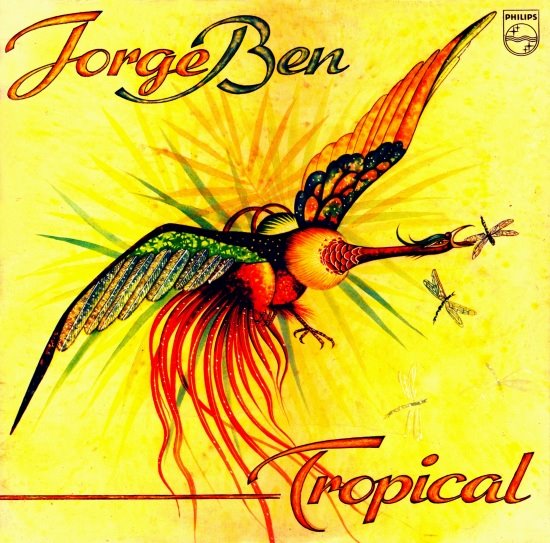
Jorge Ben Jor (born 1942)
“Tropical Country” (1969)
I live
In a tropical country
Blessed by God
And beautiful by nature
( and oh what beauty )
In February (February)
There’s Carnival (there’s Carnival)
I’ve got a VW “Bug” and a guitar
I’m from Flamengo*, and I’ve got a black girl
called Teresa!
( Samba, baby,
Samba, baby! )
*
I’m a young boy of average
intelligence (oh yeah)
But even so I’m happy
Because I don’t owe anything to anyone
(oh yeah)
Because I’m happy, yeah happy
with me!
*
I may not be a band-leader
(oh yeah)
But at home
all my friends
my buddies
respect me (oh yeah)
That’s what it means – being nice,
That’s the power of something extra
– and the joy-oy-oy-oy!
*
I live
In a tropical country
Blessed by God
And beautiful by nature
(and oh what beauty)
In February (in February)
There’s Carnival (There’s Carnival)
I’ve got a VW “Bug” and a guitar
I’m from Flamengo, and I’ve got a black girl
called Teresa!
( Samba, baby!
Samba, baby! )
*
Got a “Bug”,
a GUIT-ar,
Me, I’m Flamengan,
with a black gal called
Treeze… – from my Brazil!
* Flamengo – a neighbourhood in Rio de Janeiro, Brazil
_____
Jorge Ben Jor (nasce 1942)
“Pais Tropical” (1969)
Moro num país tropical,
abençoado por Deus
E bonito por natureza
(mas que beleza)
Em fevereiro (em fevereiro)
Tem carnaval (tem carnaval)
Tenho um fusca e um violão
Sou Flamengo
Tenho uma nêga
Chamada Tereza!
( “Sambaby!”
“Sambaby!” )
*
Sou um menino de mentalidade mediana
Pois é, mas assim mesmo sou feliz da vida
Pois eu não devo nada a ninguém
Pois é, pois eu sou feliz
Muito feliz comigo mesmo
*
Moro num país tropical,
abençoado por Deus
E bonito por natureza
(mas que beleza)
Em fevereiro (em fevereiro)
Tem carnaval (tem carnaval)
Tenho um fusca e um violão
Sou Flamengo
Tenho uma nêga
Chamada Tereza!
( “Sambaby!”
“Sambaby!” )
*
Eu posso não ser um “band-leader”
Pois é, mas assim mesmo lá em casa
Todos meus amigos,
meus camaradinhas me respeitam.
Pois é, essa é a razão da simpatia
Do poder, do algo mais e da alegria-a-a-a!
Tê um fu, um violão,
Sou Flamê
Tê uma nê
Chamá Terê… – do meu Brasil!
_____
Editor’s note:
Today is the opening day of Carnival 2012 in Rio de Janeiro,
and this song from the 1960s with its zest for life captures the
feeling of being young and alive, Brazilian and Black!
This Passionate Earth: “To Patrice Lumumba” by Roberto Armijo
Posted: February 15, 2012 Filed under: English, Roberto Armijo, Spanish Comments Off on This Passionate Earth: “To Patrice Lumumba” by Roberto Armijo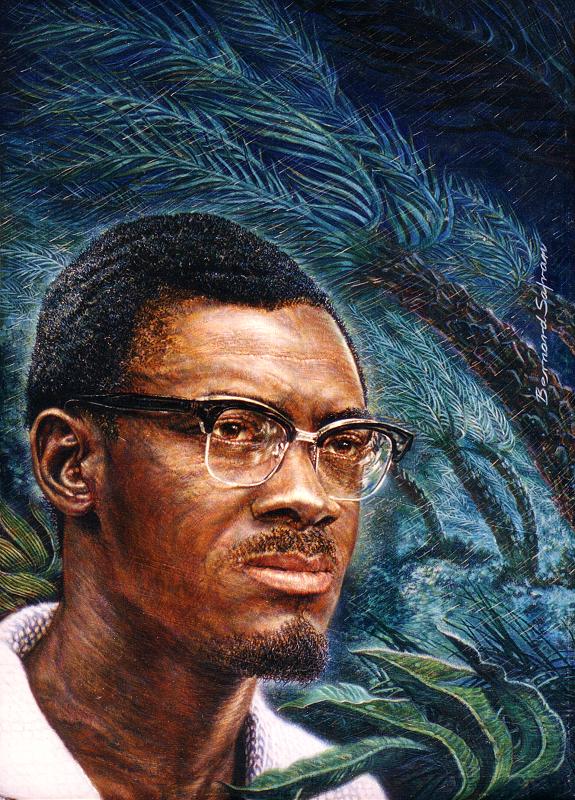
Roberto Armijo
(El Salvador, 1937-1997)
“To Patrice Lumumba”
.
This passionate earth.
Earth in love with the bare feet of the antelope’s nomadic gallop.
Earth exploded into reeds ants fountains and geraniums.
Tortured earth climbing in the wild vine that formed your flesh,
Your tongue, your nightingale breast, your assassinated whistle.
You came from the dark sorrow that
bled in the deep African night, you came from a village,
And you wanted the world of tomorrow to also be for Black people.
You didn’t want them extinguished between manure and the dark insides of mines.
You told your brothers that beyond sea, sky, and trees
Humanity was already tilling its path, destiny, and hope.
You knew it was necessary to open their eyes,
Extend their hands and ignite them with joy,
But those who hated your voice,
Those who shook and hovered around your shadow,
Those who assassinated you
Distort your death…your silence:
They pulled out your murmuring heart
And drowned the dove asleep in your blood
But they couldn’t cut off your clear and wild voice,
And since then you haunt their dreams
And the fearful search for you in your apartment’s darkest places
So as not to hear the rumour spread by your songs and poems
That sing in every young breast, on every separate untamed lip
And is freed, trembling,
To arrive each morning at the markets where the partitioned earth surges with
Flowers, vegetables and fruits,
As your voice travels over cities remote regions, wilderness,
Reaching jungles where the wild leopard, the rhinoceros and
The birds are sheltered below the shadow of trees.
Today more than ever they hate you, cannot stand
Hearing your name:
They corner you and blind you under portfolios and padlocks,
In their feverish anger they spit at you and crush you.
But they can’t, they can’t extinguish your voice,
Because in every abused heart, in every affronted Black person,
You are awakening man-the-sleeping-creature, and
With your songs you sing of hope for Black people
And all the people of the world.
* * * * *
Written in the 1970s, Armijo’s poem was a deeply-felt
tribute to a revolutionary hero – Patrice Lumumba –
from an earlier time, 1960-1961, and from another continent,
Africa – The Republic of The Congo specifically.
Patrice Lumumba was briefly Prime Minister of his
newly-independent country, was deposed in a
military coup then executed. The “Congo Crisis” lasted six
years and involved a Cold-War power struggle among
Belgium, The Soviet Union, The USA, and the
secessionist province of Katanga.
*
Roberto Armijo’s own country, El Salvador,
was at the onset of a similar conflict at
the time he wrote this poem – a civil war
exacerbated by powerful foreign (mainly
the USA) manipulation of the country’s
internal affairs.
* * * * *
Roberto Armijo
(Poeta d’El Salvador, 1937-1997)
“A Patricio Lumumba”
.
Esta tierra ardorosa.
La tierra enamorada del pie descalzo del nómada galope del antílope.
La tierra torturada trepadora en la enredadera salvaje
Modeló tu carne tu lengua tu pecho de ruiseñor tu silbo asesinado.
Tu venías del dolor oscuro que sangraba en la honda noche de Africa
Venías de la aldea
Y deseabas que la mañana del mundo también fuera del negro.
Tu no querías que el negro se apagara entre el estierco
Y la oscuridad de las minas.
A tus hermanos les hablabas que mas allá del mar del cielo y de los árboles
El hombre ya labraba su destino su misión su esperanza.
Tu sabías que era necesario abrir los ojos
Extender las manos y encenderlas de júbilo
Pero los que odiaban tu voz los que temblaban y rondaban tu sombre
Urdían tu muerte tu silencio
Te asesinaron
Te sacaron el corazón rumoroso
Y ahogaron la paloma dormida de tu sangre
Pero tu voz clara y silvestre no la pudieron segar
Y desde entonces temen
Te sueñan y medrosos buscan los sitios más oscuros de tu habitaciones
Para no oír el rumor dilatado de tus canciones
De tus poemas que en cada pecho joven
En cada labio indómito y segregado canta y se suelta temblando
Para llegar matinal a los mercados donde se alza la tierra repartida
En las flores las verduras y las frutas
Tu voz recorre las ciudades las regiones remotas y agrestes
Llega a las selvas donde se guarecen bajo la sombre de los árboles
El leopardo salvaje en rinoceronte y los pájaros.
Hoy más que nunca te odian ya no quisieran
ni oír tu nombre.
Te arrinconan y bajo portafolios y candados
Te ciegan y en su fiebre colérica te escupen te estrujan.
Pero no pueden pero no pueden apagar tu voz
Porque en cada pecho maltratado en cada negro afrentado
Estás tú despertando al hombre a la criatura dormida
Y con tus versos cantas la mañana del negro
Y del hombre del mundo.
.
Translation from Spanish into English: David Volpendesta
Traducción del español al inglés: David Volpendesta
_____
Poemas de Amor del idioma zapoteco
Posted: February 14, 2012 Filed under: English, Poemas de Amor del idioma zapoteco, Spanish, Victor Terán, Zapotec | Tags: Love poems, Poemas de Amor Comments Off on Poemas de Amor del idioma zapoteco
Victor Terán
(nace 1958, Juchitán, Oaxaca, México;
Idioma: Zapoteco Istmeño / Language:
Isthmus Zapotec)
Lu ti nagana
Lu ti neza
chupa ná’
nagu’xhugá
zuguaa’.
Tobi ri’
nadxii naa,
xtobi ca
nadxiee laa.
Nisaguié,
nisaguié,
gudiibixendxe
ladxiduá’.
Gubidxaguié’,
gubidxaguié’,
binduuba’ gu’xhu’
ndaani’ bizaluá’.
_____
Duda
Sobre un camino
Que se bifurca,
Confundido
Me hallo.
Ésta
Me ama,
Aquella la amo.
Lluvia,
Lluvia,
Lava con mucho esmero
El alma mía.
Sol en flor,
Sol en flor,
Barre el humo
De mis ojos.
_____
Indecision
Upon a road
which forks,
confused
I stand.
One woman
loves me,
another
I love.
Rain,
rain,
meticulously cleanse
my soul.
The blossoming sun,
the blossoming sun,
sweep the smoke
from my eyes.
_____ _____ _____
Biluxe
Biluxe
Ne ngasi nga laani.
Lu neza zadxaagalulu’
Ca ni bidxagalú cou’
Biá’ dxi
Gúcalu’ bandá’ xtibe;
Ti bi’cu’, ti bihui,
Ti binni.
Gasti’ zadxaa
Ne laaca ca bigose
Guxhuuna’ íquelu’
Gusiquichi ique badunguiiu
Bichaabe lii.
Ne laaca decheyoo
Bizucánelu’ laabe
Gusicabe guendarusiaanda’ xtibe.
Gasti’ zadxaa.
Lii siou’ nga zusácalu’
Guidxilayú ma qui gapa
Xiñee guireexieque,
Ma qui gapa xiñee
quiidxi guendanabani.
Ne zoyaalu’ guendanabani xtilu’,
Ladxido’lo zapapa
Bia’ qui guchendaxhiaasi layú,
Ne nalu’ ne ñeelu’
Zusiaandu’ laaca’,
Qui zánnalu paraa zuhuaalu’,
Ne nisi lulu’, nisi nalu’
Zaniibihuati guiá’ ne guete’.
_____
Se acabó
Se acabó
y eso es todo.
Sobre tus pasos encontrarás
las cosas mismas que hallaste
durante los días
que fuiste su sombre;
Un perro , un cerdo,
una persona.
Nada cambiará
y los mismos zanates
que te ensuciaron la cabeza
blanquearán la del joven
que tomó tu lugar.
Y detrás de la casa
donde se recostaban
ella asentará su olvido.
Nada cambiará,
sin embargo supondrás
que no tiene sentido ya
el movimiento de la tierra,
ya no existen motivos
para afferarse a la vida.
Y morderás tu hombría,
tu corazón vibrará
con las alas a punto de golpear la tierra,
y tus brazos y tus piernas
los pondrás en el olvido,
perdido en tu sitio
te verás moviendo tontamente
los ojos y los brazos de norte a sur.
_____
It’s Over
It’s over…
and that is all.
Along your pathway you will find
the same things you discovered
during the days when you were her shadow:
A dog, a pig,
A person.
Nothing will change…
And the same “zanates”(little crows)
that soiled your head
will whiten that of the young man
who took your place.
And behind the house
where you and she
used to lie,
she will lay down her memory.
Nothing will change…
However, you will think
that the earth’s movement
no longer makes any sense,
that there are no more reasons
to cling to life.
And you will swallow your manly pride;
your heart will pulsate,
its wings nearly striking the ground,
and your arms and legs
will be caste into oblivion…
Lost within your space,
you will find yourself
foolishly moving your eyes and arms
from north to south.
_____
Traducciones del zapoteco al español: el poeta
Translations from Zapotec into Spanish: the poet
Traducciones del español al inglés /
Translations from Spanish into English:
© Carlos Montemayor, Donald Frischmann, 2004

 Zócalo Poets