Remembrance Day: reflections upon the Vietnam War: Yusef Komunyakaa
Posted: November 11, 2012 Filed under: English, Yusef Komunyakaa | Tags: Remembrance Day poems Comments Off on Remembrance Day: reflections upon the Vietnam War: Yusef Komunyakaa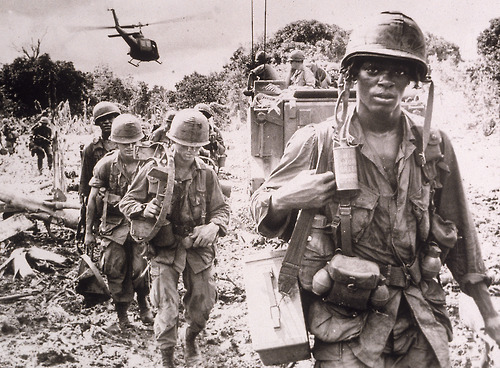
Editor’s note:
What eventually came to be known as The Vietnam War began in 1955 and ended twenty years later when Saigon “fell” to Communist North Vietnam and became known as Ho Chi Minh City. (In 2012 Vietnam is a unified Socialist-oriented free-market economy.) Vietnam was a a Cold-War era ‘hot button’ zone for the USSR and the USA. The U.S. sent soldiers in the early 1960s but American troupes did not become involved in combat until 1965 and by 1973 had withdrawn. Three million Vietnamese (from both sides) died, a million and a half Laotians and Cambodians, and close to 60,000 U.S. soldiers. It was not a war that could be “won”.
. . .
Yusef Komunyakaa
(U.S. Vietnam War Veteram, born James William Brown, 1947, Bogalusa, Louisiana)
“Roll Call”
.
Through rifle sights
We must’ve looked like crows
perched on a fire-eaten branch,
lined up for reveille, ready
to roll-call each M-16
propped upright
between a pair of jungle boots,
a helmet on its barrel
as if it were a man.
The perfect row aligned
with the chaplain’s cross
while a metallic-gray squadron
of sea gulls circled. Only
a few lovers have blurred
the edges of this picture.
Sometimes I can hear them
marching through the house,
closing the distance. All
the lonely beds take me back
to where we saluted those
five pairs of boots
as the sun rose against our faces.
. . .
“The Dead at Quang Tri”
.
This is harder than counting stones
along paths going nowhere, the way
a tiger circles and backtracks by
smelling his blood on the ground.
The one kneeling beside the pagoda,
remember him? Captain, we won’t
talk about that. The Buddhist boy
at the gate with the shaven head
we rubbed for luck
glides by like a white moon.
He won’t stay dead, dammit !
Blades aim for the family jewels;
the grass we walk on
won’t stay down.
. . .
“Tu Do Street”
.
Music divides the evening.
I close my eyes and can see
men drawing lines in the dust.
America pushes through the membrane
of mist and smoke, and I’m a small boy
again in Bogalusa. White Only
signs and Hank Snow. But tonight
I walk into a place where bar girls
fade like tropical birds. When
I order a beer, the mama-san
behind the counter acts as if she
can’t understand, while her eyes
skirt each white face, as Hank Williams
calls from the psychedelic jukebox.
We have played Judas where
only machine-gun fire brings us
together. Down the street
black GIs hold to their turf also.
An off-limits sign pulls me
deeper into alleys, as I look
for a softness behind these voices
wounded by their beauty and war.
Back in the bush at Dak To
and Khe Sanh, we fought
the brothers of these women
we now run to hold in our arms.
There’s more than a nation
inside us, as black and white
soldiers touch the same lovers
minutes apart, tasting
each other’s breath,
without knowing these rooms
run into each other like tunnels
leading to the underworld.
. . .
“A Reed Boat”
.
The boat’s tarred and shellacked to a water-repellent finish, just sway-
dancing with the current’s ebb, light as a woman in love. It pushes off
again, cutting through lotus blossoms, sediment, guilt, unforgivable dark-
ness. Anything with half a root or heart could grow in this lagoon.
.
There’s a pull against what’s hidden from day, all that hurts. At dawn the
gatherer’s shadow backstrokes across water, an instrument tuned for gods
and monsters in the murky kingdom below. Blossoms lean into his fast
hands, as if snapping themselves in half, giving in to some law.
.
Slow, rhetorical light cuts between night and day, like nude bathers em-
bracing. The boat nudges deeper, with the ease of silverfish. I know by his
fluid movements, there isn’t the shadow of a bomber on the water any-
more, gliding like a dream of death. Mystery grows out of the decay of
dead things – each blossom a kiss from the unknown.
.
When I stand on the steps of Hanoi’s West Lake Guest House, feeling that
I am watched as I gaze at the boatman, it’s hard to act like we’re the only
two left in the world. He balances on his boat of Ra, turning left and right,
reaching through and beyond, as if the day is a woman he can pull into his
arms.
. . .
“Facing It”
.
My black face fades,
hiding inside the black granite.
I said I wouldn’t,
dammit: No tears.
I’m stone. I’m flesh.
My clouded reflection eyes me
like a bird of prey, the profile of night
slanted against morning. I turn
this way – the stone lets me go.
I turn that way – I’m inside
the Vietnam Veterans Memorial
again, depending on the light
to make a difference.
I go down the 58,022 names,
half-expecting to find
my own in letters like smoke.
I touch the name Andrew Johnson;
I see the booby trap’s white flash.
Names shimmer on a woman’s blouse
but when she walks away
the names stay on the wall.
Brushstrokes flash, a red bird’s
wings cutting across my stare.
The sky. A plane in the sky.
A white vet’s image floats
closer to me, then his pale eyes
look through mine. I’m a window.
He’s lost his right arm
inside the stone. In the black mirror
a woman’s trying to erase names:
No, she’s brushing a boy’s hair.
. . .
“Ode to the Maggot”
.
Brother of the blowfly
And godhead, you work magic
Over battlefields,
In slabs of bad pork
.
And flophouses. Yes, you
Go to the root of all things.
You are sound and mathematical.
Jesus, Christ, you’re merciless
.
With the truth. Ontological and lustrous,
You cast spells on beggars and kings
Behind the stone door of Caesar’s tomb
Or split trench in a field of ragweed.
.
No decree or creed can outlaw you
As you take every living thing apart. Little
Master of earth, no one gets to heaven
Without going through you first.
. . . . .
All poems (except “Reed Boat” and “Ode to the Maggot”) are from the poet’s 1988 collection, Dien Cai Dau.
© Yusef Komunyakaa
Remembrance Day: Japanese + American poems of war and “peece”
Posted: November 11, 2012 Filed under: Akiko Yosano, English, Hiroshi Kashiwagi, Japanese, Sadako Kurihara | Tags: Remembrance Day poems Comments Off on Remembrance Day: Japanese + American poems of war and “peece”
Ouchi Yoshitaka (a “daimyo” or feudal lord, 1507-1551)
.
Both the victor and the vanquished are
but drops of dew, but bolts of lightning –
thus should we view the world.
. . .
Uesugi Kenshin (a “daimyo” or feudal lord, 1530-1578)
.
Even a life-long prosperity is but one cup of ‘sake’;
A life of forty-nine years is passed in a dream;
I know not what life is, nor death.
Year in year out – all but a dream.
Both Heaven and Hell are left behind;
I stand in the moonlit dawn,
Free from clouds of ‘attachment’.
. . .
北条 氏政
(1538-1590)
雨雲の おほへる月も 胸の霧も はらひにけりな 秋の夕風
我が身今 消ゆとやいかに 思ふべき 空より来たり 空へ帰れば
吹きとふく 風な恨みそ 花の春 紅葉も残る 秋あらばこそ
. . .
Hojo Ujimasa (1538-1590)
Hojo was a “daimyo” and “samurai” who, after a shameful defeat, committed “seppuku” or ritual suicide by self-disembowelment. He composed a poem before he killed himself:
“Death Poem”
.
Autumn wind of evening,
blow away the clouds that mass
over the moon’s pure light
and the mists that cloud our mind –
do thou sweep away as well.
Now we disappear –
well, what must we think of it?
From the sky we came – now we may go back again.
That’s at least one point of view.
. . .
The following poem by Akiko Yosano was composed as if to her younger brother who was drafted to fight in the Russo-Japanese War (1904-1905). It was never specifically anti-war only that the poet wished that her brother not sacrifice his life. At the time the poem was not censored but in the militaristic 1930s it was banned in Japan.
.
Akiko Yosano / 与謝野 晶子 (1878-1942)
.
Oh, my brother, I weep for you.
Do not give your life.
Last-born among us,
You are the most belovéd of our parents.
Did they make you grasp the sword
And teach you to kill?
Did they raise you to the age of twenty-four,
Telling you to kill and die?
.
Heir to our family name,
You will be master of this store,
Old and honoured, in Sakai, and therefore,
Brother, do not give your life.
For you, what does it matter
Whether Lu-Shun Fortress falls or not?
The code of merchant houses
Says nothing about this.
.
Brother, do not give your life.
His Majesty the Emperor
Goes not himself into the battle.
Could he, with such deeply noble heart,
Think it an honour for men
To spill one another’s blood
And die like beasts?
.
Oh, my brother, in that battle
Do not give your life.
Think of mother, who lost father just last autumn.
How much lonelier is her grief at home
Since you were drafted.
Even as we hear about peace in this great Imperial Reign,
Her hair turns whiter by the day.
.
And do you ever think of your young bride,
Who crouches weeping behind the shop curtains
In her gentle loveliness?
Or have you forgotten her?
The two of you were together not ten months before parting.
What must she feel in her young girl’s heart?
Who else has she to rely on in this world?
Brother, do not give your life.

Nogi Maresuke / 乃木 希典
(1849-1912)
Two poems written during the Russo-Japanese War of 1904-1905
– Nogi Maresuke was a commanding general:
.
Mountain and river, grass and tree, grow more barren;
for ten miles winds smell of blood in the fresh battlefield.
Conquering horses do not advance nor do men talk;
outside Jinzhou Castle, I stand in the setting sun.
…..
Emperor’s army, a million, conquered the powerful foe;
field battles and fort assaults made mountains of corpses.
Ashamed – how can I face their fathers, grandfathers?
We triumph today?
. . .
Kenzo Ishijima (Japanese Kamikaze pilot, WW2)
.
Since my body is a shell
I am going to take it off
and put on a glory that will never wear out.
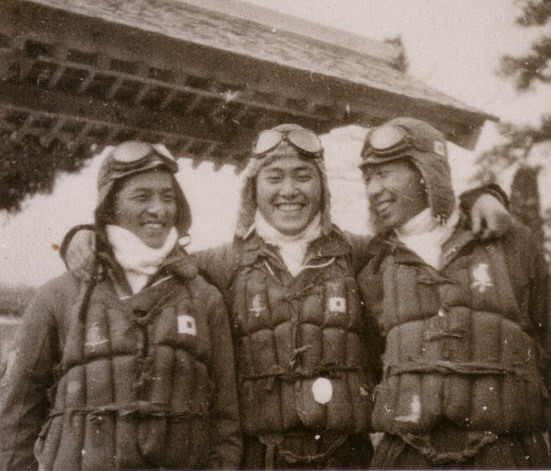
A popular soldiers’ song of the Japanese Imperial Navy during WW2 in which a Kamikaze naval aviator addresses his fellow pilot – parted in death:
“Doki no Sakura” (Cherry blossoms from the same season)
.
You and I, blossoms of the same cherry tree
That bloomed in the naval academy’s garden.
Blossoms know they must blow in the wind someday,
Blossoms in the wind, fallen for their country.
.
You and I, blossoms of the same cherry tree
That blossomed in the flight school garden.
I wanted us to fall together, just as we had sworn to do.
Oh, why did you have to die, and fall before me?
.
You and I, blossoms of the same cherry tree,
Though we fall far away from one another.
We will bloom again together in Yasukuni Shrine.
Spring will find us again – blossoms of the same cherry tree.
. . .
Sadako Kurihara (1912-2005)
Sadako was a controversial poet in Japan, censored during the post-War American Occupation for describing in detail the horrors post-Atomic Bomb in Hiroshima (she was present Aug.6th 1945). She also took a tough, critical stand toward Japan’s aggressions (sometimes referred to as the Asian Holocaust) against China and Korea.
.
“ When we say ‘Hiroshima’ ”
.
When we say Hiroshima, do people answer,
gently, Ah, Hiroshima? ..Say Hiroshima,
and hear Pearl Harbor. Say Hiroshima,
and hear Rape of Nanjing. Say Hiroshima,
and hear women and children in Manila, thrown
into trenches, doused with gasoline, and
burned alive. Say Hiroshima, and hear
echoes of blood and fire. Ah, Hiroshima,
we first must wash the blood off our own hands.
. . .
Hiroshi Kashiwagi (Librarian and poet, born 1922, Sacramento, California)
Hiroshi is a “Nisei”(2nd generation Japanese-American). He was interned at Tule Lake Segregation Camp from 1942-1946. Here is a poem he wrote about his childhood in California:
.
“Pee in the puddle”
.
Wes was fat, something
of a classroom joke
we laughed when he
was late which was
almost every day and
we laughed when he
came on time. John
was always so fair
he let me play
Chinese tag with
them on the way
home from school
but I’d like to remember
him as our fourth
grade Santa Claus
though actually he
was slender with
a high nose and
very German it was
he who thought we
.
should pee in the
puddle. He called
our things brownies
I know he got it
from mine theirs
were white blue
white I wonder
what became of
Wes. I know John
was killed during
World War II
flying for the RAF
crazy guy couldn’t
wait for the U.S.
to enter the war.
I suppose Wes is
still fat and lazy
probably a father many times
.
anyway we wasted
a lot of time
after school. Three
golden loops rising
out of the
brown puddle into
which in time we
all three were
shoved when at
last I came home
crying for my
bread and jam I
was smelling quite
a bit of pee.
Remembering now
I can almost
smell it Wes’s
John’s and mine.
. . . . .
Poems about Elections / Los poetas hablan de Elecciones: 6 nov. 2012
Posted: November 6, 2012 Filed under: Alexander Best, English, Spanish Comments Off on Poems about Elections / Los poetas hablan de Elecciones: 6 nov. 2012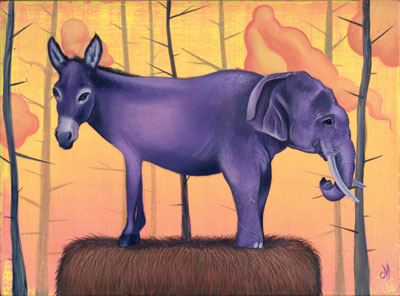
Poems about Elections / Los poetas hablan de Elecciones: 6 nov. 2012
.
By now many citizens of the USA – and countless people worldwide – are good and tired of news coverage – hasn’t media been droning on for twelve months? – of the Democratic (Obama) and Republican (Romney) campaigns leading up to the USA’s presidential election. And today – Tuesday, November 6th – is when voters cast their ballots – in hope, in anger, out of a mechanical sense of duty – or even for their very first time…
And so we present a selection of poems – some of them satirical – about election politics.
. . .
They’re predicting this one’ll be a nailbiter and a humdinger,
like Kennedy’s election over Nixon back in 1960
– just too close to call.
.
Alexander Best
“Swing-State Boogie”
.
“It’s no exaggeration to say
That the undecideds could
Go either way.”<*>
And gosh, who knew? that
How it goes
Depends on news from
O – HI – O ?
<*>Quotation from George Bush Sr., whose mastery of the backwards witty and bafflingly mundane in political comment was surpassed only by his son, George Bush Jr.
. . .
The following poem, “The Poor Voter on Election Day”, was written at a time when Democracy meant only white men voted – and no women. (And people doubtless did vote with their left hands too, though Whittier seemed to think all power lay in the right…)
But Whittier’s idealistic political sentiment is as American in 2012 – even with contemporary cynicism factored in – as it was in 1852.
.
John Greenleaf Whittier (1807-1892)
“The Poor Voter on Election Day” (1852)
.
The proudest now is but my peer,
The highest not more high;
Today, of all the weary year,
A king of men am I.
Today alike are great and small,
The nameless and the known
My palace is the people’s hall,
The ballot-box my throne!
.
Who serves today upon the list
Beside the served shall stand;
Alike the brown and wrinkled fist,
The gloved and dainty hand!
The rich is level with the poor,
The weak is strong today;
And sleekest broadcloth counts no more
Than homespun frock of gray.
.
Today let pomp and vain pretence
My stubborn right abide;
I set a plain man’s common sense
Against the pedant’s pride.
Today shall simple manhood try
The strength of gold and land
The wide world has not wealth to buy
The power in my right hand!
.
While there’s a grief to seek redress,
Or balance to adjust,
Where weighs our living manhood less
Than Mammon’s vilest dust —
While there’s a right to need my vote
A wrong to sweep away,
Up! clouted knee and raggéd coat!
A man’s a man to-day!
. . .
Hoy, en la ocasión de la Elección en los EE.UU., le presentamos poemas de dos poetas que hablaron de la política con pasión y con escepticismo:
.
Guillermo Aguirre y Fierro*
(1887-1949, San Luis Potosí, México)
“La Elección”
*Poema anónimo publicado en el periódico “El Cronista del Valle” (Brownsville, Texas, mayo de 1926). Historiador Antonio Saborit ha dicho que –seguramente – el poema fue escrito por Guillermo Aguirre y Fierro.
.
El león falleció ¡triste desgracia!
Y van, con la más pura democracia,
a nombrar nuevo rey los animales.
Las propagandas hubo electorales,
prometieron la mar los oradores,
y aquí tenéis algunos electores:
aunque parézcales a ustedes bobo
las ovejas votaron por el lobo;
como son unos buenos corazones
por el gato votaron los ratones;
a pesar de su fama de ladinas
por la zorra votaron las gallinas;
la paloma inocente,
inocente votó por la serpiente;
las moscas, nada hurañas,
querían que reinaran las arañas;
el sapo ansía, y la rana sueña
con el feliz reinar de la cigüeña;
con un gusano topo
que a votar se encamina por el topo;
el topo no se queja,
más da su voto por la comadreja;
los peces, que sucumben por su boca,
eligieron gustosos a la foca;
el caballo y el perro, no os asombre,
votaron por el hombre,
y con dolor profundo
por no poder encaminarse al trote,
arrastrábase un asno moribundo
a dar su voto por el zopilote.
Caro lector que inconsecuencias notas,
dime: ¿no haces lo mismo cuándo votas?
. . .
Jorge Valenzuela (Chile)
“Poema sobre las Elecciones”
.
A prepararse señores
se vienen las municipales
se renovarán los alcaldes
y también los concejales.
Volverán las calles sucias
las paredes muy pintadas
afiches en las casas
y las voces destempladas.
Las campañas en terreno
las visitas puerta a puerta
para cuadrar como sea
las ficticias encuestas.
Los diarios-la televisión
y las radios saturadas
destacando al candidato
ofreciendo todo y nada.
Los operativos sociales
los alimentos en cajas
materiales de todo tipo
para reparar bien las casas.
Al final de la contienda
vencedores y vencidos
si te he visto no me acuerdo
y el voto se ha perdido.
. . .
At the age of 27 NDP candidate Ruth Ellen Brosseau won the Québec seat of Berthier-Maskinongé in the May 2011 Canadian federal election. A French-speaking riding of which she had little knowledge – she has since been on a big learning curve with the French language – and she lived in Kingston at the time, not Trois-Rivières – Brosseau campaigned only barely because she was on vacation in Las Vegas in the days leading up to the vote. Yet she won – and by a healthy margin. What’s her secret ?!? Because Barack Obama and Mitt Romney – who spent over a billion dollars each on their campaigns – would dearly love to know!
.
Adrian deKuyper
“When the Bell Tolls” (A Limerick)
.
With hard work and much dedication
Our MPs do their best for our nation
So we salute Ms. Brosseau
Who it seems did not know
That when the bell tolls – don’t take a vacation.
. . .
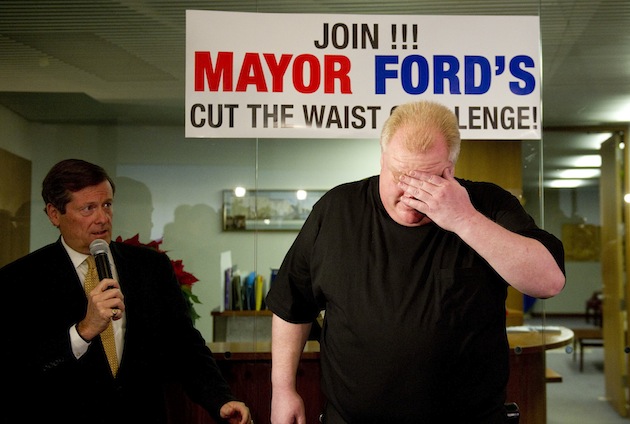
And a poetical angle on local (Toronto) politics in-the-moment…
.
Alexander Best
“Pass the gravy boat!”
or
“Stop the almost-a-train-wreck!”
(A poem for Rob Ford)
.
He barked: I’ll stop the gravy train!
Toronto folks, they listened.
But pugfaced Rob, our city’s mayor,
Keeps changing his positions.
.
He drives himself to City Hall
And, ‘texting’, gives ‘the finger’.
When brought to task, shrugs: Lighten up, o-kay!?
Bad feelings linger.
.
Please hire a driver, Mr. Ford,
And concentrate on business:
The mayoralty and civic tasks – the voters’ god-damn business.
.
Don’t commandeer a rush-hour bus
For your high-school football team
– shenanigans like that just make the People – goofball! – steam.
.
Our previous mayor froze out the Right
– that’s why there’s hothead You.
But calling Leftys pinko-fascists’s
Not the thing to do.
.
People joke about your weight,
Yeah, you’re an easy target.
But being mayor’s a hefty job
So please, won’t you get on it?!
.
You are a big man, 300 pounds plus,
With energy to burn.
So show big spirit for Trawno – Team Us –
And focus, listen, learn!
. . . . .
José Guadalupe Posada: the ‘calaveras’ of a Mexican master of social reportage and satire
Posted: November 2, 2012 Filed under: IMAGES, Retratos por José Guadalupe Posada | Tags: Pictures for The Day of The Dead, Retratos para El Día de los Muertos Comments Off on José Guadalupe Posada: the ‘calaveras’ of a Mexican master of social reportage and satire. . .
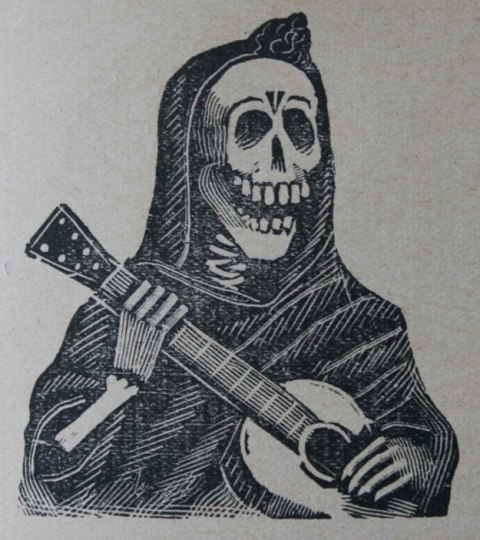
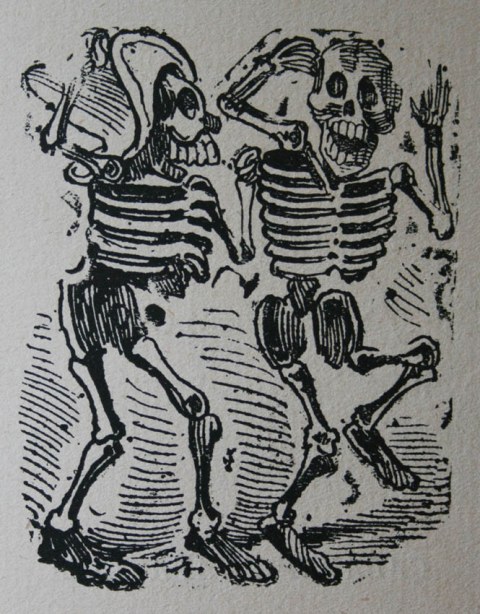
The etchings of José Guadalupe Posada (1852-1913) demonstrated a worldview that was, and often still is, profoundly Mexican. A commercial illustrator who also printed political broadsides, Posada invented the ‘calavera’ portrait. Calavera means skull, and by extension, skeleton. Aspects of the nation’s Indigenous heritage (skulls and death-goddesses were central to Aztec and Maya cultures) plus its Spanish cultural inheritance (death-oriented monastic orders, the ‘dance of death’ and ‘memento mori’ traditions) combine in Posada’s rustic yet sophisticated prints to give us the flavour of the average Mexican’s stoical yet humorous appreciation of Death.
.
To read a description, allow your ‘mouse’ to hover over each image.
. . .
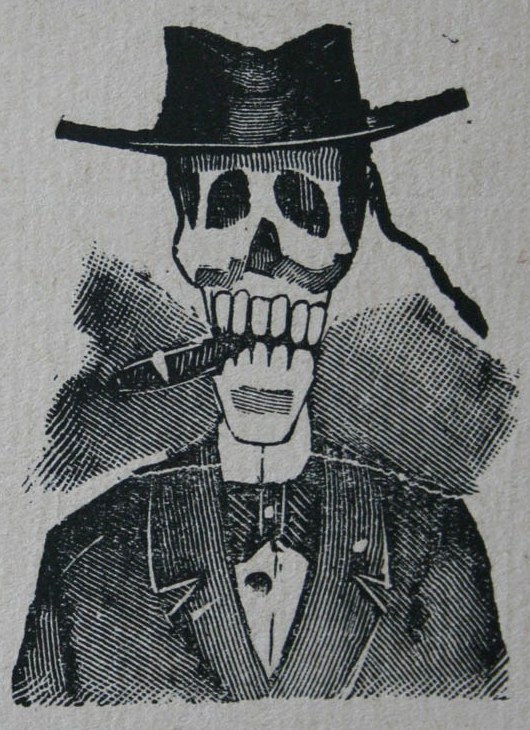
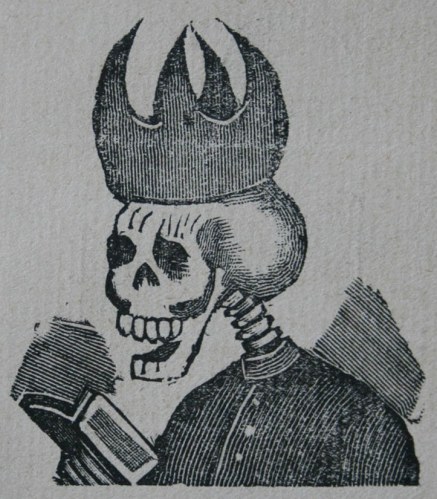
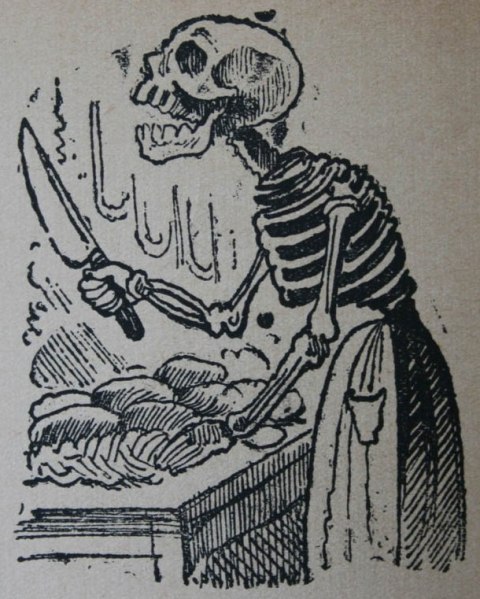
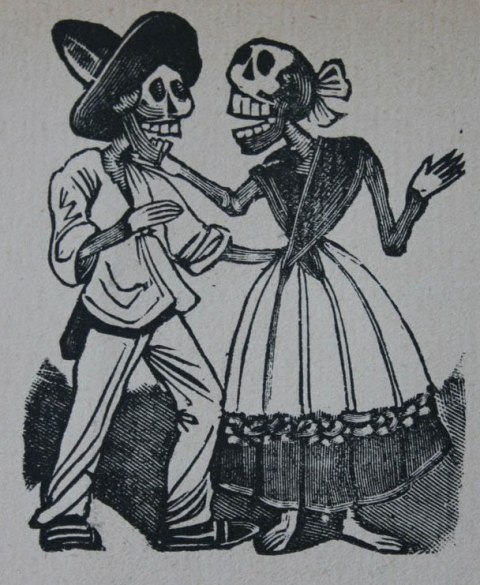
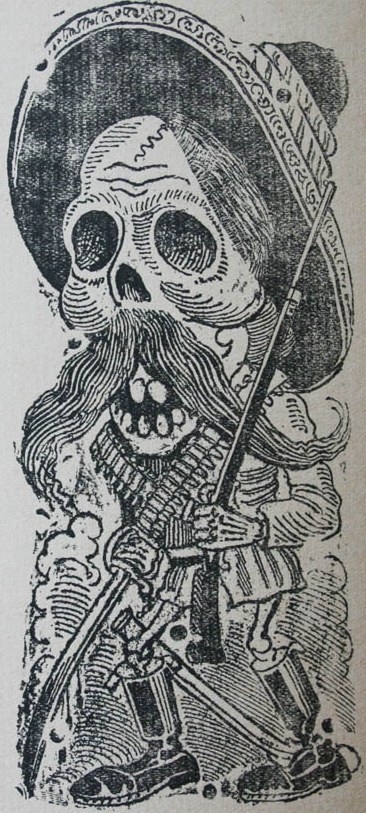
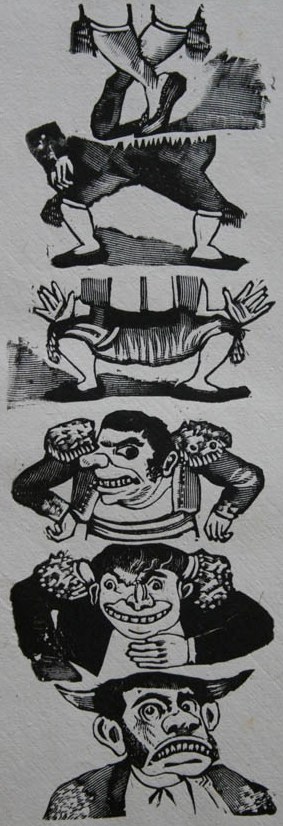
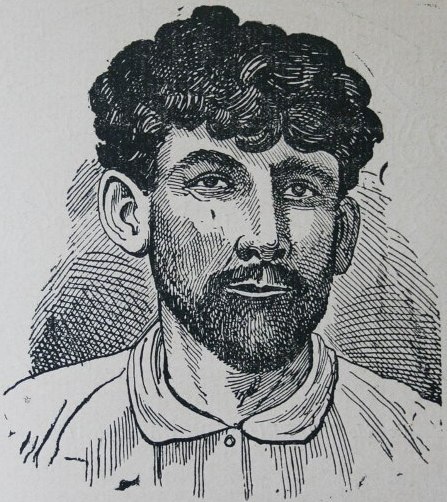
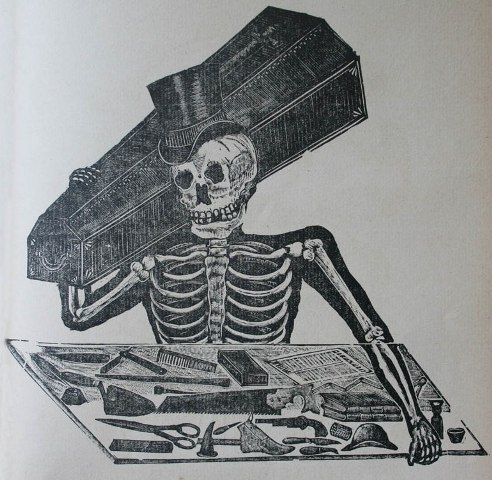
El Tzompantli…y una Danza de las Calaveras / Tzompantli…and The Skeleton Dance
Posted: November 2, 2012 Filed under: English, Spanish | Tags: Poemas para El Día de Los Muertos Comments Off on El Tzompantli…y una Danza de las Calaveras / Tzompantli…and The Skeleton Dance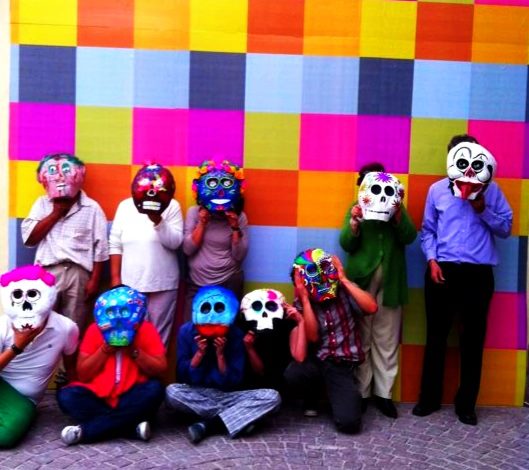
Danza de las Calaveras / Dance of the Skeletons
.
Cuando el reloj marca la una, las calaveras salen de su tumba, tumba que tumba, tumba, tumba, tumba.
When the clock strikes one the skeletons leave their tombs for fun – crying “timber!” and they tumble and they fall down clunk.
Cuando el reloj marca las dos, las calaveras tienen mucha tos, tumba que tumba, tumba, tumba, tumba.
When the clock strikes two those skeletons cough, oh yes they do – they cry “timber!” and they tumble and they fall down clunk.
Cuando el reloj marca las tres, las calaveras van a ver a Andrés, tumba que tumba, tumba, tumba, tumba.
When the clock strikes three they’re on their way to see Bea and Lee – the skeletons tumble, cry “timber!”, they fall down clunk.
Cuando el reloj marca las cuatro, las calaveras miran su retrato, tumba que tumba, tumba, tumba, tumba.
When the clock strikes four, they glance at the mirrored door – they see their spitting image – the latest in their lineage – they’ll cry “timber!” and they’ll tumble and they’ll fall down clunk.
Cuando el reloj marca las cinco, las calaveras siempre dan un brinco, tumba que tumba, tumba, tumba, tumba.
When the clock strikes five, we’ll be glad we’re still alive, those skeletons always jump up and down – yeah, they really go to town – and then they cry “timber!” while they tumble and they fall down clunk.
Cuando el reloj marca las seis, las calaveras miran al revés, tumba que tumba, tumba, tumba, tumba.
When the clock strikes six, for eyes they’ll have an X, those skeletons see inside out, they’re weird without a doubt – and they cry “timber!” as they tumble, falling down clunk clunk.
Cuando el reloj marca las siete, las calaveras se sacan un diente, tumba que tumba, tumba, tumba, tumba.
When the clock strikes seven, how far is it to heaven? yet they’ll pull out their one good tooth and that’ll do us for the Truth – our skeletons “timber!” and tumble and fall down clunk.
Cuando el reloj marca las ocho, las calaveras miran a Pinocho, tumba que tumba, tumba, tumba, tumba.
When the clock strikes eight the skeletons make a date with Kate – and Nate – and how they tumble! crying “timber!” falling down clunk clunk.
Cuando el reloj marca las nueve, a las calaveras todo se les mueve, tumba que tumba, tumba, tumba, tumba.
When the clock strikes nine, will you still be friend of mine? those skeletons get a move on, no longer are they Love’s pawn – still, they tumble, crying “timber!” and they fall down clunk.
Cuando el reloj marca las diez, las calaveras andan sobre un pie, tumba que tumba, tumba, tumba, tumba.
When the clock strikes ten if you kind-a got the yen then we’ll hop along on one foot – that’s just how the skeletons do’ it – and then we’ll cry “timber!”, and we’ll tumble down and clink-clank-clunk.
Cuando el reloj marca las once, las calaveras ya no se conocen, tumba que tumba, tumba, tumba, tumba.
When that clock strikes eleven will we settle like the raven? and the skeletons lose their minds and we try to turn back Time – but no, it’s “timber!” – and tumble – and fall down clunk.
Cuando el reloj marca las doce, las calaveras vuelven a su pose, tumba que tumba, tumba, tumba, tumba.
When the clock strikes twelve, into the past we’ll delve, the skeletons return to their poses ‘neath slabs of stone with roses – we’ll cry “timber!” and we’ll tumble and we’ll all fall down.
. . .
Dance of the Skeletons es un poema escrito en inglés por Alexander Best y inspirado por Danza de las Calaveras – un poema anónimo para niños (de Argentina).
Dance of the Skeletons is inspired by, and loosely based upon, Danza de las Calaveras, a Spanish-language children’s poem for which we thank Grupo Fray Luis Beltran in Argentina.
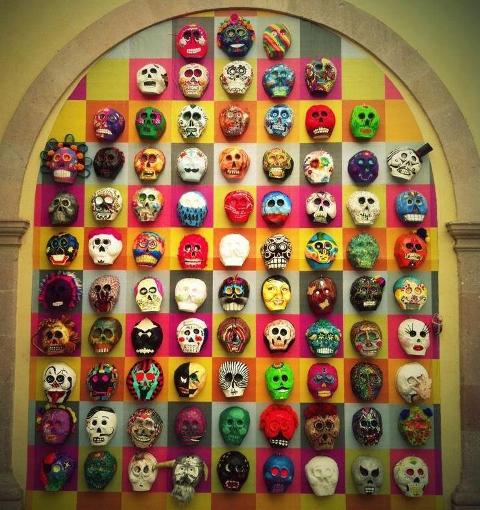
“¡Que viva la muerte misma, y mi Zacatecas querido!”: una muestra de calaveras literarias de 2012: Diana, Georgina, Esteban
Posted: November 2, 2012 Filed under: Spanish | Tags: Poemas para El Día de Los Muertos Comments Off on “¡Que viva la muerte misma, y mi Zacatecas querido!”: una muestra de calaveras literarias de 2012: Diana, Georgina, Esteban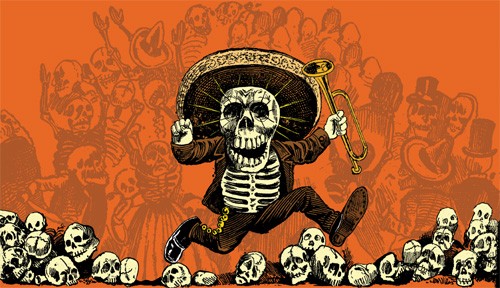
“¡Que viva la muerte misma, y mi Zacatecas querido!”:
una muestra de calaveras literarias de 2012
.
Diana de Jerez
“Calavera a Zacatecas”
.
Ha llegado la calaca
a nuestro estado bendito,
en busca de personajes
que cumplan los requisitos.
.
Afuera de catedral
mira pasar a la gente,
a ver cual se va a llevar
si a un santo o a un delincuente.
.
Ahora ha pensado en cargar
del diario ametralladora,
porque esta inseguridad
ni sus huesitos perdona.
.
En su morral carga tortas
en vez de cargar muertitos,
porque la crisis es dura,
no le alcanza pa’ taquitos.
.
Cuidado con la catrina
y me voy a despedir,
ahí les encargo un altar
por si me llevara a mí.
. . .
Georgina (de Ojocaliente)
.
Se acerca el 2 de Noviembre
y los muertos con muchas ganas
piden a gritos que llegue el día
y así sacar a pasear sus almas
.
Les pareció que Zacatecas
era la ciudad indicada
para mover todo su esqueleto
en sus típicas callejoneadas
.
Se reunieron las huesuditas
en la plaza bicentenario
todas querían encontrar pareja
de preferencia los funcionarios
.
Una calaca le dice a otra:
¿Y a ellos para que los queremos?
¡no seas tonta amiguita!
solo los estafaremos
.
Pobrecitos inocentes
no saben o que les espera
si no ayudan a toda su gente
debajo estarán de la tierra
.
Después de un rato de baile
a lo lejos se ve más gente
va llegando el Gobernador
con todo su gabinete
.
¡Miguelito, Miguelito!
le gritan sin presunción
ahora te haremos campaña
pero para llevarte al panteón
.
El Gobernador asustado
sale corriendo de la plaza
pero lo que no se imagina
es que lo buscaran en su casa
.
Las flacas muy preparadas
le piden cooperación
para seguir la pachanga
que termina en el panteón
.
Vámonos pues amiguitas
les dice Miguel Alonso
dejen en paz a los funcionarios
que ya borrachos están en el pozo
.
Yo les invito más tequila
y saben que mucho las quiero
pero déjenme en Zacatecas
porque de aquí sale buen dinero
.
Las calacas resignadas
aceptan su petición
pues se llevan buena tajada
cuando se hace la repartición
.
Así me gusta mis chulas
que jalen bien parejo
si me siguen ayudando
hasta de funcionarias las dejo…
. . .
Esteban (de Zacatecas)
.
Advierto zacatecanos,
la muerte salió del panteón,
como buenos mexicanos,
¡Hay que darle chicharrón!
.
Yo rápido les platico,
que me espera un buen camote,
pero bien que les platico,
que de loco me dan mote.
.
En Zacatecas anda la calaca,
aunque Nahle no lo acepte,
y aunque la catrina no peca,
de una vez que se lo inyecte.
.
Pero mejor les cuento,
de un noble escritor,
don Ramón con monumento,
pues lo merece nuestro embajador.
.
Oriundo de nuestra tierra,
del merito Jerez,
pueblo que por donde quiera,
te maravilla lo que ves.
.
El ilustre López Velarde,
a la muerte acompañó,
cansado de tanto alarde,
su Suave Patria nos heredó.
.
Orgullosos es que estamos,
de nuestro estado de cantera,
plata lo que habitamos,
y el paraíso de cualquiera.
.
Les digo que ando a prisa,
ya me voy, ya me despido.
¡Que viva la muerte misma,
y mi Zacatecas querido!
. . . . .
Reconocimiento: nuestros agradecimientos al sitio de web Zacateks
Robert Gurney: “Santiago de Chuco”… y César Vallejo
Posted: November 1, 2012 Filed under: César Vallejo, English, Robert Gurney, Spanish Comments Off on Robert Gurney: “Santiago de Chuco”… y César Vallejo
Robert Gurney
“Santiago de Chuco”
(to César Vallejo)
.
El reloj
con la cara azul
.
la Virgen negra
en la parroquia oscura
.
la foto de Vallejo
en la fachada del Cabildo
.
las placas de latón
que necesitaban limpiarse
.
las nubes tan bajas
como las de Inglaterra
.
el paraguas negro
que tal vez llevara en París,
colgado de un clavo,
que se encontraba abierto
.
la escultura del poeta
sentado
.
los baúles
donde quizás guardara una vez
el Orbe de Juan Larrea
.
esa momia extraña
agachada
en una vitrina de cristal
.
el pequeño horno,
extrañamente erótico,
cavado en el muro
.
el poema a la madre
.
la foto de la cara
de su madre
.
el altar familiar
.
vi estas cosas
en Santiago de Chuco.
.
Pero el objeto que me llamó
realmente la atención
fue ese gramófono RCA,
His Master’s Voice,
La Voz del Amo,
con la misma imagen del perro blanco
y la trompeta enorme
que yo escuché una vez,
la cabeza sostenida en las manos ahuecadas,
tendido en la alfombra,
bajo la aspidistra de mi abuela
en Dunstable.
. . .
Robert Gurney
“Santiago de Chuco”
(to César Vallejo)
.
The clock
with the blue face
.
the black Madonna
in the Parish Church
.
the photo of Vallejo
on the wall
of the Town Hall
.
the brass plaques
in need of polishing
.
the grey clouds
as low as those of England
.
the black umbrella
he may have used in Paris
hanging from a nail
open on a wall
.
the sculpture of the poet
sitting down
.
the trunks
where once
he may have kept
his copy of Juan Larrea’s Orbe
.
that strange mummy
sitting in a glass case
.
the little oven,
strangely erotic,
sunk in the white wall
.
the poem to the mother
.
the photograph of
his mother’s face
.
the altar
in the family house
.
these things caught my eye
in Santiago de Chuco
but none of them more
than that RCA gramophone,
His Master’s Voice,
with the same picture of the white dog
and the enormous horn,
as on the one that I once listened to,
my head cupped in my hands,
lying on the floor
beneath my grandmother’s aspidistra
in Dunstable.
. . . . .
César Vallejo
(born in Santiago de Chuco, Perú, 1892,
died in Paris, France, 1938)
“Black Stone on Top of a White Stone”
.
I shall die in Paris, in a downpour,
on a day I already remember.
Shall die in Paris – this doesn’t throw me off –
maybe on a Thursday, like today, in autumn.
.
Thursday it shall be, because today, Thursday,
as I set down these lines, I have ‘put my shoulder
to the grindstone’ – for evil. Never before have I turned,
as today, to seeing my total way to aloneness.
.
César Vallejo is dead. They all struck him,
though he did nothing to them; let him have it
hard with a stick, the lash of a rope as well.
The witnesses are:
Thursdays, shoulder bones, loneliness, rain, the roads…
. . .
César Vallejo (1892-1938)
“Piedra Negra Sobre Piedra Blanca”
.
Me moriré en París con aguacero,
un día del cual tengo ya el recuerdo.
Me moriré en París – y no me corro –
tal vez un jueves, como es hoy, de otoño.
.
Jueves será, porque hoy, jueves, que proso
estos versos, los húmeros me he puesto
a la mala y, jamás como hoy, me he vuelto,
con todo mi camino, a verme solo.
.
César Vallejo ha muerto, le pegaban
todos sin que él les haga nada;
le daban duro con un palo y duro
también con una soga; son testigos
los días jueves y los huesos húmeros,
la soledad, la lluvia, los caminos…
.
Vallejo translation into English: Alexander Best
. . . . .
Robert Gurney nació en Luton, Inglaterra, en 1939. Es un profesor de poesía francesa moderna, y de literatura española y latinomericana. Ha publicado diversos libros incluyendo tres poemarios: Luton Poems (2005), El cuarto oscuro (2008), y Poemas a la Patagonia (2004 y 2009). Él, su esposa Paddy, sus hijos y nietos viven en St Albans, Inglaterra. ‘Santiago de Chuco’ se toma de su próximo libro La libélula y otros poemas/The Dragonfly and Other Poems (edición bilingüe, Lord Byron Ediciones, Madrid, 2012). En prensa: La casa de empeño/The Pawn Shop (bilingüe, 2013).
.
Robert Gurney was born in Luton, England, in 1939. He is a Lecturer in modern French poetry, Spanish and Latin- American Literature. He writes in both Spanish and English and his poetry collections include: Luton Poems (2005), El cuarto oscuro (2008), and Poemas a la Patagonia (2004 and 2009). He, his wife Paddy, sons and grandsons live in St Albans, England. ‘Santiago de Chuco’ is taken from his forthcoming book La Libélula y otros poemas/The Dragonfly and Other Poems (bilingual edition, Lord Byron Ediciones, Madrid, 2012). Upcoming: La casa de empeño/The Pawn Shop (bilingual, 2013).
 Zócalo Poets