Niyi Osundare: “La palabra es un huevo” y “Comida de oído” / “The word is an egg” and “Ear food”
Posted: April 11, 2012 Filed under: English, Niyi Osundare, Spanish, ZP Translator: Alexander Best Comments Off on Niyi Osundare: “La palabra es un huevo” y “Comida de oído” / “The word is an egg” and “Ear food”_____
Niyi Osundare (nace 1947, Nigeria)
“La palabra es un huevo” *
Mi lengua es un fuego rosado
No le permitas que prenda fuego a tus orejas
Cuando los proverbios chocan
En La calle de risas esperandos
Y momentos murmurandos sacan
Un canto fúnebre de los labios del sol atardeciente
Contaremos los dientes
De la luna
Y cantaremos coronitas
Para las estrellas desaparecidas…
La Palabra, es un huevo la Palabra:
Si se cae en el saliente
De una lengua tropezando
Se quiebra sin reunirse.
* un proverbio del idioma yoruba
_____
Niyi Osundare (born 1947, Nigeria)
“The word is an egg” *
My tongue is a pink fire
Don’t let it set your ears on fire
When proverbs clash
In the street of waiting laughters
And murmuring moments eke out
A dirge from the lips of the setting sun
We shall count the teeth
Of the moon
And sing little wreaths
For missing stars…
The Word, the Word
Is an egg:
If it falls on the outcrop
Of a stumbling tongue
It breaks
Ungatherably.
* a proverb from the Yoruba language
_____
“Comida de oído”
¿Lo has visto
a quién que puede alimentar a una multitud de orejas
Con siete pescados de imaginación
y tres panes de silencio?
¿Has visto a la Palabra
que brotó una serpiente
a la sorpresa frenética de Faraón?
Caminan estas Palabras sobre el mar
Y nunca se hunden.
_____
“Ear food”
Have you seen him
who can feed a multitude of ears
With seven fishes of fancy
And three loaves of silence?
Have you seen the Word
which sprang a serpent
to Pharaoh’s frenetic surprise?
These Words walk on the sea
and they never sink.
_____
Traducción del inglés al español / Translation from English into Spanish:
Alexander Best
Poema para el Domingo de Pascua: “Cristo de Corcovado” por Jair Córtes / Poem for Easter Sunday: “The Corcovado Christ” by Jair Córtes
Posted: April 8, 2012 Filed under: English, Jair Córtes, Spanish, ZP Translator: Lidia García Garay Comments Off on Poema para el Domingo de Pascua: “Cristo de Corcovado” por Jair Córtes / Poem for Easter Sunday: “The Corcovado Christ” by Jair Córtes
Jair Córtes
(Poet and translator, born 1977, Calpulalpan, Tlaxcala, México)
“The Corcovado Christ”
There was no beginning to this path:
that slope is the continuation of the water that washed your face,
of the light you lit in that dark hour when you awoke.
Rise. And elevate yourself from among the living.
Languages. New tongues have met, all suddenly
” in the same boat”, joined together in the air.
And at the summit
His arms open above the clouds to receive you:
to receive you
to receive you,
and you arrive.
Every rock, petrified words, frozen eyes that shine.
His arms are open to receive you
you whose lips are glued to a passport,
and you don’t know how someone so huge, at such a meridian,
someone like Him, can have arms open wide, saying:
LOOK, see what I see,
this marvel is also for you.
_____
Jair Córtes
(Poeta y traductor, nace 1977, Calpulalpan, Tlaxcala, México)
“Cristo de Corcovado”
En este camino no hubo comienzo:
esa pendiente es la prolongación del agua con la que lavaste tu cara,
de la luz que encendiste en la hora oscura cuando despertaste.
Asciendes. Te elevas entre los vivos.
Lenguas. Idiomas encontrados de repente,
puestos en el mismo vagón para mezclarse con el aire.
Ya en la cumbre,
Sus brazos se abren encima de las nubes para recibirte:
para recibirte
para recibirte
y llegas.
Cada piedra, vocablos pétreos, ojos incrustados que relumbran.
Sus brazos están abiertos para recibirte,
a ti, que llegas con los labios cosidos al pasaporte
y no sabes cómo, qué tan grande, cuál meridiano,
quién como Él, que tiene los brazos abiertos y dice:
MIRA, mira lo que yo miro,
esta maravilla
también es para ti.
_____
Traducción del español al inglés / Translation from Spanish into English: Lidia García Garay
Poema para Viernes Santo / “Good Friday” poem: Javier Álvarez
Posted: April 6, 2012 Filed under: English, Javier Álvarez, Spanish, ZP Translator: Lidia García Garay Comments Off on Poema para Viernes Santo / “Good Friday” poem: Javier Álvarez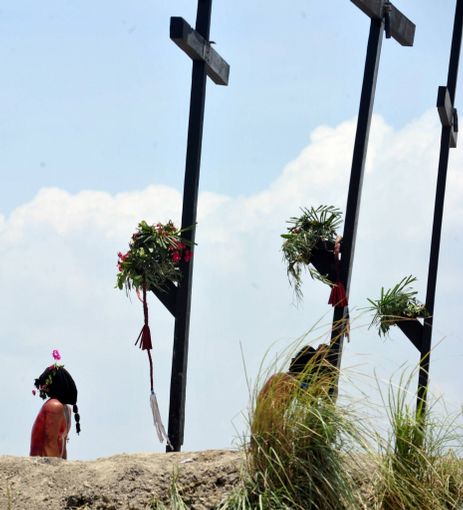
Javier Álvarez
“Good Friday”
It’s gone to the dogs, this afternoon;
a cold rain slaps my face,
the wind numbs my skin.
A bad day for running!
On the rock the rain’s turned to snow.
That proverb’s proven again:
Comes snow in October, seven months till it’s over.
Yes, a rotten day for running!
Dismal April afternoon,
not a soul in the street.
A darkness like winter’s
– the wrong day for rushing around!
Vast hellish afternoon
that the mind carves in verse:
“Save humankind, oh Lord, in this hour
of horror, of tragic destiny;
we know neither where we’re headed, nor whence we came…”
Gloomy night of death,
this evening in transit
– Good Friday evening –
A terrible day to be running…away!
Editor’s note:
In Latin-American cultures Good Friday, traditionally, has been a day to
tread softly upon the ground – not to pound or stomp, or run. The folk
belief is that we walk this day and night upon the body of Jesus.
Álvarez the poet may also be implying that we cannot run away from the
truth of pain, sacrifice, suffering.
_____
Javier Álvarez
“Viernes Santo”
Tarde de perros;
la lluvia fría azota la cara,
el viento entumece la piel.
¡Mal día para correr!
En la peña el agua es nieve.
El dicho se cumple otra vez:
La de octubre, siete meses cubre *.
¡Mal día para correr!
Tarde desolada de abril,
ni un alma por la calle.
Oscuridad de invierno,
¡Mal día para correr!
Tarde de abismal infierno,
que la mente cincela en verso:
“Salva al hombre, Señor, en esta hora
horrorosa, de trágico destino;
no sabe adónde va, de dónde vino…”
Noche oscura de muerte
esta tarde de tránsito:
Tarde de Viernes Santo
– ¡Mal día para correr!
* “La nieve de octubre siete meses cubre” (un refrán castellano)
Traducción del español al inglés / Translation from Spanish into English:
Lidia García Garay
Mike Finley: “Hot and Cold Running Good Friday” / “Un Viernes Santo corriente-caliente-y-frío”
Posted: April 6, 2012 Filed under: English, Mike Finley, Spanish, ZP Translator: Alexander Best Comments Off on Mike Finley: “Hot and Cold Running Good Friday” / “Un Viernes Santo corriente-caliente-y-frío”_____
Mike Finley
“Un Viernes Santo corriente-caliente-y-frío”
Día frío-dulce de abril
o mayo, y los bulbos
se agachan como cobardes
detrás de puertas atornilladas,
chubascos aislados
e incidencias de pecado
mojan las aceras
y humedecen la piel.
*
El agua mana de mí
mientras la tortura retuerce
mi sonrisa a una mueca,
las manos se hacen puños.
Tantas veces yo estuve apaleado por el camino
y miré hacia arriba y no había ningún velo
para agarrar el sudor.
*
Nuestro Señor, que está en el Cielo,
amo al Judío que se murió por mí
(aunque sé que es tontería),
y abril es un mes atontado y casi cruel.
Y los poemas son criaturas dando volteretas,
panfletos, circulares,
volando por
debajo de mis pies, y
la tierra que yo remuevo.
Traducción del inglés al español: Alexander Best
_____
Mike Finley
“Hot-and-Cold-Running Good Friday”
A cold warm day in April
or May, and the bulbs
crouch like cowards
behind bolted doors,
occasional showers
and occasions of sin
dampen the sidewalks
and moisten the skin.
Water flows from me
as the torture twists
my grin to a grimace,
my hands into fists.
How many times was I
battered by road and looked
up and there was no veil
to catch my sweat.
Our father who art in heaven,
I love the Jew who died for me
though I know it is nonsense,
and April is a foolish, cruelish month.
And poems are cartwheeling
creatures, flyers, circulars,
winging their way beneath
my feet and the earth I roll away.
Daniel Chirom: Leonardo and The Last Supper
Posted: April 5, 2012 Filed under: Daniel Chirom, English, Spanish, ZP Translator: Alexander Best Comments Off on Daniel Chirom: Leonardo and The Last SupperDaniel Chirom (born 1955, Argentina)
Leonardo and The Last Supper
.
Under commission to Ludovico il Moro
I did “The Last Supper”, in careful detail, over a period of three years.
I made not a single mistake
– it was my intention that Christ and his apostles
would be disintegrating over time.
When perhaps the Supper is to be served again
another Ludovico will order me to re-do it
– at least until the wine runs out.
I trust in the eternal thirst of humankind.
. . .
Editor’s note:
Ludovico il Moro was Duke of Milan, and a patron of the arts.
In 1496 he commissioned Leonardo da Vinci to paint “The Last Supper”
on a wall inside a Dominican convent. Da Vinci did not use
traditional fresco techniques, rather he experimented.
His method, and the paints he used, have not stood the test of time;
the mural has had to be restored repeatedly.
.
Translation from Spanish into English: Alexander Best
. . .
Daniel Chirom (nace 1955, Argentina)
Leonardo y la última cena
.
Por encargo de Ludovico el Moro
deletreé durante tres años la Última Cena.
No cometí ningún error,
fue mi voluntad que Cristo y sus apóstoles
se fueran desintegrando con el tiempo.
Cuando la Cena sea nuevamente servida
otro Ludovico me encargará rehacerla
hasta que el vino vuelva a escasear.
Confío en la eterna sed del hombre.
. . .
Poème pour Dimanche des Rameaux: “L’Âne” / “The Donkey”: a poem for Palm Sunday
Posted: April 1, 2012 Filed under: English, French, G. K. Chesterton, ZP Translator: Lidia García Garay Comments Off on Poème pour Dimanche des Rameaux: “L’Âne” / “The Donkey”: a poem for Palm Sunday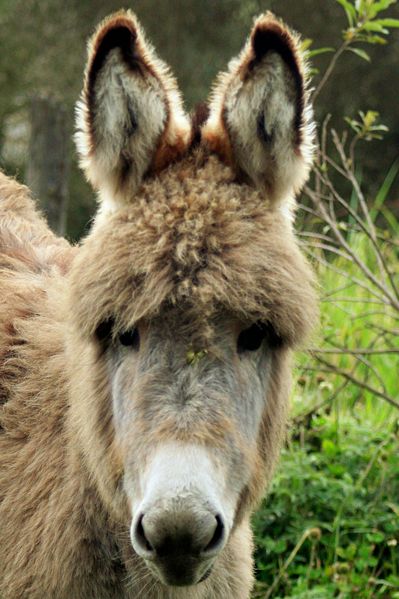
G. K. Chesterton
(1874-1936)
L’Âne
Quand les poissons volaeint et les fôrets marchaient
Et les figues poussaient sur les épines,
Lorsque la lune était sang
Á ce moment lá, je suis sûrement né.
Avec une tête monstrueuse et un braiement écouerant
Et les oreilles comme des ailes sans racines;
C’est la parodie marchante du Diable,
Sur ses quatre pattes.
Les brigands en loques de la terre,
D’ancienne volonté tordue;
M’affament, me fouettent; se moquent de moi: je suis muet,
Je garde mon secret en silence.
Imbéciles! Car j’ai aussi eu mon heure;
Une heure acharnée et douce;
Il y a eu un cri près de mes oreilles,
Et des rameaux devant mes pieds.
Traduction en français / Translation from English into French: Lidia García Garay
_____
G. K. Chesterton (1874-1936)
The Donkey
When fishes flew and forests walked
And figs grew upon thorn,
Some moment when the moon was blood
Then surely I was born.
With monstrous head and sickening cry
And ears like errant wings,
The devil’s walking parody
On all four-footed things.
The tattered outlaw of the earth,
Of ancient crooked will;
Starve, scourge, deride me: I am dumb,
I keep my secret still.
Fools! For I also had my hour;
One far fierce hour and sweet:
There was a shout about my ears,
And palms before my feet.
“An Acrostic to Benito Juárez” by Rubi / “Acróstico a Benito Juárez” por Rubi
Posted: March 21, 2012 Filed under: English, Spanish, ZP Translator: Alexander Best | Tags: Poema a Benito Juárez Comments Off on “An Acrostic to Benito Juárez” by Rubi / “Acróstico a Benito Juárez” por Rubi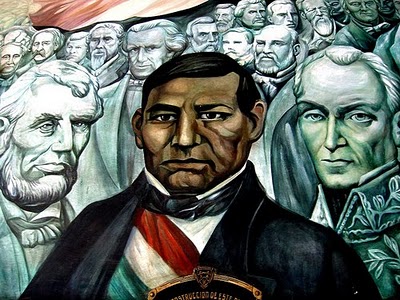
“Acróstico a Benito Juárez” por Rubi / “An Acrostic to Benito Juárez” by Rubi
B enito Juárez B enito Juárez:
E ra mexicano. E specially Mexican was he.
N acido en Oaxaca, N atal place? Oaxaca, and he was
I ndígeno – ¡seguro! I ndigenous – for sure!
T oda su infancia T ending sheep was the task
O vejas cuidaba. O f his childhood.
* *
J uárez político J uárez the Politician
U nió a los pobres, U nited with the poor, en-
A mó la justicia, A moured of justice,
R echazó a los franceses. R epelled the French.
E n conclusión él fue Ever known shall he be, the
Z apoteco valiente. Z apotec most brave.
_____
Hoy día – el 21 marzo – se celebra el natalicio del prócer mexicano – Benito Juárez .
Rubi…¡te agradecemos!
Benito Juárez (1806-1872) was President of México, serving five terms between 1858 and 1872.
Illiterate till the age of 12, by 1834 he was a lawyer, and by 1847 – governor of the state of Oaxaca.
As President he began nation-wide reforms, including the promotion of a civil society
– this included the curtailment of the powers of the dominant Catholic Church. He brought an end to
the Franco-Mexican War (“The Maximilian Affair”) of the 1860s, and his political movement,
La Reforma, though interrupted by the sometimes-regressive presidency of Porfirio Díaz, is
clearly viewed as the first push toward modernization of Mexico’s economy, politics, and society.
Today, March 21st, is Benito Juárez’ birth date.
Interpretación del poema en inglés / Poem interpretation into English from Spanish:
Alexander Best
Caitríona Ní Chléirchín: La nueva poetisa lírica irlandesa / The new love lyricist of Irish poetry
Posted: March 17, 2012 Filed under: Caitríona Ní Chléirchín, English, Irish, Spanish, ZP Translator: Alexander Best, ZP Translator: Lidia García Garay | Tags: Saint Patrick's Day Poems Comments Off on Caitríona Ní Chléirchín: La nueva poetisa lírica irlandesa / The new love lyricist of Irish poetry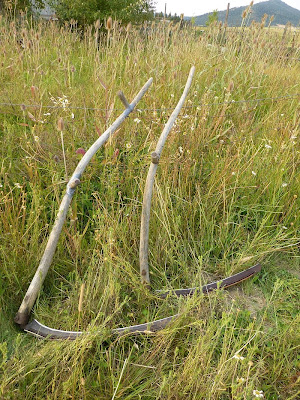 .
.
Caitríona Ní Chléirchín
(nace/born 1978, Gortmoney, Emyvale,
condado de Monaghan, Irlanda/Ireland)
“Segando con Guadaña”
.
Érase una vez, la guadaña
era afilada
con la piedra de guadaña
ocultada
debajo del tocador
por miedo de que
un niño hiciera pedazos de ella.
.
Hoy día, no quedan ni guadaña ni piedra de guadaña
sólo los pedazos de recuerdo.
_____
“Spealadóireacht”
.
Tráth, cuireadh
faobhar ar speal
le cloch faobhair
a cuireadh faoi cheilt
faoin drisiúr
ar eagla go ndéanfadh
leanbh conamar de.
.
Inniu, níl speal, ná cloch faobhair,
ná drisiúr a thuilleadh,
níl ach conamar na gcuimhní againn.
_____
“Scything”
.
Once, a scythe
would be sharpened
with the scything stone
hidden
under the dresser
for fear
a child would make fragments of it.
.
Today, no scythe or scything stone remains
only the fragments of memory.
_____
“Abeja”
.
Como una abeja casi en mi corazón,
apareciste floreando por mis pechos,
y todos tus besos eran las picaduras más dulces,
atrayéndome con besos-picaduras.
Hiciste la miel en mi ombligo,
pero la picadura la más grande fue entre mis piernas.
Me pinchaste
con palabras tan suaves.
Revoloteó el corazón
y debajo de ti
como un azahar o un tallo, me doblé.
Me abriste como una puerta de miel
y todo mi dulzura bebiste.
Está moteado ahora el cuerpo con picaduras azules-rojas,
con salpicadura de gema morada,
y pintada por todo con mordiscos de amor y odio.
Clavaste en mí tu aguijón,
y llena mi cabeza tu zángano.
Una abeja salvaje, un abejorro zumbando
dentro de mí para siempre,
nunca mostrándome ninguna clemencia.
_____
“Beach”
.
Ba gheall le beach i mo chroí thú.
Tháinig tú amach ag bláthú trí mo chíocha
is ba chealg mhilis iad na póga
cealgphógadh do mo chealgadh.
Rinne tú mil i m’imleacán,
ach chuaigh an chealg ba mhó idir an dá chos.
Phrioc tú mé
le briathra míne.
Tháinig eitilt ar mo chroí
is lúb mé fút mar bhláth, mar ghas.
D’oscail tú mé mar dhoras meala
is d’ól tú uaim
achan mhilseacht.
Anois tá mo cholainn breactha le cealga gormdhearga,
buailte le seodchealga corcra
clúdaithe le baill seirce is fuatha ó bhun go barr.
Sháigh tú ionam do chealg bheiche
is níor stad do dhordán riamh i m’inchinn.
Beach fhiáin ab ea thú, bumbóg ag crónán go síoraí ionam
is ní raibh trócaire ar bith agat dom.
_____
“Bee”
.
Like a bee almost in my heart,
you emerged flowering though my breasts,
and your every kiss was the sweetest sting,
enticing me with sting-kissing.
You made honey in my navel,
but the greatest sting went between my legs.
You pricked me
with words so gentle.
My heart fluttered
and beneath you
like a blossom or a stem, I bent.
You opened me like a honey door
and all my sweetness you drank.
My body is speckled now with blue-red stings,
with purple gem-sting stippling,
and dappled all over with love and hate bites.
You thrust your bee-sting into me,
and your drone still fills my brain.
A wild bee, a bumbling humming bee
forever inside me,
never showing any mercy.
_____
The poet tells us:
“The ‘musics’ of Irish and English are different…In Irish you can hear the sea, the mountains,you can hear echoes of loss. I’m not saying you can’t hear these in English – just that Irish is more musical, less clinical. English has been described by some Irish speakers as the language to sell pigs in – I think that’s too harsh. I think in the way we speak English in Ireland you can hear the longing for Irish. Irish is more elemental, earthy, more natural in a way – a language greatly wounded and for that reason maybe closer to the body and emotion – for me as a poet.”
_____
© Caitríona Ní Chléirchín
Translations from Irish to English:
by the poet herself.
.
Translations from English into Spanish /
Traducciones del inglés al español:
Alexander Best (“Bee”)
Lidia García Garay (“Scything”)
_____
Poems for Saint Patrick’s Day: Love and The Poet / Poemas para el Día de San Patricio: Amor y El Poeta
Posted: March 17, 2012 Filed under: English, Poemas para el Día de San Patricio: Amor y el Poeta, Spanish, William Butler Yeats, ZP Translator: Alexander Best | Tags: Saint Patrick's Day Poems Comments Off on Poems for Saint Patrick’s Day: Love and The Poet / Poemas para el Día de San Patricio: Amor y El Poeta
William Butler Yeats (1865-1939)
“Memoria” (1919)
Una tenía la cara linda,
Y dos o tres eran encantadoras,
Pero cara y encanto fueron en vano
Porque la hierba de la sierra
Siempre conserva la forma
Donde se ha tendido la liebre del monte.
_____
“Canción de Muchacha” (1933)
Salí sola
Para cantar una canción o dos,
Se me antoja un hombre
Y usted sabe quien es.
*
Otro se apareció
que dependía de un bastón
Para estar de pié;
Me senté y lloré.
*
Y ésta fue toda mi canción
– cuando todo ha sido dicho
¿Vi a un anciano joven,
O a un joven anciano?
_____
“Canción para beber” (1910)
El vino entra vía la boca
Y el amor entra vía el ojo;
Es toda la verdad que sabremos
Antes de envejecer y morir.
Levanto el vaso a mi boca,
Te miro, y suspiro.
_____
“La Espuela” (1936)
Tu piensas que es horrible que lujuria y furia
Me adoran en la vejez…
No eran una peste cuando yo era joven;
¿Tengo algo más para espolearme cantar?
_____
“Un Voto Jurado en lo Más Profundo” (1919)
Habían otros – porque no cumpliste
Ese voto jurado en lo más profundo – que han sido amigos míos;
Pero siempre cuando miro a la muerte en la cara,
Cuando trepo a las cumbres de sueño,
O cuando me estremezco con el vino,
De súbito me encuentro con tu cara.
__________
William Butler Yeats (1865-1939)
“Memory” (1919)
One had a lovely face,
And two or three had charm,
But charm and face were in vain
Because the mountain grass
Cannot but keep the form
Where the mountain hare has lain.
_____
“Girl’s Song” (1933)
I went out alone
To sing a song or two,
My fancy on a man,
And you know who.
*
Another came in sight
That on a stick relied
To hold himself upright;
I sat and cried.
*
And that was all my song
– when everything is told,
Saw I an old man young
Or young man old?
_____
“Drinking Song” (1910)
Wine comes in at the mouth
And love comes in at the eye;
That’s all we shall know for truth
Before we grow old and die.
I lift the glass to my mouth,
I look at you, and I sigh.
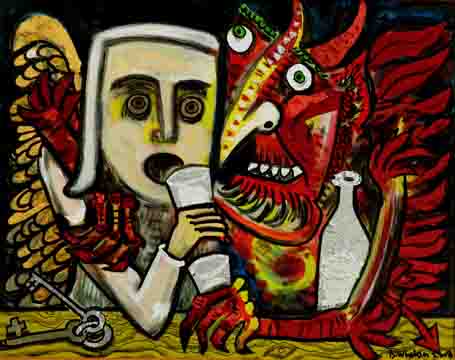
Poteen Drinkers by Brian Whelan_2011
“The Spur” (1936)
You think it horrible that lust and rage
Should dance attention upon my old age;
They were not such a plague when I was young;
What else have I to spur me into song?
_____
“A deep-sworn vow” (1919)
Others because you did not keep
That deep-sworn vow have been friends of mine;
Yet always when I look death in the face,
When I clamber to the heights of sleep,
Or when I grow excited with wine,
Suddenly I meet your face.
_____
Translation into Spanish /
Traducción en español: Alexander Best
Poemas para El Día Internacional de la Mujer: Tres poetas que deseamos honrar / Poems for International Women’s Day: Three poets we wish to honour
Posted: March 8, 2012 Filed under: Ana Castillo, bell hooks, English, Freedom Nyamubaya, Spanish, ZP Translator: Alexander Best, ZP Translator: Lidia García Garay Comments Off on Poemas para El Día Internacional de la Mujer: Tres poetas que deseamos honrar / Poems for International Women’s Day: Three poets we wish to honour ZP_Itzpapalotl_Goddess mural in San Francisco_near 16th and Sanchez streets
.
bell hooks
(nace/born 1952, Kentucky, EEUU/USA)
En ese momento que… / The moment that…
*
En ese momento que decidimos amar
Empezamos a ir en contra de
La dominación, en contra de
La opresión.
En ese momento que decidimos amar
Empezamos a irnos hacia la libertad;
A actuar de maneras que nos liberan – y que liberan a otros también.
Esa acción es el testimonio del amor como la práctica de la libertad.
*
The moment we choose to love
we begin to move
against domination,
against oppression.
The moment we choose to love
we begin to move towards freedom;
to act in ways that liberate ourselves – and others.
That action is the testimony of love as the practice of freedom.
_____
Freedom Nyamubaya
(nace/born 1958, Zimbabwe)
La Poesía
*
Alguien dijó, no eres poeta,
pero olvidó que la poesía es un arte y
El Arte is un ritmo significativo.
Pues entonces, ¿qué es ritmo,
si puedo preguntar?
Algunos dicen que es sílabas marchando
otros dicen: sonidos marchando
pero dime como puedo casarlos a los dos.
Luchamos contra Shakespeare en el campo de batalla,
Los Negros lucharon contra los Bóeres con las lanzas.
Éstas son sílabas que marchan
y son el Arte – a alguna gente,
pues, ¿cómo yo puedo casarlos a los dos?
¿Y qué decimos de un ritmo diferente?
Mueren en los guetos la gente,
por redadas de policía y disparos del ejército.
Los obreros se asfixian en las minas de carbón,
excavando el carbón que no pueden comprar
para cocinar a diario para alimentarse.
Algo poético, ésto.
Pues quedemos en no estar de acuerdo.
El Arte sirve.
_____
Freedom Nyamubaya
Poetry
*
One person said, you are not a poet,
but forgot that poetry is an art and
Art is meaningful rhythm.
Now what is rhythm
if I may ask?
Some say it’s marching syllables,
others say it’s marching sounds,
but tell me how you marry the two.
We fought Shakespeare on the battlefield,
Blacks fought the Boers with their spears.
These are marching syllables
and Art to some,
but how can I marry the two?
How about a different rhythm?
People die in the ghettoes,
from police raids and army shots.
Workers suffocate under coal mines,
digging the coal they can’t afford to buy
for cooking daily to feed themselves.
Poetic stuff, this.
Then let’s agree to disagree.
Art serves.
_____
Ana Castillo
(nace/born 1953, Chicago, Illinois, EEUU/USA)
Pido lo Imposible
*
Yo pido lo imposible: ámame por siempre
Ámame cuando todo el amor se haya ido.
Ámame con la dedicación de un monje.
Cuando el mundo en su totalidad,
y todo lo que para ti es sagrado, te aconsejan
contra ello: ámame aún más.
Cuando la cólera te llene y no tenga nombre: ámame.
Cuando cada paso de tu puerta a nuestro trabajo te fatigue,
ámame; y del trabajo de retorno a casa, ámame.
Ámame cuando estés aburrido,
cuando cada mujer que veas sea más bella que la anterior,
o más patética, ámame como siempre lo haz hecho:
no como admirador o juez pero con
la compasión que guardas para ti mismo
en tu nostalgia.
Ámame tanto cuanto aprecias tu soledad,
la anticipación de tu muerte,
misterios de la carne, mientras se rompe y se sana.
Ámame como tu más atesorada memoria de la infancia
– y si no hay ninguna a recordar –
imagínate una, y yo allí contigo.
Ámame marchita tanto como me amastes nueva.
Ámame como si yo fuera para siempre
y haré de lo imposible
un acto simple,
al amarte, amarte como yo te amo.
_____
Ana Castillo
I Ask The Impossible
*
I ask the impossible: love me forever.
Love me when all desire is gone.
Love me with the single mindedness of a monk.
When the world in its entirety,
and all that you hold sacred, advise you
against it: love me still more.
When rage fills you and has no name: love me.
When each step from your door to our job tires you,
love me; and from job to home again, love me, love me.
Love me when you’re bored,
when every woman you see is more beautiful than the last,
or more pathetic, love me as you always have:
not as admirer or judge but with
the compassion you save for yourself
in your solitude.
Love me as you relish your loneliness,
the anticipation of your death,
mysteries of the flesh, as it tears and mends.
Love me as your most treasured childhood memory
– and if there is none to recall –
imagine one, place me there with you.
Love me withered as you loved me new.
Love me as if I were forever
and I will make the impossible
a simple act,
by loving you, loving you as I do.
_____
Traducciones del inglés al español:
Alexander Best (“En ese momento que…” y “La Poesía”)
Lidia García Garay (“Pido lo Imposible”)
_____
 Zócalo Poets